23 Thick Hairstyles Ideas for Women 2026
If your hair is thick, you know how hard it is. You see a great haircut online, but when you try it on, it feels heavy, puffy, or hard to manage.
You can start to think that having thick hair is more trouble than it’s worth when your hair won’t stay in place no matter what you do.
The truth is that your hair isn’t the problem; the improper length and the wrong way of doing things are.
In this article, I’ll share 23 popular Thick Hairstyles Ideas For Women can switch to in 2026.
What Length Works Best for Thick Hair?
How long your thick hair should be depends on how much control you want. If you don’t layer very short cuts effectively, they can seem bulky.
One-length medium cuts, on the other hand, often make that hefty, triangle form. Long hair normally looks better.
Since the weight helps thick hair fall down instead of out, but only if it’s cut the right manner.
If your hair feels large and hard to deal with, it’s probably not “too thick.” It’s just stuck at the wrong length and doesn’t have any shape to guide it.
Save this article for later!👇👇👇

How To Make Thick Hair Easier To Manage?
When you try to fight thick hair instead of working with it, it can be hard to handle. The first remedy is the cut; no product can fix the faulty shape.
Putting layers in the right places can make your hair look thinner without making it frizzy. Stay away from heavy, blunt ends since they hold weight at the bottom.
Also, quit styling too much. Thick hair feels heavier when you apply more heat and treatments. Even on lazy days, your hair should perform well after a nice trim.
Long Layers
Extra weight can work in your favor when it’s guided the right way. Long layers help thick hair fall downward instead of spreading outward, which instantly makes it easier.
This style is good for women who want to keep their hair long but don’t want it to be thick at the ends.
Request blended layers with gentle face framing, and then style with loose waves to keep the hair moving without adding volume.
Textured Bob
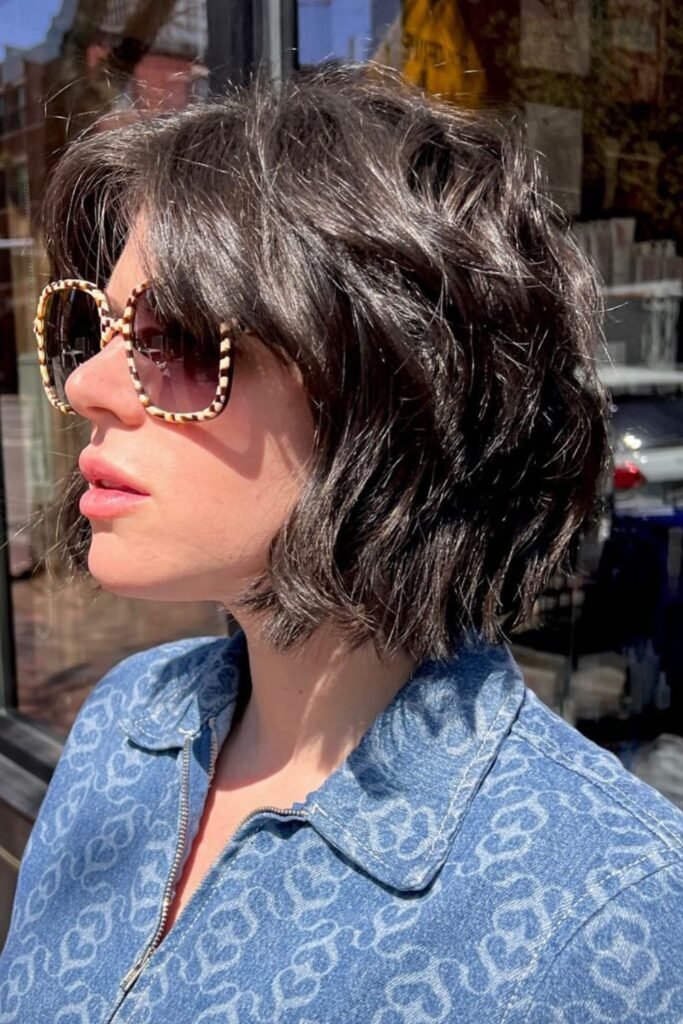
Choppy texture gives thick hair room to move instead of sitting stiff and heavy.
Shorter length around the jaw removes bulk fast,. Uneven layers stop the dreaded triangle shape.
If you want something bold but not too much labor, this is a good choice. Request razor or point cutting.
Soft Layers
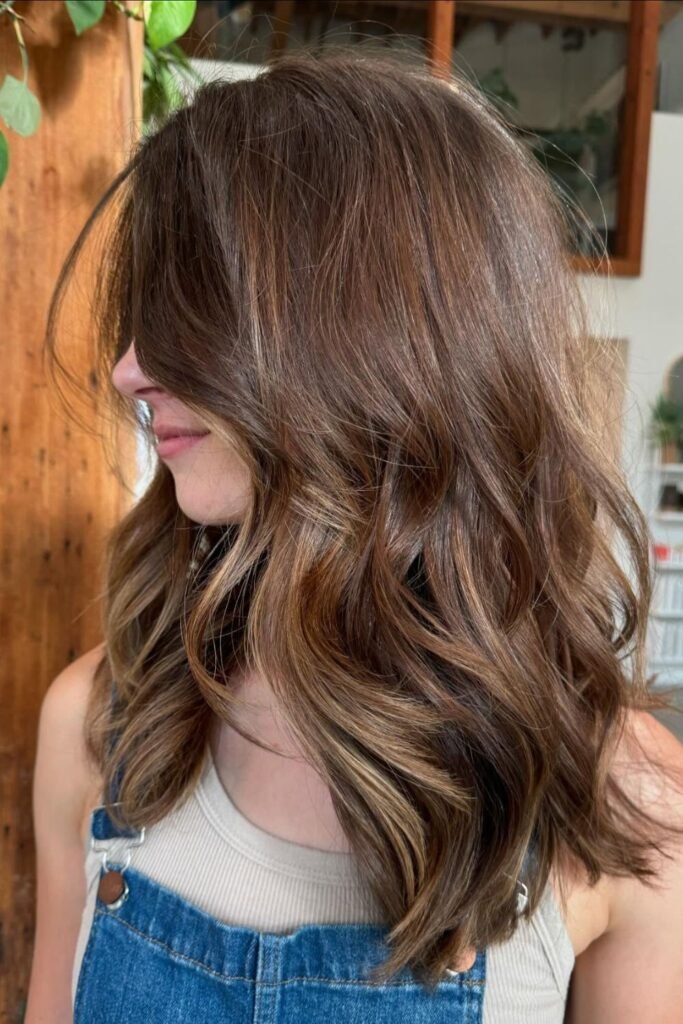
Movement matters more than length when thickness feels overwhelming. Soft layers break up the weight and help the hair fall in a relaxed, natural way instead of sitting stiff.
This technique works great for hair that is medium-length and a little wavy.
Request blended layers with light shaping around the face, and then style the hair loosely so that it moves instead of staying in a heavy form.
Long Waves
Natural waves become an advantage when thick hair needs control without looking flat. Long, flowing waves spread volume evenly.
So the hair looks full but not heavy. This works best if your hair is already a little bent or curled.
Request long layers with little thinning, and then apply a wide-barrel curler or the braid-dry method to keep the waves smooth and easy to wear.
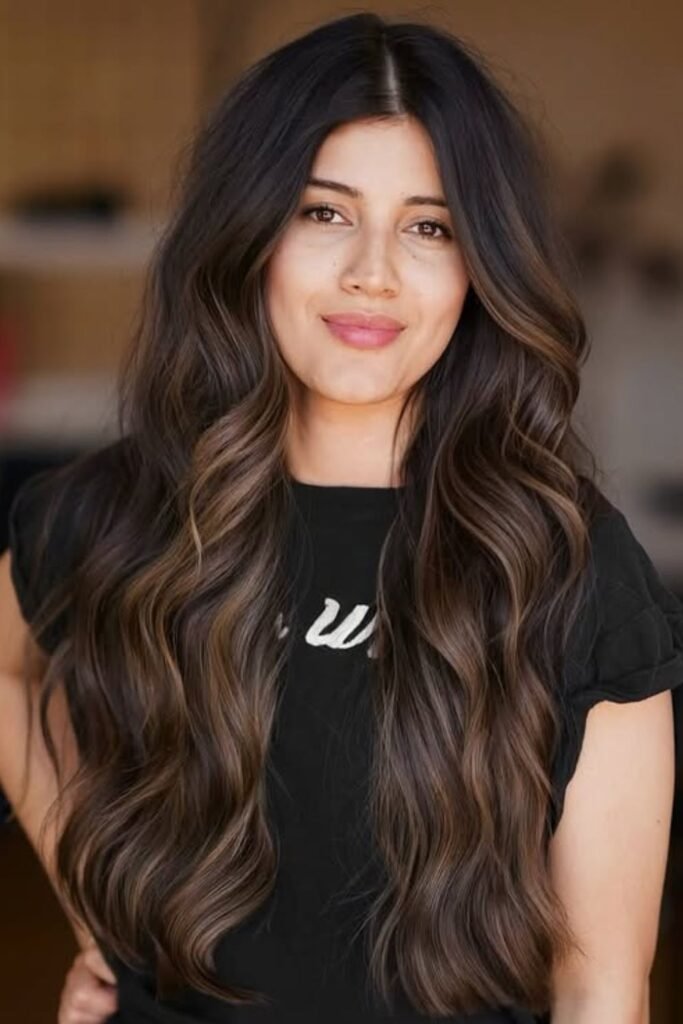
Long Length
When hair is long and thick, weight becomes a quiet assistance. Keeping it past the shoulders keeps the sides from getting too full.
And makes the hair fall naturally. If you want plain, everyday styles, this works great.
For a clean, low-effort finish, ask for long, light layers that are centered near the ends. Then, let it air-dry or blow-dry hair straight.
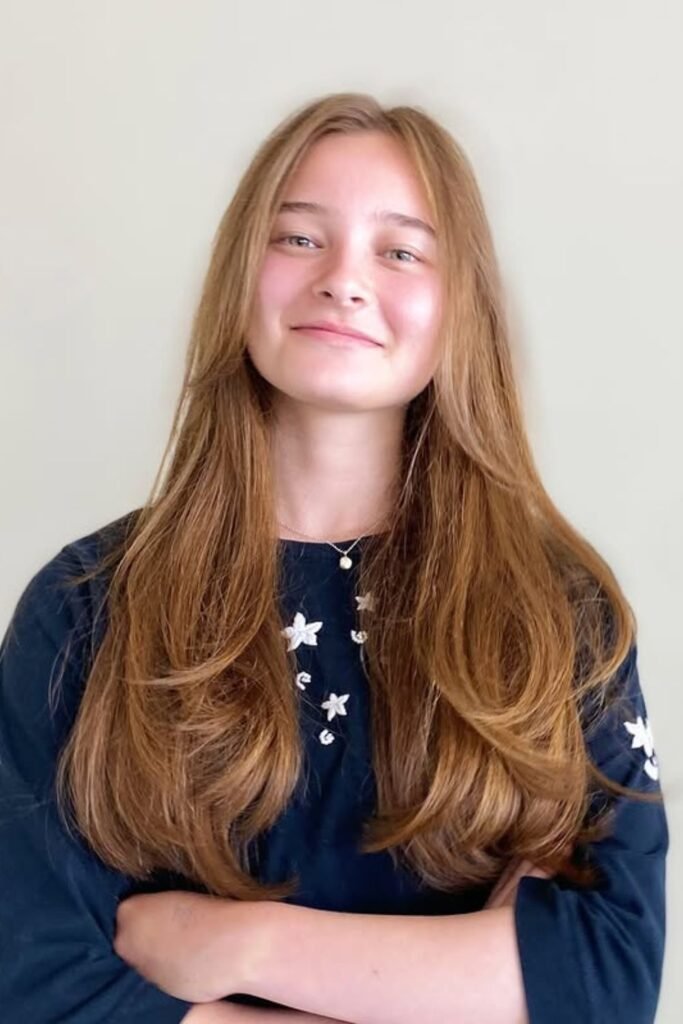
Curtain Layers
Volume gets controlled when the front carries the shape. Curtain bangs pull attention forward while layered ends keep thick hair from stacking up in the back.
This is a great option if you want to move your hair around your face but don’t want to commit to full bangs.
Request soft curtain fringe mixed into medium layers, and then use a round brush to blow-dry it so that everything flows naturally instead of puffing out.
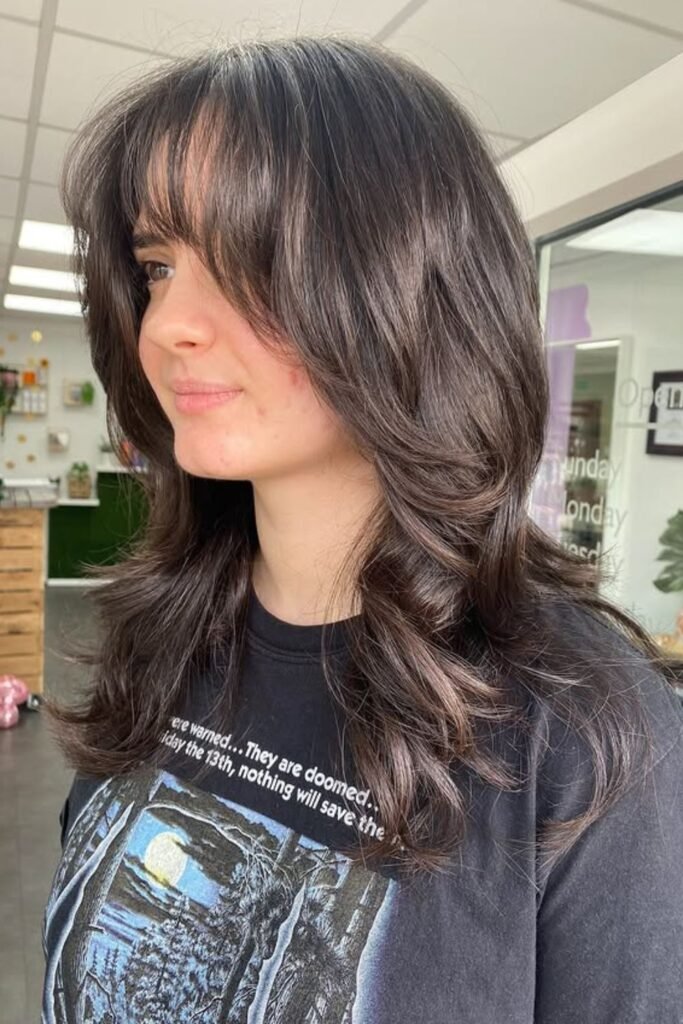
Modern Shag
Controlled chaos works surprisingly well for thick hair. Choppy layers break up density from the crown down, so nothing feels heavy or stiff.
The short fringe lets light in at the front, and the longer length in the back balances out the volume.
This style is great for people who are daring and want to roam around without having to style their hair every day.

Flowing Layers
Natural movement makes thick hair feel light and soft. Layers that flow add volume all the way down.
The hair seems full, but it doesn’t sit flat at the top. This approach is ideal if you desire soft waves and easy styling.
Ask for long, feathery layers without abrupt thinning, and then style the hair whatever you want so that it moves instead of staying in a hard shape.
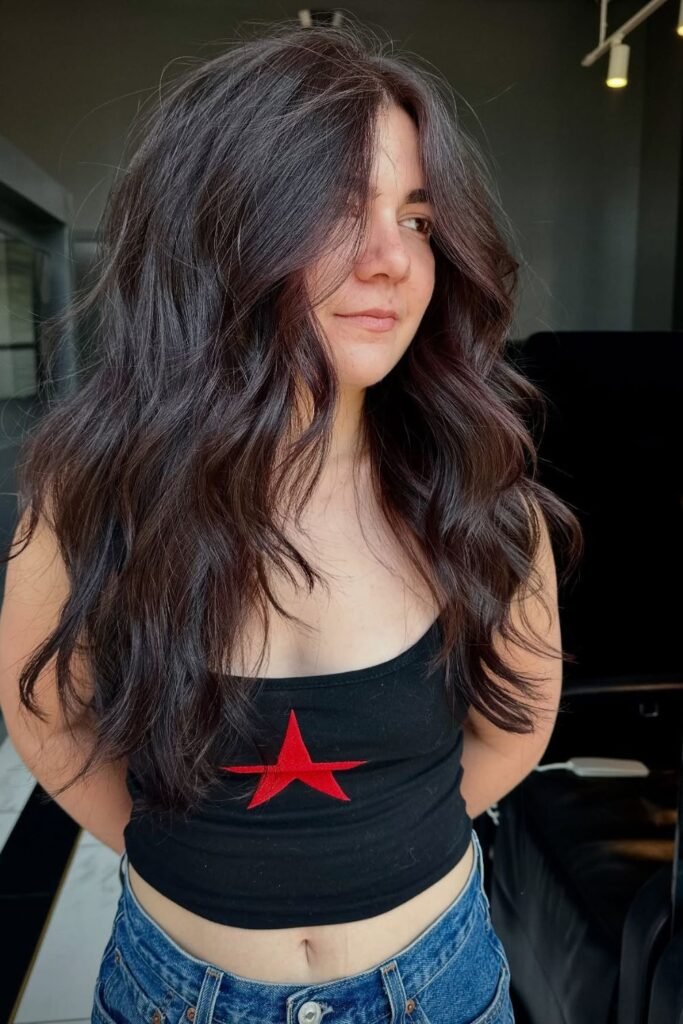
Face Layers
Front-heavy shaping changes how thick hair behaves instantly. Layers that start around the cheekbones pull volume forward.
So the back doesn’t feel bulky or wide. If your hair looks flat on top but heavy at the ends, this works wonderfully.
Request layered framing that transitions into lengthy lengths. Then, use a round brush to blow-dry the hair to curve it inward.
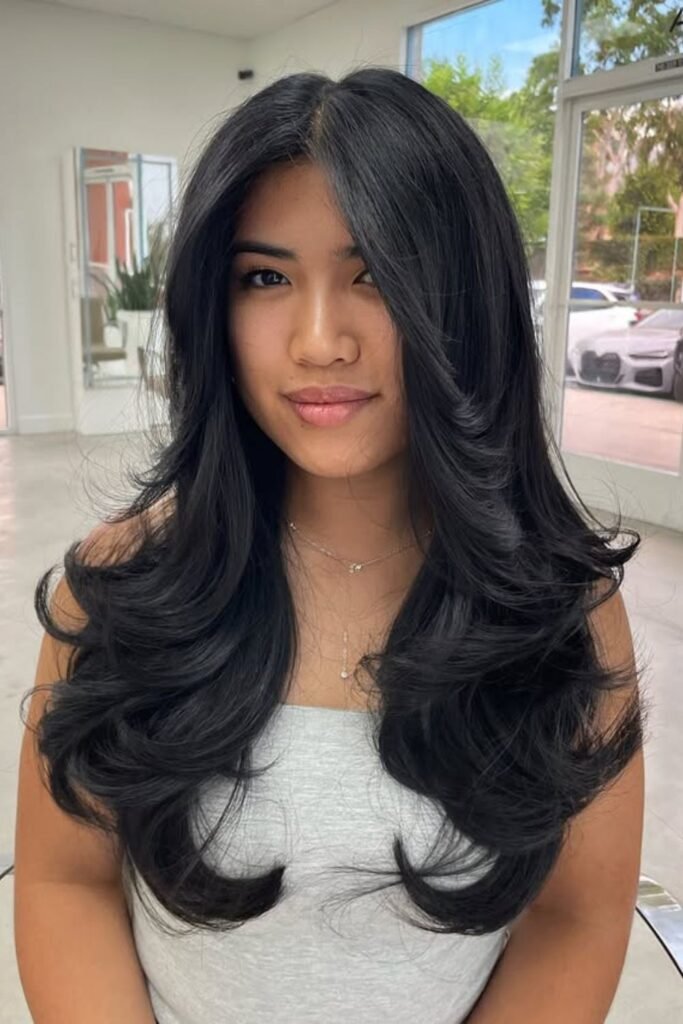
Wavy Lob
Shoulder-length cuts can work for thick hair if the weight is broken up properly. A wavy lob keeps the ends light while still giving enough length to control volume.
If you think that long hair is too much work but short haircuts are too unsafe, this is a good choice.
Request gentle layers and loose waves so that the hair moves instead of sitting heavy at the bottom.
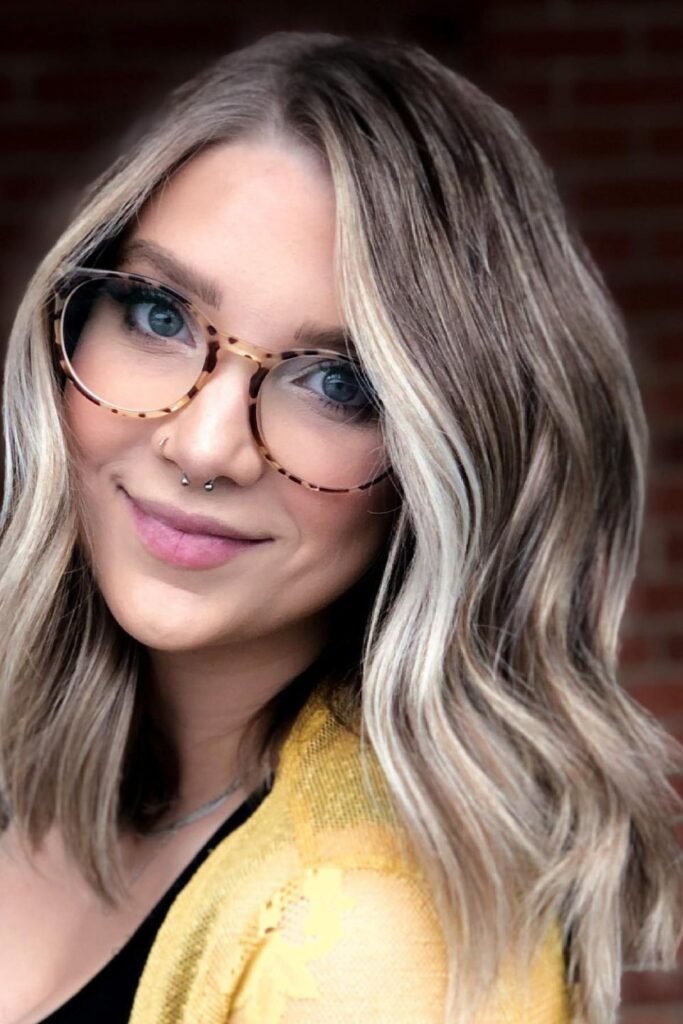
Soft Bangs
Front softness changes everything for thick hair. Light, wispy bangs break up density at the hairline, so the rest of the cut doesn’t feel heavy or closed-in.
If your hair feels thickest around your face, this works wonderfully. Ask for bangs that are airy.
And merge into shoulder-length layers. Then, blow-dry them quickly so they fall organically, not stiff or thick.

Blunt Bob
Sharp lines keep thick hair under control without extra effort. A clean, straight bob lets weight sit evenly, so nothing flips out or puffs up at the sides.
If you want simple, polished looks and don’t want a lot of layers, this is the best way to go.
For a sleek, low-fuss finish, ask for a precise cut with as little layering as possible. Then use a blow-dryer or flat iron to smooth it out.
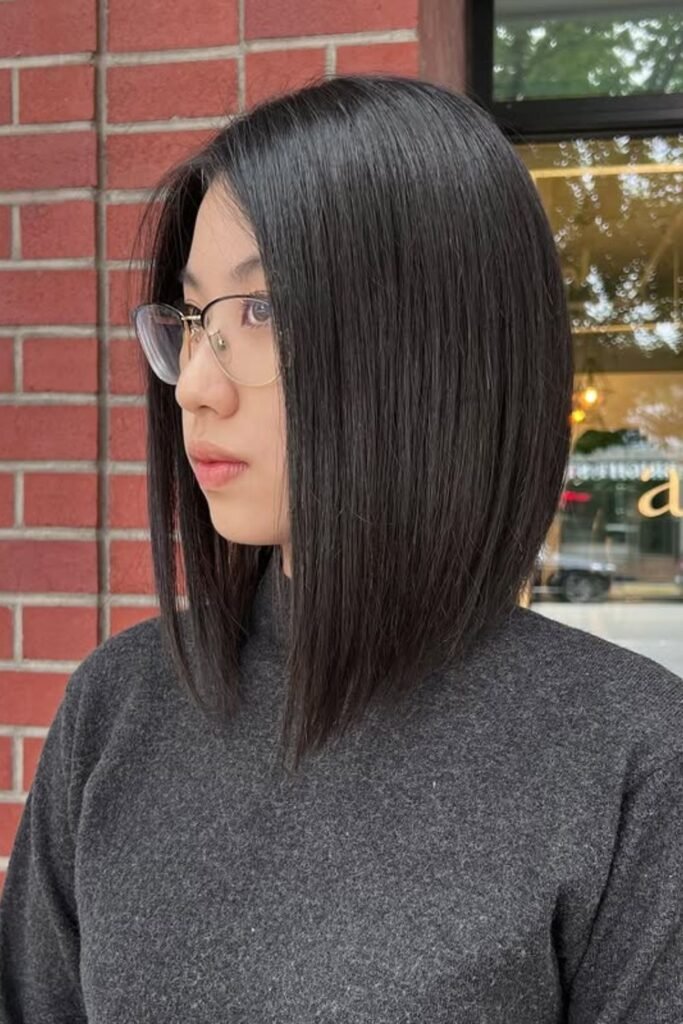
Shag Layers
Texture takes the pressure off thick hair fast. Shag layers remove weight from the middle and ends, so nothing feels heavy or flat against the head.
A short fringe keeps the top light, while lengthier pieces make up for the length. If you like a look that isn’t too polished, this is the ideal way to do it.
Request choppy layers and a style with little product so that the shape may breathe.
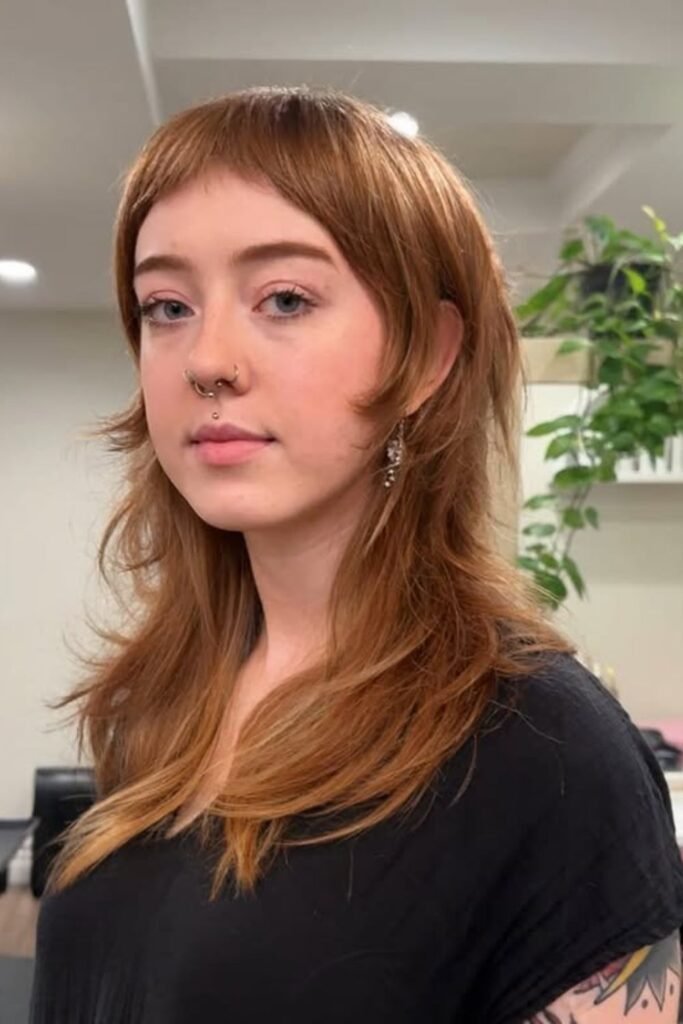
Blonde Waves
Color and cut work together when thick hair needs balance. Soft blonde dimension breaks up visual heaviness.
Long waves spread volume along the length of the hair instead than letting it sit at the ends.
This works well for thick hair that feels flat but heavy. Get long layers with blended highlights, then style your hair with loose waves so the color and shape do the work.
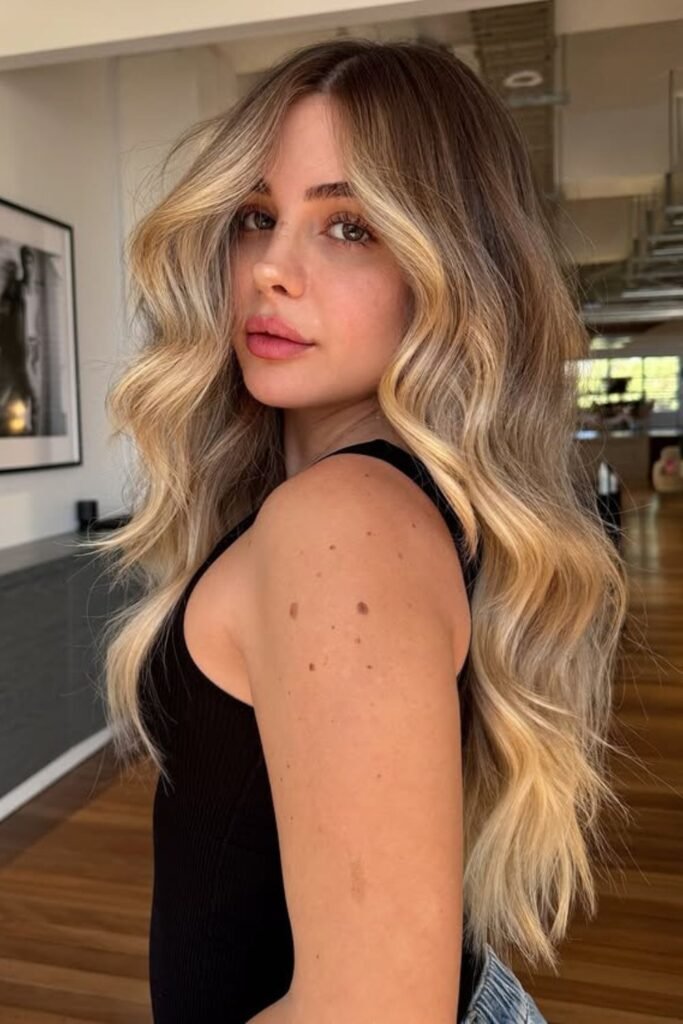
Wispy Layers
Lightness around the face influences how thick hair falls anywhere else. The wispy layers on the front soften it while keeping the length full, so the hair doesn’t seem heavy.
This works great if your hair gets thick around your face or jaw.
Request light, face-framing layers and a rapid blow-dry to keep the ends supple instead than heavy.
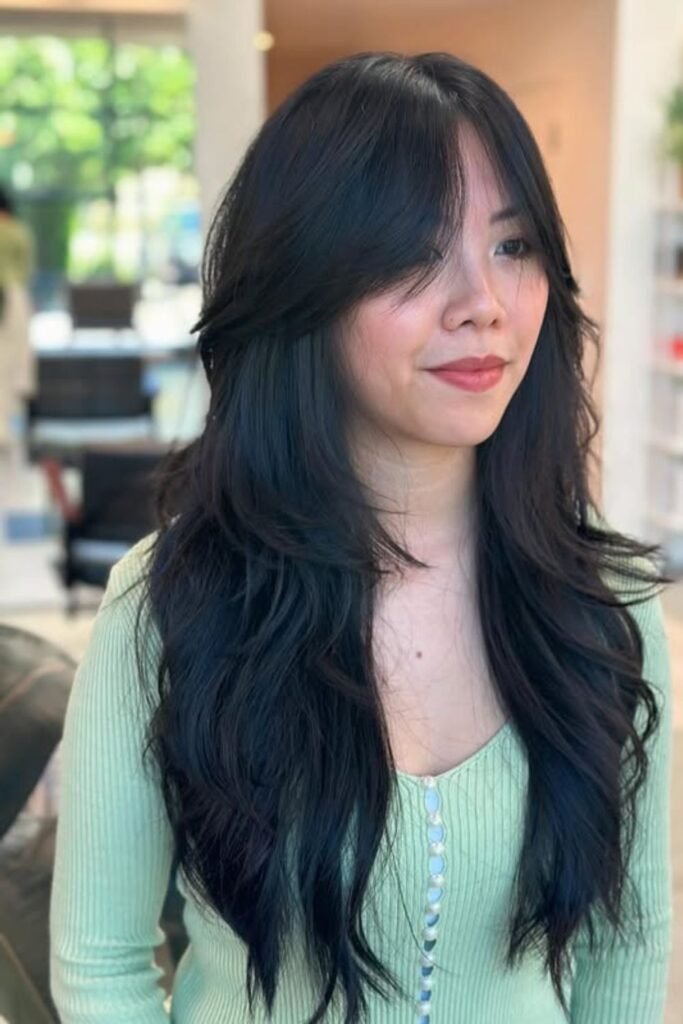
Classic Layers
Balance is what keeps thick hair looking polished instead of heavy. Classic layers distribute volume evenly.
So the hair holds shape without puffing out at the sides. This choice is great for both work and everyday use.
To keep everything under control and soft, ask for long, smooth layers with a little bit of shaping at the ends. Then, blow-dry with a round brush.

Feathered Ends
Weight disappears fast when the ends are shaped instead of chopped. Feathered ends keep thick hair moving.
So it doesn’t stack up or feel heavy through the length. This works good if the bottom of your hair is thick but the top is flat.
Request lengthy layers with ends that flip out softly. Then, use a round brush to blow-dry your hair to keep it airy and flowing.
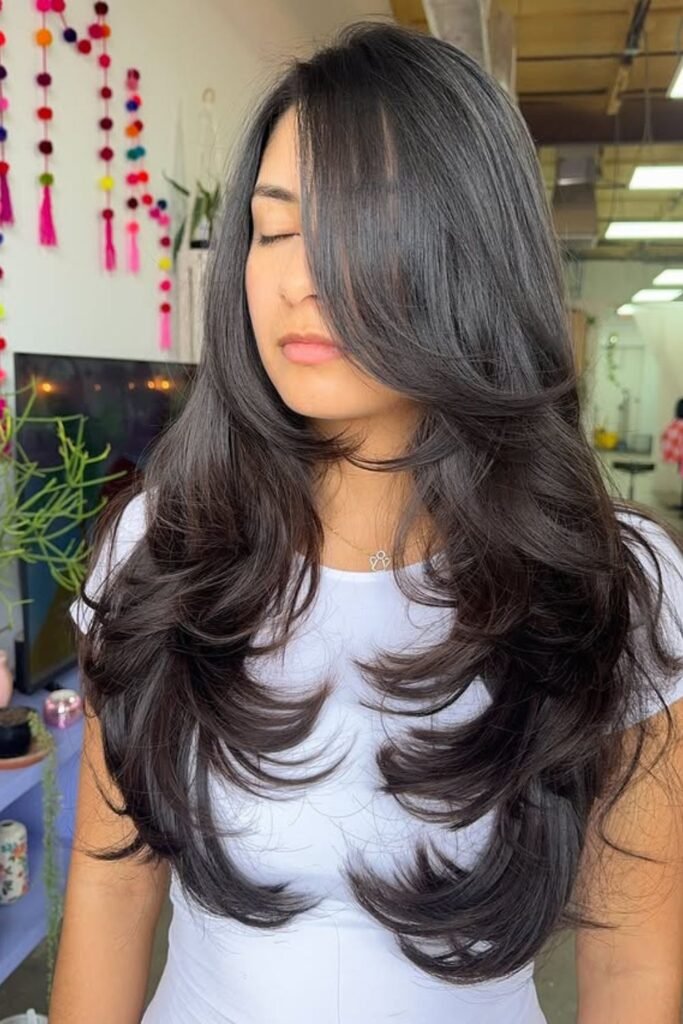
Rounded Layers
Soft curves change how thick hair sits on the shoulders. Rounded layers remove harsh edges, so the hair looks full but not bulky or stiff.
If blunt cuts make your hair feel heavy at the ends, this works wonderfully. Get curved layers that follow the form of your head.
And then blow-dry with a round brush to maintain the volume smooth and under control.
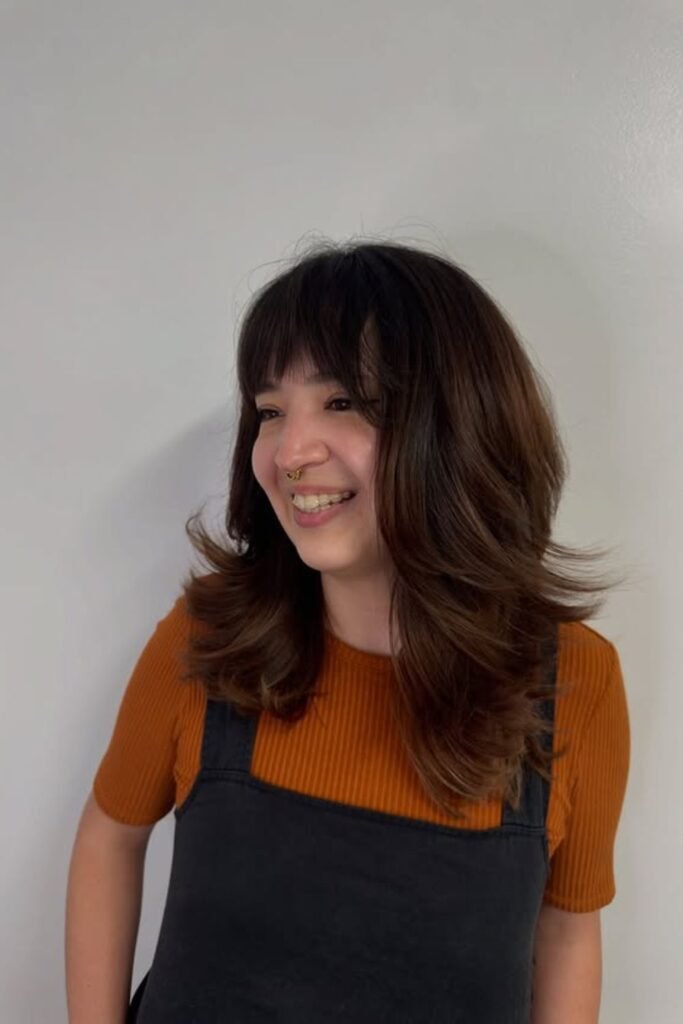
Sleek Length
Smooth, straight finishes show how well thick hair behaves when the cut is right. Keeping the length long allows weight to pull everything down.
It doesn’t look flat or dead because of the modest curving toward the ends. If you desire a clean, polished look, this is the best way to do it.
Ask for as few layers as possible and regular trims. Then, apply a heat protectant and flat iron to get a smooth, shiny look.
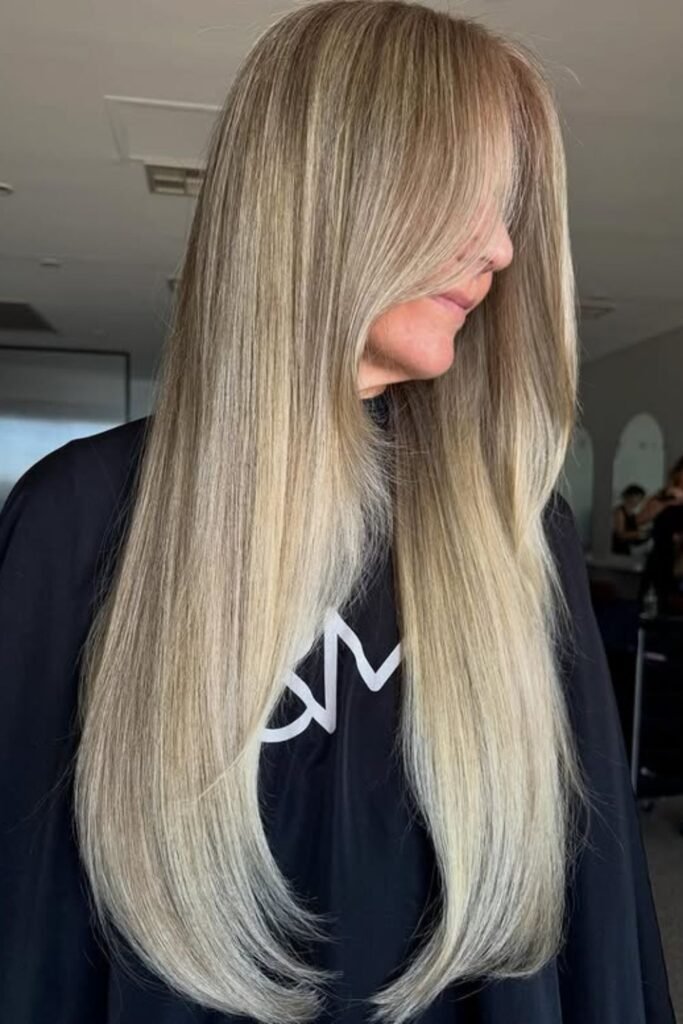
Volume Layers
Fullness feels intentional when the volume is placed, not accidental. Layering through the mid-lengths lifts thick hair away from the scalp while keeping the ends controlled.
This is a good way to style your hair if it seems heavy on top yet flat on the bottom.
When you ask for layers, make sure they start below the crown and mix down. Then, use a round brush or loose curls to style your hair so that it stays balanced.
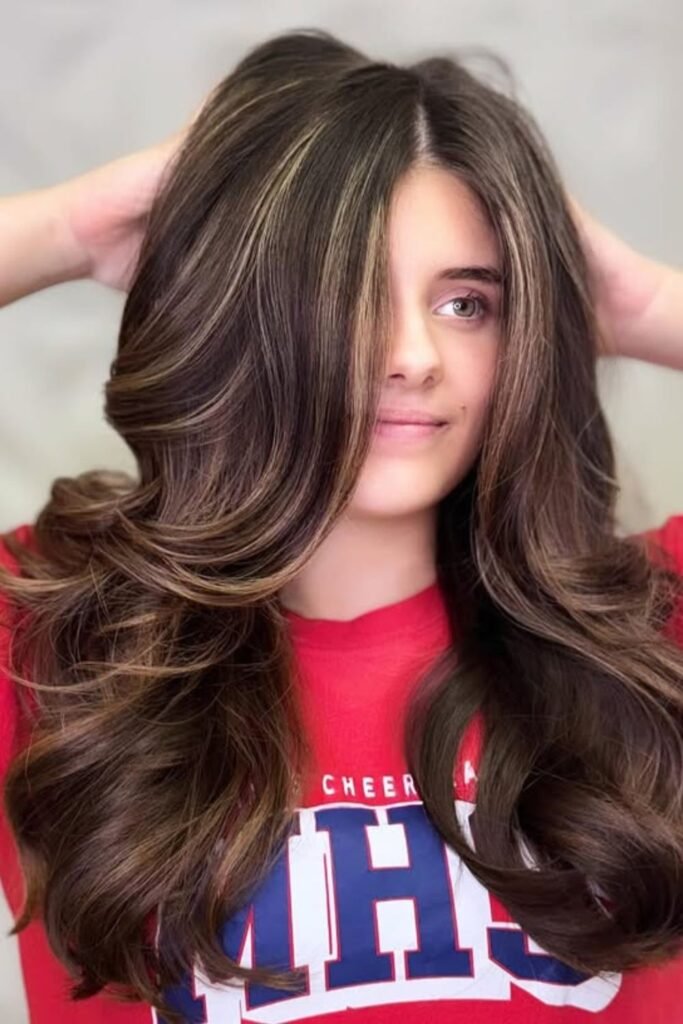
Natural Texture
Letting texture lead makes thick hair easier to live with. Soft layering allows natural waves to show without forcing volume where it’s not needed.
This choice is good if your hair already has some movement and you don’t want to style it with heat every day.
Request light, unequal layers that follow the natural pattern of your hair. Then, use a curl cream or air-dry product to keep everything loosened and defined.

Layered Fringe
Breaking up the front changes how thick hair sits everywhere else. A soft, layered fringe lightens the hairline.
The rest of the length doesn’t feel heavy or flat. This works effectively if your hair is thick around your face.
Tell your stylist you want airy bangs mixed in with lengthy layers. Then, style the bangs lightly so they move instead of sticking or spreading out.
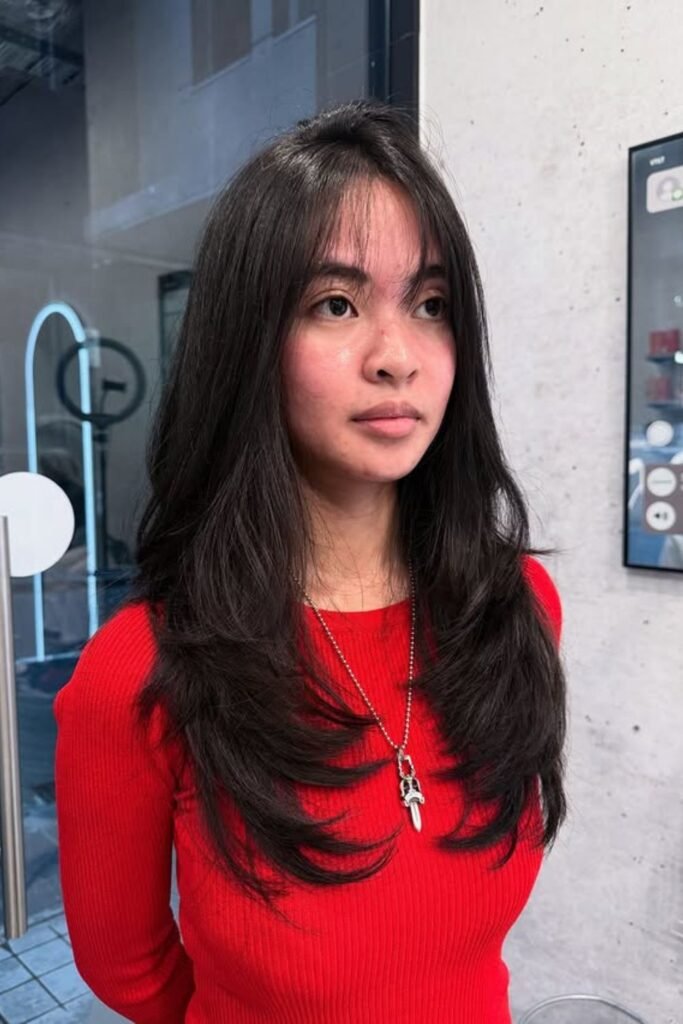
Layered Movement
Air between the layers is what keeps thick hair from feeling stiff. Strategic layering through the mid-lengths creates movement, so the hair lifts and flows instead of sitting flat.
This is a good way to style your hair if it feels heavy but you still want it to look good.
Request a layered cut with gentle separation, and then use a light blow-dry to shape it so that it stays bouncy and not heavy.
FAQs
Does thick hair always need layers?
Yes, most of the time, but not always. If you have thick hair without layers, it can hold weight and start to look bulky, especially at the ends.
Minimal shaping can work if you desire a sleek or harsh look, but removing layers totally usually makes thick hair harder to deal with as it grows out.
How do I explain my thick hair problem to a stylist?
Don’t suggest you want “less volume.” Tell me where the weight hurts. Let them know if your hair is flat on top, puffy on the sides, or heavy at the bottom.
They can choose the proper length and layers instead of guessing when they have clear instructions.
Hi, I’m Afaf! I’m a law student who loves writing about everyday life – from home projects and crafts to fashion, beauty, and parenting tips.
I’ve been writing for over a year, sharing ideas that are simple, practical, and easy to try. I write about things I find interesting and useful, whether that’s organizing a space, trying a new DIY, or finding activities to keep kids entertained.
My goal is to share helpful ideas without making things complicated. If it works in real life, I’ll write about it.
When I’m not studying or writing, I’m usually experimenting with new projects or scrolling for inspiration!