
22 Ikea Kids Room Ideas for 2026
I stood in my daughter’s little bedroom last year, holding a laundry basket and wondered how all this mess could fit in such a small place.
There are toys under the bed. Piles of books that aren’t in order. Clothes that no longer fit in the dresser.
It always felt constricted again the next day, no matter how many times I cleansed it. The problem isn’t that you’re messy if your child’s room looks the same.
In this article, I’ll teach you how to make a small room funcitional with Ikeas products and 22 Ikea kids room ideas.
Let’s jump in!
How Do You Make A Small Kids Room Functional With IKEA Solutions?
You can’t treat a tiny room like a big one. You need to plan things in a different way. Begin with the largest thing: the bed.
The room feels small if you squander space around it. Put it against a wall or lift it up to make the floor free.
Then repair the storage before you add anything cute. The mess comes back quickly if toys don’t have a clear place to go.
Don’t only use the floor; use the walls too. Put in tall units, hooks, and shelves.
Even if the room is small, think of it as having several areas for sleeping, playing, and studying.
Save this article for later!👇👇👇
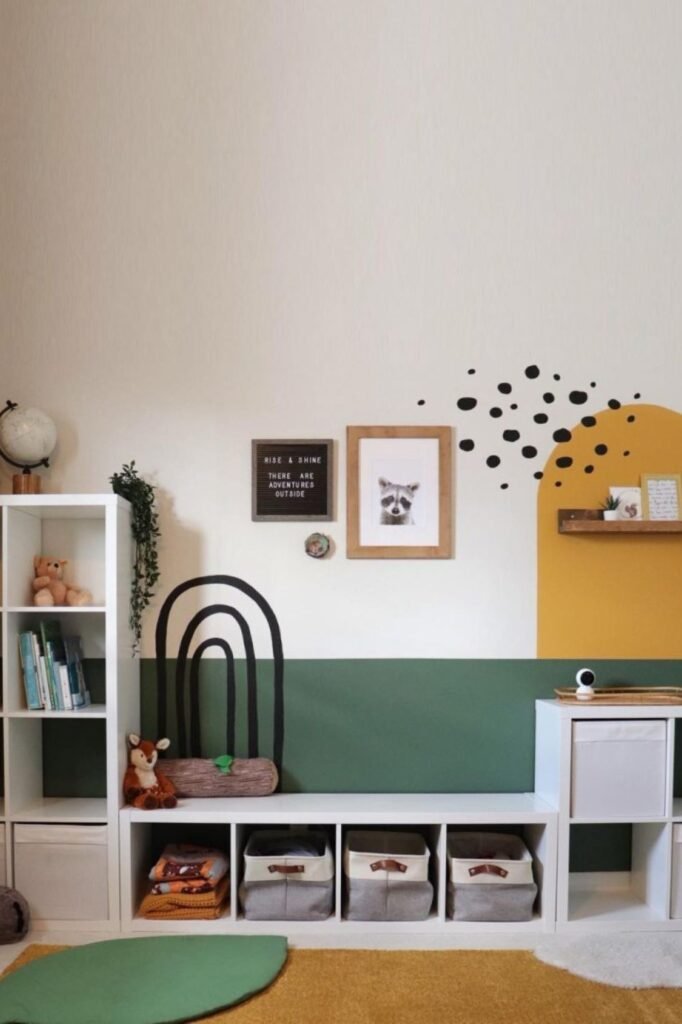
Smart Cubes
Floor clutter disappears fast once every toy gets its own square. Open cube storage like this works best along a long empty wall, especially in narrow rooms.
Where heavy dressers feel heavy. Put some closed containers on the bottom for toys that are messy, and leave a few top cubes open for books and display items.
That balance makes the room look good while yet being useful. Low units can also be used as benches, so you don’t need to buy extra seats.
Put a cushion on top, and all of a sudden it turns into a place to read. If you copy this plan, make sure the tallest unit is on one side so that it doesn’t block the wall.
You may give it individuality without adding more furniture by painting behind it or adding basic wall art.
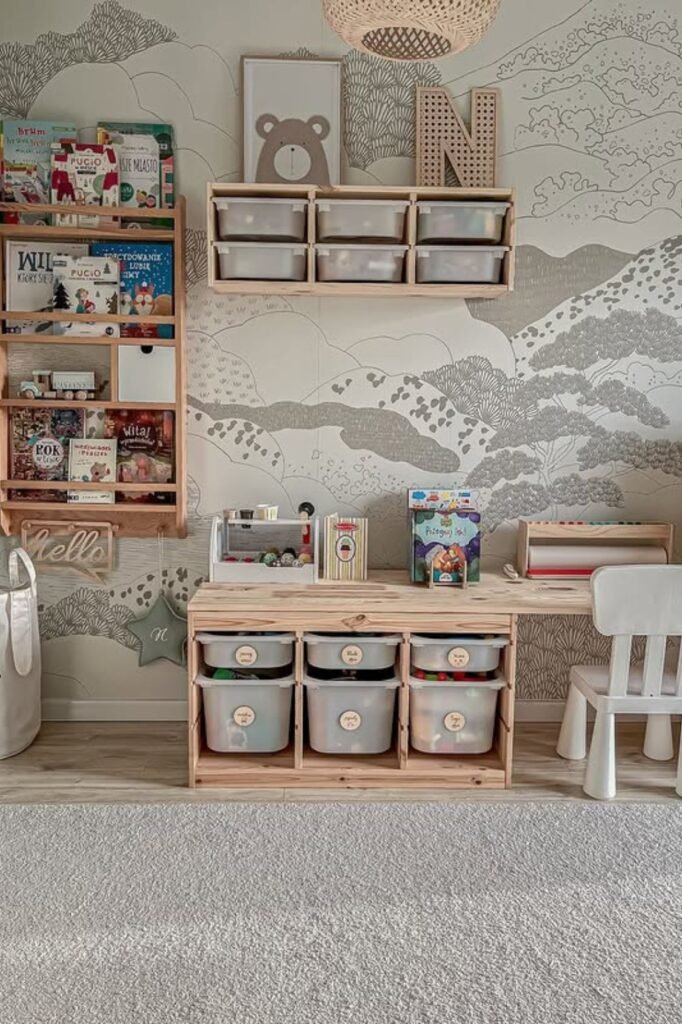
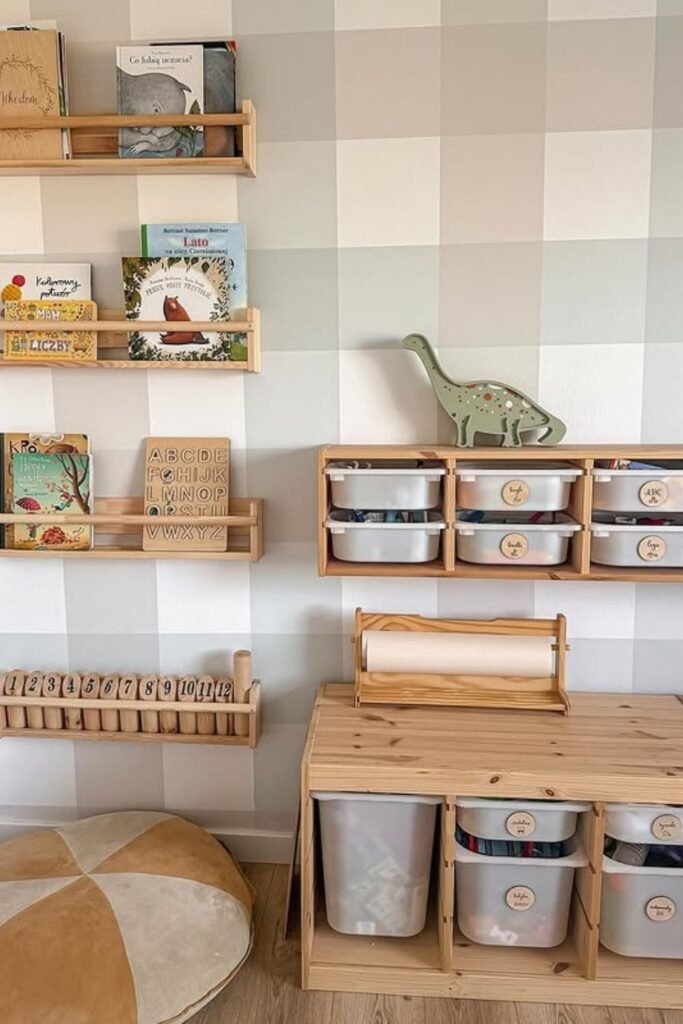
Reading Wall
Book piles shrink quickly once covers face forward instead of hiding on a shelf. Front-facing book racks like this turn reading into part of the décor.
Kids will instinctively grab what they can see. Put it at their level, not yours. They’ll utilize it more if they can get to it without asking.
Put shallow wall bins on top of a small table with it to hold puzzles, craft kits, or small toys. Keeping supplies for activities near your desk saves.
You from having to move things around the room. Low storage under the table avoids heavy toys from falling off the wall.
Works well in small bedrooms where you don’t have room for a whole bookcase. Pick natural wood colors and keep the walls serene so the books stand out.
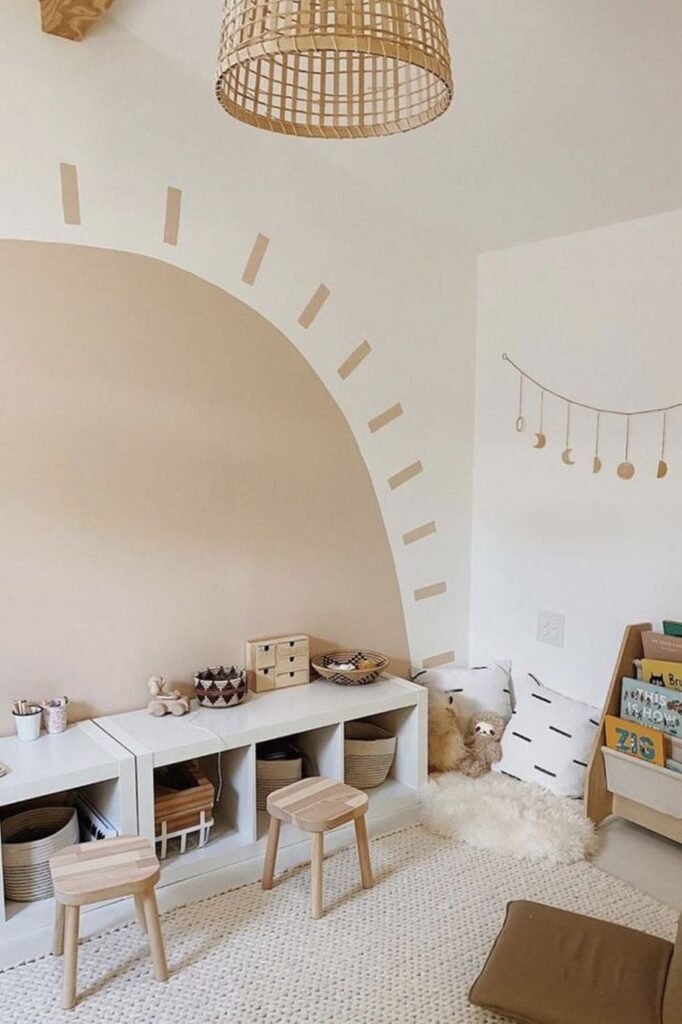
Calm Corner
Too much color and noise can overwhelm a small room fast. Soft tones like beige, cream, and light wood calm everything down and make tight spaces feel open.
A low cube unit against the wall keeps toys close by and has a display ledge on top. Put in little stools.
Instead of big chairs so youngsters may sit, write, or play without taking up too much space on the floor.
A rack of books facing the front near the play area encourages quiet time without the need for a separate reading corner.
Keeping everything low helps kids be independen especially toddlers. To add character without adding more furniture, paint a simple shape on the wall behind the storage.
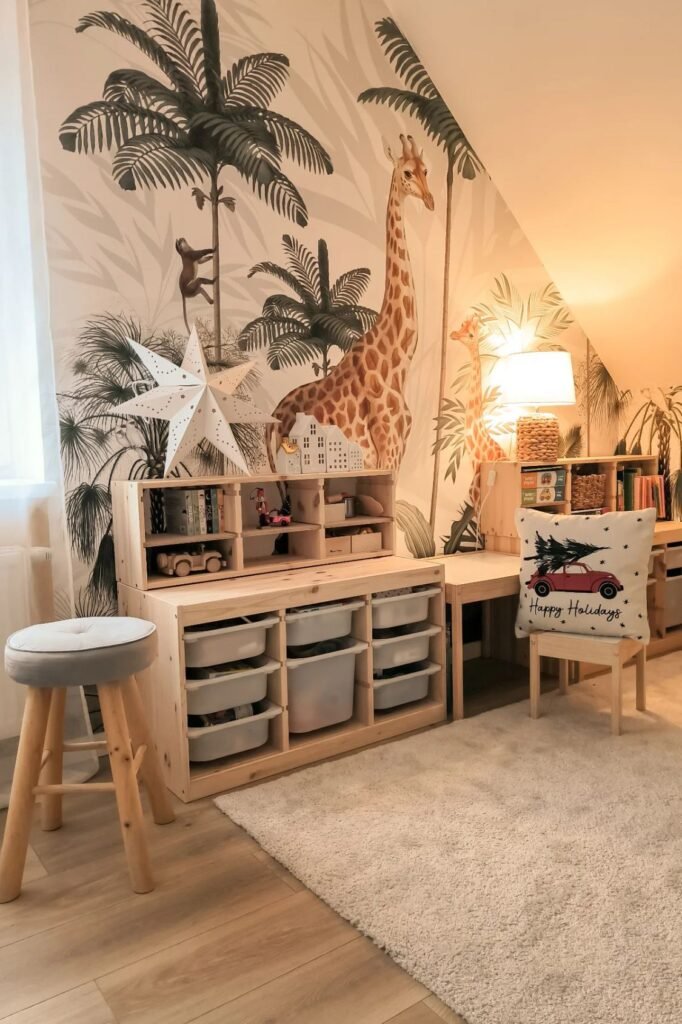
Jungle Study
Homework feels less boring when the space around it sparks imagination. A long low unit with pull-out bins keeps toys sorted underneath while the top turns into a work surface.
You can make a real study area without buying a whole desk set by putting a second narrow table next to it.
A big piece of art on the wall or a painting behind the setup provides the room character without taking up floor space.
It works especially effectively in spaces with sloped ceilings where towering wardrobes won’t fit. Label the bins so that toys and school supplies don’t get mixed up.
Natural wood furniture keeps everything warm and flexible so you may change the decor later without having to buy a new storage foundation.
Corner Command
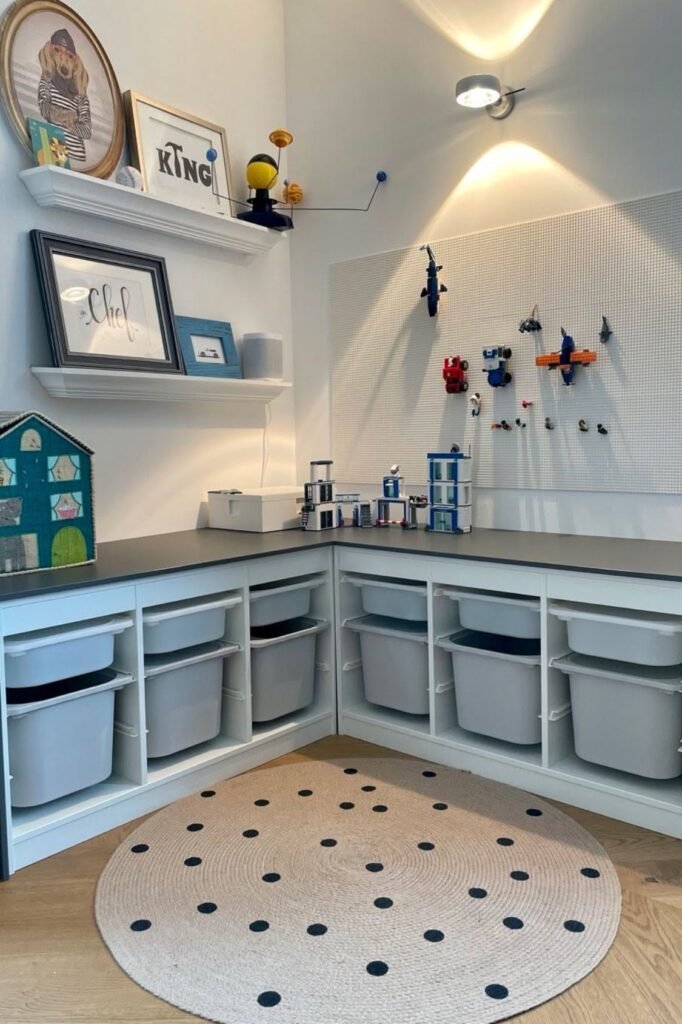
Empty corners usually turn into wasted space or random clutter. Turn that dead zone into a storage powerhouse by running low cube units along both walls.
When you put them together in an L-shape, you have a long surface for building blocks, puzzles, or pretend play. You can also hide the trash underneath in pull-out bins.
Put up a big pegboard above the kitchen to keep your favorite toys off the floor but still easy to get to.
It works well for LEGO, automobiles, or little collections that tend to get all over the place. Add higher wall shelves for showcase pieces so that play stays below.
Great for square rooms where one corner does not feel right. Leave the top surface free except for projects that are going on right now.
Play Bench
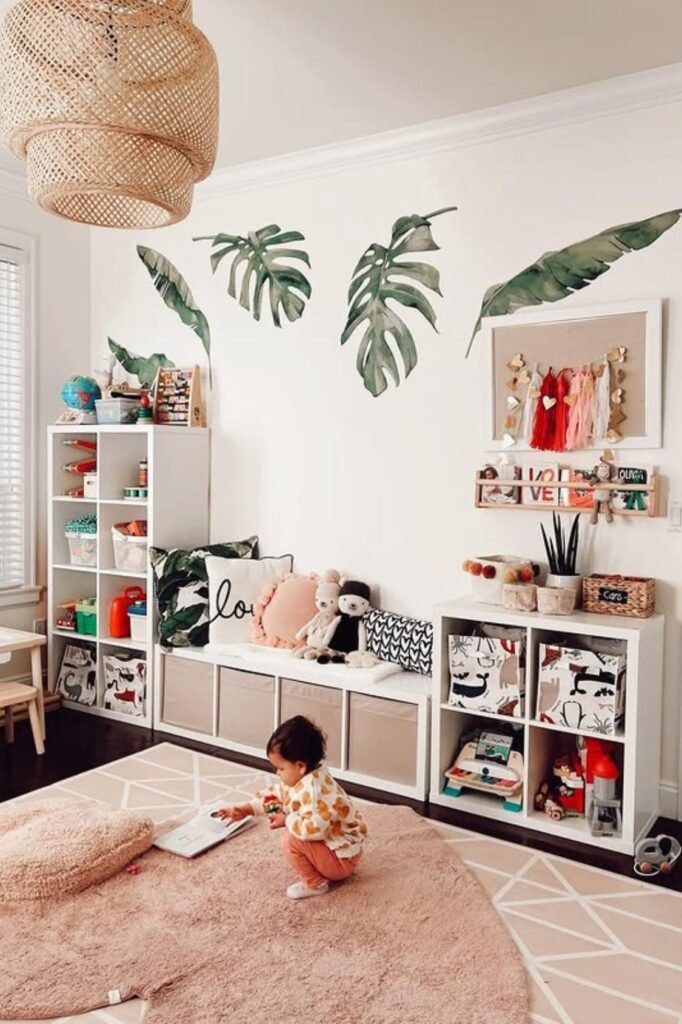
Center space matters more than extra furniture. Keeping the middle open gives kids room to spread out without bumping into storage.
A long cube unit against the wall can hold toys and offer a nice place to sit.
Put some cushions on top, and it will be a great place to read without taking up more floor space.
There is tall shelf on one side that balances the wall and holds books, art supplies, or display items.
The closed bins on the bottom hide the visual disarray, and the open cubes on the top make it easy to grab your favorite things.
Works great in bedrooms or playrooms that are shared and need both sitting and storage along one wall.
Wood Storage
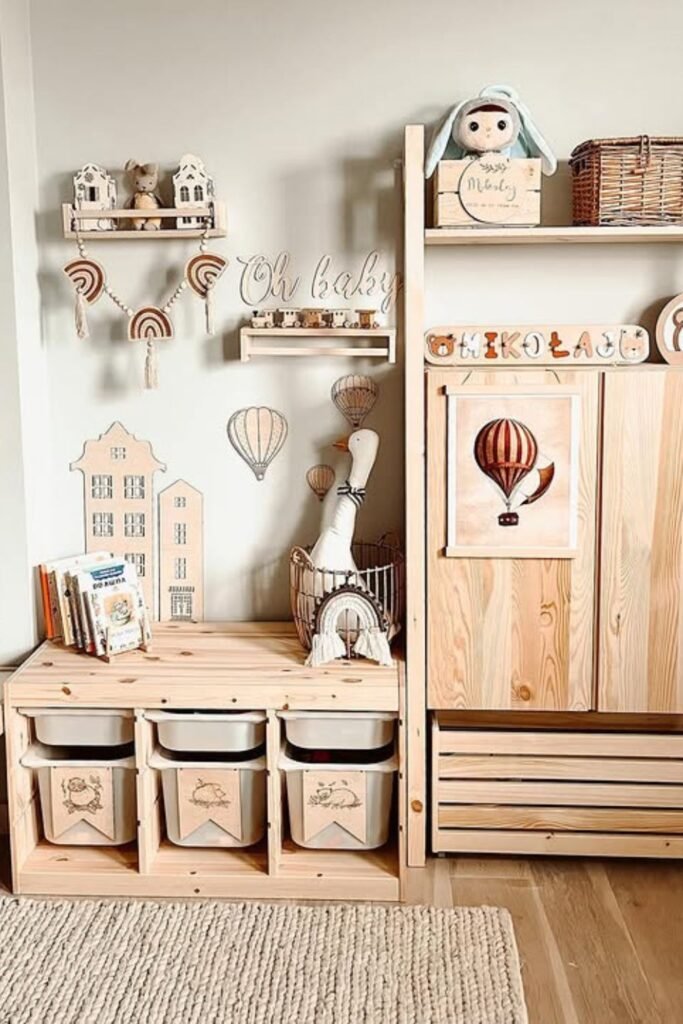
Warm wood changes the whole mood of a kids room. Natural finishes make storage feel like furniture, not plastic bins shoved against a wall.
A low unit with pull-out bins makes it easy to get to ordinary toys, and the top is a display ledge for books and small decorations.
Adding a tall cabinet next to it solves the problem of where to put bigger objects. Use the closed doors to store big things or things.
That you just need sometimes and don’t want to see all the time. Baskets for lighter toys or memory boxes might go on the open shelf above.
Works best in neutral or Montessori-style settings where you want to keep things quiet instead of too many colors.
Loft Layers
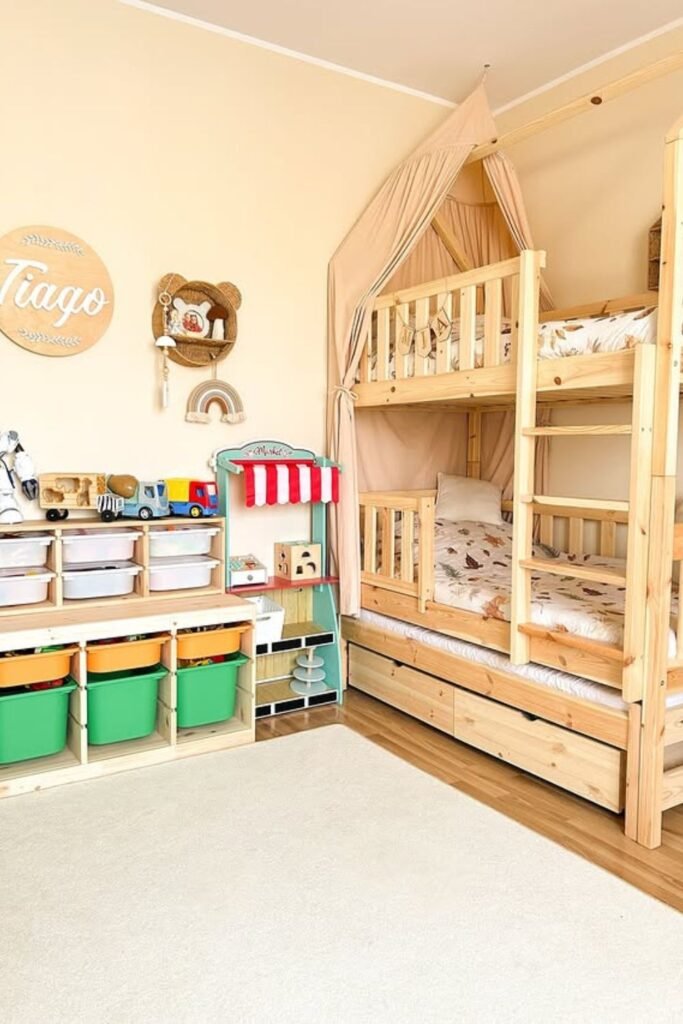
Sleeping and storage don’t have to compete for space. Stacking the beds instantly frees up half the room, especially in shared bedrooms.
The drawers under the bed can hold pajamas, extra bedding, or things that aren’t in season, so you don’t need another dresser.
Put low storage with bins on the other wall to keep toys organized and simple to get to. If siblings share the space, use containers that are color-coded.
It reduces fights and speeds up cleaning. Putting a soft canopy around the top bed makes a comfortable space without putting up walls.
It makes each youngster feel like they have their own space, albeit in one room.
Works best in medium- to small-sized bedrooms where two beds would take up too much.
Low Living
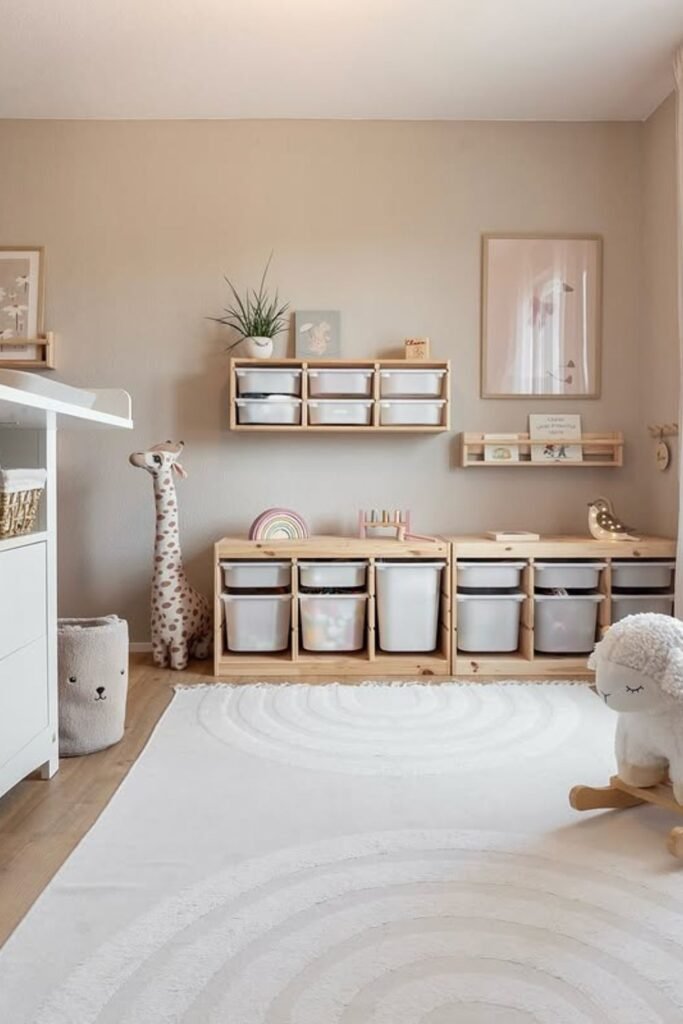
Toddlers don’t need tall furniture. Keeping everything at their level changes how they use the room.
Low storage cabinets with pull-out bins enable kids choose out their own toys without needing aid, which helps children become more independent and cuts down on Mom.
Shallow bins that are installed on the wall above the base unit provide you more storage capacity without taking up floor space.
Put little toys, painting tools, or things you want to keep an eye on in them. A soft rug in the middle makes a natural play area.
There shouldn’t be any coffee tables or big chairs just open space. Works well while moving from nursery to toddler, when safety and simple access are most important.
Window Storage
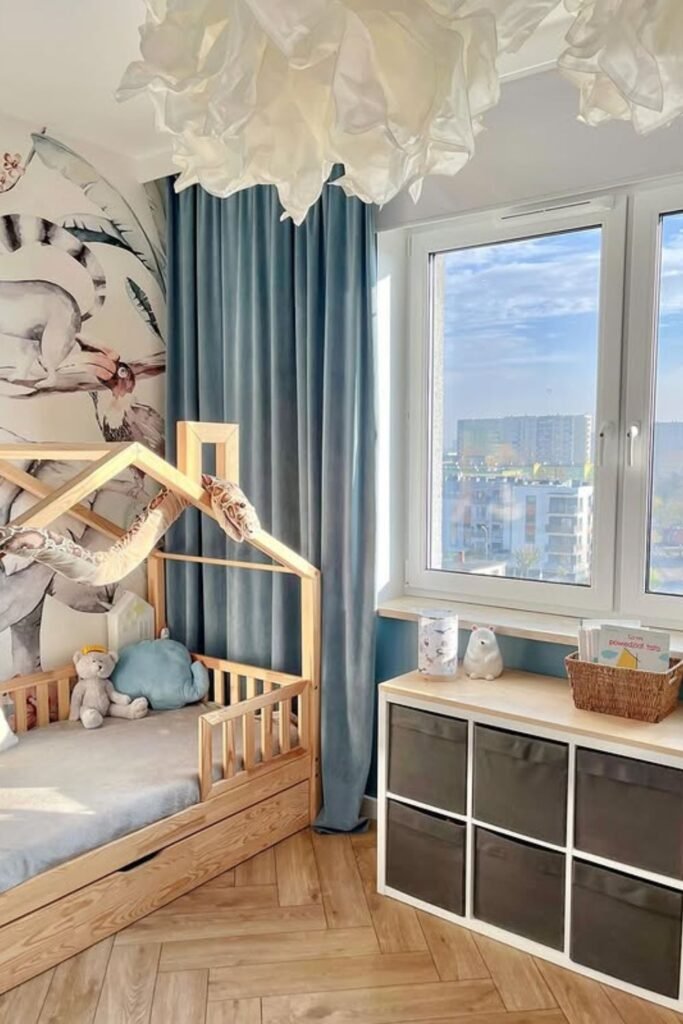
Natural light already makes a small room feel bigger, so don’t block it with tall furniture. A low cube unit under the window keeps storage practical.
Put toys in locked bins and leave the top open for a few books or a basket. Putting storage here works best in rooms where the bed takes up one wall.
It fills in an inconvenient space without making the layout too crowded. Add floor-length drapes to the space to make it feel softer and taller.
House-frame beds give a room flair without taking up too much space, which is great for small rooms.
Make sure the rest of the furniture is low so that the bed stands out. The room feel lighter and more open if you plan around the window and instead of ignoring it.
Label System
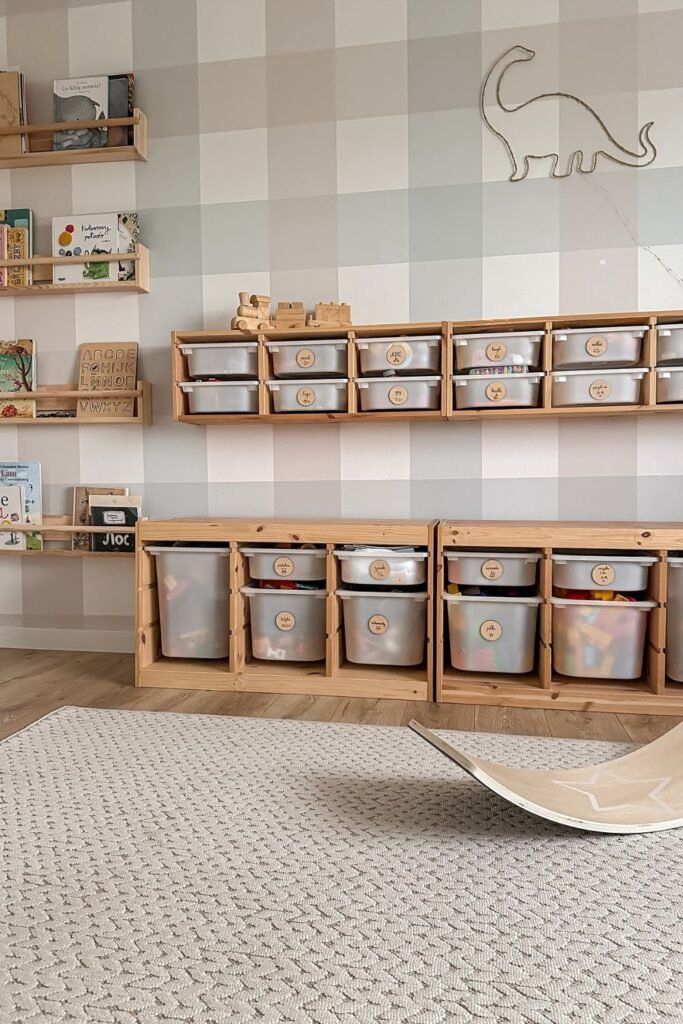
Cleanup stops being battle once kids and know exactly where things go. Clear bins with simple round label and turn toy chaos into categories they can understand.
They don’t have to search through one big package; they can see what’s inside and put it back on their own.
Putting low storage along the wall makes things easy to get to. Adding a second row of shallow bins above uses vertical space without making the room feel crowded.
Add slender book ledges on the sides so that reading stays visible and inviting. Best for playrooms or bedrooms that are shared and have a lot of toys.
For younger youngsters, visuals perform better than words when it comes to labels. Use only one sort of bin so that the wall looks neat even when it’s full.
Cozy Nook
Window space doesn’t have to sit empty. Turning a low cube unit into a bench gives you storage and seating in one move.
Put toys, extra blankets, or dress-up clothes in the weaved baskets and slide them inside to hide them.
Put large pillows on top, and it turns into a place where kids prefer to read. Putting it under the window is the ideal option for bedrooms with little wall space.
You keep the light, get more storage, and don’t make the center of the space too crowded.
The floating shelves above contain books and small decorations without taking up floor space. Pick baskets that aren’t too bright so the wall doesn’t look too busy.
If you want to add some personality, choose colorful cushions. When the toys are put away, the whole wall seems like it has been styled instead of being filled with storage.
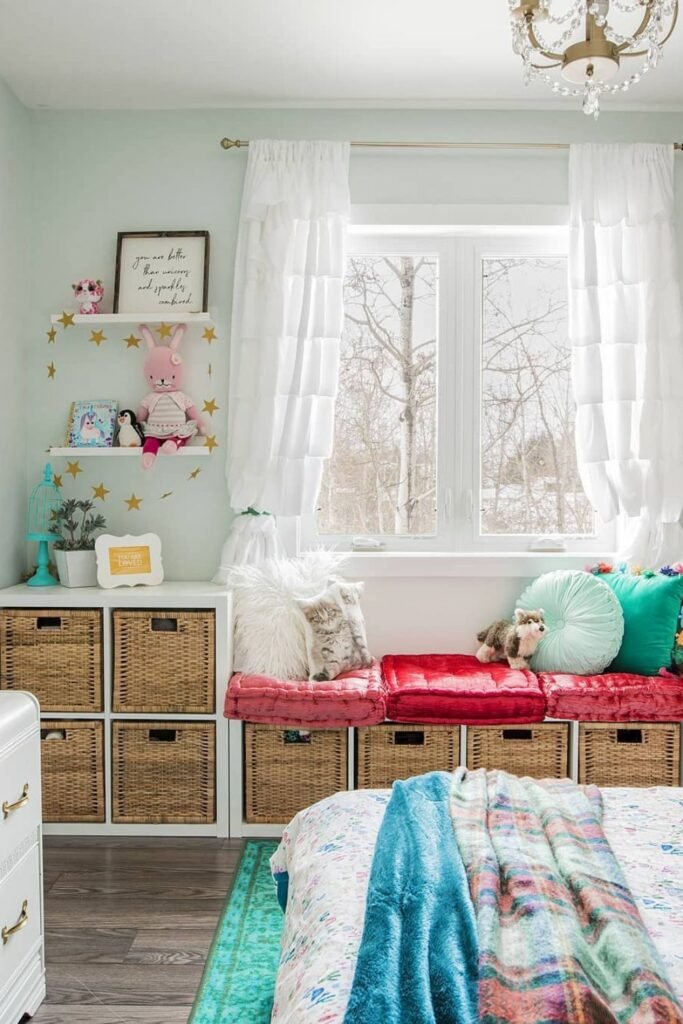
Bench Storage
Floor space disappears fast in shared bedrooms, so combine seating and storage instead of adding separate pieces.
Running low wooden units along the wall makes it look like they are built in and hides toys in pull-out bins.
You may make a little reading seat by leaving one center portion free and adding a cushion. This doesn’t take up any extra space.
Tall side units help break up the wall visually, which is especially helpful in sibling rooms where each child has their own “zone.”
Put baskets or your favorite books on the top so that things you use every day are simple to reach.
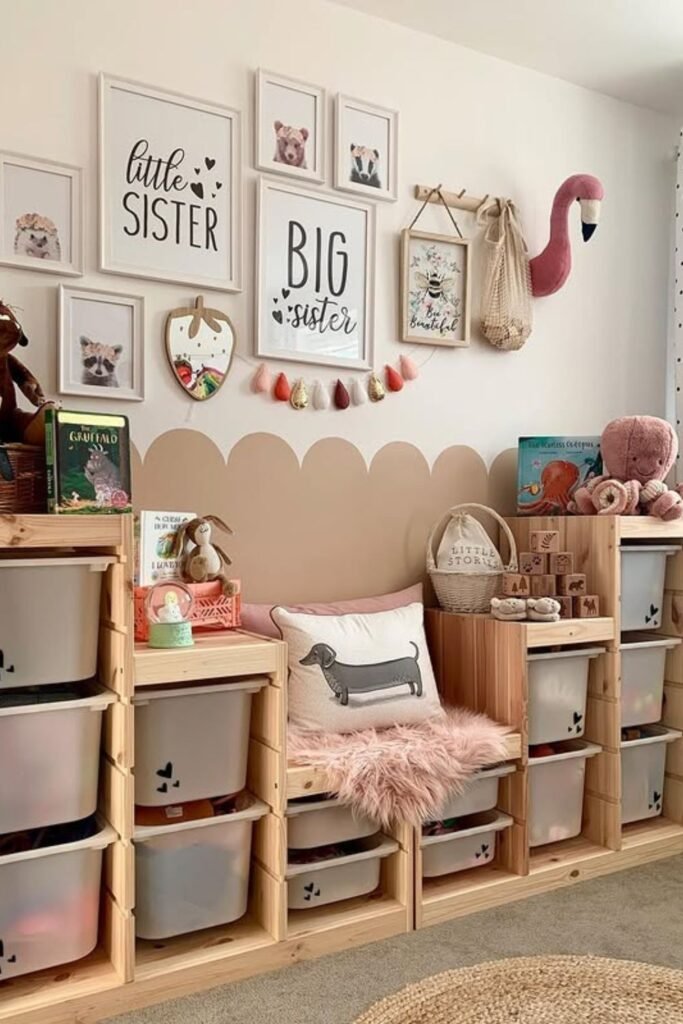
Study Station
Homework, crafts, and LEGO builds all need a surface, not the floor. A long wall-mounted desk keeps the center of the room open while giving kids a proper place to sit and focus.
The open space under the desk is big enough for low storage units with pull-out bins, so supplies are always directly below the desk instead of across the room.
Pegboards above the desk answer the question, “Where do we hang this?”
Put up drawings, keep scissors and markers in cups, and keep small tools organized but easy to find.
Put shallow bins on one side for paper, notebooks, or craft supplies that are already arranged.
Works well in small places where a regular desk would get in the way of moving around. Use only a few colors so the wall doesn’t look too busy.
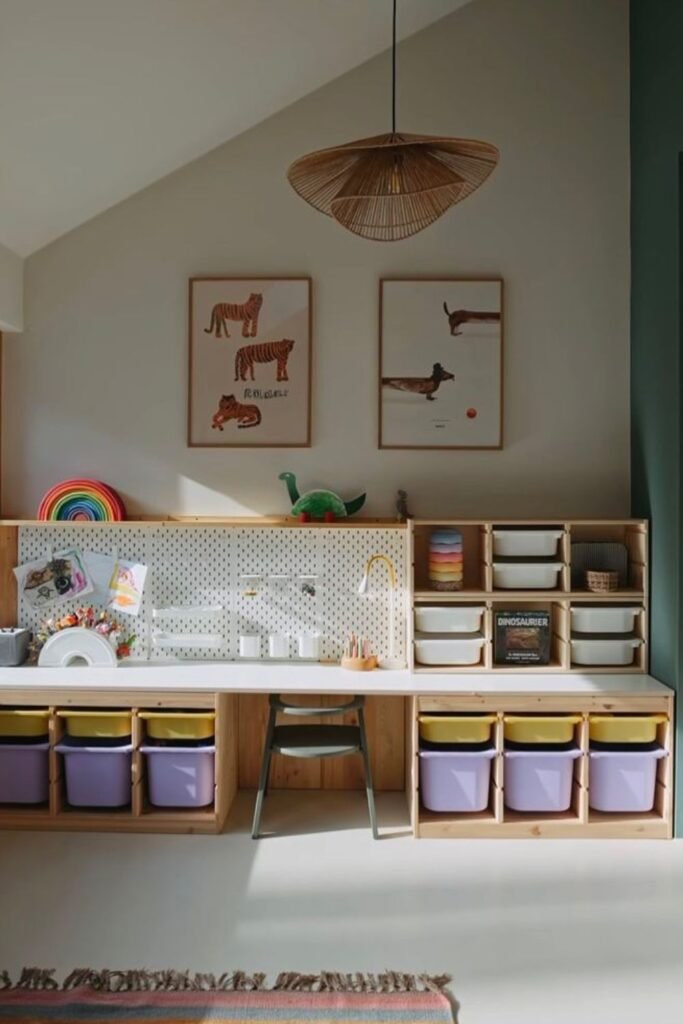
Art Zone
Creative mess spreads fast unless you give it a clear home. A long, low unit against the wall creates the perfect base for drawing, painting, and small crafts.
Put bins under the table for paper, crayons, and play dough so that the supplies are always close by and not all over the floor.
Shelves on the wall above the workplace hold books and activity trays without taking up space on the desk.
There are hooks on the side that are good for backpacks or dress-up clothes. Everything is within reach but not on the ground.
Works well in bedrooms if you don’t have room for a separate play area. Keep one little stool so that kids can sit comfortably without getting in the way.
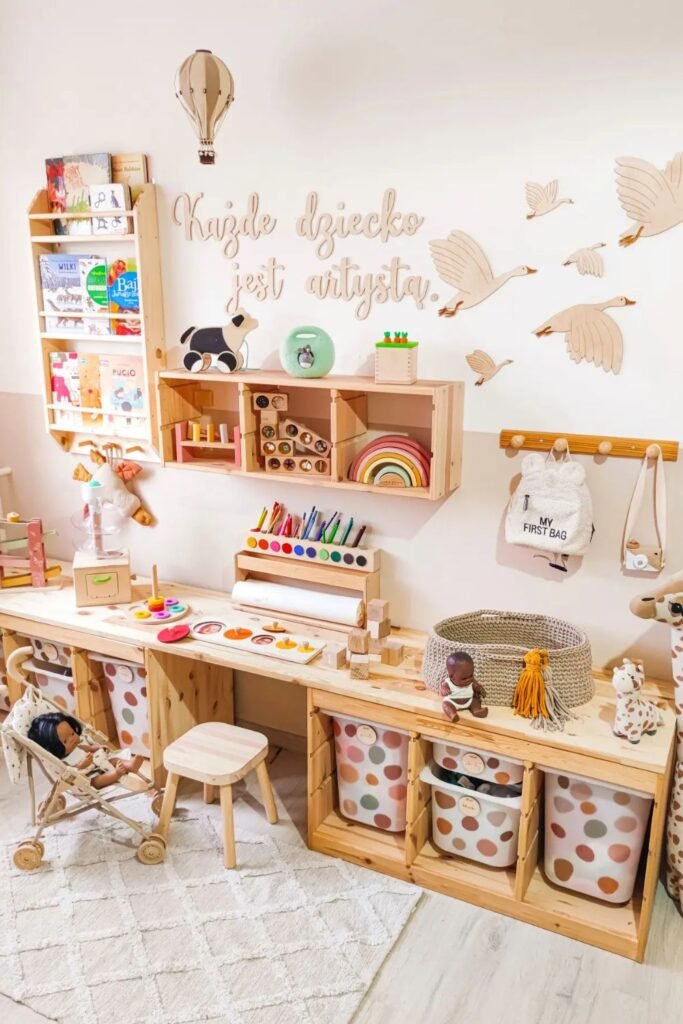
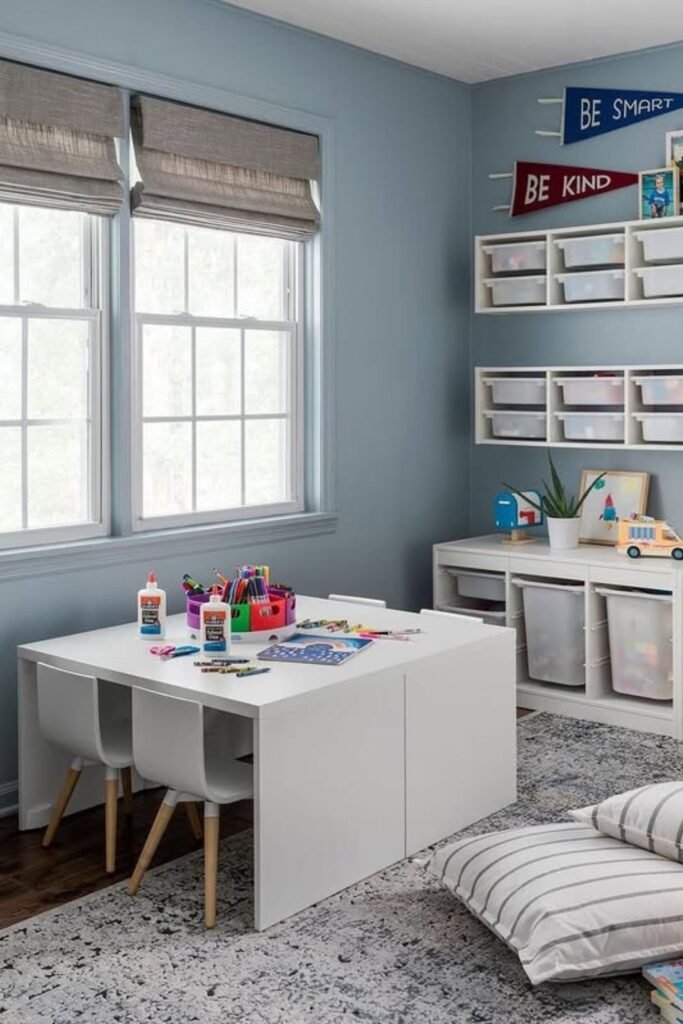
Craft Table
Art supplies take over fast if they don’t have boundaries. A central table gives kids space to spread out without using the bed or floor as a workspace.
Make it simple and strong so it can handle glue, paint, and markers without any problems. There are larger bins for toys in low storage units along the wall.
Above these, there are shallow wall-mounted bins that keep crayons, paper, and tiny craft things.
Putting things in groups makes cleaning up faster and stops kids from putting everything out at once.
If you don’t have a lot of room, pick a narrow table and put the stools all the way beneath it when you’re not using them.
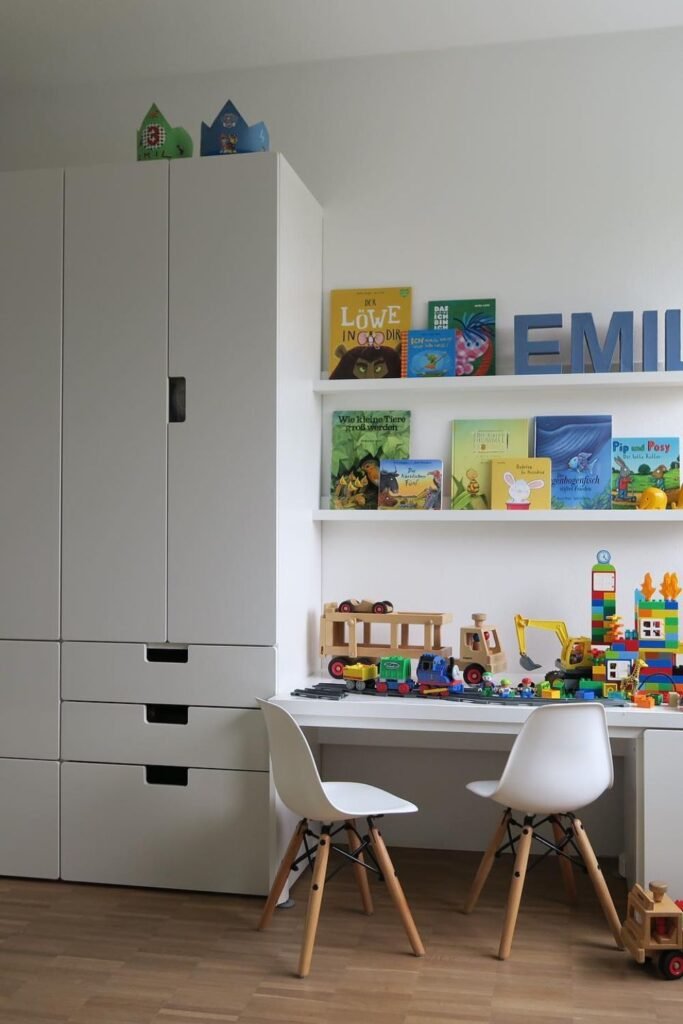
Clean Wall
Visual clutter makes a room feel smaller than it is. Tall closed wardrobes along one wall instantly hide clothes, games, and bulky items so the space looks calm.
Drawers under the bed can hold minor items without having extra dressers.
A small floating desk next to the wardrobe keeps homework or LEGO creations in one clear area.
Put a storage box under the desk for toys that are still being worked on so the surface doesn’t stay untidy.
Open shelves above the desk expose books face-forward, which makes people want to read without taking up a whole bookcase.
Best for youngsters in school who need a place to study and a lot of storage. Use neutral colors for the big furnishings and let the toys add color.
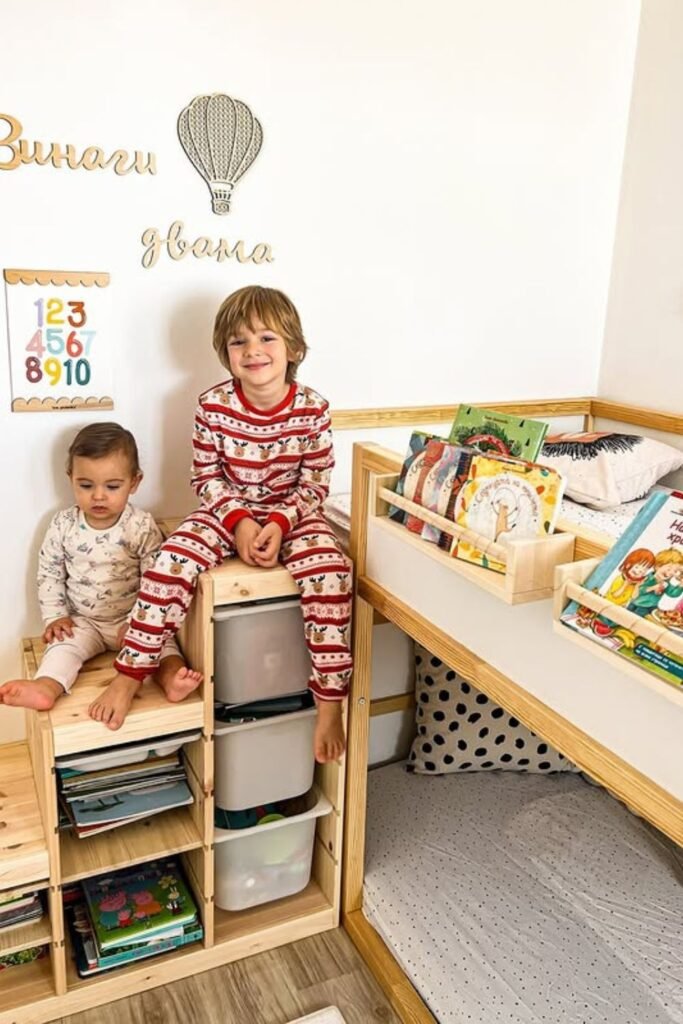
Step Storage
Bedside space often goes unused, yet it’s perfect for smart storage. A small stepped unit next to the bed works as a climbing aid and a toy organizer at the same time.
Kids can securely go to the top bed, and bins underneath it can contain books, pajamas, or small toys.
There are open shelves on the lower level that make it convenient to read before bed.
Put your kids’ favorite books there so they can get them without having to empty bigger bins.
Works great in small bedrooms when you can’t fit a separate bookcase and nightstand. Pick a strong type of wood so it can bear climbing every day.
You conserve floor space and don’t need extra furniture near the bed by putting steps and storage together.
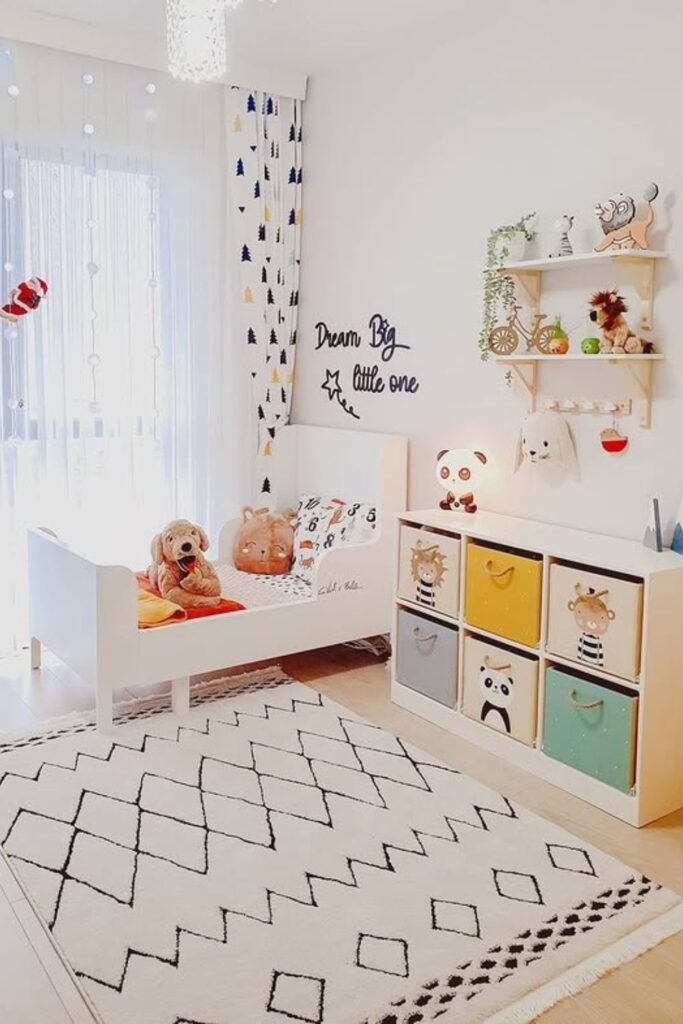
Color Cubes
Bright bins solve two problems at once: they hide the mess and add personality without painting the whole room.
Kids can easily remember where things go because the cube unit is straightforward to use and the many colors make it easier to find items.
“Yellow goes in blocks.” Blue is for cars. Simple rules work. Keeping the unit low lets kids clean up by themselves.
Open wall shelves above the floor let you store decorations and books without taking up too much space.
Works best in tiny bedrooms if you don’t want big wardrobes to take up too much space. Put a soft rug in the middle to make a clear play area.
Learning Wall
Wall space can teach just as much as a table can. Mounting slim book ledges keeps covers visible, which makes kids more likely to pick one up on their own.
Put a low shelf for number blocks or alphabet toys so that learning resources are always close at hand instead of being put away.
A small wall-mounted bin system above the desk area accommodates art supplies, flashcards, or small manipulatives without taking up any space on the desk.
Keeping everything shallow makes the wall feel light. Put a modest wooden desk below and slide bins under it for bigger supplies.
Works well in preschool or early elementary classrooms where kids play and learn every day.
Storage Wall
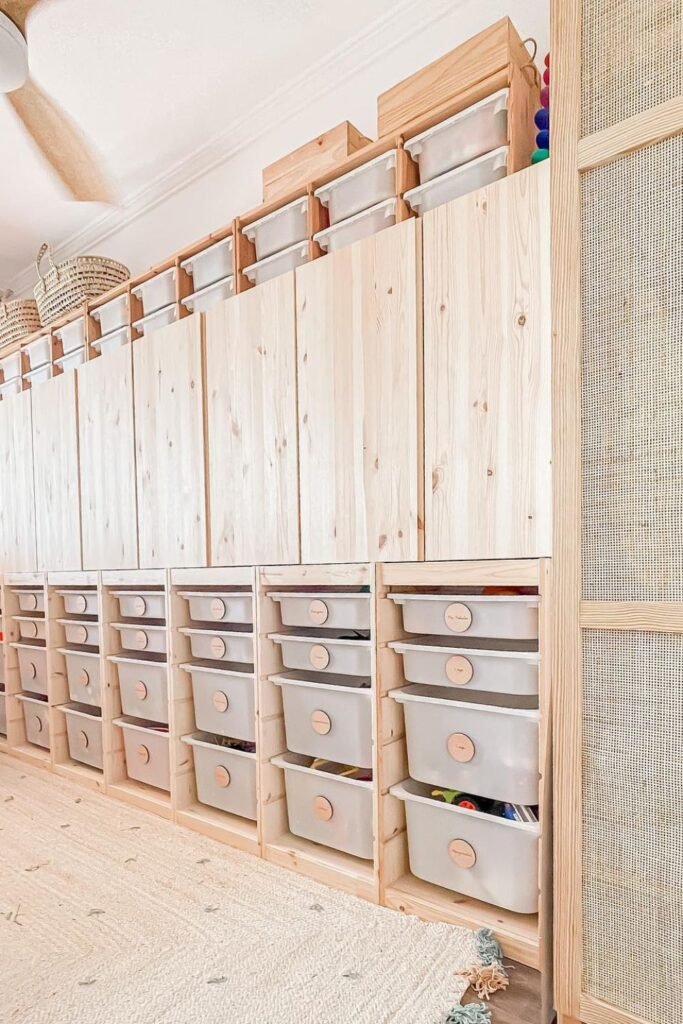
Toy chaos doesn’t stand a chance against a full wall system. Running floor-to-ceiling cabinets across one side hides bulky items up top.
Even if the room is full, closed doors make it look quiet. It’s easier to arrange things when the bins are clear and have simple round labels.
Instead of putting all the toys in one big box, put them in trays by category so youngsters may pull out one tray at a time. That alone stops people from putting stuff out.
Best for playrooms or bedrooms that are shared and have a lot of toys. Put things you donot use often in the top cabinets and keep the containers for everyday.
Once everything lines up in one long unit the rest of the room stays open for play instead of storage overflow.
Open Display
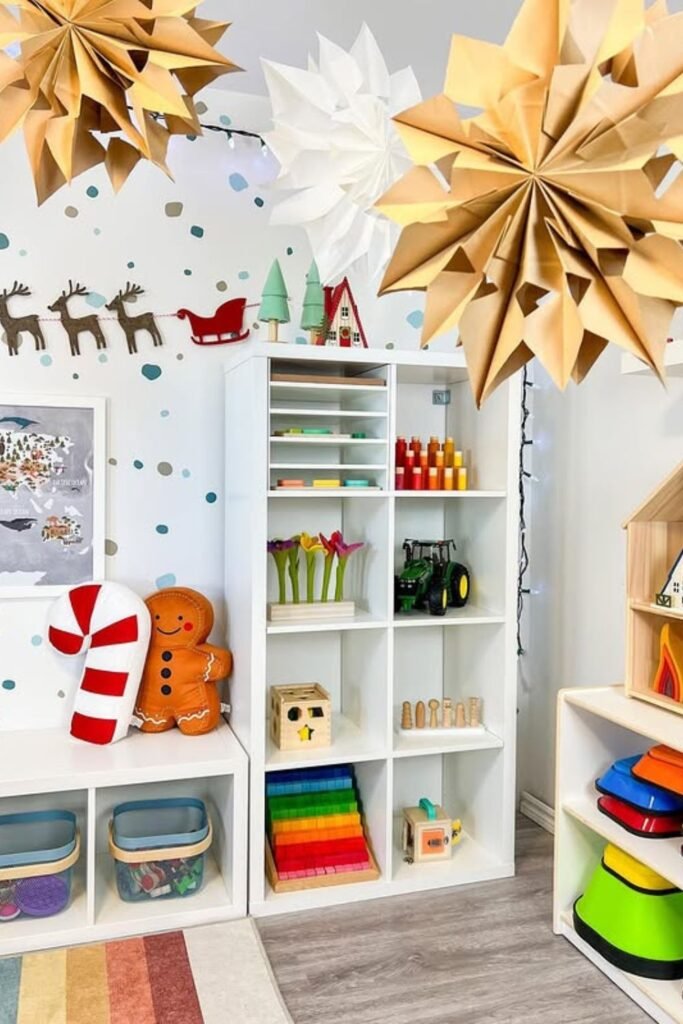
Some toys deserve to be seen, not hidden. Open cube shelving lets you display colorful pieces while still keeping order.
Put things that are similar together in each square so it looks planned instead of random. There are blocks in one cube, cars in another, and puzzles placed neatly in the next.
There are clear bins for smaller toys that don’t need to stay out on the low units along the wall.
To keep everything in balance, the bottom part should be closed and the center part should be open. It looks good, yet it’s still useful.
Keep the middle of the room clean so people can move around, and put taller shelves on one wall so they don’t block light.
FAQs
How do you organize too many toys in a small kids room?
Cut back on what you can see first, not what you own. Put only the toys you use every day in low bins, and move the remainder to closed cupboards or high shelves.
No matter how much storage you install, the space will always look cluttered if everything is left out at once.
Is IKEA storage good for growing kids?
Low bin systems are great for toddlers. Later, you can switch out the toy bins for books or school supplies without having to change the whole system.
Wardrobes and cube units that aren’t themed grow better than themed furniture. Choose furniture that can be stacked, expanded, or rearranged.

Hi, I’m Afaf! I’m a law student who loves writing about everyday life – from home projects and crafts to fashion, beauty, and parenting tips.
I’ve been writing for over a year, sharing ideas that are simple, practical, and easy to try. I write about things I find interesting and useful, whether that’s organizing a space, trying a new DIY, or finding activities to keep kids entertained.
My goal is to share helpful ideas without making things complicated. If it works in real life, I’ll write about it.
When I’m not studying or writing, I’m usually experimenting with new projects or scrolling for inspiration!