
25 Weather Activities Preschool for 2026
Weather lessons sound like fun until your preschooler loses interest halfway through, begins throwing cotton balls instead of forming clouds.
Decides rainy-day activities are officially “boring.” Getting young children enthused about learning sunny, wet.
Windy and snowy days can seem tougher than it appears, especially when attention spans fade quickly and messy set ups are extra work for you.
The idea is to make weather feel like play, not school. Preschoolers can learn what various weather.
Flike and stay active and have fun with simple hands-on games, movement, and easy crafts.
In this article, I will show you 25 amazing weather activities for preschool you can use for more fun learning moments.
Let’s jump in!
How Can Preschoolers Learn About Sunny, Rainy, Windy, and Snowy Days?
Preschoolers learn weather concepts faster when they can see it, touch it and play with it rather than simply hearing about it.
Let kids wave ribbons outside or blow pinwheels to help them experience windy conditions.
Add in some water play, cloud crafts or basic rain experiments and the fun and rainy days are easier to comprehend.
Sunny days can be shadow games or sun themed crafts whereas winter days are more enjoyable with pretend snow bins or melting ice activities.
Little hands on experiences like this make weather feel real and usually keeps little kids interested much longer than worksheets ever could.
Rain Clouds
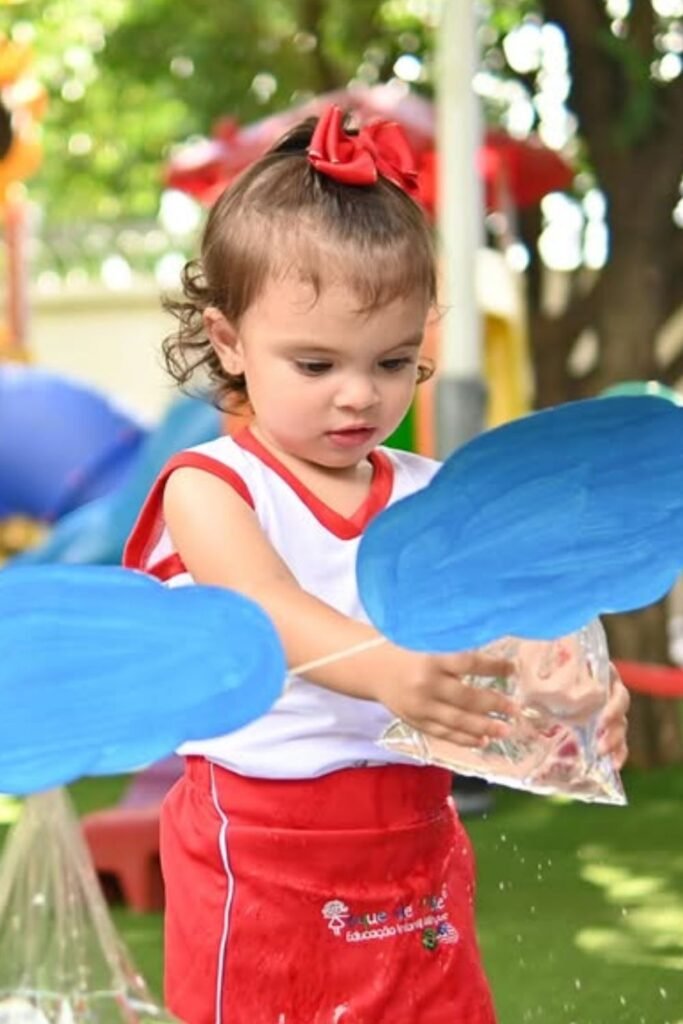
Outdoor weather lessons feel much more exciting once kids can actually “make it rain.” Blue paper clouds hanging on a string.
Instantly turn a backyard, preschool play area or even a shady patio into a lively rainy-day station.
Small zip bags of water work nicely here as young hands can crush, splash and watch water drop like falling rain.
“Movement is the key to keeping those curious preschoolers interested longer,” says Hollis.
“Letting them pour and press the bags gently makes the activity seem less like a lesson.”
Snow Stamps
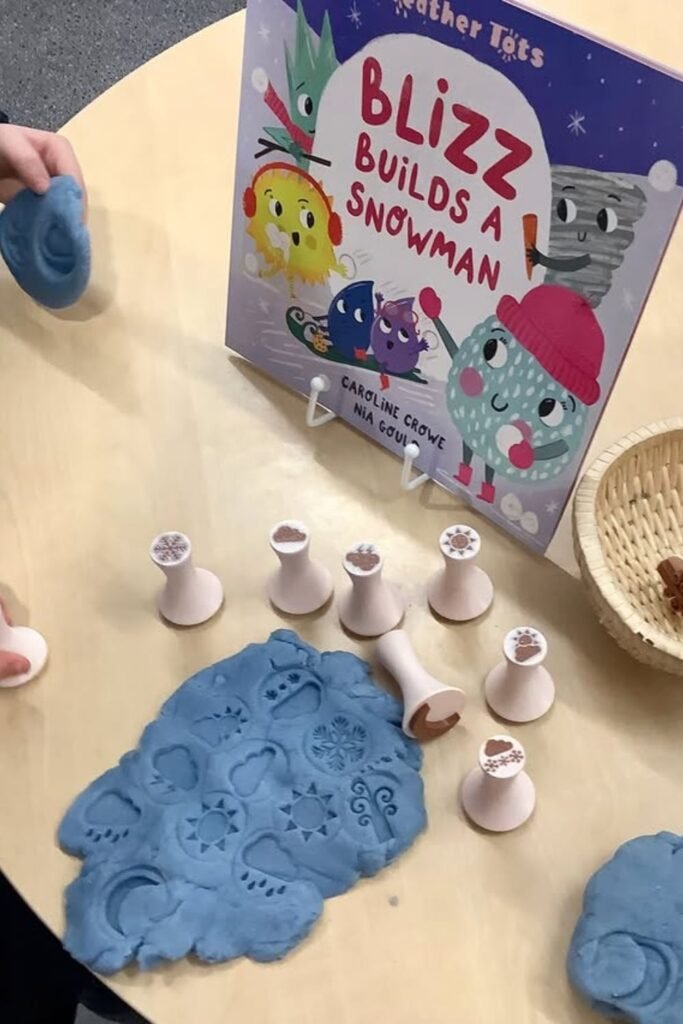
Cold-weather lessons feel way less confusing once preschoolers can press, squish, and play while learning.
Soft blue playdough, combined with weather stamps, may bring snowy-day learning right to tiny kids’ fingertips.
Tiny snowflakes, clouds, suns, and raindrops pressed into dough form a fun table activity for preschool centers.
Peaceful mornings at home, or winter themes in the classroom. Storytime fits in well here, especially if you have a weather book handy.
And let them stamp symbols related to the story. Kids can repeat simple tasks, so extra dough and weather stamps can lengthen out the play.
Cloud Study
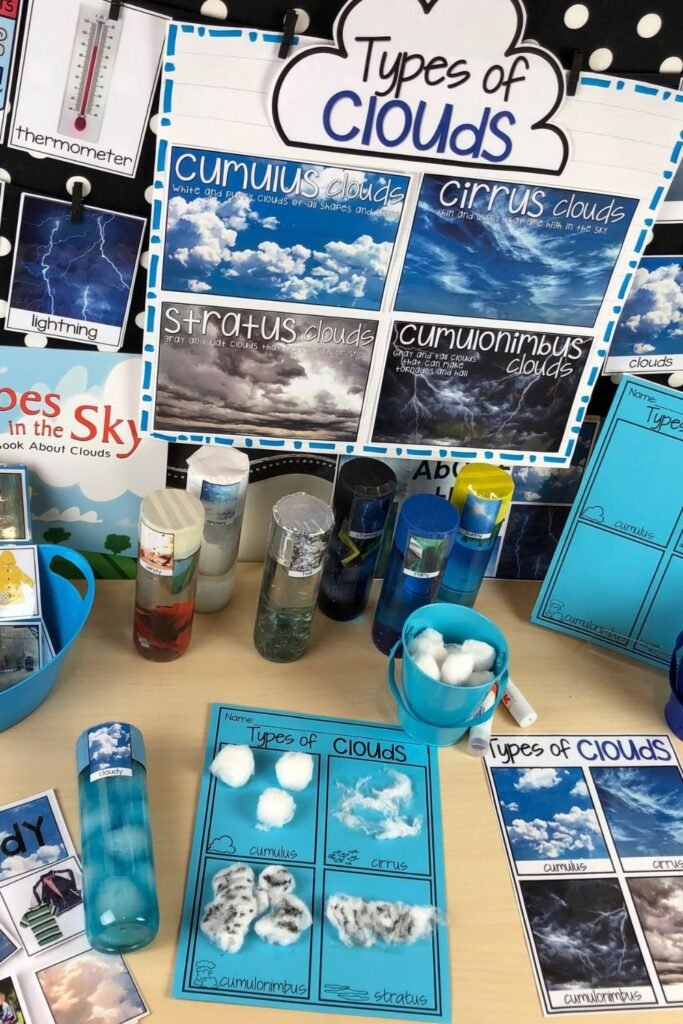
Weather themes suddenly feel more exciting once preschoolers can compare fluffy, wispy, and stormy clouds side by side.
Kids learning about sunny, wet or stormy weather. Turning one section of the classroom or playroom into a little cloud station works brilliantly.
Recreate different cloud kinds using an easy hands-on method using cotton balls, stretched cotton.
And darker textured pieces without it feeling too “school-like.” Curious little learners generally love matching clouds.
To pictures or weather moods and so placing rainy, sunny and storm cards nearby keeps the exercise rolling along.
Weather Sort
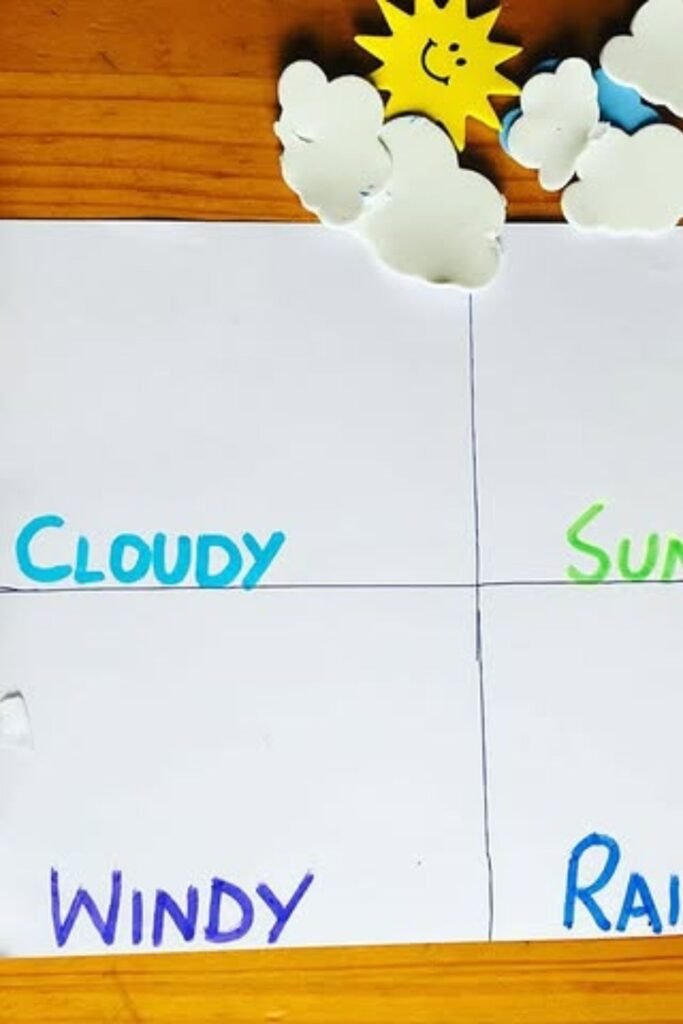
Little learners usually catch on faster once weather turns into a game instead of a lesson. A simple sorting board like this works beautifully for helping preschoolers.
distinguish between cloudy, sunny, windy and rainy days without being overwhelmed.
Paper clouds, sunshine cutouts or weather illustrations can be used to create a simple matching activity.
Where children place each piece in the right location and talk about what happens during that weather.
Morning circle time is a great place to do this, since preschoolers can point to today’s weather before jumping into crafts or play.
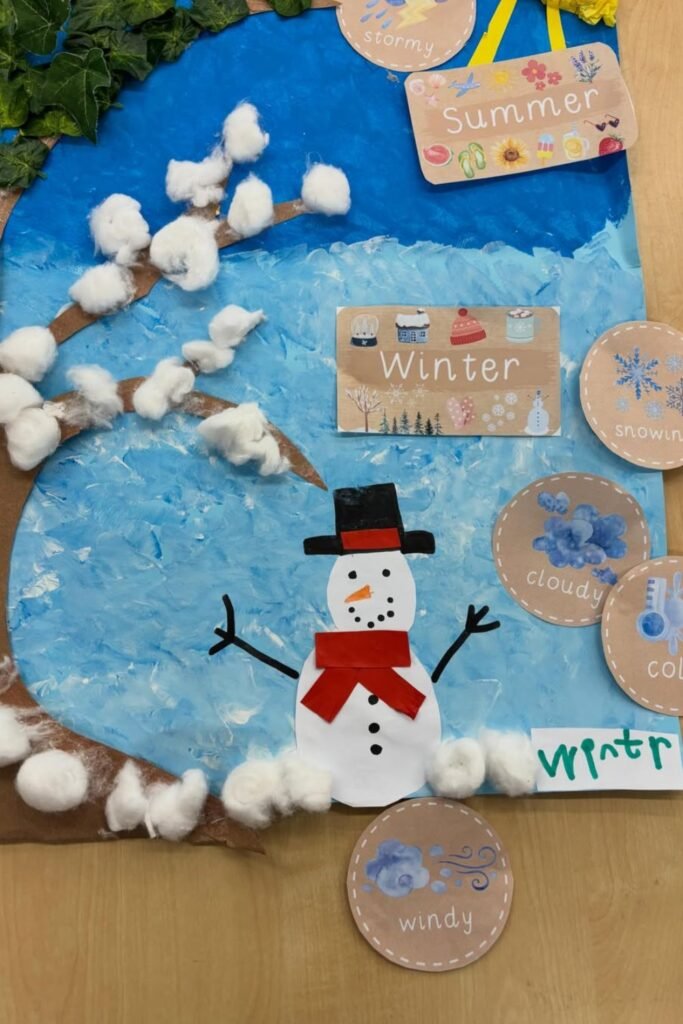
Winter Scene
Snowy weather feels much easier to explain once preschoolers can build a whole season with their own hands.
Cotton ball snow, blue backgrounds and paper snowmen are ways to make winter learning something youngsters can feel and touch.
Rather than just hear about. This game is excellent for sensory tables, classroom weather weeks or comfortable indoor evenings at home.
Where tiny learners may point out cold, windy, cloudy and snowy weather while constructing their own winter environment.
Weather word cards placed nearby also help children connect graphics with genuine weather terms and fluffy cotton.
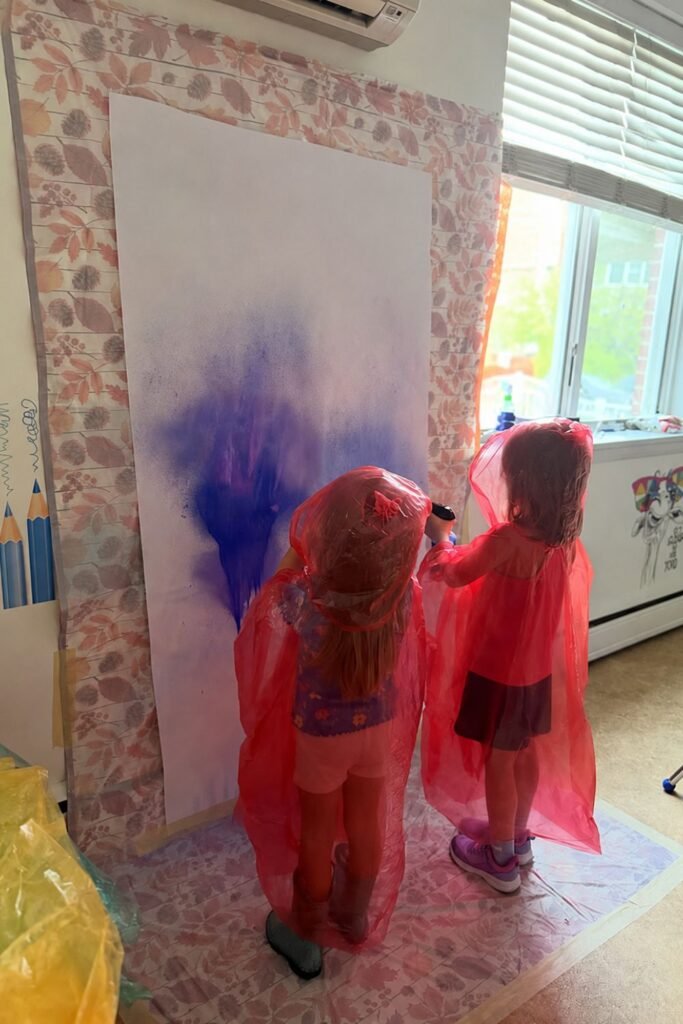
Rain Spray
Rainy weather lessons suddenly become way more exciting once kids get permission to “make the rain” themselves.
You can turn a basic piece of paper into a fun weather art station with spray bottles loaded with blue water.
While silently helping preschoolers build hand muscles at the same time. Washable ponchos or big shirts.
Help keep the cleanup simple, making this idea feel much easier for classrooms or indoor play days at home.
A big piece of paper taped to a wall is preferable since tiny kids adore spraying up and seeing the colors drip like real rain.
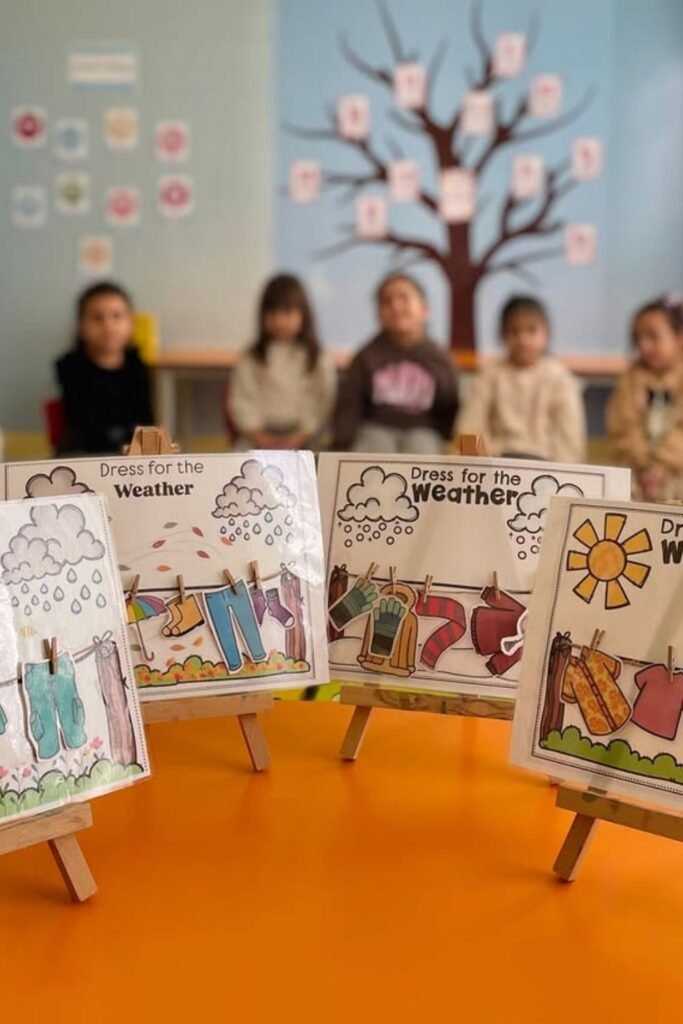
Weather Clothes
Getting preschoolers to remember weather types feels much easier once clothing becomes part of the game.
One of those basic activities that kids can relate to real life is matching rain boots to rainy days or lighter outfits to sunny weather.
This is really good in the classroom mornings since children may discuss what they would wear before they go outdoors.
Printable weather pages or cut-and-paste costume cards make this activity easy to recreate.
And little learners tend to enjoy debating whether mittens are for snowy days or raincoats are for storms.
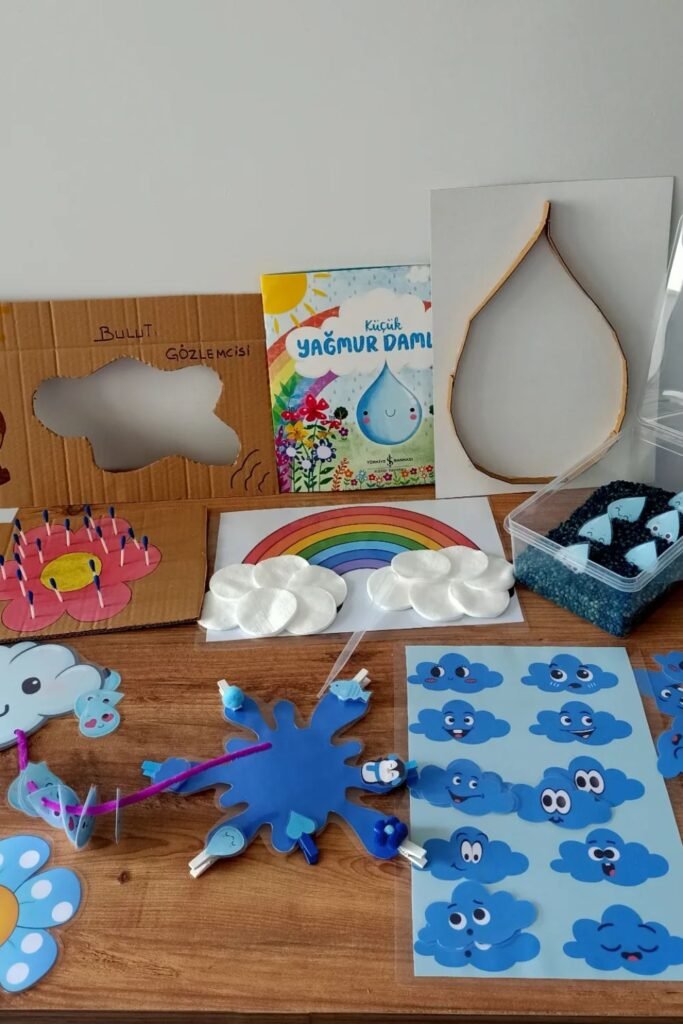
Weather Table
Curious preschoolers usually stay interested longer when they can move from one tiny activity to the next instead of sitting through one long lesson.
A weather-themed table with clouds, raindrops, rainbows, sunshine and matching activities makes learning something children naturally explore at their own leisure.
Blue beads as raindrops in a sensory bin, Weather face matching cards, cotton pad clouds, and basic fine motor games all work nicely together in one arrangement without being overbearing.
That said, this sort of approach works especially well in preschool classrooms or homeschool areas, where kids can go from one activity to another based on their mood.
Plus, having weather books on hand helps tie play to learning in a joyful, not forced, way.
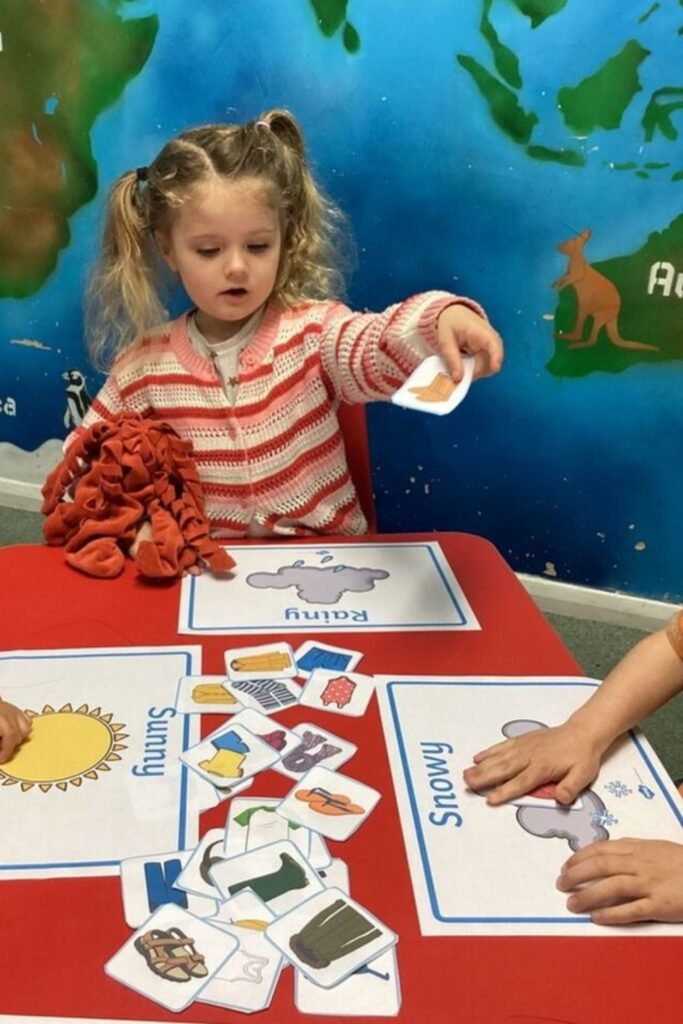
Outfit Match
Little kids usually remember weather faster once they can connect it to clothes they already wear.
Sorting jackets, boots, caps, or warm-weather clothing into rainy, snowy, or sunny-day groups is learning preschoolers can genuinely relate to.
As a group table activity it’s wonderful to do since kids will automatically start talking about what they wear when it rains or becomes cold outside.
All you need to do is print the weather mats and mini clothes cards and you’re ready to go.
Perfect for weather weeks, circle time centers, or homeschool mornings, real world examples tend to keep in tiny minds much longer than just stating weather categories.
Rain Mobile
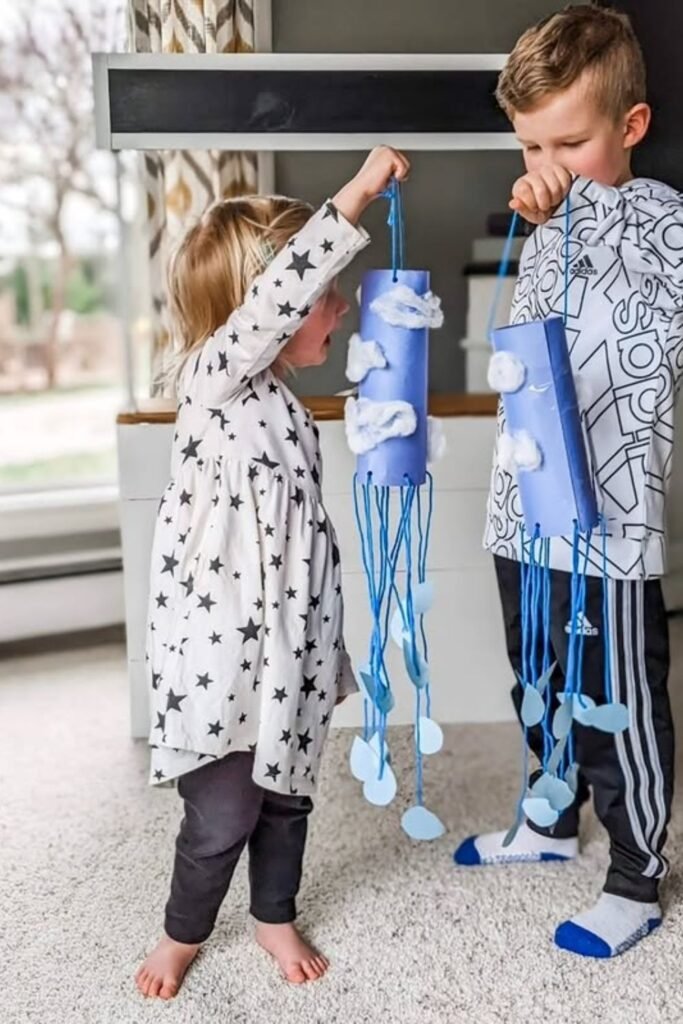
Rainy weather becomes much easier to understand once preschoolers can build something that actually moves and swings like falling rain.
Paper tubes, cotton clouds, and raindrops on a string make an easy weather craft that looks great hanging near windows, classroom corners, or reading spots.
Fine motor work slips in naturally here as small hands stay busy gluing clouds and threading strings through the raindrops.
Kids enjoy to see their sculptures move while they speak about stormy skies and rainy days.
Blue paper and cotton balls generally re-create the same effect with little prep, which makes cleanup feel doable, too.
Rainbow Art
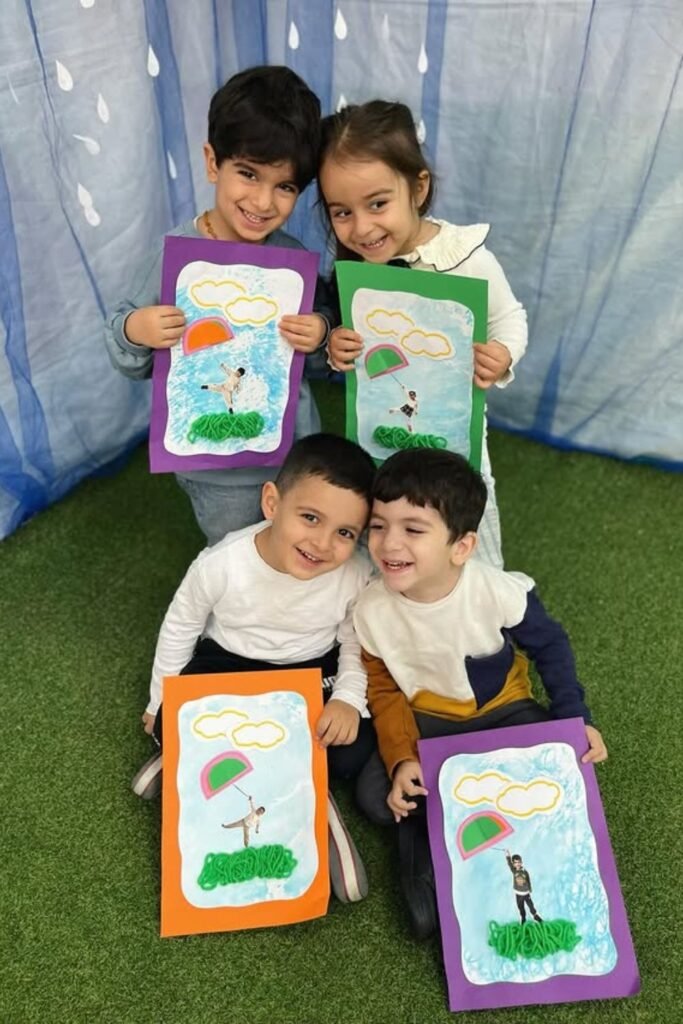
Big smiles usually show up fast once preschoolers get to turn weather into colorful artwork they can proudly carry home.
Rainbows, fluffy clouds and beautiful wet skies are a great combination to assist little kids bridge bright and rainy weather in one simple exercise.
“I love to recreate something like this at the craft tables or classroom weather weeks.
Preschoolers can paint and glue and add playful details while chatting about what happens after rain.
Bright paper borders quickly make finished crafts more lively, especially if you are looking for a school wall full of joyful weather art.
Weather Wheel
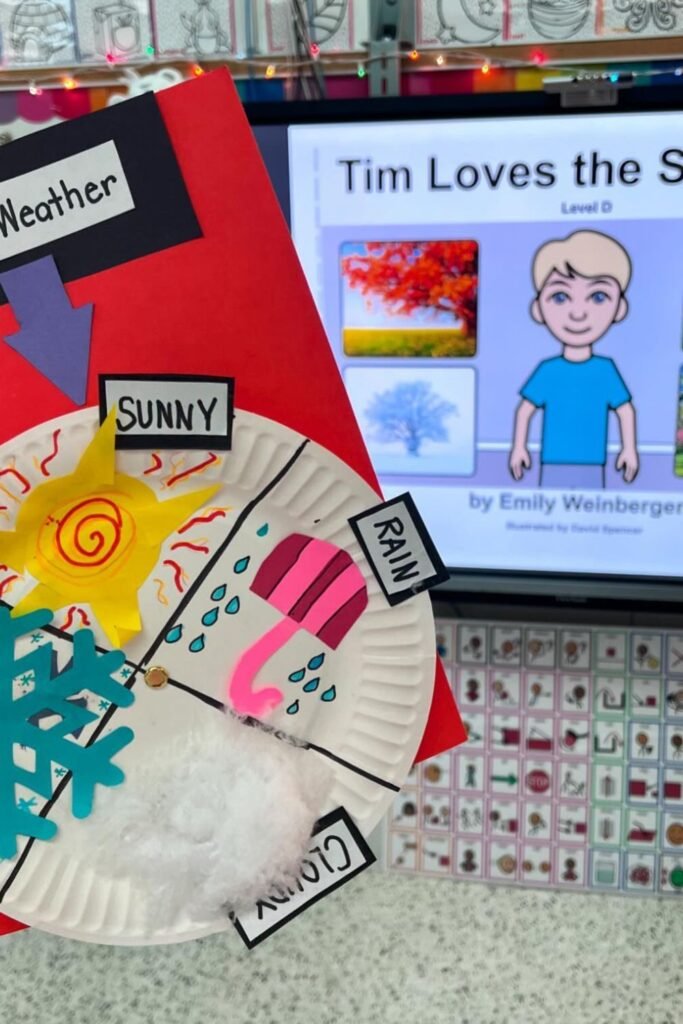
Morning weather chats feel much less repetitive once preschoolers can spin, point, and decide what the day looks like outside.
This simple paper plate weather wheel with sunny, rainy snowy and cloudy portions turns ordinary weather into something tiny kids genuinely like to speak about.
This works nicely with circle time, when one kid may be the “weather helper” and spin the spinner.
While the group talks about jackets, umbrellas, or sunshine. The idea is surprisingly easy to produce.
With no costly equipment, thanks to paper plates, cotton for clouds, and bright weather cutouts.
Cloud Craft
Soft textures usually grab preschool attention fast, especially when weather learning feels more like art time.
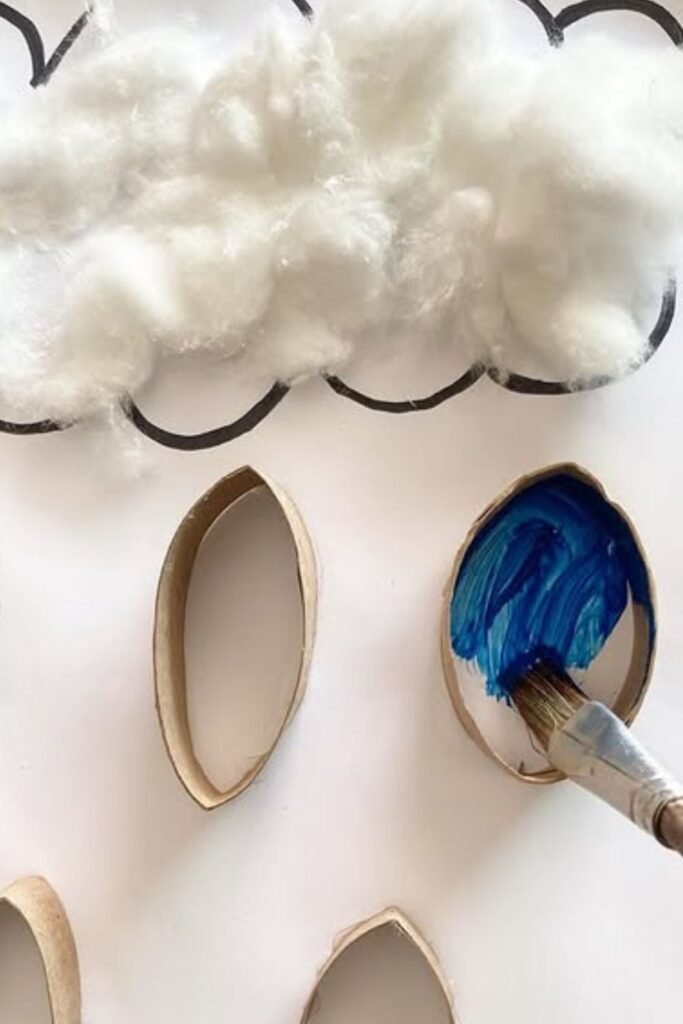
Painted raindrops on lightweight cotton clouds are a simple hands-on activity to speak about rainy weather without requiring fancy materials.
To make it fun for little kids, add a stamping element by using cardboard rolls fashioned like raindrops.
So they can dip, paint and design their own rainy sky while improving hand control at the same time.
This seems like something that goes along with inside weather weeks or calm afternoons, because clean-up is easy and kids stay busy longer.
Drip Paint
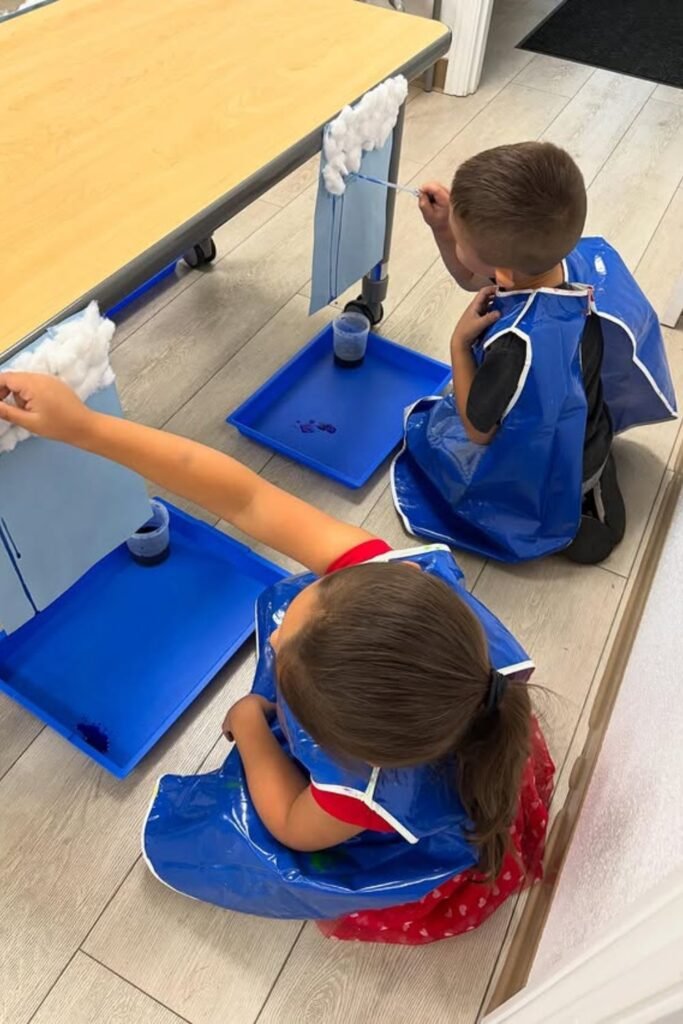
Watching paint slowly fall like rain tends to keep preschoolers surprisingly focused. Cotton clouds glued to the top of the page.
Instantly turn a simple painting station into a rainy weather activity the kids actually want to do.
Blue watered-down paint is ideal for this since kids can drag the color down and see “rain” drip across the paper without needing flawless brush skills.
Waterproof aprons and trays below make clean-up a whole lot less stressful, especially during classroom weather weeks or indoor rainy-day themes.
The sides of tables are good for hanging the paper too as you get the rainy look using gravity naturally.
Rain Station
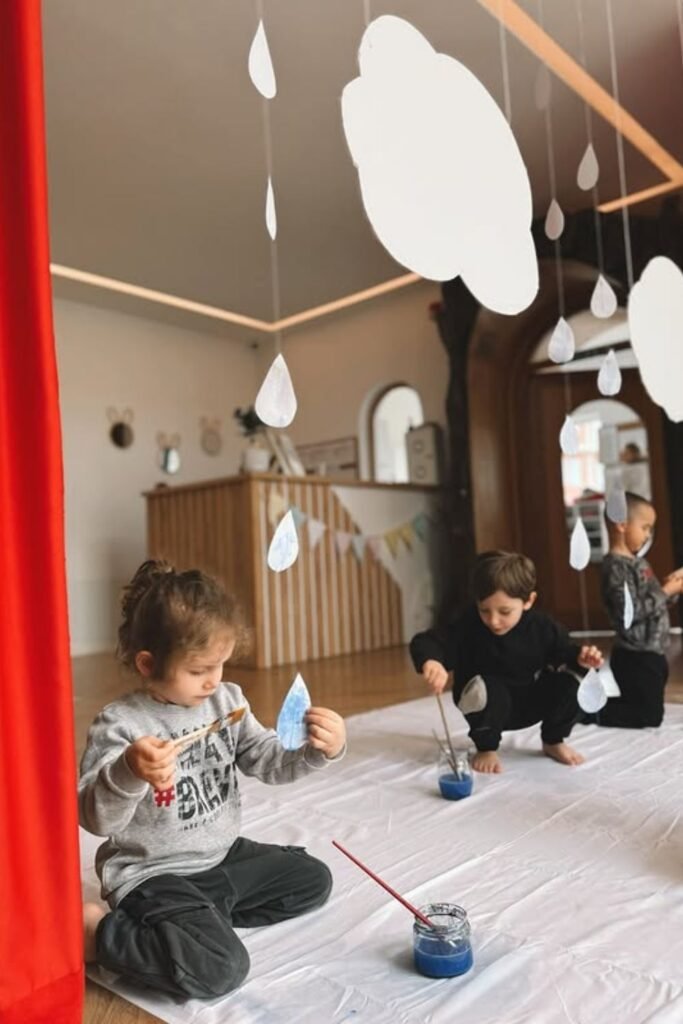
Rainy-day learning feels much more magical once preschoolers get to sit under their own hanging raindrops.
Paper clouds overhead instantly transform an ordinary space into an imaginary rainy sky where children can paint.
Explore and whisper about storms or puddles. It’s lovely to use blue watercolor paint to create gentle raindrop art.
Especially if toddlers paint the hanging droplets themselves before decorating weather sheets nearby.
Movement and imagination go hand in hand, so open classroom corners, dramatic play spaces.
Weather Sort
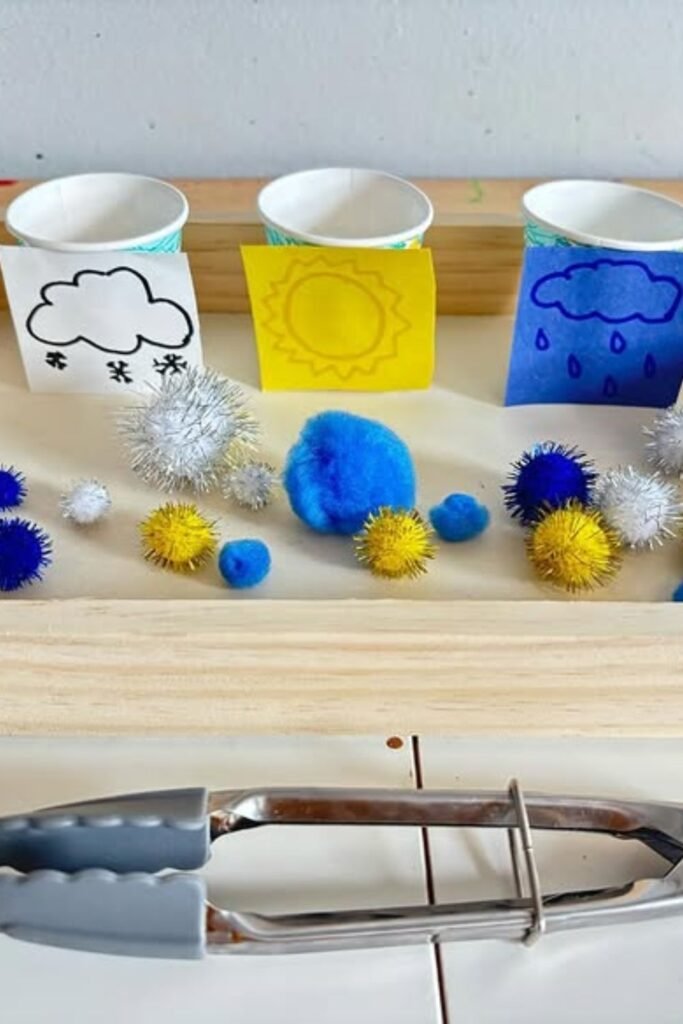
Little hands usually stay busy longer when weather turns into a simple sorting game instead of sitting through explanations.
Soft pom-poms and tiny weather stations create an easy method for preschoolers to match snowy.
Sunny and rainy days, while quietly strengthening fine motor skills too. Tongs bring an extra challenge.
That keeps students on task especially during center time or calm morning classroom activities.
Raindrops can be blue pom-poms, dazzling white ones are perfect for snow and bright yellow pieces are easily associated with sunny weather.
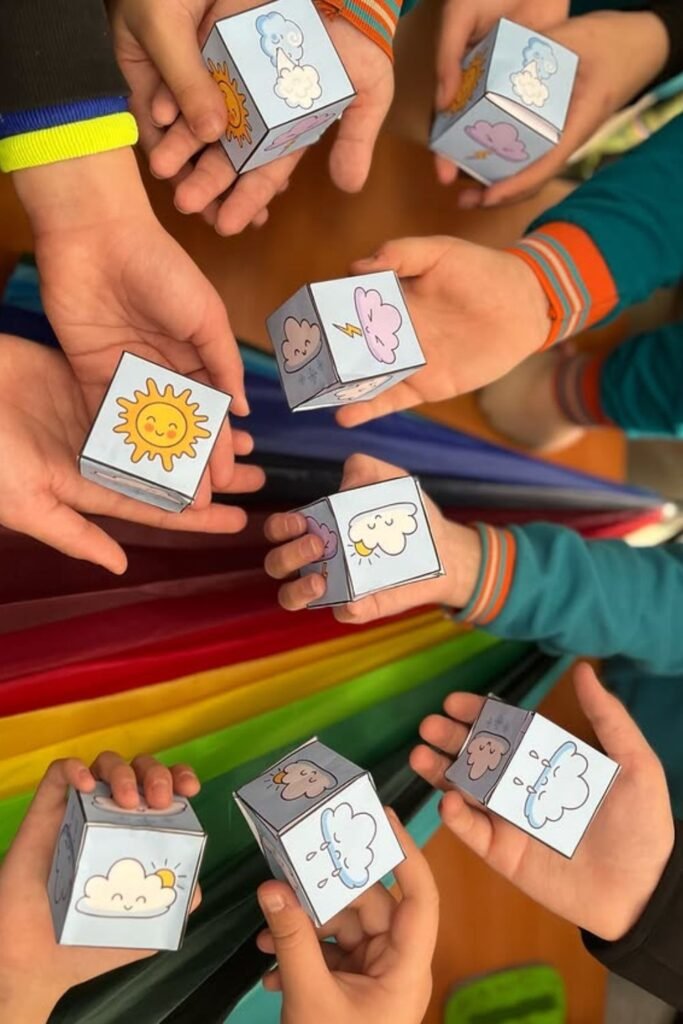
Weather Cubes
Preschoolers usually jump into weather lessons faster once learning feels like a game they can hold in their hands.
Simple weather conversation turns into an engaging guessing game with small weather cubes.
Including sunshine, clouds, rain and storms perfect for circle time or group activity. By rolling the cube and asking the youngsters to describe.
What occurs when it’s that kind of weather, the conversation flows and nobody gets tired too quickly.
It’s surprisingly easy to generate printable weather graphics pasted on folded paper cubes, and tiny learners often adore taking turns being the “weather helper.”
Weather Wall
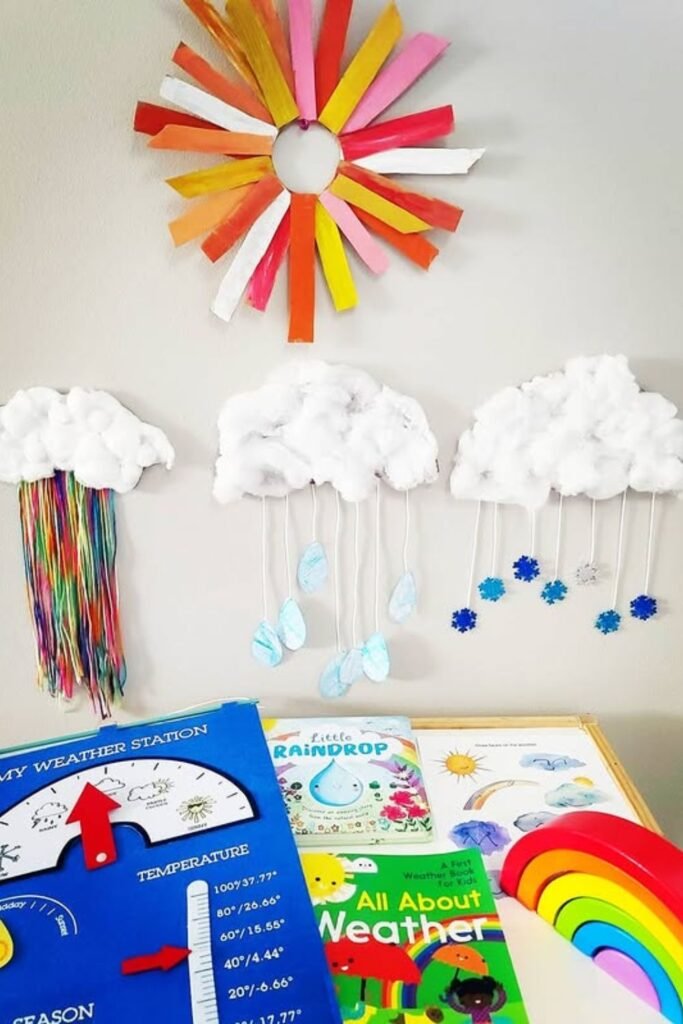
Weather corners feel much more inviting once preschoolers can actually see sunny skies, rain, snow, and rainbows hanging around the room.
Cotton cloud crafts with dangling raindrops or bright yarn rainbows turn plain walls into things youngsters naturally stop , gaze at and talk about.
This is a great concept for reading spaces or classroom weather themes, as weather books.
Fake forecasts, and seasonal charts can all stay in one comfy spot. Tissue paper sunshine delivers instant colour.
And soft cotton gives tiny learners something visually familiar when talking about cloudy or stormy days.
Rain Boots
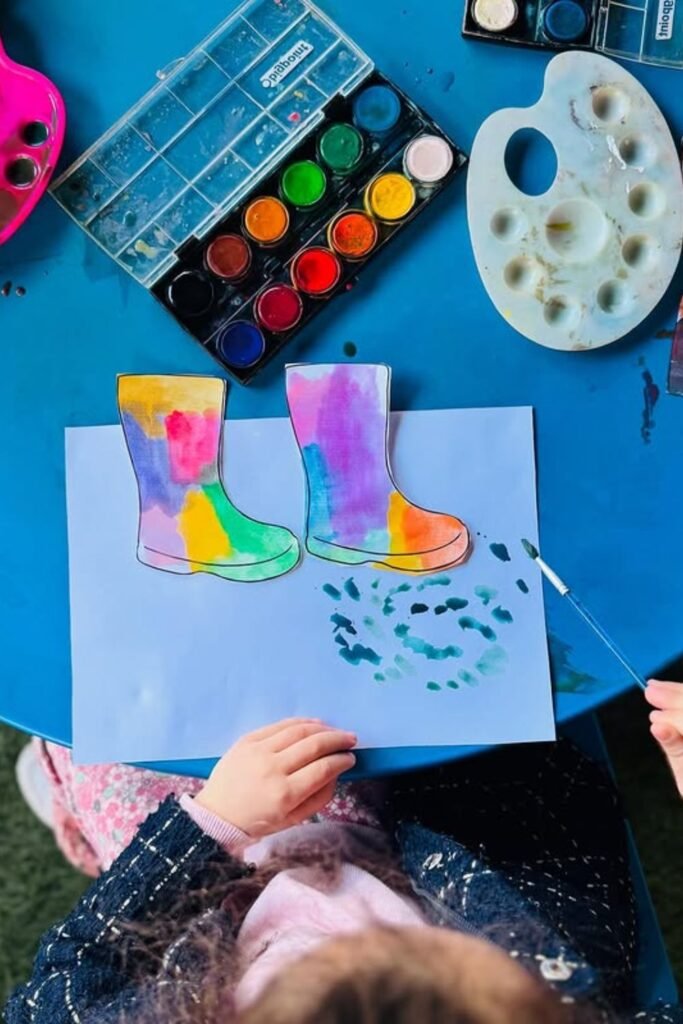
Rainy weather starts making more sense once preschoolers connect it to something they already know, like puddle boots.
Watercolor painted rain boots turn a basic art exercise into a fun weather conversation where kids may talk about splashing in puddles.
Rainy mornings, or what clothes belong on wet days. Bright paint colors work very well here.
Preschoolers generally love mixing colors while decorating their own boots rather than trying to remain inside the lines.
Weather Spinner
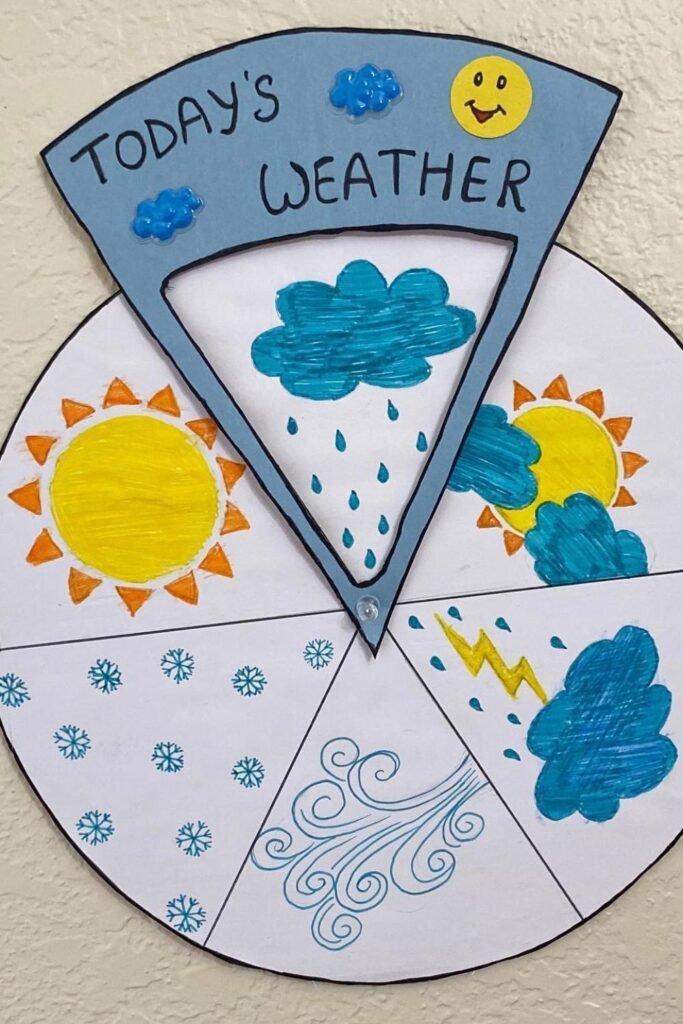
Morning routines usually feel smoother once preschoolers get excited about checking the weather themselves.
A handcrafted weather spinner converts cloudy, rainy, sunny, snowy and windy days into a short daily game.
Rather than a classroom assignment. It’s so much fun with this as one child may spin the arrow and call the weather and share.
What garments or activities are good for the day outside. Simple weather drawings using markers and paper plates.
Make it surprisingly easy to recreate even for brief weather units at home. Curious small learners also often enjoy anticipating tomorrow’s weather.
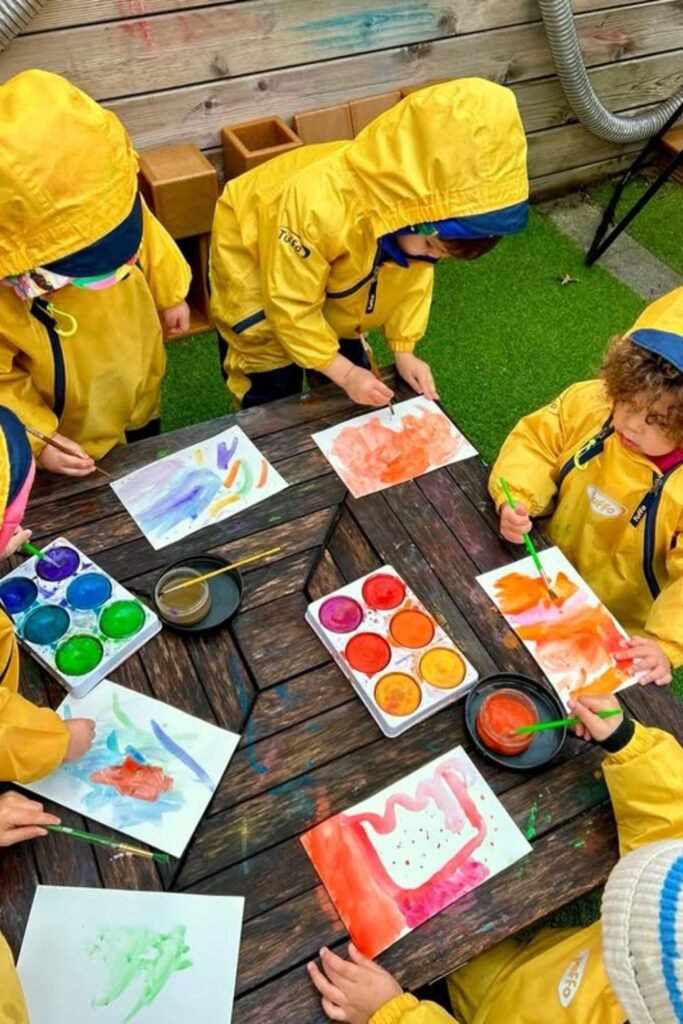
Rain Painting
Rainy weather feels much more exciting once preschoolers get permission to paint outside like tiny artists in a storm.
Rain coats and watercolor paints turn an everyday outdoor table into a fascinating weather game.
Where youngsters can see colors mix, drop and spread like stormy sky. This is especially good in outdoor preschool environments.
Where the messes aren’t quite so unpleasant when kids are already dressed for splashes and rainy weather.
Watercolors are usually the greatest at recreating the gentle rainy look, and letting preschoolers paint what the sky looks like that day makes the exercise feel more personal.
Rain Clouds
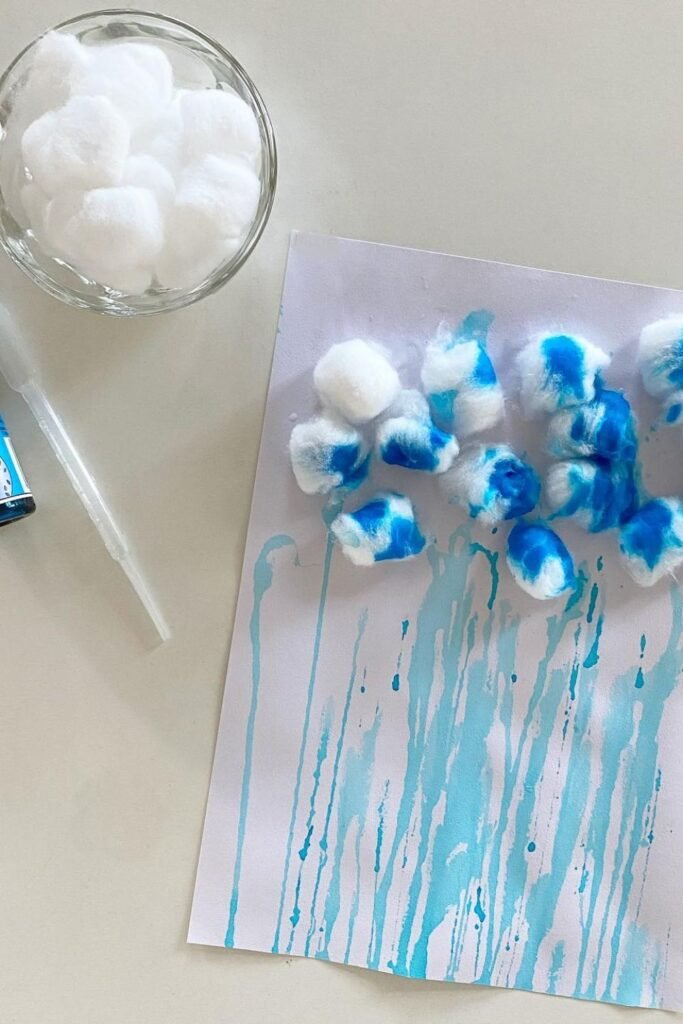
Watching colors slowly drip down the page feels a little magical for preschoolers, especially when “rain” starts appearing right in front of them.
Cotton balls and blue food coloring make a basic science-meets-art activity into an easy way to talk about rain clouds.
And gloomy sky without making it feel too educational. Droppers are usually a delightful addition.
As little hands may squeeze little drops onto puffy clouds and watch the color spread before the rain trails develop underneath.
The idea work perfectly on indoor weather weeks or quiet craft mornings because setup is straightforward and cleanup feels doable.
Weather Window
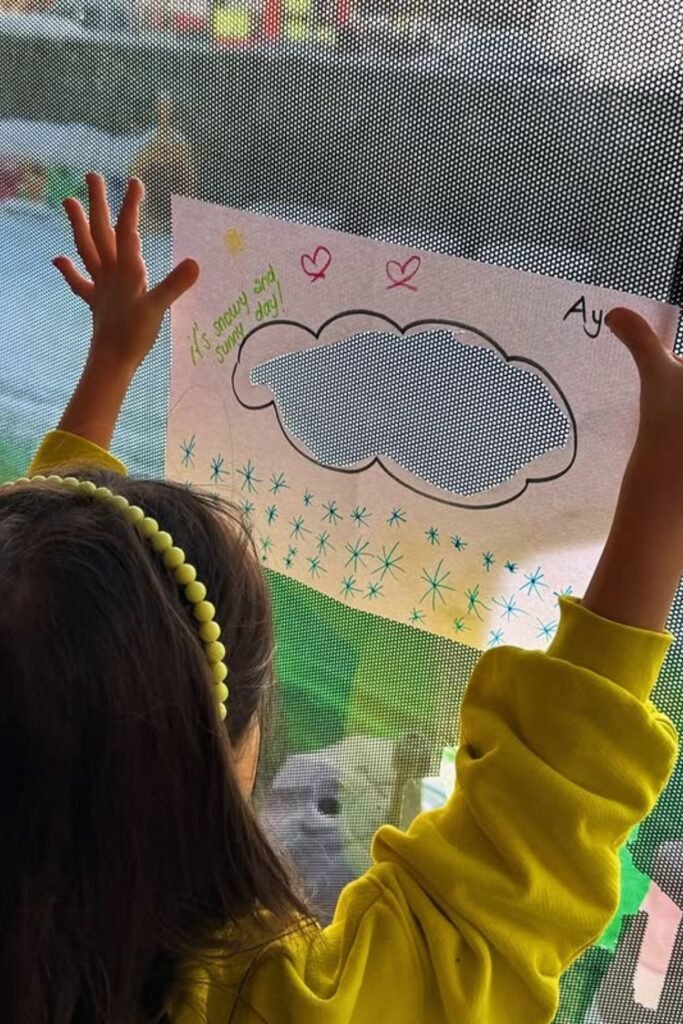
Sunny and snowy days suddenly feel easier to explain once preschoolers can compare weather with what they actually see outside.
If you make a basic frame to observe the weather against a window, observing the sky may be a fun little exercise.
Kids can look for clouds, sunshine, rains, or even snow and decorate the paper around it.
This is especially good for quiet mornings or weather circle time, because toddlers naturally begin chatting about what the sky looks like without any prompts.
Thick paper with a cutout cloud can easily show the notion and crayons or markers can help tiny learners draw what kind of weather they saw that day.
Umbrella Art
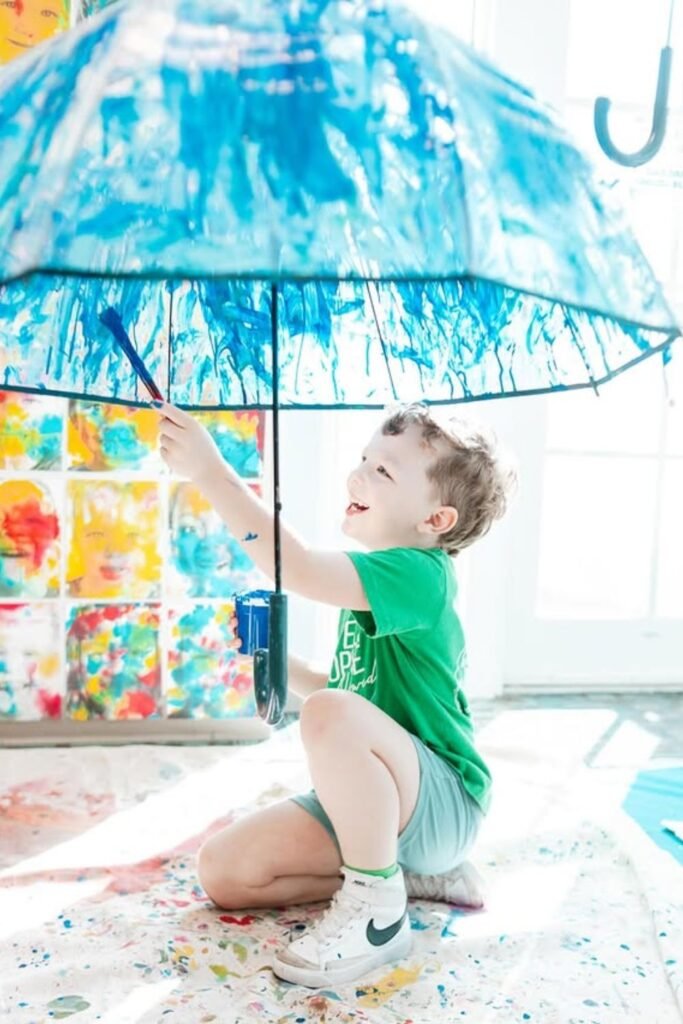
Rainy-day excitement tends to show up fast once preschoolers get to paint on something unexpected.
Kids may brush blue paint over the top of a clear umbrella and watch it gently spread like real storm clouds overhead, making it the perfect rainy weather pastime.
This is really exciting for something like this because toddlers will automatically start talking about rain, puddles and umbrellas while they paint.
Messy play days or weather-theme weeks are perfect. Washable paint is excellent if you want quick clean up and a wide sheet laid underneath makes the floor stress free.
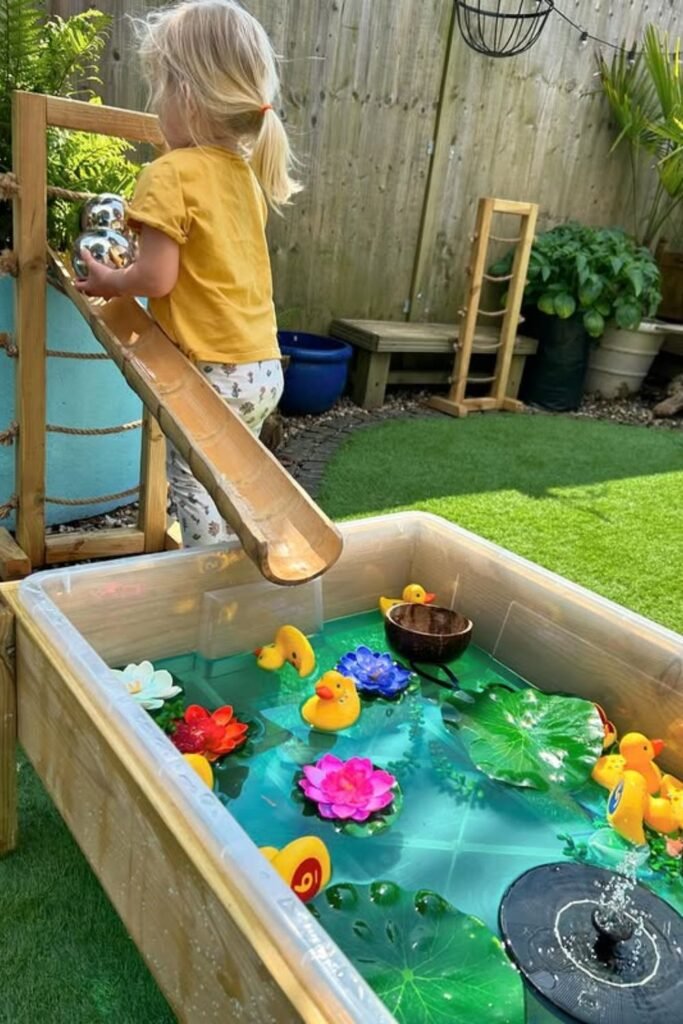
Water Play
Sunny afternoons feel extra fun once preschoolers can see water move, splash, and flow right in front of them.
A simple outdoor water station like this works beautifully for talking about rainy weather, ponds.
Or how water travels after storms without making it feel like a lesson. Floating ducks, flowers, or tiny boats instantly keep little hands interested.
While pouring water down ramps quietly builds problem-solving skills too. Backyard play areas or preschool outdoor corners.
Feel like the perfect place for recreating something like this because kids naturally stay curious longer outside.
Small chats about puddles, rivers, or where rainwater goes usually happen on their own once splashing becomes part of the activity.
FAQs
What Are The Best Weather Activities For Preschoolers With Short Attention Spans?
Short attention spans usually do better with weather activities that let preschoolers move, touch, or create something instead of sitting still too long.
Rain painting, cloud crafts, weather sorting games, sensory bins and weather spinners tend to hold interest longer because kids stay busy while learning.
Simple activities with easy steps often work best since preschoolers can jump in quickly without getting frustrated.
How Can You Teach Preschoolers About Weather Without Making It Feel Like School?
Short attention spans fare well with weather activities that involve youngsters moving, touching, or doing something, rather than sitting there too long.
Rain painting, cloud crafts, weather sorting activities, sensory bins, and weather spinners tend to keep kids busy while they learn and stay interested longer.
Simple activities with simple steps are usually the best, so children can jump in and not feel discouraged.
Hi, I’m Afaf! I’m a law student who loves writing about everyday life – from home projects and crafts to fashion, beauty, and parenting tips.
I’ve been writing for over a year, sharing ideas that are simple, practical, and easy to try. I write about things I find interesting and useful, whether that’s organizing a space, trying a new DIY, or finding activities to keep kids entertained.
My goal is to share helpful ideas without making things complicated. If it works in real life, I’ll write about it.
When I’m not studying or writing, I’m usually experimenting with new projects or scrolling for inspiration!