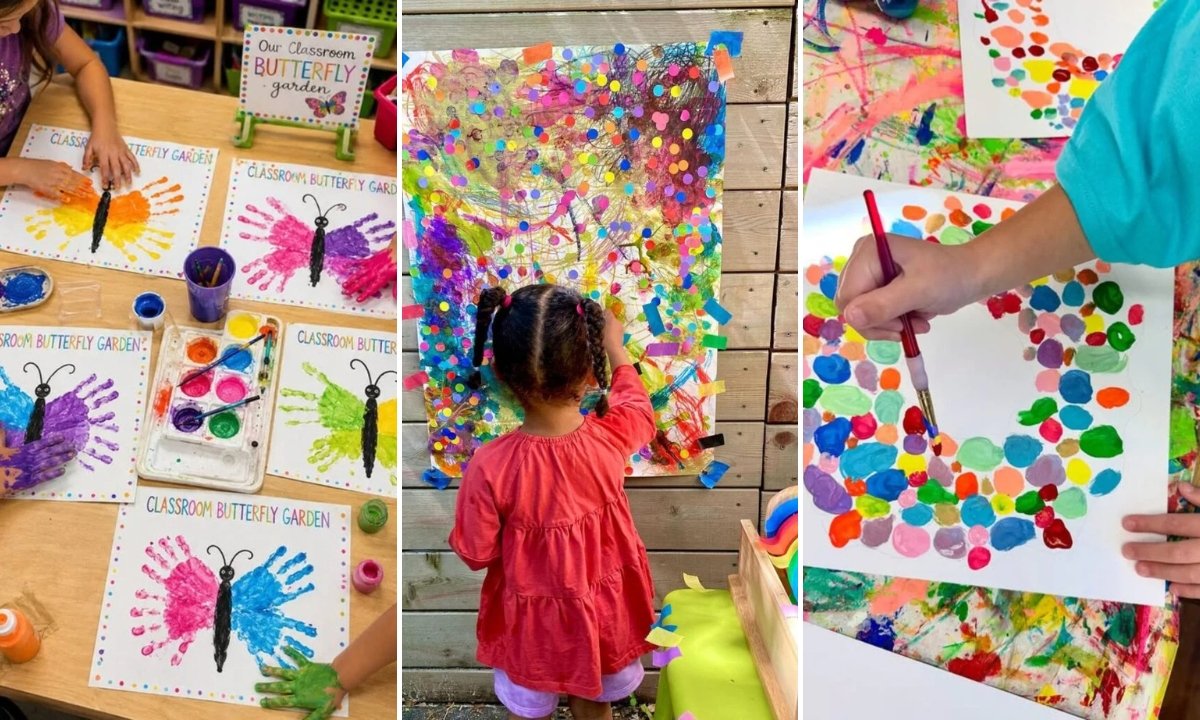
Restless afternoons might seem particularly longer when your preschooler is looking for something interesting to do.
But every craft idea online somehow turns into a gigantic mess or requires things you don’t even have.
With short attention spans, it’s also harder since tiny kids get bored easily when an activity seems too hard.
The greatest preschool art activities keep little hands occupied, seem easy to set up and teach something quietly at the same time.
In this article, I will show you 21 amazing preschool art activities that turn everyday supplies into fun little creative moments for kids.
Let’s jump in!
What Are the Best Preschool Art Activities for Learning Colors and Shapes?
Teaching colors and shapes is far easier when children can touch, move, sort, paint, and build rather than just look at flashcards.
Young children normally learn best when they feel like they are playing, which is why hands-on art activities work so well.
Save this article for later!👇👇👇
If your preschooler has trouble sitting still or has a short attention span, easy projects such as shape stamping.
Rainbow collages, color sorting crafts, sponge painting and sticker art make learning fun. You don’t even need pricey supplies.
While keeping young hands busy with paper, paint, glue, pom poms, cotton balls and even recyclable materials, preschoolers can identify shapes and colors.
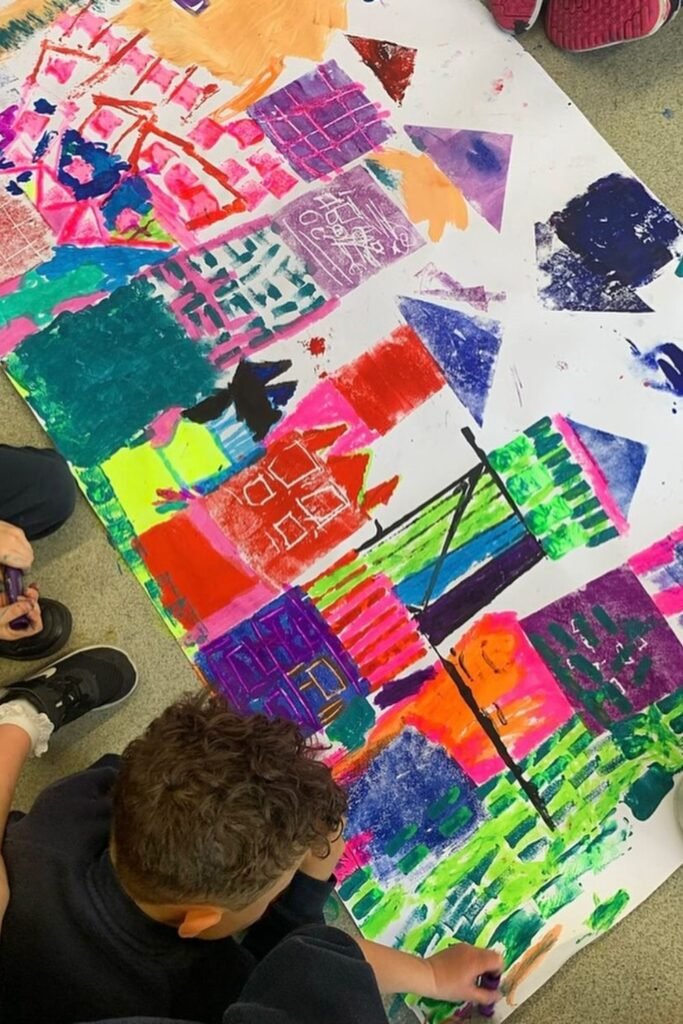
Shape Prints
Bright colors tend to pull preschoolers in faster, and turning paint into a giant shape-printing station makes learning feel more like play than practice.
Big paper and square blocks, triangle cutouts, textured rollers or even cardboard forms can be stamped with young hands to make patterns.
As they quietly learn shape names. Group tables or classroom floors are especially good for this kind of thing.
Because kids start to realize how forms repeat, overlap and make small “buildings” or neighborhoods in their artwork.
Neon paint mixed with darker hues helps to keep kids interested longer, especially for preschoolers who get bored in five minutes.
Paint Tracks
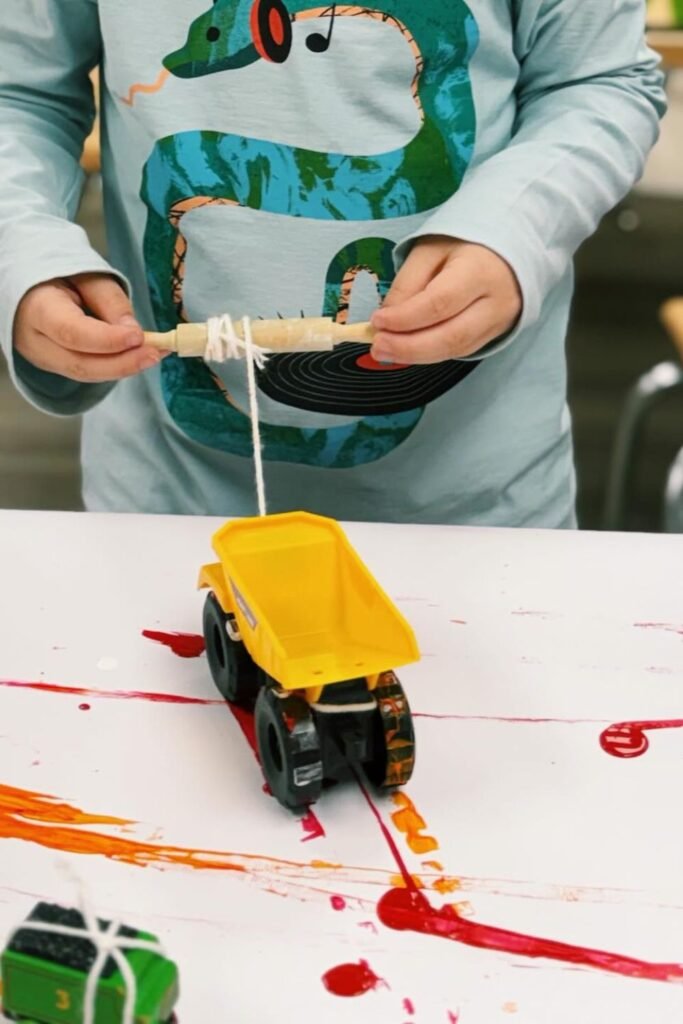
Tiny toy trucks can turn plain paint time into something preschoolers actually stay excited about for longer than five minutes.
Rolling wheels through washable paint and over wide paper offers youngsters time to notice colors mixing lines forming.
And movement patterns without feeling like they are “learning.” Table settings are perfect for rainy afternoons, and outdoor versions save on cleanup.
If your young one like extra messy play. Wrapping string around the wheels or using other toy vehicles provides fascinating textures.
And sneaks in shape and pattern learning at the same time. Bright paint colors tend to maintain attention longer.
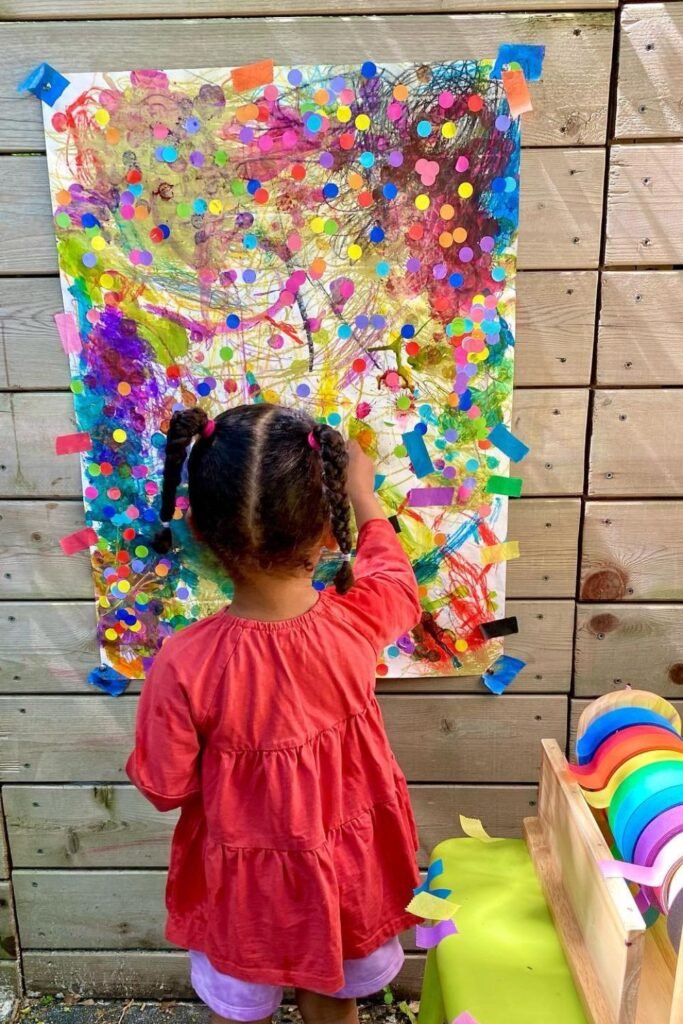
Sticker Splash
Blank walls or fences can suddenly turn into a giant preschool art station when scribbles, paint, and colorful dot stickers come together in one place.
Hanging big paper outside is particularly great for youngsters who enjoy standing and moving instead of sitting at a table for too long.
Silent bright round stickers assist with color matching and form recognition, and sloppy pen lines and paint splatters encourage creativity without rules.
Keeping the activity fresh, toddlers may go back and forth between sticking and drawing and layering colors as their concentration wanes.
Thanks to having crayons, washable paint, and adhesive dots to mix. Little hands love to spread out.
And fill up vacant spots with their own miniature “masterpiece” therefore usually the bigger sheets work better here.
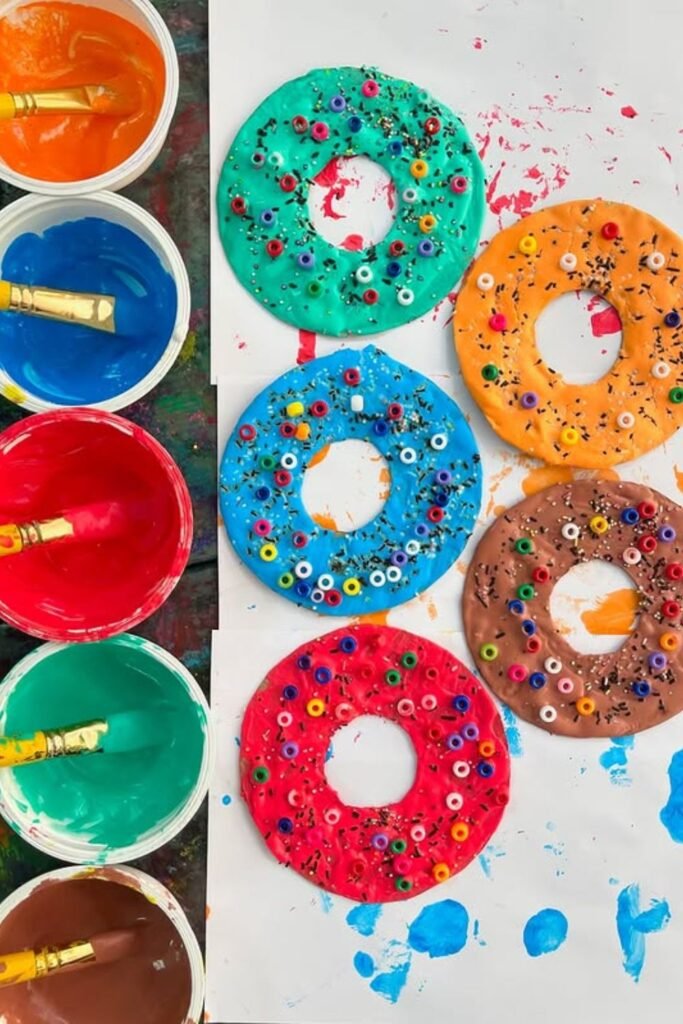
Donut Colors
Bright pretend treats can make color learning feel much more exciting, especially for preschoolers who love hands-on play.
Brightly painted soft dough rings, adorned with beads or sprinkles, convert into a peaceful, pleasant sorting exercise.
Where small hands explore matching colors, counting pieces and spotting patterns without the pressure to “learn.”
This works extremely well in kitchen play nooks, craft tables or rainy afternoons as kids tend to focus better when decorating is open-ended.
Bigger beads are easier for preschoolers to position pieces, and blending in tiny sprinkle textures offers sensory delight all at once.
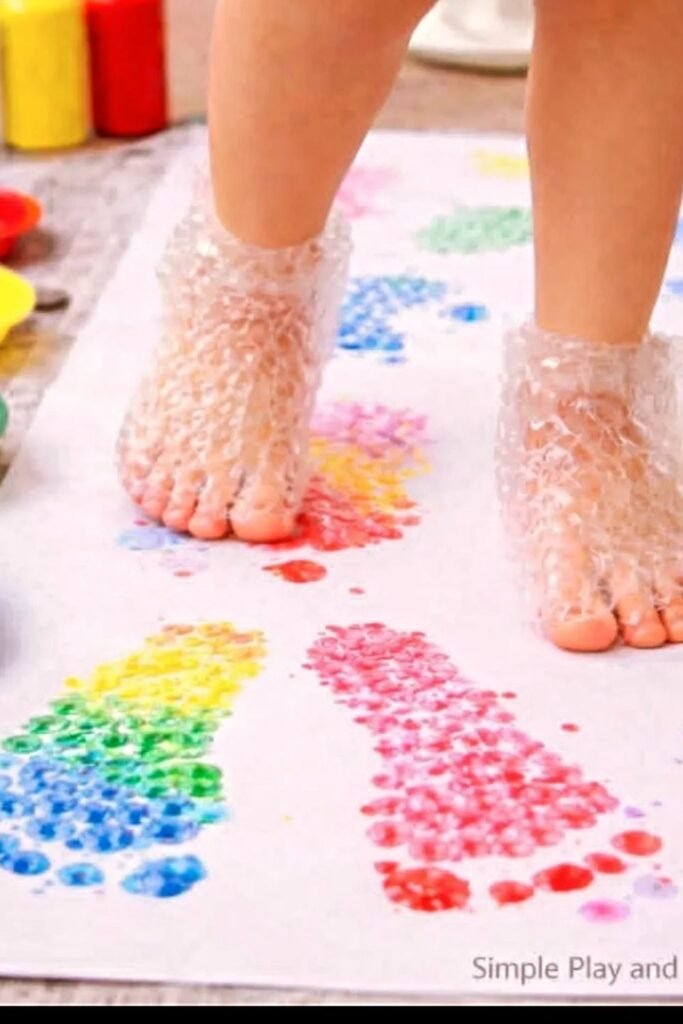
Bubble Walk
Wiggly preschool energy suddenly becomes helpful when little feet turn into paint brushes across giant paper.
Bubble wrap around the feet is interesting dotted texture that quietly introduce color, pattern and movement all at once.
Especially great for youngsters who never want to stay still at a table. Something whimsical like this makes cleanup much easy.
In outdoor patios, washable playrooms, or classroom sensory sections. Separate paint pans for each color might aid children.
To learn color names faster as they stomp, step and compare footprints. Bigger sheets seem to work better as small spaces can be irritating.
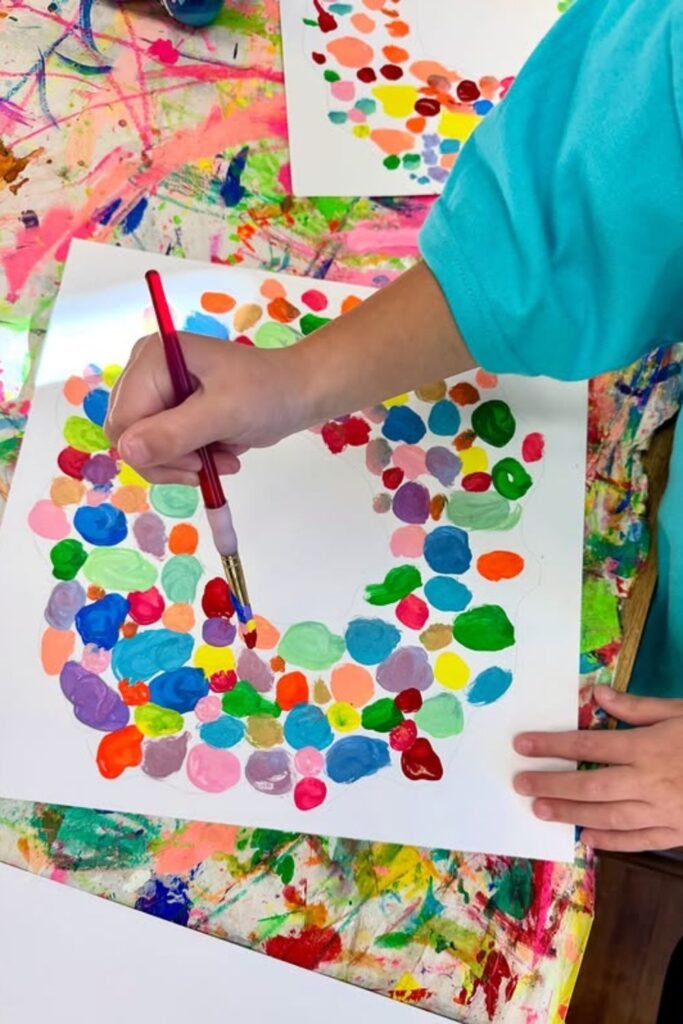
Dot Painting
Color practice feels much less boring when preschoolers get to build pictures one paint dot at a time.
Simple form outline gently helps tiny hands detect patterns, recognize colors, and enhance brush control without feeling overly regimented.
Large fruit outlines, animals, rainbows, or even letters work incredibly well, because kids can focus on filling in spaces instead of stressing about drawing perfectly.
This is perfect for busy home afternoons or art stations in the school when setup may be easy and cleanup is generally quicker than complete painting efforts.
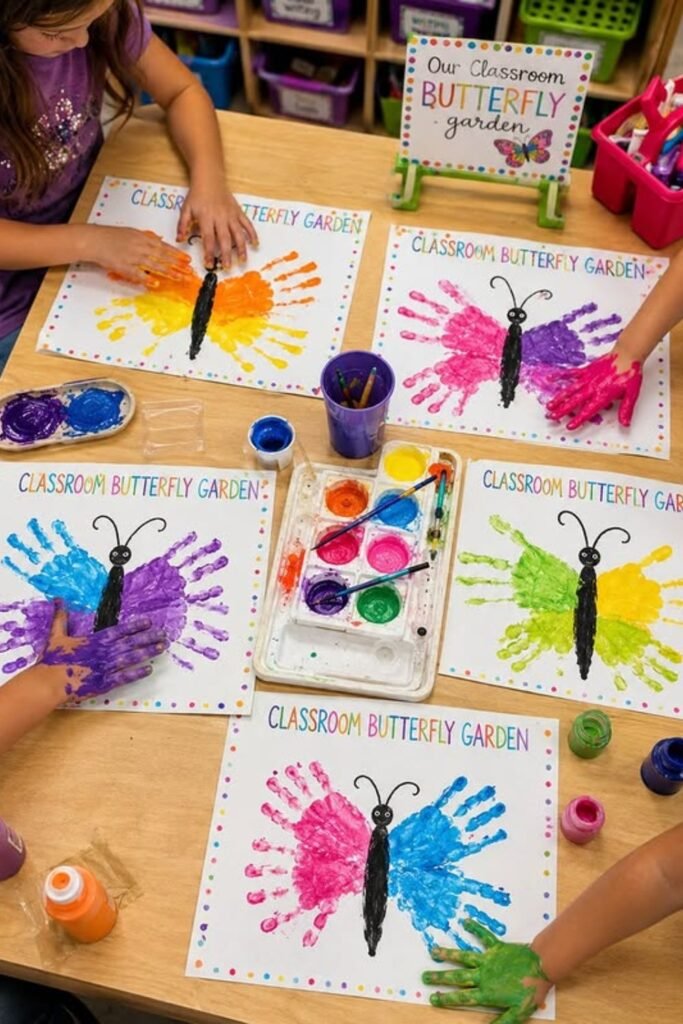
Butterfly Prints
Paint-covered hands suddenly turn into something preschoolers cannot stop smiling about when fingerprints become colorful butterfly wings.
Folding handprints around a basic butterfly body lets kids quietly observe symmetry, color pairs and shape balance.
While still feeling like they’re having messy fun. Classroom tables or Spring art weeks are especially great.
Since all the children will finish up with a different product, even though they are all using the same idea. Mix two paint colors on opposite wings.
And you can start simple color conversation especially if kids start comparing the bright and dark tints on their butterflies.
Sensory Trays
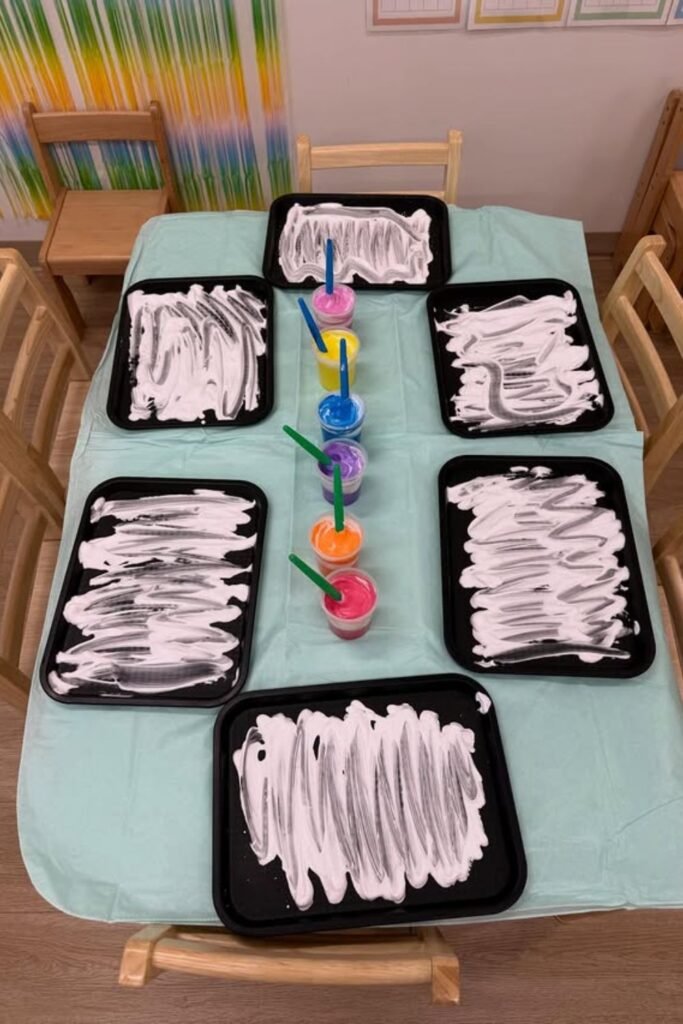
Foamy paint trays can quietly become one of the easiest preschool art setups when little hands need something calming but still creative.
Swirling colors in shaving cream or thick foam allow toddlers to draw shapes and trace letters.
Make lines and mix colors without the pressure to make something “perfect.” Such table stations are extremely good in classrooms.
Since each child gets their own tray yet is busy at the same time. In the middle, bright paint cups provide a natural place for color practice.
Young children frequently begin to pick favorites, blend hues, and discuss what occurs when colors are combined.
Leaf Portraits
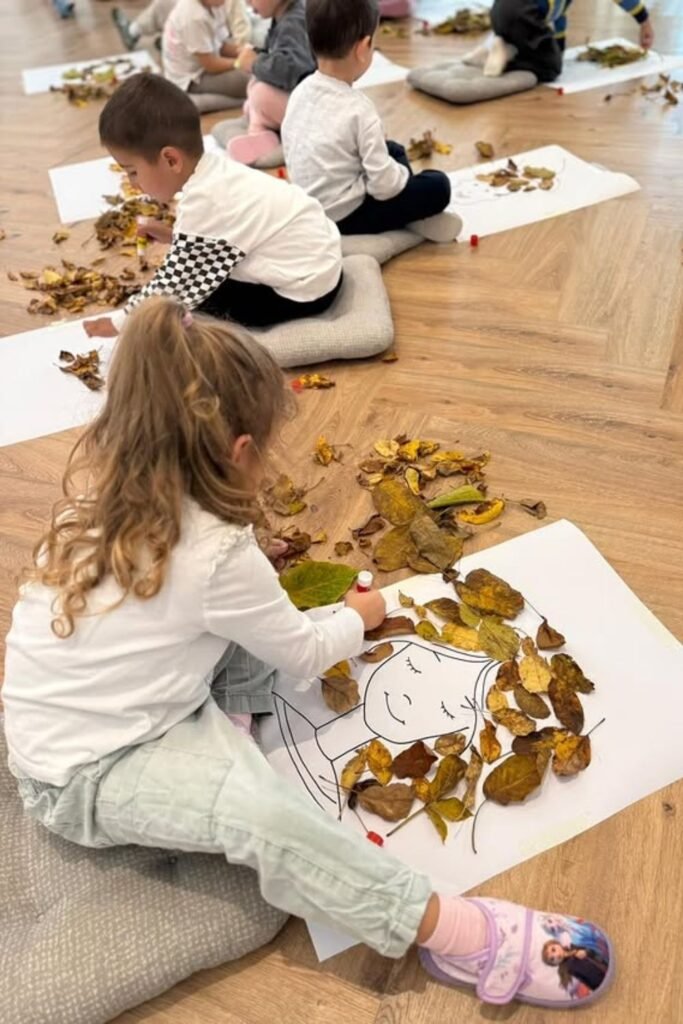
Crunchy fall leaves can turn into something preschoolers proudly talk about long after art time ends.
Stick actual leaves on simple face outlines and let small hands discover shapes, textures and colors, creating hilarious hairstyles or nature-inspired images.
These are especially good for autumn classroom themes, or pleasant rainy evenings at home.
As the kids will love collecting the leaves before the activity even starts. Yellow, brown and green hues let children recognize seasonal color changes without a lesson.
Here glue sticks tend to perform better than liquid glue as enthusiastic small hands want to position and rearrange leaves fast before going onto the next idea.
Color Sweep
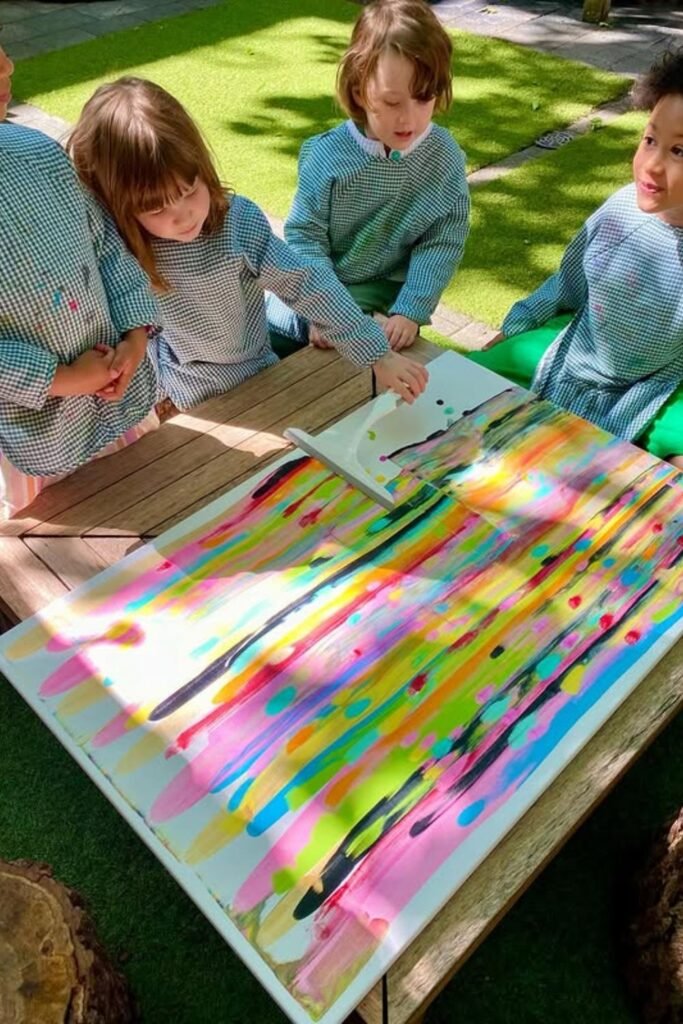
Big paint movements usually grab preschool attention faster than tiny detailed crafts especially when colors stretch across giant paper in bold streaks.
Kids can see the shades blending, sliding and changing in front of their eyes, so rolling paint with a squeegee.
Or wide scraper elevates simple colour play into something that seems exciting. Great for outdoor tables or messy painting nooks.
Since kids will want to keep adding more paint once they see new colors pop up. A long paper also provides lots of room for teamwork.
Making it easier for small artists to share space as they discuss favorite colors, thick versus thin lines, and what happens.
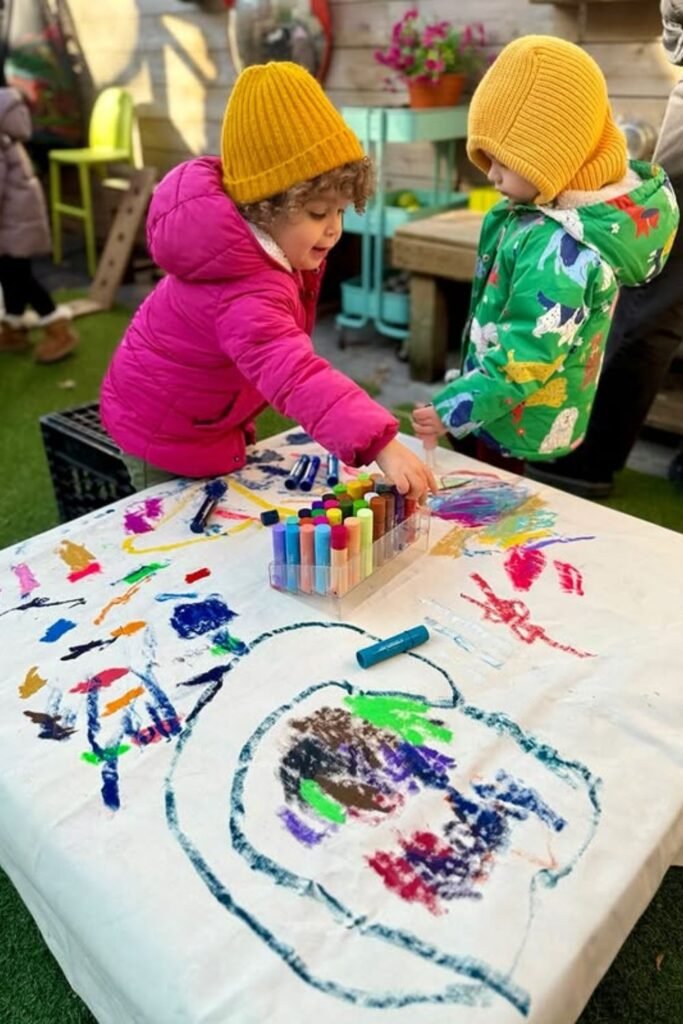
Chalk Layers
Outdoor tables feel much more inviting when preschoolers can grab chunky crayons or paint sticks and create freely without worrying about staying inside the lines.
These big paper spaces are great for kids who prefer to move between drawing, scribbling.
Blending colours and turning shapes into faces or comical creatures. Open-ended painting time generally keeps toddlers engaged longer.
Because no one feels pressure to create something “right.” One huge sheet, with bright colors.
Also makes it easier to explain about color names, circles, lines and humorous designs while young hands experiment spontaneously.
Ocean Play
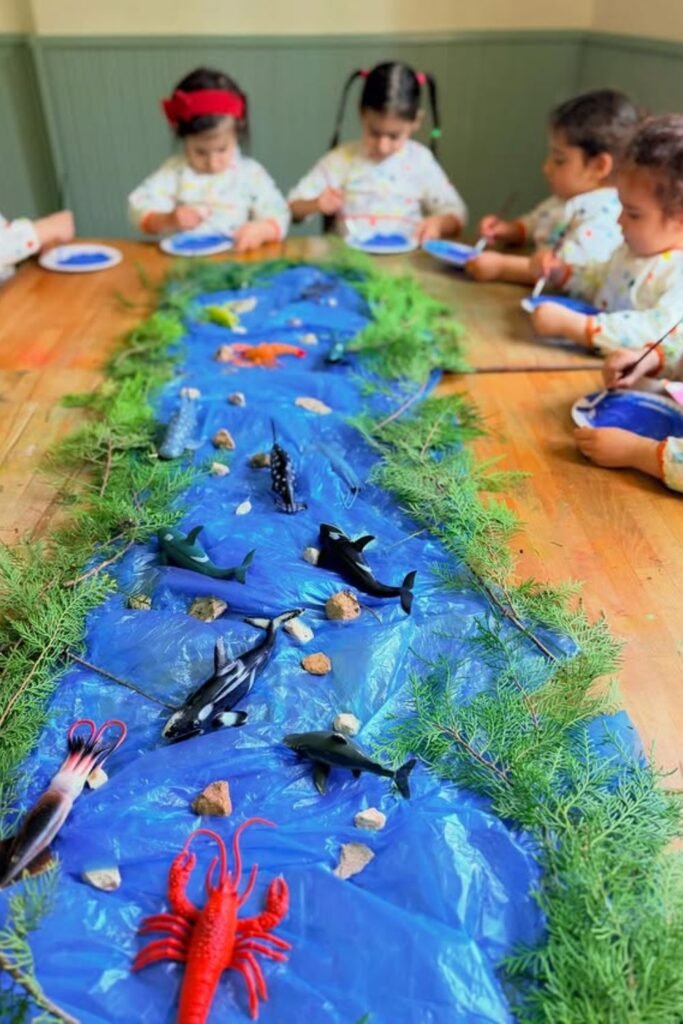
Ocean animals scattered across a pretend river can quietly turn art time into storytelling, painting and sensory learning all in one spot.
When toddlers are more into exploring themes than sitting through conventional activities.
Blue paper or fabric laid down the center of a table works really nicely. The backdrop gets more lifelike with tiny rocks.
Plastic marine animals, sticks and vegetation as kids paint ocean colors nearby, or chat about what lives in the ocean.
Group situations often work best, as children will automatically start to point, name animals and make up short stories together.
Feather Colors
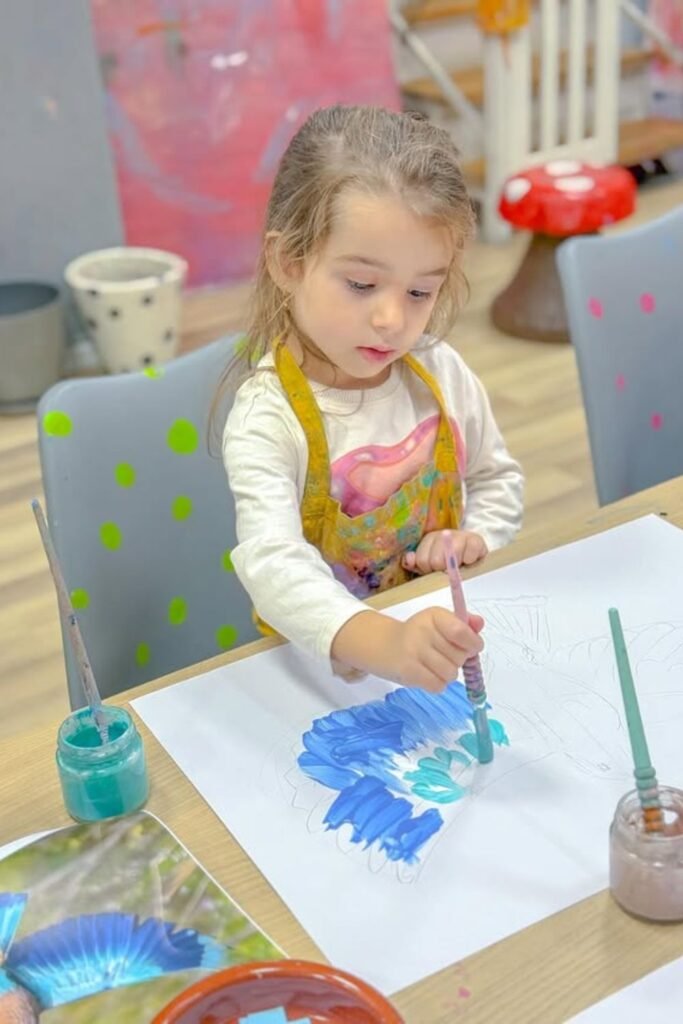
Soft brush strokes usually feel less overwhelming for preschoolers who still feel nervous about painting inside outlines.
Larger drawings of a bird, butterfly, fish or feather gives tiny hands lots of room to experiment with colors.
While calmly honing brush control and color selections at the same time. calm sections of the classroom or calm art time in the afternoon work.
Especially well since youngsters frequently maintain their focus longer when they can slowly build shades rather than rush through messy paint play.
Similar to the bird photo or nature example, place a real photo nearby and kids will see blues, greens and little details without the pressure to replicate exactly.
Paper Loops
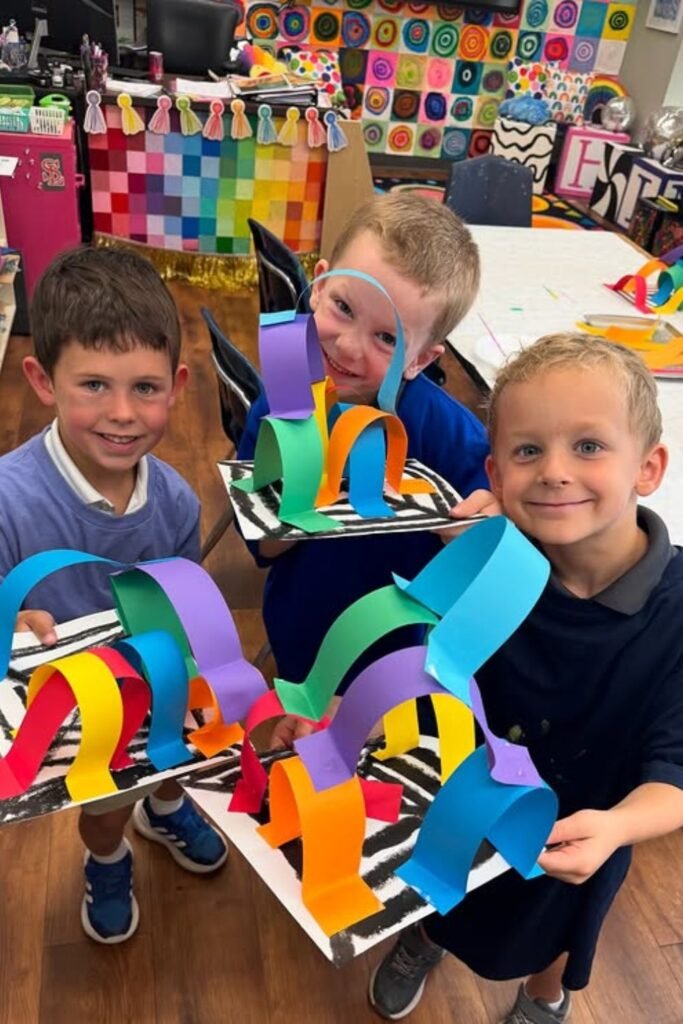
Curved paper strips may make learning shapes so much more fun when toddlers get to build something that pops right off the page.
Quietly, young hands can improve fine motor skills by bending colorful paper into loops, discovering curves, size differences and color patterns at the same time.
Classroom art tables are particularly good for something like this, because youngsters may mix vivid colors freely.
And make rainbow-style sculptures without worrying about immaculate results. Thicker paper generally keeps shape better.
Especially for preschoolers learning how to glue and bend without ripping.
Shape Hunt
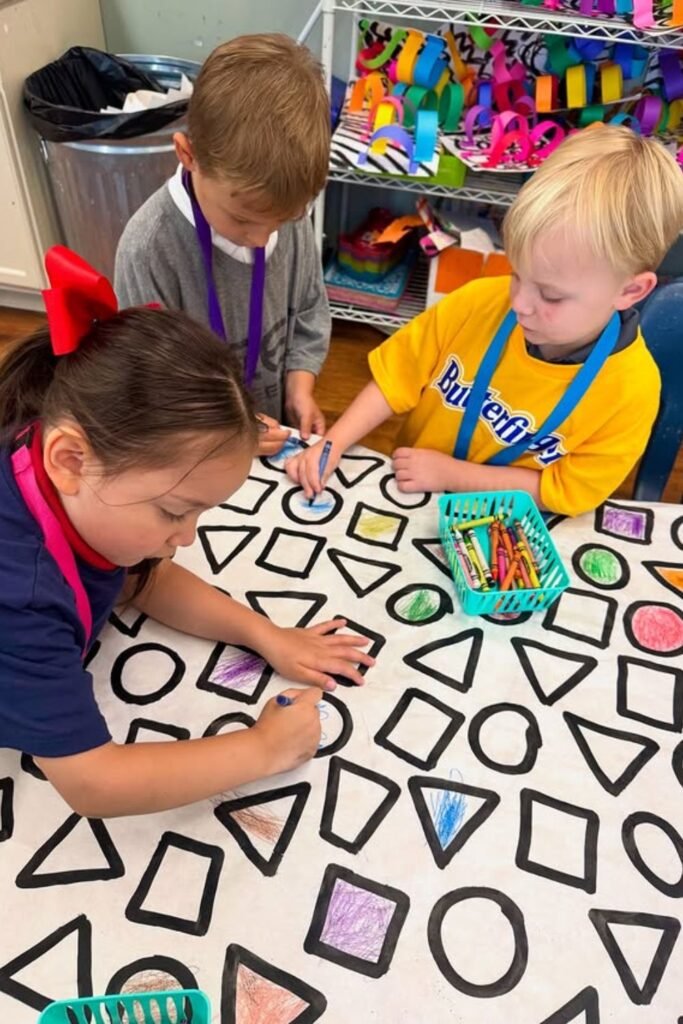
Coloring turns into much better shape practice when preschoolers can spot circles, triangles, squares, and rectangles across one giant page.
Instead of working on tiny worksheets. Big bold outlines like these naturally attract children to matching colors.
To find contrasts between forms, and to practice pencil control without feeling like they are in “learning mode.”
Group tables work well, because children at this age often begin to point things out to each other.
Such as who found the most circles or which form was the easiest to color. Crayons tend to perform better than markers.
Texture Smash
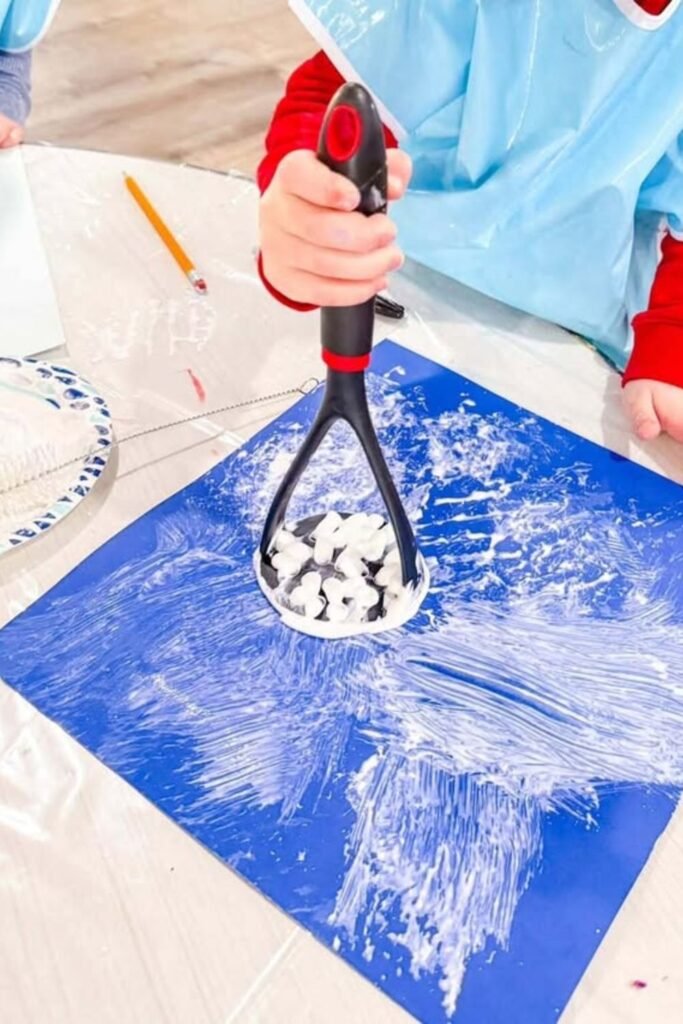
Kitchen tools can turn ordinary paint time into something preschoolers remember long after cleanup ends.
The thrill of pushing a potato masher through thick paint provide textures and surprising patterns.
That seem exciting to small hands still discovering how marks and shapes appear on paper.
Winter themes, snow art, fireworks, clouds or ocean waves perform especially well as textured lines naturally look more lively than flat brush strokes.
Big paper areas help most here because preschoolers enjoy to push, press, drag tools over the page with little concern about staying clean.
Wrap Painting
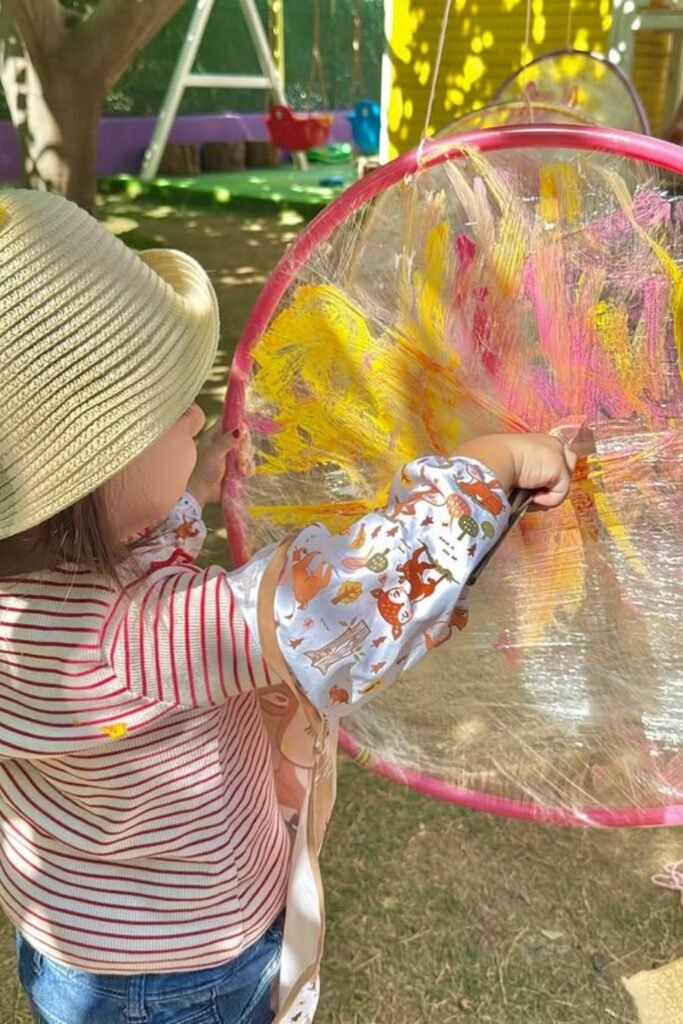
Sunshine and outdoor play suddenly feel more creative when clear wrap turns into a giant painting canvas.
Stretching plastic over hoops or frames allows kids to have fun swiping colors, mixing tints.
And making broad brush strokes without worrying about paper sliding about. Backyard play areas work especially well.
Since the light filtering through the paint makes bright yellows, pinks and oranges feel even more thrilling.
Painting standing up also helps to keep wiggly preschoolers engaged for longer periods of time because little arms aren’t locked on a table and can move freely.
Corn Prints
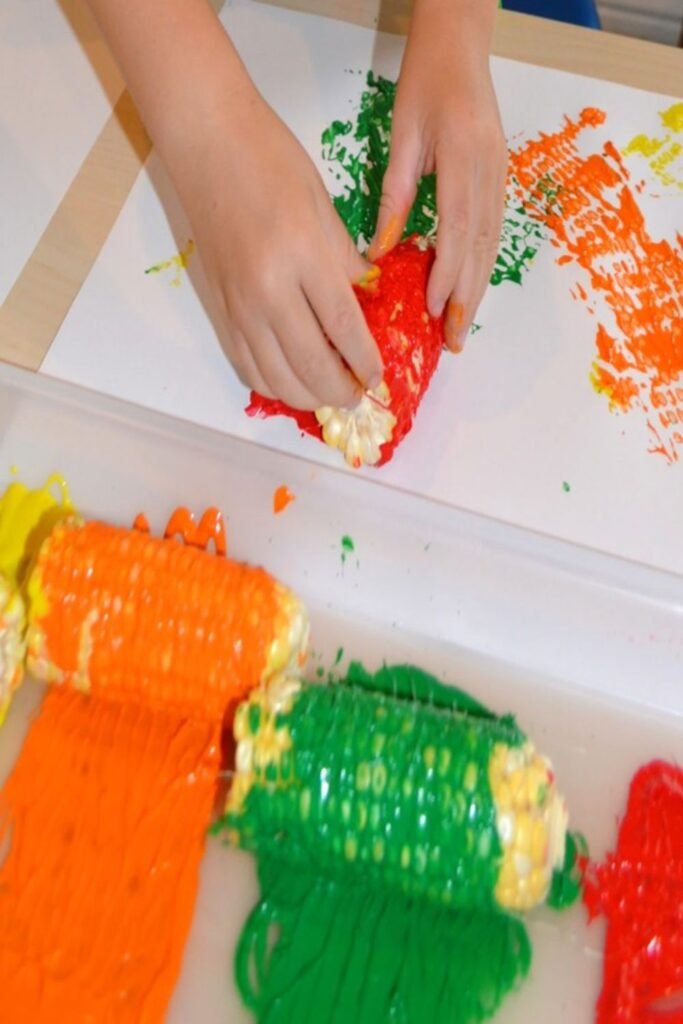
Unexpected supplies usually make preschool art feel more exciting, and painted corn rolling across paper creates fun patterns almost instantly.
Textured print come up quickly so children keep fascinated longer than they do with traditional painting.
Little hands love to press and spin the corn. Fall themes, harvest weeks or color-learning activities work.
Especially well since vivid yellow, green, red and orange paint readily inspire color talks while kids experiment.
Rolling in multiple directions can sneak in patterns and line movements without the feel of practice.
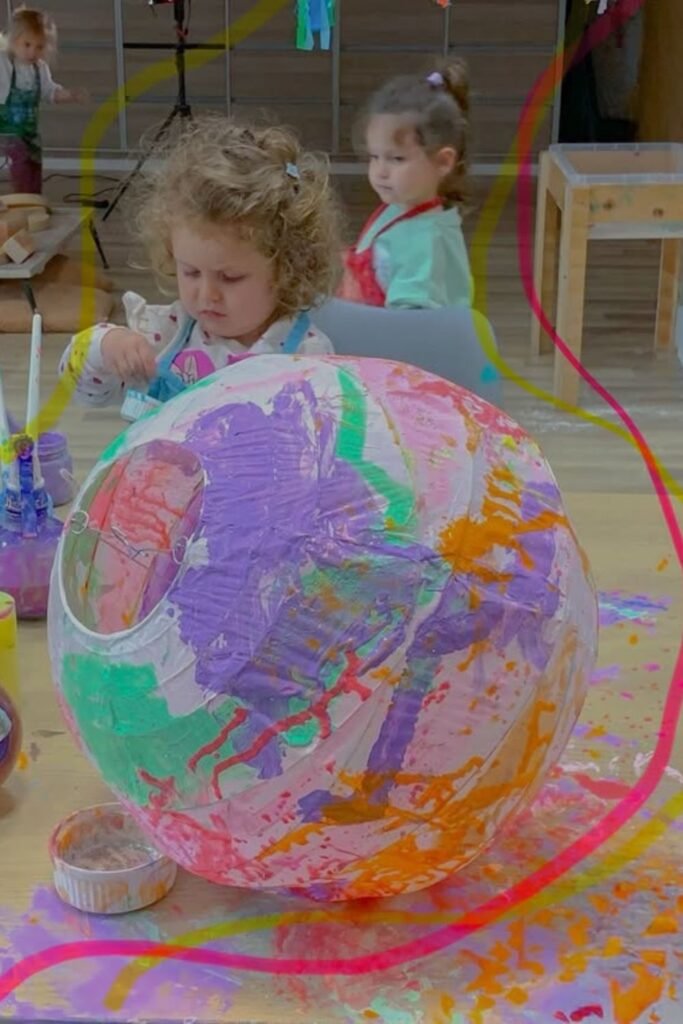
Giant Canvas
Big messy art moments usually become preschool favorite and when paint moves off tiny paper and onto something oversized.
Big balls or inflatable areas like this provide an opportunity for young hands to paint, spin, swipe and mix colors from all directions.
This is especially effective for pre-schoolers who love movement more than sitting still.
Open classroom settings or outdoor play areas are ideal because delighted artists typically like to move about and continue to build layers.
Bright washable paints let colors pop, and round surfaces naturally lead to conversations about circles, size and shape without turning art time into a lesson.
Mud Prints
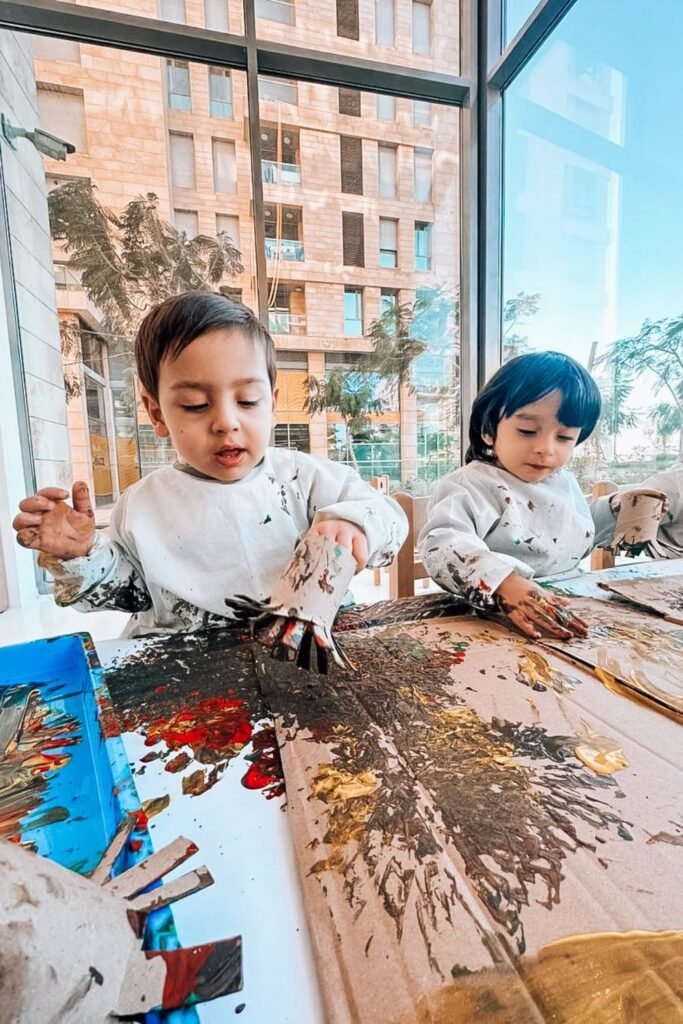
Messy art days often become the ones preschoolers remember most because little hands get to squish or spread and experiment with out strict rules.
Finger painting on huge paper like this quietly increases hand strength, texture sensitivity and color wonder while keeping lively kids fully busy.
Especially nature themes, muddy play days or sensory art stations. Thick paint and darker colors just feel thrilling to preschoolers who want to get their hands dirty.
Big paper is great for smearing and stamping and combining colors freely without continual reminders to be neat.
Here, table covers and washable paint are a big help, because once toddlers begin to explore textures, there are generally tiny handprints everywhere.
Heart Mural
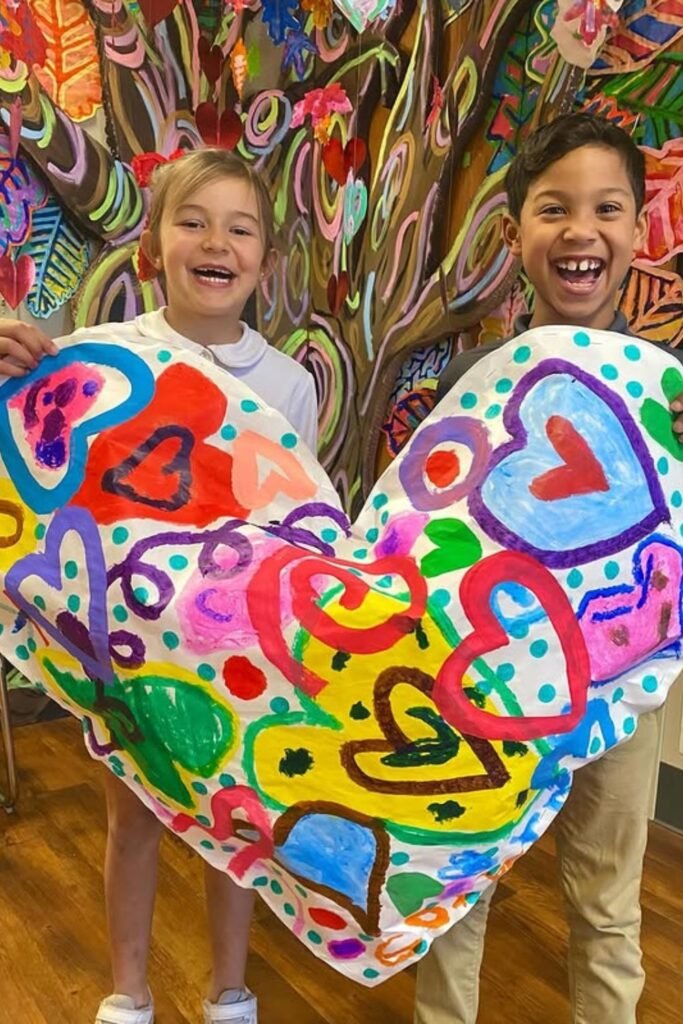
Big heart paintings can quietly become one of the easiest ways to mix shapes, colors, and creativity without preschoolers losing interest halfway through.
Big paper shapes like this are great, too, because little hands have plenty of room to paint big strokes, circles, dots.
And little hearts without worrying about mistakes. Friendship weeks, Valentine themes, compassion projects or classroom group art seem.
Like a great fit because students can add their own colors but still work on one large piece together.
The bright paint options are more likely to hold attention for longer, and the repetition of the heart shapes across the page encourages children to detect patterns.
FAQs
How Do You Keep Preschool Art Activities From Becoming Too Messy?
Cover tables with butcher paper, use washable paint, and use larger tools like chunky brushes or glue sticks to make cleanup easier.
For preschool painting activities with paint, stamping or sensory play, you may also set up outside pretty effectively.
Once happy tiny hands get busy, it generally saves a lot of worry to keep wipes, aprons and a little cleanup basket available.
What Supplies Work Best For Easy Preschool Art Activities?
Preschoolers like enjoyment that’s active, not fancy materials, so simple resources are frequently preferable.
Washable paint, crayons, stickers, glue sticks, pom poms, paper plates, cotton balls, cardboard forms, dot markers.
The smaller art container at home is also a great way to jump into short projects without extra preparation.