One minute your preschooler is pleased to see a ladybug outside, the next they are saying bugs are “gross” or bolting off after 5 minutes of an activity.
Discovering insect activities that will truly capture a preschooler’s interest can be more challenging than it seems.
Especially when many ideas call for too many supplies or seem too sophisticated for little kids.
If you are searching for simple insect activities that seem like fun and not work, you’ve come to the perfect place.
In this article, I will show you 25 amazing Insect activities for preschool that add creativity to preschool learning in a relaxed way.
Let’s jump in!
What Are the Easiest Insect Activities for Preschool Kids Using Simple Supplies?
You don’t need special classroom supplies to make bug activities interesting for toddlers.
In fact, some of the best bug activities start with things you probably already have at home.
Like paper plates, pom poms, crayons, glue, cupcake liners, pipe cleaners or even a cardboard box.
Save this article for later!👇👇👇
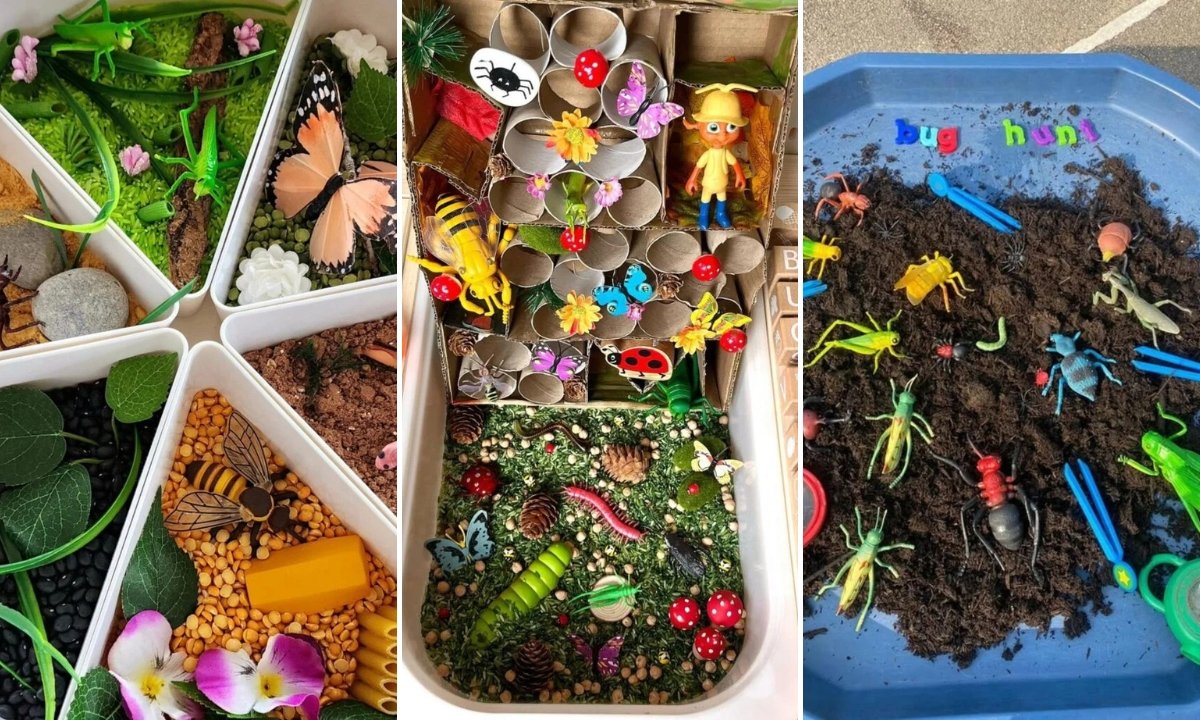
basic hands-on activities usually work best since they can touch and move and paint and sort and pretend while they learn.
Simple butterfly crafts, bug hunts, counting games and sensory bins can turn a typical afternoon into bug fun and keep tiny hands occupied.
Bug Matching
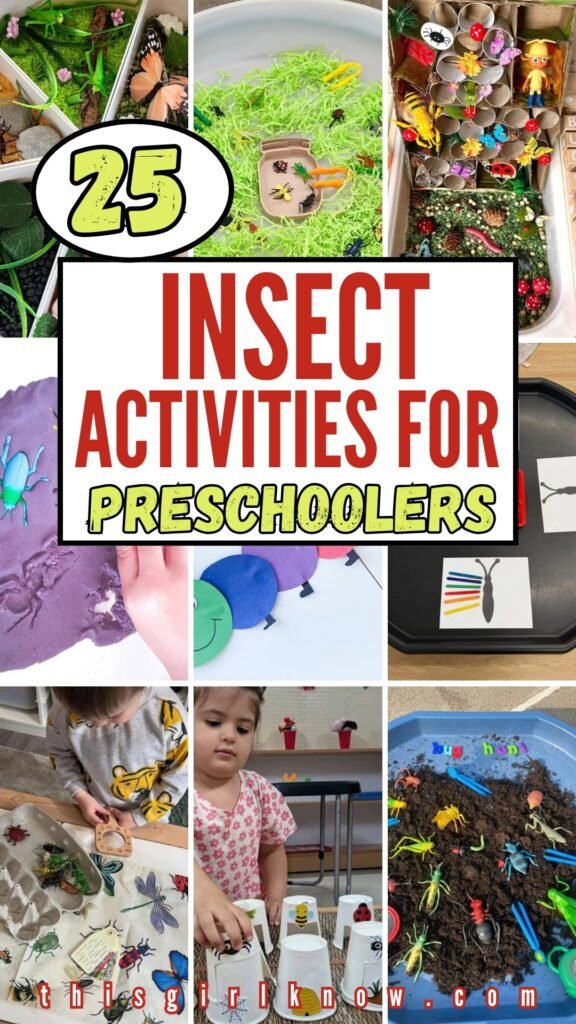
Tiny hands usually stay busy longer when an activity feels like a little game, and this insect cup match does exactly that.
Flip paper cups upside down, add bug pictures such as spiders, bees, ants and ladybugs, then cut simple flaps or matching areas.
So youngsters can place the proper insect in its “home.” Pre-school children absorb matching.
Problem solving and bug detection naturally without the sense of learning. This layout works particularly well for classroom centers.
Add in some amusing bug information as they play and suddenly “gross bugs” turn into something fun to explore.
Bug Hunt
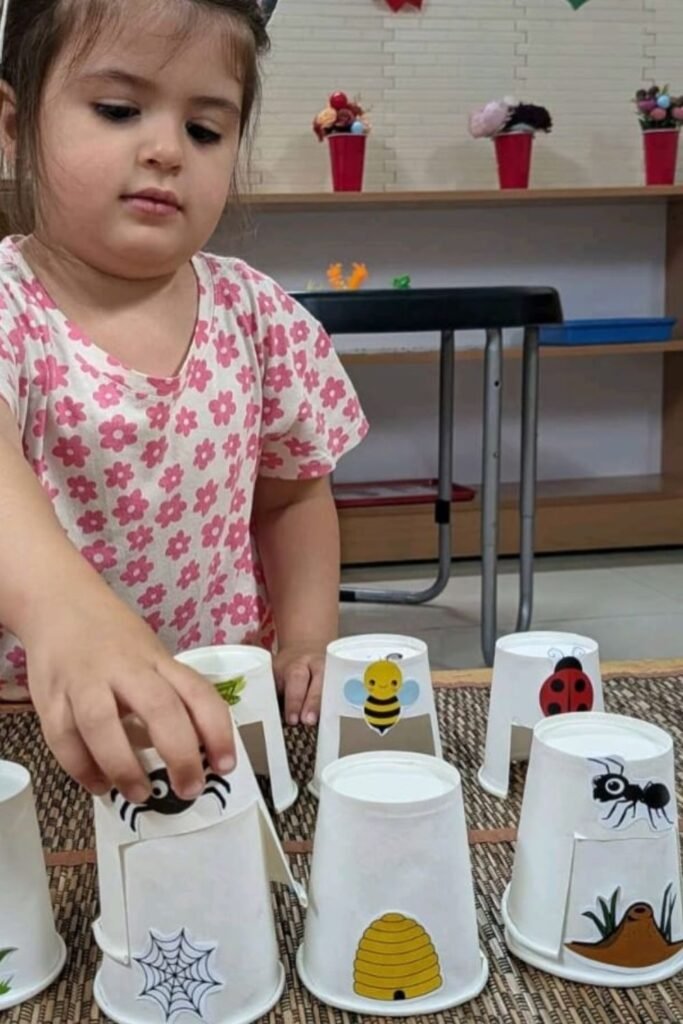
Digging through dirt instantly makes insect learning feel like play instead of a lesson. Fill a shallow bin with soil, cocoa powder, or shredded paper.
Then hide plastic bugs inside for toddlers to find using kid-safe tweezers and magnifying glasses.
That “find and rescue” vibe is something little explorers appreciate, especially if you turn it into a tiny challenge of locating spiders, grasshoppers or ants one by one.
Outdoor play areas, sensory tables or backyard learning corners are ideal, because kids can dig without a worry about mess.
As they search, sprinkle in insect names and quietly you increase language, fine motor skills and interest all at the same time.
Bug Hotel
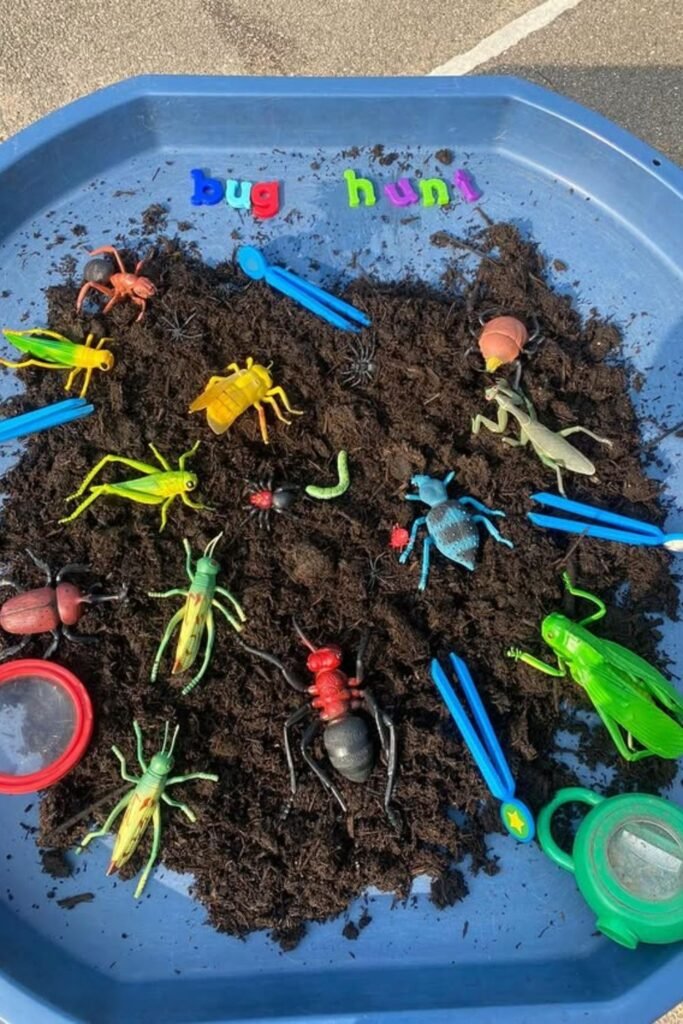
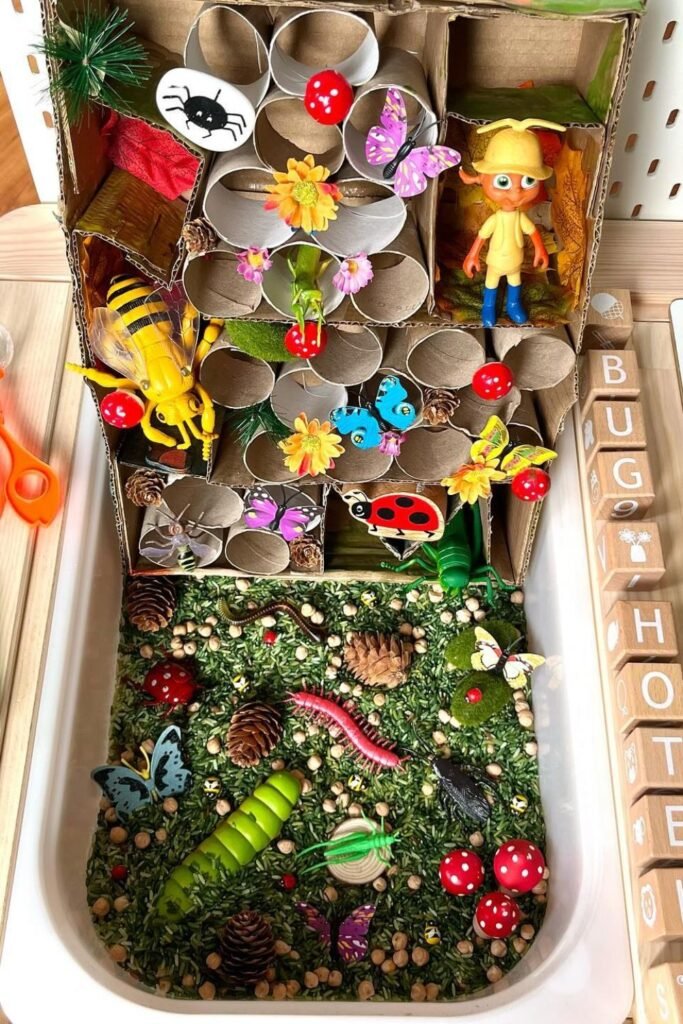
Turning bug learning into a mini world always feels more exciting than a regular craft table. Stack cardboard tubes, boxes, leaves, flowers, and toy insects together.
To create a preschool bug hotel for children to look, sort and believe bugs live in little houses.
Little hands can transfer butterflies, ladybugs, caterpillars or bees to different locations while talking about where bugs like to live, and curiosity builds fast.
This set-up works well for nature tables, classroom science corners, or quiet sensory time at home, giving kids the chance to explore again and again.
If you want to extend the activity and quietly increase observation skills without it seeming like learning, have the tweezers and magnifying glasses close by.
Bug Rescue
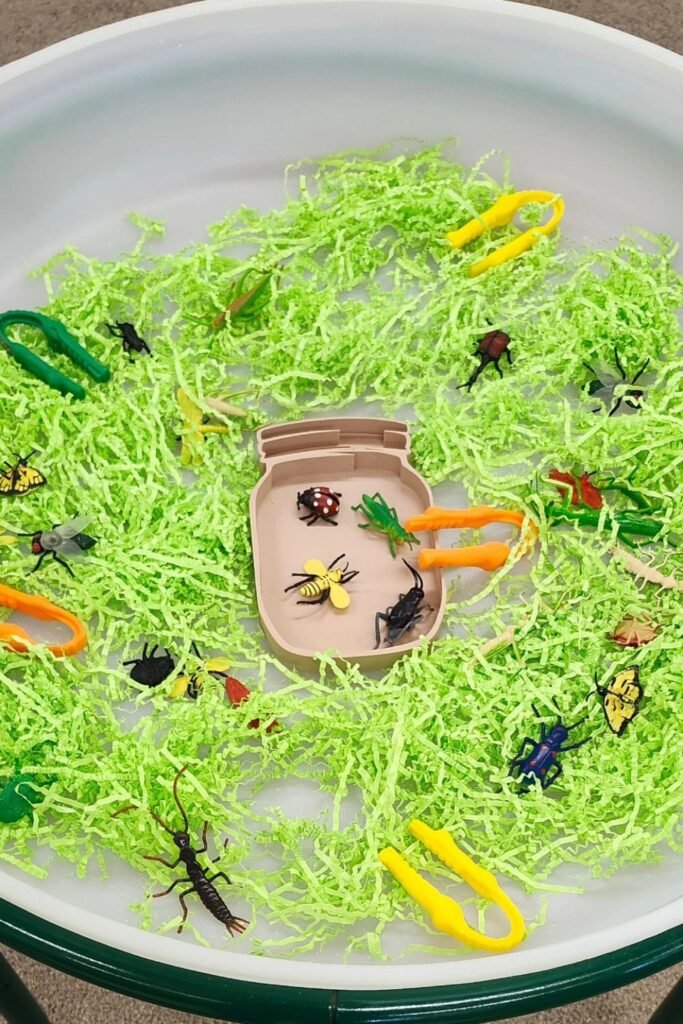
Hunting for tiny insects hidden in shredded “grass” turns quiet play into something preschoolers actually stay excited about.
Sprinkle plastic bugs on paper filler, add kid-safe tweezers and put a small jar or container in the middle for kids to collect their bug finds one at a time.
Pinching, grabbing and sorting butterflies, bees, beetles or spiders into a pretend bug jar helps tiny hands gently build fine motor skills.
This works especially well at sensory tables, preschool stations, or indoor rainy-day play, since children are able to search at their own leisure and not feel overwhelmed.
We added simple challenges such as “Can you find two flying bugs?” to stretch the activity out a bit longer and to sneak in some counting.
Caterpillar Snack
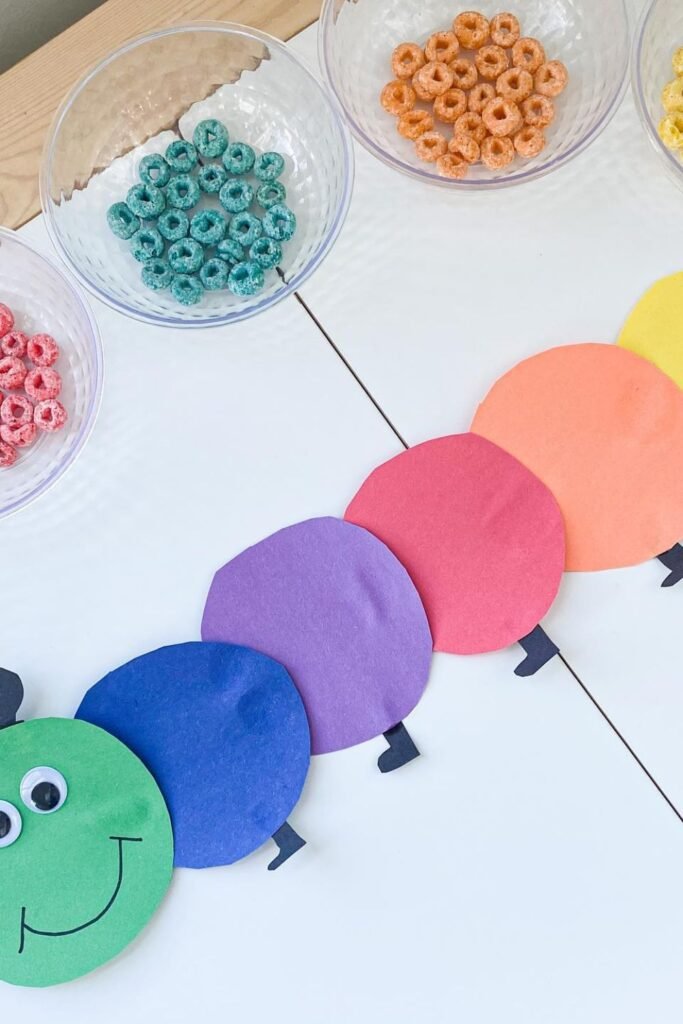
Colorful snacks can turn a simple insect lesson into something preschoolers actually get excited about.
Cut out large circles of paper to create a caterpillar body and have the kids match cereal loops by color to each region for an easy bug-themed sorting game.
Little hands stay active while mastering color recognition, counting and fine motor abilities without even knowing they are learning.
This activity is excellent for kitchen tables, preschool centers, or snack time stations with its easy setup and quick clean-up.
Tasting a few pieces of cereal when they finish the caterpillar makes the exercise feel extra fun and keeps bug learning light instead of overpowering.
Bug Patterns
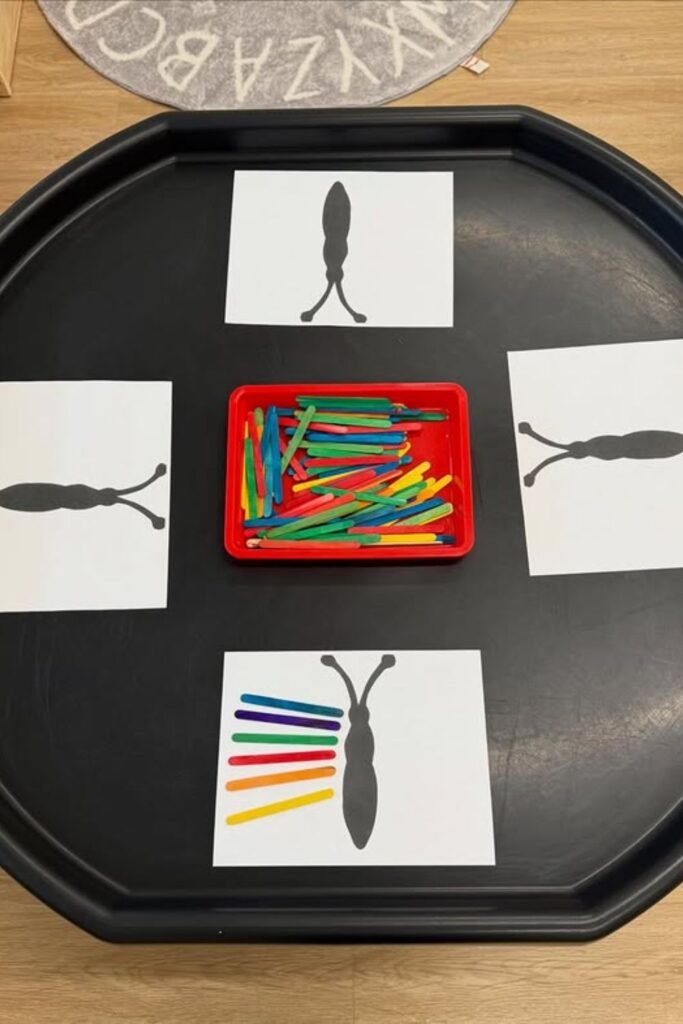
Matching tiny craft sticks to insect shapes feels almost like solving a puzzle, which makes preschoolers wants to keep going longer.
Print simple bug outlines, keep colored popsicle sticks close, and have kids repeat the pattern onto the insect body to create wings, legs, or stripes.
Little hands are busy putting each piece in its appropriate place, so attention naturally develops.
For this set up, quiet classroom stations, morning baths or table activities at home work well because kids can play independently without a lot of help.
Add easier designs for younger preschoolers and some rainbow colors for older kids who want a tougher challenge.
Bug Stamps
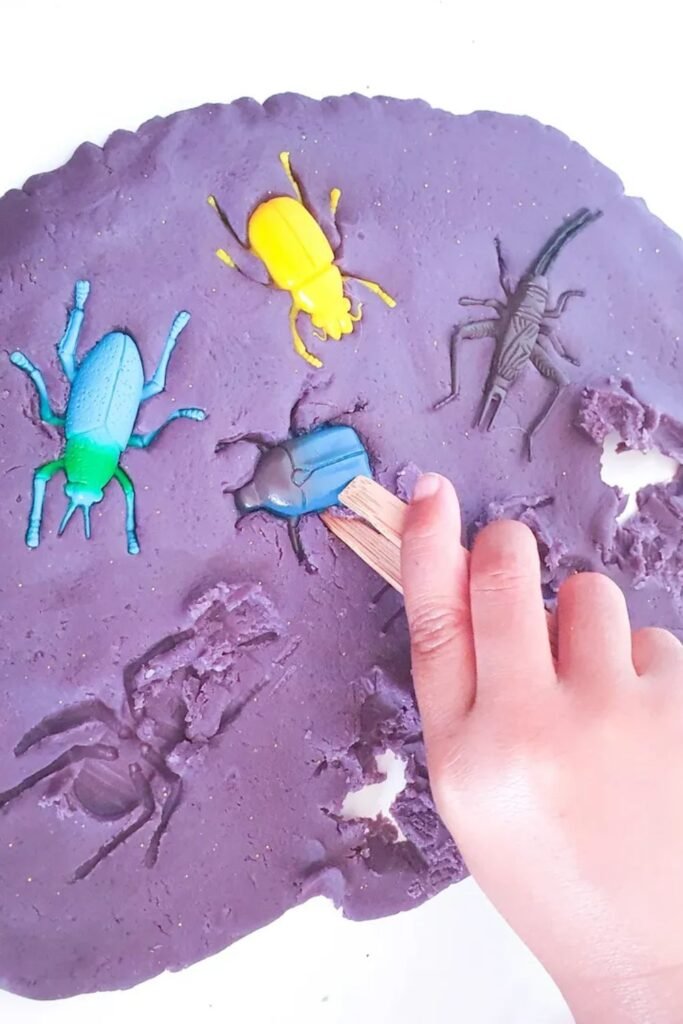
Pressing toy insects into playdough feels oddly exciting for preschoolers because every squish leaves behind a surprise shape.
Roll out soft playdough, give out plastic bugs and let them stamp beetles, spiders or crickets to make insect prints they can compare and examine.
When they see the different legs, wings and body shapes popping up in the dough, the kids soon get curious.
This technique works especially well with messy play tables, sensory nooks or peaceful afternoon activities at home.
Ask simple questions like Which bug made the biggest print to teach observation skills subtly, making the whole experience fun and comfortable.
Bug Trays
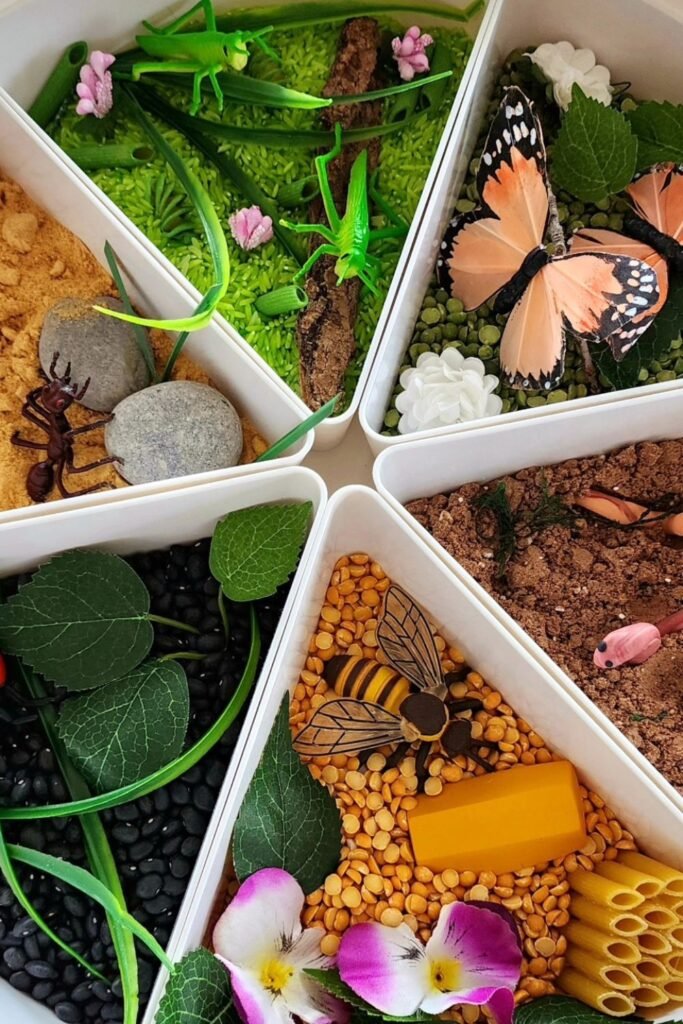
Breaking insect learning into tiny sensory worlds makes preschoolers want to explore longer with out getting overwhelmed.
Fill a variety of trays with rice, beans, sand, leaves, rocks or flowers, and have children match various insects with their pretend homes.
Kids discuss where bugs could be living as ants scuttle in the sand, butterflies perch near flowers and ladybugs hide in leafy regions.
This layout is great for preschool classrooms and nature play nooks, because kids can move from tray to tray like little bug explorers.
Adding scoops or tweezers to the game adds even more hands-on enjoyment while gently increasing sorting abilities, vocabulary and curiosity.
Bug Sorting
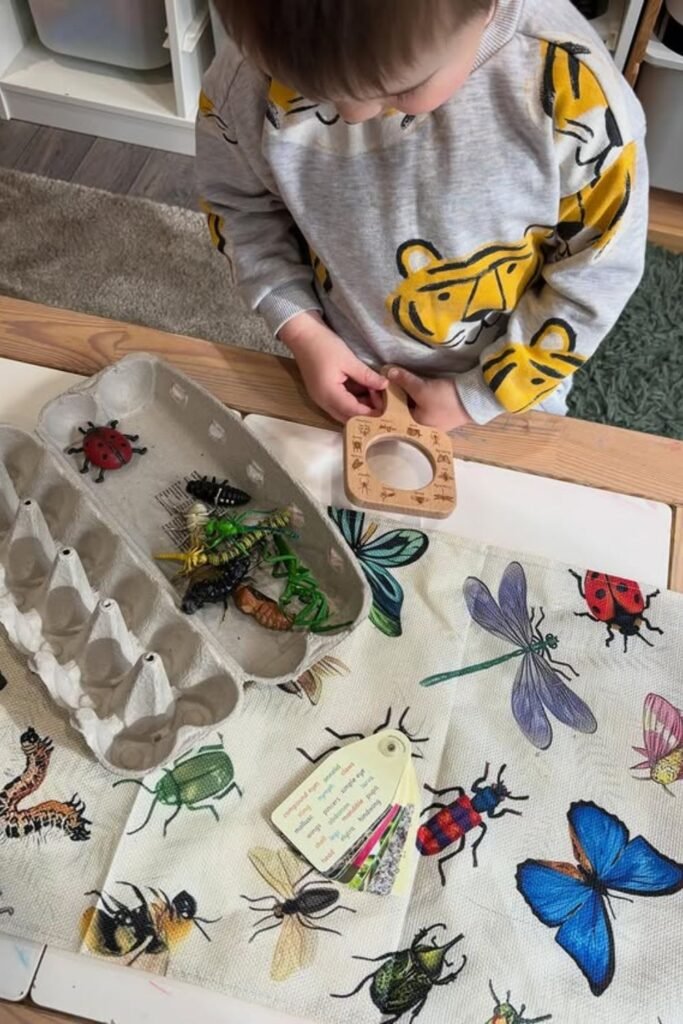
Little bug collectors usually love activities that feel like a secret mission, and an egg carton turns into the perfect insect sorting station.
Drop plastic bugs into different parts, giving children a magnifying frame or bug viewer and let them investigate wings.
Colors or legs before sorting them together. The bugs are all touchable, moveable and inspectable so focus stays longer instead of just gazing at photographs.
It works nicely in quiet learning spaces, preschool science tables or indoor afternoons at home because everything stays confined and easy to clean up.
To help observation skills improve naturally while insect learning still feels joyful, try simple suggestions like Can you find two bugs with wings.
Sensory Bugs
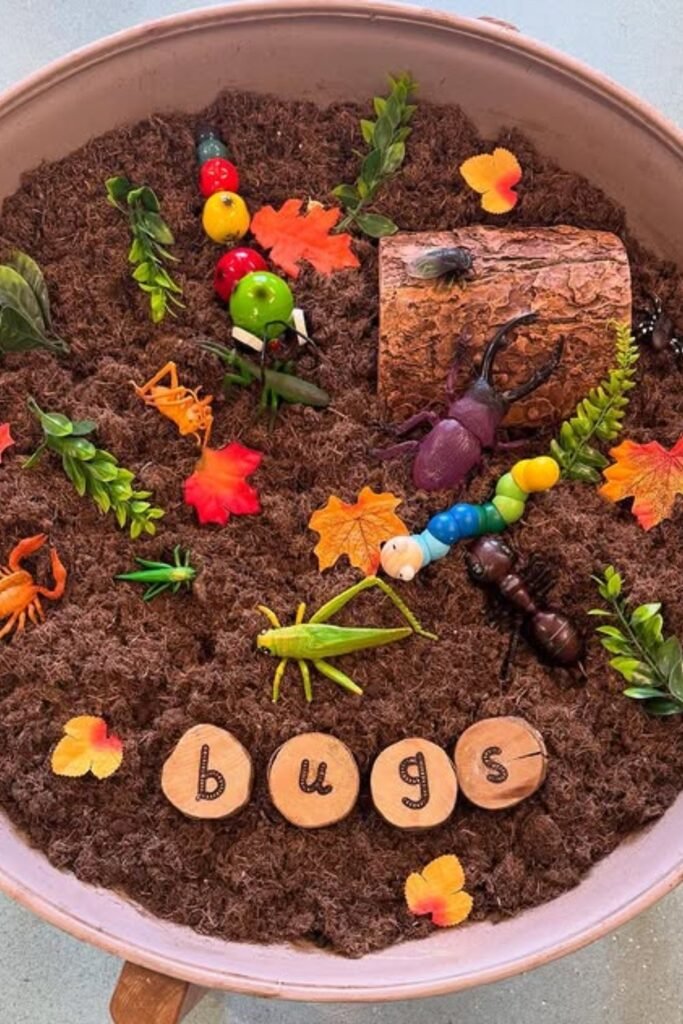
Scooping through soft soil while spotting hidden insects can keep preschoolers busy way longer than expected.
Fill a shallow bin with cocoa mud, potting mix, or crushed paper and add toy bugs, leaves, little branches.
And colourful elements from nature to make a mini insect habitat. Little explorers love moving grasshoppers, ants or beetles.
Through the “forest” while creating their own bug adventures. Outdoor learning tables, preschool sensory stations or messy play corners.
At home sound excellent for this set-up as youngsters may dig, search and imagine freely.
Bug Craft
Craft time feels way more exciting when preschoolers get to invent silly bugs instead of copying perfect ones.
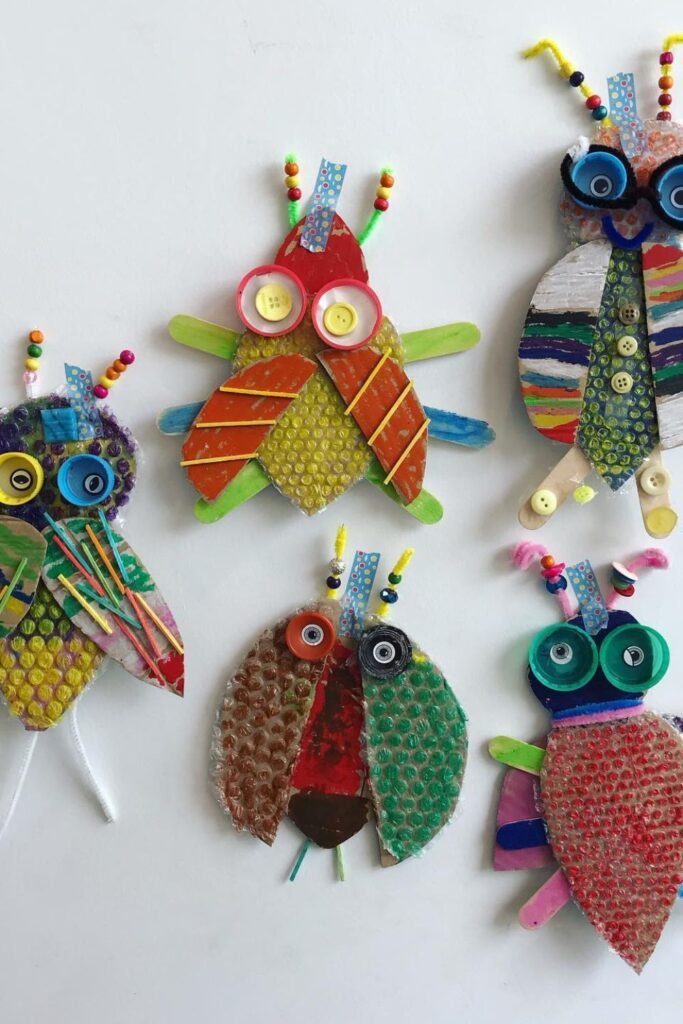
Collect bubble wrap or bottle caps, popsicle sticks, buttons, pipe cleaners and scrap paper.
Then let kids make colorful creatures with quirky eyes, striped wings, or wiggling antennae.
A bug doesn’t need to appear “right” thus creativity flourishes rapidly and nervous small artists feel more confidence.
This is a great rainy afternoon activity or for preschool art tables or insect theme weeks where kids can explore textures as they cut, glue and decorate.
Ladybug Print
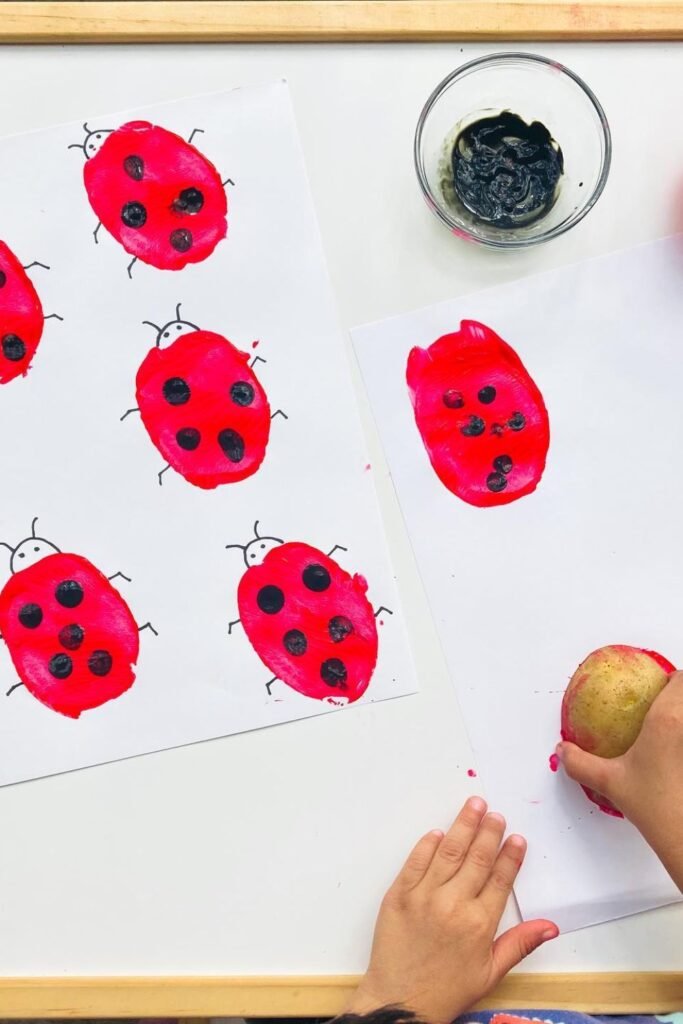
Paint projects feel less messy when one simple stamp does most of the fun. Grab a potato, apple, or sponge.
Have toddlers dip into red paint and stamp oval shapes onto paper for easy ladybugs that they may embellish later.
With black dots, small legs, and goofy antennae. Young children frequently appreciate the surprise of lifting the stamp.
And seeing a bug come up right away, which keeps them from becoming distracted too soon.
This game is especially good for kitchen tables, preschool art stations, or rainy afternoons at home because set-up is kept simple and ingredients are easy to find.
Bug Garden
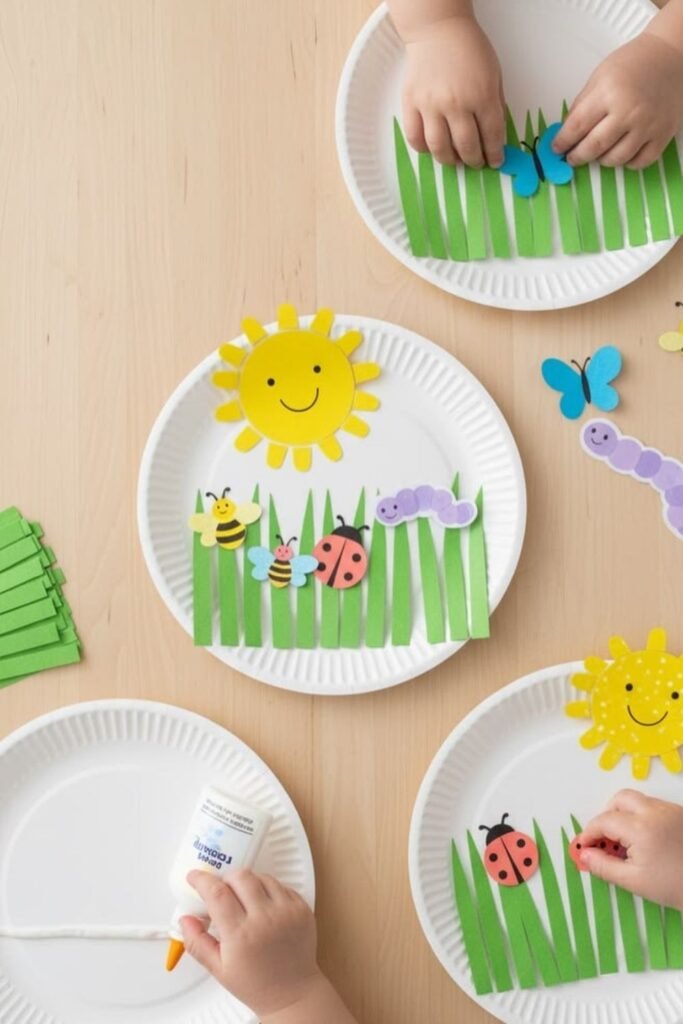
Watching bugs “hide” in paper grass turns a simple craft into playful storytelling. Grab paper plates, green construction paper.
And a few bug cutouts like butterflies, bees, ladybugs or caterpillars. Then let kids make their own small insect garden by gluing everything into position.
Small hands stay busy pulling bugs in and out of the grass as they discuss about where insects might crawl, fly or rest.
Preschool classrooms, spring themes, or sunny-day creative tables at home feel just right for this idea because setup is easy.
The kids frequently want to reorganize their garden or add additional bugs once they’ve finished the first one.
Nature Bugs
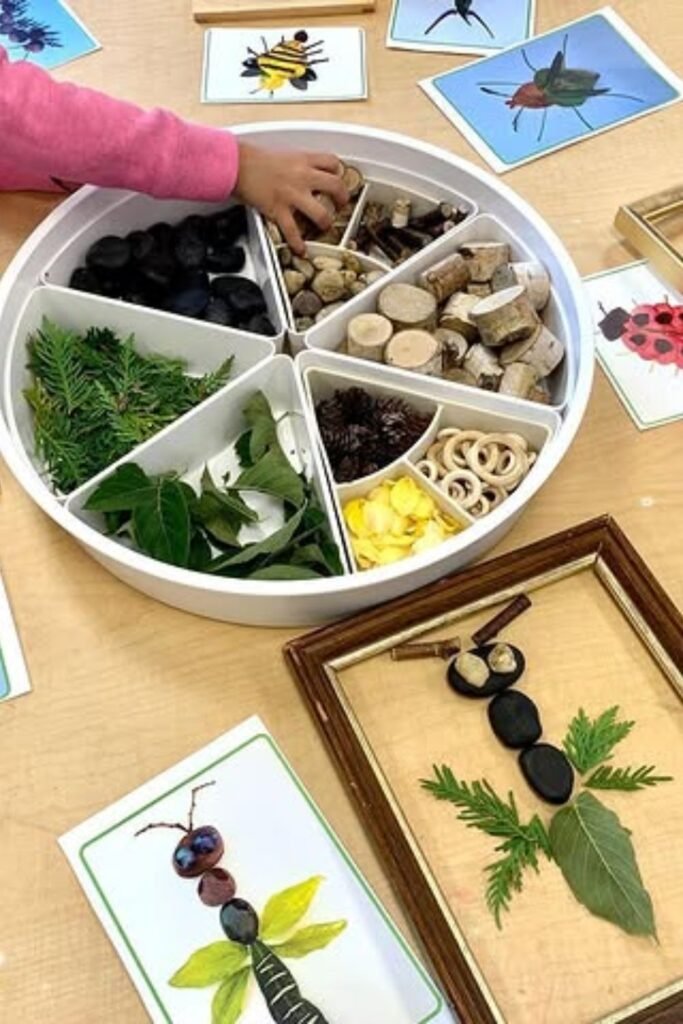
Turning leaves, sticks, rocks, and seed pods into pretend insects feels like outdoor play mixed with art time.
Provide a tray of natural materials, print a few insect picture cards for inspiration, and let kids make their own bugs.
By matching shapes or creating something unique. Kids are busy picking tiny pieces for wings, legs, or antennae for wings.
And learning quietly what makes an insect appear like a beetle, butterfly, or ant. Focus comes naturally.
This game is especially great for nature tables, preschool science centers or backyard learning days because it’s easy to gather ingredients outside.
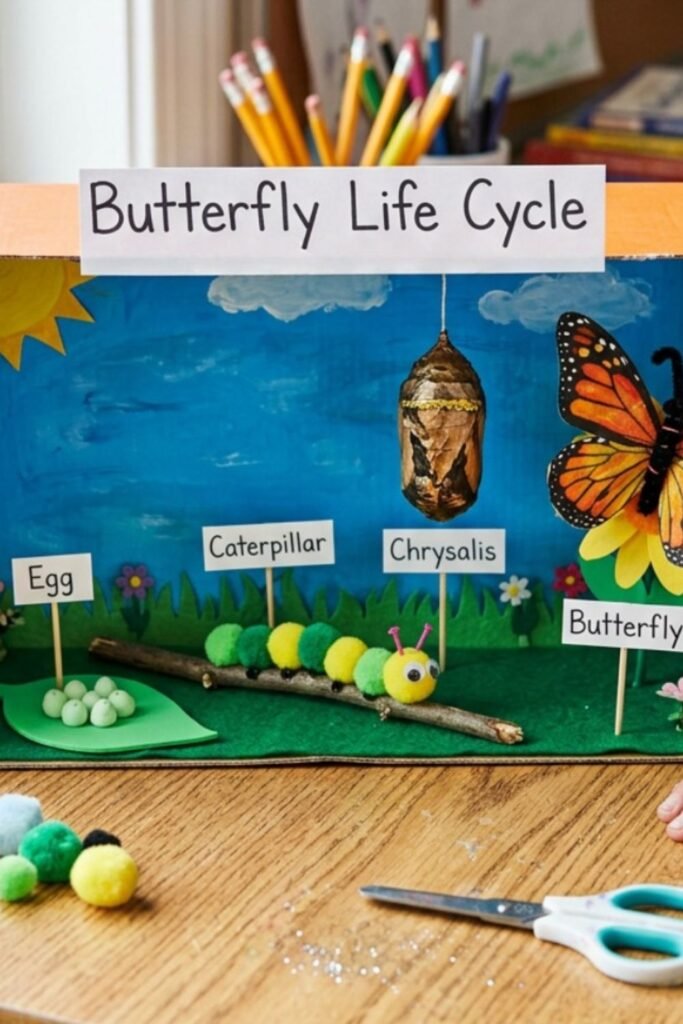
Life Cycle
Watching a butterfly grow from tiny eggs into something colorful feels almost magical for preschoolers.
Which is why this activity is a terrific method to introduce simple science without losing their attention.
Make a little butterfly world, using a cardboard box and pom poms for the caterpillar, a hanging chrysalis and a paper butterfly to depict each stage step by step.
Curiosity rises quickly when kids can point to each stage and debate about what comes next instead of just hearing it described.
This set up is excellent for preschool schools, spring units or insect theme weeks because it doubles as a craft and learning exhibit.
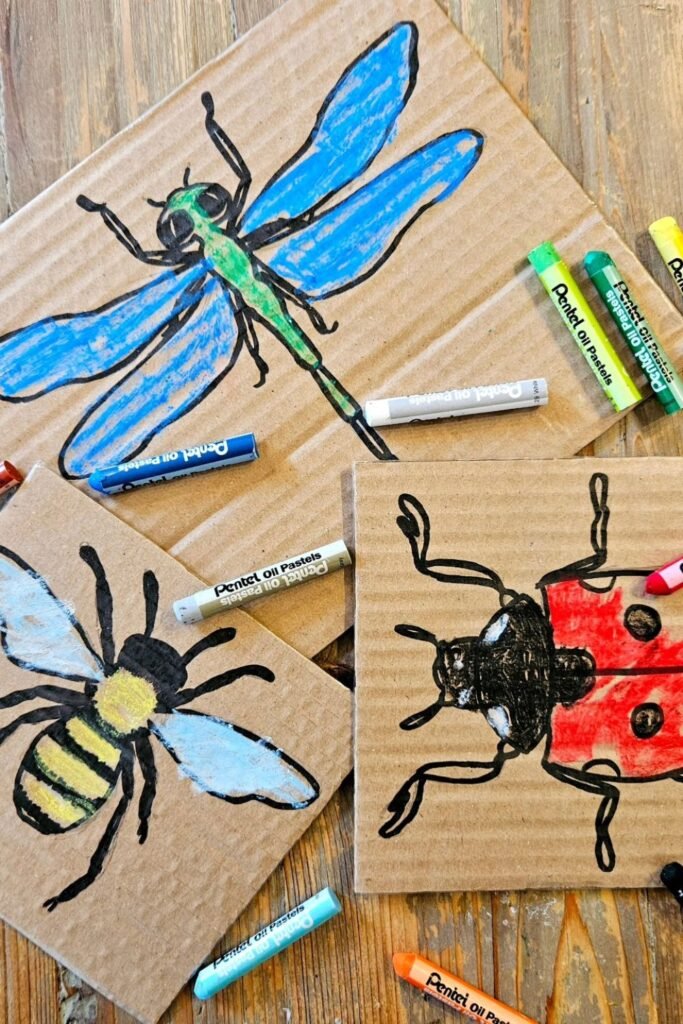
Insect Art
Drawing giant bugs on cardboard feels more exciting than regular paper because preschoolers get to color something that looks big and bold.
Save old cardboard boxes and draw simple shapes of insects like dragonflies, bees or ladybugs.
And let young hands fill them in with crayons, oil pastels or washable paint. Kids can color freely.
Without worrying about remaining neatly in narrow lines and confidence builds fast. Art stations, insect theme weeks or outdoor craft time.
Especially good for this activity, as cardboard handles messy coloring better than thin paper.
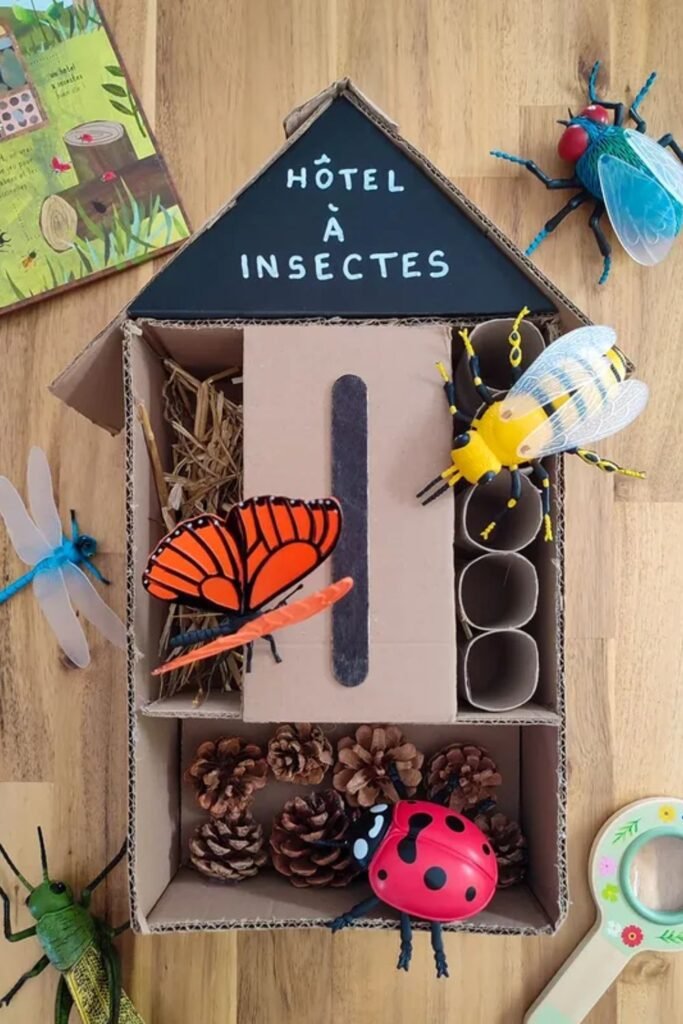
Insect Hotel
Pretend play gets way more interesting when bugs have their own little home to explore. Grab a cardboard box, fill sections with pinecones, paper tubes, straw, or bark.
Then add toy butterflies, bees, ladybugs or dragonflies to create a preschool insect hotel kids will want to visit again and again.
It’s normal for small hands to want to move bugs into different “rooms” while chatting about where insects might sleep, hide or relax.
This is excellent for nature units, preschool science corners, or rainy day inside play, as it integrates storytelling with hands-on bug learning.
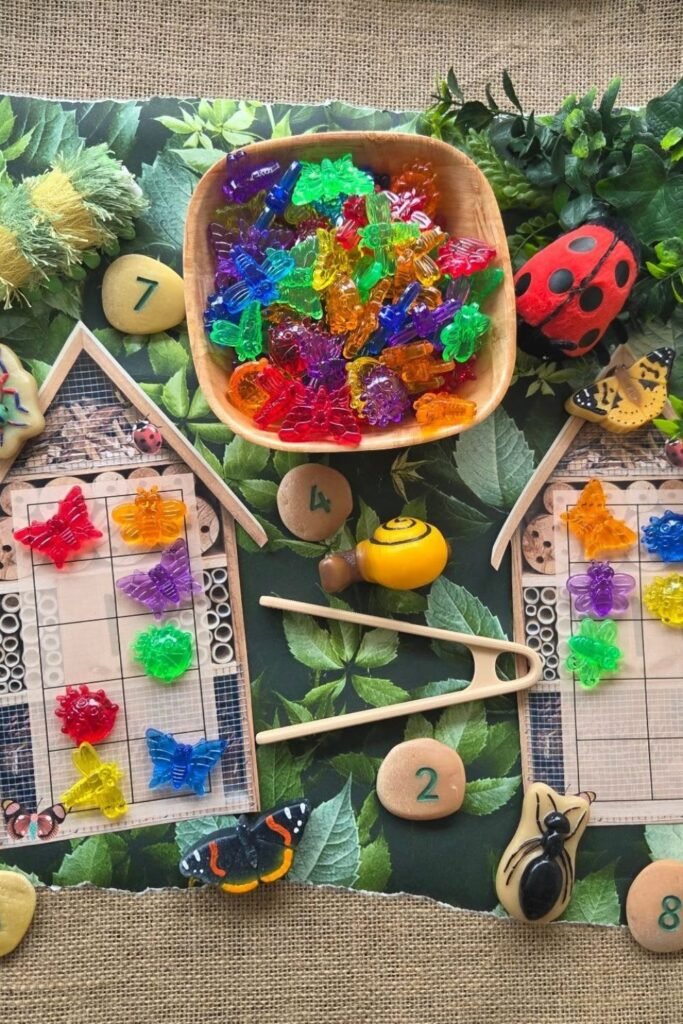
Bug Counting
Mixing bugs with numbers usually works better than flashcards because preschoolers feels like they are playing a game instead of practicing math.
Create little insect houses with grids, add colorful bug counters and have kids put the right amount of bugs.
Into each space with number stones or cards as instructions. For example, preschoolers can use tweezers.
To pick up tiny bugs and “take them to their bug house” one at a time, which extends attention span.
Counting, sorting and fine motor skills all at once, this project is excellent for math centers, quiet table time or preschool insect weeks.
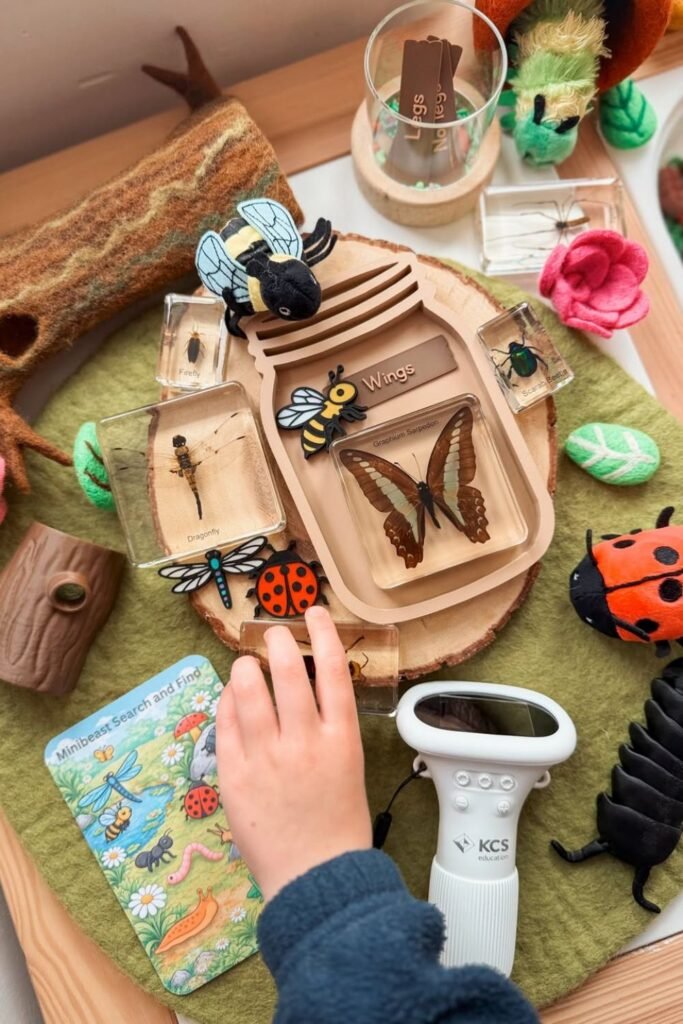
Bug Explorer
Curiosity grows fast when preschoolers get to feel like tiny scientists instead of sitting through a lesson.
Make a bug discovery tray with toy insects, bug cards, magnifying tools and simple insect labels for kids to touch, compare and examine bugs one by one.
Hands-on learners frequently stay more interested when they can match ladybugs, dragonflies or butterflies to photos.
While getting a close look at wings, colors and body features. This is a great set up for nature tables.
Preschool science areas or even insect theme weeks, because children can come and go and investigate at their own leisure.
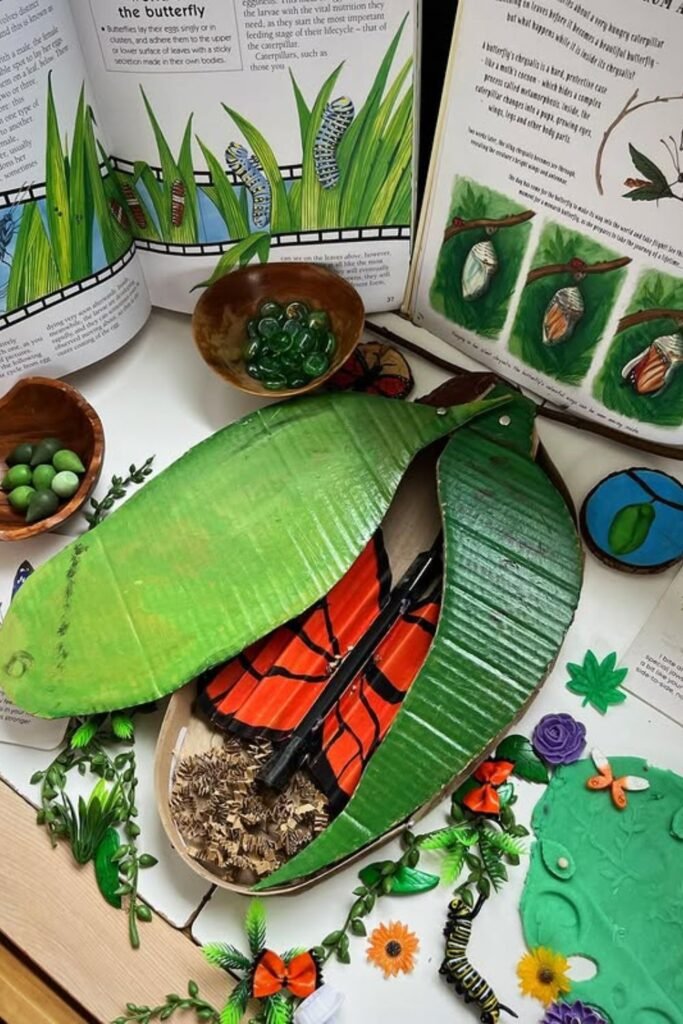
Butterfly Hatch
Watching a butterfly “hide” inside giant leaves makes life cycle learning feel way more real for preschoolers.
Use a large paper leaf, plastic caterpillars, cocoons and a butterfly hidden inside like a surprise.
About to hatch to create a pretend caterpillar habitat from a cardboard box or tray.
Preschoolers Who love stories are more likely to stick with it if they get to lift the leaves and find out what occurs next, rather of just hearing about metamorphosis.
Preschool science corners, spring themes or insect units are particularly good for this setting since kids may come back to the phases over and over.
Having butterfly books nearby adds even more fascination as tiny learners typically want to compare.
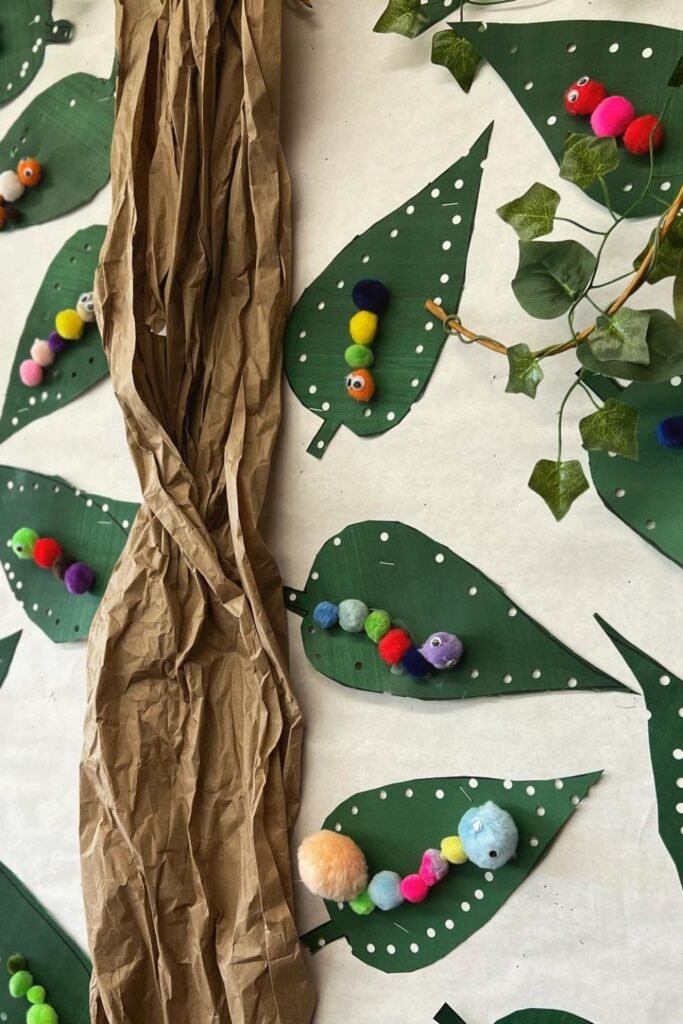
Caterpillar Wall
Walking into a room filled with colorful caterpillars instantly makes insect week feel more exciting for preschoolers.
Cut out big paper leaves and attach them to a wall or bulletin board. Then let youngsters construct pom-pom caterpillars with googly eyes.
And vivid colors to put on each leaf. Little learners frequently adore seeing “their” caterpillar during the day.
Which discreetly converts the activity into classroom decor also. Hallway displays, preschool doors, or spring-themed bulletin boards are even better.
Because all the children may contribute something personal to the insect theme. If you want to make it a fun counting.
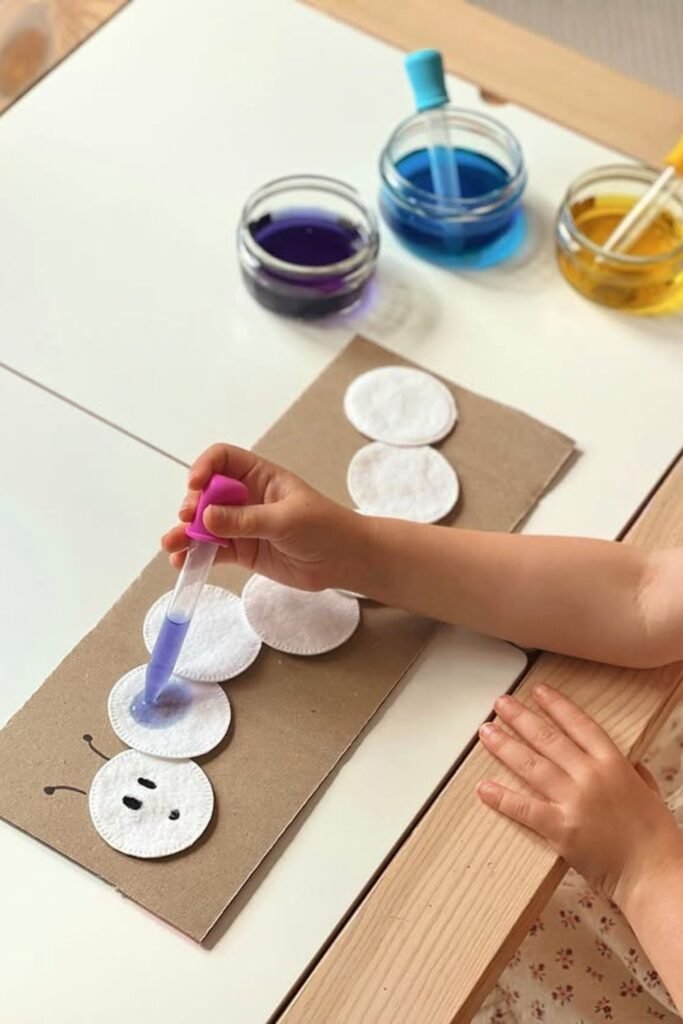
Cotton Caterpillar
Watching plain cotton pads turn into a colorful caterpillar feels a little magical for preschoolers, especially when they get to “paint” each body part themselves.
Put cotton rounds on cardboard, draw a simple caterpillar face, then pass out droppers of watered-down paint so youngsters may carefully color each piece one by one.
Tiny hands are hard at work squeezing, dropping and watching colors spread across the cotton, while fine motor skills are silently growing.
This is great for indoor craft time, preschool science weeks or quiet afternoon activities because it feels creative but doesn’t get too dirty.
Trying different colours on each circle can even generate fun conversations about patterns, rainbows or imaginary caterpillar friends in a fake bug garden.
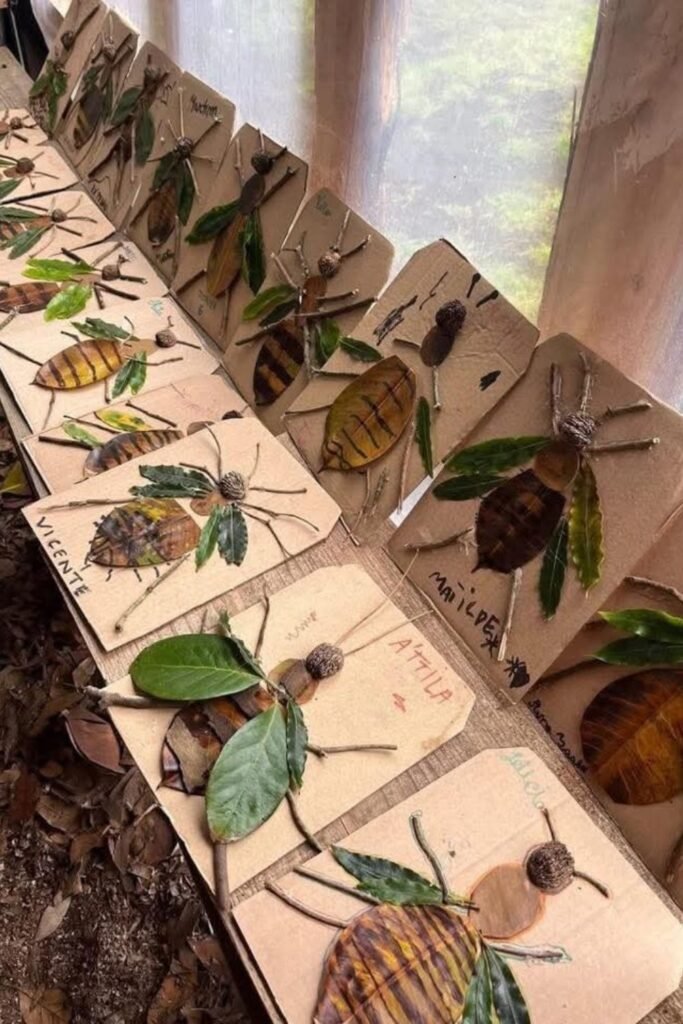
Leaf Bugs
Turning backyard finds into pretend insects can make nature walks feel way more exciting for preschoolers.
Collect leaves, small twigs, seed pods and acorns, then assist children in arranging them on cardboard.
To create bees, dragonflies, bugs, or wholly imaginary bugs with leafy wings and twig legs.
Kids often find it simpler to be creative when they learn bugs don’t have to look perfect to be fun.
This is a great concept for outdoor classrooms, fall nature programs, or weekend backyard activities, since most of the resources come right from outside.
Bug Sorting
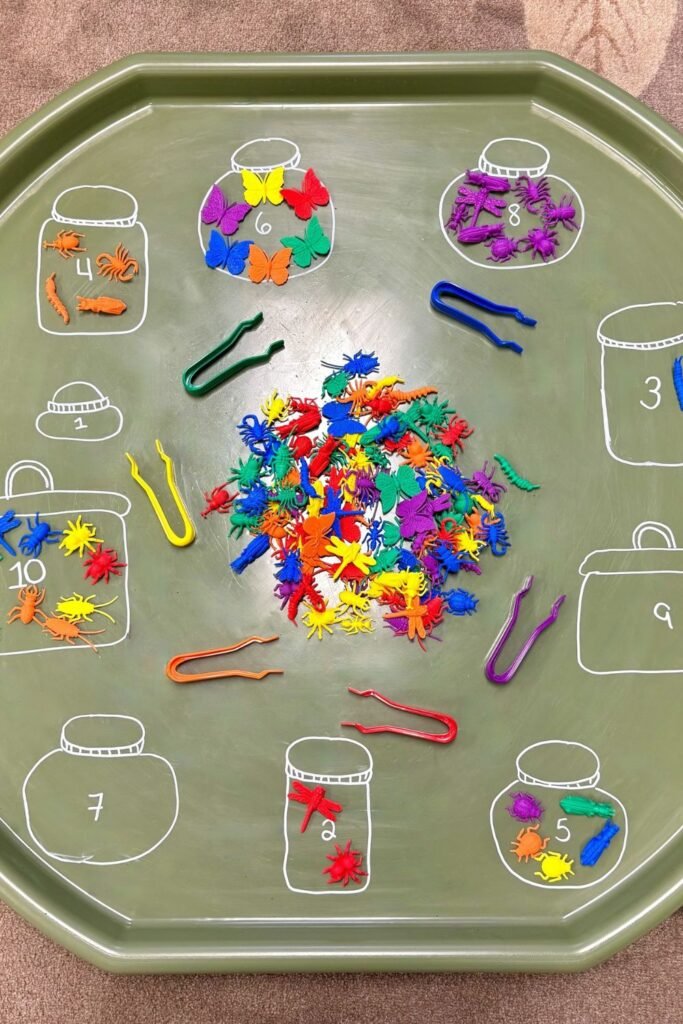
Tiny plastic bugs somehow make counting feel way more fun when preschoolers get to “catch” them with tweezers.
Make some basic bug jars with numbers. Put lots of colorful bugs in the middle and have young hands put the right number into each jar, one by one.
Kids are busy picking, counting and double checking if they got enough bugs. Focus seems to linger longer.
This set up is great for math centers, insect theme weeks or peaceful table time at home because number practice is more like a game than studying.
A great way to keep the task fresh is to mix it up younger toddlers can match the numbers to bugs.
Ant Trails
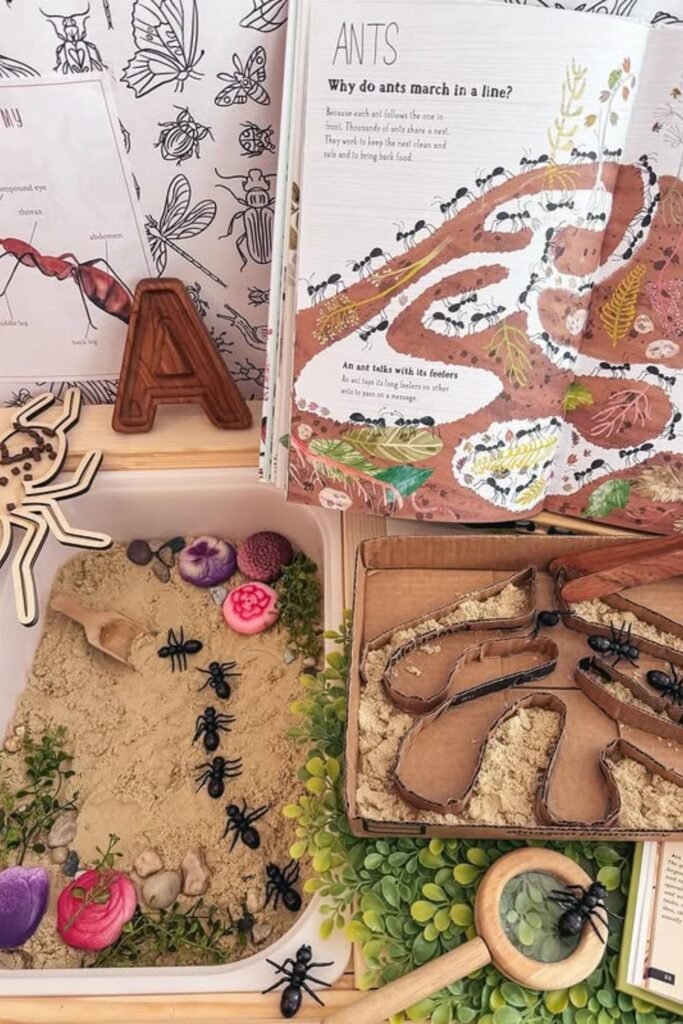
Following tiny ant paths through sand feels a lot more exciting when preschoolers can move bugs through tunnels like a real colony.
Use cardboard strips, sand or sensory trays to create curving ant roads, then add toy ants and magnifying glasses.
To let children lead them through twists and turns and discuss how ants travel together. Curiosity usually builds fast.
Since tiny learners enjoy to think they are helping ants to find food or go home. Insect units.
Nature tables or quiet sensory areas are particularly well suited for this layout because children can explore on their own without feeling overwhelmed.
FAQs
What Are the Best Supplies for Easy Preschool Insect Activities?
Simple bug activities are usually best for toddlers and you don’t need a huge craft closet to make that happen.
Turn simple resources like paper plates, pom poms, pipe cleaners, plastic bugs, cardboard, paint, tweezers, cotton pads, leaves.
And sensory fillers like rice or beans into dozens of interesting insect games. Starting with easy materials also means quicker clean up and less overwhelm for little kids.
How Do You Keep Preschoolers Interested During Insect Activities?
Instead of just sitting activities, switching between movement, sensory play, crafts and fake bug hunts tends to keep preschoolers engaged far longer.
Instead of merely listening, kids may touch, move, and explore with short, hands-on games such as bug sorting, caterpillar crafts, or insect sensory bins.
You can also add a little of fun to the activity by adding little challenges like counting bugs or looking for hidden insects.