
26 Kids Room Wallpaper Ideas for 2026
You look at your child’s modest bedroom and wonder how to make it feel bigger, happier, and less boring without ruining it.
You don’t want walls that are dark and make the room feel small. You don’t want a cartoon theme that they’ll grow out of in a year.
You don’t want to spend money on something that looks better online than it does in real life.
The truth is that wallpaper may change the tone of a little child’s room completely, but only if you use it the proper manner.
This article features 26 kids room Wallpaper ideas designed for growing independence. They encourage responsibility without losing personality.
Let’s jump in!
How Can Wallpaper Change The Mood Of A Small Kids’ Bedroom?
Wallpaper doesn’t just make a place seem nice; it also changes how it feels. Every wall in a tiny child’s room is important.
You may make the room feel bigger, brighter, calmer, or more fun by choosing the proper pattern and color. If you choose the wrong one, it can feel too small and crowded.
Soft patterns and light hues make the room feel bigger. Big murals can make a wall look farther away and provide depth to a room.
Vertical stripes can make a ceiling that is low look higher. A simple accent wall can make a boring room into a vibrant and imaginative place.
When you use wallpaper on purpose, you don’t merely change the wall; you change the ambiance.
Save this article for later!👇👇👇
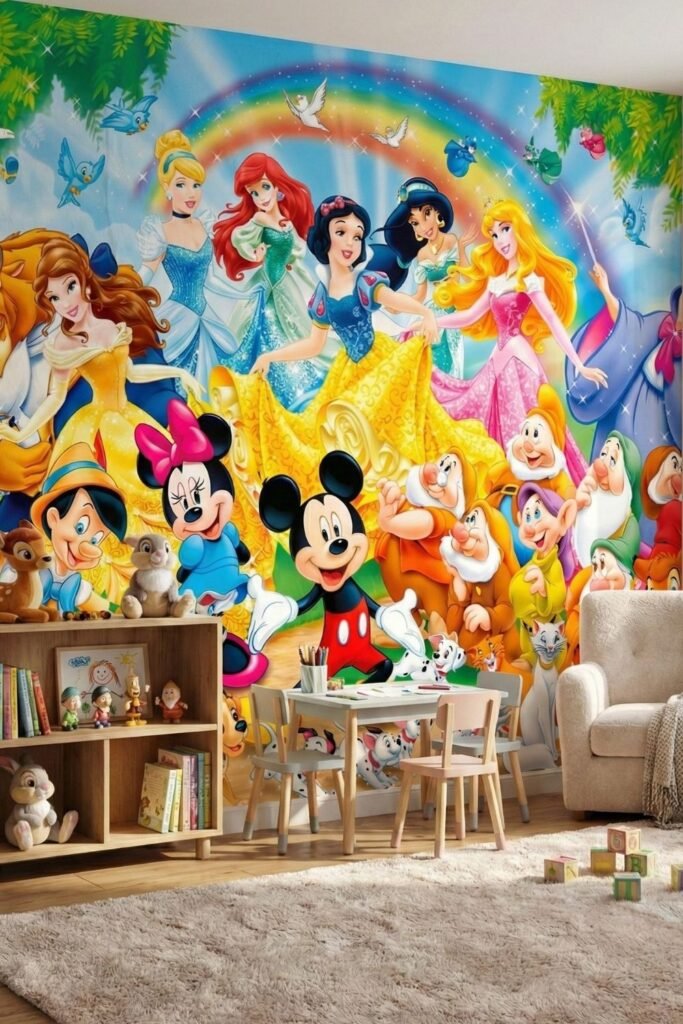
Princess Magic
Disney dreams take over the entire wall and that’s exactly why it works. One bold mural like this instantly turns a plain bedroom into a storybook space.
Great for kids who love princesses and animated characters, especially those between the ages of 3 and 8.
Don’t clutter up the remainder of the room. Do you see how the furniture stays low-key and neutral. That balance is important.
Bright, detailed wallpaper gives the room vibrancy, so soft carpets, wooden shelves, and light-colored furniture keep it from feeling messy.
Only use a full-wall mural if the room gets a lot of natural light. If you want to make a scene less bright, pick one major character theme instead of a crowd scenario.
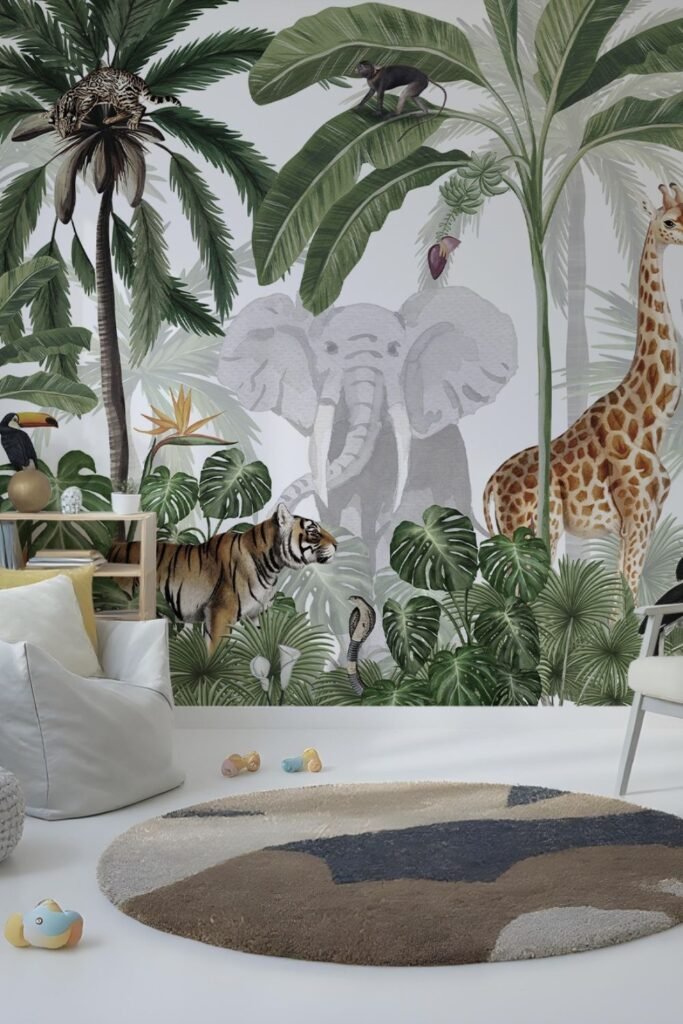
Jungle Adventure
Wild energy without visual chaos that’s the beauty of a soft jungle mural like this.
Large animals, oversized leaves, and muted greens bring excitement while still keeping the room calm.
Great for kids who like animals but don’t need bright colors all the time. Do you see how the background stays light.
That’s the trick for small bedrooms. The light base keeps the wall from feeling heavy, and the tall giraffe and palm trees naturally attract the eye up, making the ceiling feel higher.
Instead of harsh cartoon prints, use a mural that looks like watercolors to make this look like it was done by hand.
Put it next to plain white or wooden furniture so the wall may breathe. Put in one or two safari-themed toys or pillows, but that it. Overlapping layers impair the effect.
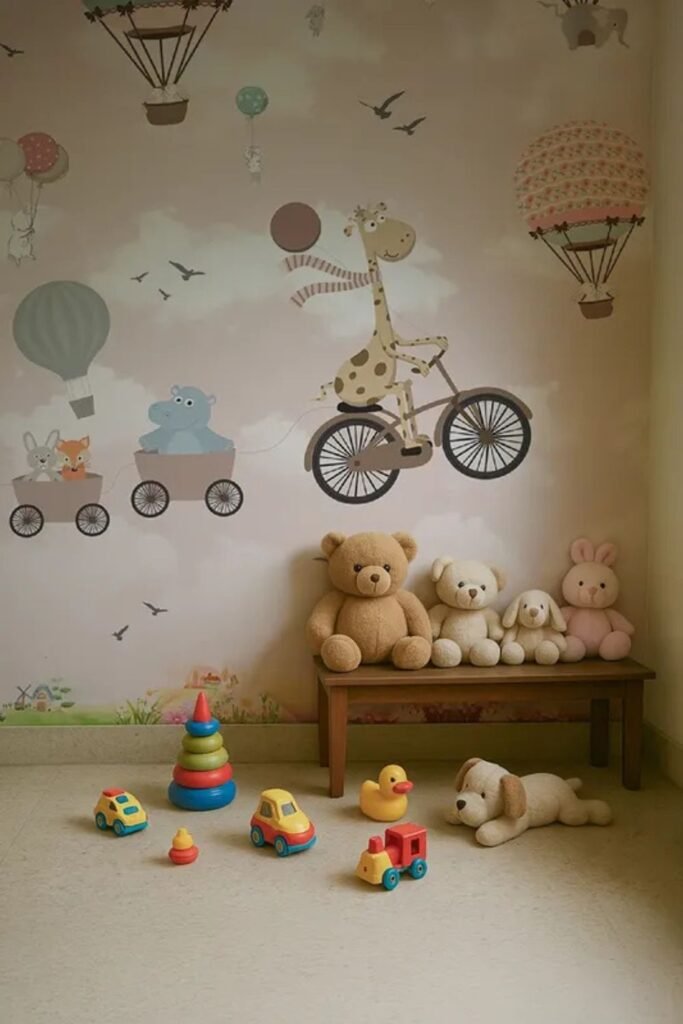
Story Ride
Soft adventure works beautifully in a nursery or toddler room.
A playful giraffe riding a bicycle with floating balloons instantly adds imagination without making the space loud.
Pastel hues keep the ambiance light which is important in small bedrooms where bright colors can make things too busy.
See how the design is higher up on the wall and leaves space to breathe near the floor? That makes the space feel bigger.
This kind of mural looks best on one wall, especially behind a cot, a low bench, or a toy storage box.
A matte, light-colored mural will give the same effect since it lets natural light bounce around.
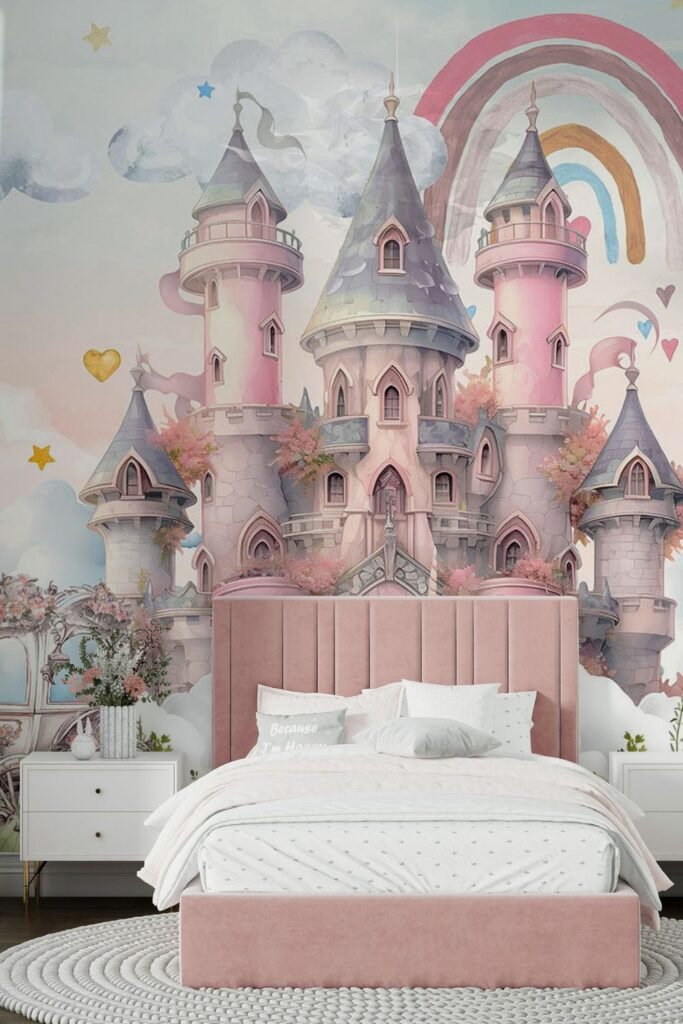
Dream Castle
Fairytale drama can still feel soft and elegant if you balance it right. A full castle mural like this works best behind the bed so it becomes the natural focal point.
Put it on the biggest wall and leave the other three walls plain. That’s how to keep a dramatic design from making the room look smaller.
Light blues and pastel pinks keep the room airy, which is vital in small bedrooms. Put basic white nightstands and light bedding next to it.
Do you see how the color of the headboard goes well with the mural? Small color harmony helps the area feel planned instead of busy.
Great for kids who like princess stories but are getting too old for cartoons. Choose a watercolor-style mural instead of sharp graphics if you wish to copy it.
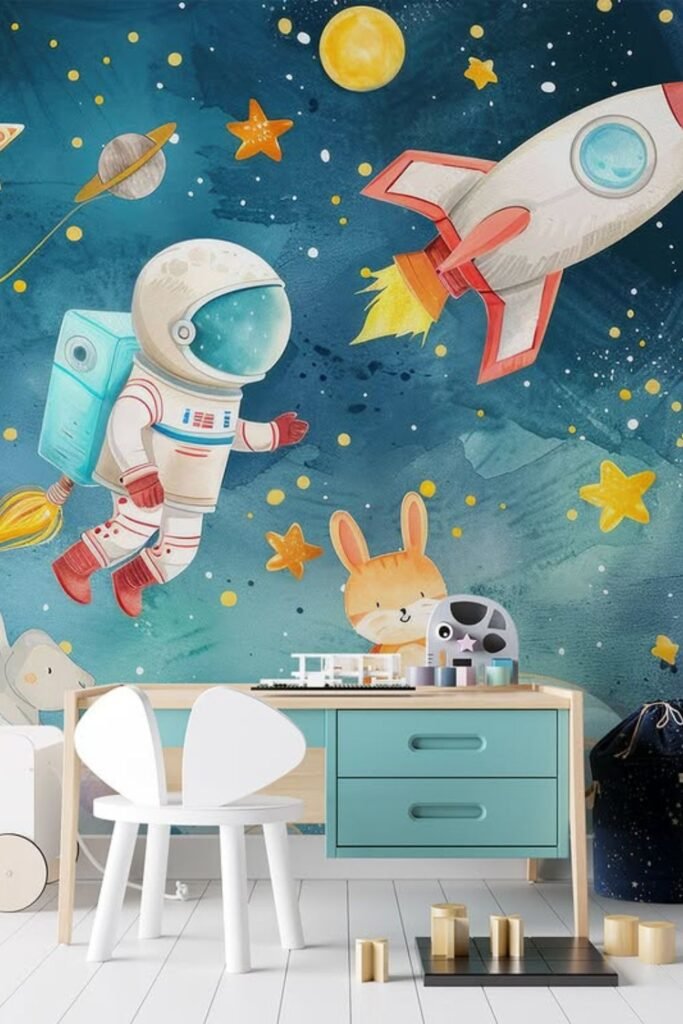
Space Explorer
Big imagination needs a wall that feels limitless. Deep blue space wallpaper like this instantly adds depth, which is powerful in a small bedroom.
If you have light floors and basic furnishings, dark walls can make a room feel bigger. Keep the rest of the setup simple.
The dramatic painting doesn’t take over the room because to the white desks, soothing wood tones, and basic storage.
Let the astronaut and rocket do the exciting part. Don’t add extra star prints to your bedding or rugs; one statement wall is enough.
Put it behind a study desk or bed to get your creative juices flowing. Every day, kids who love space, science, or adventure will be inspired.
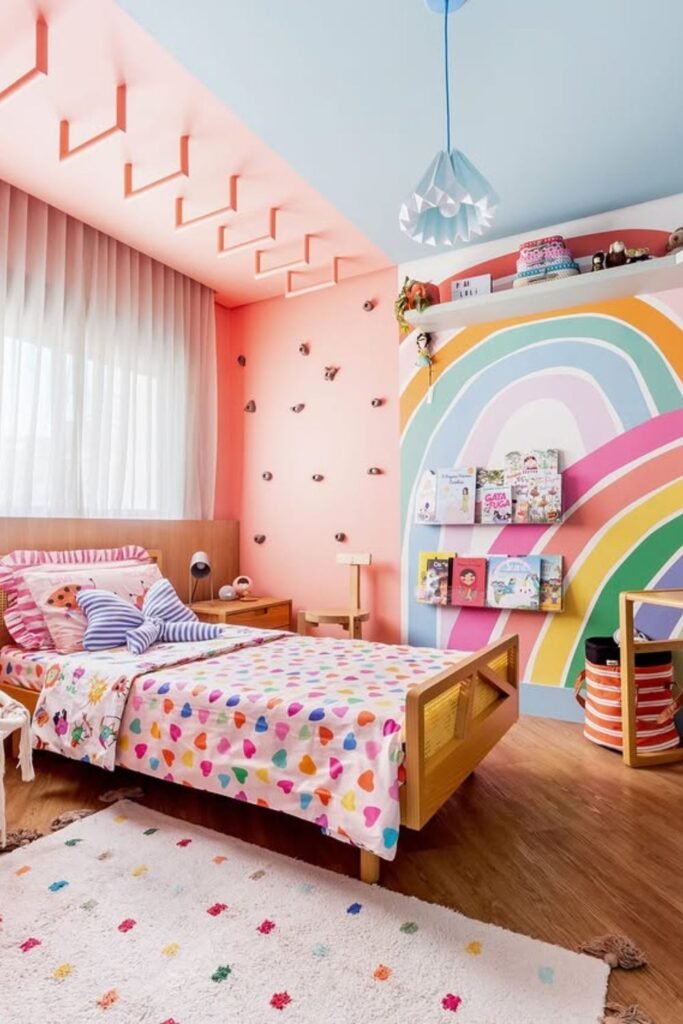
Rainbow Energy
Color can lift a small room instantly if you control it. A bold rainbow mural like this brings joy without shrinking the space because the arcs flow across the wall.
Instead of splitting it up into busy parts. Being active makes you open. The rainbow should stay on one main wall, while the other walls should be soft peach or white.
That balance makes the room fun without becoming too much. Notice how the furniture stays simple and made of wood.
Bright colors can make a room feels chaotic but natural tones can help. Choose a mural with wide, blended stripes instead of thin lines if you wish to copy it.
Small walls can look messy with thin designs. Use one or two rainbow hues in your bedding or rugs, but not all of them.
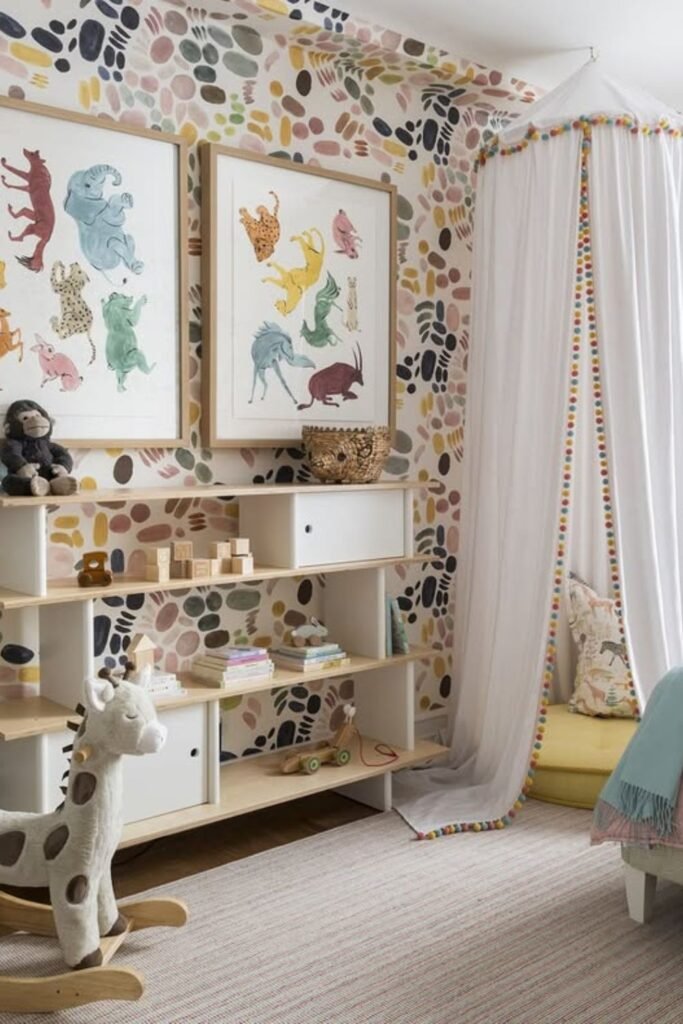
Playful Dots
Pattern lovers don’t need cartoon characters to create a fun kids’ space. Scattered, pebble-style dots like these bring energy while still feeling modern.
Great for parents that want something fun but not too much of a theme. The full-wall pattern works here because the colors stay soft and natural.
In a small bedroom, loud, high-contrast dots would be too much. If you want to cover more than one wall, stick to neutral colors.
Balance is crucial. Light wood, open shelves, and white storage units keep the pattern from taking over.
Put framed paintings or prints on the walls to break up the pattern and give your eyes a place to rest.
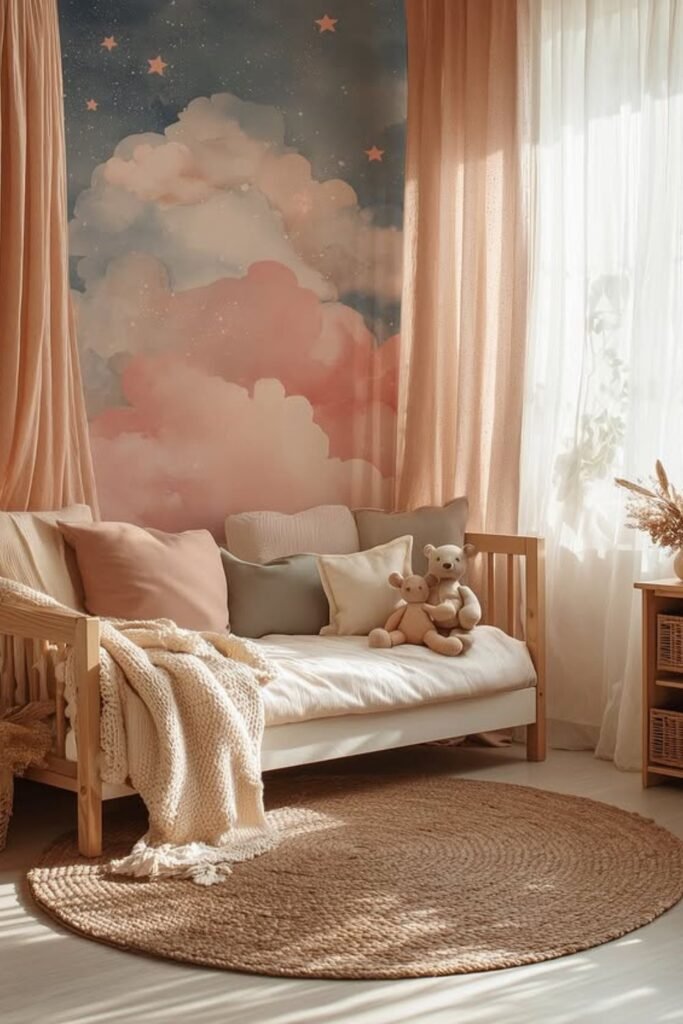
Cloud Dreams
Soft clouds in warm blush and dusty blue can completely calm a small bedroom. Instead of filling every wall, place a dreamy mural behind a daybed or reading nook.
It feels like a calm getaway in the room. Colors that aren’t too bright are important here.
Light pinks and soft blues bounce light instead of soaking it up, which makes the room feel open.
Use natural wood furniture, woven carpets, and linen drapes to make the room feel soft and warm.
Don’t put bold patterns on pillows or beds. The clouds should be the main emphasis. When the wall is already moving, subtle textures work better than patterns.
Best for nurseries or kids who need a quiet place to sleep. Choose a watercolor-style mural with blended edges if you wish to copy it.
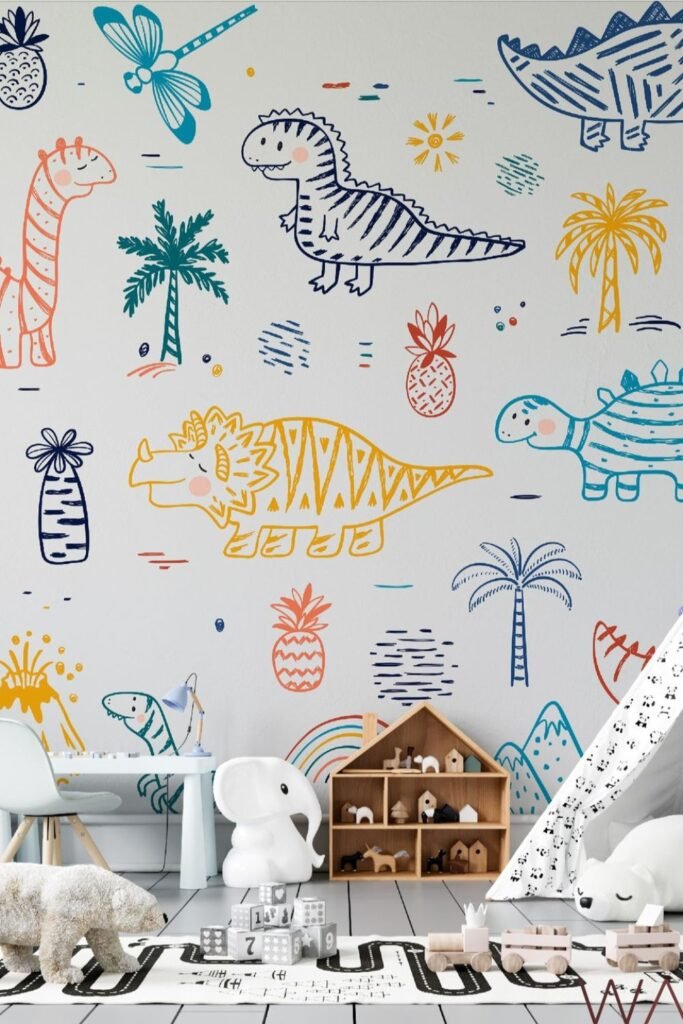
Dino Fun
Childhood energy jumps off the wall here playful dinosaurs in simple line art keep things fun without making the room feel heavy.
Bright outlines on a white background are great for small bedrooms because they offer character without closing off the area.
These kinds of pictures that are spread out allow the eye room to breathe. That’s a big deal. In small places, big, colorful dinosaur paintings can be too much to handle.
Instead of elaborate scenarios, stick to clean drawings with splashes of color. A great choice for play areas, study walls or behind a tiny desk.
It helps kids be creative without taking too much time away from their homework or quiet time.
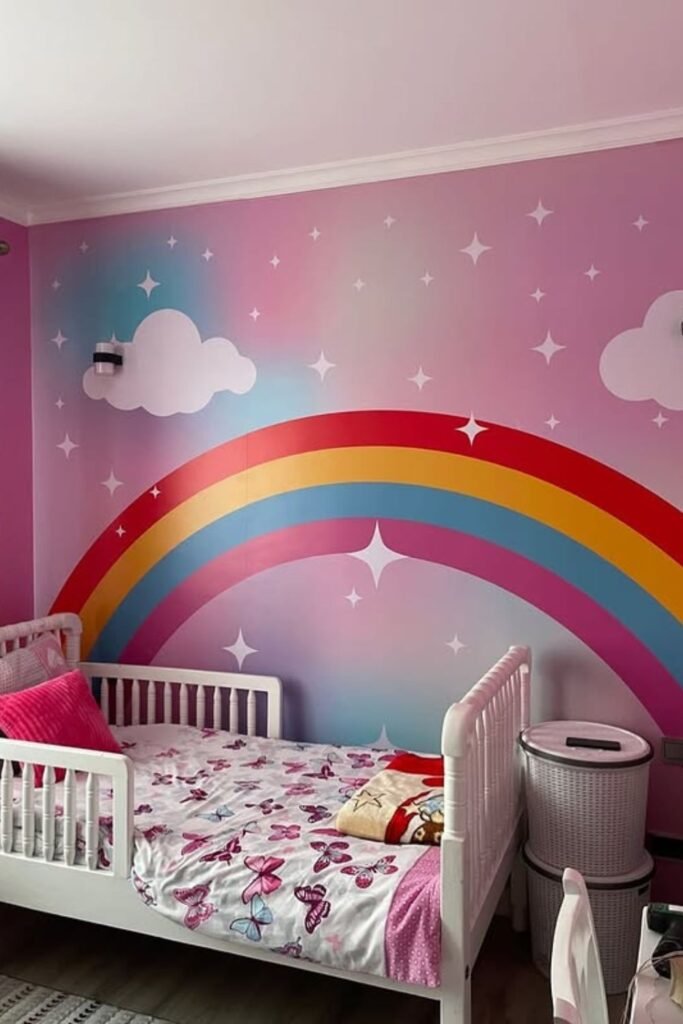
Rainbow Glow
Color can wrap around a small bedroom without closing it in if the shades stay soft and blended.
A big rainbow on one wall gives the room a sense of movement and depth, which makes it feel bigger.
Put a design like this behind the bed so it frames the sleeping area instead of getting in the way of storage or workstations.
To avoid color overload, keep your furnishings white or light. See how the bedding has soft pink tones but doesn’t look like the whole rainbow.
Sparkle accents and gentle clouds are cute, but don’t put more star prints anywhere else. A small place might get too crowded with too many small things.
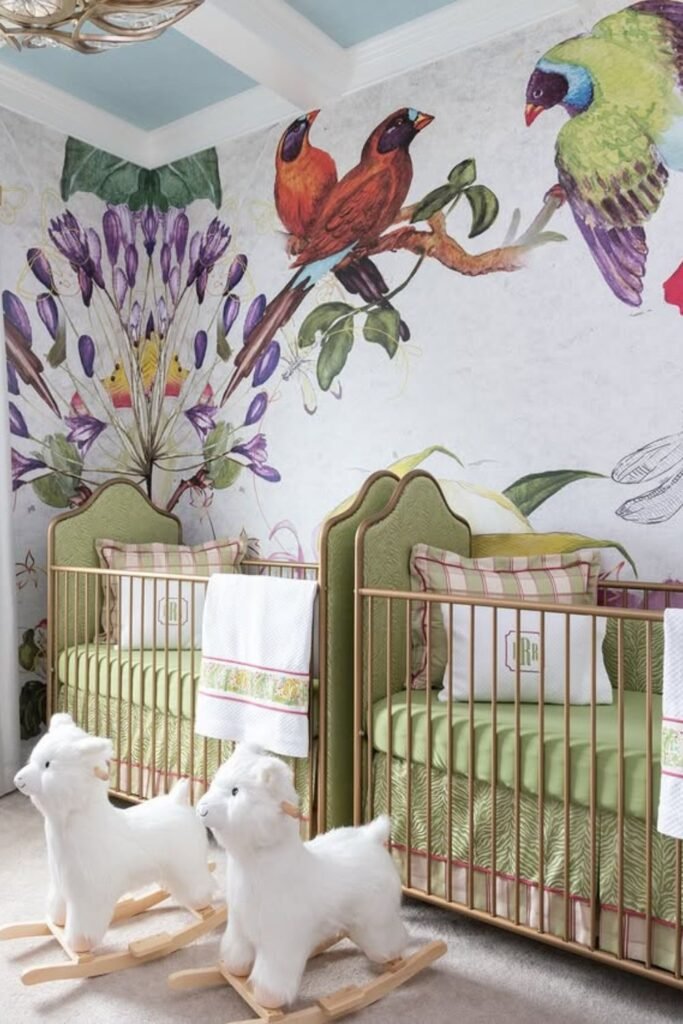
Garden Birds
Nature can feel rich and elegant even in a nursery. Large watercolor birds and oversized florals bring character without the loudness of cartoon prints.
The soft gray background makes everything feel light and airy, which makes tiny rooms feel less cluttered.
The size is important here. Big pictures function better than small repetitive patterns because they make things look deeper.
Put a mural like this behind cribs or along the longest wall so it looks like it was meant to be there.
Keep the remainder of the colors grounded. Soft creams, olive greens, and light wood tones go well with strong paintings.
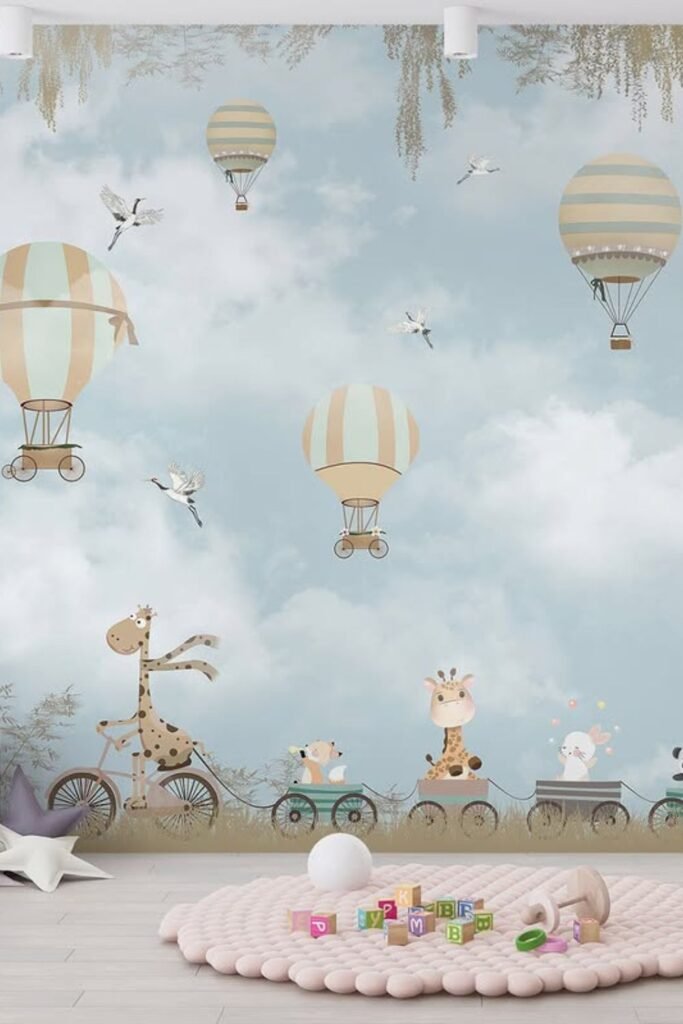
Sky Parade
Upward movement can completely change how a small bedroom feels. Floating hot air balloons against a soft blue sky pull the eye higher.
Which instantly makes ceilings feel taller. That illusion is important in small areas. Soft blues look great on both boys and girls.
To keep the area airy, use light-colored wood furniture and light-colored floors with a mural like this.
Do you see how the design preserves most of the details on the middle and upper wall? Making the bottom part softer keeps it from looking too heavy.
Put it on the main wall across from the entryway so that the initial view is open and tranquil. Put in one or two stuffed animals that go with the motif.
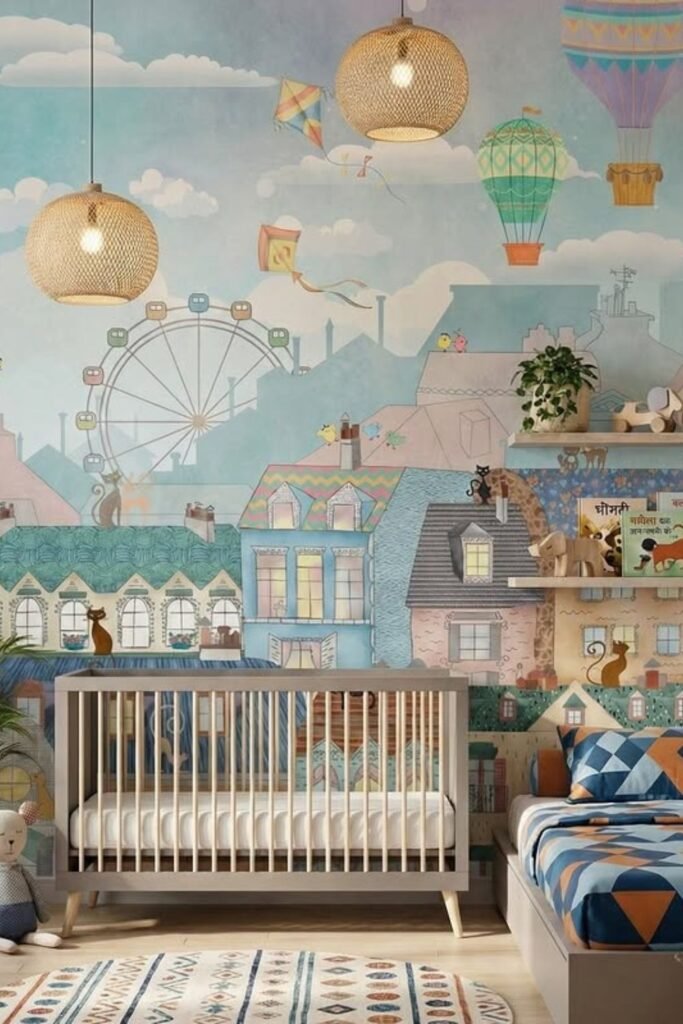
Story Town
Imagination grows fast in a room like this. A cityscape mural filled with rooftops, ferris wheels, kites, and hot air balloons turns one wall into a storybook.
Kids can make up their own stories just by gazing at it. When the colors stay gentle, busy scenes only work. Do you see the soft blues and pastels.
That keeps the wall from becoming too busy and still looks good. In a small bedroom, striking contrast would make the room feel full.
Instead of sharp visuals, use pictures that look like watercolors. Put a mural like this behind the cot or bed so it stands out. Keep your furniture basic and natural.
The open shelves and light wood tones assist to balance out the busy background. Great for kids who want to point at objects and ask inquiries.
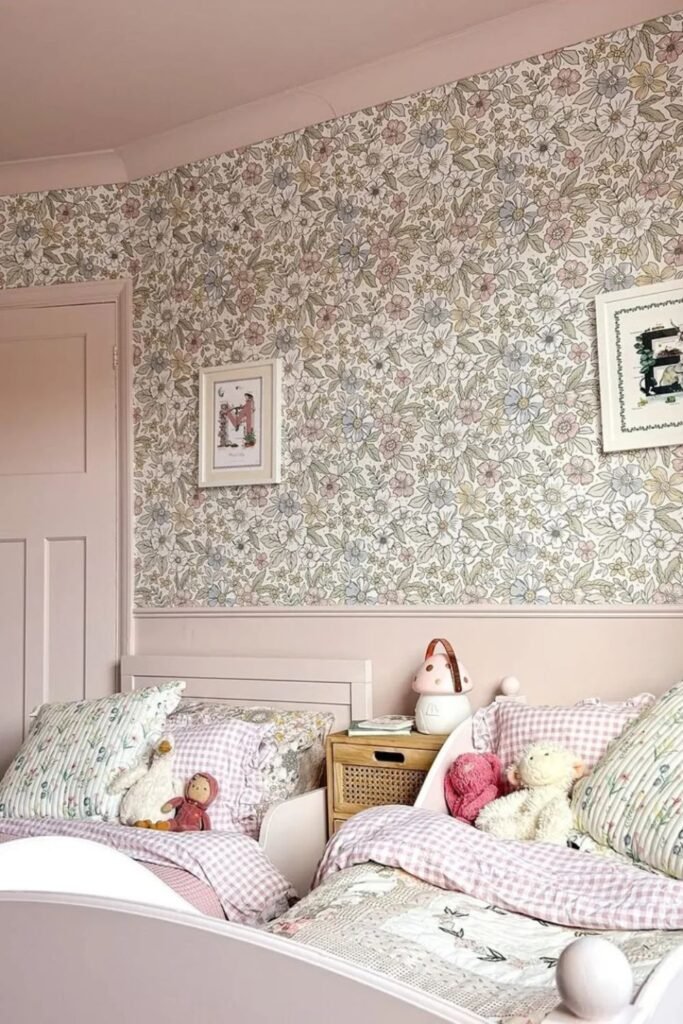
Floral Charm
Soft florals can make a shared kids bedroom feel cozy instead of crowded. Small scale flowers spread evenly across the wall add texture without shouting for attention.
That modest pattern keeps things interesting in small areas while still making them feel serene.
Wrapping wallpaper across a lot of walls works here because the colors stay soft.
Instead of making a stark contrast, blush, sage, and cream mix together. Put it with plain white mattresses and pastel bedding so that the print stands out.
In twin rooms, balance is quite important. The matching headboards and light wood nightstands maintain the layout balanced which makes the room feel more open.
Great for sisters or kids that want things that are gentler than bold. Pick a flower with exquisite details and soft colors to replicate it.
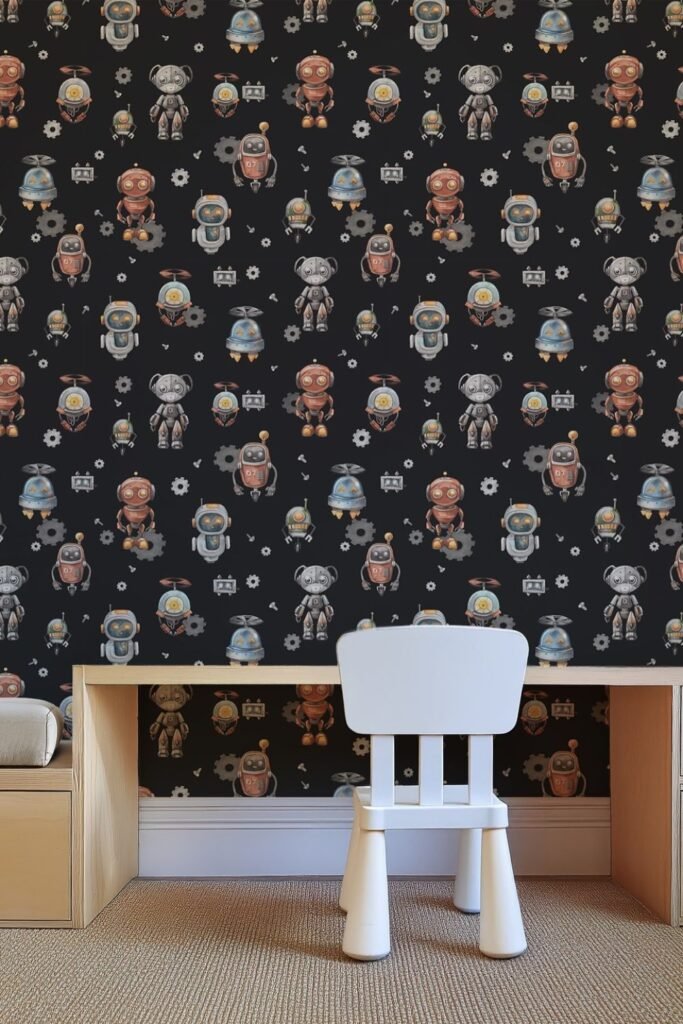
Robot Zone
Dark walls can feel bold but they don’t have to shrink a small bedroom. Deep navy with playful robot prints creates contrast that actually adds depth.
The room feels anchored instead of claustrophobic when it has light wood furniture and neutral flooring.
A single feature wall looks best with small motifs that repeat. It would feel weighty to cover every wall with a dark pattern.
Let one wall show out your personality and keep the other three light. Put it behind a reading bench or study desk to make it feel like a creative space.
Don’t add extra busy patterns to your bedding or rugs. The bold background is balanced by simple textures.
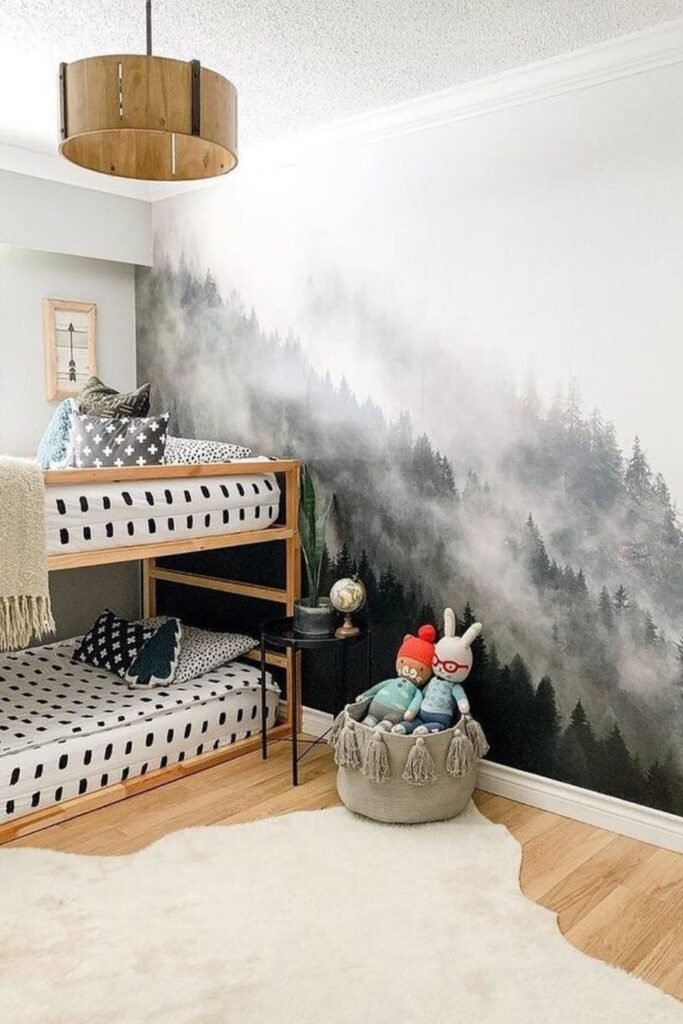
Misty Forest
Drama doesn’t have to mean bright colors. A foggy forest mural like this adds depth and mystery without overwhelming the space.
The dark tones at the bottom fade smoothly up, which makes the wall look taller instead of heavier.
Put a design like this on the longest wall in a tiny bedroom, like behind bunk beds. The mist keeps the room from being flat, and the horizontal tree line makes it look longer.
Use light-colored floors, furniture made of natural wood, and basic bedding. Black-and-white patterns look great here since they match the dark woodland.
Great for older kids who want something cool but not too childish. Pick a mural with a gradient effect to make it again.
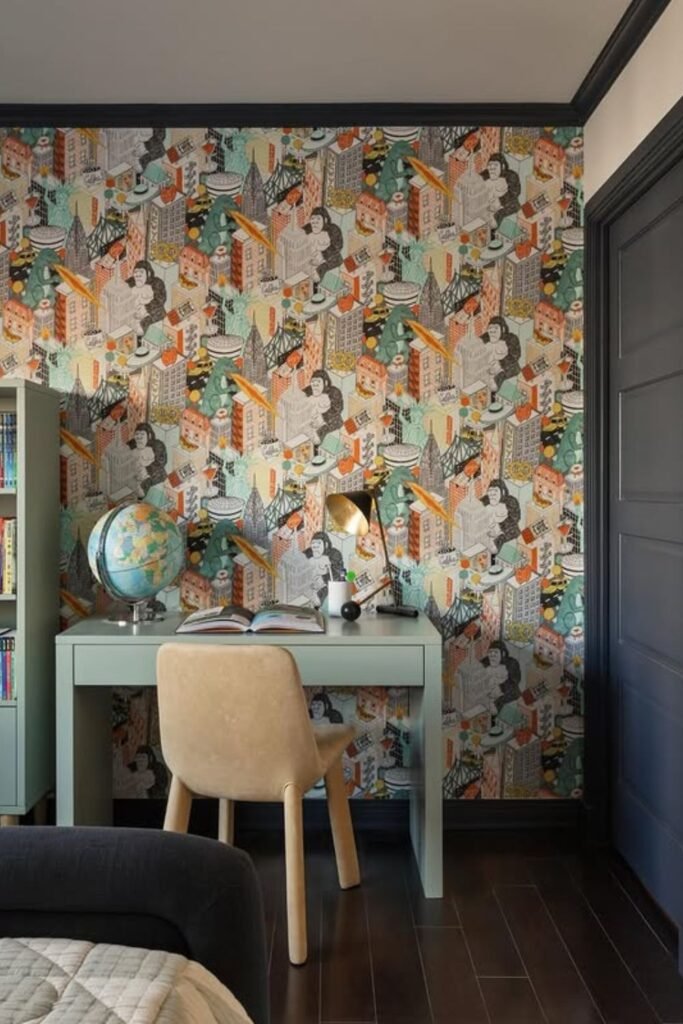
City Sketch
Big personality fits even in a small study corner when you keep it controlled.
A detailed city-themed wallpaper like this works best on one accent wall, especially behind a desk.
Busy prints need a frame around them. Do you see the clean lines on the desk, the plain chair, and the cabinets that are all one color.
That balance keeps the pattern from becoming too much. In a small bedroom, a lot of stuff and thick wallpaper would make the room feel smaller quickly.
Instead of one big mural scene, use a design with repeating illustrations in a tight layout.
Repetition gives the wall a sense of purpose and makes it feel like it has a rhythm.
Use colors that go well with the furnishings, like subdued greens, warm oranges, and soft neutrals.
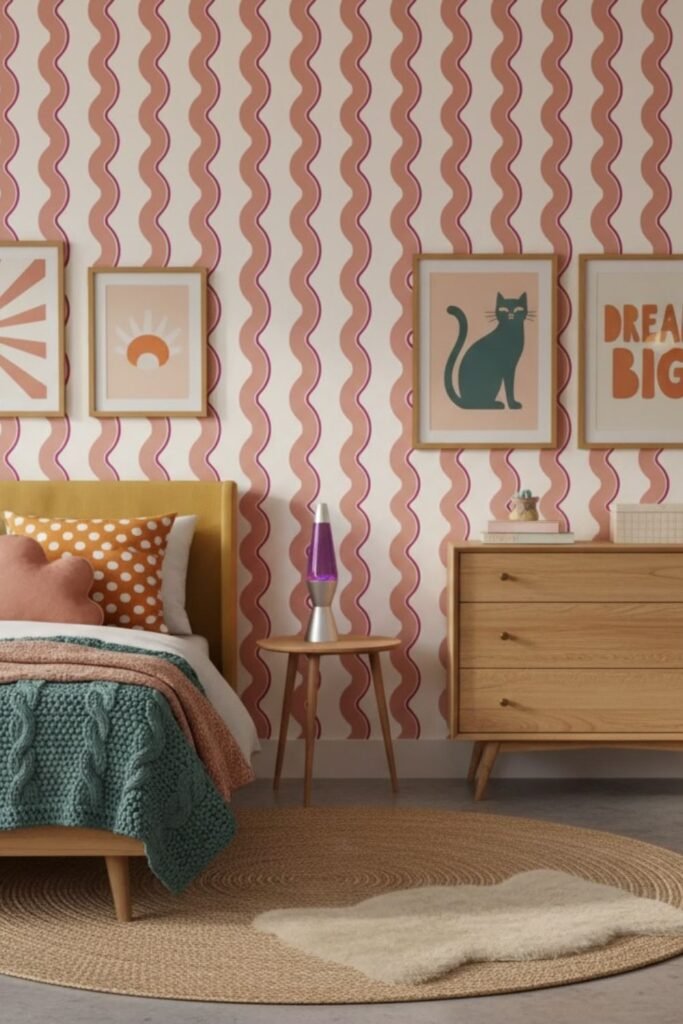
Retro Waves
Movement on the wall can completely wake up a small bedroom. Curved, vertical wave lines like these guide the eye upward, which subtly makes ceilings feel taller.
That vertical flow is more important than you might realize in small rooms. The warm peach and dusty pink colors make the pattern fun without being too loud.
Use simple wooden furniture and clean-lined decor with bold wallpaper like this so the space doesn’t feel too cluttered.
Do you see how the bedding has different textures instead of more patterns? That balance keeps everything in check.
For strong visuals, stick to one main wall. If you wrap all four walls in a high-contrast wave print, it could make a small space feel too crowded.
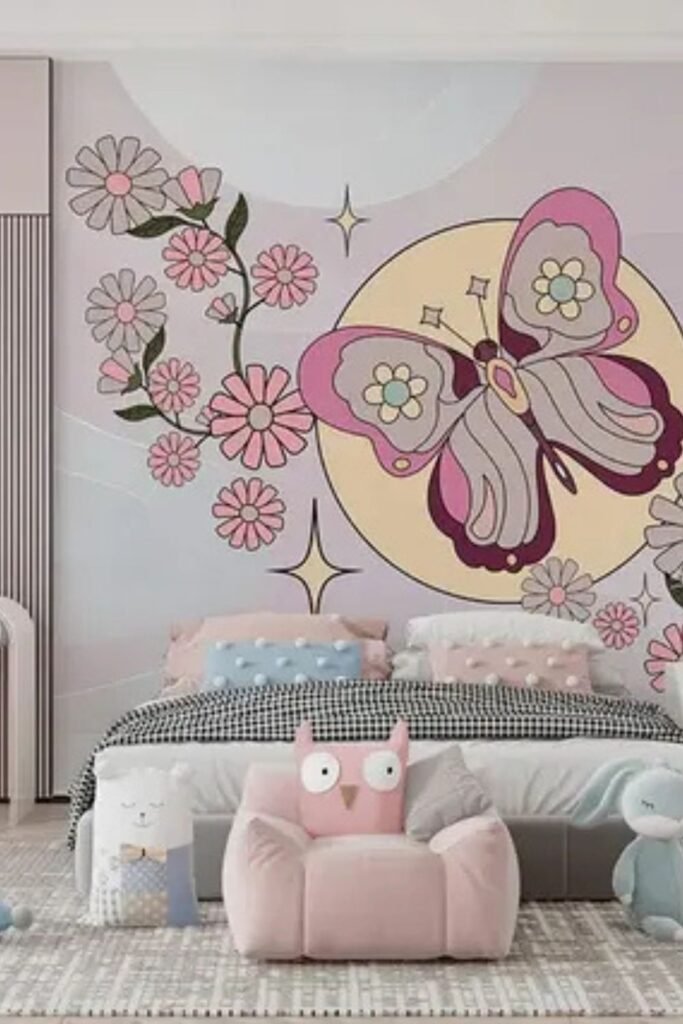
Butterfly Bloom
Whimsy feels magical when you give it space. An oversized butterfly with soft florals instantly turns a small bedroom into a dreamy escape without covering every inch.
In small rooms, one big main picture works better than lots of little repetitive pictures. Soft purples and pastel pinks keep the mood bright.
To keep the wall the main focus, choose soft textiles, furniture with rounded edges, and few patterns.
Do you see how clean and simple the wardrobe and vanity are? That limit stops too much visual stimulation.
Put a pattern like this behind the bed so that it naturally frames the space where you sleep. Keep the walls around the art neutral so it can breathe.
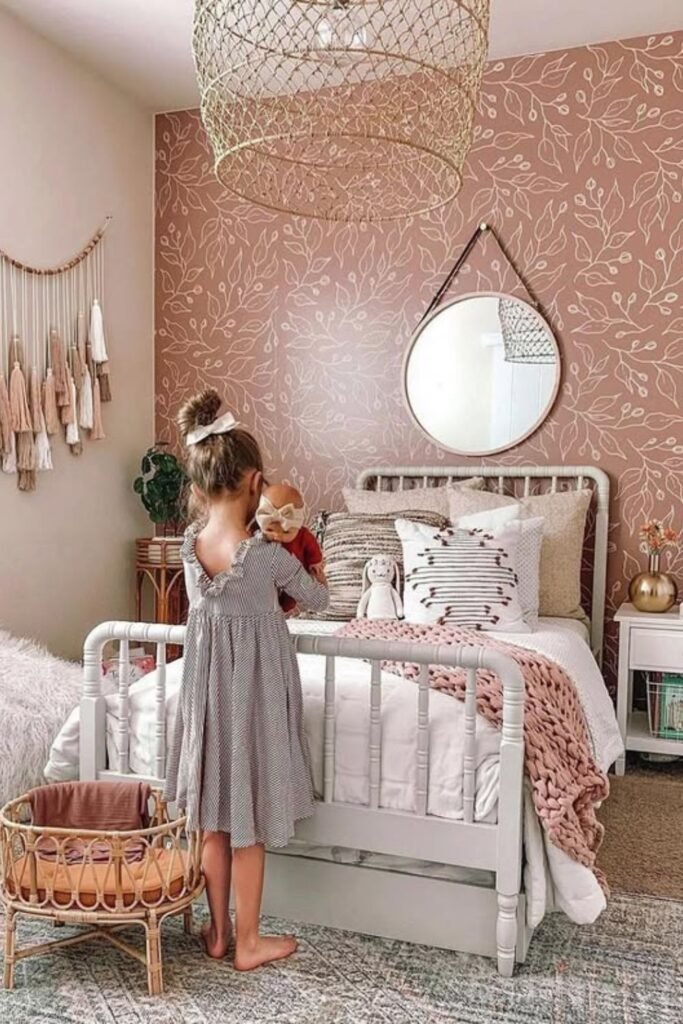
Blush Leaves
Soft earthy tones can make a small bedroom feel warm instead of tight. Muted blush with delicate leaf outlines adds texture without heavy contrast.
That’s why it looks so good as a full accent wall behind the bed. This kind of fine line design on the wall makes it interesting without being too much.
Big, dark flowers would make the room feel smaller. The subtle leaf details here mix in with the background, which makes the area feel spacious.
To make it feel homey, add natural textures like woven baskets, rattan lights, and soft knits.
White or light-colored furnishings will help the wall stand out from heavy objects.
Great for kids who like a more grown up peaceful look over cartoon themes. Choose wallpaper with soft line art instead of bold filled designs if you wish to copy it.
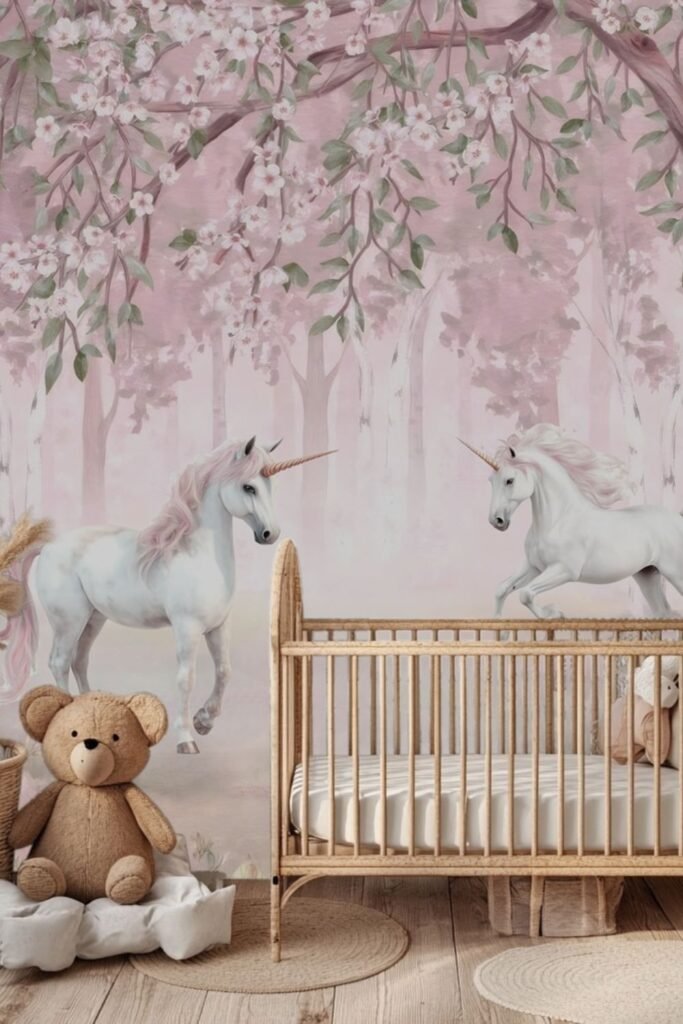
Unicorn Forest
Fantasy can feel soft instead of the flashy if colors stay muted. Blush pink trees and gentle unicorn illustrations create magic with out turning room into a loud space.
That balance makes a big impact in a small nursery. These big, spaced-out figures function better than cramped fantasy scenarios.
Open sections in the background let air flow through the wall and keep things from being too busy.
Put a mural like this behind the crib so that it naturally frames the sleeping area.
Use natural textures like rattan cribs woven baskets and linen bedding to keep the ethereal art grounded.
Don’t wear too many glittering things or accessories that sparkle. Charm that is subtle lasts longer.
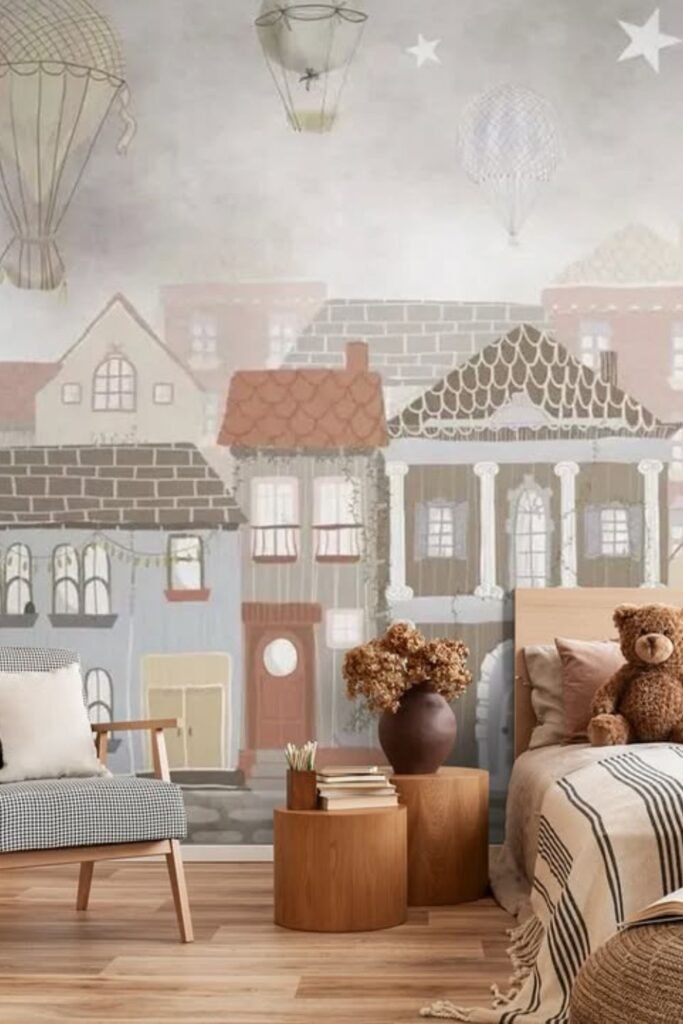
Vintage Village
Soft storytelling can make a small bedroom feel layered without feeling busy.
Muted townhouses, brick details and gentle sky tones create depth while still keeping the palette calm.
Great for kids who like make-believe worlds but don’t want big cartoon characters.
See how the mural employs gentle blush, warm grays and dusty browns instead of brilliant colors.
That’s why it fits in small spaces. A loud contrast would make the walls seem closer. Put it behind the bed or chair where you read to make the room feel more stable.
Use simple, wooden furniture that goes with the warm colors of the décor. Instead of printed bedding, use textured fabrics like knits or linen to keep patterns.
Pick a mural with faded borders that look like they were painted with watercolors so that the scene looks like it belongs on the wall.
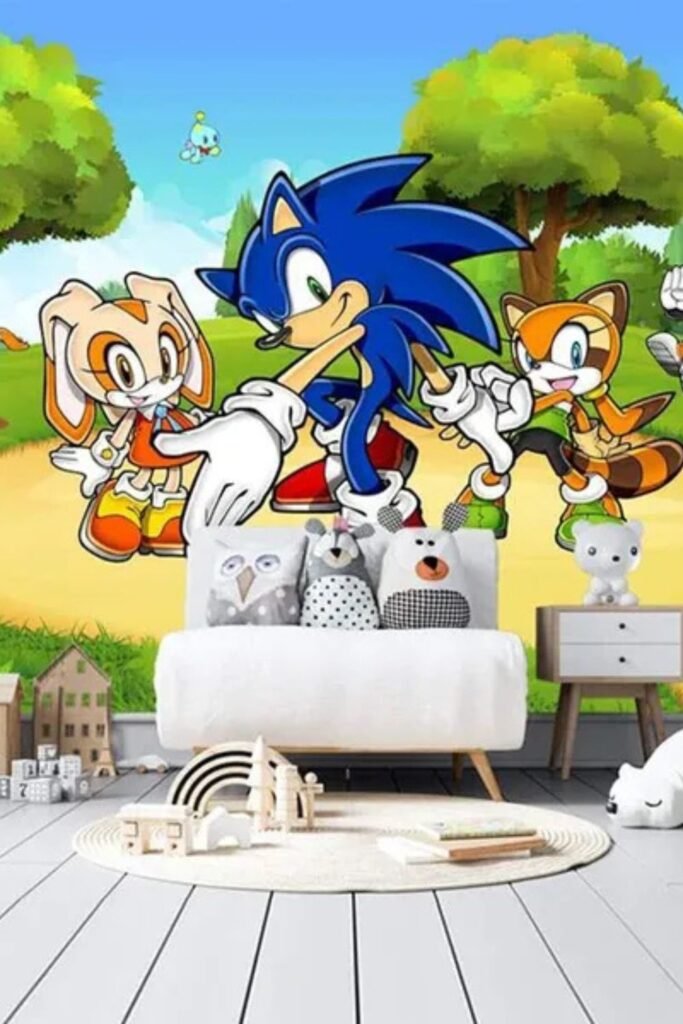
Sonic Speed
High-energy characters can take over a small bedroom fast, so placement matters.
A bold Sonic mural like this works best on one main wall, preferably behind the bed or sofa.
Bright greens and blues make things exciting straight away, which is great for youngsters who like games or fast-paced themes.
Here, balance is really important. Make the rest of the space neutral by using light-colored floors, plain furniture, and few patterns.
This will keep the wall from competing with anything else. It’s easier to tell what you want with big character designs than with tiny repeating printing.
With cartoon themes, you have to go big or go home. Just don’t put matching bedding, drapes, and carpets on top of one other. That can make the room look smaller.
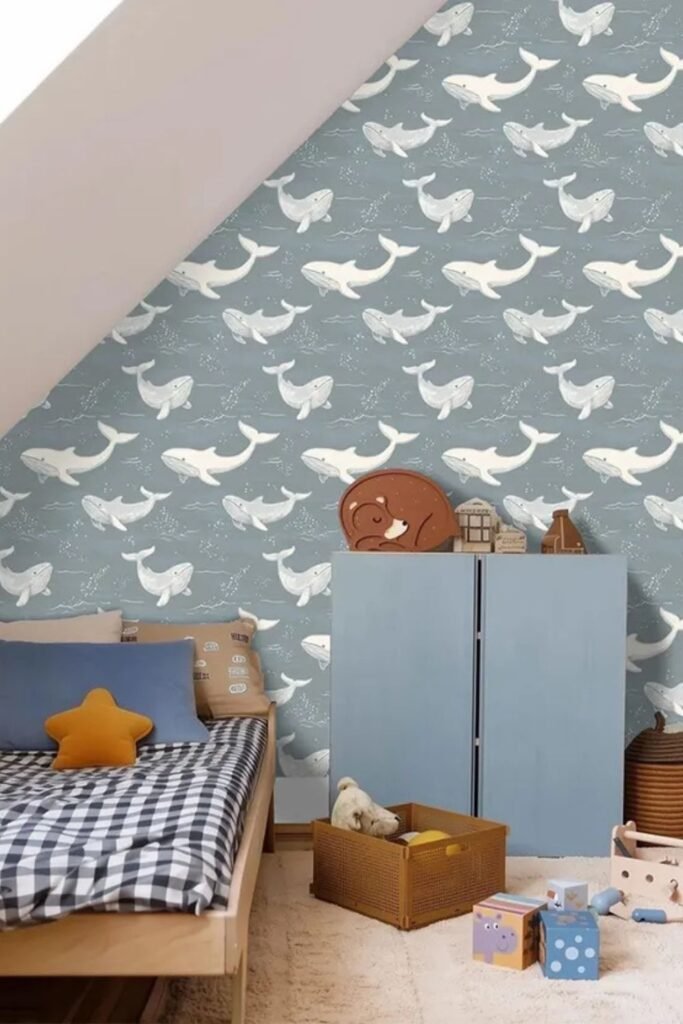
Whale Waves
Sloped ceilings can feel awkward, but patterned wallpaper can turn them into a feature. Soft blue whales swimming across the angled wall make the space feel intentional.
That makes a tremendous impact in small attic bedrooms. When the color contrast stays soft, these kinds of repeating patterns work great.
The space stays quiet and open with pale whales against a soft blue background. Prints with a lot of contrast would make the ceiling look lower.
To make things flow, use the same blue color in cabinets or sofas. One or two solid colors are all you need for bedding.
Don’t add more sea-themed accessories on top of each other. A lot of things that match can make a small area feel crowded.
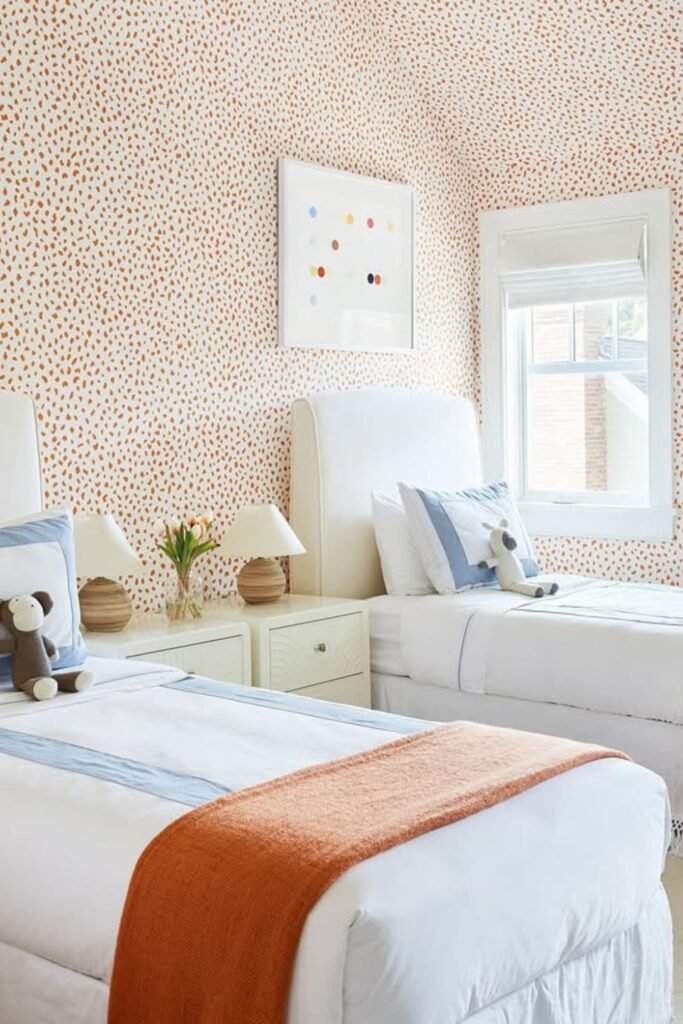
Speckled Pop
Small print, big impact. Tiny scattered speckles in warm orange instantly energize a shared kids’ bedroom without feeling heavy.
The full-wall design works here since the print is tight and spaced out evenly.
In a small room, twin beds would be too much for big blobs or shapes. Size is always important.
Add a few basic touches in the same color, like a throw blanket, a pillow edge, or a piece of art. That’s it. A space can feel busy quickly if there are too many matching features.
Best for siblings who live together but don’t want their rooms to look like cartoons. If you want to cover more than one wall, especially in a tiny room.
Choose peel-and-stick wallpaper. You may quickly change the pattern if it ever seems like too much without having to repaint everything.
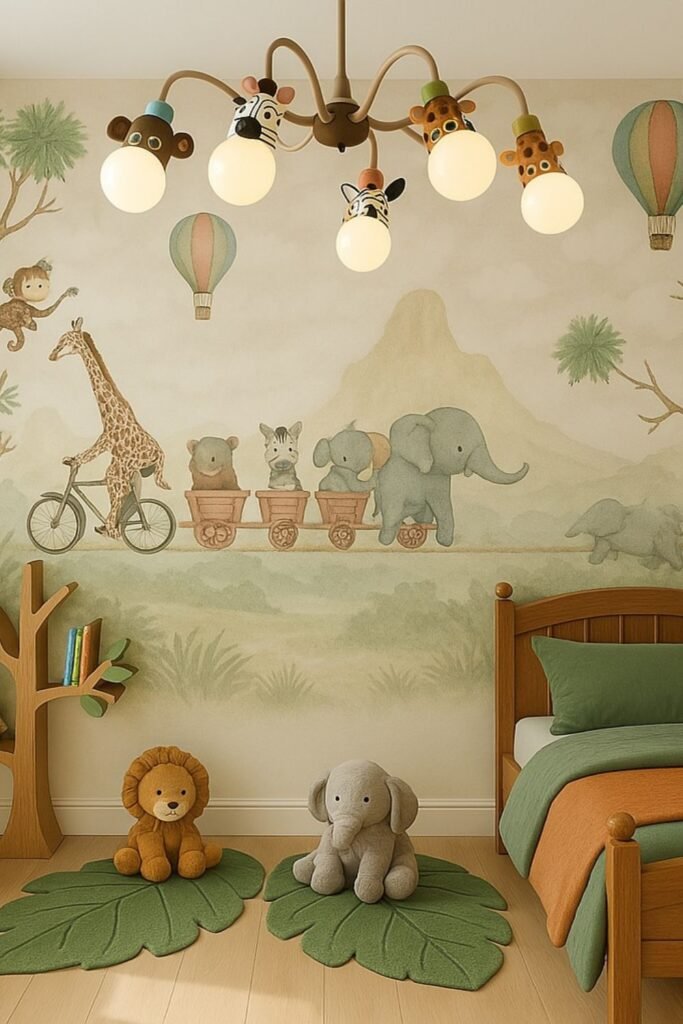
Safari Parade
Adventure feels gentle here, not loud. Soft watercolor animals rolling across the wall create movement without overwhelming the space.
The muted greens and soft beige colors in the room help keep it peaceful, which is vital in small bedrooms.
This kind of horizontal layout works great behind a single bed. The line of animals on the wall makes it look bigger.
Bright, high-contrast safari prints may make a space feel smaller very quickly, but faded tones keep it open.
To go with the natural look, use hardwood furniture and earthy fabrics. Rugs fashioned like leaves and stuffed animals are cute and don’t take up additional space on the walls.
FAQs
Can bold wallpaper make a small kids’ bedroom look even smaller?
Yes, it can, but only if you don’t use it right. Dark or busy wallpaper on all four walls will make the room feel smaller.
Add simple furnishings and patterns to make it look better.
If you do it well, vibrant wallpaper may make the room feel bigger and more fascinating instead of crowded.
What type of wallpaper is best if my child changes interests often?
Choose wallpaper that you can peel and stick. It’s easy to put up and take down as your tastes change, and it’s good for renters.
Instead of too many cartoons, try animals, rainbows, space, or gentle patterns that your child can grow into over the next few years.

Hi, I’m Afaf! I’m a law student who loves writing about everyday life – from home projects and crafts to fashion, beauty, and parenting tips.
I’ve been writing for over a year, sharing ideas that are simple, practical, and easy to try. I write about things I find interesting and useful, whether that’s organizing a space, trying a new DIY, or finding activities to keep kids entertained.
My goal is to share helpful ideas without making things complicated. If it works in real life, I’ll write about it.
When I’m not studying or writing, I’m usually experimenting with new projects or scrolling for inspiration!