
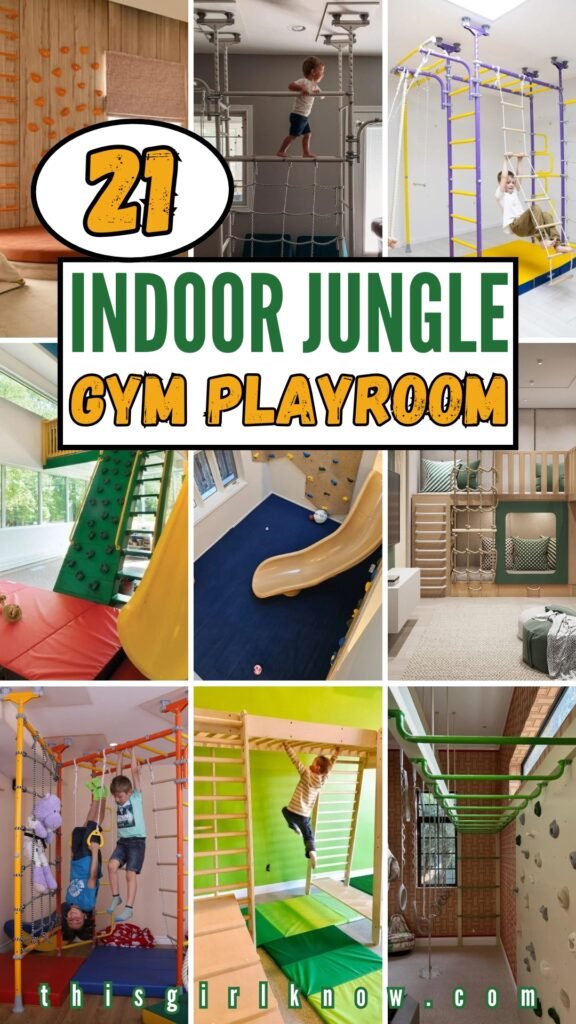
21 Indoor Jungle Gym Playroom Ideas for 2026
You’re not the only one whose kids are climbing on the couch, jumping from the coffee table, and turning the hallway into a racetrack.
When they can’t go outside, all that energy has to go somewhere, and it typically ends up on your furniture.
You might have considered of getting a jungle gym. But then reality sets in. You don’t have a big playroom. You don’t want something big and unattractive.
This article showcases 21 Indoor Jungle Gym Playroom Ideas that grow with changing interests. Each room stays flexible over time.
Let’s jump in!
How Do You Design a Jungle Gym Playroom in a Small Space?
First, see what your kids are already doing. If kids climb on the couch, hang from door frames, or leap between pillows, that means they need to climb, hang, balance.
Look around your space now. Don’t think too big. Think up and down. Instead of using floor space, use wall space.
You may give kids movement without taking up the area with a foldable climber, wall bars, or a corner swing.
Next, make one clear “movement zone.” Put mats under them. Keep storage close to it.
Kids will quit turning your whole house into a jungle gym if you provide them a safe area to climb.
Save this article for later!👇👇👇
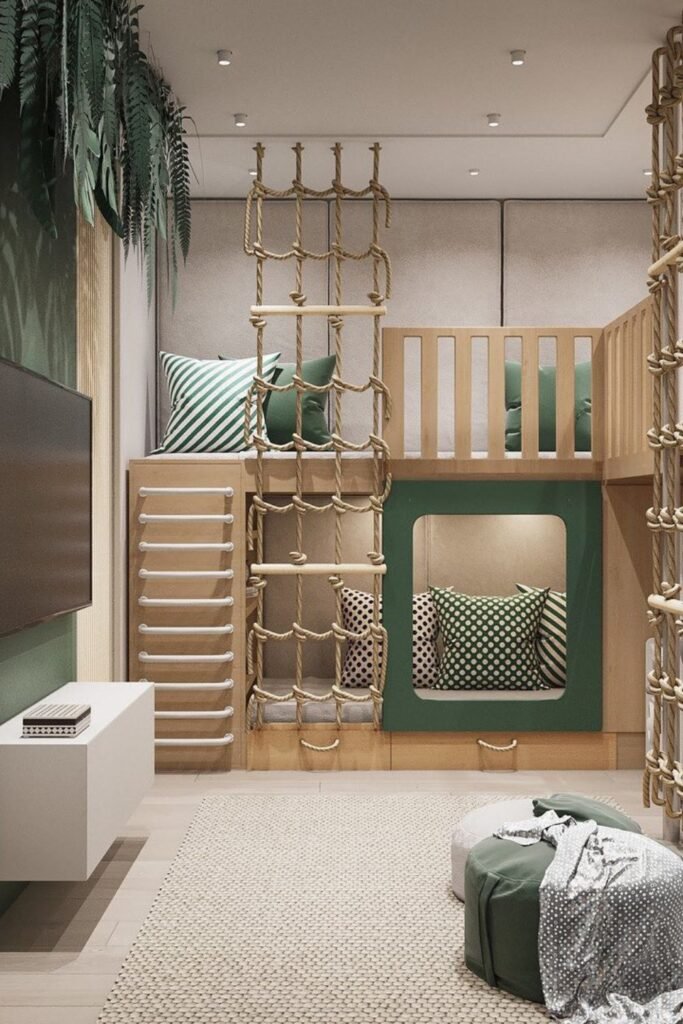
Vertical Adventure
Floor space disappears fast in a small room so build upward instead of outward.
Lofting the bed instantly frees the lower area for movement and turns one wall full activity zone.
Rope nets on the sides let you climb without big frameworks, and they also keep the upper bunk safe.
The built-in nook underneath protects the area from feeling messy.
Put in couches and soft lighting so youngsters may move from climbing to quiet time without leaving room.
You can tackle three problems at once by putting sleep, play, and hideaway nooks all in one structure.
Attach ropes to substantial framework, not merely drywall. Keep the area below the landing free, and use a thick rug or mat to break your fall.
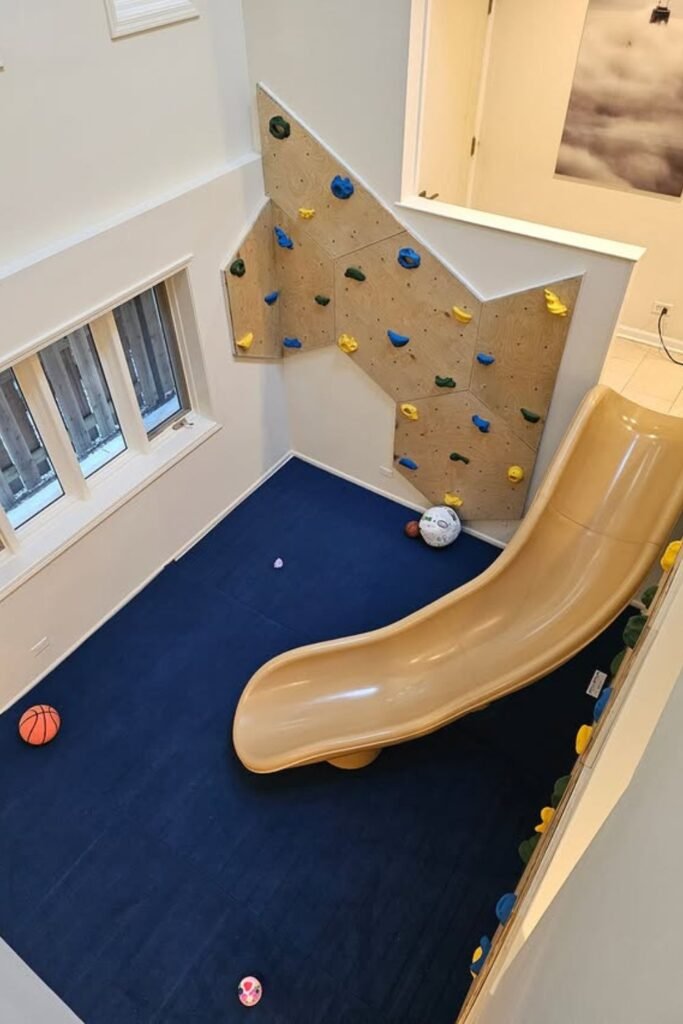
Climb & Slide
Unused vertical corners can turn into the most exciting part of the house. A climbing wall that follows the shape of the room makes smart use of awkward angles.
Add a broad slide next to it, and you have a whole up-and-down cycle that keeps youngsters active without them having to run around the house.
Foam floors make a big difference here. Kids may climb higher with more confidence because the base is padded, and you don’t have to worry as much about severe.
Put this setup in a bonus room, basement, or large doorway where the ceiling is high enough for a longer slide.
There are spaces for different ability levels, so both beginners and older youngsters can use the same wall. Let gravity do the fun part and keep the landing area free.
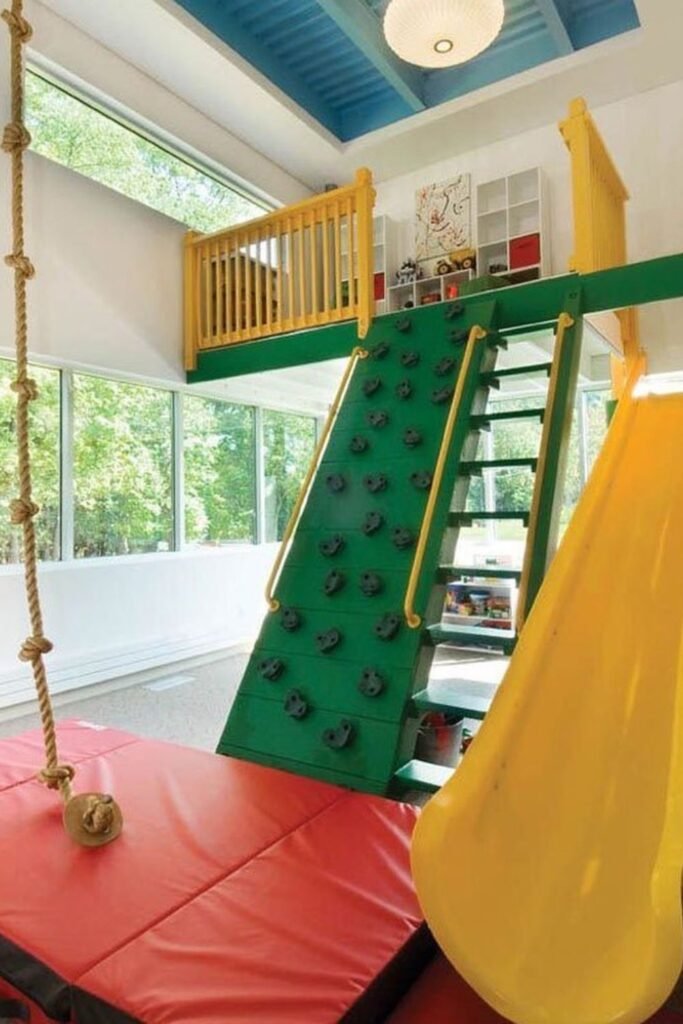
Loft Playground
Energy needs somewhere bold to land, and this setup doesn’t hold back.
A raised platform instantly turns the room into a full movement, especially in homes with ceilings.
Instead of laying equipment out on the floor, everything piles up and down, then back up again.
Putting the climbing wall and ladder next to each other gives kids choices. Some days they race up the holds. On other days, they take the stairs.
That option makes it fun. The thick crash mats below aren’t just for looks; they make this kind of arrangement safe and practical for everyday use.
This style of structure works best in rooms with high windows or ceilings that are open. Attach the platform directly to the structural framing, not merely the wall panels.
Monkey Bars
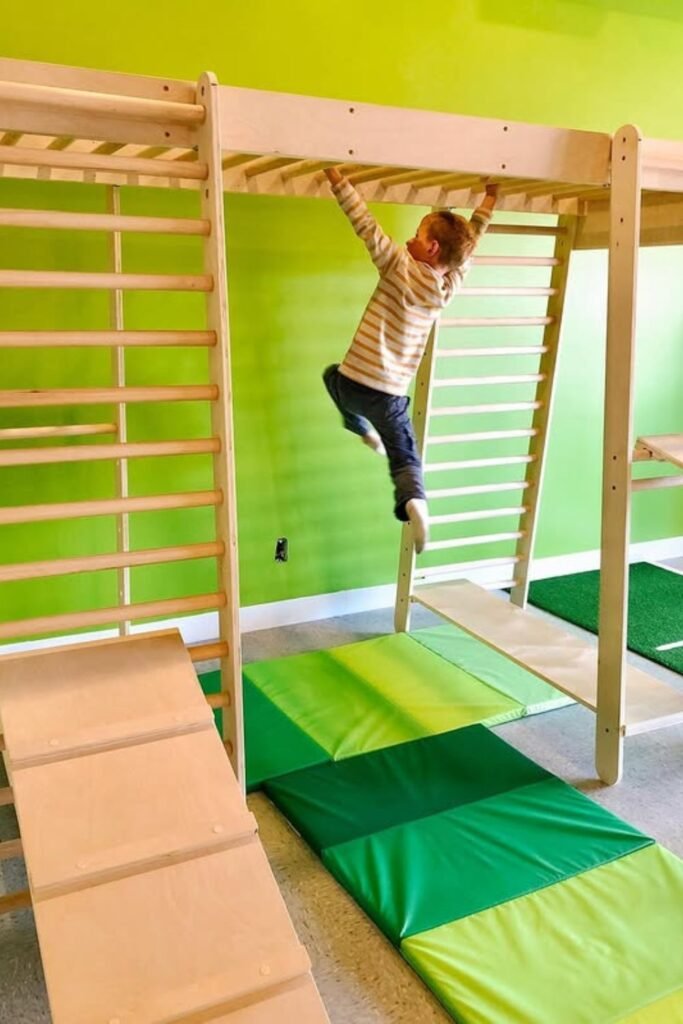
Upper body strength doesn’t happen by accident. Hanging, swinging, and crossing from one side to the other builds it fast and kids love the challenge.
A wall-bar frame with rungs above it turns one part of the space into a small gym without making it messy with equipment.
Look at how the mats are lined up right under the bars. That detail is important. Kids take more risks and feel more confident when landing feels gentle.
Adding a little inclination ramp on one side makes the flow more natural: climb up, hang across, and slide down.
Put something like this against a sturdy wall where you can securely attach it to the studs. Make sure there is enough room underneath so nothing gets in their way.
Great for long, narrow rooms where you want movement to stay in one area instead than spreading out across the whole floor.
Ninja Lane
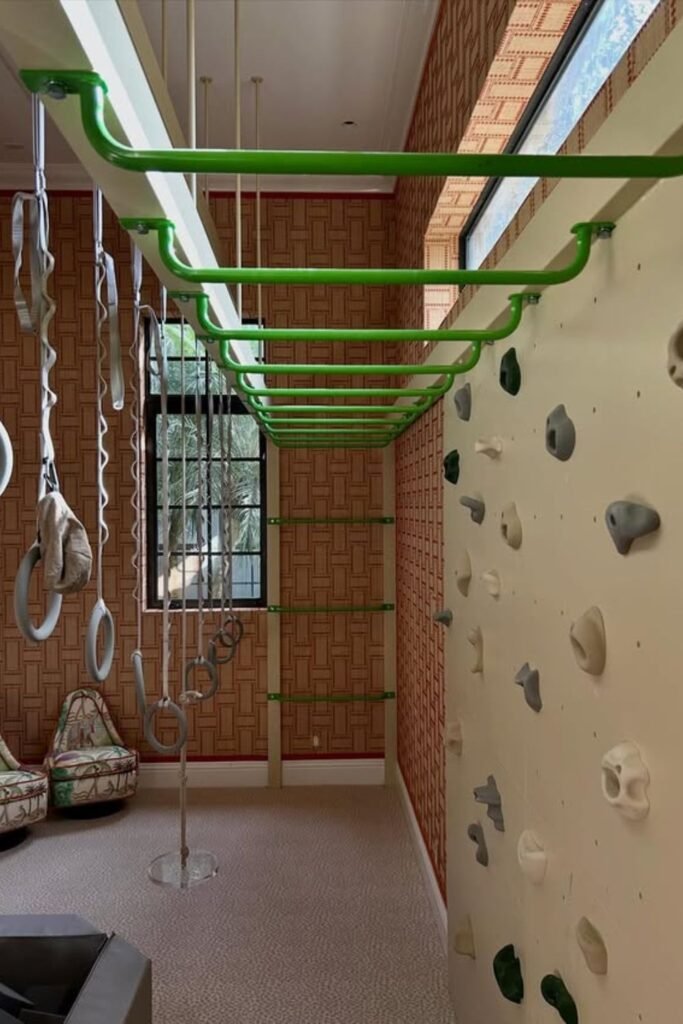
Long, narrow rooms don’t have to feel limiting. Run the action overhead instead. Ceiling-mounted monkey bars.
Kids can use a hallway-style environment as a mobility track right away, going from one end to the other.
Adding a side climbing wall to the overhead bars makes the challenge even harder. Some days they cross each other.
On other days, they climb the wall or hold the rings that are hanging down to work on their grip.
This kind of variety keeps things interesting without needing more equipment.
Strong anchoring is important here. Bars need to go all the way through the drywall and into the ceiling joists.
Gym Corner
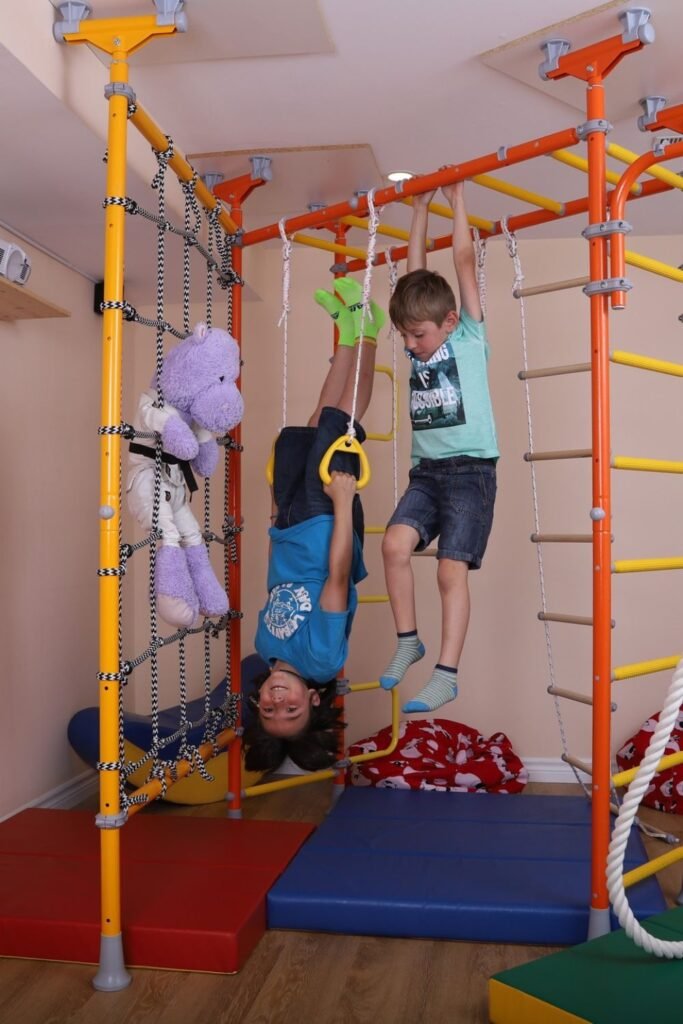
One solid frame can replace half the toys in your house. Multi-activity jungle gym sets like this keep everything in one contained zone monkey bars, rope net, rings.
Energy stays in one place instead of dispersing out. Kids climb up one side, hang from the bars, flip off the rings, and then fall onto thick matting.
That flow keeps them going without needing a lot of room.
Great for a spot in the basement or an extra bedroom where you can put up a partition for movement.
If you choose a freestanding frame, make sure to check the weight restrictions and adjust the fasteners often.
This small structure is great for siblings who want to use different parts at the same time without getting in each other’s way.
Activity Station
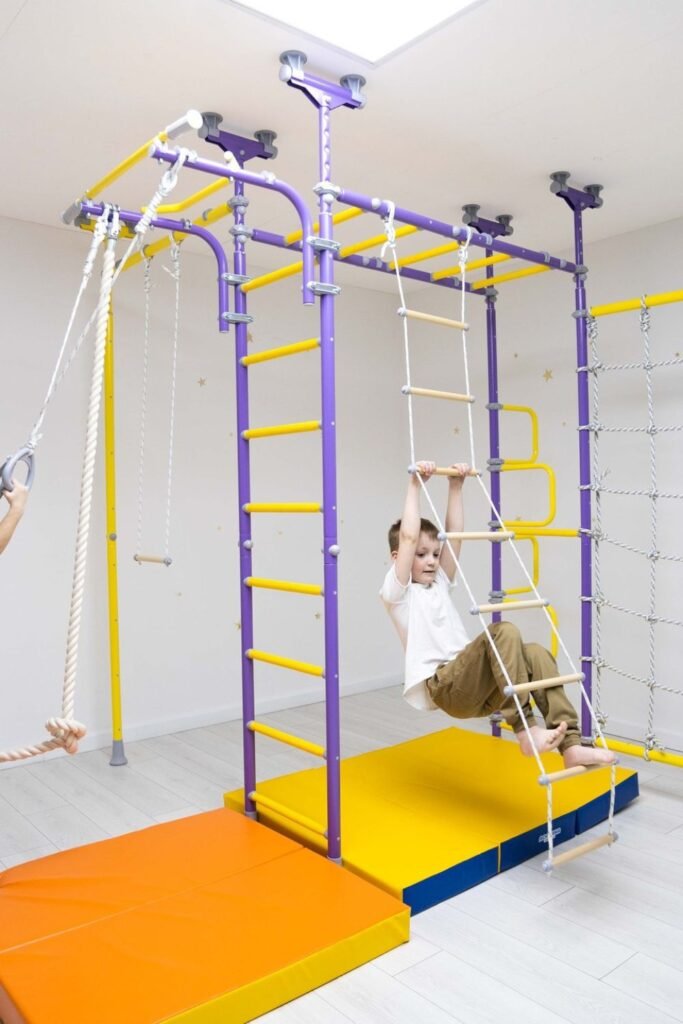
Color alone can make a space feel fun, but the real win here is variety in one footprint.
Bars, rope ladder, climbing net, rings vertical ladder all connect single structured zone.
There is always another method for kids to move, so they don’t become bored. Look at how the mats make the play space clear.
They know this is the climbing location as soon as their feet touch the soft surface. Everything stays inside. No jumping off of furniture in the middle of the room.
This kind of setup will work in rooms with ordinary ceiling heights as long as you attach each post to the ceiling joists.
Make sure the walls around the ropes are clear so they don’t hit anything. Choose attachments that can be changed to fit your kids’ needs as they develop.
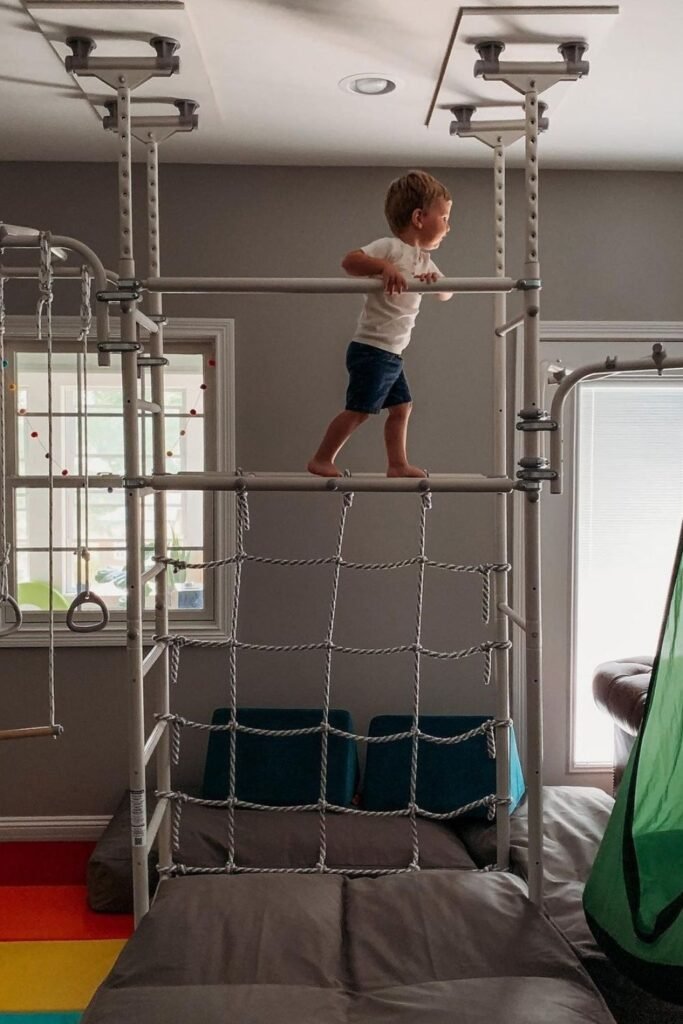
Sky Platform
Height changes the whole mood of a playroom. When kids can climb up above eye level, the space instantly feels adventurous.
This frame that hangs from the ceiling gives you a vertical challenge without having to put equipment on every wall.
The top bar makes a platform for standing. Older kids like to balance and look over the edge, while younger kids can stay lower on the rope net and rings.
This kind of layering allows siblings use the same structure at various levels of skill. You have to have soft landing pads underneath here.
There should be thick matting all throughout the drop zone, not just in one corner. Works best in spaces with strong ceilings where you can attach each post to the joists.
Wall Escape
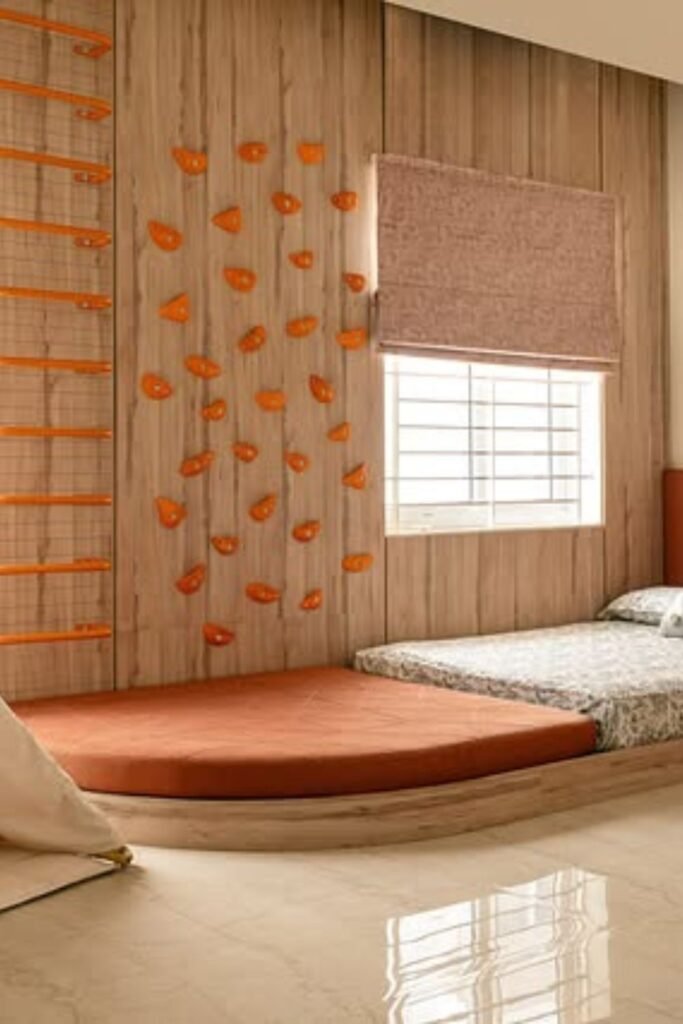
Quiet time and climbing time can live in the same room without fighting each other. A padded platform built along the wall gives kids a soft landing zone.
A tiny climbing wall and mounted ladder rungs confine the action to one vertical strip instead of distributing toys all over the place.
When everything is close to the wall, the middle of the room stays peaceful and open. The low beds next to the padded area make this a great place for two people to sleep.
Kids can climb before bed and then relax without leaving the room. If you want to do this again, make sure the grips are attached to a solid surface.
Adding a tiny teepee or reading spot nearby can help change the ambiance from high energy to calm focus without having to change the whole space.
Swing Haven
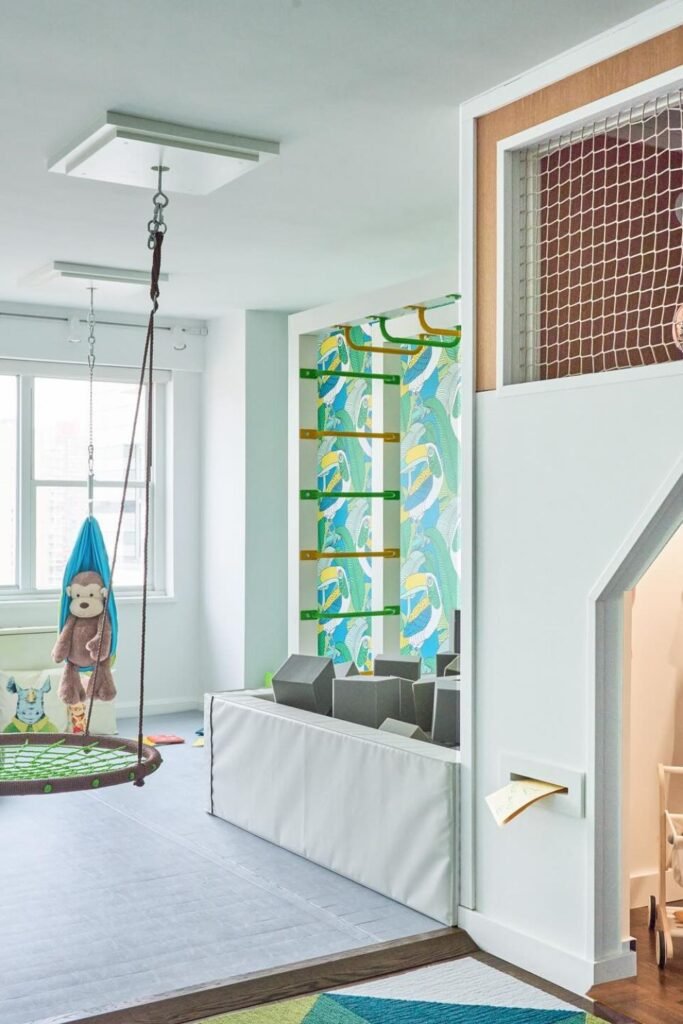
Few things calm a busy kid faster than gentle swinging. A ceiling-mounted nest swing instantly turns an open playroom into a sensory zone without filling the floor.
Make sure there is adequate space around the swing so it can move around without striking walls or furniture. The soft floor underneath makes it easy to use every day.
Notice that the area for movement stays on one side of the room, while the area for pretend play and climbing is on the other side.
That division helps keep energy in order. Adding a tiny climbing ladder or foam pit nearby makes it easier to move around climb, swing, and rest.
Works best in bright areas with high ceilings when you want one big thing instead of a lot of small ones fighting for space.
Soft Landing
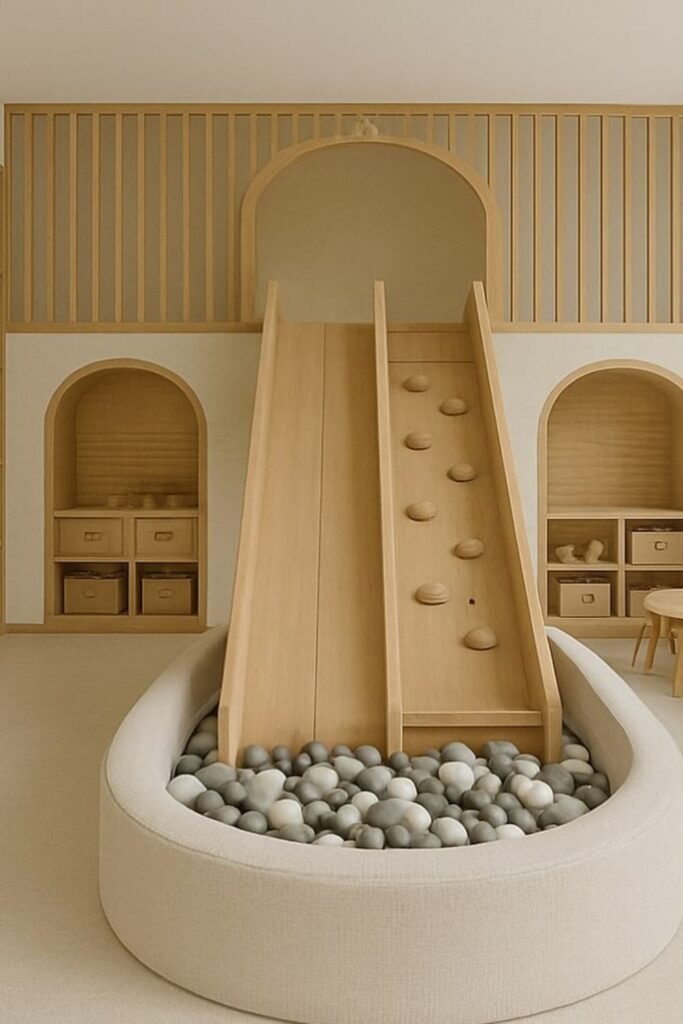
Some kids love climbing but freeze when the drop feels too high. Adding a ball pit at the base of a slide removes that fear instantly.
Instead of something to avoid falling becomes part of the fun. Slides like this that are built in work great in bigger playrooms where you can set aside one wall for movement.
The soft edges around the pit keep everything in place and make every landing softer. Neutral hues let the structure fit in with the room instead of taking it over.
You don’t need to develop a whole new thing to do this again. A strong slide and a ball pit that stands on its own can do the same thing.
Make sure the slide is the same height as the pit so youngsters don’t strike the bottom. A great choice for younger kids who need to build their confidence.
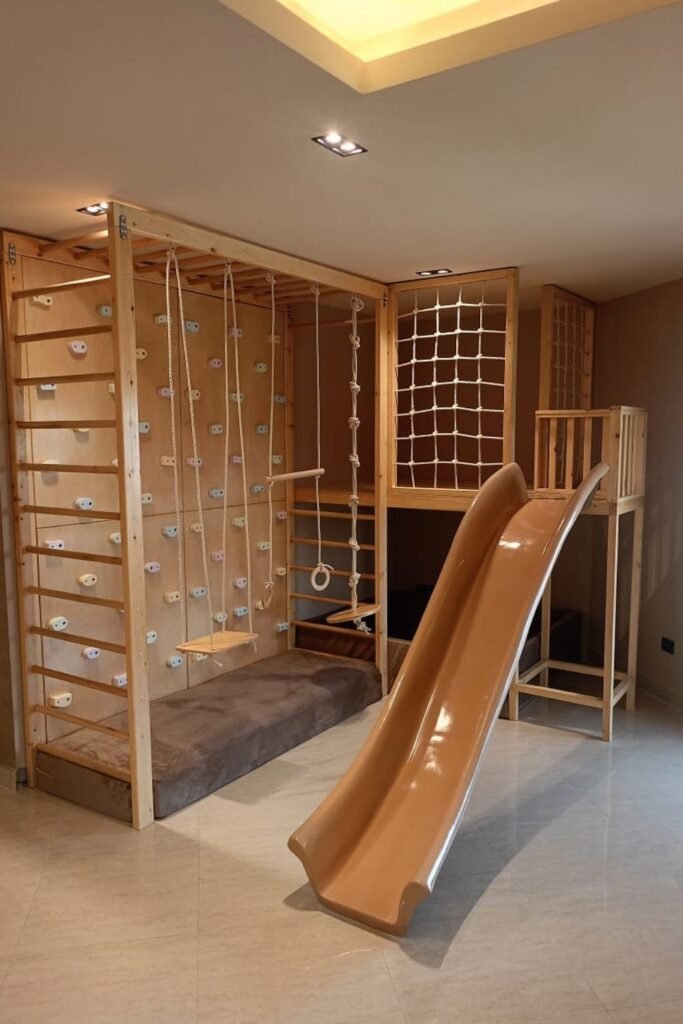
Climb Cube
One corner can carry the whole room. A wood-framed climbing cube like this packs ladder rungs, rock holds, rope elements, and an upper platform into a tight footprint.
The padded base underneath makes it possible to use every day. You don’t have to worry about your kids falling hard when they play with hanging grips and small swings.
A great choice for basements or extra rooms where you can set aside one wall and corner for movement.
For more stability, attach the frame to both the wall studs and the floor. Make sure the landing space is clear and broad enough for the slide to come out.
Natural wood tones help the structure blend in, especially if you want something that feels like it’s always there instead of just temporary play equipment.
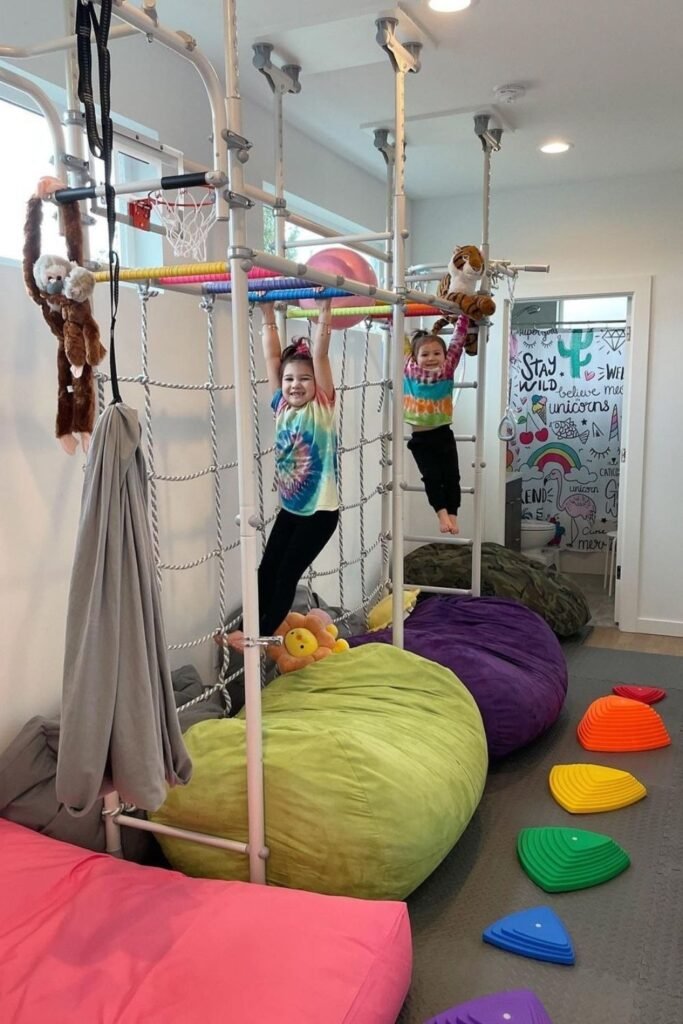
Energy Zone
Some rooms feel narrow and impossible to use well. Turn that limitation into a strength by running everything along one wall.
A structure with monkey bars and rope nets that hangs from the ceiling keeps climbing contained instead than spilling toys all over the floor.
Underneath, bean bags and crash cushions make every fall softer and can also be used as places to relax.
Kids can hang on swing across then fall down and start over before the next round.
Adding balance pods on the floor builds a simple obstacle path with out installing anything permanent.
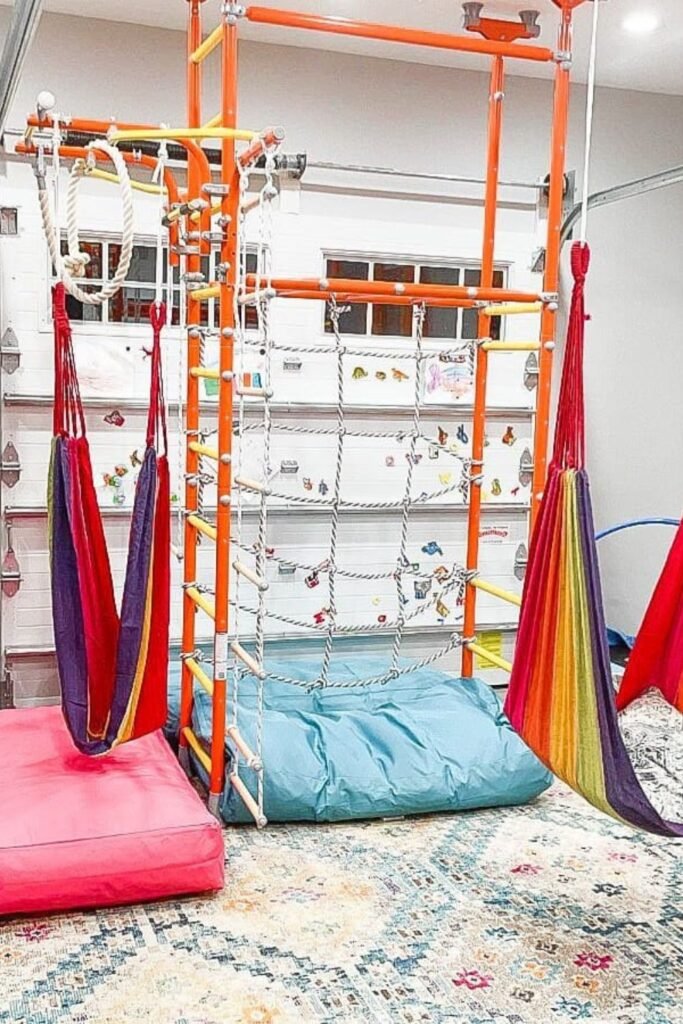
Garage Gym
Cold weather does not have to shut down active play. A garage can easily transform into a full movement zone with one solid climbing frame and a few soft landing spots.
Notice how everything is built around the main structure, which includes a ladder, a rope net, and above bars. Hammocks hang on either side for when things calm down.
Kids can climb hard and then swing gently to get back to where they were. That balance of calm and passion keeps people interested for longer.
This design works well on concrete floors since it has foam mats and crash padding underneath.
If you do something like this, make sure the frame is attached to the ceiling joists and leave room around it so nothing gets in the way of the climb down.
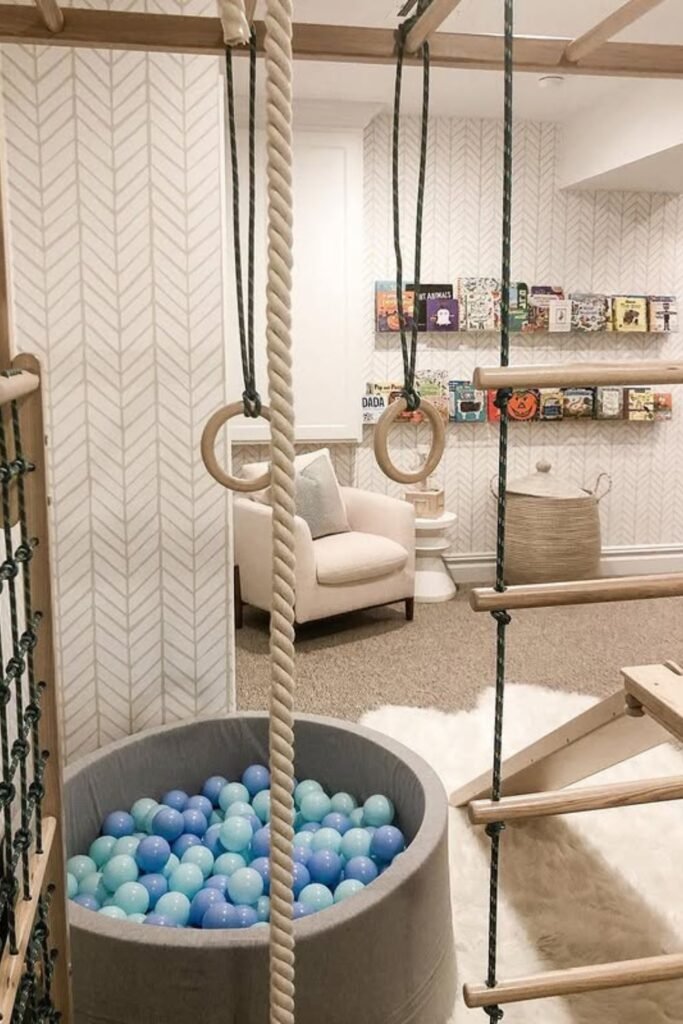
Reading Gym
Movement and quiet time don’t have to compete. Hanging rings, rope climbs, and a small ladder can sit right next to a reading corner without turning the room chaotic.
When climbing gear is in neutral colors, the room still feels tranquil. There is a small ball pit underneath that makes landings softer and offers another dimension of fun.
Kids can climb, drop in, and then walk over to the chair and bookshelf to cool off. The natural change from strong energy to quiet focus makes the place usable all day.
Works great in playrooms or bonus rooms in the basement if you want the space to grow with your child.
Make sure the overhead beams are securely attached to the joists, the drop zone is padded, and there are clear paths around the equipment for people to travel.
Color Circuit
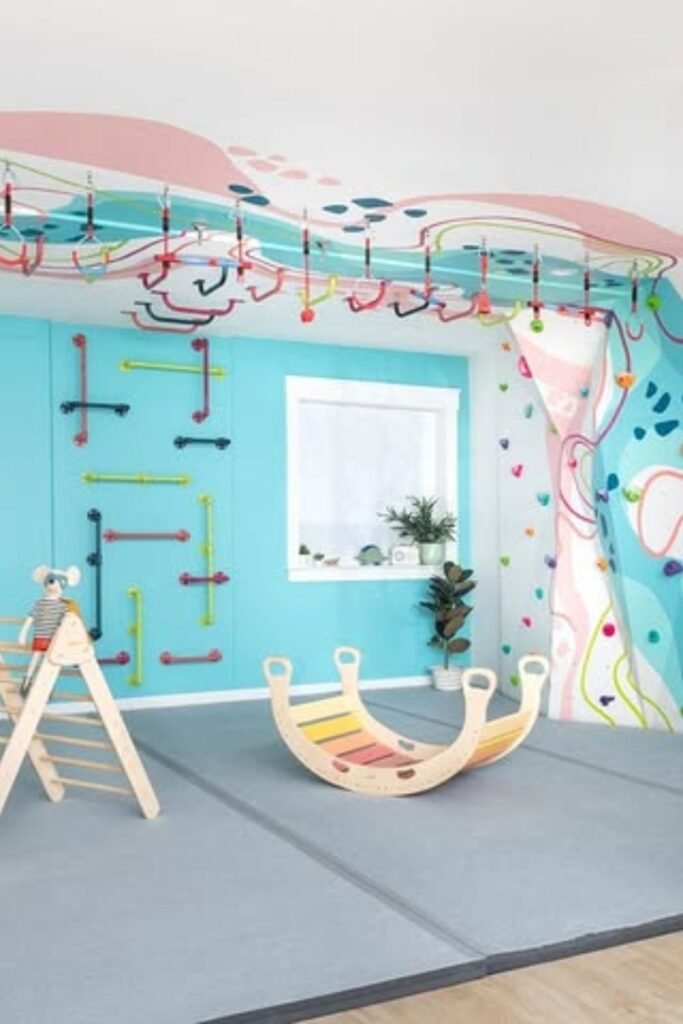
Boring walls won’t hold a child’s attention for long. Add movement directly onto them. Horizontal grips, small climbing holds, and an overhead bar system.
Transform flat surfaces into an interactive course without taking up space in the middle of the room.
A little rocker or balance toy in the middle adds additional level without taking up room permanently. Everything seems to be able to change.
If you want something more peaceful, keep the framework simple and allow the wall art show off your personality.
Make sure that every mounted bar is attached to studs and that the handholds are spaced out for people with different ability levels.
Foam Drop
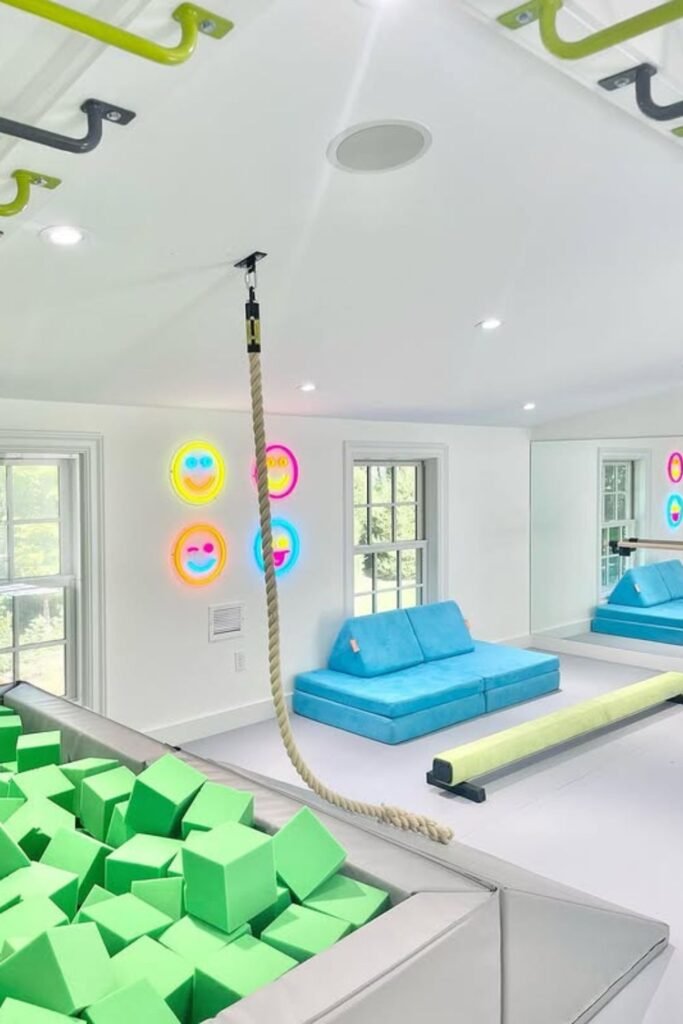
Jumping is going to happen whether you plan for it or not. Giving kids a foam pit means you control where it happens.
They don’t jump from couches; instead, they opt for a soft landing that can take a hit.
Overhead bars and a rope climb above the pit make it evident what the struggle is.
Climb up, swing over, and then fall straight down. That basic pattern uses a lot of energy without kids racing around the home.
Mirrors on one wall let you watch from different perspectives and make the area look bigger. Nearby low couches give them a place to rest between turns.
Works well in finished basements or additional rooms where you can set apart one side just for high-impact gaming.
Grip Wall
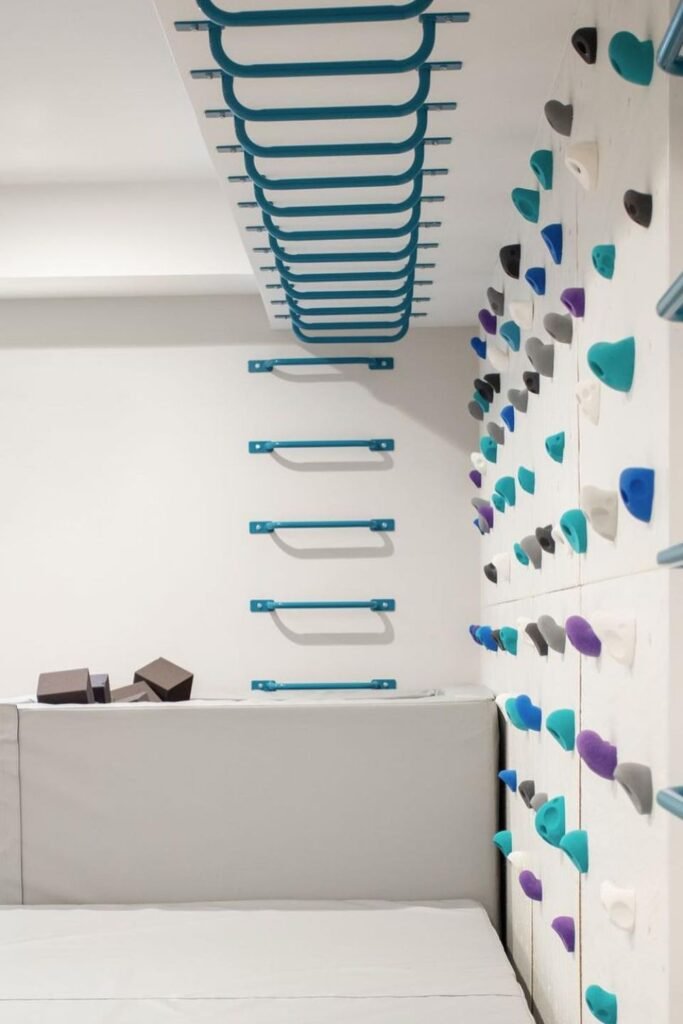
Upper body strength doesn’t build itself. A full climbing wall paired with overhead monkey bars gives kids a real challenge without taking over the entire room.
Beginners can keep low and go to the side. Kids who are stronger can climb higher and go straight to the ceiling bars.
That link between moving up and down walls and moving up and down keeps things fresh.
The climbing surface isn’t the only thing that matters; the thick wall pads underneath are just as important.
Make sure the whole drop zone is covered so kids can safely explore their limits. Works best in basement corners where you can use one wall just for movement.
Play Lounge
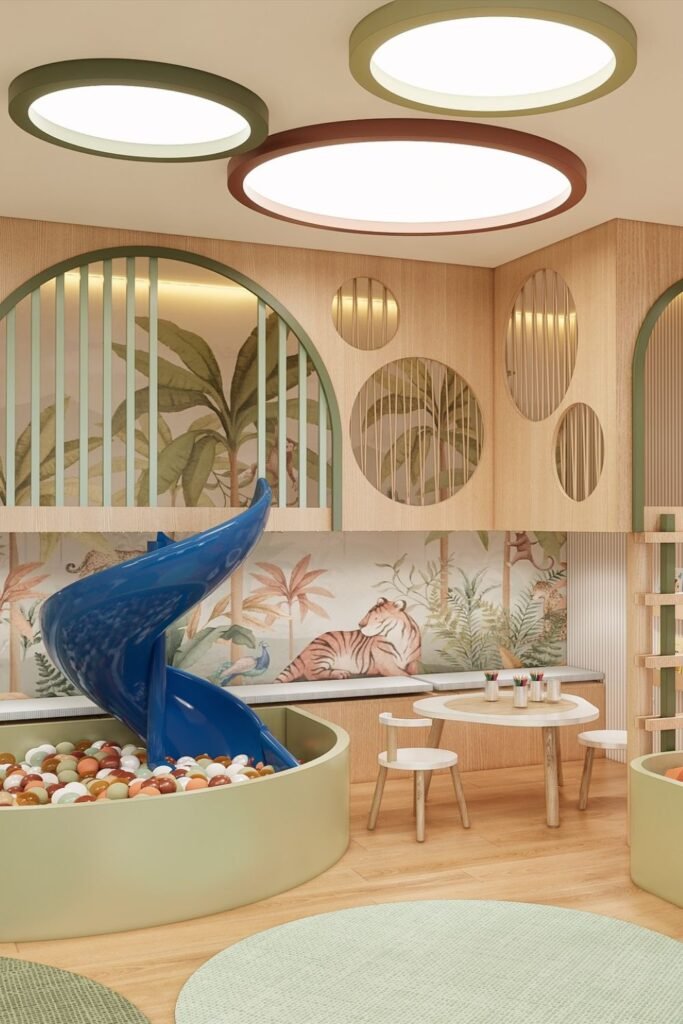
Playrooms don’t have to look chaotic to work hard. Curved ball pits, built-in shelving, and soft colors create movement without visual noise.
Kids can climb the rope, slide down or dive into foam and the space will still feel quiet. Dividing the area into zones makes a tremendous difference.
One pit is for high-energy drops and holds balls. The other one employs foam cubes to make landings deeper.
A little table in the middle of the room keeps everything in place and reminds kids that they may be creative here too.
This is a great solution for bigger playrooms where you want activities and design to work together. Built-ins that are made to order keep things out of sight and the floors clear.
Tree Loft
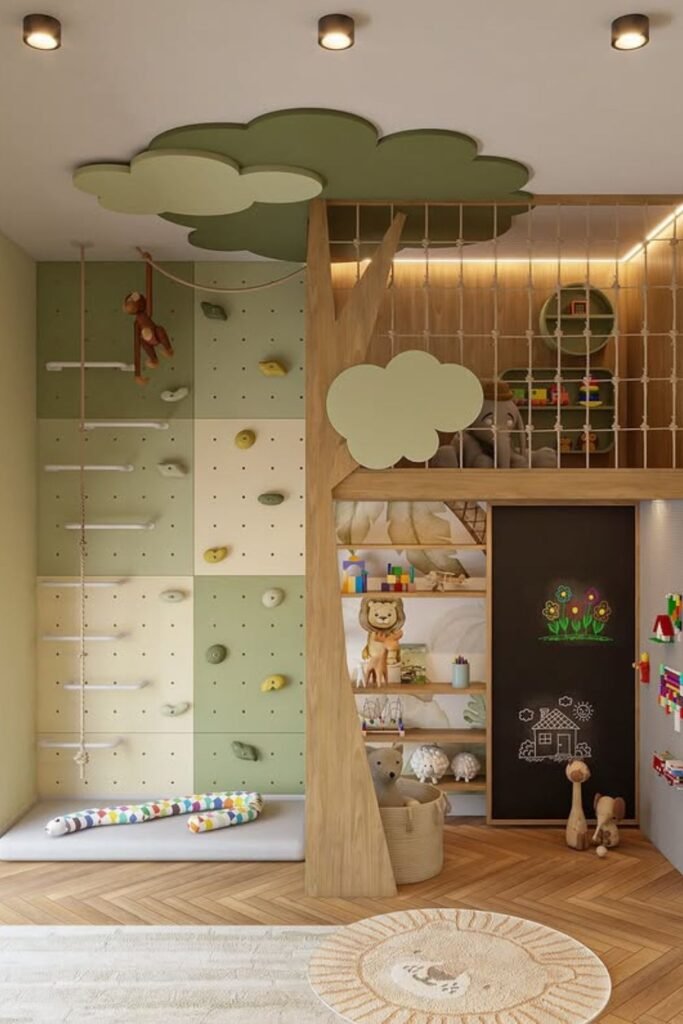
Imagination grows faster when the room feels like a story. A tree-inspired structure with a small loft turns climbing into an adventure instead of just exercise.
The kids climb the wall, pull themselves up, and all of a sudden they’re “in the treehouse.”
The room doesn’t feel crowded because the climbing wall is thin on one side.
A soft mat at the bottom keeps the area looking tidy while protecting against falls. There is a peaceful space for drawing or playing pretend under the loft, with shelving.
Works great in small bedrooms where you need to sleep, store things, and move around in a limited space.
Make sure the loft is properly fastened to the studs and that the guardrails are high enough to keep people safe.
Rope Traverse
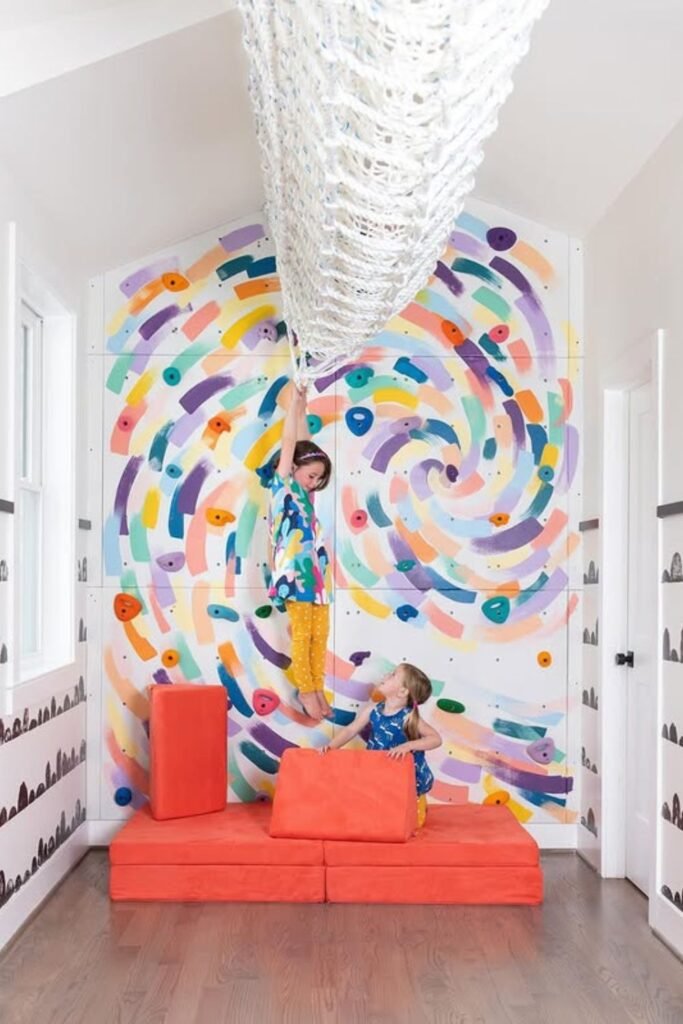
Hallways usually go to waste. Here, they turn into a challenge zone. A thick overhead rope stretched from one end to the other gives kids a clear goal grab, hold tight.
There is an extra layer on the rear with climbing holds that are attached to the wall. First, they can climb the wall, and then they can grab the rope.
Bright colors on the walls keep the room fun without taking up too much space. In a layout like this, crash pads under the floor are the most important thing.
Works best in spacious hallways or bonus room connectors where people don’t need to be able to move about all the time.
Put the rope directly into the structural beams and make sure that both ends are clear so that nothing gets in the way of their landing.
FAQs
Can you put a jungle gym in a small bedroom without making it feel cramped?
Yes, but the important thing is to go up instead of spreading out your stuff on the floor. Wall-mounted climbing grips, ceiling bars, or a lofted bed with a tiny rope net.
Make use of space you aren’t using right now. Leave the middle of the room open and use mats to mark off one clear area for movement.
The room still feels functional for sleep and storage when everything is pushed up against the walls.
How do you make an indoor jungle gym safe for everyday use?
The first step to safety is anchoring things correctly. Every bar, rope, or frame should link to studs or ceiling joists, not drywall.
Put big crash mats under all the places where people climb and hang out. Make sure there is enough space around swings.
And slides so that youngsters don’t hit objects. Check the bolts often, and make sure the setting is the right height for your child.

Hi, I’m Afaf! I’m a law student who loves writing about everyday life – from home projects and crafts to fashion, beauty, and parenting tips.
I’ve been writing for over a year, sharing ideas that are simple, practical, and easy to try. I write about things I find interesting and useful, whether that’s organizing a space, trying a new DIY, or finding activities to keep kids entertained.
My goal is to share helpful ideas without making things complicated. If it works in real life, I’ll write about it.
When I’m not studying or writing, I’m usually experimenting with new projects or scrolling for inspiration!