
25 Active Kids Room Ideas for 2026
A lot of kids don’t have “too much energy.” They just don’t know where to put it. It’s not negative behavior.
If your youngster is jumping on the bed, climbing the dresser, or turning the hallway into a racetrack. That’s a need for mobility that has no place to go.
And whether you live in a small house or are kept inside because of the weather, that energy builds up quickly.
You don’t need a bigger home. You need to set things up in a smarter way. Making a kid’s room lively doesn’t mean turning it into a playground.
This article features 25 active kids room ideas designed for growing independence.
Let’s jump in!
What Are the Best Active Play Features to Add Inside a Kids Bedroom?
You need to provide your child the correct outlet if you want them to be able to move around safely indoors.
If you don’t, they’ll make their own, which usually involves leaping on the bed or climbing on furniture.
Start with things that enable children swing, hang, climb, or balance. If you have solid studs and enough floor area for mats, a modest climbing wall will work.
If your room is small, a Swedish ladder or wall bars are wonderful since they use vertical space instead of floor space.
If you rent, choose a doorway pull-up bar or a climbing frame that stands on its own.
Also, if your child is younger, a Pikler triangle or soft play blocks are safer and easier to use.
Save this article for later!👇👇👇
Loft Levels
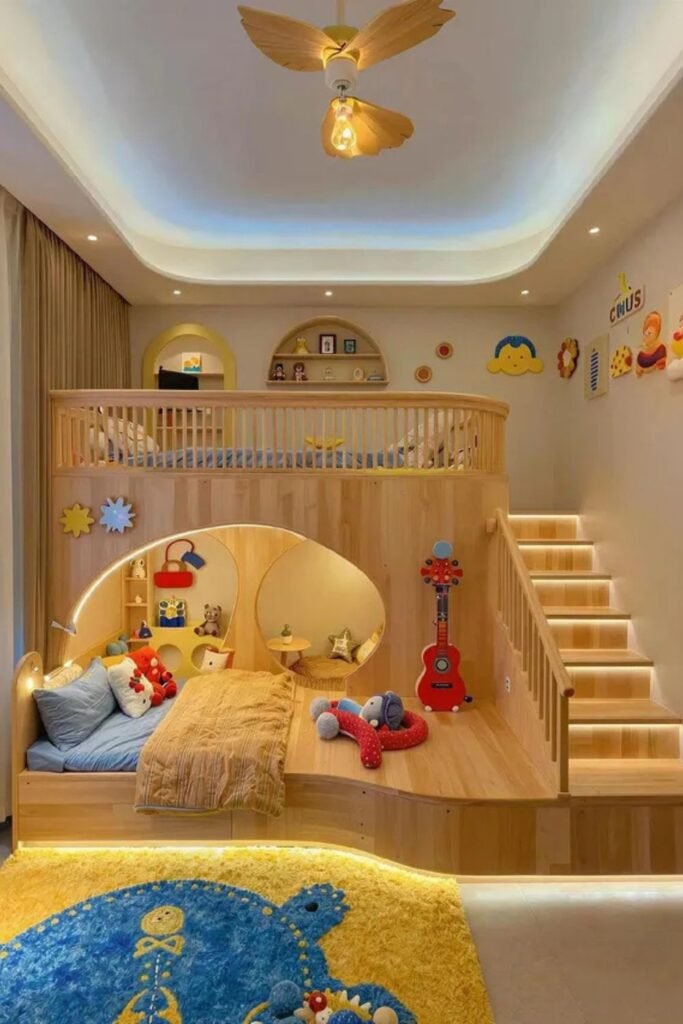
Energy changes when a room has height to explore. A raised loft like this instantly turns sleeping space into an adventure zone without adding clutter.
The upper level becomes a nice place to sleep, and the lower level can be a reading nook, play area, or silent retreat.
This plan works best for small bedrooms since it builds up instead than out.
Everything is safe and useful thanks to the strong wood framing, solid rails, and wide stairs with lights.
Cut out circular holes or arches on the bottom to make the structure feel softer and more fun instead of heavy.
Pick light wood tones to keep the room open and warm, and you’ll get the same impression. Put shelves inside the lower nook so that toys stay in one place.
Slide Corner
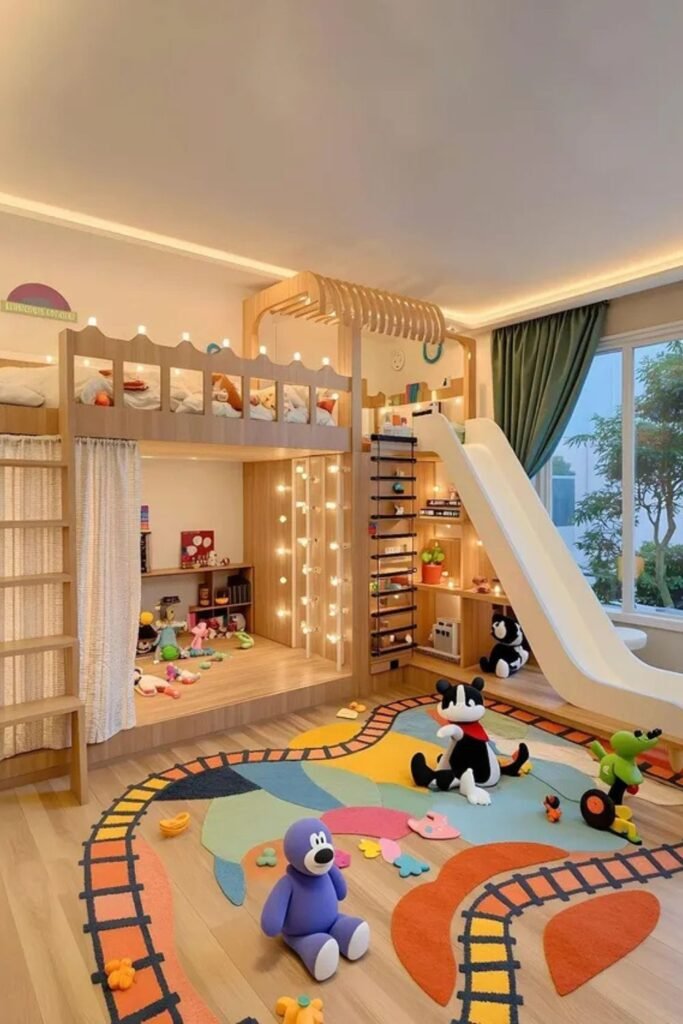
Nothing burns energy faster than a slide inside the bedroom. One climb up, one fast ride down repeat 20 times and you’ve handled half the bedtime wiggles already.
A loft bed works best with a built-in slide. The ladder lets them climb, and the slide lets them go. It makes the sleeping area into a small moving loop.
This is important for floor space. Leave a clean space at the bottom for landing, and put a soft rug or foam pad there to cushion the fall.
Put vertical storage shelves next to the structure so that toys don’t spread out all over the room.
Light wood minimizes the setup from being too big, which is very helpful in compact area.
Climb Walls
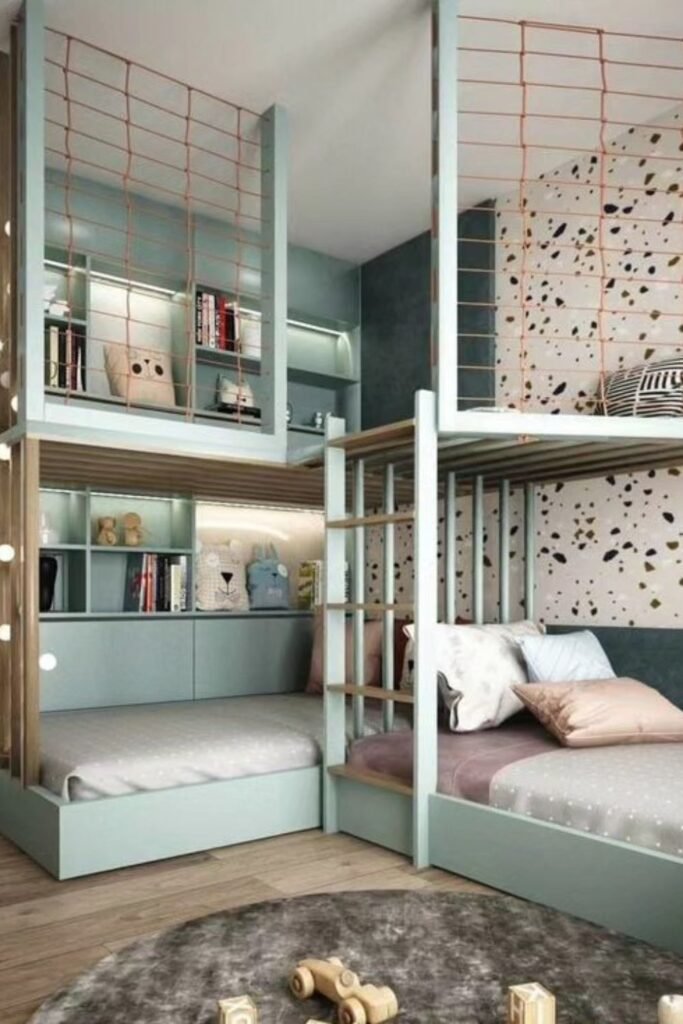
Walls don’t have to stay flat. Add a rope net on one side and a grip wall on the other, and suddenly the room becomes a vertical playground without touching your floor space.
Climbing quickly improves strength, especially for kids who can’t sit still. A rope net is good for smaller kids since it feels softer and less scary.
Older youngsters who desire a challenge will like rock grips. Always attach everything to wall studs and provide room underneath for a thick play mat.
This layout works great with loft beds because the climb is part of getting to the top level.
The built-in shelves below keep the bottom area quiet, so the room doesn’t feel like it’s in a mess.
Hidden Cubes
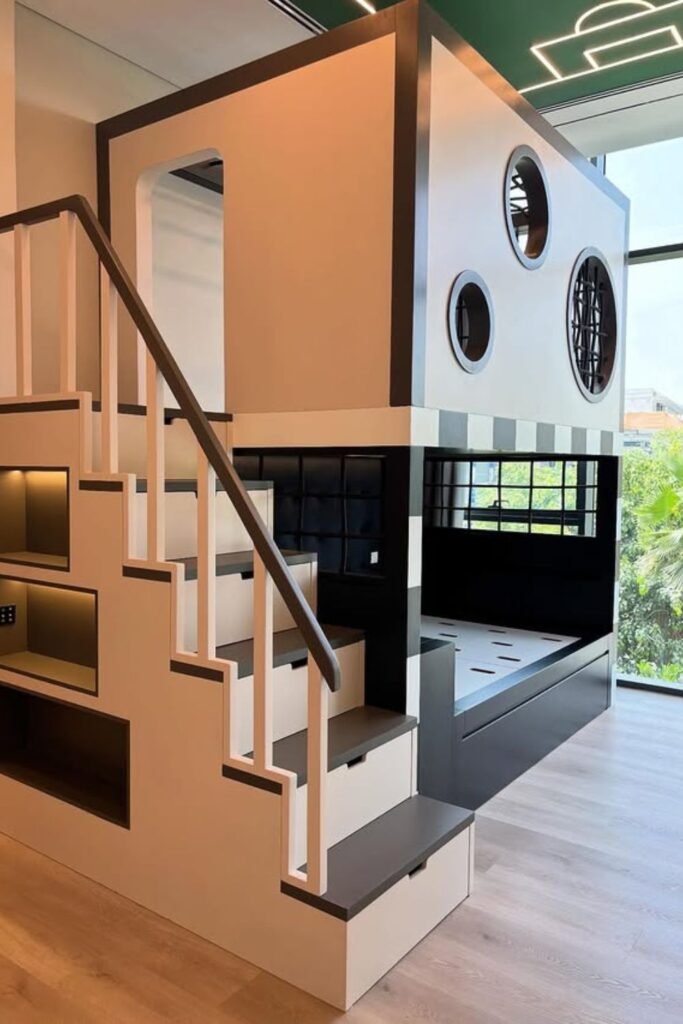
Curiosity grows when a room has secret corners to explore. A loft structure like this does more than lift the bed it creates levels, windows, and tucked-away spaces.
They make you want to move and use your creativity at the same time.
Wide steps with built-in drawers make every step a place to store things, which keeps the floor open play.
The upper floor feels more like a clubhouse than just a place to sleep because of the little round windows and open openings.
Kids climb up, look through, crawl across, then come back down without even realizing they’re moving around.
This style works well in small rooms because everything is in one sturdy unit. Here, solid framework and safe railings are important.
Gym Frame
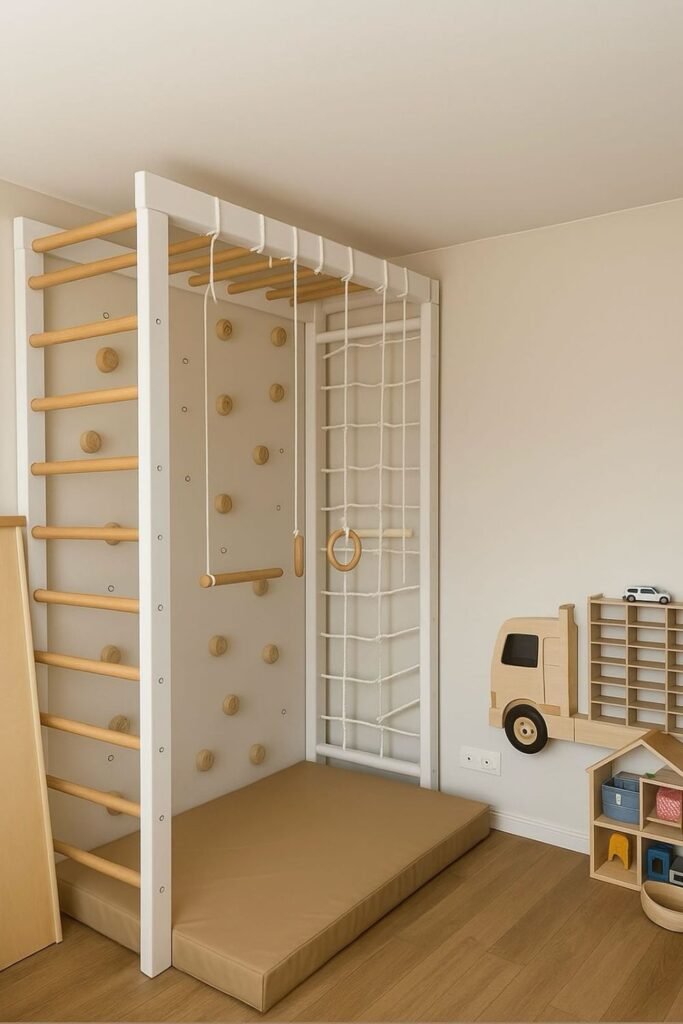
Energy has direction when you give kids a proper climbing station. A compact gym frame like this brings ladder bars, climbing grips, rope net, and hanging rings into one corner.
Where you put it matters. Pick a wall that isn’t already full with beds or desks so the structure doesn’t compete with them.
There must be thick crash pads underneath.
Wood finishes keep it peaceful and mix in well with neutral surroundings, which is great if you don’t want the room to “playground.”
You don’t need a big bedroom for this. One clear corner is all you need. Make sure it is properly fastened to the wall, check the weight limitations.
And give enough space on the sides for comfortable swinging.
The lower bars and wall grips are for younger youngsters. The older ones will try to go through the rope and rings.
Ring Ropes
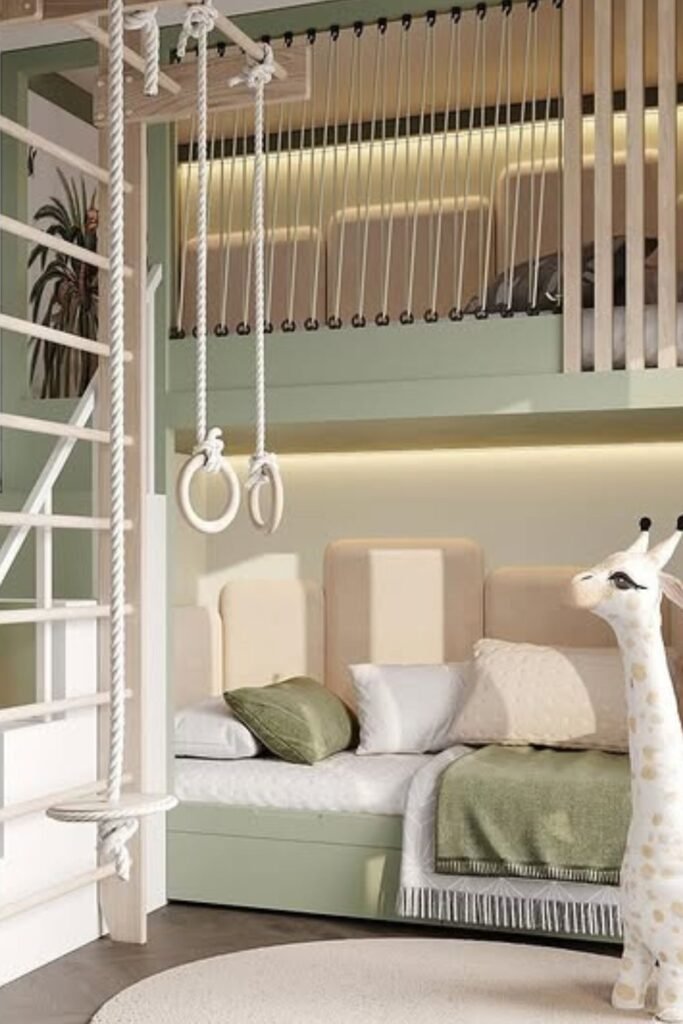
Upper body strength builds fast when kids can hang, swing, and pull themselves up.
Hanging gym rings beside a loft bed turn a simple sleep setup into a movement station.
In this case, strong ceiling beams or reinforced loft framing are quite important.
Rings should be low enough to be safe to reach yet high enough to let you extend all way out.
Leave some open space on the floor below and put a round rug or padded mat down to make landings softer.
Putting ropes and a ladder together makes a natural movement loop: climb up, hang, swing down, and do it again.
That kind of repetition uses up energy in a targeted way. Wall murals in a jungle design or earthy colors make the room seem fun without making it look untidy.
Ceiling Course
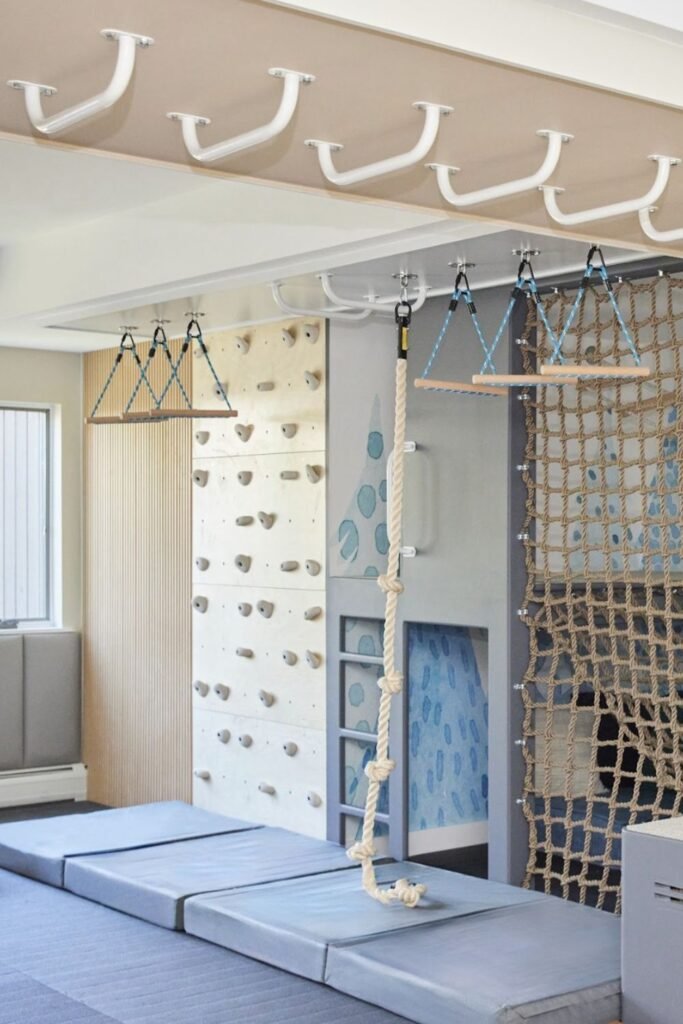
Overhead movement changes everything. Monkey bars fixed to the ceiling beam create a full obstacle path without stealing wall or floor space.
Kids may move hand-over-hand across the beam thanks to grip bars, which really work their arms.
The area turns into a tiny ninja circuit when you add hanging balance planks, a knotted rope, and a side climbing wall.
Thick foldable gym mats on the floor protect falls and make it easy to clean up. Placement is important. Don’t put it in drywall; put it directly into structural beams.
Make sure the route is clear below so that there is no furniture in the fall zone.
When several features share the same wall, neutral colors help the setup not take over room.
Ninja Nook
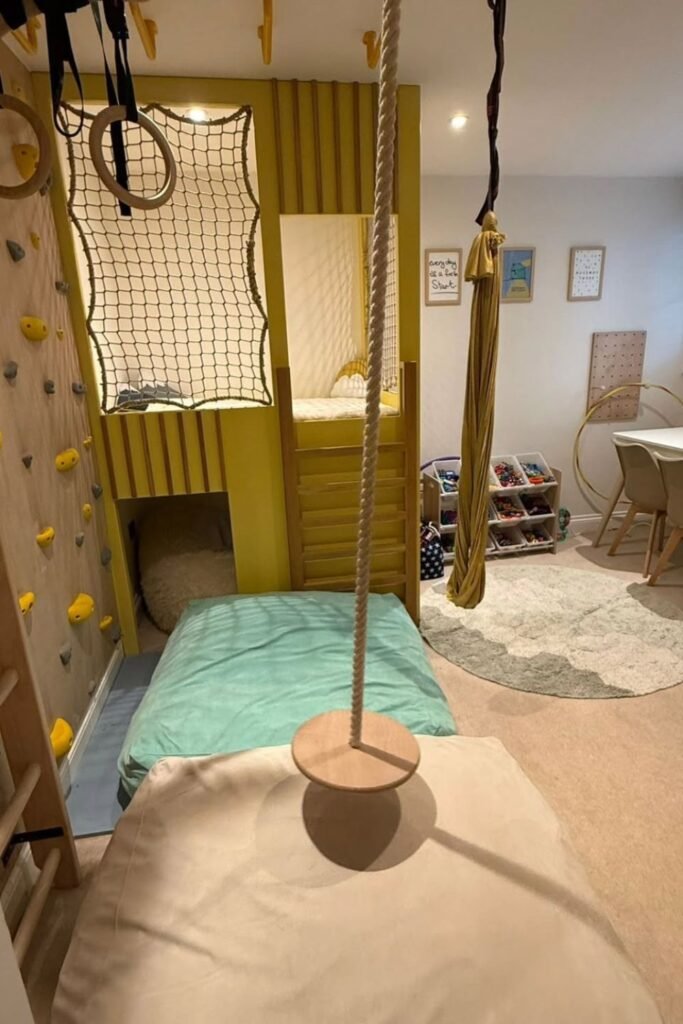
Wild energy needs a challenge, not a lecture. A compact climbing wall paired with gym rings, a rope net and a hanging swing turns one side of the room into a full zone.
Vertical panels with climbing grips help you get stronger without taking up too much space. Put a large crash mat underneath so that falls are safe.
Rings and a rope hanging from the ceiling work the upper body, while a small loft cubby above gives you something to climb toward.
When the game is over, that higher refuge can also be a quiet place to relax. Keep the study desk on the other side so that you can focus and move around.
Wall-mounted toy bins keep the activity zone from getting messy. Ceiling anchors should never go into drywall; they should only go into solid joists.
Tube Slide
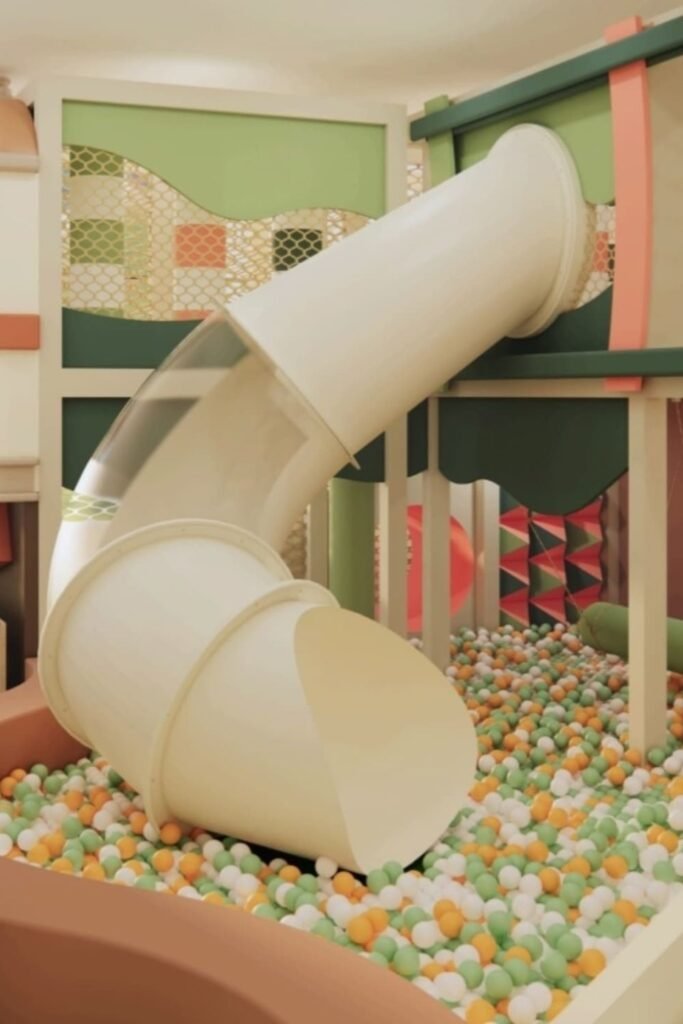
Speed changes the whole mood of a room. A closed tube slide attached to a raised platform creates excitement without chaos spreading everywhere.
Ball pits under the floor make landings softer and enhance sensory play at the same time. That mix is great for smaller kids.
Who like to move about but still need a soft place to play. Raised structures keep everything in one area, so toys don’t spread all over the floor.
Placement is important. Make sure the exit location stays free and put the slide securely into a robust loft structure.
Deep side panels around the ball pit stop balls from rolling all over the room. Using neutral or soft hues keeps the setting from looking too busy.
Vertical Maze
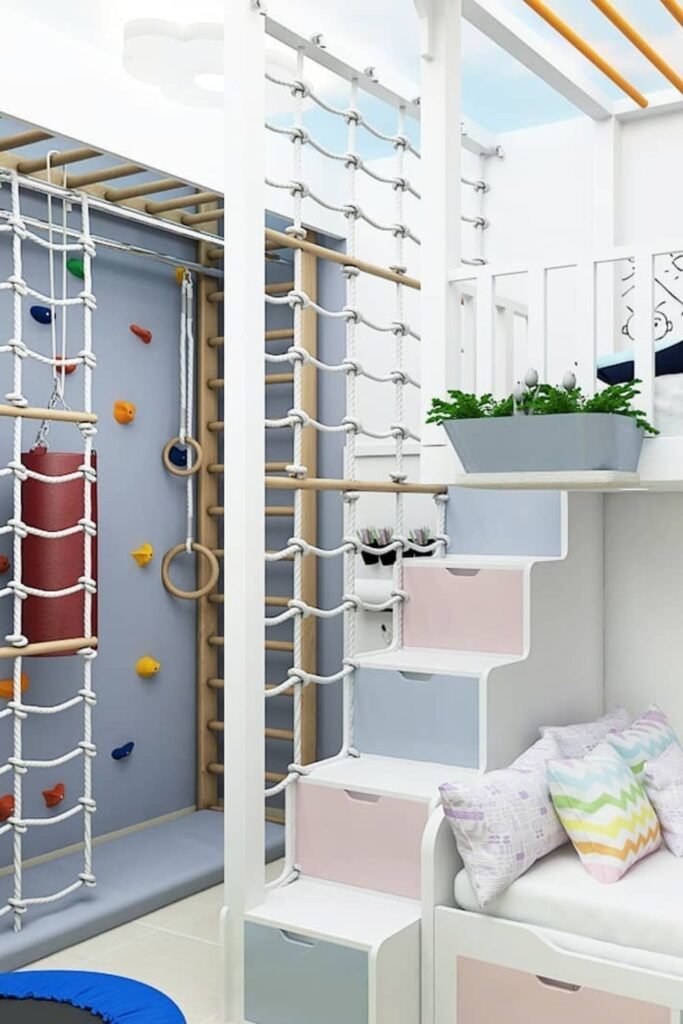
Sideways climbing feels different from straight-up ladders.
Rope nets wrapped around a loft frame create a full body challenge that keeps kids engaged longer than simple wall.
Here, movement flows in layers. Get to the top platform by climbing the rope, grabbing the rings and stepping onto the wooden bars.
The built-in stairs with drawers serve as storage, keeping the room tidy while still being used. Soft wall padding behind the climbing area keeps youngsters and paint safe.
Placing it in a corner is excellent since you can secure the structure to two walls. If the ceiling is high enough, leave some space on the floor for a mat or tiny trampoline.
This kind of structured vertical play makes one part of the room into a tiny adventure park without taking over the rest of the bedroom.
Net Canopy
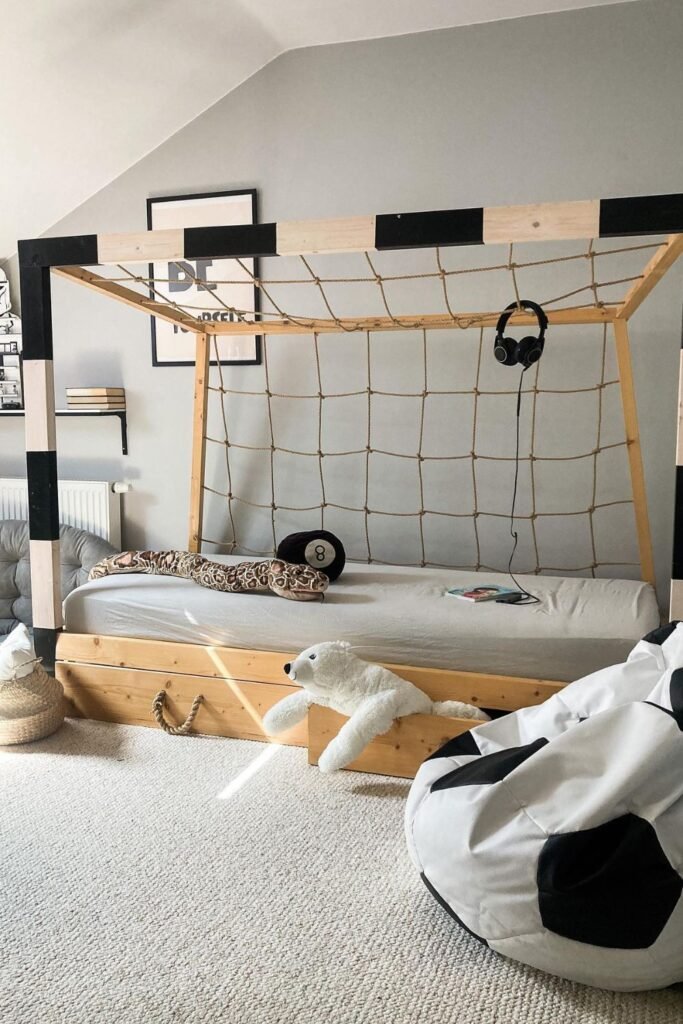
Beds don’t have to sit quietly in a corner. Add a rope canopy above the mattress and you turn sleeping space into a climb-and-lounge zone without expanding the room.
This kind of low frame works effectively in rooms with sloped ceilings where loft beds won’t fit.
During the day, kids can climb on the rope net from the side, lie down on it, or use it as a hammock to relax.
That movement above your head feels exciting, yet it stays inside one building. The frame must be made of solid wood.
Before letting larger kids climb up make sure the net is properly anchored so it doesn’t sag too low.
Ninja Track
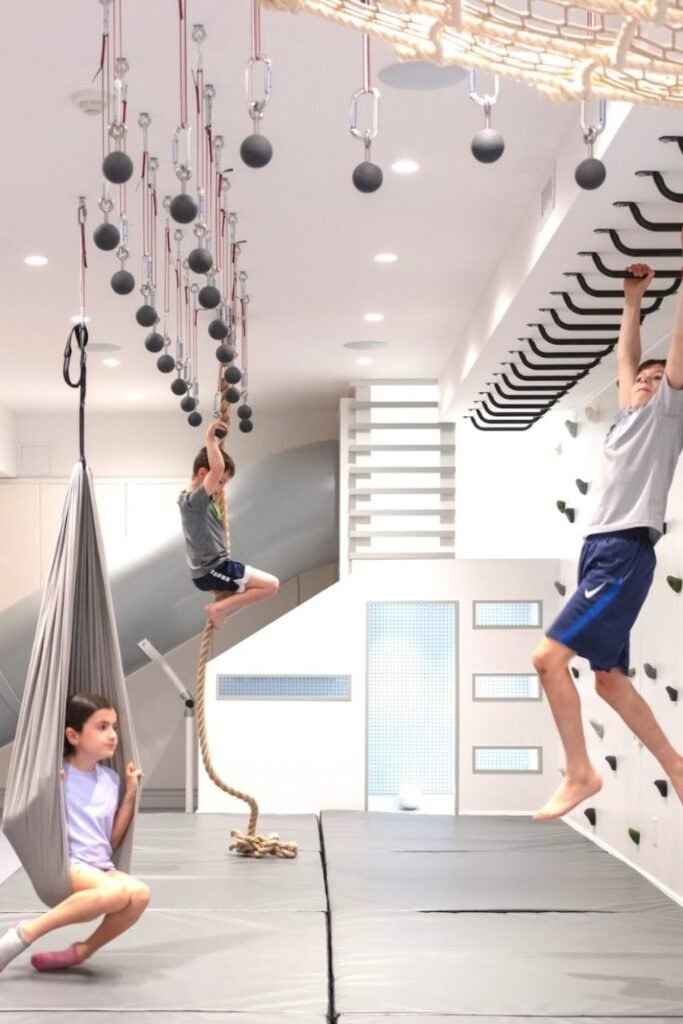
Serious energy calls for a serious setup. Overhead monkey bars running across the ceiling create a full travel path that challenges grip strength and coordination every single time.
You now have a safe indoor training area if you add a climbing wall on one side and a thick crash mat that covers the whole floor.
Rope and hanging balls make things harder without taking up space on the walls. There is a relaxing choice in the corner: a cocoon swing.
It is almost necessary to have high ceilings here. Not simply drywall, but every anchor point must go straight into structural beams.
There should be no furniture under the whole landing area. This works best in basements or bigger extra rooms because they have more room.
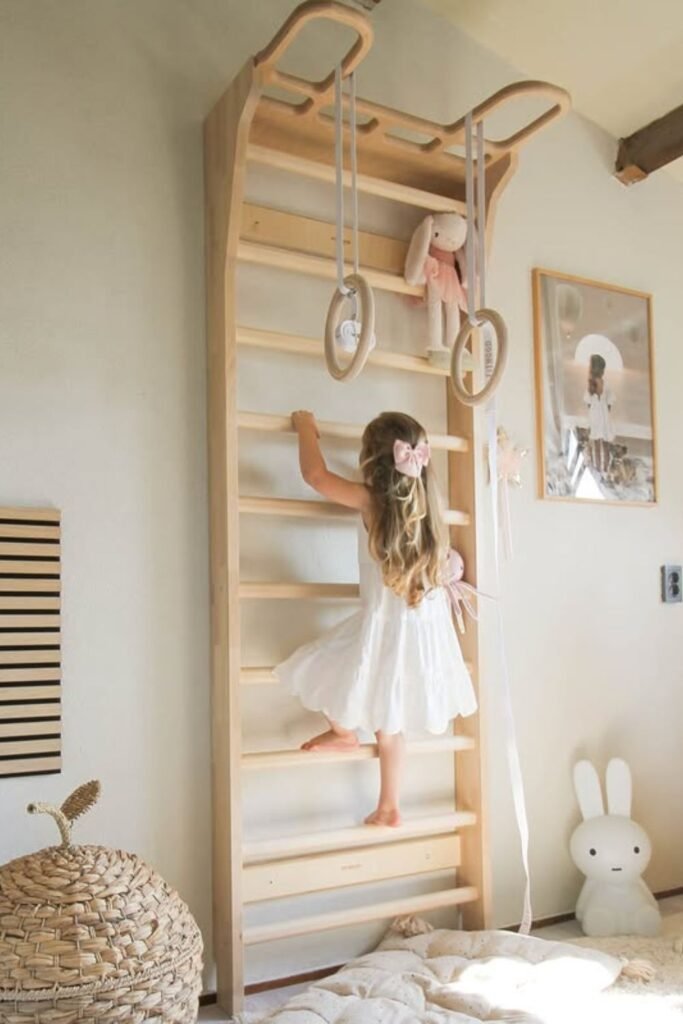
Wall Bars
Simple design often works best. Wooden wall bars give kids a place to climb, stretch, and hang without turning the whole room into a playground.
This configuration doesn’t take up much floor space because it is mounted straight into studs. As your youngster gets older, add gym rings to make it harder.
Younger youngsters will climb up halfway and then come back down. Older kids will hang, pull up, and test how strong their hold is.
Putting it next to an open wall keeps movement in check. Put a soft mat or thick rug underneath to catch any slips.
If you don’t want bright colors to take over neutral wood works well in peaceful bedrooms.
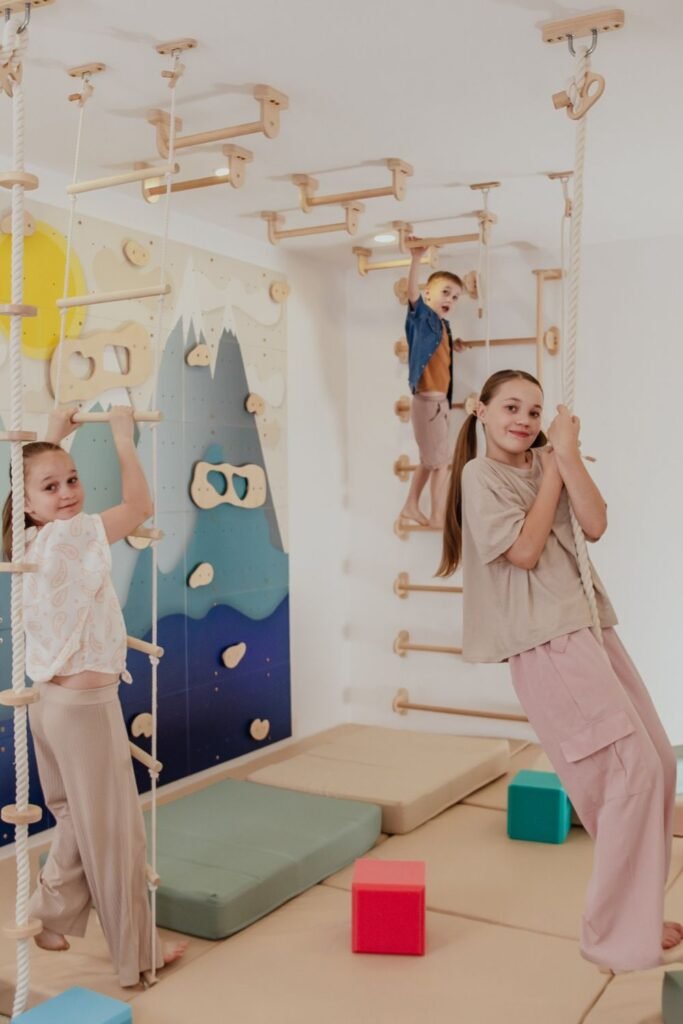
Play Circuit
Full-body movement feels natural when the room connects climbing, hanging, and stepping into one smooth flow.
Ceiling bars, wall grips, rope ladders, and soft landing pads make a full indoor circuit without any random mess.
Grip grips on the wall make you stronger. Overhead bars help you learn how to coordinate. Thick floor mats save everyone from falling.
Even little foam blocks can make it harder to balance and play like an obstacle course. The movement keeps going because one part leads to the next.
This works best in rooms with strong ceiling support. Every anchor needs to be attached to structural beams.
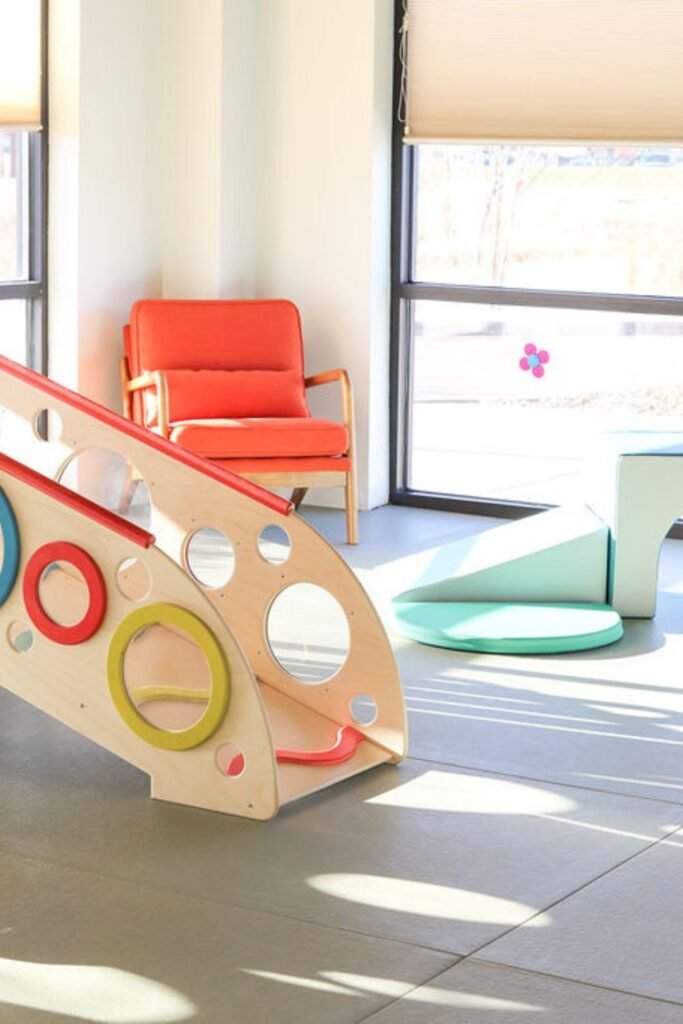
Soft Climb
Gentle slopes feel safer for little legs. A low climbing ramp with wide steps and side cutouts gives toddlers a way to practice balance without the risk of tall heights.
There are wide, round holes on the sides that can be used as hand grips. Rounded edges keep sharp bumps from happening.
Put soft foam blocks next to the ramp so that kids can keep playing even after they slide down.
This layout is great for smaller kids who are just learning how to coordinate because everything stays close to the ground.
The bright but simple colors make it fun without making the room too busy. Putting it near natural light works good because it makes it easier to see, which makes it safer.
Play Tower
Adventure feels bigger when one structure does everything. A central play tower with a rope ladder, overhead bars, swing seat, and side slide creates nonstop movement.
Use the rope ladder to climb up cross the monkey bars and then the slide down the side. That loop keeps kids busy longer since one thing leads to another.
A round platform swing nearby helps with balance and coordination without taking up more floor space.
It is important to have strong wall brackets and ceiling beams. Every piece that hangs must be attached to something strong.
Leave a clear place for landing below and don’t put any furniture in the fall zone.
The design is safe for smaller kids because the edges are smooth and the cutouts rounded.
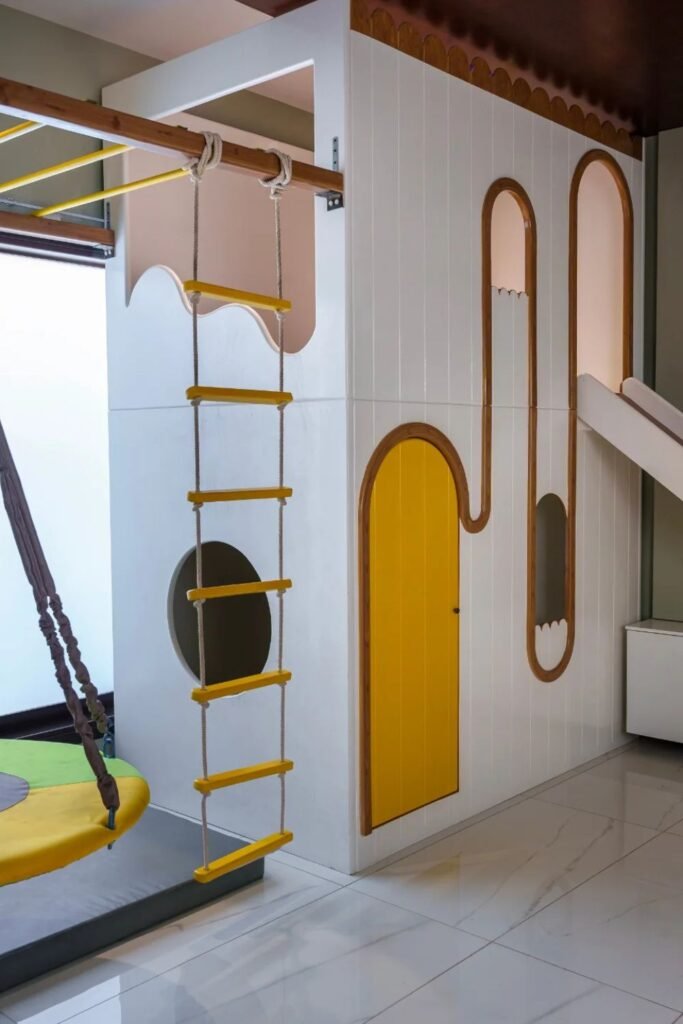
Timber Course
Real wood changes the feel of a play space. Thick timber beams, climbing ramps, and hanging rings create a sturdy setup that grows with your child instead feeling temporary.
Toddlers who are just learning to climb do well on low ramps with block grips. The next difficulty is the loft platform and rope net as they get older.
A smooth slide next to the climbing ramp adds diversity without needing any extra gear. Carpeted floors assist cushion falls, especially in bonus rooms or basements.
Make sure that every beam is attached to wall studs or floor anchors so that the structure stays stable over time.
Make sure there is adequate space between the ramps so that kids may maneuver about without knocking into each other.
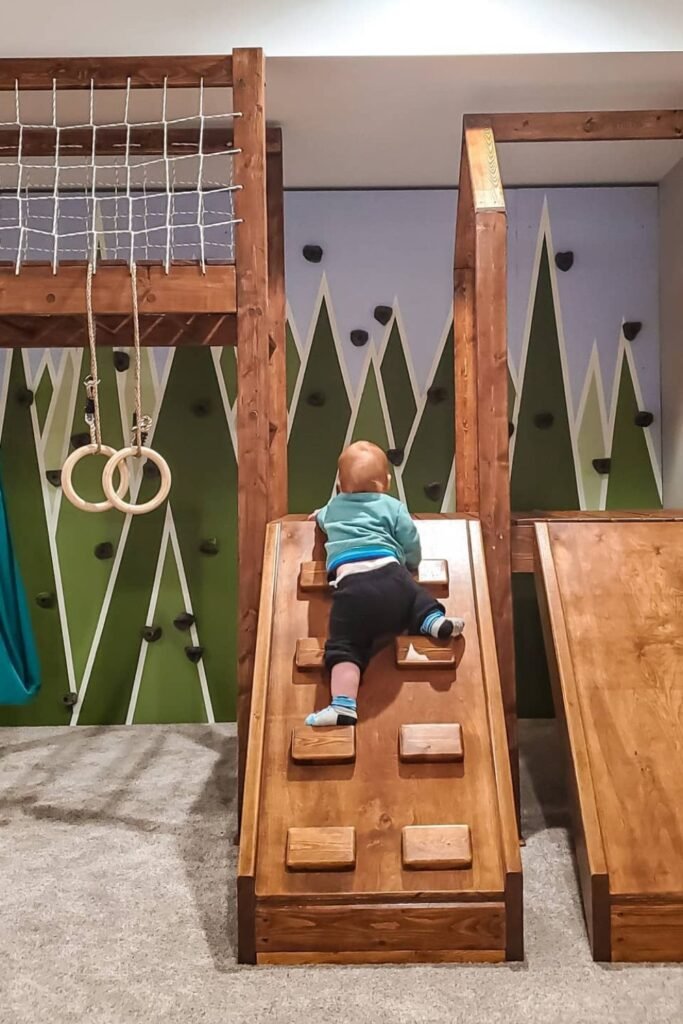
Grip Zone
One empty wall can solve half your energy problems.
Cover it with climbing holds and add ceiling-mounted monkey bars above, and you’ve built a full upper-body station.
The white paneled wall keeps everything clean and light, so even with a lot of grips, the room doesn’t feel crowded.
Overhead bars make a trail across the ceiling, and a rope hanging down makes it harder to go up. A thick carpet or a big area rug underneath will help cushion tiny falls.
Placement works well along a long wall with an open space in front of it. Don’t put desks and tables in the fall zone.
Directly anchor bars into ceiling joists and make sure every climbing hold is secure in studs.
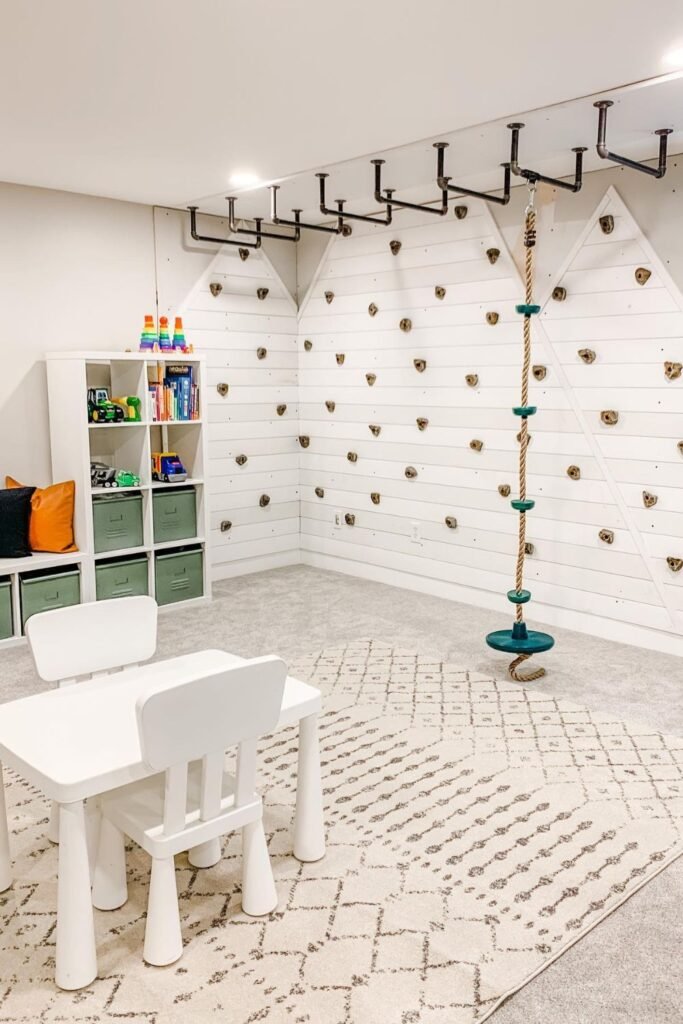
Color Gym
Energy feels bigger when the space looks playful. Bright wall bars, rope nets, rings, and soft crash pads turn one side of the room into a mini indoor gym sacrificing personality.
The climbing frames that are linked to the wall keep movement in check. Rings that hang on things make you stronger.
A sturdy green crash mat under the knees and elbows keeps them safe. Even a little balance board in the middle makes it easier to coordinate between climbs.
Putting it against one wall leaves the remainder of the room available for reading and storing toys.
Before hanging ropes, make sure that every bar is securely fastened to the studs and that the ceiling anchors are in good shape.
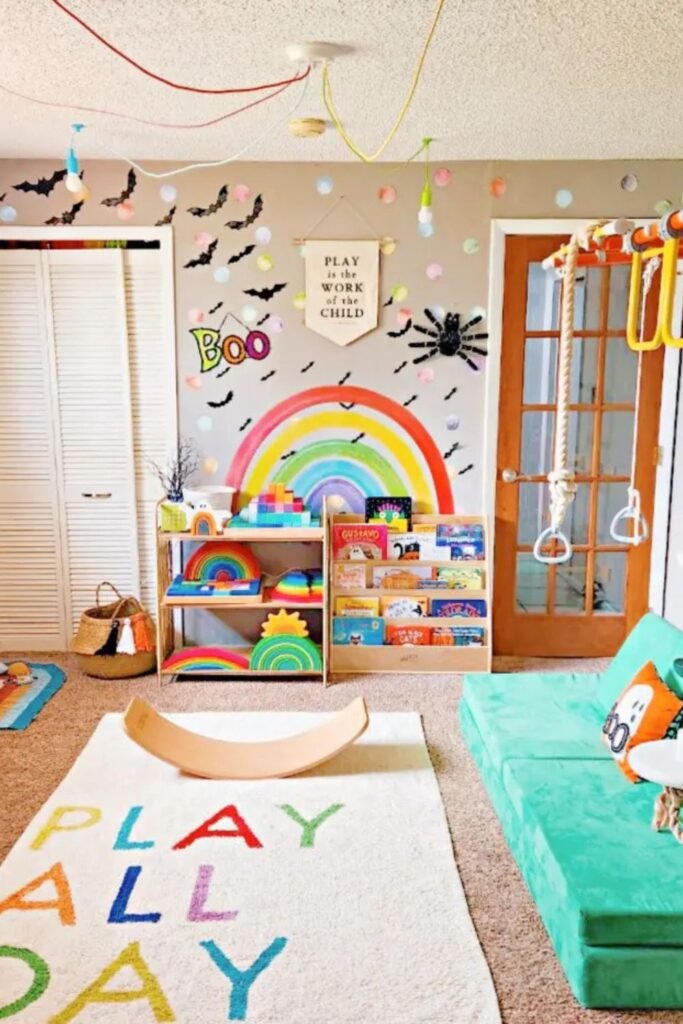
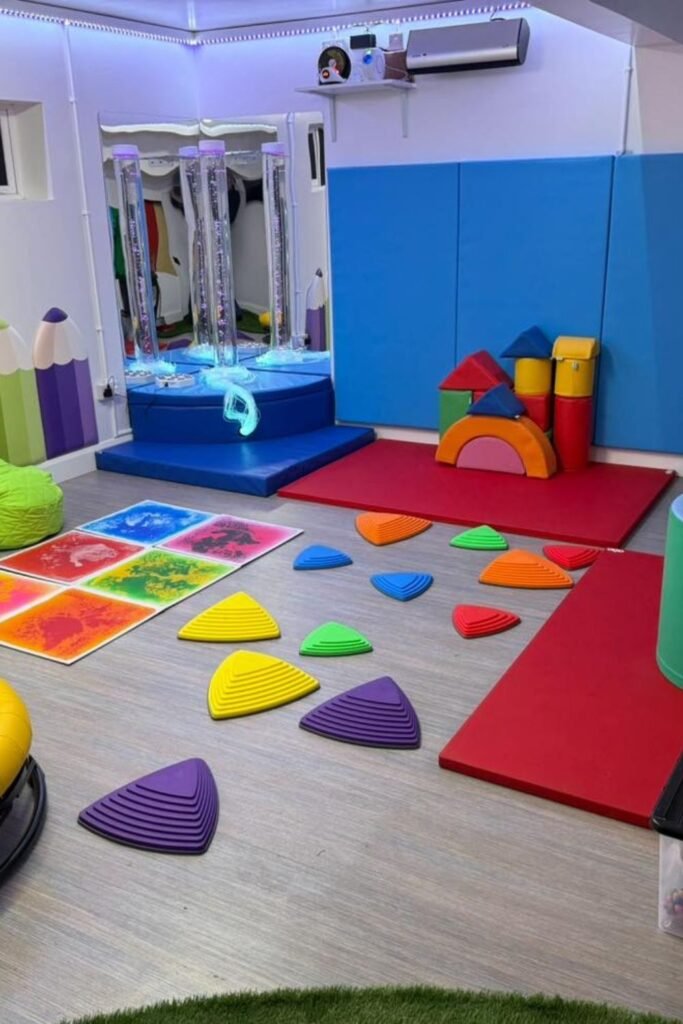
Sensory Room
Calm and movement can exist in the same space. Soft wall padding, foam mats, balance pods, and a mini trampoline create a safe zone.
Where kids may leap, climb, and control their bodies without having to be corrected all the time.
Big, soft panels protect walls from damage. Most of the ground is covered with thick floor mats, so falls don’t hurt.
A little trampoline in one area lets you release energy quickly, and a comfy beanbag in another corner is a quiet place to recover.
Basements or extra rooms are preferable because you can use the whole space for mobility. Keep furnishings to a minimum and stay away from sharp edges.
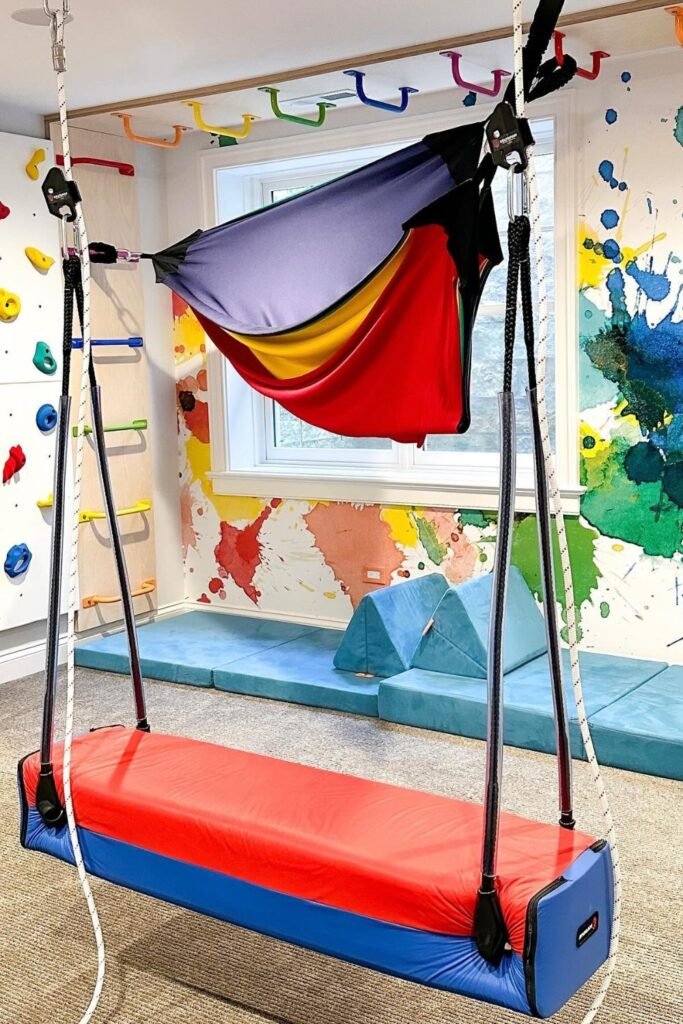
Swing Therapy
Big emotions need big movement. A suspended platform swing paired with wall grips and padded floors turns the room into a safe release zone.
Kids that need deep pressure and movement will love platform swings since they can sit, kneel, or even lie down on them.
Colorful grip bars on ceiling tracks make a trail across the room that you can walk on with your hands.
Soft blue wall pads keep you from being hurt, while foam wedges make climbing more interesting.
You can’t get around strong ceiling anchors. Every hook has to go straight into a joist. Make sure nothing gets in the way of the swing’s arc.
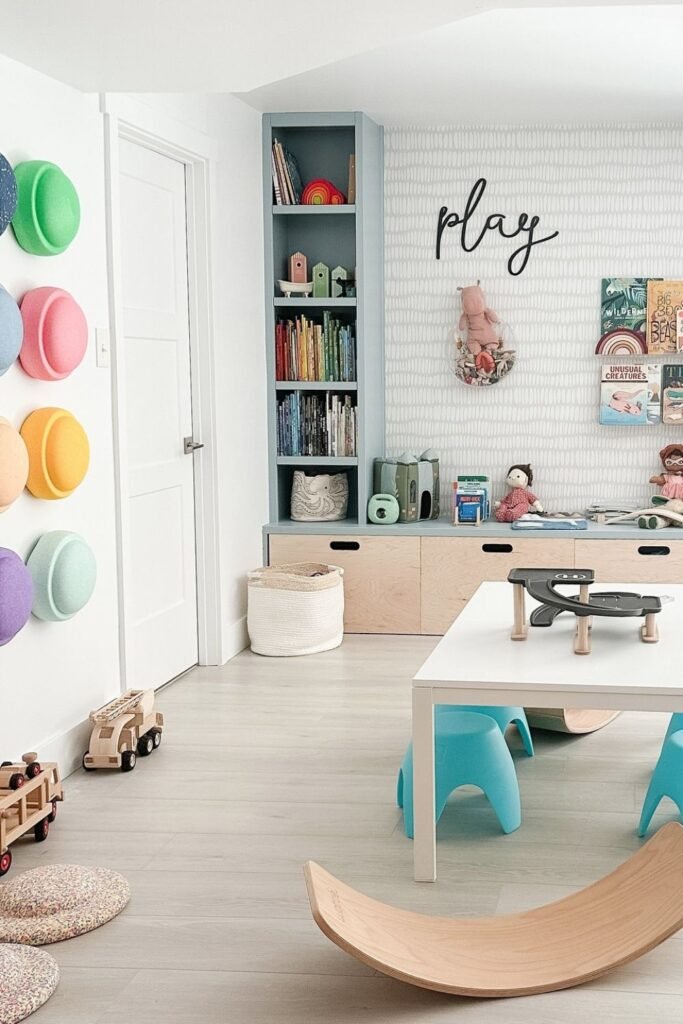
Balance Wall
Movement doesn’t always need height. Mounting soft, rounded wall grips at floor level gives younger kids a way to practice stepping, reaching, and balancing climbing high.
A plain surface becomes a coordination game with colorful domes spaced out across one wall.
Kids can travel from one grasp to the next or make their own stepping patterns.
Add a wooden balance board to the floor to make it rock gently, which will help strengthen your core muscles.
Putting it near an open wall keeps the rest of the room tranquil and good for reading or playing at the table.
Make sure each hold is securely attached to the studs and leave enough space between them for small hands to easily grip.
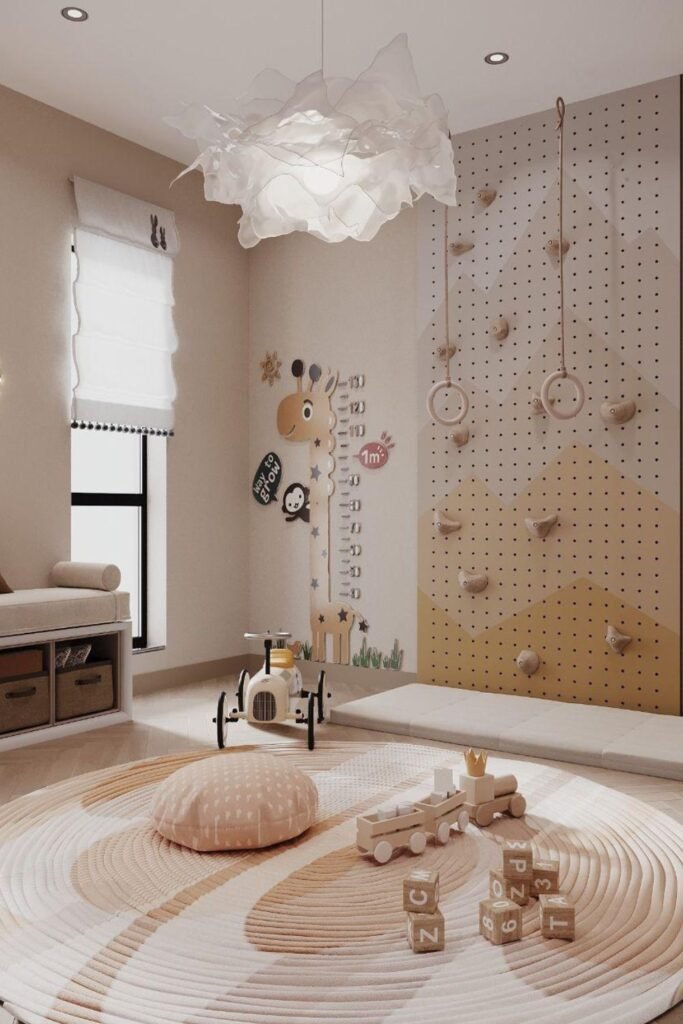
Neutral Climb
Calm colors can still support big movement. A pegboard-style climbing wall with wooden holds keeps the room soft and minimal while giving kids a real challenge.
Wall-mounted rings let you work out your upper body without needing a lot of other equipment.
A rope ladder on the side makes a second way to climb, so kids don’t get bored with the same one.
Thick floor padding underneath blends in with the design and keeps people from slipping.
Putting it on one wall keeps the rest of the room quiet for reading or playing quietly.
Before putting on holds, make sure the pegboard panel is securely attached to the studs.
Loft Slide
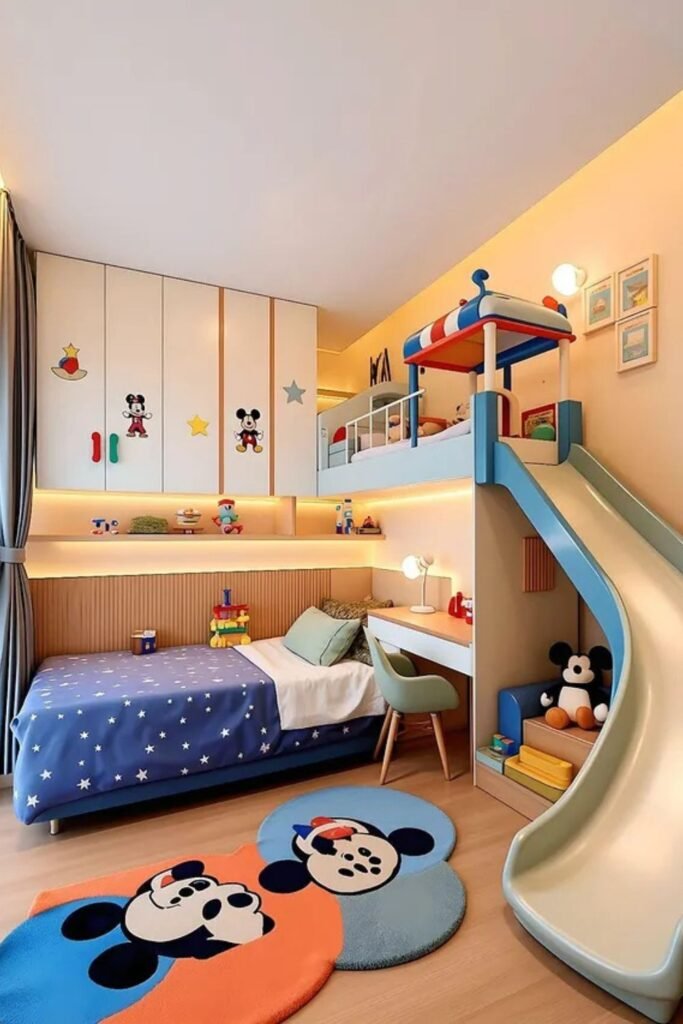
Morning energy doesn’t have to turn into chaos. A loft bed with a built-in slide gives kids a fun exit from the top bunk instead of climbing down half-awake.
This layout is great for small bedrooms because the bed, desk, and storage all fit nicely underneath it.
The slide attaches right onto the loft structure, so it doesn’t seem like there is an extra toy in the room. Put a soft rug at the bottom to make landings softer and stop people.
Guardrails around the top bunk are quite vital, especially for younger kids. Measure the height of the ceiling before putting anything up high.
There shouldn’t be any tables, toy boxes, or chairs in the way of the slide. This kind of planned fun makes it simpler to go to bed and get up.
Climb Loft
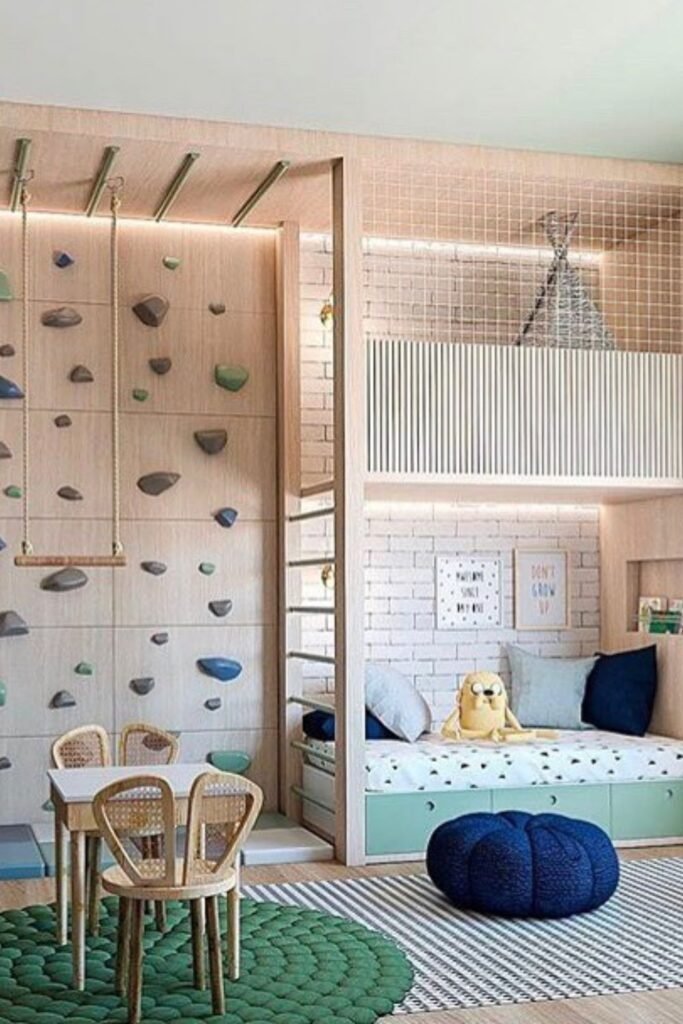
Energy flows better when the bed becomes part of the movement plan. A built-in climbing wall beside a raised sleeping nook turns vertical space into daily exercise.
Rock that is fixed straight into a solid panel makes a clear way up. Bars on the ceiling make the workout harder, and gym rings provide work for the upper body.
A soft landing mat at the bottom makes the arrangement safe. A comfy reading bench under the loft makes the dynamic area and the quiet area work together.
Putting it along one whole wall leaves the remainder of the room available for a small table or floor play.
Make sure that every hold is securely fastened to the studs, and inspect the ceiling anchors thoroughly.
FAQs
Is it safe to install climbing features in a child’s bedroom?
It’s not just what you install that matters for safety; it’s also how you do it. Never only use drywall to hold up a climbing wall, bar, or swing.
They must be anchored directly into the wall studs or ceiling joists. Make sure there is a clear fall zone below and use thick mats or padded floors to lessen the impact.
Pick a height based on how old your child is and how well they can coordinate their movements. Younger kids should keep closer to the ground.
How much space do you actually need for an active kids bedroom?
You don’t need a big room; you just need to plan the layout well. You can put climbing grips or wall bars on even one clear wall.
Vertical configurations are great for small bedrooms since they use height instead of floor space.
For safe movement, there should be at least 3 to 4 feet of clear space in front of active elements.

Hi, I’m Afaf! I’m a law student who loves writing about everyday life – from home projects and crafts to fashion, beauty, and parenting tips.
I’ve been writing for over a year, sharing ideas that are simple, practical, and easy to try. I write about things I find interesting and useful, whether that’s organizing a space, trying a new DIY, or finding activities to keep kids entertained.
My goal is to share helpful ideas without making things complicated. If it works in real life, I’ll write about it.
When I’m not studying or writing, I’m usually experimenting with new projects or scrolling for inspiration!