
22 Eclectic Kids Room Ideas for 2026
You like color. Your child loves dinosaurs, space, rainbows, and somehow all of them at once.
You try to get everything together, but all of a sudden the room is loud, dirty, and nothing like the Pinterest pictures you saved.
You’re probably thinking if “eclectic” just means “chaos.” No, it doesn’t. Putting everything in one area doesn’t make an eclectic kids’ bedroom.
This article features 22 Eclectic kids room ideas designed for growing independence. They encourage responsibility without losing personality.
Let’s jump in!
How Do You Mix Colors and Patterns in an Eclectic Kids Bedroom?
Make a plan first. If you don’t do this step and just add things you enjoy, the room will quickly feel random.
Choose three main colors first. One person should be in charge, and the other two should help. If every hue is loud, nothing sticks out.
Next, cut down on the number of designs you use. Pick one prominent design, like wallpaper or bedding, and then add one or two smaller, softer ones.
The room will look busy instead of balanced if you put five loud prints together. Finally, use the same colors in different parts of the room.
Save this article for later!👇👇👇
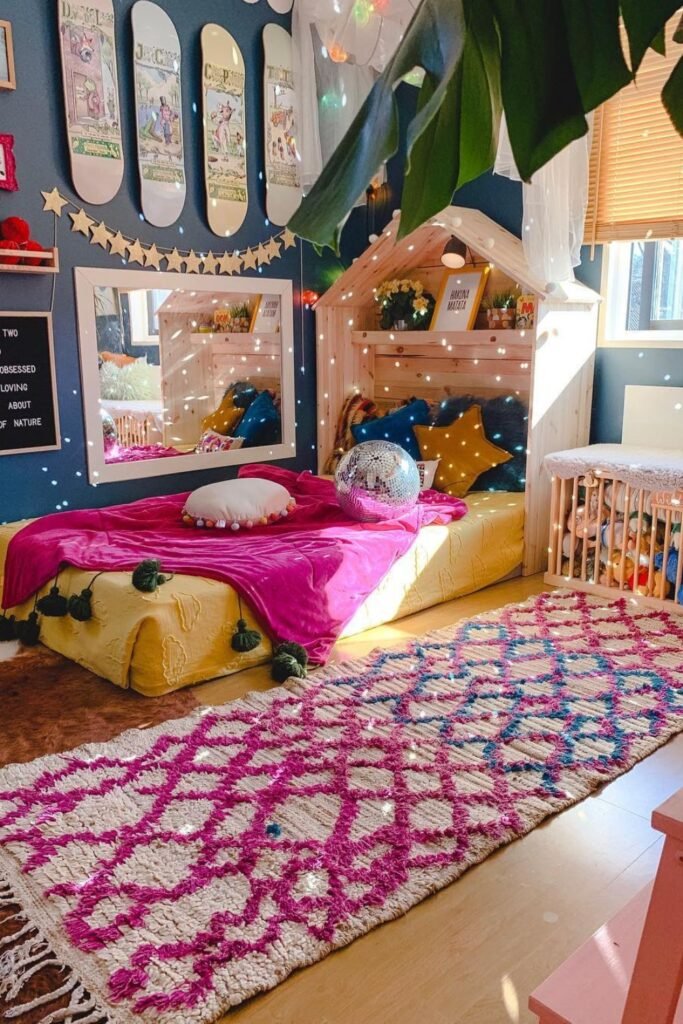
Playhouse Bed
Childhood feels magical inside a tiny wooden house tucked into the corner. Turning a bed into a playhouse instantly gives the room personality without adding clutter.
This simple wooden frame works best against a bright wall color since the wood’s natural color makes everything else look softer.
Want to make it again. Use a neutral base, like bare wood, white, or light oak, and then add bold fabrics on top.
A mustard mattress, a bright pink throw, and star pillows offer color without having to paint the furniture.
Fairy lights or delicate string lights inside the frame make going to bed feel special, not like a chore.
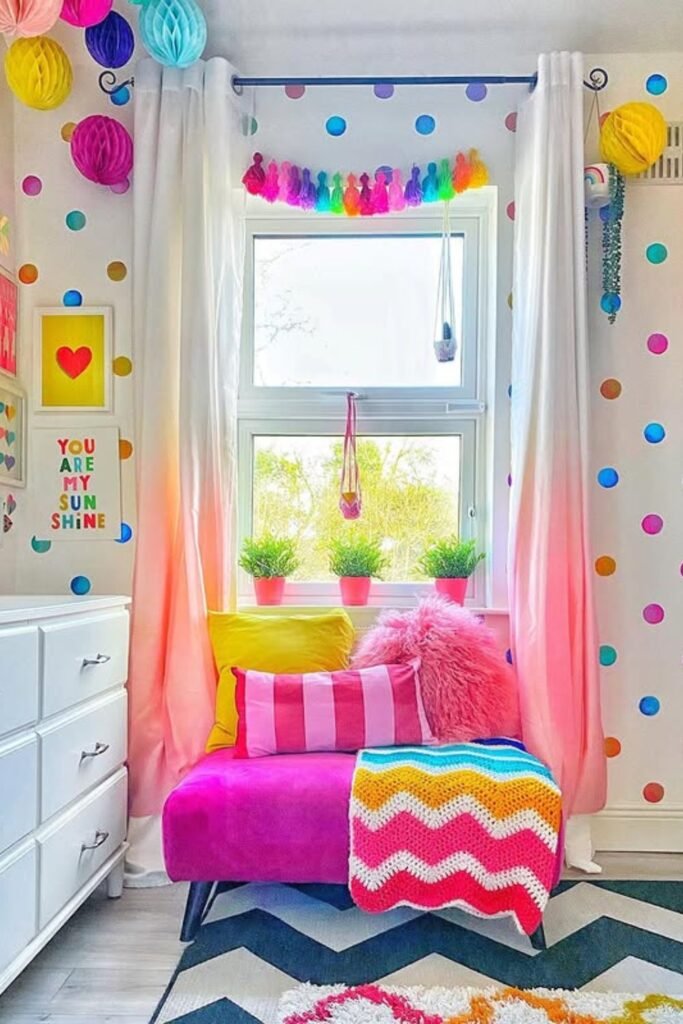
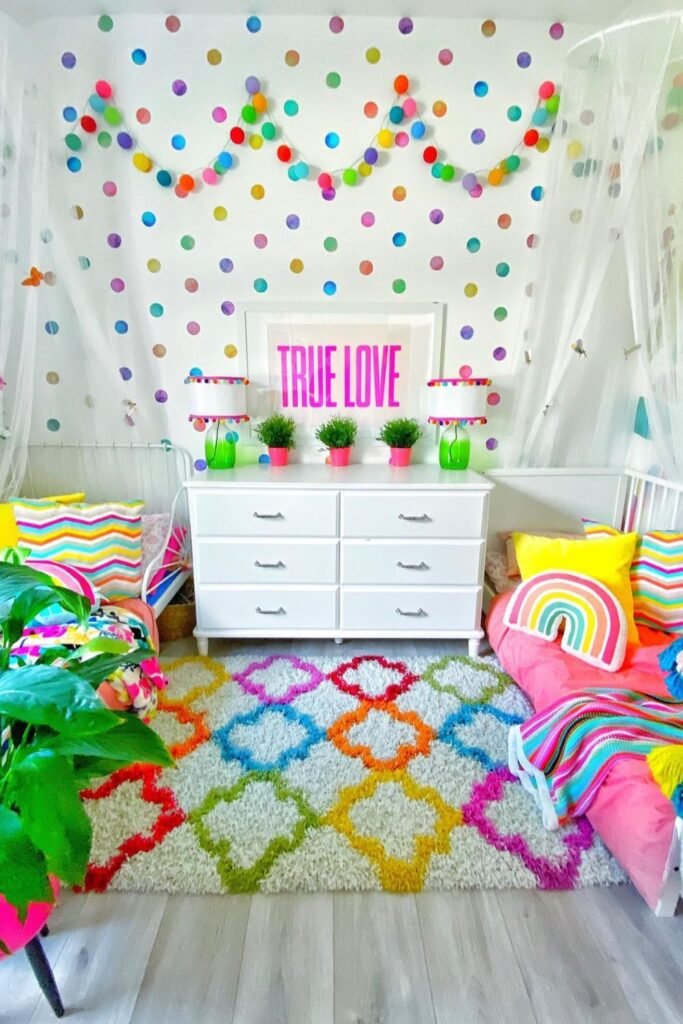
Polka Walls
Color feels fearless here, yet nothing clashes. Dots scattered across the wall let you introduce ten different shades without overwhelming the room.
That’s the trick: tiny forms that recur make bright colors feel more controlled. If you want to be able to change things up, peel-and-stick wall decals are the finest option.
Instead of putting them all in one place, spread them out evenly so that the eye goes around the space naturally.
The pink chair, yellow pillow and rainbow throw look like they were meant to be there because the wall already had those colors.
The room would feel like a mess without that equilibrium. Great for kids who like bright colors but want a place that is yet tranquil enough to read or relax.
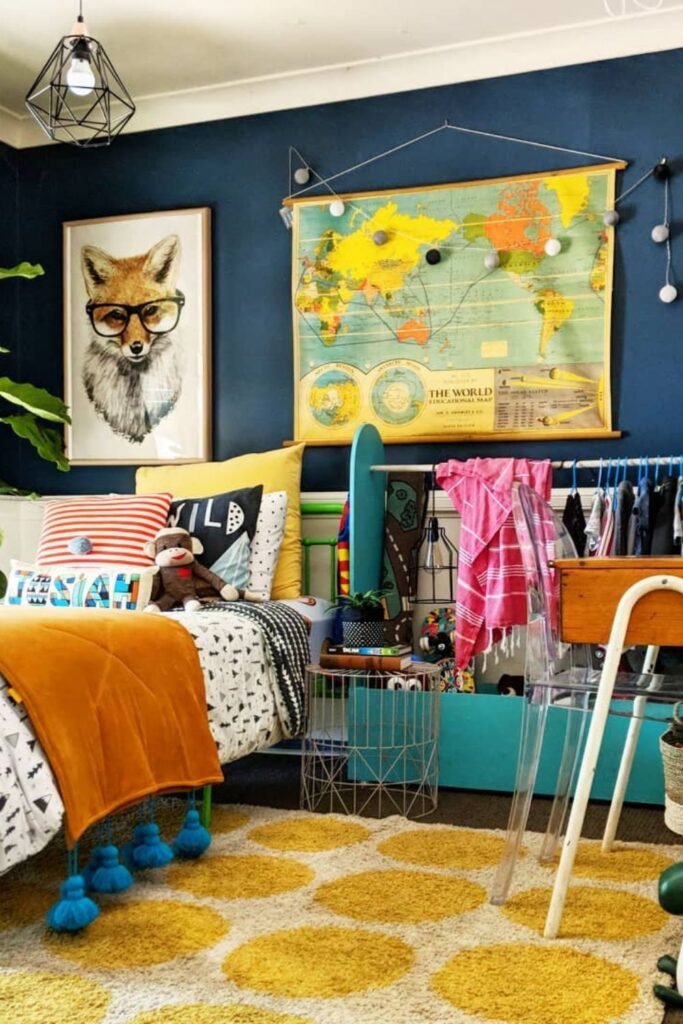
Gallery Focus
Bold navy walls instantly make every thing pop. Dark paint might sound risky in a kids room but it actually helps bright pieces look sharper and more intentional.
See how the yellow map, green bed frame, and mustard throw stand out instead of blending together with the rest of the room?
To make this again, start with one bold color for the wall. Then pick two accent colors that are used throughout the room.
The bed and storage box have green in them. The throw and rug circles have mustard in them. That repetition makes the blend feel less random.
In a small room, big wall art is better than many of little frames. A statement map or large print gives the room a sense of style and personality without making it feel cluttered.
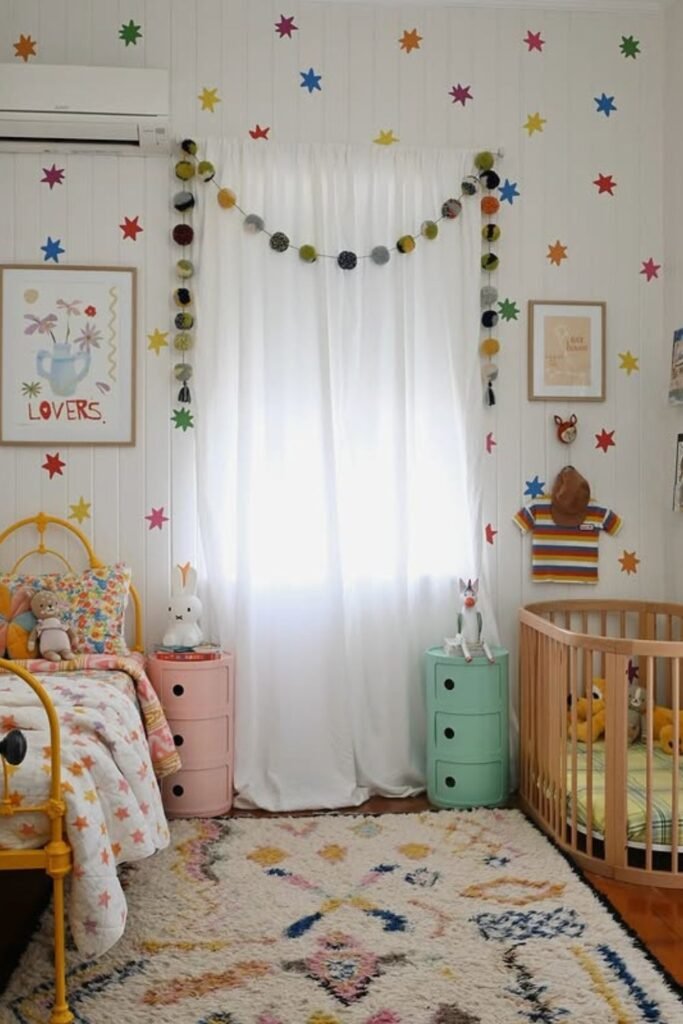
Star Scatter
Plain white walls don’t have to stay boring. Colorful star decals instantly add energy without committing to permanent paint.
Small forms spread out around the room let you add more colors while keeping the background quiet.
Peel-and-stick stars are great for rentals or nurseries where you need to be able to move things around. Put them far enough apart so that the wall doesn’t feel too crowded.
The yellow bed frame and pastel drawers here take colors right from the wall, which makes everything feel like it’s all part of the same thing.
Soft drapes keep the space from feeling cluttered by balancing out the light. Great for little kids who like to have fun but also need a calm place to sleep.
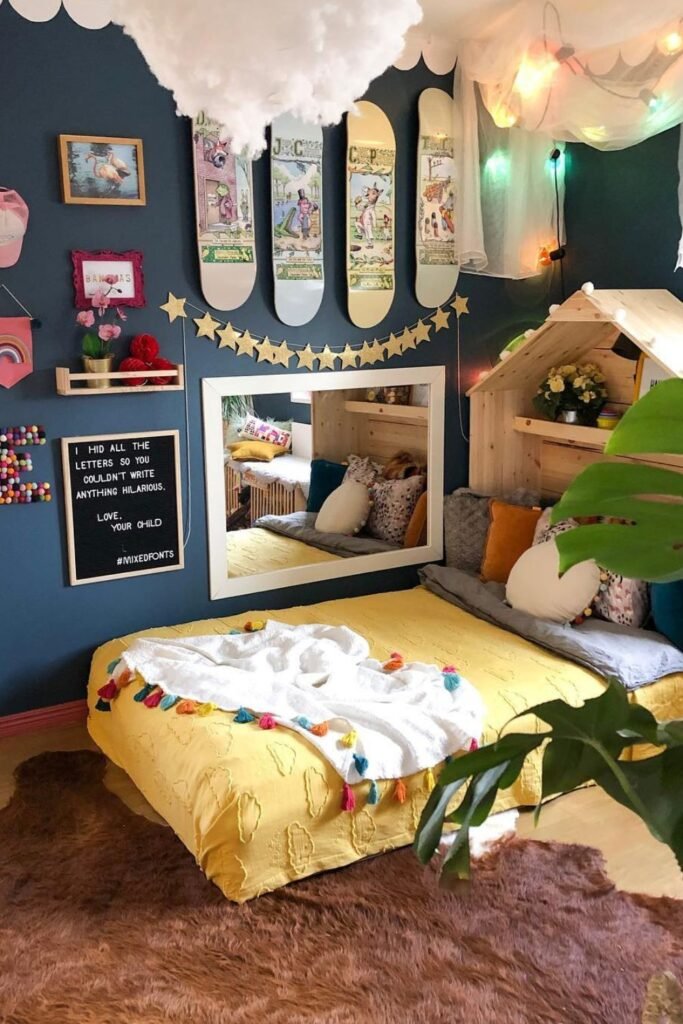
Cloud Ceiling
Bedtime turns magical when the ceiling becomes part of the design.
Hanging soft cloud decor above the sleeping area draws the eye upward and makes the room feel layered.
Not flat. It also looks well with darker wall colors. Deep navy walls can tolerate bold things since they are like a background.
The light wood of the house-frame bed makes everything warmer, and the mustard bedding keeps the room fun.
To get this look, use only one strong wall color and one warm accent color. Instead of adding more colors, add texture with blankets, tassels, or a fake fur rug.
String lights hidden near the canopy make a pleasant light that works for both playtime and bedtime.
Rainbow Layers
Bold doesn’t have to mean messy. Bright dots on the wall, a colorful rug, rainbow pillows, and pom-pom garlands all work here because white furniture.
The room would feel too big very quickly without that tidy base. To get this fun spirit, start from a neutral place.
A plain white dresser and crib offer your eyes a break. Then add color in layers, starting with wall decals, then rugs, and finally fabrics.
That sequence is important. Walls set the mood, rugs keep the room stable, and cushions give it character.
Instead of adding additional random colors, keep using the same rainbow colors. Look at how pink, yellow, and blue look on the wall, the bedding, and the decorations.
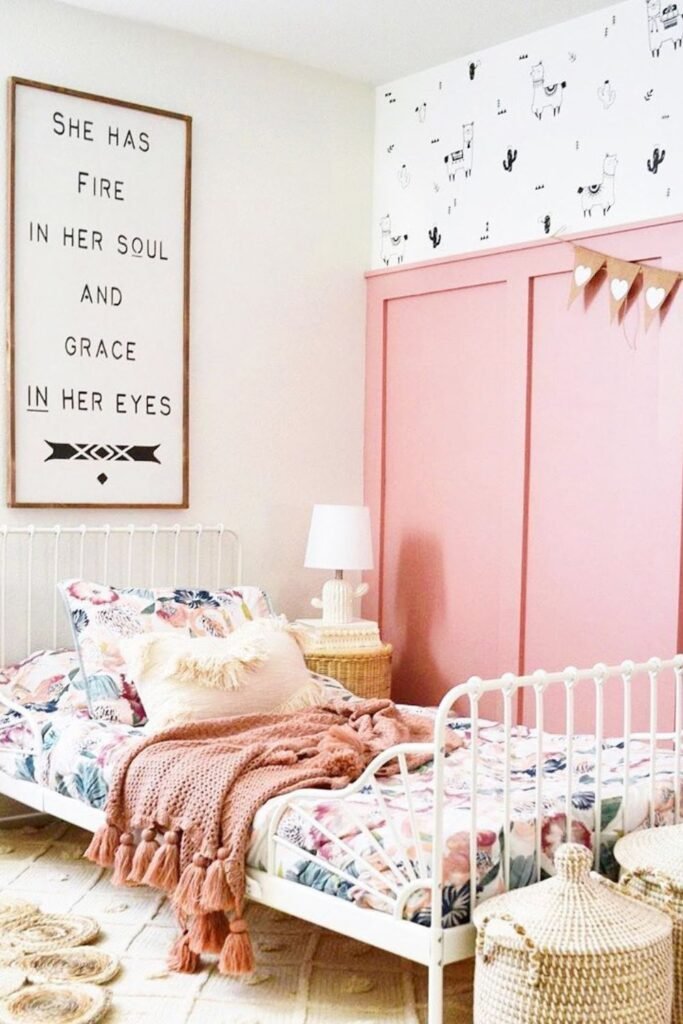
Soft Contrast
Bold pink panels meet delicate black-and-white wallpaper, and somehow it feels calm instead of loud.
That balance happens because one part says something while the others keep soft. Half-painted walls or panel molding in a bright.
Hue can help define a kids’ room without making it feel too busy. To keep the area from feeling weighty, choose a light color and a delicate graphic on the upper wall.
Textured blankets and floral bedding make the room feel warmer, and white metal furniture keeps it light.
If your room is small, try putting the bright color solely behind the bed. It draws the eye and keeps the remainder of the area from feeling crowded.
Color Corners
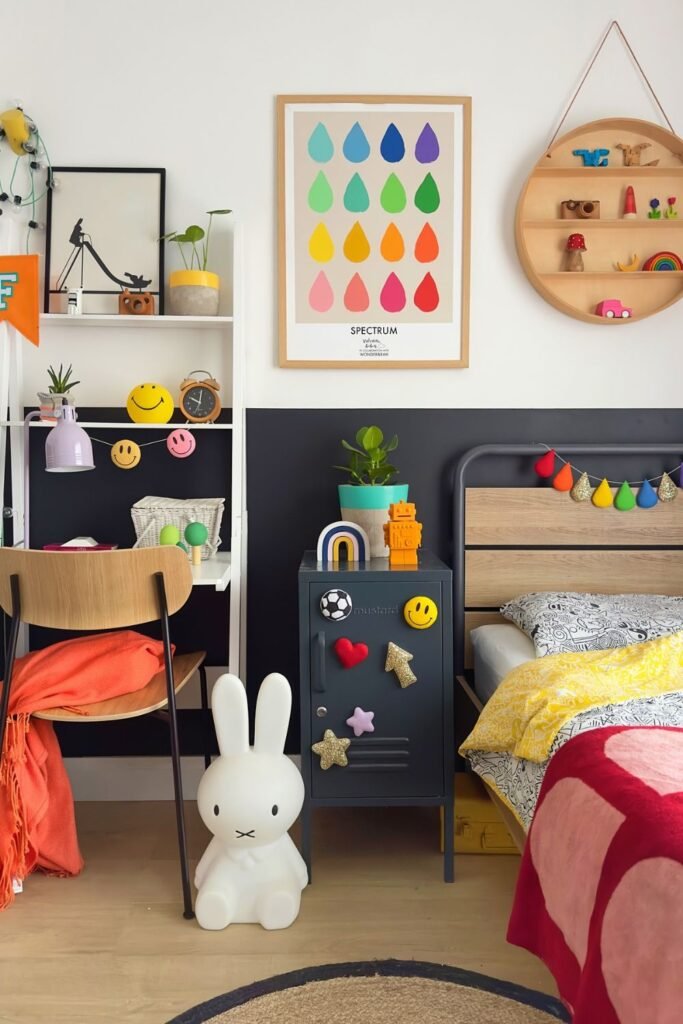
Small spaces can still feel bold when you treat each corner like its own little zone. A simple desk setup, a compact locker, and a bed with a dark headboard.
Make clear spaces without adding more furniture. You may see how color appears in short bursts. The rainbow picture above the bed sets the mood.
The same rainbow motif comes up again with the little decorations and micro garland. Choose one graphic print that has more than one hue if you want this effect.
Let it lead the way for everything else. The dark woodwork behind the bed keeps the bright bedspread from floating.
The light wood shelving and neutral wall help the workspace stay calm and focused. Great for youngsters in school who need a place to learn but also want to have fun.
Garland Drama
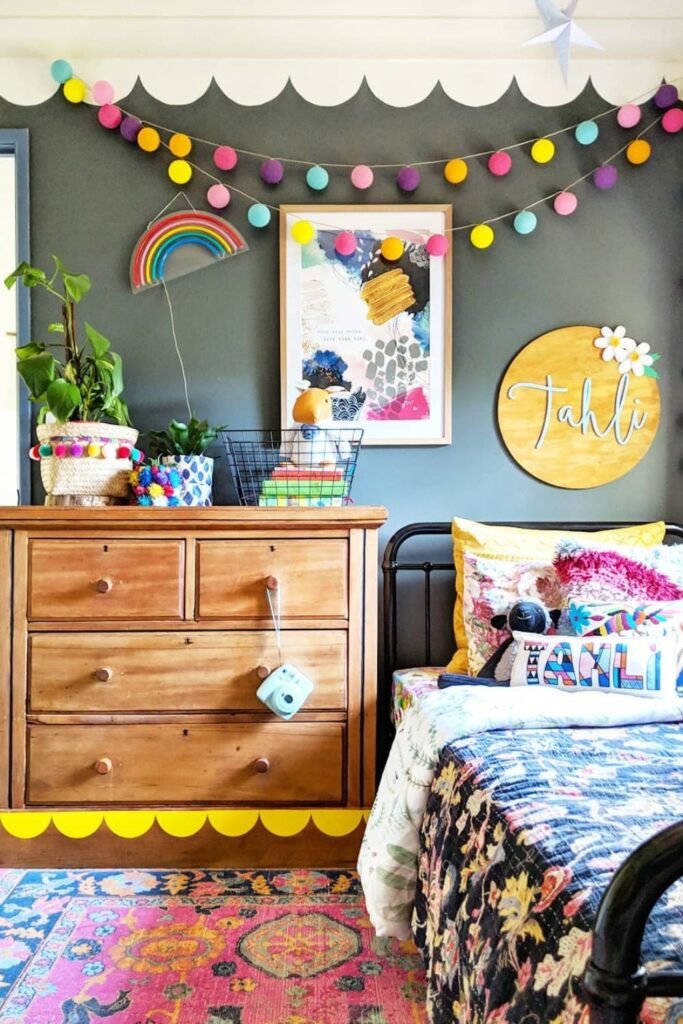
Energy builds fast when color travels across the wall instead of staying in one spot. Layered pom-pom garlands instantly add movement and make a simple dark wall.
Deep green or charcoal paint looks great behind colorful decor because it makes all the colors stand out.
Instead of one straight line, hang garlands at varied heights. That little change gives the room a laid-back, fun feel.
Then use the same colors in pillows, art, or a patterned rug to make the wall feel like it belongs in the room.
You may add depth to your home without buying anything new by mixing aged wood furniture with bright fabrics.
Story Walls
Imagination grows faster when the walls feel like part of the adventure.
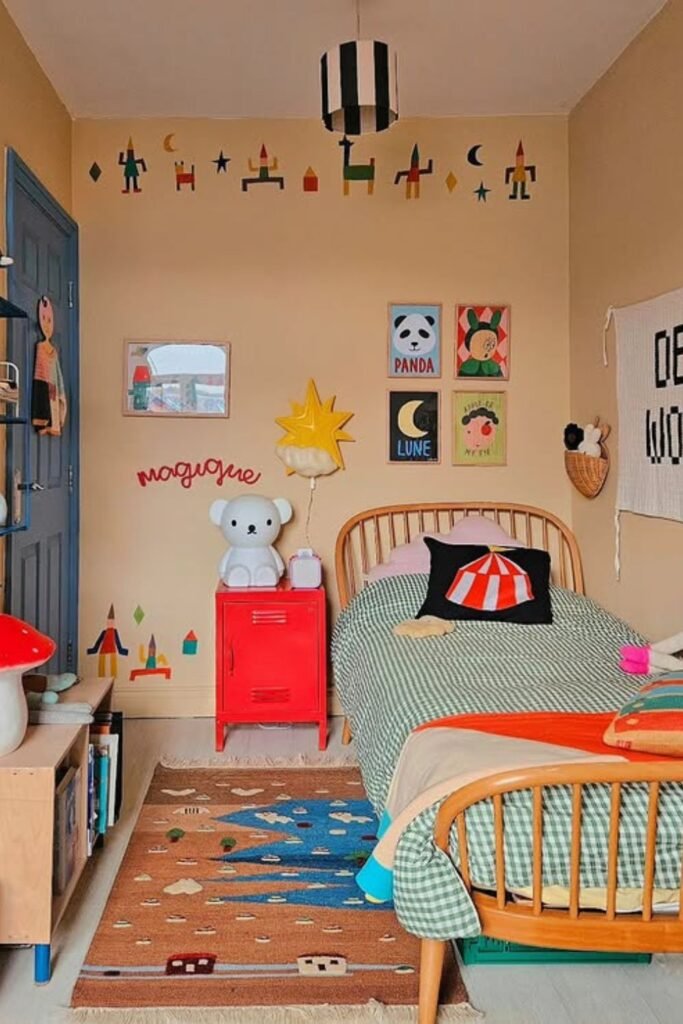
Small illustrated decals running across the upper wall create a playful border. Without covering every inch in color.
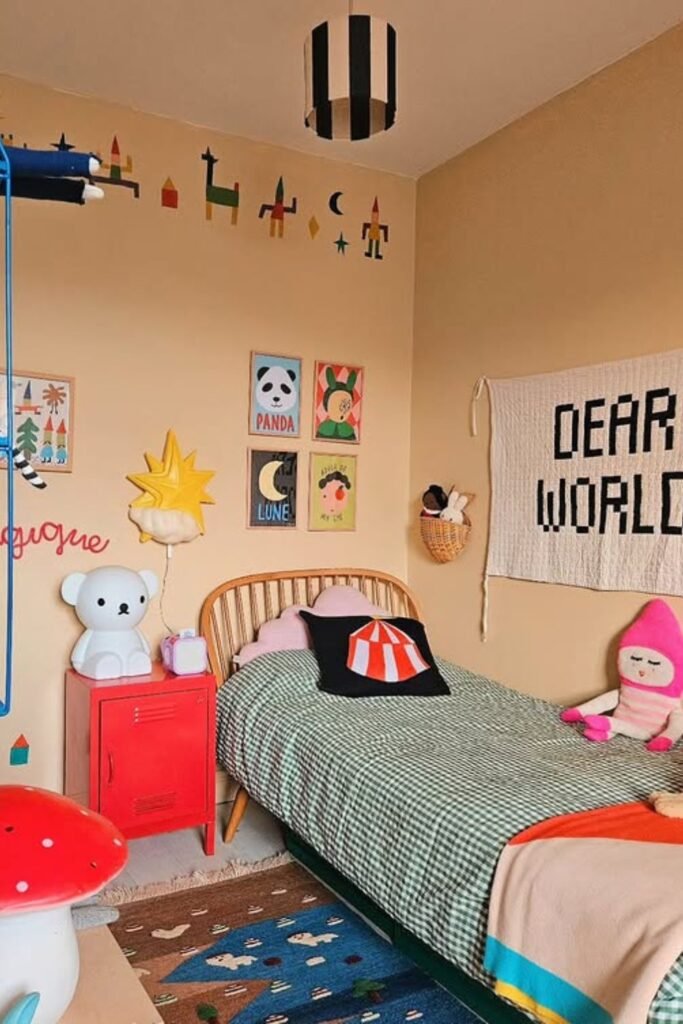
The warm beige walls make the room feel homey, which makes the colorful accessories, like the red nightstand and patterned rug, pop out.
Mix one bold hue of furniture with softer wood tones to get this layered look. Cane or rattan beds give texture without clashing with designs.
When pieces of gallery art above the bed are the same size and spaced out, they look best. That keeps the combination from seeming sloppy.
One wall should have open shelving for toys to be used as decor. This will keep the area from seeming too full.
Sticker Burst
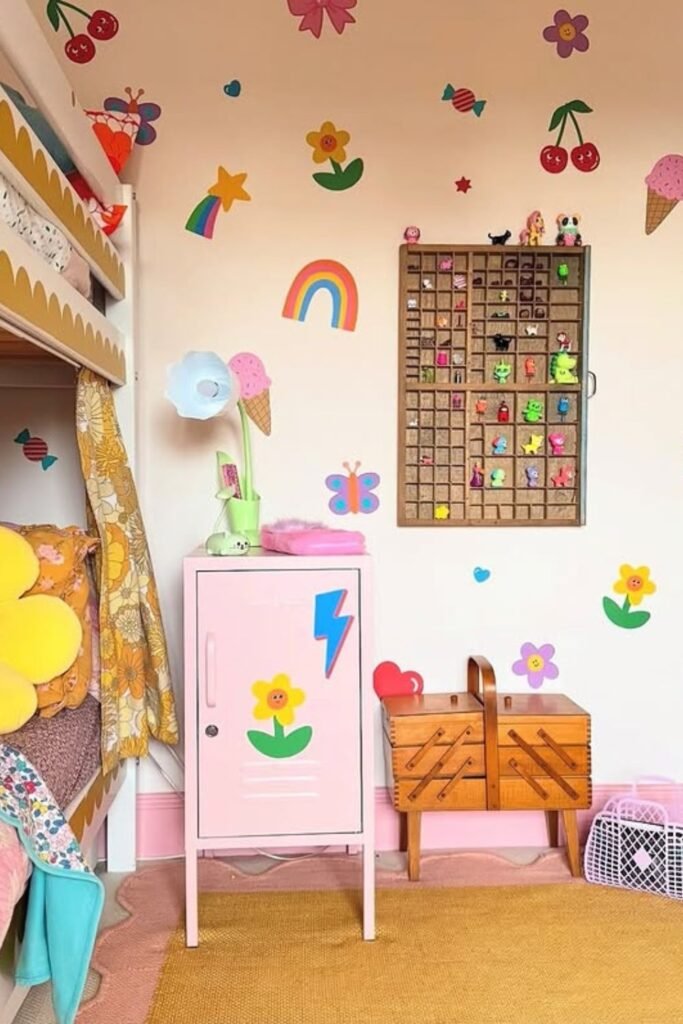
Personality explodes across the wall without a single drop of paint. Playful decals rainbows, cherries, lightning bolts turn a plain surface into a canvas kids can grow with.
When you scatter peel-and-stick designs on purpose, they look best. Leave room between each shape so the wall doesn’t feel too cluttered.
Then repeat two or three of those patterns in other places. A lightning bolt on the locker, a flower cushion on the bed, or a rainbow accent bring everything together.
The crowded wall is balanced by the soft pink furniture and warm wood. The space would feel like a mess if every thing screamed for attention.
Make big things simple and allow minor elements tell the tale of the color. Great for bunk rooms or other shared places where each youngster has their own favorite object.
Scallop Accent
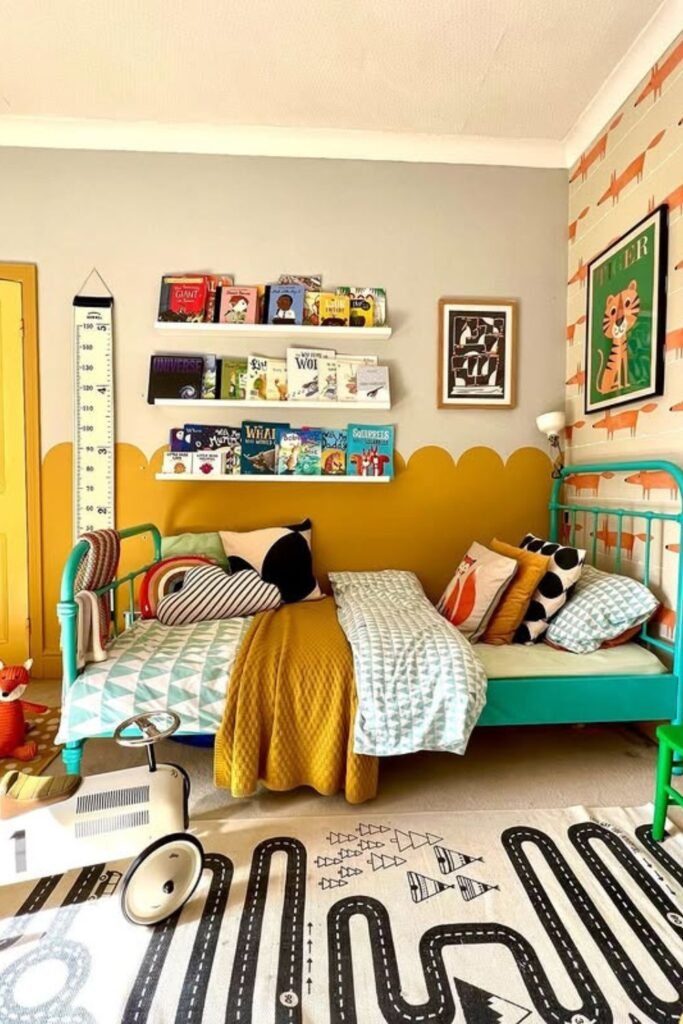
Walls don’t need full wallpaper to make a statement. A painted scallop border behind the bed instantly creates shape and depth without overwhelming the room.
Mustard is a great choice here because it feels both warm and fun. If you’re worried about using bright paint, try this: keep the top wall neutral and put color around the sleeping.
That gives the bed a sense of purpose and framing. Teal metal bed frames stand out against mustard.
Especially when you use modest teal decor items to echo the color. The patterned wallpaper on one side wall offers contrast but notice how it just covers one region.
It would be too busy with too many patterned walls. Book shelves over the bed keeps the dcor useful instead of the messy.
Pattern Play
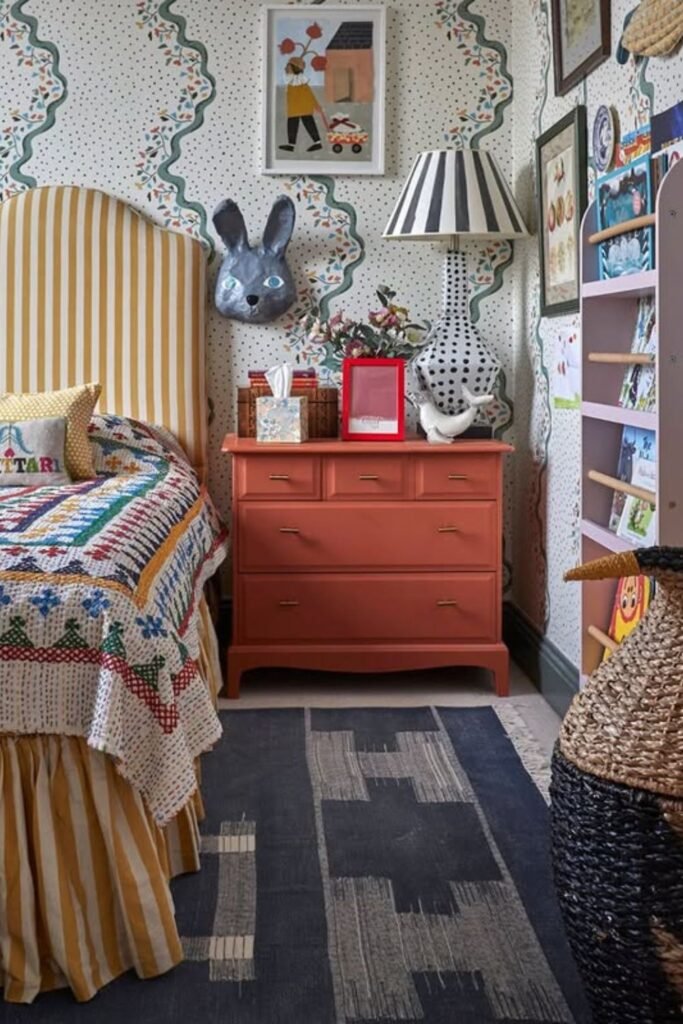
Confidence shows up when prints refuse to whisper. Polka dots, wavy florals and striped up holstery and a quilted bedspread all live in one small room.
And it works because the color story stays strong. It seems dangerous to mix patterns unless you have control over the colors.
Mustard, red, blue, and light green are colors that are used over and over again on walls, bedding, and furniture.
That repetition protects the area from feeling out of control. Want to try this at home?
Pick one main pattern for the walls and then pick two colors from it to use on your furniture and fabrics.
Curved headboards and painted dressers give your room personality without adding extra patterns. At least one solid rug or floor item will help things look less busy.
Ceiling Statement
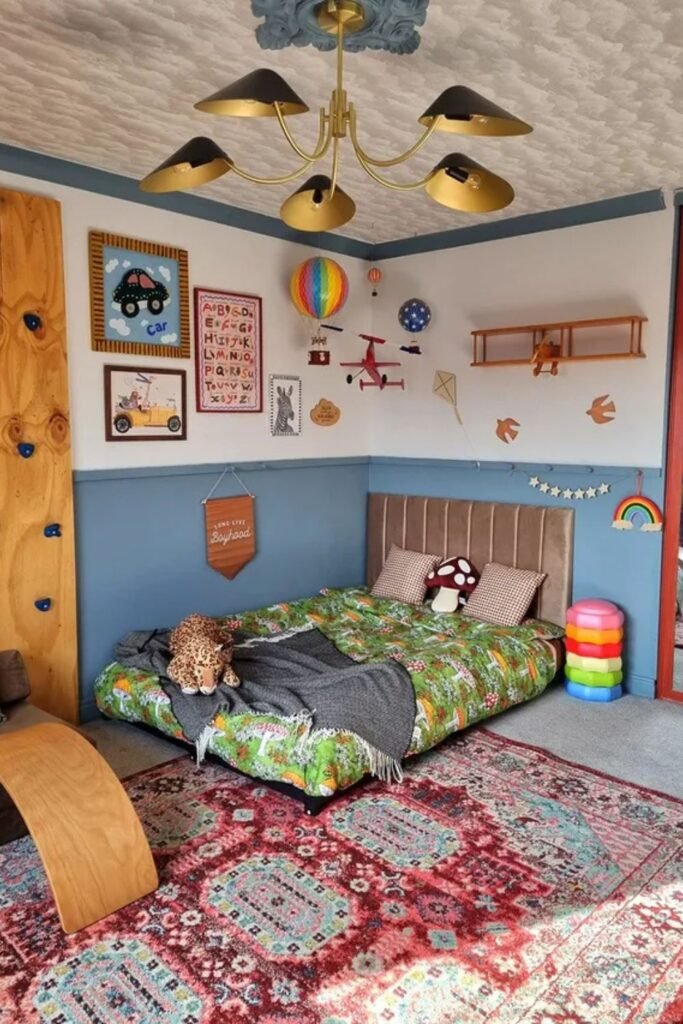
Eyes usually stop at the walls but this room proves the ceiling deserves attention too. A textured ceiling paired with a bold brass chandelier.
Adds drama right now without moving the furnishings. Dusty blue walls that are only half-painted give the room structure and make it feel planned.
To get this layered look, split the wall in half horizontally and keep the top half light. That difference makes things look deeper, especially in spaces with normal ceilings.
Use different types of wall art, including planes, animals, and letters, but make sure the frames are of the same color so they don’t clash.
A rug with a pattern under the bed adds warmth and balances off the cooler color of the walls.
Vertical Storage
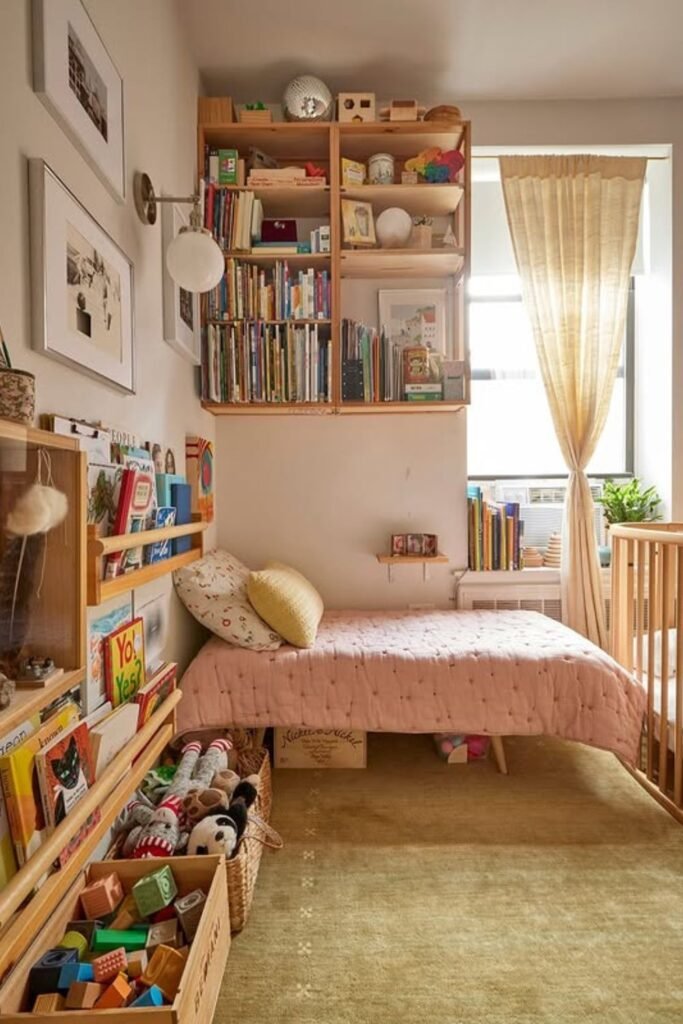
Floor space disappears fast in a small kids room, so go up. Floating shelves and tall bookcases turn empty walls into functional storage without crowding the bed area.
Books that are displayed facing front naturally add color. When coverings already bring in reds, blues, and yellows, you don’t need any further decor.
Put things you don’t need every day on higher shelves and keep the lower shelves within reach so youngsters can get what they want.
A modest bed with soft pink bedding keeps the room quiet, and the wood tones make it feel cozy.
Matching wood on shelves and frames ties everything together without being too planned.
Great for moving from a nursery to a toddler room when storage is more important than statement pieces. First, focus on useful things.
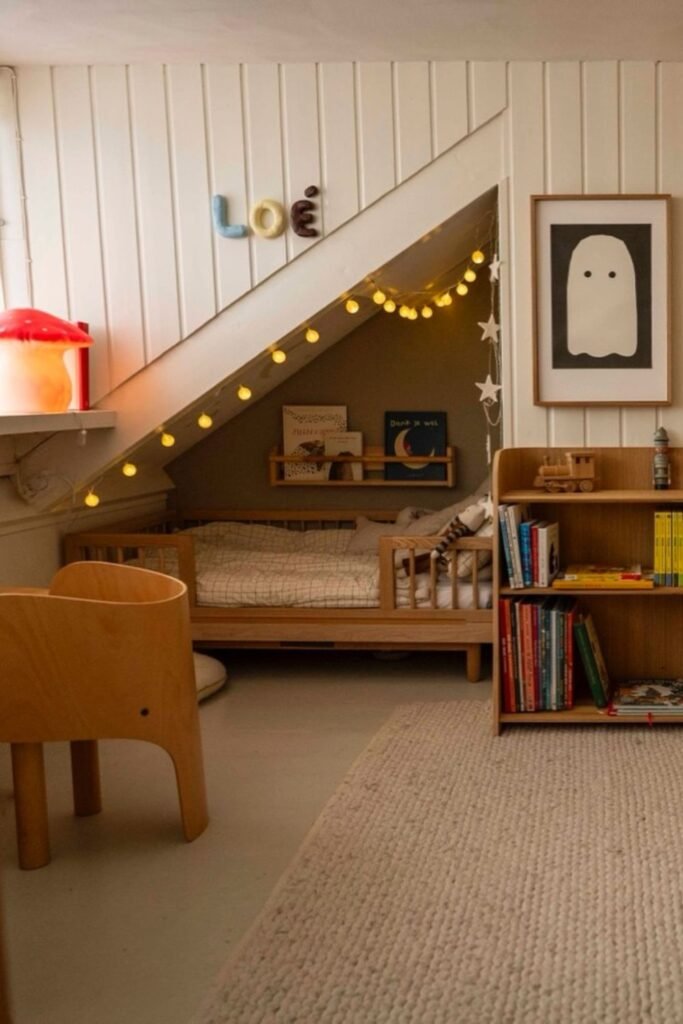
Cozy Nook
Sloped ceilings usually feel awkward, but here they turn into the coziest sleeping corner in the room. Instead of fighting the architecture.
The bed slips perfectly under the angle and makes a secret place to hide. Wood furniture that is warm keeps the room comfortable and natural.
String lights along the hill give forth light without needing more lamps. If you’re working in an attic or under the stairs, make that lower ceiling a part of the design.
Shelves next to the bed give storage without making the room feel smaller. Use wood tones that are comparable so that everything feels like it goes together.
Great for compact bedrooms where every inch counts. Instead of hiding them, lean into shapes that are strange.
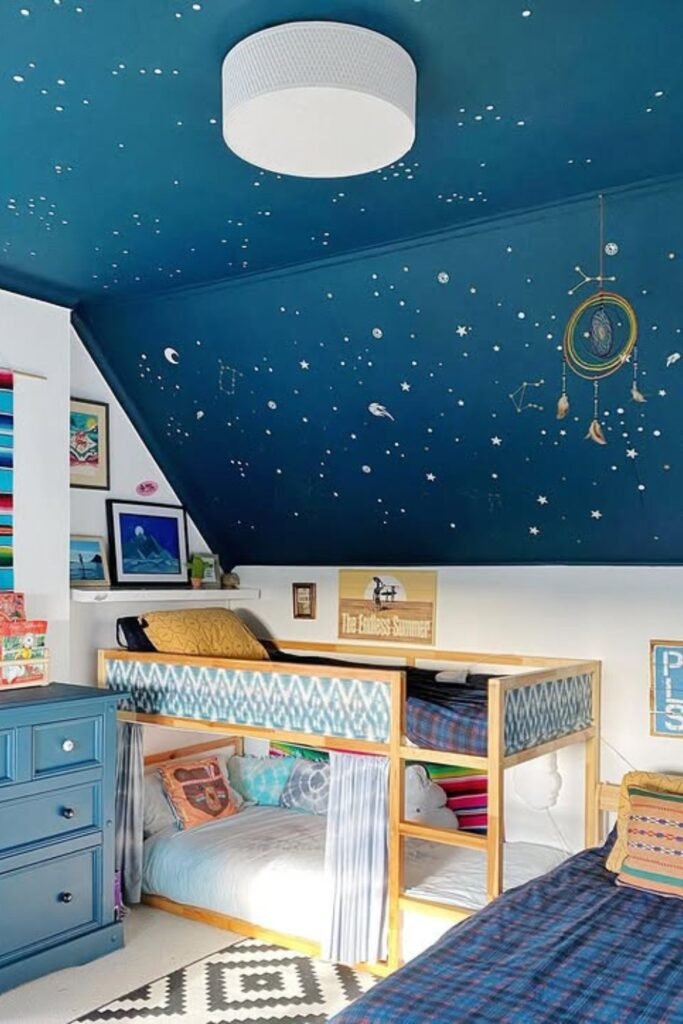
Star Ceiling
Magic doesn’t have to stop at the walls. Painting the ceiling deep blue and adding tiny star details instantly transforms the entire mood of the room.
Nighttime suddenly feels like more than just a ritual. If you want to do this, make sure the lower walls are light so the room doesn’t feel heavy.
A wall that is just half-painted or trim that is bright white keeps the room open and in balance.
Bunk beds made of natural wood warm up the cooler blue tones and keep the space motif from seeming frigid.
To keep the ceiling from becoming detached, use little blue items, such a dresser or bedding, over and over again.
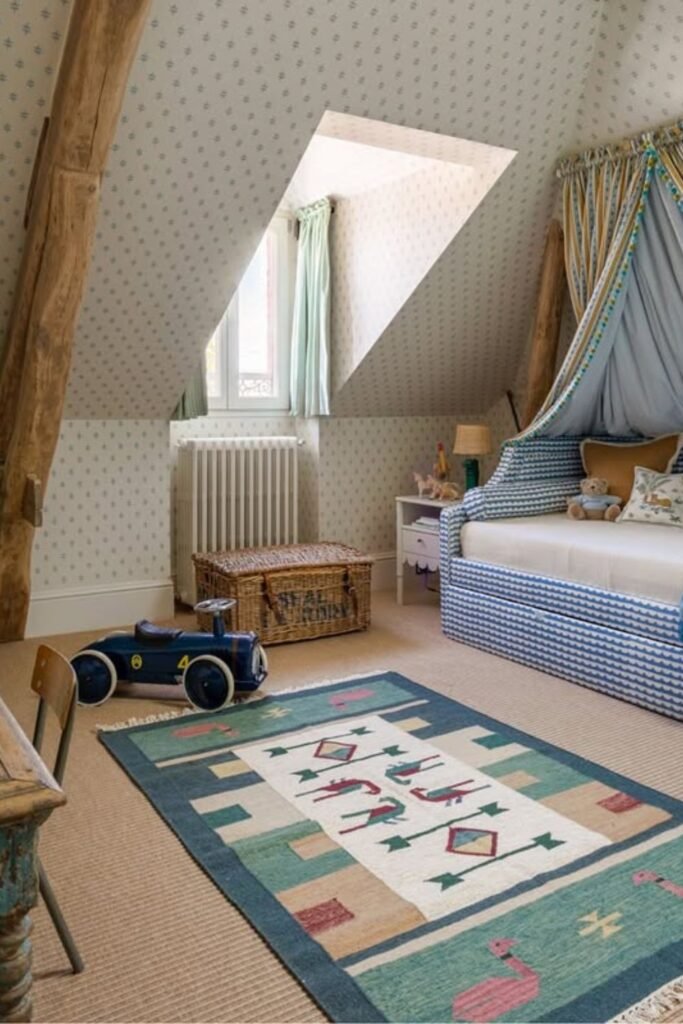
Attic Charm
Slanted ceilings don’t have to limit design. Instead of hiding the angles, lean into them.
Soft patterned wallpaper across the entire attic space makes the room feel intentional.
Use soft colors like muted blues, warm neutrals, and natural wood tones. These look great on tight rooflines.
A canopy over the bed makes the room look taller, which helps balance out the low ceiling.
Let the beams show if you are working with them. Natural wood adds warmth and texture without adding excessive ornamentation.
Best for homes with a cottage style or a vintage look where comfort is more important than strong contrast.
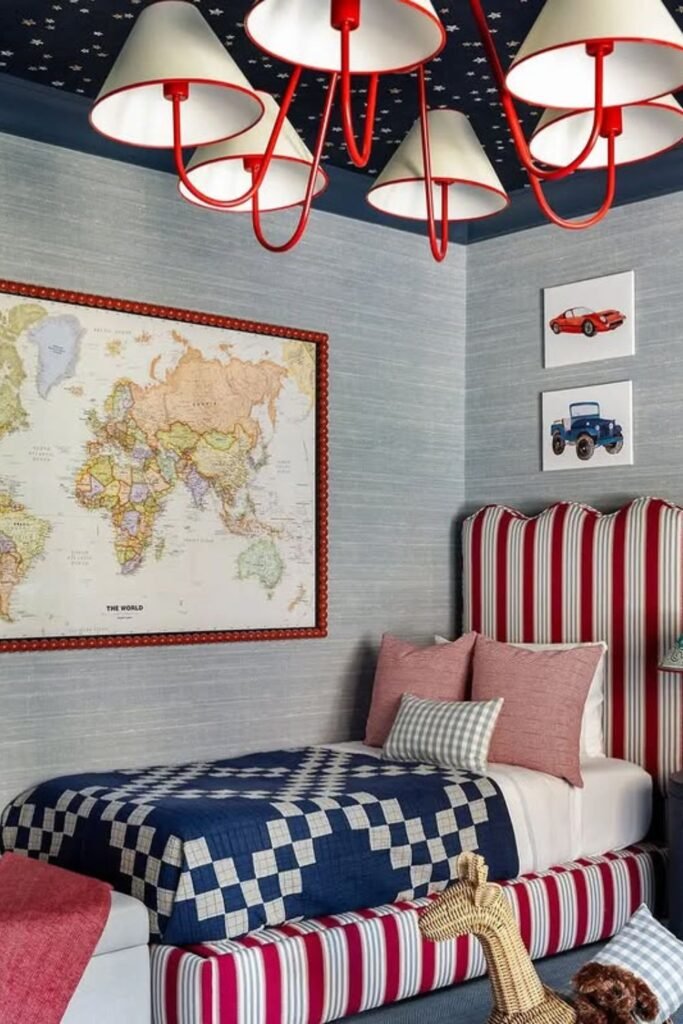
Bold Contrast
Red, navy, and soft blue collide here and somehow feel tailored instead of loud. Strong contrast works when each color has a clear role.
The ceiling and bedding are held in place by navy. The headboard and chandelier provide a lot of color with red. Light walls make everything calmer.
Pick one dark color that stands out and one bright color that stands out to get this high-impact combo. Don’t let them compete on an equal level.
Notice how red only shows up in certain places and not everywhere. That restraint keeps the room looking sharp.
Striped upholstery adds design without making things too busy because the rest of the walls are simple.
Playful Layers
Warm beige walls set the stage, but the real magic happens in the details. Small illustrated decals running near the ceiling create movement without overwhelming.
Keeping them high makes the area feel taller and draws the attention higher. There are flashes of color, including a bright red nightstand, a colorful mushroom stool.
Choose one piece of furniture in a bold color that stands out and let everything else support it if you want this design.
Open shelves can make toys look like decorations but keeping them to one wall keeps the space from being cluttered.
Great for little kids who like stories and characters but still need a quiet place to sleep. Let the fun part shine and while the base stay steady.
Gingham Glow
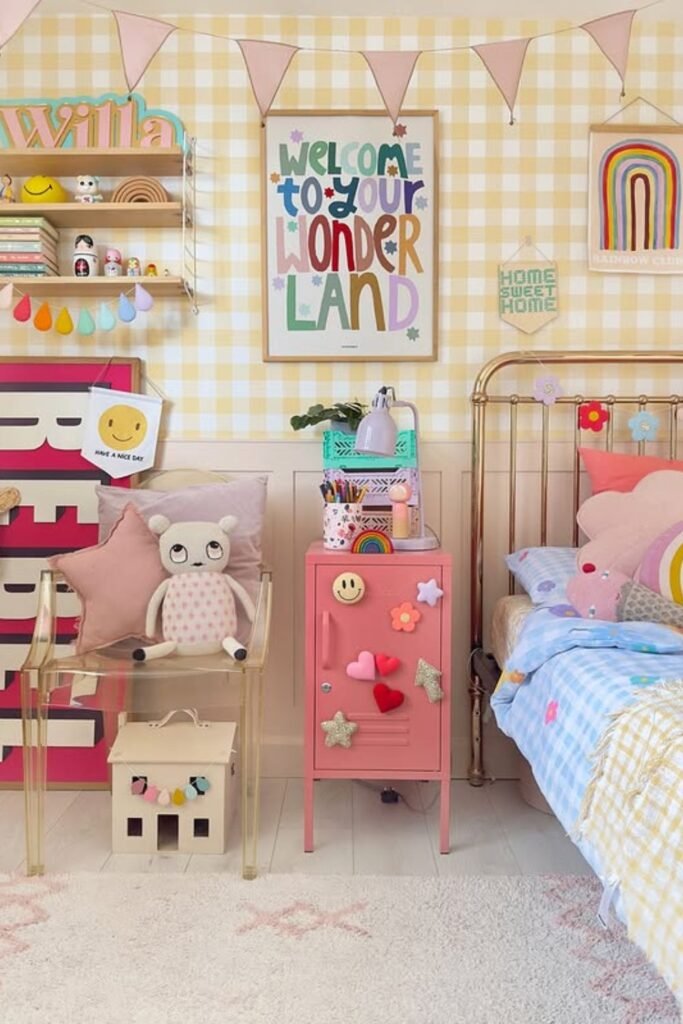
Soft yellow gingham wallpaper instantly sets a cheerful tone without shouting. Pattern covers the wall yet the room still feels light because the color stays gentle.
Choose a wallpaper pattern with a soft base if you want to use it in a kids’ room with a lot of different styles.
That way, bright things like a pink locker nightstand or rainbow art can show out without clashing with the background.
Look at how pink is used again in the chair cushion, the storage, and the small decorations. That repetition ties everything together.
A brass bed frame gives the room an antique feel, while amusing pillows and wall banners offer a modern touch. When colors overlap mixing eras works.
Retro Mix
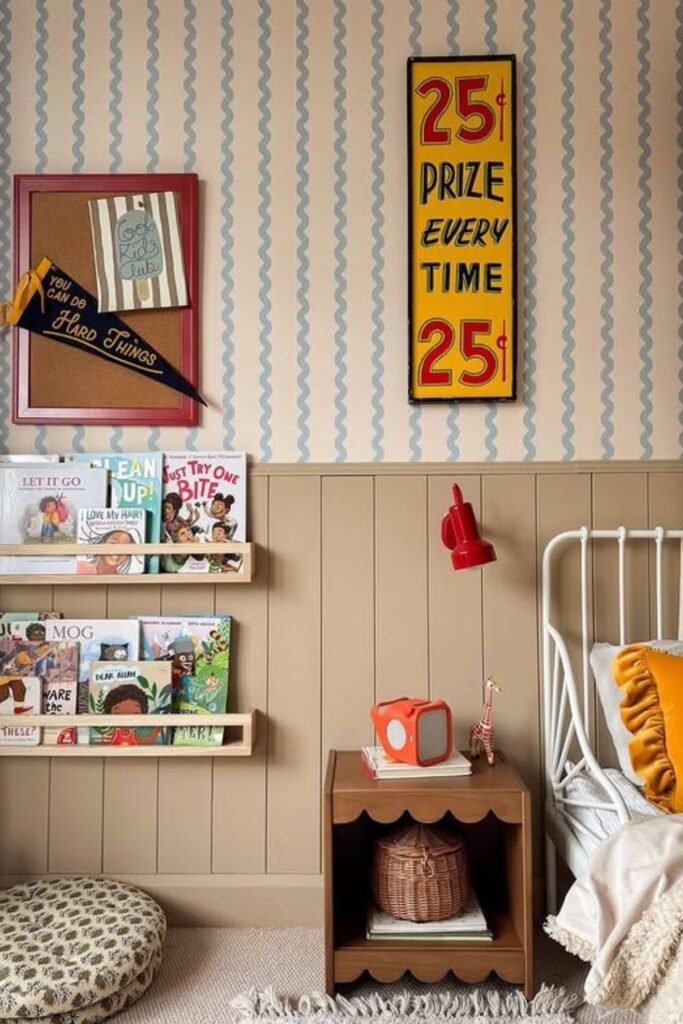
Graphic posters, wavy wallpaper, and classic paneling come together without clashing because each layer has space to breathe.
The design is on the upper walls, and the lower paneling stays solid and grounded. If you’re blending bold art with wallpaper with patterns.
Make sure the frames are simple and the same. Black or wood frames make prints that are busy look neat.
The yellow on the wall art is echoed by the mustard pillows. That small color link makes the room feel planned.
Open book ledges give a room character without adding a lot of heavy furniture. Instead than buying extra decorations, have books facing forward to add color organically.
FAQs
How do you keep an eclectic kids room from looking messy?
When everything is fighting for attention, there is clutter. Choose three or four main colors and use them in different places in the room.
If a new item doesn’t fit that color scheme, don’t buy it.
If the wall has vibrant wallpaper, keep the bedding plain to balance off the hectic portions. Storage is also important.
Can eclectic design grow with my child?
Yes, but only if you build it the right way. Keep major things like the bed, dresser, and bookshelf neutral.
Use pillows, art, decals, and carpets to give your home more character.
Instead of getting new furniture when your child’s interests change, just change out the smaller layers.
Because eclectic style is based on blending, it makes transitions easier.

Hi, I’m Afaf! I’m a law student who loves writing about everyday life – from home projects and crafts to fashion, beauty, and parenting tips.
I’ve been writing for over a year, sharing ideas that are simple, practical, and easy to try. I write about things I find interesting and useful, whether that’s organizing a space, trying a new DIY, or finding activities to keep kids entertained.
My goal is to share helpful ideas without making things complicated. If it works in real life, I’ll write about it.
When I’m not studying or writing, I’m usually experimenting with new projects or scrolling for inspiration!