
27 Whimsical Kids Room Ideas for 2026
You want your child’s room to be magical. Not simple. Not dull. But every time you try to plan, it gets too much very quickly.
There are too many colors. There are too many cute ideas. A lot of Pinterest saves. And somehow, the room starts to look busy and cluttered instead than “whimsical.”
You don’t want things to get out of hand. You want to be charming. You want a place that feels unique, warm, and creative, but not like a toy store explosion.
In this article, you’ll discover 27 whimsical kids room ideas that feel cool, functional, and age-appropriate.
Let’s jump in!
How Do You Create a Whimsical Kids Room Without Making It Too Busy?
Begin with one clear thought. Not five.
The room will feel full if you try to put together rainbows, jungle animals, fairy lights, bright wallpaper, and themed bedding all at once.
Choose one core theme or one powerful feature wall, and let everything else support it. Next, make your base simple.
Use light flooring or soft, neutral wall colors so the fun elements may stick out. Even colorful decorations won’t feel too much if the background is serene.
Finally, change your mind. If you add anything new, you have to take something old away. Whimsy works best when the room has space.
Save this article for later!👇👇👇
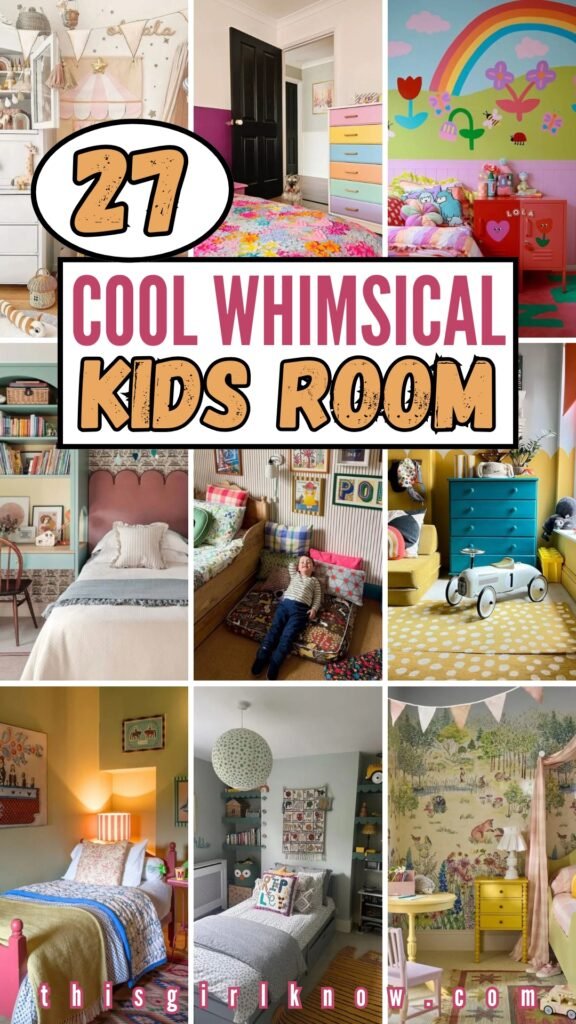
Rainbow Garden
Big color works when you let one wall do all the talking. A bold rainbow mural like this instantly turns the bed area into the main feature.
You don’t need heavy decorations anywhere else. Notice how the rest of the space is simple, with paneling on the bottom, clean lines, and not much furniture.
Make a clear strategy for the wall before you try to copy this. Use paint or stickers to make big flowers, bugs, and a rainbow.
Keep the bottom half of the wall a neutral color or a gentle pink so that the upper half feels fun without being too much for the room.
Not all of the bedding colors should match the mural. Choose two or three colors and use them again as pillows or throws.
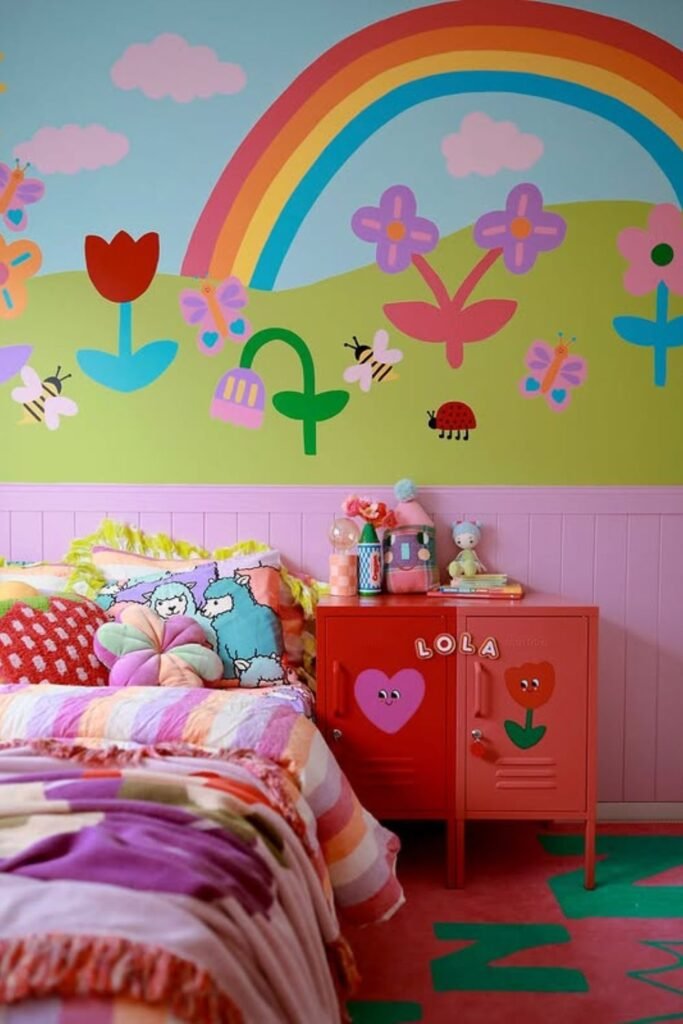
Color Block
Lower half drama changes everything. Painting a scalloped color block across the wall gives the room personality without covering every inch in patterns.
The mustard band gives the space a base, and the soft upper wall maintains it tranquil. If you want something fun sans wallpaper, try this.
To make a basic repeating curve, use painter’s tape and a stencil or a steady hand. Make sure the shape stays the same so it doesn’t look messy.
Notice how the teal dresser jumps out since the wall behind it is plain. When the background stays the same, bold furniture works better.
To make the area feel more connected, match one or two elements, like the rainbow rug or cushion, to the color of the walls.
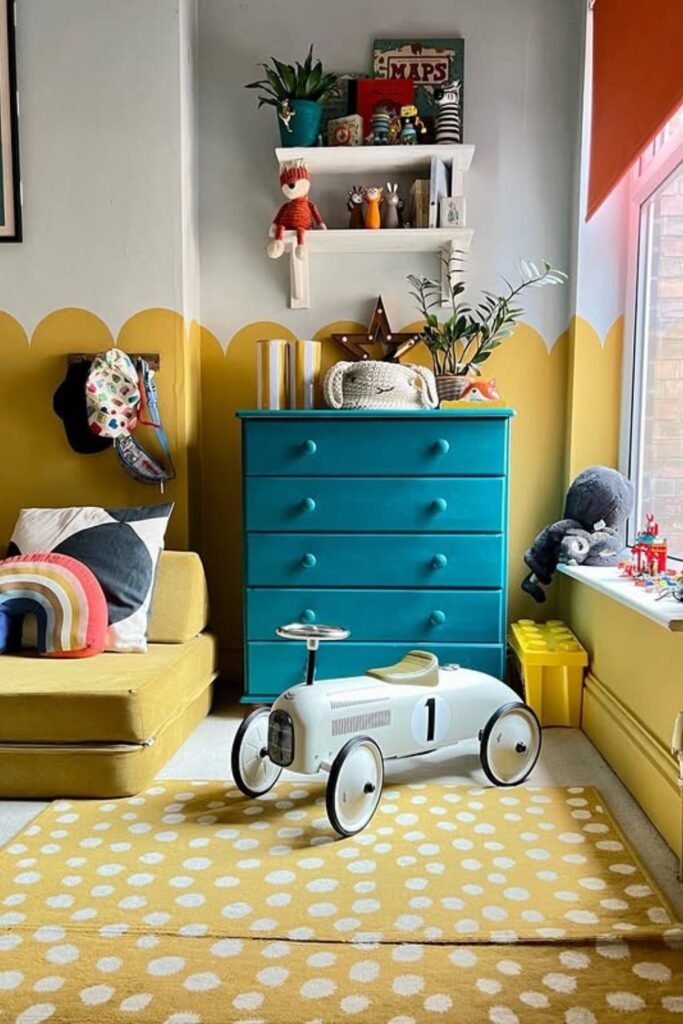
Forest Escape
Walls can do more than hold paint they can tell a story. A full woodland mural like this turns an ordinary bedroom corner into a little world of its own.
When the background already sets the mood, you don’t need a lot of themed toys. If the room is tiny, you can have two walls or one immersive wall.
The mural should be the main focus, so keep the other furniture simple and one color. Notice how the soft pink canopy and yellow nightstand don’t fight with each other.
nstead of chaotic prints, pick bedding in one tranquil color. The trees, animals, and plants will make the magic happen.
A mural looks best in small, snug spaces, like beside the bed or reading desk, where your child can feel like they are on their own silent adventure.
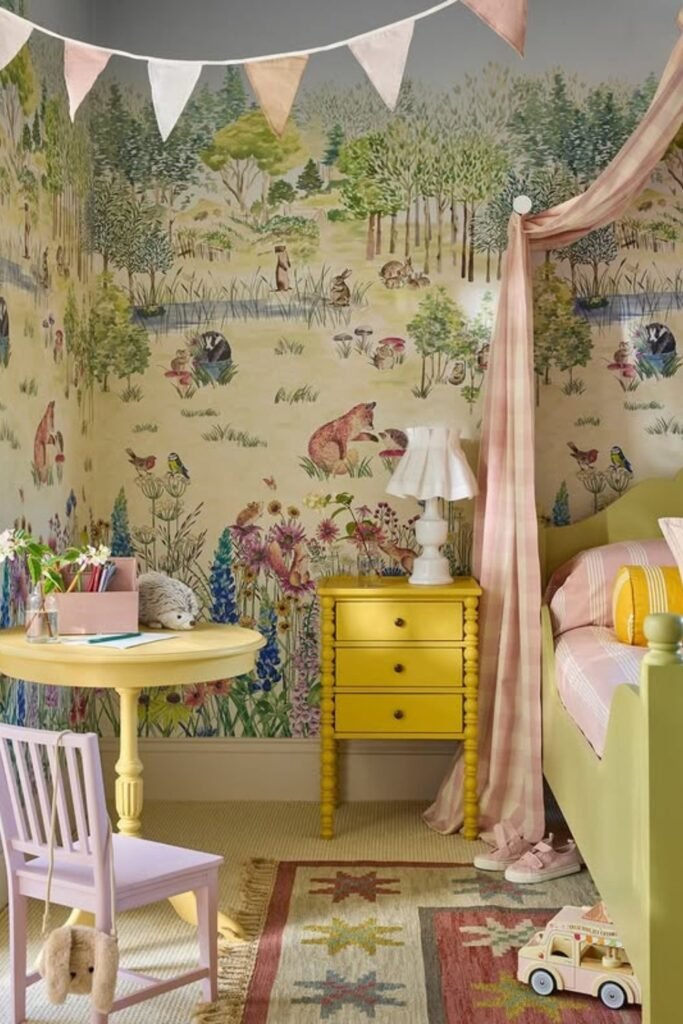
Soft Circus
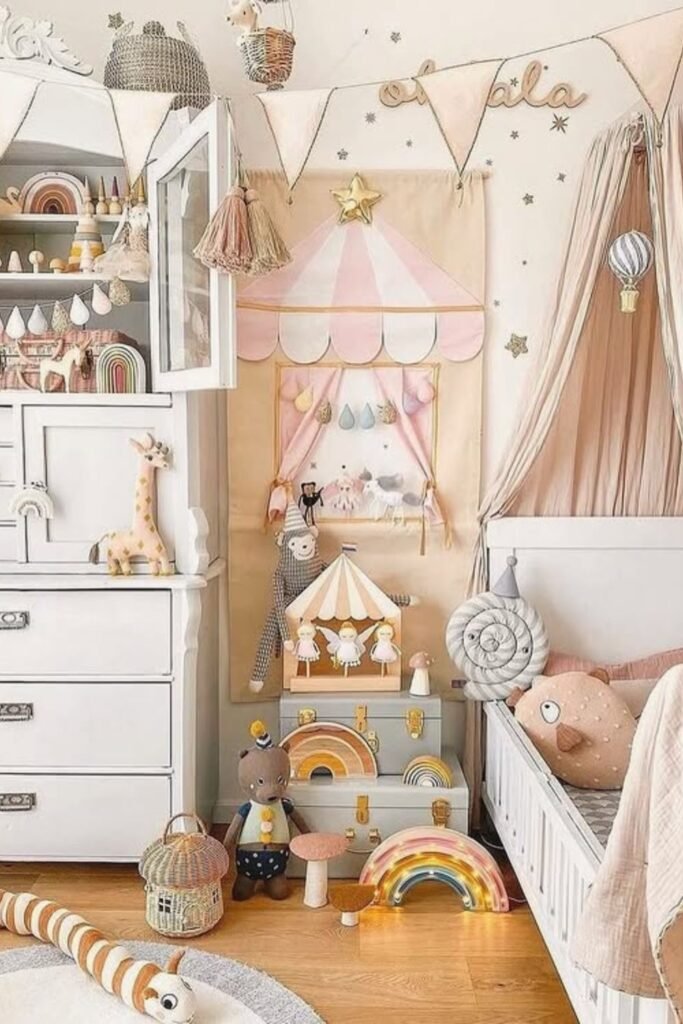
Playfulness doesn’t need loud colors to stand out. A muted circus-inspired corner like this proves that soft pinks, creams, and warm wood can still feel magical.
Choose a tiny area, such next to the bed or next to a dresser, and develop the theme there.
Put small things like star stickers, bunting, or a shaped light on top of each other, but make sure they are all in the same color family so everything feels serene.
When the storage matches the color scheme, it looks great. Neutral drawers and weaved baskets keep toys neat without changing the decor.
Make the floor basic and let one fun thing, like a rainbow lamp or toy trunk, be the main focus.
Built-In Nook
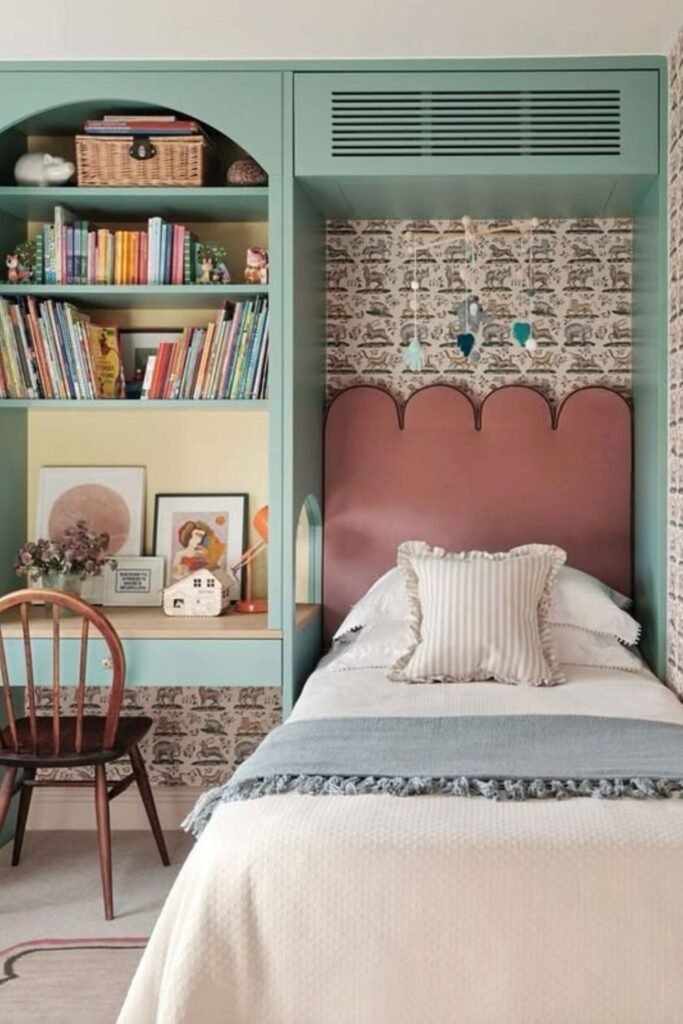
Structure creates magic before decor ever does. Framing the bed inside a built-in unit instantly makes it feel intentional and cozy without adding extra clutter around the room.
Notice how the storage, desk, and sleeping areas are all on one tidy wall. The scalloped headboard and patterned wallpaper in the nook.
Keep the room looking lively while keeping books and toys organized. That little thing gives the room some character without taking over.
You may make your room look like it has bespoke cabinets by putting tall bookcases surrounding the bed and a simple wallpaper panel behind it.
First, a smart arrangement. Second, decorative details. When storage is built into the design, whimsy looks more sophisticated than cluttered.
Color Niche
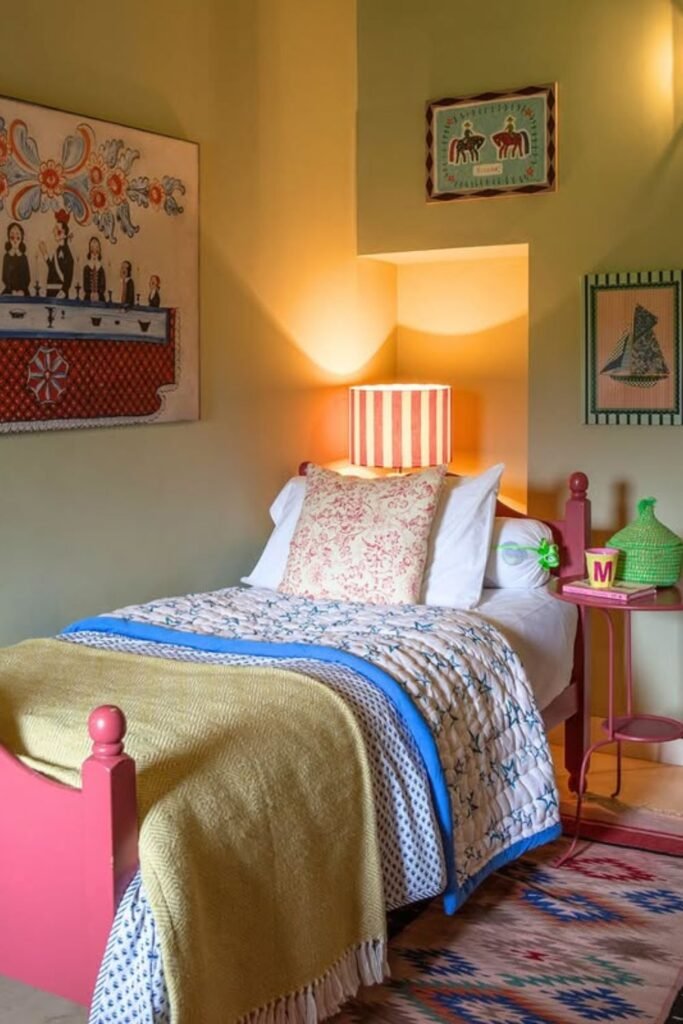
Architectural quirks deserve attention instead of being ignored. That small wall niche becomes the quiet hero of the room once warm lighting fills it.
No more wallpaper. No heavy mural. Just shine. Put a wall sconce or small lamp in any recessed location near the bed to make a comparable moment.
Soft light adds dimension and makes bedtime feel warm instead of bland. Keep the walls around it plain so that the light stands out.
Notice how bold bed frames and layered bedding give a room character without clashing with the wall color. Because the background is quiet, mixing patterns works here.
If you love color but don’t want to make a mess, use furniture and fabrics to hold it in place instead than covering every surface.
Rainbow Drawers
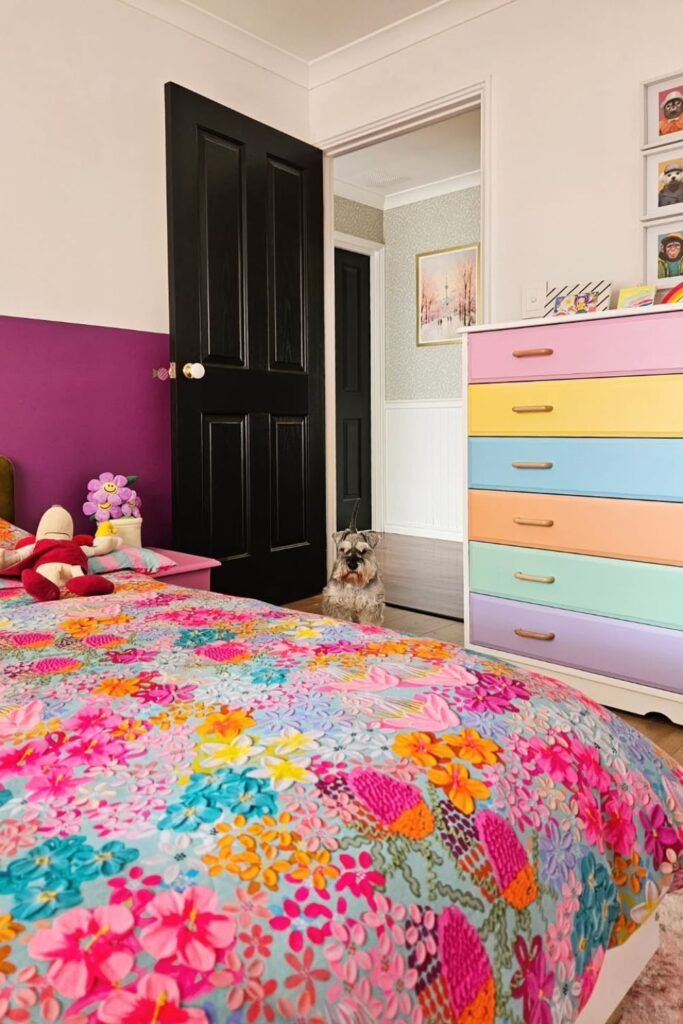
Furniture can carry the fun so your walls don’t have to. Painting each drawer a different soft shade instantly adds personality without turning the whole room.
Make the wall treatment simple, like painting half of it, so the dresser stands out. One bold bedding set works because it keeps the rest of the room in check.
It feels like a mess when everything in the room is trying to get your attention. In this room, the color story repeats in little ways, such in art prints, pillows, and other decorations.
Want to give this a shot? Instead of buying new themed furniture, you might sand and paint an old dresser.
Pick a color scheme, such pastels, warm brights, or earthy tones, and stick to it. Matching hardware keeps the look together.
Play Corner
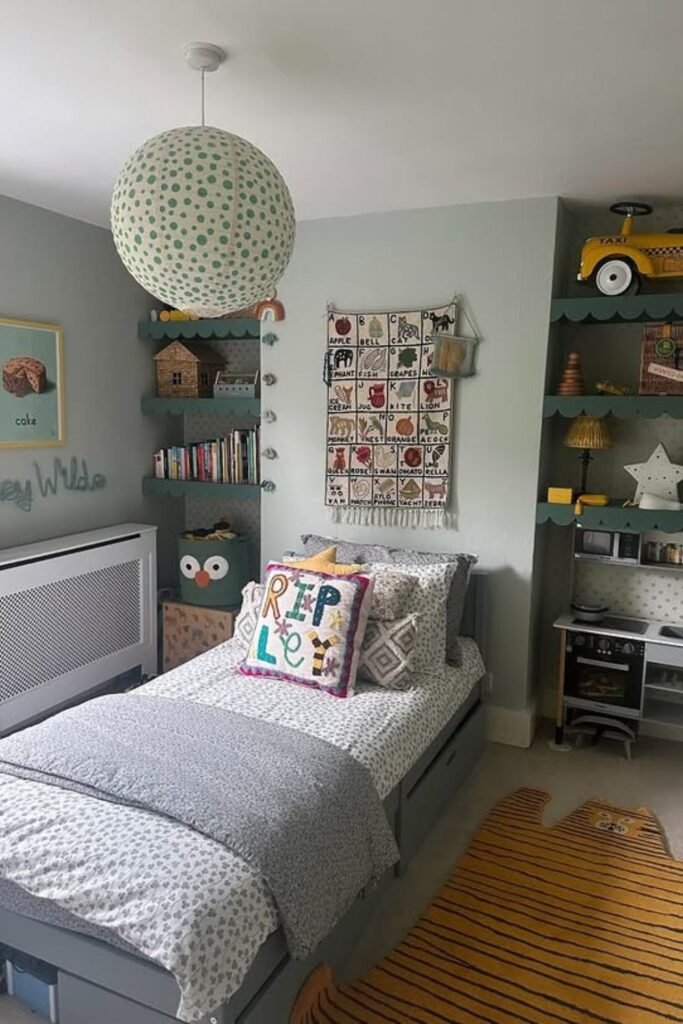
Imagination grows faster when play has its own zone. Tucking a mini kitchen and toy shelves into one wall keeps the rest of the room calm.
Notice how the color of the wall stays soft and muted.
That option makes little, fun features like scalloped shelves, a star lamp or a hanging light shine out without becoming too loud.
Instead of spilling out on the floor, books, toys, and decorations stay in built-in compartments.
Instead than leaving toys all over the place, try setting off one spot for pretend play. To minimize room, use shelves that go up and down.
The room feels structured when play has limits. Structure doesn’t kill whimsy; it rather makes it stronger since everything has a place.
Gallery Wall
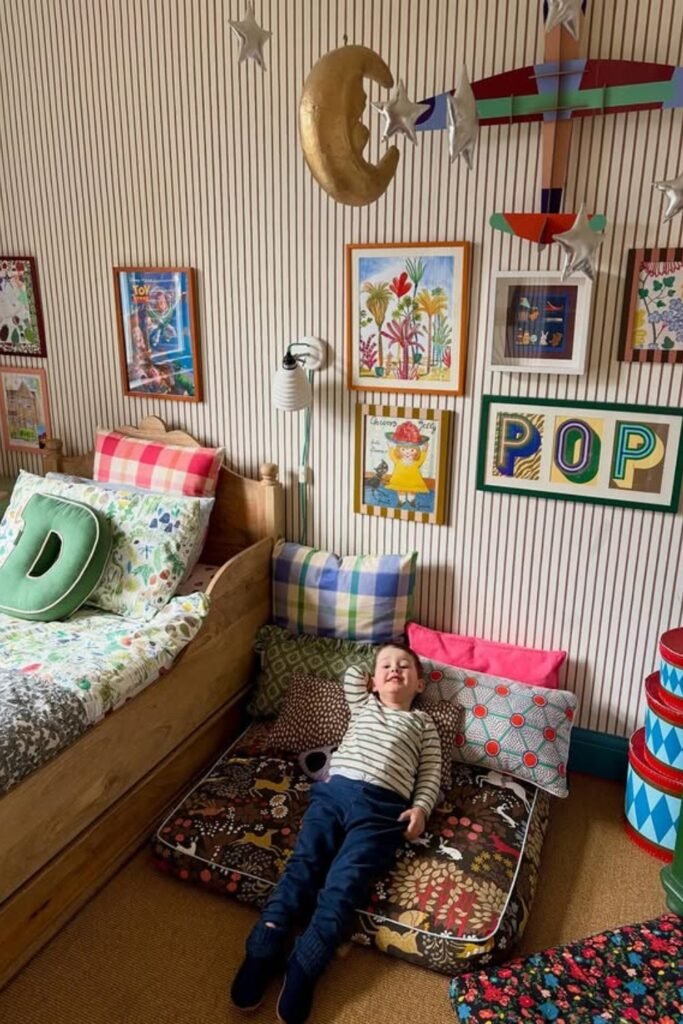
Blank walls waste potential. Turning one wall into a playful gallery instantly adds personality without repainting the entire room.
You can use frames of varying sizes, but you should always use the same color or spacing. That control keeps the wall from looking untidy.
The striped wallpaper already gives this space some movement, so the art works since it is arranged in a balanced grid instead of being all over the place.
Add some surprising things, like hanging stars or a statement light fixture, but don’t fill every inch with them.
Putting floor cushions under the gallery makes a pleasant place to hang out without taking up a lot of space.
Study Zone
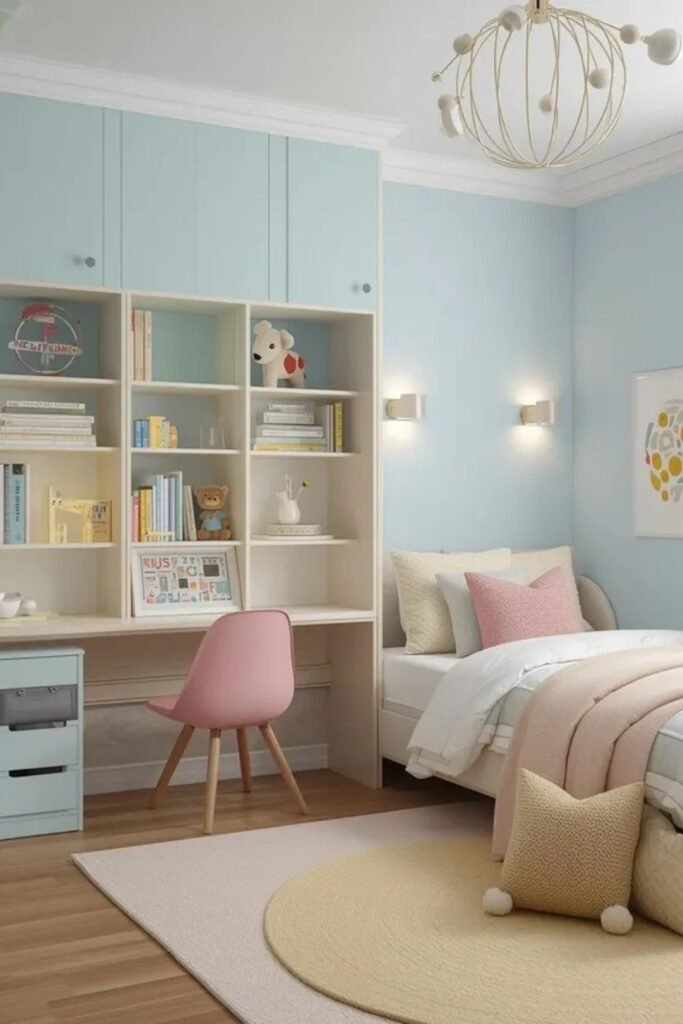
Growing kids need more than just a cute bed. Carving out a built-in desk area like this keeps homework, books in one controlled spot instead of spreading across the room.
The soft blue cabinets keep the wall quiet, and the open shelves provide character without making the room feel weighty.
You can see that most of the things on the shelves are books or a few simple decorations. That restraint is important. If you fill the cubbies too full, the whole wall will feel messy.
First, use the vertical space. Instead of getting more furniture, put shelves above a desk. If you want to make little messes less noticeable, have storage bins of the same color.
In one layout, the bed, desk, and storage are all connected. Whimsy doesn’t look untidy when the design has function.
Cozy Glow
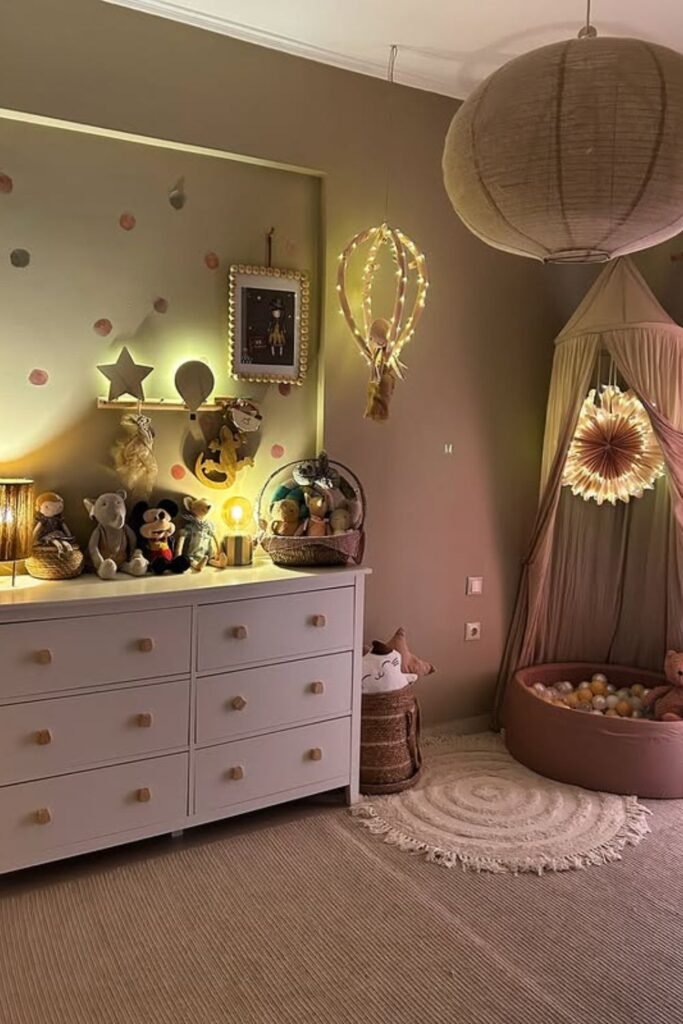
Mood changes the moment warm light fills a corner. Soft lamps, fairy lights and a glowing pendant turn an ordinary dresser and play area into something that feels magical.
Make the wall color serene and natural so that the lighting stands out. One recessed area with little dots or decals offer depth without covering every inch with a pattern.
See how the toys are nicely arranged on the dresser instead of being all over the place. Containment retains the charm.
Are you planning something like this? Put light at varied heights, such a table lamp, a wall light, or a hanging feature. Don’t use strong ceiling lights at night.
Light changes the mood faster than design. Even plain furniture seems spectacular when the light is right.
Attic Charm
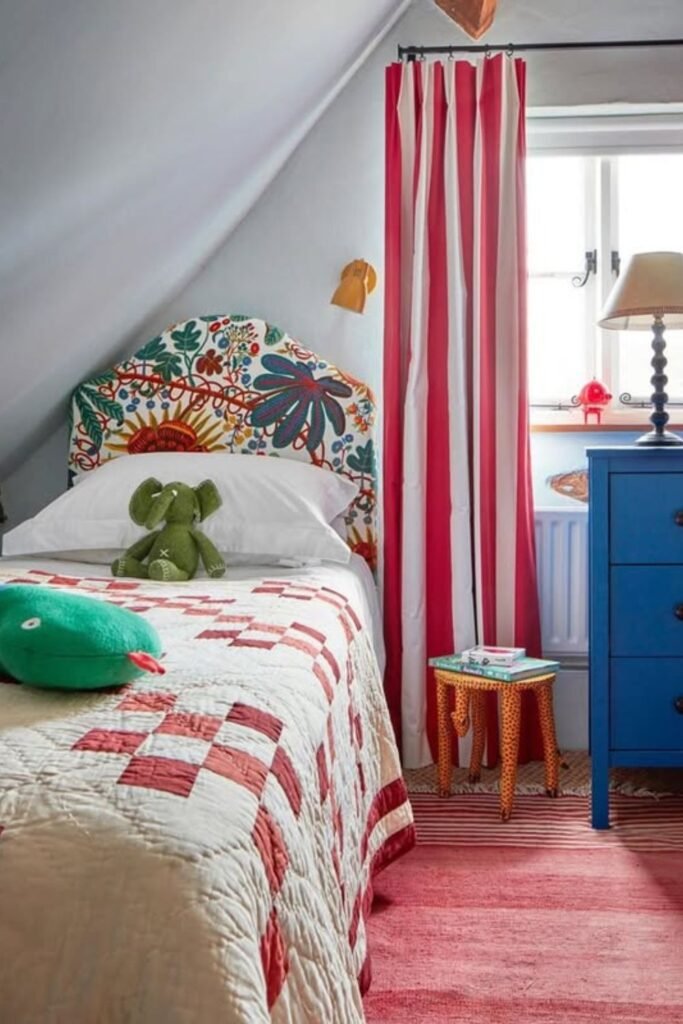
Sloped ceilings don’t limit design they create opportunity. Tucking the bed under the angled roof makes the space feel cozy instead of awkward.
Bold curtains draw the eye up right away and take your mind off the tight angles. Vertical stripes make things look taller, which is helpful for small attic rooms.
Add one bold color to the furniture, like a deep blue dresser, and the room looks confident without needing any more decorations.
Keep the patterns on your bedding but keep them under check. A floral headboard and a plain bedspread work well together since the wall stays bright and uncluttered.
Working with a ceiling that is sloped. Put short furniture along the shortest wall and reserve tall furniture for places with full height.
Bed Tent
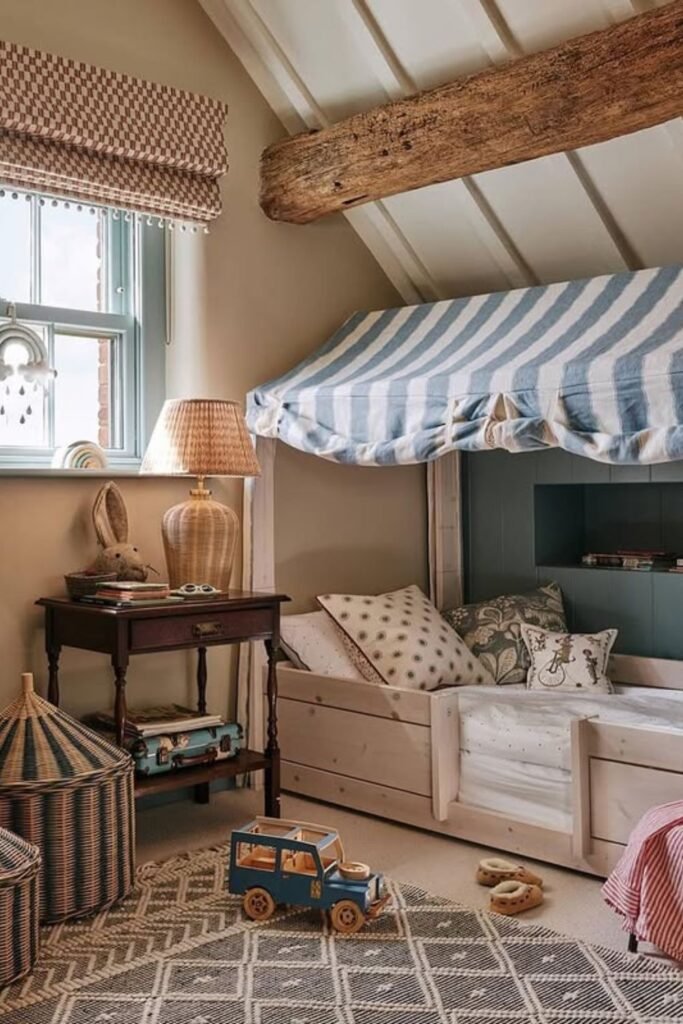
Sleep feels like an adventure when the bed turns into a hideout. A striped canopy instantly creates a mini retreat with out building anything permanent.
Make the base basic with a plain wood bed frame and soft, neutral walls. This will draw attention to the fabric.
Use two or three colors in the canopy, and then use one of those colors again in pillows or little decorations to tie everything together.
This idea is actually stronger with low ceilings or beams that are visible. Put the tent under the slope, and it will feel like you meant to do it, almost like a cabin corner.
Don’t put heavy wall art near it. Let the tent do the fun. One part of the space can tell the tale while the rest of the room stays calm and breathable.
Story Wall
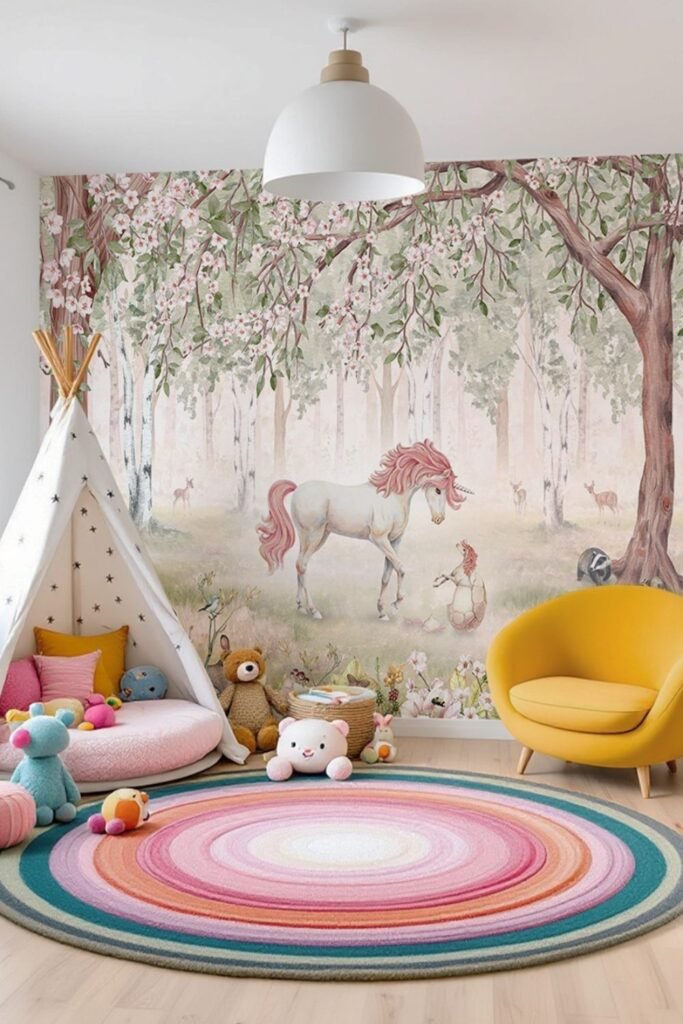
One wall can carry the entire fantasy. A large woodland mural with soft animals and trees turns the play area into a storybook scene without needing shelves full of themed decor.
The mural should stay the hero. Keep surrounding walls plain and choose simple furniture shapes so nothing competes with the artwork.
The yellow chair adds excitement without clashing because the rest of the colors are gentle and natural.
Put a teepee or tiny tent in front of the mural to make a place for kids to read or play make-believe.
Add a round rug to the area to delineate it and keep the toys in that circle. It’s important to have boundaries, especially in wide spaces.
Window Nook
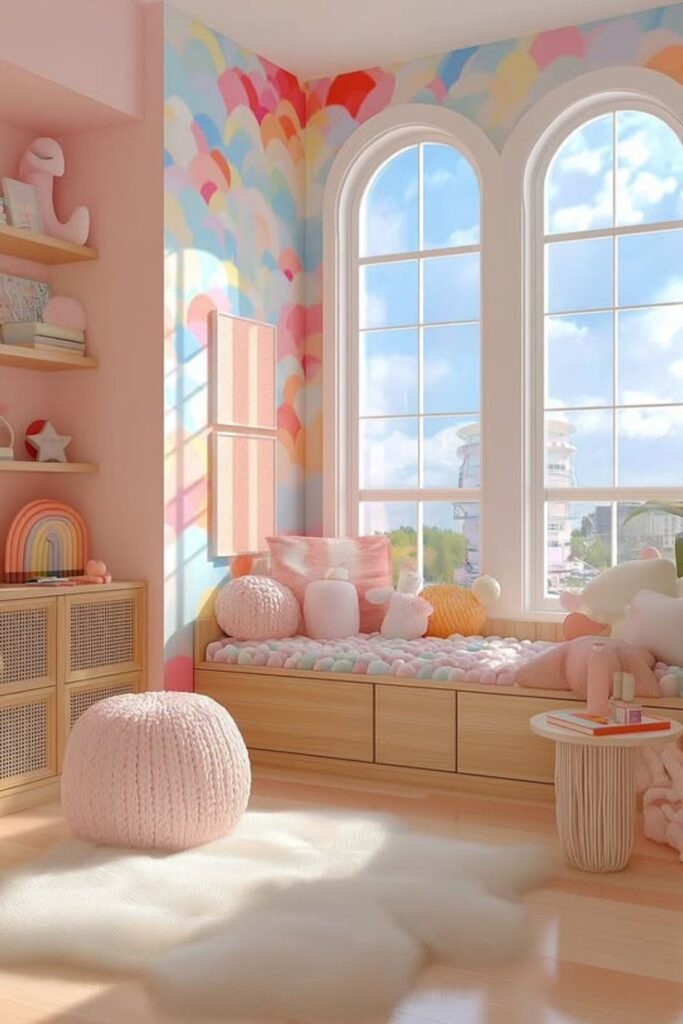
Natural light deserves a front-row seat. Turning the window area into a cushioned bench instantly creates a soft reading corner without adding bulky furniture.
Store toys out of sight by putting them beneath things. The drawers below the seat make the area look messy, yet the top stays clean and inviting.
One fun wall, like the bright scalloped design here, adds excitement, while the remainder of the space stays light and neutral. That balance keeps the room from being too light.
Instead of using ten distinct prints, choose cushions in the same color family. To warm up the floor without making it too crowded, add one textured item, such a knit pouf.
A window bench makes the room feel bigger, cozier, and more planned all at the same time. Light, seating, and storage all in one place make whimsy useful.
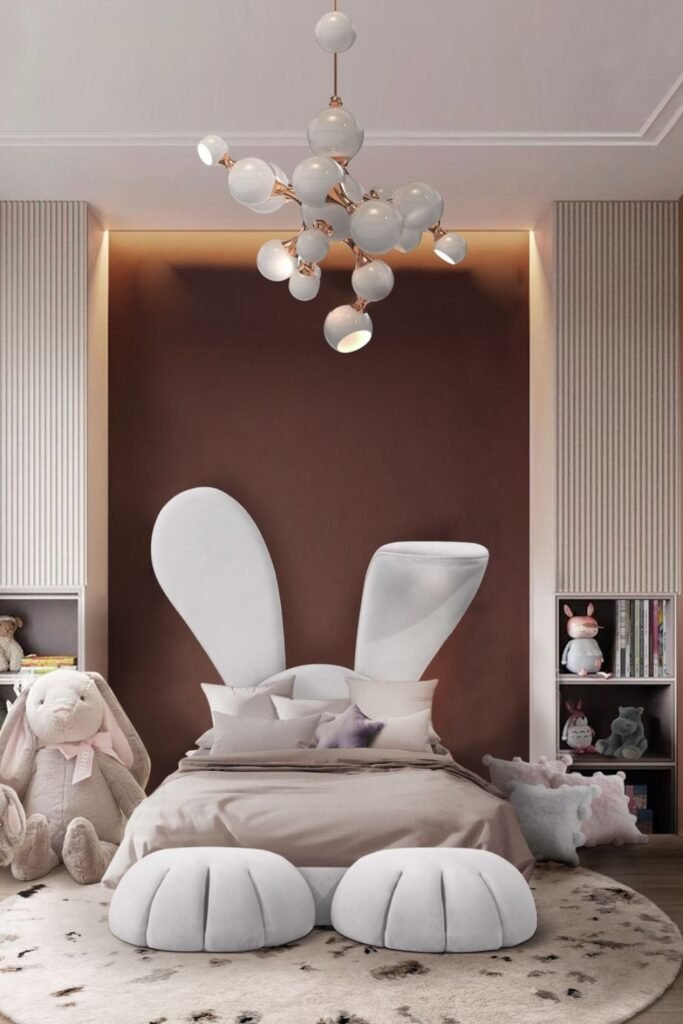
Bunny Bed
Statement furniture can replace dozens of small decorations. A playful bed frame shaped like bunny ears instantly sets the tone.
Therefore you don’t need noisy accessories or busy wallpaper near it. Make the colors around it warm and grown-up.
The warm brown paneling and soft pink walls complement the fun design and keep the area from being too childlike.
There are built-in shelves on both sides that hold books and toys without taking up more space on the floor.
Are you planning something like this. Let one big thing set the mood. Pick bedding in soft colors so that the bed design stands out.
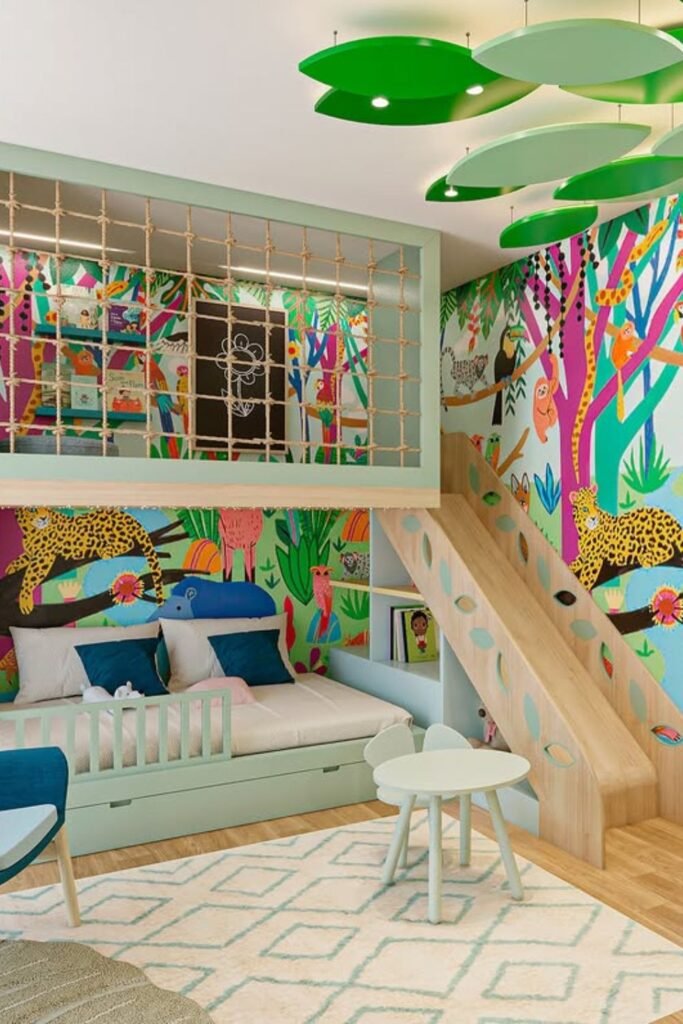
Loft Adventure
Energy explodes when color climbs the walls so control it with structure.
A jungle mural like this works because the layout is built-in and organized bed below, loft above, stairs.
The architecture protects things from getting too crazy. Want wallpaper that stands out? Keep it to one area.
The painting goes all the way around the play-and-sleep area, while the floor and furniture stay light and simple.
The pale wood staircase and gentle mint frame calm down the vibrant plants and animals. Loft beds are great for small rooms that need a place to play.
For safety and pleasure, put in a rope rail or net, but keep the bedding neutral so the walls are the main focus.
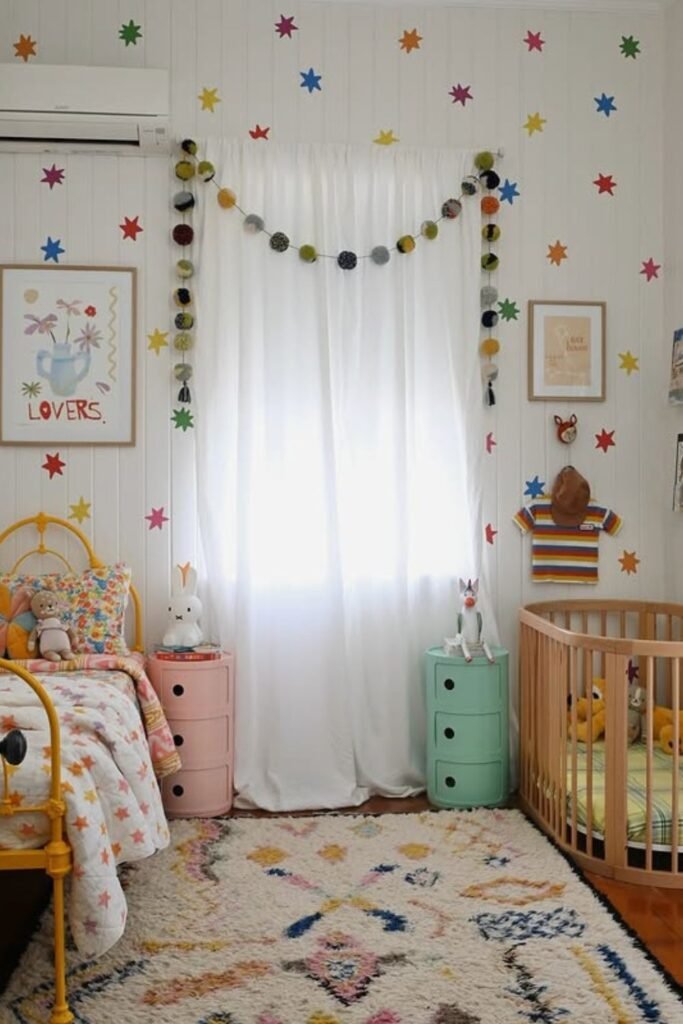
Star Sprinkle
Small shapes can change an entire room. Scattered star decals across plain walls create instant playfulness without committing to bold paint or heavy wallpaper.
Don’t use too many colors in the background; keep it white or light so the colors stand out without taking over the room.
Put the decals out equally instead than putting them all in one place. It may seem easy to put things in random places, but spacing is still important.
Put simple furnishings next to the wall. The yellow bed frame and soft pastel drawers work because they employ colors that are already in the stars and don’t add any new ones.
Peel-and-stick stickers are great for rentals or nurseries that will change over time. As your youngster gets older, take them out and put in new forms.
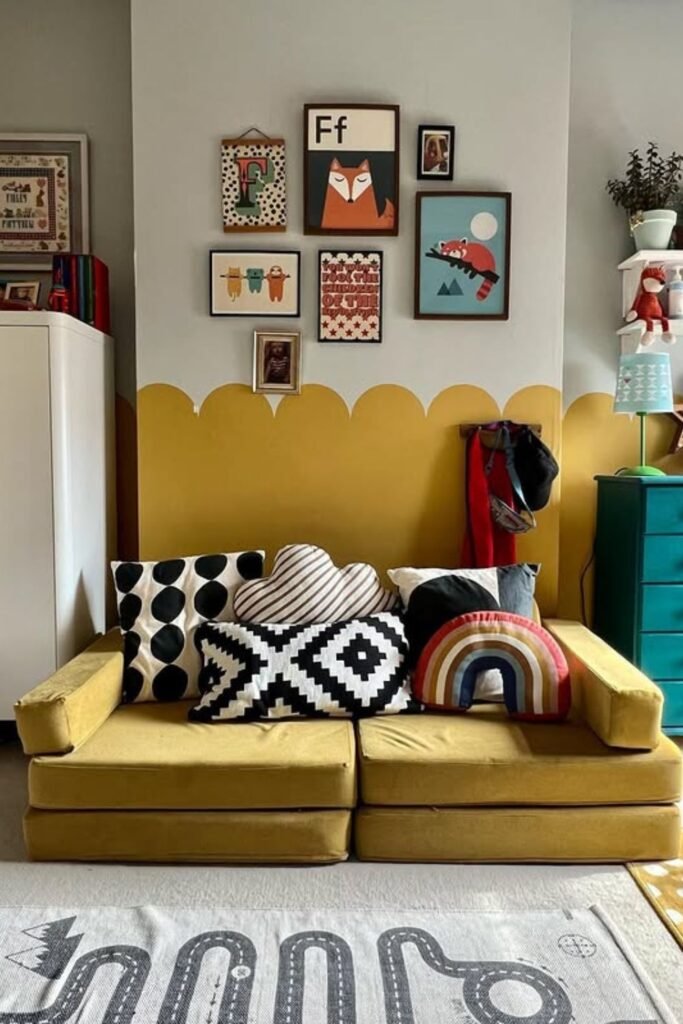
Scallop Border
Paint can act like trim without installing anything. A scalloped line across the middle of the wall breaks up plain paint and adds charm without covering the entire surface.
Make sure the upper half is light so the room doesn’t feel closed off. The mustard band gives the room a solid look and goes nicely with the basic framed art above it.
Putting a small gallery over the scallop maintains everything in the same visual space instead of letting it float around on a plain wall.
This is a great place for low seating. A small couch or floor cushions can make a place to read or hang out with out getting in way of storage.
See how bold pattern generally stay on pillow and not on the walls. That control stop the thing from getting too full.
Twin Retreat
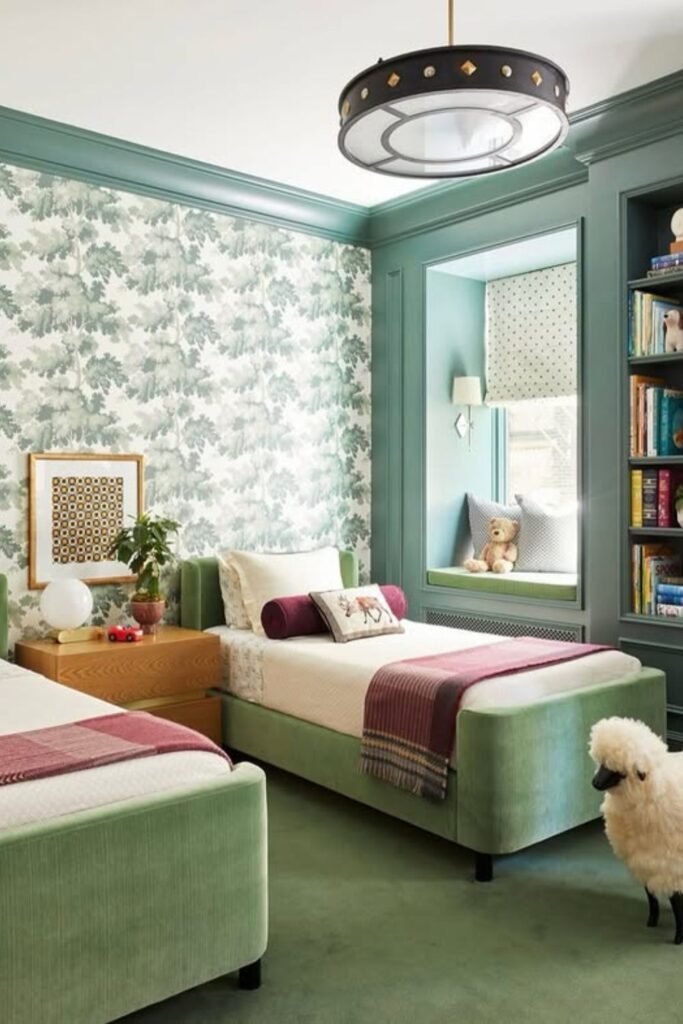
Shared rooms work best if symmetry does the heavy lifting. Two matching beds instantly create order even with patterned wallpaper in the background.
Make sure the layout is balanced: put beds on either side, a nightstand in the middle, and bedding that is the same for both.
That structure prevents the space from feeling crowded. Notice how the wallpaper stays delicate and tonal instead of blaring. There is a pattern, but it doesn’t stand out.
A built-in window nook gives the room character without taking up space from either child.
Are you planning on having more than one child? Choose one basic color scheme and let each youngster add their own touch with a cushion or tiny decoration.
Play Loft
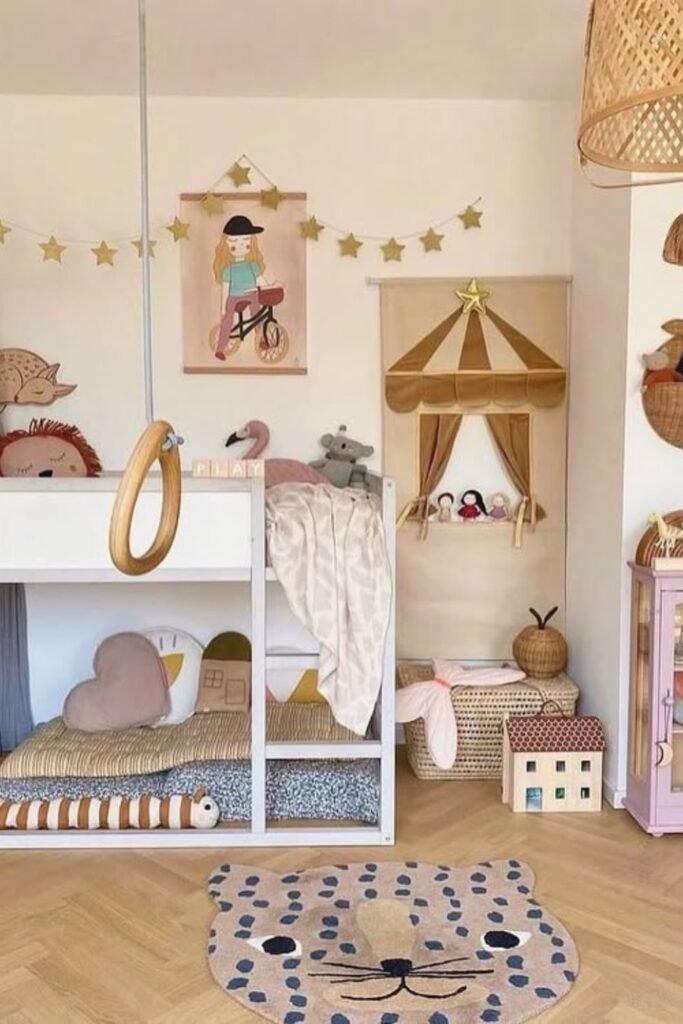
Floor space disappears quickly in a kid’s room, so lifting the bed changes everything.
A compact loft like this creates two clear zones sleep above, play below without needing a bigger room.
Use floor cushions, a small mattress, or a reading pillow to make the bottom area soft and cozy. Adding curtains or fabric panels gives you seclusion without putting up walls.
Adding gym rings or little hanging things to the framework makes it more than just useful; it also becomes pleasant to use.
Notice how the colors stay warm and soft. The space feels tranquil even if there are a lot of different textures and modest decorations.
Floating Shelves
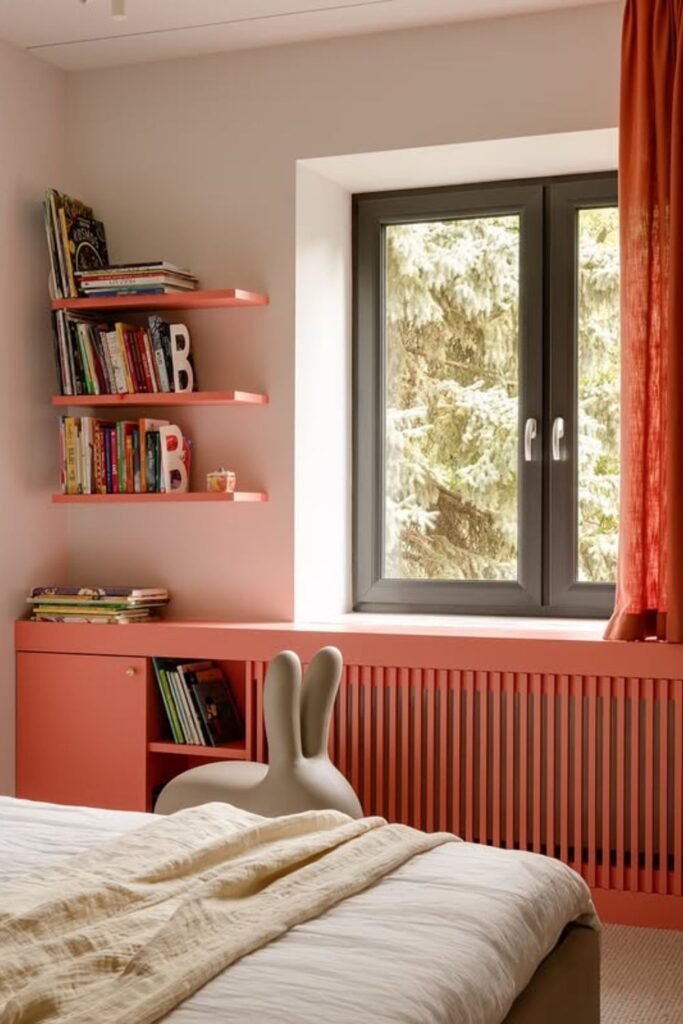
Walls can store books without eating up floor space. Slim floating shelves like these keep favorite reads visible while leaving the room open and breathable.
Use only one strong color for shelves and built-ins to make everything feel planned. The cabinet, radiator cover, and shelves all have that warm coral color.
Which makes the setting look like it was made just for you instead of being put together. Put only a few simple things on the shelves, with books first.
Put shelves at a height that your child can truly reach. Accessibility is more important than style. Books won’t get used if they are too high up.
Use open shelves on top and closed storage on the bottom to cover the trash. Show off what looks excellent. Put away what doesn’t.
Pattern Mix
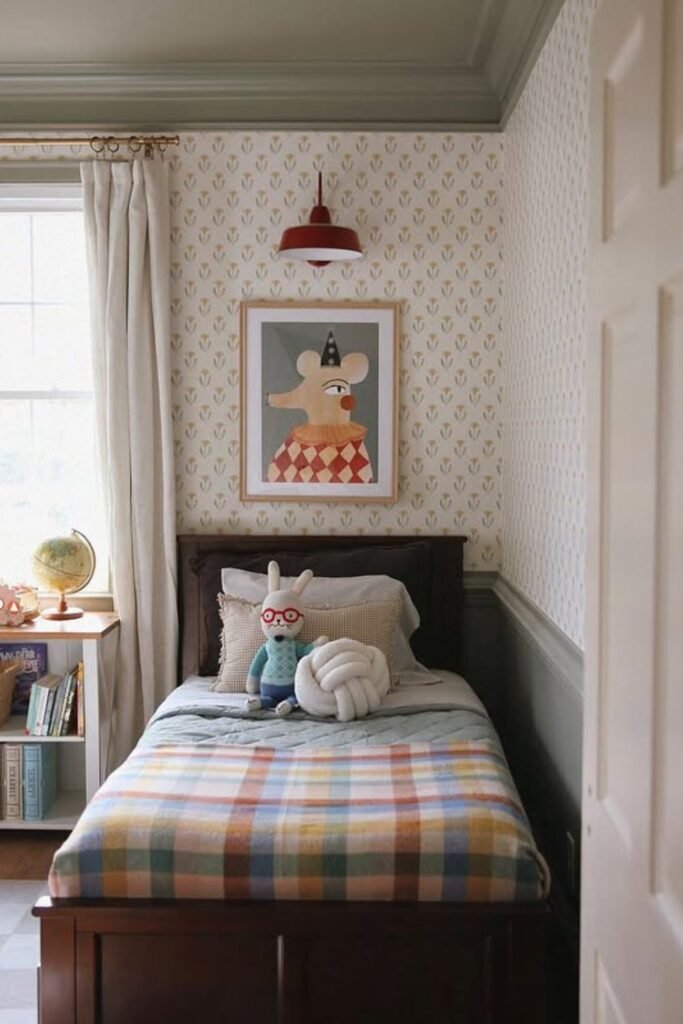
Personality shows up in layers, not noise. Small scale wallpaper paired with a bold plaid blanket proves that patterns can live together when you control their size and color.
Pick one main pattern and one print that goes with it. The wallpaper stays soft and repetitive here while the blanket has bolder color blocks.
Dark paint on the lower wall makes the area feel more stable and keeps lighter prints from flying. If complete wallpaper feels too busy try adding trim or a painted half wall.
Keep your work simple and in the middle so it doesn’t clash with the background. Do you work with patterns? Only use three or four colors in the palette.
Use them again and over again on fabrics and decorations so that everything goes together.
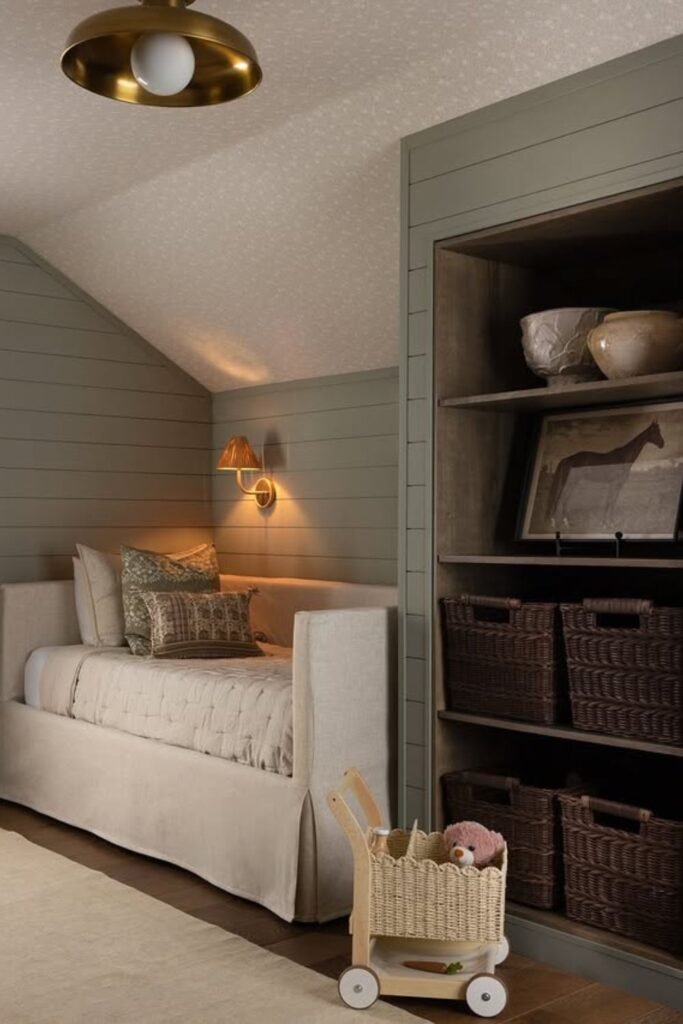
Calm Corner
Soft tones can feel just as magical as bright colors. Muted greens, warm wood, and woven baskets create a quiet retreat that still feels special.
Put the bed in a spot that slopes down to make the room feel safe and warm. To keep the nightstand area uncluttered, use a wall sconce instead of a big lamp.
Warm lighting against painted paneling gives the room depth without adding any more adornment.
Baskets are the easiest way to keep things organized on open shelves. Put toys away inside and show off only a few important ones on top.
Want a quieter version of whimsy. Instead of loud patterns, focus on texture, such linen beds, woven storage, and soft carpets.
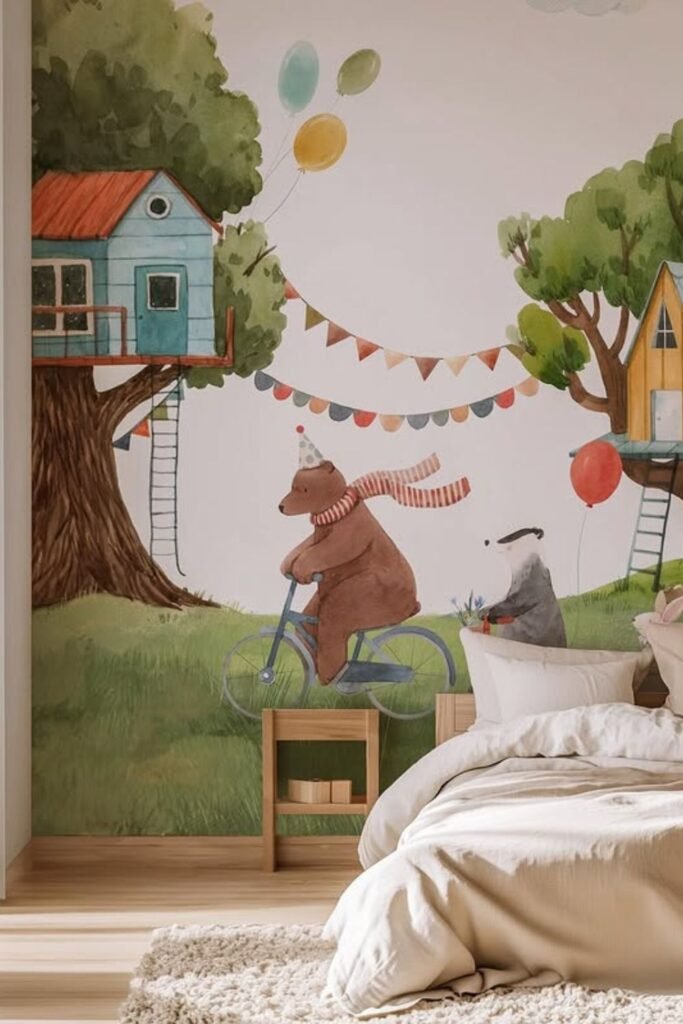
Adventure Mural
Storytelling on the wall changes how a room feels the moment you walk in. A playful scene with treehouses and animals turns the bed area into part of the story.
Keep the furniture low and basic so that the art is always visible. This is where neutral bedding works best.
If there were busy prints, they would fight with the mural and make the room feel full. Let the wall take your mind to other places.
If you need to keep the primary characters in the design, move the bed a little to the side. To match the trees in the mural, merely add one or two pieces of real wood.
One complete wall is best for big pieces of art. Make a commitment and then step back.
When the background is lively, the remainder of the room can stay calm and work well.
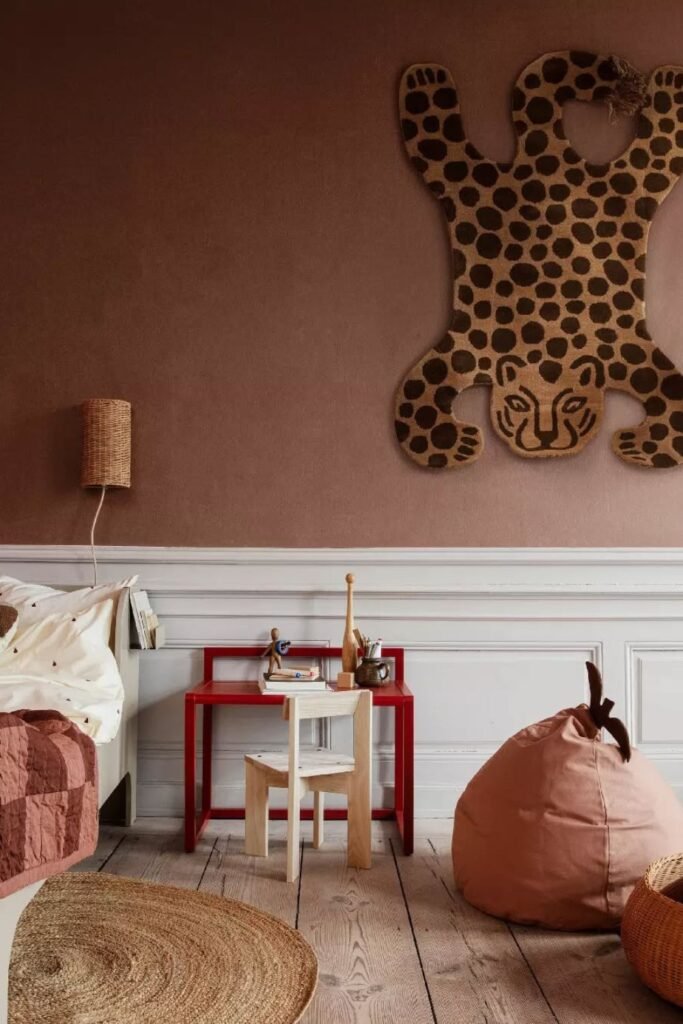
Bold Accent
One oversized wall piece can replace an entire gallery. A large animal-shaped textile like this adds personality instantly without layering frames, decals, or extra art.
Make the remainder of the wall plain so that the accent shines out. The lower wall paneling maintains white, while the upper part has a warm, earthy color.
That difference provides the art freedom to breathe. There would be too many accessories surrounding that would lessen the effect.
Pair dramatic wall art with textures that are more grounded, such woven rugs, linen bedding, and wooden furniture.
Strong shapes and patterns are calmed down by natural materials. A little desk tucked away maintains the layout useful with out drawing too much attention to it.
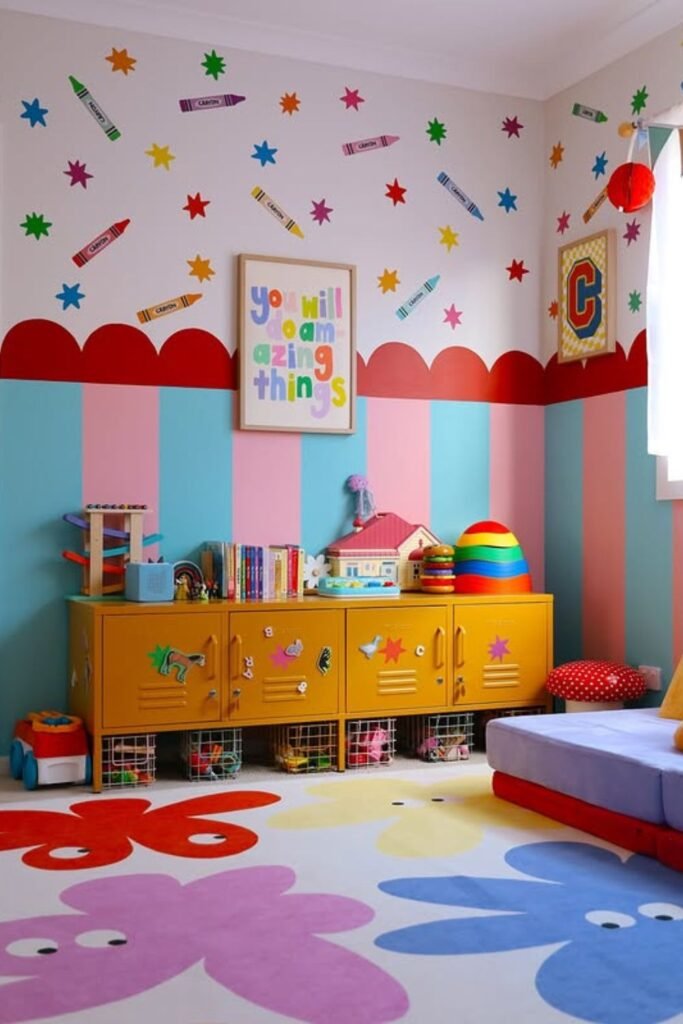
Creative Burst
Color feels playful when it’s organized not random. Vertical pastel stripes paired with a scalloped border create structure first.
The entertaining things, like stars and crayons, sit on top without taking over. Split the wall into parts if you like bright colors.
Use light colors for the lower stripes and white for the upper half to let the decals stand out without making the room feel too busy.
The red scallop line works like trim, separating the two parts and keeping everything in place.
Low storage along the wall keeps toys in one place and fits the bright ambiance. Open bins underneath make it easier to clean up and stop things from getting on the floor.
FAQs
How do you make a whimsical kids room that can grow with your child?
Begin with a neutral base. Pick wall colors that are serene, furniture that is simple, and flooring that will last.
Then add some fun by using things that are easy to change, such bedding, wall decals, art prints, light fixtures, and other decorations.
What’s the biggest mistake people make when designing a whimsical kids room?
Putting in too many emphasis points. The room will feel messy if you have a mural, vibrant bedding, a patterned rug, colorful furniture, and statement lighting all at once.
Choose one hero element and let everything else help it. Whimsy works best when there is still room to breathe in the room.

Hi, I’m Afaf! I’m a law student who loves writing about everyday life – from home projects and crafts to fashion, beauty, and parenting tips.
I’ve been writing for over a year, sharing ideas that are simple, practical, and easy to try. I write about things I find interesting and useful, whether that’s organizing a space, trying a new DIY, or finding activities to keep kids entertained.
My goal is to share helpful ideas without making things complicated. If it works in real life, I’ll write about it.
When I’m not studying or writing, I’m usually experimenting with new projects or scrolling for inspiration!