
24 Summer Art Projects for Kids 2026
I had that moment last summer that every parent knows. It was 10 a.m., and I had already heard “I’m bored” six times.
I didn’t have the energy to set up a complicated Pinterest craft since the house was a mess and the screens were winning.
I just needed something easy that my kids could basically complete by themselves. If you’re in the same boat, you don’t want anything spectacular.
In this article, I will show you 24 summer art projects that will help your kids play, learn, and relax.
Let’s jump in!
What Easy Summer Art Projects Can Kids Do With Minimal Supervision?
Keep it basic if you want your kids to be able to start art projects without calling you every two minutes.
Pick activities that only need simple things like paper, markers, glue sticks, washable paint, and paper plates.
Open-ended crafts like painting, coloring, cutting, and pasting are the greatest ones to do with little supervision because there is no “right” way to accomplish them.
Kids are more likely to stay occupied and feel pleased of what they make when they don’t have to follow tight guidelines.
Save this article for later!👇👇👇
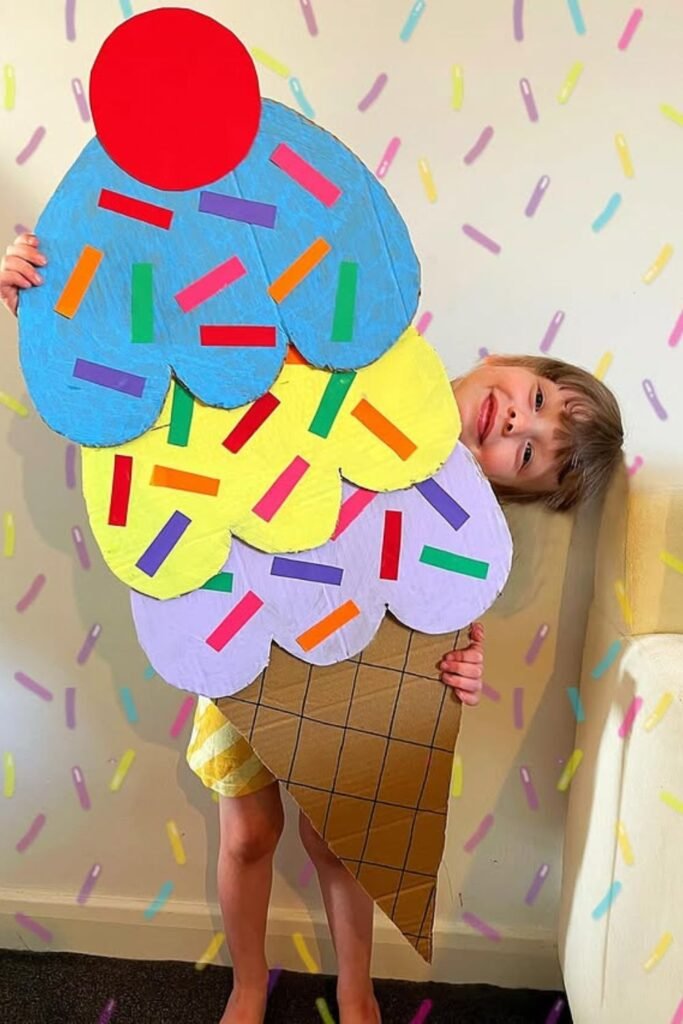
Ice Cream
Hot summer afternoons call for something oversized and fun. Turning cardboard into a giant ice cream cone.
It quickly feels like a tiny costume and an art project all at once. Get a big box, draw a cone shape on it.
And let your child paint each scoop in vibrant colors. Use leftover paper to cut out small sprinkle shapes and glue them on for texture.
Use a marker to draw lines on the cone to finish it. Great for days of pretend play, summer parties, or even a quick photo shoot at home.
Kids stay engaged longer with bigger sizes, and decorating the “flavors” allows them complete creative power.
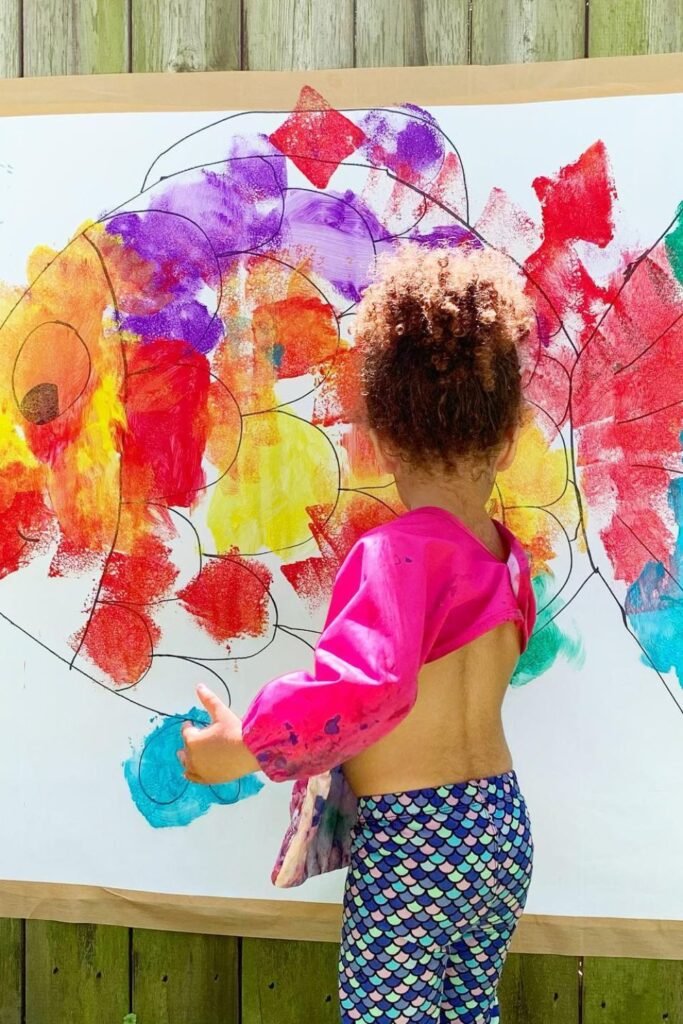
Wall Mural
Blank fences and backyard walls can turn into giant canvases in minutes. Tape a large sheet of paper outside.
Make simple shapes like a fish, dinosaur, or abstract shape and let your youngster fill them in whatever they wish.
huge spaces entail huge arm motions, which use up energy and help them stay concentrated longer.
Younger kids can cover a lot of ground without getting upset when they use washable paint and sponges.
Setting up outside keeps the mess out of the house, and after you’re done, all you have to do is peel off the paper.
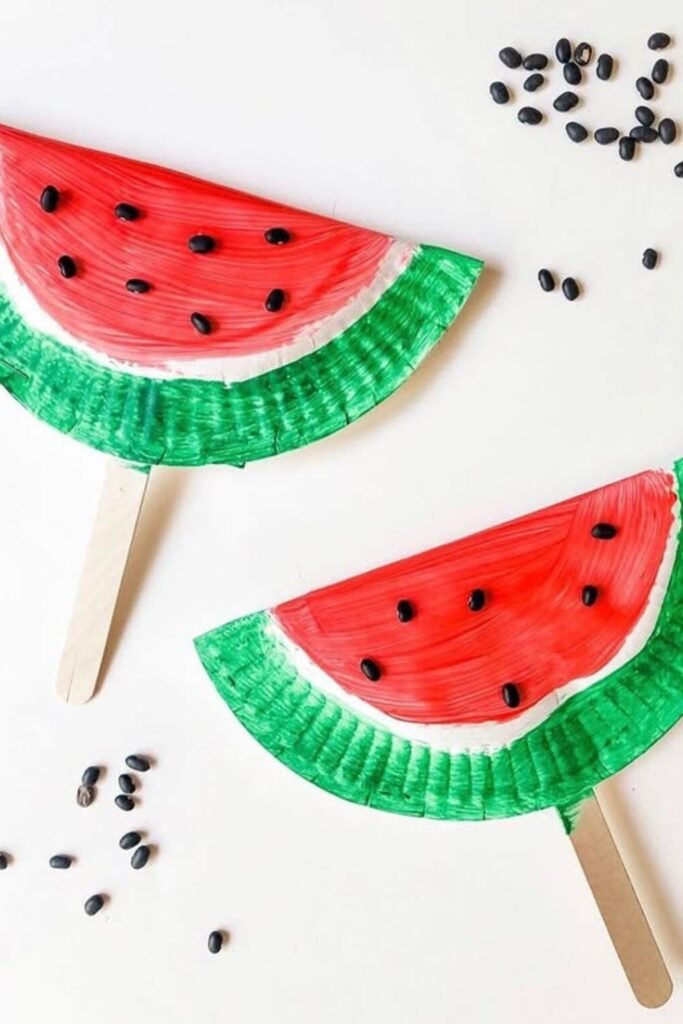
Watermelon Fans
Sticky summer afternoons feel lighter when kids can craft something they actually use. Paper plates.
Just paint them red and green to make them look like colorful watermelon slices. Let them paint the color on, and then glue black beans or paper dots on as seeds.
Put a popsicle stick at the bottom, and it creates a fan you can hold. Great for playdates in the backyard, make-believe picnics, or hot days on the patio.
Younger kids prefer the simple painting, but older kids can add things like shading or glitter to make it more interesting.
Keep wipes close by for quick cleanup, and choose paint that can be washed off so you don’t have to worry about the mess.
Pom Balloons
Colorful pom-poms instantly grab attention, which makes this craft perfect for kids who lose interest fast.
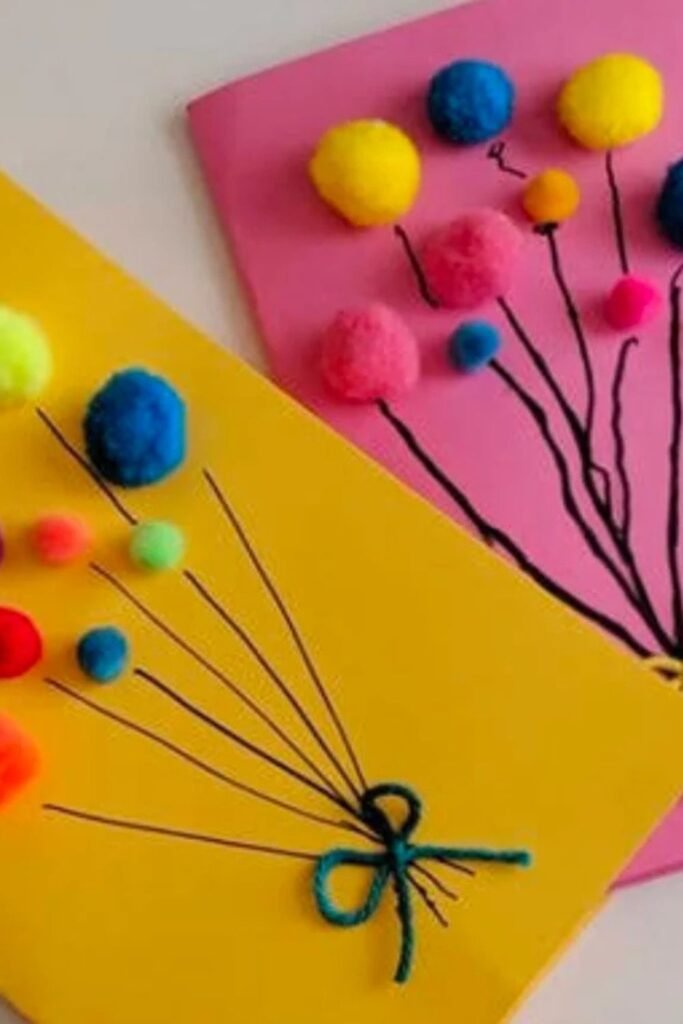
Use a black marker to draw simple balloon strings. Then, let your child attach bright pom-poms on the top of the strings to make the balloons.
Different sizes add depth without any more work. A little yarn bow at the bottom ties everything together.
And provides little fingers an opportunity to learn tying. It’s largely gluing and putting, so it’s great for rainy afternoons or quiet time crafts.
Use thick cardstock to keep the paper from curling. It’s easy to set up, easy to finish, and bold enough to hang on the wall.
Filter Painting
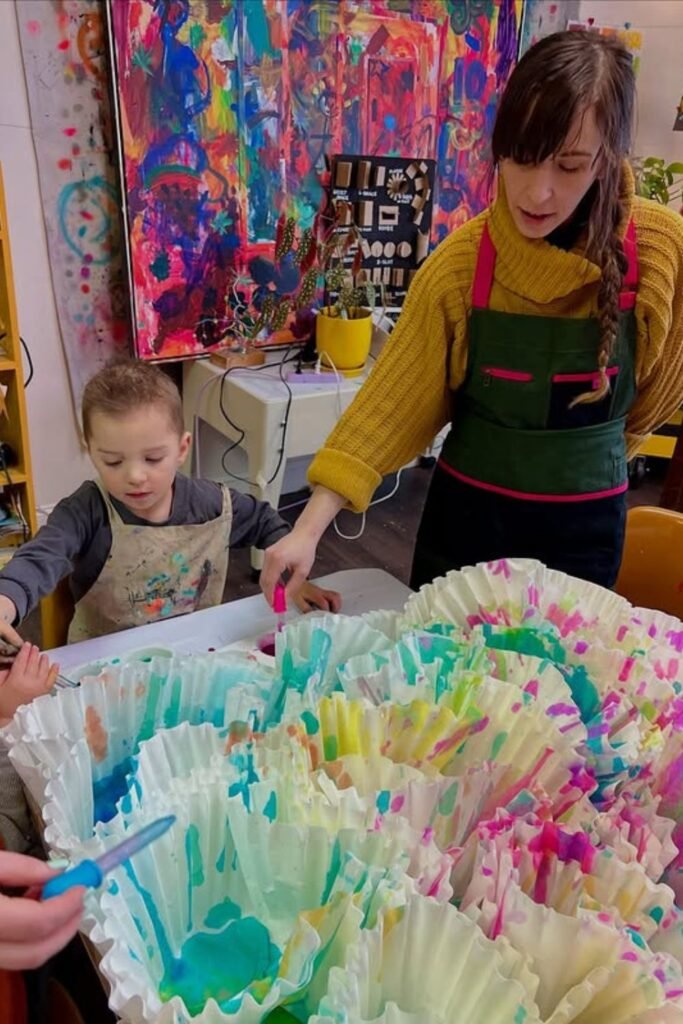
Mess feels less stressful when it’s contained. Coffee filters spread out on a tray create dozens of little spaces for kids to experiment with color.
Give them droppers, paint that has been watered down, or even washable markers with a spray bottle.
Watching the colors mix and bleed keeps kids interested without having to give them directions all the time.
Put everything on a plastic tablecloth and let them move from filter to filter at their own leisure.
After they dry, you may hang them in a window to make them look like stained glass or turn them into flowers.
Sunny Faces
Bright paper, bold shapes, and funny expressions can turn a simple circle into a whole personality.
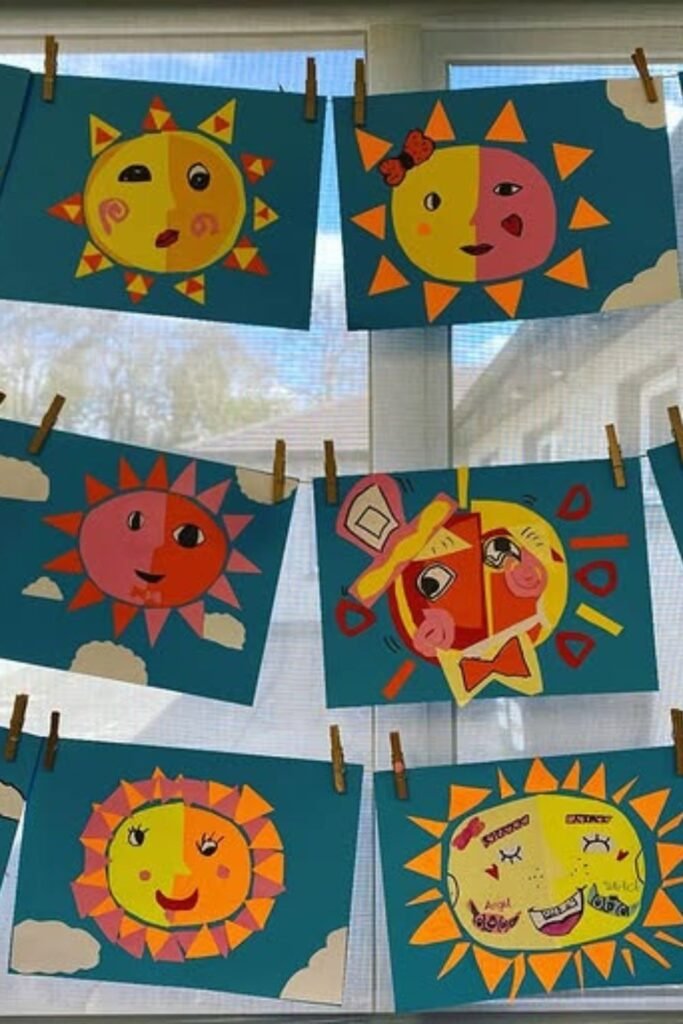
Cut out big sun shapes from colored cardstock, and then let the kids make their own faces using scraps of paper for the eyes, mouth, and rays.
You don’t have to be perfect; crooked smiles and uneven triangles give your work character.
To make a lovely summer display, hang finished pieces on a string across a window or wall. It’s great for groups because each child’s sun will look different.
Younger kids will find it easier if you have pre-cut shapes waiting for them. Older kids can draw and cut their own details to give them more freedom.
Canvas Painting
Real paint on a standing easel changes everything. Kids focus more when they feel like “real artists” instead of just coloring at a table.
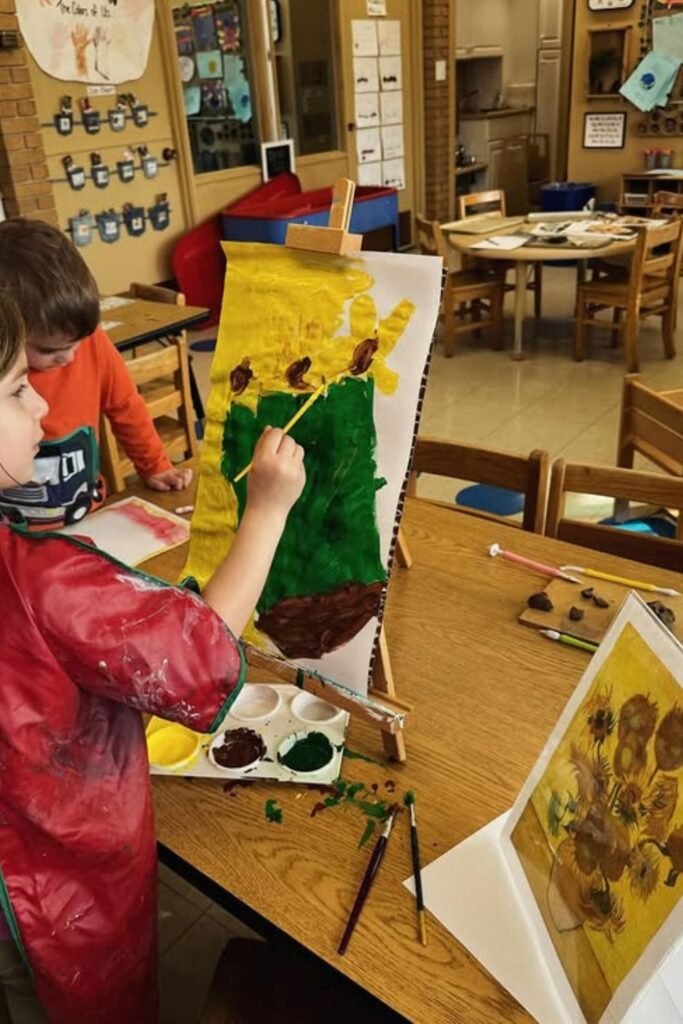
Put together a basic still life idea, like sunflowers, a colorful landscape, or even a printed photo to look at for ideas.
Give them a modest number of colors to work with so that things don’t get muddy. Let them layer big parts first, then add minor details.
Wearing an apron or an old shirt makes cleaning up easy. Great for calm afternoons inside or small groups where each youngster may work at their own speed.
When students step back and look at the whole canvas they made, their confidence grows quickly.
Flower Stamps
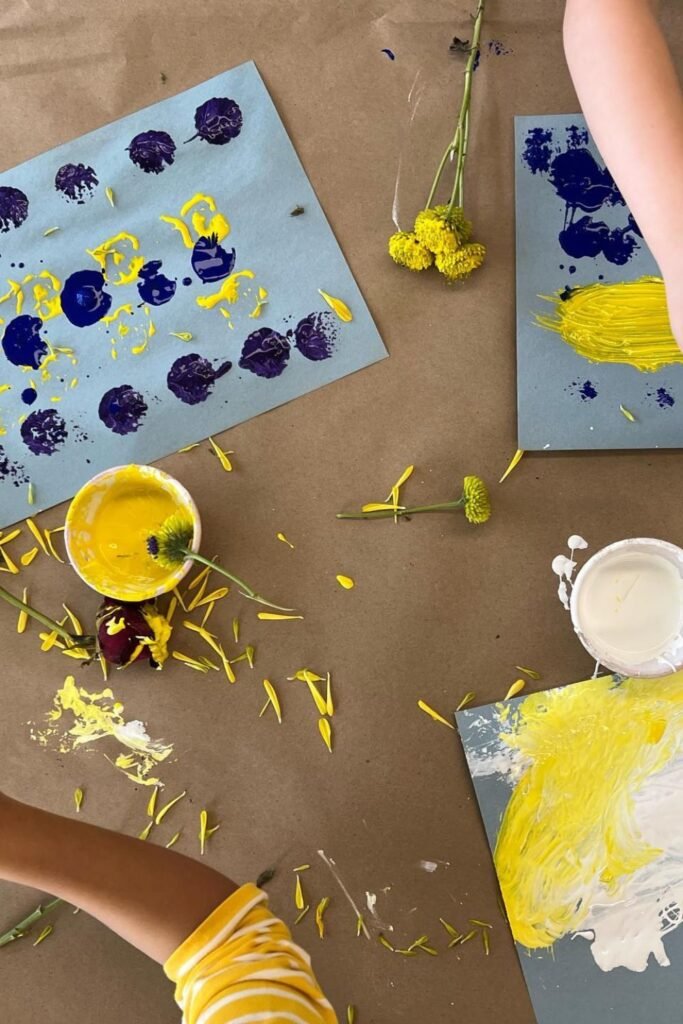
Nature already gives you the brushes. Fresh flowers dipped lightly in paint create bold prints without needing perfect brush control.
Put out some colors and let them press petals onto thick paper to observe what shapes they make.
Varied flowers leave varied forms, which makes the task more fun. Put craft paper on the table.
So kids may stamp without worrying about spillage. Perfect for evenings outside when you may gather flowers from your yard.
Buy cheap bouquets from the supermarket. Once they are dry, finished prints make great homemade cards or simple wall art.
Fairy Garden
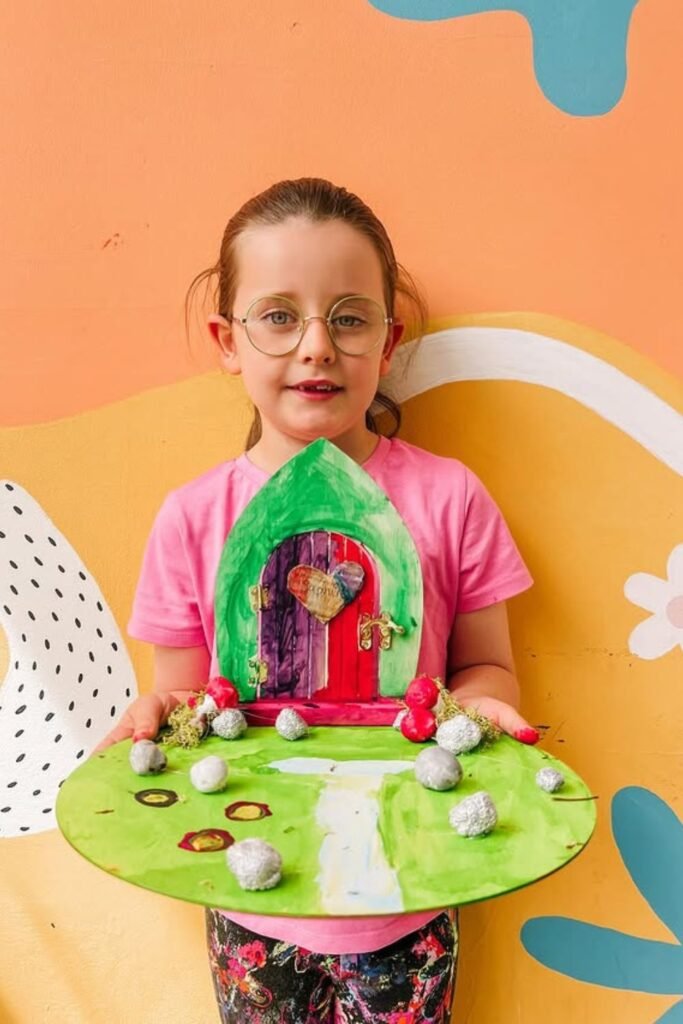
Tiny worlds capture attention in a way regular crafts don’t. A simple cardboard base painted green.
Can become a wonderful garden with a small door, pebbles, and pieces of moss. Let your child choose where the trail goes and where each stone should go.
Most things stick together well with glue, and you can easily construct rocks out of aluminum foil balls.
Great for calm afternoons when you need to let your mind wander. To make more details, add tiny things you recycled from about the house.
When they’re done, it turns into a play scene that they can utilize again instead of simply another project that gets put away.
Owl Sculptures
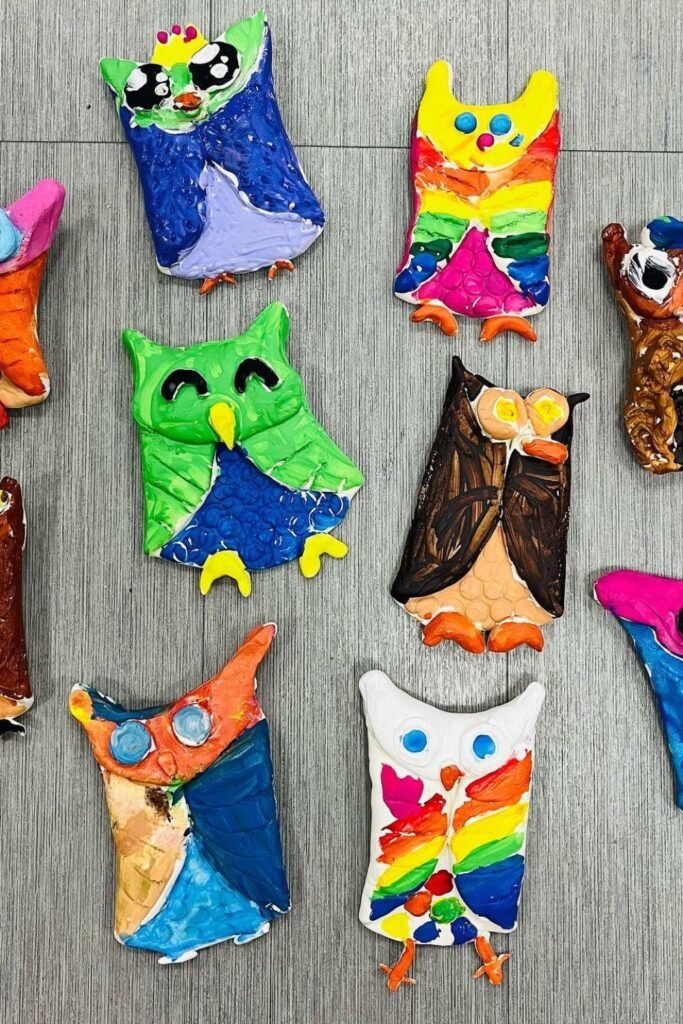
Texture makes art more exciting than flat paper ever could. Modeling clay shaped into simple owl forms.
lets kids use their hands to make something before they even touch paint. To make the body, start with an oval shape and squeeze two small ears at the top.
Then, for the eyes, press in circles. Bright acrylic colors bring each owl to life after they are dried.
The best part is that no two will ever look the same. Great for older kids who want to shape things and add details.
To keep fractures from forming, let parts dry completely before painting. You can use finished owls as decorations on shelves or as gifts.
Leaf Collage
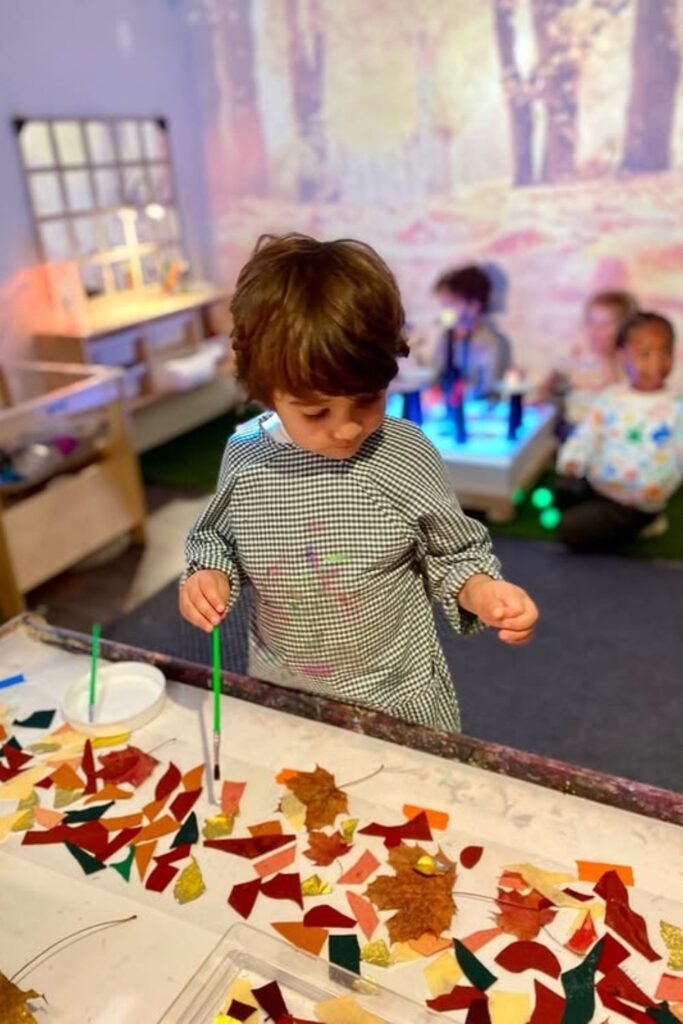
Color sorting turns into art without kids even realizing it. Spread out real leaves and small paper scraps on the table.
Then let them put the pieces together and glue them into patterns or basic drawings. Adding bright forms to natural textures.
Makes it more engaging for a longer time than basic paper crafts. There are fewer “Is this right?” queries when there are no strict regulations.
Great for quiet mornings or small group tables where everyone works at their own pace. Use thicker paper and clear glue to keep everything in place.
After it dries, the blend of crisp leaves and bright colors makes art that seems both seasonal and personal.
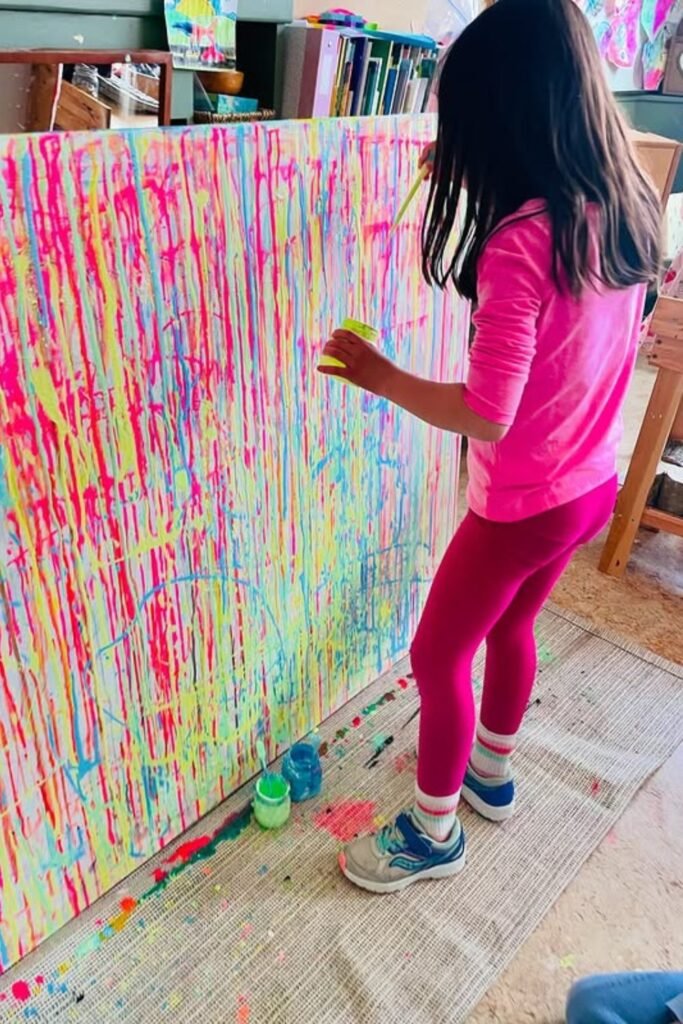
Drip Painting
Energy needs somewhere to go, especially on long summer days. A large upright canvas and squeeze bottles filled with watered-down paint.
Let them move around without giving them rigid directions. It’s fun and unusual to watch colors drop and mix down the surface.
Put down a drop cloth first and put them in old clothes so you don’t have to worry about becoming wet.
This one works better in bigger settings since wide arm movements keep children interested for longer.
There is no perfect outcome to chase simply layers of color that get thicker with time. The bold, abstract design makes a big statement on any playroom wall once it’s dry.
Ocean Scene
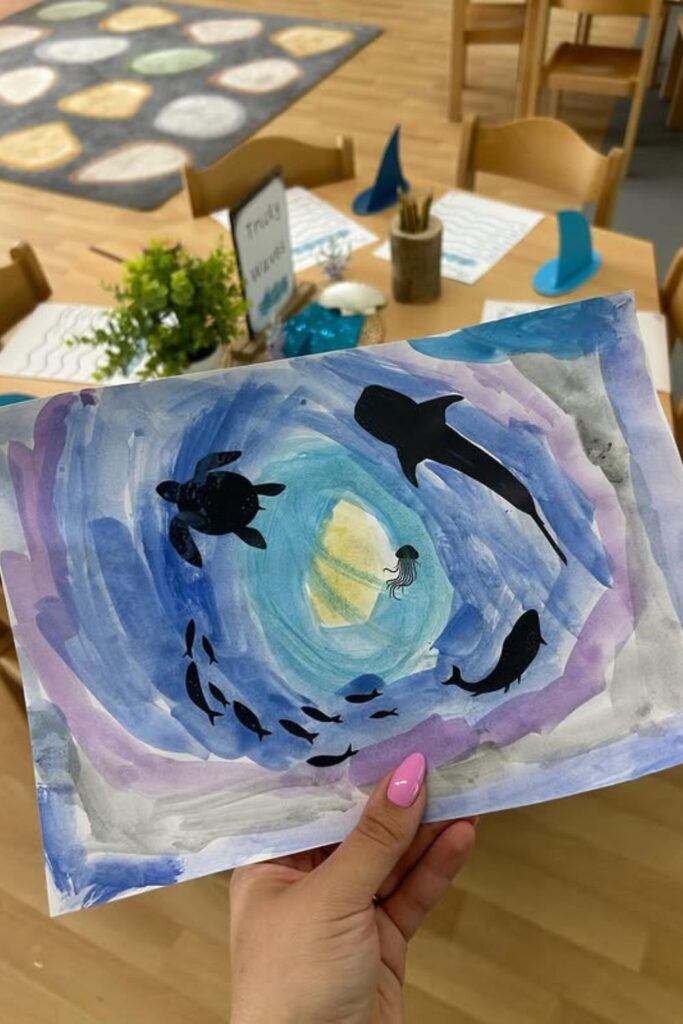
Calm colors can shift the whole mood of an art session. Start with watered-down blue and purple paint.
And let the youngsters move it about on the page to make an aquatic scene. While it dries, cut out simple shapes of sea creatures from black paper.
Such whales, turtles, fish and even jellyfish. After the paint dries, glue them on so they stand out clearly against the smooth waves.
Adding silhouettes makes the concept simple yet still dramatic. Great for calm after noons or weeks at the beach.
Tell them to put the animals in different places to make the scene feel alive without needing a lot of extra information.
Marker Drawing
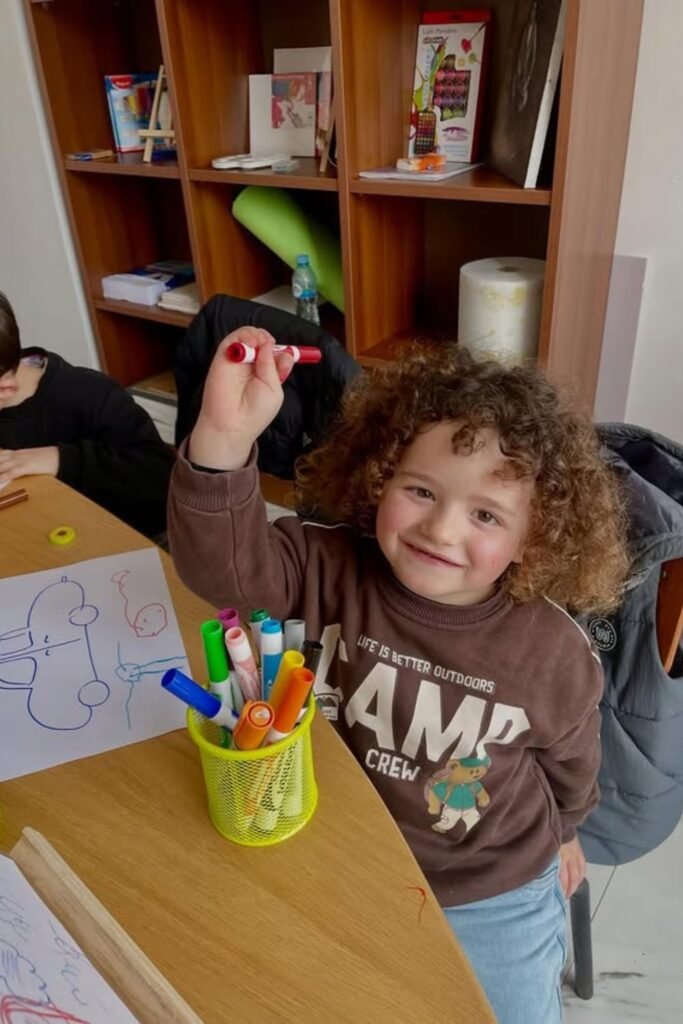
Sometimes the simplest setup keeps kids busy the longest. A stack of plain paper and a cup of washable.
In a few of minutes, markers can morph into automobiles, animals, superheroes, or made-up creatures.
Give them a vague task, like “draw your dream playground” or “make up a new animal,” and then leave them alone.
There is no wrong answer when you do open-ended drawing, which fosters confidence. continually the colors close by so kids don’t have to continually asking for more.
Good for quiet time, classroom tables, or times when you need something quick and easy to clean up. You may make a tiny exhibit at home by taping finished drawings to a wall.
Abstract Lines
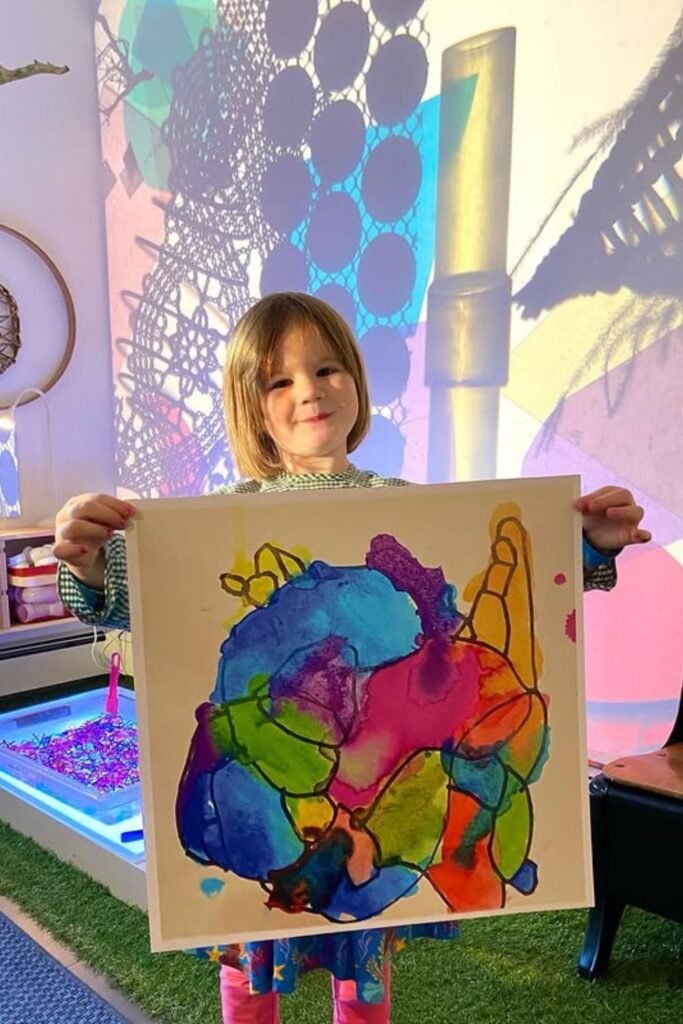
Big paper and bold outlines create instant confidence. Start by drawing random curved lines across the page with a thick black marker.
To split the area into parts. Give youngsters watercolor paints or acrylics that have been thinned out and let them color in each form with a different color.
You don’t have to mix things perfectly; drips and overlaps give them character. Strong outlines keep younger youngsters from getting frustrated when they stay inside.
This is great for days when you want to do art inside but don’t want to have to sketch very well.
When it’s dry, the dark lines and vivid colors make it look like real gallery art that’s ready to be shown.
Koi Pond
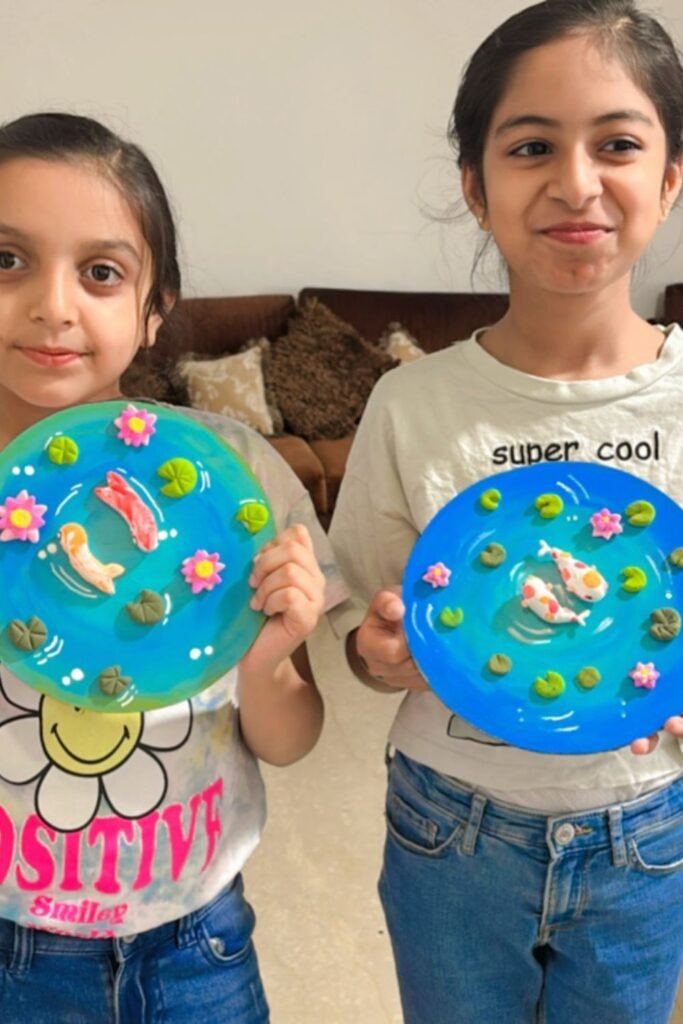
Flat paper feels ordinary until you turn it into a mini pond. Paint a paper plate in shades of blue, blending darker edges with lighter centers to create depth.
While it dries, make miniature fish and lily pads out of air-dry clay or modeling dough.
Before the pieces set, use a toothpick to press small details into them. Once everything is ready, glue it all together.
Leaving enough space between the pieces so the “water” can still be seen. White paint dots or short, curving lines make simple ripple effects.
Kids who like to make simple things without needing complicated tools will love this. You can show off finished plates on a shelf or hang them on the wall.
Spray Art
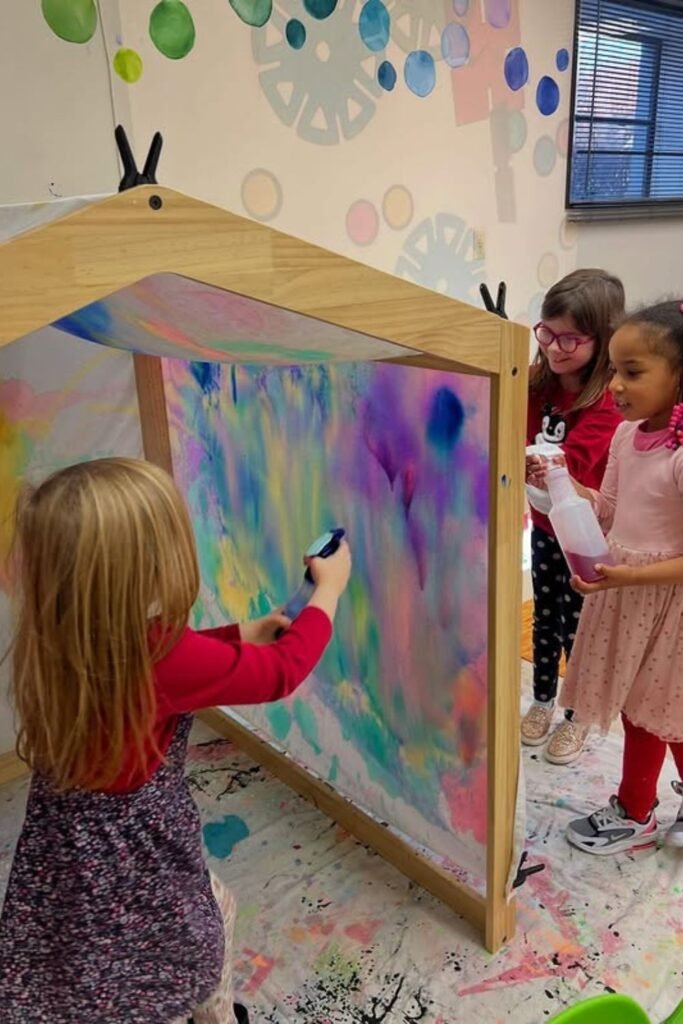
Color feels magical when it moves on its own. Clip large paper inside a simple frame or against a wall.
Then let the youngsters spray watercolors or food coloring that has been combined with water.
You don’t have to be careful with your brush strokes to see the colors mix and drop. Even smaller kids can hold spray bottles easily.
And they don’t have to do anything complex to use them. Put down a tarp beforehand so you don’t have to worry about getting wet.
it dries, the soft blended appearance looks a lot like watercolor skies or dreamy backdrops that are ready for more details later.
Outdoor Easels
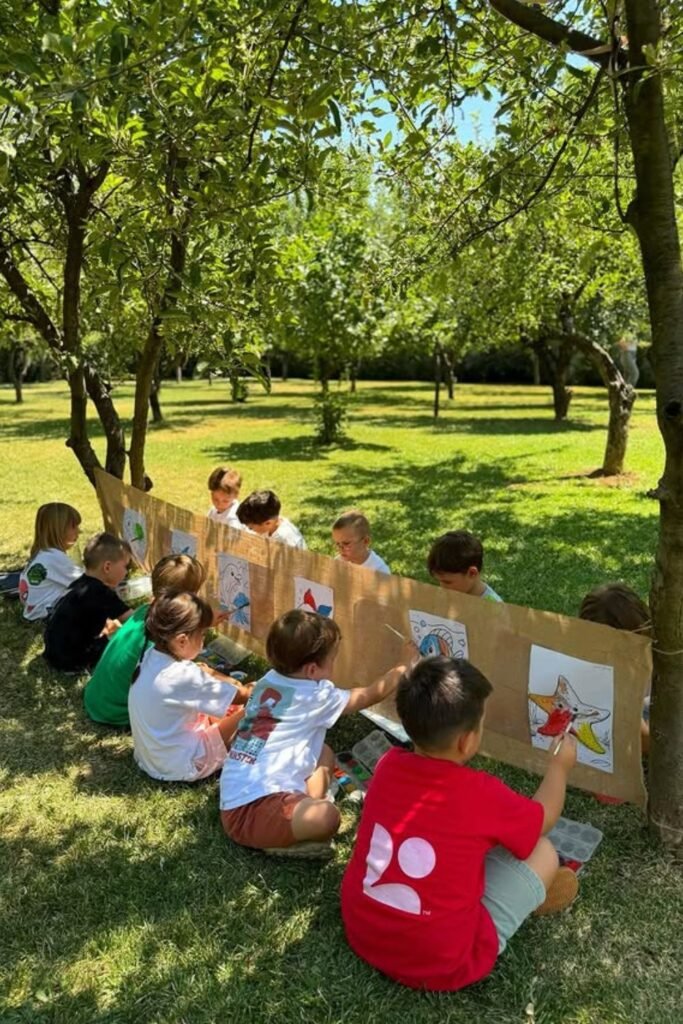
Fresh air changes everything. Clip large sheets of paper to a long piece of cardboard and secure it between trees or along a fence.
Put paint trays on the grass so that youngsters may work together without having to sit at a table.
They can stay focused longer when they are outside in the sun and hear natural sounds.
You can choose basic printable outlines or leave pages blank so you have complete control.
It stays easy to clean up since spills drop on the grass instead on the floor. Great for summer camps, backyard parties, or playdates.
When you want kids to be creative without making a mess inside. Groups stay active and may go at their own pace with setups like these that last longer.
Donut Art
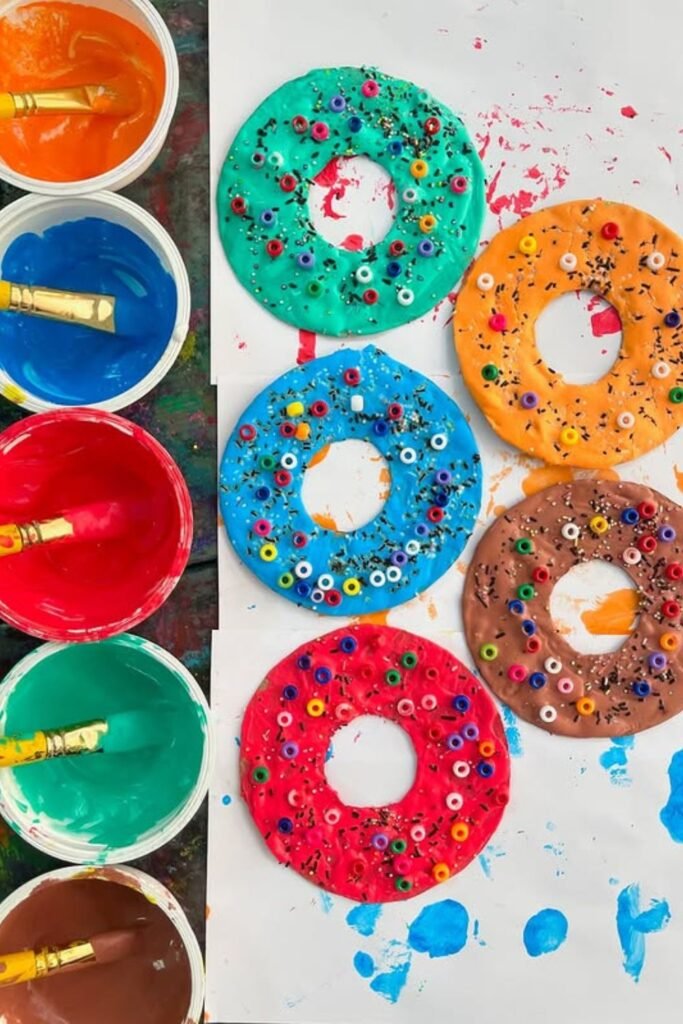
Bright colors and pretend sprinkles never fail. Cut thick cardboard into large donut rings, then let kids cover them with bold paint.
Like they’re putting icing on top. Press beads, sequins, or actual craft sprinkles into the paint before it dries to add texture.
Each one feels like a new “flavor” because of the different color combinations. Keep glue close by in case bits come off after they dry.
Great for playing bakery once the art class is over. Use washable paint so it’s easy to clean up, and put down scrap paper first because decorating can get messy.
The finished donuts look like they would be fun to put up in a playroom or use as party decorations.
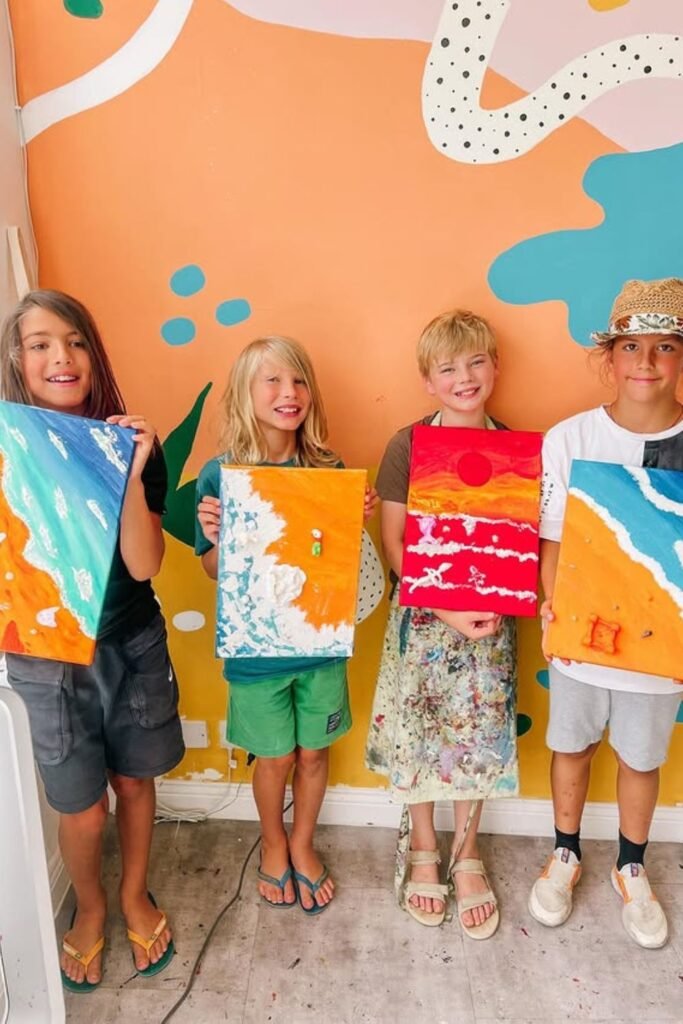
Beach Canvas
Summer feels different when kids paint the ocean themselves. Start by blending blue and turquoise across the top half of a canvas.
Then, using a sponge to provide texture, apply sandy tones to the bottom. You don’t need to be an expert painter.
To make basic wave lines by dragging white paint softly across blue. Once the base is dry and you can add little shells.
Or pieces of textured paint to give it a 3D look. Good for older kids who want something that looks “real” yet is still easy to handle.
Limit the number of colors so the scene doesn’t get muddy. You can use finished pieces as summer souvenirs or as gifts for family.
Feelings Monster
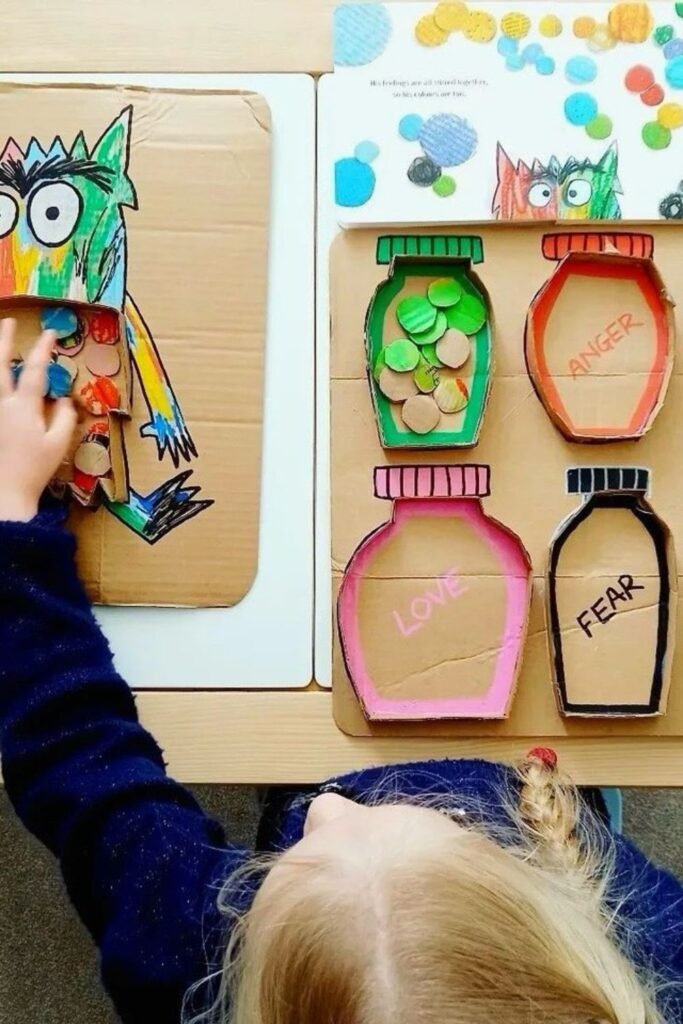
Big emotions need somewhere to go. A simple cardboard monster with a cut-out mouth turns into an interactive art activity instead of just a drawing.
Use vibrant colors to color the monster, and then use bottle caps or paper circles as “emotion tokens.
” Put words like “happy,” “angry,” “sad,” or “excited” on little jars or pieces. Children can give the monster food according on how they are feeling that day.
Good for talking about feelings in the school or at home without making it too serious. You only need glue and markers to put it together.
You can sort through your sentiments in a straightforward, visual method while keeping your hands busy.
Camping Scene
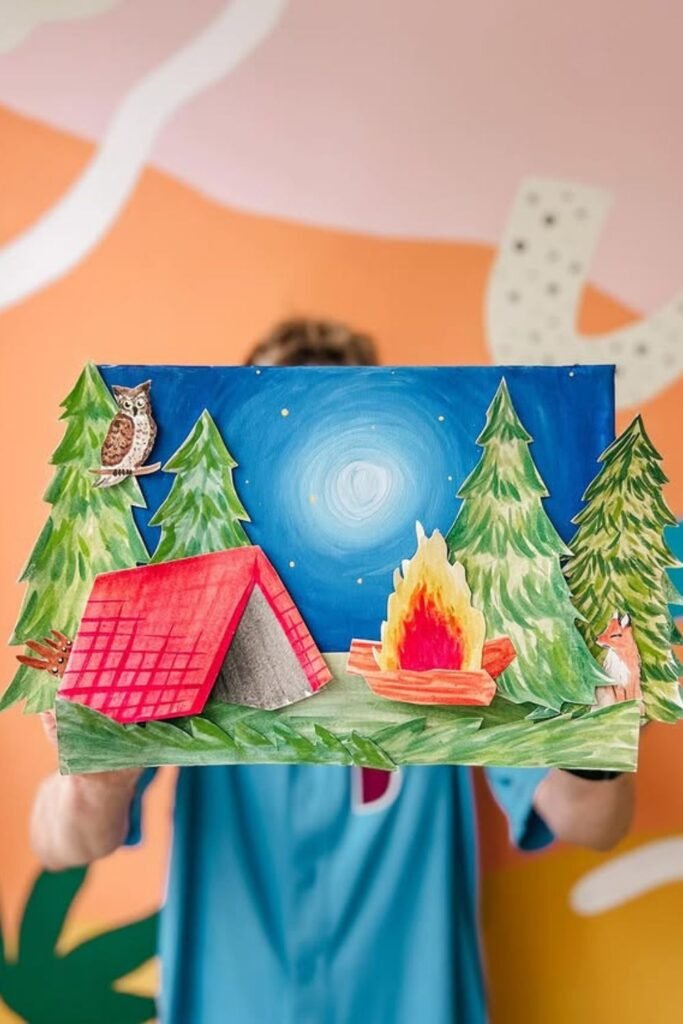
Storytelling becomes easier when kids build the setting first. Fold thick paper to create a standing base.
Then draw or attach some trees, a little tent, and a brilliant campfire. Put the pieces on top of each other so that the scene looks like it’s coming forward instead of staying flat.
The sky turns dark blue with small white spots, which makes it look like night. Great for summer camp themes.
And quiet time to be creative inside. Tell kids to put little animals in the trees or behind the tent to make it even more fun.
Most of the labor is done with glue sticks and markers and the finished piece may stand up on its own like a little stage ready for pretend adventures.
Paper Parrot
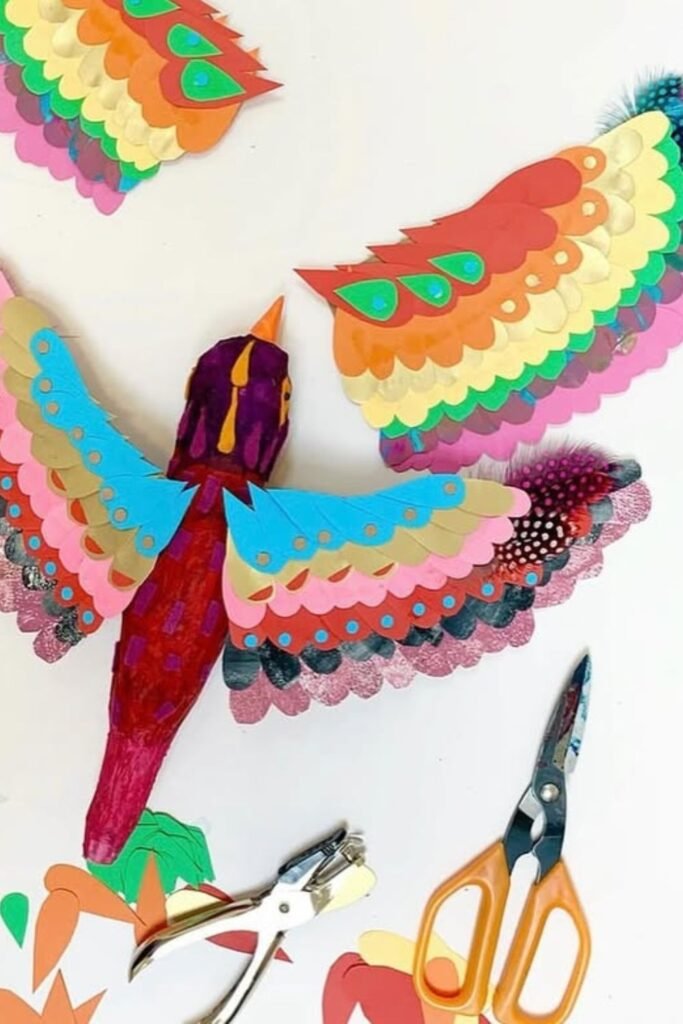
Bright feathers grab attention fast. Cut simple wing shapes from colored paper, then layer smaller scalloped pieces on top to build texture.
Let kids pick their own color combinations instead of sticking to a fixed pattern. Mixing bright colors keeps it fun.
Put everything on a strong body shape and add real craft feathers to the tail for a little extra style.
As they cut curves and details, they naturally practice with scissors. Great for summer themes that are tropical or jungle-like.
When you’re done, tape it to a wall or hang it from the ceiling so it looks like it’s in the air. Layering makes the bird feel full without having to know how to draw well.
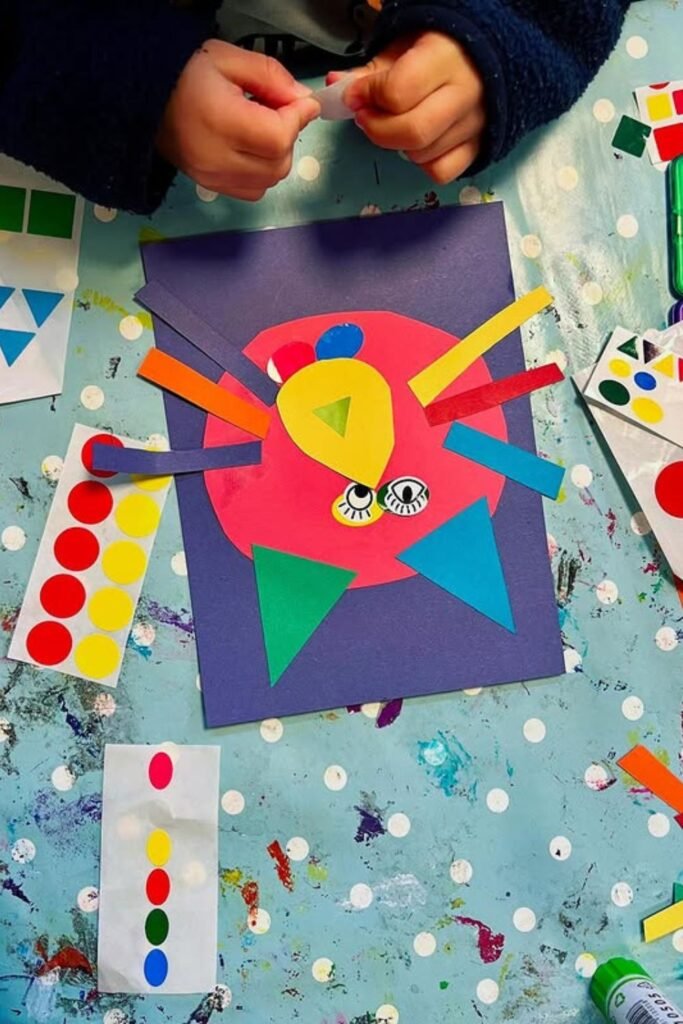
Shape Creature
Bright paper shapes can turn into a whole character in minutes. Lay out circles, triangles, and rectangles in different colors.
and let youngsters make a funny monster by putting pieces together and then gluing them. You don’t have to draw anything.
Simply drag the shapes around till something amusing happens. Sticker dots let you add rapid details without having to know how to draw.
Good for little kids who are still discovering how shapes join together. If you don’t want to make a mess, use glue sticks instead of liquid glue.
When they’re done, have them name their monster and tell a short story about it. Easy to set up, requires little to no prep work, and a lot of imagination.
FAQs
What supplies should I always keep at home for quick summer art days?
You don’t need to buy a lot of things at the craft store. Put together a small bin with things like washable paint, markers, glue sticks, safety scissors, and tape.
For variation, add some other things like pom-poms, stickers, and popsicle sticks. You can get things out in minutes instead of having to look through drawers.
How do I keep summer art projects from turning into a huge mess?
Before you start, be sure you know your limits.
Put down an old sheet or plastic tablecloth, use paint that can be washed off, and make sure each youngster has their own area.
You don’t have to change clothes if you wear an apron or a big T-shirt. For rapid cleanups, keep wipes or a wet cloth close by.
Hi, I’m Afaf! I’m a law student who loves writing about everyday life – from home projects and crafts to fashion, beauty, and parenting tips.
I’ve been writing for over a year, sharing ideas that are simple, practical, and easy to try. I write about things I find interesting and useful, whether that’s organizing a space, trying a new DIY, or finding activities to keep kids entertained.
My goal is to share helpful ideas without making things complicated. If it works in real life, I’ll write about it.
When I’m not studying or writing, I’m usually experimenting with new projects or scrolling for inspiration!