
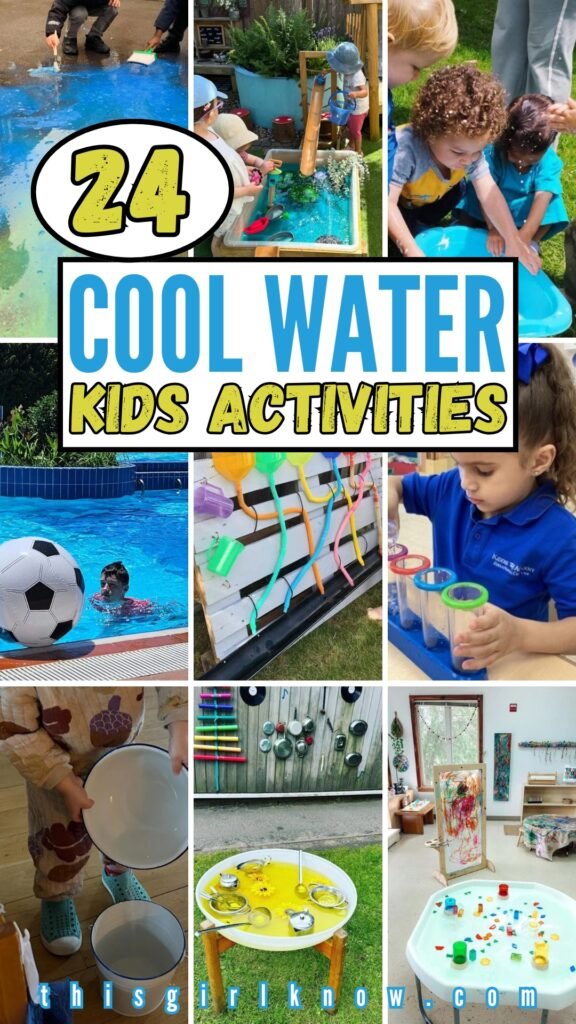
24 Water Activities for Kids 2026
The sun is already scorching at 10 a.m., and your kids are melting into the couch and moaning, “I’m bored.” You don’t have a swimming pool.
You don’t want to spend another hour on screens. And you don’t have the energy for a craft project that is too hard.
You only need something easy that will keep them busy for more than five minutes and cool them down.
In this article, I’ve rounded up 24 water activities for kids that work well at home, school, or playtime.
Let’s jump in!
How Do You Keep Kids Entertained With Water on Hot Days?
Begin with something small. You don’t need a big setup or a pool. Give youngsters a reason to drink water.
That’s the most important thing. They’ll splash for five minutes and then go if you just give them a bucket.
But if you make it a tiny assignment, like washing the bikes, getting toys out of the ice, or filling one bucket with only a sponge, they will remain longer.
When it’s hot outside, think about three things: moving, cooling off, and making things easy to set up. Use what you already own. Keep it secure. And let them get dirty.
Save this article for later!👇👇👇
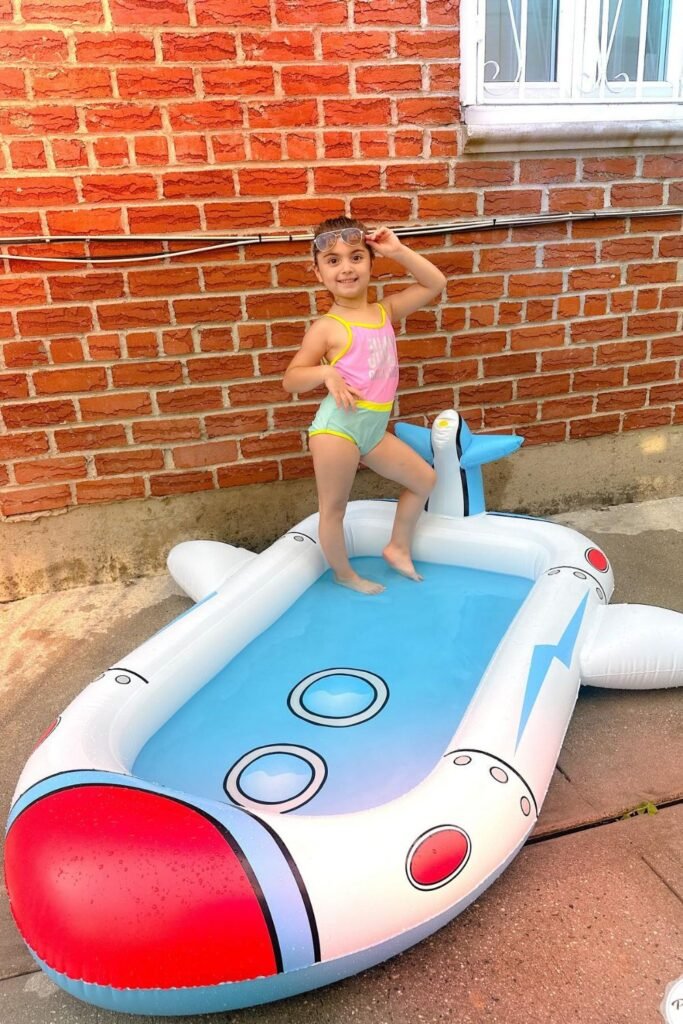
Splash Plane
Tiny backyard? No problem. Fill an inflatable splash float with a few inches of water and suddenly you’ve created a mini water zone
That seems bigger than it is. Kids appreciate the “special spot” feeling. It’s not just water on the ground.
It’s their own pool-shaped space. Put it on concrete or patio tiles, give them goggles for additional enjoyment.
And let them come and go as they like. Great for little kids who want to cool off without getting too wet.
Keep it shallow, stay close by, and you’ll have safe, easy summer fun that doesn’t take long to set up.
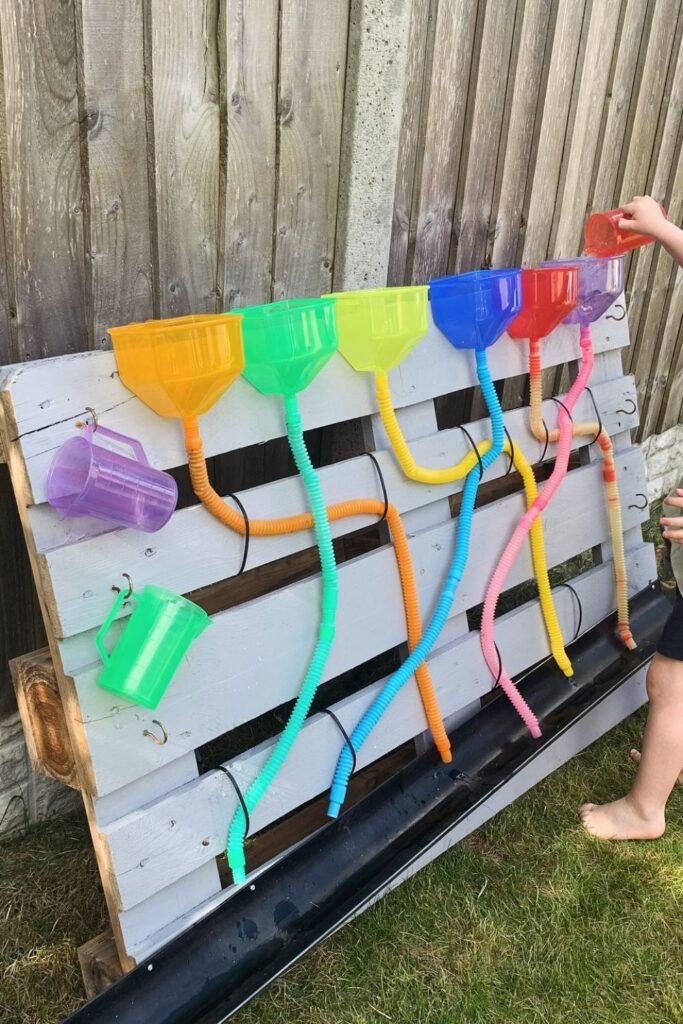
Funnel Wall
Water gets way more interesting when it has somewhere to travel. Mount a few plastic funnels onto a wooden board or pallet.
Put flexible tubes under the structure and let youngsters pour from the top to see how it flows down.
Backyard fences are ideal for this since they keep everything safe and let you regulate the mess with a tray at the bottom.
Changing the height of the funnels makes it more entertaining and helps younger kids learn how to pour without spilling.
Put cups of different sizes in the mix so they can try out different speeds and directions. It keeps tiny hands occupied and turns plain water into a mini science lab.
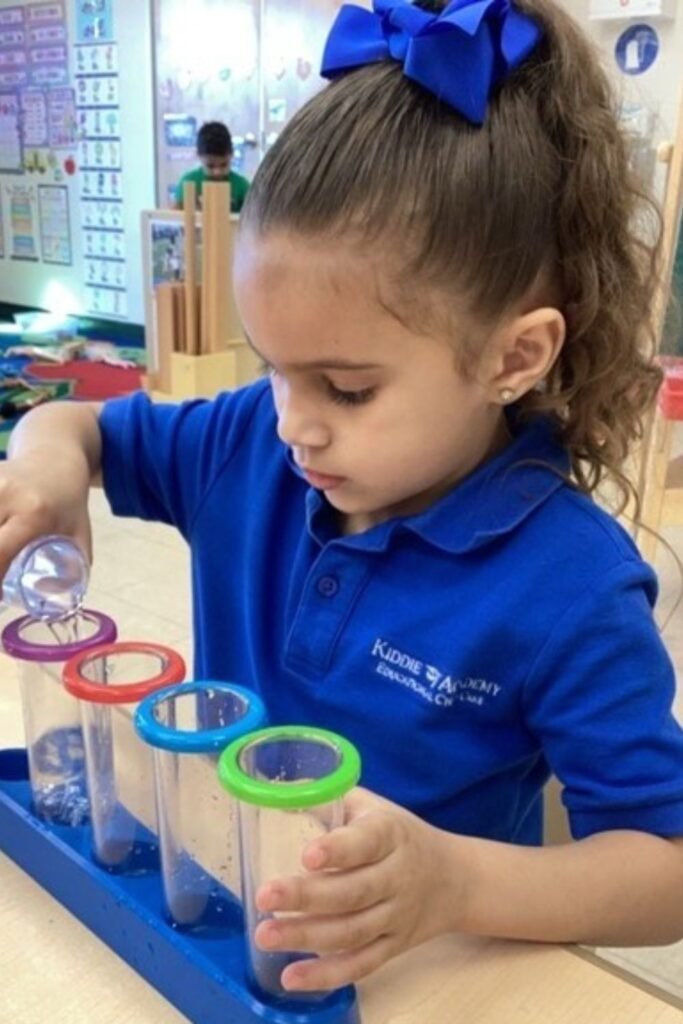
Pour Station
Give kids a small tray, a few clear tubes or cups, and a little pitcher of water, and watch how serious they become.
It seems easy to pour from one container to another, but it quickly helps you focus. Put this on a kitchen table.
With a cloth underneath, or take it outside if you don’t want to worry about spillage. It feels more like a game.
When you have different ring sizes or colored tops. To make it a small mission, tell them to fill each tube.
To the same level or only halfway. Quiet, relaxing, and great for preschoolers who want to do things with their hands.
Pool Soccer
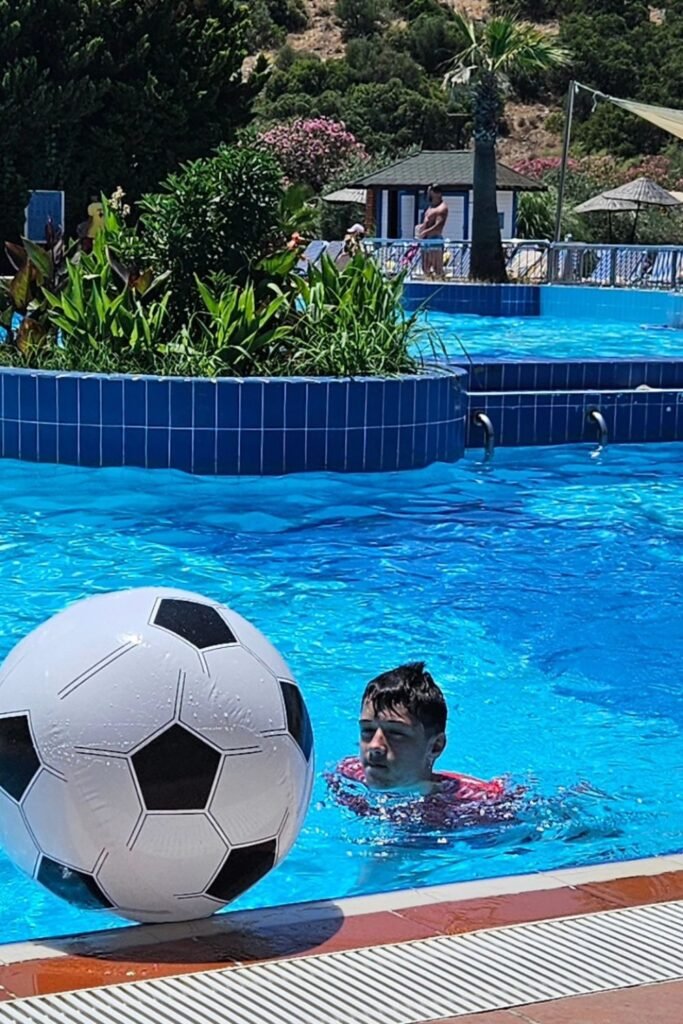
Energy to burn. Turn swim time into game time. Grab a large inflatable ball and set simple rules no rough pushing, no dunking.
Simple passing and soft goals near the edge of the water. Older kids adore the challenge of keeping their balance.
While kicking or heading the ball in the water. People feel more comfortable wandering around in shallow places.
You can even make teams or set a timer for rapid rounds to make it more fun. It’s great for family pool days or holiday afternoons.
When swimming in the traditional way starts to get dull. You can have fun without chaos if you set clear rules and keep an eye on things all the time.
Foam Play
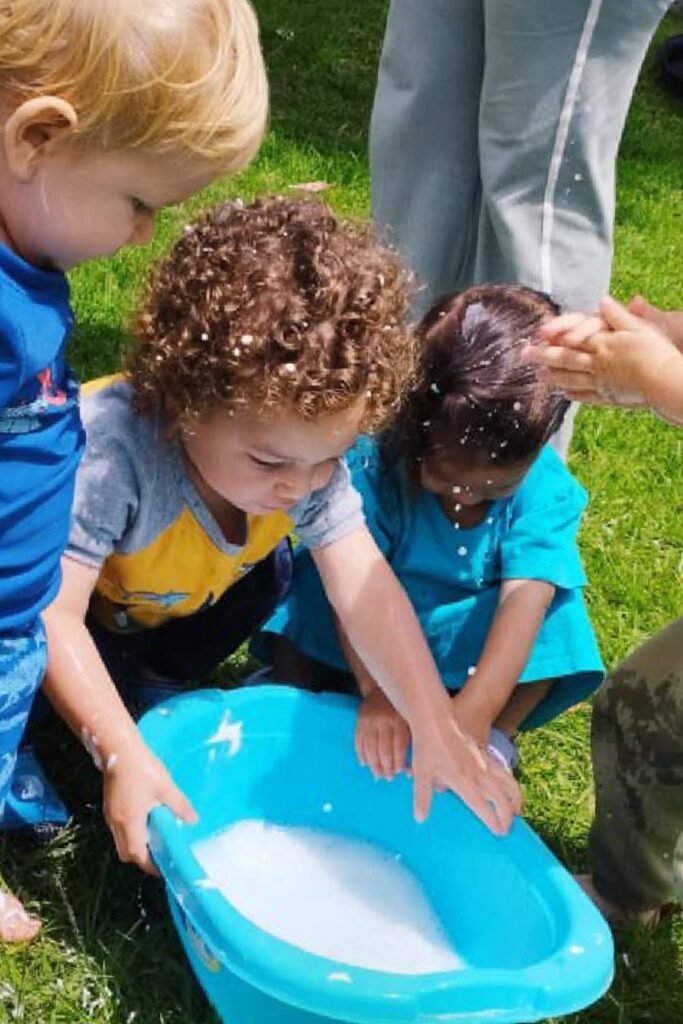
Laughter gets louder the second bubbles appear. Fill a shallow tub with water, add a few pumps of gentle soap.
And stir it until it becomes thick foam. Put it on the grass so it’s easy to clean up, and let little kids play with their hands.
If you want to make the fun last longer, add plastic cups or spoons. Foam feels different from regular water.
Which keeps kids interested for longer. Stay close and keep it shallow, especially with younger youngsters.
After playing, wash your hands and throw away the water immediately away. Easy to set up, a lot of sensory pleasure, and great for casual patio parties.
Water Table
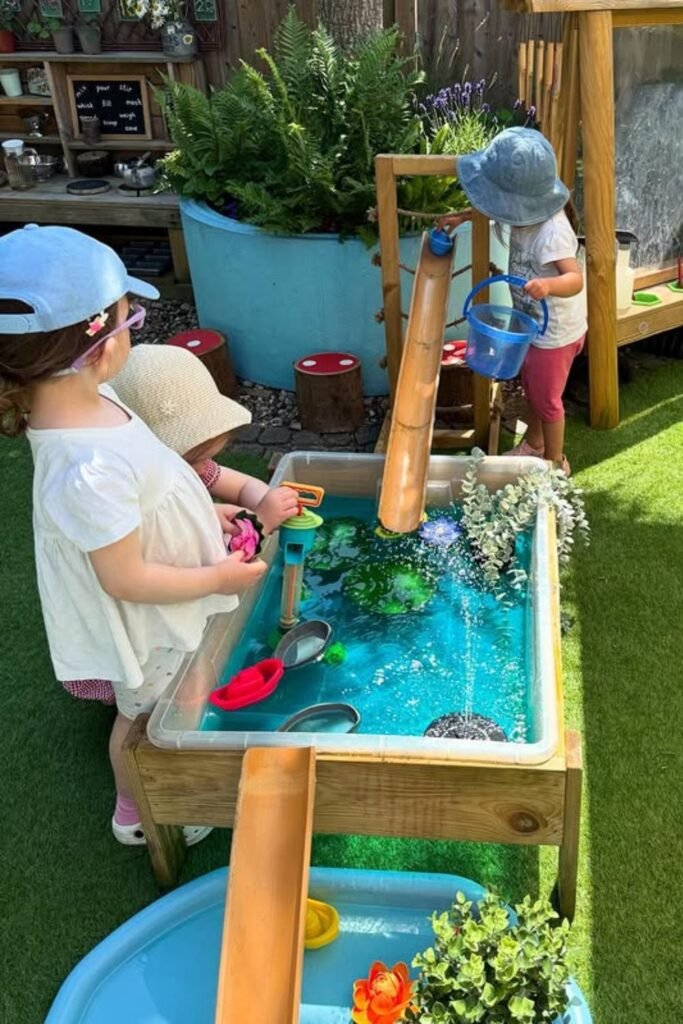
Hours disappear fast with a setup like this. Add a shallow sensory table, attach a small ramp or bamboo gutter.
And let the kids pour water from the top so it goes down into the tub. To make it feel like a little pond.
Put in some toy boats, scoops, and a few plants that float. It’s preferable to have water in the corners of your yard.
On a covered patio so that the youngsters can stay cool. The several levels make it fun since they control where the water goes.
Keep the depth low and empty it after you’re done playing. Great for siblings because everyone can scoop, pour, and look around at the same time.
Splash Painting
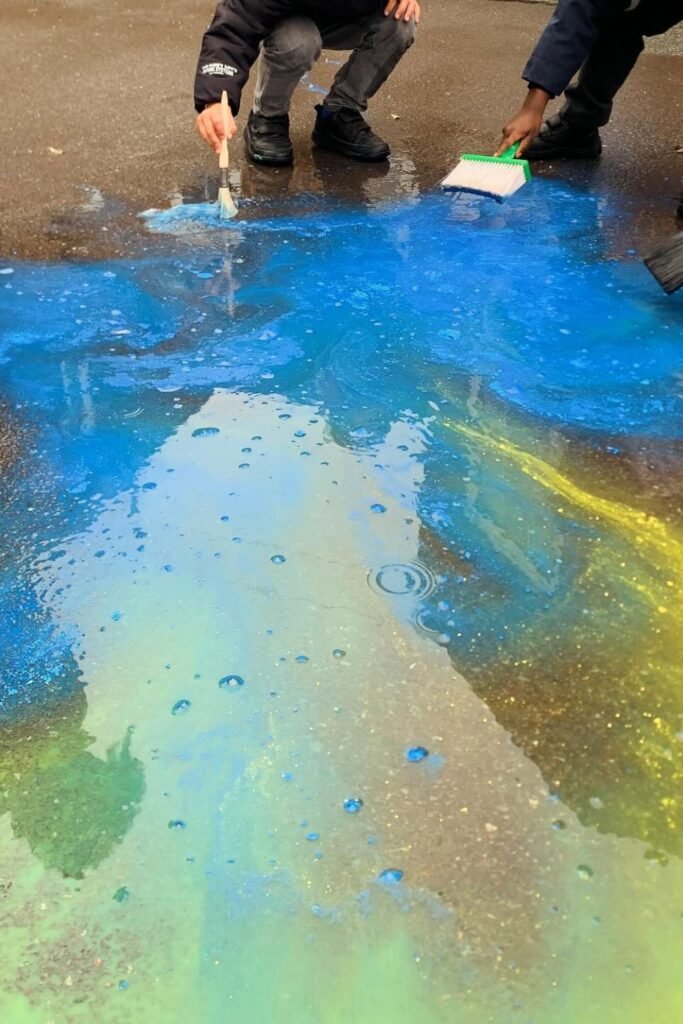
Sidewalks turn into giant canvases once water and color mix. Add a little washable paint or food coloring to buckets of water.
And give kids huge brushes or even little brooms. Pavement is the greatest choice because the water spreads out readily and dries on its own.
So cleaning up is really easy. Let them paint roads, oceans, or just mix colors together and watch them mix.
Older kids can play with patterns, while younger youngsters can just enjoy spreading color.
Pick a safe spot that isn’t slippery and have your shoes close by. Fun, creative, and great for playing with friends on hot afternoons.
Color Sorting
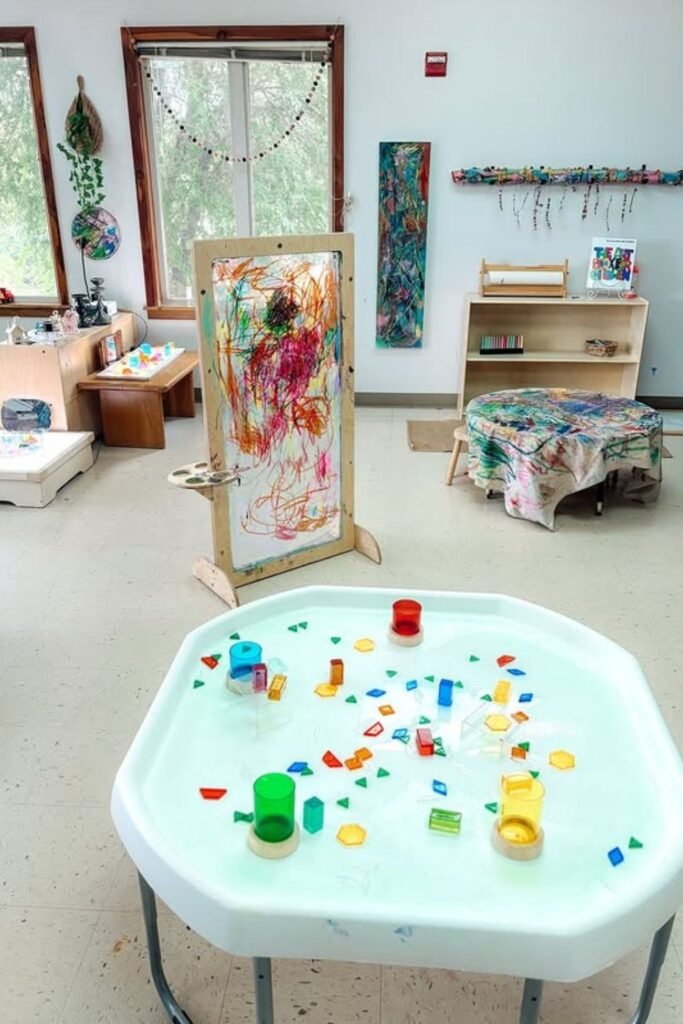
Bright pieces floating in water grab attention fast. Fill a shallow sensory table with clear water and drop in colorful plastic shapes or blocks.
Put matching cups in that youngsters can sort and scoop by color. This works nicely in indoor playrooms.
Since you can put towels below to catch drips. Younger kids pay attention to pouring and grabbing.
While older kids can make it a game by racing to fill each cup correctly. It is easier for them to see how far they have come when the containers are clear.
Keep the water level low and tell them to move carefully so they don’t splash. Play that is calm and concentrated without needing a lot of space outside.
Utensil Splash
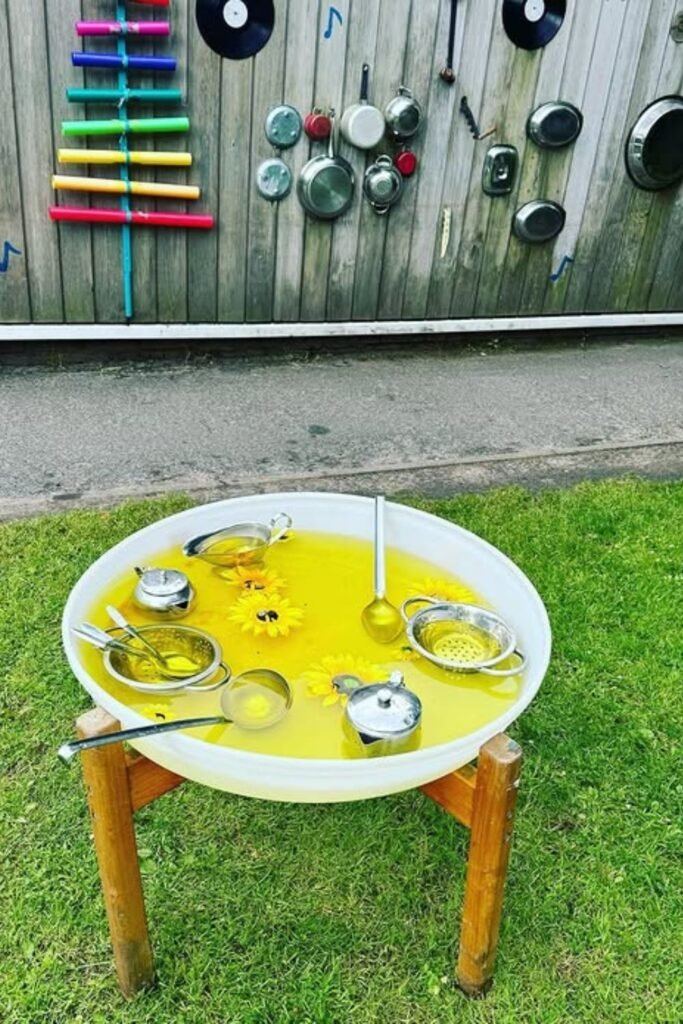
Kitchen tools bring a whole new level of excitement to water play. Fill a shallow basin, toss in ladles, strainers, small pots.
And metal spoons, and then let the kids scoop, pour, and clang. Grass or a patio are better because they will definitely get wet.
Adding floating flowers or leaves makes it look like a fake soup station and adds a fun touch.
Kids naturally try out different instruments to see which ones contain water and which ones let it out quickly.
Keep the water shallow and empty it when they’re done. Loud, messy, and surprisingly fun with things you already have.
Bucket Transfer
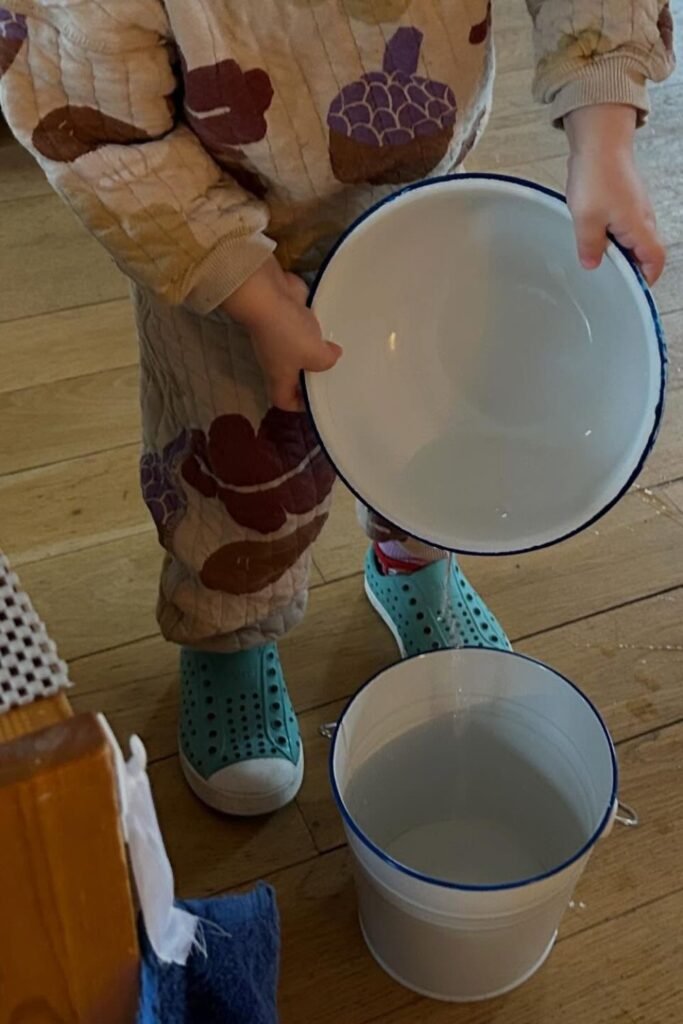
Serious concentration shows up fast with a simple challenge like this. Place two buckets on the floor one filled with water, one empty.
And give your youngster a cup or bowl. The goal is easy: transport all the water from one place to another without hurrying.
Floors made of hardwood? Put down towels first. Tiles in the kitchen are even better because they are easy to clean.
Younger kids work on lifting and balancing, while older youngsters aim to spill less each time. You can even set a timer or count how many scoops it takes.
Stay close by and keep the water levels low. Play quietly and with focus to improve coordination without any special equipment.
Block Lab
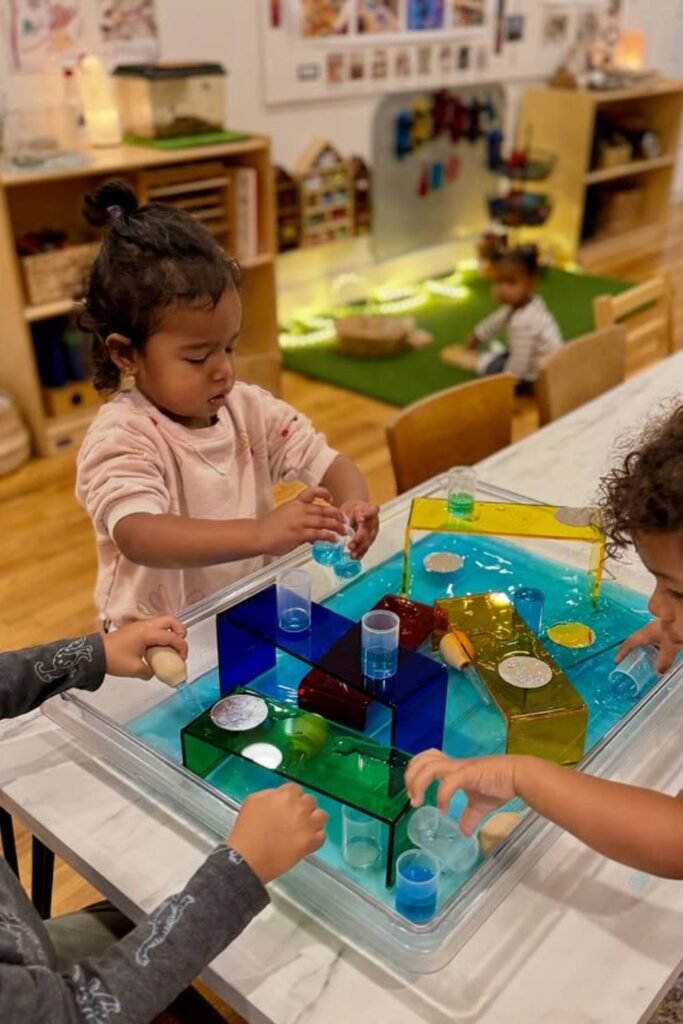
Curiosity takes over once water meets clear blocks. Fill a shallow bin and add large transparent blocks, small cups and droppers.
Kids start to stack things, pour things and watch how water flows through different shapes. Indoor tables are great.
Since they keep things organized and let everyone see what’s going on. youngsters who are older can build small bridges or dams.
While youngsters who are younger can focus on squeezing and pouring. Put a towel underneath and keep the water level low so there aren’t any huge spills.
Great for small groups because everyone can try things out at the same time. Learning in a creative and hands-on way without having a backyard.
Spin Wheels
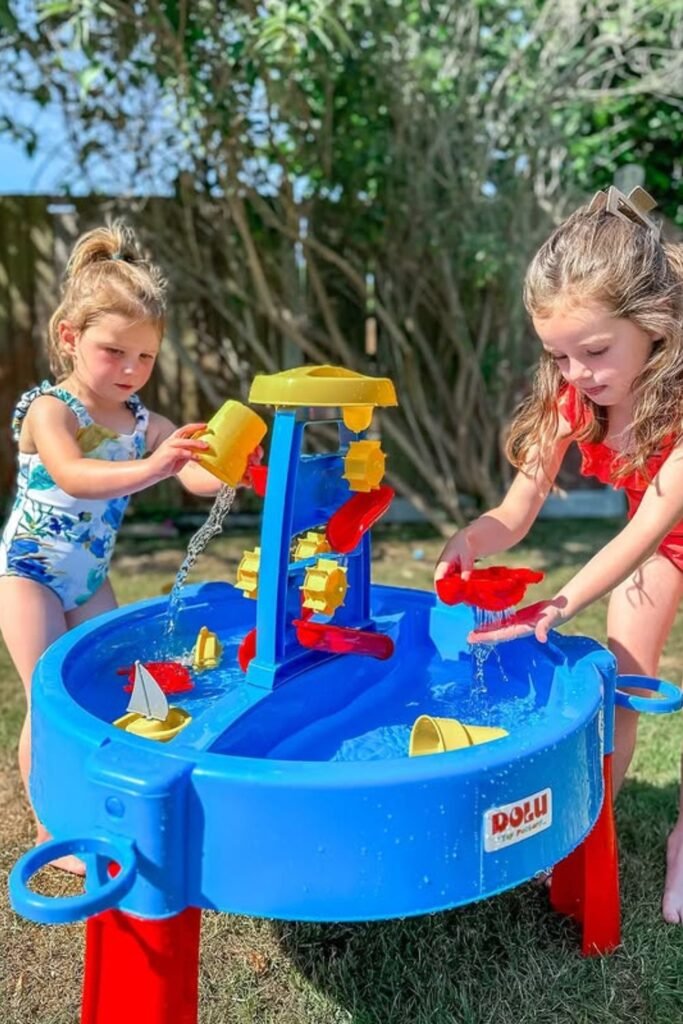
Moving parts change everything. Fill a sturdy water table and let kids pour water from the top so it flows through spinning wheels and ramps.
If the splashing gets out of hand, the grass in the backyard will keep it safe. Younger kids stay occupied by pouring over and over again.
While bigger youngsters try with different speeds by dumping water faster or slower. To make fun go even longer.
Add tiny boats or floating toys. Make sure the table is on level ground and that the water is not too deep.
It’s great for siblings because each side has something different to handle. It’s easy to put up, but hard for them to leave.
Kayak Ride
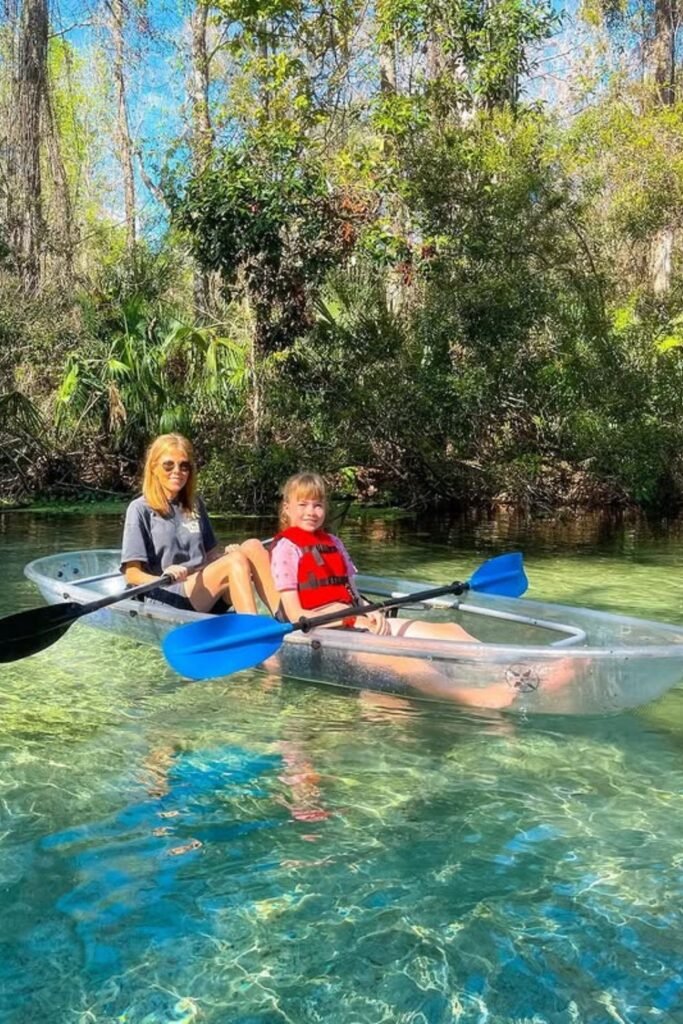
Adventure feels bigger when kids leave the backyard. Calm lakes or slow rivers make the best setting for a simple kayak ride with a parent.
People are more excited when the water is clear because they can see fish, rocks and movement below.
Always pick shallow, calm regions and life jackets should be required. Let them help paddle for short distances so they don’t just sit there.
Early mornings are best when the water is calm and there aren’t many people around. Bring water and sunscreen and keep trips brief for smaller kids.
It’s not something you do every day, but during memorable summer days, few water activities provide memories that last.
Ring Scoop
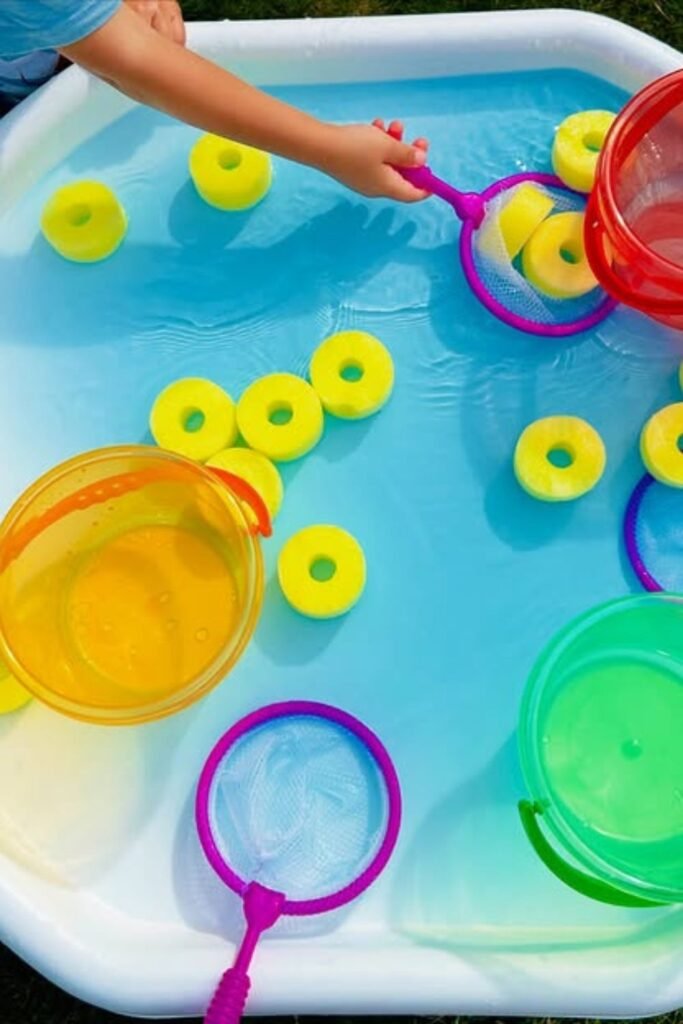
Floating targets instantly turn plain water into a game. Fill a shallow inflatable pool or large bin, toss in lightweight plastic rings.
and give kids little nets or strainers. Spills don’t matter on grass. Make a simple aim, like getting five rings of the same color or racing to fill a bucket first.
Kids of all age can play this game. Younger kids work on their hand-eye coordination, while older kids make it competitive.
To avoid slipping, keep the water shallow and the space free. If you want something different, trade rings for floating balls.
Simple to set up, simple to reset and great for hot afternoons when you want to do something active but not too hard.
Float Time
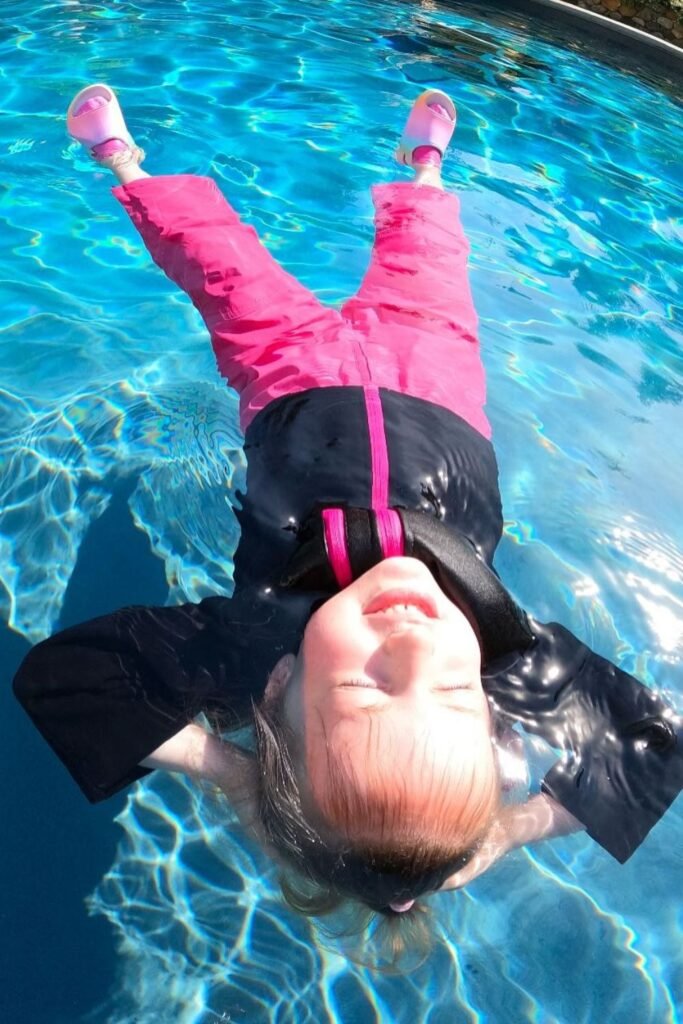
Sometimes the best activity is slowing everything down. Calm pool water, a life jacket or float support.
And a few minutes of floating on your back in silence can change the mood. Tell kids to stretch.
Look up at the sky, and try breathing steadily. They feel safest in shallow regions. Stay close by and remind.
Them to move slowly. Floating makes them feel safe on their back and gives them confidence in the water.
This is like a cool-down break after high-energy games. Easy, calm, and surprisingly strong for kids who need a break.
Noodle Drop
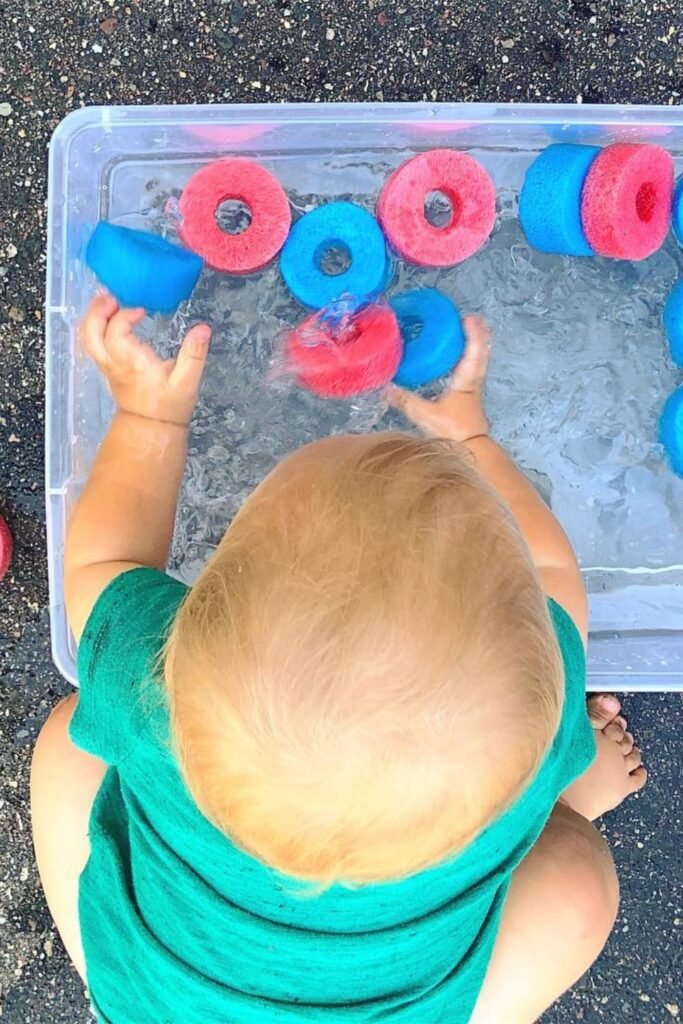
Bright pool noodles cut into rings turn into the easiest fine-motor game ever. Fill a clear bin with water, drop the foam rings in.
And let little kids hold, squeeze and stack them. A driveway or patio space is wonderful because splashes won’t bother you.
Put some plastic bolts or sticks at the bottom so they can thread the rings through holes for an extra challenge.
Kids adore how soft it is, and the way it floats makes them want to grab for it over and over. Stay close and keep the water shallow.
Easy to set up, with simple materials, and great for smaller kids who just want to touch and explore.
Lemon Stand
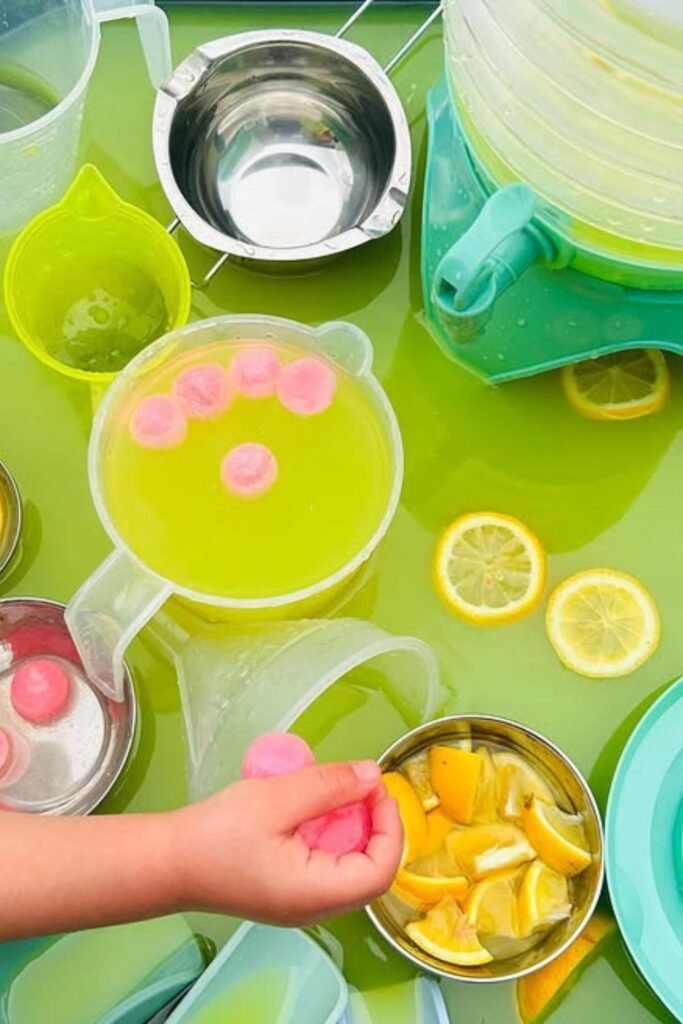
Hot days call for pretend refreshment. Set up a small table with pitchers of water tinted with a drop of food coloring.
Add lemon slices and floating pom-poms or plastic “ice cubes” for fun. Kids can scoop, pour, filter.
And mix like they’re running their own summer drink stand. It’s better to have outside patios or shady spaces in the backyard because splashes are part of the package.
To make it a simple mixing game, add measurement cups. Make sure everything can be washed and the water levels are low.
It seems like role play, but it’s just smart water play with a theme that keeps children interested longer.
Fishing Game
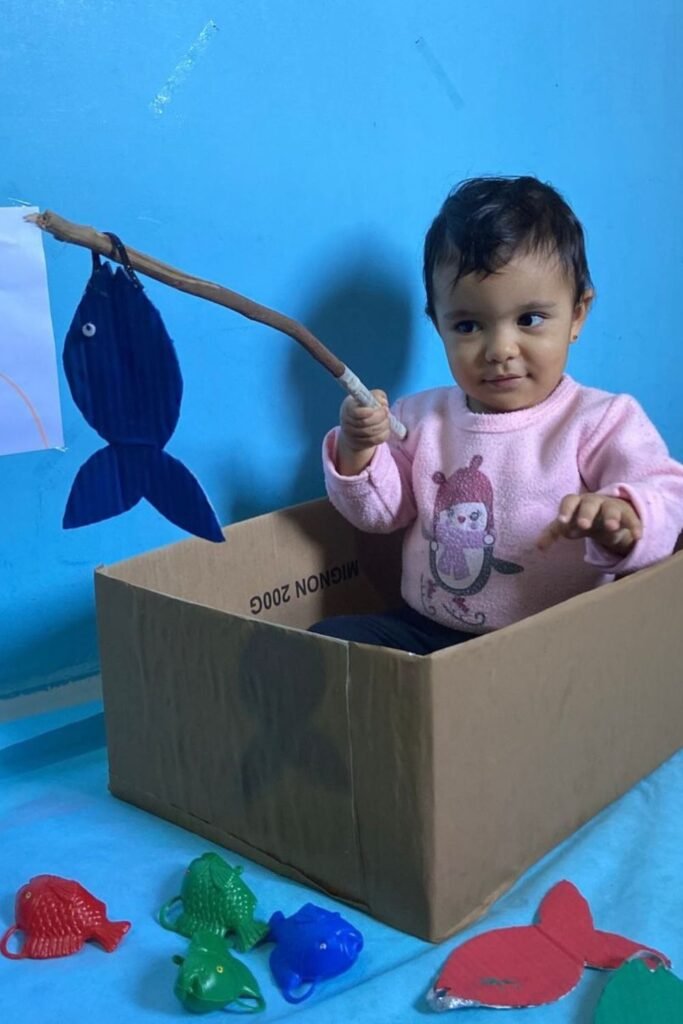
Imagination kicks in fast with a stick and a simple cut-out fish. Turn a cardboard box into a “boat,” attach a magnet or clip to a string.
and let them fish for paper or plastic sea creatures that are on the floor or in a shallow container of water.
Living rooms or play areas are great because they don’t get too messy. If you want to make it a little more educational, you can add numbers or colors to each fish.
Toddlers are more interested in capturing things, whereas older youngsters might count what they’ve caught or establish little goals.
It’s easy to make, doesn’t need any pricey ingredients, and is great for pretend ocean adventures indoors.
Spray Art
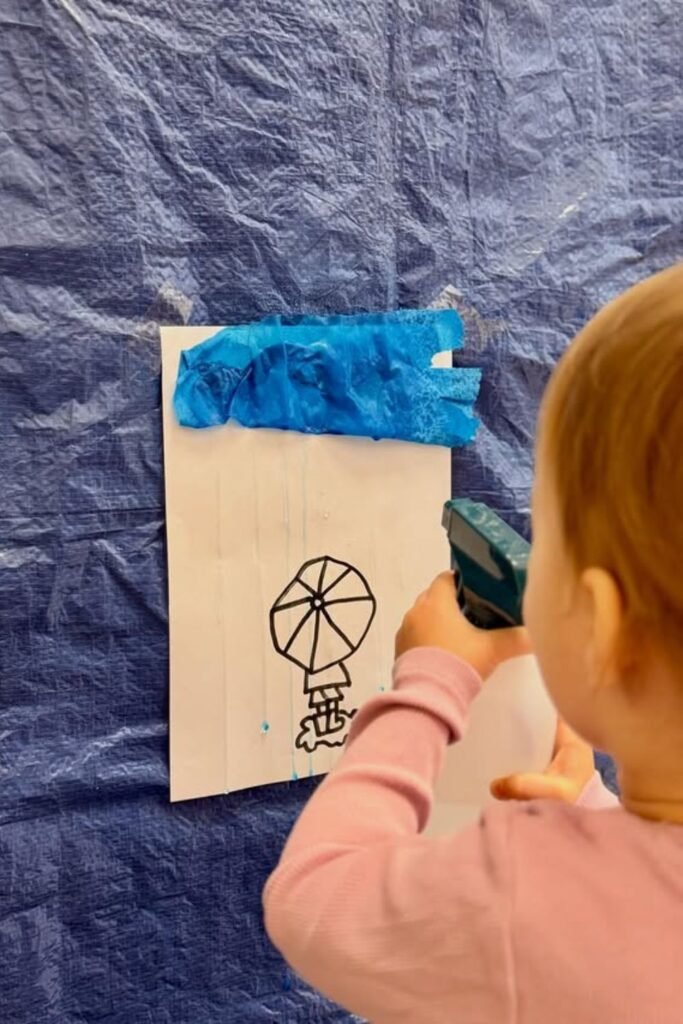
Walls covered in paper become targets once a spray bottle enters the picture. Tape a large sheet to a fence.
Or hang it on a tarp and let the kids spray it with colored water. Make simple shapes like an umbrella, the sun, or clouds.
So they have something to “paint” with each spray. Patios or fences in the backyard are excellent because drips are part of the pleasure.
Squeezing things with small hands makes them stronger, and watching colors run down keeps them interested.
Make sure the ground isn’t slick and use washable colors. Fun, cool, and great for youngsters that like action more than quiet crafts.
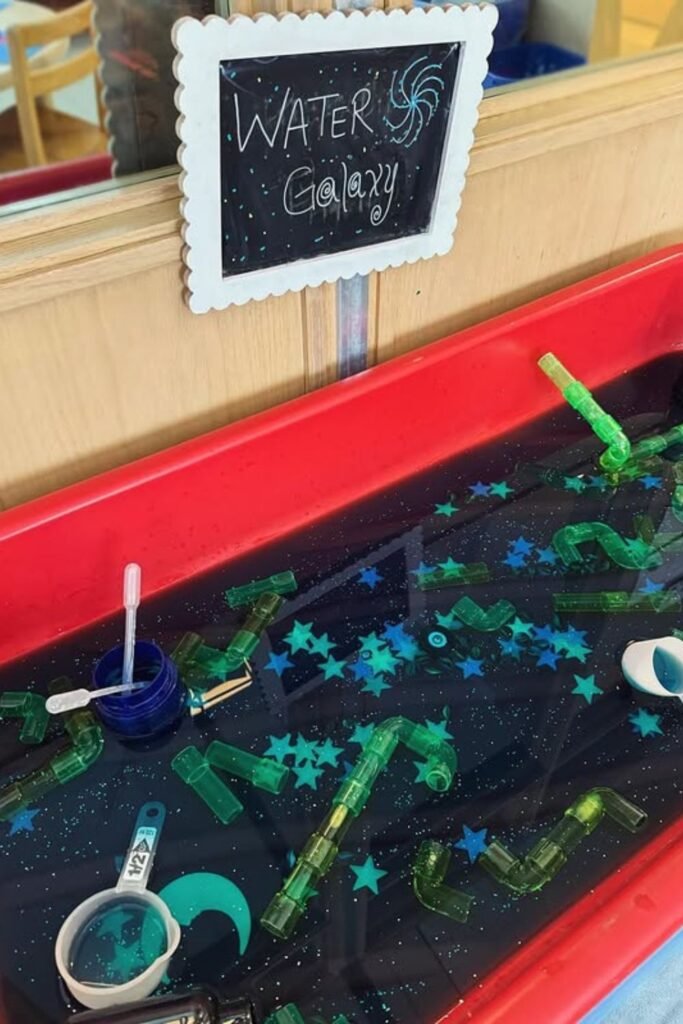
Water Galaxy
Dark water changes the whole mood. Add a few drops of washable black or dark blue coloring to a sensory bin.
When you add luminous stars or shiny confetti, kids will feel like they’re in space. When they start pouring and building.
Clear tubes and connectors become “space stations.” Indoor tables work well since they keep everything in one place, and dramatic lighting makes it even better.
Give them droppers so they can move “stardust” from one corner to another. Keep the water shallow and put a cloth under the surfaces to protect them.
Creative play and exploring water come together, and it feels very different than typical splash time.
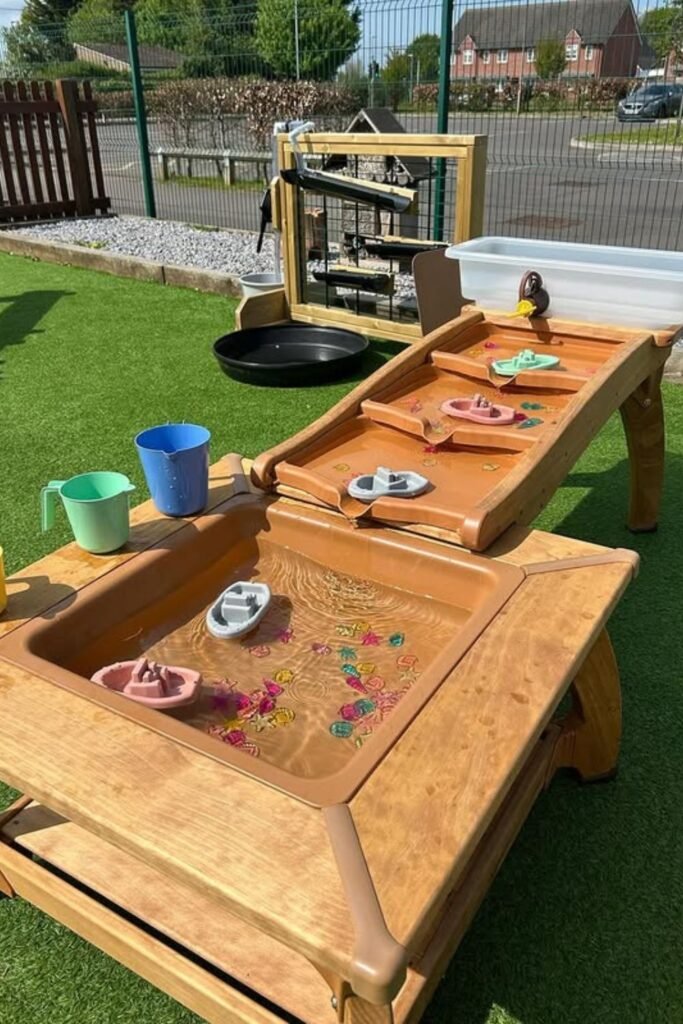
Ramp Boats
Water gets more exciting once it starts moving downhill. Set up a tiered water table or create a simple ramp using a plastic gutter.
So youngsters may pour water in at the top and watch it flow down to the bottom basin. Put little boats or floating toys in the water.
And let them see which one gets to the bottom first. It works best to have flat ground in outdoor play spaces so the structure stays steady.
Give them different cups to play with to see how fast and loud they can get. Keep the water shallow and take the trays out after play.
This is great for siblings since one may pour while the other waits at the bottom to catch the boats.
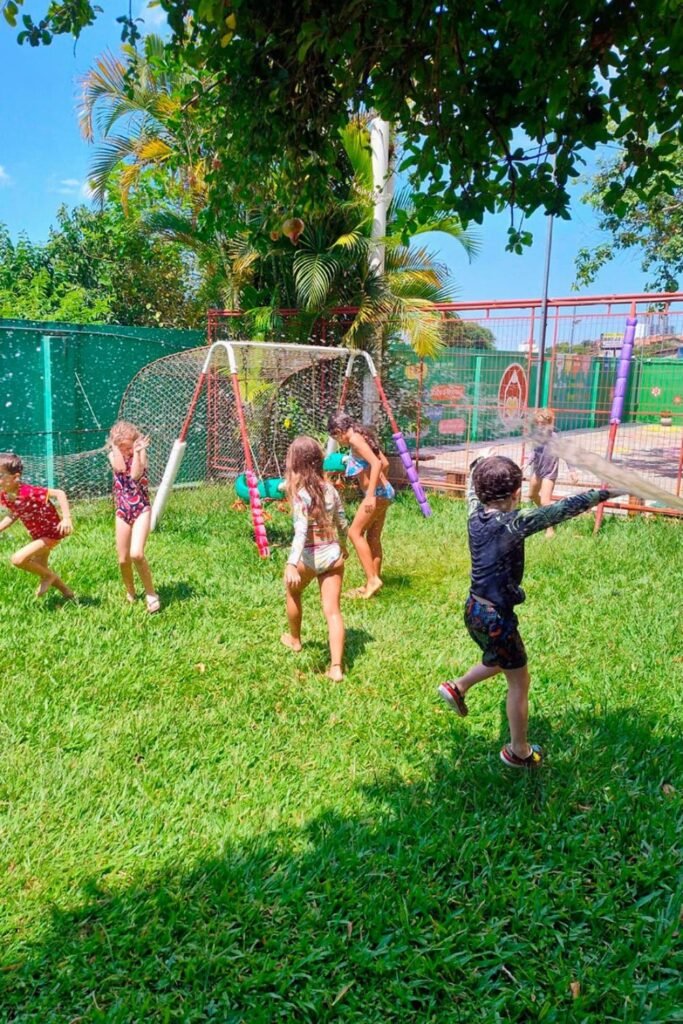
Sprinkler Run
Chaos in the best way possible. Turn on a sprinkler in the middle of the yard and let kids run straight through it like it’s a race.
Grass keeps slips from happening and allows them room to roam around without bumping into each other.
Put a timer on and see who can get over the “water zone” the fastest, or tell them to freeze when the spray hits.
It’s easy to clean up after wearing a swimsuit, and sunscreen should put on first. Watch out for little youngsters who might trip while they are laughing and running.
There is no setup needed other than a hose, but it uses a lot of energy and cools everyone down at the same time.
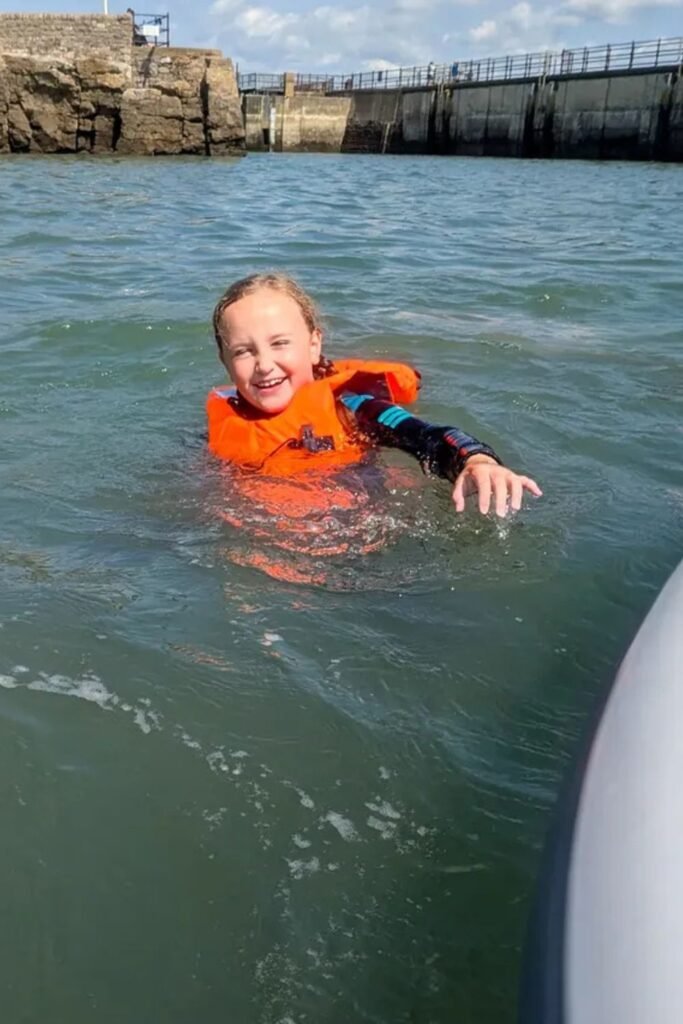
Life Jacket
Confidence grows the second kids realize they can float safely. Calm water and a properly fitted life jacket.
Make swimming in open water less intimidating and more fun. Lakes or peaceful coastal areas are preferable since the waves are calm and you can stand close by.
Stay close enough to them so you can get to them quickly as they practice kicking and paddling. At initially, keep the sessions brief so kids don’t become fatigued.
Before they get in the water, go over the simple rules with them: no drifting too far and no rough play.
Safety is always the most important thing, but once that’s taken care of, splashing around in natural water is a summer memory that will last a lifetime.
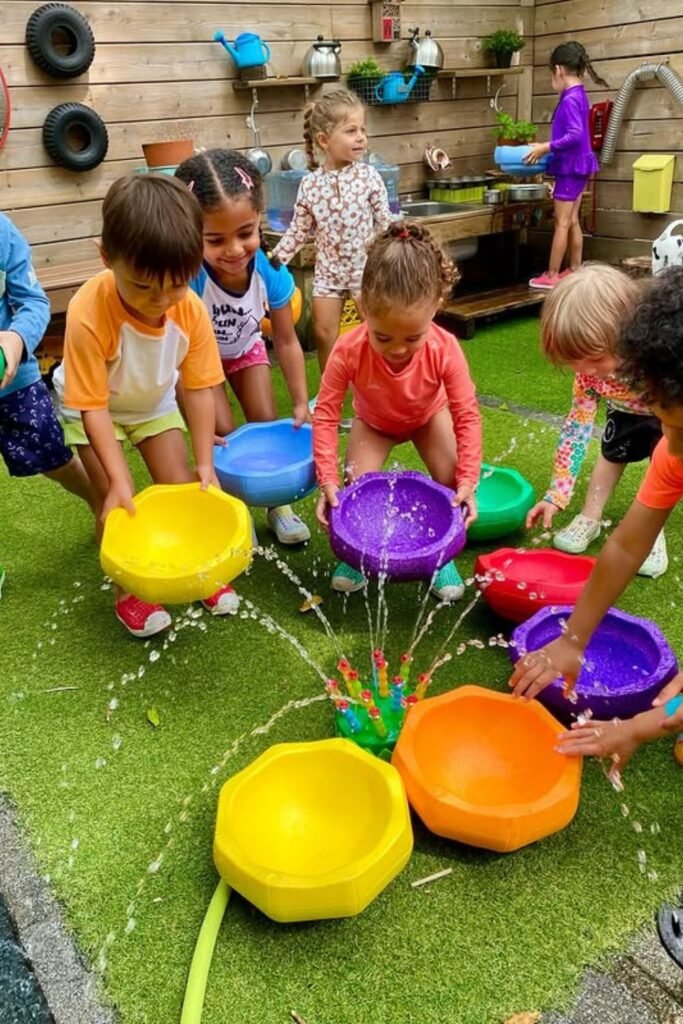
Bowl Splash
Group play gets louder once everyone grabs a bowl. Place a sprinkler or splash toy in the center and let kids fill their bowls.
Then pour them back over the spray and watch the water bounce all over the place. Open yard space is excellent.
Because it doesn’t feel cramped. Make it a team challenge by asking them to fill one big container collectively.
Put on sunscreen before you start having fun, and swimsuits make cleanup easy. Keep the water pressure low.
And tell them not to run too near to each other. Active, gregarious and great for playdates when everyone wants a turn.
FAQs
What water activities work best if you don’t have a backyard?
You may still play in the water in small spaces.
You can use a bathtub, shower, balcony with a big tray or even your kitchen sink for games where you pour and scoop.
Use shallow containers with towels below and do things like transferring cups, sorting colors, or squeezing sponges.
How long should water play last on very hot days?
Keep the sessions short and pay attention to any signs of weariness.
Kids normally need shade, hydration breaks, and sunscreen reapplication after 20 to 40 minutes.
Stop if they start to shake or wipe their eyes. A lot of short sessions work better than one long one.
Hi, I’m Afaf! I’m a law student who loves writing about everyday life – from home projects and crafts to fashion, beauty, and parenting tips.
I’ve been writing for over a year, sharing ideas that are simple, practical, and easy to try. I write about things I find interesting and useful, whether that’s organizing a space, trying a new DIY, or finding activities to keep kids entertained.
My goal is to share helpful ideas without making things complicated. If it works in real life, I’ll write about it.
When I’m not studying or writing, I’m usually experimenting with new projects or scrolling for inspiration!