
22 Homeschool Activities for 2026
Some days, it feels like your homeschool is too severe. You’re pushing through lessons, finishing worksheets, and keeping an eye on the clock.
Other days, it goes the other way. The kids are creating, laughing, and playing, and you can’t help but ask, “Are they really learning anything”
You’re not the only one who has felt terrible at the end of the day. It’s not about picking one over the other when it comes to balancing study and play.
In this article, I’m sharing 22 playful homeschool activities that will make kids’ time more enjoyable.
Let’s jump in!
How Do You Balance Learning and Play in Homeschool Activities?
If your homeschool day feels like a battle between “real school” and “just playing,” here’s the truth: you don’t have to divide them.
Children learn best when they are energetic, curious, and engaged. You’ll always feel behind if you think of play as a respite from learning.
But everything changes when you make play the way to learn. For instance, if your child is building with blocks, ask them to count, measure, or explain how they made it.
Playtime is now math and critical thinking time. Let them read the recipe and measure the ingredients if they like to cook.
Save this article for later!👇👇👇
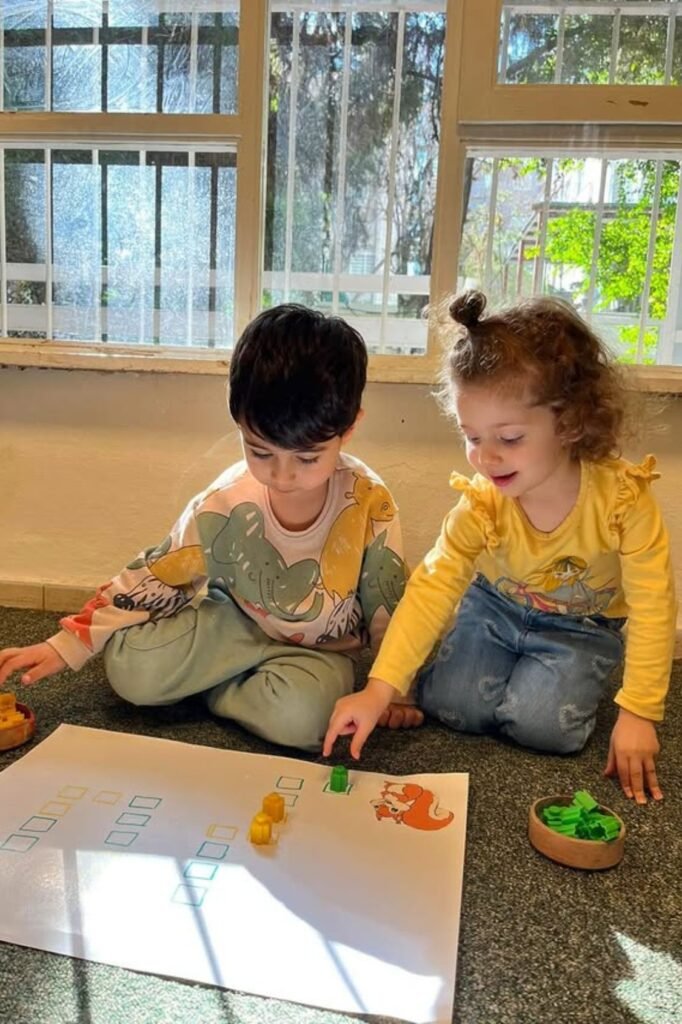
Color Sorting
Bright objects on the floor instantly pull kids in. Turn that curiosity into a simple color sorting game.
Put a big piece of paper on the table and draw squares or outlines in different colors. Put some little blocks, counters, or toy pieces in bowls close by.
Tell your child to put each piece in the right color box. This works best on the floor since it lets you move about. It can feel like a worksheet when you sit at a table.
It feels like play on the floor. While they sort, teach them something. Count how many pieces go inside each box. See which color has more.
Once they know how to match things up, tell them to group them by color or size. You don’t need fancy things. Just some colored markers and tiny toys are all you need.
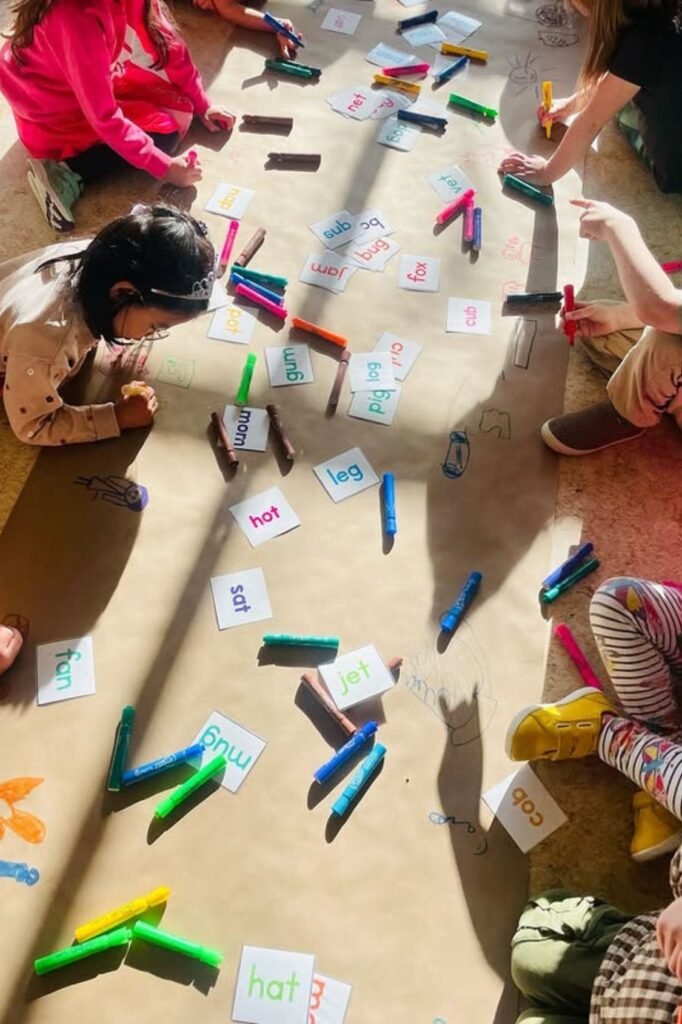
Word Building
Sight words don’t have to live on flashcards. Spread a big sheet of paper on the floor, scatter word cards around, and hand out markers.
Now reading becomes moving. Put simple CVC words or sight words in the middle. Let youngsters read one, say it out loud, and then draw something that goes with it.
“Fox”? Draw one. “Hot?” Draw a picture of the sun. At the same time, you can write, read, and be creative.
Working on the floor keeps you going. Kids crawl, reach, transfer places, and stay interested longer than they would at a desk.
If you’re homeschooling kids of different ages, the bigger kids can write the words and the smaller ones can match or draw them.
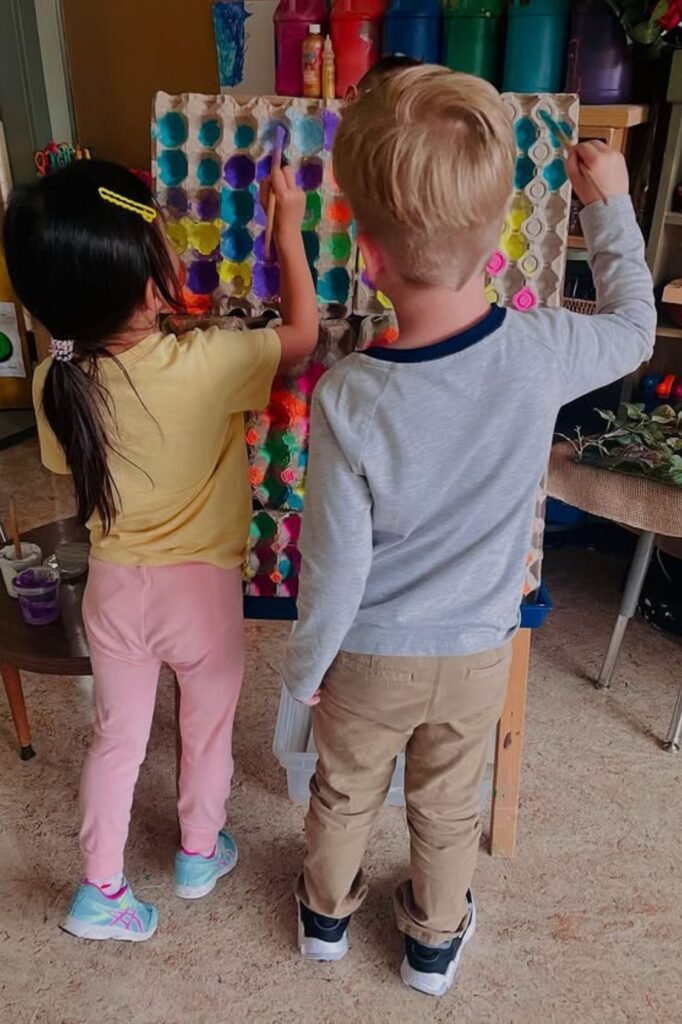
Egg Carton Painting
Empty egg cartons usually end up in the trash. Turn one into a standing paint board and you’ve got an instant art and fine motor station.
Put it on a small table or easel so that kids can paint while standing up. Painting vertically works the muscles in your arms and shoulders, which helps you write better later.
Put different colors in different cups and let them fill each carton space one at a time. Tell them to make patterns instead than just random colors.
Try saying things like “blue, yellow, blue, yellow” over and over. Older kids can mix colors in each pocket.
Setting up costs nearly little, cleaning up is easy, and you can quietly improve your motor skills while they think they’re just having fun with paint.
Ball Toss
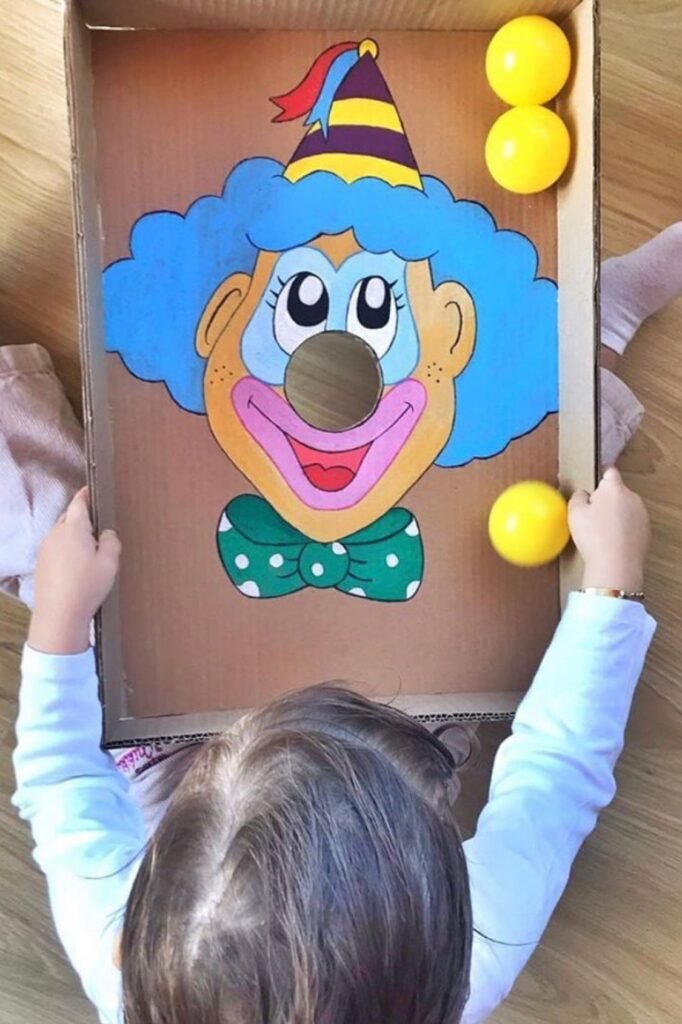
Energy building up? Channel it into a simple DIY toss game. Cut a hole in a cardboard box, decorate it with a fun face and let your child aim soft balls into the target.
All of a sudden, you’ve converted gross motor play into focus exercise. Keep track of the score to sneak in some math. “You got three in a row.”
How many more do you need to get to ten? To make it harder, move the box farther away.
Change hands to improve your coordination. Add colored balls and tell them which one to throw to practice listening.
You can use living rooms, garages, or patios. It’s raining? The best indoor solution. Afternoon outside? Even better.
Paper Crafts
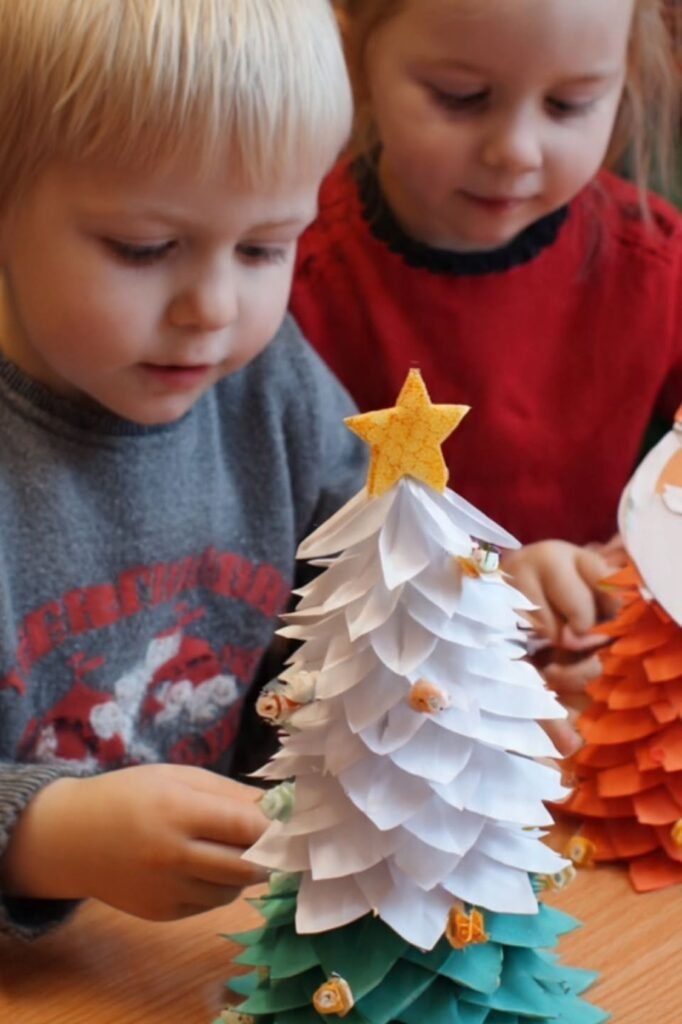
Small hands stay busy when layers and textures come into play. Fold colored paper into simple cone shapes, stack them, and build a 3D tree or character.
Glue each layer one at a time so youngsters don’t speed through it and can pay attention to where they put it and how far apart it is.
During the holidays or when studying a certain theme, projects like this work great. Count the layers, compare sizes, or speak about shapes to make it a small lesson.
Older kids can measure and cut strips that are the same distance apart, while younger kids can fold and glue.
Here, table time feels useful since they’re doing something they can show off. Allow children to add little things like drawn faces, buttons, or paper stars.
Activity Workbooks
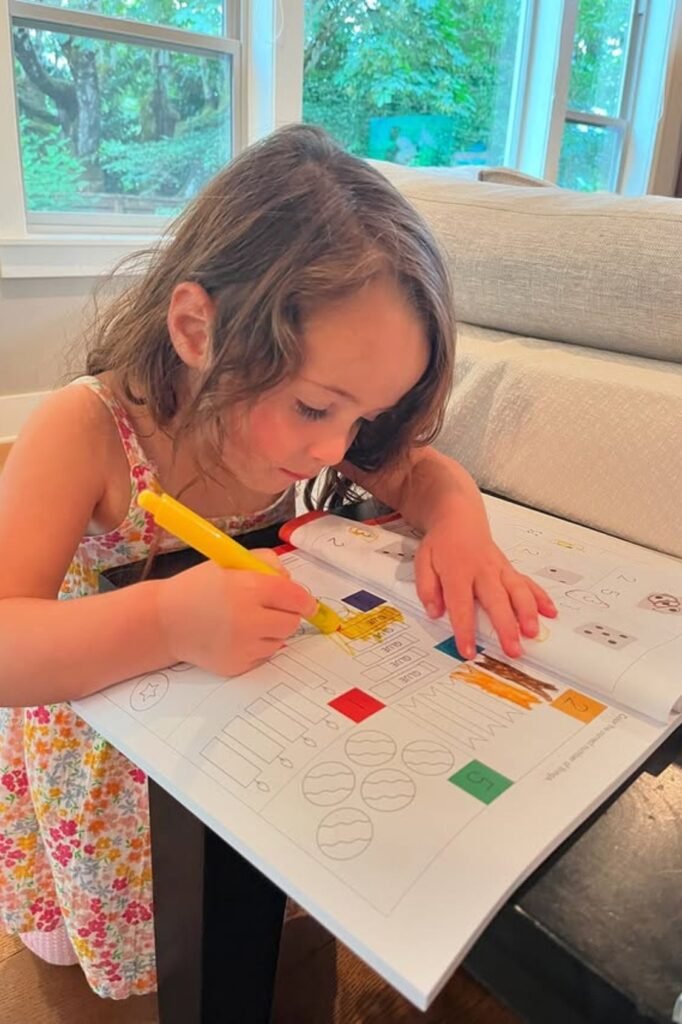
Quiet focus grows when pages feel interactive instead of repetitive. Open a work book that mixes coloring, counting tracing and simple problem-solving on the same page.
One task leads to the next so your mind stays focused. Worksheets seem less formal right away when you use highlighters and colored markers.
Before they solve the problems, have your child color-code the answers, circle the patterns, or highlight the numbers. Moving your hand keeps your brain busy.
The finest sessions are short. You can get more done in ten to fifteen minutes of focused work than in an hour of lazing around and not paying attention.
To retain the right mix between structure and freedom, do something more active after workbook time.
Window Painting
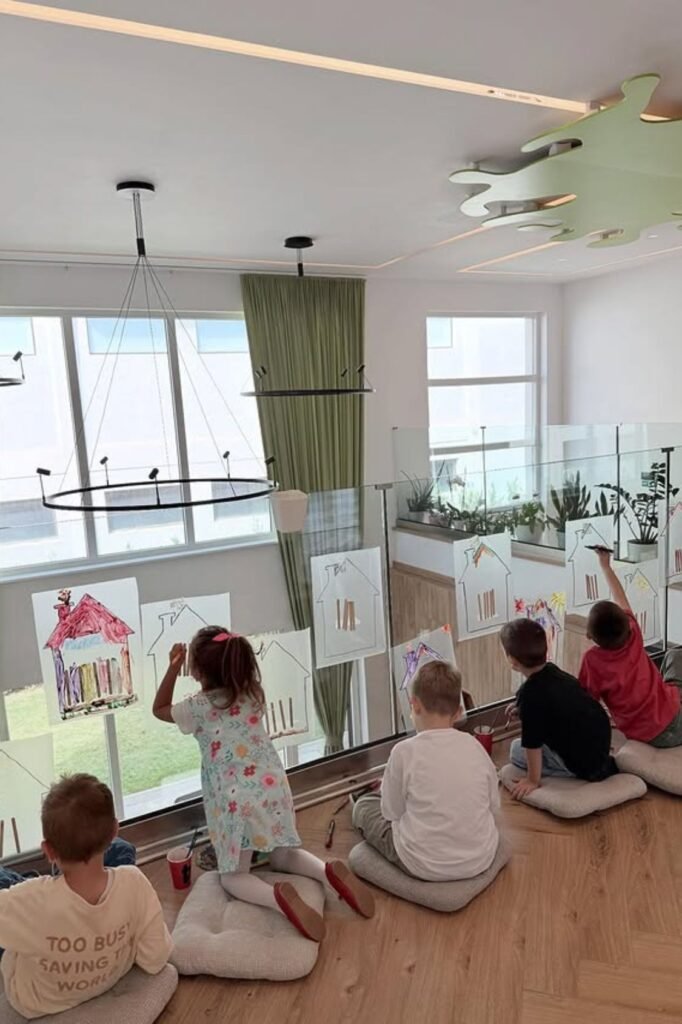
Natural light changes everything. Tape large sheets of paper to a glass door or window and let kids stand while they paint.
When they write on vertical surfaces, they have to move their arms more, which builds the muscles they need to write later.
Give them a simple task, like “design your dream house” or “make a weather scene.” Open-ended themes let people be creative without telling them what to do.
To keep the mess under control, use paint sticks or washable tempera. On sluggish mornings when you have a lot of energy, standing art stations are great.
Instead of telling them to sit still and pay attention, let them move and make things at the same time. Ask your siblings to work together and talk about their ideas.
Stamp Art
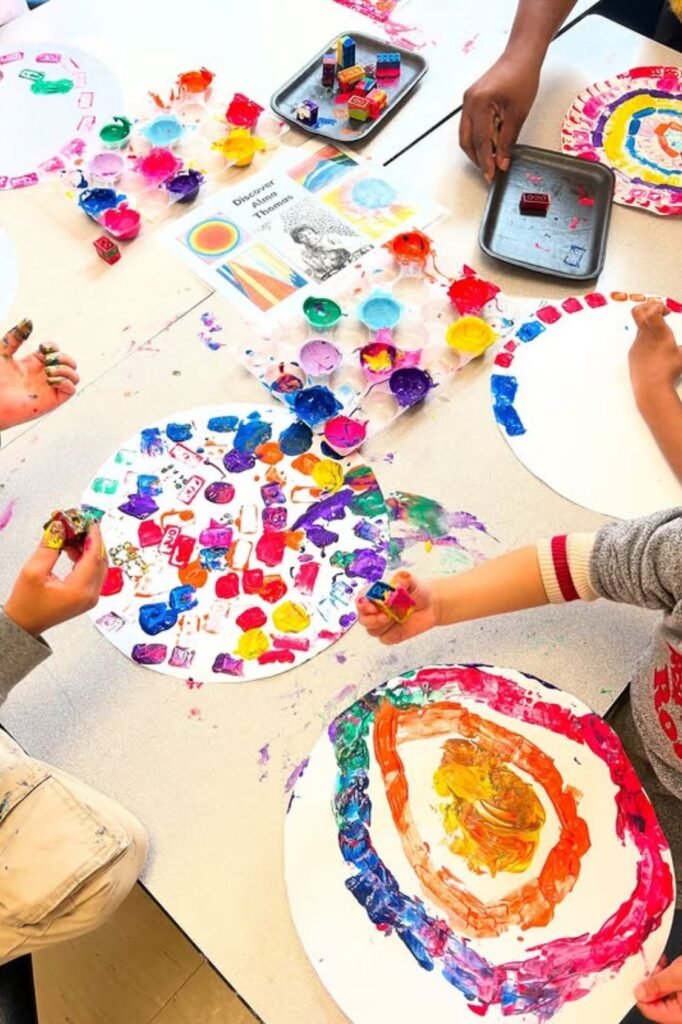
Paint doesn’t have to stay on brushes. Grab small blocks, toy bricks, or even wooden cubes and dip them into bright colors.
Press them down on big paper circles and watch as designs form one layer at a time.
It’s easy to follow the design on round paper. Like a target, start in the middle and move out.
Younger youngsters can work on simple pressing and spacing. Older kids can try out repeating patterns or symmetry.
Have trays close by so you can change colors quickly. Cover the table and let them explore freely. Mess is part of the process.
Talk about how patterns repeat as they stamp and what shapes they make.
Alphabet Board
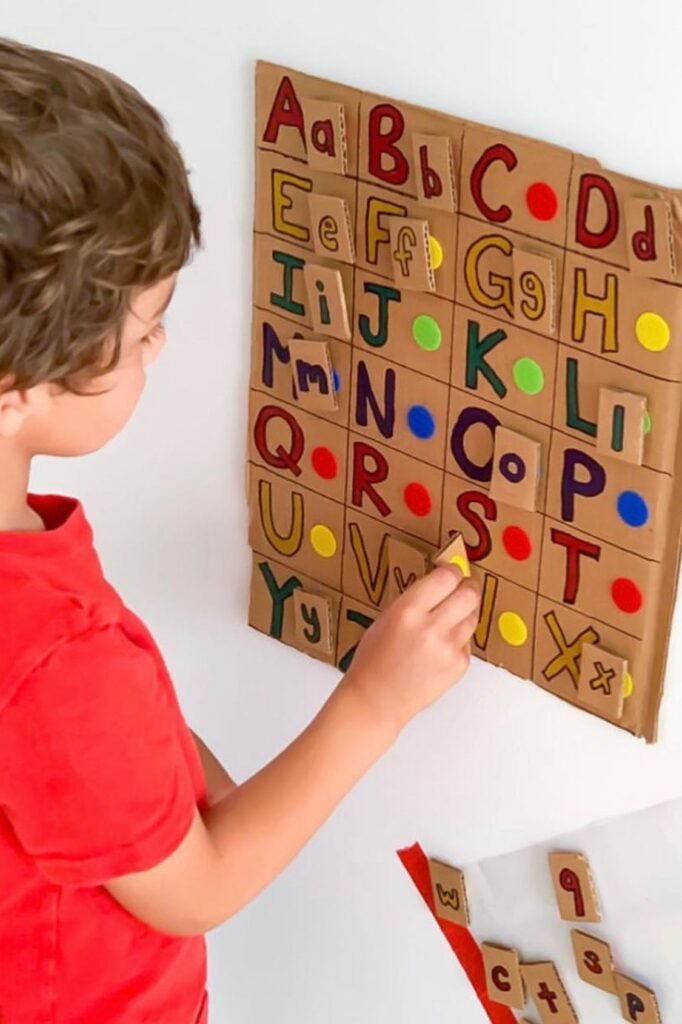
Walls can teach too. Tape up a large cardboard alphabet grid at eye level and turn it into a daily letter hunt.
Kids can lift, match, or cover letters as they go by adding little flaps or movable parts. Instead of saying the letter name, say a sound.
Change things up by asking them to find the initial letter of their name or a word you just read together. Movement keeps it going, and standing up stops it from feeling like work.
You don’t need to spend a lot of money on materials to make it interactive with dots, stickers, or Velcro pieces.
Have some extra letter cards on hand so they can match upper and lower case letters. Short bursts are the best.
Sorting Circles
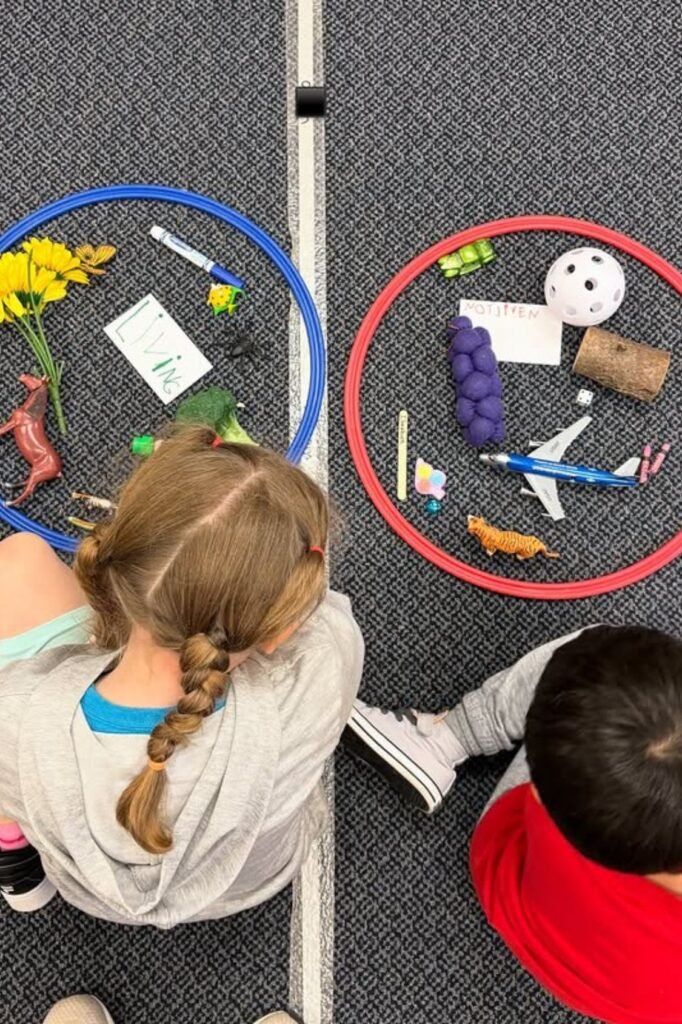
Classification builds thinking skills fast. Lay two hula hoops on the floor and fill a basket with mixed objects animals, plants, vehicles, natural items, toys.
Put each hoop in a group and let your youngster choose which items go in which group. It becomes better with debate. If they put a plane in the wrong group, ask them why.
Talking makes them think more deeply instead of just guessing. When they have mastered the first set, switch categories.
Try things that are alive and things that aren’t, things that are natural and things that are produced by people, or things that fly and creatures that crawl.
It stays dynamic and hands-on because of the floor space. Younger kids work on rudimentary sorting.
Number Towers
Abstract numbers finally make sense when kids can see them.
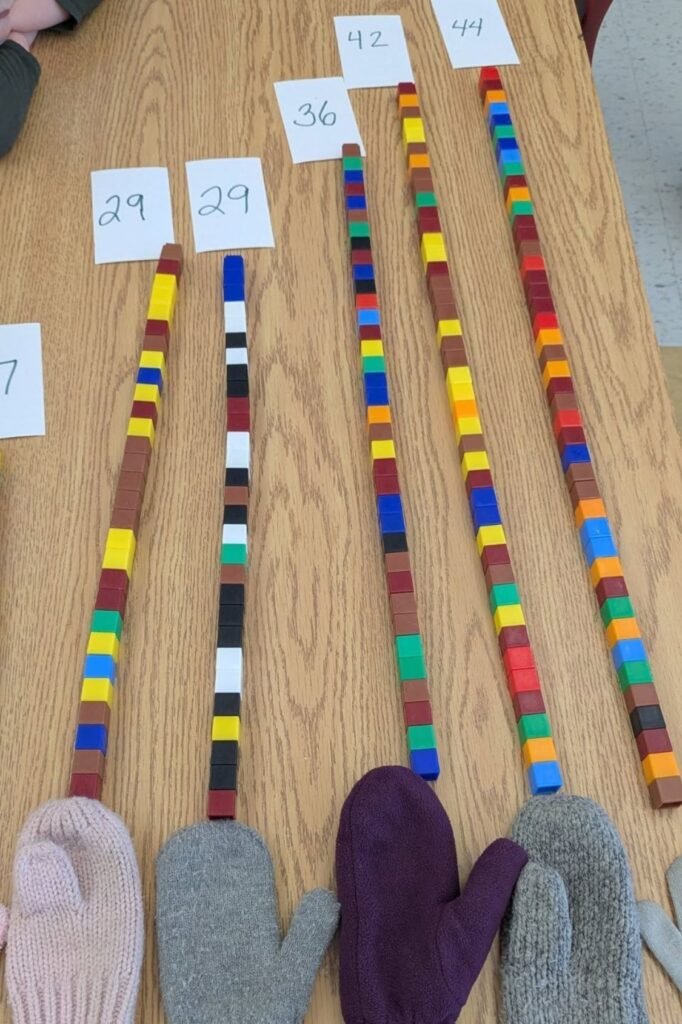
Write a number on a card and challenge your child to build a tower that matches it using small cubes or linking blocks.
Put them on the table next to each other so they can see how tall they are.
Put two numbers that are the same next to each other, like 29 and 36, and ask which one is taller.
Instead of starting with one each time, let children count by tens as they construct. That small change helps kids comprehend place value better without needing.
The mittens at the bottom make measuring more enjoyable. Ask who has the longest mitten and see which tower fits it.
Counting sticks you can hold in your hands. When they build it themselves, the number ceases being random and starts to make sense.
Pom Pom Counting
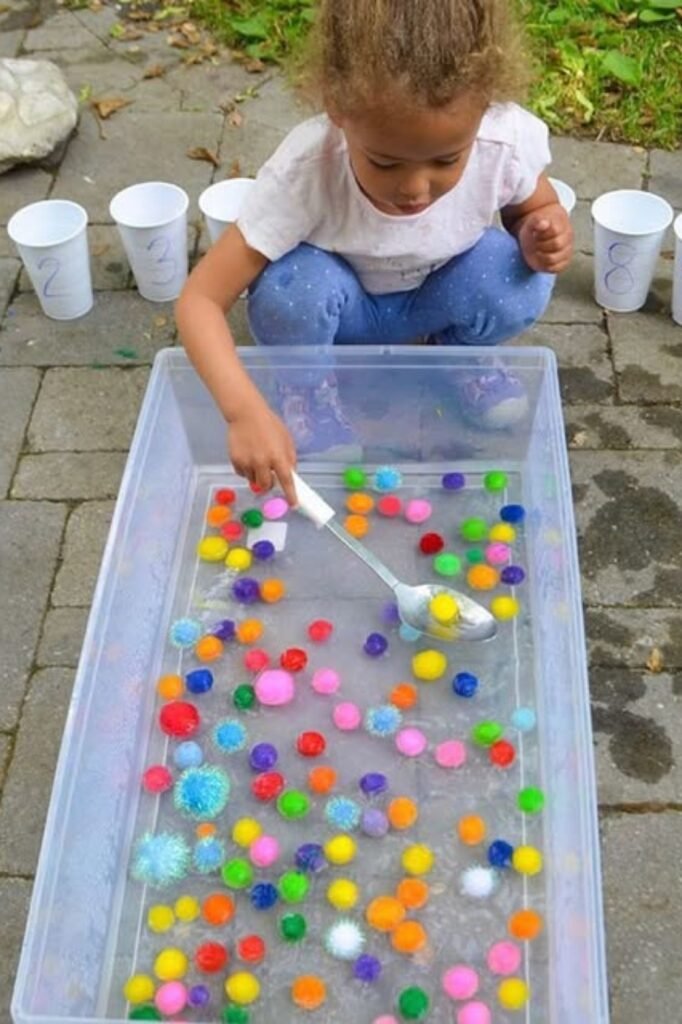
Water play grabs attention fast, so use it to practice numbers. Fill a clear bin with water, toss in colorful pom poms and line up cups labeled with numbers.
Give your youngster a spoon or small sieve and let them scoop and sort. Say a number and have them get that many and drop them into the right cup.
When you make a mistake, you have to quickly review your counting. For an extra challenge, set a timer or tell them to count after they group by color.
Patios outside are better because they will get wet. It looks even better on warm days.
Kids under the age of 5 focus on one-digit numbers. Older kids can put cups together and practice elementary addition.
Shape Hunt
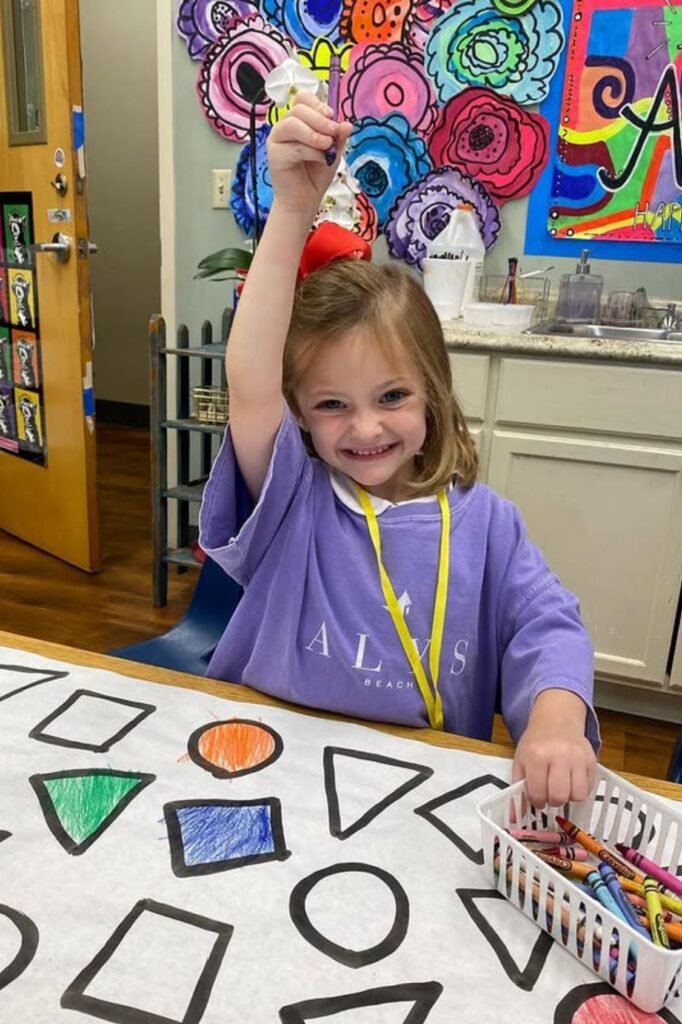
Recognition improves when kids have to search, not just color randomly. Draw large shapes across a big sheet of paper circles, triangles, squares, rectangles.
Give them crayons and tell them to draw one shape at a time. They look for it, color it, and utter its name out loud.
Instead of a solid fill, encourage them to color each form a different pattern to make it more interesting. There are stripes in the triangle.
There are dots in the circle. Squares with zigzags. These little twists help you stay focused. Use this during the first arithmetic blocks when students are still paying attention.
Younger kids learn how to identify simple things. Older ones can count the corners and sides or categorize forms by their properties.
Pattern Eggs
Holiday themes grab attention, so use them to teach patterns without saying the word “lesson.”
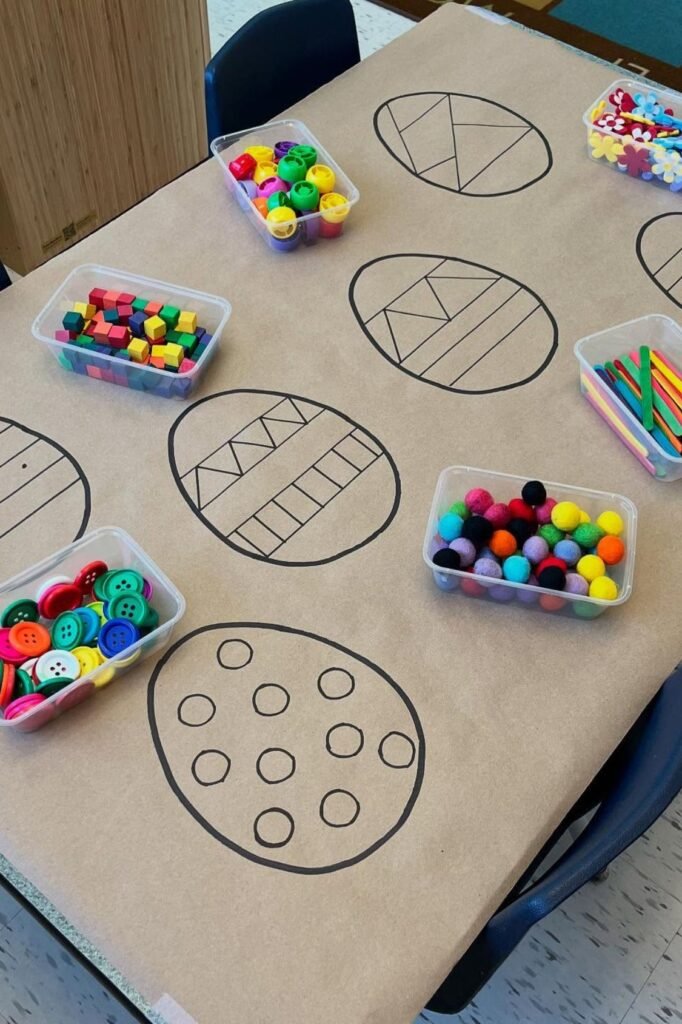
On butcher paper, draw big egg shapes and fill them up with simple shapes like stripes, zigzags, dots, and triangles.
Put bins of loose pieces like buttons, cubes, craft sticks, and pom poms close by.
Tell your child to fill each part with a pattern that repeats. Red, blue, red, blue. Small, big, small, big.
Start with simple things and make them harder as they get better. Their hands stay busy while their brains learn to guess what will happen next.
This kind of table station is great for group homeschool days or learning time with siblings.
Puzzle Time
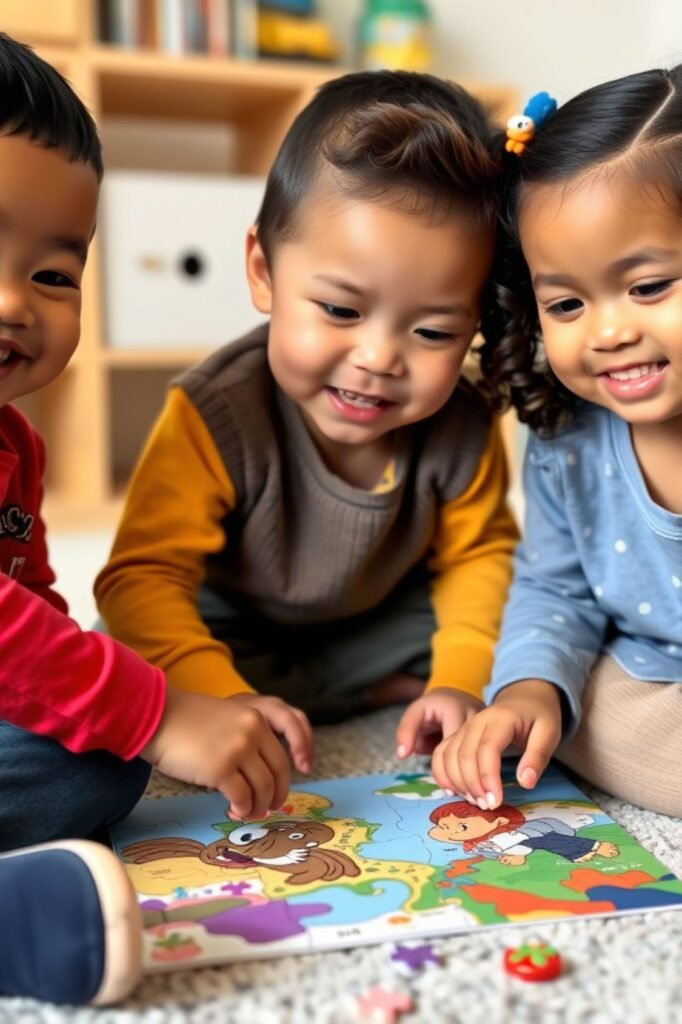
Problem-solving grows quietly when little hands work together over a puzzle. Spread the pieces out on floor and let kids search for edge pieces first.
They have a defined plan instead of just guessing when they start with the boundary. Group puzzles are great for people of all ages.
Kids who are younger match colors and shapes. Older kids hunt for patterns and cues in pictures. Let them hash it out for a minute.
Figuring out which piece goes where helps you learn how to communicate as well as how to think logically.
Short sessions keep things good. Leave the puzzle out so they can come back to it later without feeling like they have to finish it all at once.
Castle Decorating
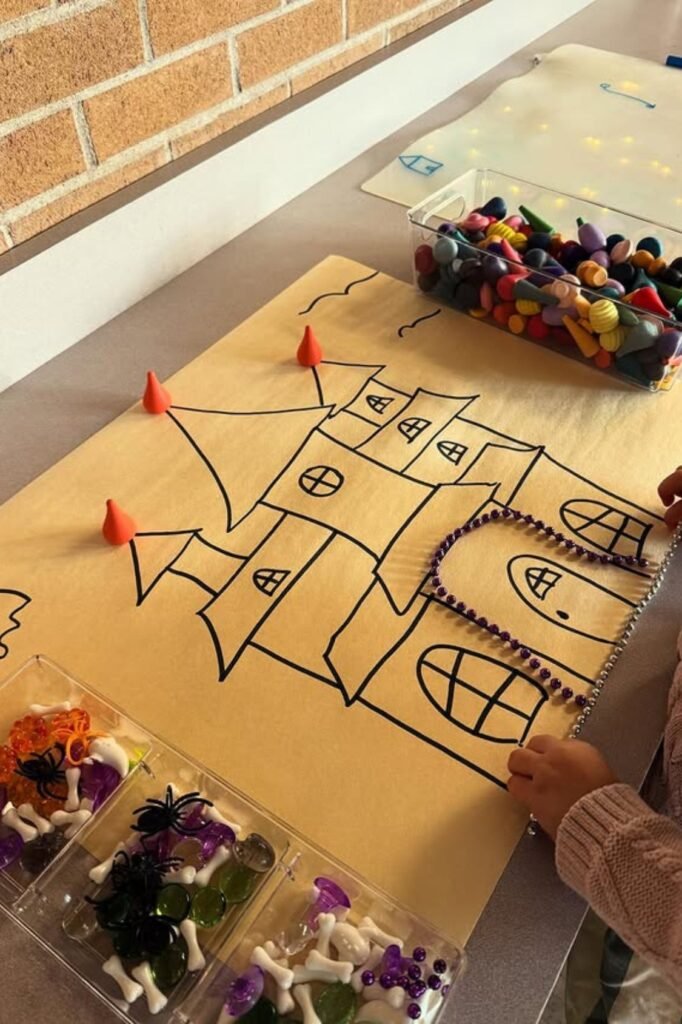
Imagination pulls kids into learning faster than instructions ever will. Sketch a large castle outline on butcher paper.
And put bowls of loose bits like beads, cones, gems, toy spiders, bones, and small stones beside them. Let your youngster bring the scenario to life one piece at a time.
Telling stories comes next. Find out who lives there. Is the castle friendly or scary? Talking helps you learn new words without having to write them down.
Older students can write a short description or identify areas of the castle after they are done.
Tabletop decorating is a great activity for themed weeks like fairy tales, medieval history, or Halloween.
Color Dropper
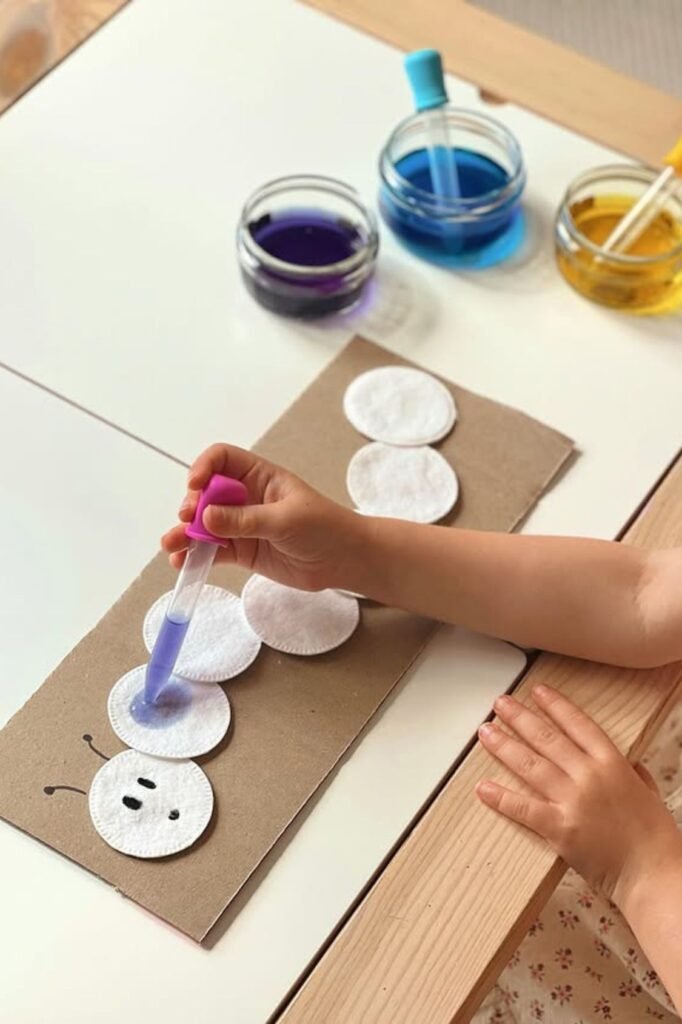
Tiny hands gain serious control when you swap brushes for droppers. Fill small jars with diluted food coloring or watercolor and set out cotton rounds on cardboard.
Teach your youngster how to gently squeeze and let go of color on each circle. Here, pressure is important. Too much squeezing makes the cloth wet.
Just the right amount makes silky mixes. That control strengthens the same fingers that will be used for writing later.
Put simple faces or shapes on the page first so that the kids decorate with a goal instead of just dropping things.
It’s easy for science to get in. Put blue and yellow on one cotton round and see what happens. See how they react as the colors change.
Sensory Collage
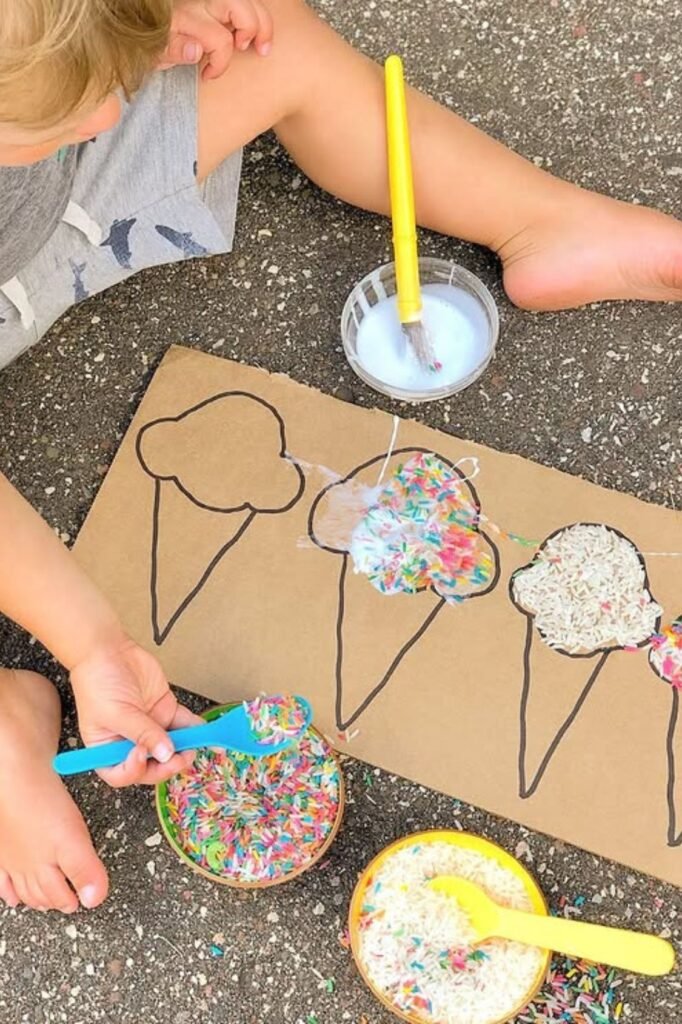
Texture changes everything. Outline simple shapes like ice cream cones on cardboard and set out bowls of rice, sprinkles, or colored grains.
Put a little cup of glue on a brush and let your youngster progressively fill in each section. You need to be in charge of scooping and sprinkling. A lot at once makes a mess.
Moving carefully makes neat edges. That attention improves fine motor abilities without having to do drills.
It works best on outdoor surfaces because loose grains will spread out.
Make it a simple lesson in how to compare things. Ask which scoop feels heavy, light, rough or smooth. Let them mix colors and see how the patterns change.
Art and sensory play maintain kids’ attention longer than coloring pages that are flat. Hands stay busy. Ideas flow. Every sprinkle they put on hides a lesson.
Color Wheel
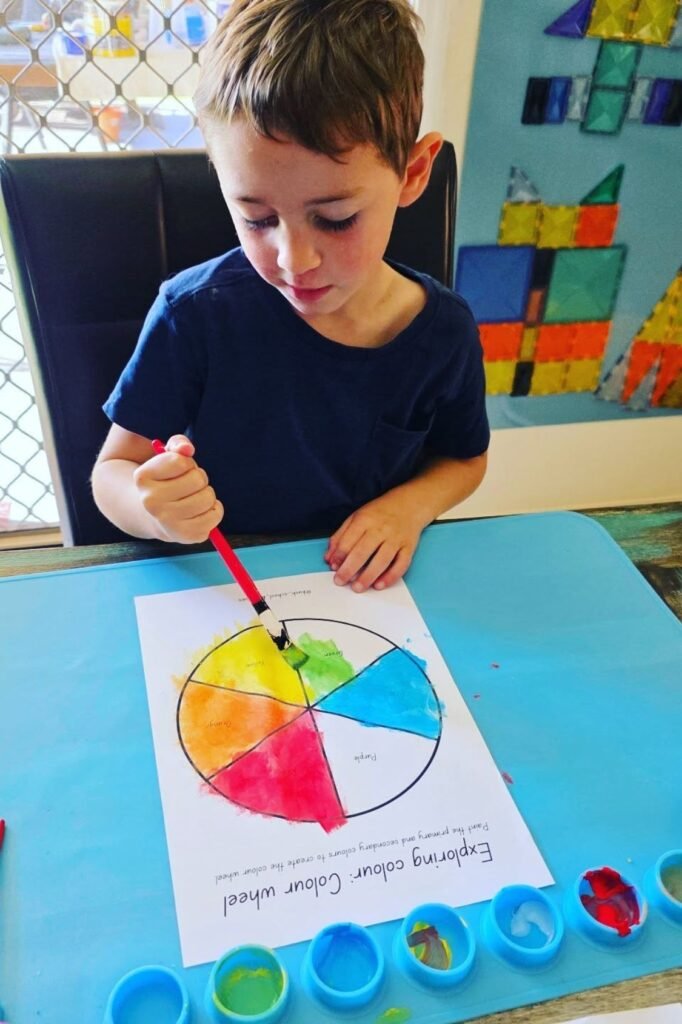
Mixing colors feels like magic the first time it works. Print a simple color wheel outline with sections labeled and hand over basic paints red, blue, yellow.
Have your youngster color in the basic colors first, and then help them mix new colors for the blank areas.
When blue and yellow mix, they make green. When red and yellow mix, orange appears. Instead of telling them, let them find out for themselves.
To keep the colors clear, keep a small cup of water and a paper towel close by. Short, focused painting sessions keep things from getting dirty and make you angry.
You’re showing how things happen without uttering the words. Once toddlers know how colors mix, they see it everywhere, from books to clothes to the outdoors.
Playdough Shapes
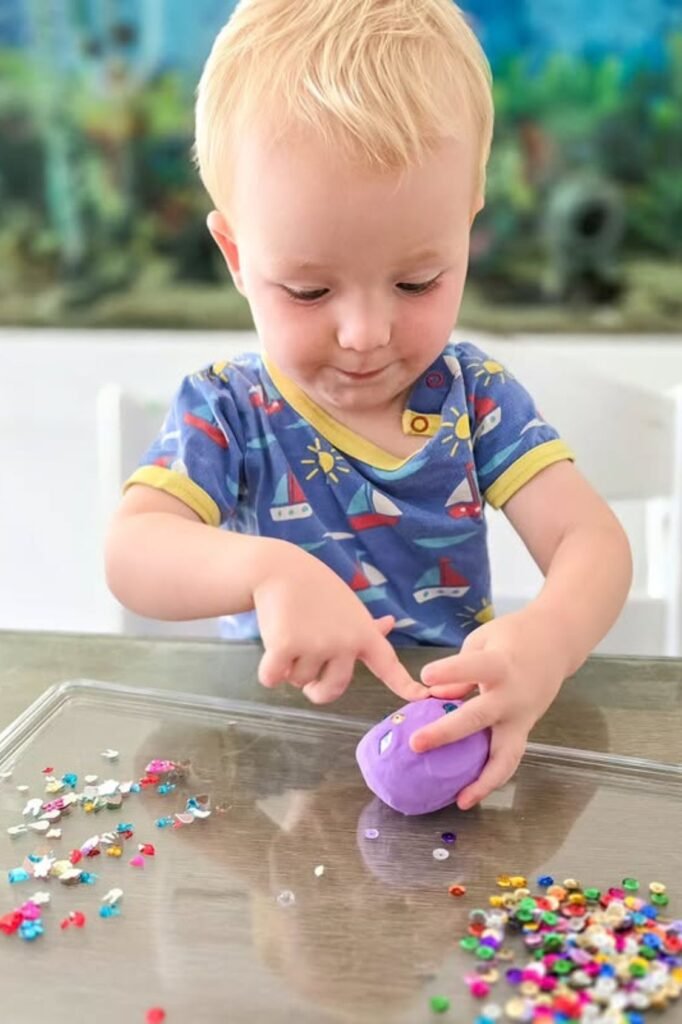
Soft dough invites little fingers to explore without pressure. Roll out a ball of playdough and place small sequins or beads nearby.
Tell your youngster to push each little piece into the surface to make patterns, letters, or simple shapes.
With each push, your fingers get stronger. That strength helps with pencil grip and control later.
Make it harder by asking them to make the first letter of their name or little dots to count.
Tray configurations make it easy to clean up and keep items in one place. Toddlers and preschoolers do best with short spurts.
Letter Exploration
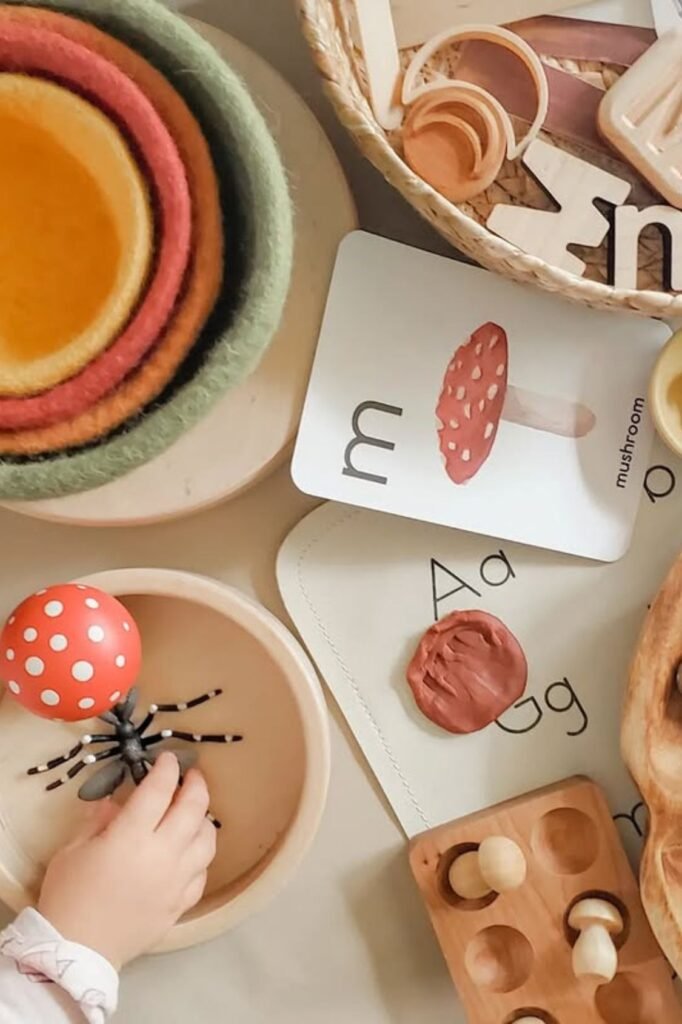
Hands-on objects make letters easier to remember than flashcards ever will. Place a letter card on the table like “M” for mushroom and surround it with matching themed.
Add plastic mushrooms, wooden bits, or small things you find in nature that go with the sound. As your youngster touches each object, say the letter sound out loud.
Don’t only focus on the name; focus on the tone as well. That small change makes the foundations for reading stronger.
To keep things interesting, add sensory items like wooden trays or felt bowls. Before moving on ask them to use playdough to shape the letter or trace it with their finger.
For preschoolers, short, fun sessions are preferable. Instead of giving too many letters at once change them out every few days.
Flower Labeling
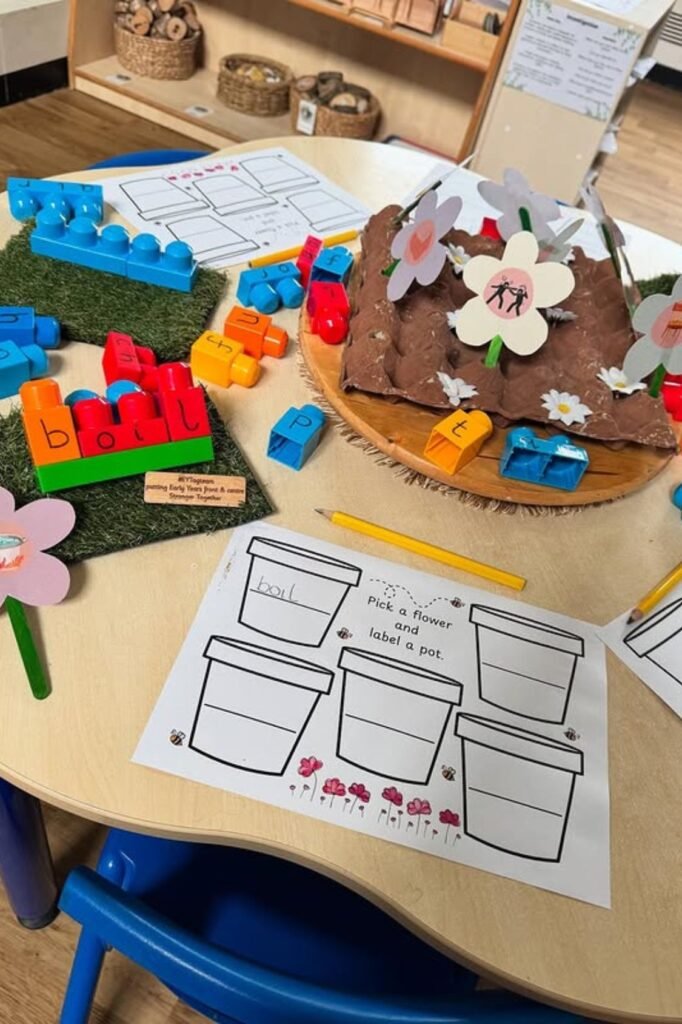
Spring themes make literacy feel fresh again. Set up a small flower station with paper pots labeled by letter or word.
Put letter blocks or word cards that match around the area and ask your child to “plant” the right one in each pot.
Say a word like “ball” and let them use blocks to make it before putting it in the proper pot. Younger kids can match the sounds at the start of words.
The older kids can practice on spelling whole words. Make sure the activity is hands-on so the letters don’t stay on the paper.
For more fun, add fake dirt or little paper flowers. They keep concentrated longer the more it feels like a game.
FAQs
How many homeschool activities should I plan each day?
Don’t worry about how much you have, worry about how good it is. For smaller youngsters, two to four carefully planned activities are generally adequate.
A meaningful day can easily be filled with one hands-on activity, one targeted skill practice (like reading or math), and one creative or movement-based exercise.
What if my child only wants to play and resists structured learning?
Instead of forcing a switch, mix the structure into the play. Turn building blocks into math by counting or measuring. Practice letters or patterns during art time.
When learning feels natural, resistance typically goes away. Start with something they like to do, and then add skills to that.
Hi, I’m Afaf! I’m a law student who loves writing about everyday life – from home projects and crafts to fashion, beauty, and parenting tips.
I’ve been writing for over a year, sharing ideas that are simple, practical, and easy to try. I write about things I find interesting and useful, whether that’s organizing a space, trying a new DIY, or finding activities to keep kids entertained.
My goal is to share helpful ideas without making things complicated. If it works in real life, I’ll write about it.
When I’m not studying or writing, I’m usually experimenting with new projects or scrolling for inspiration!