
20 Dinosaur Activities Preschool Kids for 2026
You know how hard it is to teach colors or shapes to a preschooler who would rather stomp around and scream like a T-Rex. People don’t pay attention to flashcards.
Worksheets become paper aircraft. And all of a sudden, “learning time” feels like a fight you didn’t sign up for.
The truth is that most toddlers don’t mind learning; they just don’t want to learn in a way that doesn’t feel like play.
This article brings together 20 dinosaur activities preschool kids that focus on fun, creativity, and learning.
Let’s jump in!
How Can You Teach Colors and Shapes With Dinosaur Activities?
Kids in preschool don’t learn best when they sit motionless. They learn best when they move, touch, sort, and pretend.
And when dinosaurs come into the picture, people pay a lot more attention. You don’t have to make kids learn colors and shapes through drills.
You can just let them play with dinosaurs. For example, you could arrange dinosaur eggs by color, match fossils by shape, or make dinosaurs out of triangles and circles.
The most important thing is to have a purpose: every activity should look like play but be aimed at a specific ability, such visual discrimination, fine motor control.
Save this article for later!👇👇👇
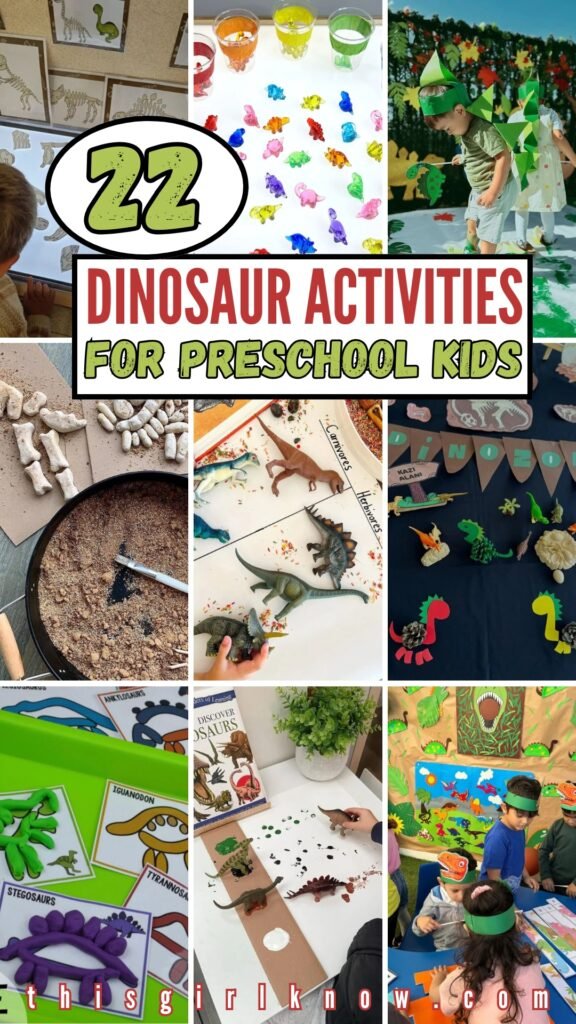
Dino Parade
Roars echo louder when learning becomes dress-up. Turning children into walking dinosaurs instantly transforms color and shape practice into full-body play.
Paper triangular spikes along the back add forms in a natural way, while green cutouts and jungle leaves help kids learn to recognize colors without any worksheets.
Make this again by making simple headbands, cardboard spikes, and taped “dino feet” out of colored paper.
Let kids tread on painted tracks or leaf shapes on the floor and scream out the colors as they go.
Spikes in a triangle? Count them. Leaves that are green? Sort by color. Moving around helps you remember the information.
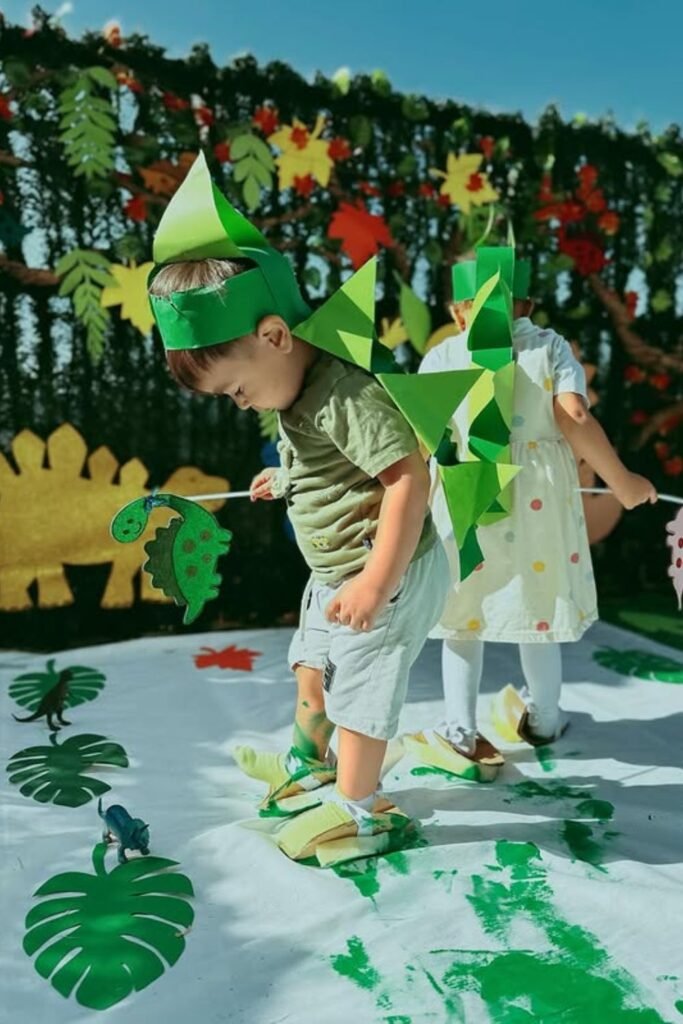
Color Sorting
Tiny hands learn fastest when they have a mission. Turning color recognition into a “dino rescue and sort” challenge instantly raises engagement.
Preschoolers can easily see the relationship between transparent dinosaur sculptures and cups of the same color.
During quiet time or as a school center, put this on a tray. Put colored paper around clear cups and put the dinosaurs in the middle.
To help them and improve fine motor skills give them child-safe tongs to use while they move each dinosaur to its appropriate color “habitat.”
Best for helping kids who have trouble telling colors apart remember their primary and secondary hues.
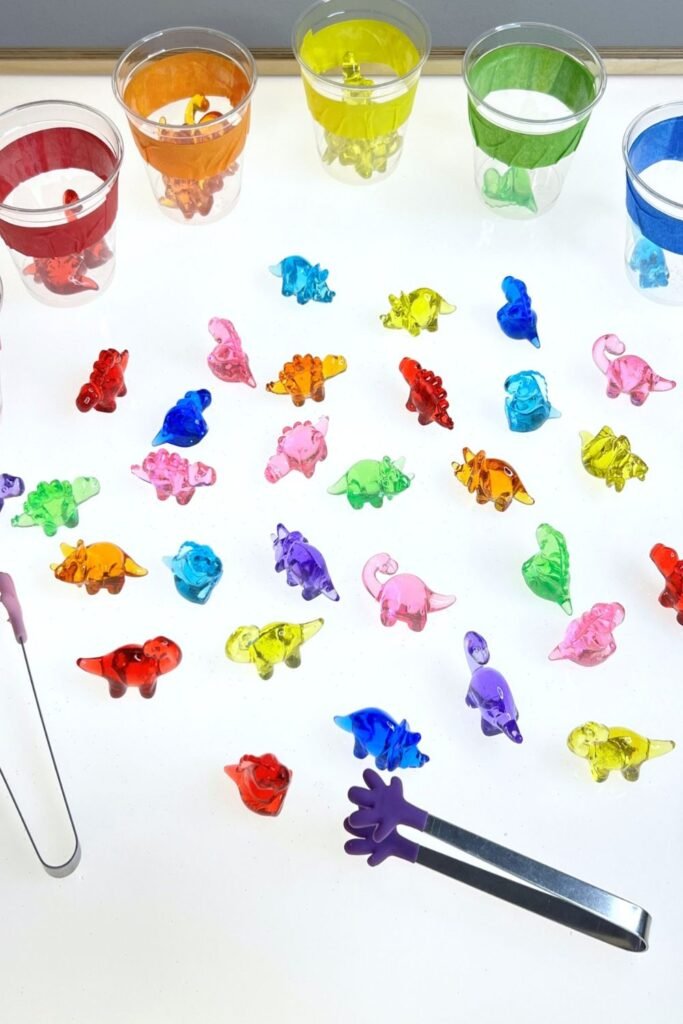
Fossil Puzzle
Curiosity deepens when children feel like real paleontologists. Scattered dinosaur bone cutouts on a light table turn shape recognition into a problem-solving mission.
Putting each piece in the right location helps you become more conscious of space and, without you even realizing it, helps you compare shapes.
Print these basic dinosaur skeleton templates, cut them into big, bold pieces, and put them on a bright tray or light surface.
Magnifying glasses make things more interesting and make people look more closely.
Before putting the pieces together, ask the kids to look at the edges, angles and curves.
Instead than telling them to find the right piece, ask them questions like, which bone has the same long curve.
Dino Sorting
Classification feels powerful when children believe they’re making real decisions.
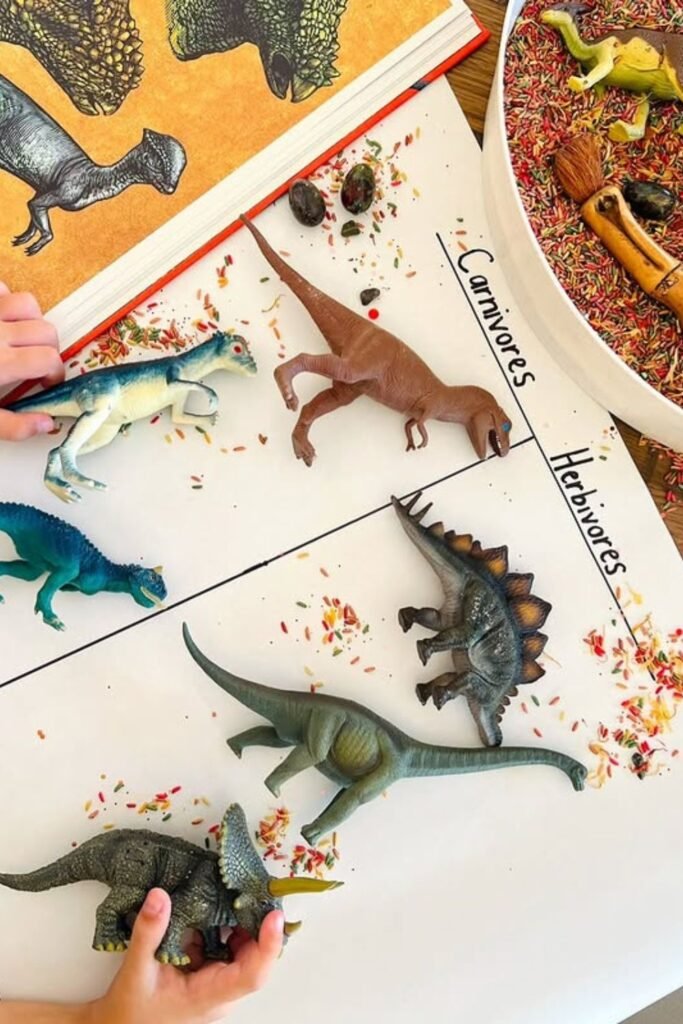
Separating dinosaurs carnivores and herbivores turns simple sorting meaningful thinking.
This game helps kids learn how to sort things by color or shape, which is a skill that will help them with math and science later on.
Make two clear parts on a big sheet of paper using basic words or graphic hints. Put toy dinosaurs throughout the area.
And ask kids to look at their teeth, body shapes, and posture before picking a side. Adding tactile sensory cues like colored grains.
Makes the setting more interesting without making it too busy. This is great for preschool schools during theme week or for kids who love to question “why.”
Dino Banner
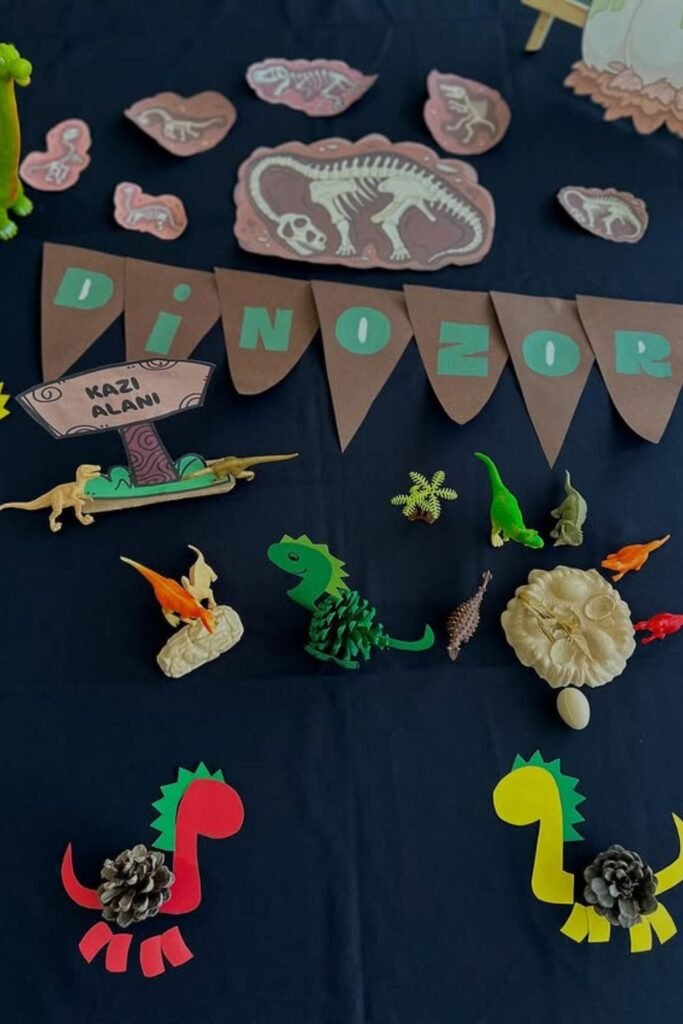
Personalization instantly raises engagement. Adding a child’s name to a dinosaur-themed display transforms letter recognition into something meaningful.
Instead than just learning random alphabet cards, kids relate letters to who they are, which helps them remember them better.
Cut basic triangle flags out of brown or construction paper and write the child’s name across them in big, bright colors that stand out.
Ask the kids to point to each letter, tell what it sounds like, and then match it with miniature dinosaur toys that are underneath.
Kids letter recognition sequencing and the sound identification get better when they see their own name as part of the story.
Fossil Dig
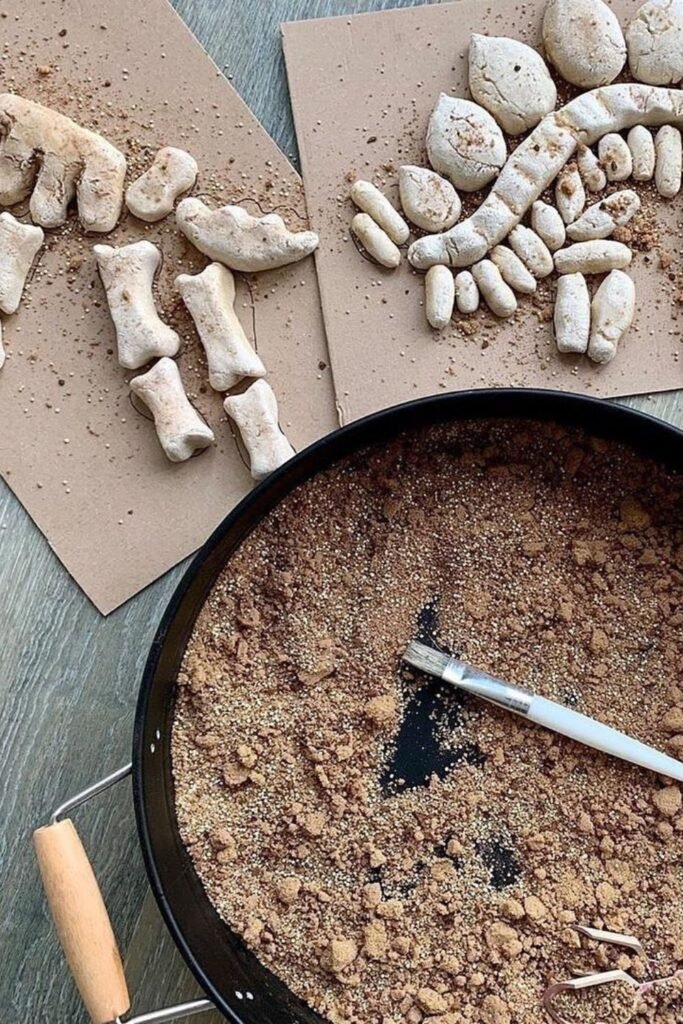
Imagination sharpens focus faster than any worksheet ever could. A simple tray filled with sand and the crushed cereal instantly become an excavation site where patience.
And observation come first. Small bone forms or clay bits are hidden under the surface so you need to brush them carefully keep your hands firm.
To make a dinosaur skeleton, press homemade salt-dough bones onto cardboard. Then, put the matching pieces in a shallow pail of sand.
Give them a soft paintbrush or a small tool and tell them to move slowly and carefully to find each fossil.
Once they find the bones, kids can put them in the right places, which helps them learn how to compare shapes and understand space better.
Number Puzzles
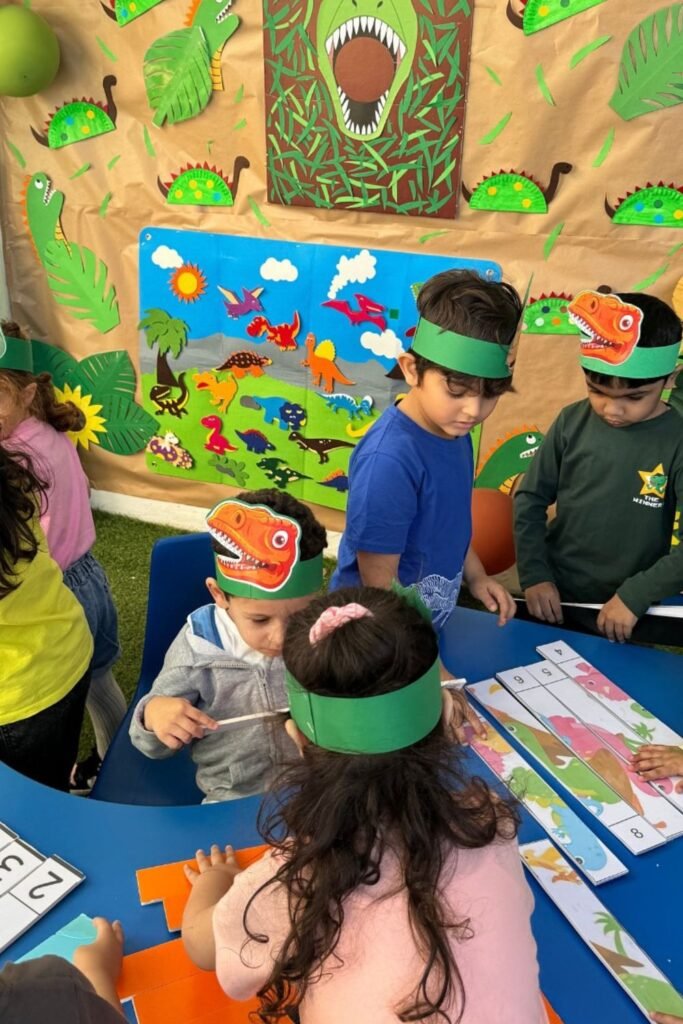
Energy shifts the moment learning feels like a team challenge. Long dinosaur number strips spread across the table invite children to collaborate, compare.
And order instead of just saying numbers. Putting together pieces with numbers on them helps kids feel more confident in math while keeping the dinosaur theme going.
Make big, bright strips with dinosaurs on them that are split up into pieces with numbers on them.
Put the pieces together and tell the kids to work together to put the dinosaur back together in the right order.
Adding small headbands or themed decorations makes the experience more real and retains people’s attention.
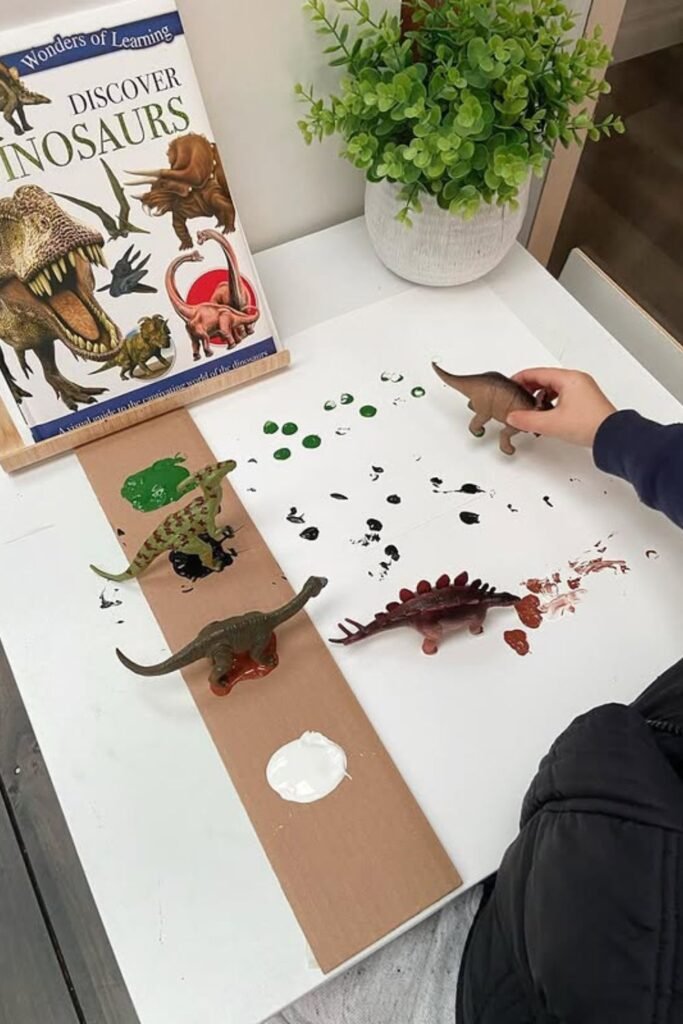
Dino Stamps
Paint becomes purposeful the moment dinosaur feet leave tracks behind. Instead of random finger painting adding toy dinosaurs.
Changes color exploring into building patterns and learning about shapes. Footprints leave markings that kids may compare, count and arrange over and over again.
Put some washable paint on a plate and ask the kids to dip the dinosaur feet in it gently before walking them across paper.
Great for messy sensory days or art sessions outside where you can wander about. Printing tracks helps with color awareness.
And visual pattern abilities while also improving fine motor coordination. Kids learn better when they observe shapes create via action instead of teaching.
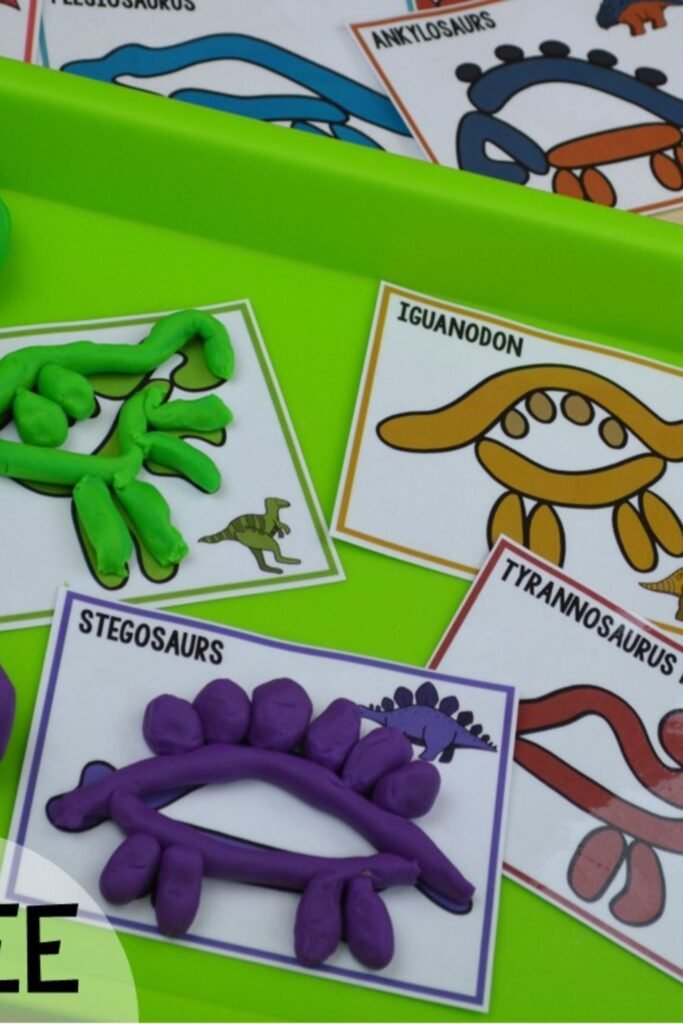
Playdough Shapes
Fine motor strength grows quietly through rolling, pressing, and shaping. Dinosaur playdough mats transform simple modeling into guided shape practice.
Without kids even knowing what the purpose was. Dinosaur bodies with outlines invite young hands to fill in lines, curves, and spikes on purpose.
Make dinosaur outline cards and then laminate them so they last longer. Give kids colored playdough and tell them to roll thin “snakes” to trace long backs.
Pinch little circles for spots, or press tiny ovals for feet. Each action strengthens the hand muscles that will be needed for writing later.
Great for morning arrival activities, table centers, or calm-down areas where people need to be focused.
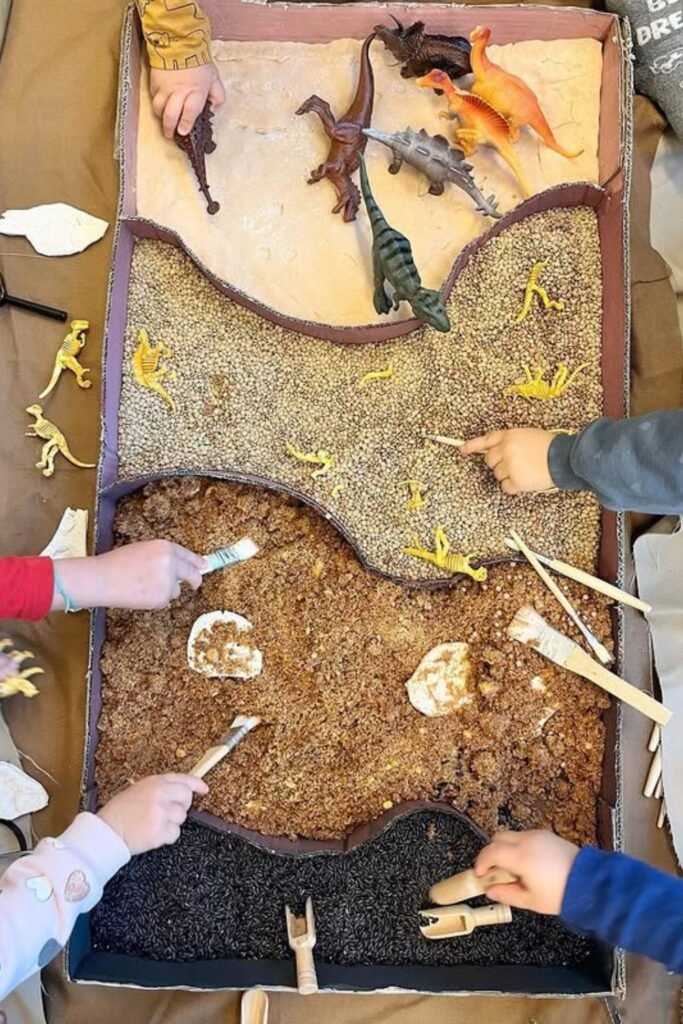
Sensory Excavation
Nothing holds attention longer than layered discovery. Dividing a large bin into different textured sections sand, grains, soil, even dark beans.
Changes regular sensory play into a whole prehistoric world. Every layer presents a new challenge and motivates kids to dig with a goal in mind.
To keep things separate, make simple cardboard borders inside a shallow box. Put little dinosaur bones or plastic fossils in each section.
Ask them to explore gently, brushing instead of scooping, and to compare the textures as they travel from one layer to the next.
Great for group centers and people need to work together and talk. Digging with different textures improves sensory processing fine motor skills and patience.
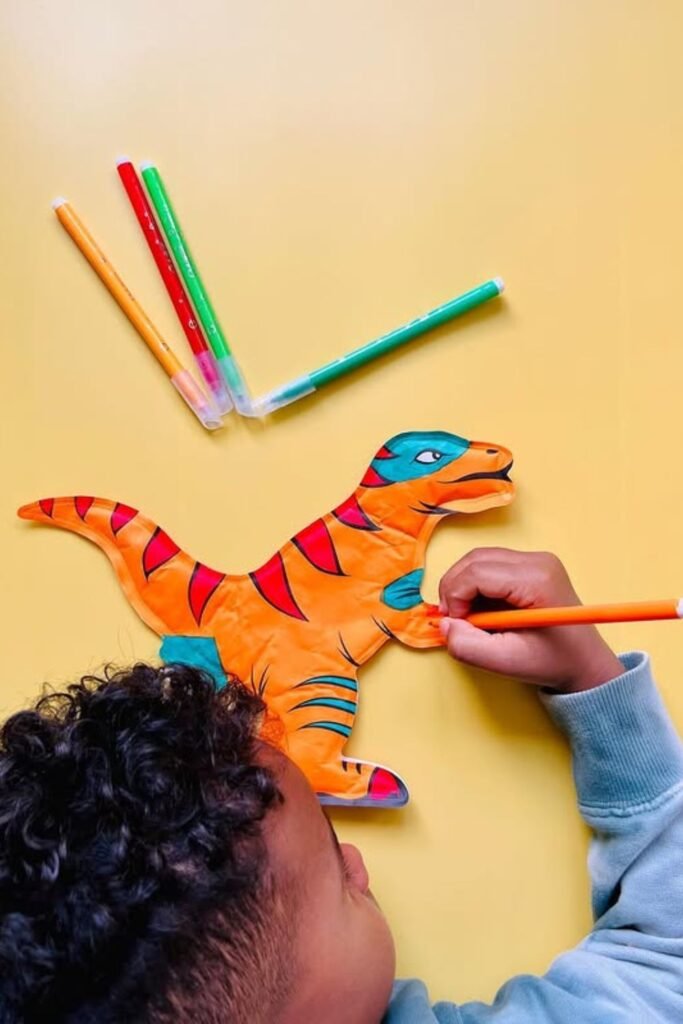
Color Mapping
Creativity deepens when color choices become intentional rather than random. A simple dinosaur cutout transforms into a lesson in color recognition, pattern awareness.
And regulated coloring the moment you point out certain locations. Give them bright, pre-drawn dinosaur templates and a few markers.
Tell them to color each part of the tail a different color, like green for the legs, orange for the body, and blue for the spikes.
Or have them make stripes that go over the tail over and over again. Limiting the number of colors helps you focus and remember the primary and secondary colors better.
Great for quiet painting time at home or as a table game in the classroom after a busy day.
Coloring inside lines helps kids learn to control their hands, see boundaries and be patient.
Mini Explorers
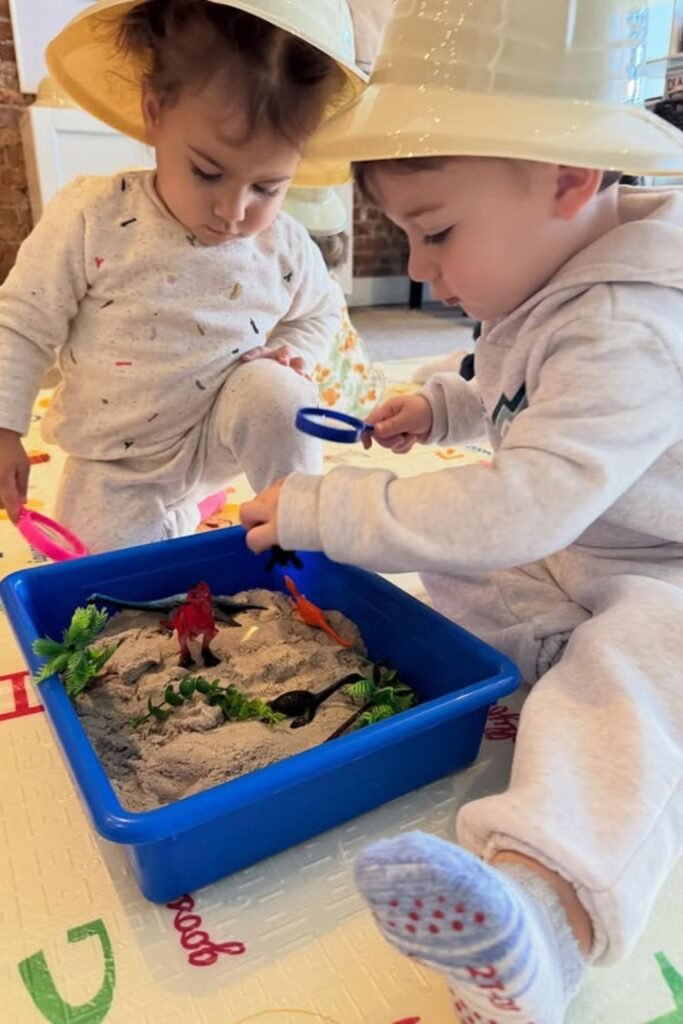
Role-play turns ordinary sensory bins into meaningful investigation. Adding simple explorer hats and magnifying glasses instantly elevates sand play.
Kids walk more slowly, pay more attention, and stay engaged longer when they think they are on a serious mission.
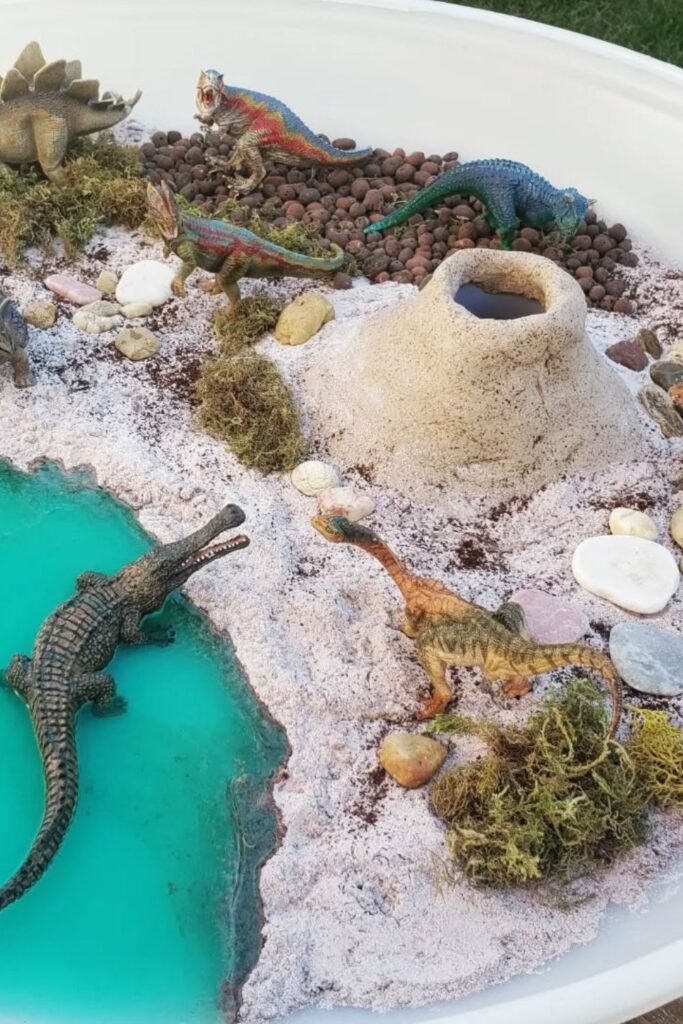
Put sand in a shallow bin and bury miniature dinosaur figures just below the surface. Put in a few fake plants or pebbles to make it feel like a natural habitat.
Before naming colors, counting dinosaurs or characterizing sizes, encourage gentle brushing and close observation using magnifying lenses.
Great for toddlers and younger preschoolers who need dramatic play to keep their attention.
Pasta Fossils
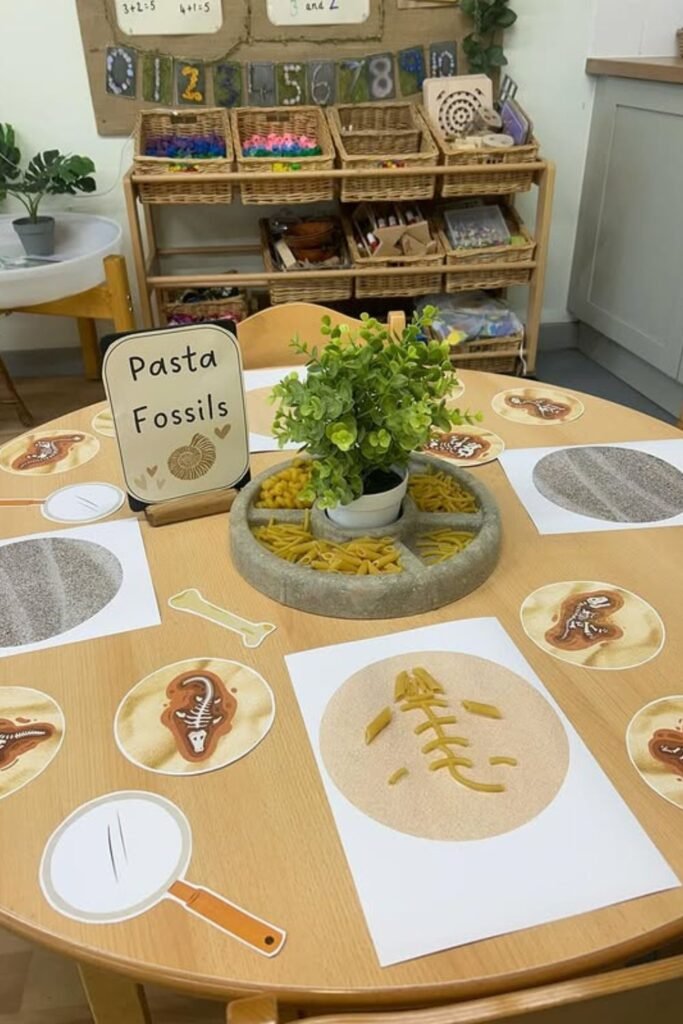
Ordinary pantry items can spark extraordinary learning. Dry pasta pieces arranged over fossil templates encourage children to recreate skeleton shapes.
Walso improving spatial awareness and hand control.
Putting each piece of pasta next to a bone outline helps kids get better at comparing things without feeling like they’re in school.
Print out simple pictures of fossils with clear bone shapes, and give the kids different types of pasta penne for long bones, macaroni for curves, and small bits for joints.
Ask the kids to look at the outline first then carefully put each piece in position before gluing.
Questions like Which shape fits here gently guide thinking without giving too much information.
Footprint Imprints
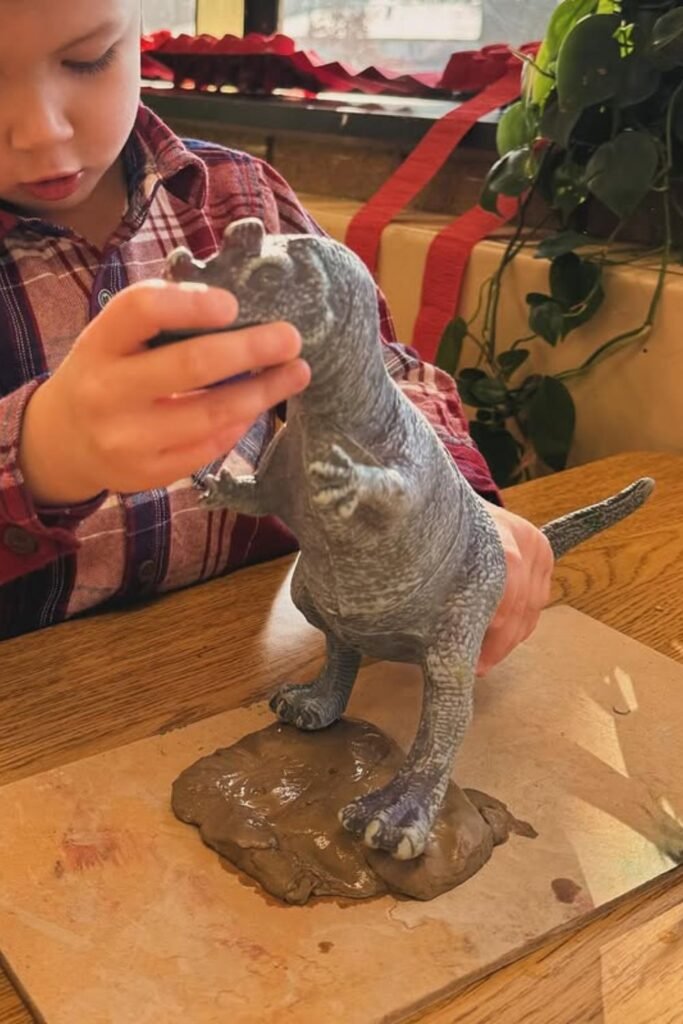
Cause and effect clicks instantly when dinosaur feet leave real marks behind. Pressing a large toy dinosaur into soft clay transforms.
Turning messy play into a lesson about forms, patterns, and how to look at things. Without any explicit training, kids start to notice depth, texture, and the edges of footprints.
Put air-dry clay or thick playdough on a solid board and tell people to stamp it hard. After you lift the dinosaur stop and look at the prints.
Which toes are longer. Which form appears broader. Ask them to count the marks they can see or trace the outline with their finger.
Great for small group exploration or one on one time when you need to pay close attention to details.
Pom Decor
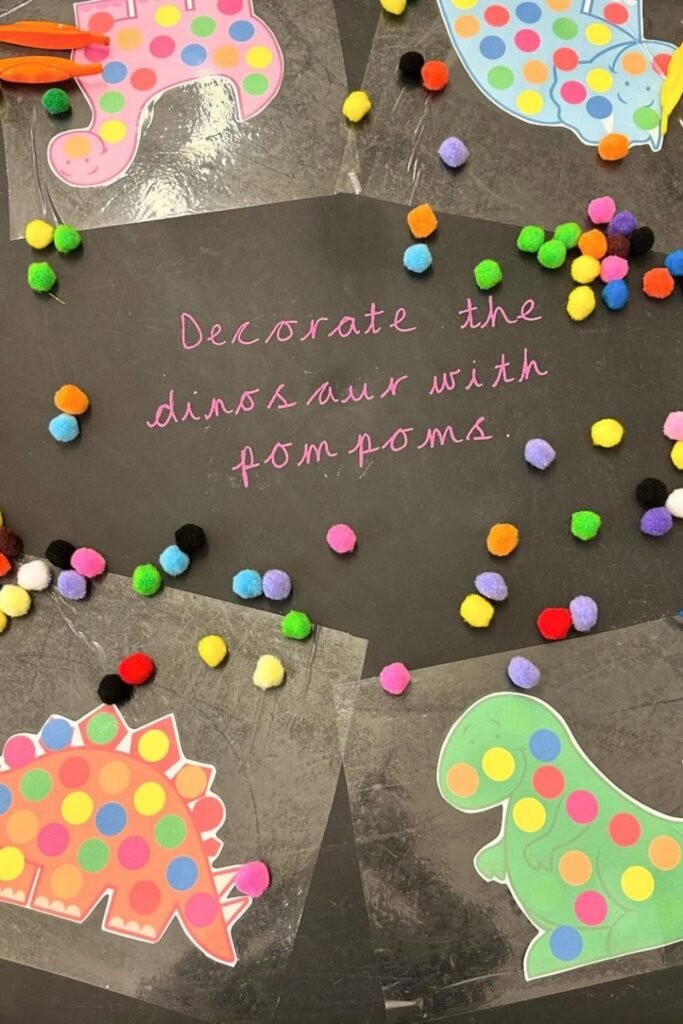
Tiny details build powerful focus. Decorating dinosaur cutouts with colorful pom poms turns simple sticking into a lesson in color matching and fine motor precision.
Bright dots naturally make you want to sort, count, and make patterns without having to read lengthy instructions.
Put laminated dinosaur templates with colorful circles on a tray.
Give them little pom-poms and tweezers that are safe for kids to use to help them arrange the items correctly.
Ask kids to match each pom to the right colored place or make color patterns that repeat over the dinosaur’s body.
Great for table centers where people need to remain quiet or for building up the muscles in your hands before writing.
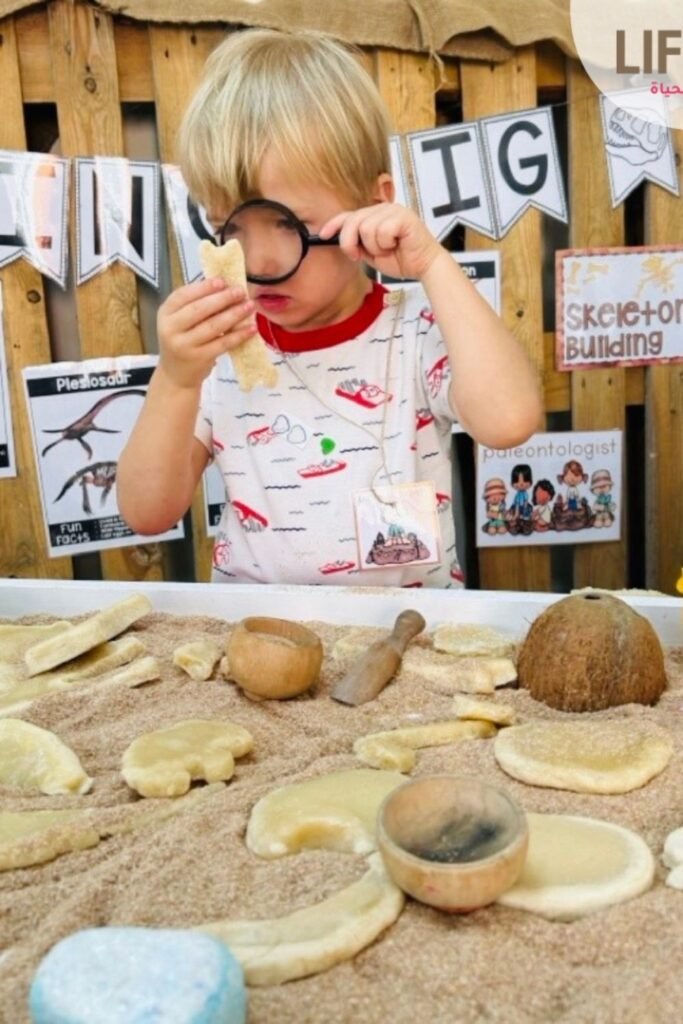
Skeleton Lab
Children pay more attention when they think their discoveries are important. A basic sand table with dough “bones” on it turns into a lab.
Where people may naturally observe, compare, and share stories. When you hold a magnifying lens, your actions slow down and your focus sharpens right away.
Make bone shapes out of salt dough or strong playdough and bury them halfway in a shallow pan of sand.
Put little wooden tools, brushes, and simple fact cards or labels close by. Tell kids to look intently at each piece before putting it on a tray to “rebuild” a skeleton.
Instead of delivering answers, ask questions. Great for science-themed or dramatic play corners that want to help kids focus.
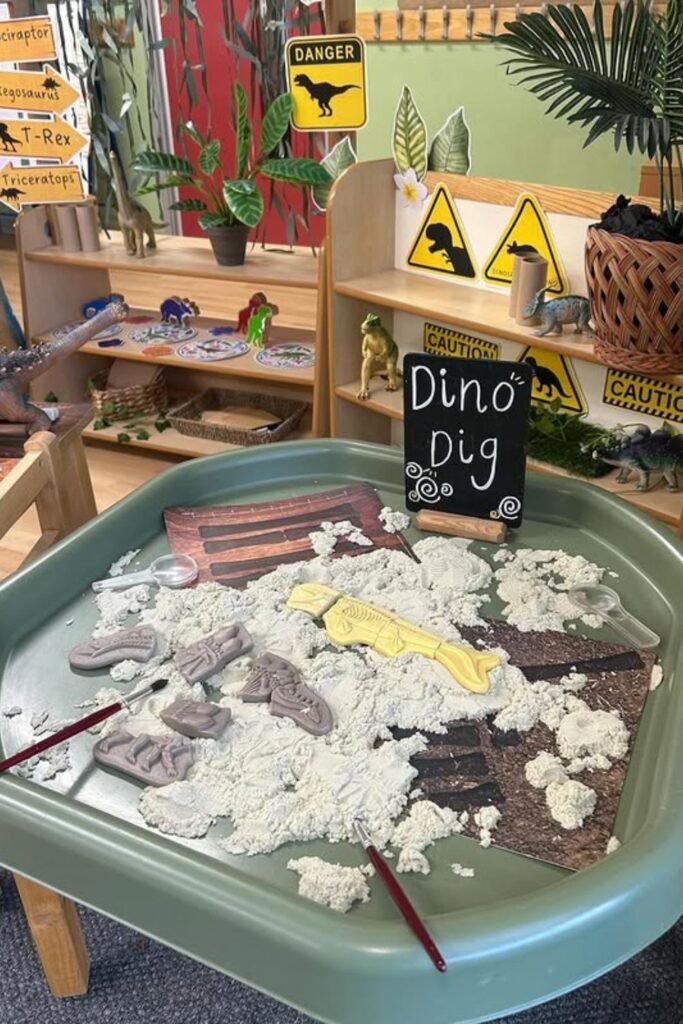
Dino Station
Immersive spaces spark deeper engagement than single activities ever could. A dedicated “dino dig” station transforms one corner of the room into a consistent learning.
where kids come back over and over because they’re curious. Put kinetic sand or soft excavation sand in a big sensory table and bury fossil molds at different depths.
Put brushes, magnifying glasses, and basic warning or “caution” signs nearby to set the mood.
Rotating the fossils every week keeps things interesting and helps kids learn how to recognize shapes and observe things.
Great for playrooms or classroom centers where kids are encouraged to be independent in a structured way.
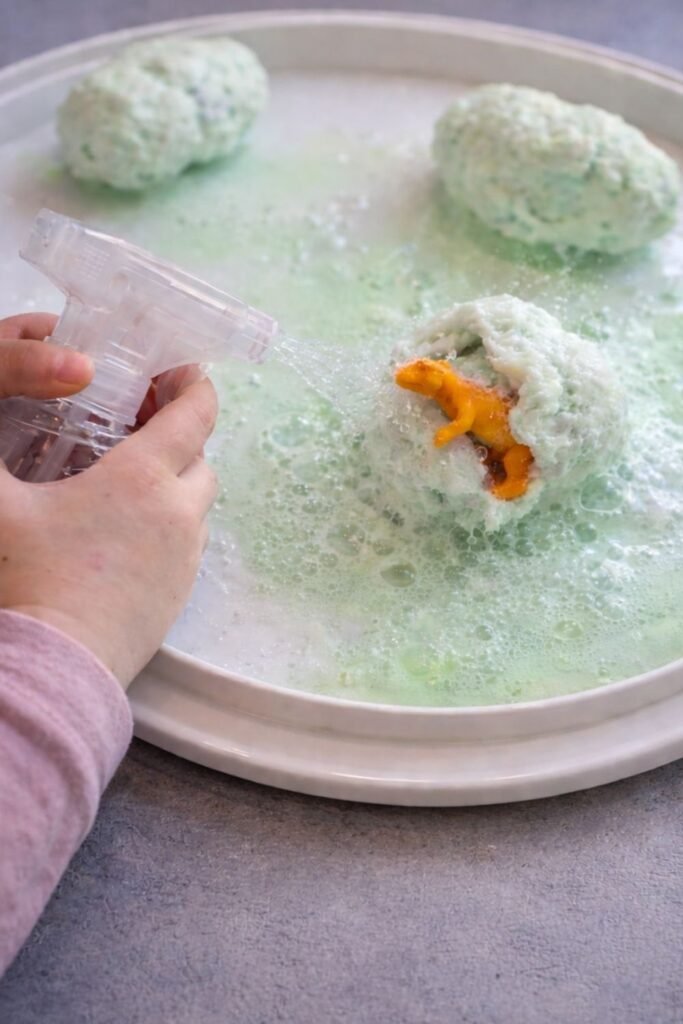
Hatching Eggs
Anticipation builds faster than any instruction ever could. Foamy dinosaur “eggs” waiting to be sprayed open turn simple sensory play into a moment of discovery.
Seeing bubbles pop and show a hidden dinosaur is exciting right away and also teaches kids to be patient and watch.
Mix some water, food coloring, and baking soda into a paste and use it to wrap little plastic dinosaurs. Let the mixture dry into shapes like eggs.
Put them on a plate and give them spray bottles full of vinegar. As kids spray, the fizzing reactions slowly reveal what’s within.
Great for afternoons with a science theme or to teach kids about basic cause and effect. Spraying makes the muscles in your hands stronger.
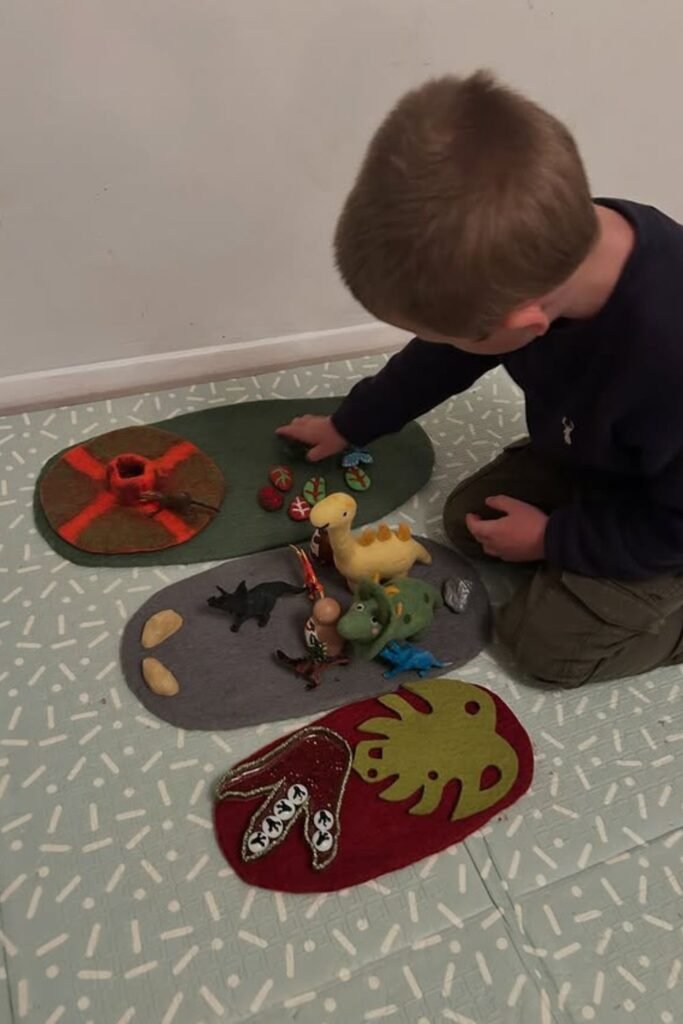
Habitat Play
Storytelling transforms loose toys into structured learning. Small felt mats shaped like volcanoes, forests, or rocky terrain invite children to place dinosaurs.
Depending to the surroundings, it encourages both rational thinking and imaginative play at the same time.
Use felt or colored paper to make simple habitat bases. For example, use green for the jungle, gray for rocky regions, and red for volcanic areas.
Put in little things like trees, rocks, or forms that seem like “lava.” Ask them to tell you where each dinosaur goes and why they think that.
Great for peaceful play on the floor where kids may think for themselves. Habitat matching helps kids learn how to classify things, expand their vocabulary.
Shadow Tracing
Light turns ordinary play into a powerful shape lesson. Positioning a dinosaur under a bright lamp or sunlight creates bold shadows.
These ask kids to trace outlines with their full concentration. Suddenly, curves, spikes, and tails are obvious shapes that you can look at.
Put a blank piece of paper on a table that gets natural light, or use a desk lamp to make the contrast clearer. Put the dinosaur toy in a way that its shadow covers the whole paper.
Encourage them to trace slowly around the edges, paying attention to the angles and curves as they go. Turn the toy to show how the shapes change when you move it.
Tracing shadows helps you get better at controlling your hands, following things with your eyes, and recognizing shapes.
FAQs
What age is best for dinosaur-themed color and shape activities?
Dinosaur activities are great for kids ages 3 to 5 because this is when they learn best by doing and seeing.
Three-year-olds learn best from simple tasks like matching colors and tracing big shapes.
Sorting by more than one trait, and tracing shadows. The key is to change the level of difficulty, not to get rid of the theme.
How can I keep dinosaur activities educational without overwhelming my child?
Dinosaur activities are great for kids ages 3 to 5 because this is when they learn best by doing and seeing.
Three-year-olds learn best from simple tasks like matching colors and tracing big shapes.
Four- and five-year-olds can handle more complicated tasks including making patterns.
Hi, I’m Afaf! I’m a law student who loves writing about everyday life – from home projects and crafts to fashion, beauty, and parenting tips.
I’ve been writing for over a year, sharing ideas that are simple, practical, and easy to try. I write about things I find interesting and useful, whether that’s organizing a space, trying a new DIY, or finding activities to keep kids entertained.
My goal is to share helpful ideas without making things complicated. If it works in real life, I’ll write about it.
When I’m not studying or writing, I’m usually experimenting with new projects or scrolling for inspiration!