
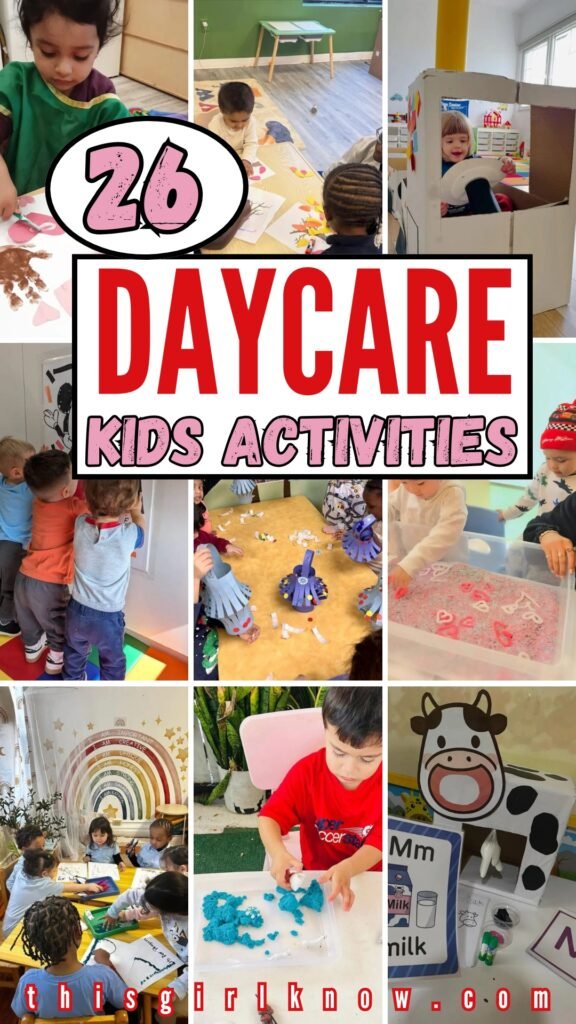
26 Daycare Activities for 2026
I was in a daycare room with ten kids last Tuesday. I had no new materials and no new ideas. The paint had run out.
The worksheets were dull. And it was still two hours until sleep time. If you’ve ever been in a situation.
Where everyone was looking at you and you were wondering, “What now?” you’re not the only one.
You don’t need fancy toys or a big budget to keep kids busy and learning. All you need are simple concepts that work.
In this article, you’ll find 26 daycare activities ideas for kids that balance fun, movement, and home comfort in 2026.
Let’s jump in!
What Are Easy Daycare Activities Using Simple, Low-Cost Materials?
You can create up easy daycare activities in a matter of minutes with things you already have.
Think of things like paper cups, tape, crayons, old magazines, plastic bowls, or even socks. Kids stay focused and you stay sane if you keep it simple.
You don’t need pricey toys or complicated kits. You need things to do that will keep young hands occupied, burn off energy, and teach them basic skills at the same time.
When you use cheap materials, you can attempt new things all the time without thinking about how much they will cost.
Save this article for later!👇👇👇
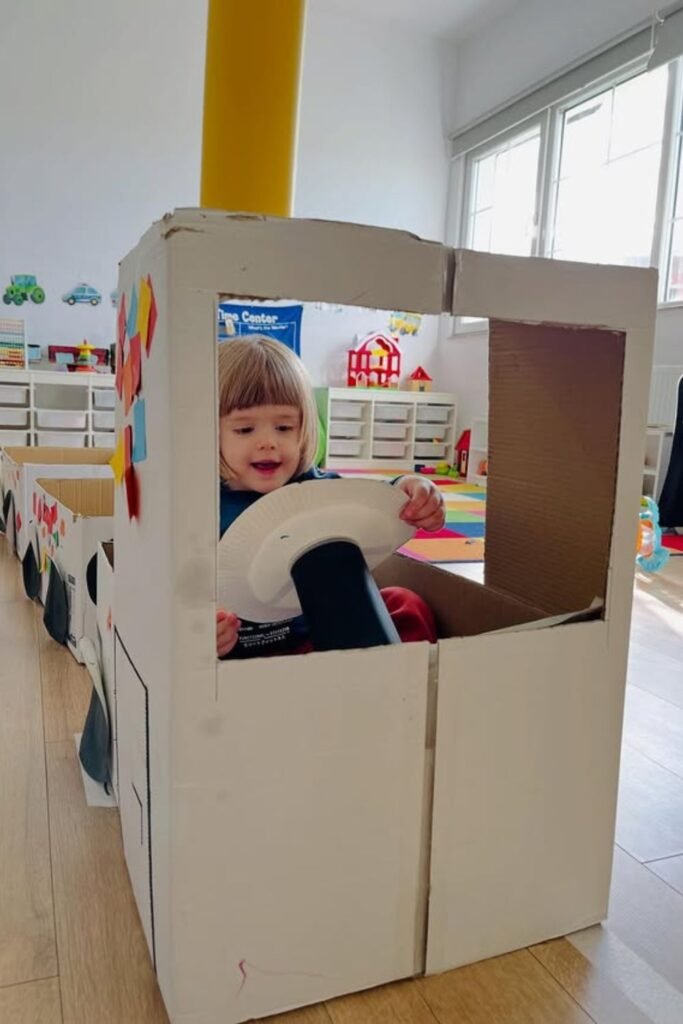
Cardboard Bus
In less than an hour, big boxes can change a quiet room into a full-on adventure. Kids can “drive” to the zoo, the beach, or school.
If you tape together a couple big pieces of cardboard and cut out windows.
Paper plates make great steering wheels, and markers allow kids design doors, lights, and wheels.
Works well on slow afternoons when you don’t have much energy and need a boost of creativity.
Put it in one corner and let small groups take turns using it. Role play naturally helps kids learn how to share, take turns.
And speak without making them do it. The budget stays the same, but the level of engagement goes through the roof.
Leaf Collage
Busy young hands can’t be stopped by glue and bright paper leaves. Draw or print a simple tree with no leaves.
And then give out pre-cut paper leaves in different fall hues. Kids may put them anywhere they like, and they fill the branches one at a time.
This works great since everyone can sit together and speak about the seasons while they make things.
As they squeeze, press, and put each piece, their fine motor skills naturally get better. If you don’t have much time to cut, use spare construction paper.
To get the leaves ready ahead of time. Write names on each tree and put them up. This will make a wall display right now without spending any more money.

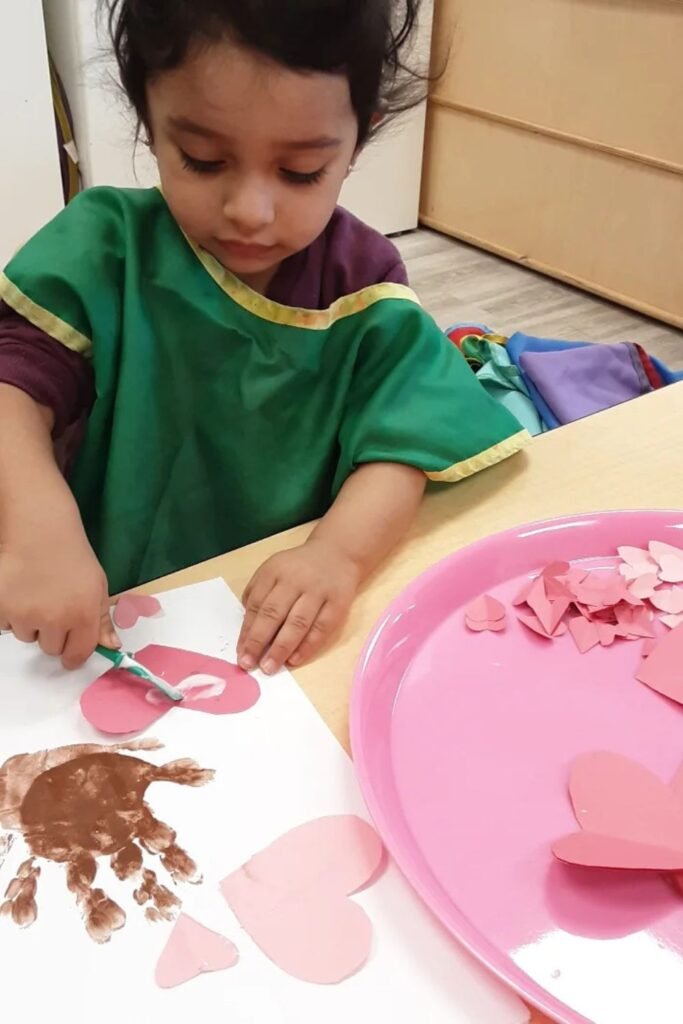
Handprint Hearts
Tiny hands covered in paint always make something spectacular. Put a child’s hand on paper, let it dry.
And then put paper hearts around it to make a nice keepsake. You can spread glue without making a mess with a little brush or cotton swab.
Great for Valentine’s Week or Family Appreciation Days when you want to give something that parents will keep.
Keep wipes handy by and wear aprons. Let the kids decide where each heart goes. People may talk comfortably while they work.
They can ask each other things like “Who do you love?” “Why do you care?” and “What makes someone kind?” Easy supplies, a significant outcome.
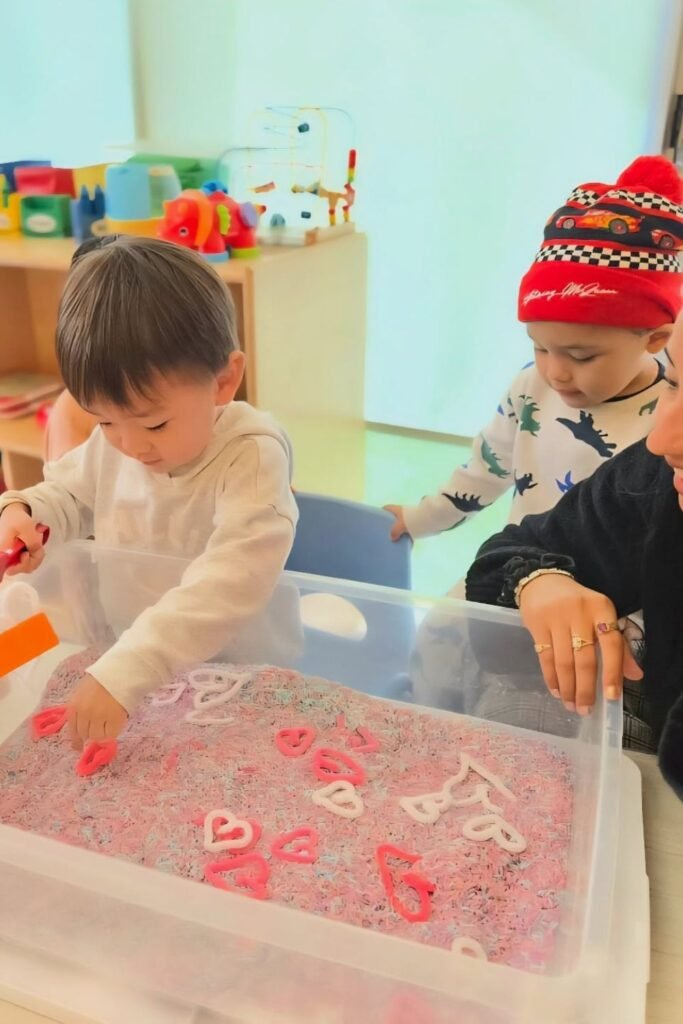
Sensory Bin
People who are busy keep calmer when they have something to do. Put shredded paper, colored rice, or even dry oats in a clear plastic tub.
Then hide foam hearts or small toys inside. Give them scoops, spoons, or small cups and let them look for, sort, and gather things.
Works great when you’re going through a change and your energy is all over the place. While kids dig and look for riches.
Their fine motor skills get better. If you put a sheet under the bin, cleaning up is easy. Change the shapes, themes.
Fonts, or colors for holidays, and the identical configuration will feel fresh new without costing you anything.
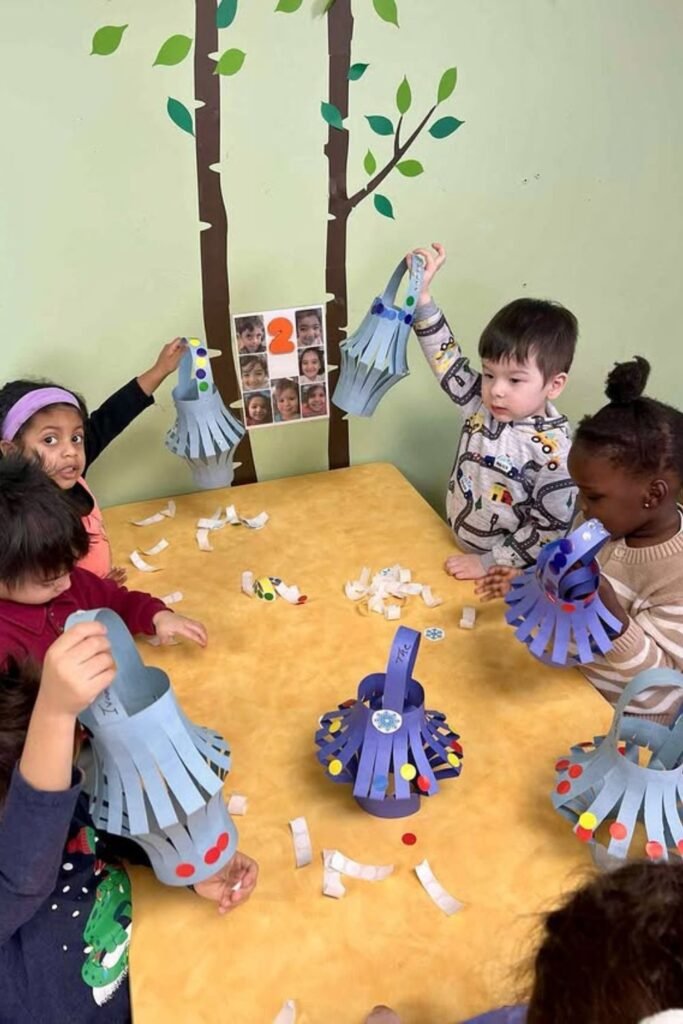
Paper Lanterns
Colorful paper strips can turn an ordinary table into a mini celebration. Fold construction paper in half.
Cut evenly spaced lines without cutting all the way through, then roll it up and staple it together to make a lantern shape.
Put a basic handle on top and let them use dot markers or stickers to embellish.
Works great before holidays or ethnic celebrations when you want something fun but cheap.
Cutting makes little hands stronger, and decorating allows people show who they are. Put them up across the room.
To make the classroom look nice right away. You don’t need any special tools, just paper, scissors, and some time.
Tape Collage
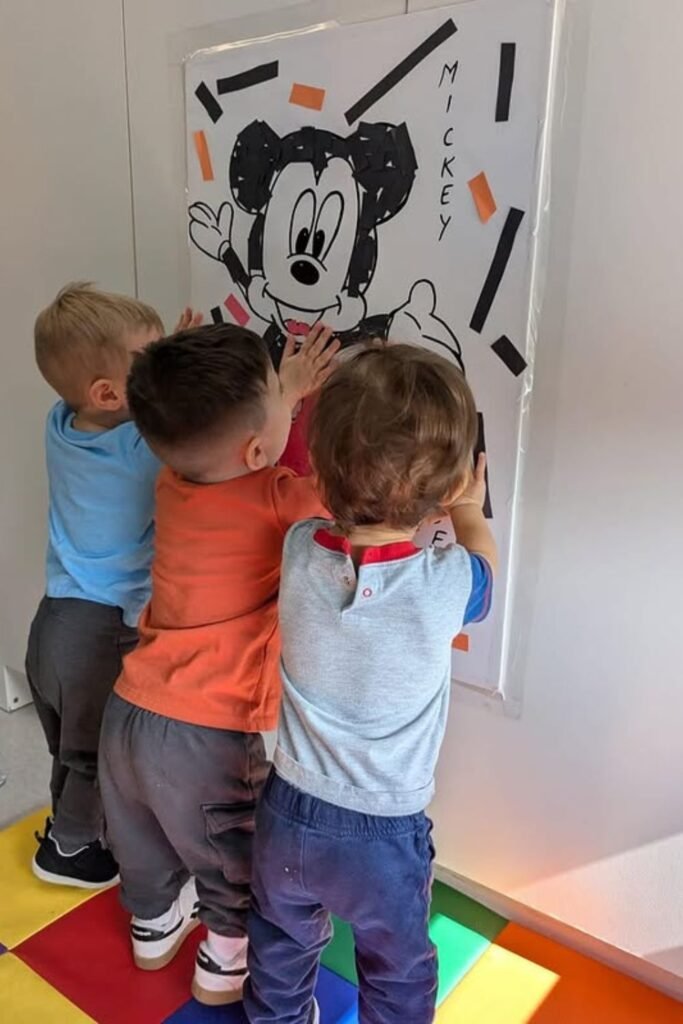
Wall space can turn into a giant activity board with just clear contact paper and colored tape. Stick the contact paper to the wall.
Take off the backing and let kids press paper strips or shapes onto a huge outline of a character. No glue, no mess, just peel and stick.
Standing up keeps young bodies moving, which is helpful on days when sitting still seems hard.
Big arm movements make your shoulders stronger without anyone knowing you’re practicing.
You can change the theme at any moment, like animals, letters, or shapes.
And use the same configuration. It only takes a few seconds to clean up, and youngsters are proud to see their work at eye level.
Letter Farm
Learning letters sticks better when kids can touch and see them in action. Set up a simple cardboard cow box.
And give it a big “M” card and an image of milk to go with it. Let kids give the cow letter cards or match things.
That start with the letter M. When there is a prop, circle time is more fun. Tell them what sound M makes.
And then link it to milk, moo, or mom. All you need are some cardboard, printed photographs, and a few markers.
Change the letters and animals every week, and phonics practice becomes a fun routine instead of a drill.

Kinetic Sand
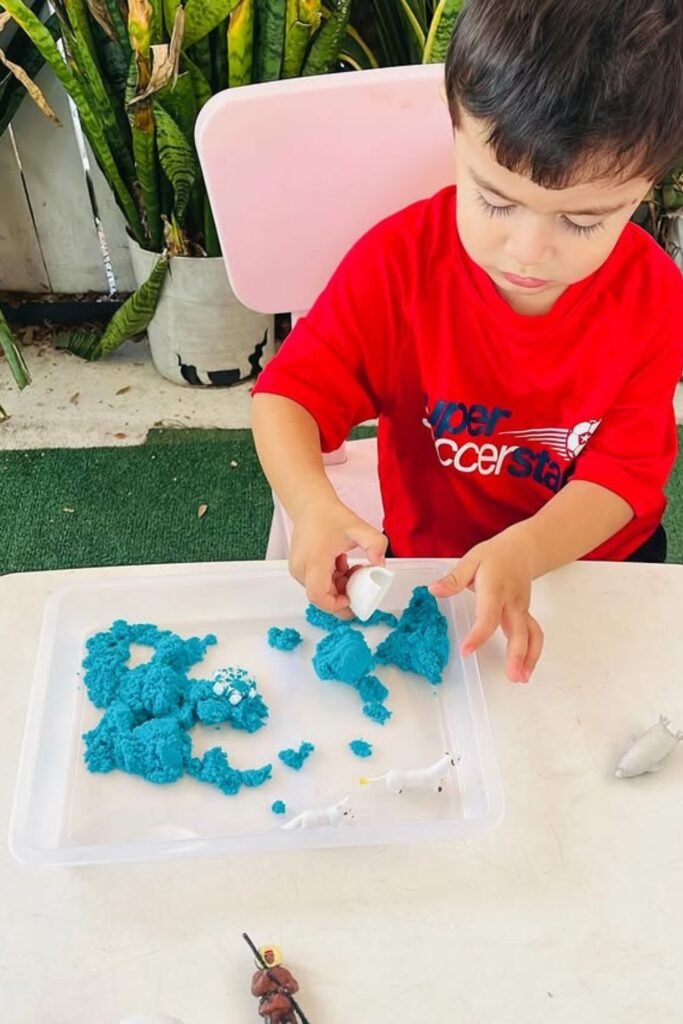
Some days call for quiet focus, not loud games. Spread kinetic sand or homemade colored sand onto a tray.
And give them little cups, toy animals, or plastic scoops. Little fingers can stay busy with digging, pouring.
And sculpting without you having to tell them what to do. This works well with outdoor tables because they are easy to clean up.
If people start to lose interest, put small things inside and make it into a treasure hunt. Kids’ hand muscles get stronger as they feel diverse textures.
You don’t need any sophisticated tools; all you need is a tray, some sand, and a few simple items to get your creativity going.
Sensory Trays
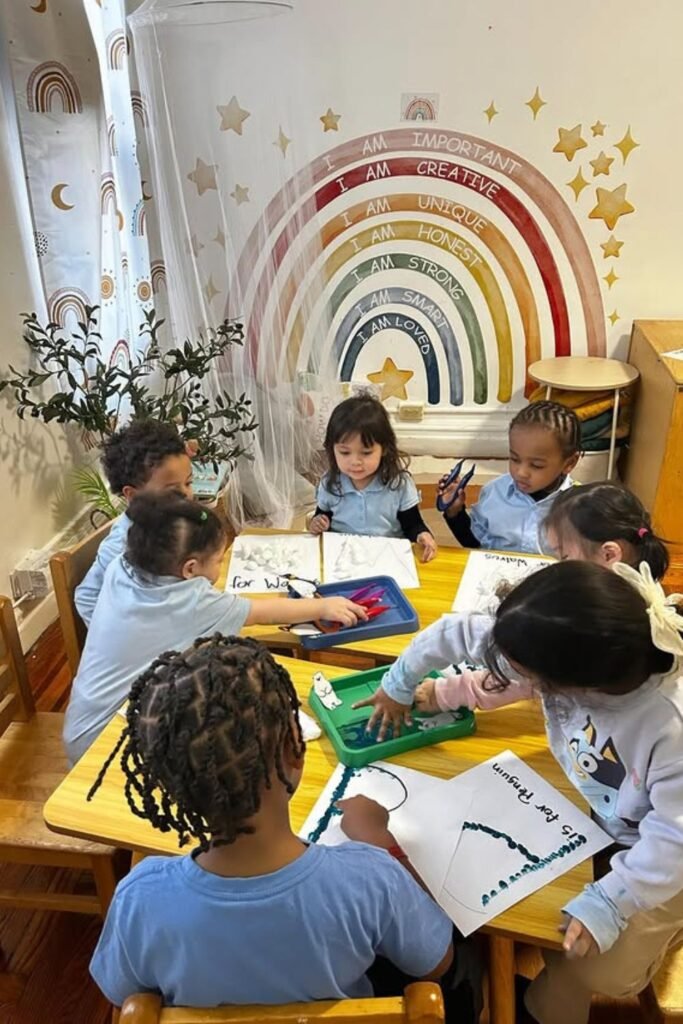
Small trays filled with cotton, pom-poms, or textured pieces can turn quiet table time into focused learning.
Put a simple outline drawing on paper and let the youngsters press or glue the things inside the shape.
People’s fingers calm down, their concentration sharpens, and conversations start to flow effortlessly around the table.
Works best when you desire calmer energy in small groups. Sorting colors or textures is a fun way to get kids to think without having it feel like a lecture.
Most of the things you need for prep come from leftover craft supplies, so it’s straightforward.
Puppet Box
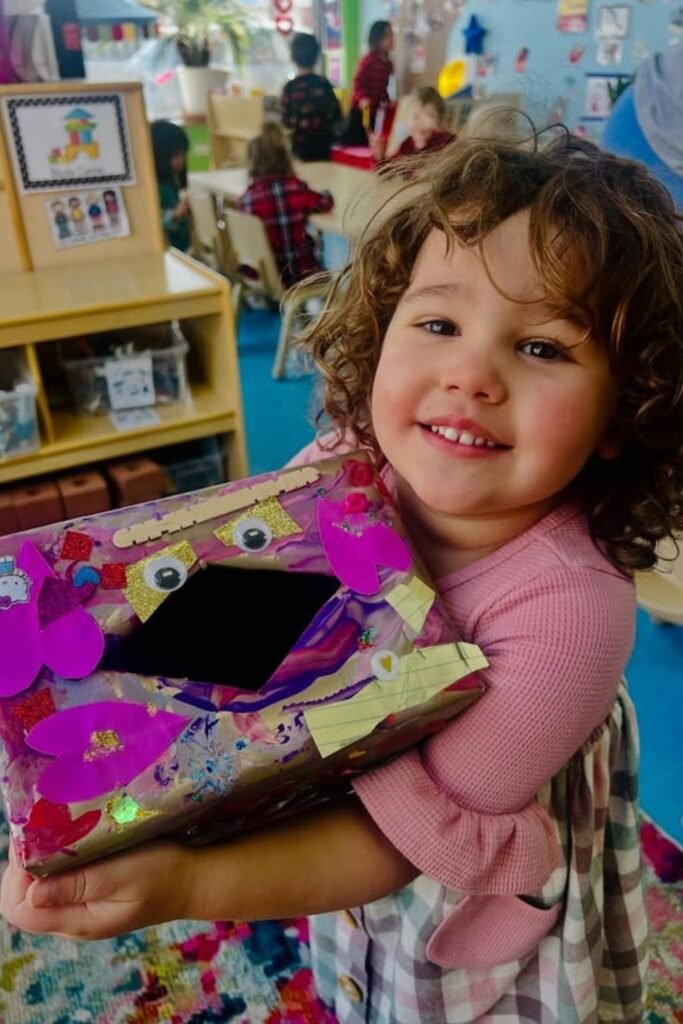
Old tissue boxes can steal the spotlight during story time. Wrap one in leftover wrapping paper, glue on foam shapes.
Put googly eyes on it and cut a hole in the mouth. Put your hand inside, and all of a sudden you have a talking puppet that youngsters can customize themselves.
During circle time, you can use it to introduce songs, ask questions, or get shy kids to talk through the puppet instead of directly.
Craft time and dramatic play go well together, so the same box can be used as a prop for a story later.
The supplies are still basic: boxes, bits of paper, and glue. But youngsters feel special when they use their own puppet because it gives them confidence.
Sandbox Play
Fresh air plus sand equals instant focus. Fill a sandbox with buckets, cups, old kitchen spoons, and small containers.
Then let the kids build, pour, and scoop however they want. You don’t need to tell people how to be creative; it just happens.
Kids have more fun outside when they can dig and explore instead than just racing about. When you pour sand.
It builds the muscles in your hands and teaches you how to measure without making it a math lesson. If you wish to play longer, add toy animals or little trucks.
Put a tarp down beneath to make cleanup easier, and change the tools about every now and then to keep things interesting without changing the overall setup.

Snowflake Painting
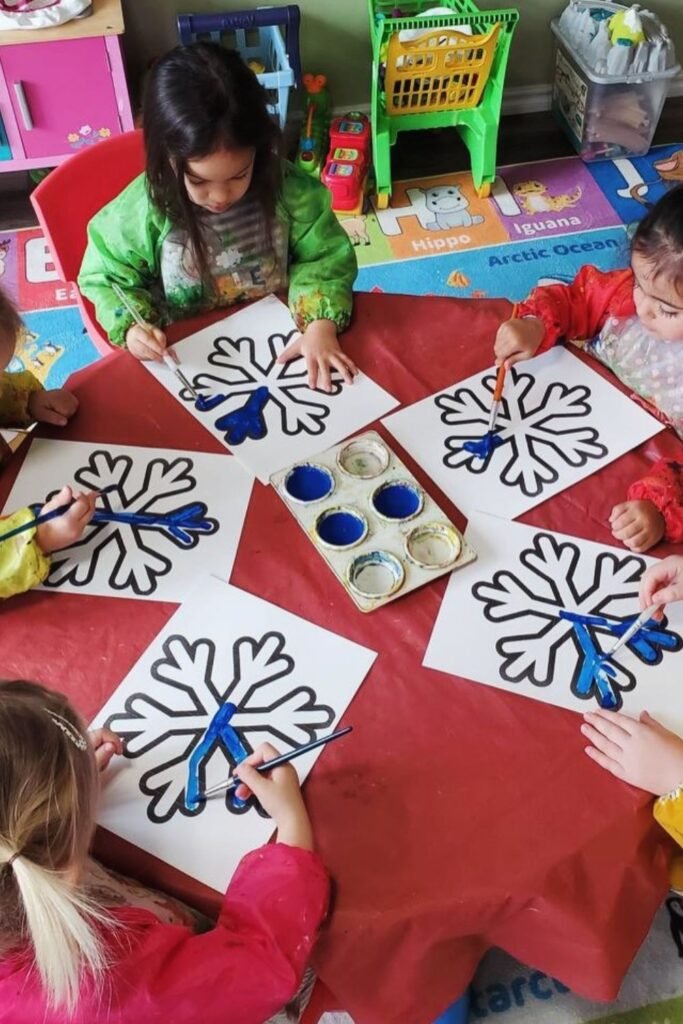
Winter days feel longer when everyone stays indoors, so bring the season to the table. Print bold snowflake outlines.
And put out blue and white paint using thin brushes. Kids naturally want to stay between the lines, which helps them learn to manage themselves.
Without making it a rigorous lesson. Small group tables are excellent since they provide each youngster enough room to move their brush around easily.
While they paint, talk about symmetry and how each side looks like the other. Aprons protect garments, and a plastic table cover makes cleaning up easy.
Put the finished snowflakes on windows so that the light may shine through and make a quick winter display.
Floor Murals
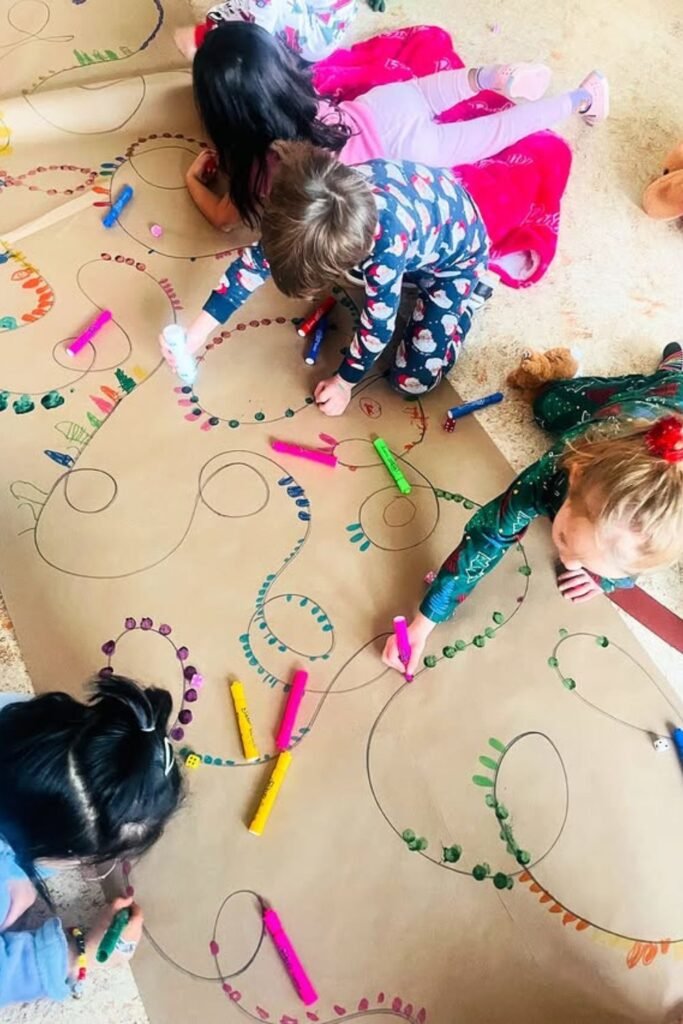
Blank floor space can turn into a giant art studio in seconds. Roll out brown craft paper, tape the edges down.
Then make large, swirling lines on it. Give youngsters big markers or crayons and let them trace, color, and fill in the paths however they choose.
When they lie on their stomachs, their shoulders get stronger and they learn to manage their bodies without even knowing it.
Big movements are liberated compared to little table work, which makes this great for mornings when you have a lot of energy.
If you want to make the activity last longer, you can add dots, shapes, or minor difficulties along the lines.
Sensory Bottle
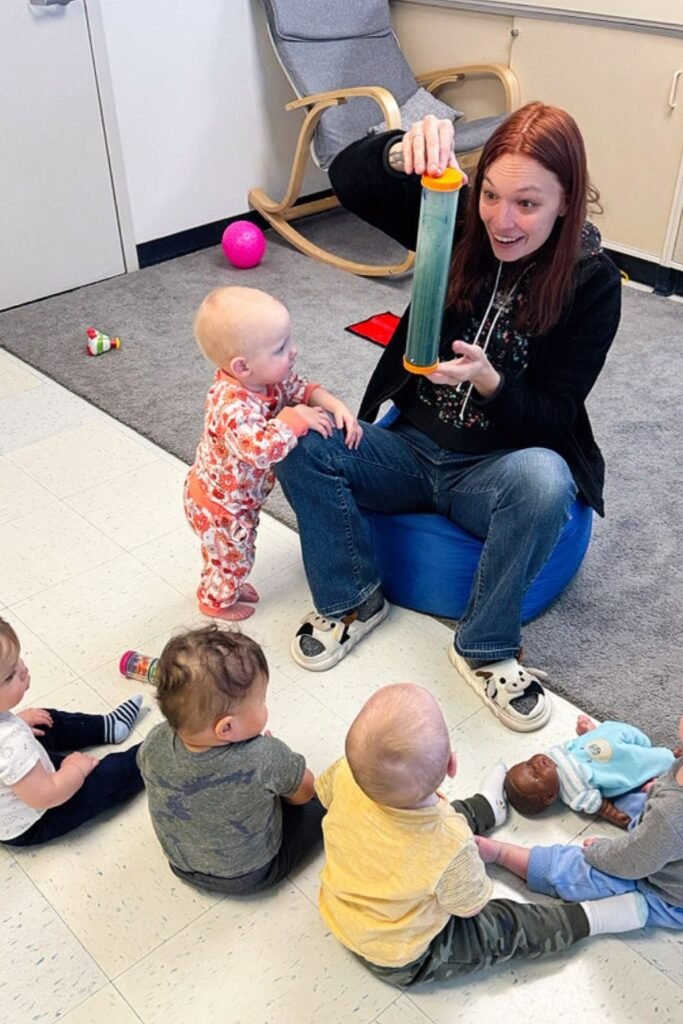
Curious little eyes lock in fast when something sparkly moves slowly inside a clear tube. Fill a sturdy bottle with water.
Add some glitter, food coloring, and little beads, then close the lid tightly. During circle time, hold it up.
And tilt it from side to side so everyone can see the colors swirl. Great for babies and toddlers who aren’t ready for structured crafts yet.
People stay calm, voices get quieter, and attention lasts longer than expected. To change things up.
Have a couple bottles with different colors or textures ready. Easy to use, strong reaction and no mess once its sealed right.
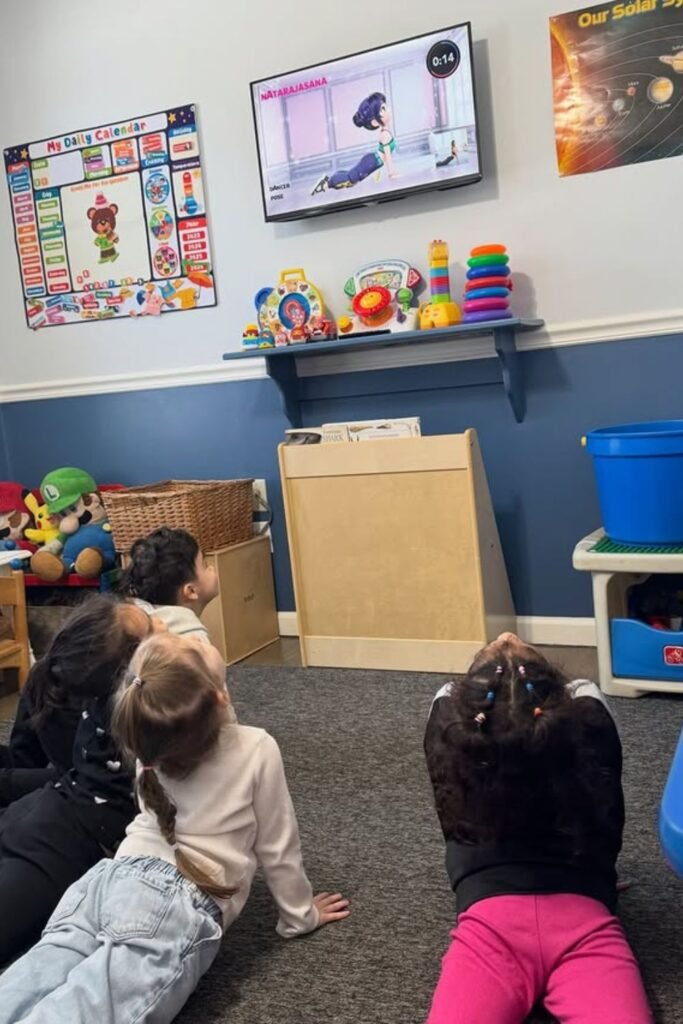
Yoga Time
Restless bodies settle down fast when you turn movement into a game. Play a short kids’ yoga video on the screen.
And let everyone do the poses together. Keep sessions to less than 10 minutes so people don’t lose interest.
Morning circle is perfect for this because it wakes up the muscles without making the room too crazy.
Stretching your arms, balancing on one foot, or holding a simple position all help you get better at both coordination and focus.
Make a small area on the carpet and tell the kids to stay there. You don’t need any equipment, just a screen and some guided movements to change the energy in the room.
Color Drops
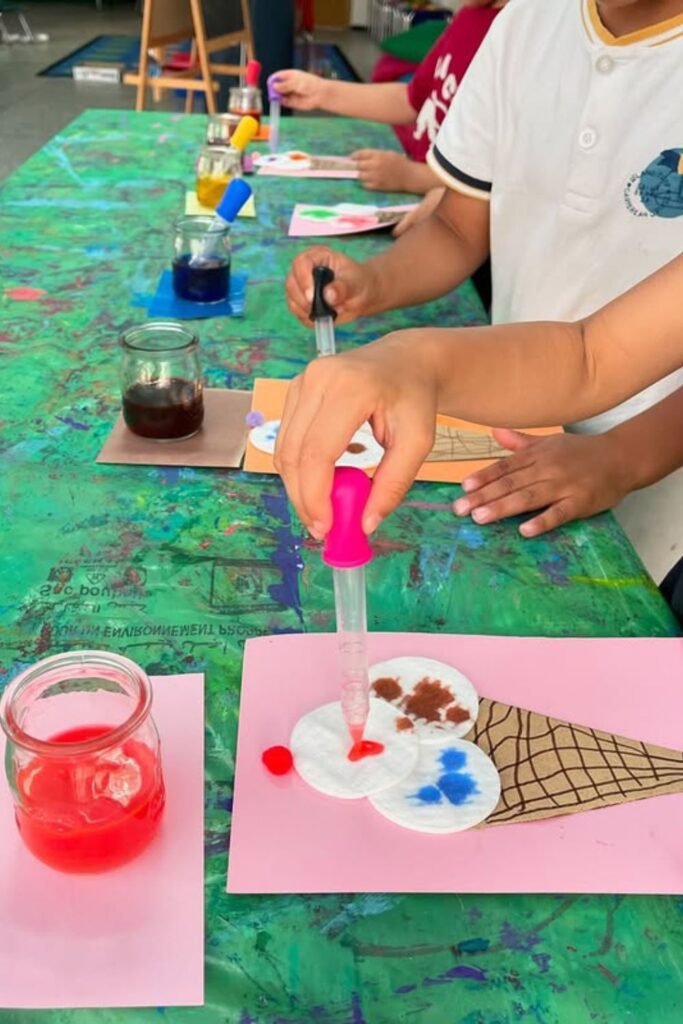
Science feels magical when colors spread right before their eyes. Fill small jar with water and the food coloring.
Then give out dropper or cotton pad that look like ice cream and scoops. Kids observes as the liquid soak in change the colors and each squeeze.
Each youngster has their own dropper so table time is fun with out getting out of hand. With each squeeze, your fine motor skills get better.
And when the colors mix, your curiosity kicks in. Put paper underneath to catch any extra drips.
You may change the ice cream shapes to clouds, flowers, or basic circles whenever you desire a new theme with the same easy setup.
Magnet Blocks
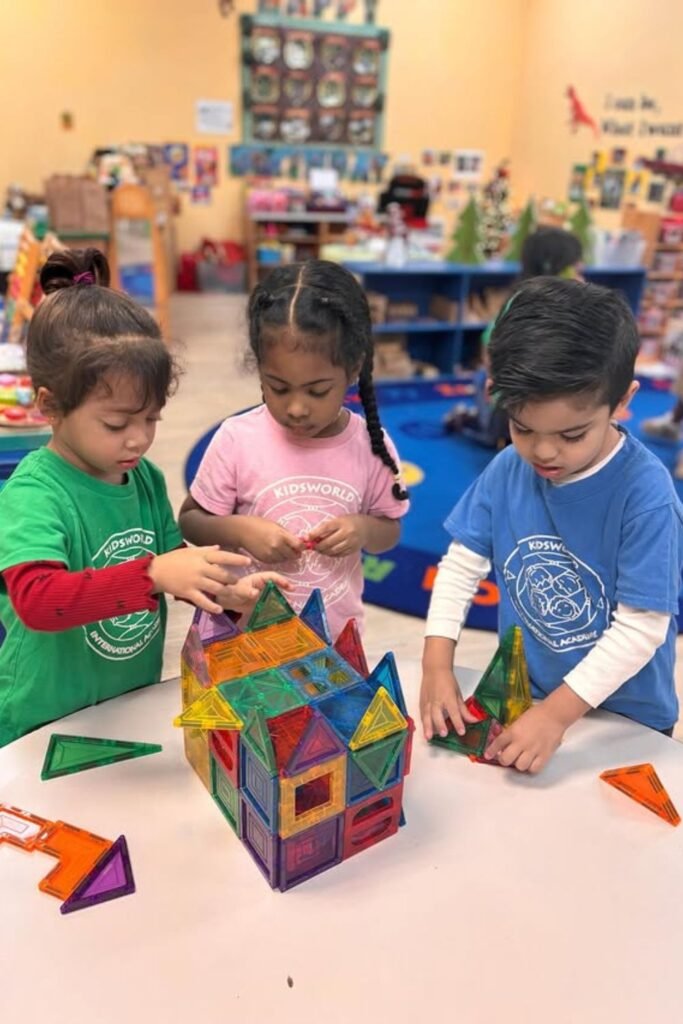
Little engineers light up the moment pieces start snapping together. Set out magnetic tiles on a clean table.
And see concepts come together quickly, like houses, towers, castles, and even simple patterns. At start, don’t give any instructions; let imagination take over.
Great for center time when you want the kids to work together. As walls fall and they create stronger ones, they organically solve problems.
Ask questions like, “How can you make it taller?” or “What shape fits here?” to get things started.
Tiles stack up quickly in containers, making clean-up easy. One set lasts for years and lets their imagination run wild.
Letter Match
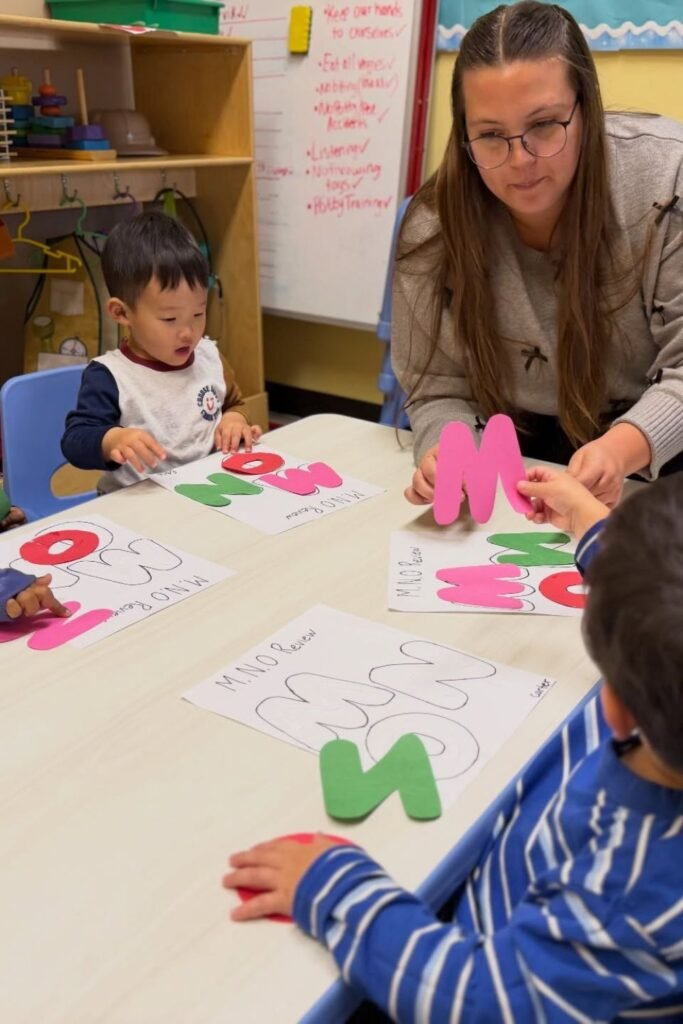
Names grab attention faster than any worksheet ever could. Print each child’s name in large letters and place matching foam letters on the table.
Give them the pieces and let them put them in the correct places. Small group time is great since you can guide people without making them feel rushed.
Say each letter out loud together and then cheer when they finish their name. Kids get proud right away when they see their own word finished.
Once kids feel comfortable, switch up the colors or combine uppercase and lowercase letters.
With some paper, foam letters, and a few minutes of focused attention, you can make strong early reading practice.
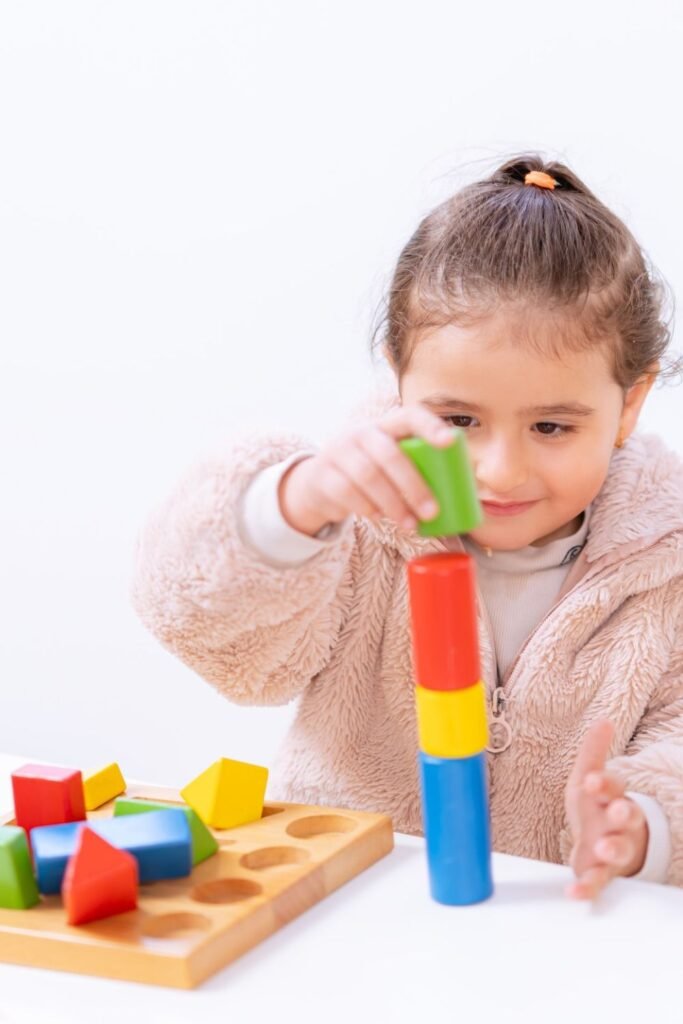
Shape Stacking
Bright wooden pieces can hold attention longer than flashy toys. Place different shapes on the table and challenge.
Kids should stack them as high as they can without them falling over.
This is a peaceful game where you have to figure out how to balance cylinders, cubes, and triangles.
Here, independent play is fantastic since kids instinctively test and change things without needing help all the time.
To get them to think more, ask them simple questions like “Why did it fall?” or “What should go at the bottom?”
All the pieces fit back into the tray, so cleaning up is easy. You can also change the challenge to color sorting or pattern construction at any moment.
Water Wall
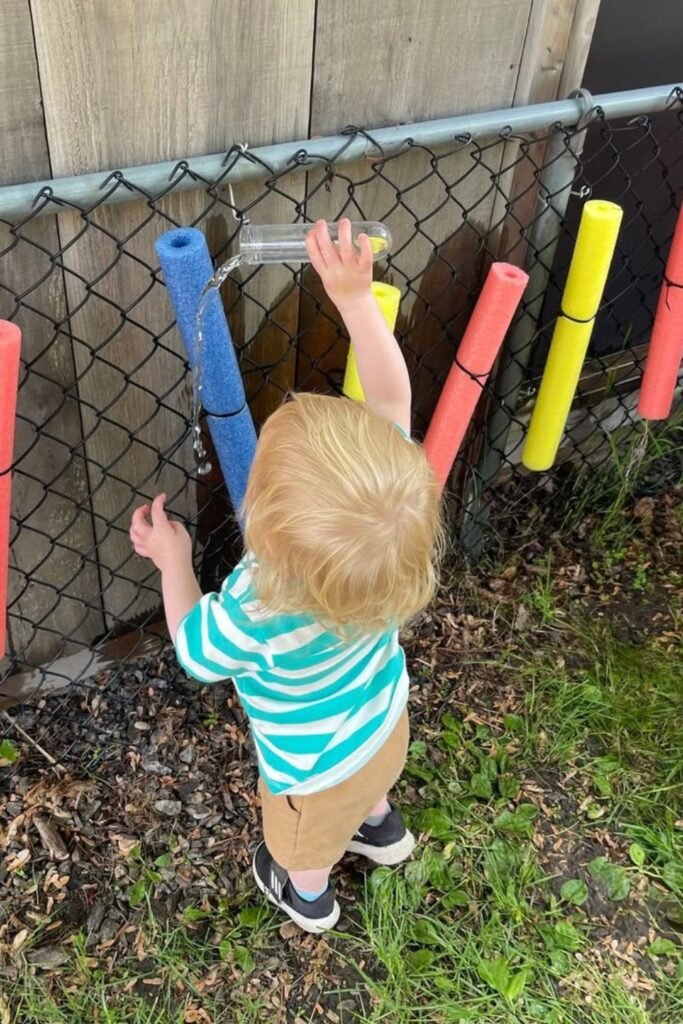
Backyard fences can turn into mini science labs with almost no effort. Zip-tie pool noodles vertically to a fence, grab a few clear cups.
And let the kids pour water from the top. You’d be surprised at how long they stay interested in it when they see it drip down the noodles.
When you pour and explore instead of just racing around outside, it feels more meaningful. Every time you lift and dump, your hand strength improves.
And you discover cause and effect on your own. Put a bucket under it to catch the water so you can use it again instead of throwing it out.
Change the layout by changing the heights or adding funnels, and your interest will stay strong without having to buy anything new.
Cloud Craft
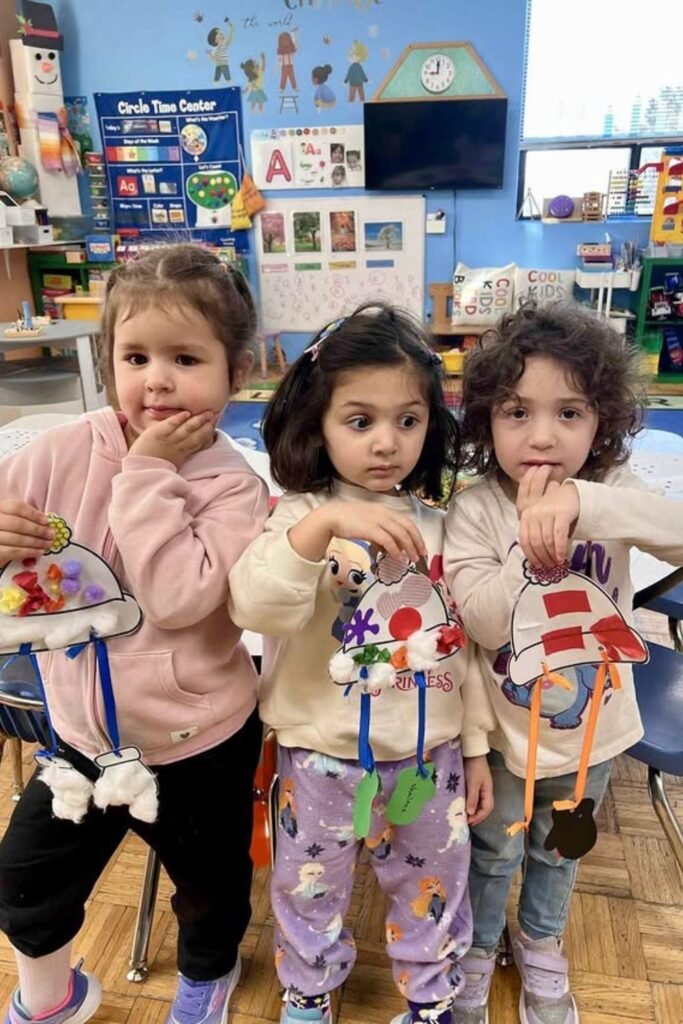
Rainy day themes become hands-on when cotton balls, paper plates, and string come together.
To make a cloud, glue fluffy cotton to the top of a paper plate. Then, use yarn to hang colored paper raindrops below it.
Table groups are great because youngsters can help each other thread and stick things together.
When you talk about the weather while you craft, it keeps learning natural instead than forced.
As small fingers squeeze cotton and tie knots, their fine motor abilities get better.
Once you hang the finished clouds from the ceiling, the whole room feels like it’s part of the lesson.
Stick Shapes
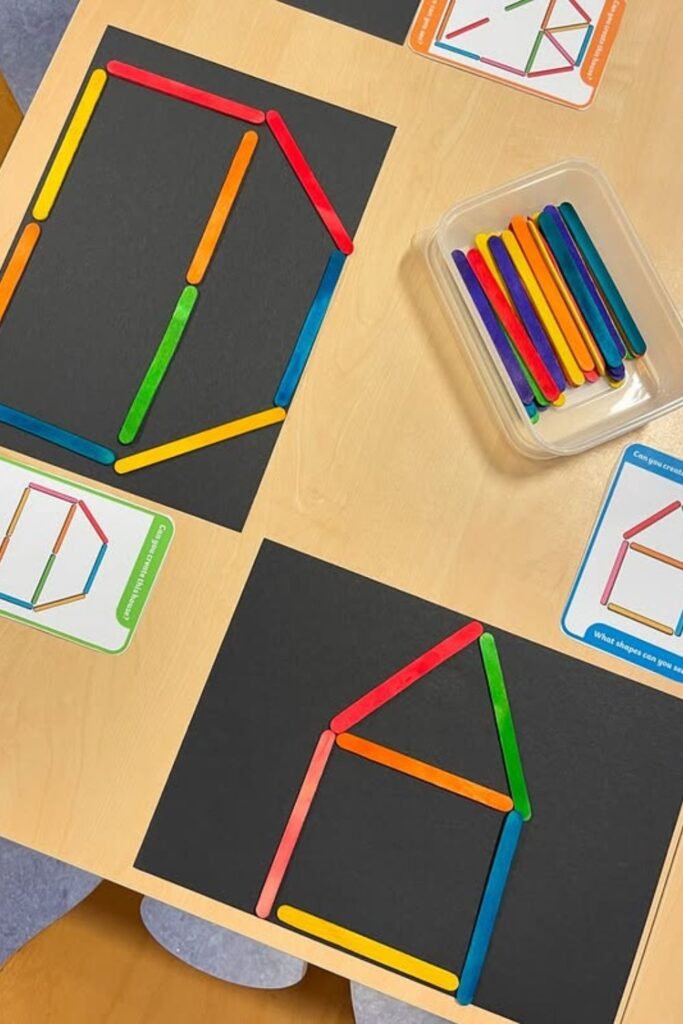
Popsicle sticks can turn math into play without kids even noticing. Lay out colored sticks on black paper.
Then tell them to build a home, a square, or any other shape they know. If you wish to help newbies, put basic picture cards handy.
Center time is the perfect time for students to try out their ideas at their own speed. They automatically count the sides and corners.
As they move pieces around to accommodate everything. That’s part of the learning if a shape falls apart.
Put sticks in a tiny bin and use them again later to make patterns or letters. Cheap supplies, good thinking skills, and no tension before the event.
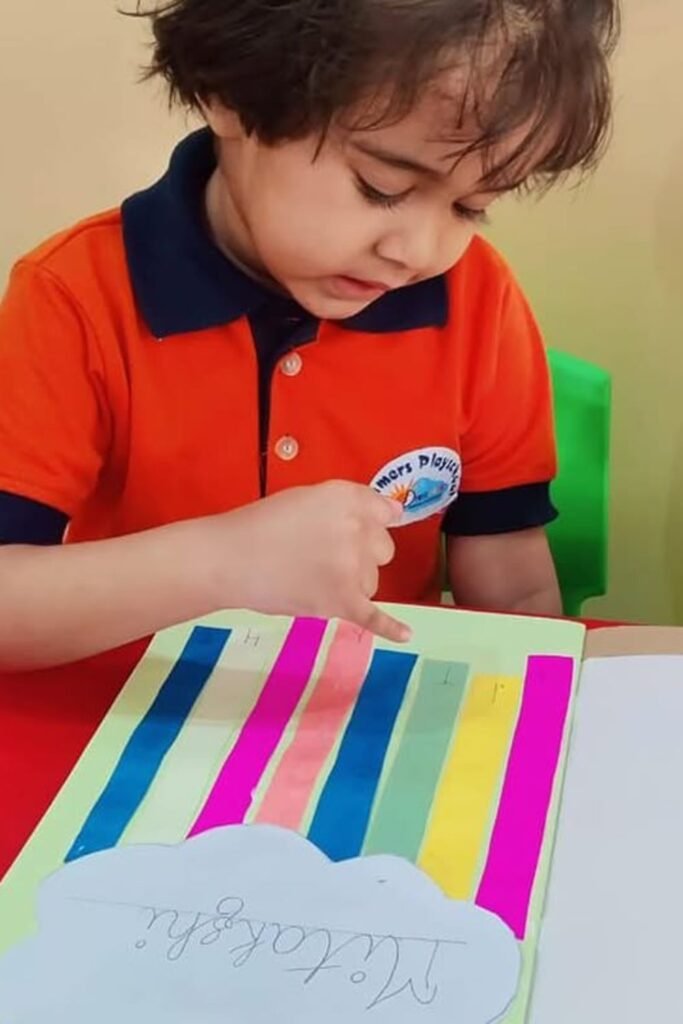
Name Rainbow
Few things grab attention like seeing your own name in bright colors. Write each child’s name across a cloud shape.
Then, use glue to attach long strips of colored paper to the bottom to make a rainbow. Before they stick the strips down.
Let them trace each letter with their finger. Kids like starting the day with something personal, so morning table time is a good idea.
Say the letters out loud while they point to each one. Their fine motor skills get better as they carefully line up and push the strips.
Put the finished rainbows on a wall display, and every time they see their name, their confidence will rise.
Gem Art
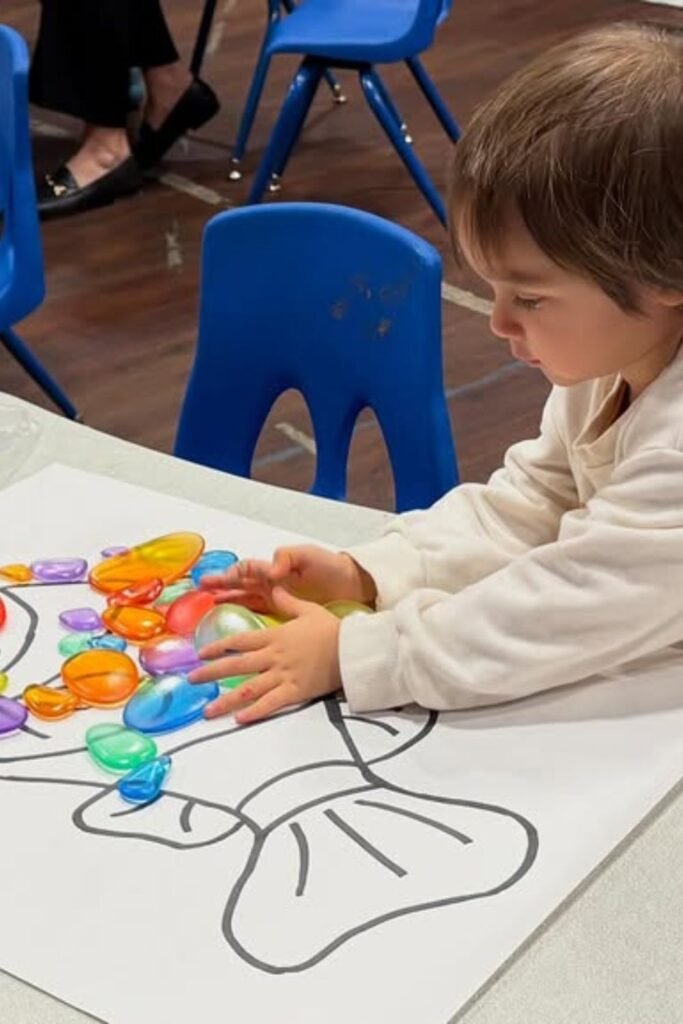
Shiny plastic gems can turn a simple outline into a masterpiece. Print a bold drawing like a fish or butterfly on large paper.
They put out bright, flat jewels. Kids press each piece into the lines, covering the shape with one bright spot at a time.
They can focus better when they have center time and don’t have to rush. While they put each gem in position, talk about the colors, sizes, and patterns.
Using contact paper means you don’t require glue, which makes cleanup quick and stress-free.
As small fingers pick up and place each piece carefully, their fine motor skills get better. Put the final work near a window so that the light makes it shine.
Playdough Faces
Funny faces always get kids laughing, and playdough makes it even better. Print large blank face outlines.
And give out tiny balls of dough in different colors. Kids roll, press, and mold pieces into hair, eyebrows, smiles, or funny mustaches.
Small group tables are great because everyone can see what everyone else has made and share ideas.
Rolling thin snakes makes your fingers stronger, and adding small features gives you more control.
To connect it to feelings, ask simple questions such, “What does a happy face look like?” You don’t need any sophisticated instruments, just dough and paper.

Bug Hunt
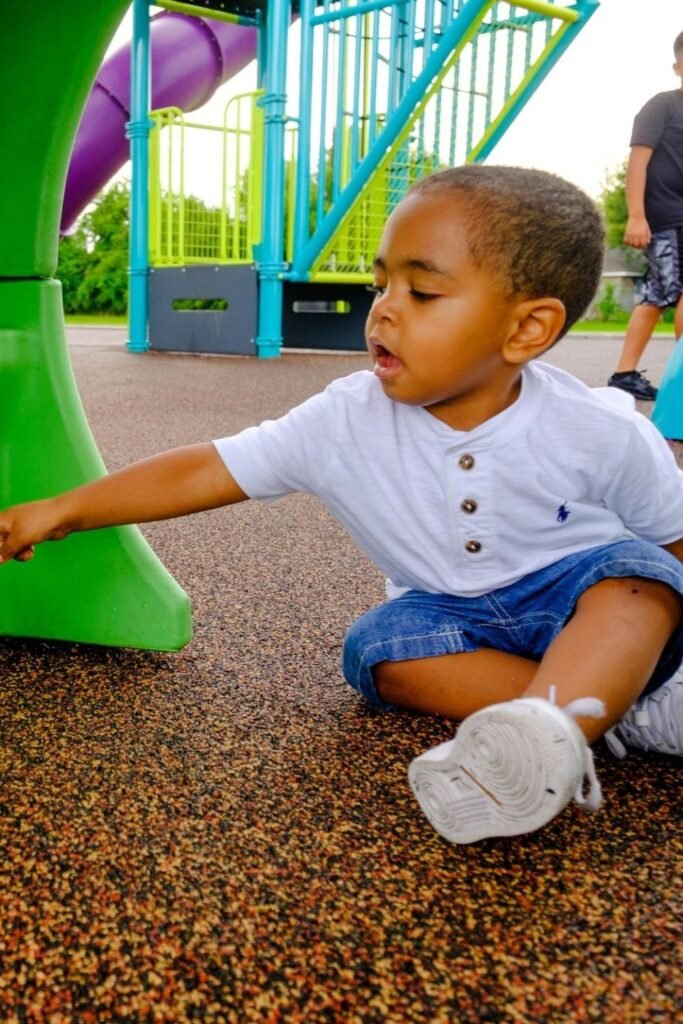
Outdoor time gets more exciting when curiosity leads the way. Head to the playground or yard and invite.
Kids might look for tiny bugs, insects, or fascinating textures on trees and equipment. At start, you don’t need any tools just careful eyes and pointing fingers.
Sit down low with them and ask what they see. When you talk about colors, movement, and shapes.
You make a simple moment into a real lesson. Great for toddlers who like to play but aren’t ready for games with rules.
If you want to keep it safe, tell everyone to look but not touch. This is easy to do again and again because it doesn’t require any planning.
FAQs
How do I keep daycare activities fun without spending a lot of money?
Before you acquire anything new, look around your space first. You can turn cardboard boxes, paper scraps, plastic cups, cotton balls.
And pool noodles into whole activities with a little imagination. Instead of throwing things away, switch them out.
You can turn one sensory bin into five separate activities by altering what’s inside. Don’t worry about how fancy the things are; just pay attention to how the youngsters use them.
How long should a daycare activity last for toddlers and preschoolers?
It’s always better to be short and focused than long and forced. Toddlers can normally stay interested for 5–10 minutes.
And preschoolers can stay interested for 10–20 minutes if they want to. Keep an eye on their energy. Instead of pushing through, finish up if your focus starts to fade.
You can always do the activity again later. Keeping up with their pace keeps irritation low and makes learning feel natural instead of forced.
Hi, I’m Afaf! I’m a law student who loves writing about everyday life – from home projects and crafts to fashion, beauty, and parenting tips.
I’ve been writing for over a year, sharing ideas that are simple, practical, and easy to try. I write about things I find interesting and useful, whether that’s organizing a space, trying a new DIY, or finding activities to keep kids entertained.
My goal is to share helpful ideas without making things complicated. If it works in real life, I’ll write about it.
When I’m not studying or writing, I’m usually experimenting with new projects or scrolling for inspiration!