
18 Jellyfish Craft Ideas for 2026
You’re not the only one who has planned a jellyfish project and then stopped halfway through because it took too many supplies, caused too much mess, or felt waste of time.
A lot of craft ideas look fantastic online, but often don’t work out in real life, especially when you’re dealing with kids.
You don’t need pricey supplies or extra trips to the store.
Which is fantastic news. You can make jellyfish crafts that are easy, creative. And fun to do with some things you already have that you can recycle.
These 18 kid-friendly Jellyfish craft ideas are perfect for creative afternoons and quick projects in 2026.
Let’s jump in!
Can Jellyfish Crafts Be Made with Recycled or Eco-Friendly Materials?
Yes, they can, and to be honest, it’s easier that way. If you’ve ever felt stuck because a craft idea needed too many resources.
Using repurposed materials can help you get past that problem quickly. The shapes of jellyfish naturally fit objects you currently toss away.
Such plastic bottles, paper plates, and cardboard tubes. You save money, make less mess, and don’t have to go shopping when you use these again.
Kids don’t feel like they have to make things “perfect,” which makes the activity more fun and creative.
Using recycled materials isn’t a compromise here; it’s the best way to make jellyfish crafts work in real life.
Save this article for later!👇👇👇
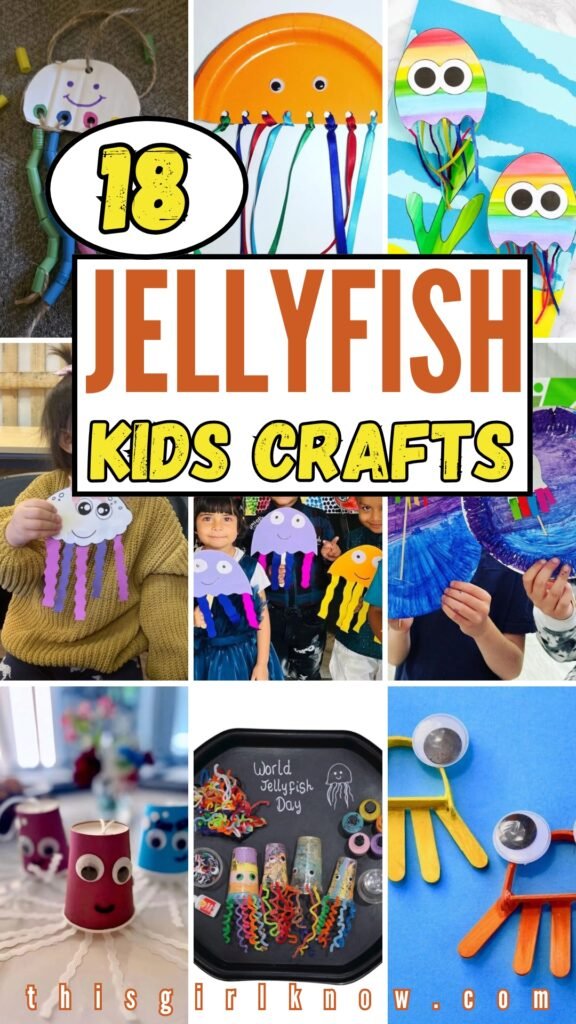
Happy Jellyfish
Smiles usually mean the craft is working, and this one proves it. A simple paper jellyfish like this fits perfectly in toddler rooms, daycare activities, or first-time craft sessions.
Because being confident is more important than being perfect. Begin with a paper base that looks like a cloud.
Then, add a friendly face and glue on wide strips of paper for tentacles that young hands may hold and move.
No phases that need a lot of cutting or sophisticated layering.
Use thicker paper so it doesn’t flap and make sure the pieces are big enough to handle safely if you wish to make it again.
The end look isn’t the best part; it’s giving youngsters something they can be proud of and show off.
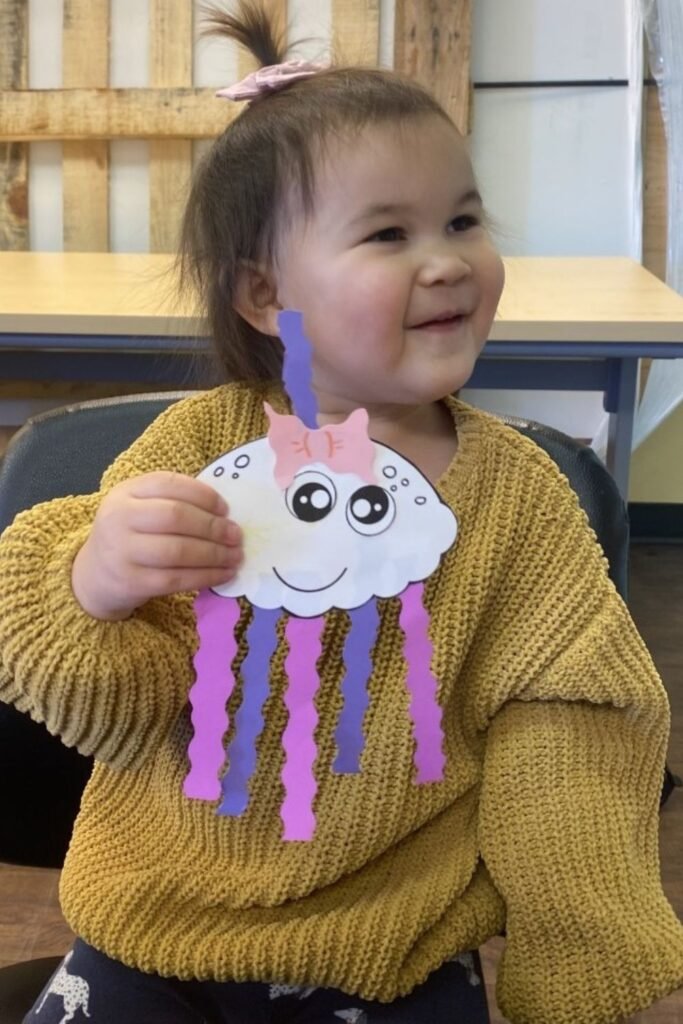
Group Jellyfish
Energy changes when everyone makes the same craft together, and this setup shows exactly why it works so well.
Matching jellyfish cutouts are great for birthday parties, classrooms, or playgroups where you want everyone to work together without stifling their originality.
Keep the foundation shape already cut so that youngsters may focus on picking colors, faces, and tentacle types.
Crepe paper or strips of paper are preferable because they are easy to glue and safe for young hands.
To make a group display out of everyone’s work, hang the finished jellyfish on a wall or bulletin board.
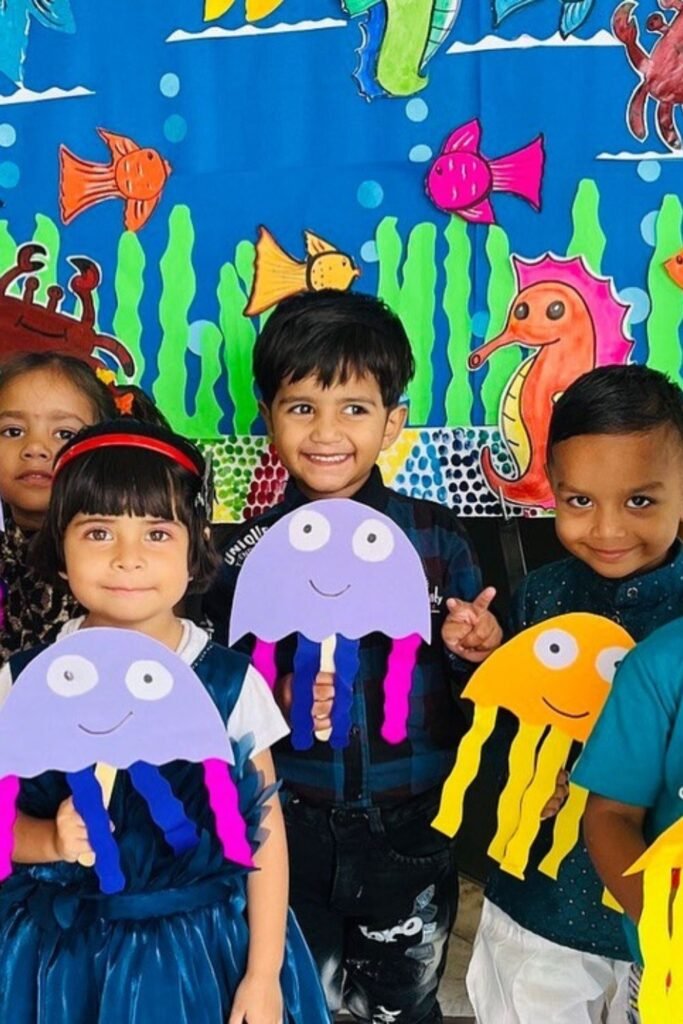
Painted Plates
Bold colors instantly turn a simple paper plate into something kids feel excited about. This kind of jellyfish craft works best.
When you want kids to play with paint without worrying about how neat it will look. You can let them paint blues and purples.
Adding a small paper head and short tentacle strips after the paint dries maintains the focus on being creative instead than cutting skills.
It becomes a handheld puppet with a wooden stick at the back, which makes it great for telling stories or playing with water themes.
Use this idea in schools where paint time is more than simply craft time; it’s also time to explore art.
Stick Jellyfish
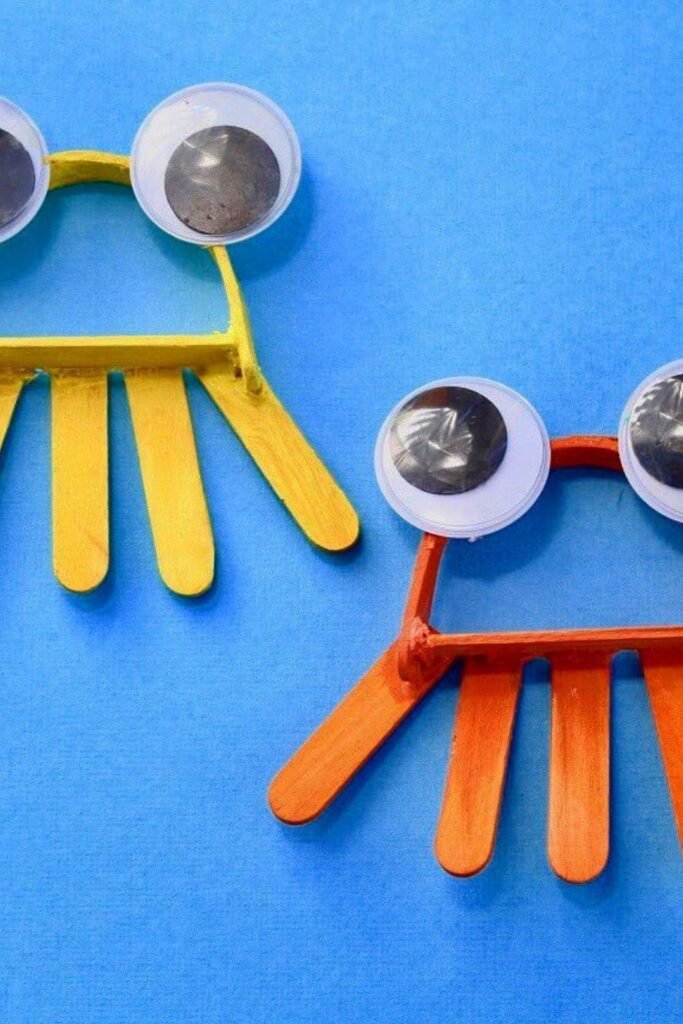
Googly eyes always pull kids in, and pairing them with wooden sticks turns crafting into a playful build-and-balance activity.
Popsicle sticks are ideal for this because they are strong, easy to paint, and don’t break easily.
Put the sticks in a way that looks like legs hanging down, and then attach a curved stick on top to make the jellyfish body.
This approach works nicely in preschool settings because youngsters like to put things together more than cut shapes.
The bright color makes it enjoyable, and the straightforward design keeps annoyance to a minimum.
Cup Creatures
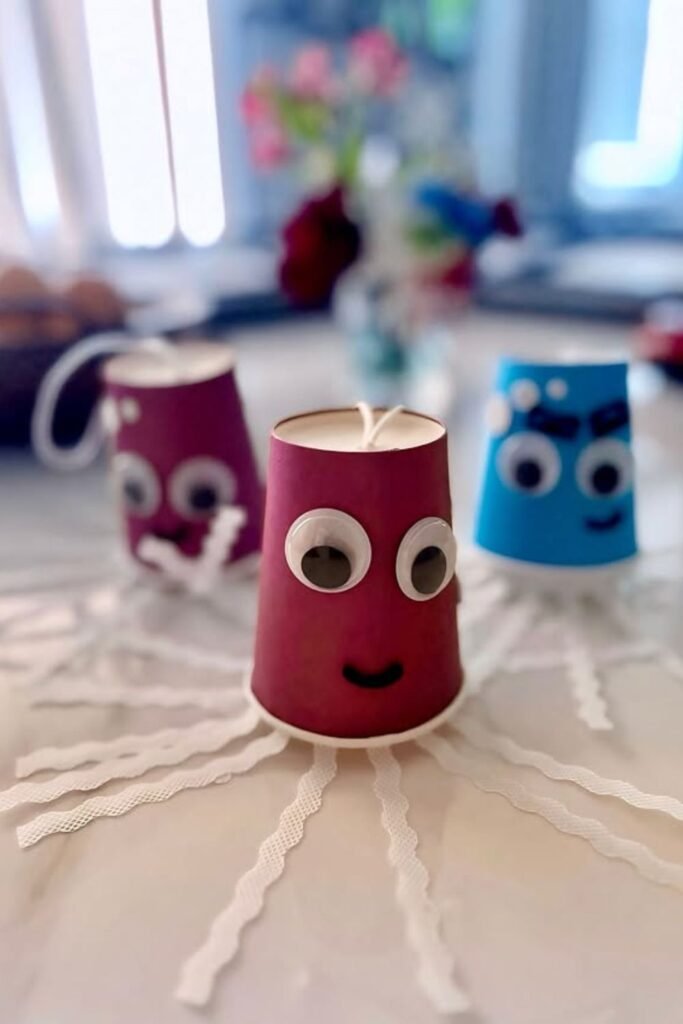
Little hands love crafts they can flip, hold, and move around, and paper cups make that possible right away.
Younger kids may easily make a jellyfish out of an upside-down cup because the shape is already there.
Put on some googly eyes, draw a basic smile, and then glue soft strips or lace underneath to make tentacles that move gently.
This idea works great on kitchen tables, in playrooms or in brief classroom stations where there isn’t much time.
It’s easy to make it again: conserve paper cups from snacks or celebrations, don’t go overboard with decorations, and let the kids focus on faces and textures.
Sensory Jellyfish
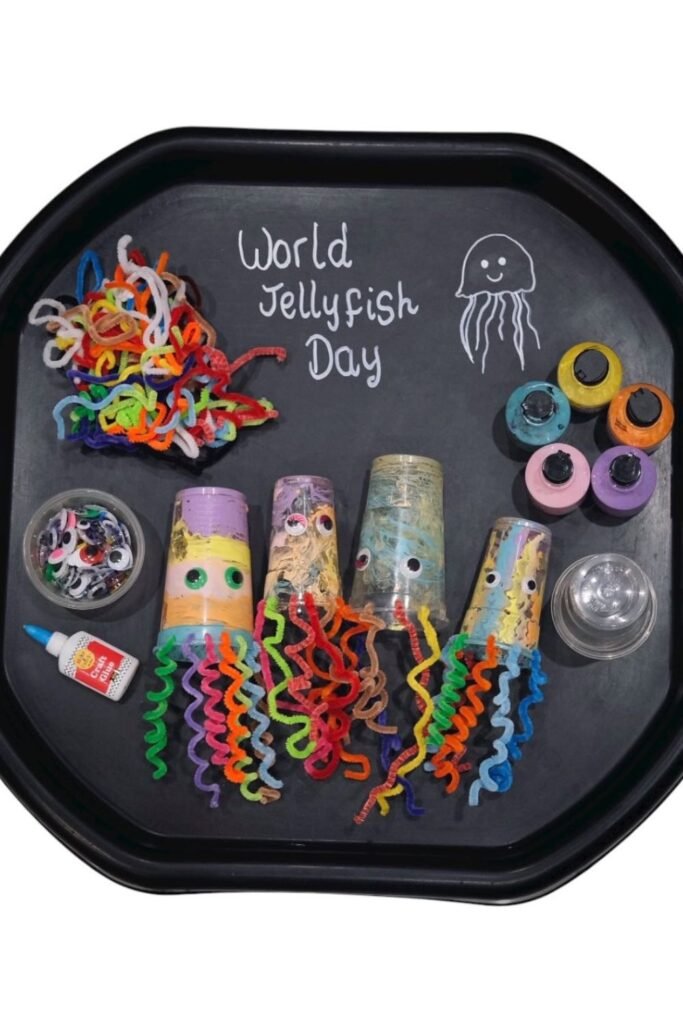
Hands get busy fast when everything needed is laid out in one place. A setup like this works best for sensory tables, art stations, or themed activity days.
where youngsters can go at their own speed. Clear cups create jellyfish bodies, while pipe cleaners become wiggly tentacles that you can touch and twist.
Kids can mix colors right into the cups with paint bottles around, which makes the process more fun and less controlled.
If you set up a tray with glue, eyes, and tentacles before you start, this will work great.
The magic here comes from letting kids choose colors, textures and movements. This keeps children interested longer without needing any more instructions.
Rainbow Scene
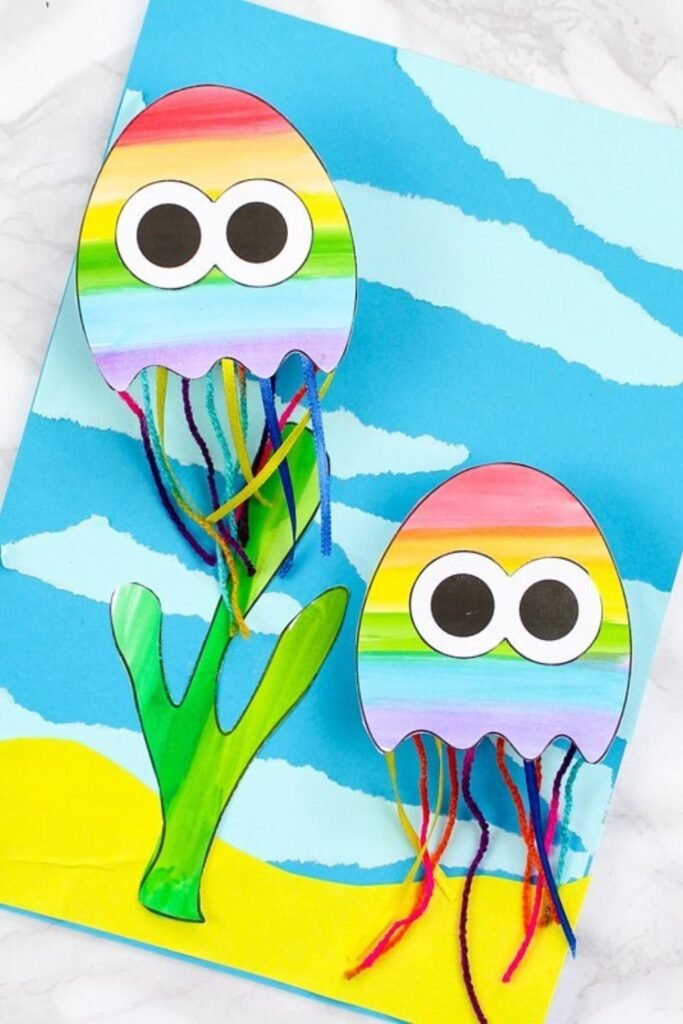
Color choices set the mood fast, and bright rainbow shades turn a simple jellyfish into an instant favorite for kids.
This kind of creation is great for preschoolers and young primary school students who want art time to be fun rather than structured.
You may make jellyfish bodies out of paper cutouts and add subtle movement underneath with thread or pipe cleaners.
Putting them on a background scene makes kids think about where jellyfish live, not just how they look.
It’s simplest to recreate it if you get the background ready first and then let the kids color, glue, and arrange without worrying about how it looks or how it fits together.
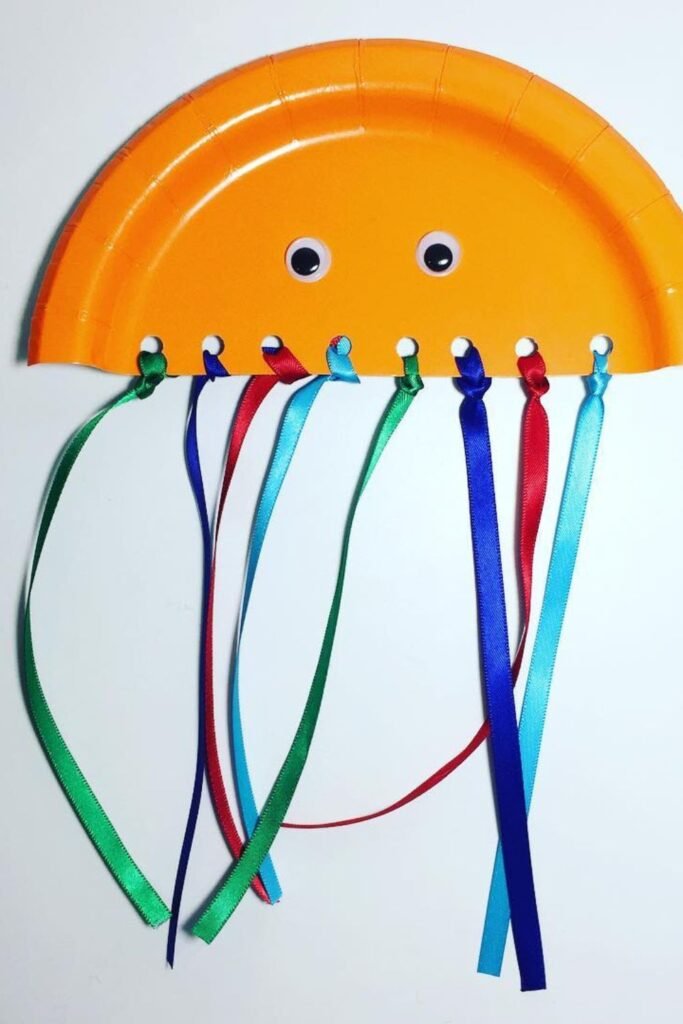
Ribbon Jellyfish
Movement makes this idea shine the moment it’s picked up. Long ribbons sway with every shake, which keeps kids engaged without adding extra steps.
The body is made from half a paper plate, and holes punched along the edge make it easy and fun to thread ribbons through.
This is a great way for preschoolers or young elementary school students to improve their fine motor skills.
Especially if you want them to remain calm and do something with their hands. Choose light ribbons or fabric strips to duplicate it.
So that they hang easily and don’t pull the plate down.
The bright colors make it seem good right away, and the clean shape makes it easy to handle and show off.
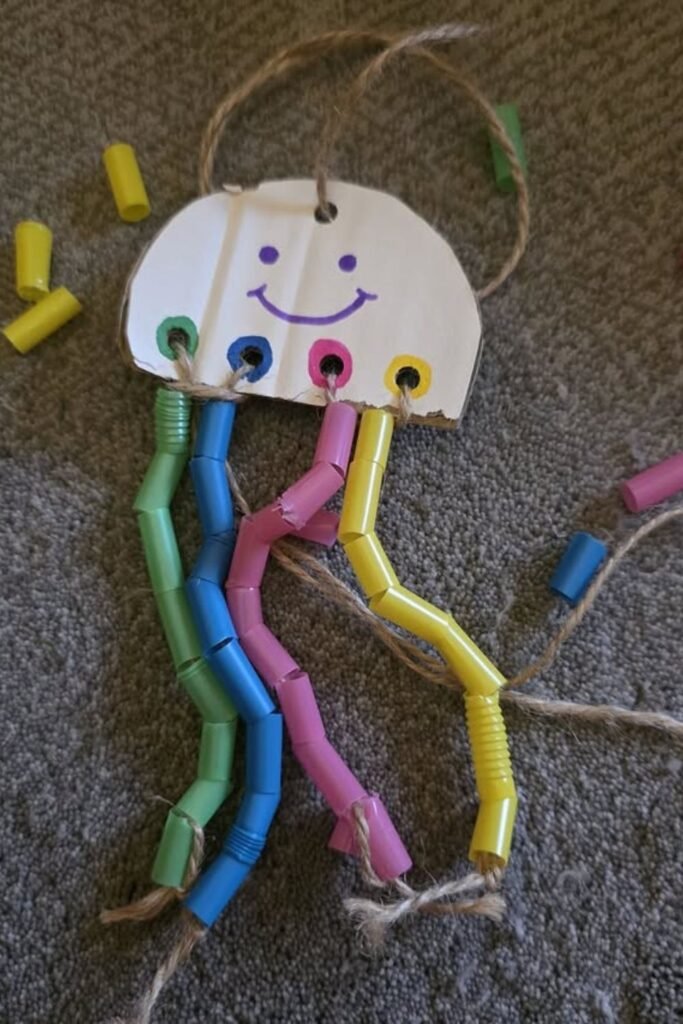
Straw Swing
Loose, bendy pieces change how kids interact with a craft, and straw tentacles make that happen right away.
When you cut plastic straws into little pieces, kids may thread them onto string, which makes the jellyfish move and bend instead of being flat.
This strategy works best for classes or homes where practicing fine motor skills is more important than speed.
A half paper plate keeps the body basic, and holes punched along the edge make it easy to thread without getting stuck.
When you’re done, hang it up so the tentacles can move about. Kids love to watch their creation move, not simply sit there.
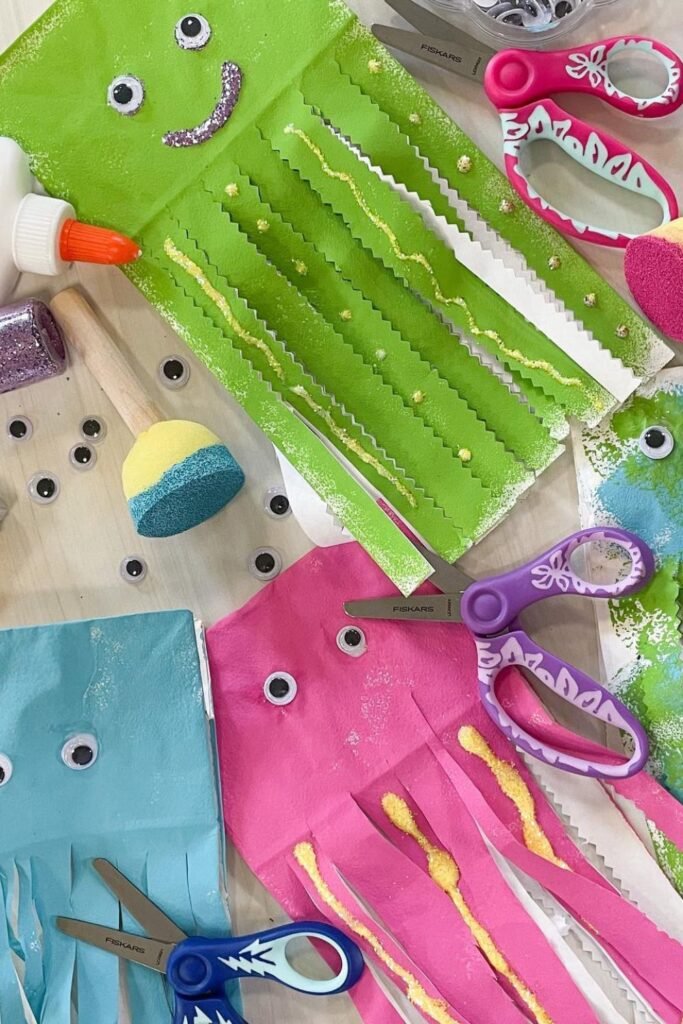
Fringe Jellyfish
Cutting turns into the main event here, which makes this idea perfect for kids who love using scissors.
Long fringe cuts make flowing tentacles right away, while paper bags or folded sheets make a strong jellyfish body.
You can give each piece its own personality by adding paint, glitter, or textured sponge prints without having to buy anything else.
This is great for preschool and early elementary school classrooms where learning how to use scissors is one of the goals.
To make it again, lightly draw lines to show the kids where to cut, and then let them embellish anyway they like.
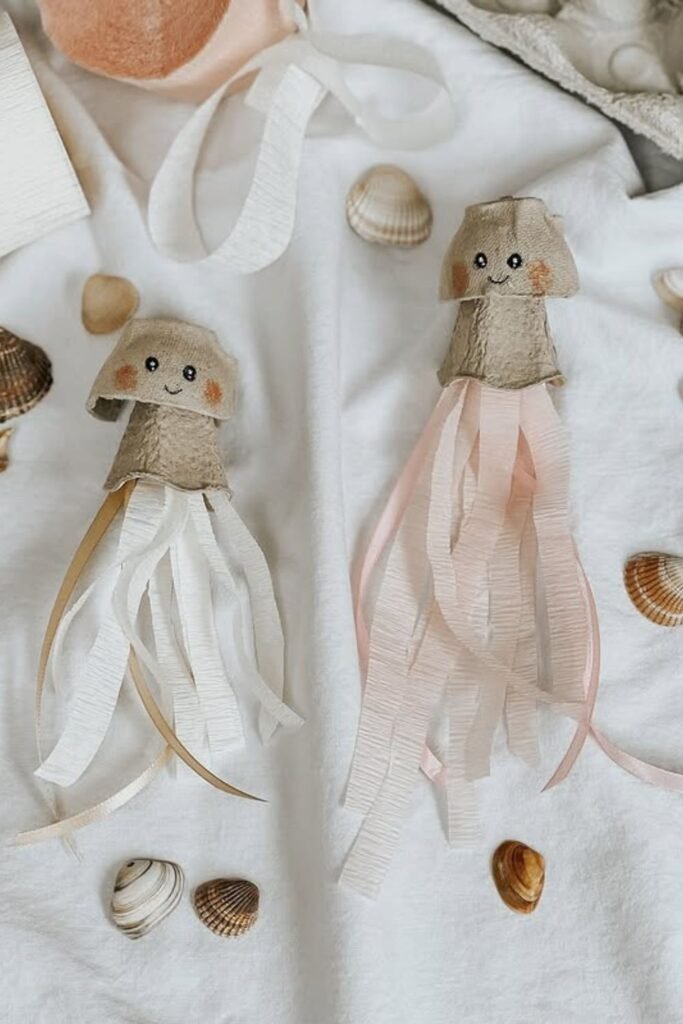
Carton Jellyfish
Soft colors and simple shapes make this idea feel calm instead of chaotic, which works beautifully for quiet craft time.
Kids may focus on decorating instead of construction because egg carton cups already have the appropriate dome form.
When hung up, paper streamers or crepe paper strips become flowing tentacles that move slowly.
This craft is great for early childhood classes, lessons about wildlife, or rainy afternoons at home.
To make it again, cut out each egg cup, smooth off the rough edges, and then let the youngsters draw or paint faces on them.
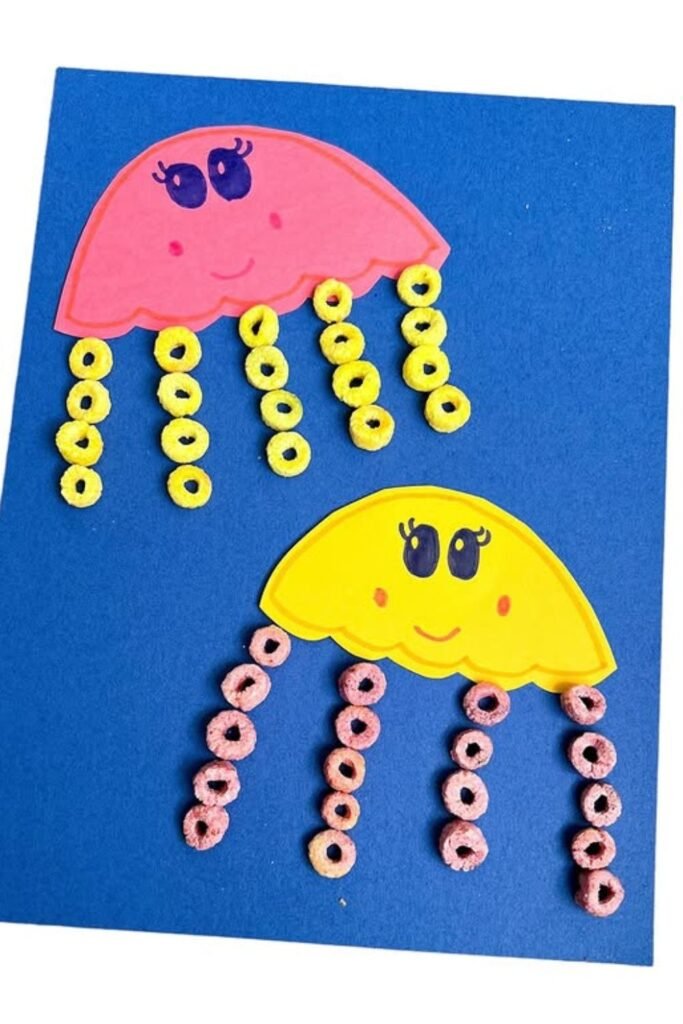
Cereal Tentacles
Snack time suddenly turns into craft time with an idea kids instantly understand. Using cereal loops as jellyfish tentacles.
Adds texture, helps you practice counting, and gives you a little surprise all at once. Foam paper or cardstock is the greatest choice for the jellyfish body.
Since it can handle the weight of the cereal once it is pasted on. This fits nicely in preschool or kindergarten, where learning and play go hand in hand.
First, design or cut out simple jellyfish forms. Then, let the youngsters press pieces of cereal into glue lines underneath.
The plus is that youngsters stay interested longer when they work with something they know, is colorful, and is hands-on.
Hanging Swimmers
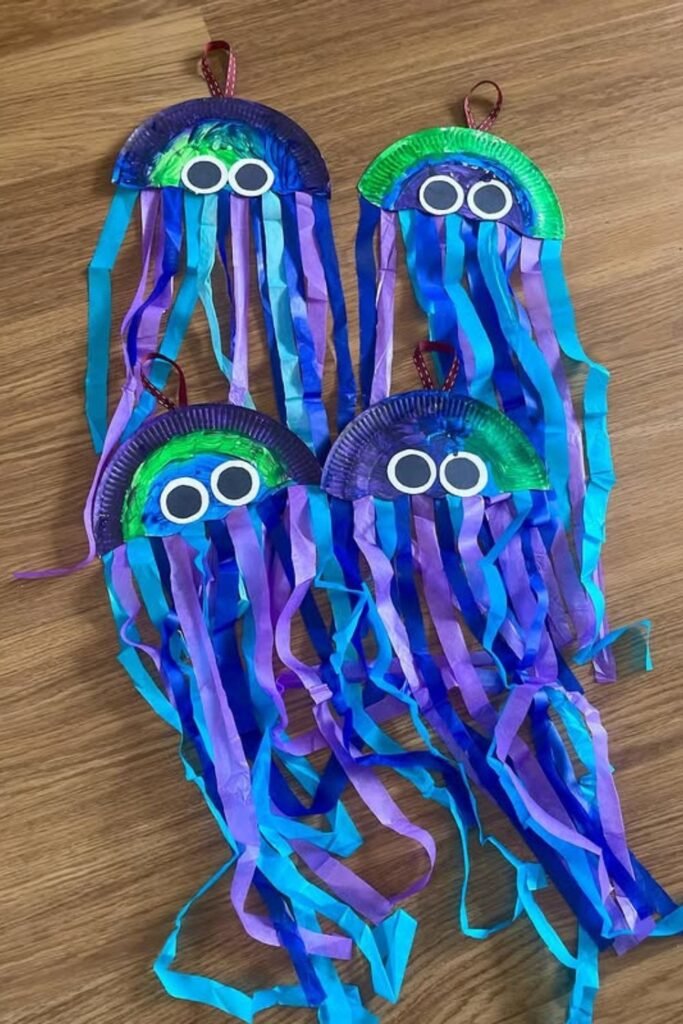
Ceiling space turns into part of the craft with this one, and kids love seeing their jellyfish “float” above them.
Ocean-colored paper plates make strong bodies, and long strips of tissue paper add a lot of movement.
There are ribbon loops at the top that make it easy to hang without any extra tools. This is a great idea for classrooms, corridors, or ocean-themed weeks.
When finished crafts can also be used as decorations. Get the plates ready ahead of time so the kids can focus on painting and choose the colors for the tentacles.
Even basic patterns look great when they are strung up since the movement does most of the work.
Yarn Floaters
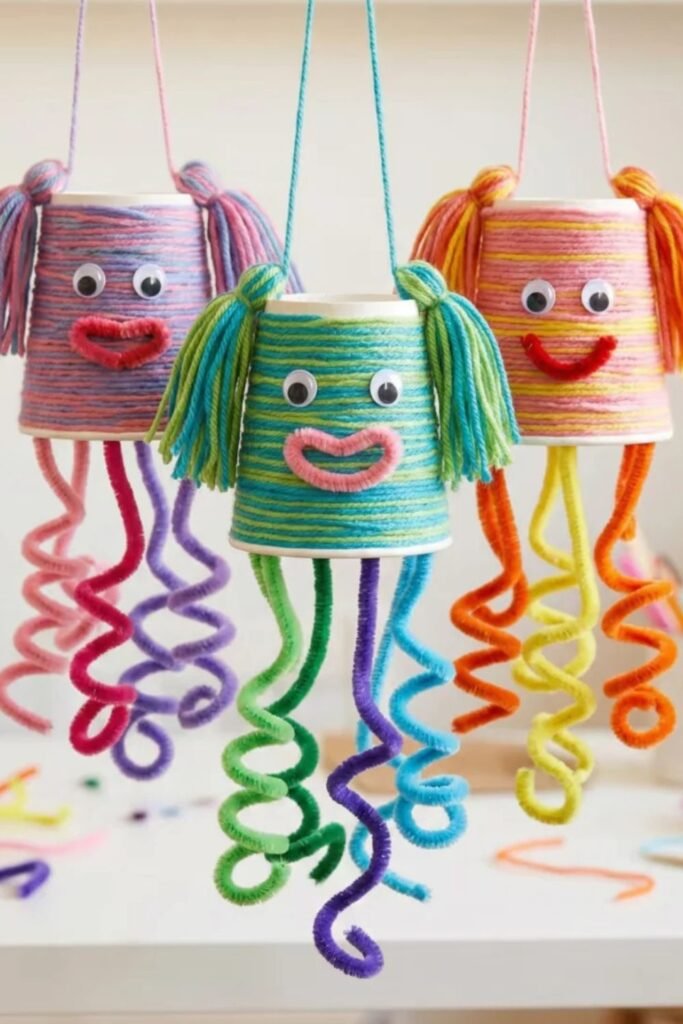
Soft textures change the whole feel of a craft, and yarn-wrapped jellyfish instantly feel cozy instead of messy.
Kids may wrap yarn around a recyclable cup over and over again. It’s a peaceful activity that doesn’t require perfect aim or great fine motor skills.
Tentacles look best when made using pipe cleaners since they naturally twist and hold fascinating shapes.
This idea works well in quiet sections of the school, during therapy sessions, or when it’s raining and you want to do some crafts at home.
To make it again, glue the yarn down at the beginning and end using a small dot of glue. Then let the youngsters pick their own colors.
Textured Toppers
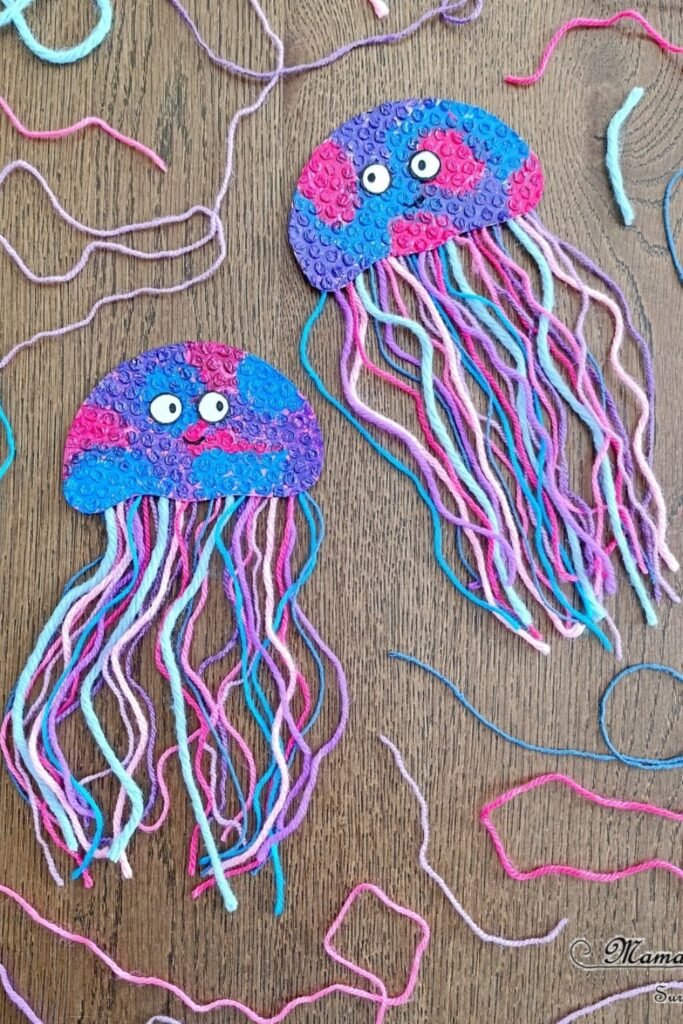
Bumpy surfaces instantly invite curiosity, and bubble wrap adds that extra sensory layer kids love touching.
Putting paint into the texture gives each jellyfish a living, aquatic aspect that makes it look like it’s moving.
The body should be made of cardboard or strong paper so that it keeps its shape when the yarn tentacles are added.
This idea works well in art classes or at home when texture is more important than quickness.
To make it again, tape bubble wrap to the back of the paper before painting it.
When the paint is dry, peel off the bubble wrap. Yarn scraps add the finishing touch and keep the craft fun, colorful, and easy to make your own.
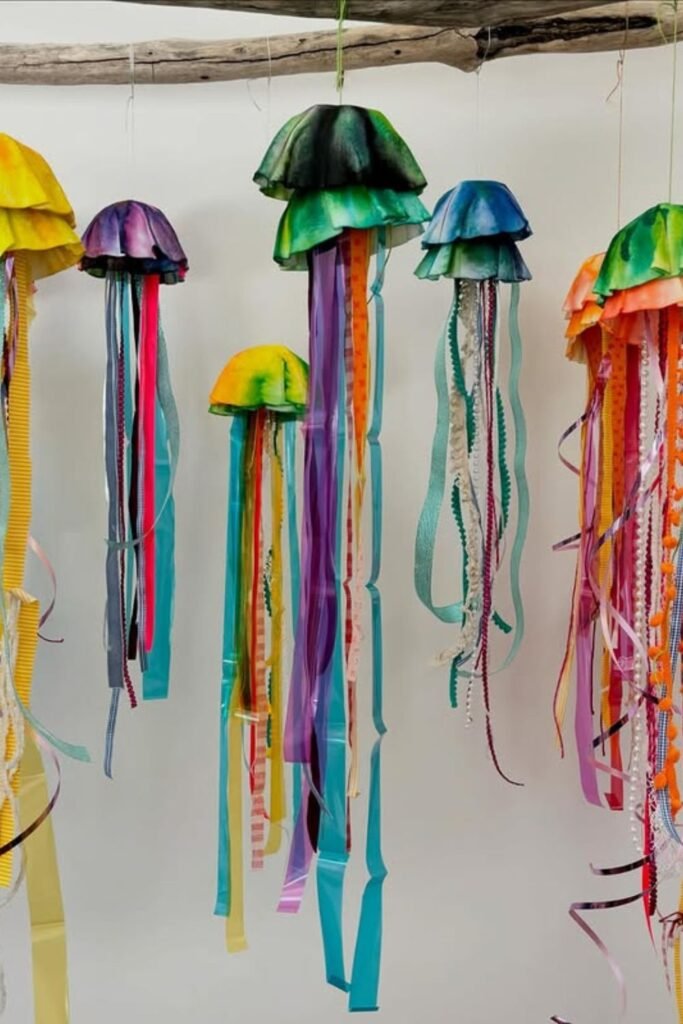
Floating Lanterns
Height changes how kids see their work, and hanging jellyfish instantly feel more magical than table crafts.
Paper lanterns make a natural dome shape, and long strips of ribbon and fabric morph into tentacles that flow with the air.
This idea is great for ocean-themed schools, parties, or hallway displays where crafts can also be used as decorations.
To recreate it, you need to prepare ahead. First, put together the lanterns, and then let the kids pick and attach tentacles one at a time.
Even if they have the same base, mixing textures makes each jellyfish look individual.
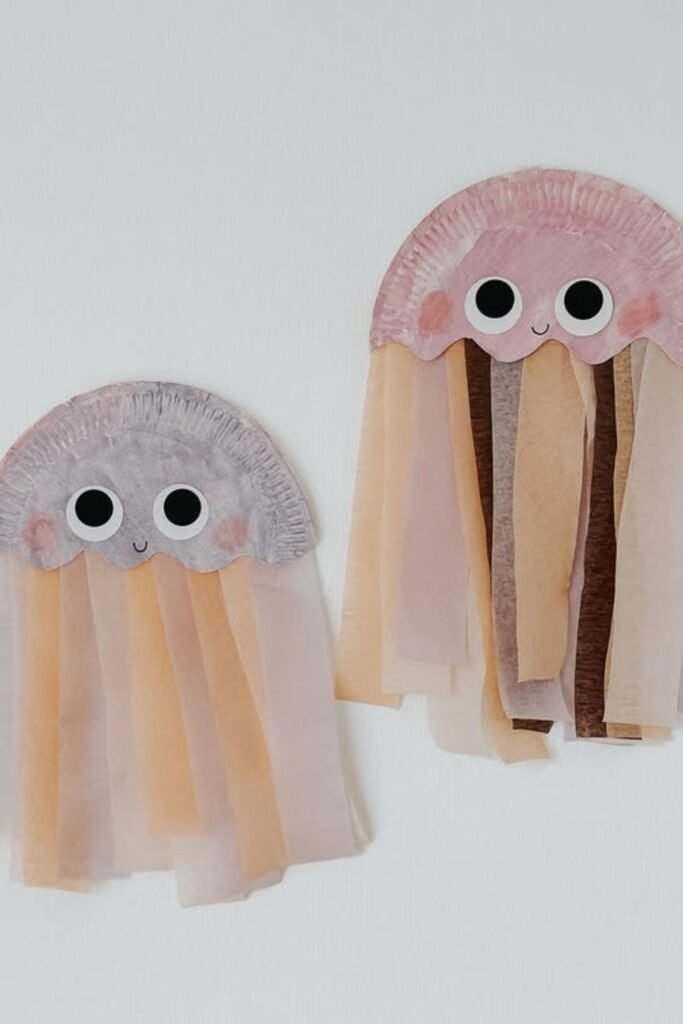
Soft Layers
Gentle colors slow things down, and that’s exactly why this idea works so well for younger kids.
Tissue paper strips make gentle, flowing tentacles that don’t add weight or stiffness. This makes the jellyfish feel light and serene.
A decorated paper plate gives youngsters just the right amount of structure while yet letting them play with mixing colors.
This craft is great for quiet times in the classroom, art centers, or when you’re winding down at home.
To make it again, cut tissue strips in a few colors ahead of time and let the kids freely layer them under the plate.
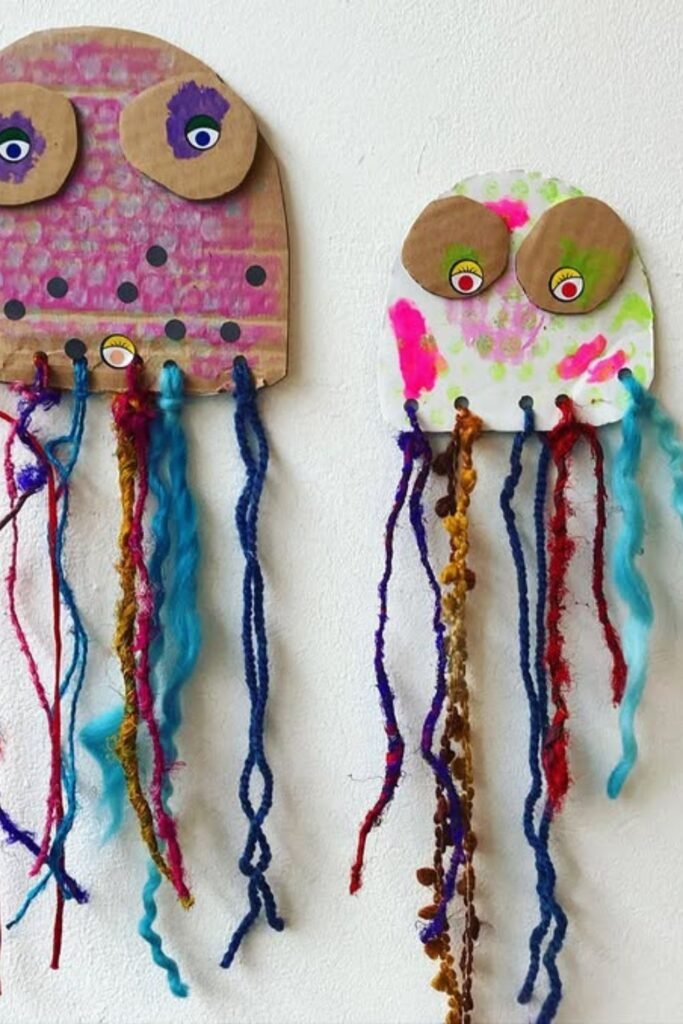
Cardboard Creatures
Paint splashes and scrap textures give this idea its charm right away. Cardboard packaging turns into sturdy jellyfish bodies.
That can handle lots of decorating without bending or tearing.
Yarn scraps create great tentacles because variable lengths make them look more interesting instead of untidy.
This is excellent for classrooms or home craft days when youngsters want to play with color and texture.
Cut out rounded forms from cardboard first to make it again. Then let the kids paint it anyway they want before adding eyes and yarn.
Making little holes at the bottom makes it easier to connect tentacles and keeps everything safe for hanging or showing off.
FAQs
Can jellyfish crafts work for mixed-age groups?
Yes, and that’s one of the things that makes them so strong. You can keep the foundation form the same for everyone and change the stages based on how old they are.
Younger kids can add faces and glue on tentacles, while larger kids can cut, paint, or thread.
How do you keep jellyfish crafts eco-friendly without losing durability?
Pick things that are already shaped, such cardboard, paper plates, cups, or egg cartons.
Use light materials for the tentacles so the creation doesn’t come apart.
The jellyfish lasts longer and the project stays simple and sustainable when you use less glue and fewer layers.
Hi, I’m Afaf! I’m a law student who loves writing about everyday life – from home projects and crafts to fashion, beauty, and parenting tips.
I’ve been writing for over a year, sharing ideas that are simple, practical, and easy to try. I write about things I find interesting and useful, whether that’s organizing a space, trying a new DIY, or finding activities to keep kids entertained.
My goal is to share helpful ideas without making things complicated. If it works in real life, I’ll write about it.
When I’m not studying or writing, I’m usually experimenting with new projects or scrolling for inspiration!