
21 Bear Craft Ideas for 2026
You search for bear craft ideas because you want something that works and is easy to do. Instead, you discover endless lists.
Methods that don’t make sense, and crafts that appear attractive online but break apart as soon as kids touch them. Or maybe you want a bear project.
That doesn’t seem too childish and can also be used to decorate your home. The actual challenge is knowing what to make and how to do it without getting stressed.
These 21 Bear kid-friendly craft ideas are perfect for creative afternoons and quick projects in 2026.
Let’s jump in!
What Can You Make With Bear Crafts for Kids and Home Decor?
People often think of simple kids’ activities when they think of bear crafts, but there is a lot more you can do.
You may make bear projects that are easy for kids to do and bear-themed things that look nice in your home.
Paper and cardboard bears are the greatest choice if you want something quick. Felt, wood, or neutral colors can make a great impact in dcor.
The most important thing is to figure out who it’s for initially. Choosing the perfect bear craft is easy once you realize that.
Save this article for later!👇👇👇
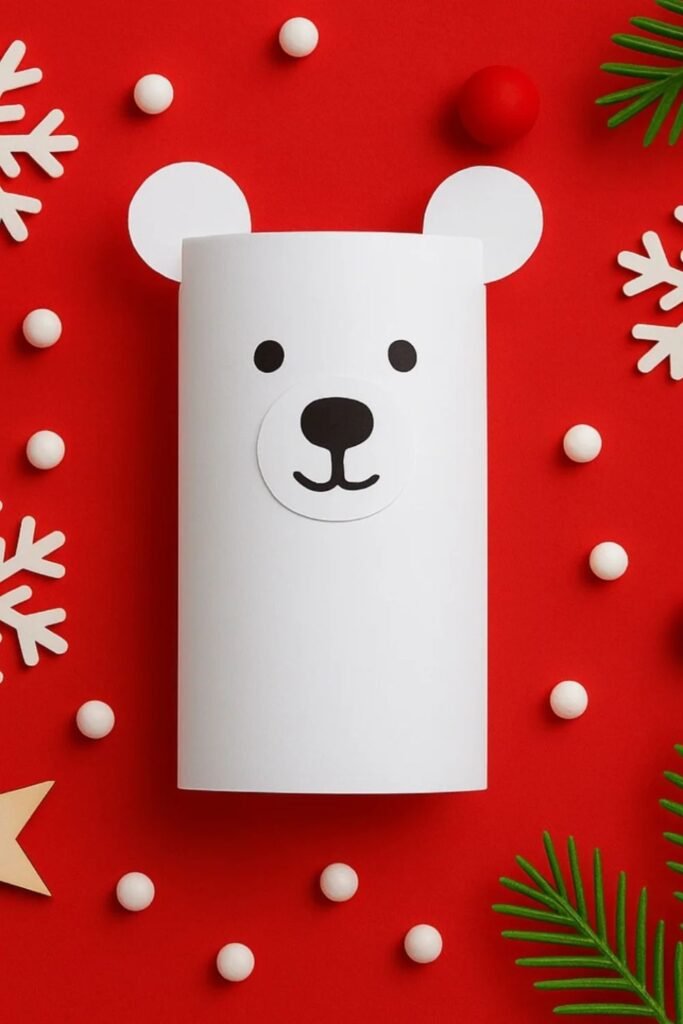
Polar Bear
Empty paper rolls stop being trash once winter crafts come into play. A simple cylinder turns into a polar bear.
That kids can decorate without needing perfect cutting skills. The base is covered in white paper, while the face is covered in circles and dots.
This makes it perfect for preschoolers and kids in the early grades. Winter units in the classroom, Christmas craft days.
Activities with an indoor snow theme all work well here. To make it again, start with any cardboard roll or small box, cover it up well.
And then let the kids use stickers, markers, or cut paper to add facial characteristics. Keeping things simple helps kids finish without getting bored.
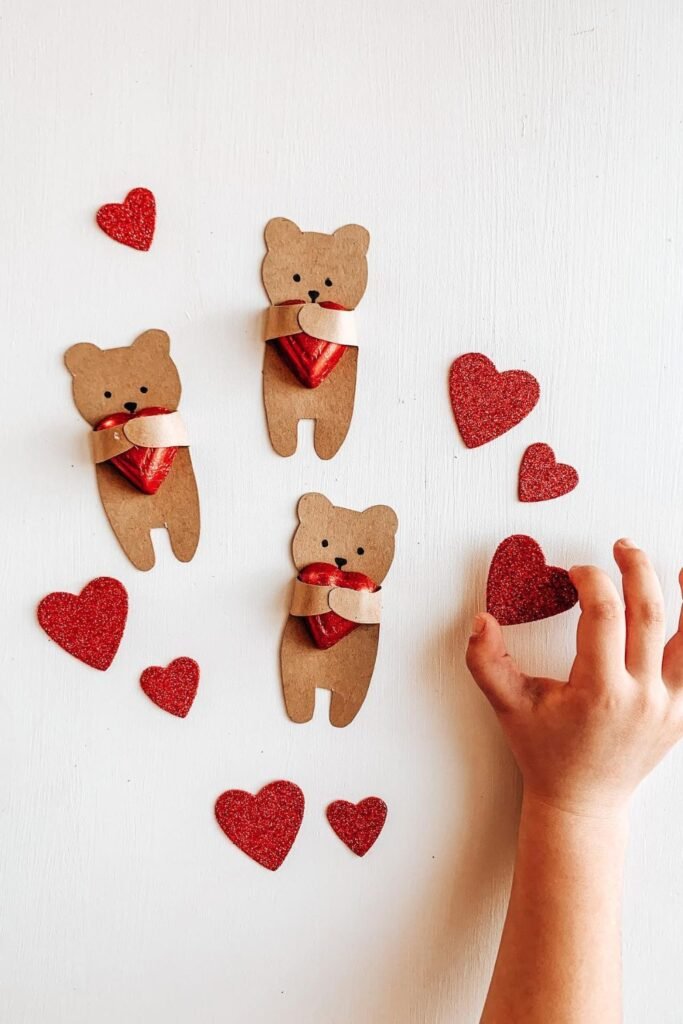
Love Bears
Small hands love crafts that feel like gifts, and that’s exactly where these little bears shine.
The project is fun and easy since cardboard or kraft paper develops into a bear that carries a shiny heart.
This concept is great for Valentine’s Day classrooms, peaceful crafts in the afternoon, or making cards at home.
Cut out simple bear forms ahead of time. Then, let the youngsters wrap a piece of paper around the bear’s body to “hold” a foil or glitter heart.
Keeping the parts big helps younger kids focus on putting them together instead than getting stuck on small things.
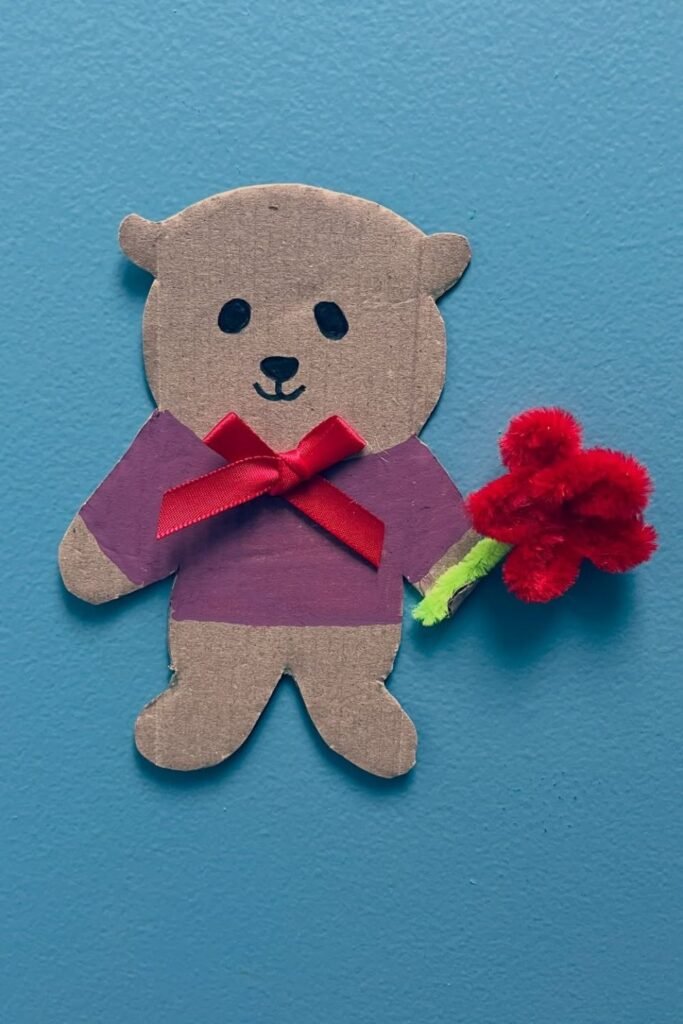
Gift Bear
Kids love crafts that feel like something they can give away, and that’s where this idea works best.
A flat cardboard bear is more interesting when it has a small flower in its hand, even if that bloom is simply some pipe cleaners and pom-poms.
This is great for Mother’s Day, projects to show appreciation in the school, or handcrafted birthday gifts.
Cut the bear shape out of old cardboard, keep the body simple, and let the kids paint clothes or add a ribbon to make it their own.
Adding glue or tape to the flower provides the creation a “finished” look without making it harder, which keeps kids interested until the end.
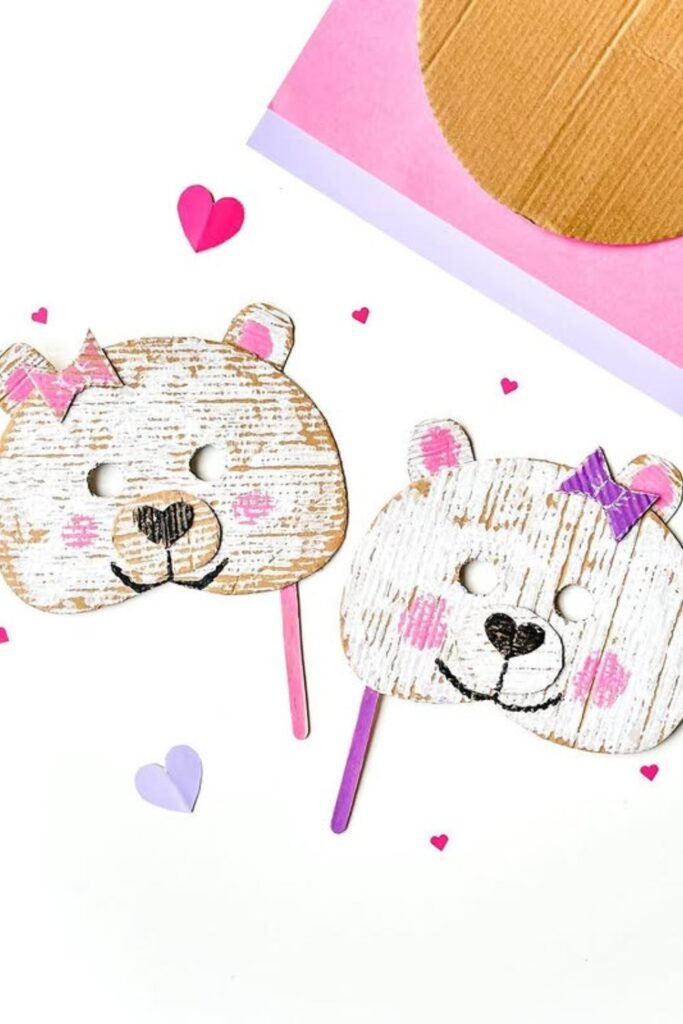
Bear Masks
Dress-up time gets more exciting once crafts turn into something kids can hold and use.
Kids can use cardboard bear faces on sticks for pretend play, telling stories in class, or party games when they want to move around instead of sitting motionless.
Thick cardboard or paper plates make a robust base, while crayons, paint, or markers add personality without needing to be perfect.
For younger youngsters, eye openings might be omitted, and the mask can be a puppet instead.
Putting a craft stick or paper straw on the back keeps youngsters’ hands busy and lets them act out stories, songs, or basic role-playing games without having to set anything.
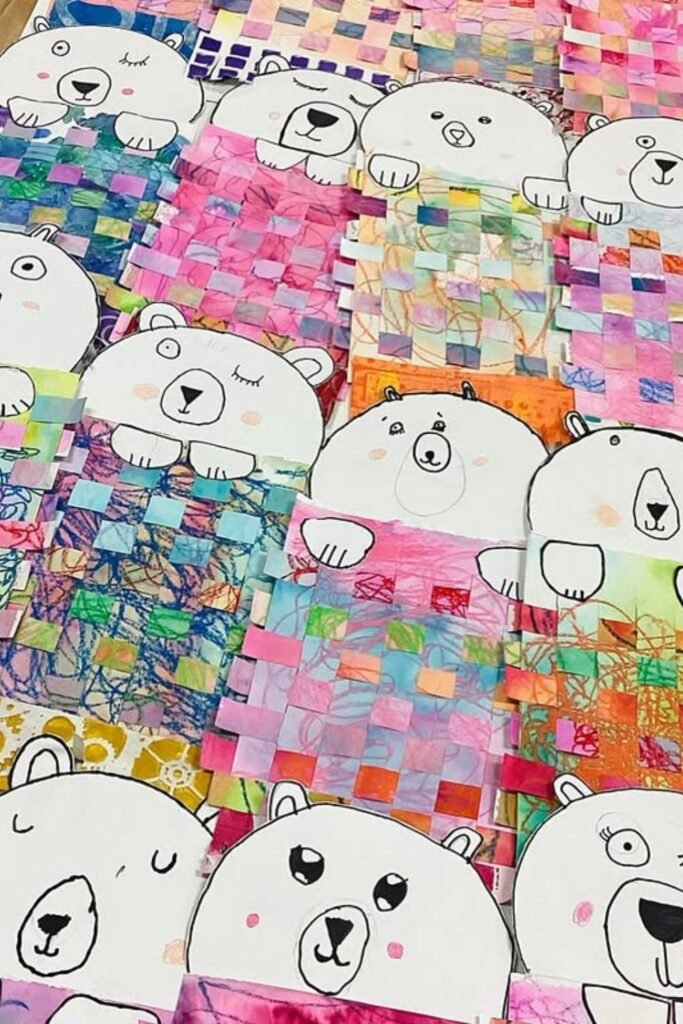
Woven Bears
Busy classrooms need crafts that feel creative without turning chaotic, and paper weaving solves that problem fast.
Kids stay engaged because their hands are busy the whole time with bear faces and colorful weaved bodies.
This is great for art classes, practicing fine motor skills, or quiet areas where youngsters may work at their own leisure.
First, cut out bear heads. Then, add strips of paper that have already been cut out so that they may be woven below.
Even although the bears have the same foundation shape, mixing solid colors with scribbled or painted paper makes each one look individual.
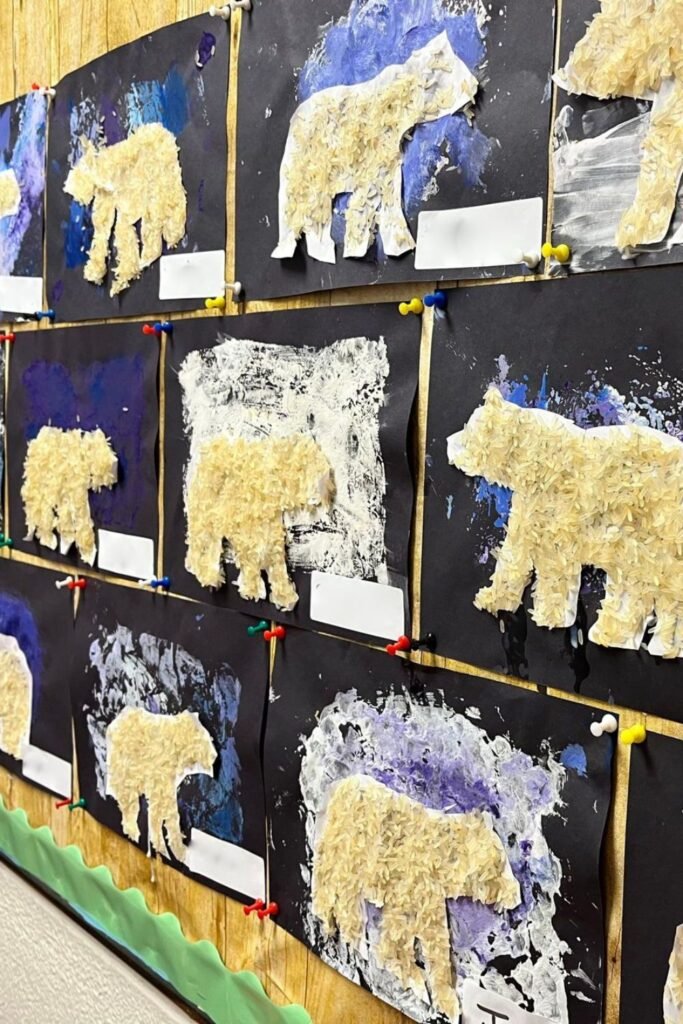
Rice Bears
Texture grabs kids’ attention faster than color, and rice turns a flat bear shape into something they want to touch.
This approach works well for winter modules, animal studies, or art walls in the classroom where the look of the work is important.
You may glue bear outlines to dark paper and then cover them with rice to make them look fuzzy without having to design them in detail.
Kids can play around with loose paint or sponge-painted backgrounds while the bear shape stays simple.
Using spoons instead of hands keeps the mess under control, and pre-gluing the outlines helps you keep track of time.
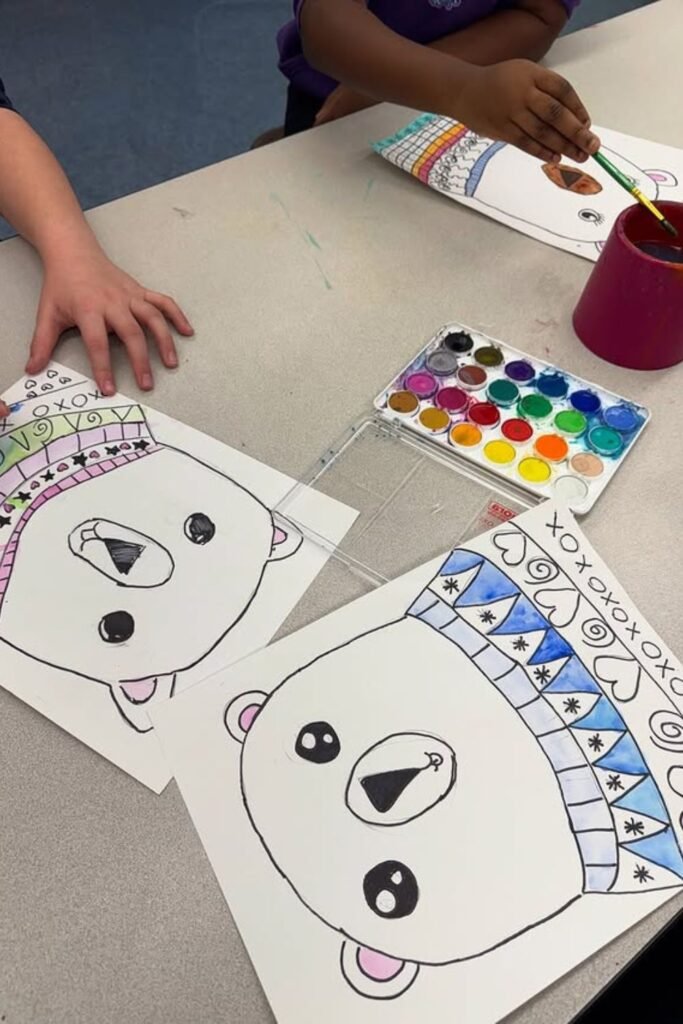
Pattern Bears
Quiet table time feels easier when kids have something structured but still creative. Simple bear outlines paired with patterned sections.
Give them a clear place to start without limiting their options.
This is very useful in classrooms, art centers or activities on wet days when you need to pay attention.
Print or create big bear faces, and then add patterns by drawing or printing things like hats or sweaters on them.
You can use markers, crayons, or watercolor paints here, depending on how messy you want it to be.
Kids may practice control while yet feeling free to try new things by repeating shapes, lines, and symbols.
Painted Bears
Paint becomes more exciting once kids stop using brushes. A bear shape filled with scraped or blown paint.
Turns a simple outline into a texture experiment kids actually remember. This is great for painting workshops, sensory activities, or days.
When kids need to be free but not too crazy. Begin with a big bear shape on dark paper, and then let the youngsters.
Use cardboard, forks, or even straws to spread light paint. The lines that aren’t straight make it look like fur without really drawing fur.
After the bear is put together, adding pre-cut facial parts makes it seem better, even if the paint becomes sloppy.
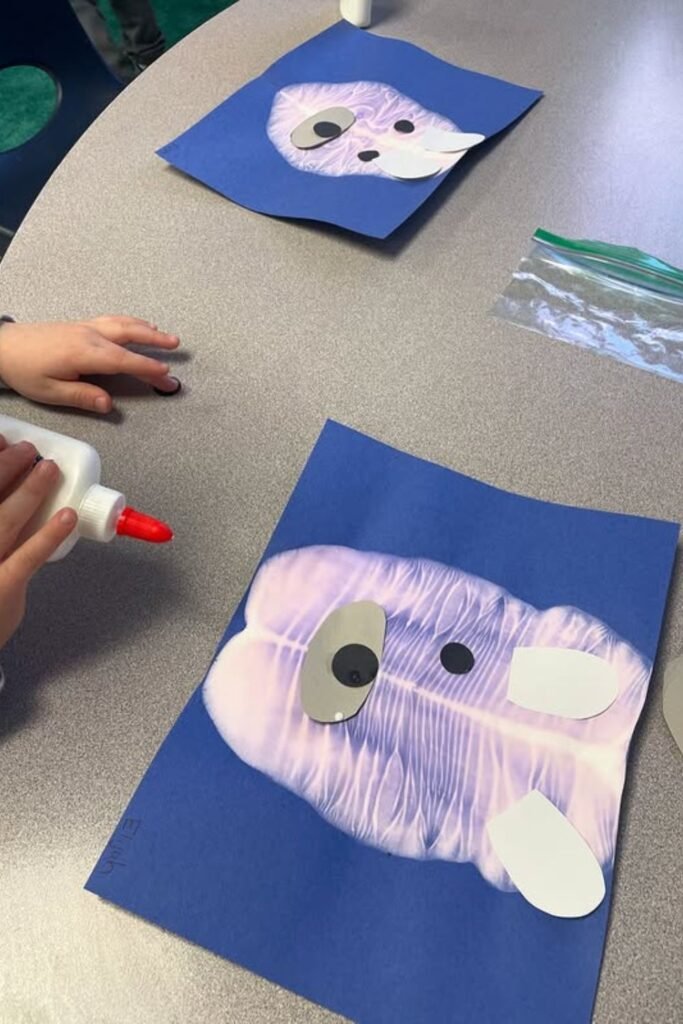
Sponge Bears
Messy fun works best when the tools do most of the work, and sponges handle that perfectly. Dabbing paint.
Instead of brushing, youngsters may make soft, textured bear faces without having to worry about remaining inside the lines.
This idea is great for art time in preschool, sensory play, or quick tasks where the time it takes to dry is important.
Cut out simple bear face shapes or stamp circles right onto the paper using round sponges. After the paint dries, add eyes, ears, and noses.
Cotton swabs or fingertips work wonderfully for little details but googly eyes make the bears come to life right away.
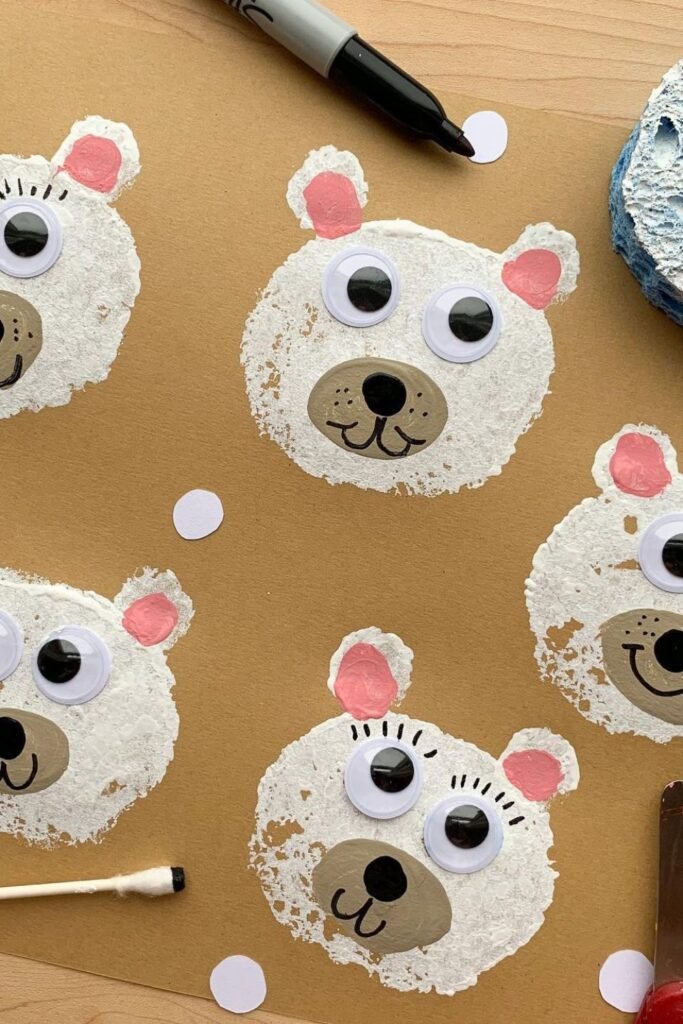
Snow Bears
Winter themes feel calmer when kids paint large shapes instead of tiny details. A half-face bear rising from the bottom of the page.
Keeps the process simple and satisfying. Blue paper sets the backdrop, while white paint can handle.
Both the bear and the falling snow without needing anything else. This is great for winter units, art time.
When you need to be quiet, or hallway displays that need to appear neat. First, paint a big white curve for the bear’s head. When that dries, add ears and a simple face.
Finger dots or cotton swabs make snow quickly, and even with slight differences, every page still looks full.
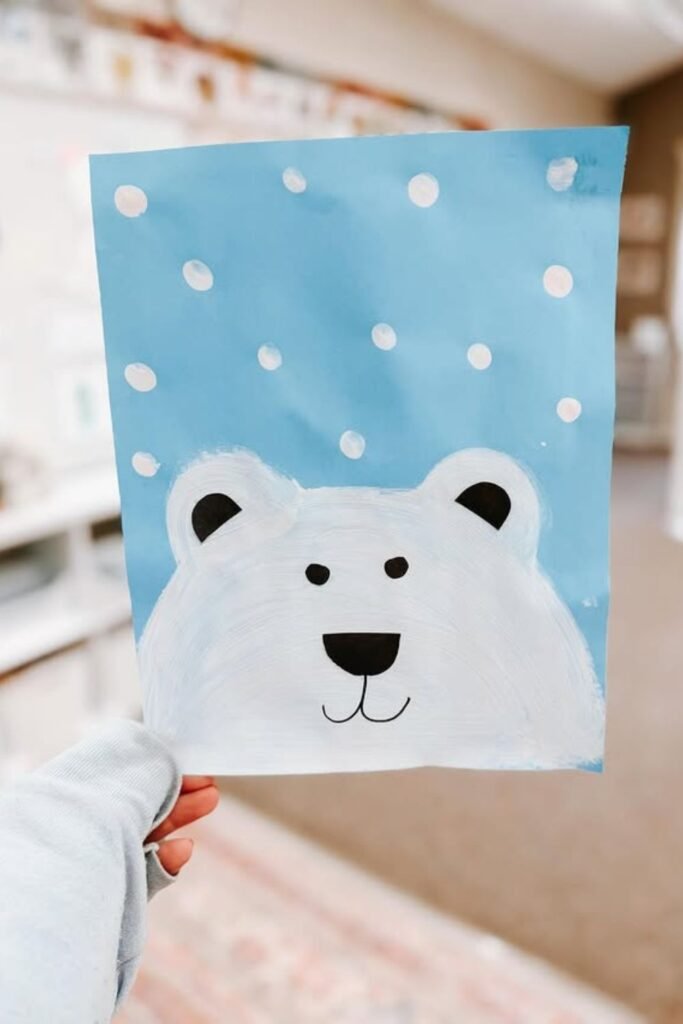
Cotton Bears
Soft textures turn simple crafts into sensory favorites. Cotton instantly gives bear faces a fluffy look that kids love touching while they work.
This idea is great for preschool art, winter themes, or stations that focus on fine motor abilities.
Paper plates or thick cardboard work best as a substrate, especially when you add glue and cotton.
Instead of putting the cotton down perfectly, let the youngsters tear it apart and push it down. Uneven layers help the bear seem nicer.
The white fur stands out more against blue or black backgrounds without any added ornamentation.

Fluffy Bears
Soft materials slow kids down in a good way. Pulling, pressing, and shaping cotton turns this bear into a hands-on experience instead of a rush-to-finish craft.
This idea works best for winter themes, units on polar animals, or sensory art days when texture is more important than straight lines.
Draw a simple bear outline on strong paper and then let the youngsters build the body one layer at a time using cotton and glue.
The bear looks more lifelike with uneven edges, so you don’t want it to be perfect. Little things like pom-pom noses.
Googly eyes finish it off without taking away from the fluffy texture the kids worked so hard to make.
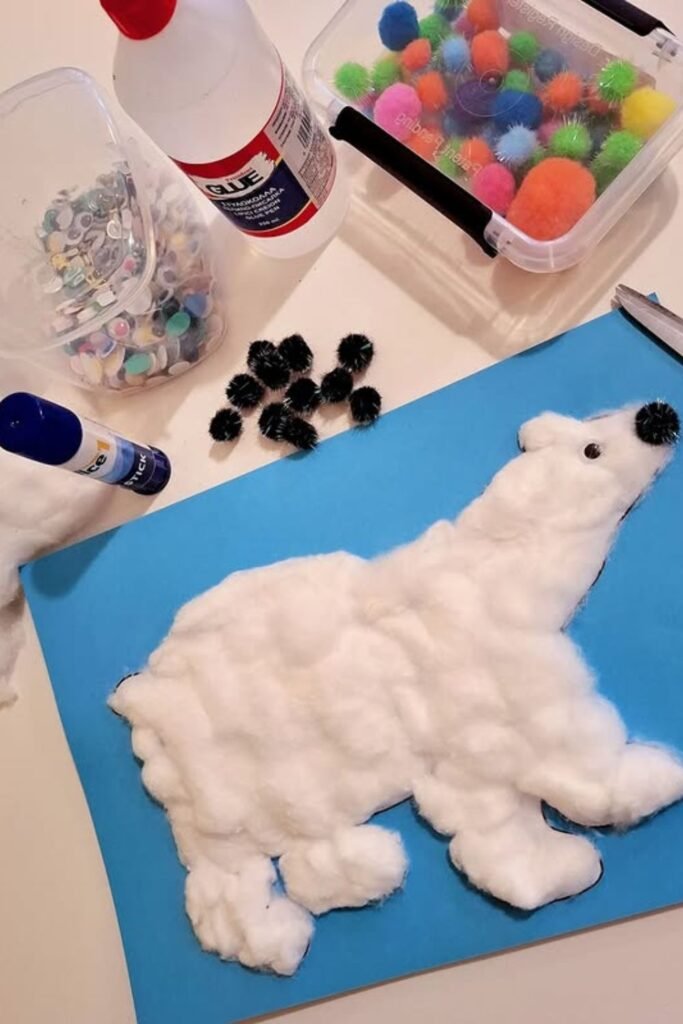
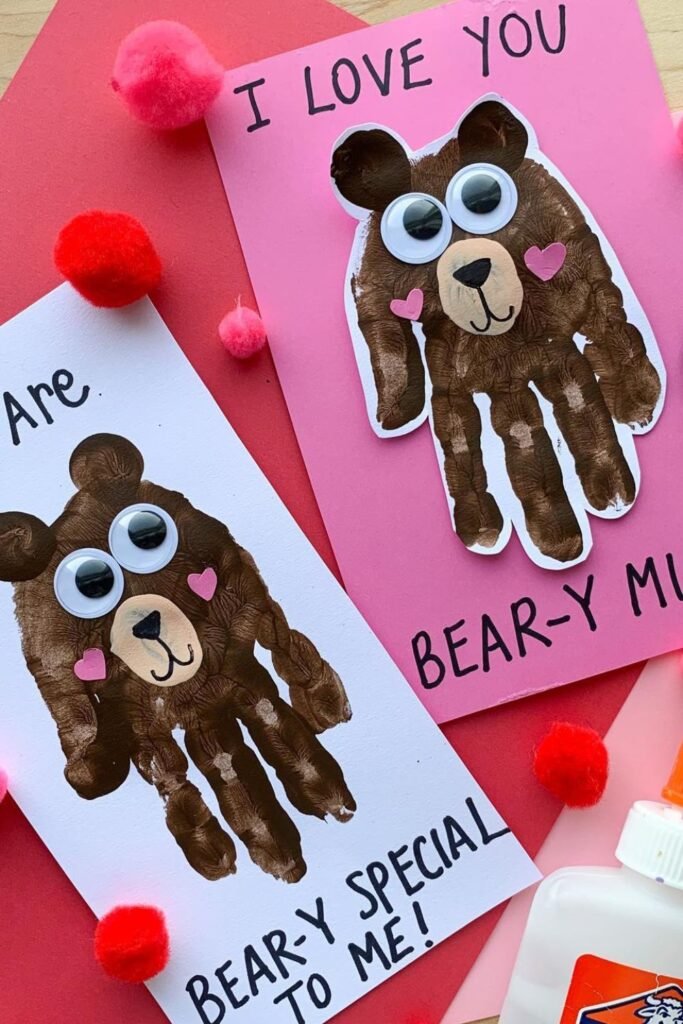
Handprint Bears
Keepsake crafts matter more when kids can see themselves in the final result. Handprints turn into bear bodies that parents actually want to keep.
Ideal for holidays that are about love and gratitude. This idea is great for Valentine’s Day, Mother’s Day, or school gift projects.
Where meaning is more important than getting everything right. The base is made of brown paint, and the bear’s body is shaped by thumbs and fingers.
Adding a basic face and message once the paint dries concludes it without making the design too busy.
Even though all the kids do the same fundamental things, writing prompts or brief notes surrounding the bear make each card unique.
Circle Bears
Round shapes make crafting less stressful because kids already know how to paint them. A simple circle becomes a bear face.
Without having to make straight lines or cut carefully. This technique works nicely for kids who are just starting to learn, for quick art rotations, or for days.
When you don’t have much time. First, paint the circle and let it dry. Then, use paper ears, a snout, and huge googly eyes to make the face.
Kids may make several kinds of bears by changing the color of the paint without changing the way they do it.
Making all the facial pieces bigger makes it easier for young hands to put everything together and finish feeling proud instead of angry.
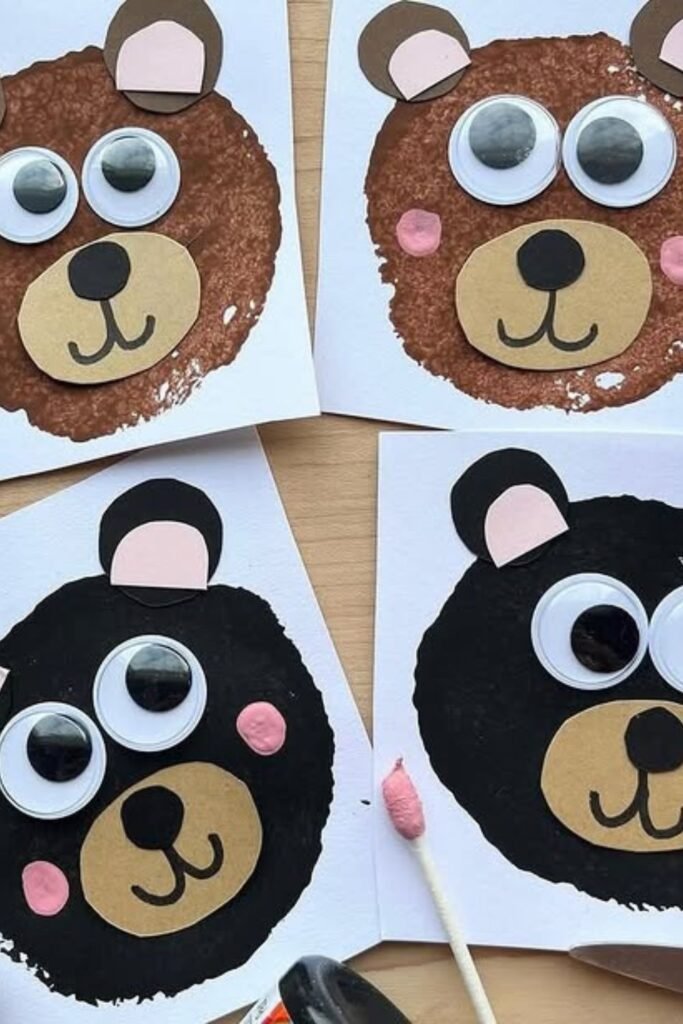
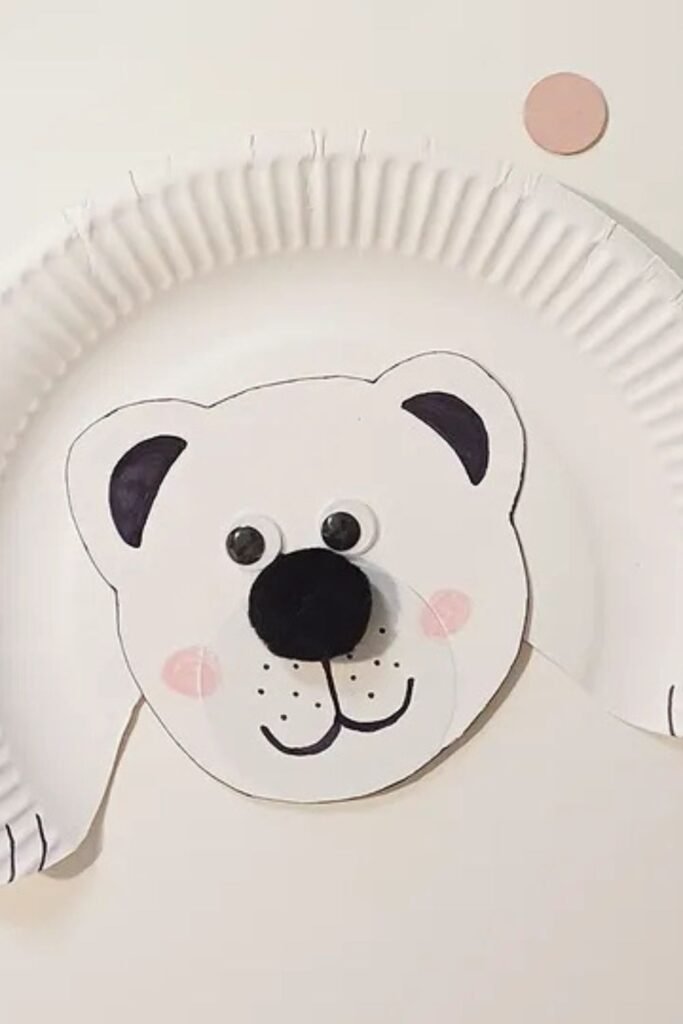
Plate Hug
Movement makes crafts more fun, and this bear feels like it’s reaching out for one. A paper plate curves into long arms that wrap.
Surrounding the bear’s face, which makes the activity fun right away. This concept is ideal for preschool groups, storytime follow-ups, or any time.
Kids need a craft that they can do with their hands. Cut a wide arc into a paper plate to make arms.
Then draw a simple bear face in the middle. Soft blush touches and googly eyes quickly give a character.
Kids love to show out how the bear seems like it’s cuddling them when you bend its arms slightly forward.
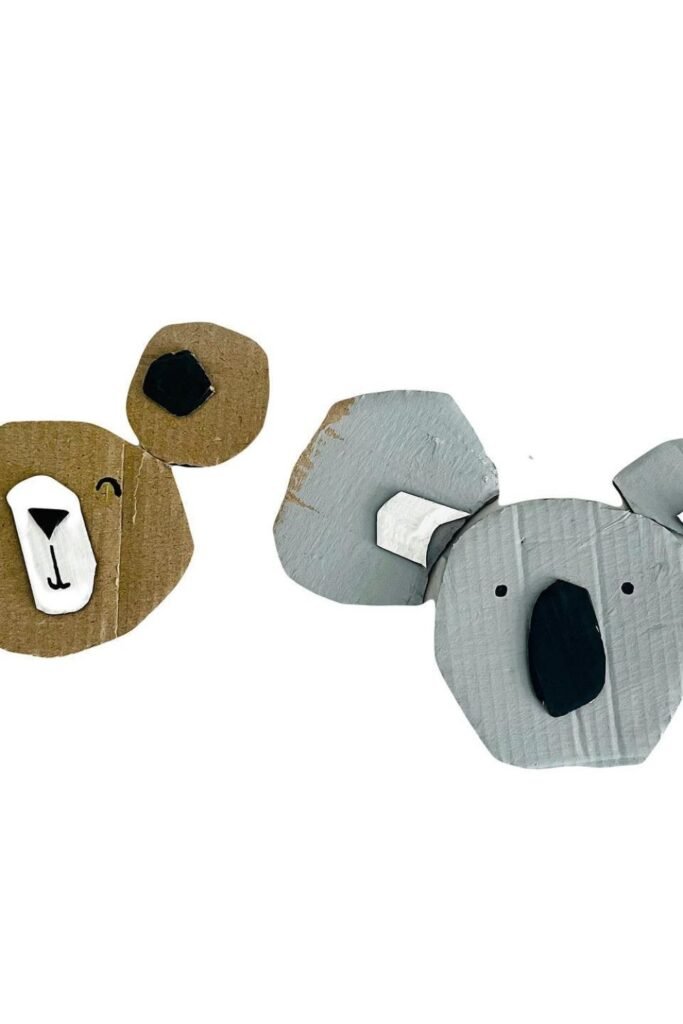
Cardboard Faces
Recycled cardboard turns into something kids don’t expect when it becomes an animal face instead of a box.
It’s okay if there are rough edges and apparent texture because the goal isn’t to be perfect.
This is great for teaching about the environment, art centers, or rapid builds if the resources are simple.
Cut out simple shapes for the face and ears from cardboard. Then, let the youngsters color them or leave them as they are for a natural look.
The bear version is still easy enough for younger kids to finish without aid, but mixing in other animals keeps things interesting.
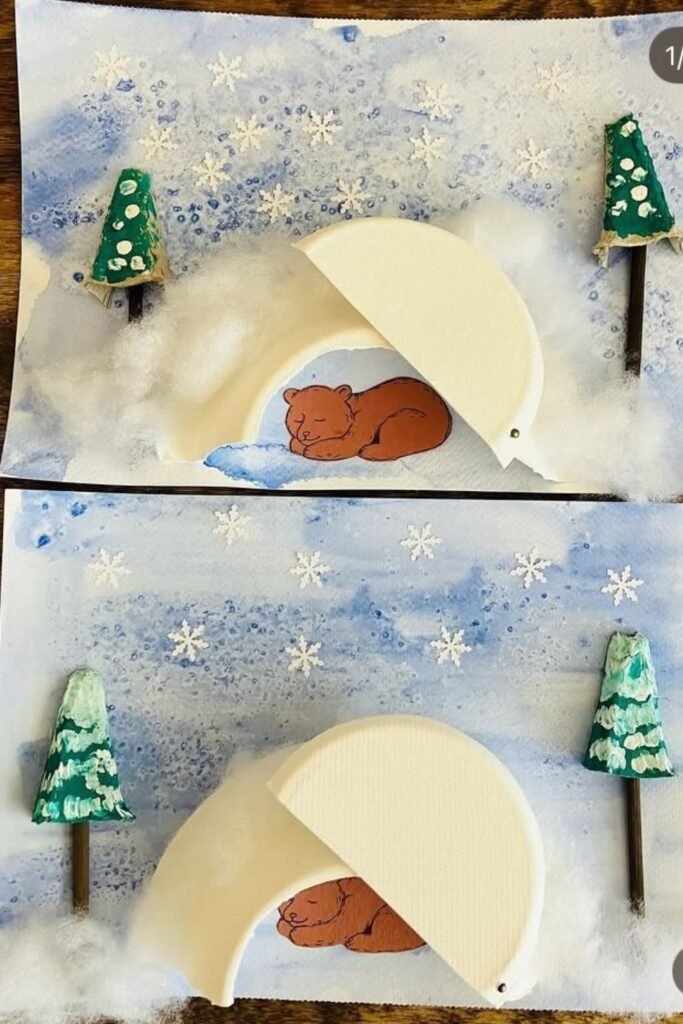
Sleeping Bears
Winter scenes feel more meaningful once a story sneaks into the craft. A bear curled up under a paper igloo.
Gives kids something to talk about while they work. This idea works great with lessons about hibernation.
Units about winter animals, or quiet art days when speed isn’t as important as creativity. The igloo is made of half paper plates.
While the snow is made of cotton. Inside is a little bear drawing or cutout. The painted backgrounds.
And basic trees set the atmosphere without making it too busy. Kids will enjoy lifting the igloo flap to “check on” the bear long after the glue dries.
Heart Holder
Interactive crafts hold kids’ attention longer, especially when hands get involved. A paper bag bear that opens.
It closes to show a heart, which makes a flat project into something fun. This concept is perfect for Valentine’s Day, sharing time in the classroom, or just crafting gifts.
The basis is made of paper bags, and paint or scribble patterns give texture without much work.
Kids may “hide” and “show” the heart over and over again by cutting the bag flap into arms. It’s easy to put together.
When you choose prominent shapes for eyes and noses. The moving portion makes things more exciting without adding any more steps or tools.

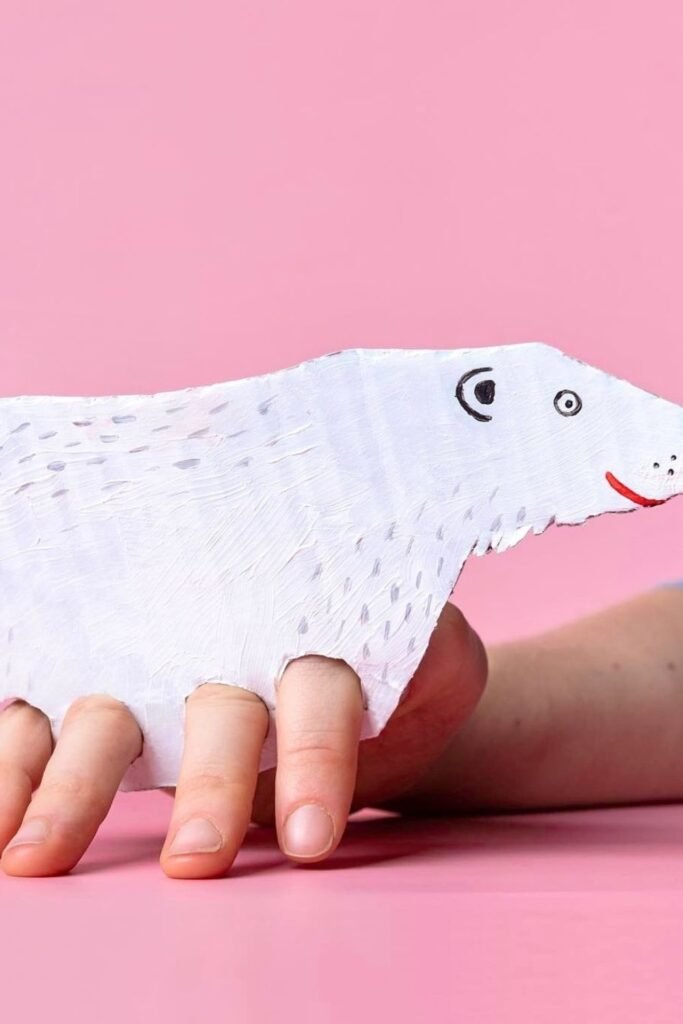
Finger Puppet
Pretend play becomes easier when crafts fit right on little hands. A bear shaped to slide over fingers lets kids move, talk and act out stories without extra props.
This is perfect for storytime follow-ups, animal sections or free-play areas where kids can use their imaginations.
Cut out the bear shape from thick paper or light cardboard, and then leave a room underneath it for fingers to go through.
The white paint makes it look like a polar bear, and the minimal line details maintain the expressions expressive without making them too busy.
After they’re done, kids automatically start making up scenes, voices, and short stories, which keeps the craft going long after the table is clean.
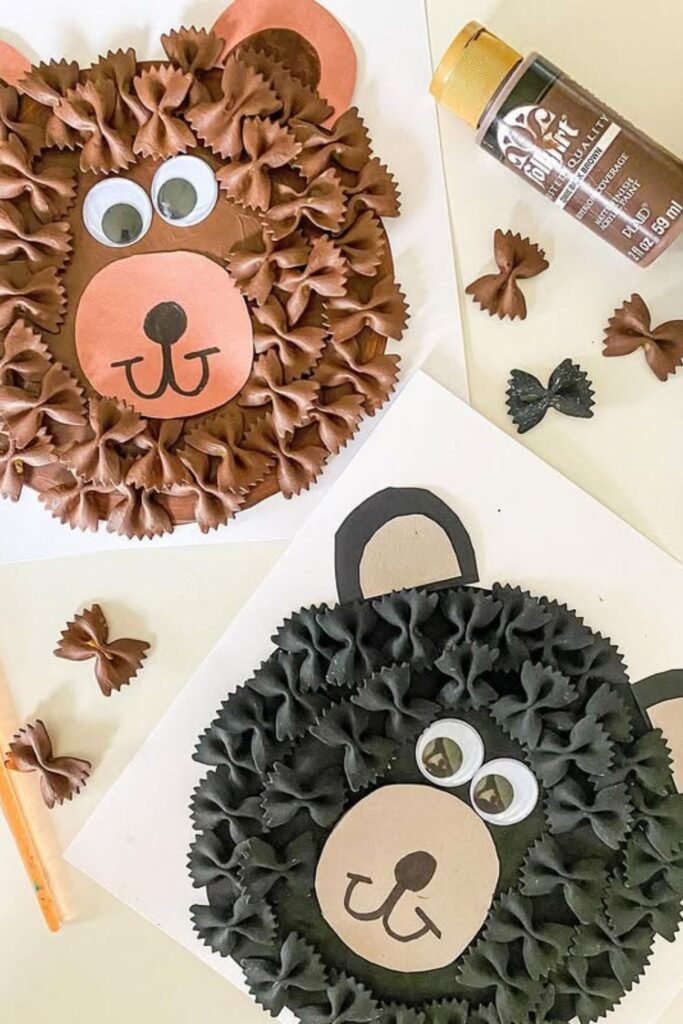
Pasta Fur
Unexpected materials always grab kids’ attention, and pasta turns a bear’s face into a texture project they won’t forget.
Bow-tie spaghetti makes things look thick and hairy, which is fun instead of messy. This idea works best for art classes, sensory days, or animal units.
Where kids can use things other than paint. To put it all together, glue the spaghetti securely around a round base and then paint everything the same color.
Adding simple paper ears and a big snout maintains the face apparent even when the texture takes over.
Overlapping the spaghetti a little makes the bear look bigger and more expressive without adding any more steps.
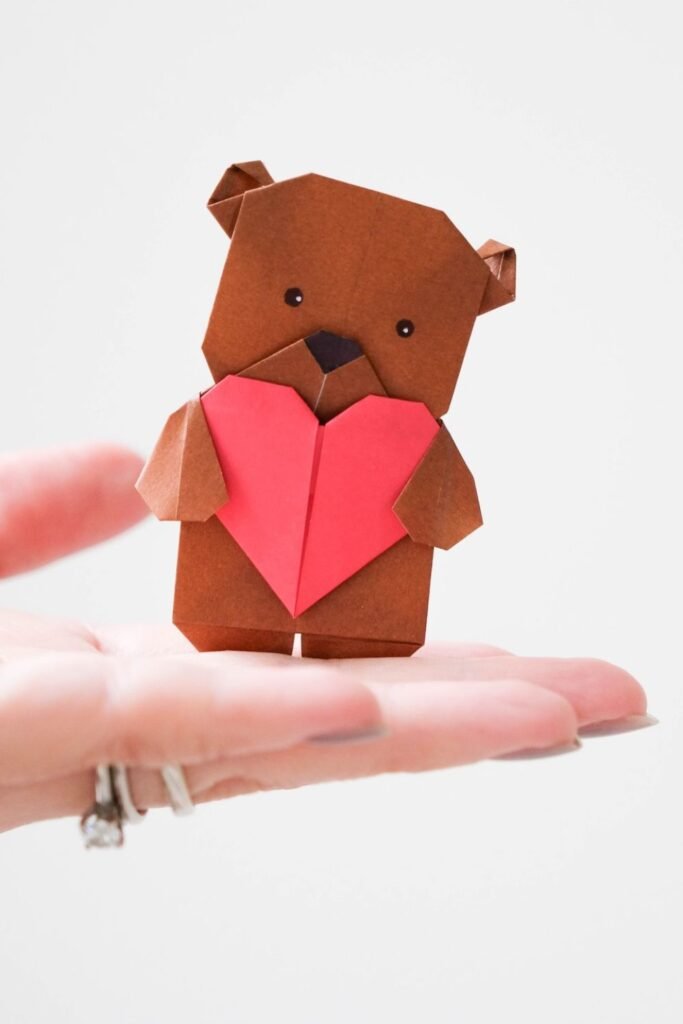
Origami Bear
Small paper projects feel special when kids realize they’re building something that stands on its own.
Folding a teddy with a few meticulous folds is a way to show that are patient.
This idea works well for older kids, peaceful craft time, or Valentine’s Day activities where speed isn’t as important as attentiveness.
Using thicker origami paper helps the bear keep its shape, especially around its limbs and legs.
Kids may add color to the bear without making it too complicated by folding the heart separately.
Drawing simple eyes on the end gives each one a personality, even when everyone follows the same folds.
FAQs
Can bear crafts work for mixed-age kids in one activity?
Yes, they may do that as long as you keep the main idea simple and change the specifics. Everyone should use the same bear shape.
Then, let the smaller kids paint or glue big pieces on, and the older kids can add patterns, textures, or other things.
How do you keep bear craft sessions from getting too messy?
The most important thing is to be ready. Cut forms ahead of time, keep the quantity of materials on the table to a minimum, and add one step at a time.
Kids stay focused and spend more time making things instead of making a mess when they know exactly what to do next.
Hi, I’m Afaf! I’m a law student who loves writing about everyday life – from home projects and crafts to fashion, beauty, and parenting tips.
I’ve been writing for over a year, sharing ideas that are simple, practical, and easy to try. I write about things I find interesting and useful, whether that’s organizing a space, trying a new DIY, or finding activities to keep kids entertained.
My goal is to share helpful ideas without making things complicated. If it works in real life, I’ll write about it.
When I’m not studying or writing, I’m usually experimenting with new projects or scrolling for inspiration!