
28 Bird Crafts Ideas for 2026
At first, most bird crafts look cute. But when you try to make one with kids, they don’t look so cute anymore.
The wings don’t stand up, the torso looks like a blob, and the kids are already bored halfway through.
You start to wonder if it’s the materials, the steps, or if you’re just doing something incorrectly.
You don’t need pricey supplies or abilities like an artist to make bird crafts that kids will appreciate.
In this article, you’ll find 28 birds craft projects for kids that work for any skill level in 2026.
Let’s jump in!
How Can You Turn Simple Materials into Realistic Bird Crafts Kids Love?
You’re not the only one who has looked at a finished bird craft and thought, “This doesn’t look like a bird at all.”
Most crafts don’t work out because the materials stay flat and dead. Kids notice that quickly, and that’s when they lose interest.
The trick isn’t to get better supplies. It’s learning how to utilize objects like paper, cardboard, paint, and glue in ways that give them shape, texture, and movement.
When you adjust how you cut, stack, and attach parts, simple materials stop seeming simple and start looking like genuine birds that kids get excited about.
Save this article for later!👇👇👇
Paper Birds
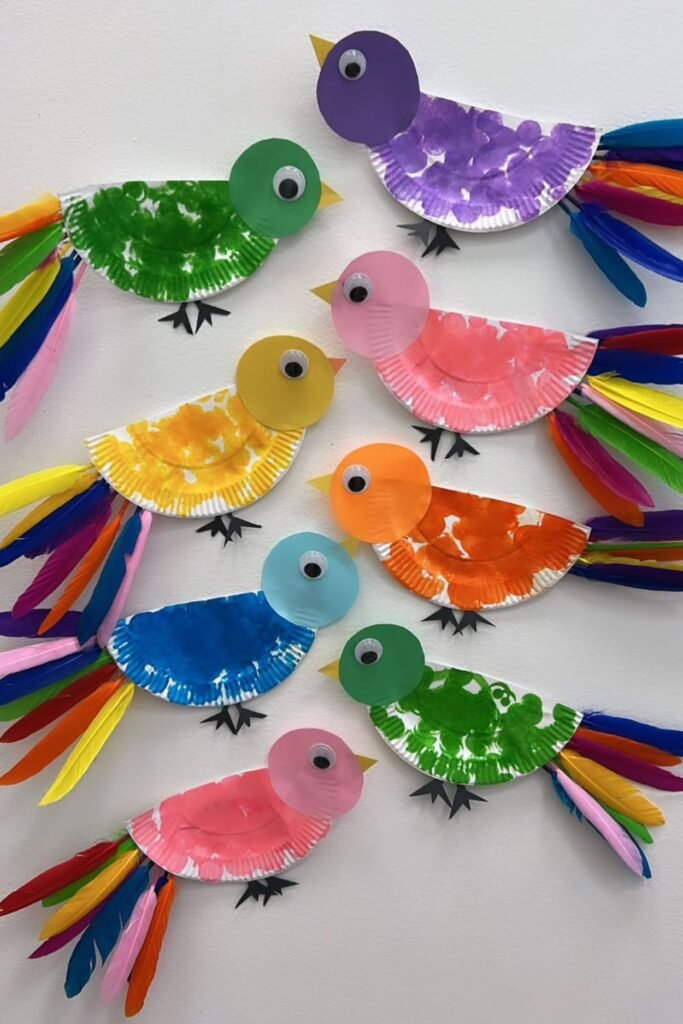
Kids are drawn to bright colors immediately away, which is why this project works so well.
Paper plates make the bird’s body shape right away, so kids don’t have to “see” it forming.
Real feathers make a flat object feel alive, and paint gives it character. Teachers appreciate this idea.
Because all the kids can use the same materials yet make a bird that looks very different. At home, it’s best as a quiet game at the table where youngsters can mix colors.
To add depth, fold the plate a little bit before painting it. Then, glue the feathers on last so they stay clean and bright.
Stick Birds
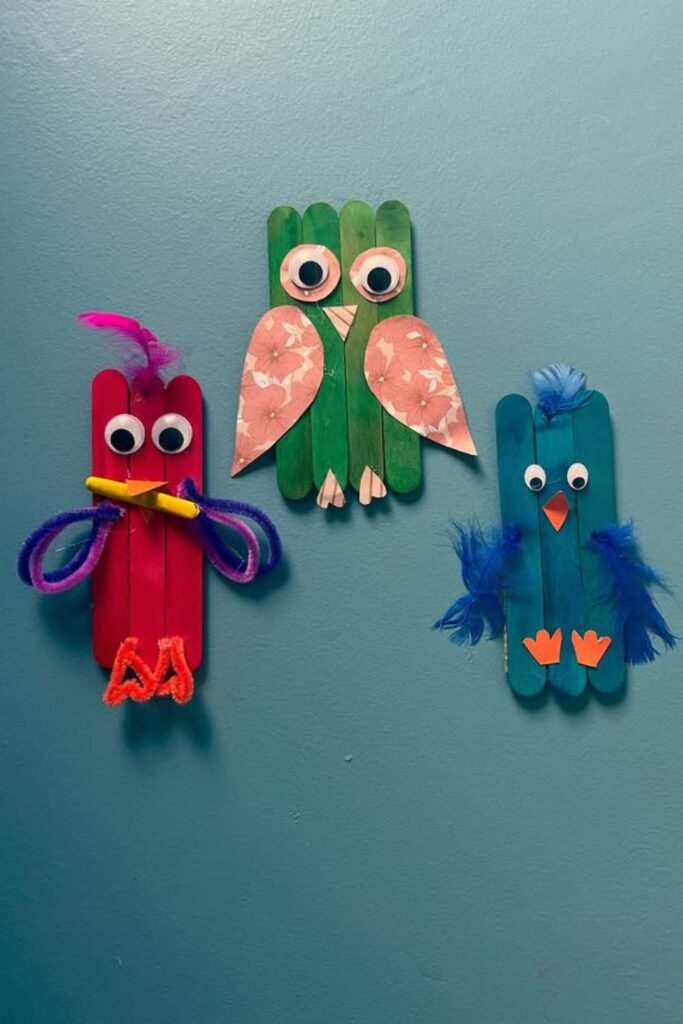
Popsicle sticks solve a big kids-craft problem right away they give structure before glue even touches the table.
This is why this technique works so well for little kids who have trouble shaping paper. Putting the sticks next to each other forms a strong bird body.
Which makes decorating easier and less frustrating. You don’t need to be able to cut perfectly to make character with patterned paper wings and giant googly eyes.
This craft is great for rainy days, art centers, or quick projects in the classroom.
First, paint the sticks and let them dry completely. Once the kids start putting things together, everything comes together quickly and retains their focus.
Egg Sculptures
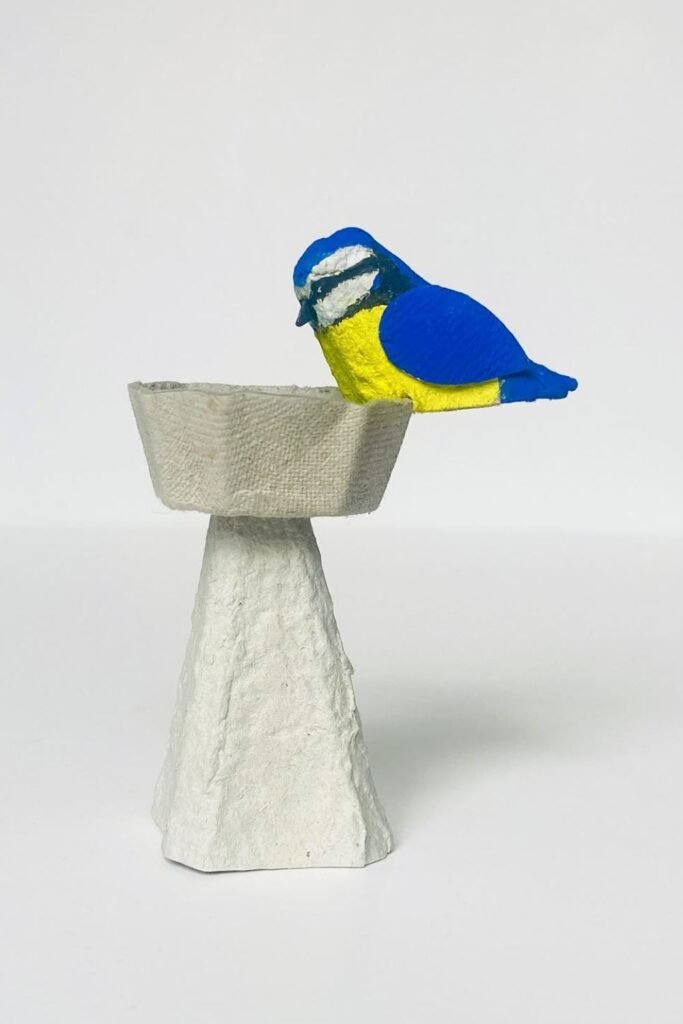
Egg cartons surprise kids the moment paint touches the surface. The bumpy texture does half the work for you. Quickly changing basic shapes into things that look like birds.
This concept is great for youngsters who are a little older and like crafts that take their time and focus on the details.
By cutting one cup for the head and another for the body, youngsters may learn about bird proportions without getting too deep into it.
Acrylic paint makes colors stand out, and little brush strokes around the face make the bird look lifelike. Use this activity during peaceful art time or nature lessons.
And let it dry completely before stacking or exhibiting it. It looks best when it is standing alone like a small sculpture.
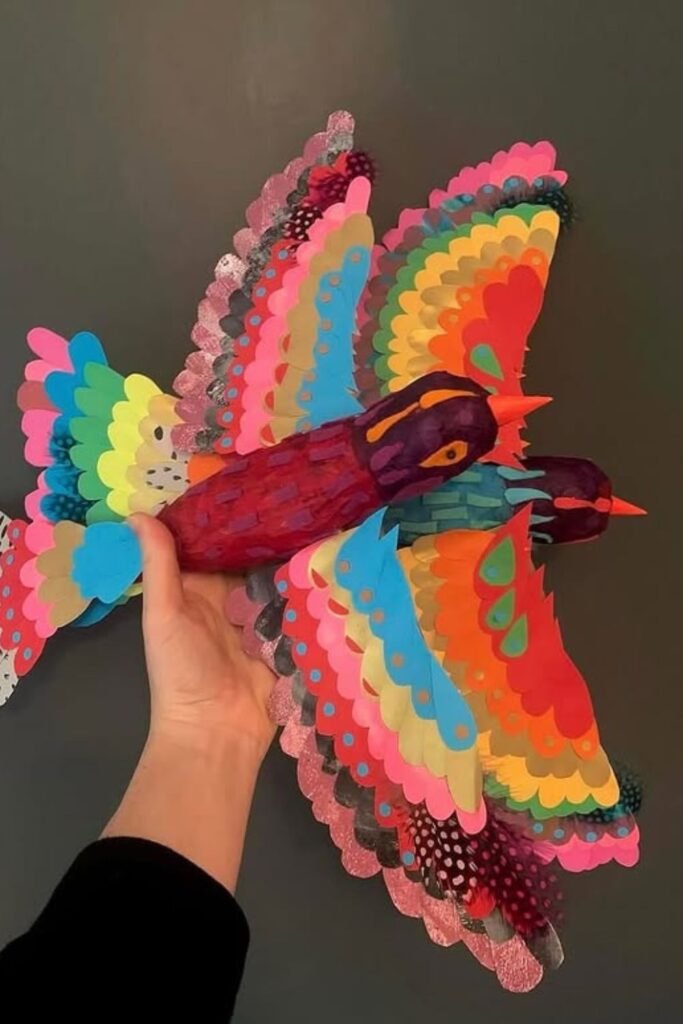
Layered Wings
Movement changes everything for kids, and layered paper wings do exactly that. Stacking scalloped shapes.
Instantly gives the bird a flying pose. This gives students the feeling that they are making something alive instead of flat art.
This craft is perfect for the older kid who want to cut and arrange pieces without being in a hurry.
Make the body out of thick cardboard or paper so the wings have something to lean on. To make things look deeper, add layers from biggest to smallest.
Then mix patterns to keep things fun. You can hang the finished birds from the ceiling or window. Kids will be proud of how hard they worked when they watch them “fly.”
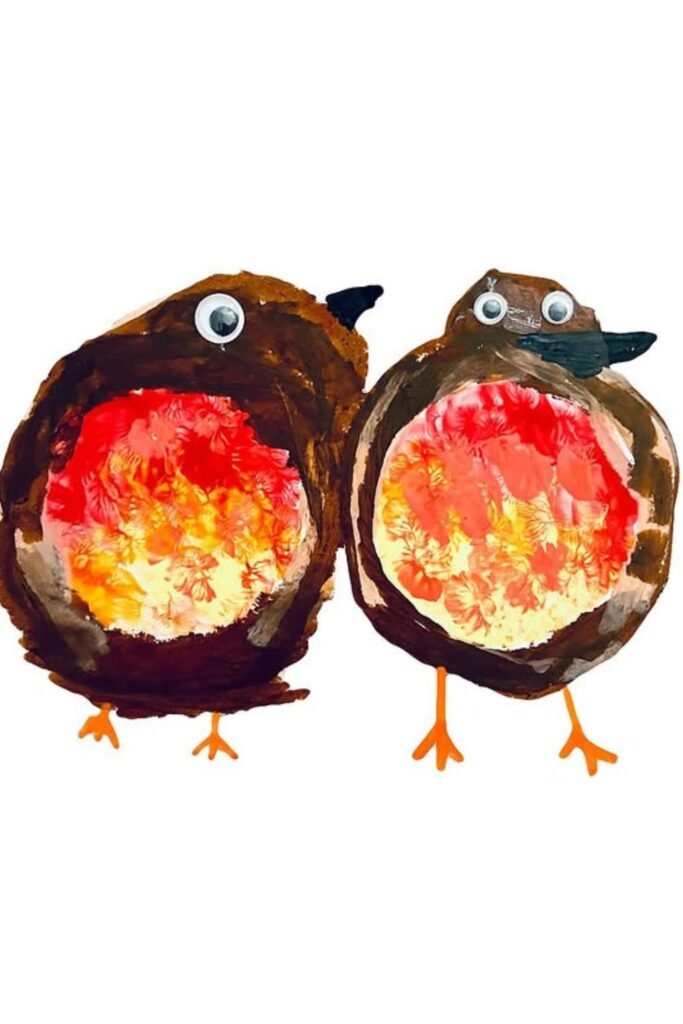
Round Robins
Bold belly colors grab kids’ attention before they even notice the bird shape. That’s the secret here.
A big, round body makes painting entertaining instead than unpleasant, especially for kids.
This craft is great for winter themes, storytime follow-ups, or quick afternoon activities when kids don’t have a lot of time to focus.
Use a thick piece of paper as a base so the paint doesn’t deform it. First, let youngsters dab warm colors in the middle. Then, let them build the darker outline around it.
Adding basic stick legs and googly eyes at the end gives it a lot of character right away. The spherical shape does most of the work, so keep the details to a minimum.
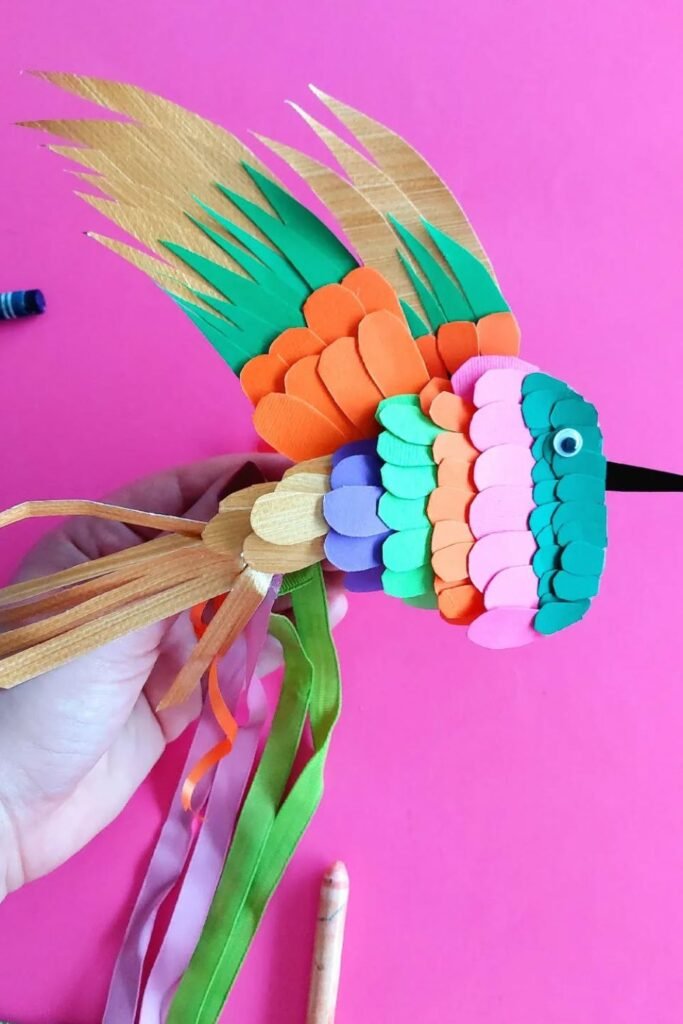
Flying Colors
Bright layers make kids forget they’re working with paper at all. Overlapping small cutouts turns a simple bird shape into something bold and textured.
This keeps both hands and brains busy. This craft is great for longer art sessions when youngsters like to take their time building instead of hurrying to finish.
Foam sheets or thick paper are the ideal choices because they don’t lose their shape when you stack them.
Start at the beak and work your way back so that every new piece seems like progress. You may add movement to your project.
Without doing any extra labor by using ribbon or paper strips for tails. When kids hang the finished bird on string, they can see their work come to life straight away.
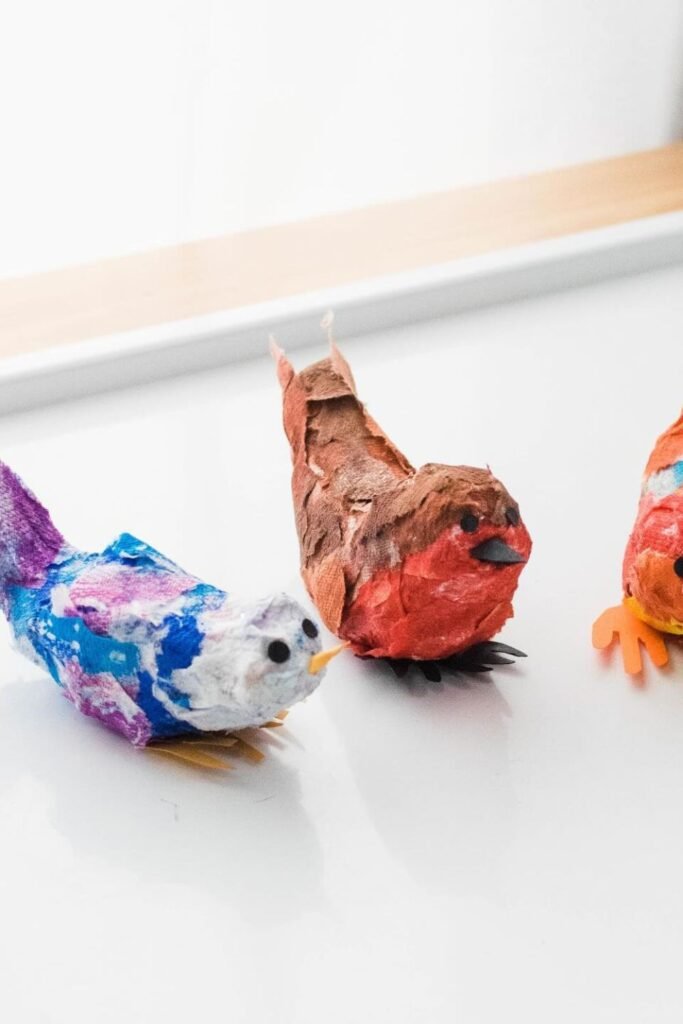
Pocket Birds
Kids feel bold enough to try new things when they see small shapes. The bird looks lifelike before you paint it.
Because the crumpled paper or egg carton pieces make natural curves. This activity is great for quick sessions, nature modules, or crafts.
That kids can take home because each bird is little and easy to handle. Acrylic or tempera paint is best here because it masks rough places quickly.
Make the body first, then add the beak and feet last so youngsters don’t touch the wet paint too much.
Putting the finished birds on a shelf makes them into a small collection that kids will be proud of.
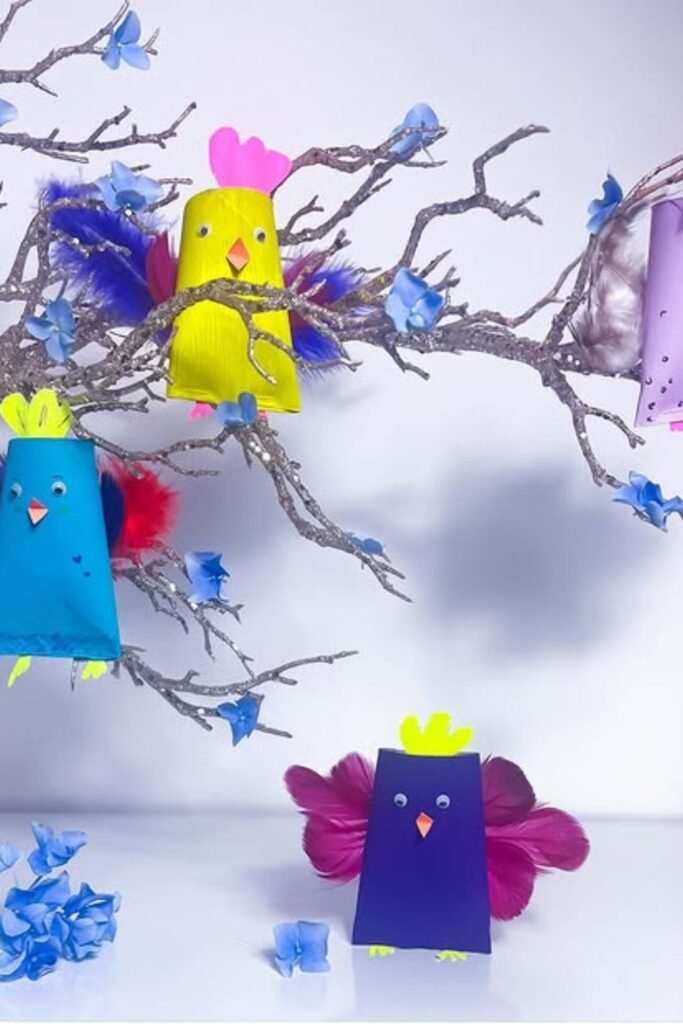
Tube Perchers
Cardboard tubes instantly turn into standing birds without any tricky shaping, which is why kids stay confident from start to finish.
Vertical bodies make decorating fun instead of stressful, especially for younger kids who like bright colors and big features.
This activity is great for spring units, classroom displays, or window shelves where the birds can “sit” up straight.
Cut out simple wings and crests from paper, and then add feathers to the glue while it’s still wet to make it thicker.
Putting a couple on branches gives the finished birds a natural touch and helps them look like part of a scene instead of just a craft.
Nest Homes
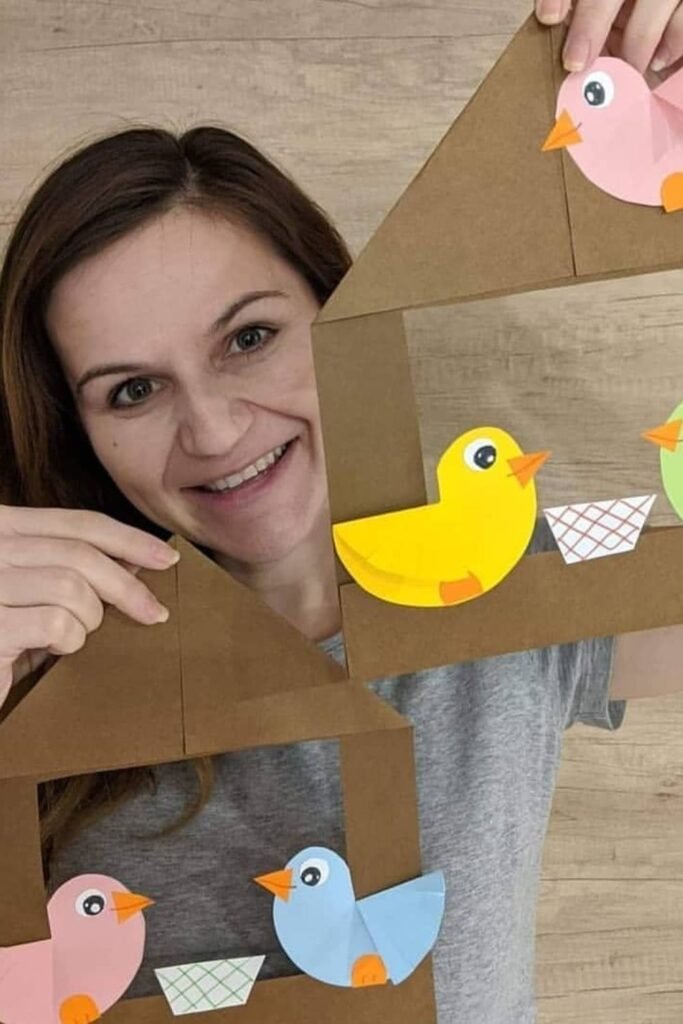
Storytelling sneaks into making a home for birds. Kids stay interested longer when they see more than one bird in a cardboard frame.
This idea is great for preschoolers and early elementary school students who like to play pretend and set up basic scenes.
First, fold strong cardboard into forms that look like houses. Then, add birds as the last step to make the construction feel complete.
Paper nests in the middle make people want to interact and make them wonder about bird families.
Kids will start telling tiny bird stories on their own when you hang these on walls or doors.
Folded Circles
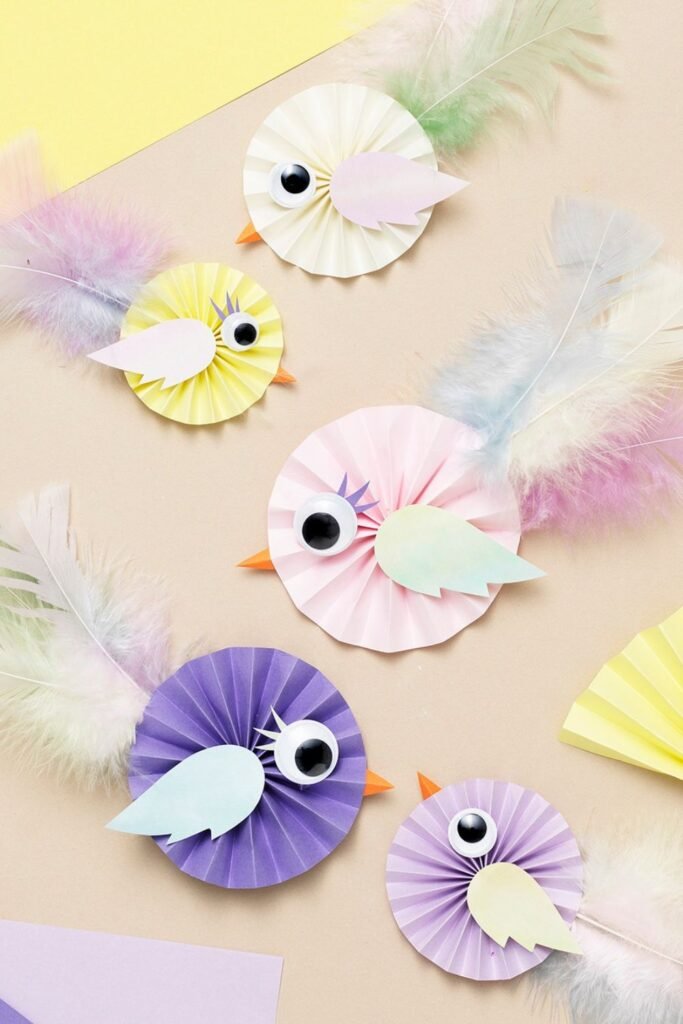
Fan-folding paper changes how kids see flat shapes almost instantly. A simple circle turns into a rounded bird body with texture and volume.
It makes the craft seem more “real” without any more work. This design is great for preschoolers and young elementary school pupils.
Because it’s easier to fold than cut out details. The pastel hues and light paper make the bird.
Look delicate and fun. Put the eye and wing on after the folds are done so they don’t get squashed.
The feathers on the back finish the design and give kids that thrilling moment when the bird suddenly comes to life.
Painted Cutouts
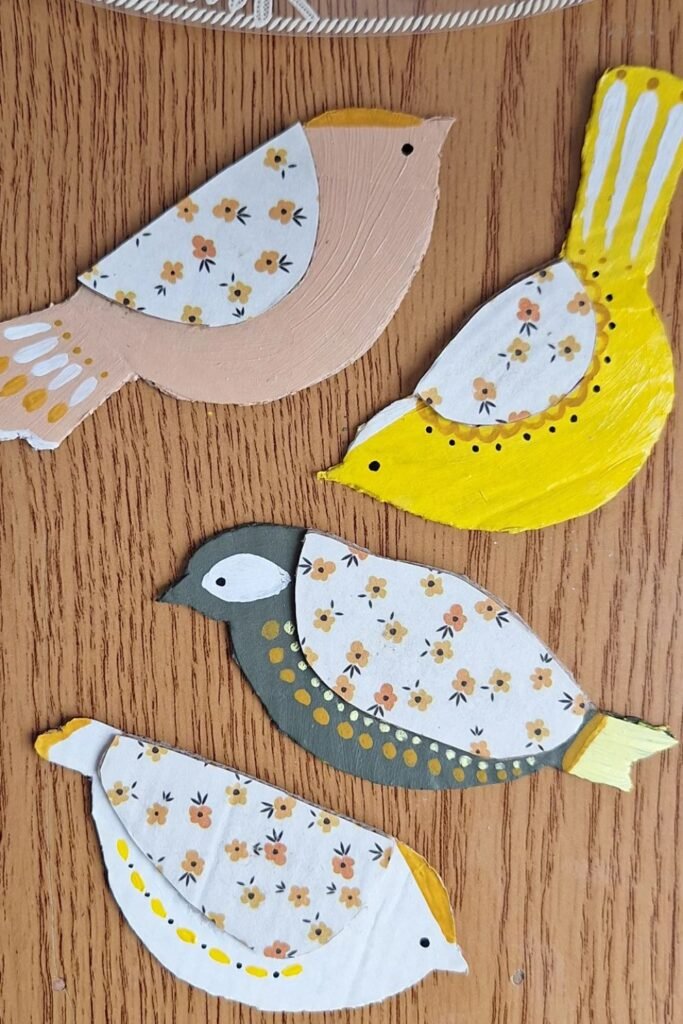
Flat shapes stop feeling boring once pattern enters the picture. Wooden or thick cardboard cutouts give kids a solid base.
Patterned paper gives detail right away without having to paint carefully. This idea works well for quiet craft time, nature units, or table activities.
When kids like to take their time decorating. First, glue the patterned paper down, and then paint around it so the edges stay clean and sharp.
Adding little dots and basic lines makes the bird look alive without making it too busy. Kids will feel.
That their craft has a purpose beyond the table when they see these birds attached to walls, converted into magnets, or utilized as tale props.
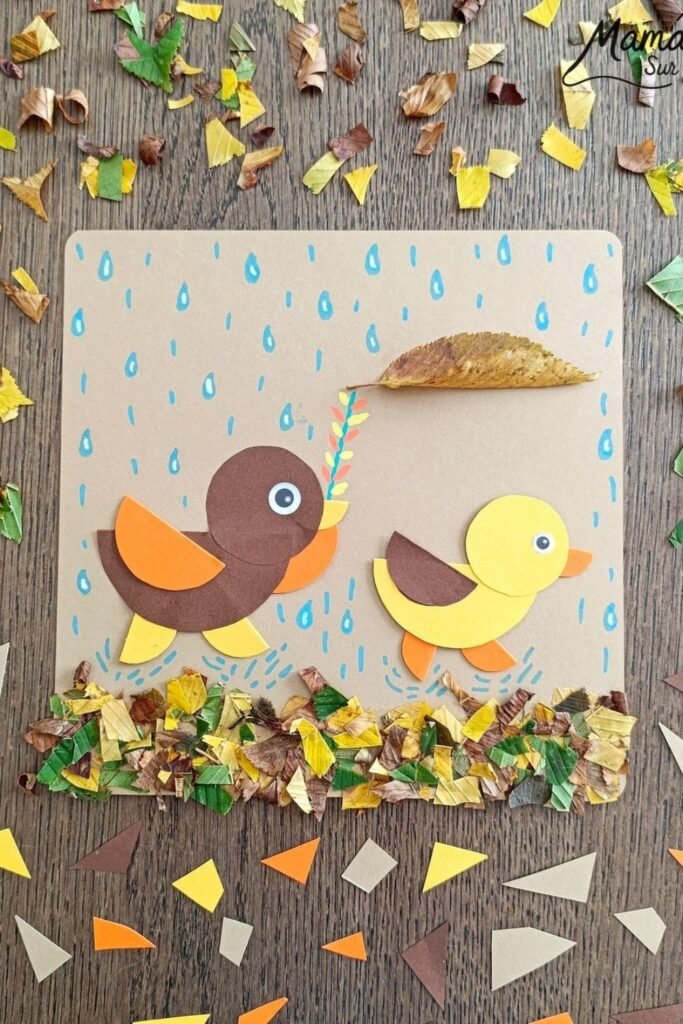
Leaf Scenes
Nature already gives you texture, color, and movement this craft just puts it to work. Real leaves instantly ground the birds in a setting.
Kids can relate to it, which makes the whole situation feel more real than just pretty. This idea is ideal for classes in the fall.
Days of playing outside, or nature walks followed by craft time. Make the birds out of simple paper shapes.
Initially so that the emphasis stays clear. Add leaves last for grass, branches, or shelter, and let kids decide where everything belongs.
Kids would instinctively start telling a story out loud when they see a few painted raindrops or footprints on the page.
Collage Birds
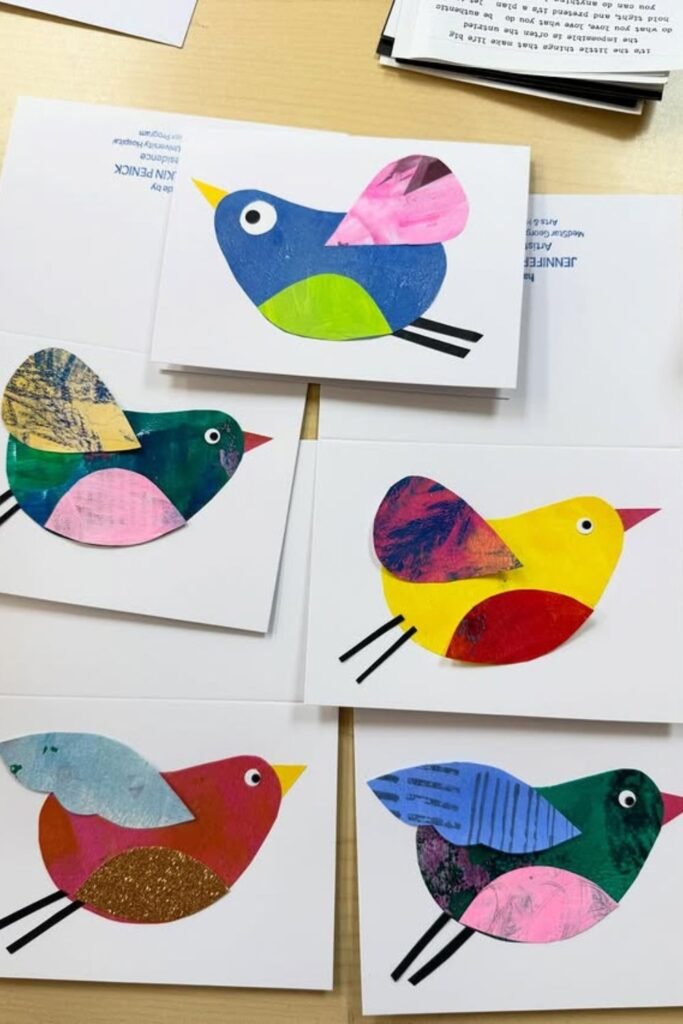
Scrap paper suddenly feels valuable once kids realize every piece can become a feather. Mixing colors, textures, and even old prints.
Turns basic bird shapes into something that is unique and meaningful. This craft is great for classrooms or art clubs when there are a lot of leftover materials.
First, cut out a basic bird body so the youngsters don’t get fixated on the shape. Then, let them make wings.
And bellies out of any scraps they like. Lightly glue the layers together so the parts don’t move.
Putting these on plain white paper makes the colors stand out and lets youngsters notice how minor changes may transform the whole bird.
Forest Wall
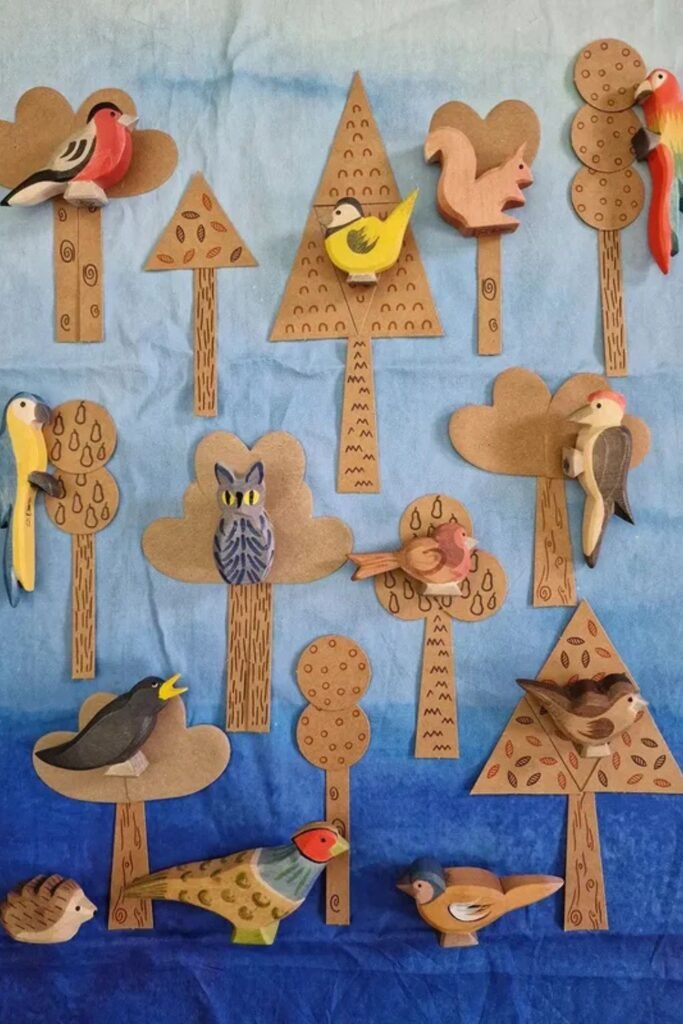
Scenes like this invite kids to slow down and build something bigger than a single bird.
Cardboard trees give structure, while small bird pieces. Let youngsters play, move, and rearrange things without feeling rushed.
This idea works best for classrooms, hallway displays, or long-term projects where youngsters add one thing at a time.
First, cut and paint the trees so that the background feels more stable. Next are the birds, which are little so that hands don’t get too full.
After everything is set up, wall becomes live forest that kids can play with long after craft time over.
Paper Flyers
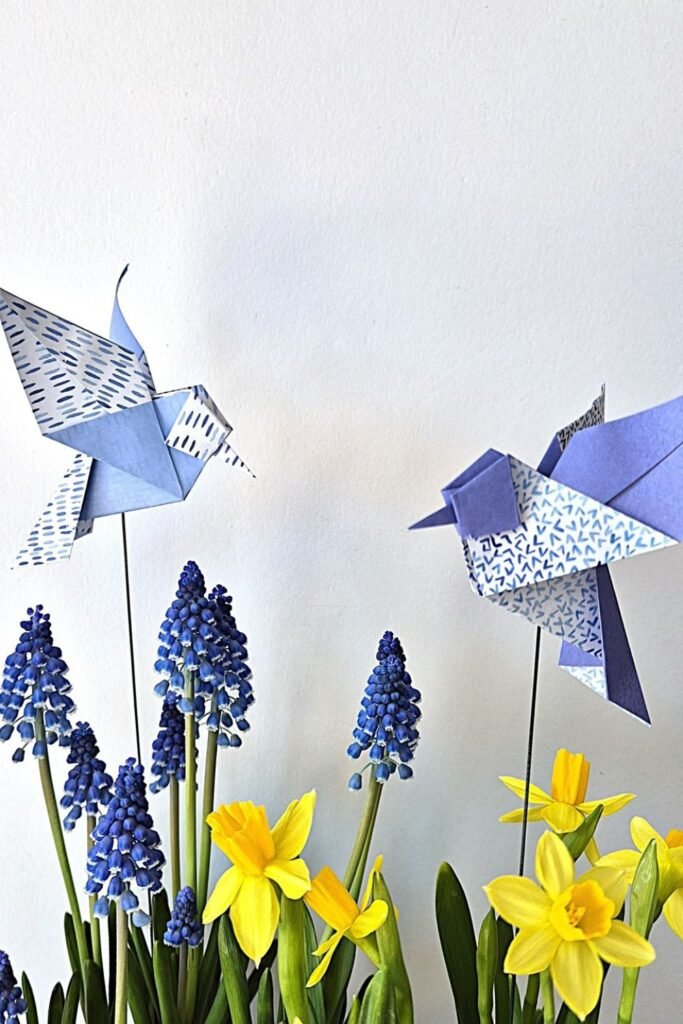
Floating birds change how kids interact with crafts because they don’t just sit there they move with air and light.
Kids can easily fold paper into basic flying forms, which provides them a clear purpose and a pleasant end without needing glue all over the place.
This idea is great for spring themes, window displays, or plant decorations where things need to move.
Lightweight patterned paper makes it easy to fold and keeps the birds balanced on tiny poles or skewers.
Putting them near plants or windows makes the craft feel like part of the area right away, not just something that was done and left.
Soft Layers
Color blending feels magical once tissue paper enters the mix.
Thin layers stack without adding weight, so kids can build rounded birds that actually stand and hold their shape.
This craft is great for kids who like to work slowly with their hands and like to see colors mix.
Make a simple folded paper base for the bird to start with so it has a shape before you start decorating.
Instead of cutting tissue, tear it. The rough edges make the layers look more real. To protect pieces from slipping, glue from the middle out.
When students realize how simple color choices impact the complete look, they can see how great finished birds look when they are set together on shelves or tables.
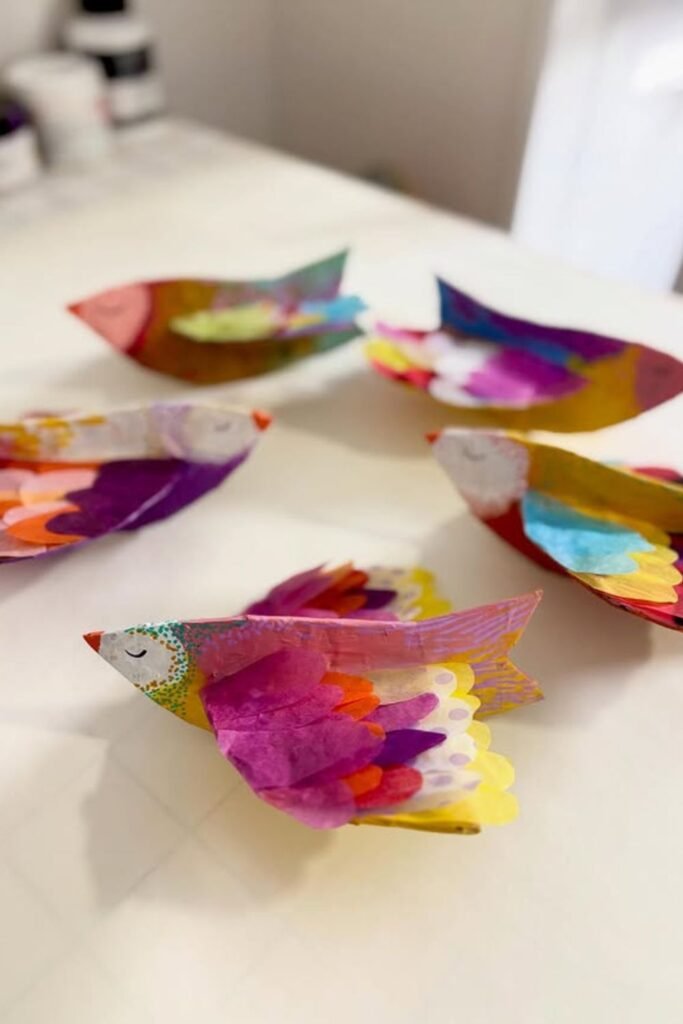
Mini Puffins
Character comes from shape first, not color, and kids feel that difference right away here.
The bird is easy to tell apart even before it is painted since it has a thick body and a clear beak.
This craft is good for older kids who like to build things and wait for the layers to dry. For a strong basis, use paper mache, egg carton pulp, or tightly wrapped paper.
To maintain the puffin look bold and basic, paint in blocks instead of mixing. It’s more important to get the little things right, like where the eyes and feet are.
Kids enjoy to describe how lining up two birds facing each other turns the craft into a tale right away.

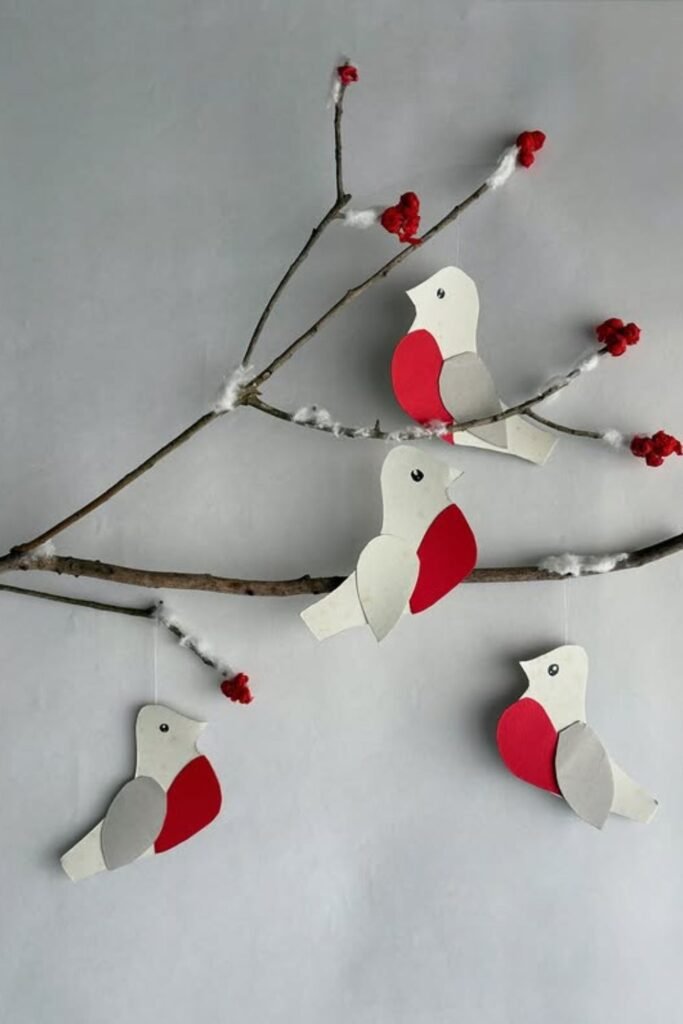
Branch Robins
Seasonal details make kids feel connected to what they see outside. Paper birds placed on real twigs.
Instantly turn a simple craft into a winter scene kids recognize. This idea works great for winter, nature, or holiday classroom displays.
Cut out bird forms from strong paper so they don’t fall down when you hang them. Kids will remember the red belly the most, so add it last.
Cotton or tissue can look like snow without making a mess, while microscopic red paper dots can make berries look real.
Kids will pause and look deeper if you hang the branches at eye level. They can then proudly describe how their birds “found a place to rest.”
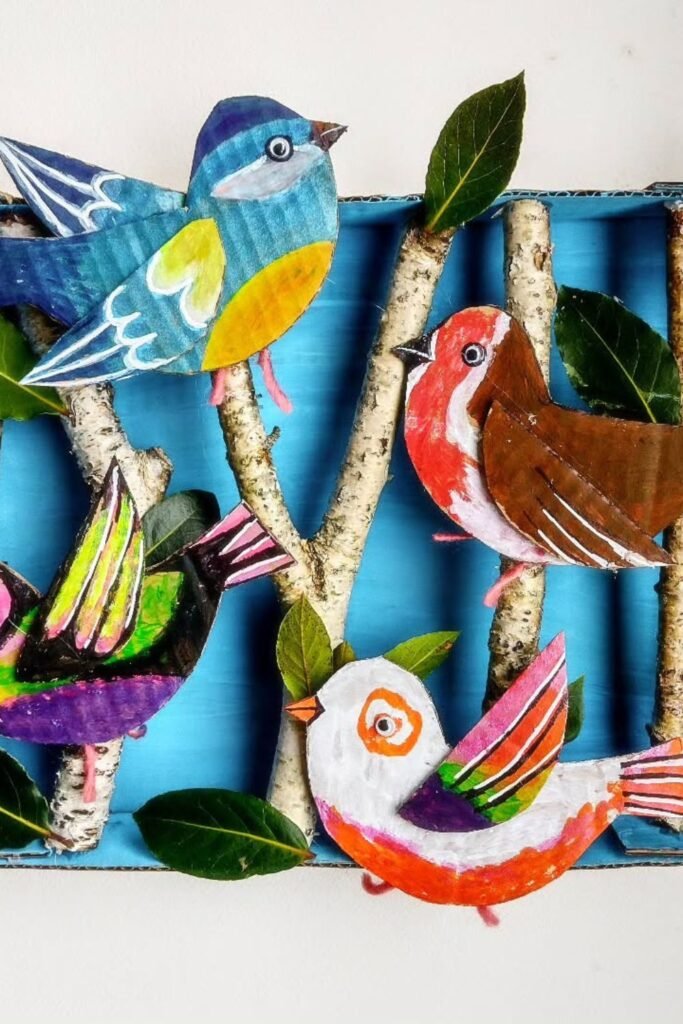
Box Habitats
Once birds leave flat material, depth is what matters. A shallow box turns into a little environment right away.
Where kids may stack branches, leaves, and birds without everything falling down. This idea is perfect for youngsters.
Who prefer to design settings and make decisions, not just decorate shapes. Before you put anything in the box, paint the inside so it looks like the sky or the forest.
Last, put the birds on the perches so they feel like they belong there. To make perches, add sticks vertically.
Real leaves make the look softer and bring nature indoors. Putting these on shelves makes each box look like a little planet that kids enjoy to talk about.
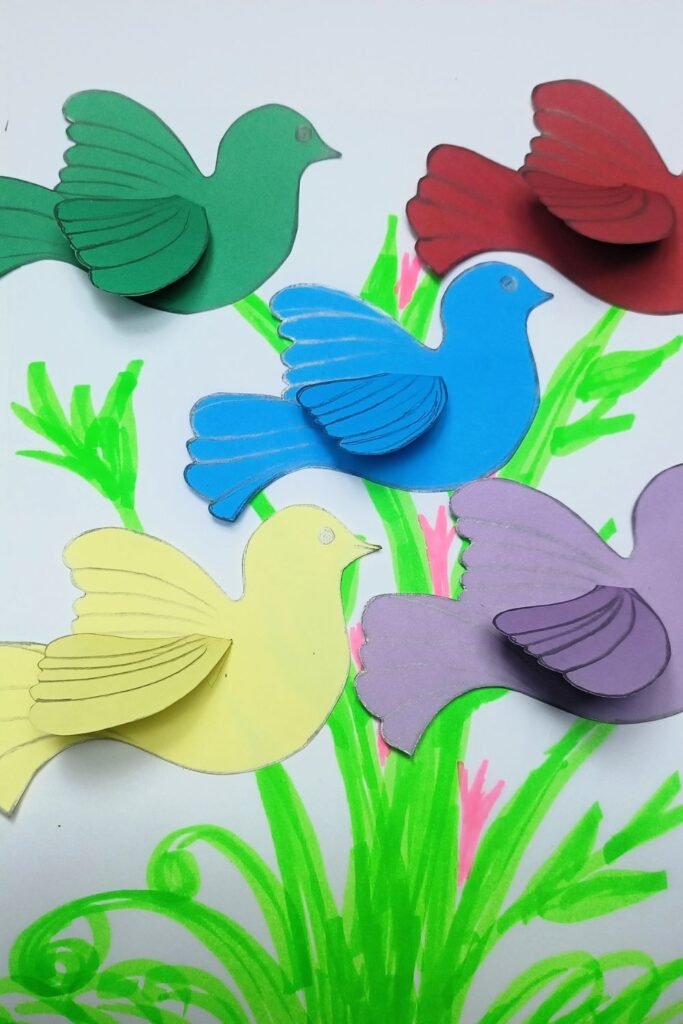
Lifted Wings
Depth shows up the moment wings stop lying flat. Folding paper wings upward gives each bird motion which keeps kids interested longer than simple cutouts.
This idea is great for spring crafts, bulletin boards, or short art sessions where you want the outcomes to look good without having to do anything extra.
First, cut out the body of the bird. Then, gradually crease the wings so they rise instead of bending forcefully.
Bright, solid colors let each bird stand out against a painted or drawn background. Gluing only the base of the wing.
Lets the remainder of the wing float a little, which helps the birds look like they are in flight instead of fixed on the paper.
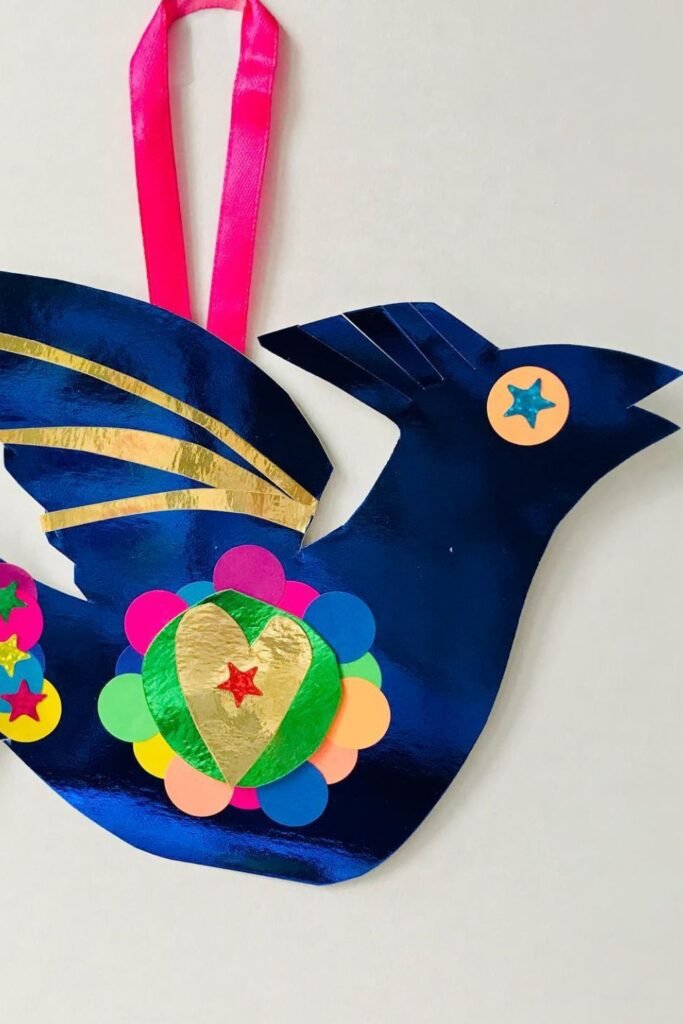
Hanging Charms
Kids treat a craft differently when it’s made of shiny paper. It feels unique, not like trash.
Metallic sheets and big forms make a plain bird into something you want to cherish and hang up.
This is a good idea for crafting gifts, for holidays, or for days when youngsters want their work to look “fancy.”
Cut the primary bird shape out of thick cardstock so that it won’t bend when you add embellishments.
Instead of adorning the whole body, add layered circles, stars, or hearts in the middle to make a focal point.
Newsprint Birds
Unexpected materials spark curiosity fast, and newspaper does exactly that.
Printed text adds instant texture. It makes even simple bird forms look detailed without any extra work.
This craft is great for group projects, lessons on how to make art out of things you already have, or days when you don’t have a lot of supplies.
Cut out the bold bird shapes first so the patterns don’t cover them up. Let the youngsters pick which pieces stay visible and which ones get painted over. Both options are fine.
The bright wings and beaks of the birds balance off the chaotic background and keep them fun.
A shared paper “branch” underneath links them together and makes each bird part of a strong picture that kids are proud to build together.

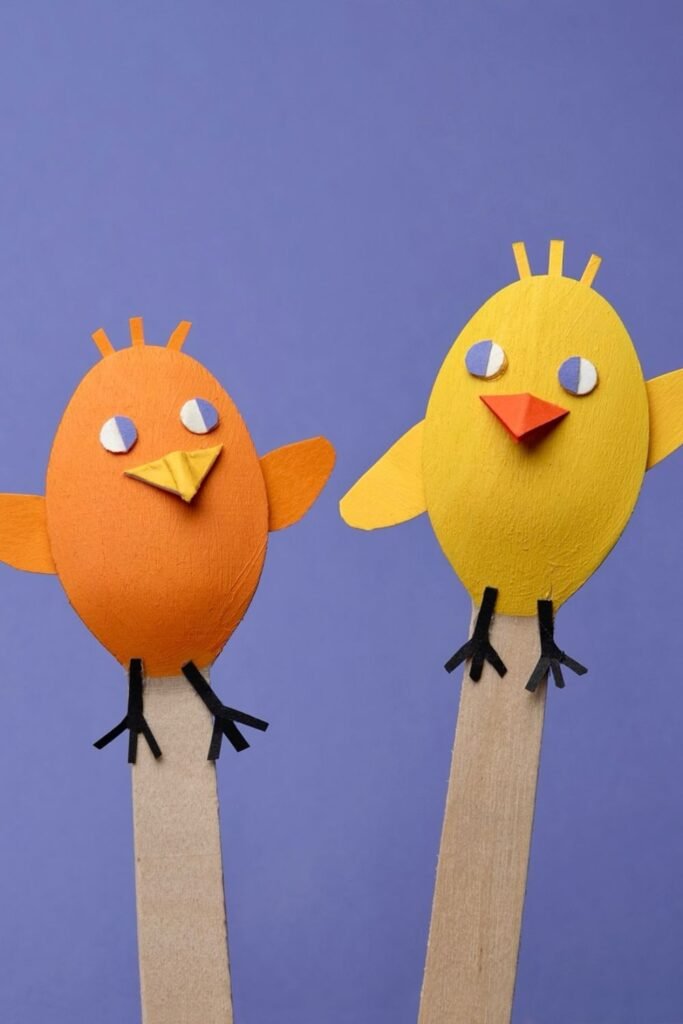
Puppet Chicks
Interaction changes everything once a craft can move. Stick-mounted birds turn simple shapes into characters.
Kids can talk with, tap, and act out. This idea is great for preschoolers who love to pretend but don’t like long craft stages.
Cutting is easy with oval bodies, and folded paper beaks make the birds look natural. Put the bird on.
After you’ve finished decorating so that nothing gets soiled. Popsicle sticks make handles right away, so the craft doesn’t stop at the table.
Kids start producing sounds, telling stories, and putting on tiny acts on their own, and that’s what keeps them coming back for more.
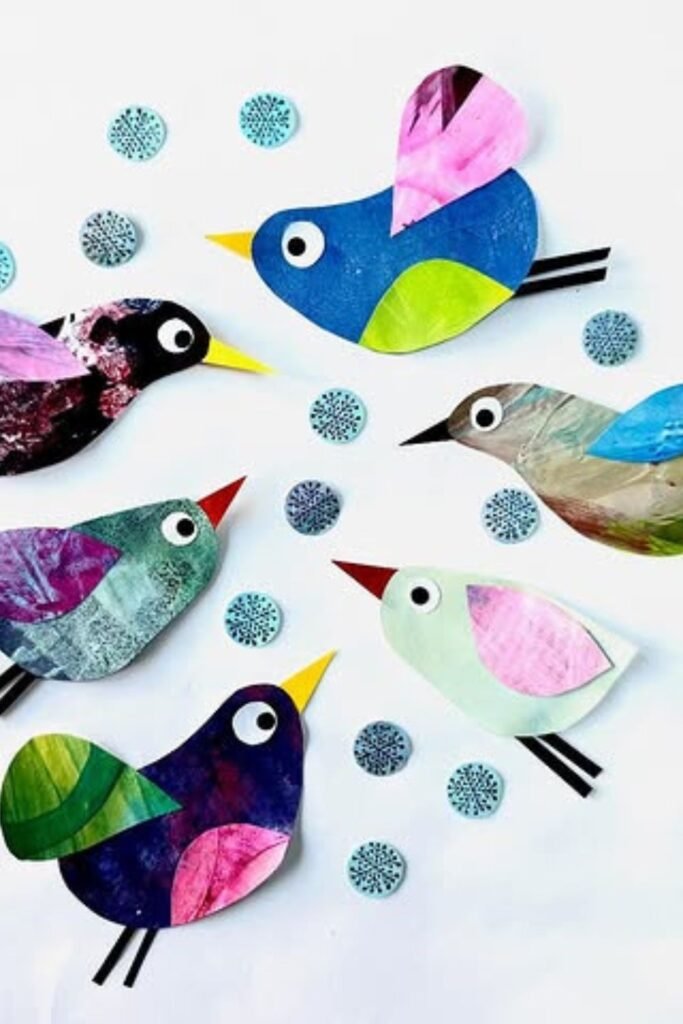
Color Flocks
Groups make ordinary birds seem like they are doing something on purpose instead of just happening.
Kids can see how colors work together when they look at small collage birds put together, not simply how one bird looks by itself.
This idea is great for walls in the classroom, art boards, or group projects where everyone does one piece.
Keep the bird shapes consistent so color choices stand out. Simple marks or dots in the background create movement without taking away from the main subject.
This will help them learn about spacing and direction. Kids can see right away that their unique decisions may still be part of something bigger when the flock joins together.
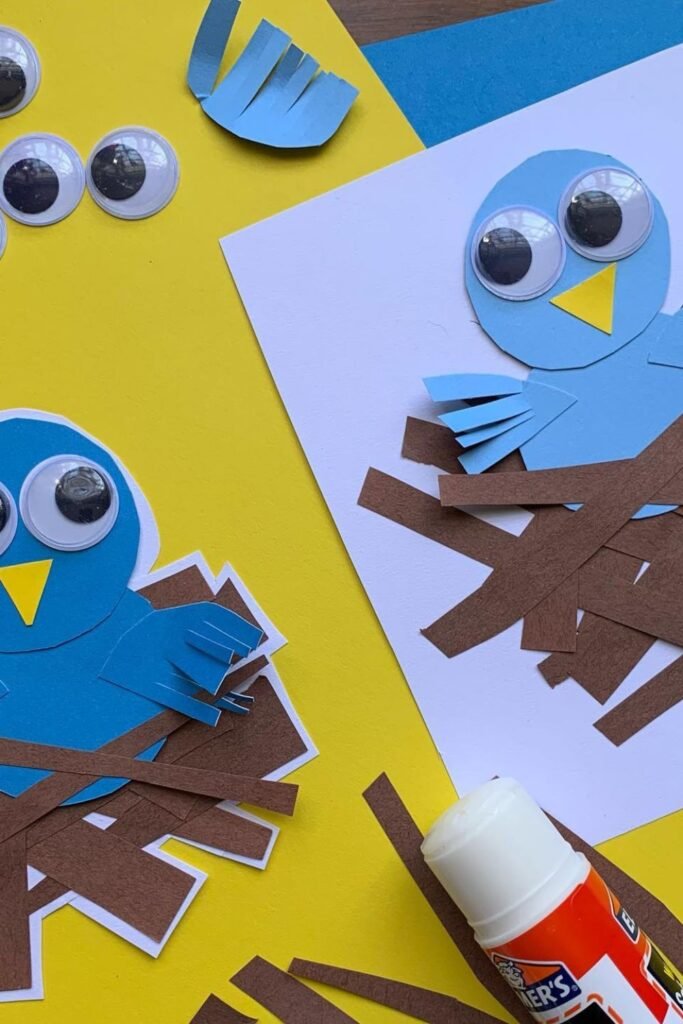
Nest Builders
Building a nest gives kids a clear purpose beyond decorating a bird. Paper strips turn into twigs fast and that hands-on stacking keeps focus longer than flat gluing.
This craft is great for kids who are just starting to learn, for spring classes, or for days when they need to work on their fine motor skills.
Put the bird body in place first so the kids don’t lose their flow. Instead of lining them up, let them haphazardly pile the brown strips.
Messy nests appear more lifelike anyway. Kids who stress about doing things “right” will feel better and funnier with big googly eyes.
When the nest is full, the bird suddenly seems safe, and that little detail makes the project feel finished.
Dot Patterns
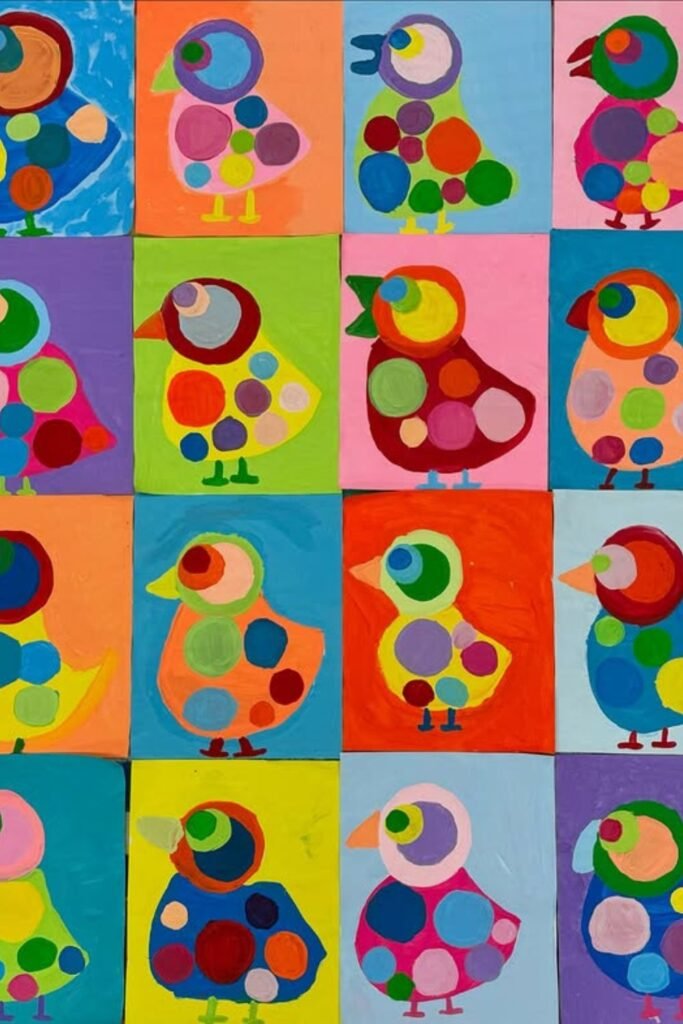
Circles remove fear from painting because there’s no “wrong” way to place them. Rounded bird bodies paired with bold dots.
Help kids focus on color play instead of perfect shapes. This design is great for group projects, classroom grids, or lessons on blending colors and patterns.
First, paint the background such that each bird looks like it is in a frame. Next, add the bird shape, and then add dots of varying sizes to make rhythm and balance.
Limiting the brush strokes to circles keeps hands stable and makes things less frustrating.
When the birds are all together, they feel like they belong, and each child’s color choices are still on display.
Clay Minis
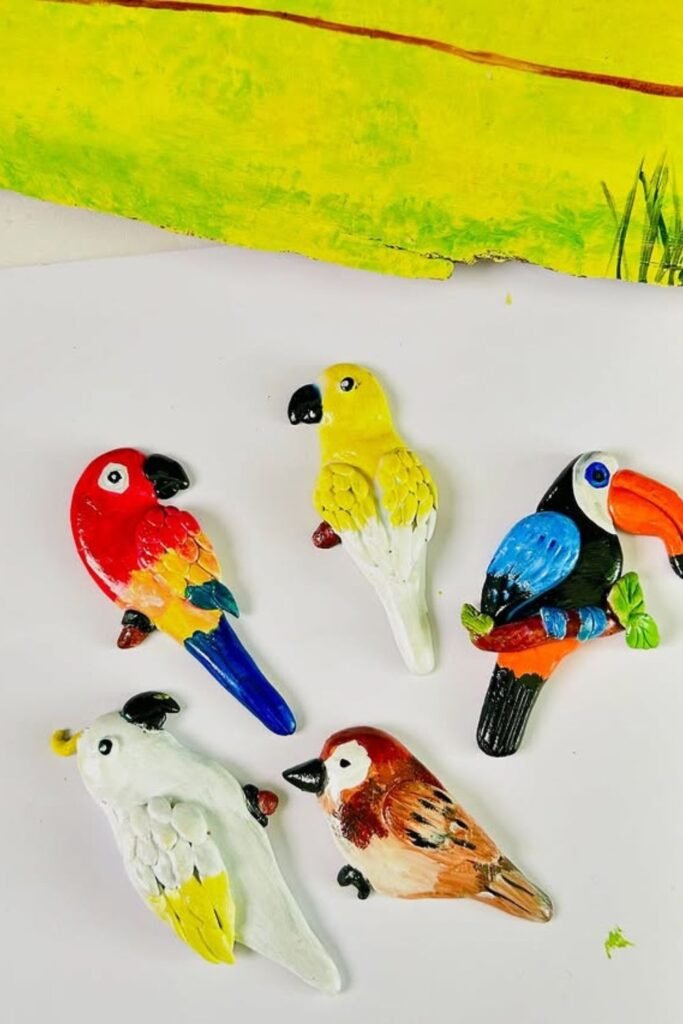
Weight changes how kids value a craft, and clay does that instantly. Small molded birds feel solid in the hand, which makes kids slow down and care about details.
This idea works well for older kids or groups of kids of different ages where they can wait and let things dry.
Use simple ovals to shape the body first so that the proportions don’t get too hard. Instead of carving deep, press feather lines softly.
This makes the paint show texture better. Even if the shapes are simple, bright colors add personality quickly.
These birds make great shelf decor paper weights and magnets once they are dry. This way kids can have something that last instead of just a one-day project.
Feather Folds
Soft feathers turn a simple paper bird into something kids want to touch and keep. Folded paper bodies give instant shape, so the craft never feels confusing or slow.
This idea works well for younger kids, birthday parties, or quick wins when kids don’t have a lot of time to pay attention.
Use colorful paper so the bird shines out even before you add any details. Instead of cutting too much, draw simple wing lines.
Less cutting means less aggravation. Put feathers in the glue at the tail to make it move and feel interesting.
Kids feel like they’ve built a “real” bird, not just another paper cutout, as soon as they put on the feathers.

FAQs
How do I stop bird crafts from looking flat or boring?
When everything is on one layer, flat crafts frequently happen. This can be fixed quickly with small adjustments. Instead of attaching the wings flat, fold them.
You can also arrange paper pieces from big to little or add texture with things like feathers, tissue paper, or cardboard.
What’s the easiest way to keep kids interested until the craft is finished?
Set a goal for the craft early on. Hanging displays, branches, nests, or scenes are better than just one cutout.
It also helps to start with a clear body structure. Once they know what the bird is, they want to finish it.
Hi, I’m Afaf! I’m a law student who loves writing about everyday life – from home projects and crafts to fashion, beauty, and parenting tips.
I’ve been writing for over a year, sharing ideas that are simple, practical, and easy to try. I write about things I find interesting and useful, whether that’s organizing a space, trying a new DIY, or finding activities to keep kids entertained.
My goal is to share helpful ideas without making things complicated. If it works in real life, I’ll write about it.
When I’m not studying or writing, I’m usually experimenting with new projects or scrolling for inspiration!