
30 Farm Animal Crafts Ideas for 2026
If you’ve ever attempted a farm animal craft project with a classroom full of students, you’re likely familiar with the typical outcome.
A seemingly ideal idea found online often translates into a chaotic, perplexing, or overly complex experience for many children.
You don’t necessarily need a “cute” craft; you need one that functions effectively in a classroom setting.
This article highlights 30 Farm Animal crafts for kids that are quick to prepare and fun to create in 2026.
Let’s jump in!
Which Farm Animal Craft Ideas Are Perfect For Classroom Activities?
Farm animal crafts thrive in classrooms when they’re straightforward, adaptable, and easy to oversee with a bunch of children.
Crafts that require constant intervention or lengthy explanations are doomed to fail. Successful ideas utilize readily available materials.
When you select crafts that do not require flawless execution, kids remain engaged and self assured.
The following sections will showcase specific farm animal crafts that are well-suited for classroom use, along with the reasons they resonate with actual students.
Save this article for later!👇👇👇

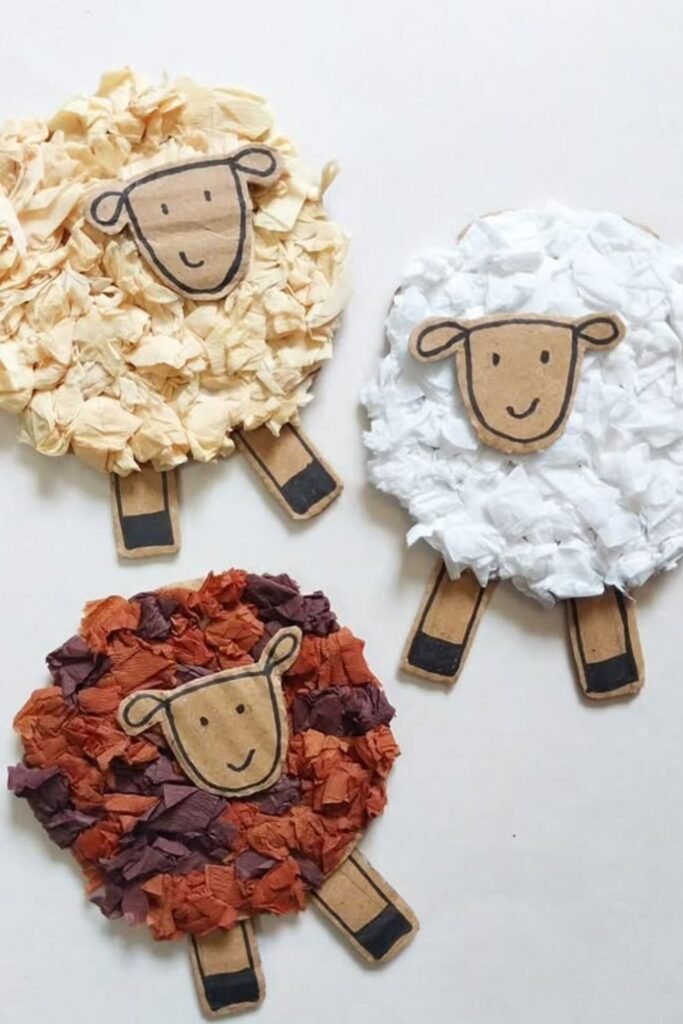
Tissue Sheep
Soft textures instantly pull kids in, which makes this sheep craft perfect for calm classroom time.
Scrunched tissue paper creates the desired wooly texture, and the beauty of it is that it doesn’t require any special skill ensuring every child can get it right.
Start with paper plates or cardboard circles as your foundation, and then let the kids go wild with the glue and the torn paper.
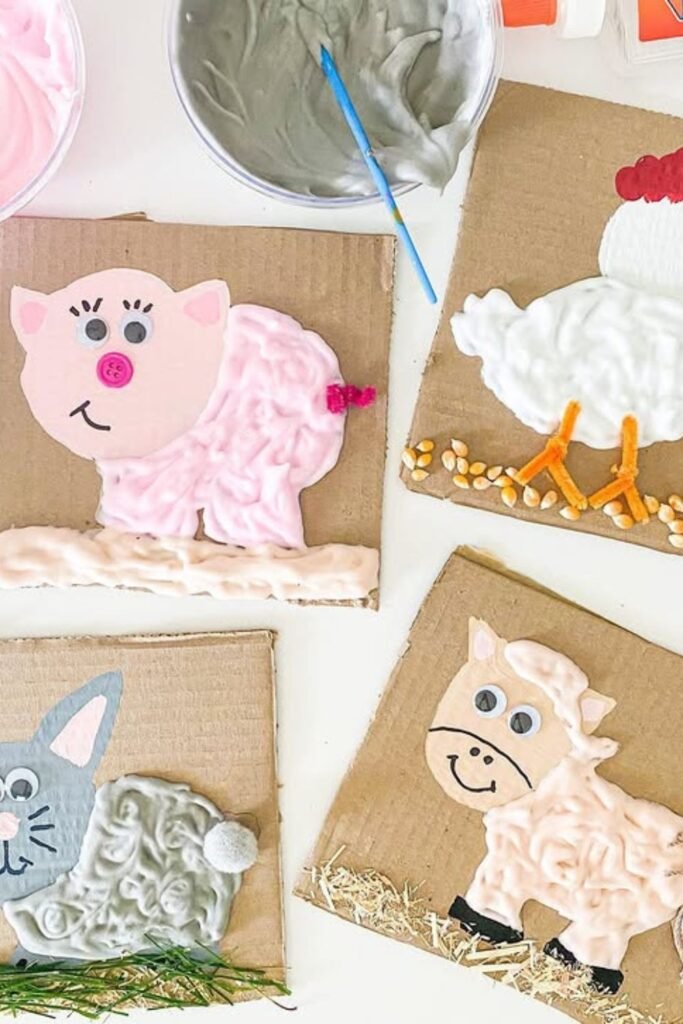
Textured Animals
Thick paint turns simple farm animals into a hands-on sensory activity kids remember. Mixing paint to a creamy.
The spreadable texture allows children to “construct” pigs, chickens, or sheep right on cardboard.
This is ideal for classrooms that want to integrate art with sensory play particularly during farm themed units or stations where kids rotate and work independently.
Puffy Animals
Round, squishy shapes turn farm animals into instant play pieces kids want to touch and move. Lightweight bases like paper balls.
Foam forms are a good choice especially when wrapped in tissue paper, cotton, or feathers.
Its the little elements that make each animal feel real, with out going overboard.
This concept is perfect for the classroom corners where completed crafts become props for imaginative farm games or storytelling sessions.
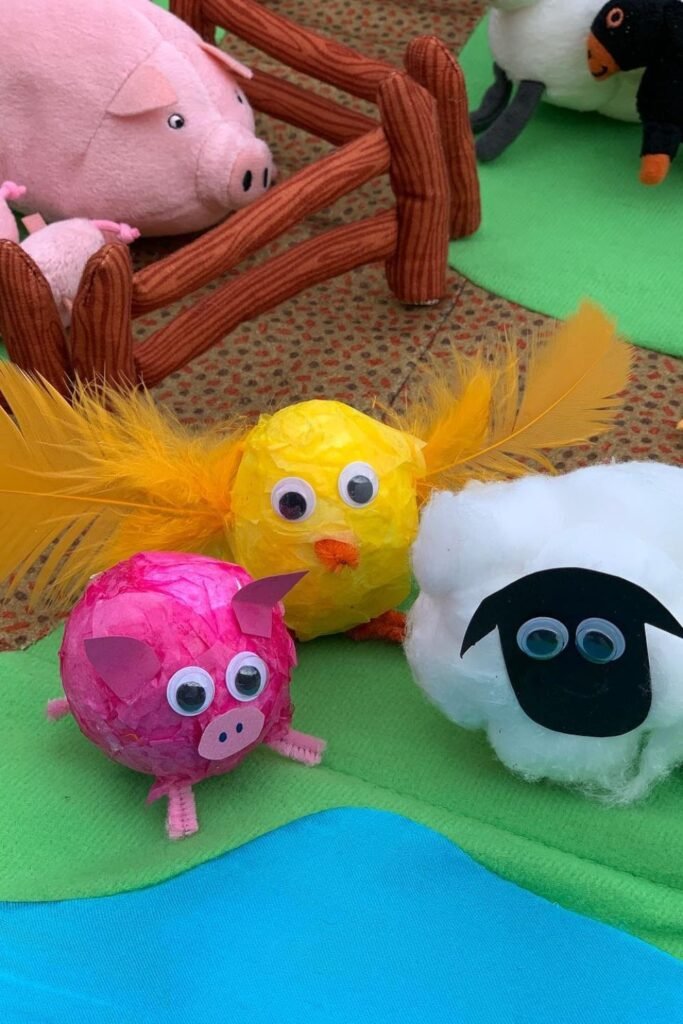
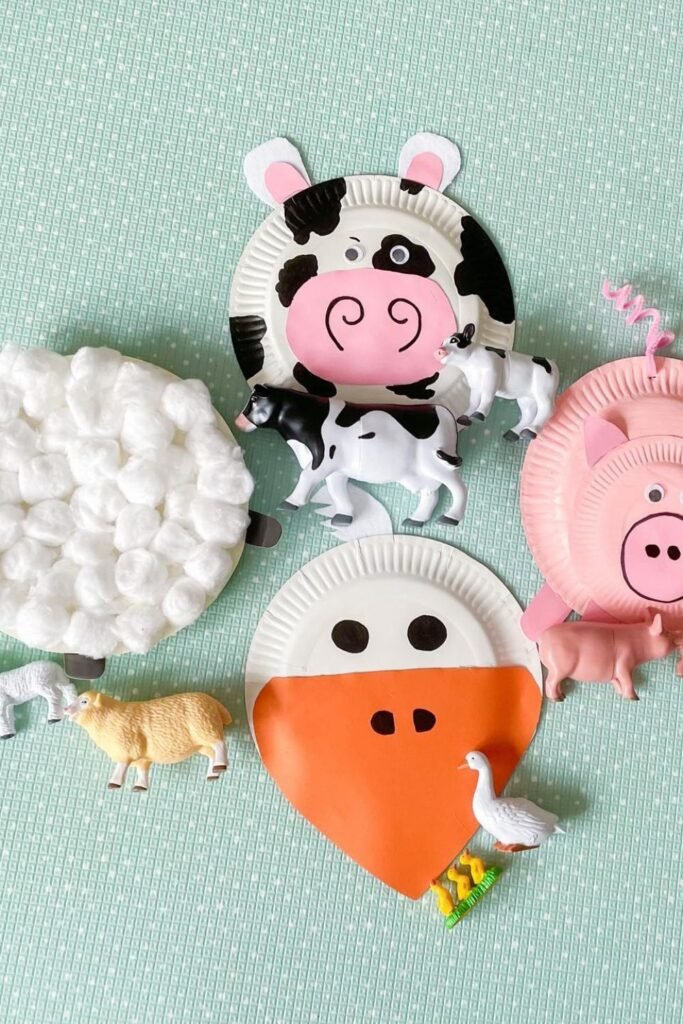
Plate Animals
Paper plates turn into instant animal faces which makes setup fast and stress-free for classrooms.
Bold, simple shapes think cow spots, pig snouts, or the fluff of sheep make it easier for children to identify animals without getting bogged down in the specifics.
Begin with plates painted or colored in, then add cut-out paper features or cotton to create texture.
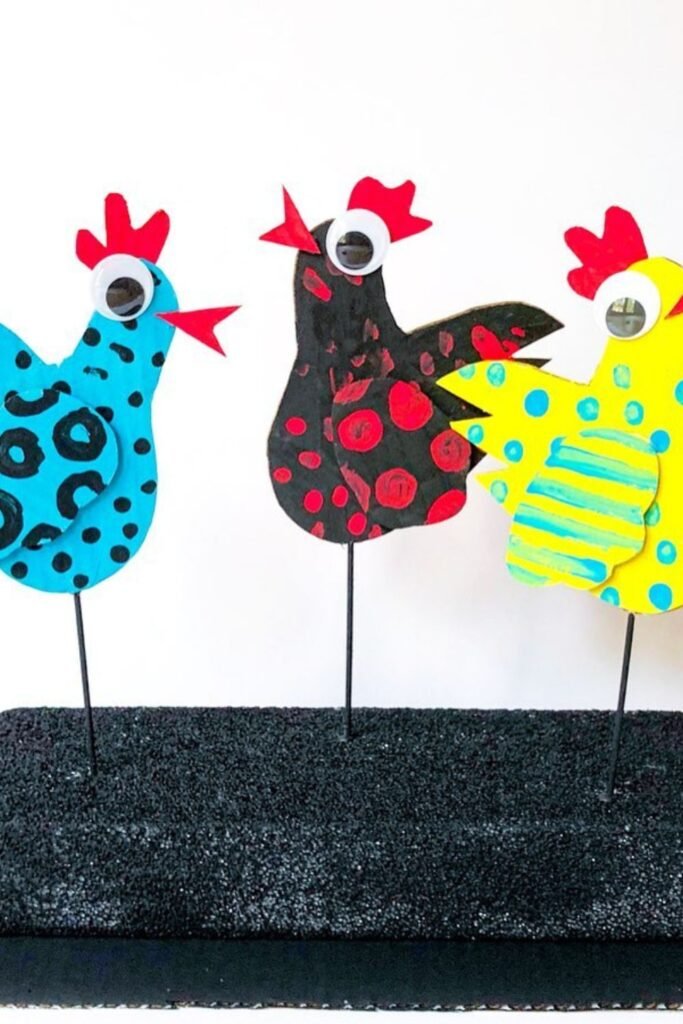
Stick Chickens
Bright colors and bold shapes make these chickens impossible to ignore, which keeps kids engaged from start to finish.
Flat cutouts affixed to sticks, transform painting into a concentrated endeavor, offering a distinct purpose.
Cardstock or foam sheets are ideal ensuring the birds remain upright when positioned in clay or foam blocks.
Milking Play
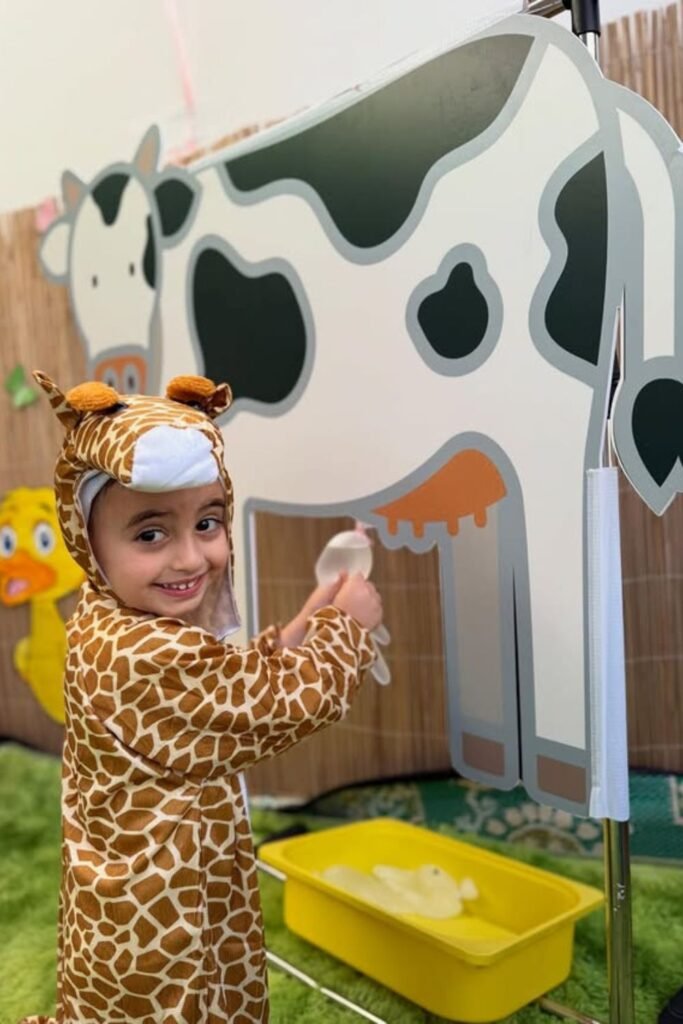
Hands-on role play pulls kids straight into farm life without sitting them down. A simple cardboard cow, a glove filled with water.
And a little tub may transform imaginary play into a genuine learning experience. Children squeeze pour and repeat.
This approach shines on farm days or in outdoor school settings and where movement, laughing and a bit of mess are all part of the curriculum.
Egg Sorting
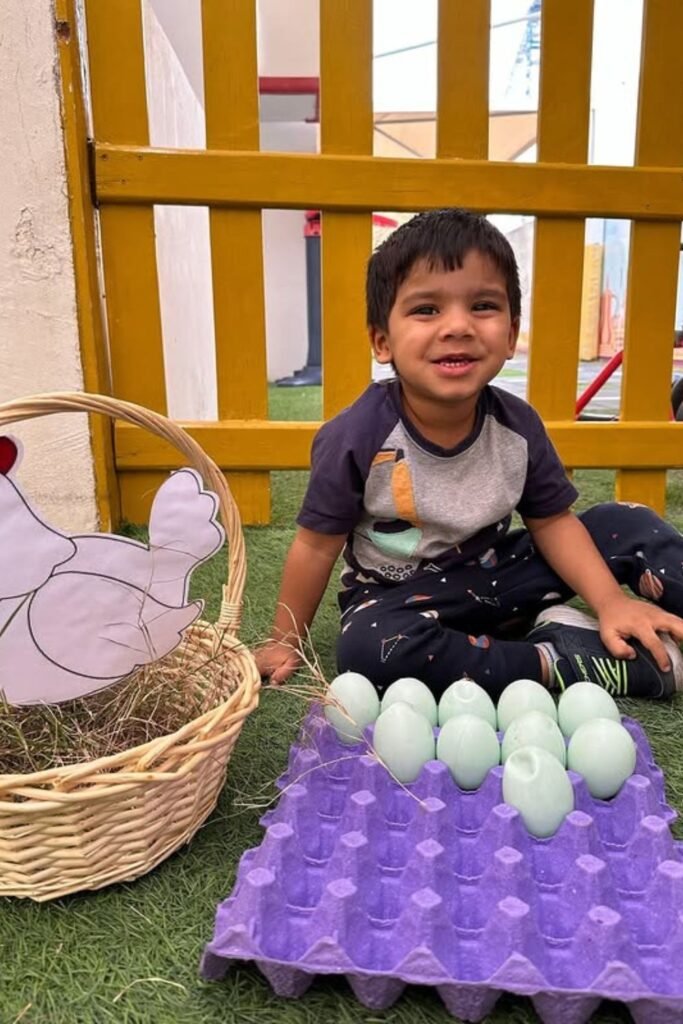
Busy little hands love a task with a clear goal, and moving eggs never gets old. Plastic eggs or painted ones placed in cartons.
Turn farm play into a sorting and counting activity. Kids can sort by color, pack cartons or gather eggs into baskets.
This approach is particularly effective for toddlers and preschoolers during farm-themed activities, where movement and play are key to learning.
Roll Animals
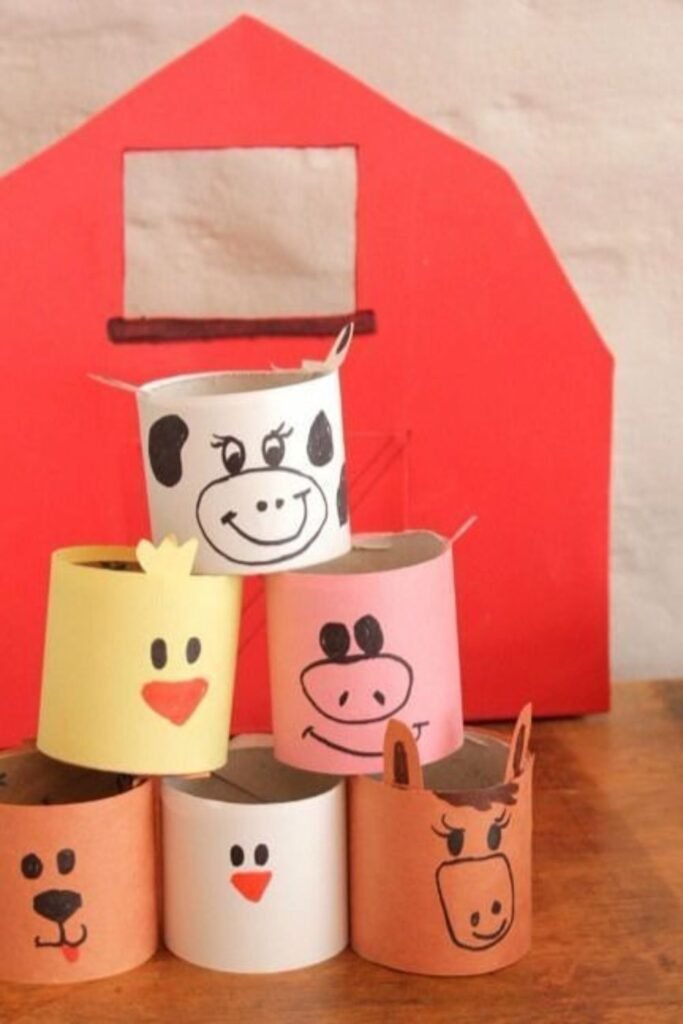
Stacking farm animals adds a playful challenge kids don’t expect from a craft. Empty toilet paper rolls become faces first.
Sketch up some basic elements, using simple, strong shapes, and let the kids determine the height of their farm tower.
This approach works well in classes that are looking to combine art with problem-solving, all without needing extra supplies or creating a mess.
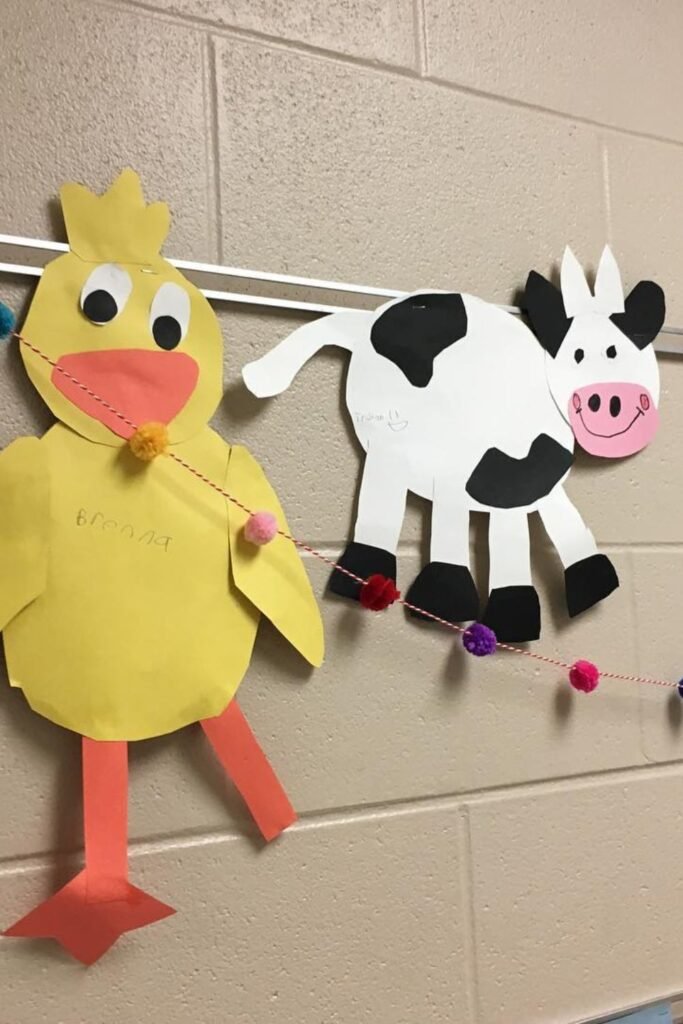
Wall Garland
Classroom walls come alive once kids see their own farm animals hanging up together. Large paper cutouts.
Keep the emphasis on shapes and colors, avoiding intricate details to ensure everyone can participate.
Connecting animals in a garland fosters a sense of collaboration without descending into disorder.
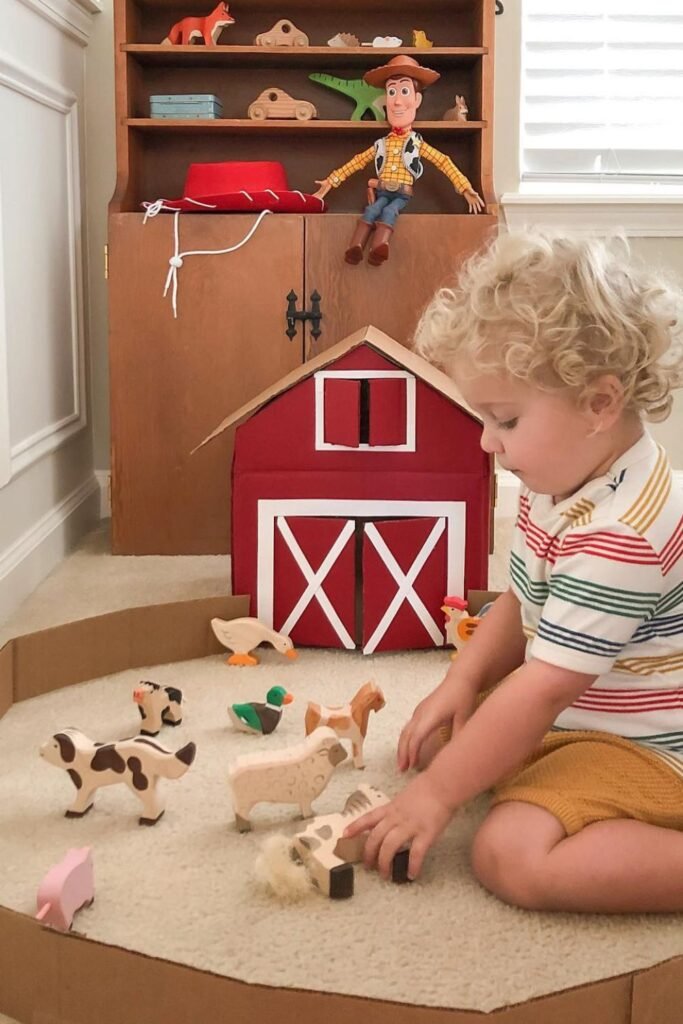
Farm Play
Open-ended farm setups invite longer play than most crafts ever will. Cardboard borders, a simple barn.
Wooden or handcrafted animals may transform a space into a world that children revisit constantly.
Arrange them on the floor, allowing youngsters to wander about freely and construct narratives at their own speed.
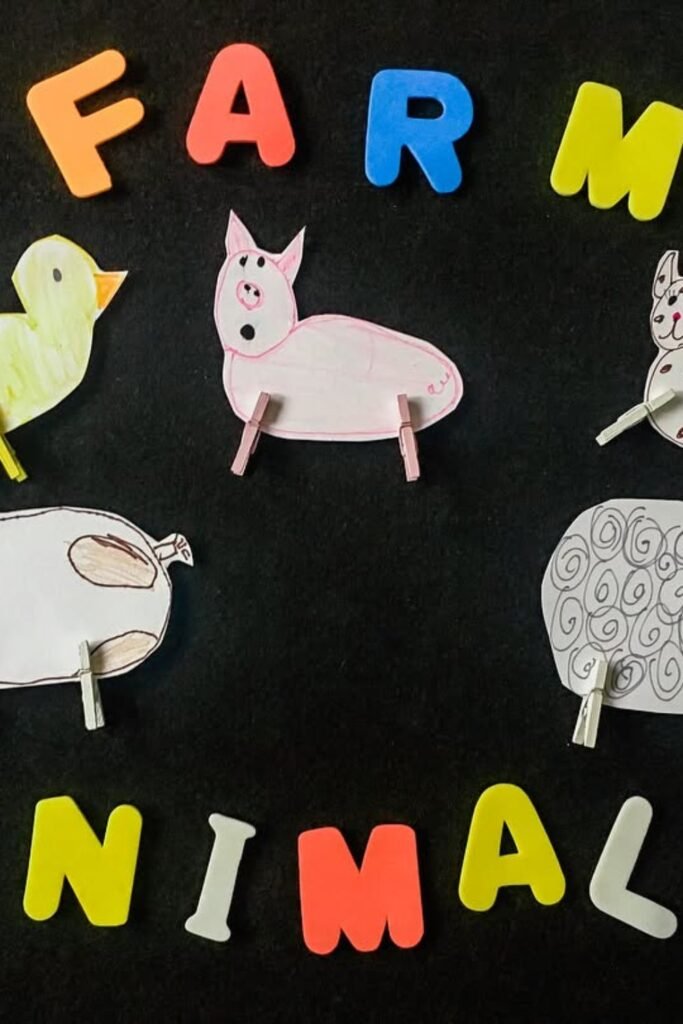
Clip Animals
Movement changes everything here. Paper animals clipped with clothespins turn drawing into something kids can touch, stand up, and rearrange.
The clips serve as legs subtly integrating fine motor skills exercise without it feeling like a chore.
This concept is ideal for bulletin boards, felt walls or tabletop play during farm-themed lessons. Children like repeatedly modifying and showcasing their animals.
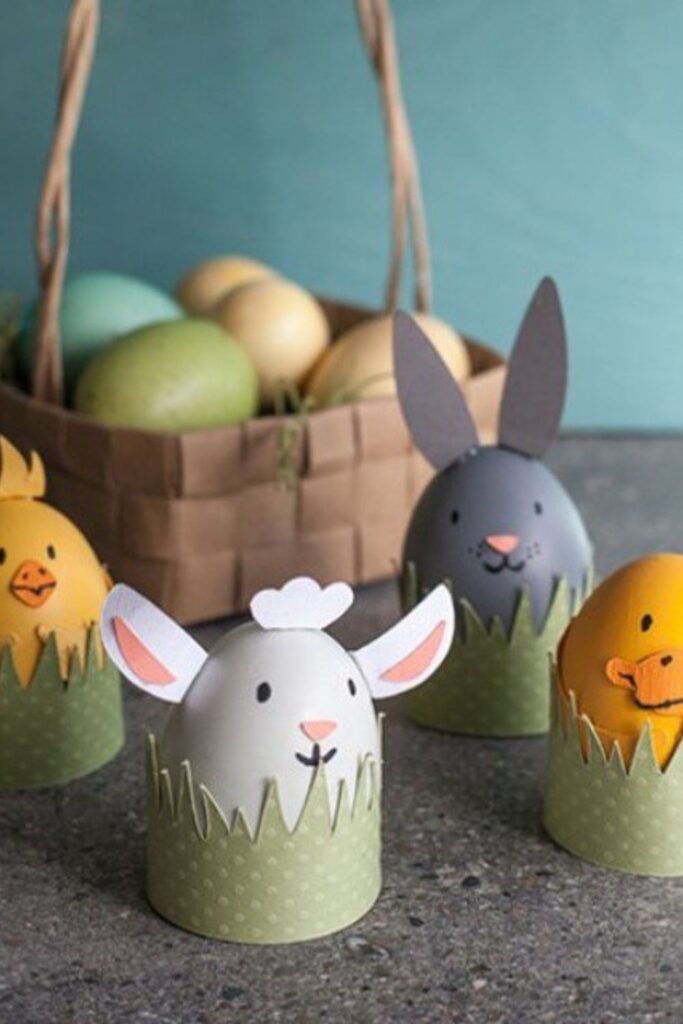
Egg Animals
Cracking open creativity feels extra fun when eggs turn into farm friends. Painted eggs slip into paper grass sleeves, giving chicks, lambs or ducks an instant home.
Lightweight materials offer a straightforward approach, although the outcome retains a certain charm.
This technique shines particularly in spring or farm-themed units, when children delight in meticulous painting and witnessing how a single.
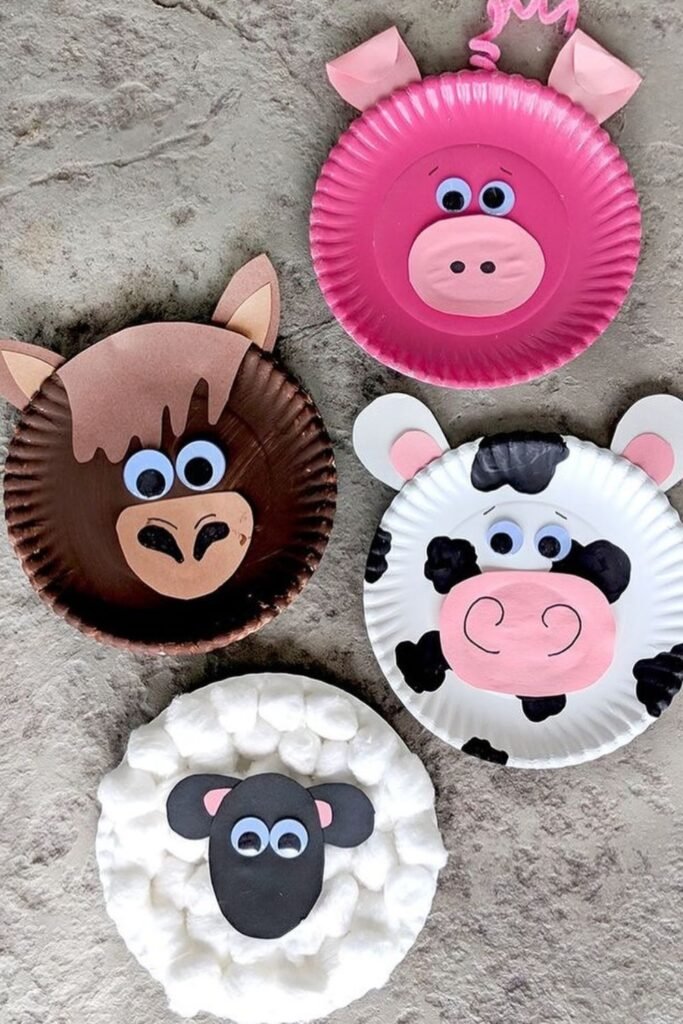
Animal Faces
Instant recognition keeps kids confident, and bold farm faces do exactly that. Simple paper plates become pigs, cows, sheep, or horses.
With just paint and a few cut shapes. Concentrate on the major elements, not the minutiae to keep everyone engaged.
This approach is particularly effective with large groups, during rapid craft sessions or when you need completed projects available for display before interest wanes.
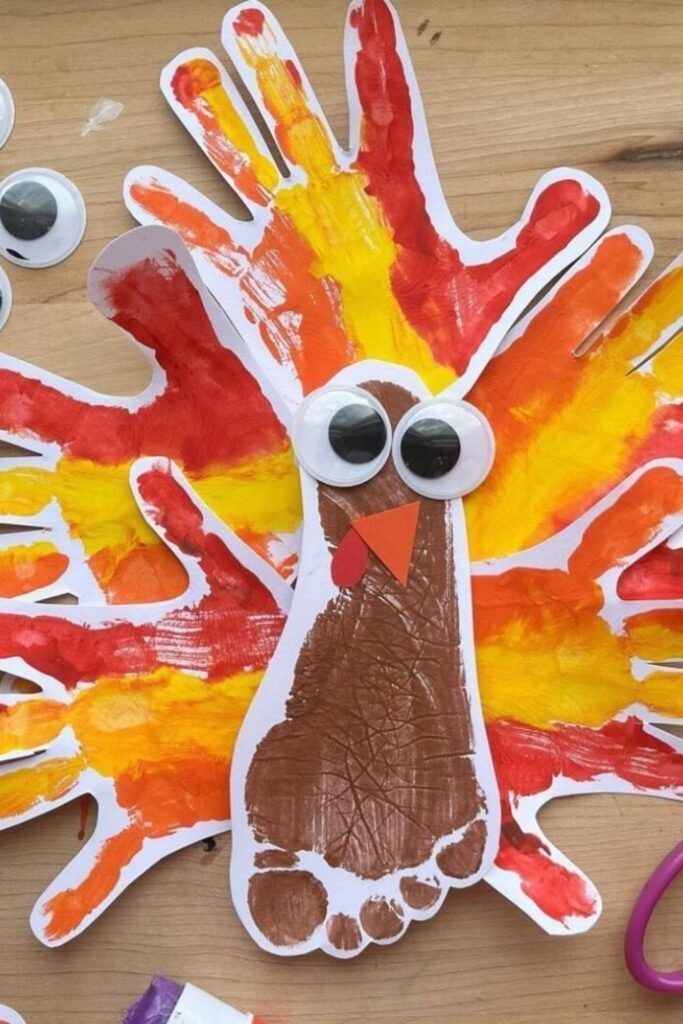
Handprint Turkey
Little hands do all the work here, which is exactly why kids love it. Layering painted handprints builds big bold feathers with out needing careful control.
One footprint or an oval shape provides the foundation and then the real creativity begins.
This approach works particularly well for those chaotic painting sessions or seasonal farm-themed activities.
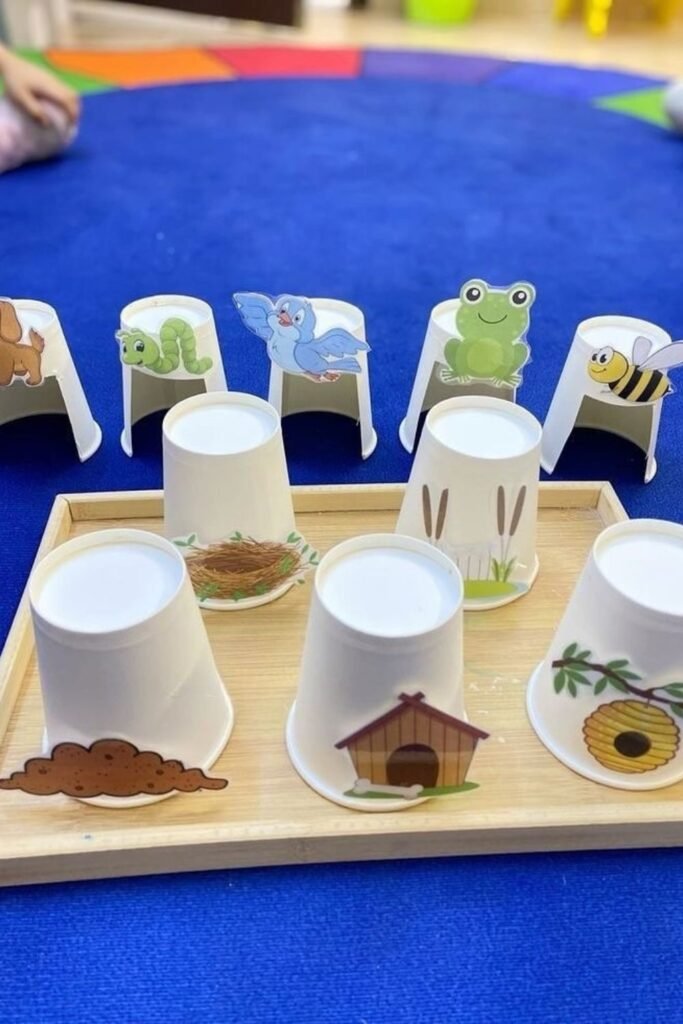
Cup Habitats
Curiosity kicks in the moment kids start lifting cup to see what’s hiding underneath. Turn paper cups upside down add simple farm or animal stickers.
Then, have the kids pair animals with their correct habitats. The whole thing feels more like play than a formal lecture.
It’s particularly effective during circle time or at learning stations, where keeping their attention is key and engagement is the goal.
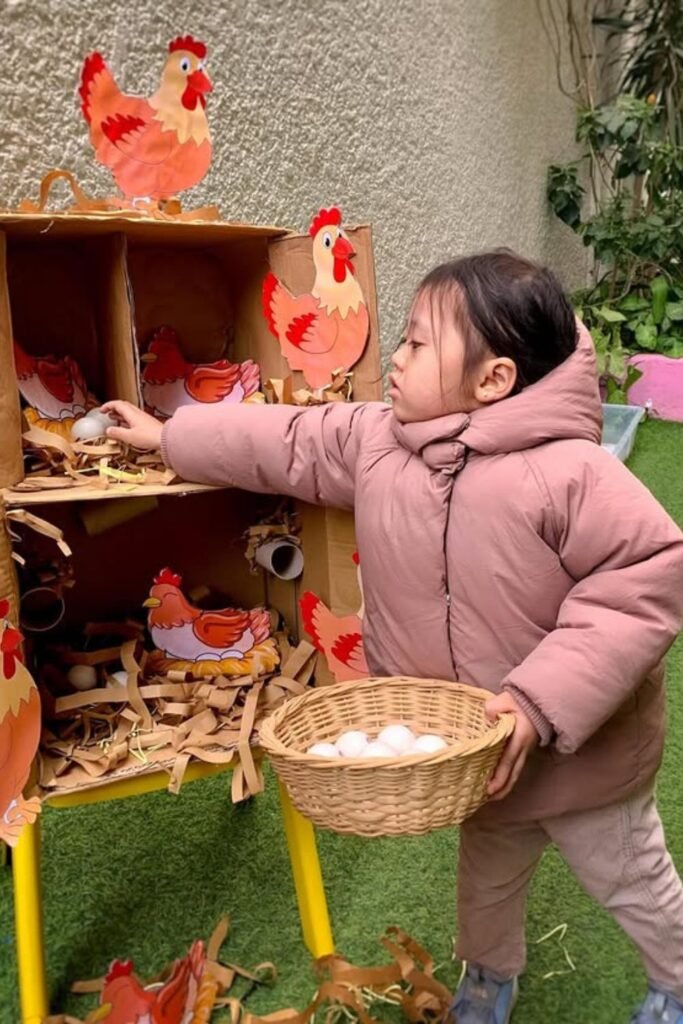
Chicken Coop
Egg collecting turns pretend play into a purposeful task kids instantly understand. A cardboard coop filled with paper hens.
Shredded paper, with its inviting texture begs to be sorted, carried, and handled with care.
This setup is ideal for outdoor play or in classroom nooks where role playing allows toddlers to practice coordination, patience, and basic farm tasks.
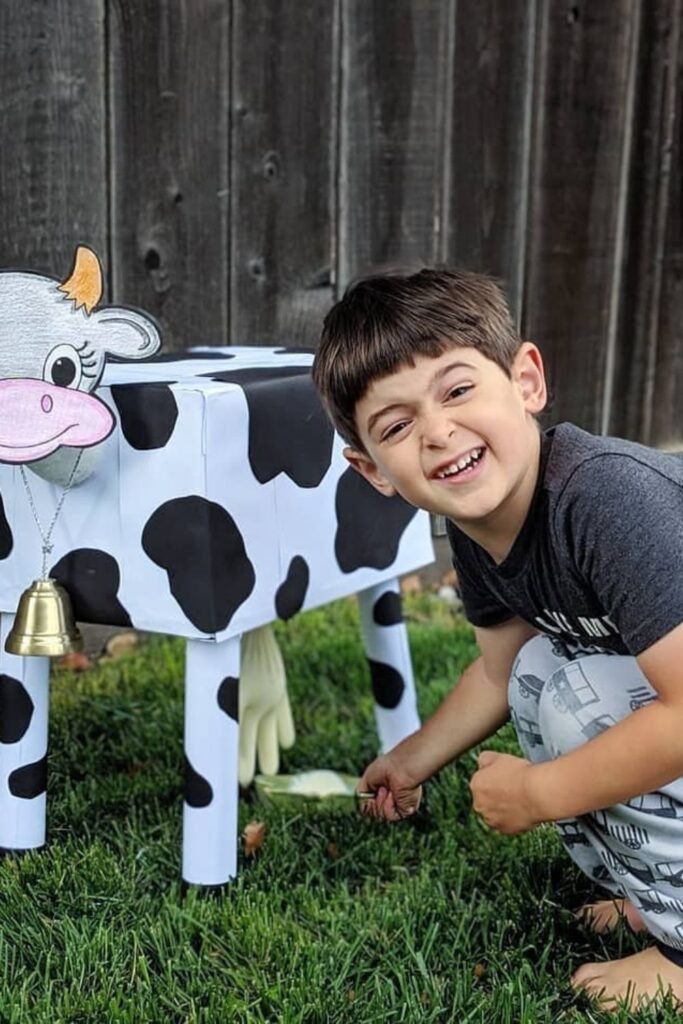
Box Cow
Large-scale crafts have a way of transforming play and a cardboard cow is a perfect example.
The box provides a solid foundation for kids to engage with, while basic paper spots and a drawn-on face keep the construction simple.
This project is ideal for outdoor settings or spacious classrooms, where movement, laughter, and hands-on farm fun are welcome.
Cow Puppet
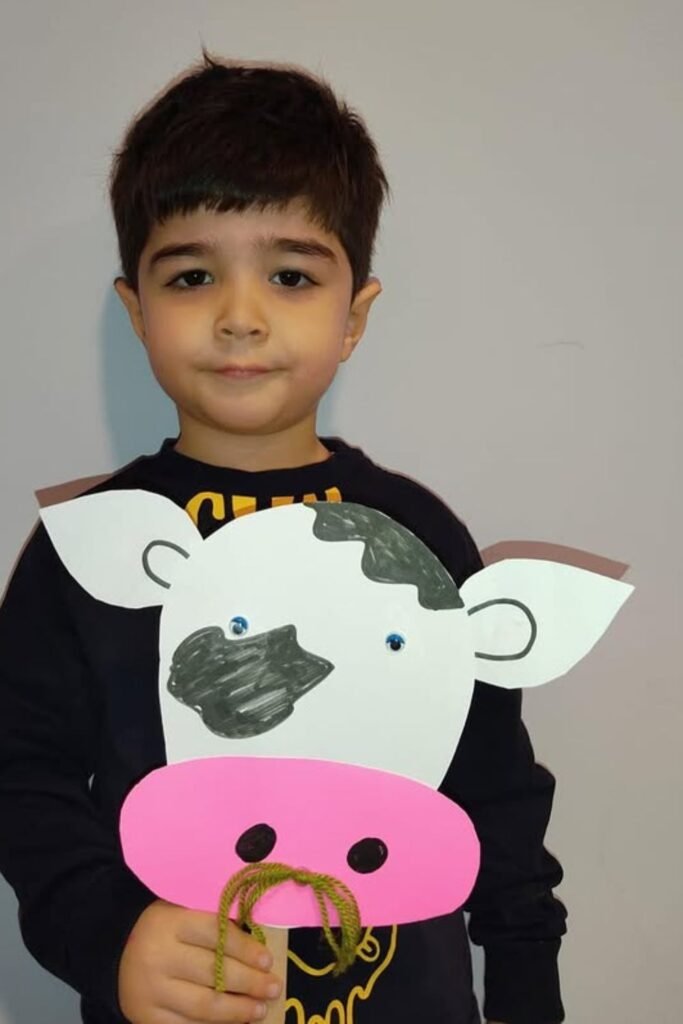
Instant interaction makes this craft feel alive the moment its finished.
A flat cow face attached to a stick turns drawing and cutting into a talking prop kids love using.
Keep the characteristics prominent so they pop out visually. This approach is particularly effective during storytelling sessions, circle time or farm songs.
Where kids can physically engage with the animals, moving them around and speaking for them with out needing any complicated preparations.
Feather Basket
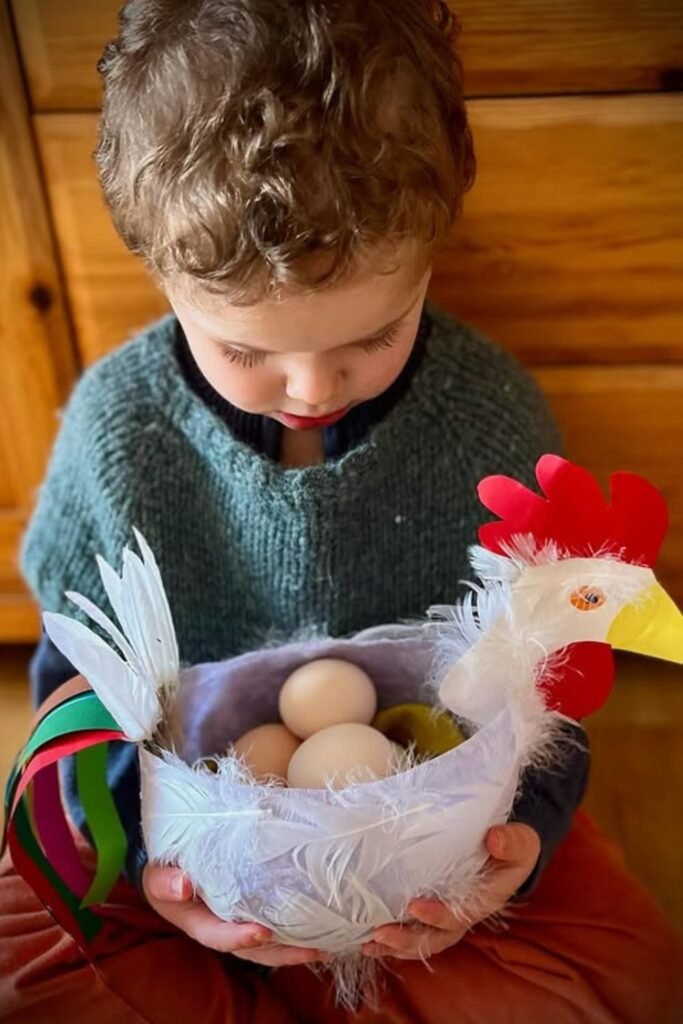
Soft feathers instantly slow kids down and invite gentle handling. A simple bowl or paper basket wrapped with feathers.
Transform egg play into a gentle, nurturing experience, moving away from the usual boisterous antics.
Incorporating a chicken head cutout reinforces the farm motif.
This approach is perfect for quiet spaces, sensory exploration or any time you want children to be calm, focused, and completely absorbed, without the need for speed.
Foam Matching
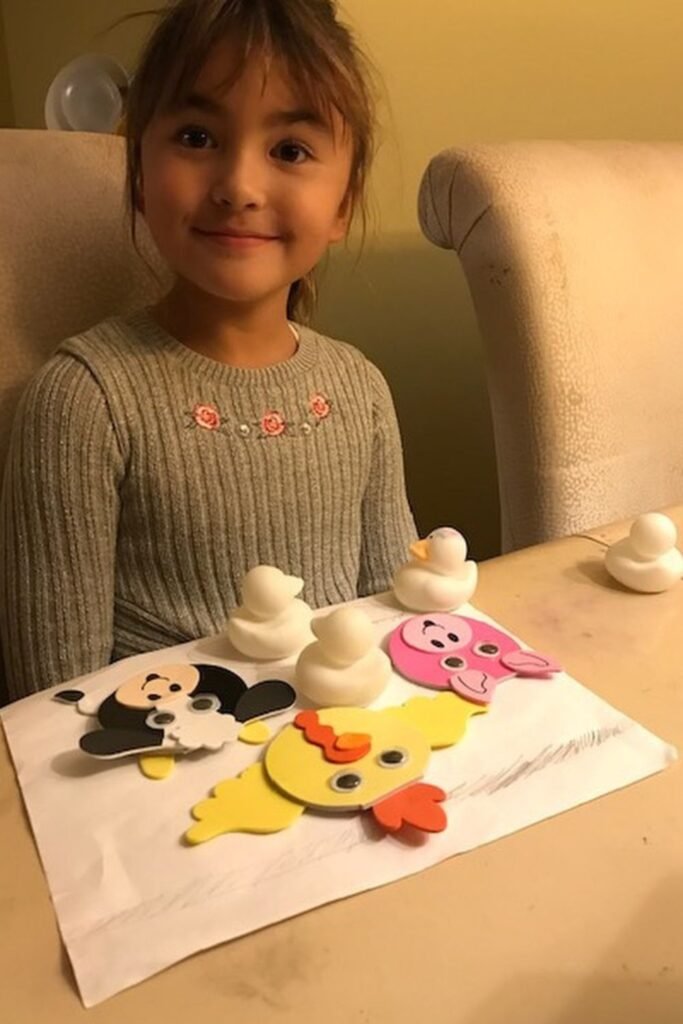
Choice drives engagement here. Soft foam animal faces laid out on a board invite kids to match, sort, or build on top without being told what to do.
Lightweight components simplify the process of rearranging, which in turn minimizes irritation and maximizes concentration.
This approach is particular effective in settings like tables or learning centers and where children operate at varying paces.
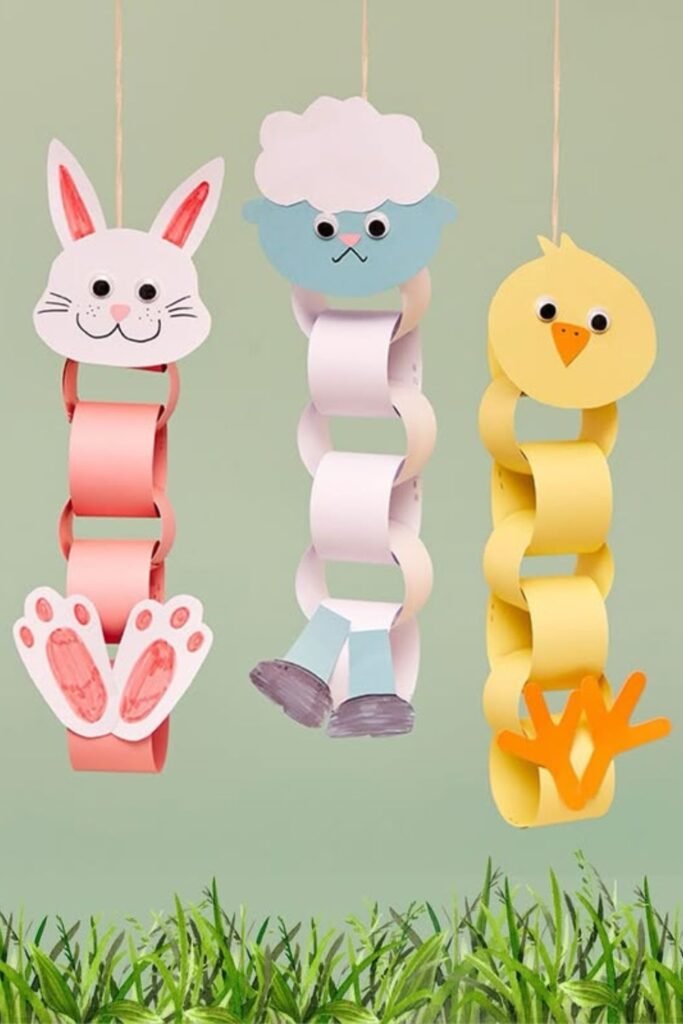
Hanging Chains
Vertical movement instantly changes how kids interact with a craft. Paper chains shaped into farm animals turn cutting and looping into something playful and satisfying.
Linking strips cultivate patience and the hanging display offers children a chance to gaze upward appreciating their creation.
This approach is ideal for placement near windows, ceilings or doorways, transforming classroom projects into integrated elements of the environment.
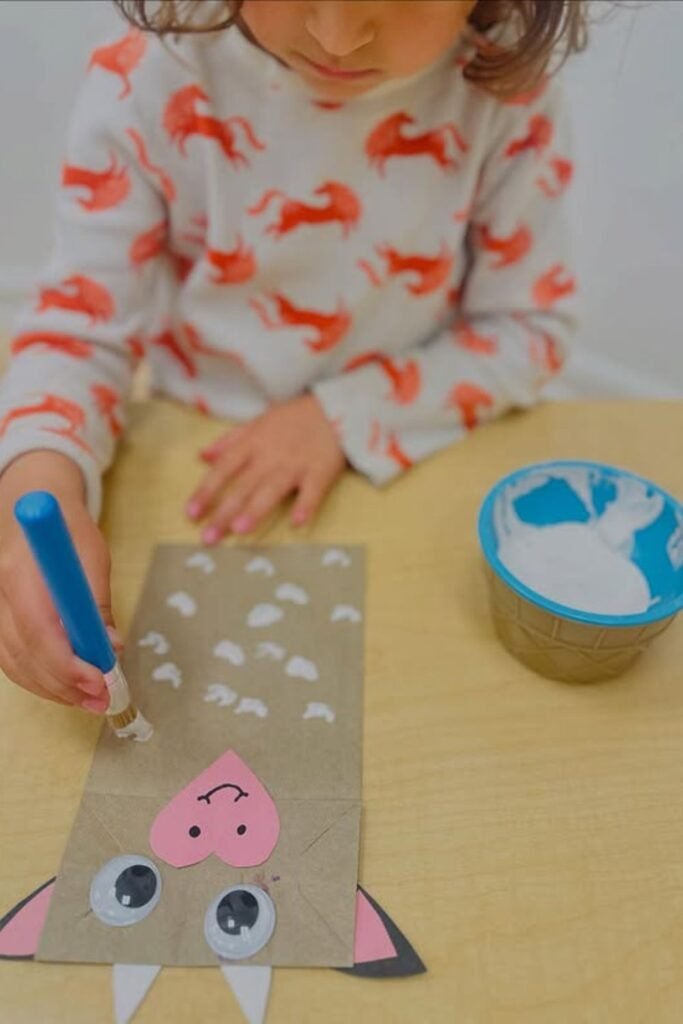
Paper Pig
Stamping little dots feels playful while quietly building control. A simple paper bag becomes a pig once kids add paint marks, big eyes and floppy ears.
The open base allows little hands to reach in and manipulate the puppets once they’re finished decorating.
This approach is particularly effective at tables where children need a structured activity to start followed by a playful reward.
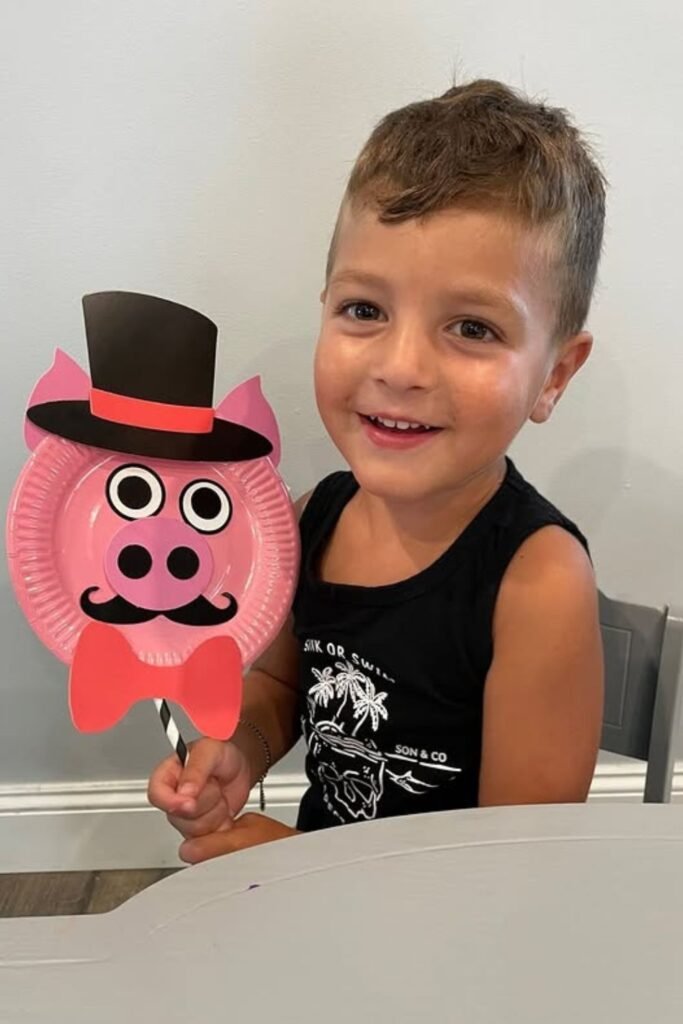
Pig Puppet
Dress-up energy sneaks into craft time with a playful pig on a stick.
A paper plate face, bold features and a silly hat turn cutting and gluing into instant character play.
Keep the pieces large enough that kids can put them together independently. This works particularly well.
During music, storytelling, or show-and-tell, when children enjoy having their animal creations “speak” and put on a show for everyone.
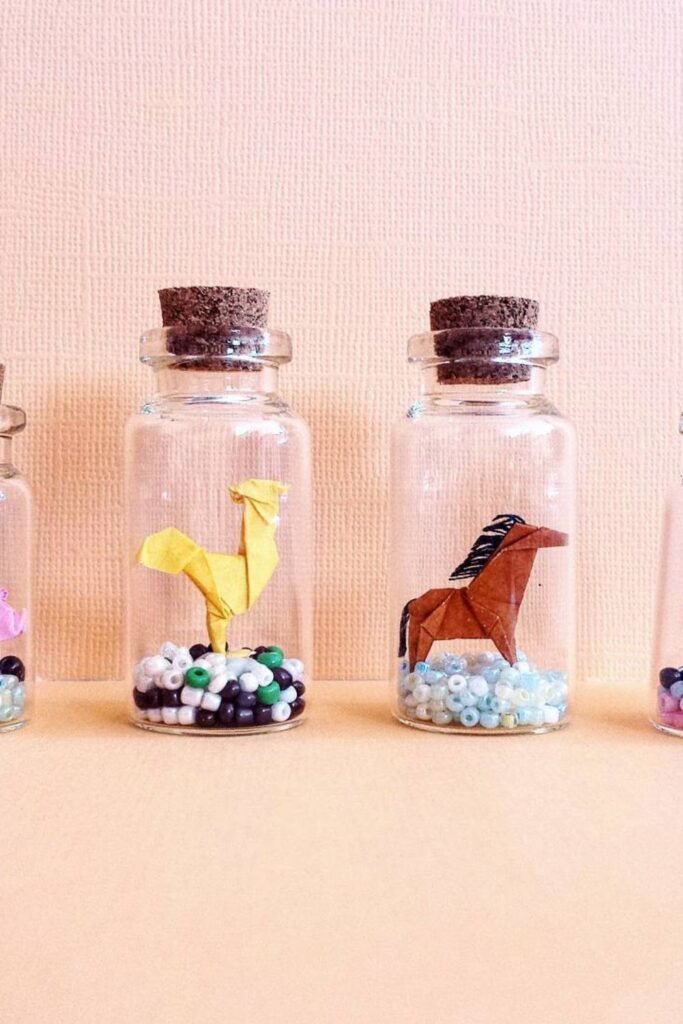
Animal Bottles
Tiny worlds spark big curiosity, especially when animals live inside jars. Small paper or folded figures sit on beads, rice or sand.
Turning each bottle into a silent exploration piece. Transparent containers allow children to shake, examine and observe without making a mess.
This approach is particularly well-suited for peaceful centers, shelf displays or times when children need a quiet, engaging activity that doesn’t create noise.
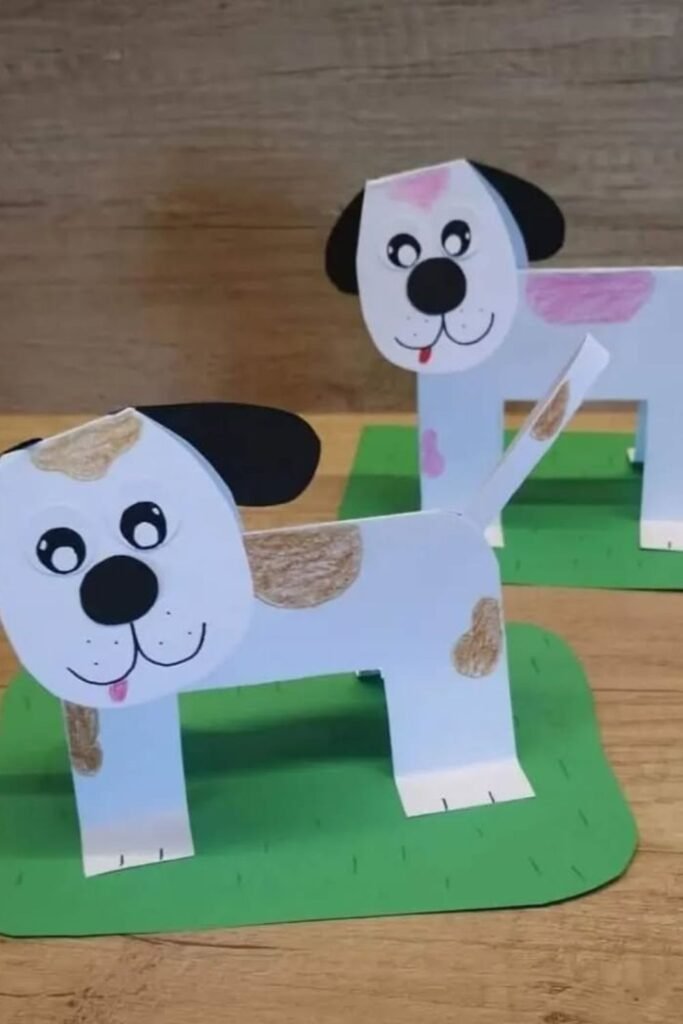
Standing Dogs
Balance adds a fun twist to simple paper crafts. Folded legs turn flat animal cutouts into figures that actually stand on their own, which feels like a small win for kids.
Keep the animal shapes simple; this way, folding them is a breeze, and you won’t wind up tearing your hair out.
This approach is perfect for tables and shelves, where the completed animals can be incorporated into imaginative farm or animal scenarios.
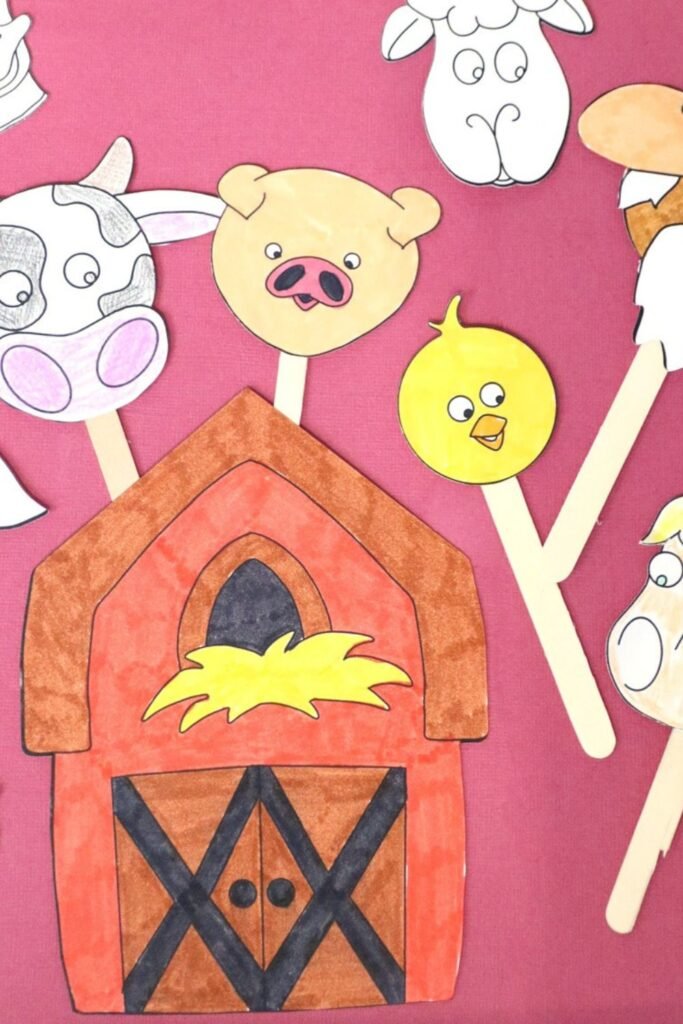
Barn Puppets
Storytime becomes a lively affair when animals appear around a barn. Kids can pick who lives there, who emerges, and who gets to speak.
Using simple paper faces on sticks. Coloring is the starting point, and play follows effortlessly.
This concept is ideal for group reading or circle time, encouraging children to listen, respond and actively participate in story rather than just sitting quietly.
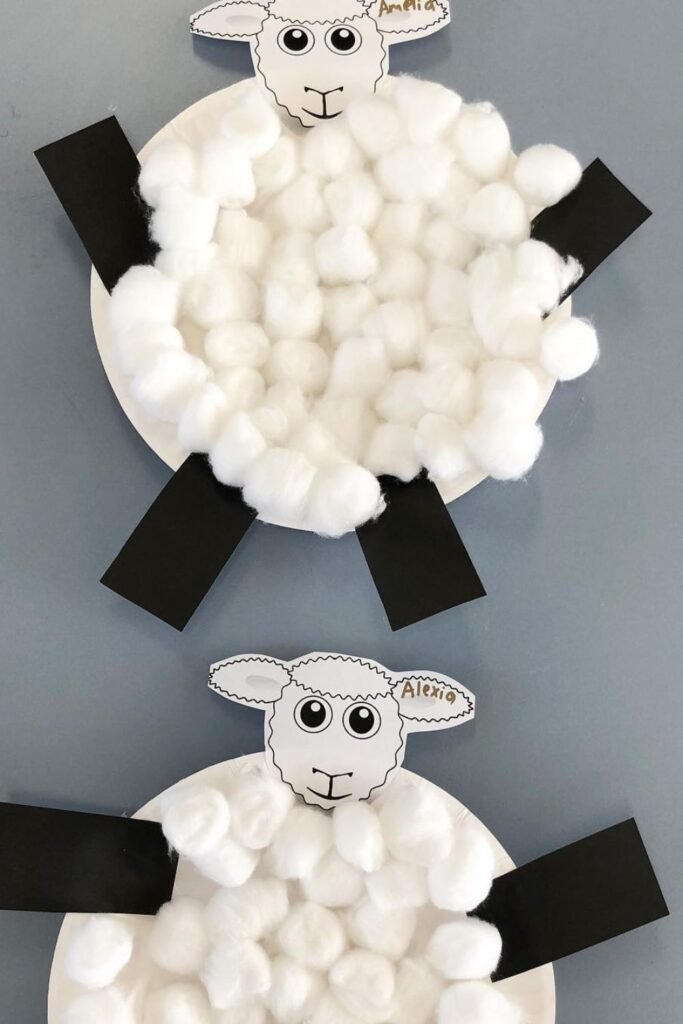
Cotton Sheep
Fluffy textures do half the teaching without saying a word.
Cotton balls glued onto a paper plate turn sheep wool into a hands on experience kids instantly understand.
Black paper strips make for straightforward, resilient legs. This concept works well during farm themed lessons or painting sessions designed to stimulate the senses.
Providing children with a peaceful, repetitive activity that they can complete independently, with out constant assistance.
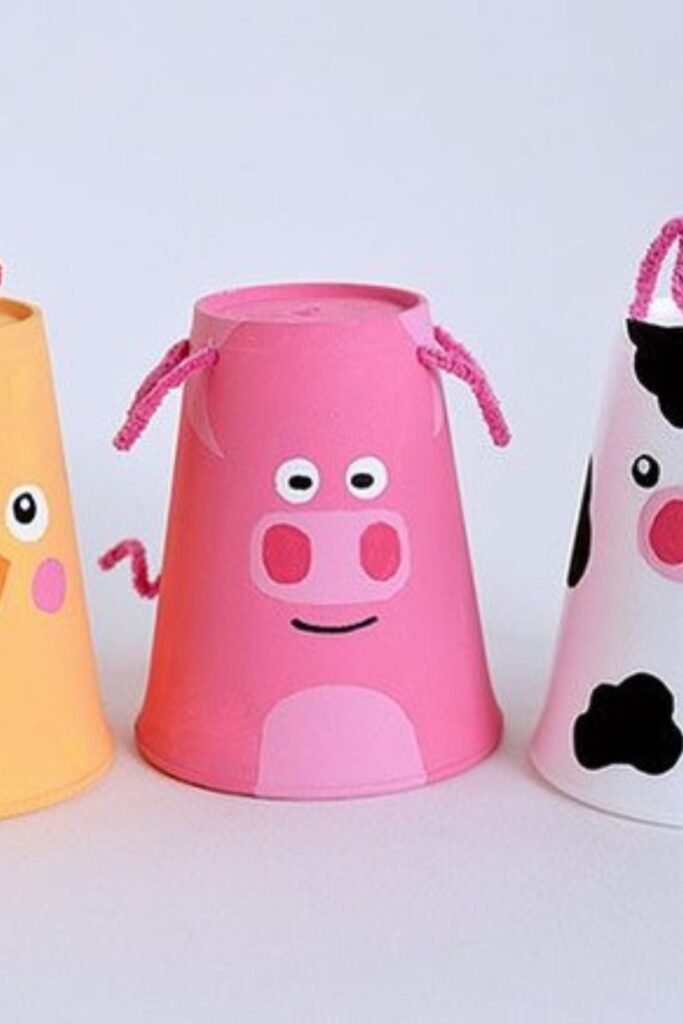
Cup Animals
Turning everyday cups into farm animals feels like a small surprise kids don’t expect. Flipped paper cups.
Sturdy bodies emerge once the faces, ears, and pipe-cleaner embellishments are added. The form is key it keeps the creatures upright.
This method is ideal for quick classroom projects, especially when resources are scarce, yet students still crave something they can display, interact with and go home.
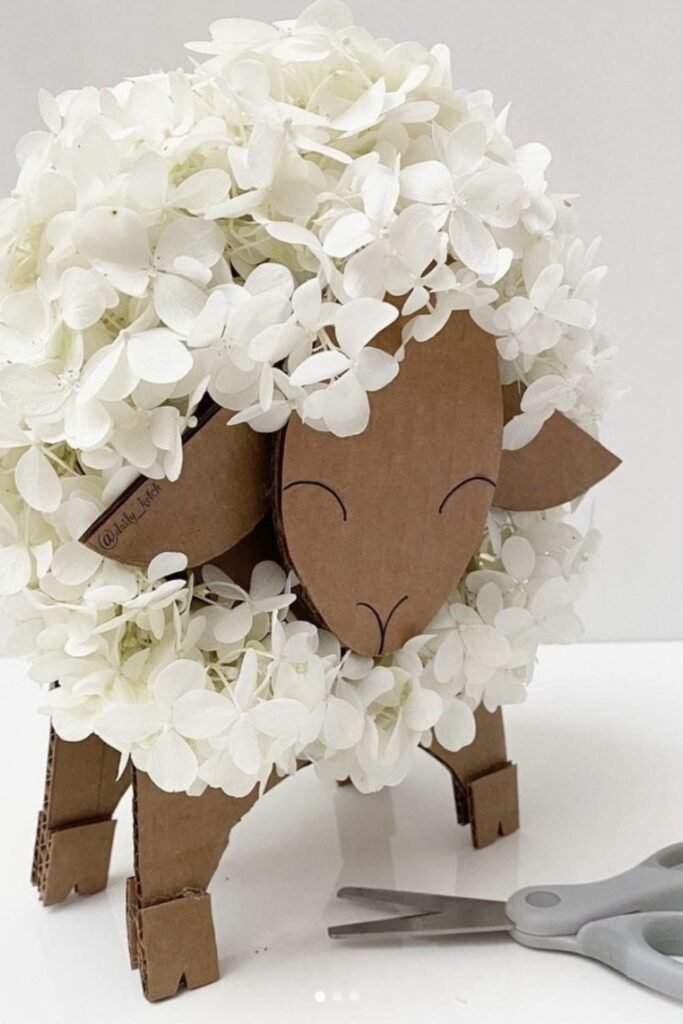
Cardboard Sheep
Layers turn simple materials into something kids instantly recognize. Cardboard piece create a sturdy body.
Soft white petals or paper forms construct the wool, with no need for precise positioning.
Cutting is kept to a minimum, and putting it all together feels more like stacking than actual crafting.
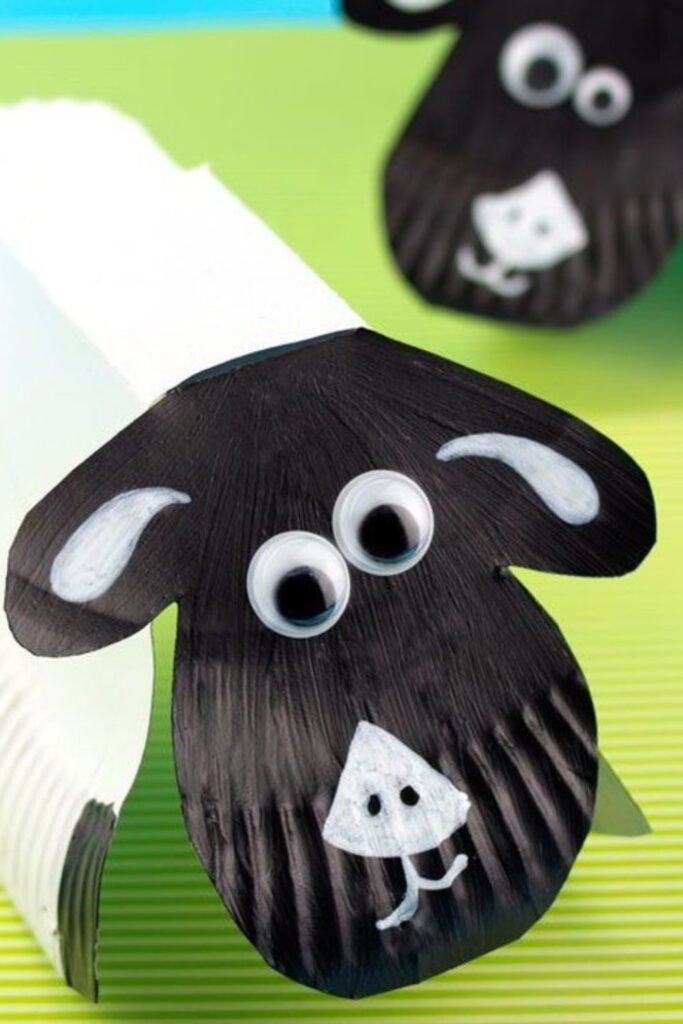
Folded Sheep
Curved forms gain a certain thrill when paper transforms into a tangible figure. A folded plate instantly gains substance.
And the sheep springs to life with just painted details and oversized eyes, no additional components needed.
This approach shines during tabletop crafts, ideal for projects that are straightforward yet possess a three dimensional quality, making them enjoyable to manipulate.
FAQs
What age group are farm animal crafts best suited for in classrooms?
Farm animal crafts are a hit with kids of all ages, provided you keep the complexity in check. Toddlers thrive on tearing, gluing and sorting activities.
Preschoolers and kindergarteners, however, can manage cutting, painting, and some straightforward assembly.
How do I keep farm animal crafts from getting too messy in a classroom?
Begin with crafts that have straightforward instructions and use only a few supplies.
Prepare small amounts of paint or glue, and steer clear of tiny components that can frustrate children.

Hi, I’m Afaf! I’m a law student who loves writing about everyday life – from home projects and crafts to fashion, beauty, and parenting tips.
I’ve been writing for over a year, sharing ideas that are simple, practical, and easy to try. I write about things I find interesting and useful, whether that’s organizing a space, trying a new DIY, or finding activities to keep kids entertained.
My goal is to share helpful ideas without making things complicated. If it works in real life, I’ll write about it.
When I’m not studying or writing, I’m usually experimenting with new projects or scrolling for inspiration!