
26 Finger Painting Ideas For Kids for 2026
Painting with your fingers seems enjoyable until you see paint on the floor, the couch, and in your child’s hair.
After ten minutes of play, you don’t want a complete cleanup meltdown, but you do want your child to enjoy it.
You may also question whether it’s genuinely aiding in their education or only causing chaos for no apparent cause.
In this article, you’ll uncover 26 easy Finger Painting Ideas For Kids ideas that make creativity accessible in 2026.
Let’s jump in!
How Can Finger Painting Help Kids Learn While Having Fun?
Children learn without even realizing it when they finger paint. If you let your child mix colors, they start understanding cause and effect right away.
Their fingers become stronger as they produce dots, lines, or handprints, which subsequently aids in writing and drawing.
Additionally, finger painting provides children with a secure means of expressing emotions when they lack the vocabulary.
They can develop focus, patience, and creativity while just having fun if you gently lead them and maintain a laid-back atmosphere.
Save this article for later!👇👇👇

Caterpillar Prints
Bright handprints turn into a playful caterpillar that kids instantly recognize, which keeps them excited from the first press to the last fingerprint.
Using hands for the body and fingers for the legs works best outdoors or on a washable surface. To keep the procedure enjoyable and manageable.
Start with a single primary color for the hand print and allow children to add embellishments like eyes or antennae once the paint has dried a little.

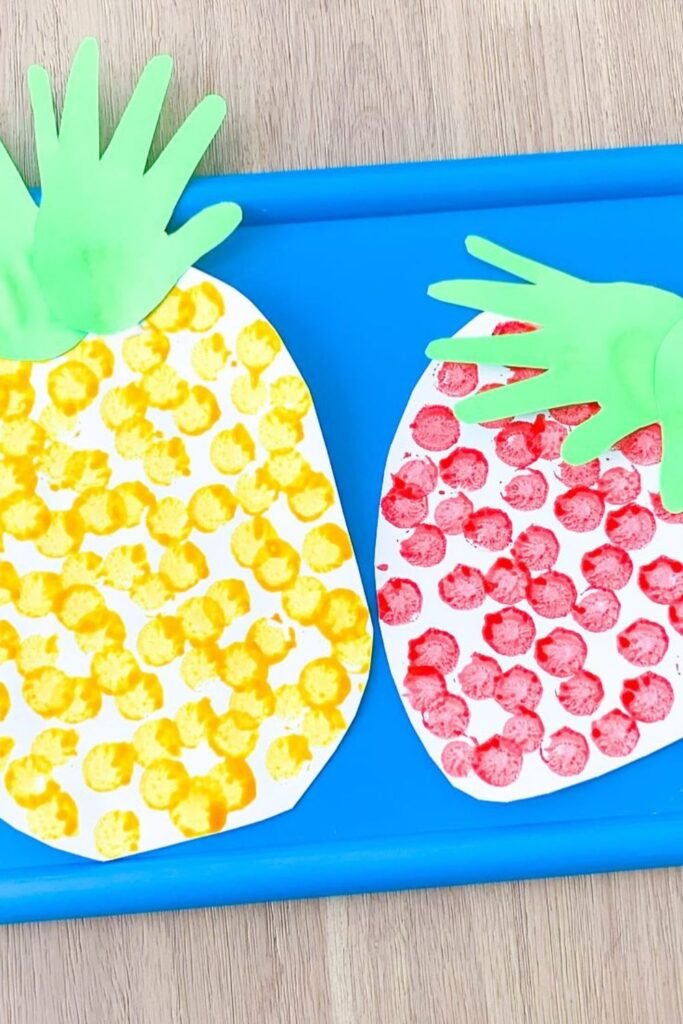
Pineapple Dots
Little fingertips turn into juicy texture when kids stamp yellow or red dots across fruit shapes, and which works great during summer crafts or food themed lessons.
Paper cutouts help manage debris on tables and keep the paint area limited. To ensure that patterns remain visible.
Let children dip just one finger at a time. To complete the design without creating more paint mess, add green paper leaves at the end.
Garden Carrots
Tiny fingerprints stacked upward turn into growing carrots, which makes this craft perfect for spring themes or garden lessons at home or school.
Kids adore digging into the real sand at the bottom, which provides texture and helps them stay focused for longer.
To demonstrate to children how little marks may be combined to create a complete image, start with orange dots pointing upward and then add simple green lines on top.

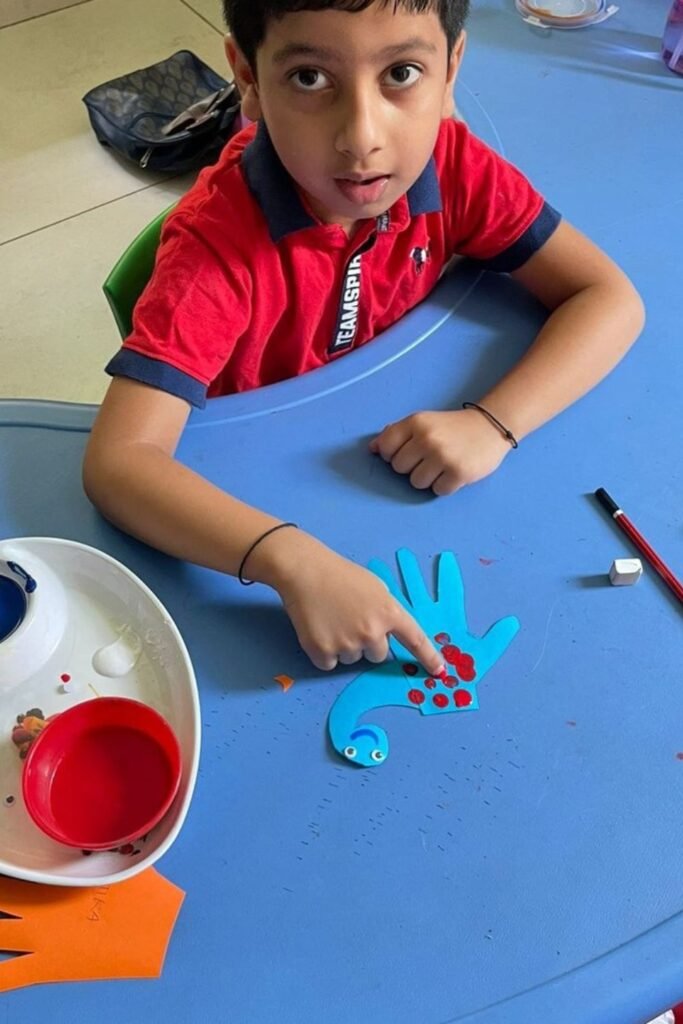
Peacock Dots
Bright handprint shapes instantly become a peacock when kids start adding fingertip dots, which keeps their attention locked in without needing brushes.
Because the setting remains straightforward and limited, classroom tables or craft nooks work well.
To help children concentrate on dotting patterns rather than splattering paint all over the place, cut out the hand form first and then set up little paint basins close by.
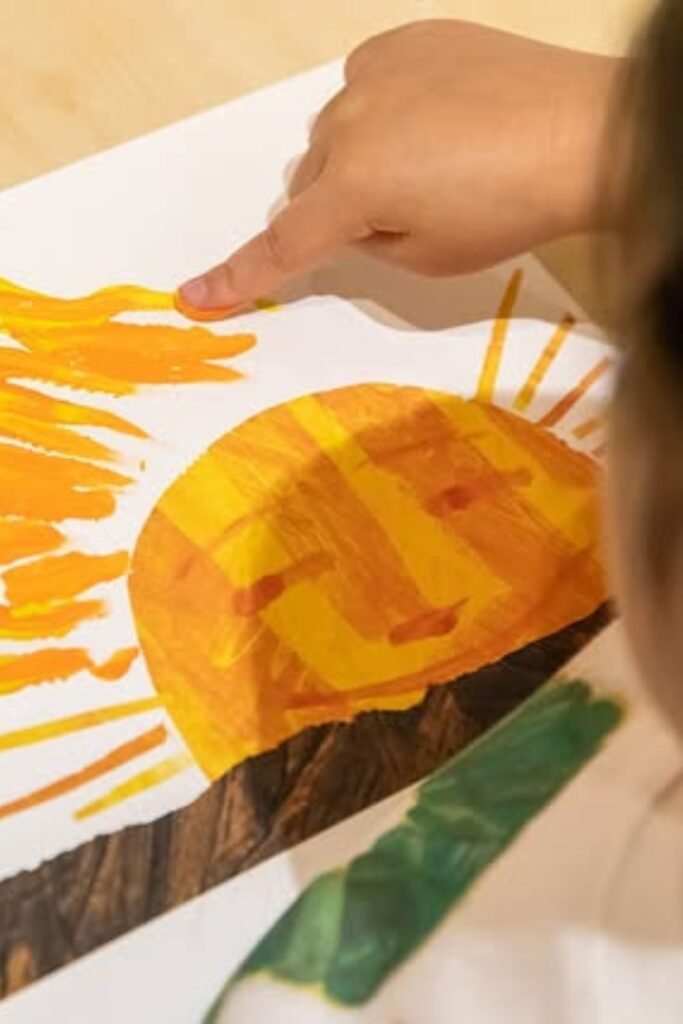
Sun Rays
Watching a sun take shape through finger strokes keeps kids calm and focused, especially during quiet indoor time or after school.
Controlling finger movement without feeling rigid or directed is possible with long swipes in a circle. To make the rays feel alive and imperfect.
Start with a single warm color and allow them to add lighter shades on top. This will keep the painting entertaining rather than stressful.
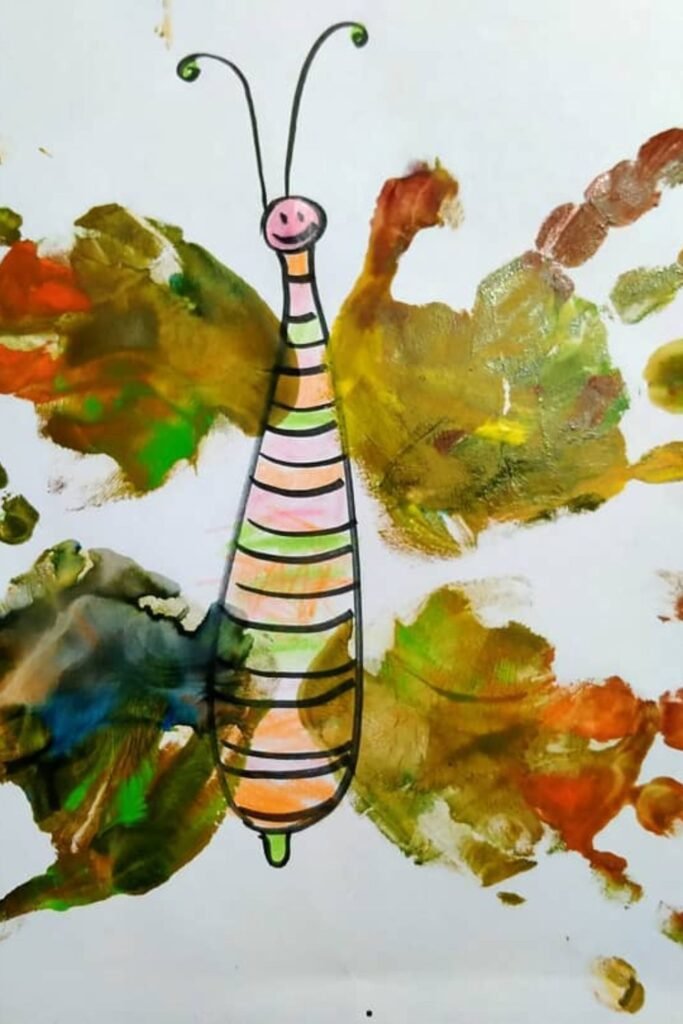
Butterfly Wings
Colorful handprints spread out like wings make this craft feel magical without any complicated steps.
To maintain both sides balanced and manageable for children, fold the paper slightly before pressing your hands on it.
Here, nature themed activities or peaceful art sessions are most effective especially when children combine two colors in one hand and observe how new hues emerge them.
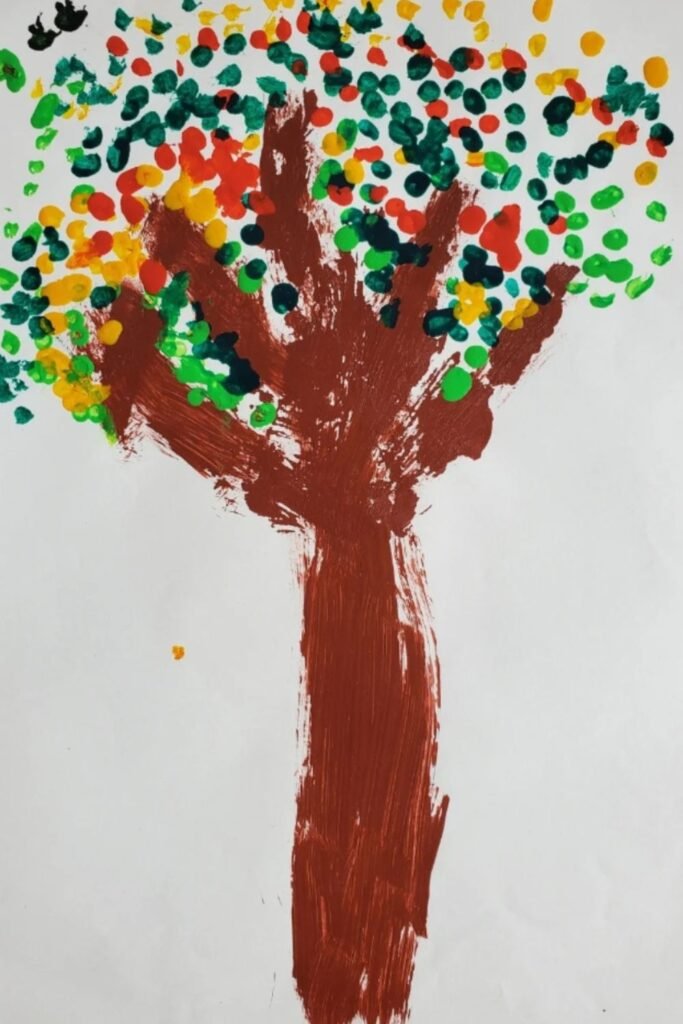
Autumn Tree
Warm finger dots scattered above a painted trunk turn this into a perfect fall craft for classrooms or cozy indoor afternoons.
Without the requirement for precise shapes, children may see seasonal change by combining green, yellow, and orange. Paint the trunk first to allow it to dry a little.
Then, encourage children to freely tap leaves on top to keep their hands occupied while the mess remains primarily in one place.
Rainbow Dots
Color order suddenly matters when kids place fingertip dots one by one, turning paint into a clear rainbow instead of random spots.
The black pot design helps children stay inside a barrier and keeps the arrangement straight forward.
To teach colors during peaceful tabletime activities start by lining paint colors in sequence so that the little hands follow the flow naturally.

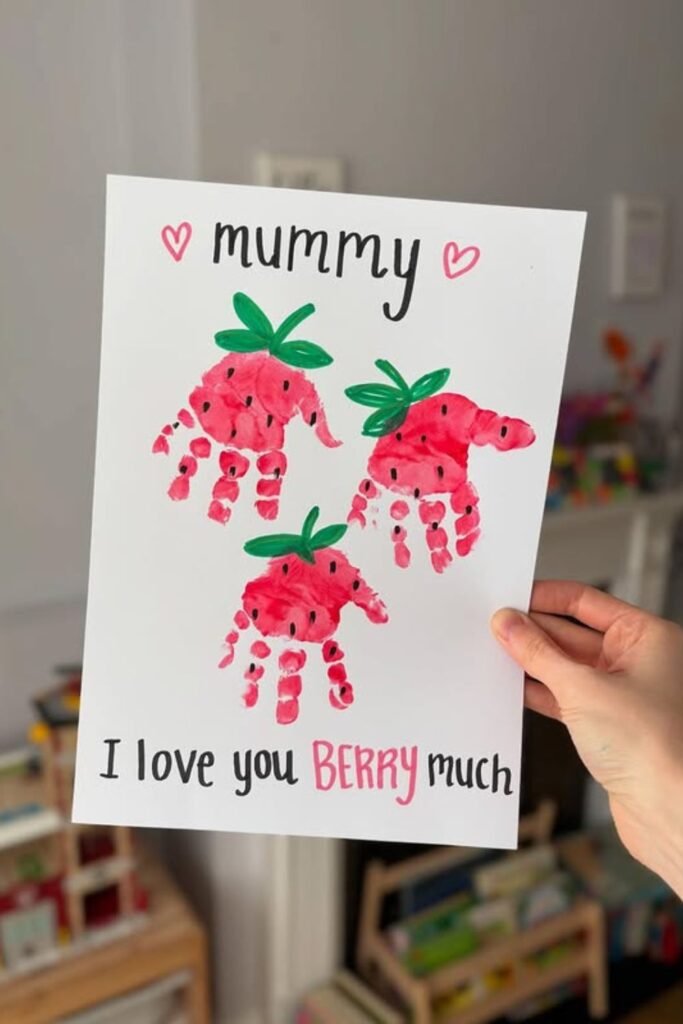
Berry Hands
Sweet handprints turn into strawberries, which makes this craft perfect for Mother’s Day cards or quick keepsakes at home.
Fingers can create natural texture without the need for other tools because red paint generally stays on the palm.
After the prints have dried a little, add green leaves and put a little message on top or bottom to make children feel proud to give something they made.
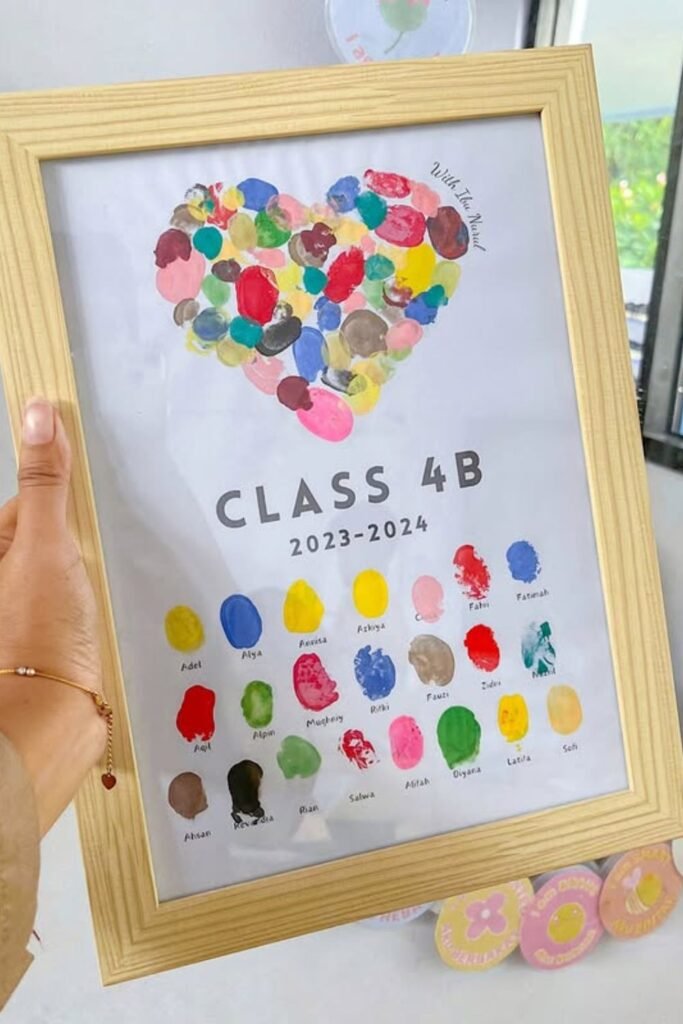
Class Keepsake
Memories come together when every child adds a fingerprint to one shared design, making this perfect for classrooms or end of year projects.
Names beneath each print provide meaning while a heart or other basic shape keeps the arrangement structured.
Set this up at quiet table time, mentor each child individually, and frame the finished product so that parents and educators will truly retain it.
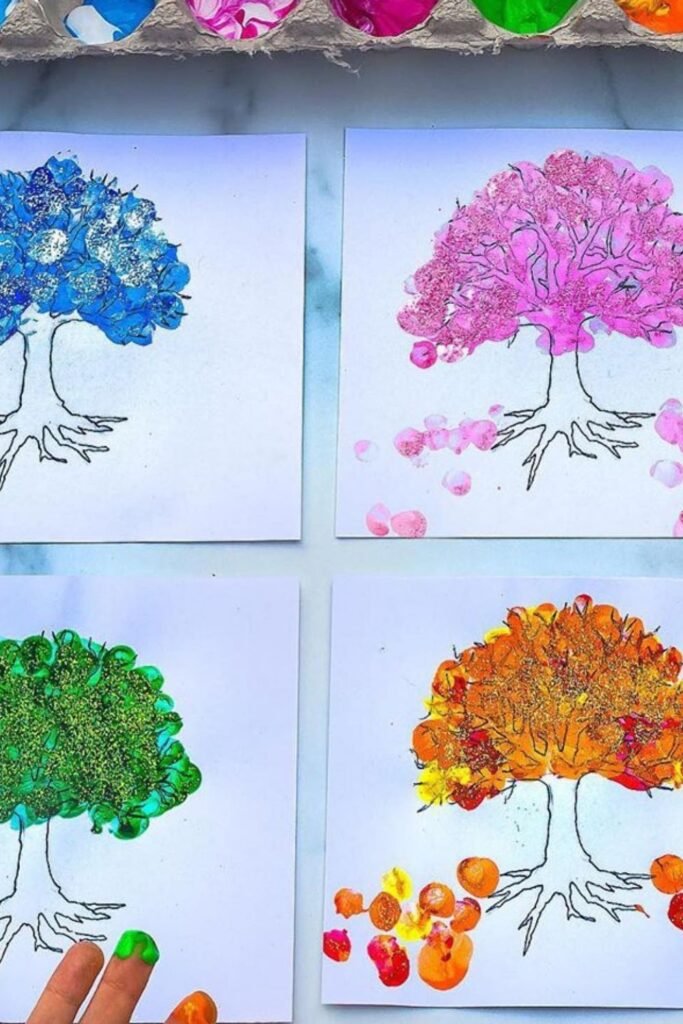
Seasonal Trees
Four trees in different colors turn finger painting into a simple way to talk about seasons without explaining too much.
While paint colors tell the story using the same tree outline helps kids stay focused. This is a great way to demonstrate how spring, summer, fall.
And winter can all appear quite different using fingertips while everyone follows a single base shape in class or during sibling activities.
Fancy Peacock
Deep blue handprints instantly feel special when they turn into a dressed-up peacock with extra details. Adding a small fabric bow or paper accent.
keeps children engaged without using additional paint. To make the peacock feel complete and proudly display-worthy.
This works best on a table that is calm enough for children to stop in between steps, carefully press their palms, and then embellish around the print.

Snowy Friends
Cold-weather crafts feel extra fun when one handprint turns into a group of tiny snowmen wearing colorful hats.
Everything is kept contained and manageable indoors by using a spherical paper foundation. To ensure that features remain distinct.
And the image appears lively rather than disorganized, paint the palm white first, then allow children to add faces and hats once it has dried slightly.

Silly Spider
Black handprints suddenly feel exciting when they turn into a spider hiding in its own web, which makes this perfect for Halloween crafts or playful art days.
To keep the handprint clear and bold, thick paint works best. To make the spider come to life, first draw the web lines.
Then allow children to place their hands in the middle and add googly eyes at the end.

Dot Blossoms
Tiny fingers stay busy longer when dots feel like a game instead of painting. A high-chair tray setup works great for toddlers.
Because everything remains closed off and contained. To keep the focus on pressing and lifting, start with a basic tree.
Or and cutout and offer one color at a time. Control is developed without taxing small hands with this gradual dotting motion.

Color Frames
Bright fingertip dots wrapped around a simple animal shape turn painting into a focused, almost calming activity.
Kids may enjoy tons of color play while avoiding overpainting thanks to the blank area in the middle.
Because the dotted border feels completed without the need for fine details or additional cleanup, canvas or thick paper work best here, especially for gifts or interior décor.

Abstract Art
Bold finger swipes layered over each other turn random movement into wall-worthy art kids feel proud of.
Here, large paper or canvas is ideal for allowing hands to move freely and continuously. Instead of fixing shapes, let colors organically overlap.
Then, frame the completed piece to demonstrate to children that their playful painting is more than just a one-day exercise and may become actual room décor.

Counting Lines
Paint suddenly turns into a learning game when kids follow numbered paths and press one dot per line.
Cardboard prevents paper from slipping and maintains a stable surface. Kids are given direction by drawing simple curves first, and the rest is handled by their fingertips.
When you want to practice counting, color selection and steady hand control while maintaining a peaceful focus, this is ideal for preschool tables.

Holiday Wreath
Finger dots layered in different green shades quickly turn into a festive wreath kids love building step by step.
You can work in a circle without your hands getting crowded if you use a square canvas or thick paper.
To make the wreath feel full, textured, and prepared for a basic bow or ribbon embellishment start with darker greens and put lighter dots on top.

Busy Bees
Buzzing activity keeps little hands moving when fingerprints turn into falling blossoms and flying bees. Tree branches painted first give kids a clear place to work without confusion.
The repetitious and humorous vibe of yellow dots aids improve concentration during group projects and class time.
Include basic drawings of bees at the conclusion to show children how small prints may create a complete spring scene that they can quickly identify.

Name Dots
Personal meaning keeps kids engaged longer when they use fingerprints to write their own name.
Dots remain bold and distinct because cardboard provides exactly the right amount of resistance.
Let children follow the lines with the color of their choice after you have lightly sketched the letters.

Letter Play
Learning letters feels easier when kids build shapes using simple fingertip dots instead of tracing lines.
Thick paper or cardboard keeps dots clear and stops them from soaking through. To keep the center clean.
Begin by lightly sketching one letter and then allow children to freely fill in the surrounding space.

Hand Flowers
When painted handprints become flowers that children can really grasp and give, they become even more meaningful.
Wooden straws or sticks make good handles and help keep paint off small hands. To make each flower feel finished.
And ideal for cards, vases, or classroom displays, press your hands firmly, let them dry, and then attach yarn or ribbon close to the root.

Paper Plate Umbrellas
Paper plates turn into cute umbrellas with just a fold, a little paint, and a simple paper handle.
Allow children to make rainy day patterns with dots, splatters, or sponge paint. Once the designs are dry, adhere a curved handle underneath.
These are perfect for bulletin boards, spring crafts, or weather-themed activities, and they require little setup for toddlers to enjoy.

Fingerprint Apple Tree
This cheerful tree uses simple fingerprints to build a full, textured canopy. Paint the trunk and branches first.
Next, let children to add pink or red dots for apples and green fingerprints for leaves. It’s a fantastic opportunity to talk about the seasons, wildlife.
And colors while honing your fine motor skills. Ideal for classroom art walls, fall-themed projects, or a memento project that documents development over time.

Fingerprint Flower Art
Bright fingerprints form the petals of this happy flower turning each swirl into a playful texture kids love exploring.
Draw the stem and leaves using a marker or paint after using distinct colors for each petal. In addition to fostering creativity, color recognition.
And early art confidence, this activity produces a charming piece of art with a spring theme that is simple to showcase or give.

FAQs
What age group is fingerprint art best for?
Toddlers through early elementary school students benefit greatly from fingerprint art.
While older children can experiment with patterns, color mixing, and basic design planning, younger children prefer the sensory play.
What type of paint is safest for fingerprint activities?
The safest choices are tempera or finger paints that are both non-toxic and washable. They’re perfectly safe for regular use.
Whether in a classroom setting or at home. Plus, they wash off easily from both surfaces and skin.
Hi, I’m Afaf! I’m a law student who loves writing about everyday life – from home projects and crafts to fashion, beauty, and parenting tips.
I’ve been writing for over a year, sharing ideas that are simple, practical, and easy to try. I write about things I find interesting and useful, whether that’s organizing a space, trying a new DIY, or finding activities to keep kids entertained.
My goal is to share helpful ideas without making things complicated. If it works in real life, I’ll write about it.
When I’m not studying or writing, I’m usually experimenting with new projects or scrolling for inspiration!