
21 Gross Motor Activities for Kids 2026
If your little one seems like a perpetual motion machine constantly colliding with furniture or transforming your home into a makeshift playground.
You might be asking yourself what’s up. Is it just a case of “too much energy,” or is something else at play.
Here’s a truth many parents overlook: children require specific types of movement to develop strength, balance, and self-assurance.
When they don’t get enough of it, the resulting behavior can be messy and exasperating.
This article covers 21 Gross Motor Activities For Kids made for busy families and modern homes in 2026.
Why Are Gross Motor Activities Important for Child Development?
Gross motor activities are all about getting your child to use those large muscles for movement, balance, and body control.
Think running, climbing, jumping and crawling. It’s more than just expending energy; it’s about building strength, coordination and self-assurance.
If these skills are underdeveloped you might see more tumbles, tantrums, or general frustration. The body simply hasn’t mastered smooth movement yet.
Providing your child with consistent opportunities for simple and physical play can make everyday activities feel less daunting and often behavior improves as well.
Save this article for later!👇👇👇
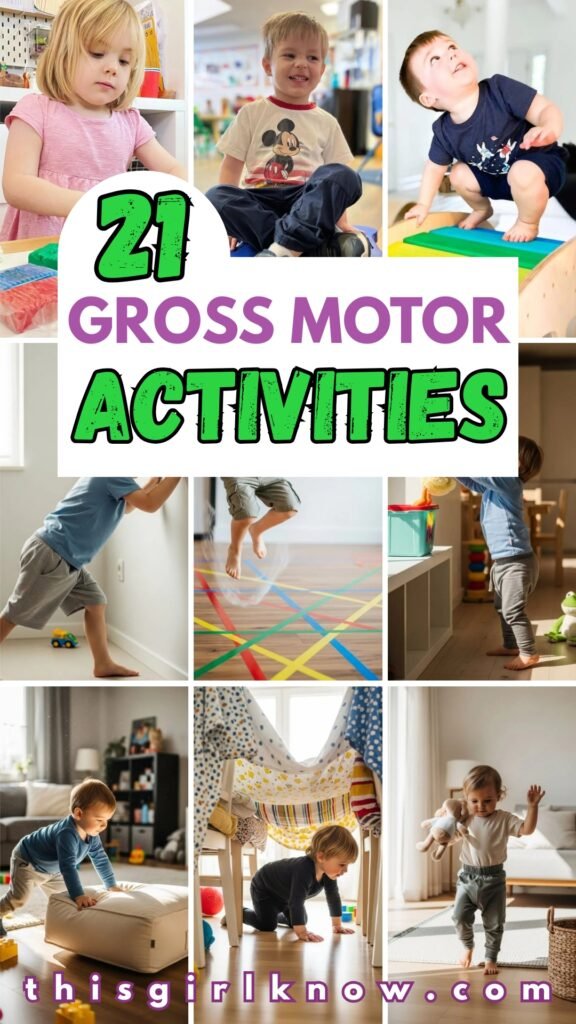
What Gross Motor Activities Work Best for Toddlers?
Toddlers thrive on uncomplicated, fun movement not rigid workouts. Think about climbing over pillows, walking along taped lines, kicking a ball, or imitating animals.
These activities are excellent for developing balance and coordination, and the kids don’t even know they’re learning.
To boost your toddler’s physical confidence, focus on activities that encourage free exploration of movement.
Short, active play periods are more effective than extended ones. The aim isn’t to achieve perfection, but to help their bodies learn to move, gradually.
Wall Reach
Color draws kids toward movement without being asked. A low wall display like this invites squatting, standing, and reaching as a child explores pieces up close.
Positioning it at a toddler’s level promotes the kind of up-and-down movement that strengthens legs and improves balance.
Just make sure they’re securely attached to a wall in an area where kids naturally play on the floor.

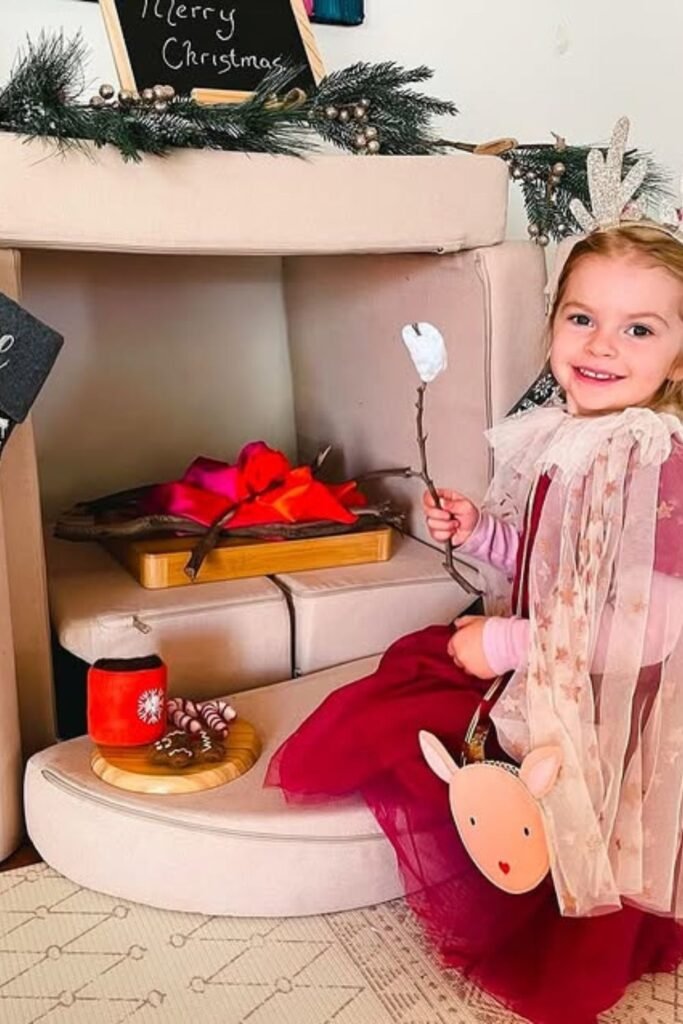
Pretend Reach
Holiday play turns simple movement into magic. Dressing up and reaching into low shelves or pretend fireplaces gets toddlers bending, standing.
Holding props, moving forward, and then putting things back in their place helps develop coordination and a sense of how your body moves.
This works best in quiet indoor areas, where the imagination can really take over and guide the movement.
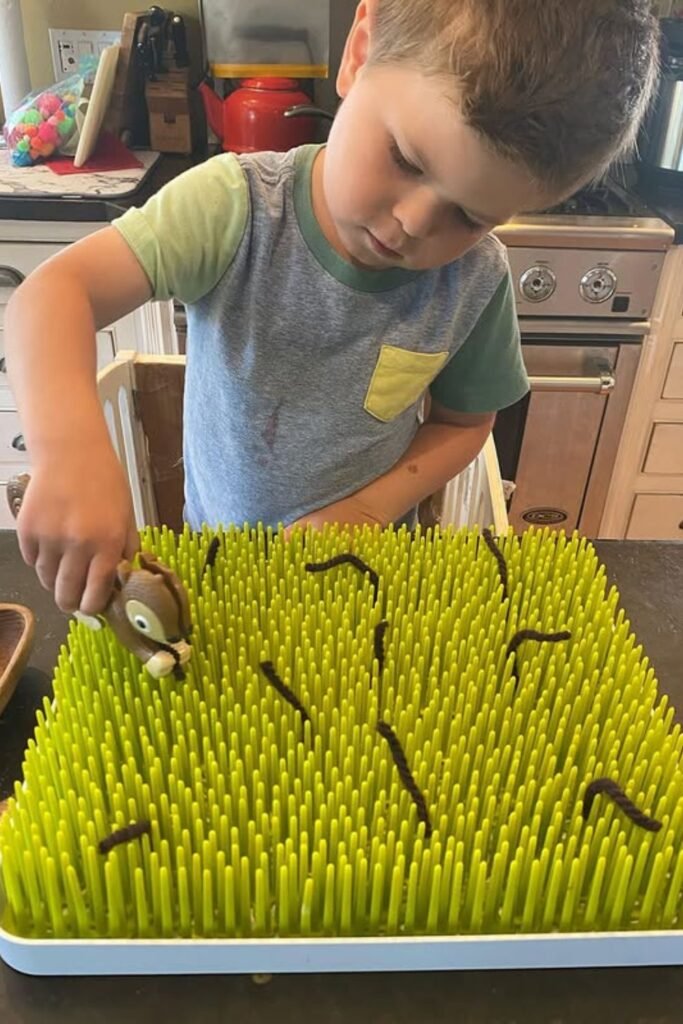
Balance Play
Standing still becomes a challenge the moment hands get busy. Pressing toys through a textured surface like this makes kids shift weight and control small body movements.
Kitchen counters or low tables work well since the child naturally stands while playing.
A sensory mat, dish rack, or spiky tray can recreate the same balance-building effect during everyday playtime.
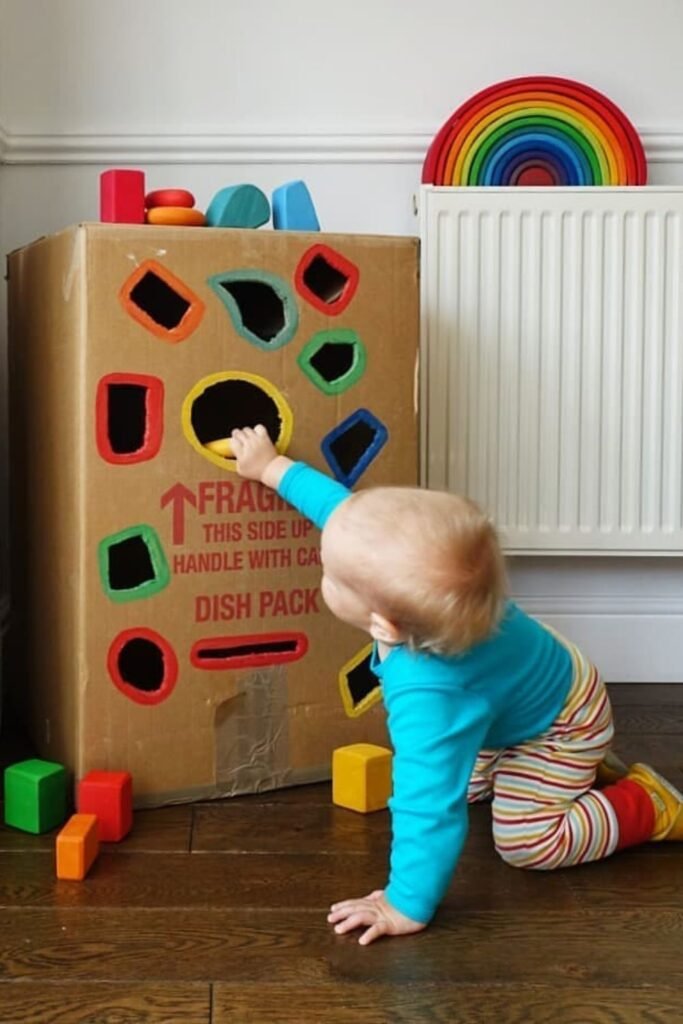
Shape Crawl
Curiosity pulls the body forward before the mind even notices. Reaching into a box like this encourages crawling, twisting.
Floor-level play is ideal particularly for toddlers who are still figuring out how to stay upright. Kids naturally shift their weight as they try to reach the proper spot.
A great way to encourage this is to cut big shapes into a strong box and then place blocks just out of reach.
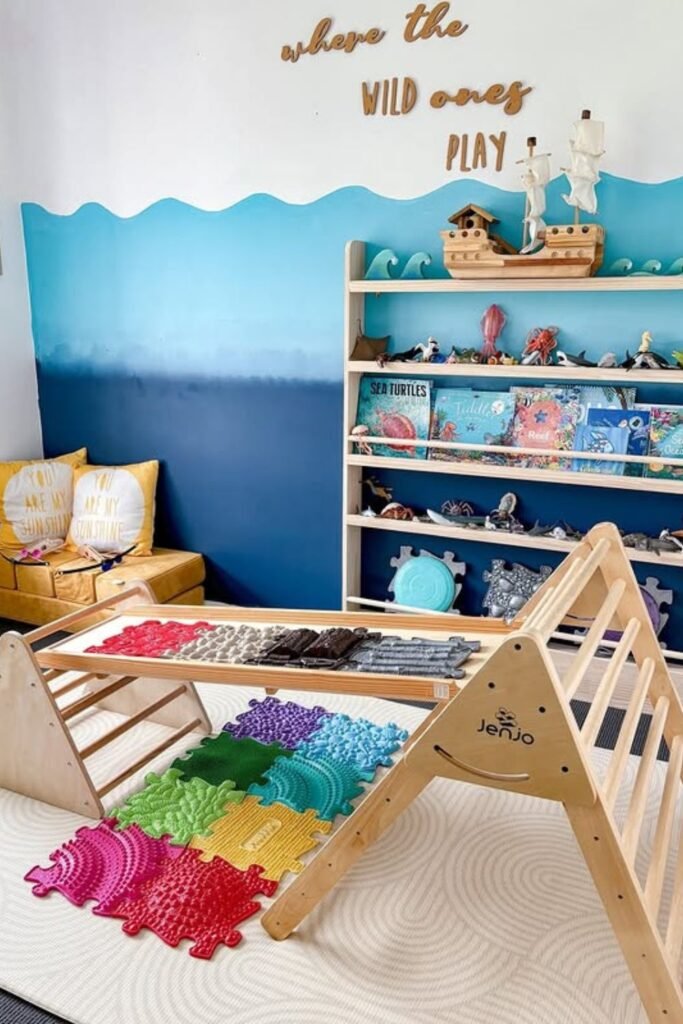
Climb Crawl
Climbing setups like this quietly build strength from head to toe. Moving up, across, and down works arms, legs and core all at once while improving coordination.
Playrooms or quiet corners are ideal, as children require room to concentrate on their physical activity.
A low climbing frame and a ramp or a robust triangle, combined with textured mats, can provide a similar full body workout but in a safe inside environment.
Jump Burst
Energy comes out fast during games like this. Jumping while holding a balloon forces legs to push, land and steady the body again.
Outdoor environments are especially effective because they encourage children to be more active and expressive. A simple balloon or a soft ball may be a great tool.
For example, asking children to jump and try to keep the object off the ground can change their energy into a fun way to exercise.

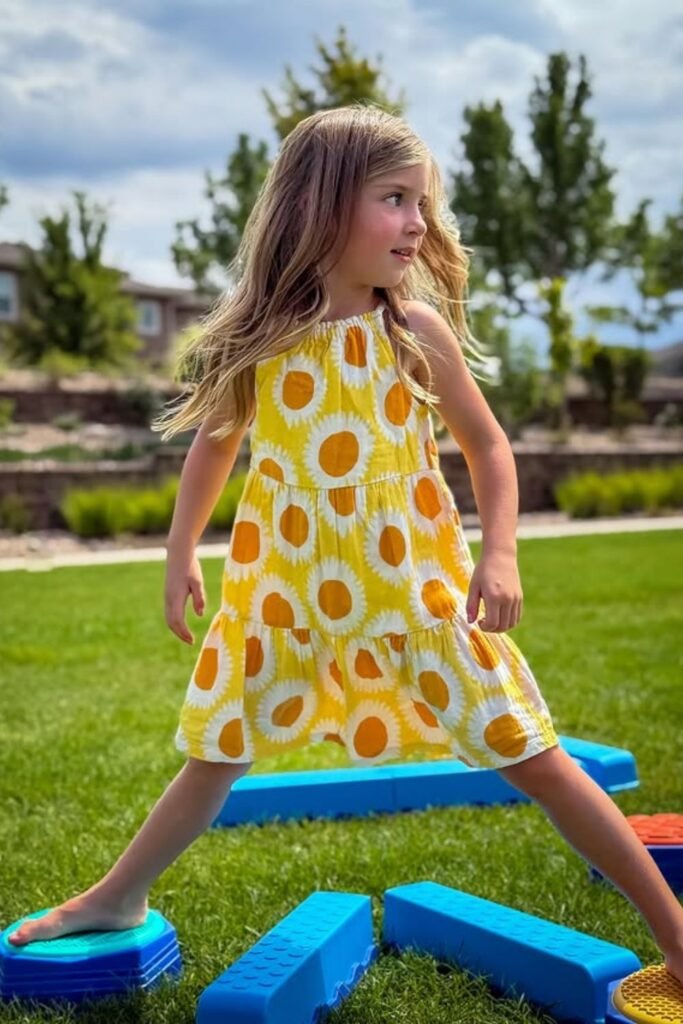
Balance Steps
Confidence grows with every careful step. Moving across raised stones like these asks the body to slow down, adjust weight and stay steady.
Open grass is a great choice; it gives kids the freedom to spread out and practice their balance without worry.
Foam blocks, stepping pods, or even inverted bowls can offer a similar experience, transforming ordinary walking into a fun, focused game.
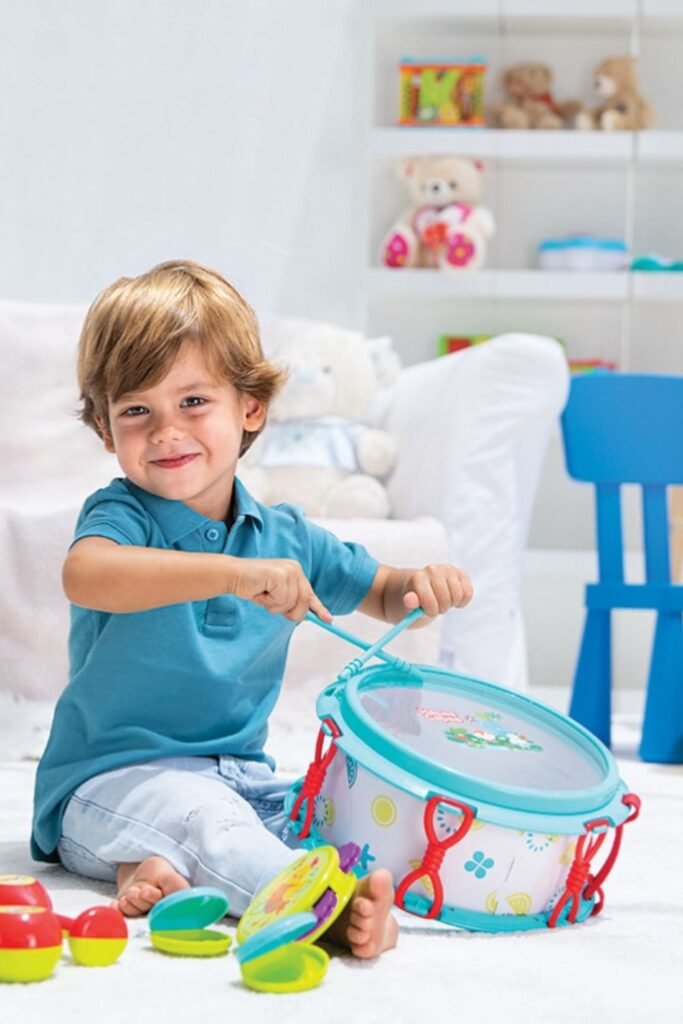
Drum Motion
Rhythm naturally pulls the arms and upper body into action. Hitting a drum while sitting asks shoulders to move, core to stay upright.
And hands working in unison, a rhythmic dance. It’s a good fit for living rooms or play areas, where noise and activity are embraced.
A toy drum, an overturned bucket, or a container filled with spoons can transform music time into a workout for the whole body.
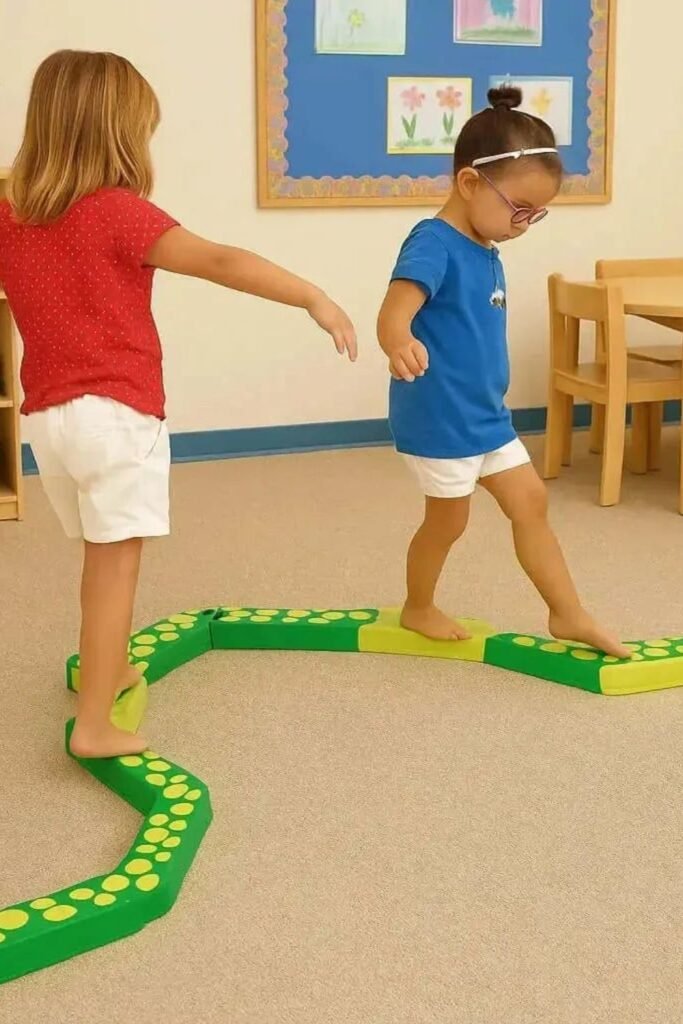
Balance Walk
Slow steps demand full attention. Walking along a curved balance path like this forces feet to adjust, arms to lift, and the body to stay centered.
Classrooms and wide indoor areas are ideal they offer a distraction-free environment for children to concentrate.
To replicate the same steady-movement exercises at home, consider using a balance beam, foam blocks or even taped lines on the floor.
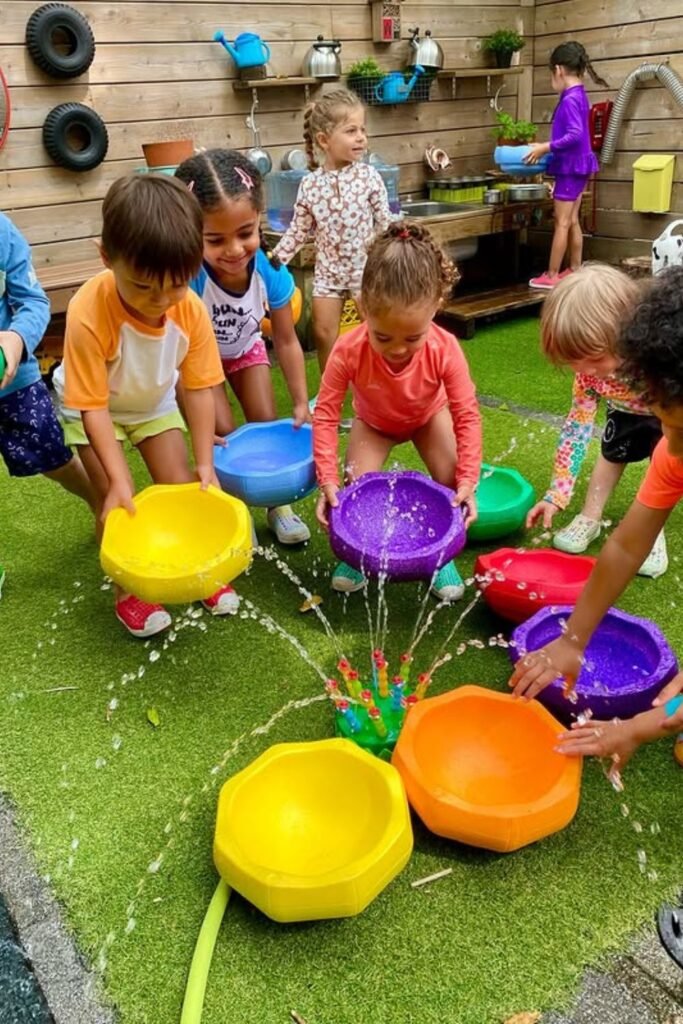
Water Lift
Heavy bowls turn teamwork into movement. Carrying, tipping, and refilling water forces arms to work, legs to squat, and bodies to stay steady together.
Outdoor play settings are ideal for this, as messiness is simply part of the experience. Buckets, plastic bowls.
And a basic water supply may replicate the same engaging activity fostering strength, coordination and collaborative concentration via play.
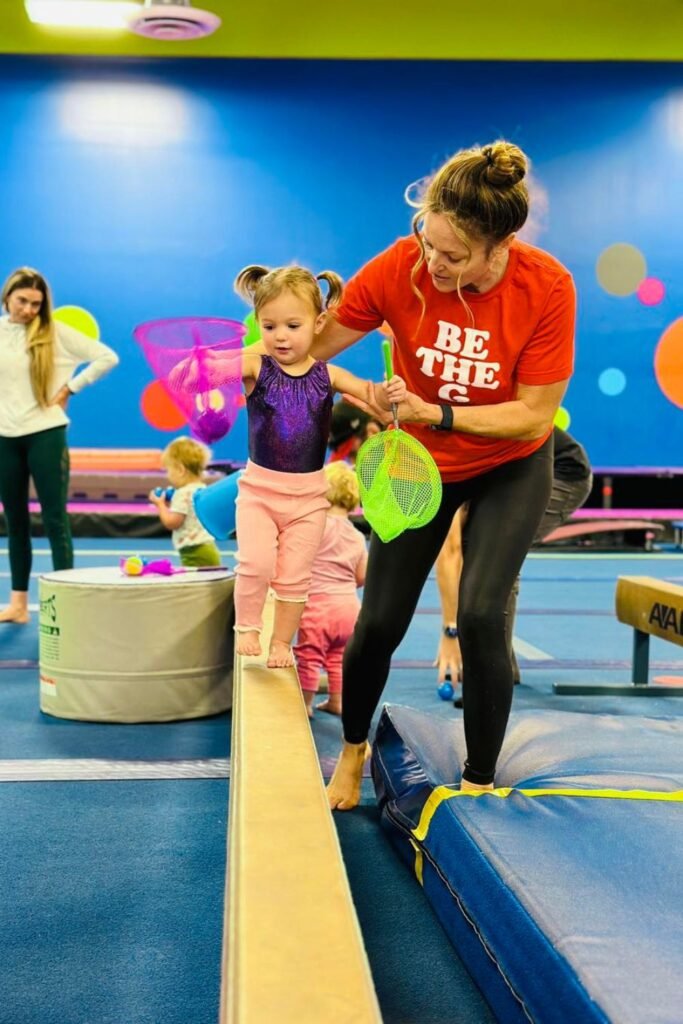
Beam Focus
Careful steps turn into a full-body lesson here. Balancing on a narrow beam while holding a net asks legs to stabilize, arms to adjust.
Eyes fixed on the road, that’s the goal. Gymnasiums or rooms with soft mats are ideal for this sort of exercise.
A low beam, a plank or even a taped line combined with a lightweight object, can replicate the same steady and confidence boosting motion right in your living room.
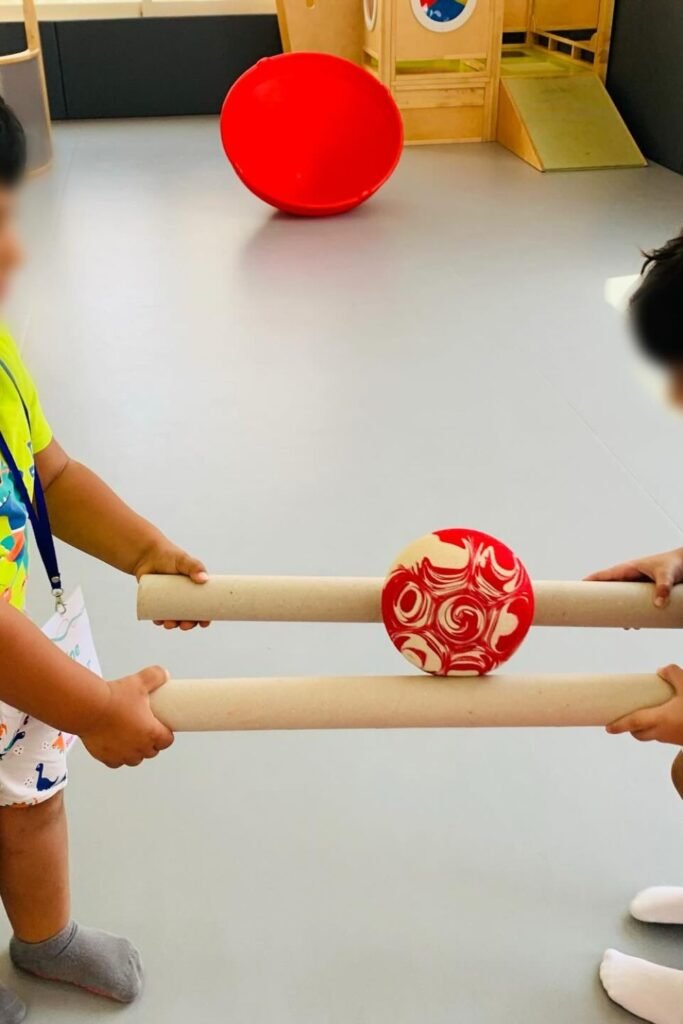
Team Roll
Teamwork shows up fast once balance depends on someone else. Rolling a ball between two tubes asks arms to steady, hands to adjust pressure.
And bodies to move in unison. Open indoor settings or classrooms are ideal, as children want the freedom to face one another.
Cardboard tubes or pool noodles are excellent tools transforming collaboration into a physical coordination exercise.
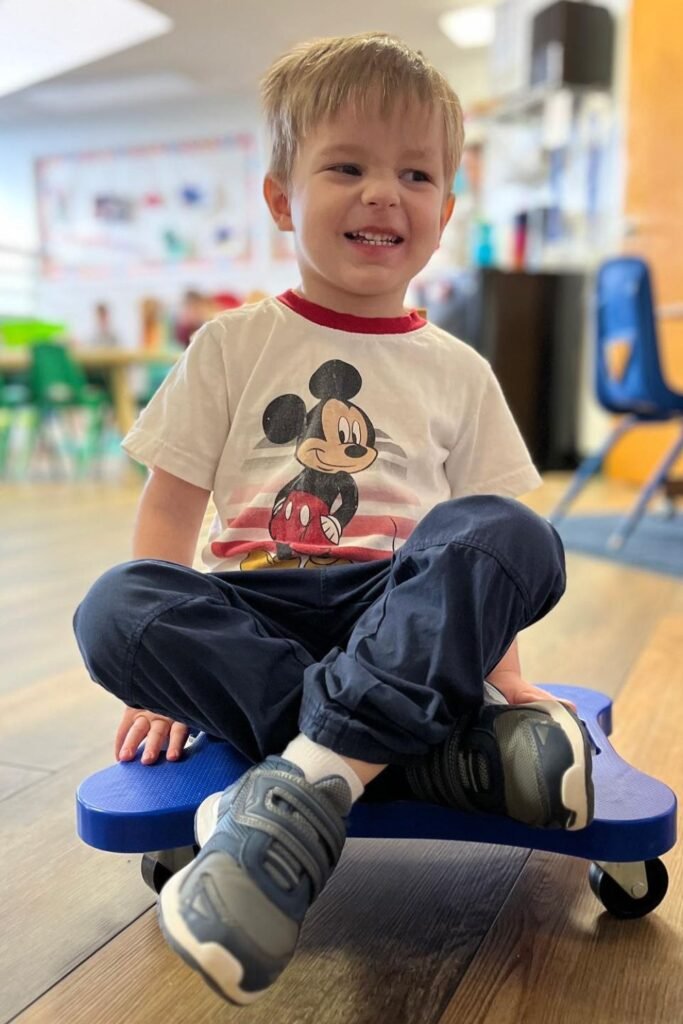
Scooter Sit
Low rides challenge balance in quiet ways. Sitting cross-legged on a rolling board forces the core to stay engaged while feet lift and adjust.
Therapy rooms or open interior spaces are ideal the key is a smooth surface to maintain regulated movement.
A scooter board, a rolling plank or even a robust tray on wheels can effectively replicate this gradual, strength-building exercise in a safe manner.
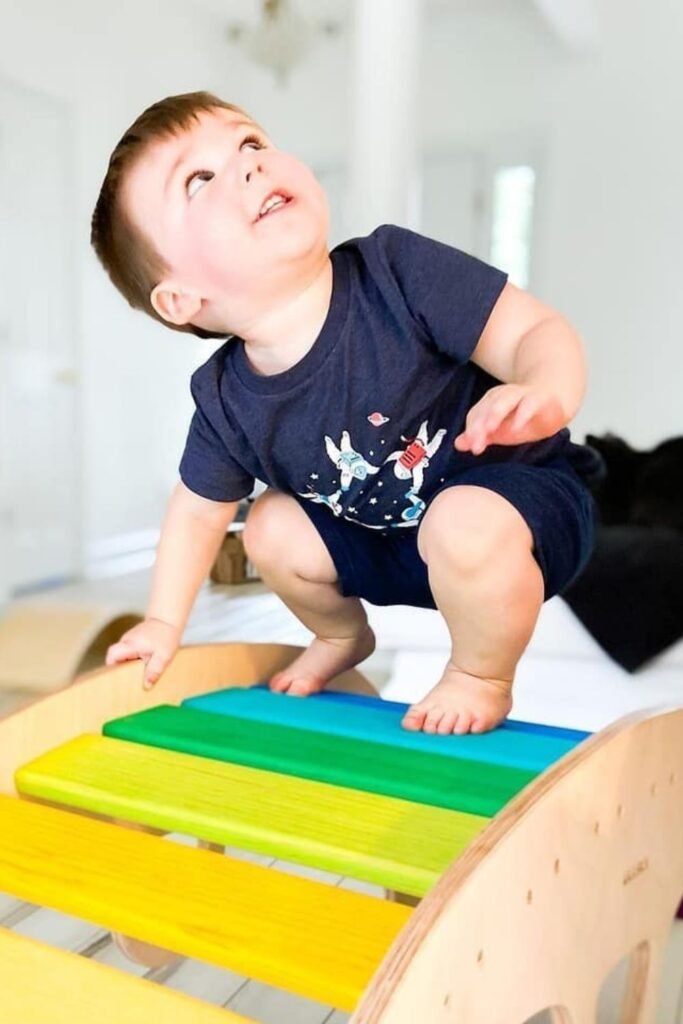
Rock Climb
Wobbly surfaces wake up muscles fast. Squatting and standing on a curved climber like this forces legs to grip, core to tighten.
And adapt with each change. Calm interior spaces are ideal, allowing children to concentrate on their physical actions.
A balance board, a low rocker, or a gently sloped wooden ramp offers a similar strength-building exercise, but in a secure environment.
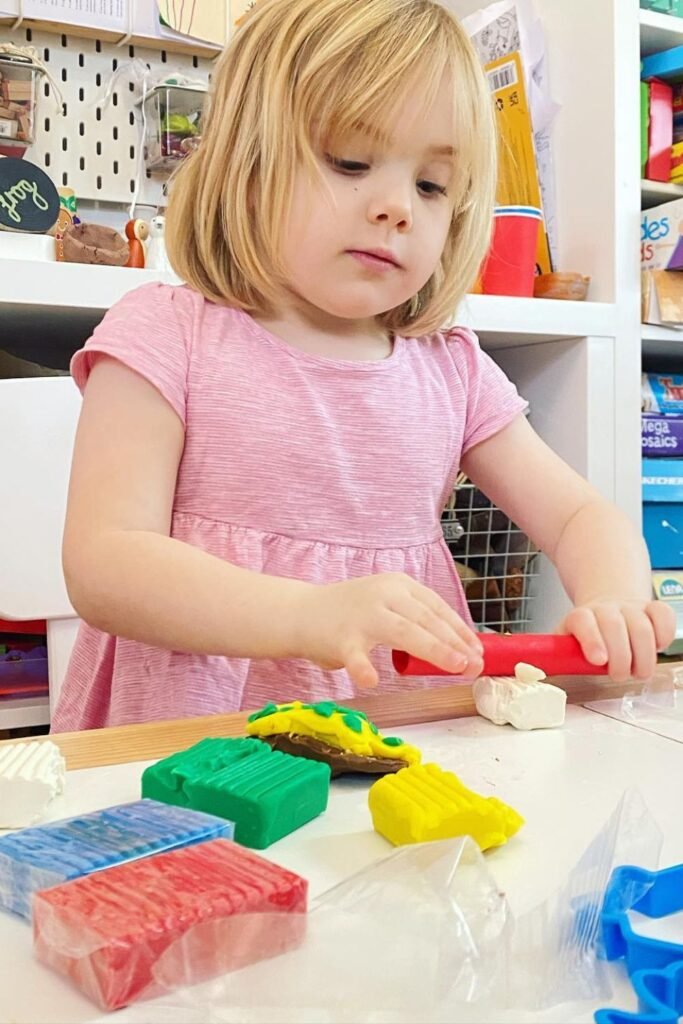
Dough Press
Table play still works the body when pressure is involved. Rolling and pressing dough asks shoulders to push, arms to steady, and posture.
To keep yourself steady while your hands are occupied, a craft table or kitchen counter is ideal; the height promotes good posture.
Thick dough, a rolling pin, or even a bottle provides sufficient resistance to subtly strengthen your upper body during silent play.
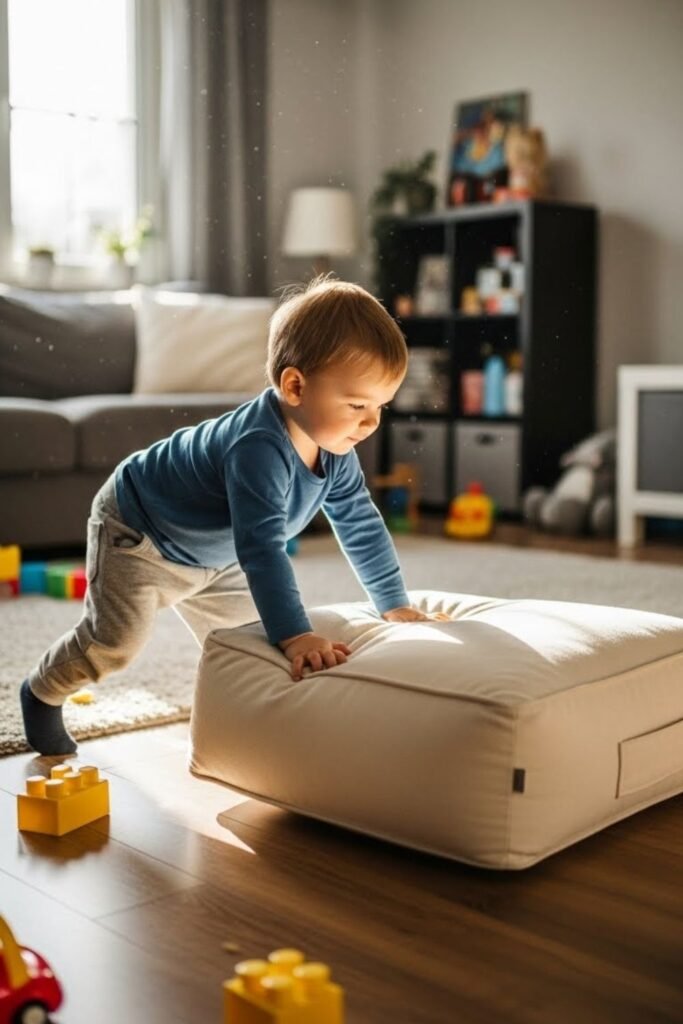
Cushion Pull
Dragging something heavy gives muscles a real job. Pulling a cushion or folded blanket across the floor makes legs push, arms grip.
The core should remain engaged. Carpeted areas are ideal, as the added friction naturally slows things down.
To keep things interesting, throw a beloved object into the mix and challenge the youngsters to “deliver” it to a different location.
Tunnel Turn
Tight spaces force bodies to move with purpose. Crawling through a fabric tunnel or chairs lined.
With sheets builds shoulder strength, coordination, and spatial awareness. Setting up in hallways or playrooms is simple.
Introducing a change in direction forward, backward, or sideways midway through the activity injects a fresh challenge, all without needing any more gear.

Toy Carry
Little hands love important jobs. Carrying toys one by one to a basket across the room strengthens legs, improves balance, and slows rushing.
Living rooms and classrooms are ideal settings for this, as the distance can be readily modified.
The use of toys of varying sizes organically alters the weight and grip, which keeps the body active without the sensation of a workout.
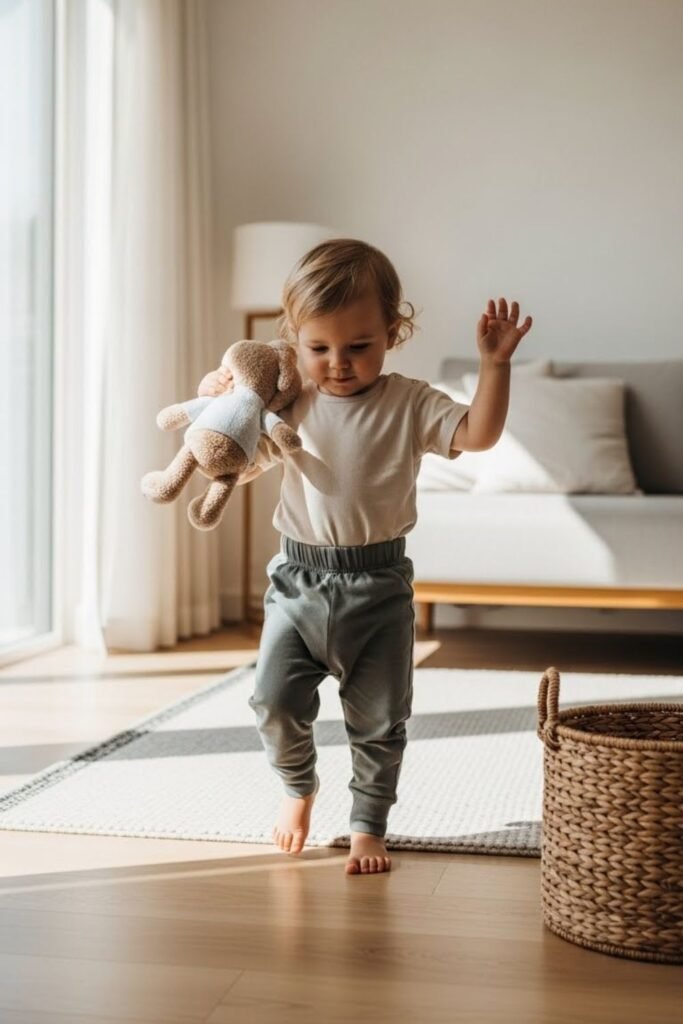
Wall Push
Pushing instead of pulling wakes up different muscles. Leaning into a wall and pushing it away activates arms, shoulders, and core.
Feet stay still. Quiet rooms are ideal allowing children to concentrate on their physical exertion.
Transforming the activity into a countdown game ensures the movements are brief yet impactful.

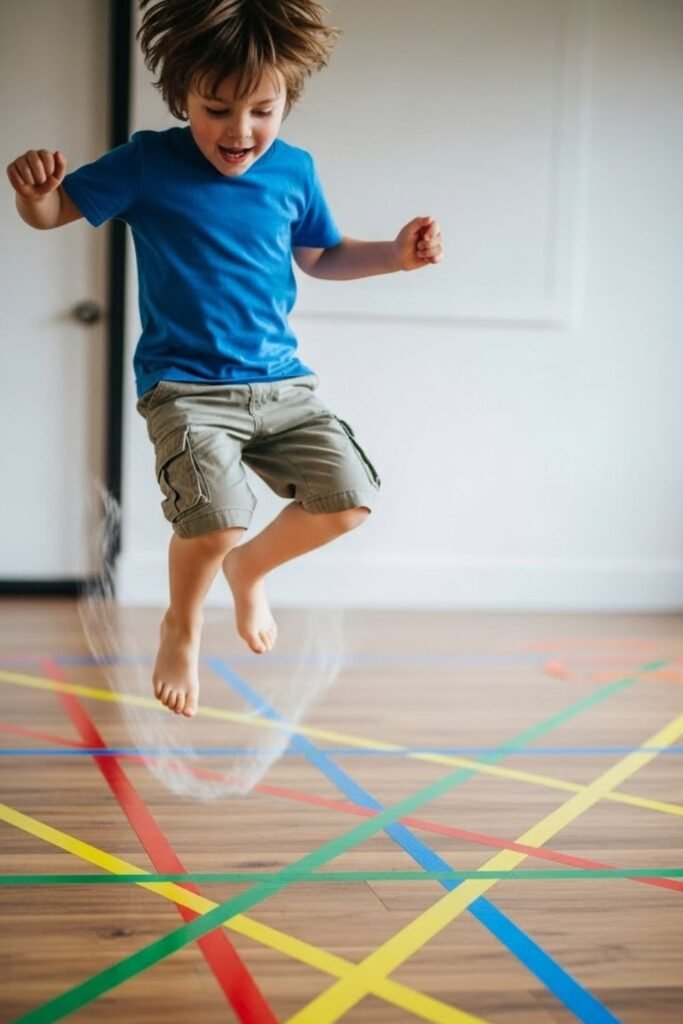
Line Leap
Jumping with purpose accelerates control. When youngsters leap over taped lines or scarves spread over the floor.
They’re forced to bend, push off, land, and then regain their balance. This works well on open indoor floors or outdoor patios.
Adjusting the distance of the lines allows for different ability levels to play without altering the fundamental game.
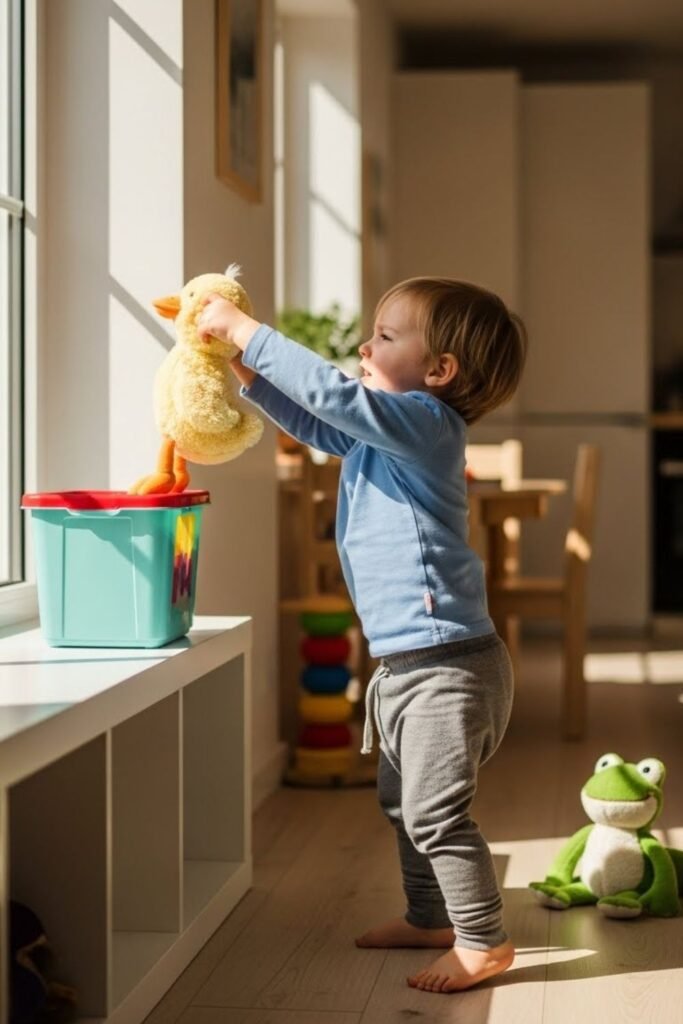
Reach Drop
Height variations give movement a clear goal. Think about reaching for a toy on a high shelf, for instance, or standing on tiptoes to put something away.
Next, crouching down to get the next item builds leg strength and improves balance. A kitchen or shelf at chest height works perfectly.
Using soft toys keeps things safe, while also encouraging a full range of motion, up and down.
FAQs
How much gross motor activity does my child actually need each day?
Kids don’t need to spend hours exercising. Instead, short, active periods scattered throughout the day are most effective.
Just five to ten minutes of climbing, jumping, or carrying things, repeated a few times, helps their bodies develop balance and strength.
What if my child avoids physical play or seems scared to move?
Begin with smaller, more grounded activities. Allow your child to observe before they participate.
Confidence flourishes when movement feels secure and they experience accomplishment.

Hi, I’m Afaf! I’m a law student who loves writing about everyday life – from home projects and crafts to fashion, beauty, and parenting tips.
I’ve been writing for over a year, sharing ideas that are simple, practical, and easy to try. I write about things I find interesting and useful, whether that’s organizing a space, trying a new DIY, or finding activities to keep kids entertained.
My goal is to share helpful ideas without making things complicated. If it works in real life, I’ll write about it.
When I’m not studying or writing, I’m usually experimenting with new projects or scrolling for inspiration!