
27 Gender Neutral Kids Room Ideas for 2026
You start looking for gender-neutral kids’ room ideas, and it’s all the same old thing.
Either it’s a “boy room” in a different outfit, or it’s so bland and grown-up that it doesn’t feel like a place for a child.
You’re not after pink or blue, but you also don’t want a dull space your child will quickly outgrow. You just want a room that’s inviting, adaptable, and practical.
In this article, you’ll see 27 Gender Neutral Kids Room ideas that balance storage and style for 2026.
How Do You Decorate a Gender Neutral Kids Room?
Begin with the foundation, not the overarching concept. Committing to a theme prematurely can lead to frustration down the line.
Opt for uncomplicated wall colors warm white, gentle beige or a pale green are all good choices.
Once the base feels serene, introduce color through easily changeable elements such as bedding, rugs and wall art.
If your child’s preferences shift, you can simply replace those items, rather than overhauling the entire room.
Save this article for later!👇👇👇

How Do You Design a Gender Neutral Room for Shared Siblings?
When two kids share a space, its all about balance, not necessarily aesthetics. Begin with a neutral foundation to avoid a sense of division.
Next, carve out individual areas a shelf, a wall or a bedside table for each child to claim as their own.
If one child is drawn to vibrant hues while the other prefers a more subdued palette, stick with neutral tones for the larger elements.
And allow color to flourish in their personal zones. And a room that feels equally theirs minimizes the potential for the disagreements.
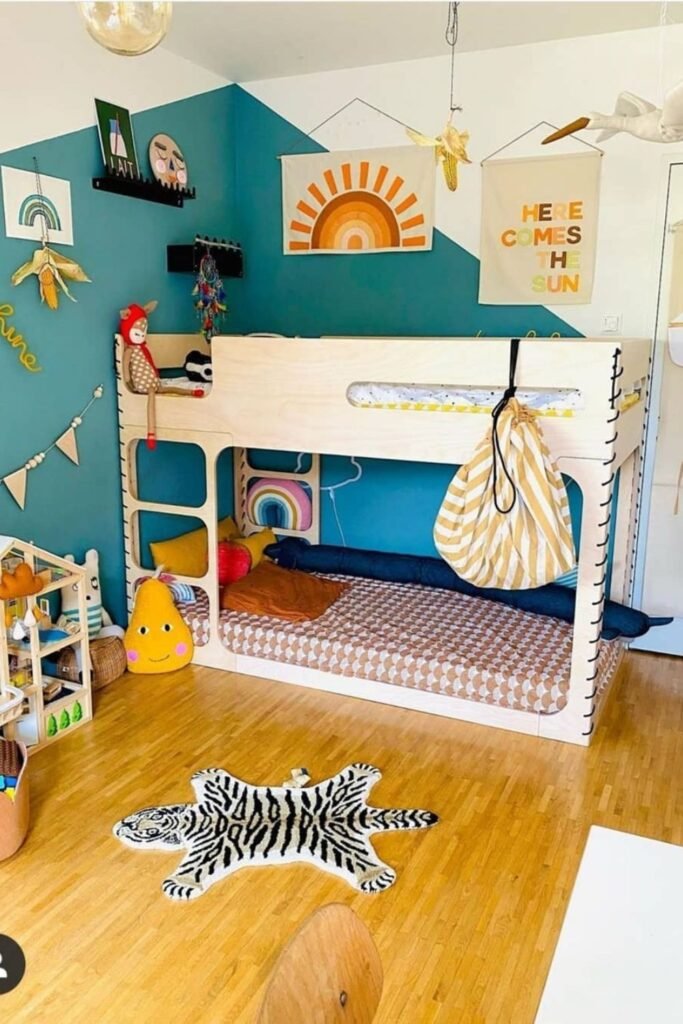
Playful Balance
Strong color on one wall gives the room energy without locking it into a theme. A stacked bed frees up floor space which matters most in shared or smaller rooms.
Keep the bed frame uncomplicated allow the softness emerge from pillows, toys, and what you hang on the walls.
When tastes shift, you swap out the little items not the big ones. This approach is particularly effective for siblings sharing a room, providing them with space to play.
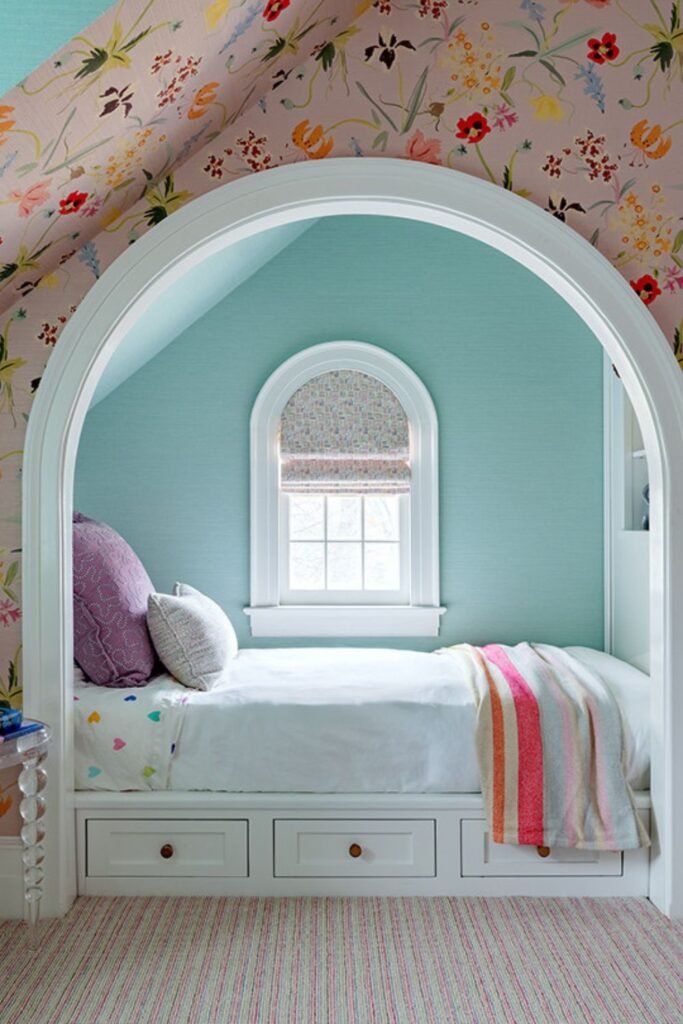
Cozy Nook
Hidden sleeping corners make kids feel safe and calm, especially in rooms with odd angles or sloped ceilings.
An arched bed transforms an overlooked wall into a cozy nook and rather than a design dilemma. Opt for a neutral framework allowing wallpaper or textiles to inject character.
Built in drawers beneath the bed offer a tidy solution eliminating the need for additional furniture.
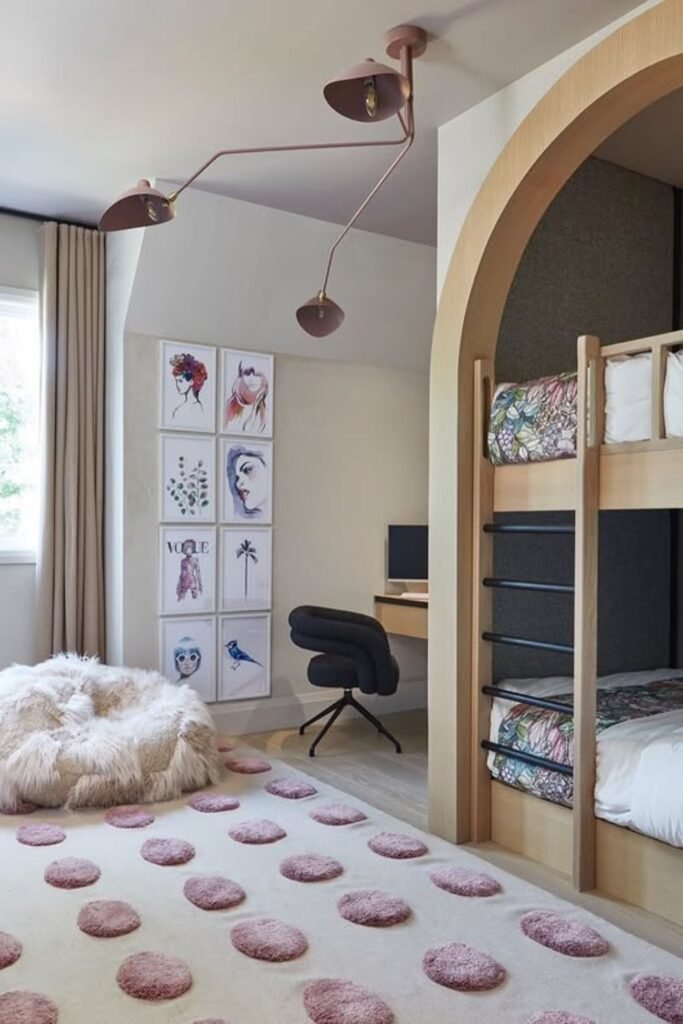
Soft Zones
Shared rooms work better when every activity has its own place. Sleeping stays tucked inside a calm arch while play and the study happen out in the open.
Neutral built in maintain equilibrium so no one feels like they are getting special treatment. Texture takes center stage imagine plush rugs and welcoming chairs.
Its all about a blend of materials that conjure or a comfortable vibe with out leaning towards any specific gender.
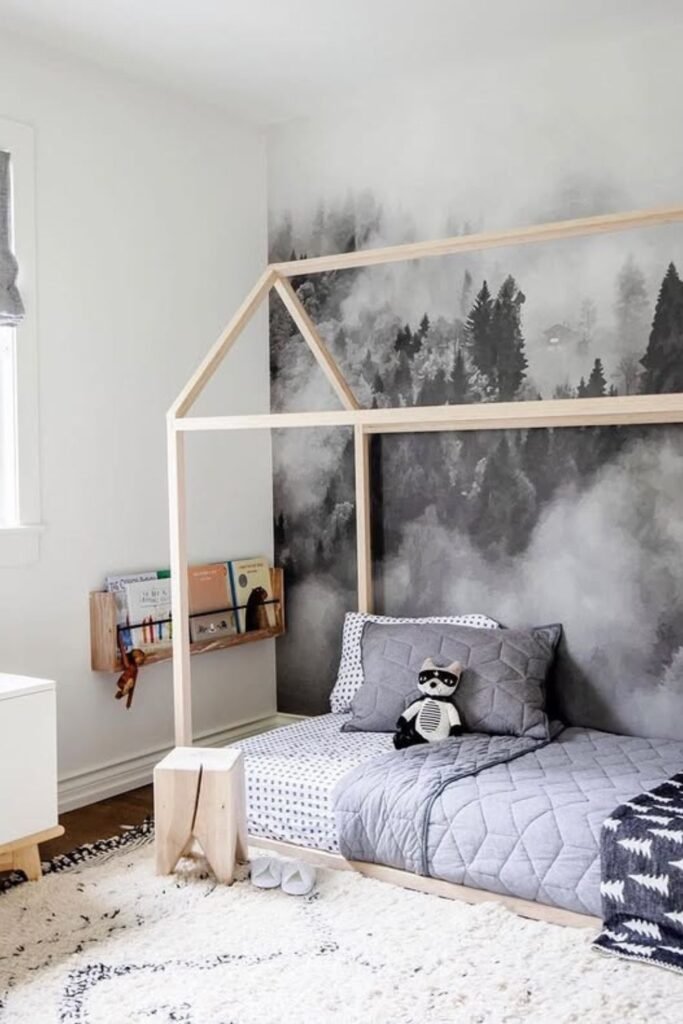
Calm Escape
Nature themes work when they feel quiet not loud. A soft forest wall paired with a simple wooden bed frame creates a calm sleeping space that suits almost any age.
Keep the fun structure, like a house shaped frame but keep the colors muted to avoid a themed sense.
This design works well for children who need a calm space to relax and for parents who want a room that wont quickly go out of style.
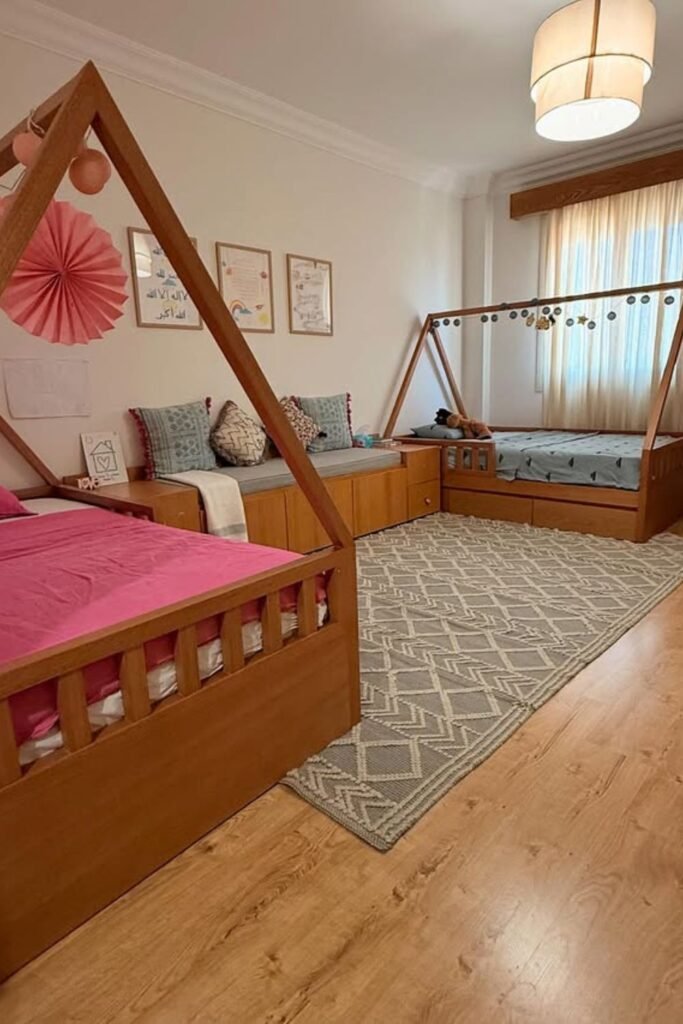
Equal Ground
Matching beds stop shared rooms from turning into a competition. Using the same bed style gives both kids the same starting point, even if their bedding or pillows differ.
Warm wood tones lend a neutral quality to the room and avoiding a sterile effect. The open floor plan in the center promotes a sense of fairness and practicality.
This arrangement is particularly well suited for siblings of similar ages who share a space providing clear and organizational scheme without imposing and single aesthetic sides.
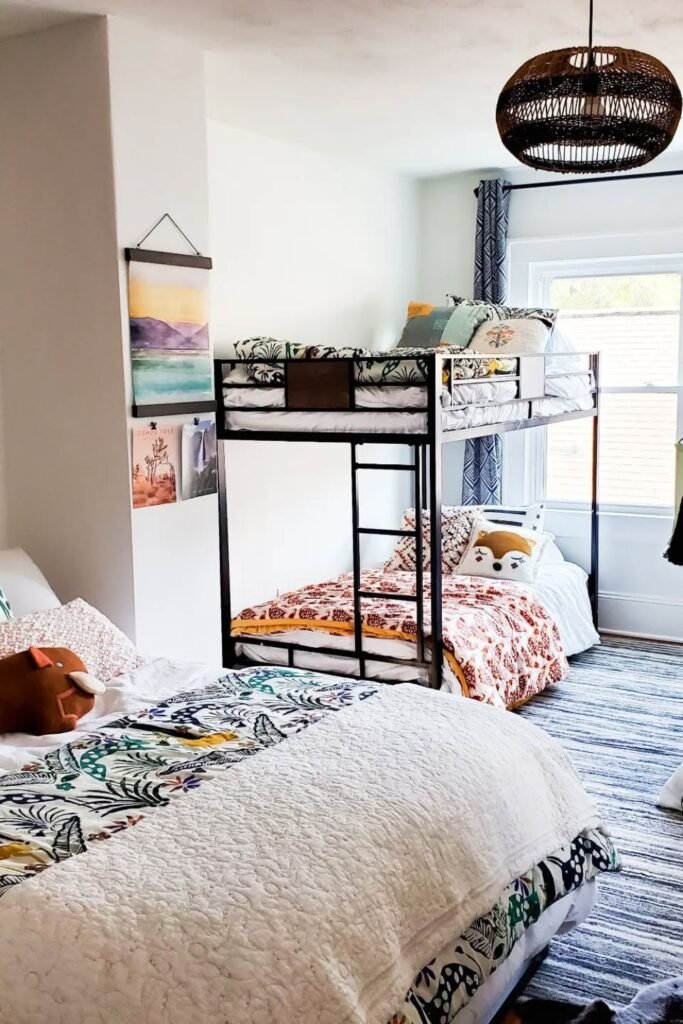
Flexible Layout
Multiple beds only work when the room still feels open. Mixing bunks with low beds keeps everyone comfortable without crowding the floor.
Neutral frames allow patterned bedding to inject some character without overwhelming the space.
Placing the beds apart, rather than in a row, provides each child with their own personal space.
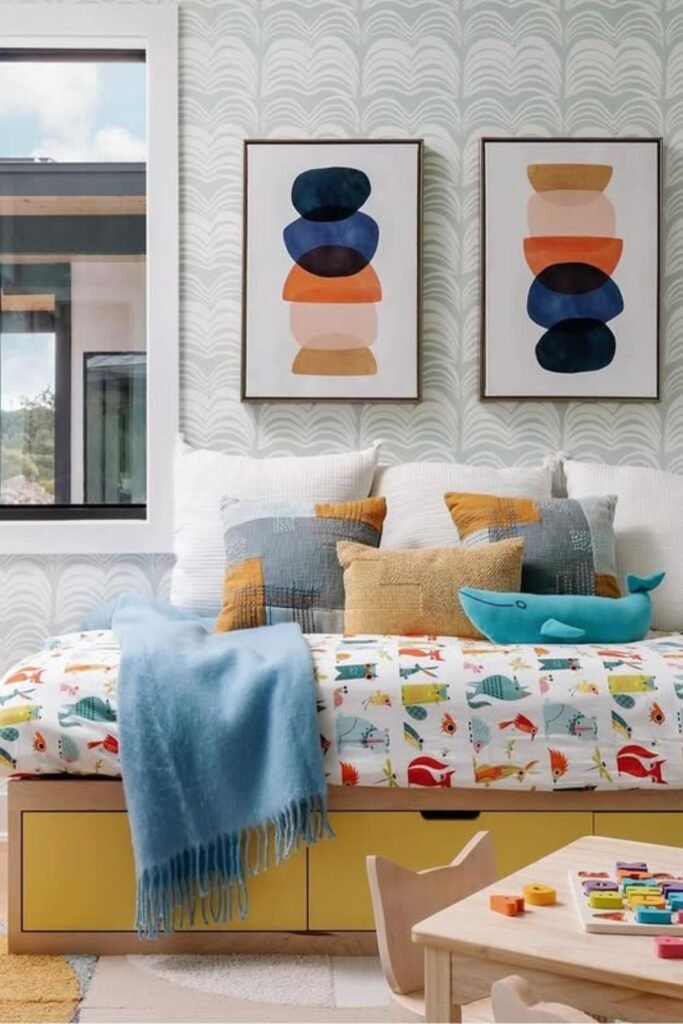
Color Control
Bold patterns feel safe when they stay contained. Keeping artwork and bedding colorful while the walls stay soft stops the room from feeling loud.
Low beds with integrated storage are a smart choice for compact rooms, especially when playtime spills out onto the floor.
When preferences shift a quick update with new pillows, throws or artwork can completely transform the room.
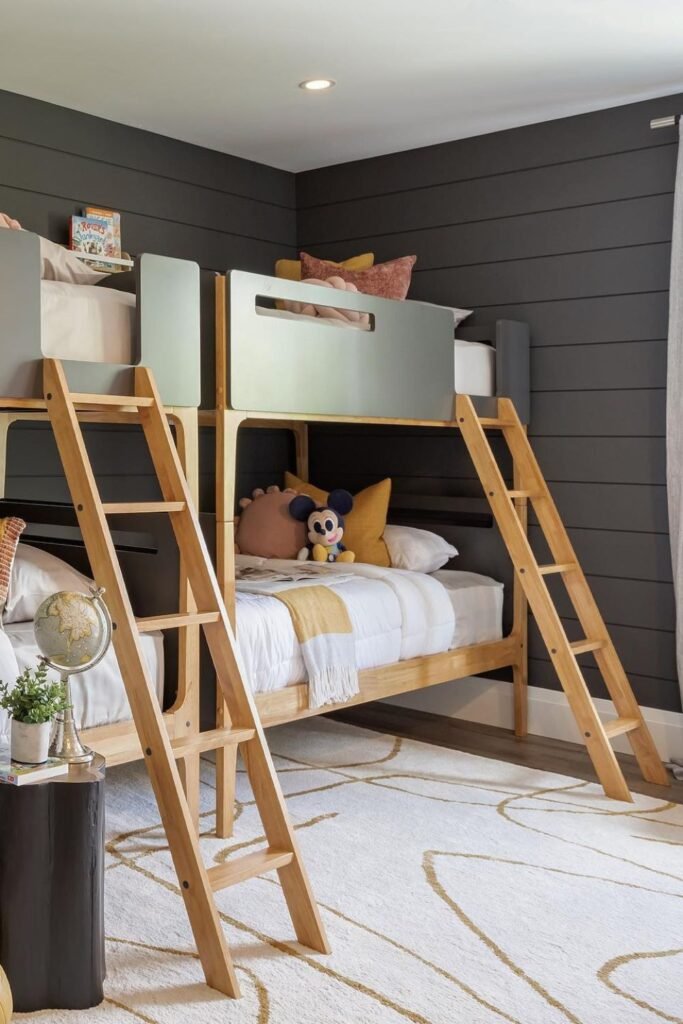
Calm Structure
Dark walls don’t make a room feel heavy when the furniture stays light. Stacked beds like these keep everything organized and predictable.
This approach helps shared rooms feel more serene. The natural wood ladders temper the starkness creating a warmer atmosphere.
To prevent any rivalry, use bedding of the same size, and then let the little things pillows, toys, books reflect individual personalities.
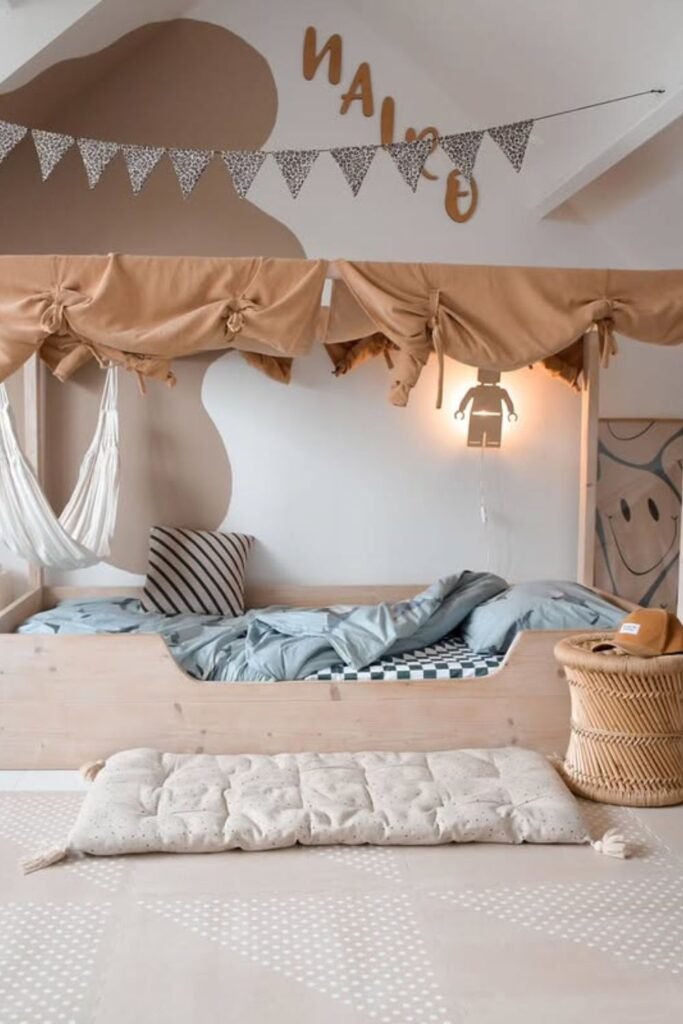
Soft Canopy
The act of sleeping becomes something very wonderful when the bed transforms into a private sanctuary.
A modest canopy frame is a good choice for younger children. It provides a sense of security at night without completely enclosing the space.
The neutral fabric establishes a calming atmosphere. It complements the wall color and contributing visual interest without overwhelming the space.
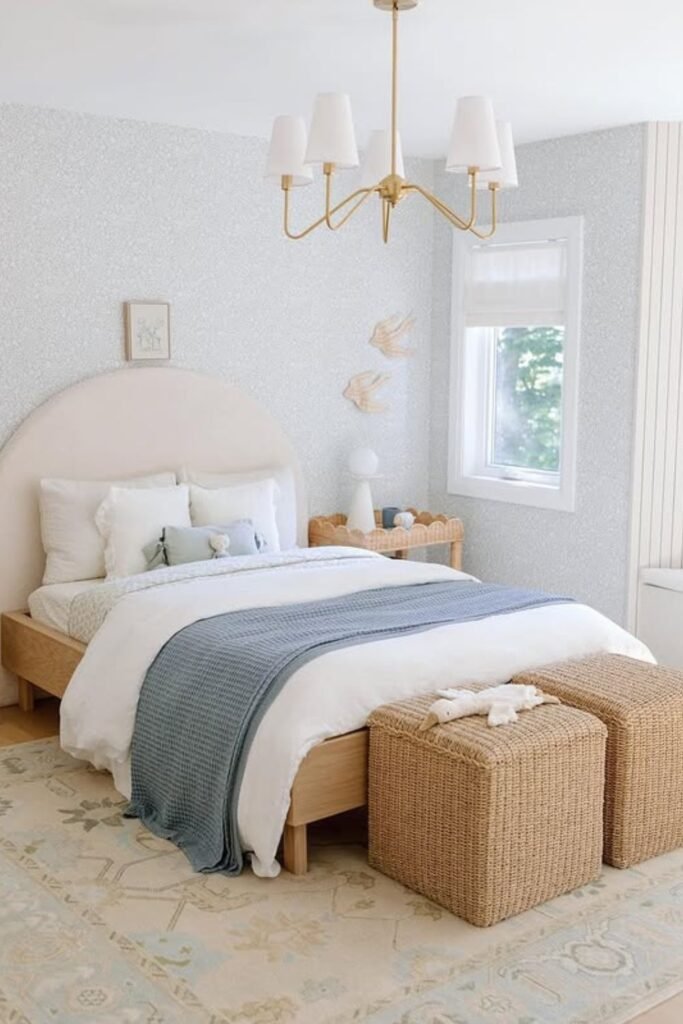
Gentle Layers
Soft neutrals create a room that grows without effort. A rounded headboard keeps the bed feeling friendly while woven textures add warmth instead of color overload.
Everything functions well because it does not overreach. For a gender neutral space designed to endure and prioritize shape fabric and lighting above all else.
While minor elements can be modified later the basic concept remain the same.
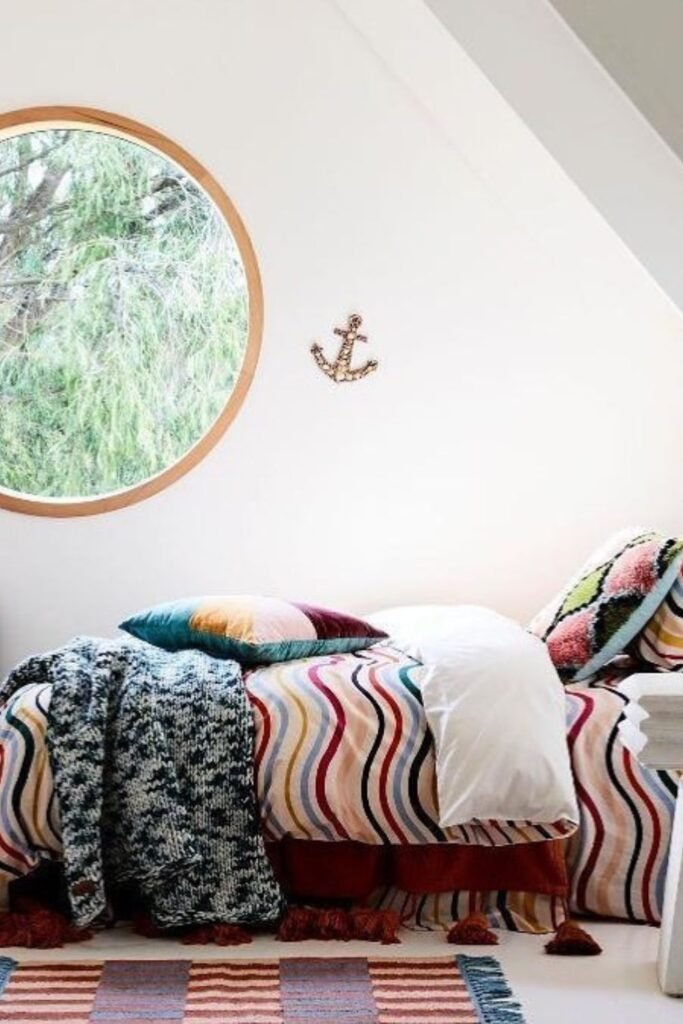
Color Freedom
Stripes and a medley of patterns inject vitality steering clear of any overtly gendered design. White walls provide a perfect backdrop for vibrant bedding to shine.
The design is built for easy modifications later on. A low bed works well in attics and rooms with slanted ceilings where space is at a premium.
This setup is perfect for kids with vivid imaginations. They crave visual interest and yet still need a room that is open and peaceful.
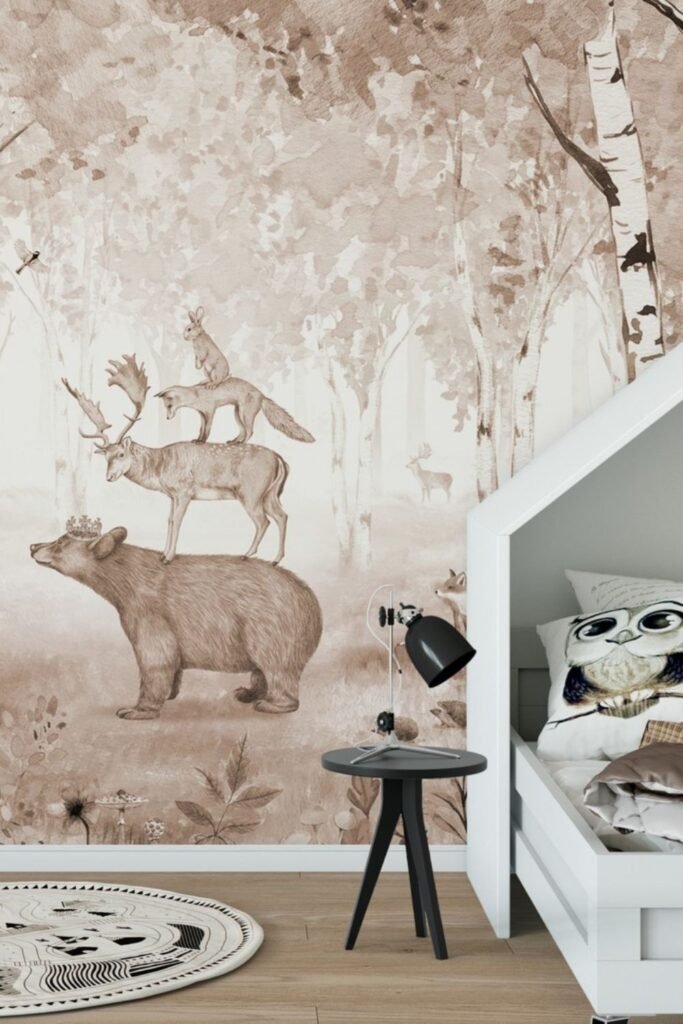
Story Calm
Soft storytelling works better than loud themes. A muted forest mural sets the mood without taking over the room, which makes it easier to live with long term.
A straightforward bed design complements the wall’s intricate details. Neutral bedding, together with a few small animal accents.
This arrangement is ideal for the children and thrive on bedtime stories or parents seeking a tranquil distinctive space.
Smart Height
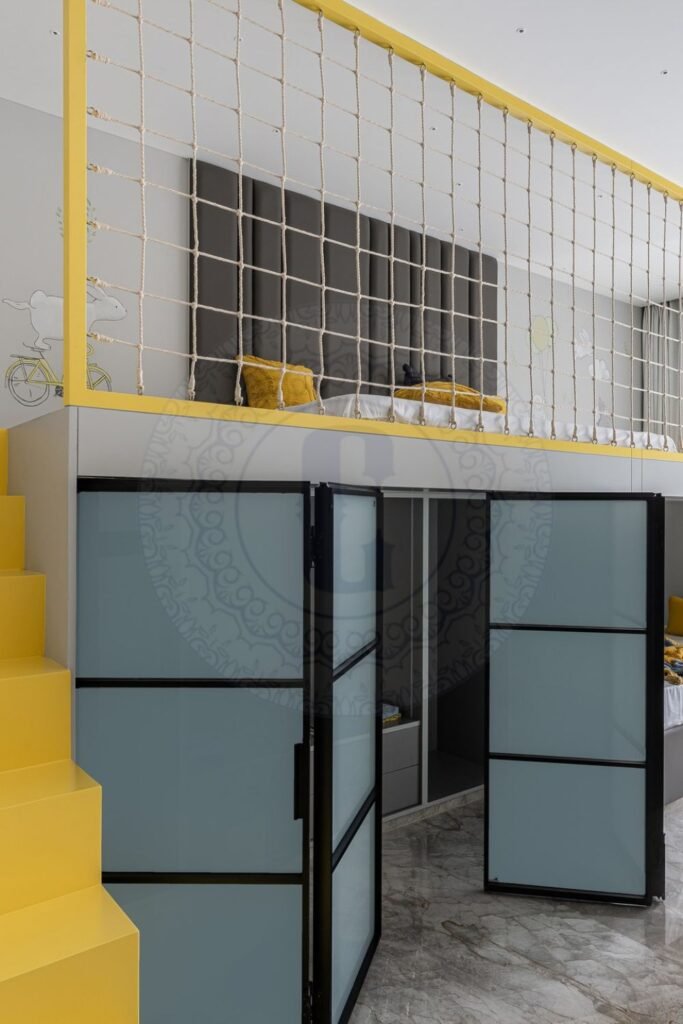
Vertical space solves problems floor space never will. A raised sleeping area creates room underneath for storage, play, or an extra bed without crowding the room.
Soft hues, along with a single bold accent, create a playful yet restrained atmosphere. The presence of railings.
And generous steps contributes to a sense of security, preventing any feeling of being overwhelmed.
Shared Comfort
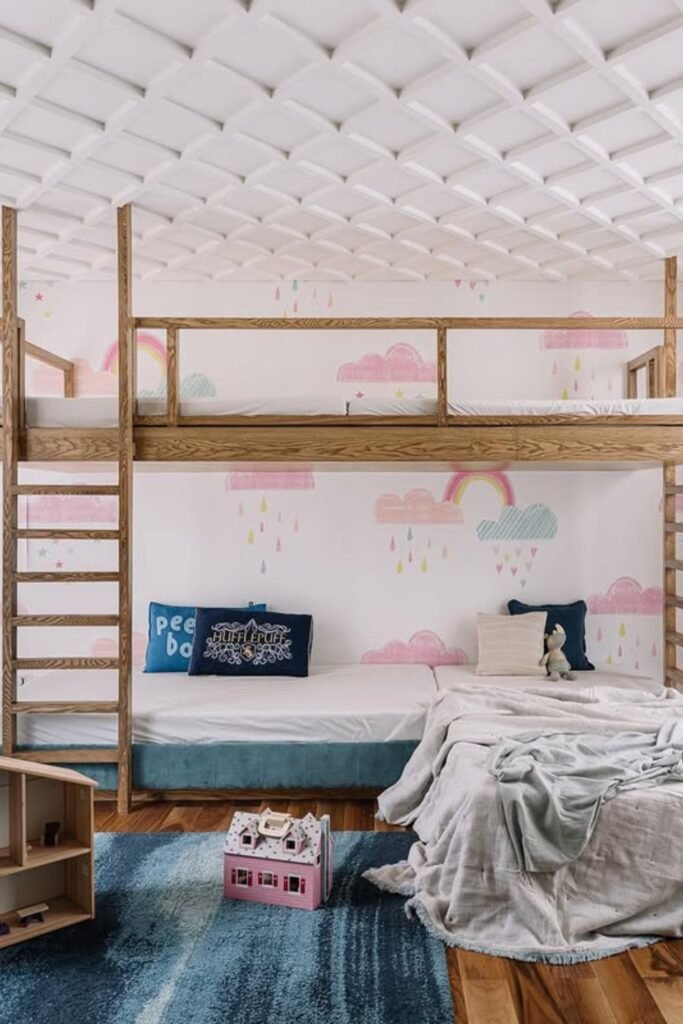
Sleeping together doesn’t mean giving up personal space. A long bunk frame keeps both beds connected while still letting each child claim their own side.
Soft wall art injects a sense of fun sidestepping the requirement for a rigid design scheme.
Choosing bedding that varies, yet complements allows children to express themselves without fostering competition.
Quiet Function
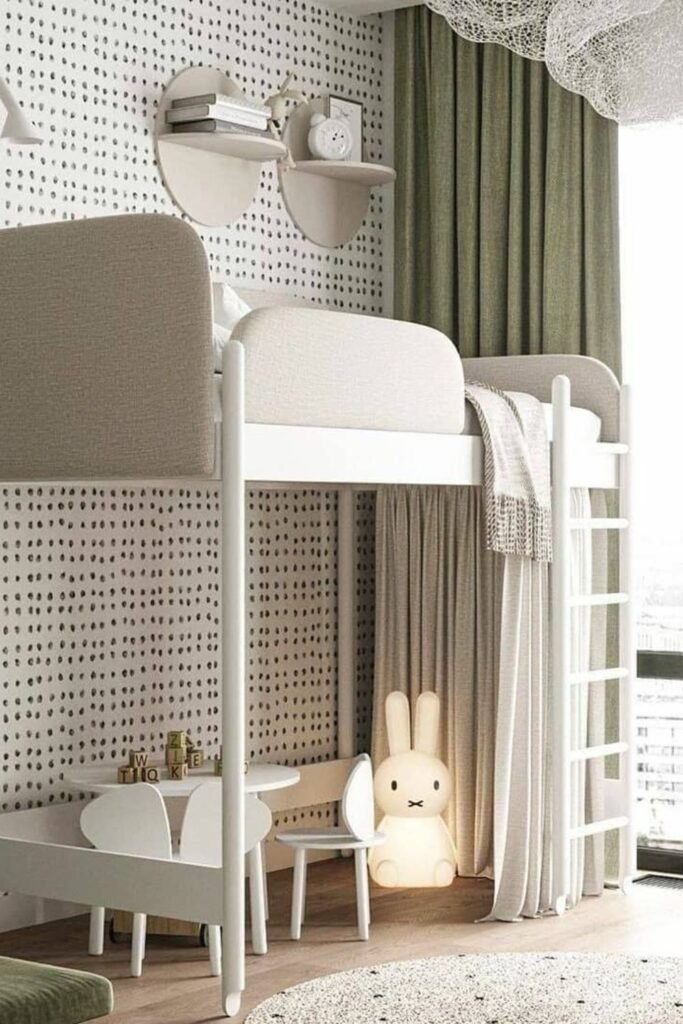
Calm rooms help kids focus and rest better. A raised bed with space underneath creates a natural split between sleep and play without adding walls.
Soft shapes, subdued hues and tactile surfaces prevent the room from becoming cluttered.
Curtains hung beneath the bed offer both privacy and adaptability, responding to shifting requirements.
Grown Calm
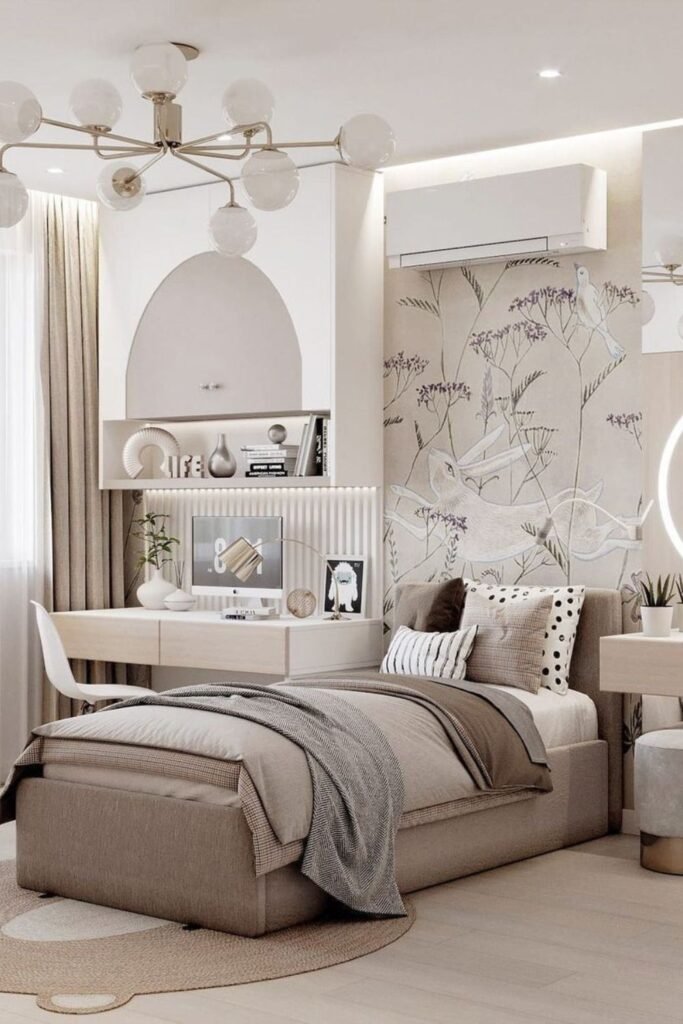
Neutral does not mean childish and this kind of room proves it. Soft layers clean furniture and gentle wall art create a space that feels calm now and still works years later.
Using muted hues allows a space to change as a child grows, instead of forcing them into a certain age group.
This method is particularly effective for the older children and tweens who are looking for something a bit more grown up, while yet being comfortable.
Shared Calm
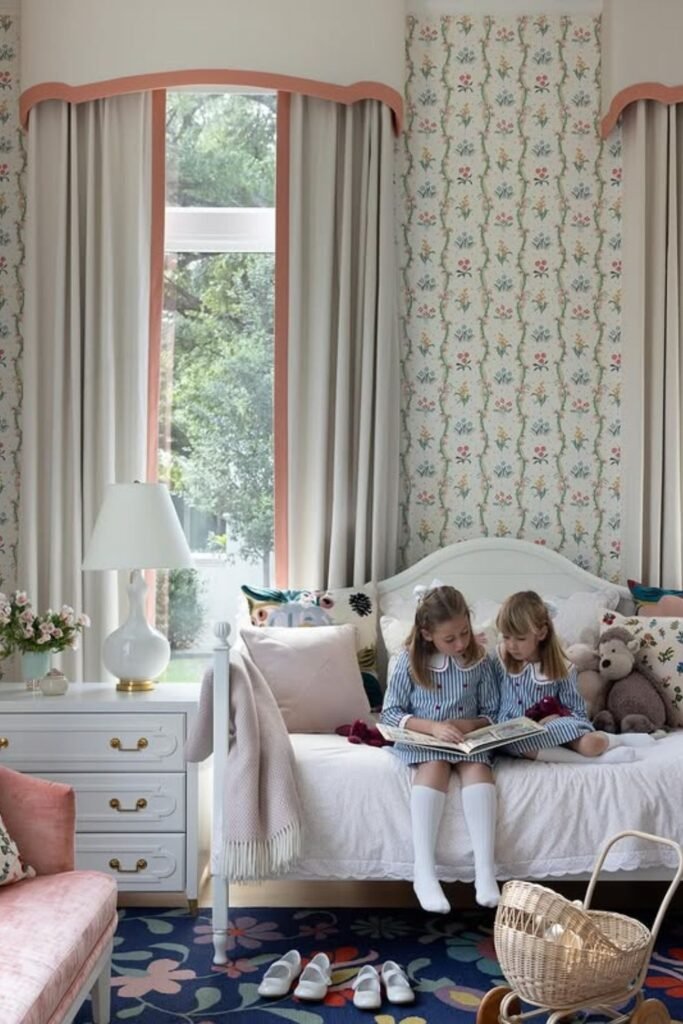
Soft patterns make shared spaces feel gentle instead of busy. Matching wallpaper across the room keeps everything balanced while small color accents stop it from feeling flat.
A single bed can be ideal for siblings who are close in age and like quiet activities together such as reading or simply relaxing.
Choosing neutral furniture allows for adaptability, meaning the room can evolve over time without a complete overhaul.
Playful Order
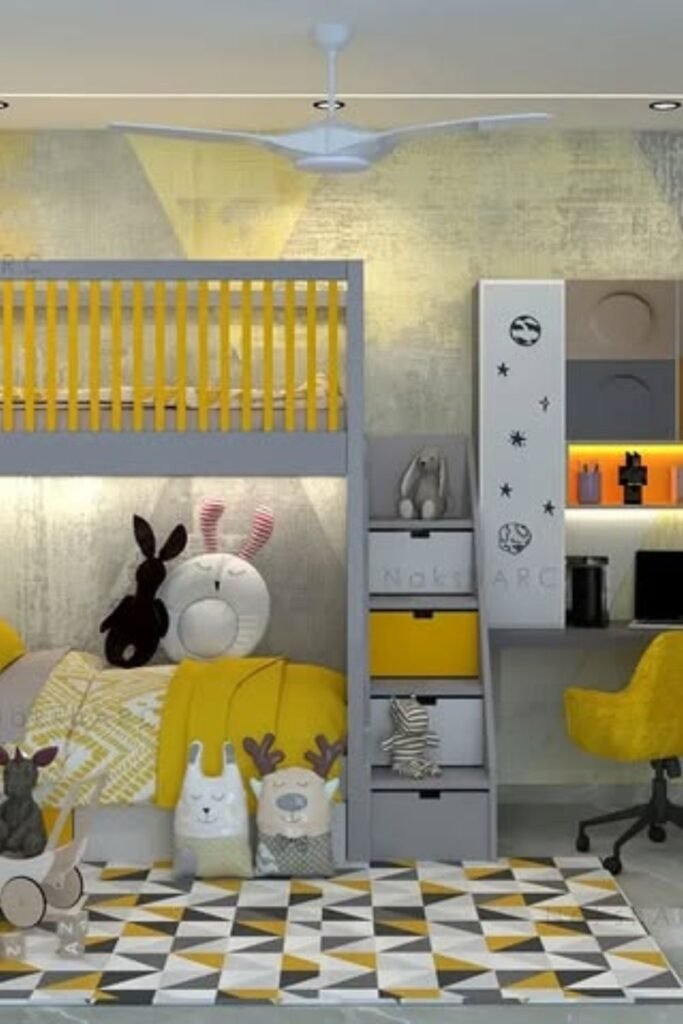
Busy rooms feel calmer when everything has a place. A raised bed paired with built-in storage keeps toys, books and study space organized without crowding the floor.
Strong accents are effective in this context, as the foundation remains neutral and well-defined.
Employing the same hue in modest amounts throughout the space creates cohesion.
Soft Whimsy
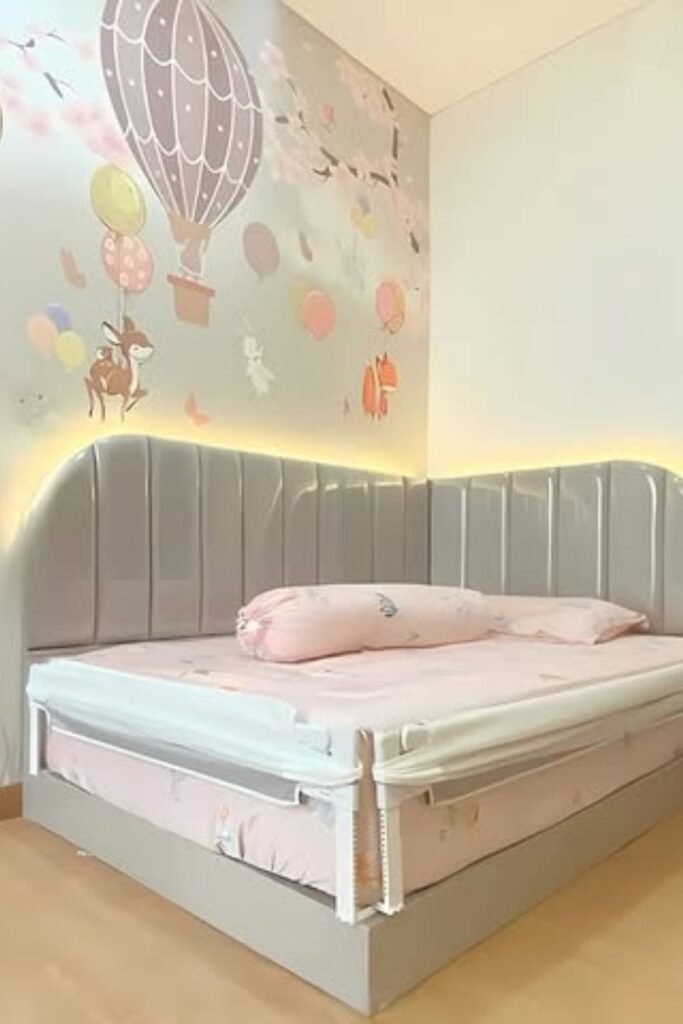
Gentle murals keep a room playful without locking it into a short-lived theme. Using soft illustrations instead of bold characters helps the space grow with the child.
A bed frame with padding offers both comfort and a measure of protection, making it a good choice for little ones moving on from a crib.
To keep the emphasis on the wall art, the remainder of the room should remain uncluttered.
Light Geometry
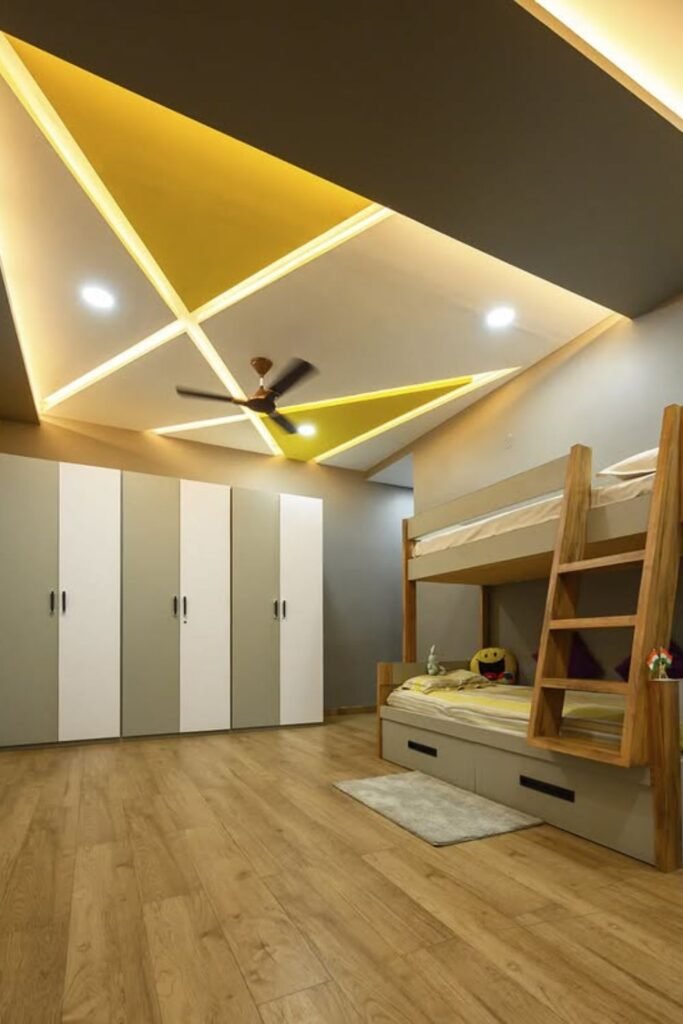
Ceiling design can change how a room feels without adding clutter. Geometric lighting pulls attention upward, which makes the space feel bigger and more interesting.
Keeping the furniture uncomplicated helps the striking ceiling shine, preventing the room from feeling cluttered.
Built-in storage along a single wall ensures everything is organized and hidden away.
Soft Architecture
Built-in beds turn the room itself into the design. Curves, arches and soft edges make the space feel calm without relying on color themes.
Maintaining a consistent tone across the space fosters a sense of cohesion, rather than clutter.
Elevated sleeping spaces create more floor space which may be used for play or storage. This method shines in custom homes or those built for the long haul. The aim.
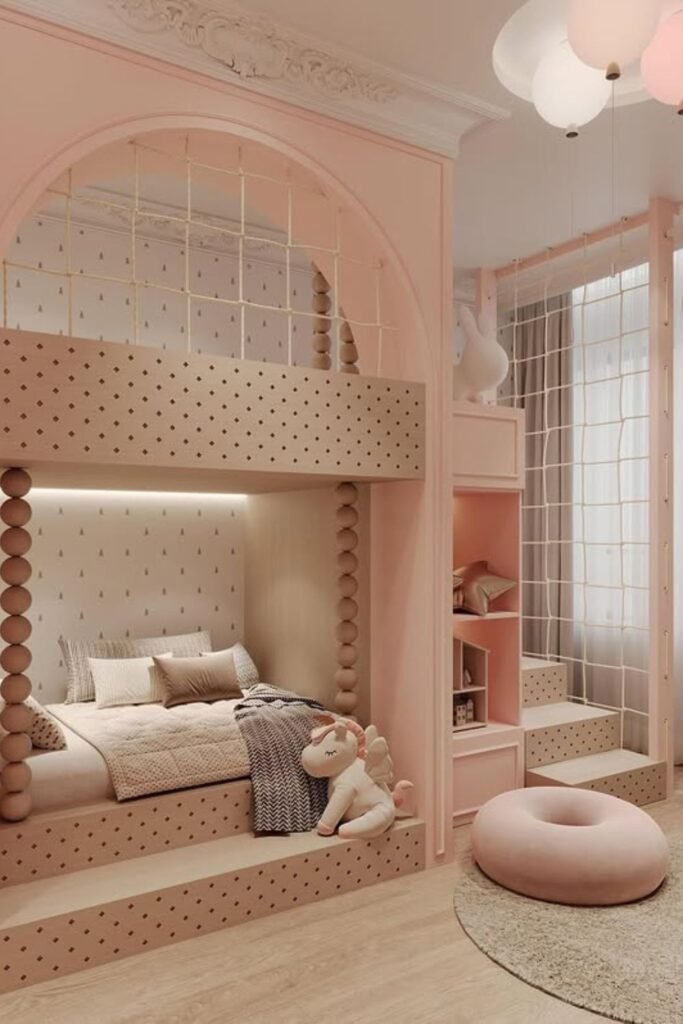
Routine Anchor
Kids feel calmer when the room quietly supports their daily rhythm. A routine anchor is one fixed spot that stays the same no matter.
The rest of the room transforms, becoming a reading nook a morning station, or a bedtime retreat.
The lighting, the textures, the arrangement all remain constant, day after day. Everything else is free to shift.
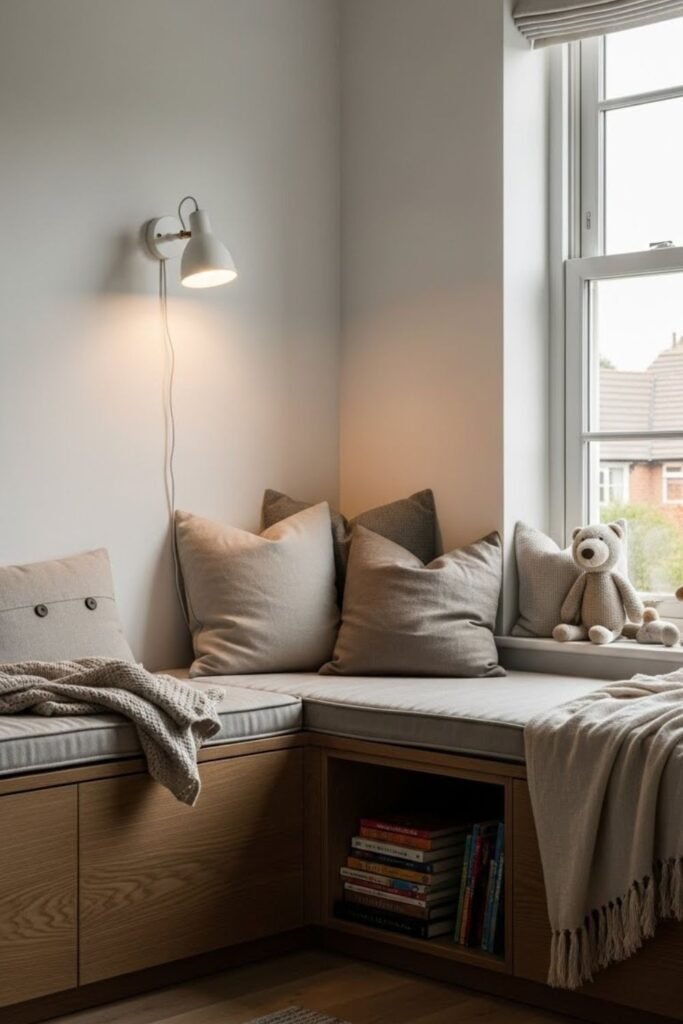
Change Buffer
Constant redesigns confuse kids more than adults realize. A change buffer solves that by limiting where change happens.
Choose a single area a pinboard wall, an open shelf or a magnetic strip where interests can come and go.
The rest of the room remains visually quiet. When a new phase begins only that specific space gets a refresh.
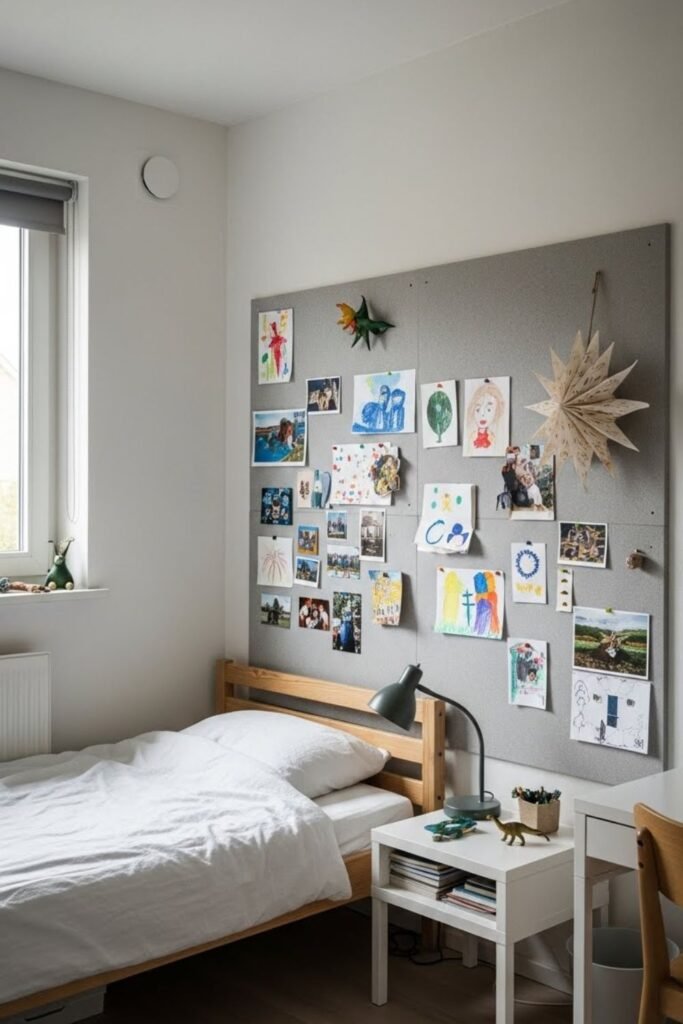
Neutral Story
Themes usually lock kids into one idea too early. A neutral story keeps imagination open.
Instead of dinosaurs, princesses, or space, build around a broad concept like travel, seasons.
Maps, textures, objects, and books assist the story without fully defining it. Children then complete the story themselves.
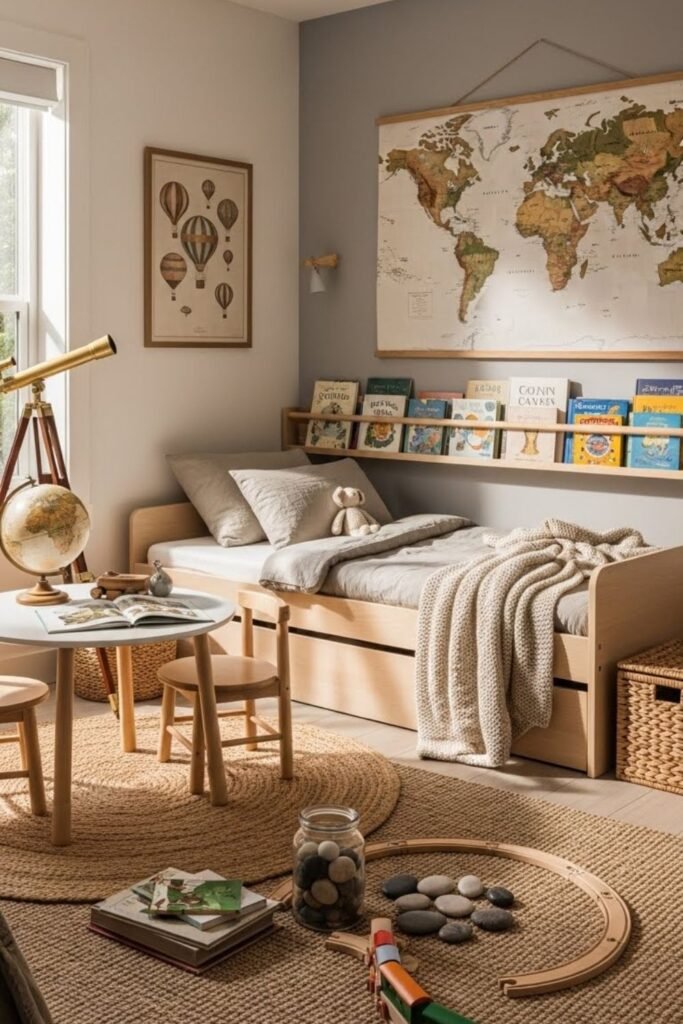
Sensory Balance
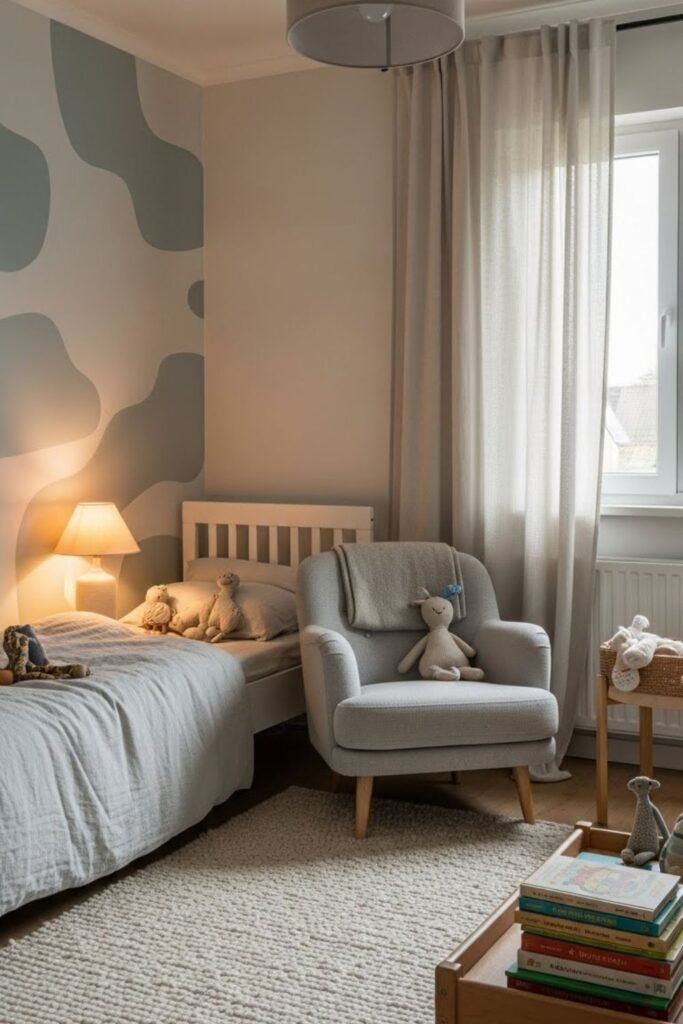
Color isn’t the only thing that overstimulates kids sound, texture, and light matter just as much. Sensory balance means mixing one stimulating element with two calming ones.
If the room features striking artwork choose for soft textures and warm lighting. When patterns are present, minimize visual distractions in other areas.
This strategy is particularly effective for children who appear “overly active” in their home environment. Frequently, the rooms design overwhelms their nervous system.
Shared Neutral
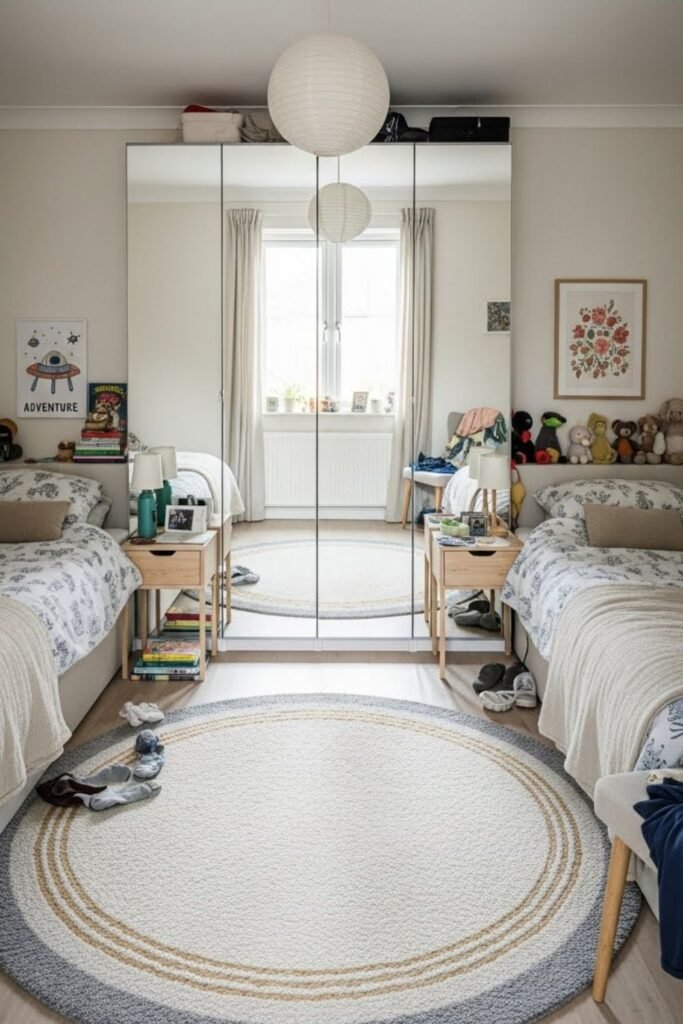
Shared rooms fail when neutrality erases individuality. Shared neutral works differently. The center of the room stays calm and equal while edges belong to each child.
Think of it as mirrored storage identical beds and a single common rug. But then, personal shelving, unique lighting and little displays on either side.
It prevents anybody from feeling overshadowed, ensures no one feels overlooked, and stops the room from becoming a constant source of conflict over who they are.
Future Ready
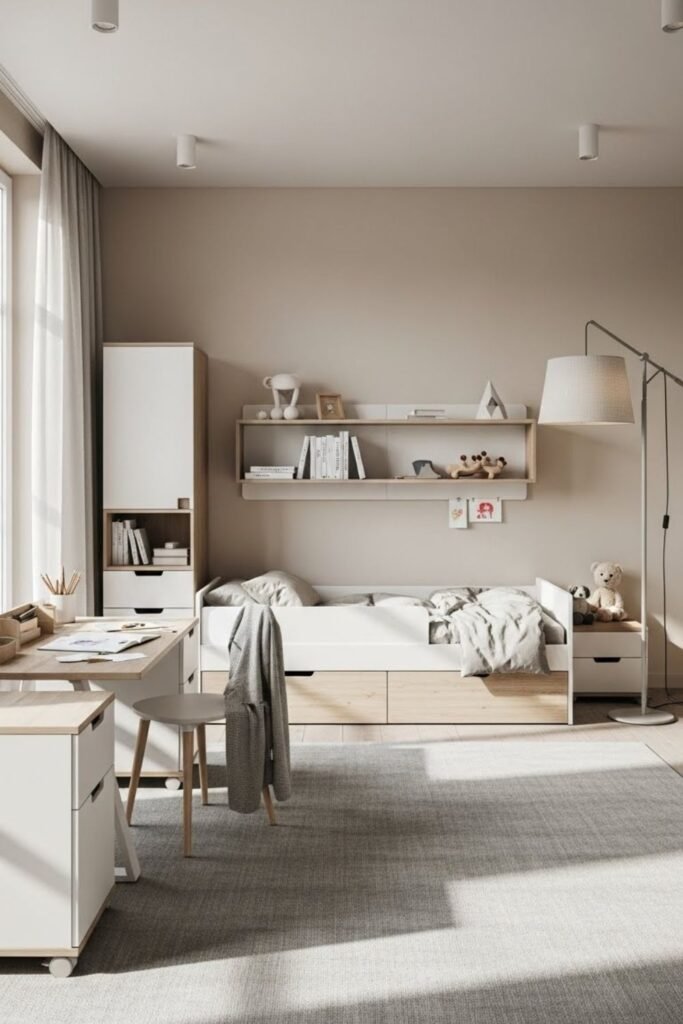
Most kids’ rooms are designed for today, not next year. A future-ready room plans for growth without predicting it. Furniture stays low, modular, and movable.
Wall space is still available. The power outlets and lights are designed to accommodate workstations in the future, not just playthings.
This approach is ideal for parents who prefer to avoid complete overhauls every few years. Rather than always trying to keep up with the latest fads, the room evolves subtly.
FAQs
What’s the biggest mistake parents make with gender-neutral kids rooms?
Designing a room for its online appearance rather than its practical use, is a common pitfall.
Children don’t perceive rooms as mere aesthetics they experience them through comfort, ease of movement and a sense of the familiar.
A space that looks good in pictures but neglects essential elements like storage, lighting, or the rhythms of daily life will soon become a source of annoyance.
Should I involve my child when designing a gender-neutral room?
Yes, but with some boundaries. Allow them to pick out things that are readily swapped out, such as bedding, artwork, or decorative items.
Keep the more permanent choices paint colors, furniture, and room arrangement neutral and enduring.
This approach provides your child a sense of control without necessitating a complete overhaul of the area whenever their preferences evolve.

Hi, I’m Afaf! I’m a law student who loves writing about everyday life – from home projects and crafts to fashion, beauty, and parenting tips.
I’ve been writing for over a year, sharing ideas that are simple, practical, and easy to try. I write about things I find interesting and useful, whether that’s organizing a space, trying a new DIY, or finding activities to keep kids entertained.
My goal is to share helpful ideas without making things complicated. If it works in real life, I’ll write about it.
When I’m not studying or writing, I’m usually experimenting with new projects or scrolling for inspiration!