
24 Kids Playroom Ideas for 2026
You tidy up the playroom after the kids are asleep and for a fleeting moment you feel a sense of accomplishment.
But then the next morning the toys are strewn everywhere again. Missing pieces. Kids who are bored within minutes.
You start to question whether a playroom simplifies things or just adds to the disorder. The truth is the issue is not with your children.
And it’s not that you are doing anything wrong. Most playrooms fall short because they’re not organized with a clear system.
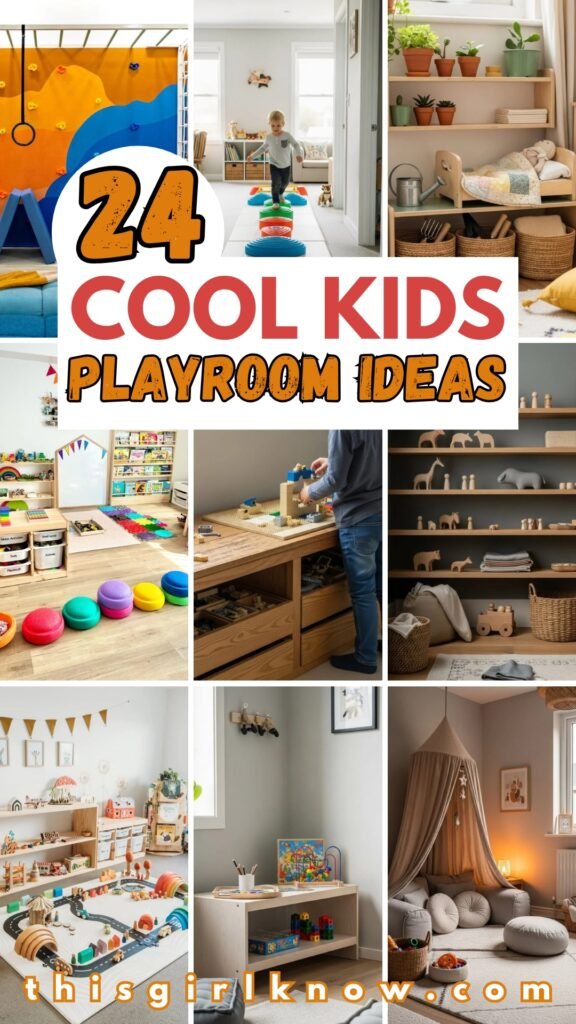
In this article, you’ll find 24 small kids Playroom ideas that feel fun, organized, and modern for 2026.
What Are The Best Storage Ideas For A Kids Playroom?
A cluttered playroom often boils down to one thing: storage. It’s not that kids are inherently messy it’s that the way things are stored doesn’t click with them.
The most effective storage solutions are straightforward, visible and accessible. Think low shelves, open bins and baskets.
These are far superior to boxes with lids or overly complex organizers. When a child can easily see a toy and put it away independently, the mess is naturally reduced.
Organize toys by the activity they encourage, not by their type, and keep the number of toys out at any given time to a minimum.
Save this article for later!👇👇👇
What colors work best for a kids playroom?
Color subtly shapes a rooms atmosphere, even if you don’t consciously register it.
While a vibrant palette can seem lively, it frequently contributes to increased restlessness and distraction in children.
A more subdued foundation is generally more effective. Consider light neutrals or gentle hues for the walls and introduce color through toys books and rugs or artwork.
This approach maintains a playful environment without becoming visually exhausting.
If you are drawn to bold colors limit their application to smaller areas rather than the entire room.
Active Play
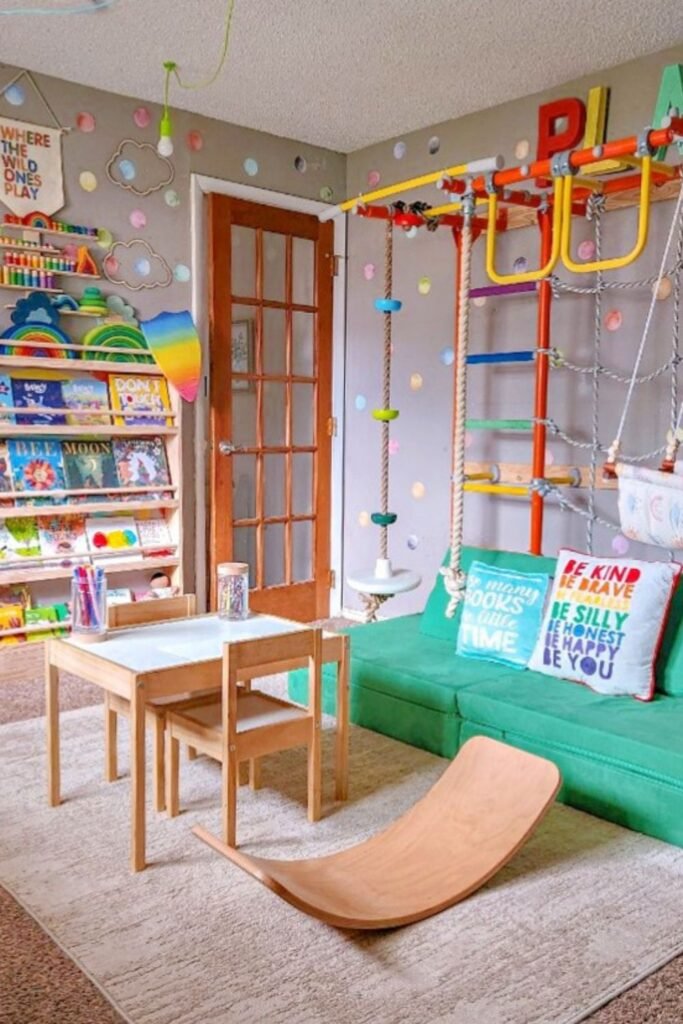
Energy heavy kids need a place to move before they can focus. A climbing and rope setup like this works best in a spare room or basement.
Where noise and movement won’t be a problem. Secure the structure to the wall, and place soft seats or floor mats beneath it to prevent injuries.
Incorporating physical play with quieter activities nearby allows children to transition between different types of play and rather than being overly energetic.
Quiet Corner
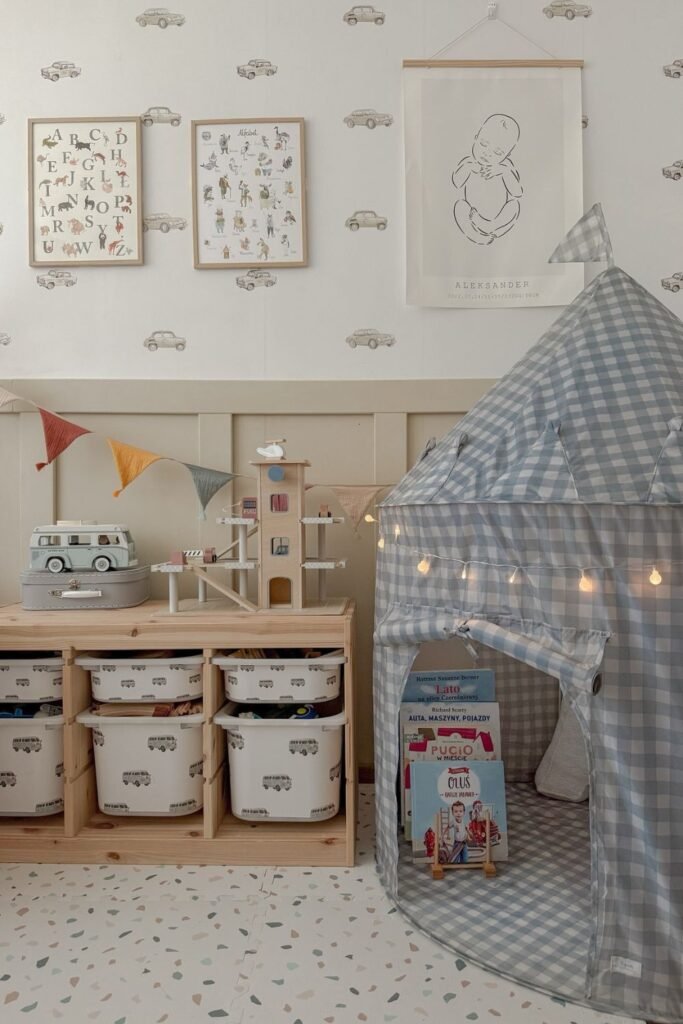
Some playrooms work better when they invite kids to slow down instead of hype them up. A setup like this fits perfectly in bedrooms or shared family spaces where calm matters.
Keeping toys at a low level makes them easy to see and access, yet contained. The fabric tent offers a perfect little hideaway for reading or imaginative games.
To replicate this, combine some understated storage bins with a single, inviting covered area.
Reading Nook
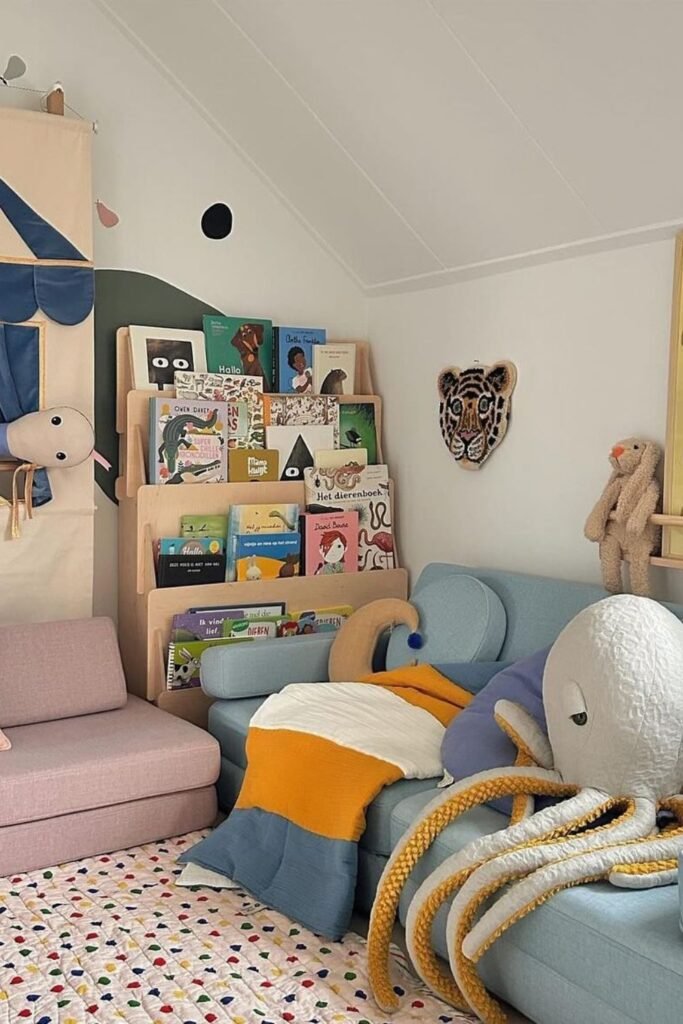
Stories feel more inviting when books are part of the room instead of hidden away. A front-facing book shelf like this turns reading into a natural habit.
Especially in playrooms that aren’t too big, or even in attics. Having soft seating close by encourages youngsters to linger, rather than just picking up a book and heading out.
To replicate this, keep books within easy reach and complement them with inviting chairs or floor cushions.
Calm Storage
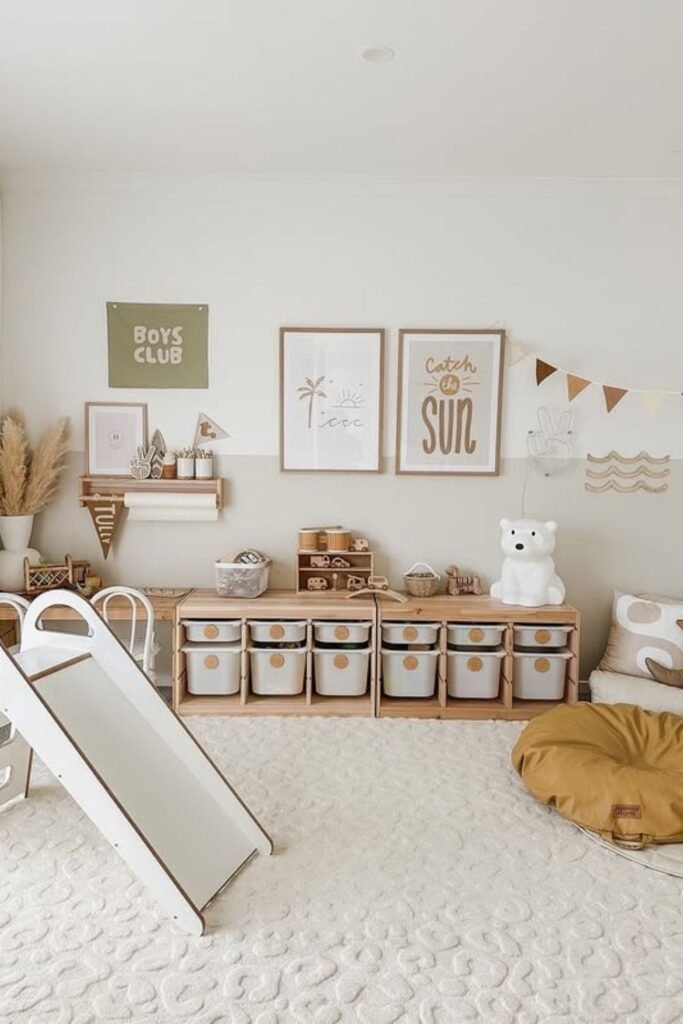
Order shows up naturally when everything has a clear place to land. A low, continuous storage unit like this works best in shared playrooms.
Matching bins help keep toys organized but they also let youngsters see what’s inside without having to empty everything.
To keep the space from feeling too rigid and to contrast the calm of the storage, add something lively such a tiny slide or a soft climbing structure.
Movement Room
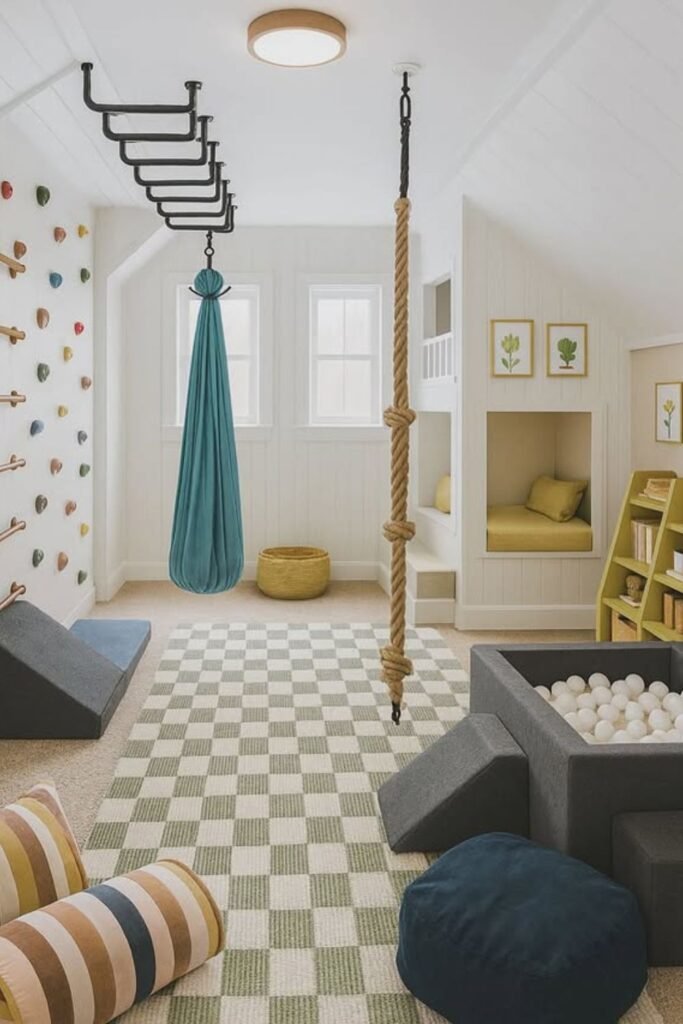
Energy needs direction, not suppression. A setup like this gives kids a safe place to climb, hang, swing and crash without taking over the rest of the house.
Wall-mounted grips, ceiling bars, and ropes are ideal for attic rooms or those long, narrow spaces where floor play is a bit cramped.
Keep the center area clear and line the edges with soft blocks or a ball pit to contain the action, preventing it from becoming a free for all.
Open Play
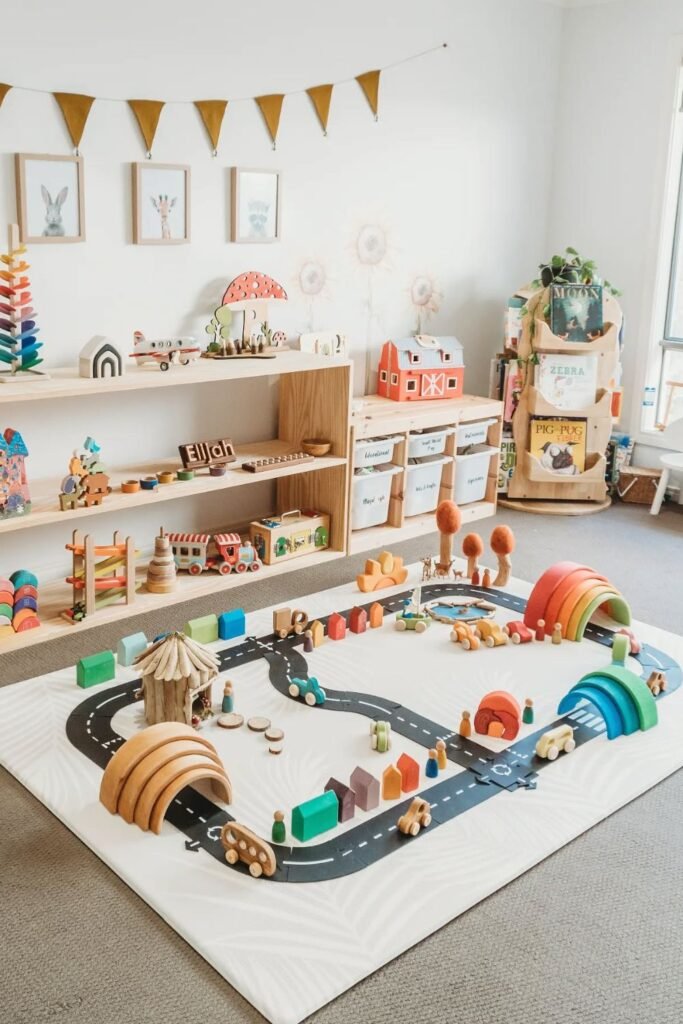
Clear floor space changes how kids play. A large mat like this gives building toys room to spread without taking over the whole house.
It’s particularly effective in shared family spaces where the goal is to make playtime feel purposeful not chaotic.
Position shelves at a childs height and organize toys by the type of activity they support.
Play Loft
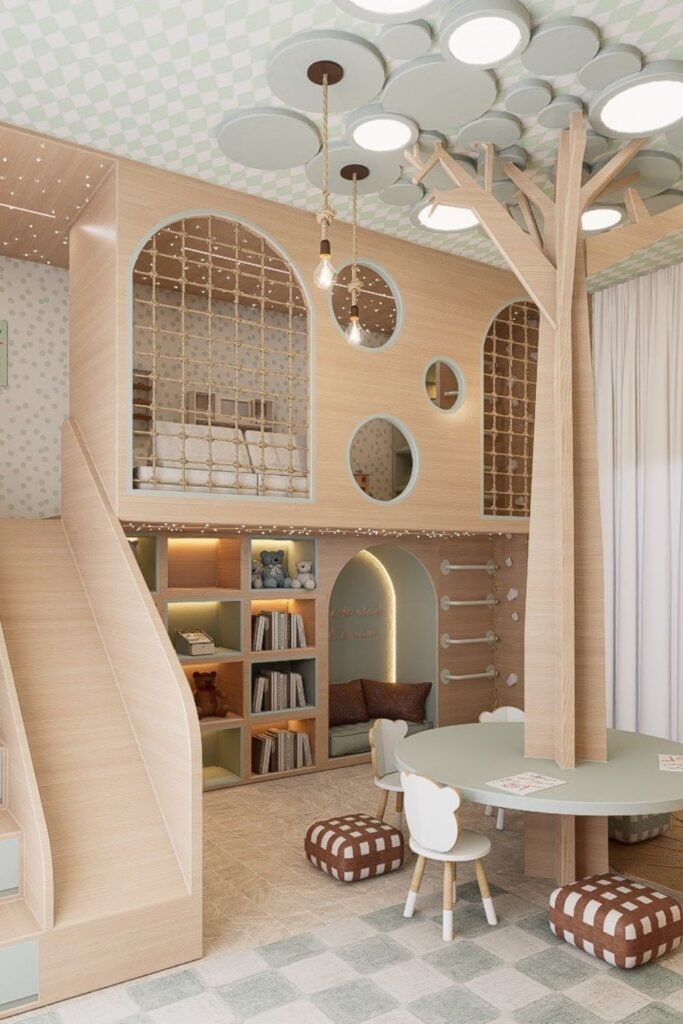
Rooms like this turn everyday play into an experience kids do not rush through. A raised structure with stairs works best in larger playrooms where vertical space goes unused.
The upper level encourages creative thinking and peaceful play whereas the lower area lends itself to cozy reading corner or the serene retreat.
To capture this atmosphere incorporate built in shelves gentle lighting, and a single table for arts and crafts.
Learning Zones
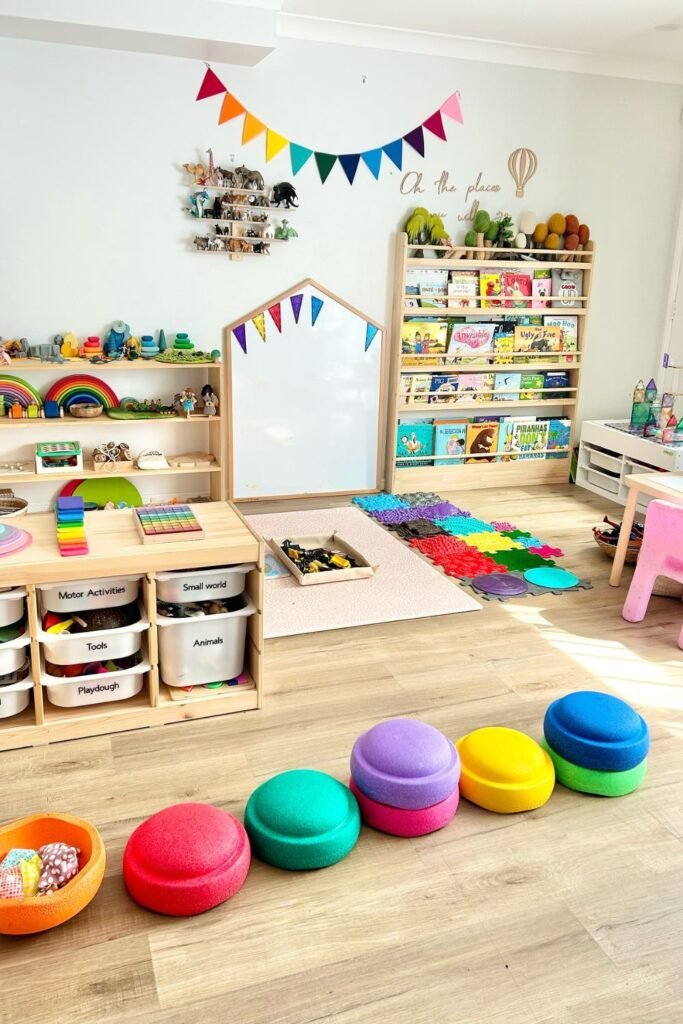
Clear zones make play feel purposeful instead of scattered. A setup like this works best in dedicated playrooms or classrooms where kids move between activities often.
Low shelves neatly divide puzzles, art supplies, books and sensory play items providing clear guidance for children.
To replicate this setup, organize toys by their intended use, use straightforward labels and maintain an open area in the middle of the room.
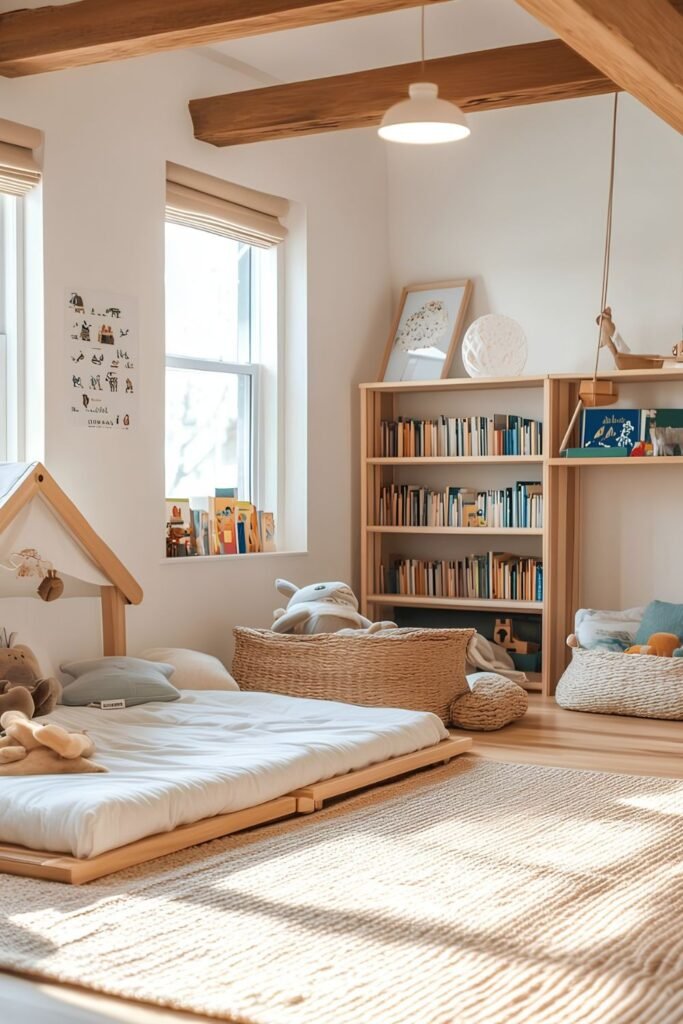
Soft Retreat
Rest and play don’t need separate rooms to work well. A floor bed paired with open bookshelves creates a gentle space.
Where children can transition from reading to resting without a jarring interruption. This concept works particularly well in bedrooms that also serve as play spaces.
Opt for low furniture, incorporate natural materials and minimize toy storage to maintain a serene atmosphere.
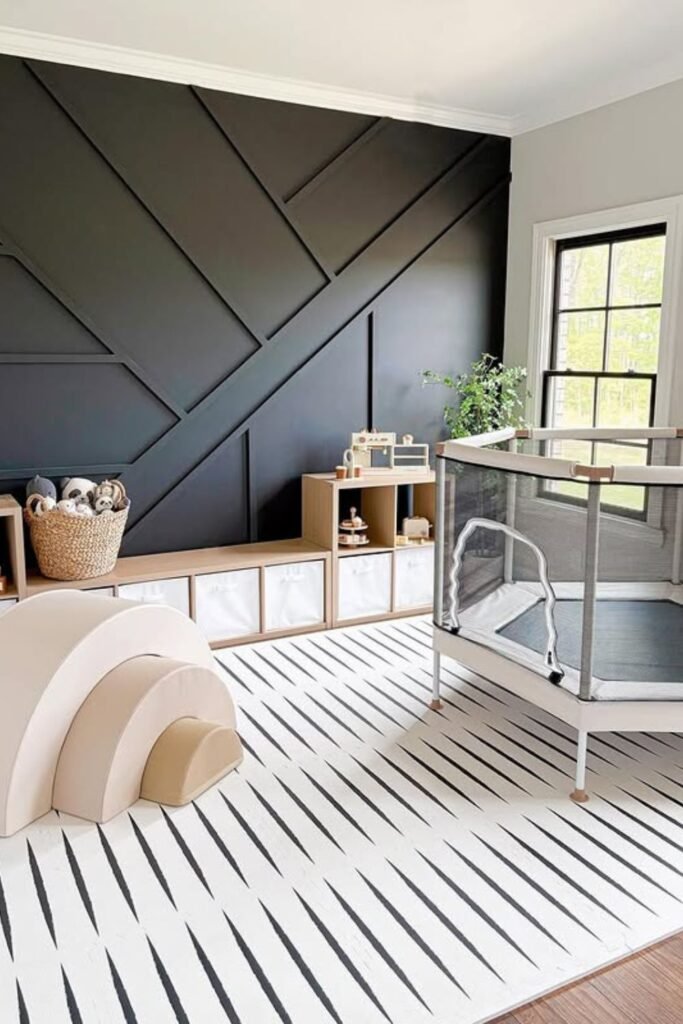
Play Minimal
Calm doesn’t have to mean boring. A darker feature wall paired with light flooring creates contrast without visual noise, which works especially well in modern homes.
Opt for a sparse selection of toys and using neutral colors to maintain a clean aesthetic.
And a handful of gentle climbing structures together with a clearly defined play area offer engaging activities and with out cluttering the space.
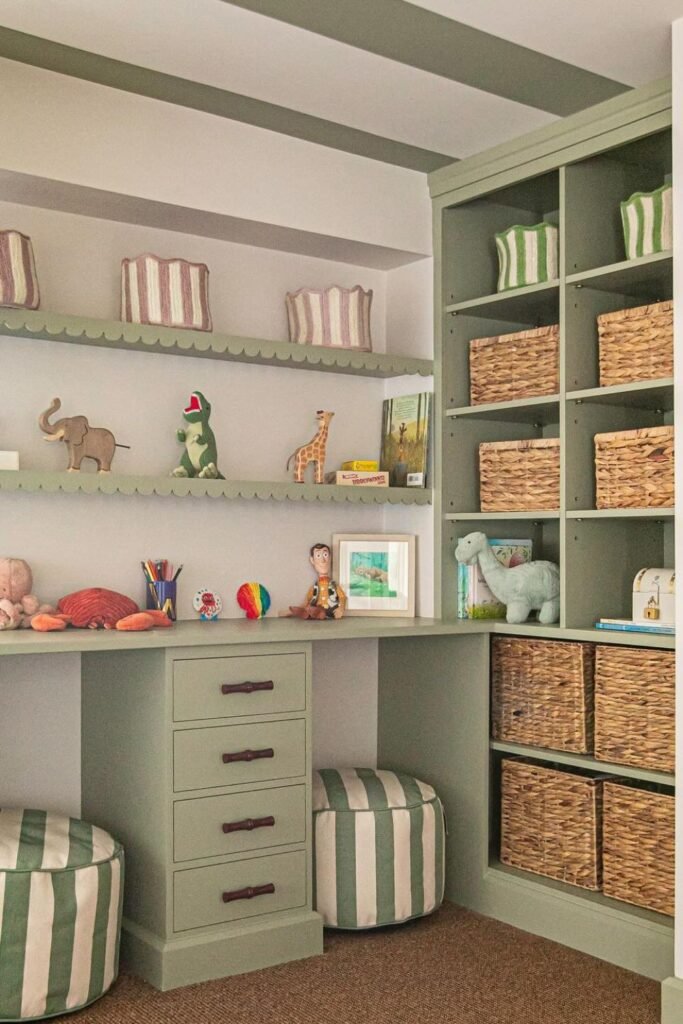
Creative Desk
Quiet creativity needs a surface that feels inviting, not crowded. A built-in desk like this works well in playrooms that also serve as homework or craft spaces.
Open shelves above keep supplies accessible without taking up too much space, while baskets below hide the mess when you’re done.
To recreate this dedicate one wall to playtime with seating and keep the rest of the room open to prevent creative projects from spreading elsewhere.
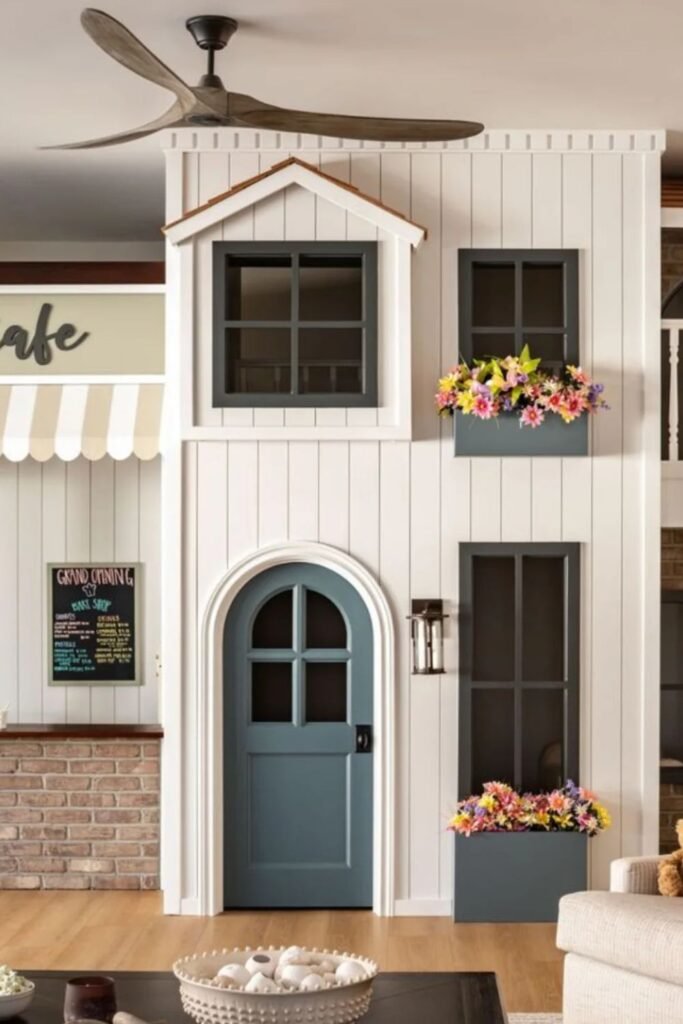
Pretend Town
Imagination sticks longer when play feels real. A built in playhouse like this turns pretend play into a daily habit instead of a short phase.
It’s most effective in expansive playrooms or open basements, where a single focal point can define the entire area.
Replicate the concept with a straightforward façade, complete with functional windows and small touches such as flower boxes or signage.
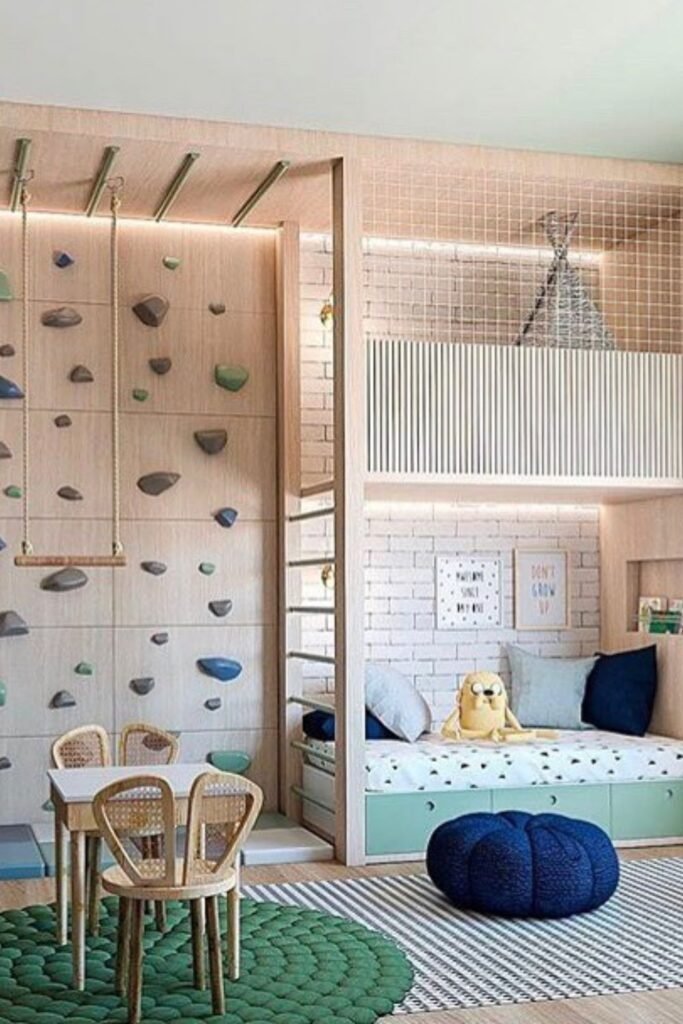
Adventure Nook
Big play needs structure so it doesn’t spill into chaos. A built in climbing wall paired with a sleeping or lounging nook gives kids a reason to stay in one space longer.
This arrangement shines in elongated spaces or shared beds, where defining zones is key. Position active playthings on one side and quieter areas on the other.
This encourages a natural slowing of pace. Vertical play structures are a great way to maximize floor space allowing children to climb, unwind, and engage their imaginations.
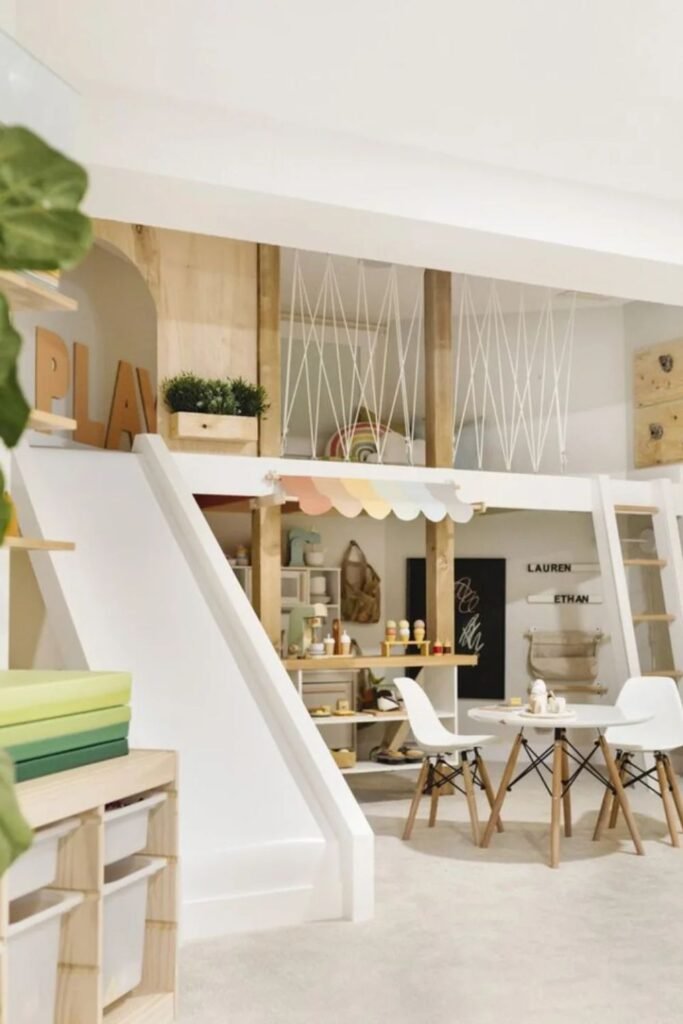
Multi-Level Play
Play lasts longer when kids can move up, down, and across without leaving the room. A setup like this works best in high ceiling space.
The upper level transforms into a retreat or a quiet area, while the bottom level is perfect for imaginative play, art projects or construction.
To replicate this, build a basic loft with open shelving and a single, unobstructed activity table ensuring play remains organized, not chaotic.
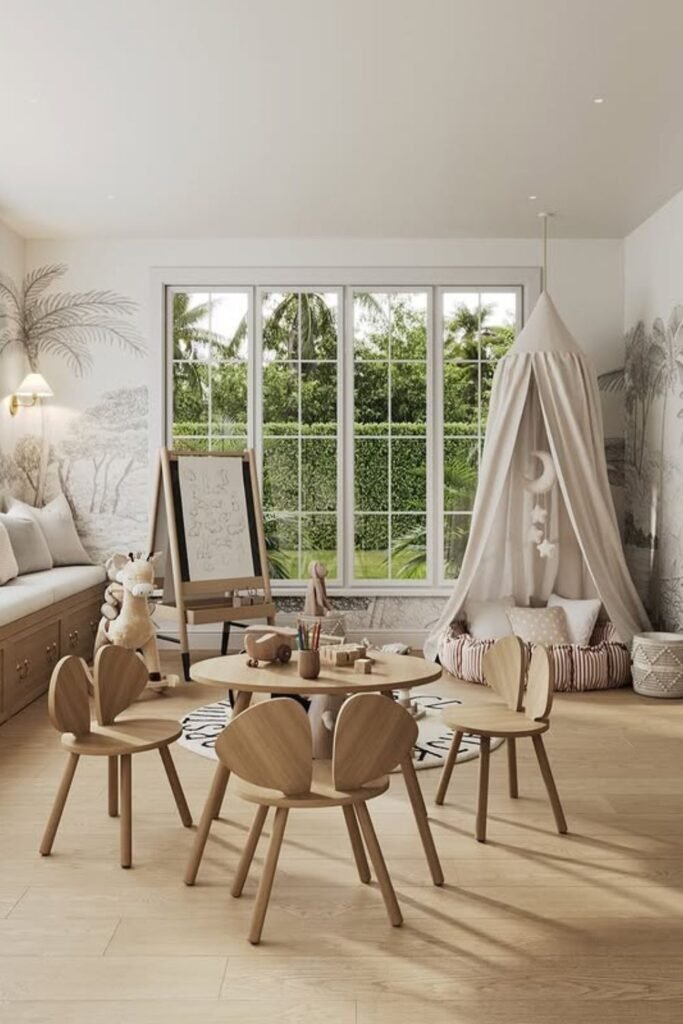
Calm Studio
Some playrooms work best when they feel open and quiet instead of packed with toys. A setup like this suits homes where you want creative play without visual noise.
The round table invites drawing, puzzles and collaborative games while the neighboring canopy offers a cozy and sheltered spot.
Furniture should be lightweight and readily rearranged allowing for flexible usage of the area.
Play Balance
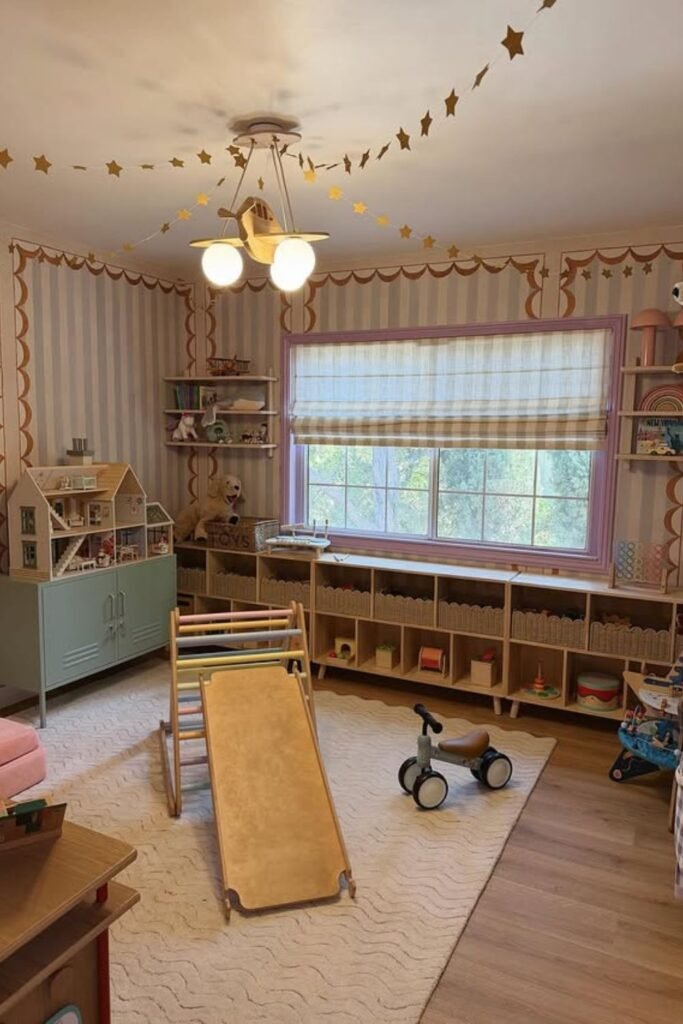
Movement and storage can share the same room without competing. A compact slide in the center gives toddlers a safe way to move.
Long, low shelving units hugging the walls are a great way to keep toys tidy and accessible.
This approach is particularly effective in bedrooms or playrooms of moderate size, where every square foot needs to earn its keep.
Play Library
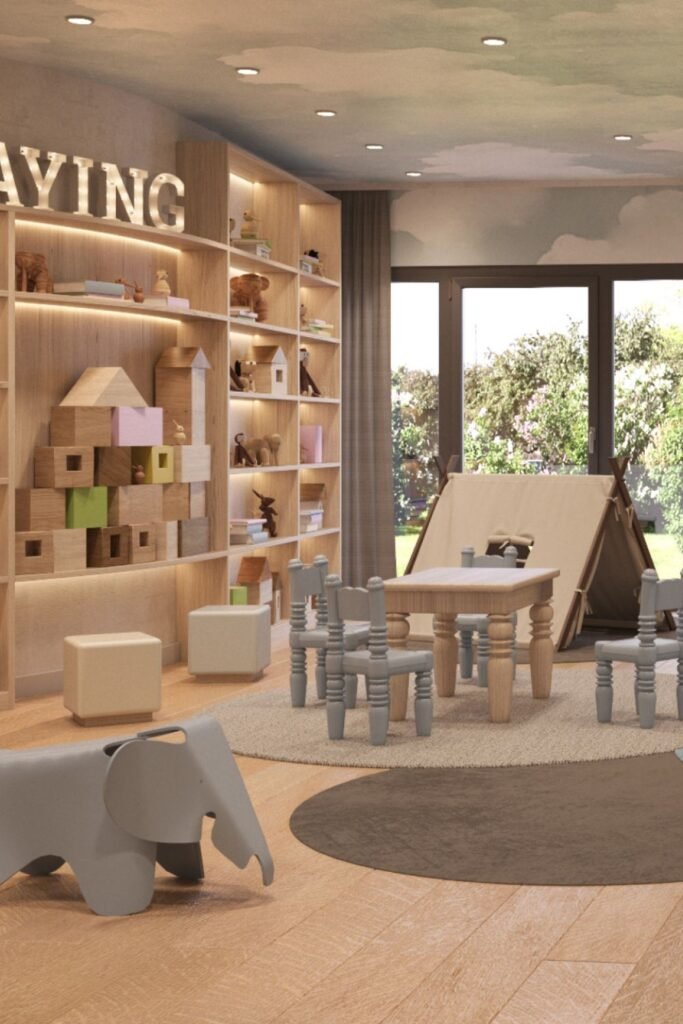
Walls can do the heavy lifting so the floor stays free for play. Floor-to-ceiling shelving like this keeps toys visible and sorted, which helps kids choose one activity and stick with it.
A modest table, centrally located, can accommodate puzzles, crafts or group activities without dominating the space.
Introduce a single soft element, perhaps a play tent to temper the structured environment with a touch of whimsy.
Sensory Wall
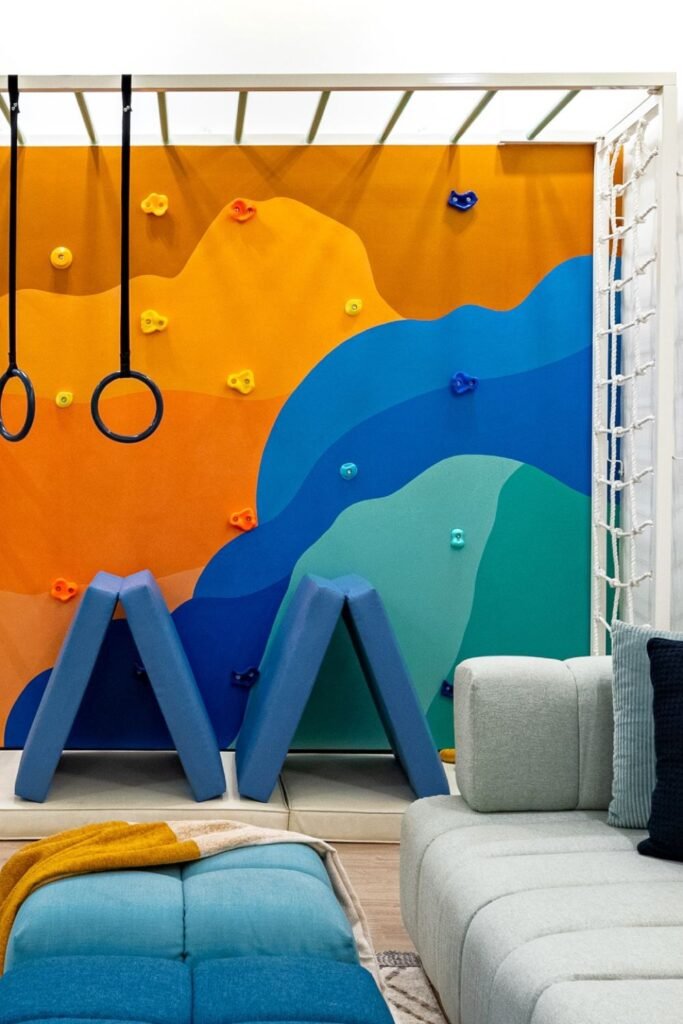
Some kids need full-body movement before their minds can slow down. A climbing and sensory wall like this gives them exactly that in one contained spot.
It’s ideal for playrooms especially when outdoor play is not an option. Soft mats are a must and hanging rings or a swing are great additions.
Bright colors are a magnet for youngsters and the structure itself helps keep energetic play contained and away from furniture and the floor.
Choice Station
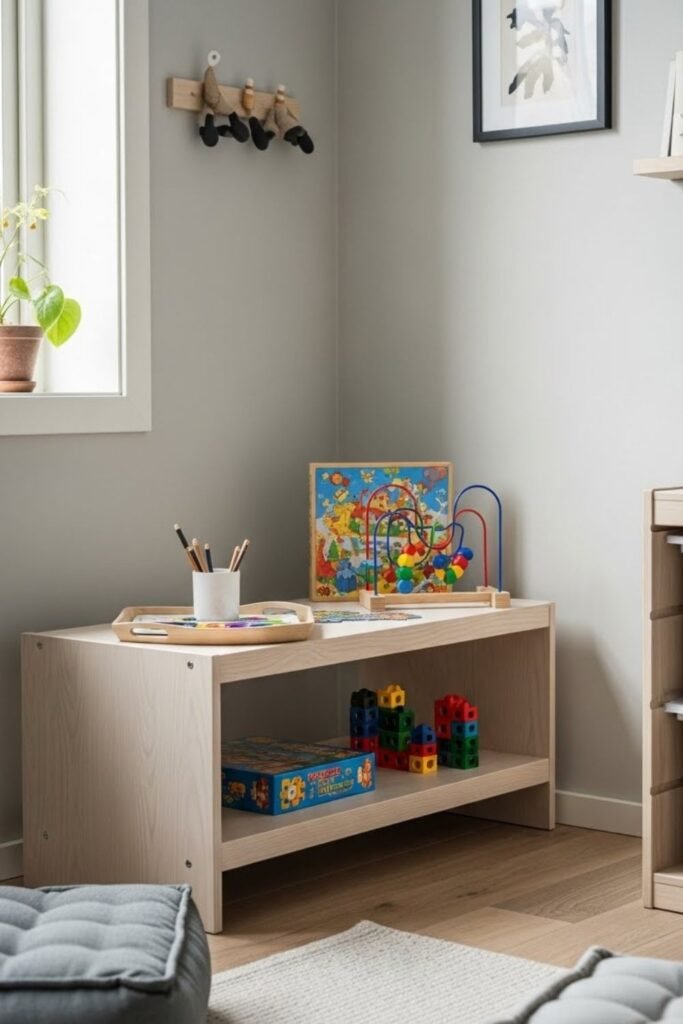
Decision fatigue ruins play faster than boredom. A choice station solves that by limiting options without limiting fun.
Create a small play area that showcases just three activities at any given moment: one that sparks creativity, one that requires thought, and one that gets them moving.
Keep everything else out of view. This approach is particularly effective in homes where children tend to flit from toy to toy, quickly losing interest.
Reset Zone
Big emotions need somewhere to land not somewhere to hide. A reset zone gives kids a place to pause without feeling punished.
Employ soft floor seating, weighted cushions and low lighting to create a calming atmosphere, minimizing visual distractions.
This area is most effective when situated near zones of high activity, allowing children to transition from energetic play to a state of calm without needing to leave the room.
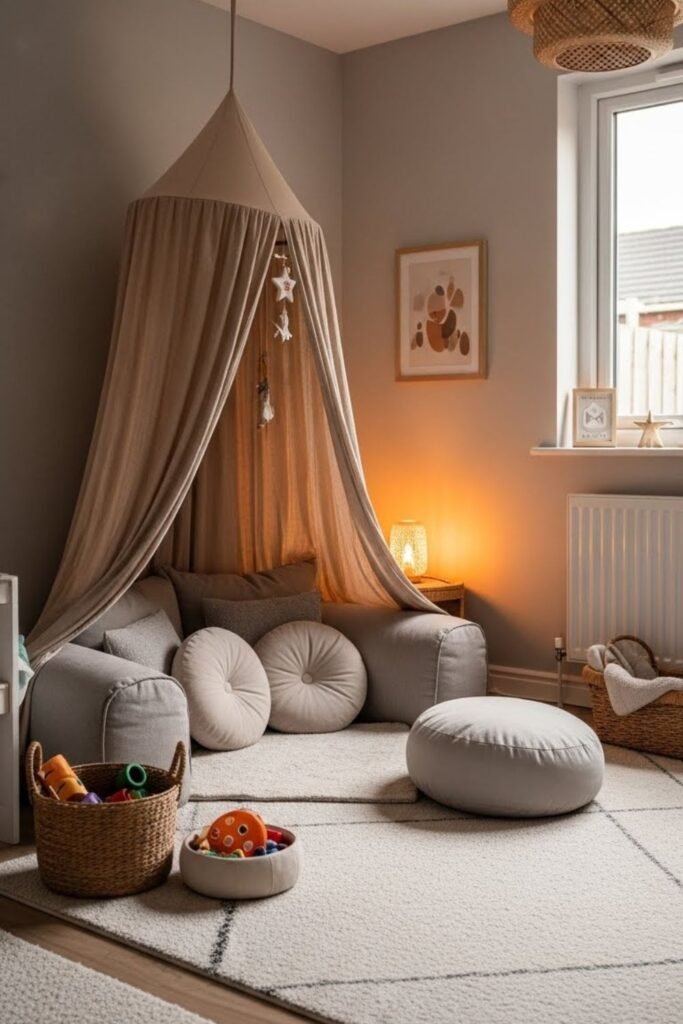
Build Bench
Loose parts play works best when building feels intentional, not temporary. A build bench gives kids a dedicated surface for long-term projects like block cities, or marble runs.
Position it against a wall to minimize the chances of it getting knocked over, and incorporate shallow drawers beneath for storing ongoing projects.
This setup is particularly effective for children who are reluctant to dismantle and their creations before they are finished.

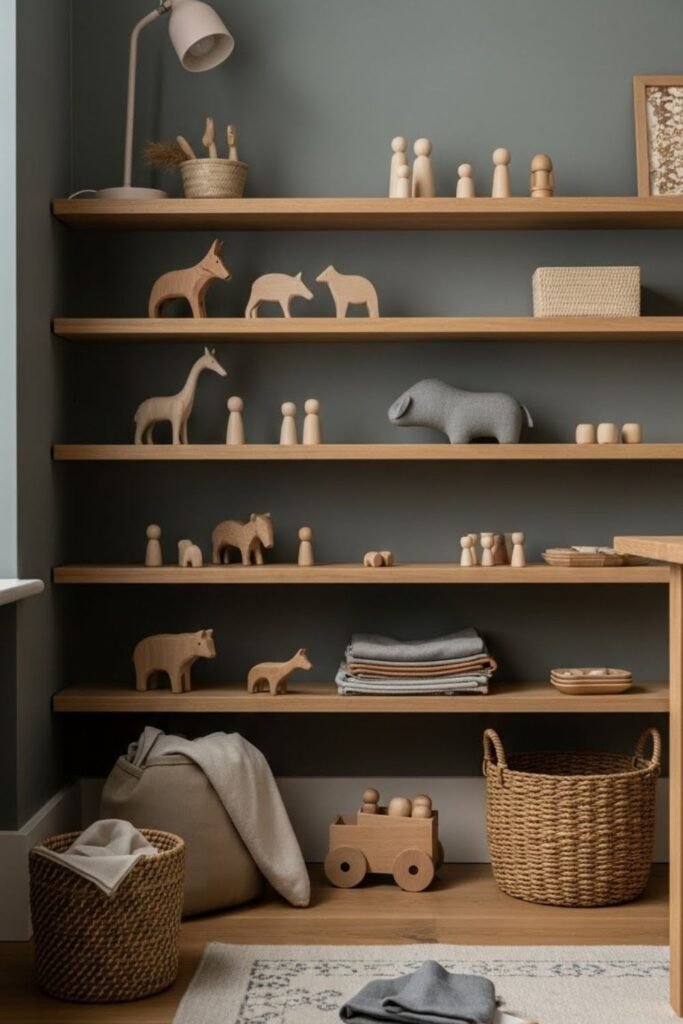
Story Lab
Stories don’t need books to begin. A story lab encourages kids to create narratives using objects, not scripts.
Arrange open shelves with a mix of figures, fabrics, props and small structures. These should hint at scenes not dictate them.
This kind of setup thrives in quiet nooks perfect for kids to chat, murmur or put on a show. Steer clear of toys that are too specific neutral items fuel more imaginative play.
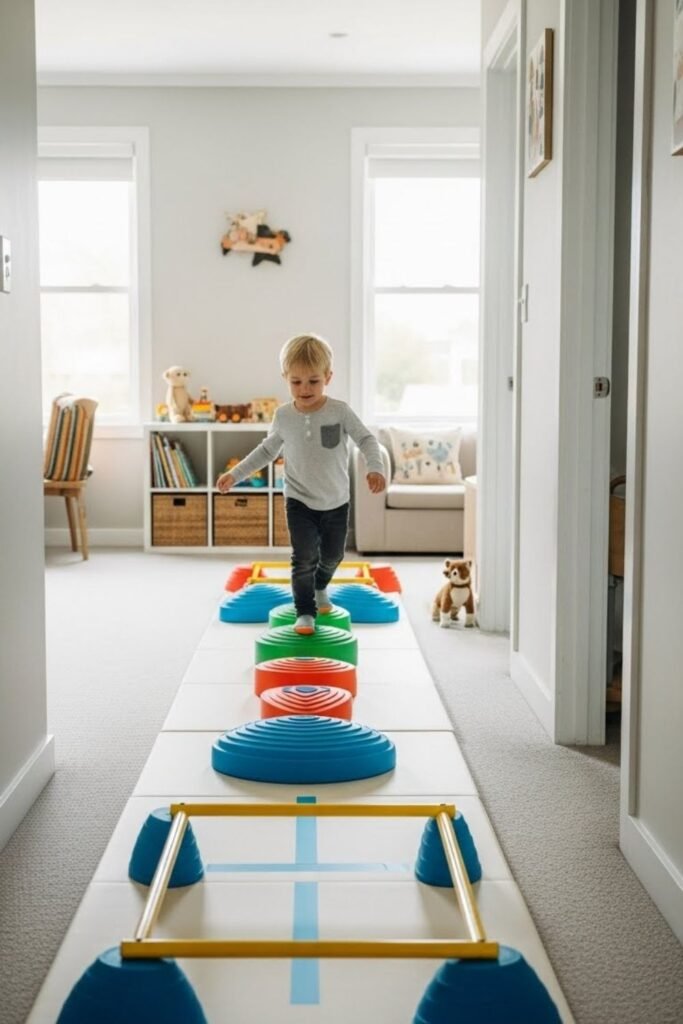
Skill Track
Movement feels purposeful when it has progression. A skill track lets kids practice balance, coordination and confidence in small steps.
Design a versatile course using stepping stones, balance boards, floor tape, or low ramps, all of which can be repositioned.
This concept is particularly suited to confined spaces, such as narrow rooms or hallways adjacent to the playroom.
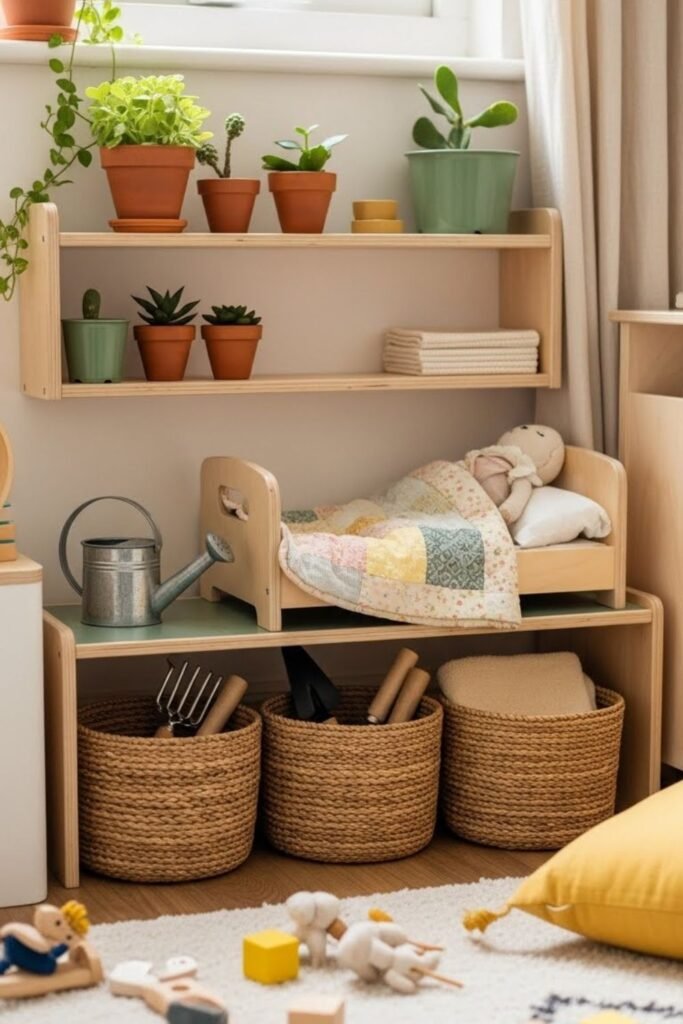
Care Corner
Kids love responsibility when it feels real. A care corner gives them something meaningful to tend to plants, dolls, stuffed animals or even simple household tools.
Set things up with supplies, baskets and a routine designed for little ones, rather than set of rules. This approach is particularly effective in quieter playrooms.
When children are responsible for something, play naturally slows down, becoming more deliberate.
FAQs
How do I stop my child from dumping every toy on the floor at once?
Toy dumping often signals a child feeling swamped, rather than just messy. When faced with a sea of choices, children tend to grab things without really selecting.
To combat this, keep the number of toys out at any given moment to a minimum, and organize them by the kind of play they encourage, rather than by their category.
Open bins and low shelves allow kids to see what’s available without having to empty everything.
Is it better to have one big playroom or smaller play areas around the house?
It really hinges on your child’s play style not the square footage of your home.
Some children thrive in smaller, more contained play spaces while others require ample room to roam.
If a single, expansive playroom consistently devolves into disorder, consider dividing it into distinct zones or establishing smaller play areas throughout the house.

Hi, I’m Afaf! I’m a law student who loves writing about everyday life – from home projects and crafts to fashion, beauty, and parenting tips.
I’ve been writing for over a year, sharing ideas that are simple, practical, and easy to try. I write about things I find interesting and useful, whether that’s organizing a space, trying a new DIY, or finding activities to keep kids entertained.
My goal is to share helpful ideas without making things complicated. If it works in real life, I’ll write about it.
When I’m not studying or writing, I’m usually experimenting with new projects or scrolling for inspiration!