
26 Small Kids Bedroom Ideas for 2026
You step into your child’s room, and the sensation hits you instantly it’s cramped, cluttered and perpetually feels off no matter your efforts.
Toys are strewn across the floor, the bed dominates and each new addition seems to shrink the space further.
A larger room isn’t the answer. You need to make smarter decisions. In this article, you’ll find 26 small kids’ bedroom ideas tailored for modern homes in 2026.
What Colors Make a Small Kids Bedroom Look Bigger?
If a child’s bedroom seems cramped the wall color is often to blame. Dark or saturated hues tend to soak up light creating a sense of enclosure.
Conversely, lighter shades reflect light making the room appear more spacious.
To give the illusion of a larger area, opt for soft whites, light beiges, pale grays or subtle pastels.
Reserve vibrant or bold colors for bedding, rugs, or storage solutions.
Keeping the walls calm and understated instantly makes the room feel more expansive and less cluttered.
Save this article for later!👇👇👇
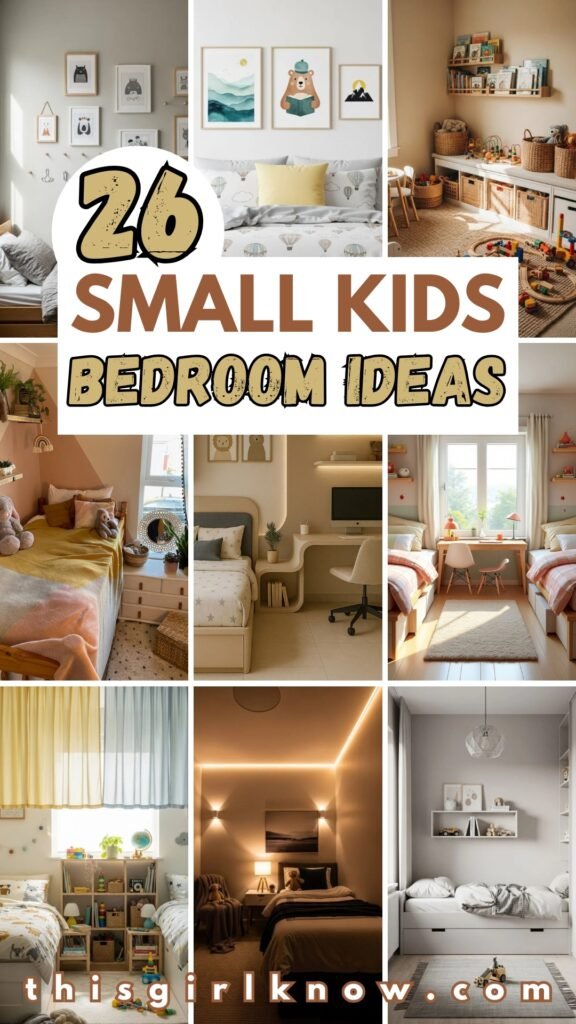
How Can Wall Space Be Used in a Small Kids Bedroom?
When floor space is at a premium, the walls become essential. A room stuffed with floor-bound items will inevitably feel small.
Wall shelves, hooks, and other mounted storage solutions elevate clutter, opening up the area beneath.
Consider shelves for books and small toys, and hooks for bags, jackets, or dress-up clothes.
If a desk is necessary, a wall-mounted or fold-down version can be a real space-saver when not in use.
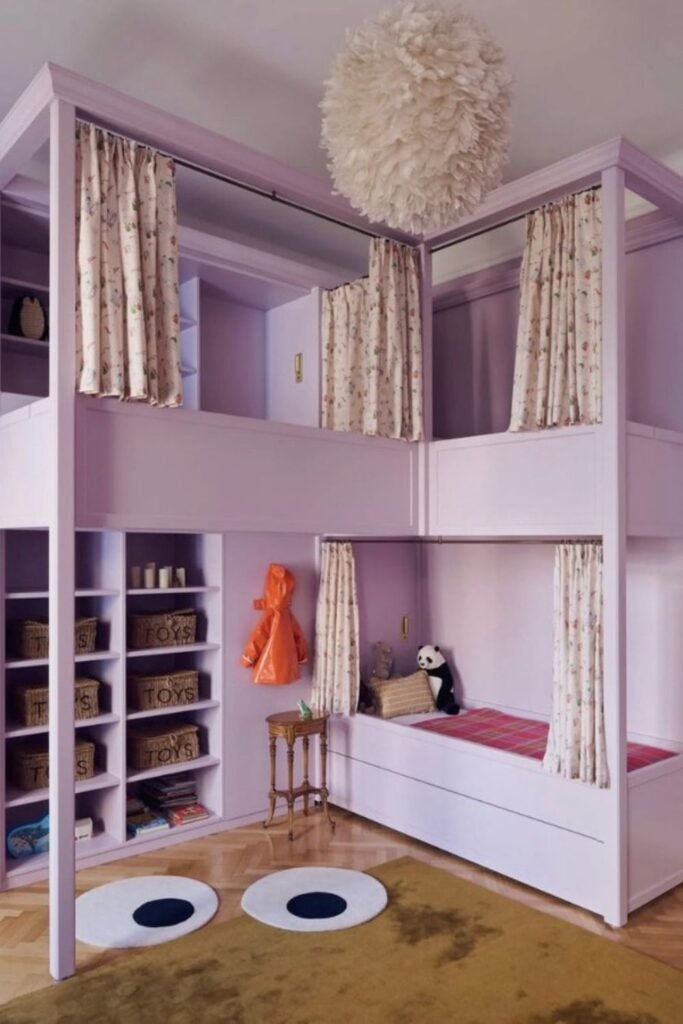
Shared Loft
Giving each child a defined sleeping area reduces chaos in a small shared room. Stacking the beds frees up the floor.
While curtains create privacy without closing the space in. Built in shelves corral toys and books preventing them from becoming a chaotic mess.
This approach shines in spaces with ample vertical room and it’s perfect for creating defined areas without the need for additional furniture or the accumulation of clutter.
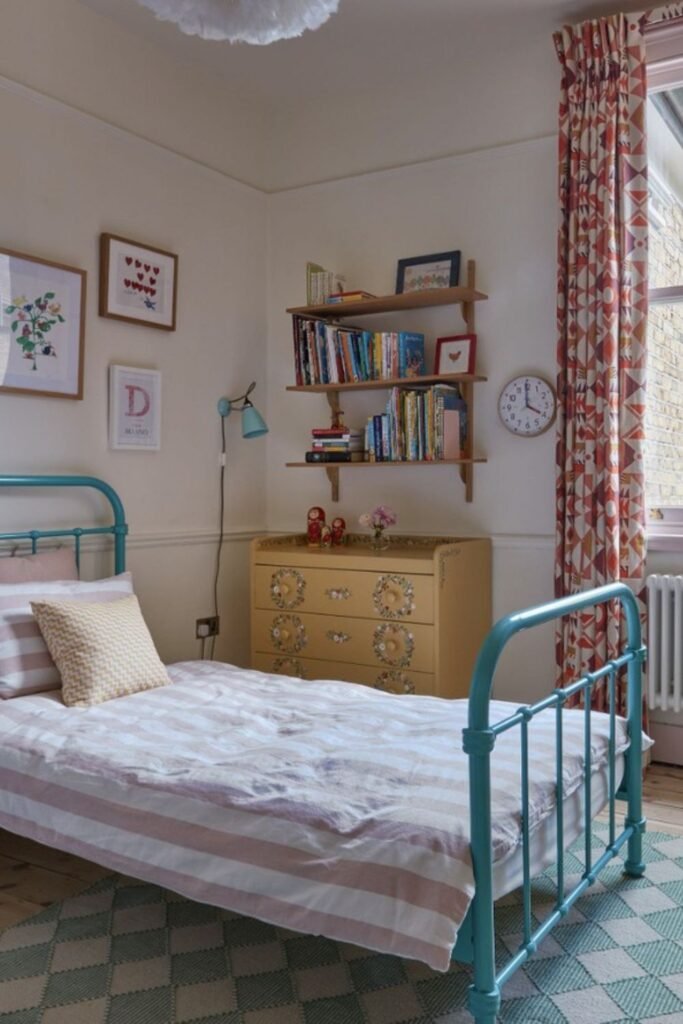
Reading Wall
Books do not need a corner when the wall can do job. Mounting shelves above the bed turns unused vertical space into calm reading zone without adding furniture.
Keeping the bed slim and the palette light helps the room stay open and even with storage nearby.
This idea works best in narrow rooms where floor space is limited but wall height is available especially for kids who love bedtime reading.
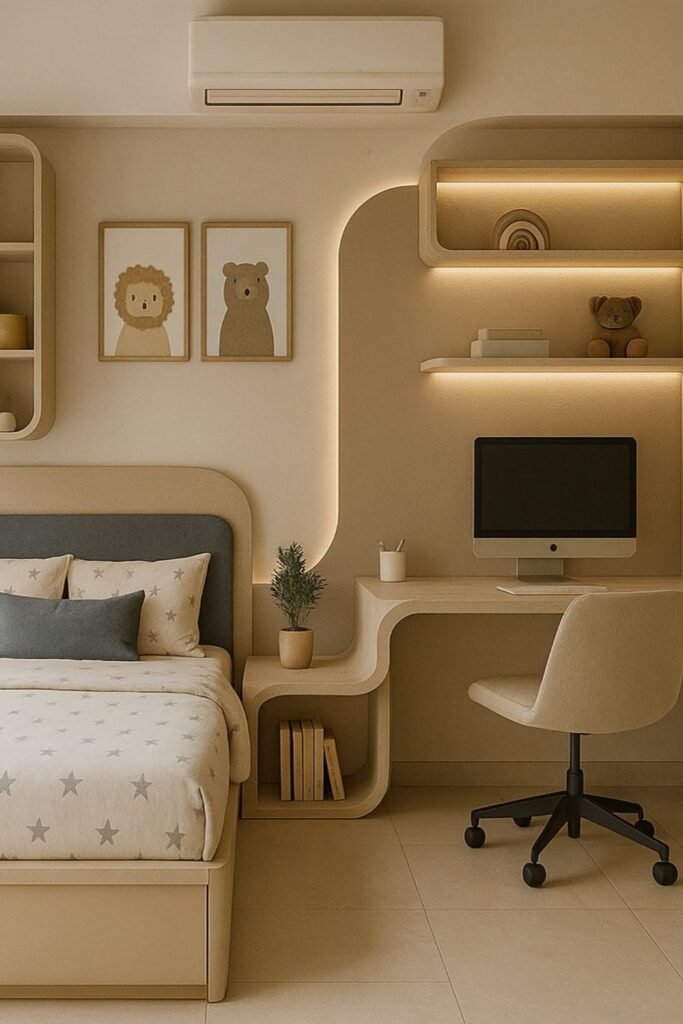
Study Nook
Combining sleep and study in one clean wall keeps a small room from feeling crowded. A built in desk beside the bed removes the need for extra furniture.
Soft lighting creates a welcoming atmosphere avoiding any harshness. Shelves, elevated off the ground hold books and decorative items.
This arrangement is ideal for school aged children providing a quiet space for concentration while maintaining a sense of peace and order.
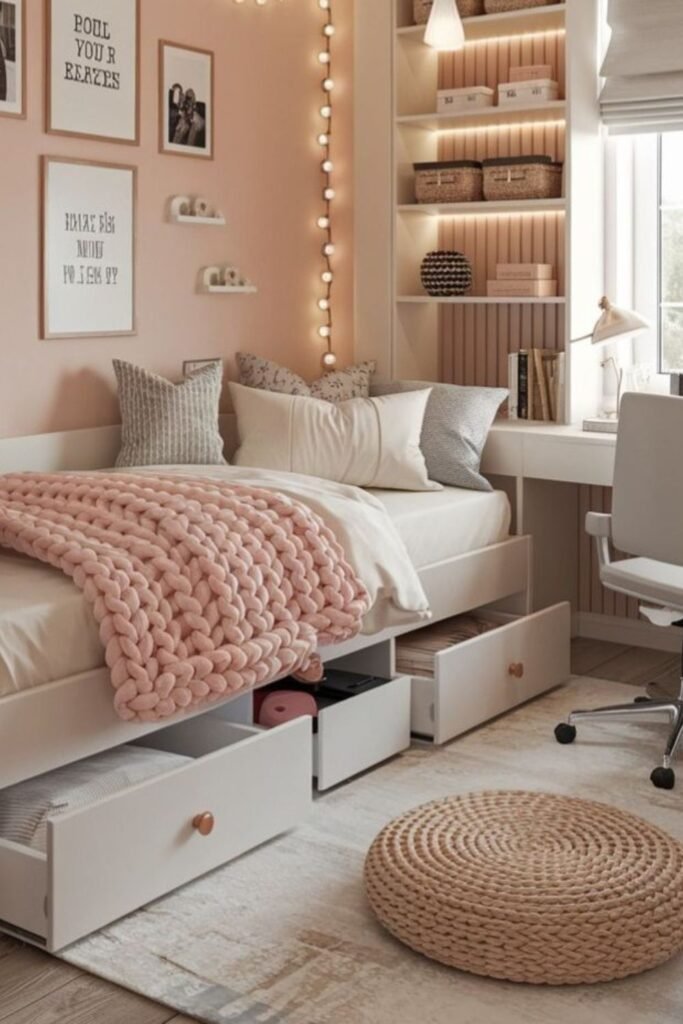
Hidden Storage
Beds take up the most space, so they should work harder than just holding a mattress.
Deep drawers underneath handle clothes, toys, or extra bedding without adding a single cabinet.
Keeping things tucked away like this preserves floor space and making the room feel less cramped.
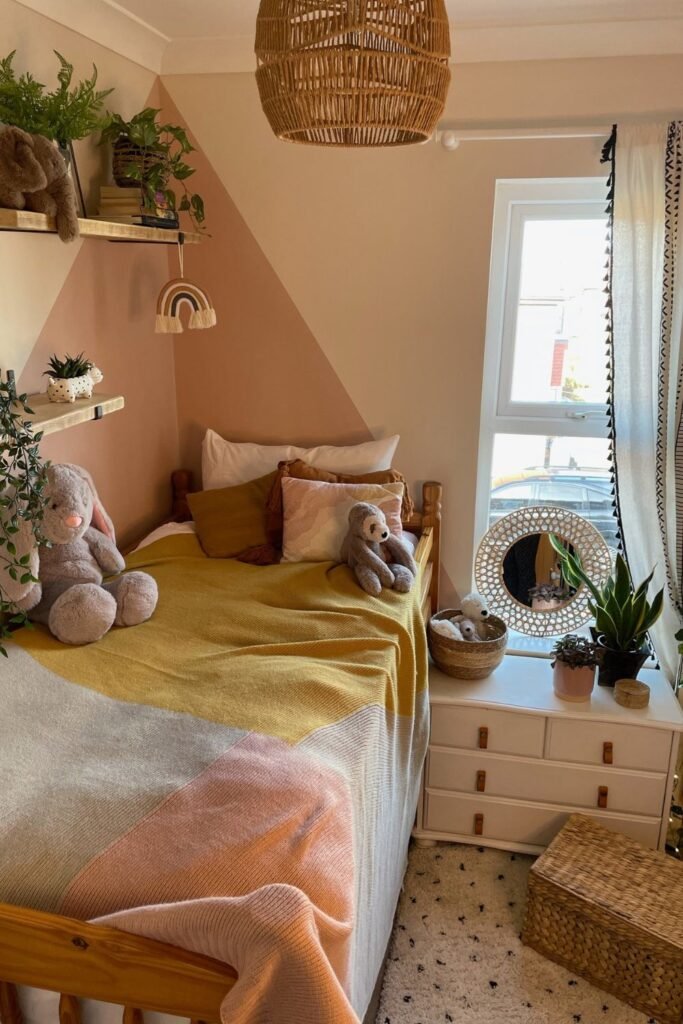
Cozy Corner
Corners often get ignored, but turning one into a sleep zone saves more space than pushing a bed against the longest wall.
Tucking the bed snugly into the corner frees up space for activities and playtime. Floating shelves, positioned above take the place of a cumbersome nightstand.
Keeping cherished toys close at hand. And Soft colors or simple designs work best especially in small space where the clear walkways are essential.
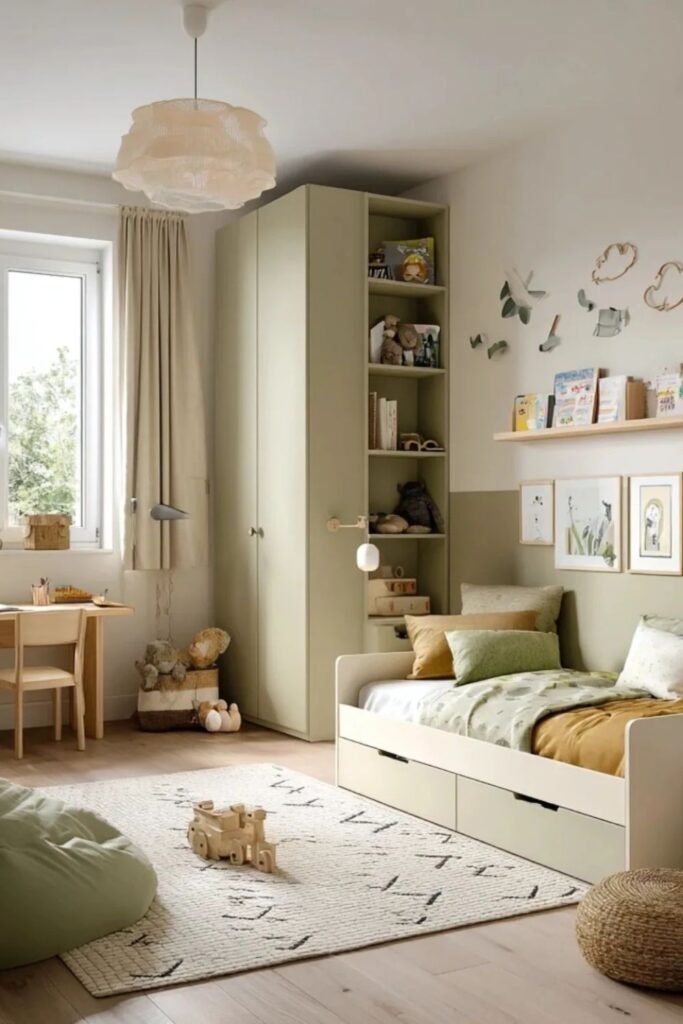
Balanced Zones
Space is at a premium in this room it needs to serve multiple purposes. A low daybed complete with drawers offers a solution for sleep.
A desk positioned by the window transforms natural light into a study benefit and a tall closet provides vertical storage without taking up too much the floor space.
This arrangement is ideal for children who require both play and study areas within the same room.
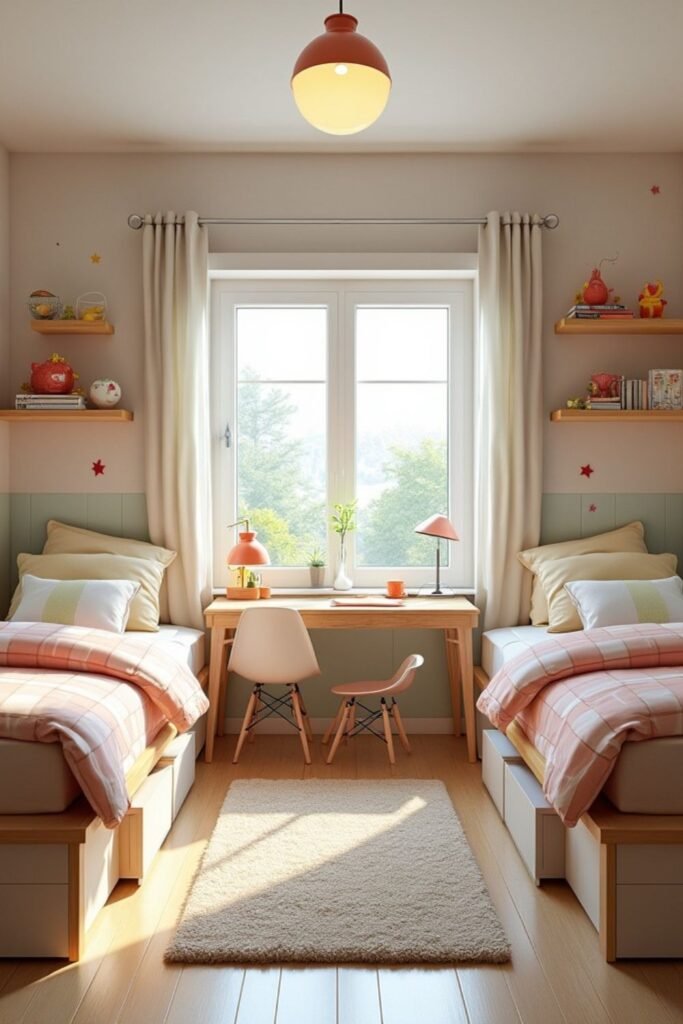
Twin Balance
Sharing a small room gets easier when both sides feel equal. Placing twin beds parallel keeps the layout clean and avoids crowding the center.
A shared desk, positioned between them is a space saver and ensures both children have access to natural light and a dedicated study area.
Wall mounted shelves instead of cumbersome nightstands provide storage for personal belongings without encroaching on the floor space.
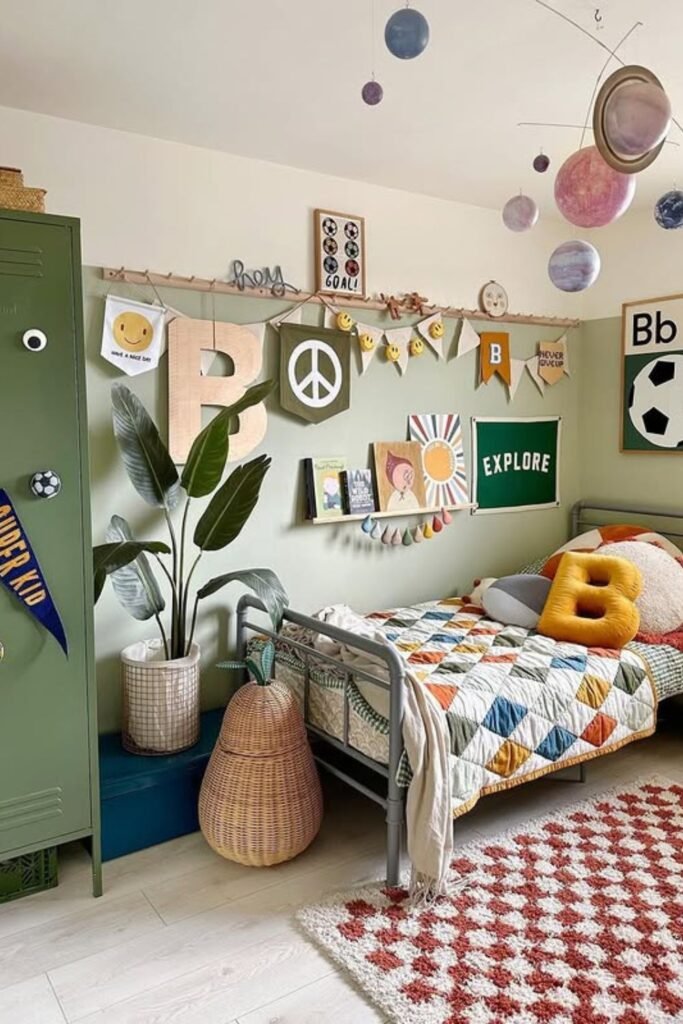
Playful Storage
Personality doesn’t have to cost space. A tall locker style cabinet keeps clothes and sports gear off the floor while doubling as a fun design feature.
Wall décor sets the tone allowing for streamlined uncomplicated furniture. This vertical storage approach creates space for play.
And movement, a boon for energetic children who thrive in a setting that is inviting without becoming chaotic.
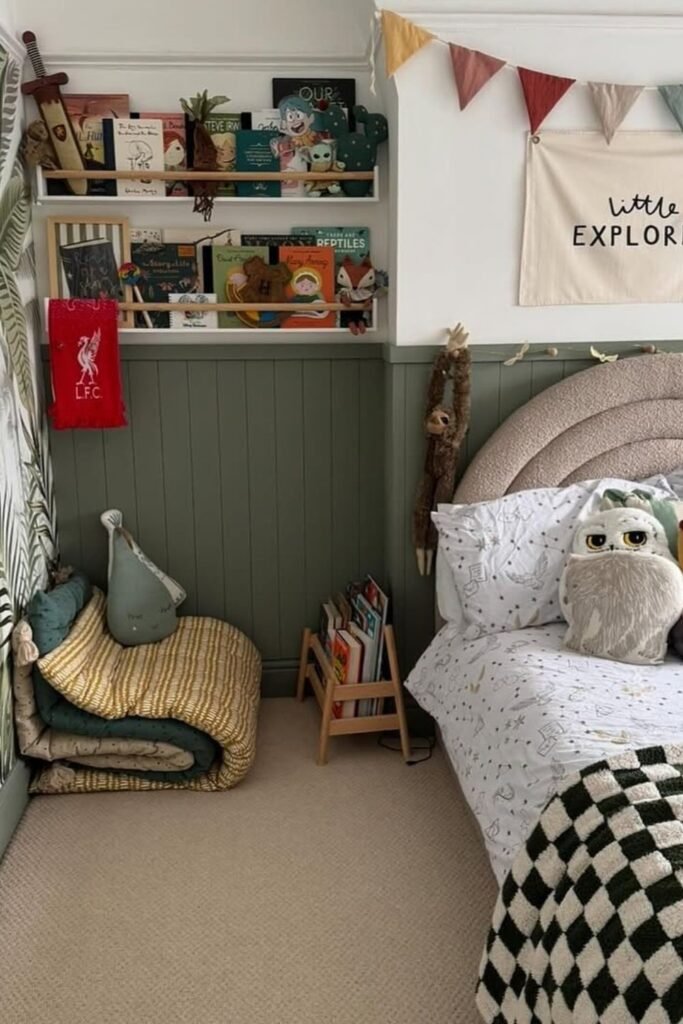
Reading Nook
Books pile up fast when there’s no clear place for them. A slim wall shelf above the bed keeps favorite reads visible without stealing floor space.
Floor cushions, piled in a corner transform an otherwise wasted area into a peaceful reading nook easily stowed away when not in use.
This solution shines in compact bedrooms where the chair could seem like a squeeze and yet serene location for the relaxation is still desired.
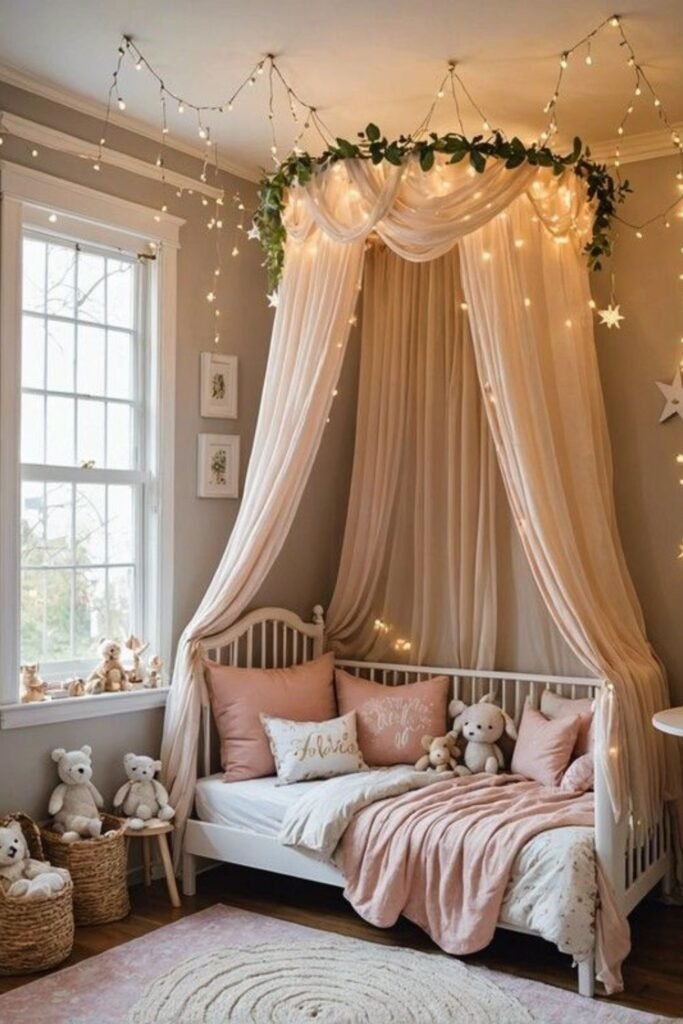
Soft Canopy
Sleeping areas feel more special when they feel separate, even in a small room. A light fabric canopy creates that feeling without adding bulk or blocking light.
Suspending it from the ceiling frees up the floor and fairy lights bring a touch of warmth without overwhelming the area.
This approach shines in smaller bedrooms where a snug inviting atmosphere is the goal but bulky furniture and oversized decorations are out of the question.
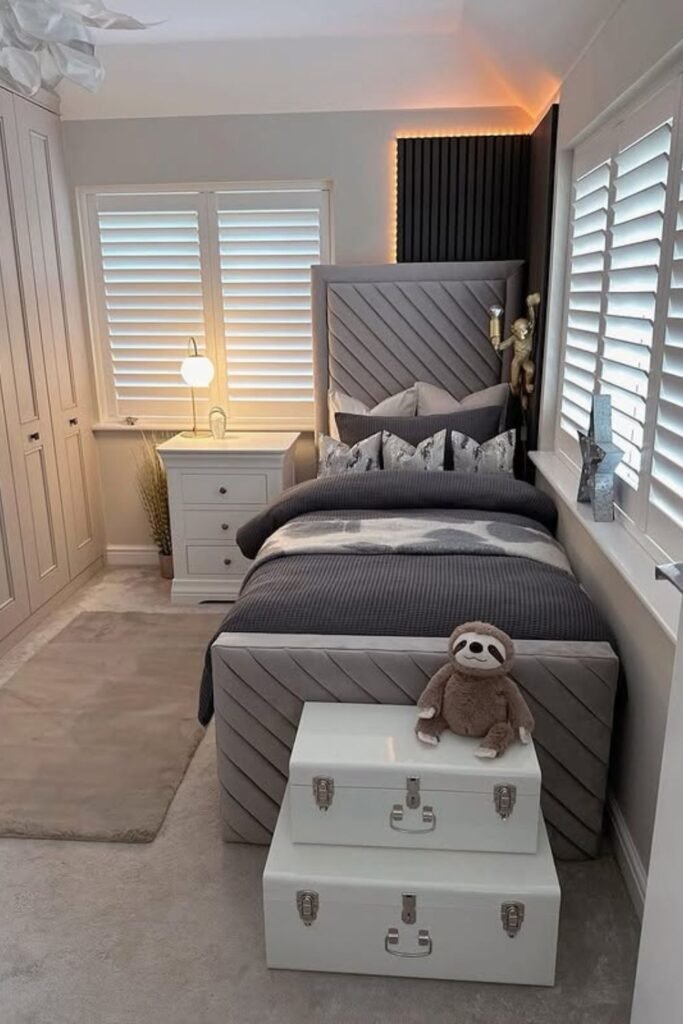
Slim Layout
Long, narrow rooms feel cramped when furniture spreads sideways. Keeping the bed centered and storage stacked at the foot uses the rooms length instead of fighting it.
Storage trunks serve a dual purpose: they provide both stairs and a place to stow away toys, all without taking up more room.
This design strategy is particularly effective in bedrooms with a boxy layout where maximizing floor space is a priority over adding more furniture.
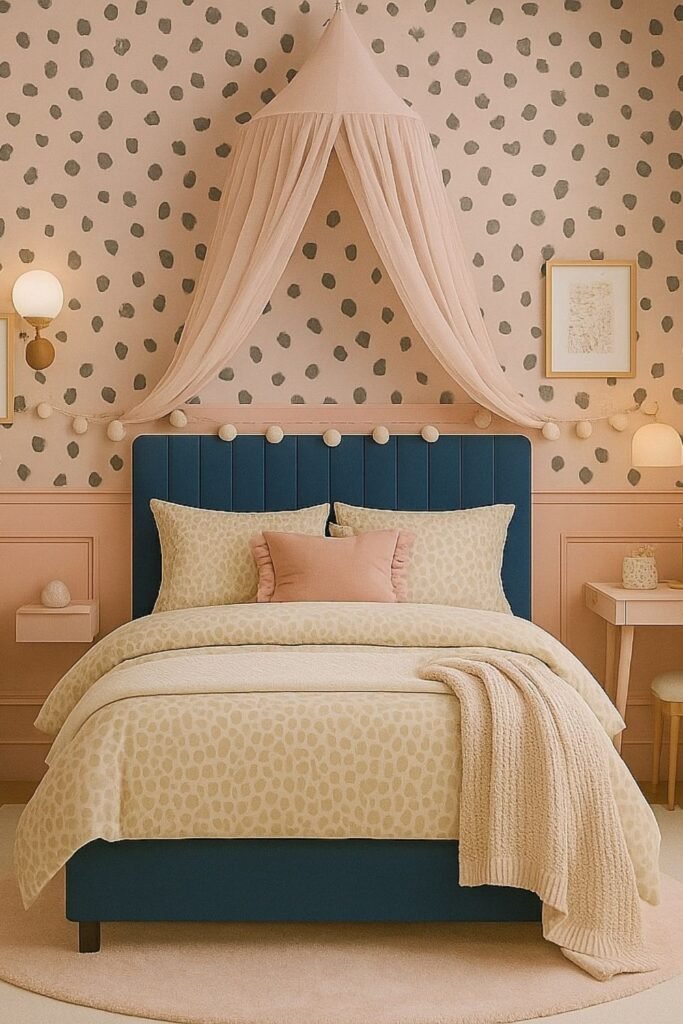
Soft Focus
Patterned walls don’t have to shrink a room if the rest stays calm. A simple bed, light flooring and minimal furniture keep the space balanced while wallpaper add personality.
A canopy may instantly capture the gaze, creating the illusion of a higher ceiling. This trick is particularly effective in smaller bedrooms.
Where you might want to add some visual flair without cluttering the space with additional furnishings or decorative items.
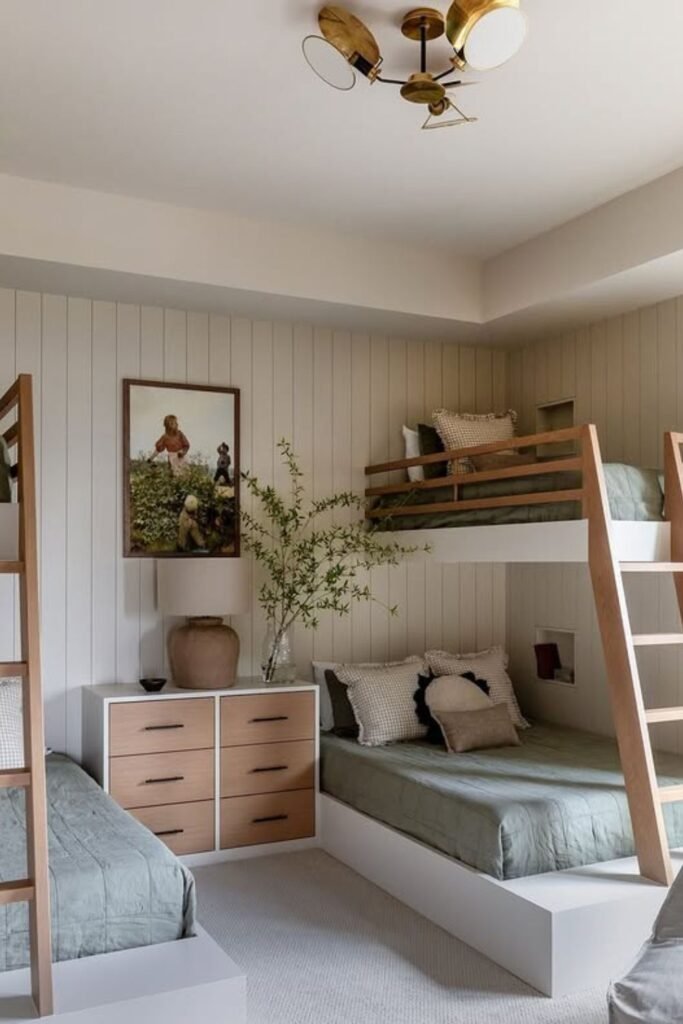
Triple Sleep
Fitting three beds into one room only works when the floor stays clear. Stacking sleeping areas vertically keeps the center open.
It keeps the space from feeling cramped. The built in ladders and shared storage between the beds eliminate the need for additional furniture.
This arrangement is ideal for siblings sharing a tiny bedroom when sleep is paramount but play space is still a consideration.
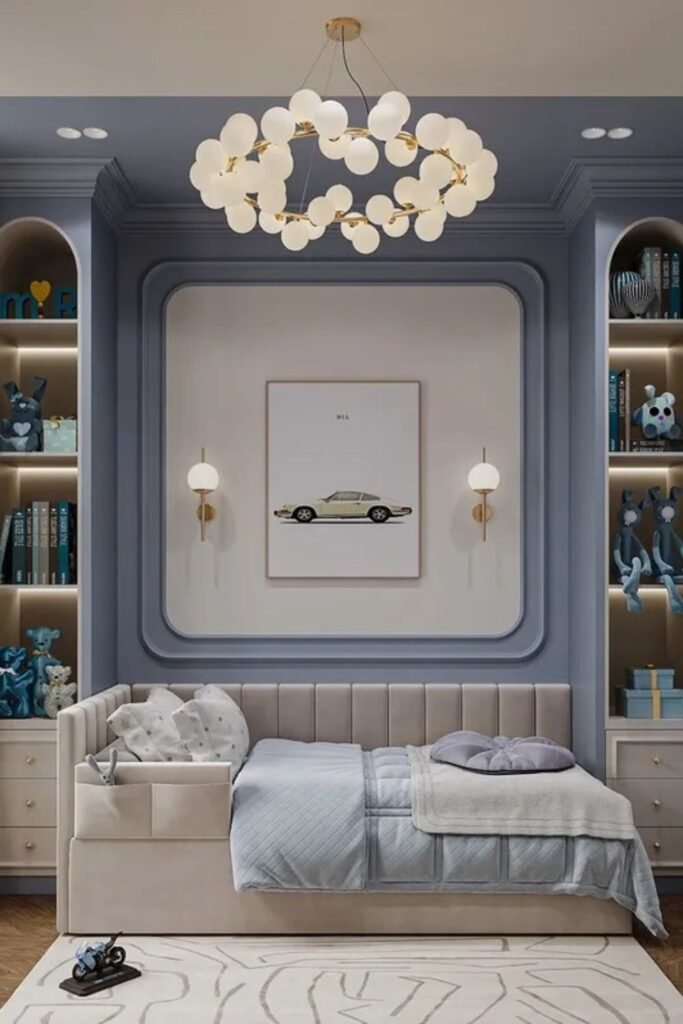
Framed Sleep
Strong wall design can replace bulky furniture when space is tight. A recessed wall frame turns the bed into a clear focal point.
By keeping storage tall and opting for wall mounted lighting you free up floor space contributing to a more serene atmosphere.
This arrangement is particularly effective in tiny bedrooms providing both organization and aesthetic appeal without overcrowding the room.
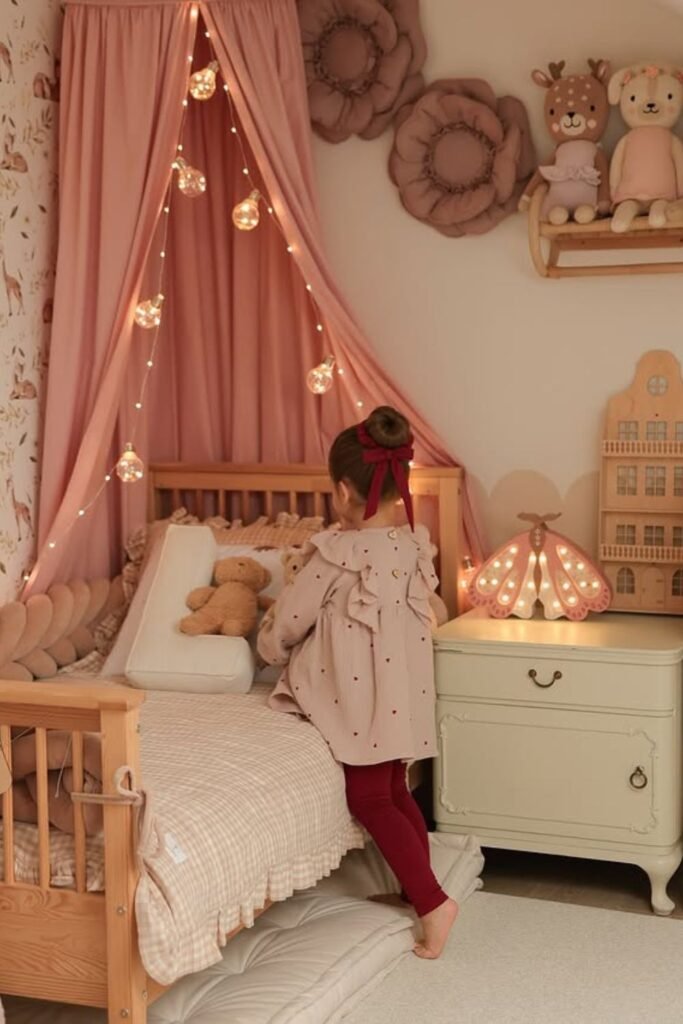
Canopy Bed
Creating a cozy sleep zone doesn’t require extra furniture. Draping a soft canopy from the ceiling gives the bed a sense of comfort and focus while keeping the footprint small.
String lights bring a cozy glow, and they don’t eat up any room. Keeping things tidy around the bed keeps the area seeming spacious.
This approach is particularly effective in the smaller bedroom and where a soft serene atmosphere is desired and space is at a premium.
Loft Lounge
Blending sleep and play into one structure keeps a small room from feeling overcrowded.
A lofted sleeping space opens up the floor beneath, creating room for relaxation, reading, or peaceful play all without the need for additional furnishings.
The integrated steps serve and a dual purpose providing both storage and secure ascent for little ones.
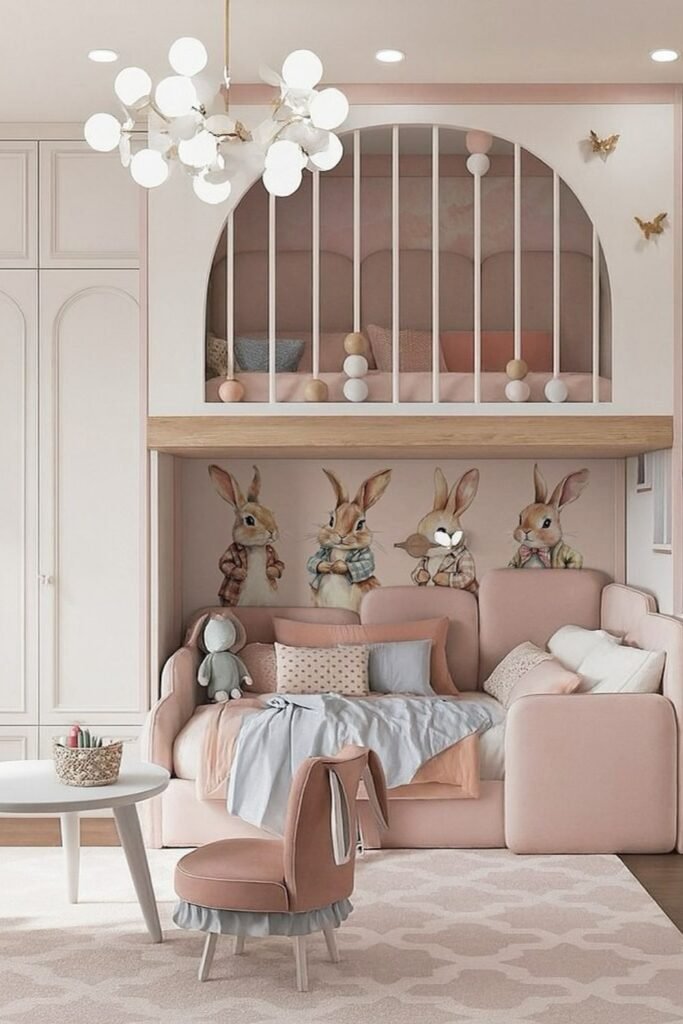
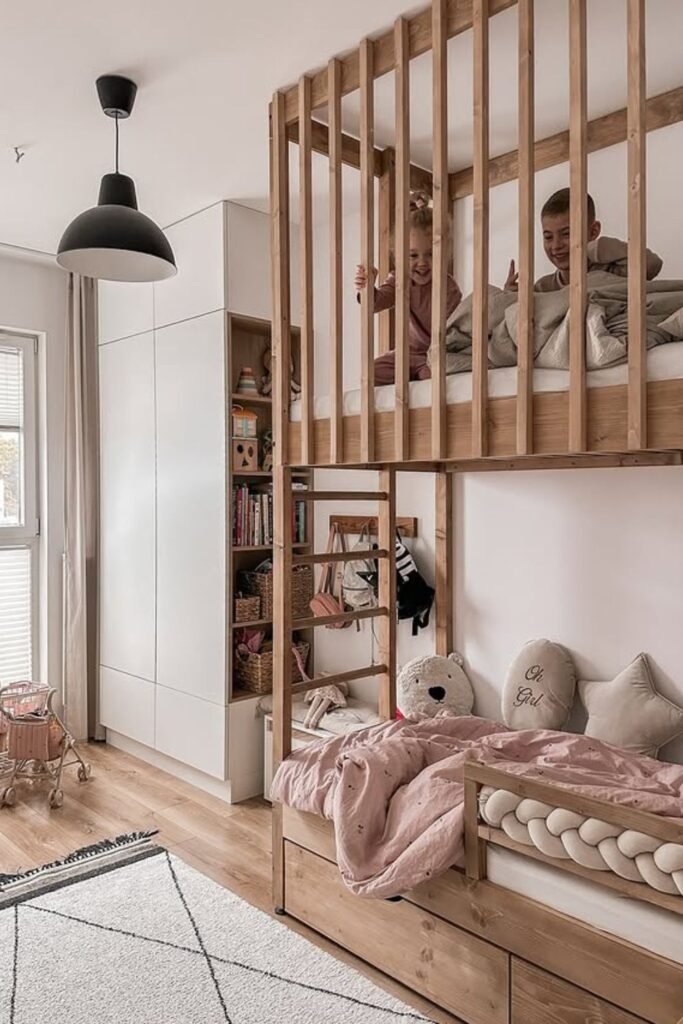
Stacked Living
Vertical space solves problems that floor plans can not. Lifting one bed up creates room below for lounging and reading or daytime play without squeezing the layout.
Built-in ladders and side storage keep everything contained in one footprint. This kind of layout works best in small shared bedrooms.
Where youngsters require both personal sleep space and a common area to unwind during the day.
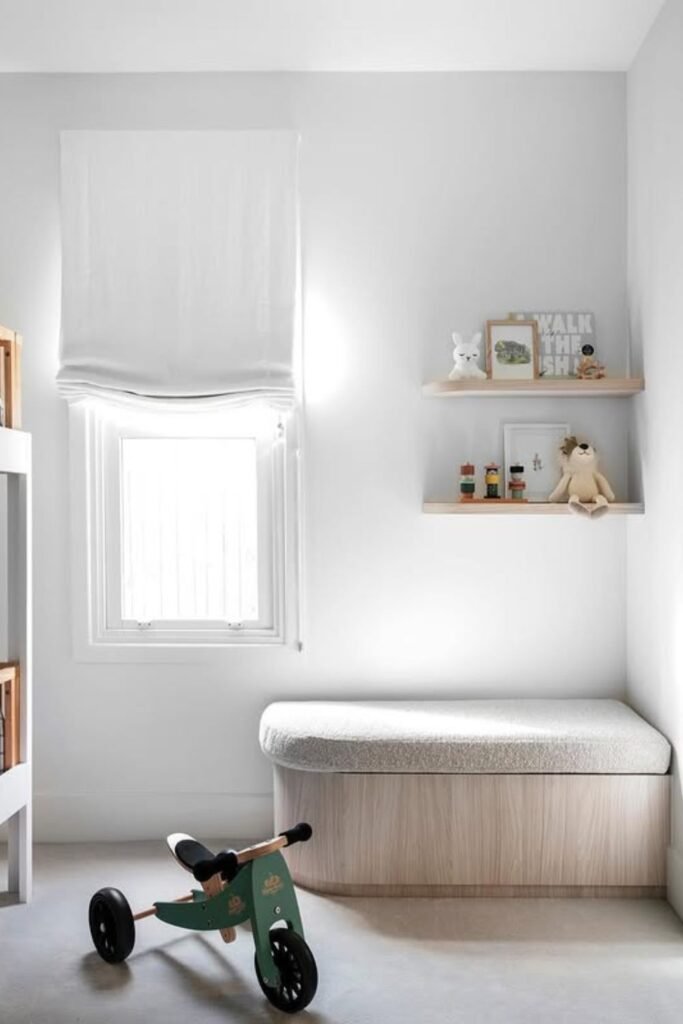
Calm Corner
Empty walls hide easy wins in small rooms. A simple bench under the window creates a spot for sitting, reading or pulling on shoes without crowding the floor.
Wall mounted shelves keep toys and books organized and within sight. The light color scheme and sparse furniture contribute to an open airy sense in this corner.
This approach is particularly effective in shared bedrooms where every bit of peaceful or adaptable space significantly improves the rooms functionality.
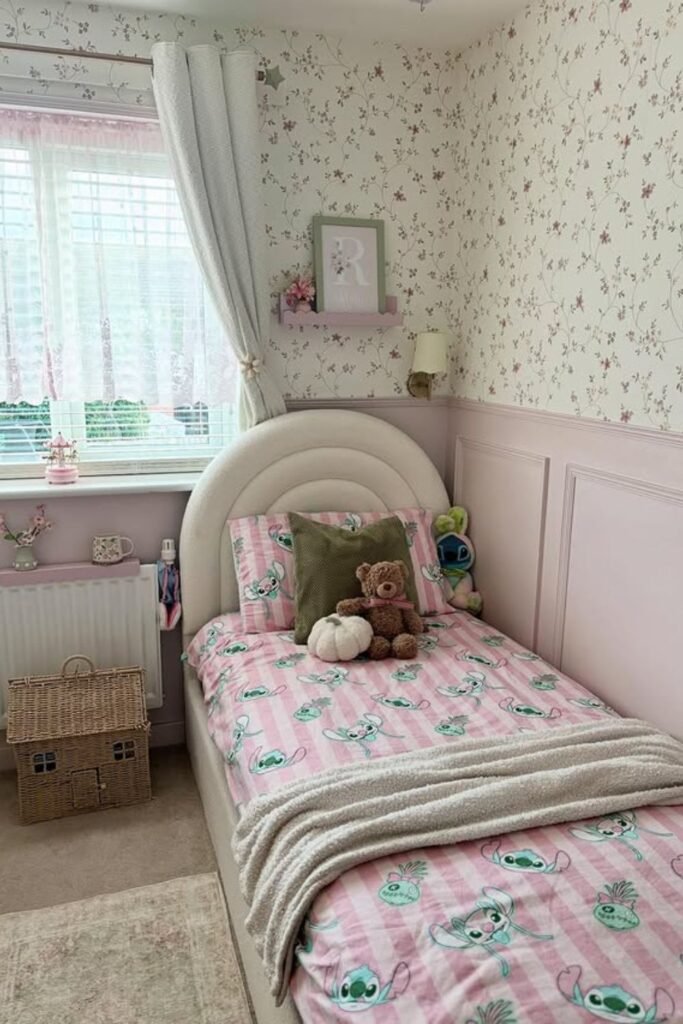
Soft Single
A slender single bed with softly curved corners helps maintain clear pathways contributing to a more airy atmosphere within the space.
Placing furniture in the corners frees up more floor space and a wall shelf is a good substitute for a cumbersome nightstand.
The use of soft colors and subtle patterns brings a sense of warmth avoiding a cramped feeling.
Learning Corner
Curiosity does not need a big footprint. Placing a small table beside the bed creates a spot for drawing puzzles or quiet play without taking over the room.
Wall art has a dual purpose functioning as both decoration and educational aids which helps maintain a tidy environment.
This approach is particularly effective in compact bedrooms where the need for both play and rest must coexist harmoniously.
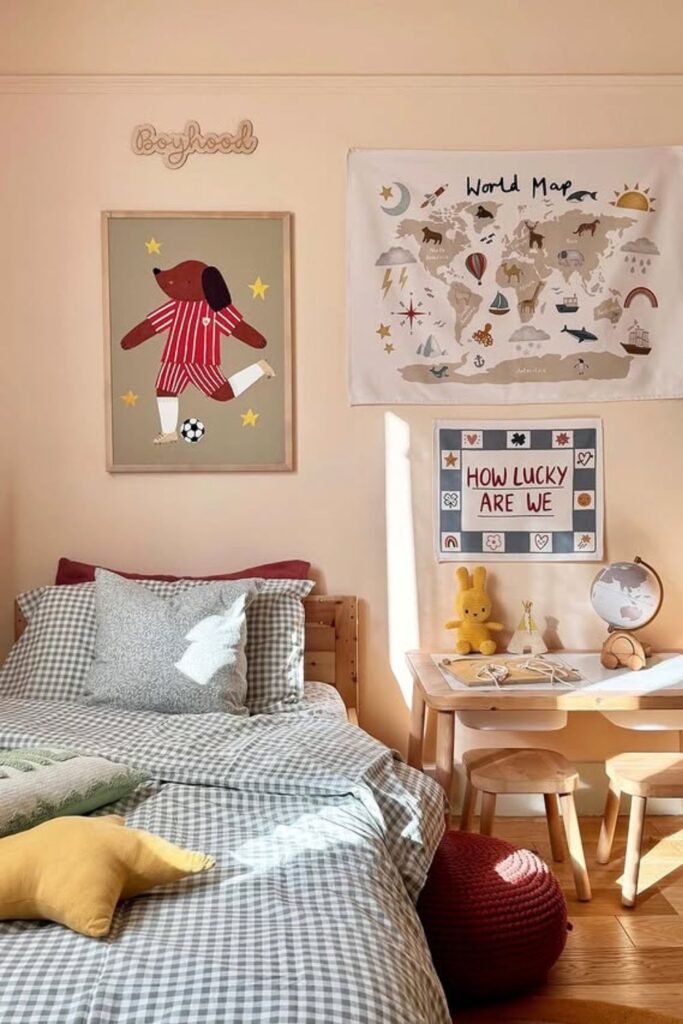
Floor Reset
Clearing the center and pushing everything to the edges instantly makes a small kids bedroom feel calmer.
Low beds or built in storage and streamlined furniture keep the floor clear for play and activity.
This approach is particularly effective for energetic children who prefer playtime to sitting still.
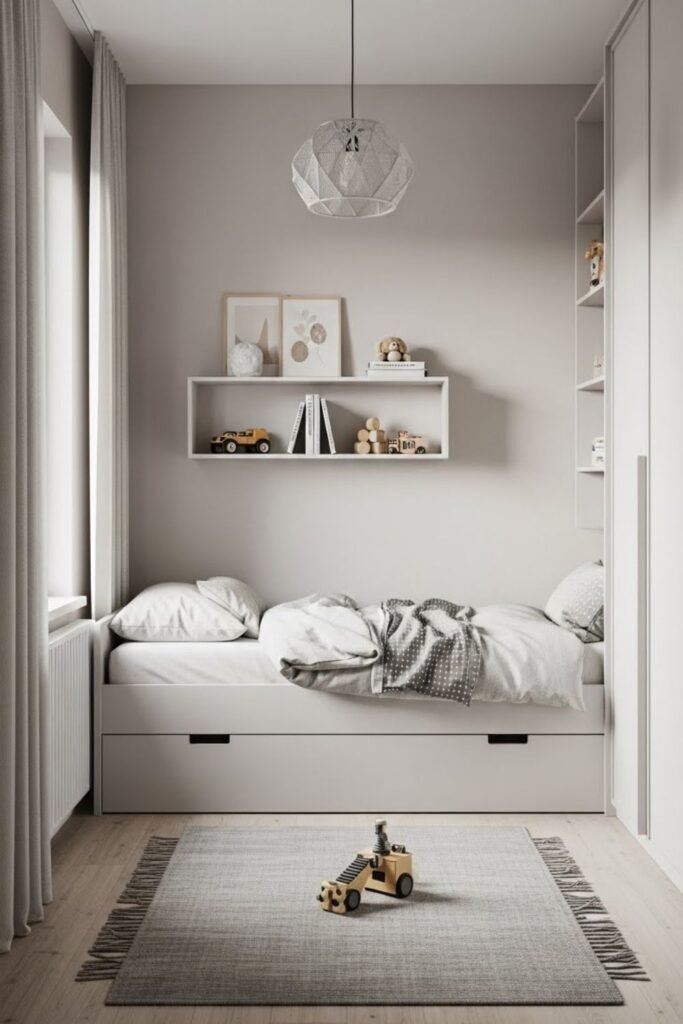
Light Control
Harsh overhead lighting can make small rooms feel boxed in And using multiple soft light sources spreads brightness without glare.
A table lamp and a wall sconce or even some warm strip lights can really open things up making those tight corners appear a bit more spacious.
By introducing light at varying heights and you create a sense of depth, which helps the eye perceive a larger area.
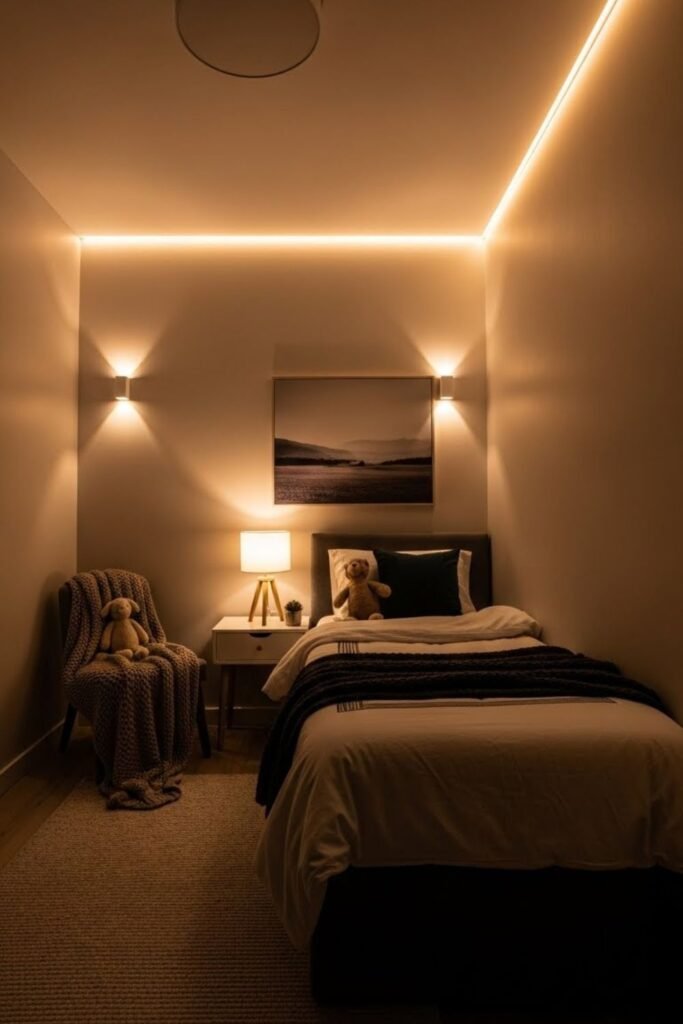
Soft Divider
Sharing one room doesn’t always require solid separation. A lightweight curtain, fabric panel or open shelving unit can define personal space without closing the room off.
This setup is ideal for siblings who crave personal space while yet needing to share their toys and storage.
The divider provides a sense of organization without the need for solid walls and allowing the arrangement to the adapt as children become older.
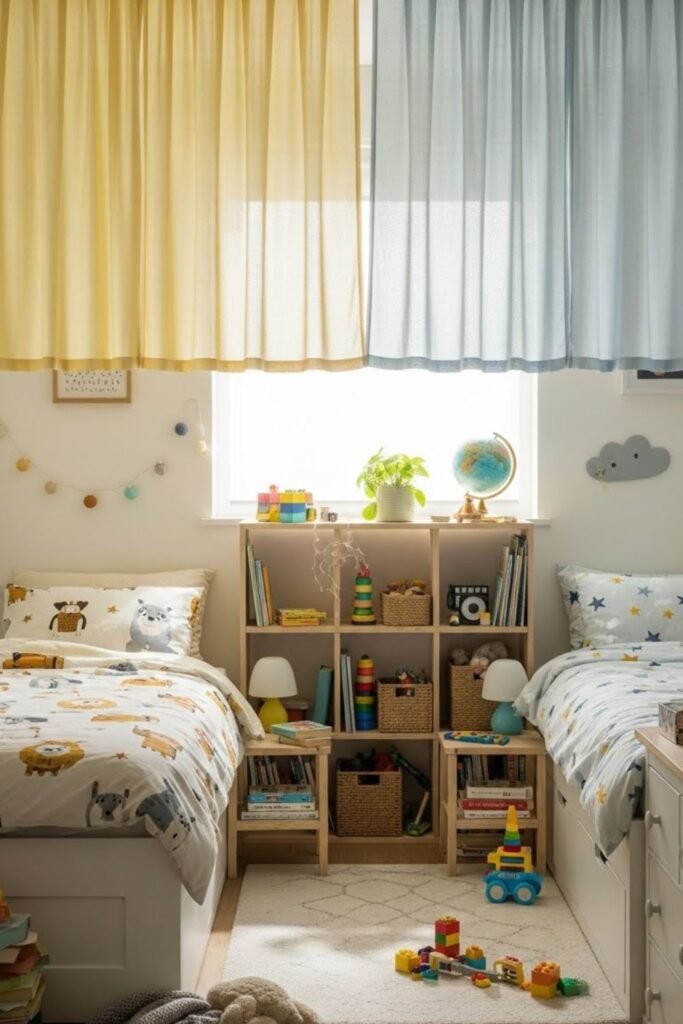
Wall Rhythm
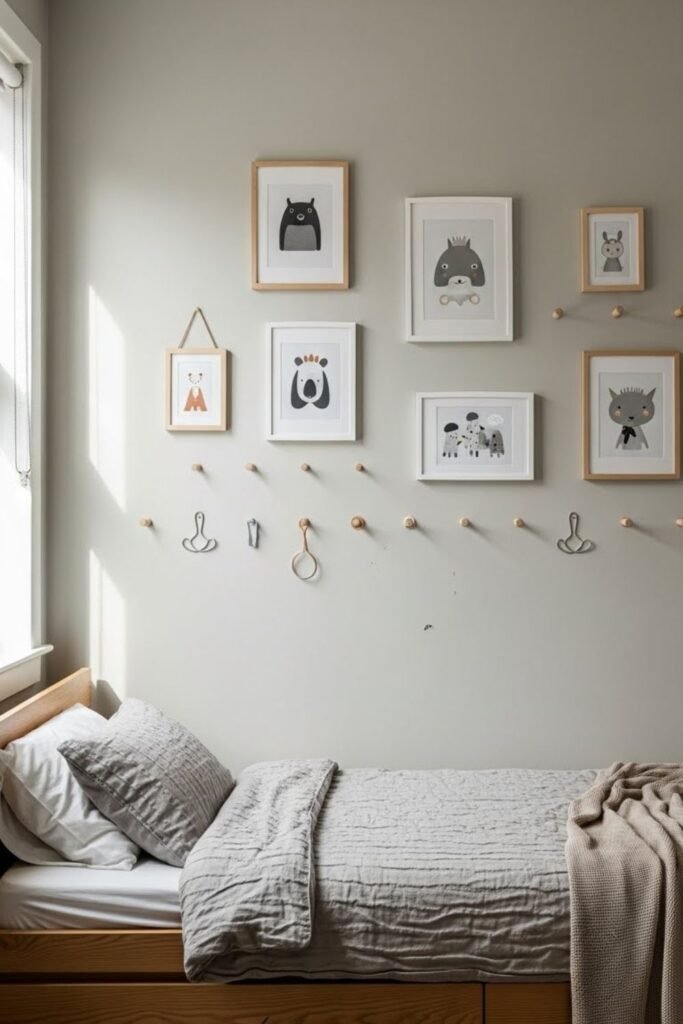
Blank walls often feel wasted, but overdecorating makes small rooms noisy. Creating a rhythm using evenly spaced art hooks or pegs keeps the wall interesting without clutter.
This approach is ideal for spaces above beds or desks when the storage is not concern.
Employing repeating shapes and colors contributes to a sense of purpose and tranquility on the wall.
Neutral Base
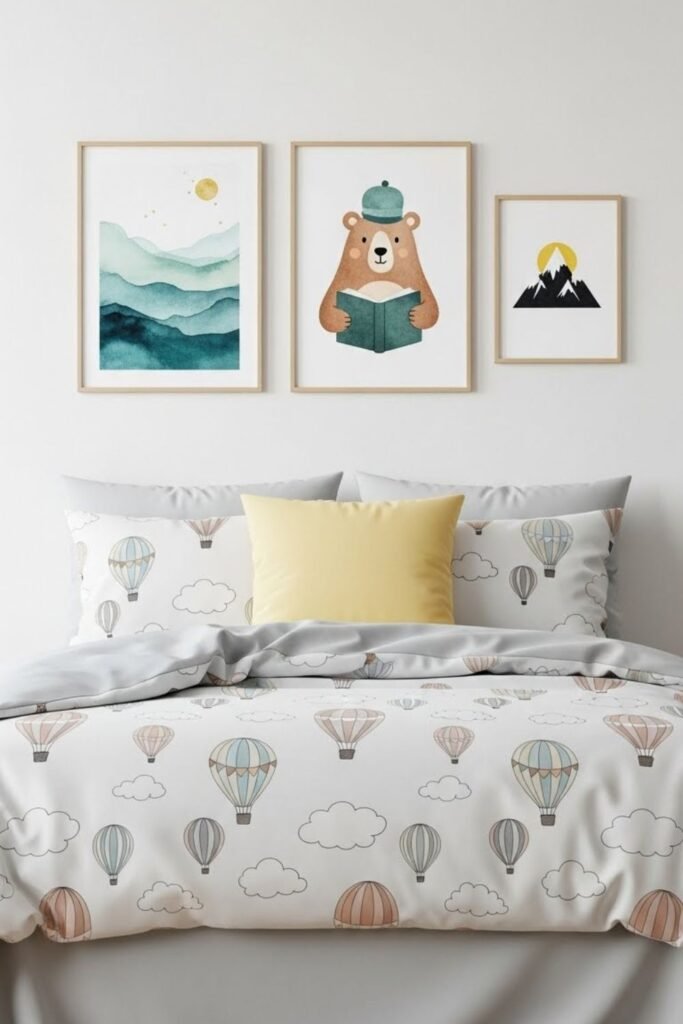
Rooms feel smaller when everything competes for attention. Keeping furniture, walls, and flooring neutral creates a calm base that visually expands the space.
Personality can be found in bedding, artwork and toys for instance. This approach is particularly effective in small bedrooms which frequently evolve as children mature.
By keeping the core elements simple updates are easy which helps the room feel current and prevents it from becoming cluttered or outdated.
Reach Storage
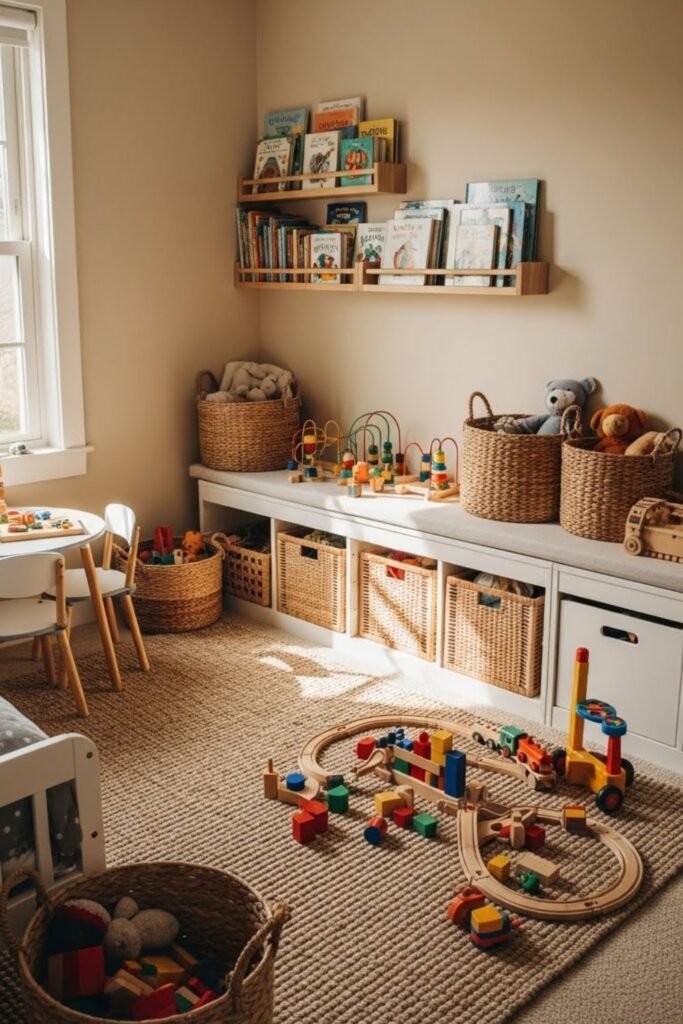
Kids use spaces better when storage matches their height. Low shelves baskets and drawers make cleanup faster and prevent clutter from spreading.
This approach is particularly effective in the compact spaces and where clutter tends to accumulate rapidly.
Children are more inclined to return things to their proper places when they can easily get them.
FAQs
How do you organize a small kids bedroom without making it feel crowded?
Begin by clearing out anything that clutters the floor without a reason. Make use of the walls for shelving and hooks.
Keep storage low and easily accessible, and only include furniture your child actively uses.
When everything has a designated spot, the room remains tidy and feels more spacious, even with toys and books present.
What is the biggest mistake parents make in small kids bedrooms?
A common mistake is to put too many things in a room. Dark furniture and oversized decor may easily overwhelm a small space, making it feel even smaller.
Focusing on open floor plans softer hues and versatile furniture helps create a more practical and inviting area for your child.

Hi, I’m Afaf! I’m a law student who loves writing about everyday life – from home projects and crafts to fashion, beauty, and parenting tips.
I’ve been writing for over a year, sharing ideas that are simple, practical, and easy to try. I write about things I find interesting and useful, whether that’s organizing a space, trying a new DIY, or finding activities to keep kids entertained.
My goal is to share helpful ideas without making things complicated. If it works in real life, I’ll write about it.
When I’m not studying or writing, I’m usually experimenting with new projects or scrolling for inspiration!