
18 Waldorf Playroom Ideas
Creating a Waldorf playroom can feel confusing when every room you see online seems filled with expensive wooden.
The key is choosing fewer open-ended materials and arranging them so your child can build, pretend, create, and move freely.
In this article, you’ll discover 18 Waldorf playroom ideas that make imaginative play easier without making the room complicated.
Let’s jump in!
Which Waldorf Playroom Encourage Open-Ended Play?
You want your child to invent their own games instead of waiting to entertain them, start with materials that have no single purpose.
Wooden blocks can become houses, roads, shops, or castles, while play silks can turn into capes, blankets, rivers, or fort roofs.
Add simple dolls, wooden animals, baskets, shells, stones, and other safe loose parts so your child can decide how each item fits.
Keep only a manageable number of toys within reach because crowded shelves can make choosing what to play harder.
When the setup does less of the imagining, your child gets more freedom to create, change ideas, and keep the same game growing.
Flexible Play Corner
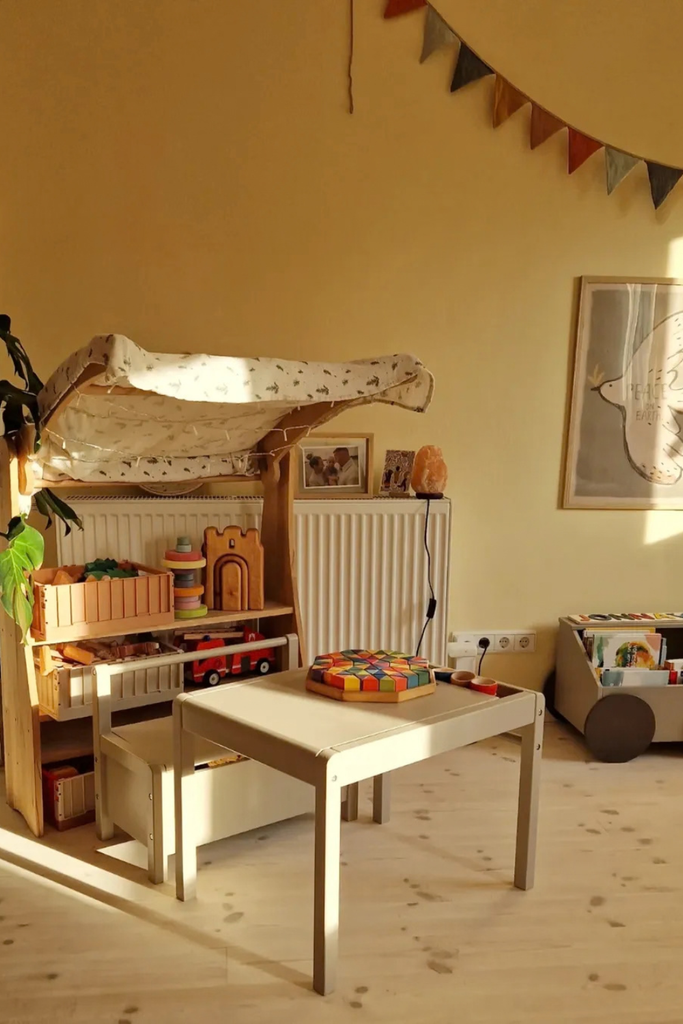
Turn one sunny corner into a flexible play zone by pairing child-sized furniture with low shelves, baskets and simple wooden toys.
Keep blocks and open-ended pieces within easy reach so your child can move between building, drawing and pretend play without help.
A fabric canopy adds another layer for imaginative games without taking over the room. Let natural window light lead during the day
Silk Playhouse
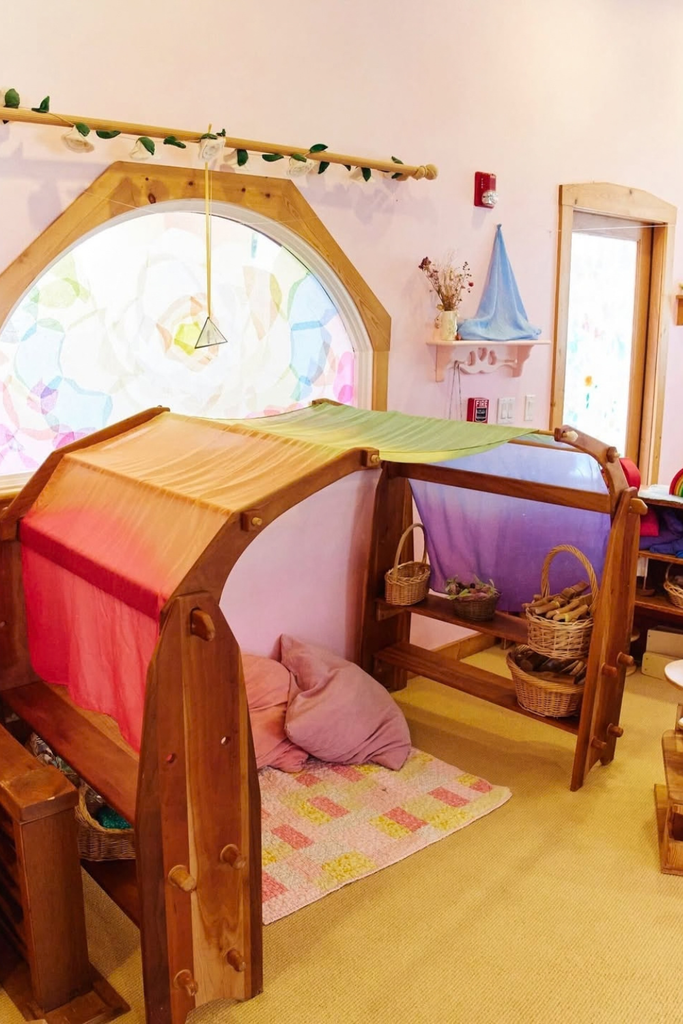
Give pretend play room to change by draping colorful play silks across wooden play stands instead of creating one fixed playhouse.
Your child can turn the same structure into a shop, home, fort, or puppet space. Keep baskets of natural loose parts.
Large windows provide soft daytime light, while warm overhead lighting can keep the enclosed corners comfortable later.
Rainbow Play Arch
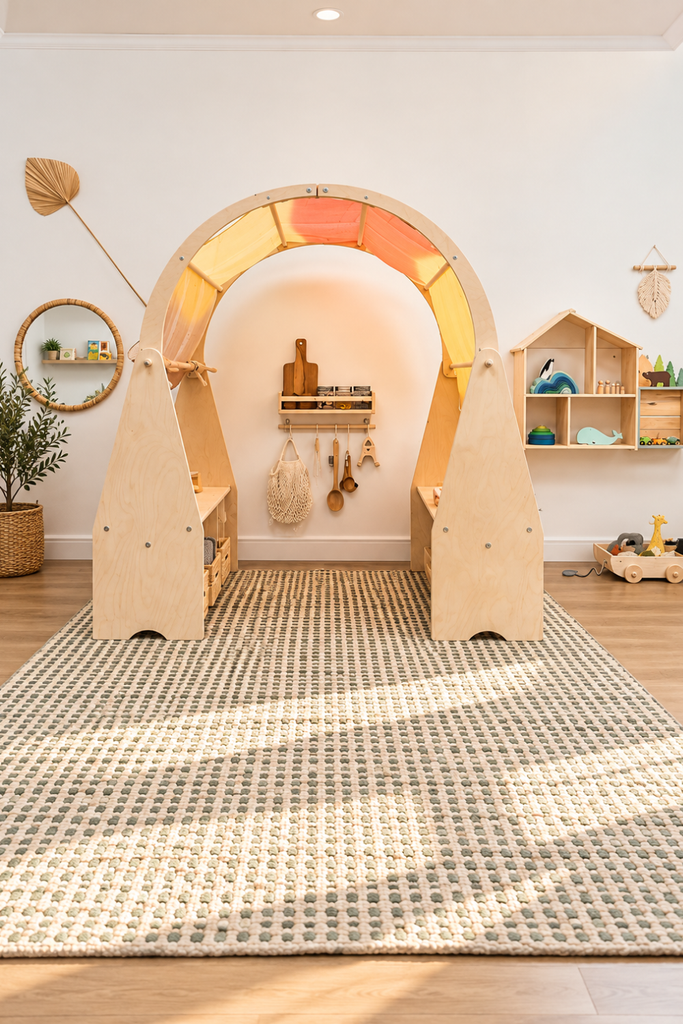
Bring movement and pretend play together that your child can crawl through, hide beneath, or turn into part of a bigger game.
Keep the surrounding floor open so the structure never blocks active play then add a few wall shelves for simple toys.
Soft rainbow fabric adds gentle color overhead while natural daylight and warm ceiling light keep the play area bright.
Canopy Play Nook
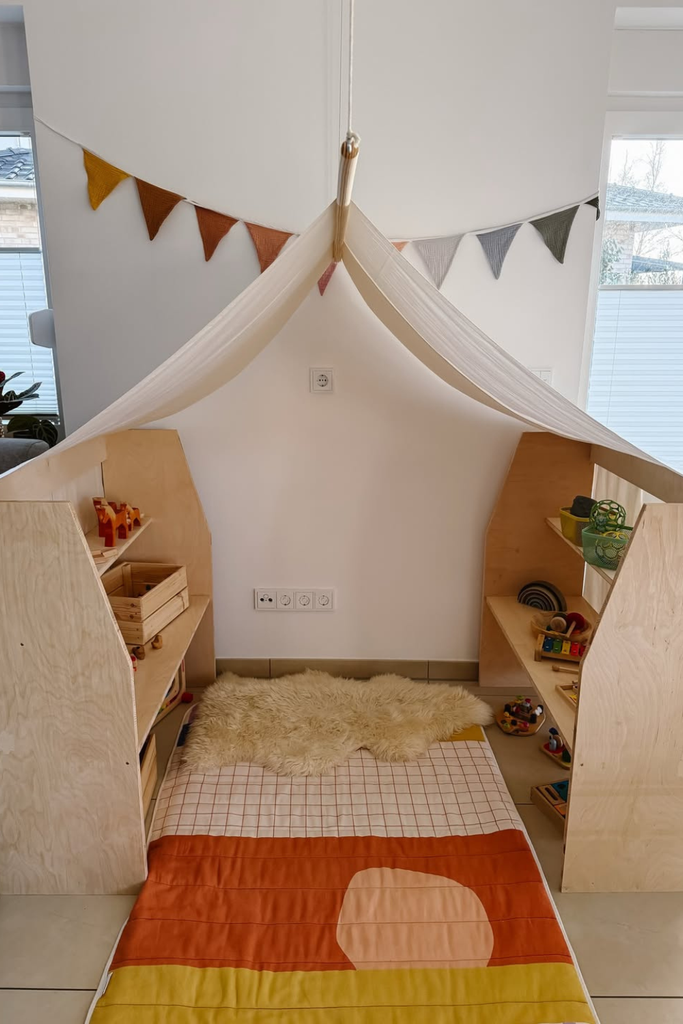
Stretch a soft fabric canopy between two low wooden shelves that face inward to create a comfortable pretend-play hideaway.
While toys remain accessible and simple to return after play, your child has access to an enclosed area for small world games.
Add a cushioned rug so floor play feels comfortable. Windows on both sides bring in balanced daylight.
Pretend Home Corner
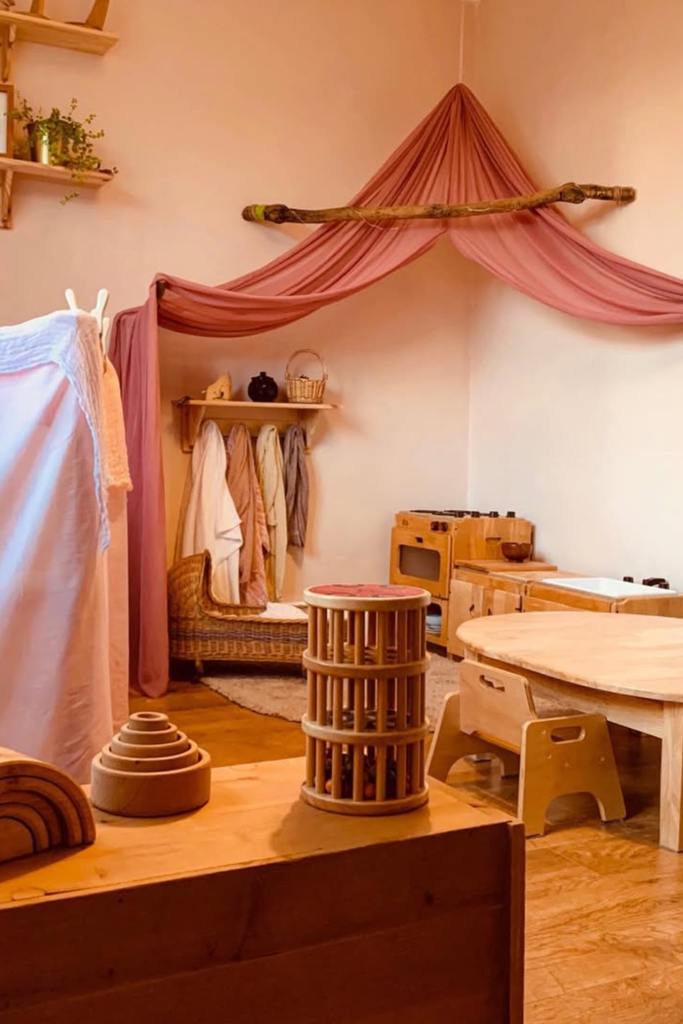
Let everyday routines inspire deeper pretend play by setting up a child sized kitchen simple cookware and dress-up cloths nearby.
Use a corner for this setup so your child can cook, serve meals, care for dolls, or turn the space into a café whenever the story changes.
Draped fabric and a natural branch soften the play zone, while daylight paired with warm ambient lighting keeps the wooden finishes feeling cozy.
Little Home Setup
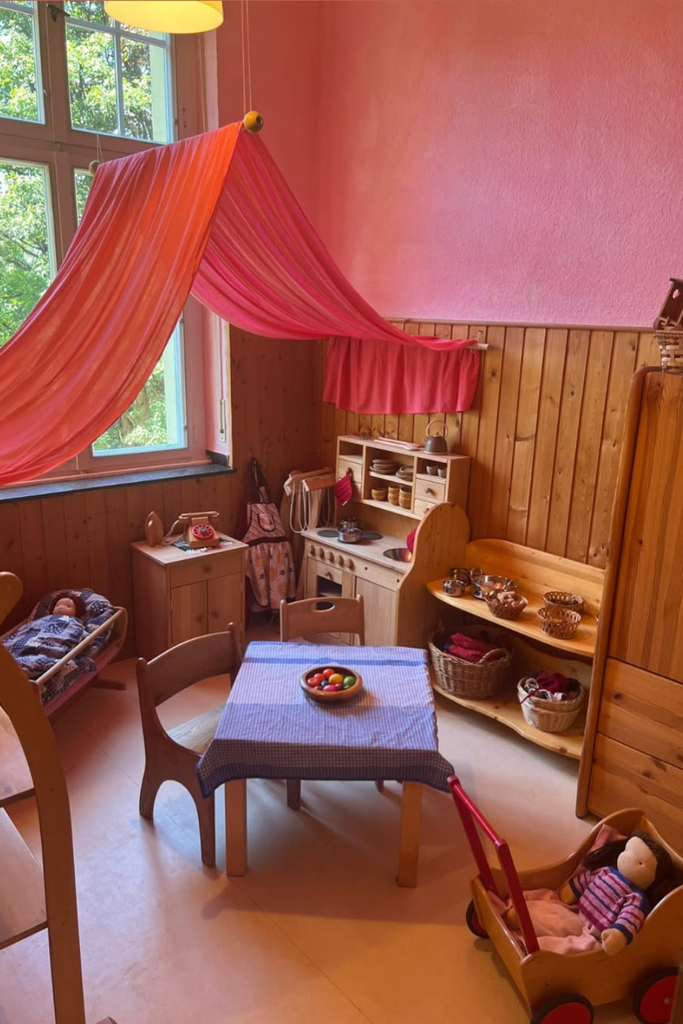
Make role-play feel familiar by giving your child a small version of everyday home life with a kitchen, dining table, dolls, and accessible baskets.
Group everything in one corner so cooking, serving food, shopping and caring for dolls can naturally become part of the same story.
Warm wood and soft fabric keep the setup grounded, while large-window daylight works with a warm pendant light.
Open Floor Play
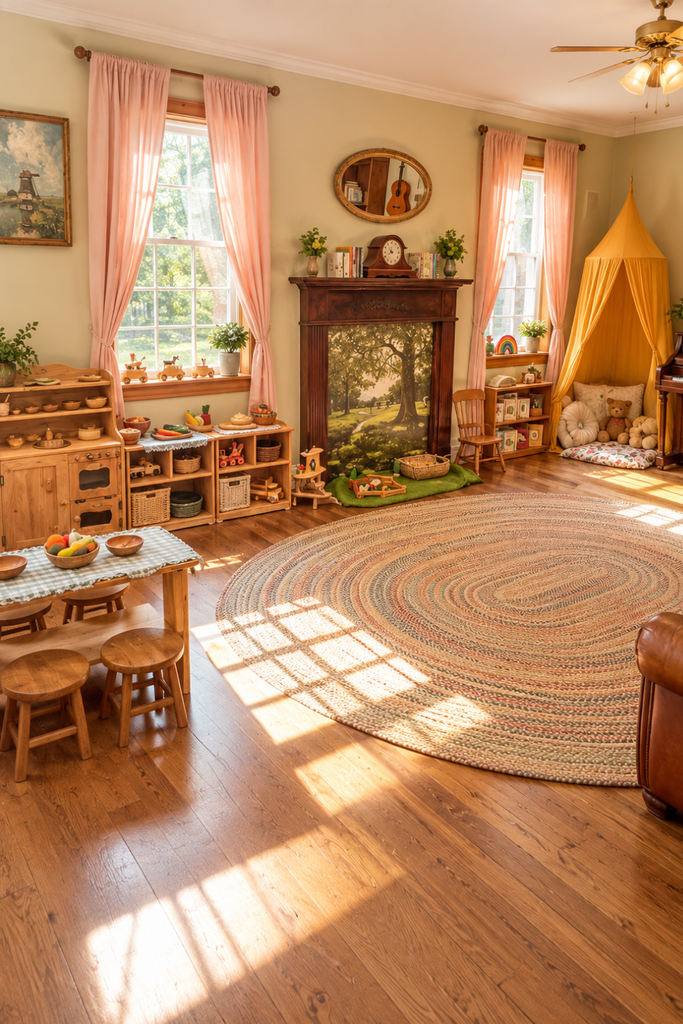
Keep the center of the playroom open if you want building, movement and pretend games to grow beyond one fixed station.
Place the kitchen, low shelves, and reading canopy around the edges then anchor the empty floor with a large natural-fiber rug.
Your child can spread out blocks or create bigger stories without moving furniture first. Window light brightens the main play zone
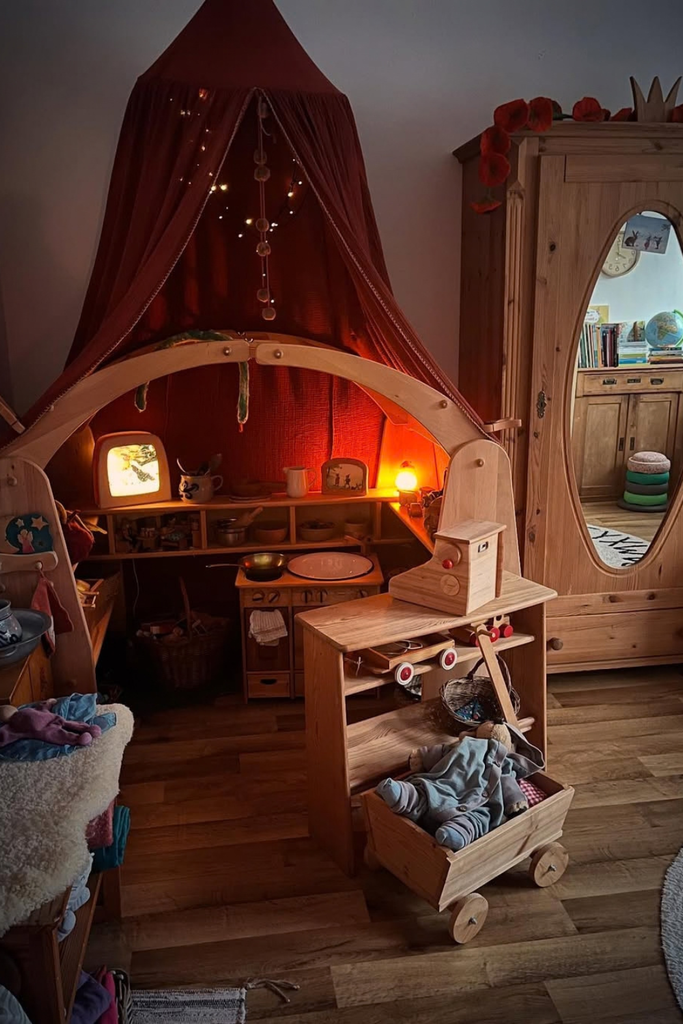
Glowing Play Den
Turn a darker corner into a cozy storytelling space by combining a wooden play frame with a deep fabric canopy.
Keep a pretend kitchen, dolls, and movable wooden pieces inside so your child can change the den from a home.
Small warm lamps and soft string lights create a gentle glow beneath the canopy, while general room lighting can handle brighter play.
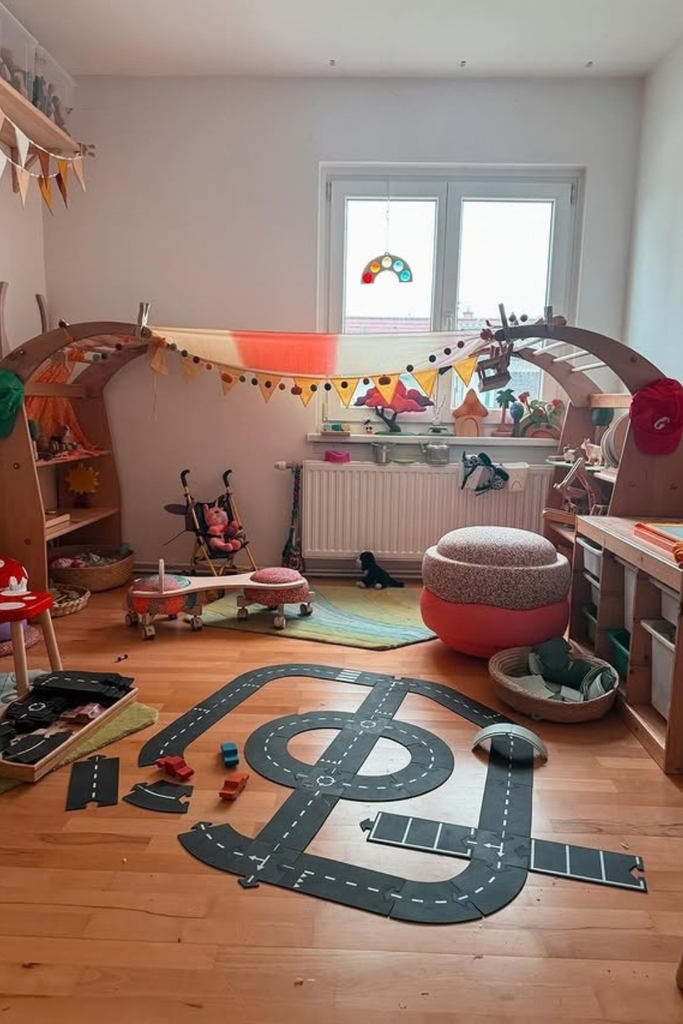
Buildable Road Play
Give your child a play setup they can rebuild each day by using movable road pieces instead of a fixed car mat.
Leave a wide section of floor clear so roads can stretch toward shelves, tunnels or other small-world toys as the game grows.
Keep vehicles and building pieces in low baskets nearby for easy access. Window daylight handles most daytime play
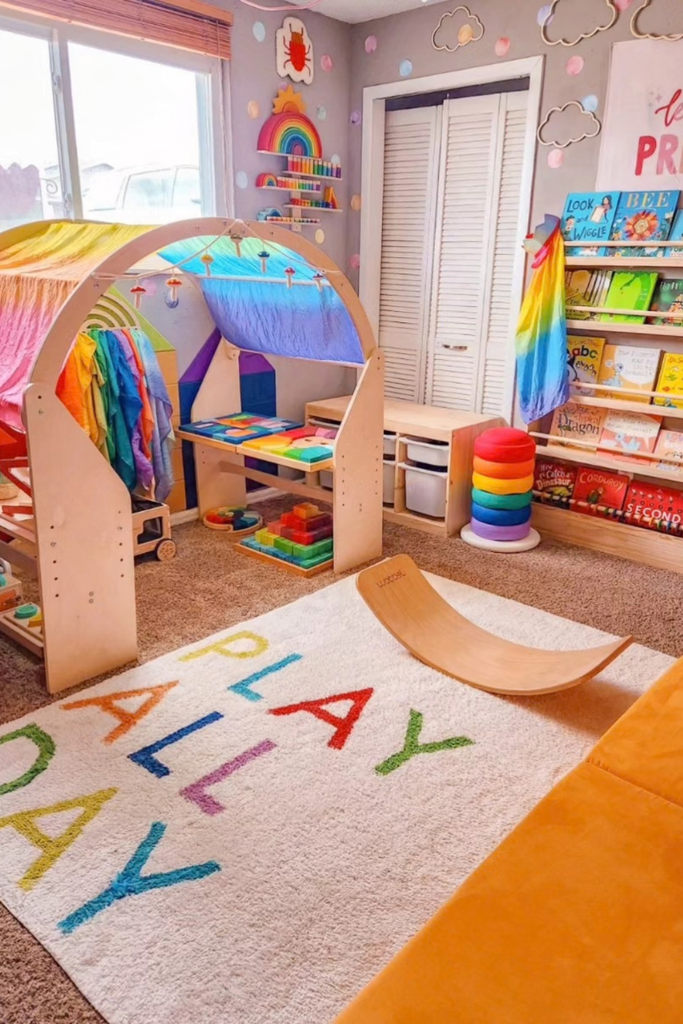
Rainbow Silk Canopy
Bring more possibilities into one play zone by stretching colorful silks across a wooden frame and keeping extra fabrics.
They can move the silks from the canopy into forts, costumes, landscapes, or small-world games whenever their story changes.
Add basic blocks around the boundaries. A gentle glow is produced by daylight passing through the colored fabric.
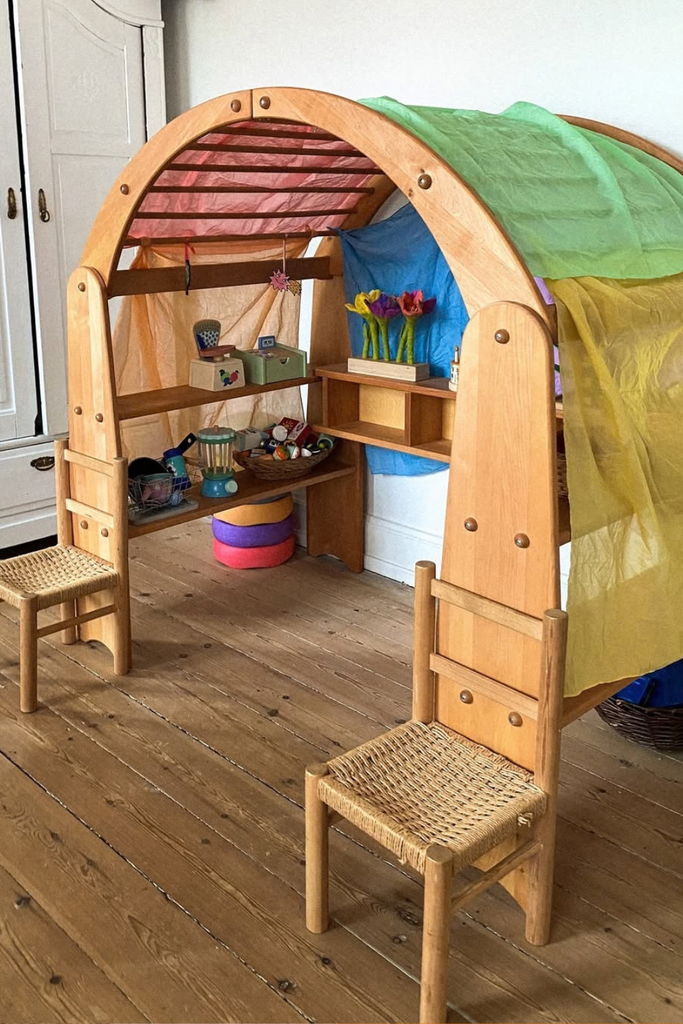
Story Play Arch
Use a wooden play arch as a flexible stage where your child can invent a new setting whenever play begins.
Drape silks across the back for quick scenery, then keep baskets of simple figures and props on the side shelves.
Child-sized chairs can turn the front into a shop, theater or gathering spot. Natural daylight keeps the area bright.
Open-Ended Zones
Divide a larger playroom into loose activity zones without closing them off so your child can carry one story across the whole space.
Keep pretend cooking near the window, blocks on the open floor and small-world toys beneath a wooden play frame.
Hang play silks where little hands can reach them for costumes, forts or scenery. Strong window light fills the room naturally.
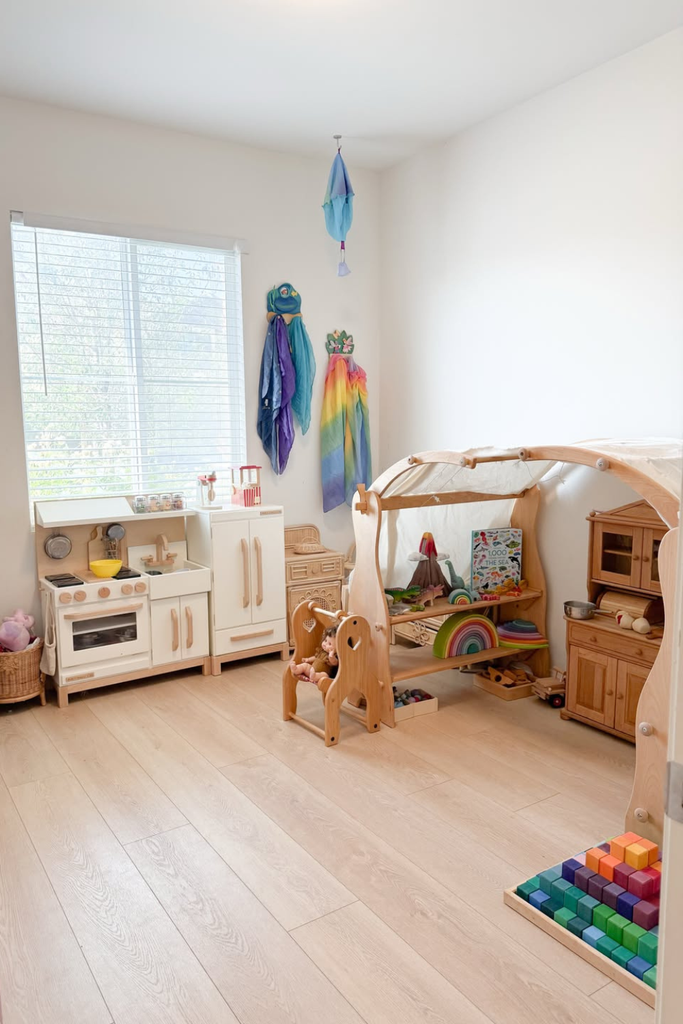
Small World Village
Build a small world area on open floor space so your child can keep expanding the story instead of playing inside fixed boundaries.
Combine movable roads with wooden houses, trees, bridges, vehicles, and figures, then store extra blocks on a nearby low shelf.
Leaving each piece unattached lets the village change every time they play. Large glass doors bring in strong daylight.
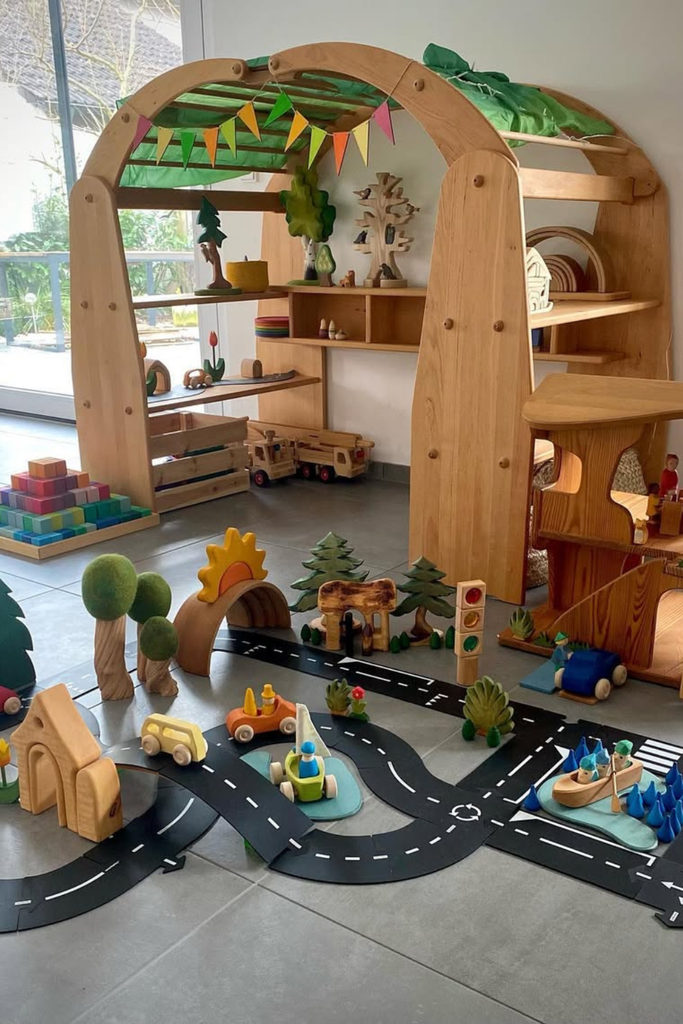
Homemaking Play Kitchen
Use a wooden kitchen that is small enough for small hands to incorporate common household tasks, especially if your child likes it.
Keep it stocked with basic pots, dishes, baskets, and cleaning supplies so that cooking may easily transition into serving or managing a café.
Keep the pieces visible instead of overfilling the shelves. Window daylight brightens the workspace, while a warm overhead light.
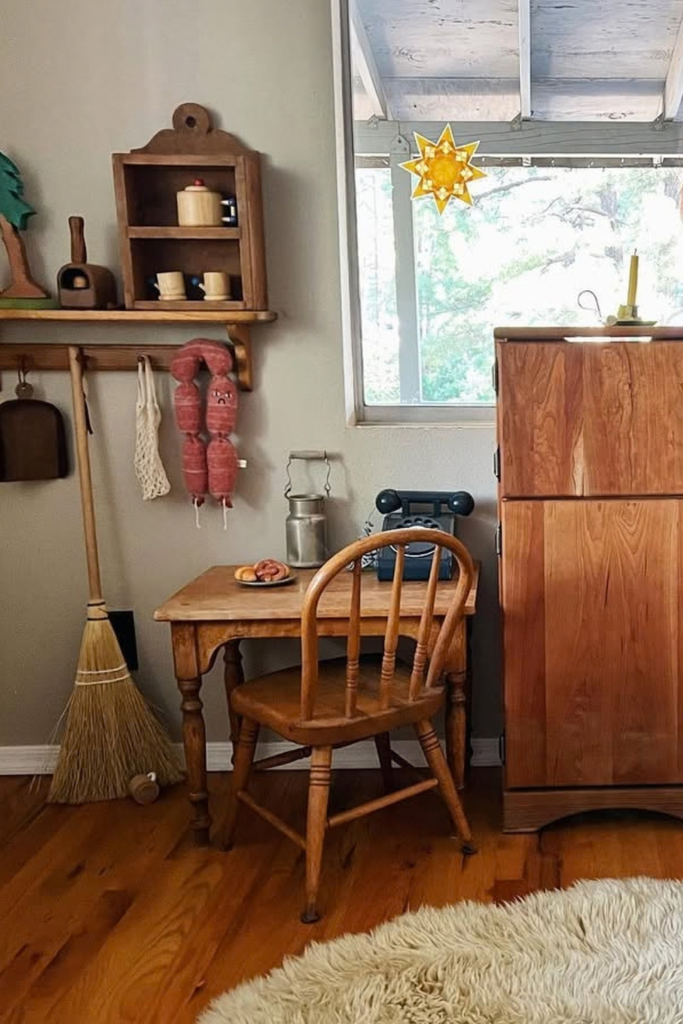
Accessible Toy Shelves
Make independent play easier by keeping a small mix of toys on low open shelves and placing extra pieces inside simple woven baskets.
Your child can quickly find dolls, figures, fabrics, or building materials without emptying every container onto the floor.
Leave some shelf space open so the setup never feels crowded. Tall windows provide plenty of natural light.
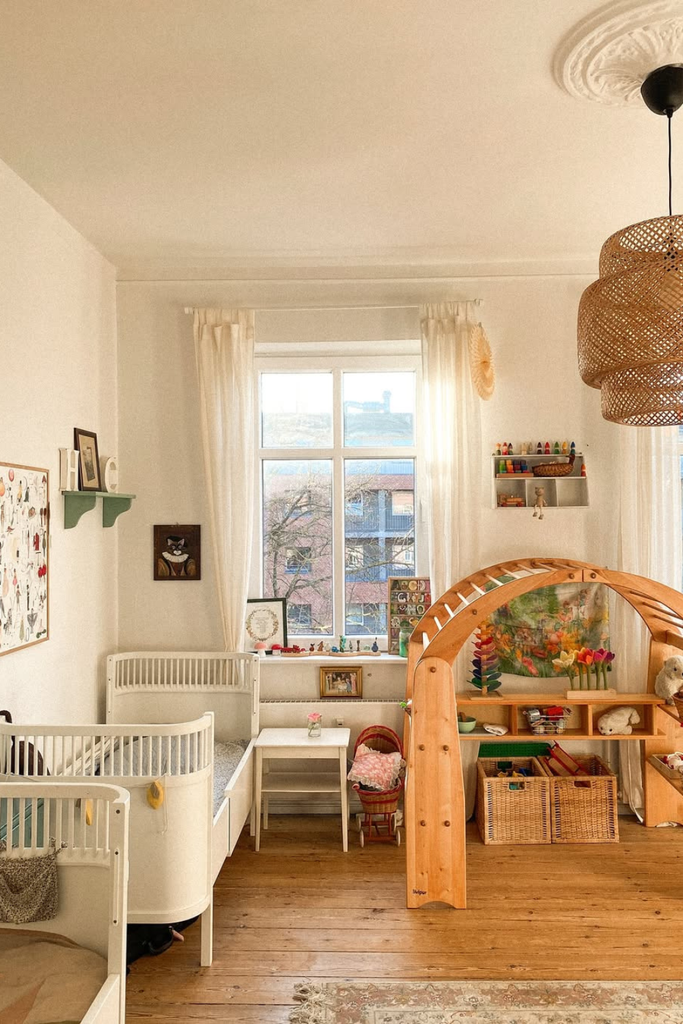
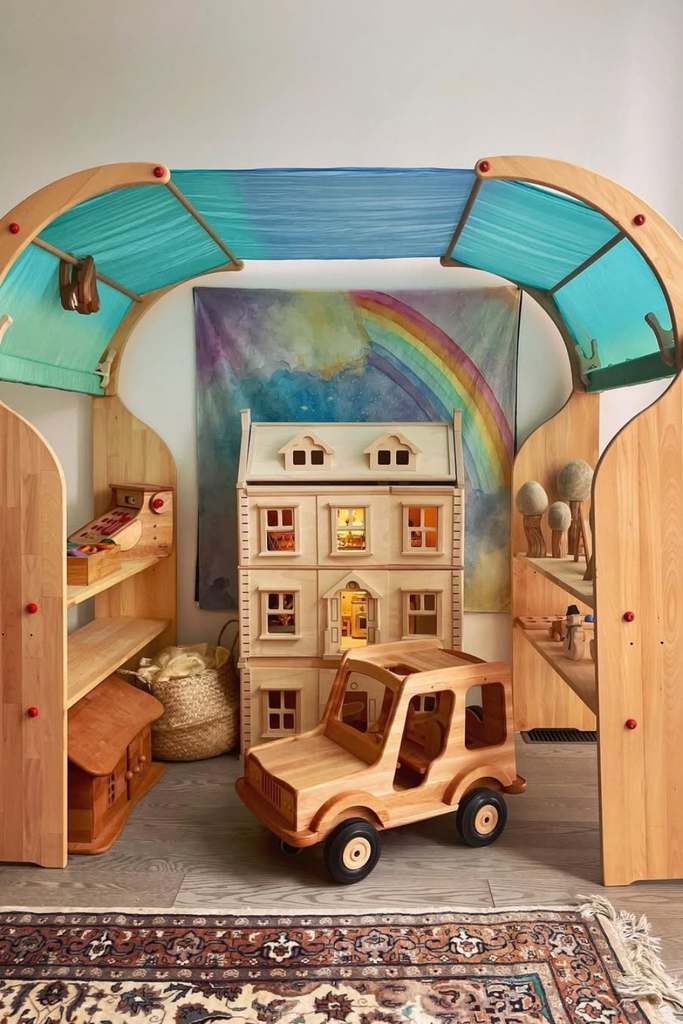
Pretend Town Corner
Turn one play frame into a little neighborhood by combining a dollhouse, wooden vehicle, trees, and simple figures.
Keep the pieces movable so your child can create trips, family stories, shops, or completely new places instead of fixed game.
Side shelves make extra props easy to introduce as the story grows. Natural daylight works well here, with warm ambient lighting.
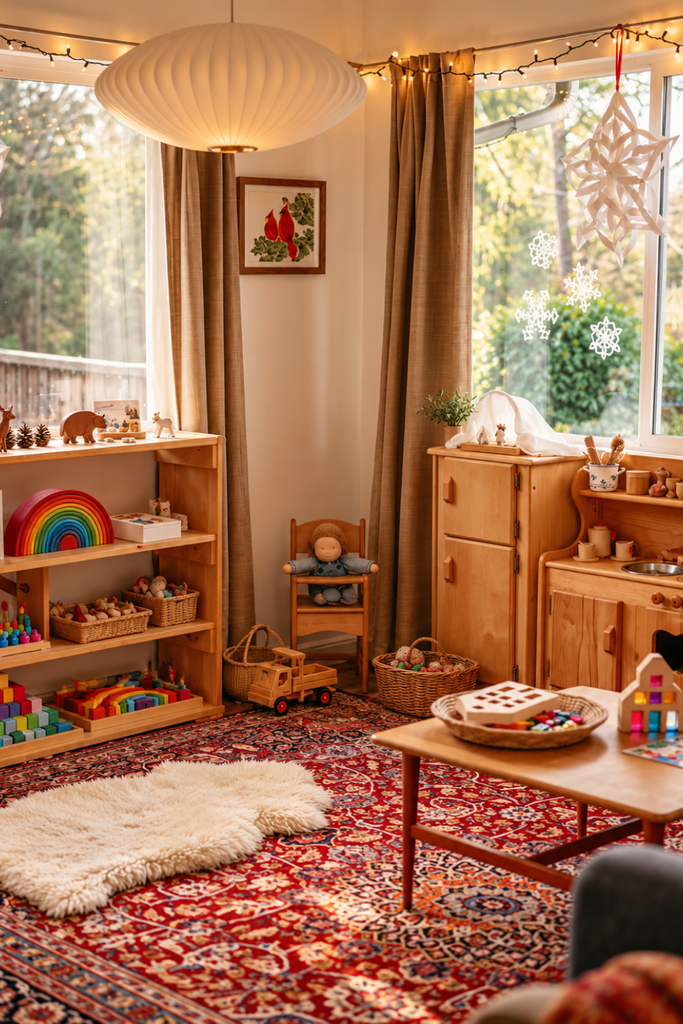
Seasonal Play Corner
Playroom change with the seasons by adding a few nature-inspired pieces instead of replacing the whole setup.
Use an accessible shelf for wooden figures, blocks, books, pinecones then keep pretend kitchen pieces close enough.
Large windows bring nature visually into the room, while a pendant light and soft string lights add warm layers.
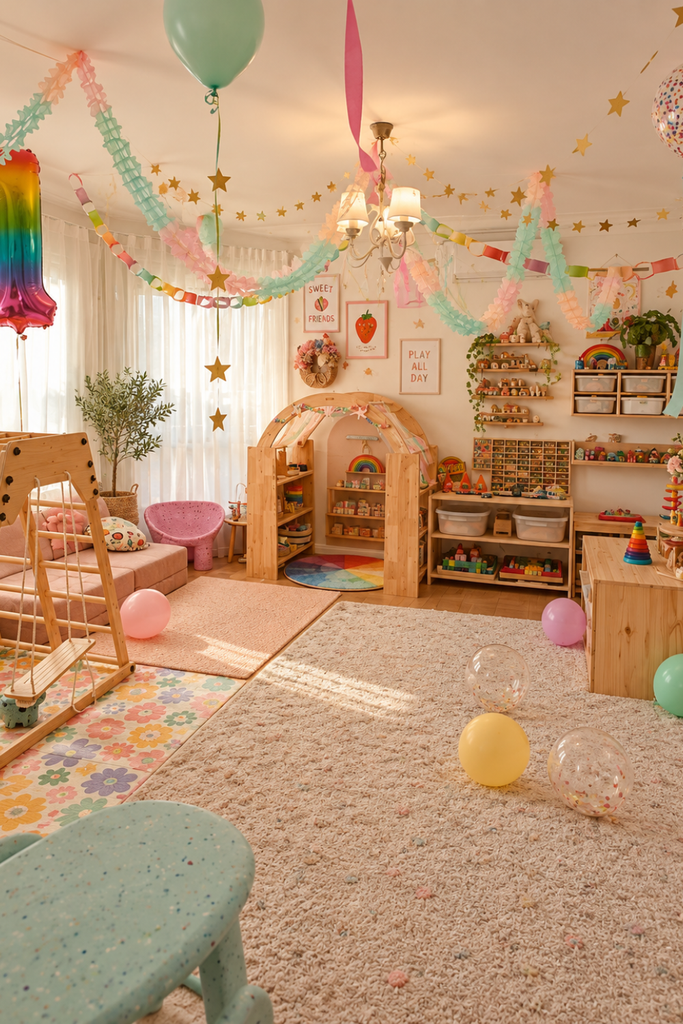
Creative Movement Zone
Give active play its own place by leaving a wide section of floor open beside a simple wooden climbing frame.
Your child can climb, balance, build, or bring loose toys into the area without being boxed into one activity.
Keep play materials on low shelves around the edges so the center stays flexible. Sheer curtains soften the daylight
FAQs
Can a Waldorf Playroom Include Toys That Are Not Wooden?
Focus more on keeping the room simple and giving your child plenty of open-ended materials such as blocks, fabrics, dolls, baskets, and loose parts.
If a toy encourages your child to invent stories or use it in different ways, it can still work alongside a Waldorf-inspired setup.
How Many Toys Should Stay Out in a Waldorf Playroom?
Keep enough toys available to offer different ways to play. Try putting some toys away and rotating them later.
Leave a smaller mix of blocks, figures, pretend-play pieces, fabrics and books within easy reach.
Fewer visible choices can make it easier for your child to choose an activity and stay involved with it longer.

Hi, I’m Afaf! I’m a law student who loves writing about everyday life – from home projects and crafts to fashion, beauty, and parenting tips.
I’ve been writing for over a year, sharing ideas that are simple, practical, and easy to try. I write about things I find interesting and useful, whether that’s organizing a space, trying a new DIY, or finding activities to keep kids entertained.
My goal is to share helpful ideas without making things complicated. If it works in real life, I’ll write about it.
When I’m not studying or writing, I’m usually experimenting with new projects or scrolling for inspiration!