
20 Playroom Paint Colors Themes
Bright furniture, colorful toys, patterned rugs, and storage bins can already make your playroom feel busy before you even choose a wall color.
If you add another bold shade, the room may start feeling overwhelming, but plain neutral walls can sometimes feel too dull for a playful space.
In this article, you’ll explore 20 Playroom Paint Colors that help you create a cheerful, balanced space.
Let’s jump in!
Should the Playroom Walls Stay Neutral?
Neutral walls can be a smart choice when your playroom already has colorful shelves, chairs, rugs, toys, and artwork competing for attention.
Soft white, warm beige, light greige, or muted cream gives those brighter pieces a calmer background, so the room still feels playful.
Add color through one accent wall, a painted arch, half-painted walls, or a softer shade pulled from the furniture.
Pay attention to natural light too, because the same neutral can look warmer or cooler throughout the day.
This enables you to create a well-balanced playroom where the walls keep everything together and the furniture adds energy.
Olive Green Walls
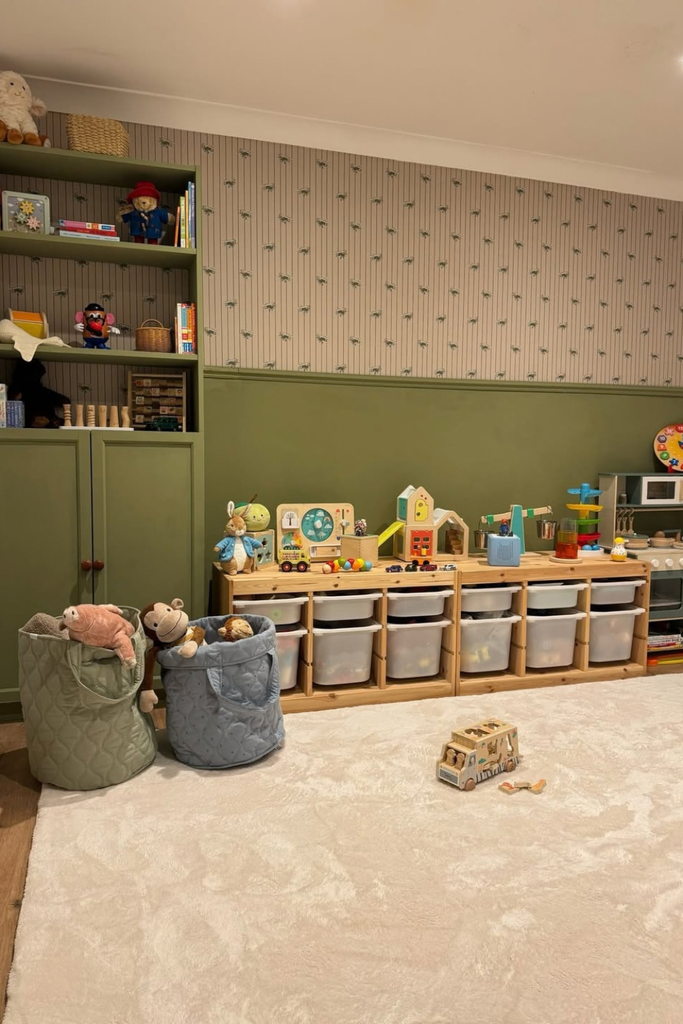
Olive green works beautifully when you want a playful room to feel warm without letting colorful toys take over visually.
Pair the lower walls and storage with the same muted green then keep patterned wallpaper lighter above for balance.
Natural wood toy units soften the deeper color while a cream rug keeps the floor open and bright.
Recessed ceiling lights provide even lighting across the play space without adding more visual clutter.
Mustard Yellow Walls
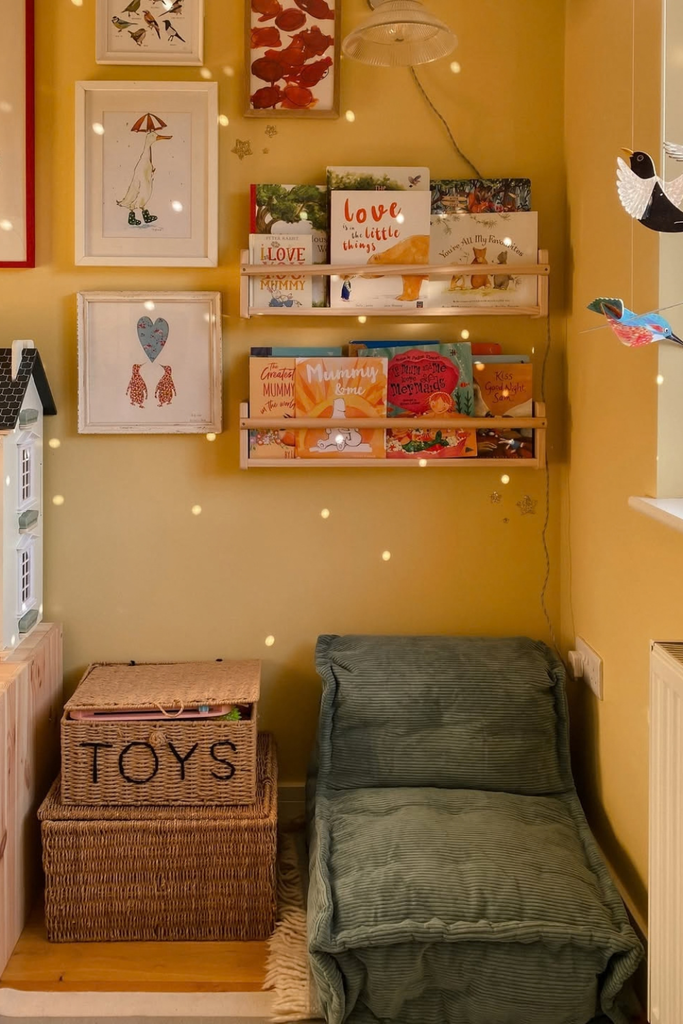
Mustard yellow can warm up a small playroom while giving a reading corner its own cheerful identity.
Keep the surrounding storage and baskets in natural wood tones, then bring in muted green seating to soften the stronger wall color.
Wall lamp paired with soft decorative string lights adds useful reading light while keeping the corner cozy.
Striped Ceiling
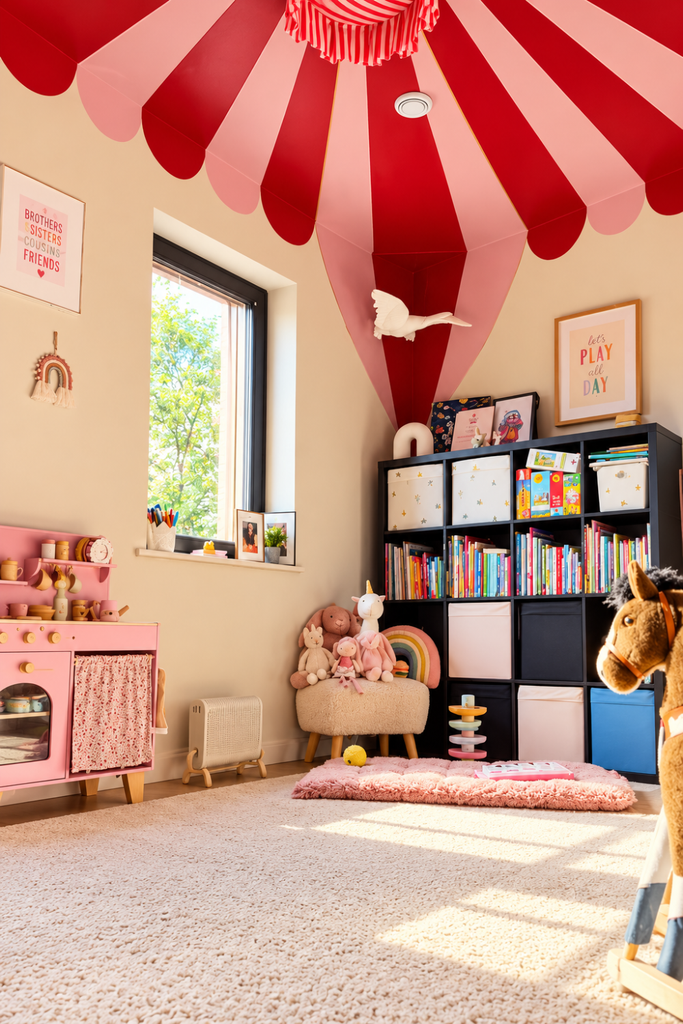
Soft, neutral walls maintain the playroom’s equilibrium while bold pink and burgundy stripes make the ceiling the focal point.
Try this method in a tall area if you want colorful playthings without having bright walls all around each toy.
Natural window light and recessed ceiling lights keep the dramatic overhead colors from making the play area feel dark.
Daisy Accent Wall
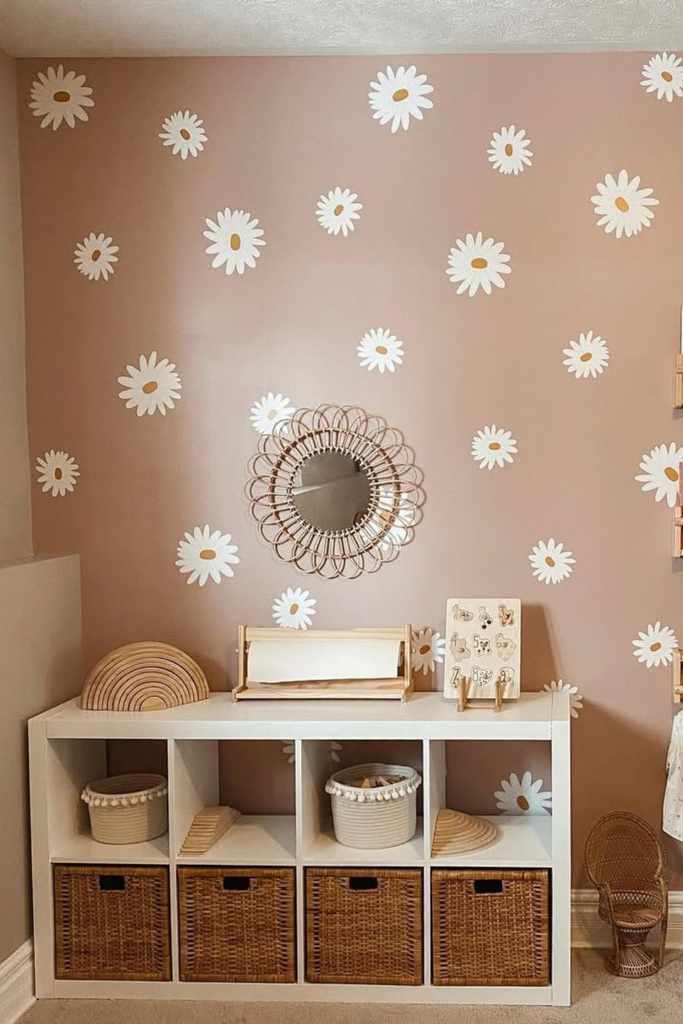
Soft dusty pink gives a playroom warmth without fighting with natural wood toys, baskets, or white storage.
Add simple white daisies across one feature wall to bring in a playful pattern while keeping the palette controlled.
This works especially well around pretend-play or book areas where you want a softer mood.
Keep nearby furniture neutral then use ceiling lighting and natural daylight to stop the muted pink from feeling heavy.
Teal Play Arch
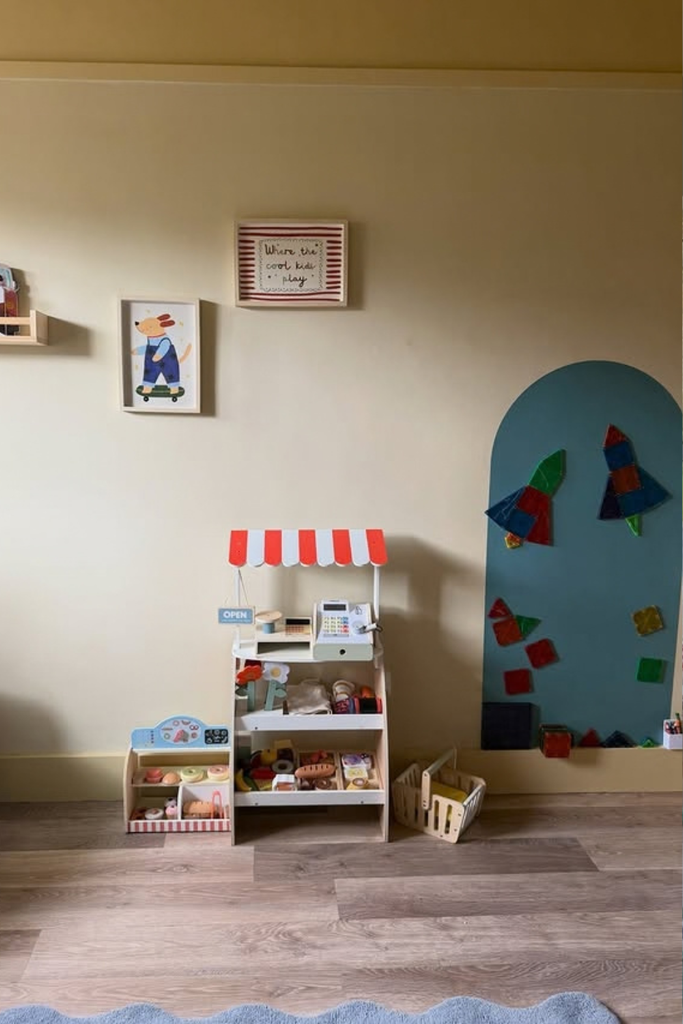
Keep most walls warm and neutral, then paint a simple teal arch wherever you want to define a separate activity zone.
This approach works especially well in smaller playrooms because you get a strong color moment without covering the entire room.
Position the arch behind crafts, pretend play, or a display area, and repeat its color through small accessories.
Natural daylight paired with soft overhead lighting keeps both shades looking balanced.
Soft Gray Walls
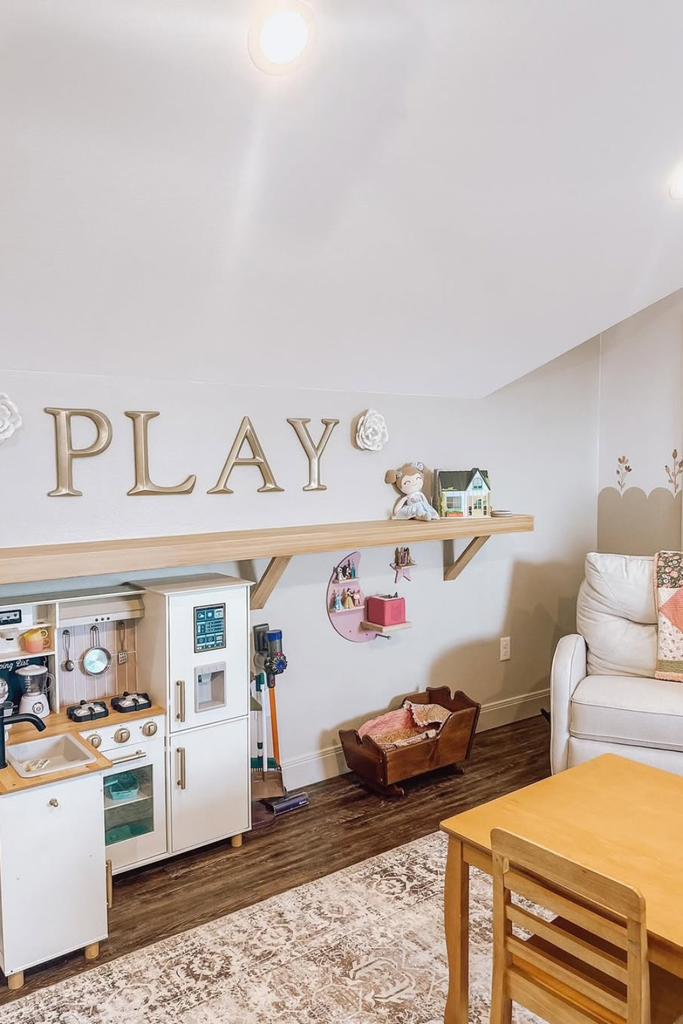
Soft gray works well when you want colorful toys and warm wood furniture to carry most of the playroom’s personality.
Use a light warm-toned gray. White pretend-play furniture and a large neutral rug keep the palette connected.
Recessed ceiling lights paired with natural daylight help the pale walls stay fresh throughout the day.
Butter Yellow Walls
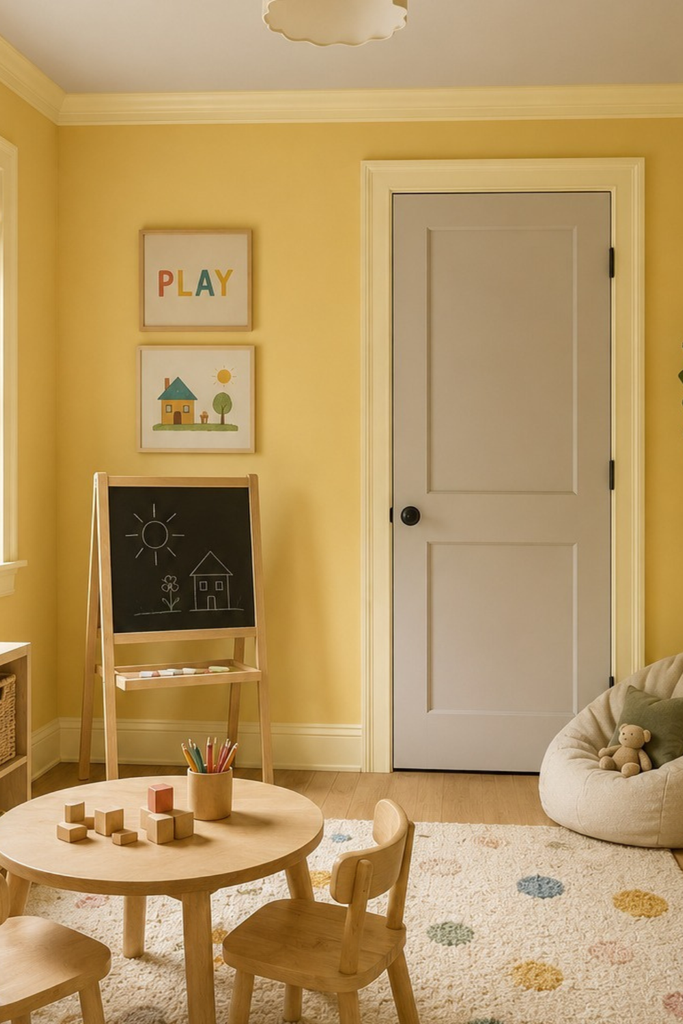
Butter yellow brings cheerful color into a playroom without competing too strongly with toys, books, and artwork.
Choose a softened yellow rather than a sharp shade, then balance it with cream trim, natural wood storage and a light rug.
Window light strengthens the warm walls during daytime while a simple ceiling fixture keeps the room evenly lit later.
Golden Yellow Walls
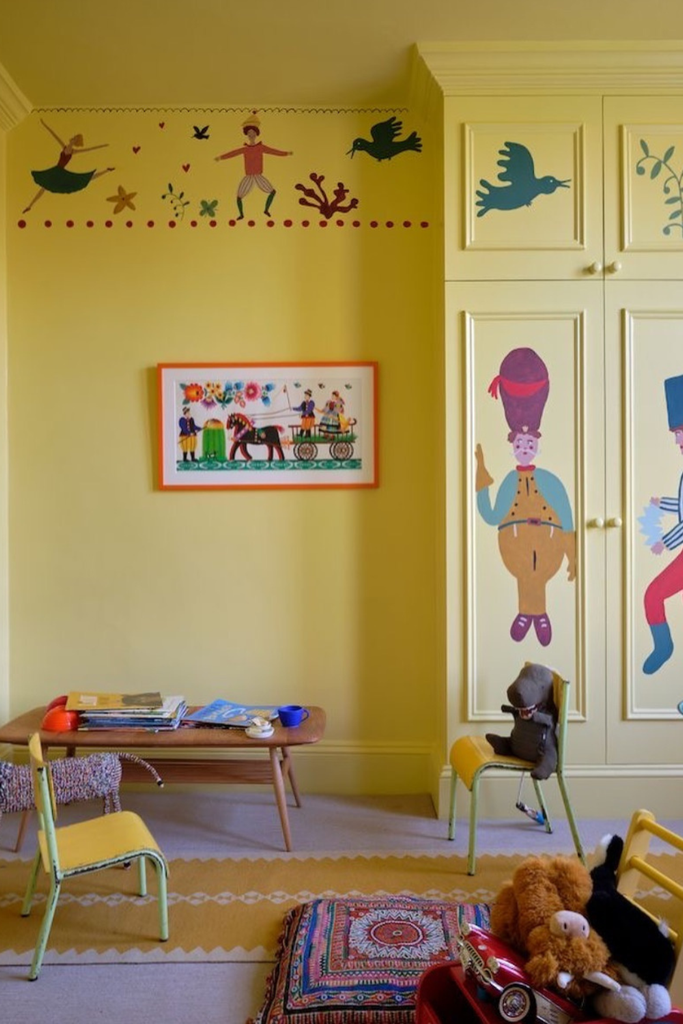
Golden yellow can handle plenty of playful color when you keep the larger storage pieces soft and coordinated.
Use the same warm shade across the walls, then bring character onto cream cabinets with simple painted figures.
Natural daylight and warm overhead lighting help the yellow stay inviting rather than looking too sharp.
Warm Greige Walls
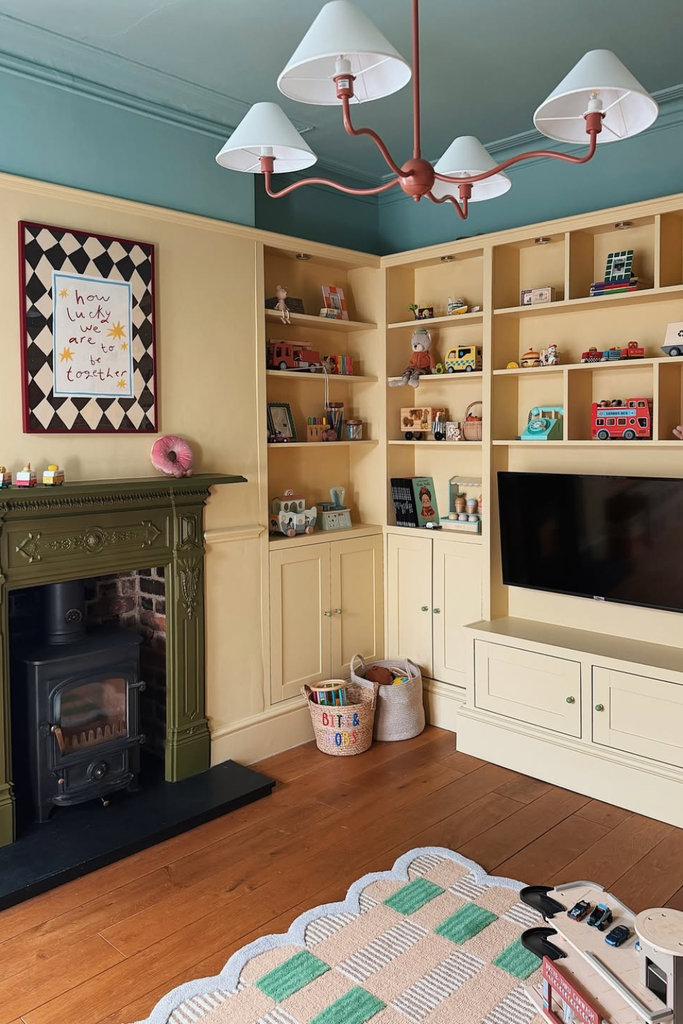
Warm greige gives a toy-filled playroom enough breathing room when books, storage bins and playsets already bring plenty of color.
Carry the shade across walls and built-ins for a more settled background, then let bright toys become the accents.
Works well in shared family spaces. Window light and a simple ceiling fixture keep the neutral palette from feeling flat.
Sage Green Walls
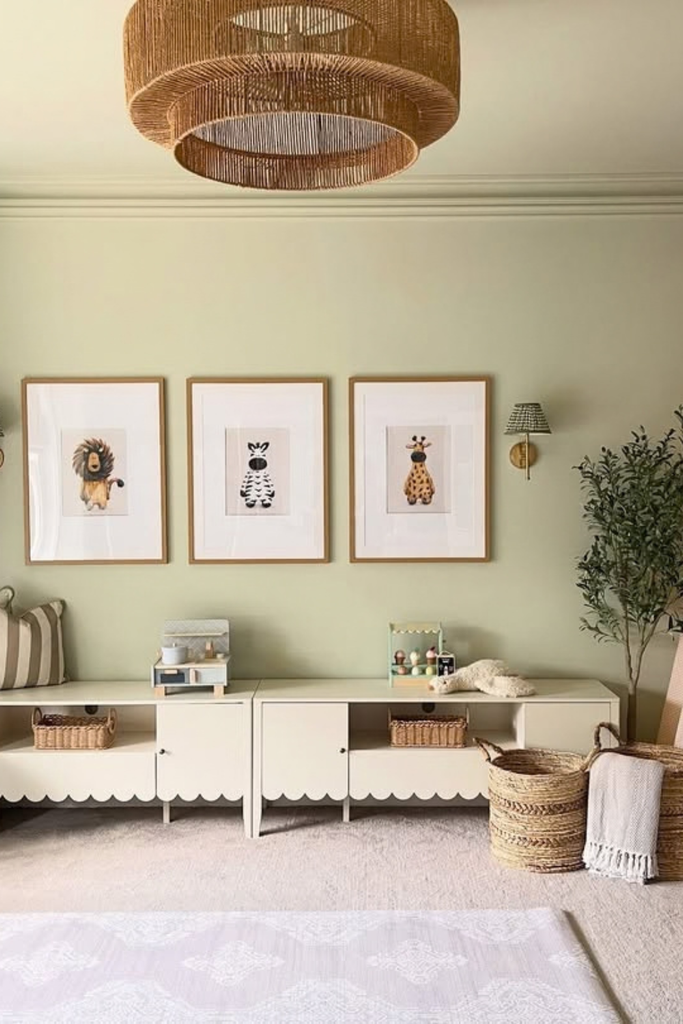
Sage green gives you enough color to make the playroom feel inviting while keeping busy toys and storage from competing visually.
Use it across the main walls, then balance it with cream cabinets, woven baskets and pale flooring for a softer finish.
Natural window light keeps the green fresh while wall sconces and warm canopy lights create softer layers for quieter play later.
Muted Green Walls
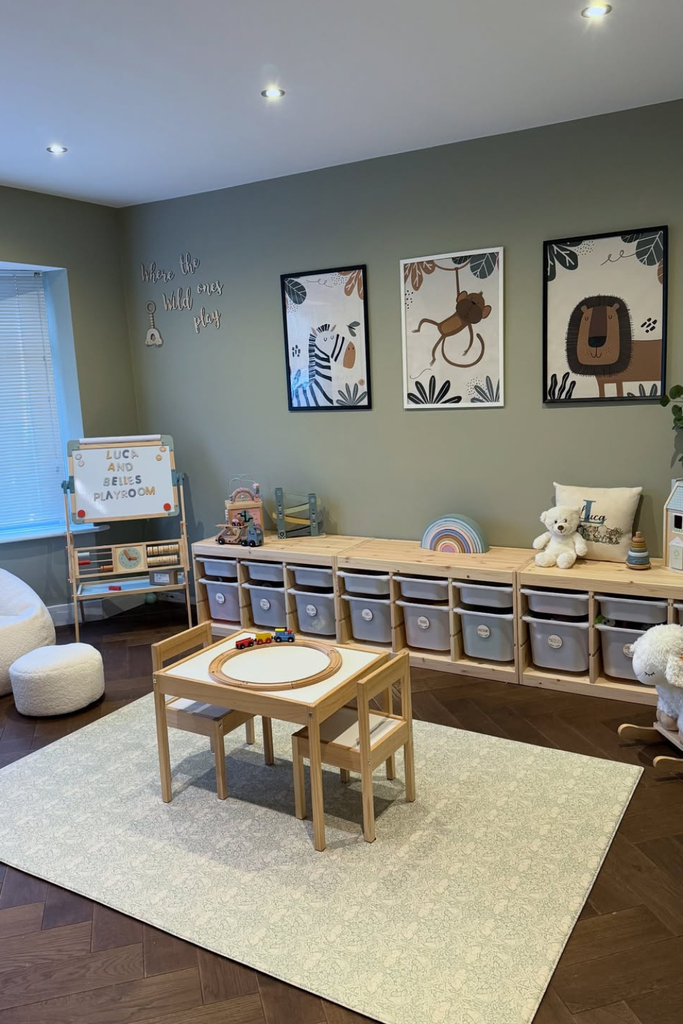
Paired with simple gray storage and light wood furnishings, muted green may fill every wall without taking over the space.
Go for a somewhat deeper shade of green that nevertheless hides common scuffs more well than extremely light paint.
Cream rugs and soft seating brighten the lower half of the room. Recessed ceiling lights and window light keep the deeper shade evenly illuminated.
Teal Built-Ins
Deep teal built-ins let you introduce a stronger paint color without covering every wall and making the playroom feel heavy.
Use the shade around bookcases, drawers, and a window seat so storage becomes part of the room’s design.
Large windows bring in plenty of daylight, while recessed lights, wall sconces, and a central pendant provide useful layers after sunset.
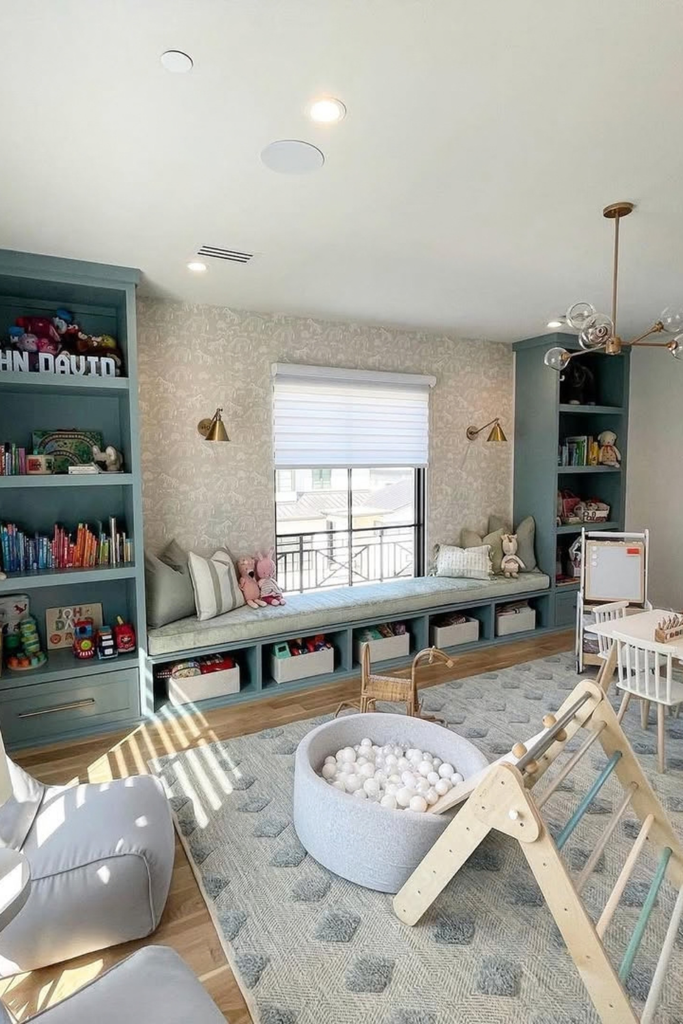
Dusty Blue Walls
Dusty blue can wrap the walls, ceiling, and door in one calm color without making a toy-filled playroom look overly busy.
Try this color-drenched approach in a smaller room when you want fewer visual breaks and a more settled background.
Lift the deeper tint, keep the rug and floor lighter. Warm light from a central ceiling fixture prevents the blue from feeling chilly.
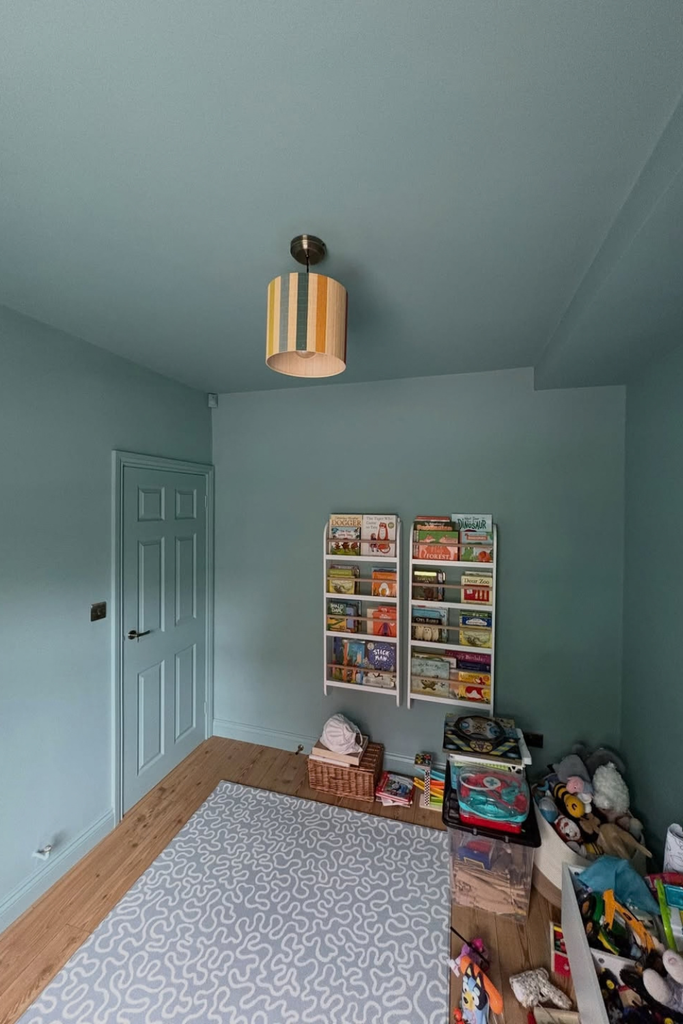
Soft Sage Wall
Soft sage gives a playroom gentle color while letting wooden toys white furniture and small decorations stay easy to notice.
Use it on one main wall if you want color without committing the entire room then repeat the shade through trim for a finished connection.
Natural daylight keeps the green airy while soft overhead lighting can maintain its warmth after dark.
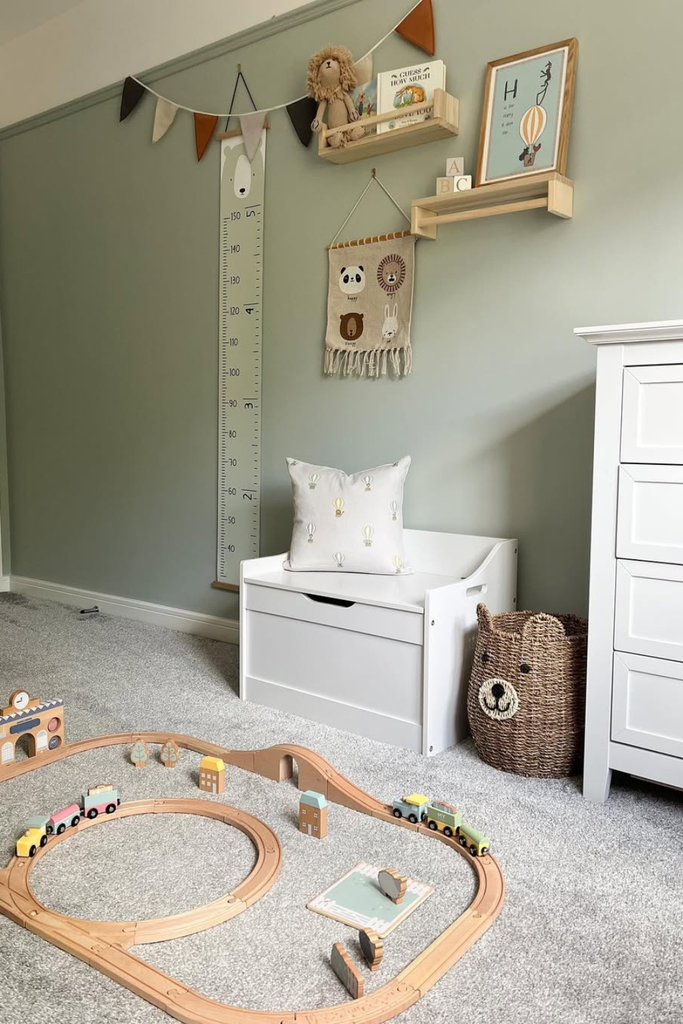
Creamy Neutral Walls
Creamy walls give a busy playroom a quiet base when colorful toys, artwork, and play furniture already provide plenty of personality.
Bring in a soft blue-gray along the upper trim to add definition without making the walls compete with everything below.
This combination works especially well in traditional rooms with darker architectural features.
Natural window light brightens the cream, while a warm pendant creates a softer layer for evening play.
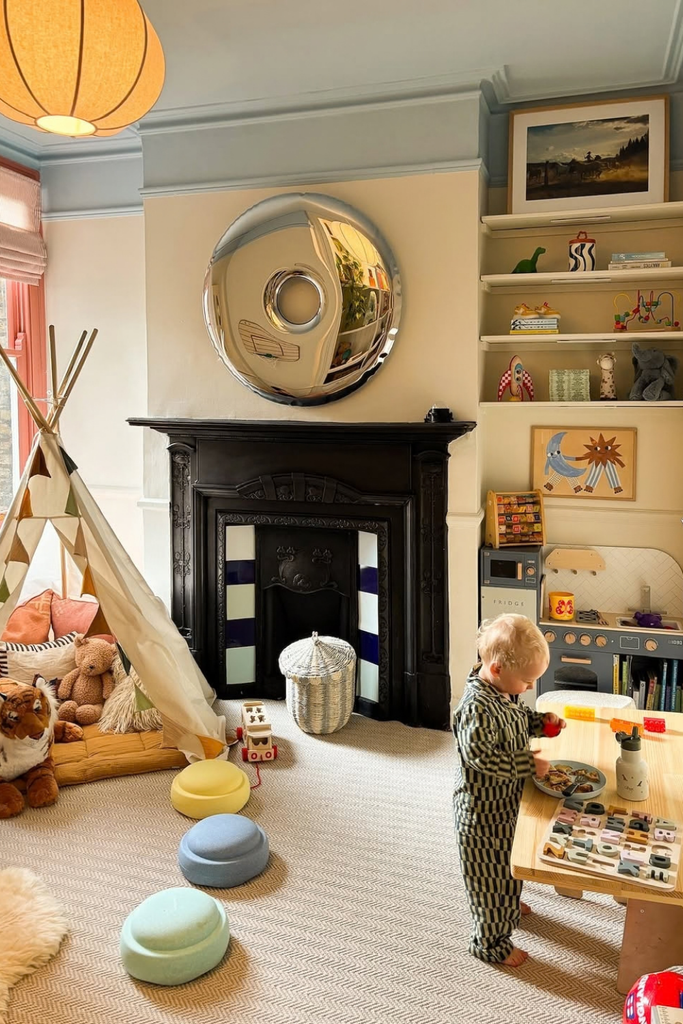
Warm Beige Walls
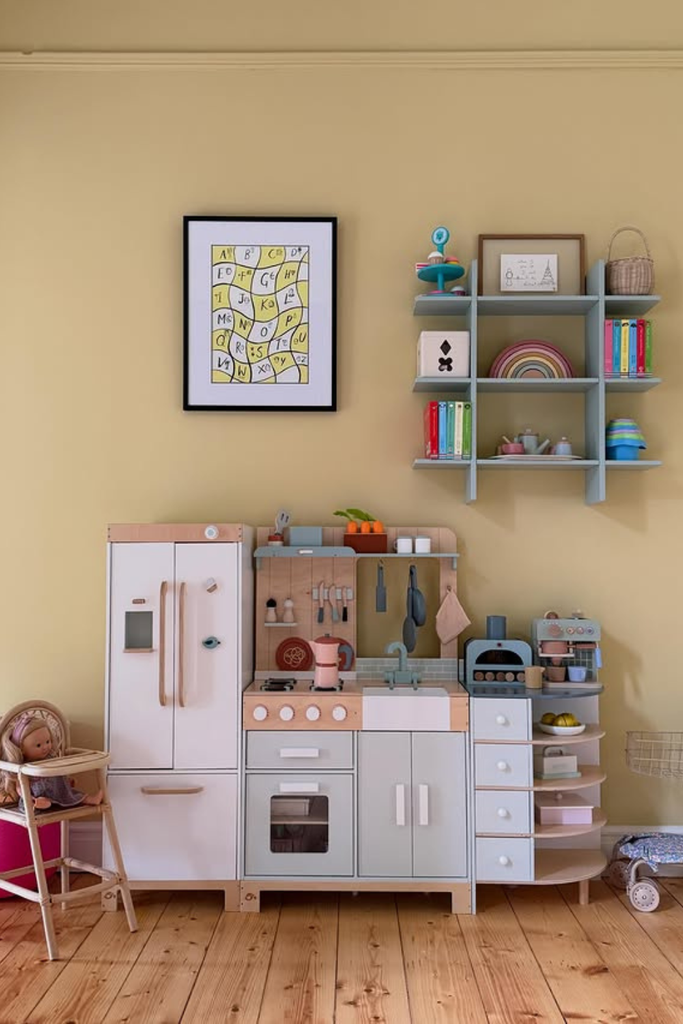
Warm beige keeps a pretend-play corner calm when the kitchen, books, dolls, and accessories already introduce several different colors.
Choose a creamy beige with warm undertones, then pair it with dusty pink and muted blue furniture.
Works well with natural wood flooring. Daylight keeps the beige fresh, while soft ceiling lighting can prevent it from looking dull later.
Deep Olive Walls
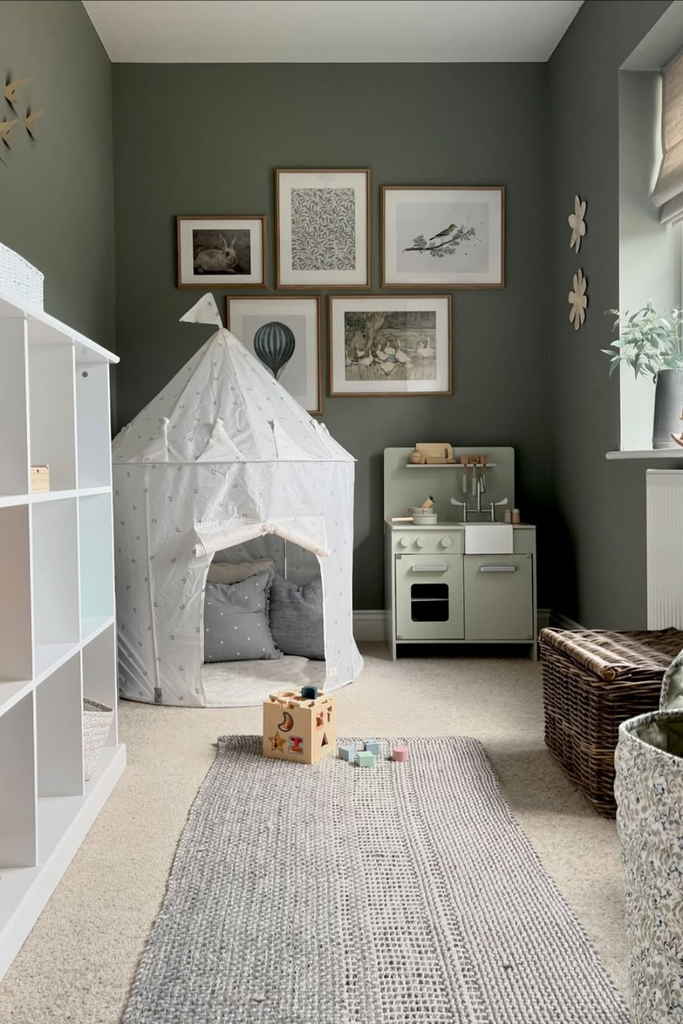
Deep olive can make a playroom feel cozy when most of the furniture stays white, cream, and natural wood.
Use this darker shade in a room with a large window so daylight can keep the walls from closing in visually.
Soft rugs and pale play furniture create contrast near the floor, while warm overhead lighting can bring out the green undertones.
Terracotta Walls
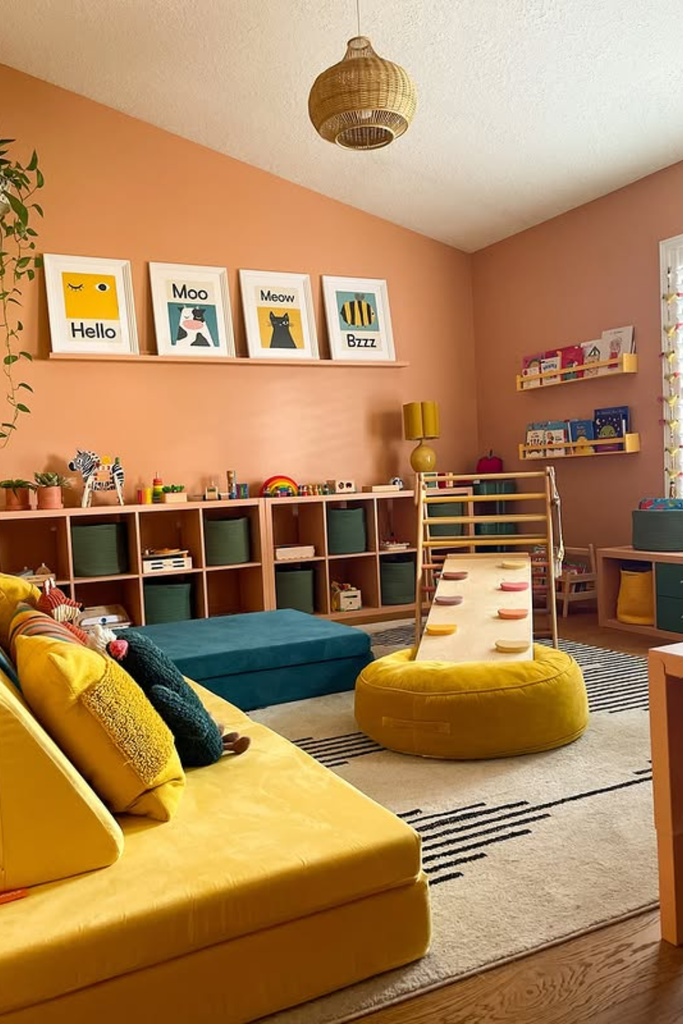
Terracotta walls can handle bold furniture surprisingly well when you repeat a few warm colors.
Generate contrast while maintaining a cohesive color, combine the earthy background with mustard seats and deep teal storage.
This combination works best in larger playrooms where strong colors have room to breathe.
Natural window light lifts the terracotta, while a woven pendant spreads warmer light across the play area.
Blush Pink Walls
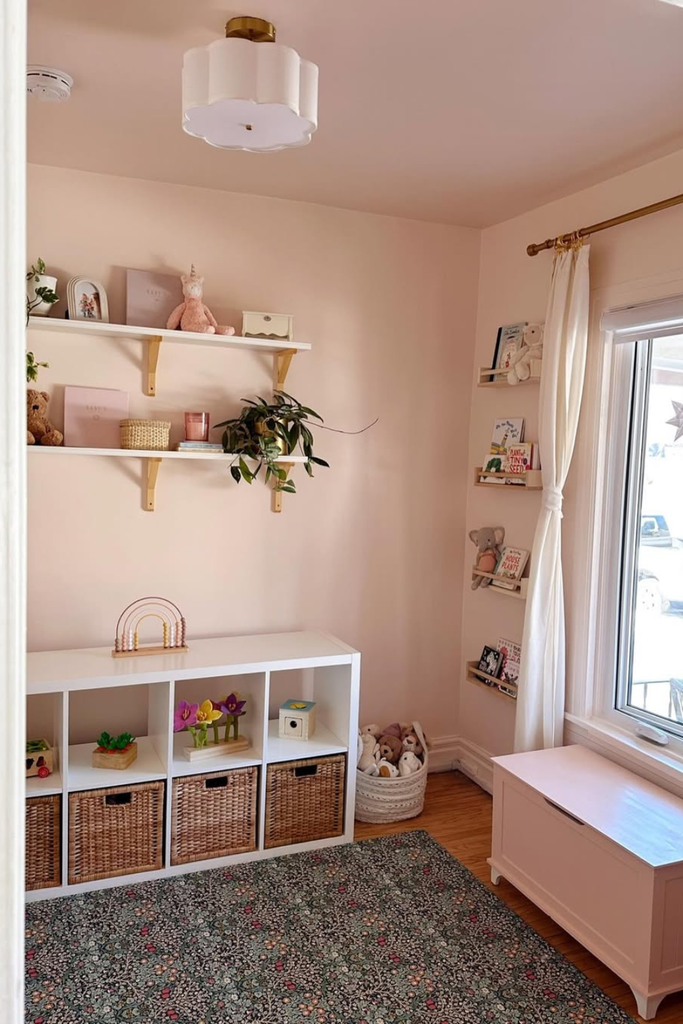
Blush pink gives a playroom gentle warmth without competing with patterned rugs, wooden toys, or greenery.
Choose a pale, dusty shade if you want the color to stay useful as the room changes with your child.
White cube storage keeps the lower wall feeling bright, while woven baskets add natural texture.
Daylight works especially well with this soft pink and warm ceiling lighting can keep it cozy after sunset.
Dusty Blue Walls
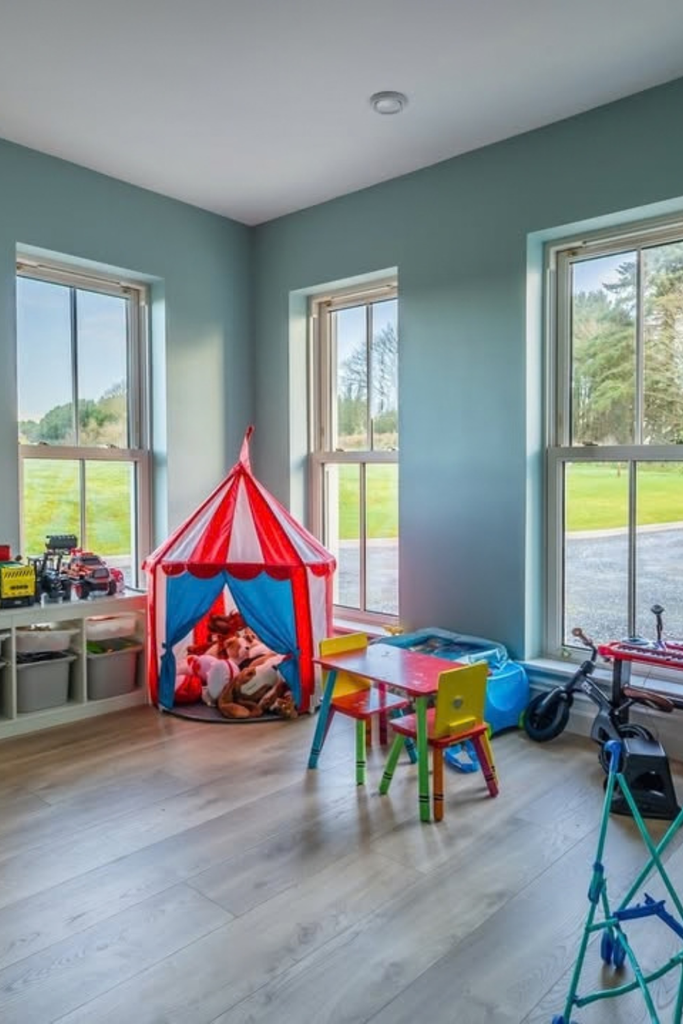
Dusty blue gives a large playroom enough color to feel lively while letting bright toys become the stronger accents.
Use the shade across every wall when plenty of windows can balance its cooler tone then keep storage low and neutral to avoid visual clutter.
Strong natural daylight handles daytime play while simple recessed ceiling lights provide even coverage once the room gets darker.
FAQs
Which Playroom Paint Colors Hide Everyday Scuffs and Marks Best?
Mid-tone shades such as muted green, dusty blue, warm greige, and soft terracotta can make everyday marks less noticeable than very pale walls.
Choose an eggshell or satin finish in busy play areas so you can wipe fingerprints and small messes away more easily.
How Can You Test a Playroom Paint Color Before Painting Every Wall?
Paint a generous sample on more than one wall and check it during morning, afternoon, and evening.
Keep toys, rugs and furniture nearby because their colors can change how the paint feels in the finished room.
If a bold shade starts competing with everything else, soften it or use it on one smaller area instead.

Hi, I’m Afaf! I’m a law student who loves writing about everyday life – from home projects and crafts to fashion, beauty, and parenting tips.
I’ve been writing for over a year, sharing ideas that are simple, practical, and easy to try. I write about things I find interesting and useful, whether that’s organizing a space, trying a new DIY, or finding activities to keep kids entertained.
My goal is to share helpful ideas without making things complicated. If it works in real life, I’ll write about it.
When I’m not studying or writing, I’m usually experimenting with new projects or scrolling for inspiration!