
17 Playroom Mural Ideas
A blank playroom wall can feel like wasted space, but choosing what to put there is not always easy. You may love the idea of a mural.
But worry it will look too busy, cost too much, or feel outdated once your child’s interests change. The right mural can solve those problems.
It can create a backdrop for pretend play, brighten a quiet corner, and make the whole space feel more imaginative.
Is a Playroom Mural Worth It for Creating a More Imaginative Space?
A playroom mural can be worth it when you want the walls to become part of how your child plays, rather than simply adding decoration.
A forest can turn a reading corner into a little hideaway, while roads, mountains, oceans, or space scenes can give pretend play a clear setting.
You do not need to cover every wall either. Choosing one main wall keeps the mural noticeable with colorful toys and storage.
If you worry about changing interests, choose nature, abstract shapes, landscapes, or another flexible theme.
You can also use peel-and-stick murals or decals. Start with how the room is used then choose a mural that supports that activity.
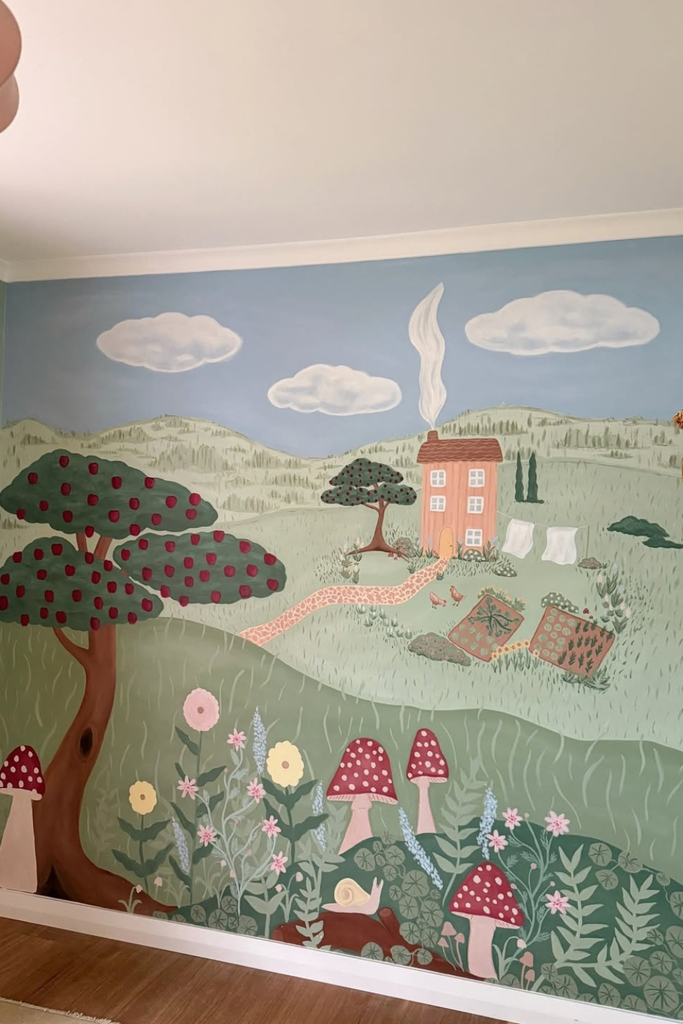
Storybook Meadow
Create a tale scene with rolling hills, an apple tree, mushrooms, and a small cottage on a peaceful playroom wall.
In addition to vibrant toys and storage, paint the countryside in dusty pastels and gentle greens to keep the intricate environment serene.
Natural window light works beautifully during playtime, while a warm ceiling light keeps the illustrated details visible after sunset.
Underwater Adventure
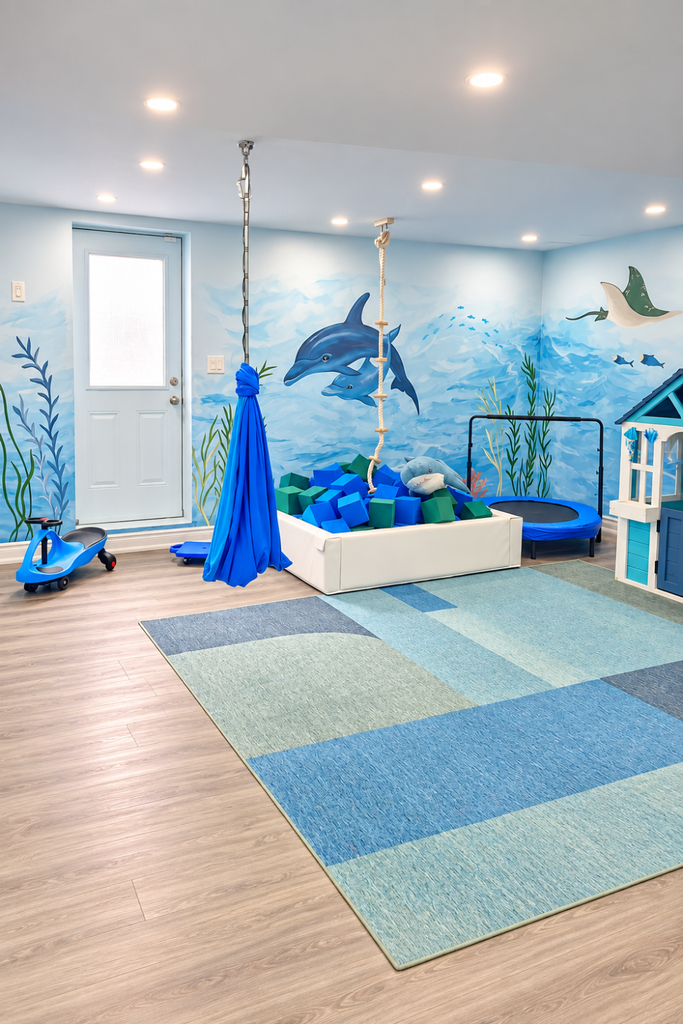
Bring an active play zone to life by wrapping an ocean mural around climbing ropes, foam pits, and movement equipment.
Paint soft water textures first, then add dolphins, rays, fish and sea plants where equipment will not hide them.
Bright recessed ceiling lights spread even illumination across the play area while keeping the blue mural cheerful rather than dark.
Safari Escape
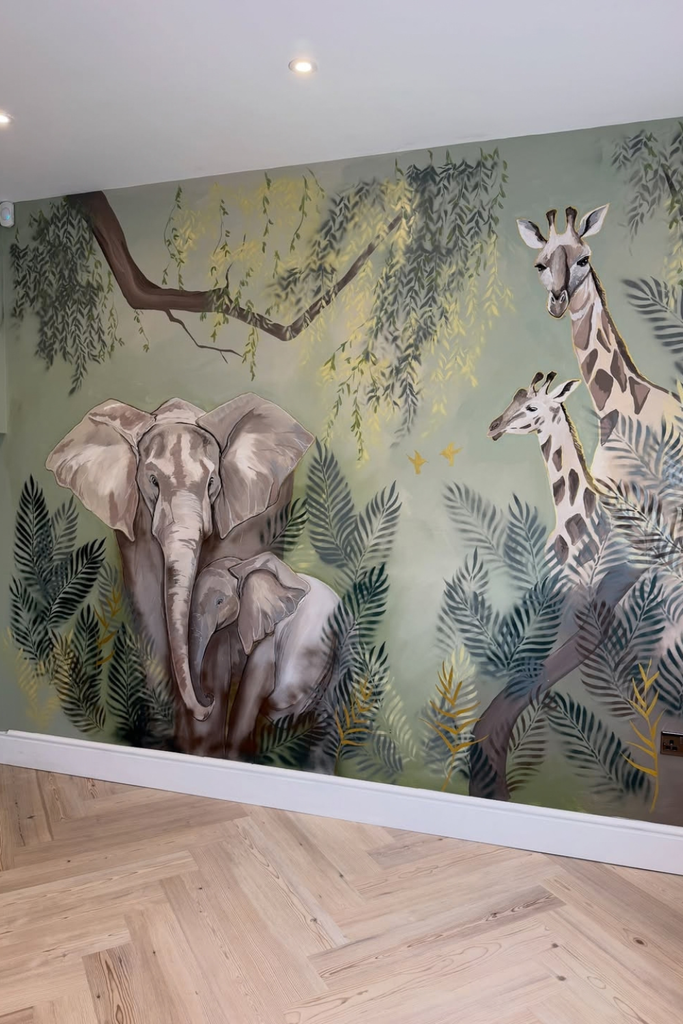
Give a nature-focused playroom more personality, giraffes, leafy branches, and layered jungle greenery across one wall.
Keep the background muted sage then build larger animals around open areas so shelves or low storage can sit nearby.
Recessed ceiling lights provide even brightness, while their warm glow helps the earthy animal colors stay soft and inviting.
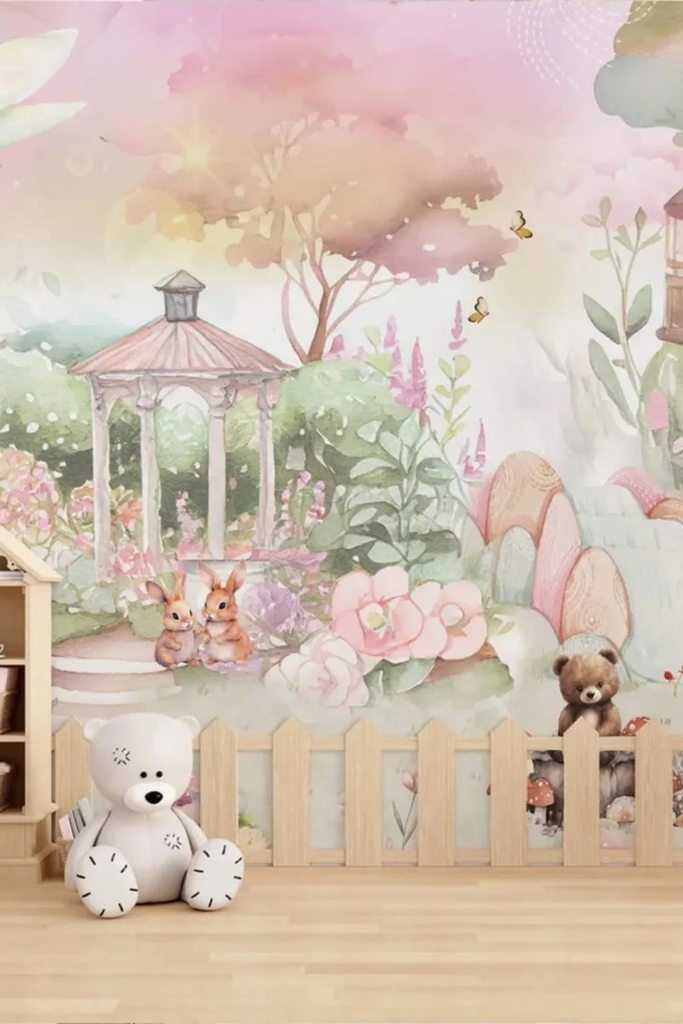
Fairy Garden
Create a gentle pretend-play corner with a fairy garden mural filled with flowers, woodland animals, treehouses, and hidden details.
Choose watercolor-style pastels to keep the busy scene soft then place low seating and toy storage without covering key characters.
Natural daylight brings out the pale colors beautifully while soft overhead lighting can keep the magical setting cozy during evening play.
Ocean Discovery
Make a learning-focused play wall more exciting by painting sea animals large enough for kids to recognize during everyday play.
Build the scene from a blue water gradient, then add whales, turtles, fish, coral and sandy layers for depth.
Place it near a window for strong daytime light then use broad ceiling lighting so darker underwater details remain easy to see.

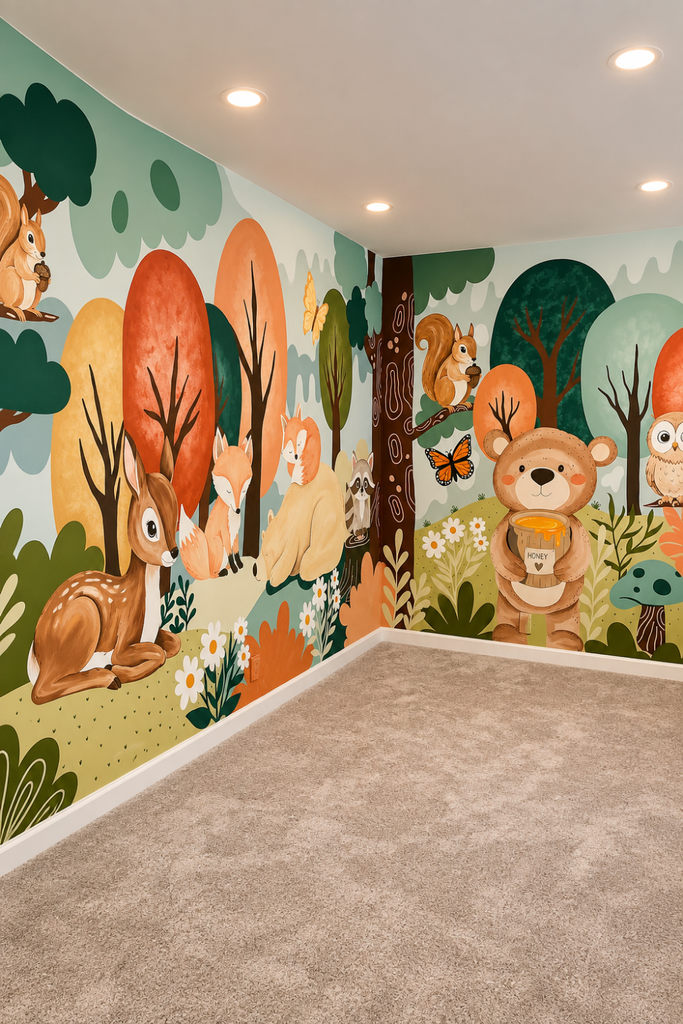
Woodland Friends
Bring warmth to a younger child’s play area with oversized woodland animals set against bold trees and simple forest shapes.
Use a limited earthy palette and large forms so you can recreate the mural without painting lots of complicated background details.
Pair it with soft daylight and warm overhead lighting to keep the deeper autumn colors inviting throughout the day.
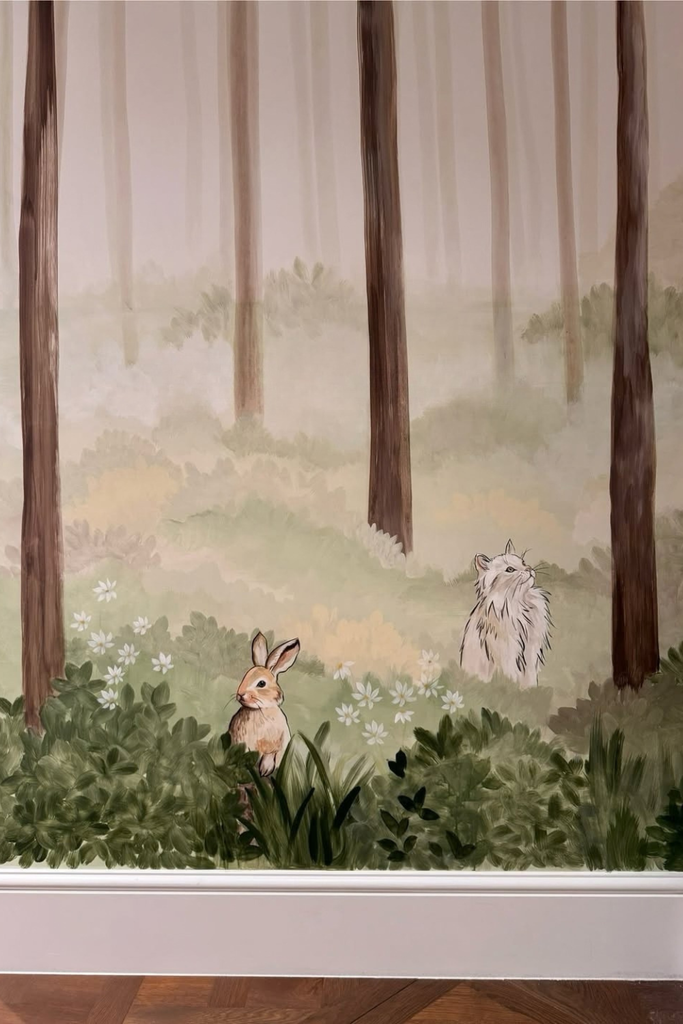
Misty Forest
You want an innovative landscape without overpowering the playroom with vibrant hues, go for a mural of a gentle woodland.
Place little forest animals lower down after layering faded trees and vegetation into the backdrop.
Gentle daylight suits the muted palette while warm overhead lighting keeps the forest from feeling dull on darker days.
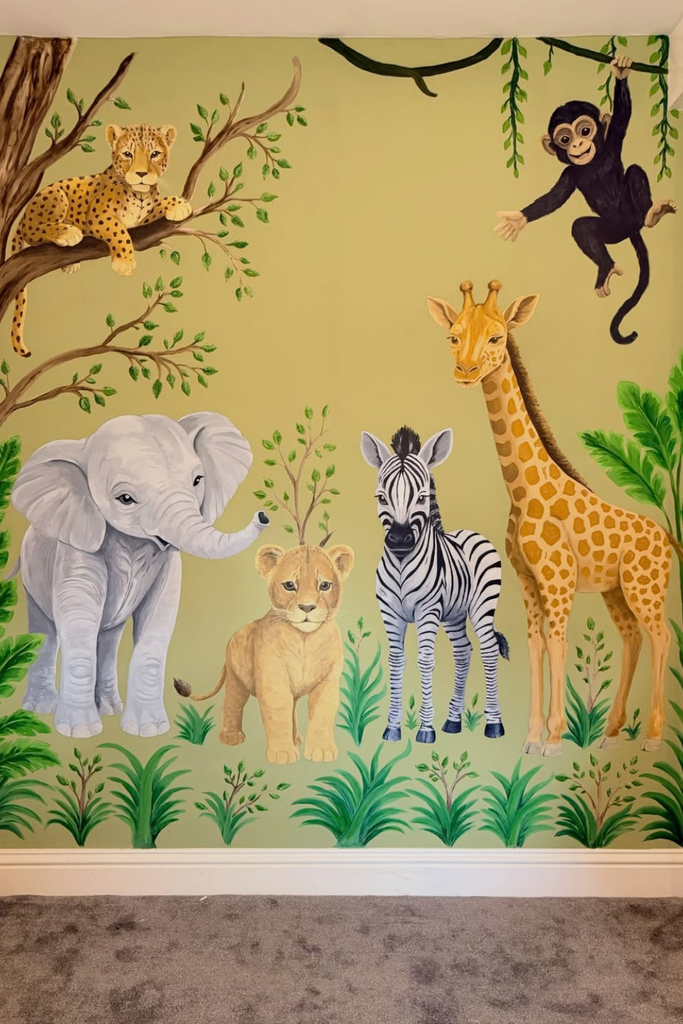
Jungle Gathering
Turn a smaller playroom wall into an animal discovery spot by grouping familiar safari animals at different heights.
Paint a soft green base first, then add large animals, leafy borders and overhead branches without crowding the background.
Keep nearby furniture low so kids can see every animal while bright overhead lighting makes the detailed characters easier to notice.
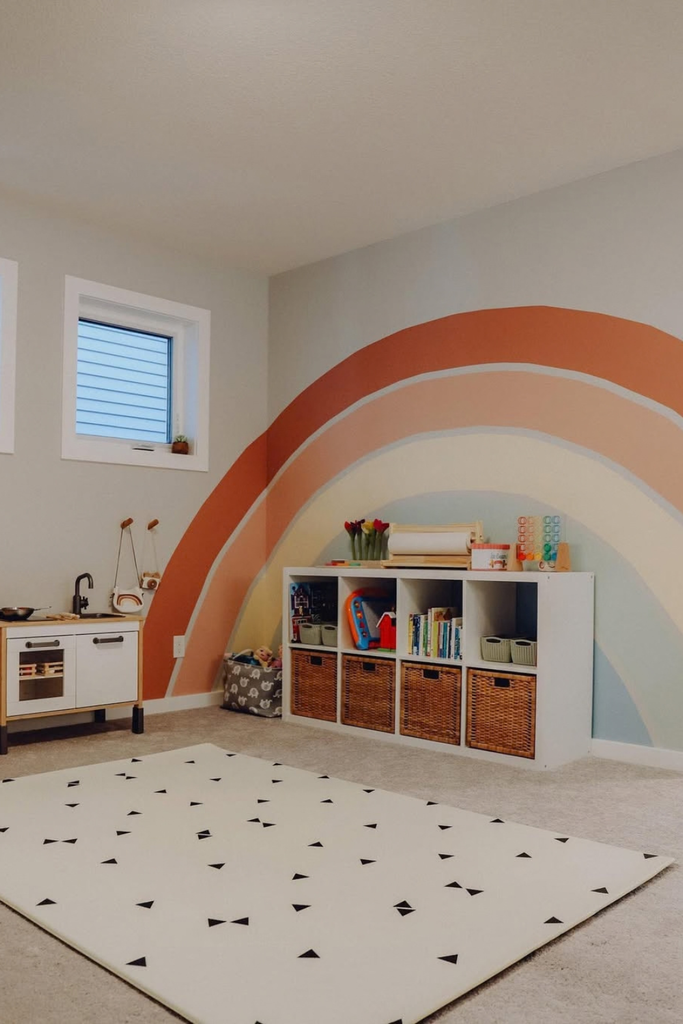
Painted Rainbow
Paint an enormous rainbow behind your primary toy storage space to keep the playroom happy without adding intricate characters.
Place cube storage beneath the wide, curved bands in subdued warm hues so that the mural organically frames commonplace toys.
Window light keeps the softer colors fresh during daytime, while simple overhead lighting provides enough brightness for evening play.
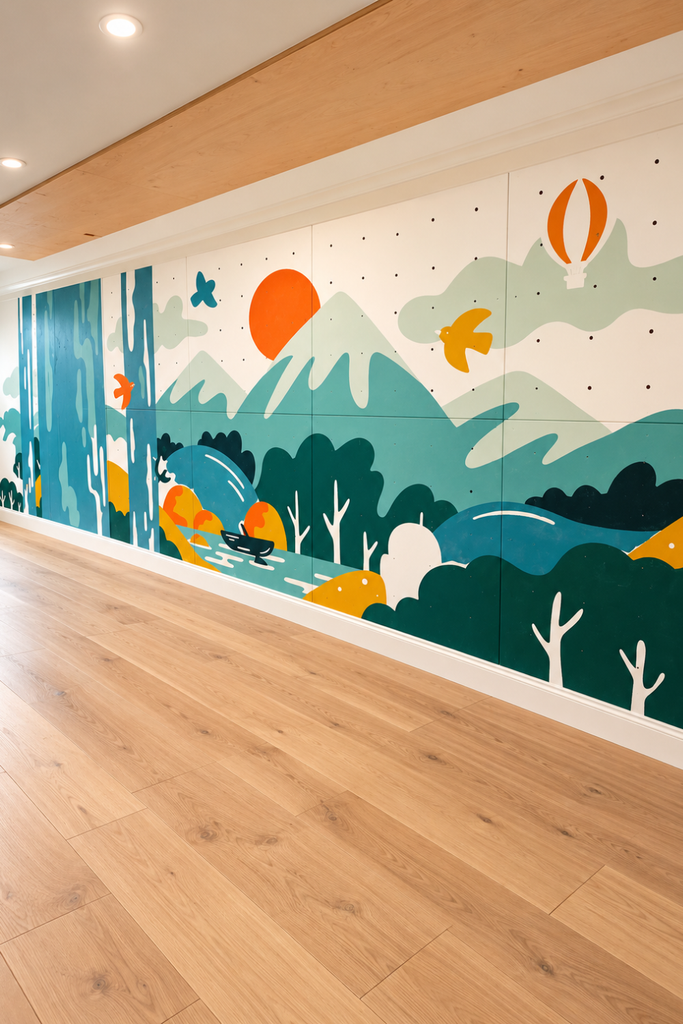
Mountain Journey
Stretch an adventure mural across a long playroom wall when you want the artwork to make the whole space feel connected.
Build depth with overlapping mountains, forests, rivers, birds and a hot-air balloon, using a limited palette to control visual clutter.
Even ceiling lighting works well across a wide mural, helping every section stay visible while kids create stories around the landscape.
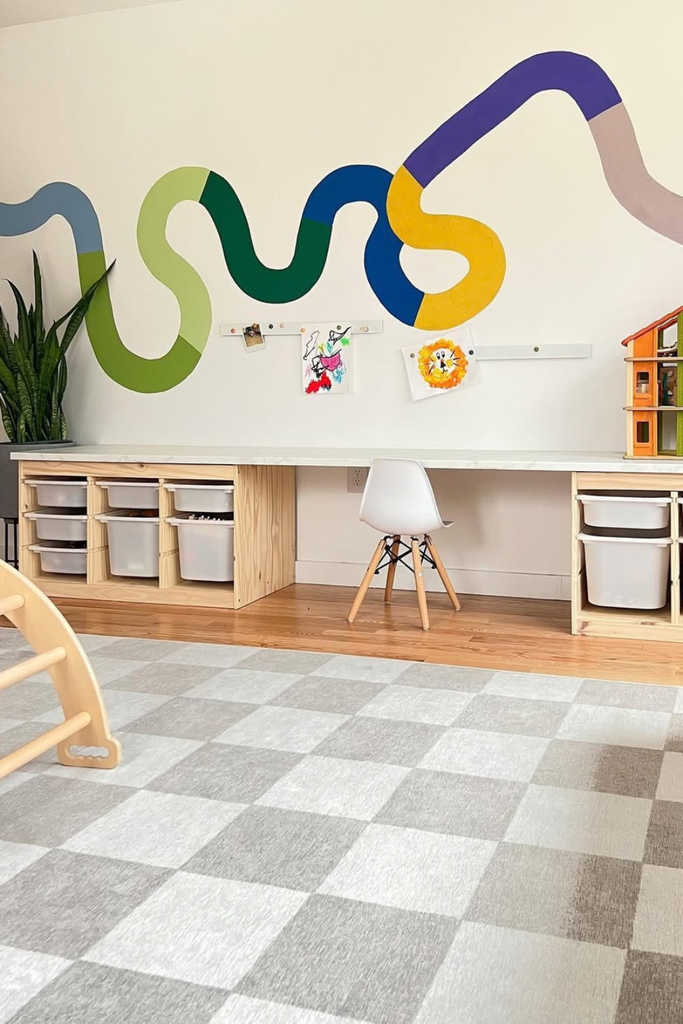
Winding Color
Give a craft-focused playroom extra energy with one free-flowing painted line that travels loosely across the wall.
Sketch the curves first then divide the path into bold color sections that can connect storage, artwork and activity zones.
Keep the surrounding wall mostly white so the colors stay balanced while natural daylight provides plenty of brightness for creative play.
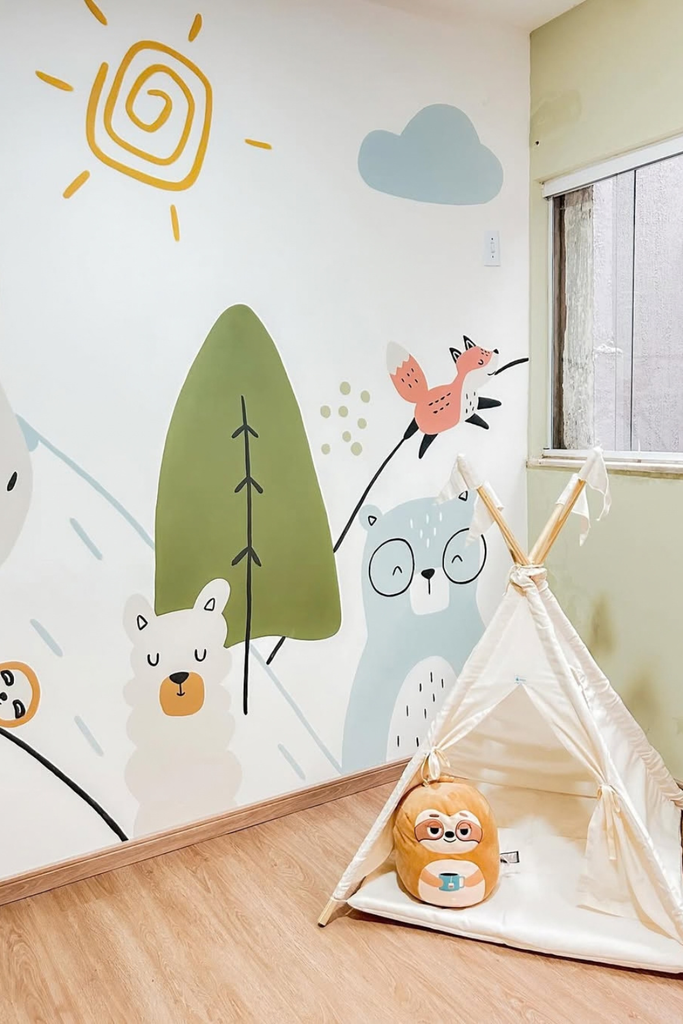
Woodland Hideaway
Combine a modest floor tent for reading or pretend play with a straightforward woodland mural to make a quiet place feel more lively.
Paint oversized trees and friendly animals with clean shapes, leaving enough white space so the corner still feels open and calm.
Position the hideaway near a window for natural reading light then add soft overhead lighting for use later in the day.
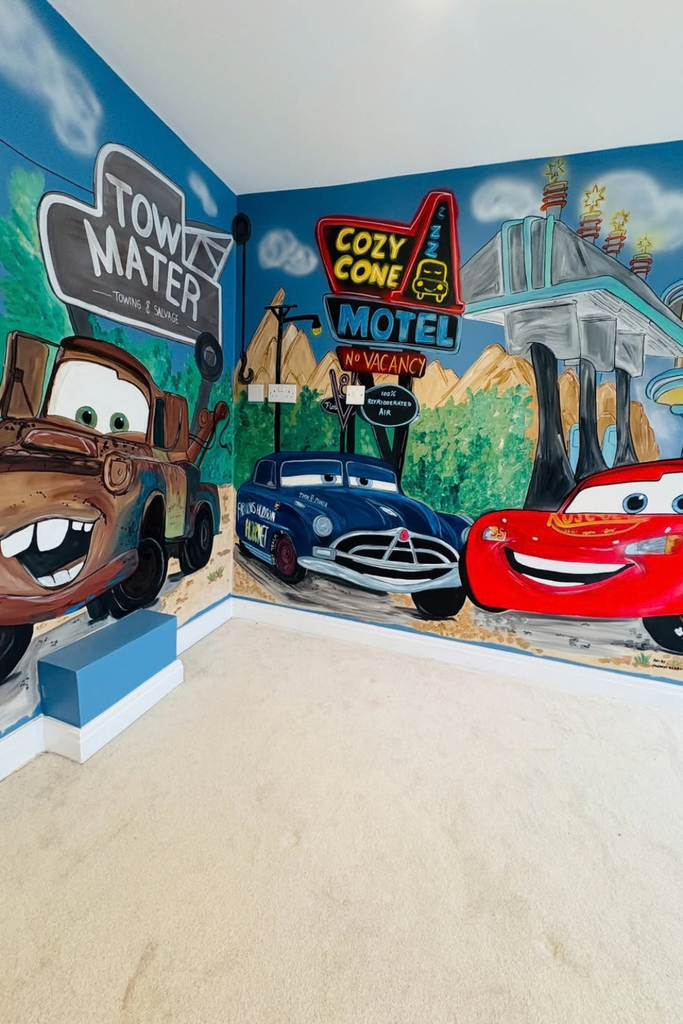
Racing World
Extend a vibrant racing painting across two adjoining playroom walls to transform a whole corner into an immersive driving area.
To make children feel surrounded while playing on the floor, keep the biggest cars low and construct roads, signs, mountains, and buildings upward.
Bright ceiling lighting works best with the deep blues and bold reds, keeping every painted detail clear throughout the room.
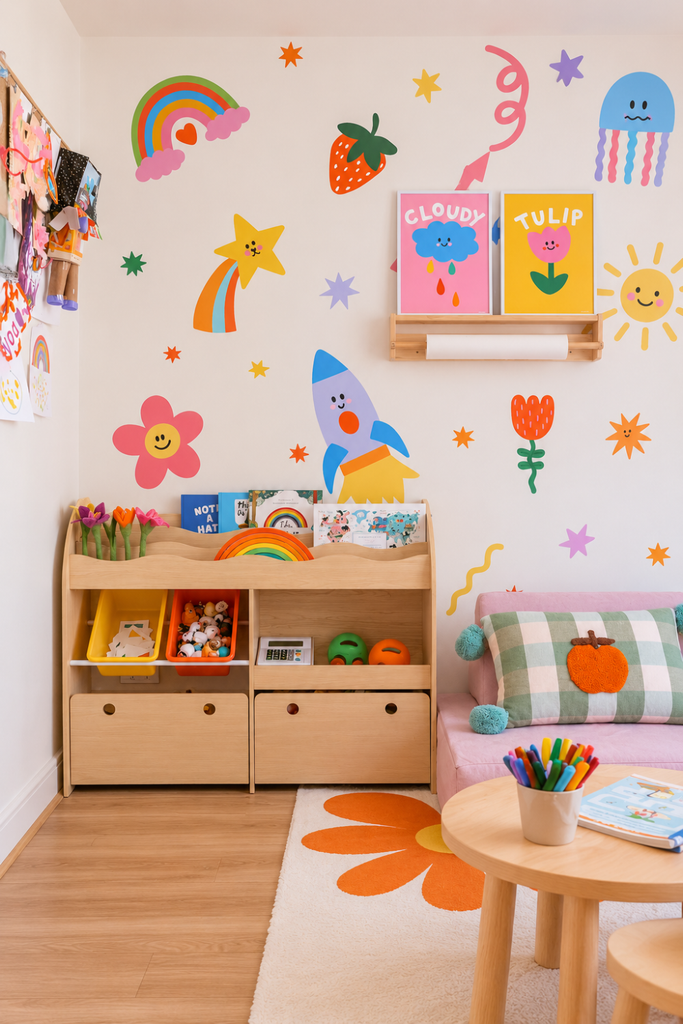
Playful Doodles
Fill a creative corner with scattered doodles when you want color without committing to one large themed scene.
Paint simple rainbows, flowers, stars, fruit, and rockets around low book storage, leaving white gaps to prevent visual clutter.
Natural daylight keeps the bright colors lively, while a nearby task light can make reading and drawing more comfortable.
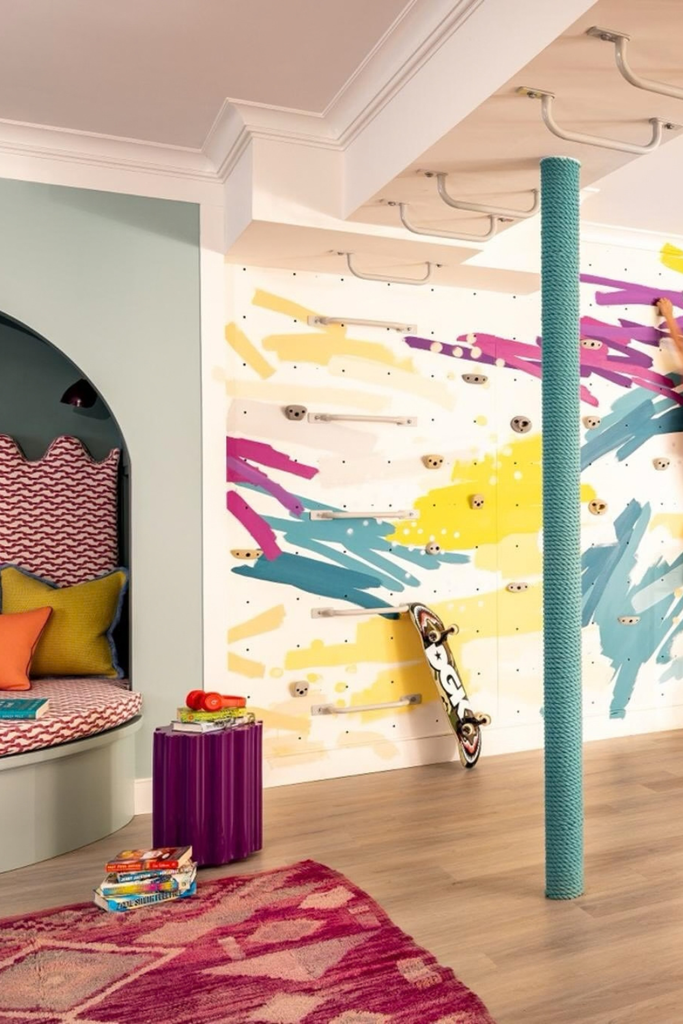
Climbing Canvas
Make an active play zone feel even more energetic by using loose painted strokes behind climbing holds and movement equipment.
Choose a few bold colors, spread the brush-like shapes across the wall then mount climbing pieces where kids can reach safely.
Bright overhead lighting keeps the climbing route easy to see, while the white background stops the colorful mural from feeling overwhelming.
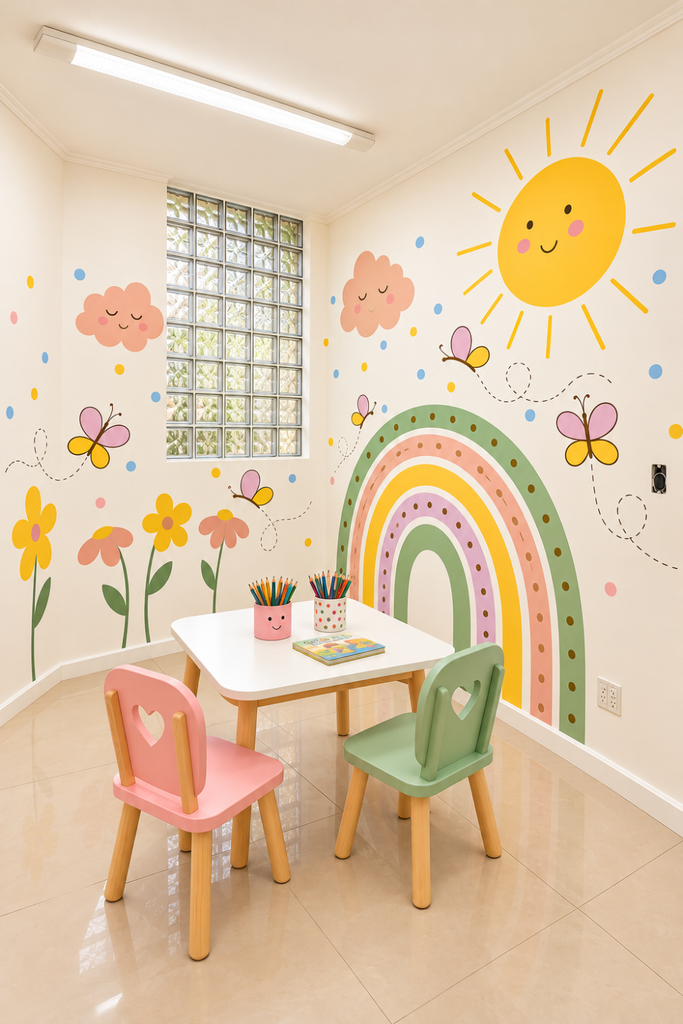
Reading Garden
Turn a narrow playroom corner into a cheerful reading spot by surrounding a child-sized table with flowers, rainbows and sunny details.
After painting basic shapes on the walls, install front-facing book shelves so children can choose stories without assistance from an adult.
Softer mural colors prevent the small room from seeming crowded, while a bright ceiling lamp gives good reading light.
Abstract Layers
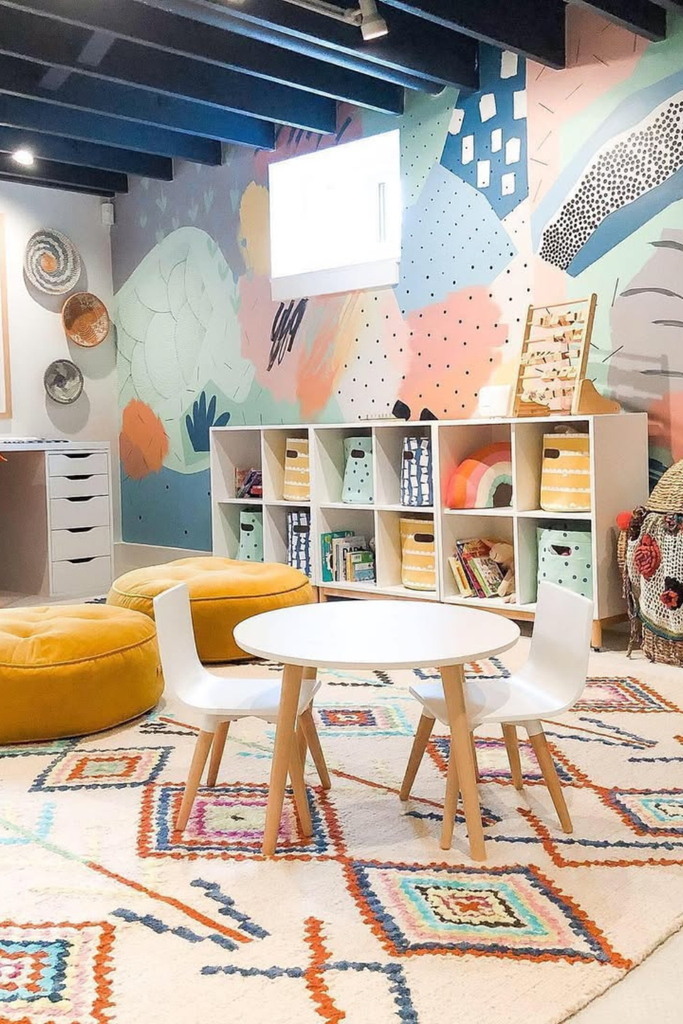
Cover the main storage wall with large geometric forms and dispersed patterns to create a powerful backdrop for a busy playground.
To keep distinct play areas feeling connected without having to match everything, repeat the mural’s colors in baskets, cushions, and seats.
Daylight brightens the softer tones, while ceiling spotlights add focused light around storage, crafts, and tabletop activities.
FAQs
Which Playroom Wall Works Best for a Mural?
When adding play equipment, tables, or toy storage, pick a wall that will remain visible. Detailed scenes are given additional space by a big, uninterrupted wall.
Smaller wall behind a reading nook or activity area works well for simpler designs. Plan furniture placement first so important parts of the mural.
How Can You Keep a Playroom Mural From Feeling Too Busy?
Let the mural carry most of the visual interest instead of competing with every item in the room. If you choose a detailed or colorful design.
keep nearby storage, rugs, and larger furniture simpler. You can also repeat two or three mural colors around the playroom to connect everything.

Hi, I’m Afaf! I’m a law student who loves writing about everyday life – from home projects and crafts to fashion, beauty, and parenting tips.
I’ve been writing for over a year, sharing ideas that are simple, practical, and easy to try. I write about things I find interesting and useful, whether that’s organizing a space, trying a new DIY, or finding activities to keep kids entertained.
My goal is to share helpful ideas without making things complicated. If it works in real life, I’ll write about it.
When I’m not studying or writing, I’m usually experimenting with new projects or scrolling for inspiration!