
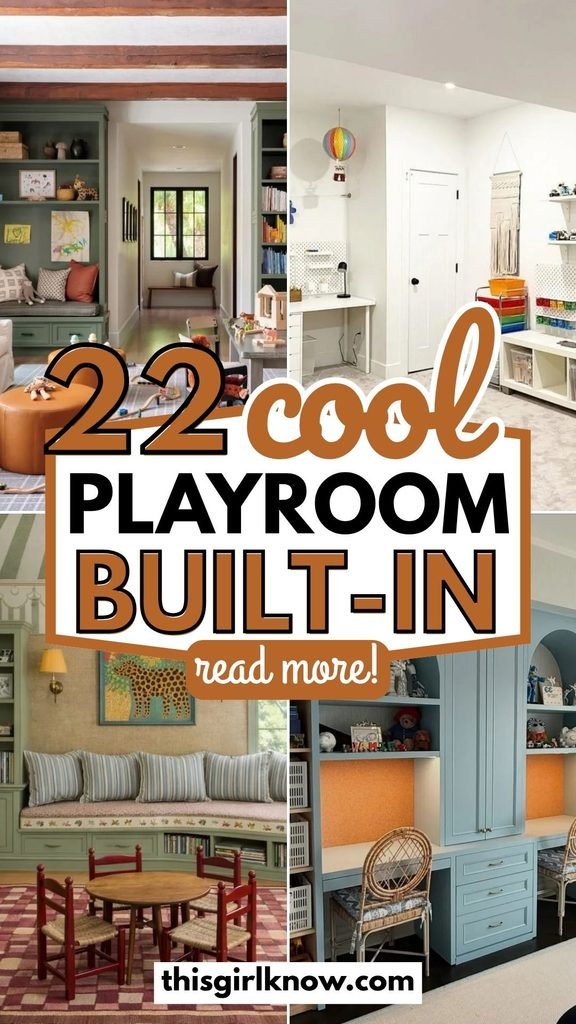
22 Playroom Built-In Ideas
Toy storage can quickly take over a playroom, especially when books, games, and baskets start filling every open shelf.
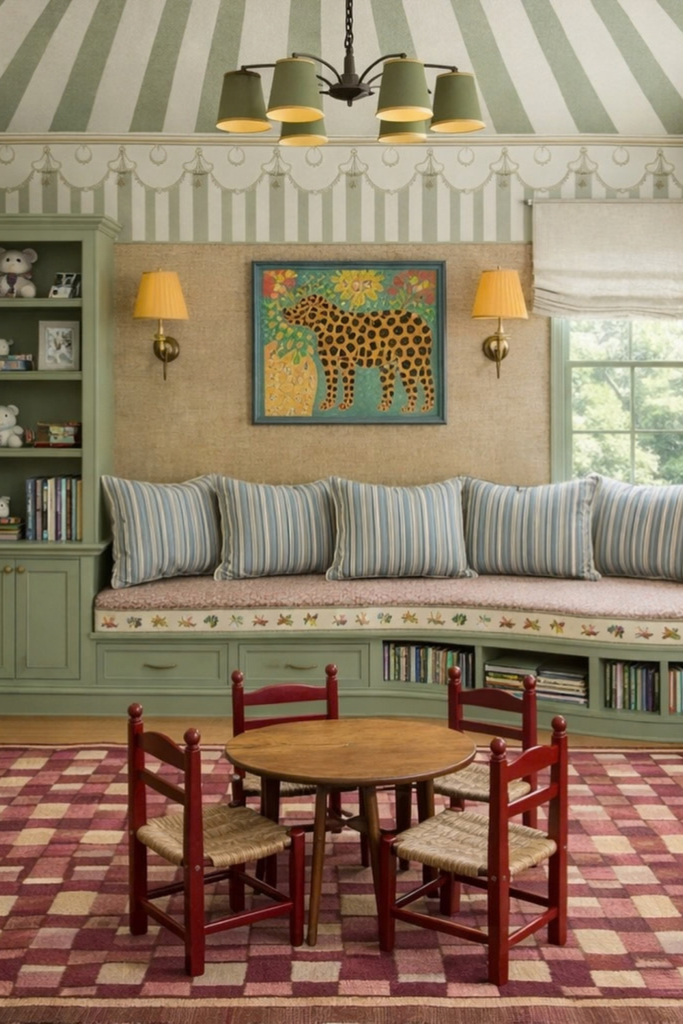
A window seat can give kids a comfortable place to read while adding drawers or cabinets underneath for extra storage.
With books kept nearby and a soft cushion for sitting, the same wall can handle playtime, cleanup and quiet reading without using more floor space.
Let’s jump in!
Could Window Seats Turn Playroom Built-Ins Into Comfortable Reading Nooks?
A window seat can make playroom built-ins do much more than store toys. If you place the seat between cabinets.
Get a quiet reading spot. Keep favorite books on nearby lower shelves so they can choose one without asking for help.
A padded cushion and a few supportive pillows make the seat comfortable enough for longer reading time
Natural light from the window works well, but adding a wall sconce or nearby lamp helps when the room gets darker.
Same nook can still work for reading, homework, or simply relaxing, while drawers can hide toys, puzzles, and extra books.
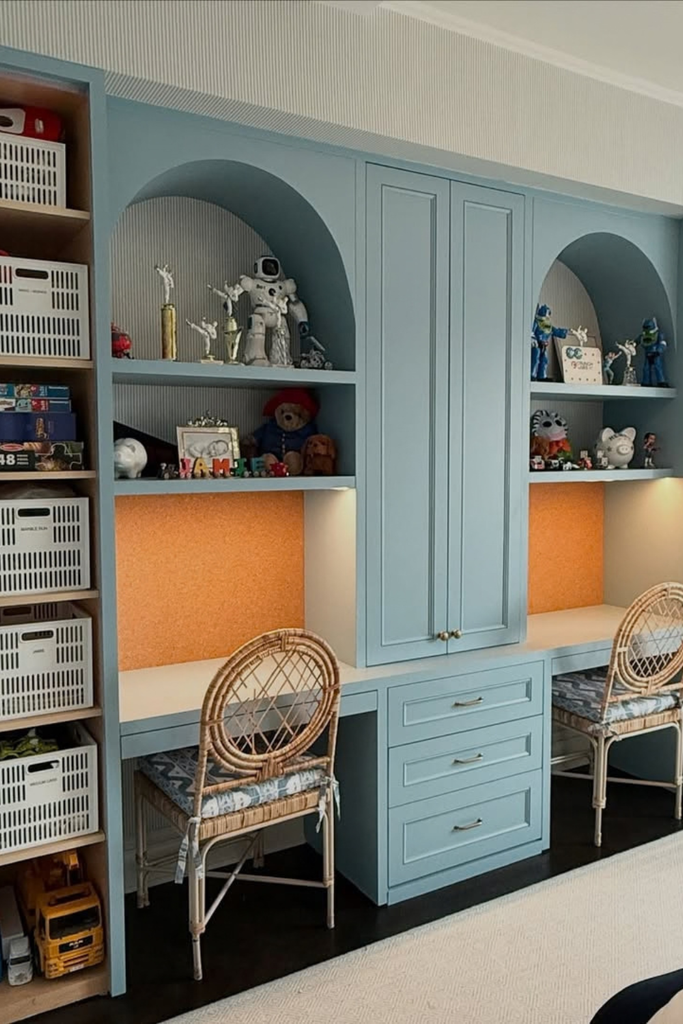
Double Study Nook
Give siblings separate work zones by building two desks into one storage wall, with drawers between them for shared supplies.
Tall side cabinets can hold labeled toy baskets, while arched shelves keep favorite books and collectibles easy to display.
Add small under-shelf lights above each desk so crafts, reading and homework stay well lit without crowding the worktops.
Reading Bench
Combine deep seating with books kept right underneath a long built-in bench to create a comfortable reading area.
Store extra toys behind closed cabinet doors, and allow children to access their favorite stories on lower shelves without assistance.
Natural window light handles daytime reading, while wall sconces and a central ceiling fixture keep the nook comfortable after sunset.
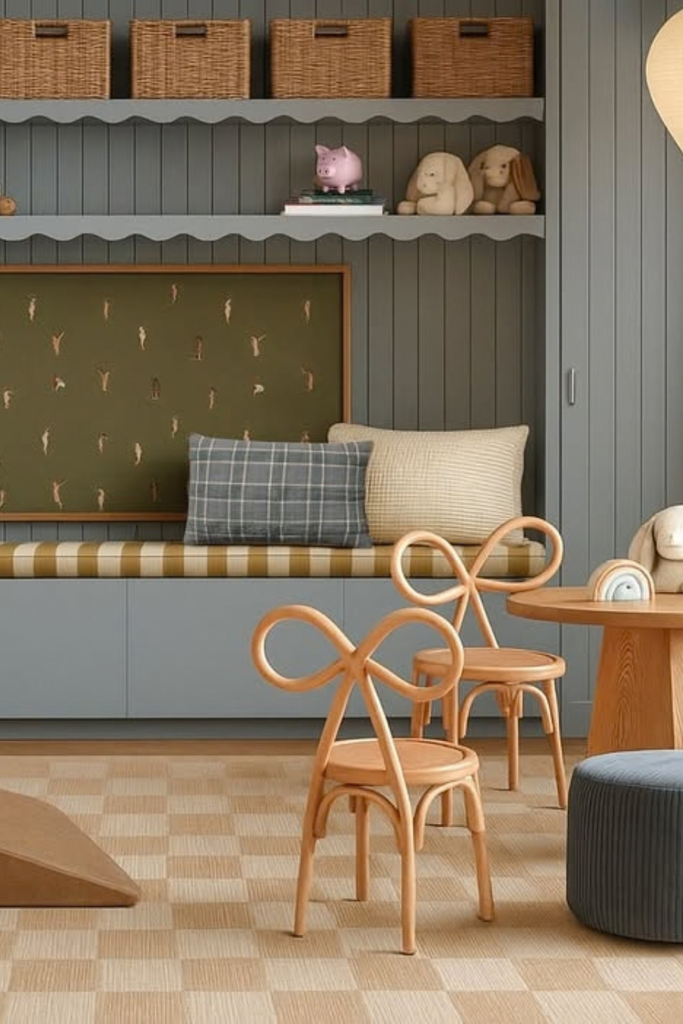
Hidden Storage Bench
Keep the busiest playroom supplies out of sight by running closed cabinets beneath a built-in bench and tall cupboards.
Use upper open shelves for baskets and a few favorite toys, so kids still have familiar items within easy reach.
Large pendant lights can provide soft overall lighting, while the cushioned bench gives kids another comfortable spot.
Craft Storage Wall
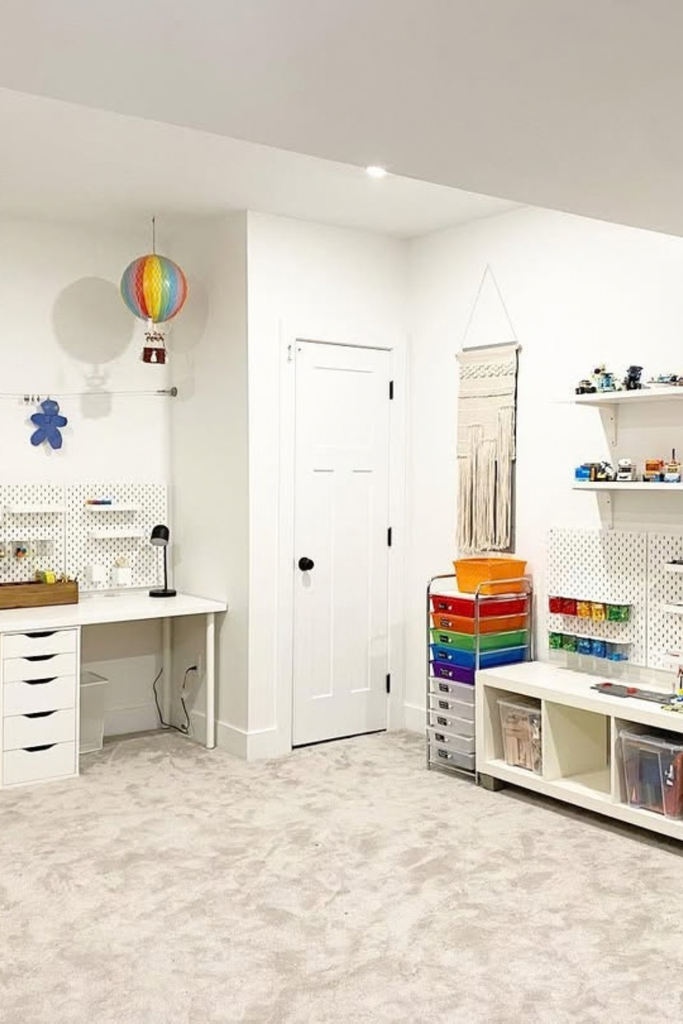
Set aside one playroom wall for crafts when markers, building pieces and small supplies usually end up scattered across tables.
Combine a long worktop with low cubbies and wall organizers, while sorting smaller pieces into separate containers.
Recessed ceiling lights brighten the whole area, while small desk lamps can add focused light whenever kids draw or build.
Library Corner
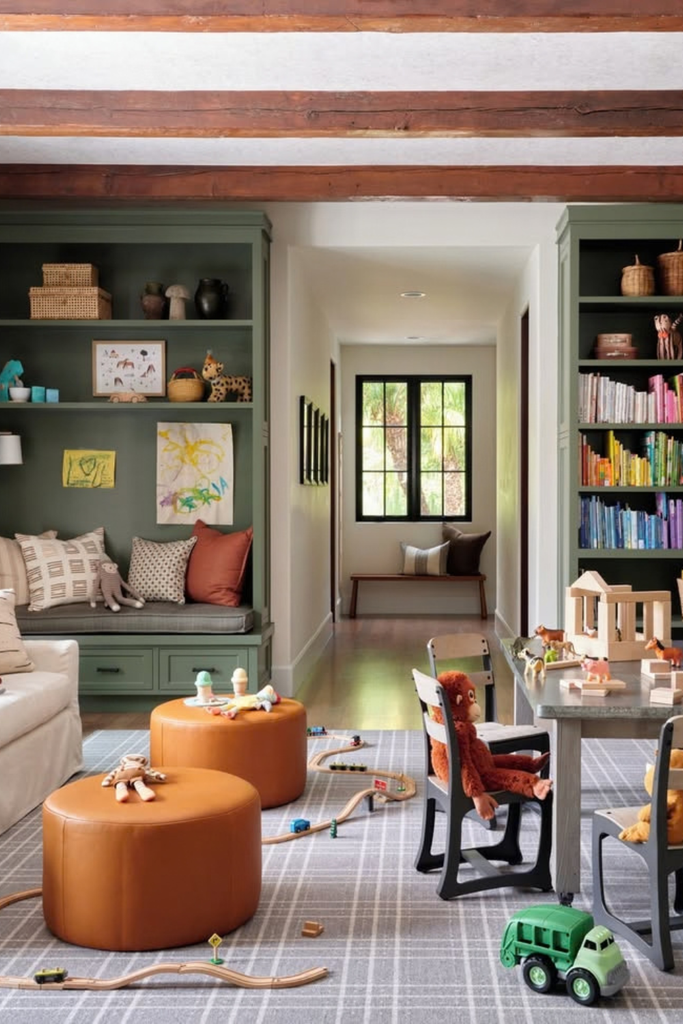
Use one end of the built-ins for a cushioned reading bench giving kids a quiet retreat away from active play.
Fill nearby tall shelves with books at different heights, while lower drawers can hide toys that would otherwise clutter the floor.
Daylight from the large window keeps reading comfortable, and a small wall sconce adds focused light when natural light starts fading.
Media Storage Wall
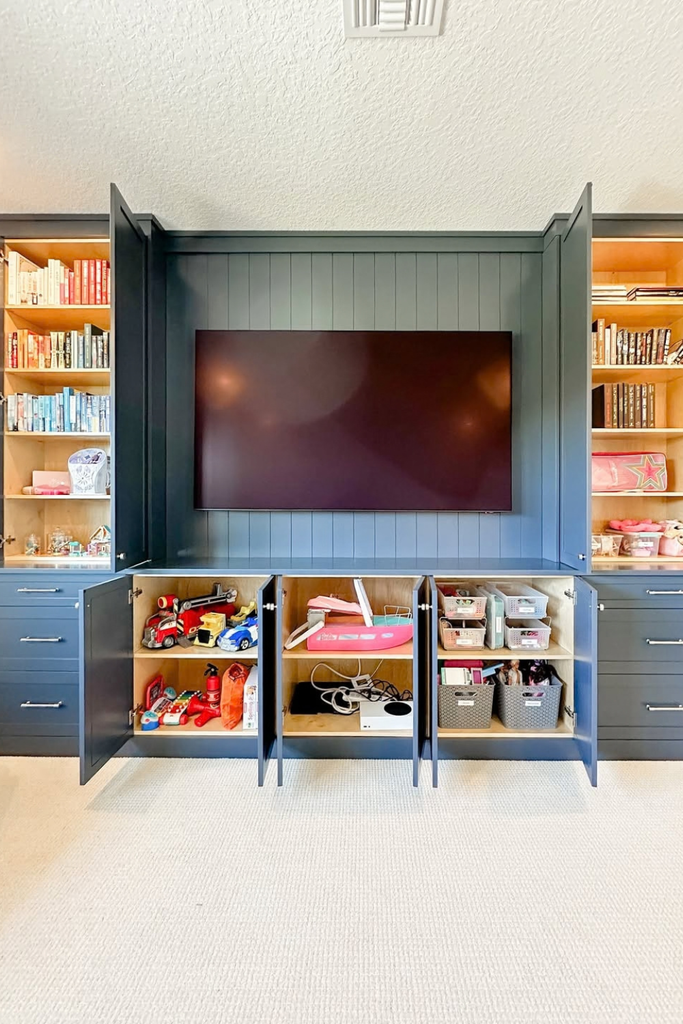
When your playroom serves as a movie or gaming area and loose toys need a place to go, plan built-ins around the TV.
Tall side cupboards can arrange books and less-used collections on movable shelves, lower cabinets should be utilized.
Recessed ceiling lighting keeps the room bright while hidden cabinet lighting can make the side shelves easier to use after dark.
Display Storage Wall
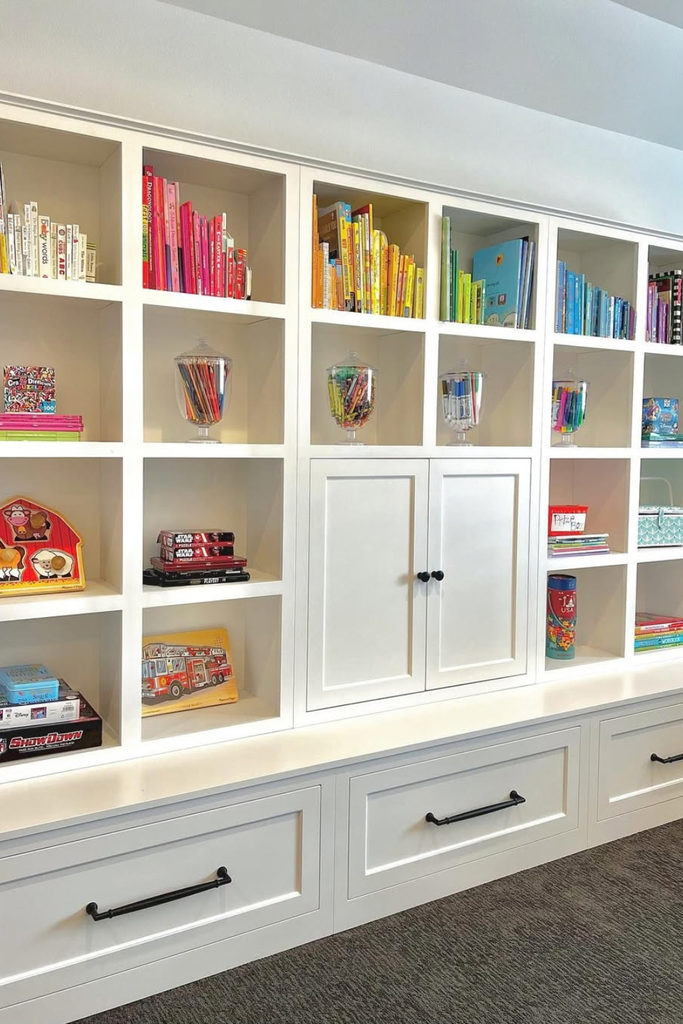
Mix open cubbies with deep lower drawers when you want favorite books and toys visible without putting every plaything on display.
Sort books across the upper sections, then reserve the central closed cabinet for supplies kids should not constantly pull out.
Natural room light keeps the white shelving bright, while small shelf lights can help deeper cubbies stay easy to see.
Homework Station
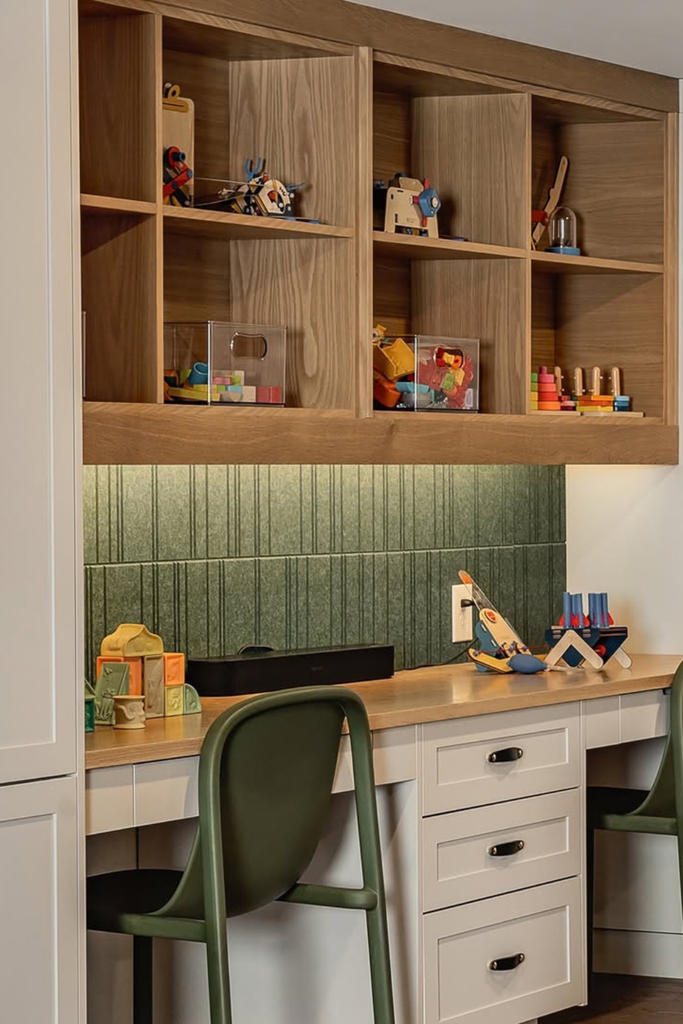
Carve a double desk into your storage wall when the playroom also needs a dedicated spot for homework, drawing, and building.
Keep everyday toys in the open wood cubbies above, while tall side cabinets hide bulkier games and supplies between play sessions.
Under cabinet lighting can brighten the long worktop directly giving both seats focused task light without adding lamps that steal desk space.
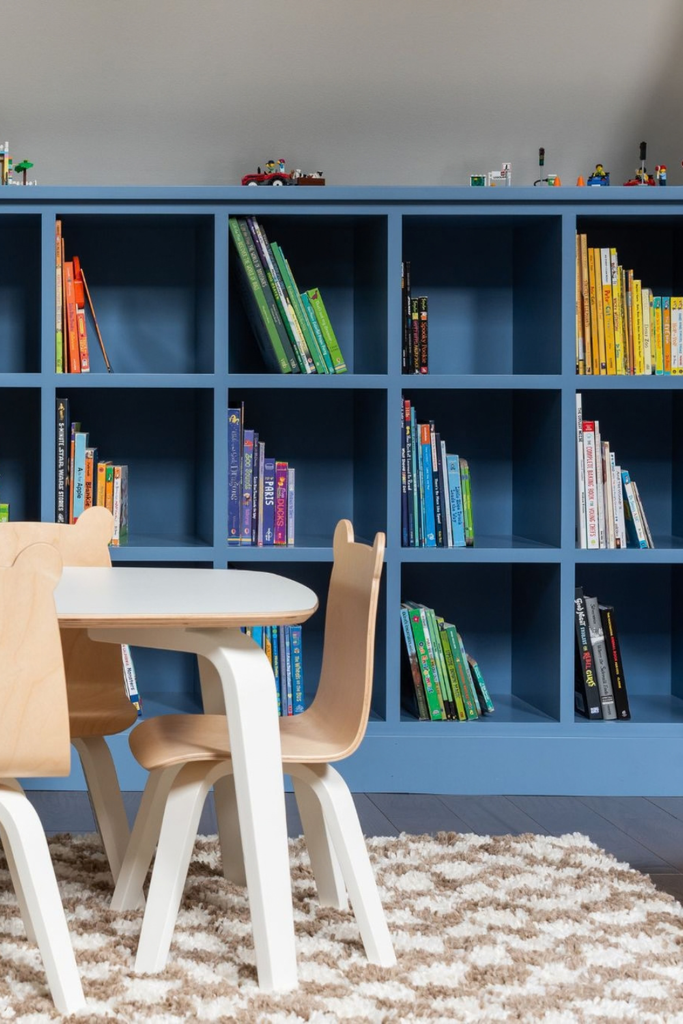
Low Book Wall
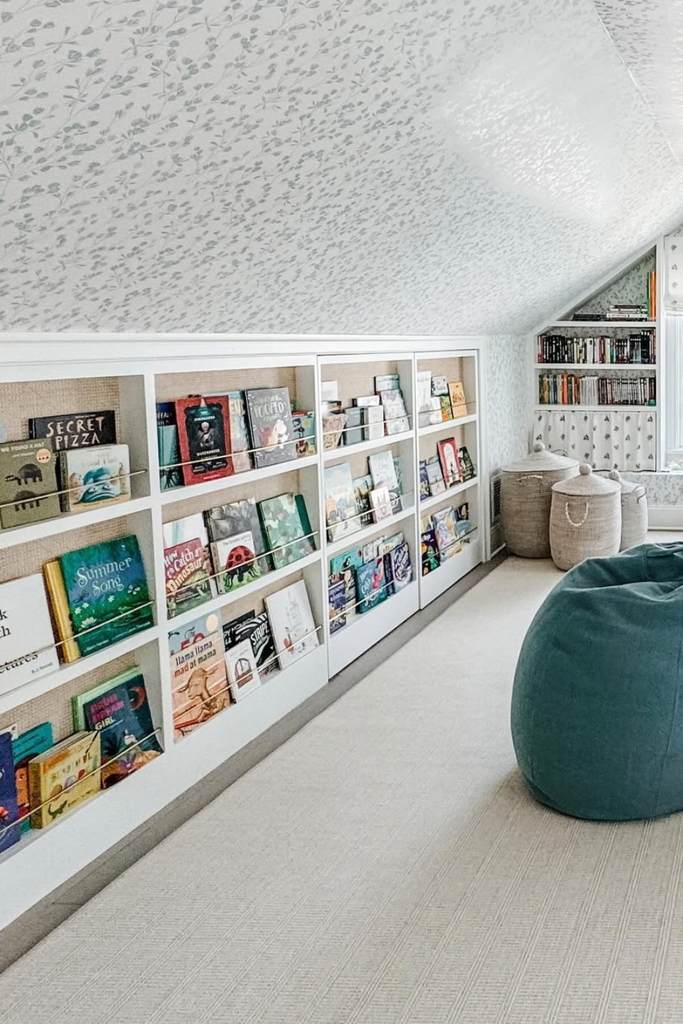
Ordinary bookshelves would squander the awkward ceiling space, install low built-in shelves to make a sloping playroom wall practical.
Can store items that require covert storage, face books outward so younger children can immediately identify favorite covers.
Soft floor seating should be placed near the shelves with window illumination during the day and soft ceiling lighting at nite.
Activity Storage
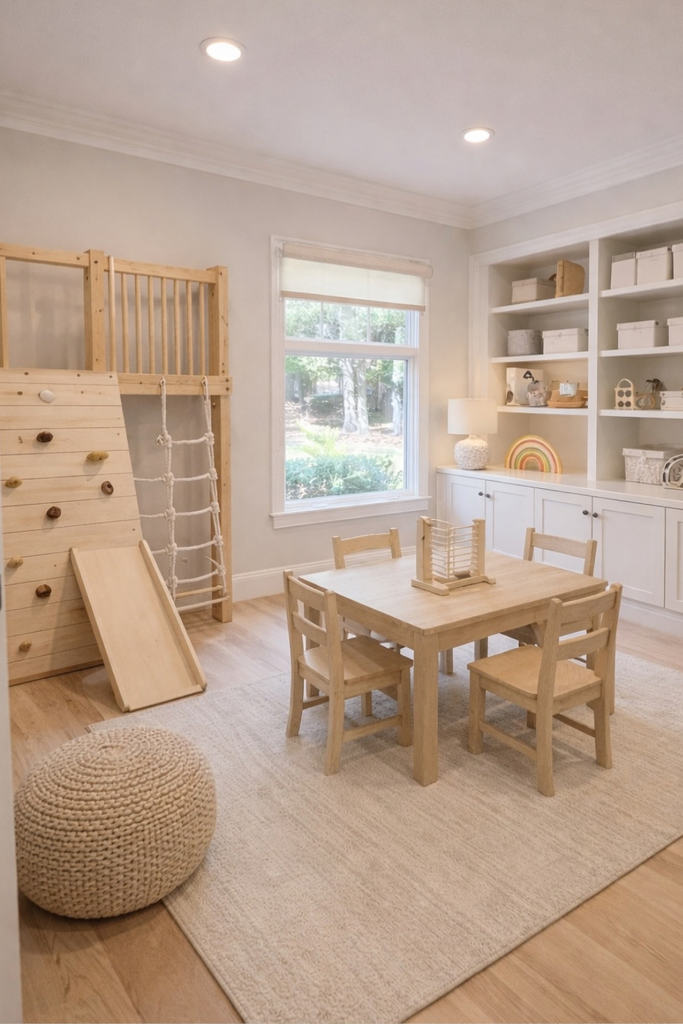
Moving built-in storage along one wall and providing enough space for climbing and crafts, you can keep active play in the center.
While a long counter manages exhibitions or crafts use closed bottom drawers for disorganized toys and matched bins above.
Daylight from the window fills the play zone, with recessed ceiling lights and a small table lamp adding light when needed.
Corner Media Built-In
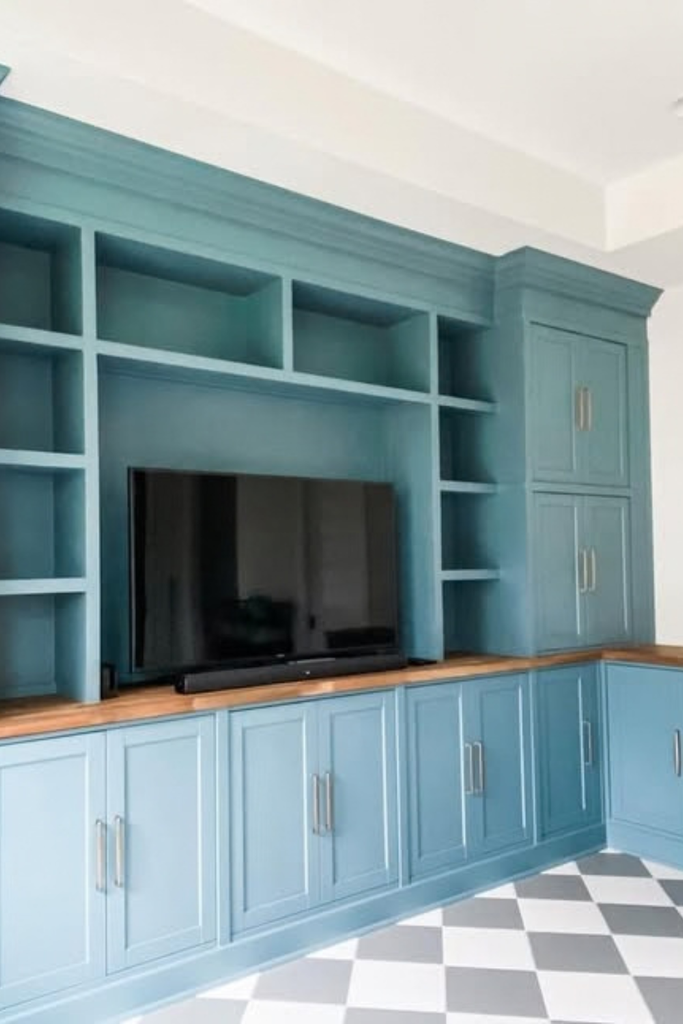
Wrap cabinetry around a corner when one straight wall cannot hold enough toys, games, and media without crowding the room.
Keep bulky play supplies behind the lower doors, then use open shelves around the TV for books and favorite display pieces.
Recessed ceiling lights provide general brightness, while slim shelf lighting can brighten the deeper sections.
Desk Media Wall
Combine a homework desk with media storage when you need one built-in wall to handle both quiet activities and downtime.
Place closed cabinets below for toys and supplies, while open shelves keep books, artwork and favorite collections easy to reach.
Picture lights can brighten the upper shelves, while a central ceiling fixture and nearby daylight provide broader light for desk activities.
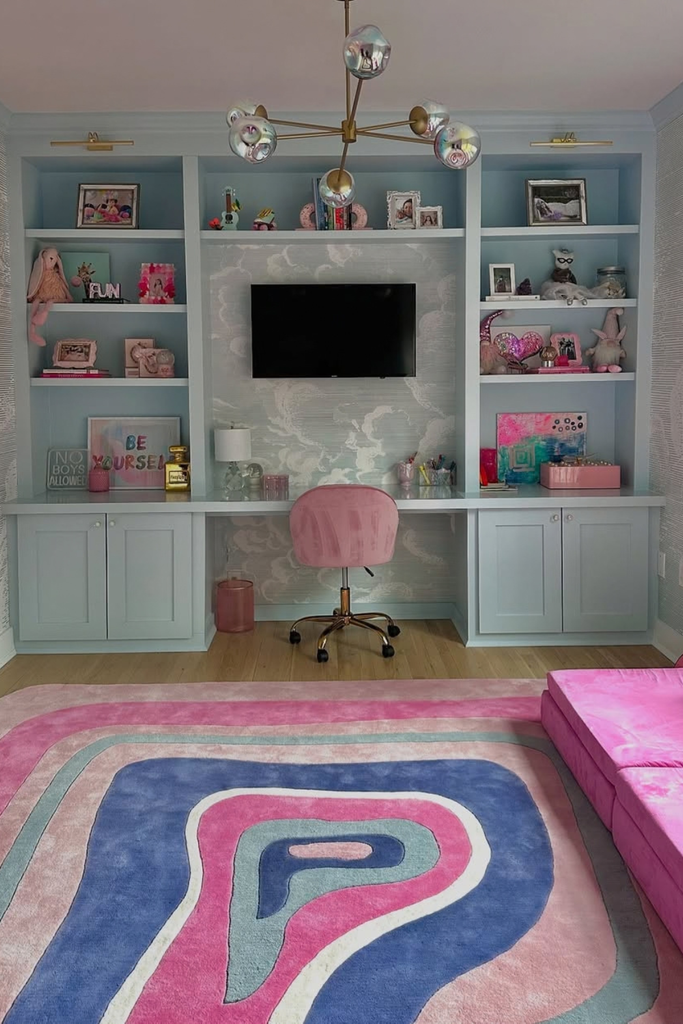
Toy Media Center
Balance screen time with everyday play by surrounding the TV with storage that gives toys their own easy to manage sections.
Hide bulky games inside the lower cabinets then use open shelves for favorite toys and baskets kids reach for most often.
Keep the central floor open for active play, while natural daylight and soft ceiling lighting provide comfortable brightness across the room.
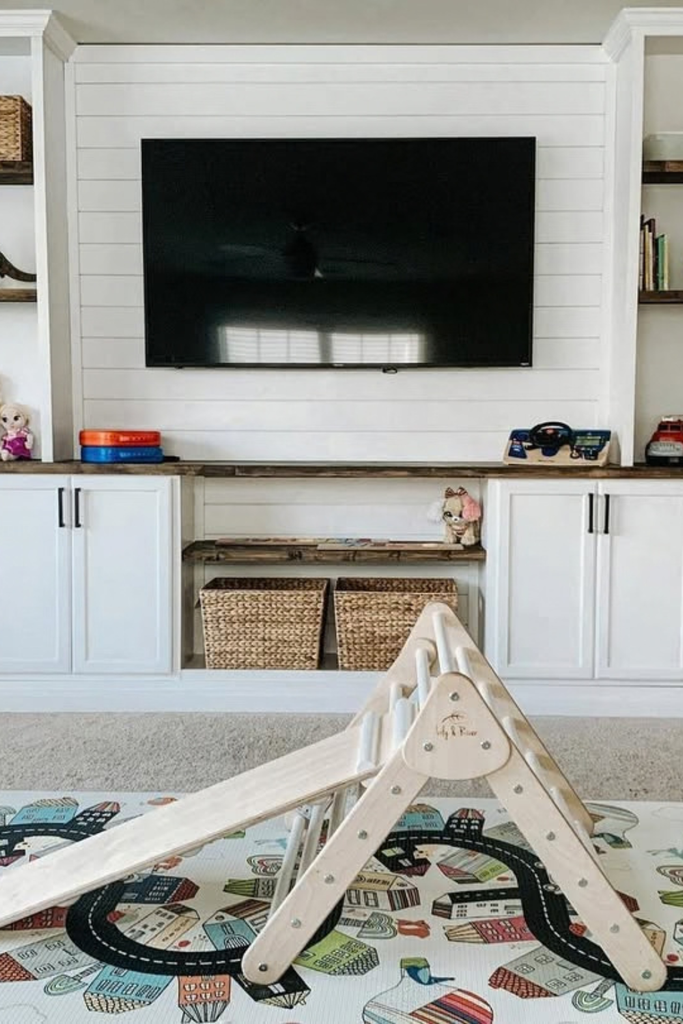
Window Study Wall
Frame a wide window with built-ins when you want two kids to share a work area without blocking valuable natural light.
Run one long desktop underneath adding closed side cabinets for supplies and narrow drawers between the seats.
Daylight handles most daytime activities while shelf spotlights and small table lamps provide layered light.
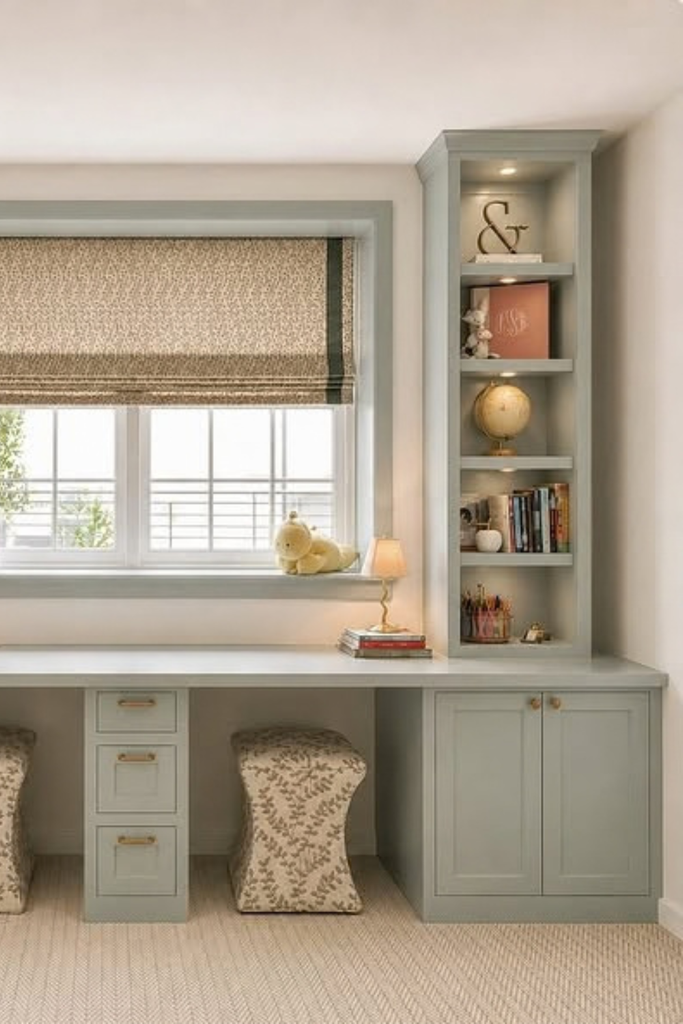
Window Book Nook
Use a narrow strip beside the window for built in book storage when a full-width bookcase would crowd the playroom.
Fit shallow shelves into the recess so favorite stories stay close without taking useful space away from the window area.
Natural daylight makes daytime reading easy, while a small adjustable wall sconce adds focused light for quieter evening reading.
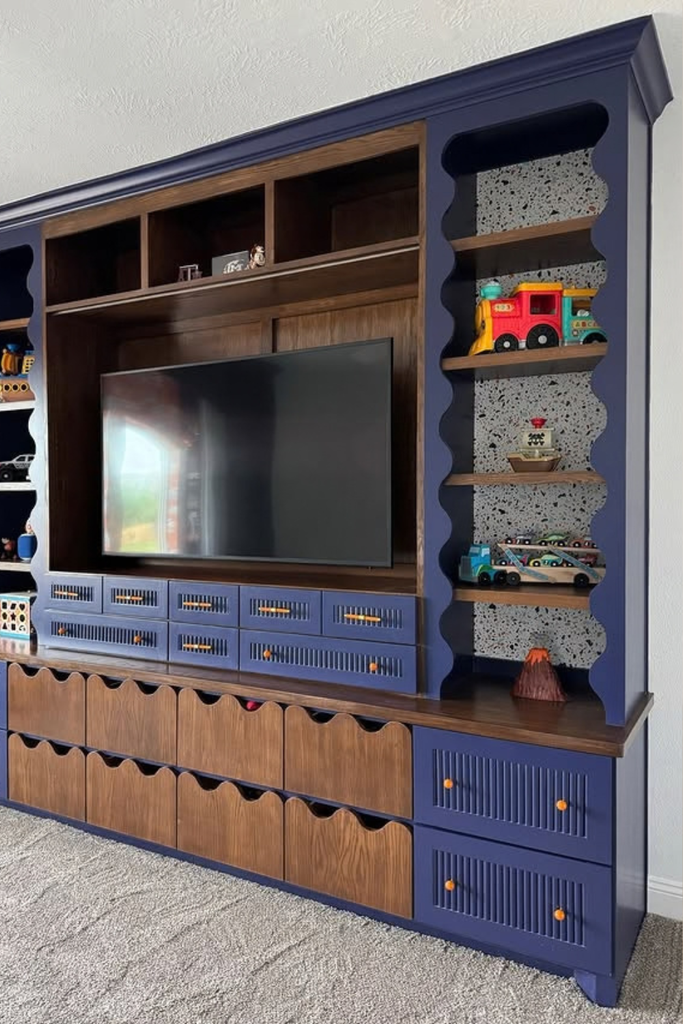
Color Coded Library
Turn low built-in cubbies into a kid friendly library when you want books easy to reach without adding tall shelving.
Group books by color or category so children can find favorites quickly then use the top ledge for small toys and creations.
Keep a table nearby for reading and activities, with natural daylight and soft ceiling light covering the open play area.
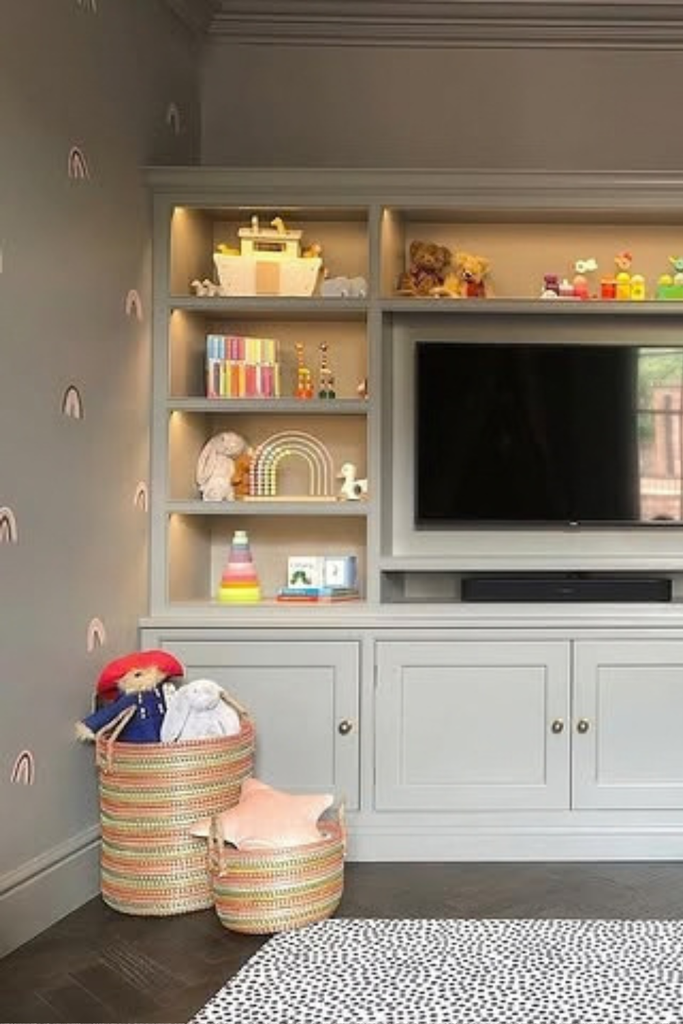
Lit Media Shelves
Make a darker playroom feel more inviting by building display lighting directly into shelves surrounding the TV.
Keep favorite toys and books on the illuminated shelves, while closed base cabinets hide larger games, electronics and everyday clutter.
Warm shelf lights create a softer evening glow around the displays, while the open floor stays free for comfortable play and lounging.
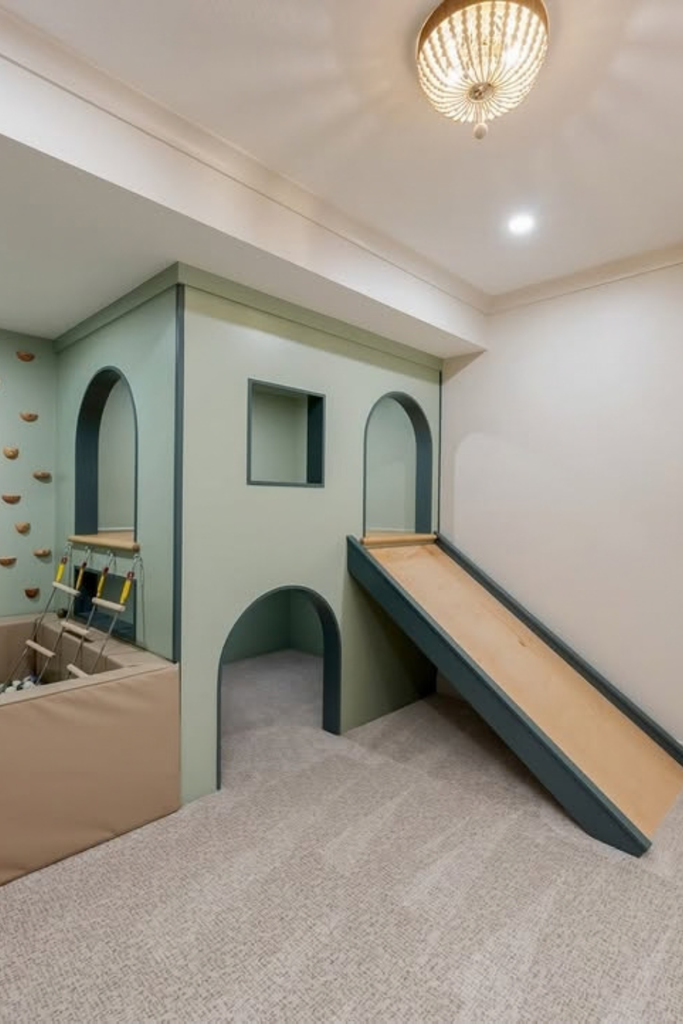
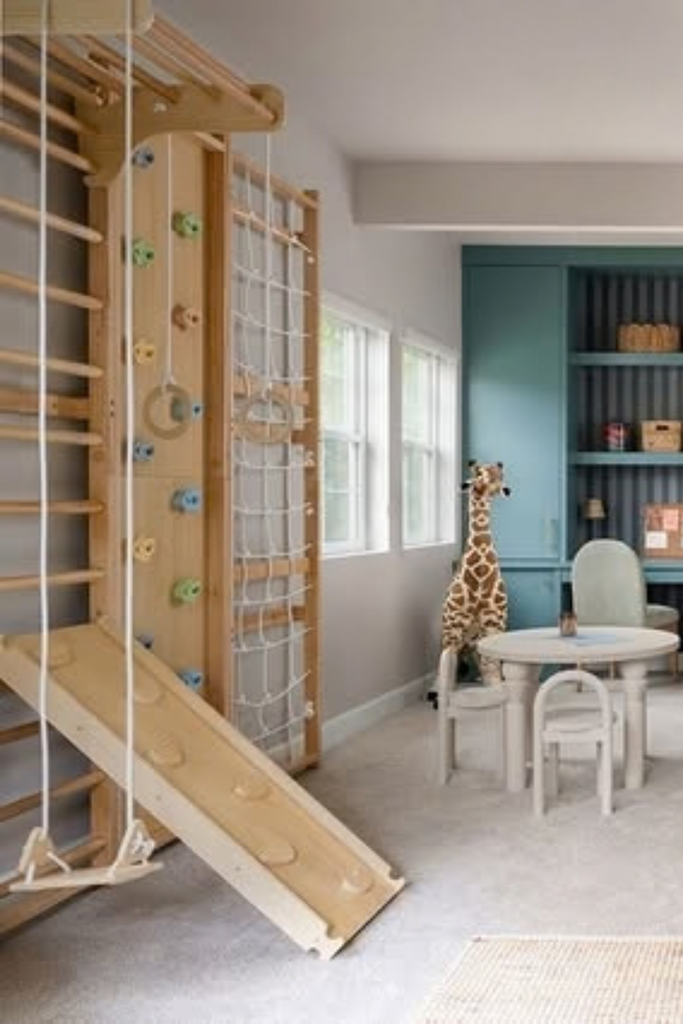
Indoor Playhouse
Turn one playroom corner into an active zone by building a playhouse with a slide, climbing wall, and soft landing area.
Keep the structure against the walls so kids still have open floor space for movement, toys and quieter activities nearby.
Recessed lights brighten the climbing area, while a central ceiling fixture spreads softer light across the rest of the room.
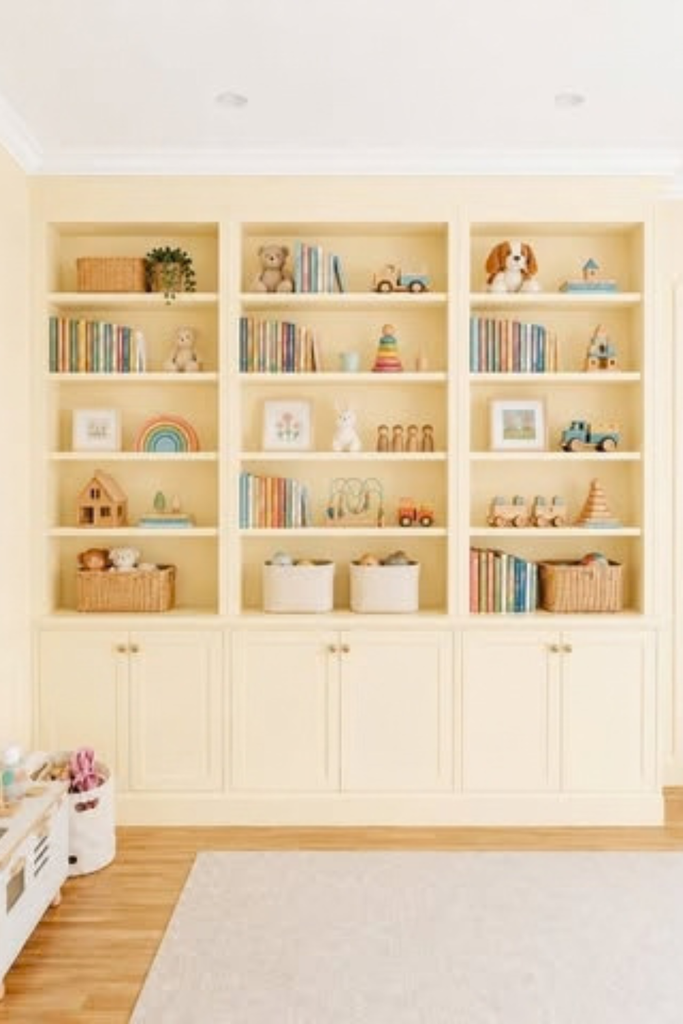
Balanced Bookcases
Mix open shelves with closed cabinets when you want kids to see their favorite books without exposing every toy in the room.
Keep books and a few simple toys above then move puzzles, craft supplies, and messier collections behind the lower cabinet doors.
Natural daylight keeps the pale built-ins bright, while soft recessed ceiling lights can evenly cover the shelves during evening play.
Floating Toy Shelves
Free up floor space by mounting shallow open shelves where bulky bookcases would interfere with active play and movement.
Keep puzzles, learning toys and smaller activities separated across each level, placing frequently used pieces.
Bright natural light works well for daytime play, while soft ceiling lighting can keep the shelves visible later in the day.
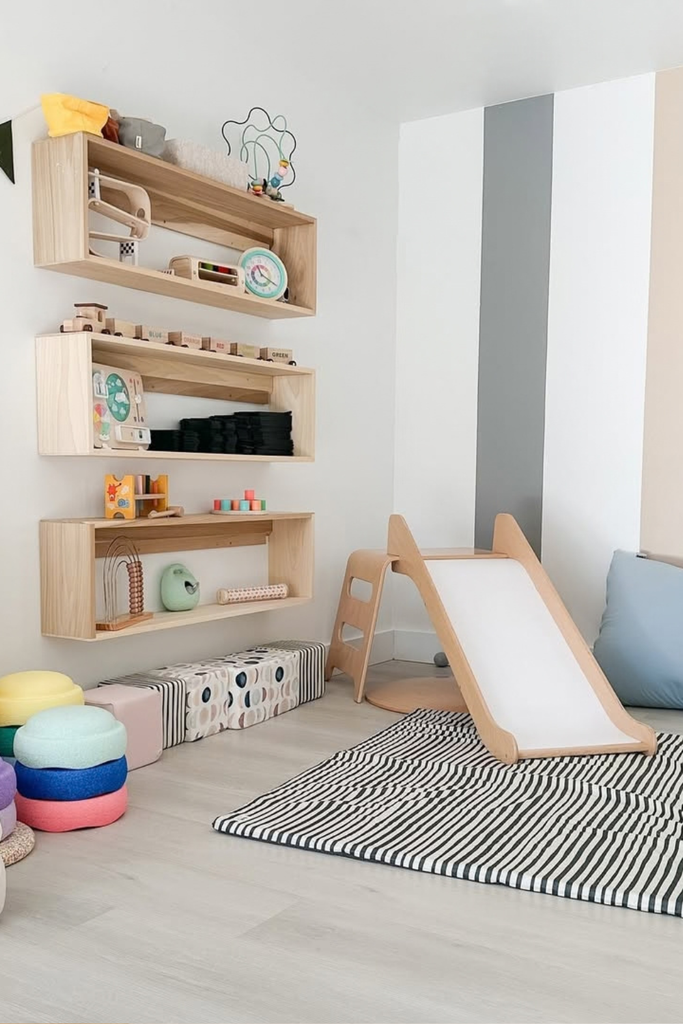
Window Reading Seat
Turn the space below a wide window into seating when tall storage would block the best natural light in the playroom.
Frame the bench with bookcases, keeping favorite stories within reach and hiding less attractive toys inside the lower cabinets.
Daylight makes the seat ideal for reading, while recessed ceiling lights can keep both bookcases usable once the room gets darker.
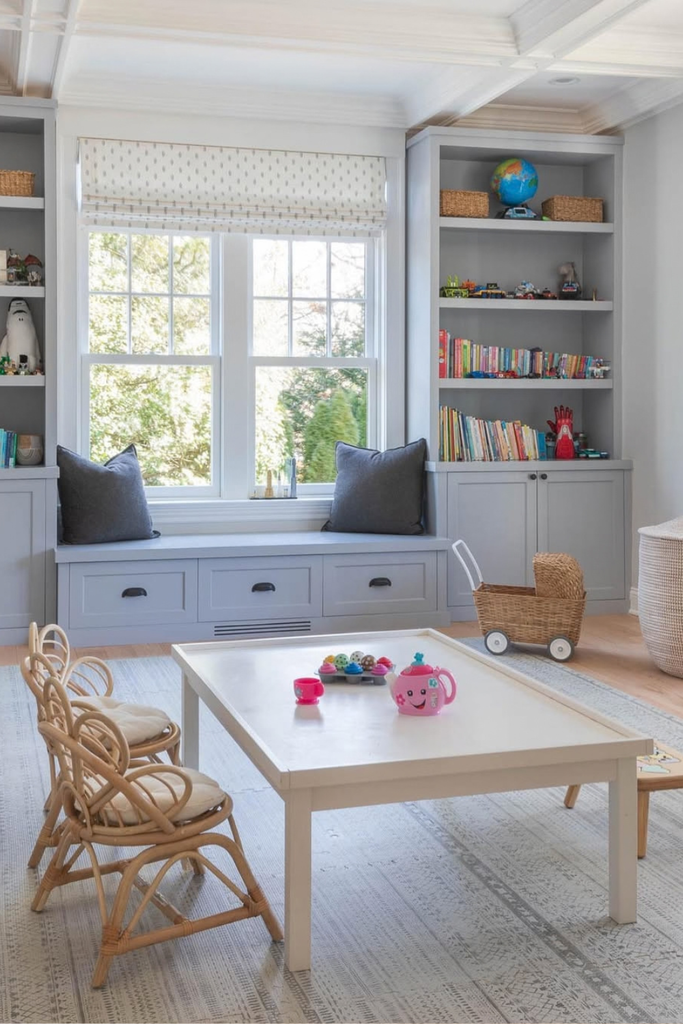
Study Storage Wall
Set up a shared desk wall when your playroom needs to handle homework and crafts without taking space from active play.
Use tall side cabinets for hidden supplies, open shelves for baskets and books and center drawers for items both kids share.
Natural window light brightens daytime activities, while small wall lights above each seat provide focused lighting for evening projects.
FAQs
How Can You Keep Playroom Built-Ins Useful as Your Kids Grow?
Choose adjustable shelves and simple closed cabinets instead of designing every section around small toddler toys.
As your kids grow, you can move shelves for larger books, turn toy cabinets into gamestorage, and use built-in desks.
For homework or hobbies. Keeping the main cabinetry flexible saves you from rebuilding the whole wall later.
What Should You Store Behind Closed Playroom Cabinets?
Use closed cabinets for anything that quickly makes open shelves look messy, including puzzles, craft supplies, building sets, electronics and oversized toys.
Keep everyday books and a smaller selection of favorite toys on accessible open shelves. This balance makes cleanup easier while still letting kids find things.
Hi, I’m Afaf! I’m a law student who loves writing about everyday life – from home projects and crafts to fashion, beauty, and parenting tips.
I’ve been writing for over a year, sharing ideas that are simple, practical, and easy to try. I write about things I find interesting and useful, whether that’s organizing a space, trying a new DIY, or finding activities to keep kids entertained.
My goal is to share helpful ideas without making things complicated. If it works in real life, I’ll write about it.
When I’m not studying or writing, I’m usually experimenting with new projects or scrolling for inspiration!