
20 Playroom TV Room Combo Ideas
Sharing one room between kids’ toys and family TV time can quickly make the space feel messy or too childish.
You want enough open floor space for play, but you also want somewhere comfortable to relax without staring at toy bins all evening.
In this article, you’ll find stylish Playroom and TV Room Combo ideas that keep toys accessible.
Let’s jump in!
Can You Make a Shared TV and Playroom Feel Stylish?
Yes, you can keep a shared TV and playroom stylish. Start with larger pieces such as the sofa, rug, cabinets, and TV unit in colors.
Then let toys, books, artwork, and smaller accessories bring in the playful color. Closed cabinets can hide bulky toys after playtime.
Few low baskets or shelves keep everyday favorites within easy reach. You can also use the sofa or separate rugs to define each zone.
If you keep furniture simple and give every toy a storage spot, the room can switch from active play during the day to a comfortable family TV space at night.
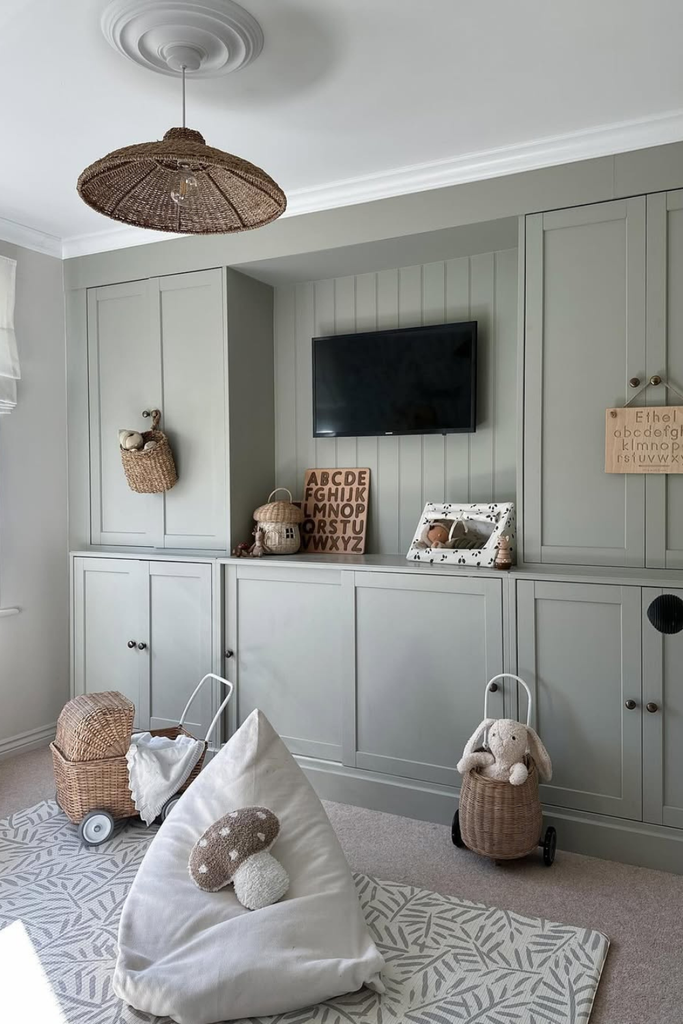
Play Floor Zone
Give younger kids a soft floor zone facing the TV so playtime, quiet activities and family viewing can happen in one spot.
Floor cushions and a patterned rug keep the center flexible, while full-height cabinets hide toys without making the room feel overly childish.
Let daylight handle daytime play then use the woven pendant for warm overhead light when the room shifts into evening TV time.
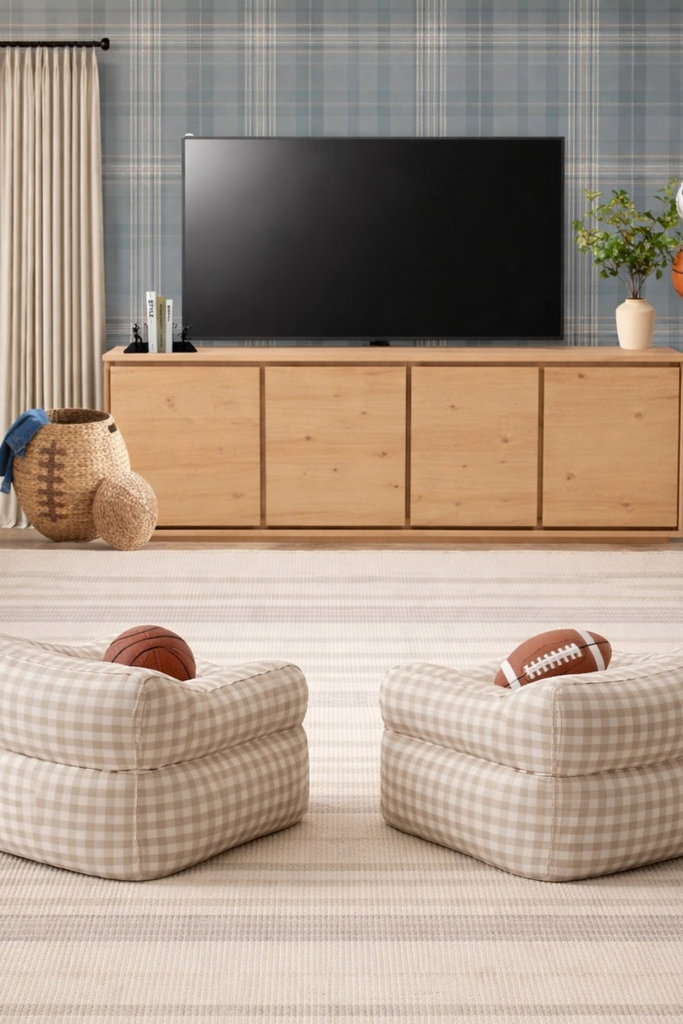
Kid Sized Seating
Skip bulky extra furniture when kids mainly need their own comfortable spot for cartoons, games, and relaxed movie nights.
Place soft child-sized chairs on a large rug then use a long closed console to keep toys and media clutter out of sight.
Natural window light keeps daytime play bright, while soft overhead lighting can take over without creating harsh screen glare at night.
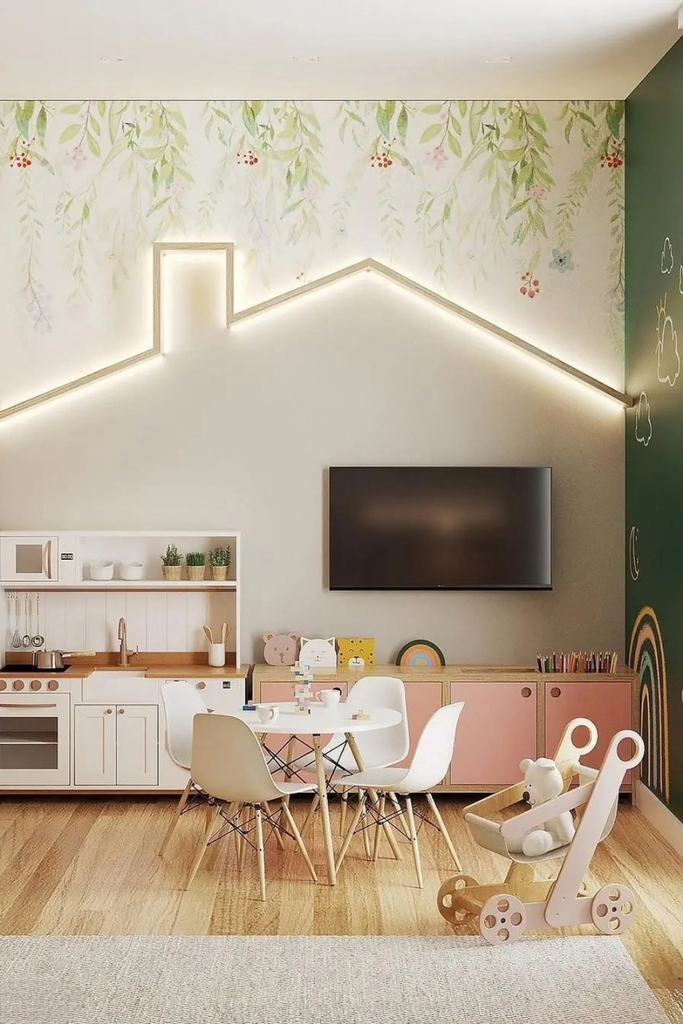
Activity Media Wall
Turn one wall into the hardworking side of the room by combining the TV with crafts, pretend play and low storage.
Play kitchen offers younger children an alternative pastime away from screens, keep a kid-sized table close by to keep constructing.
Natural daylight and ceiling lights make intricate activities sufficiently bright during the day, outline lighting gives a whimsical evening glow.
Compact Family Zone
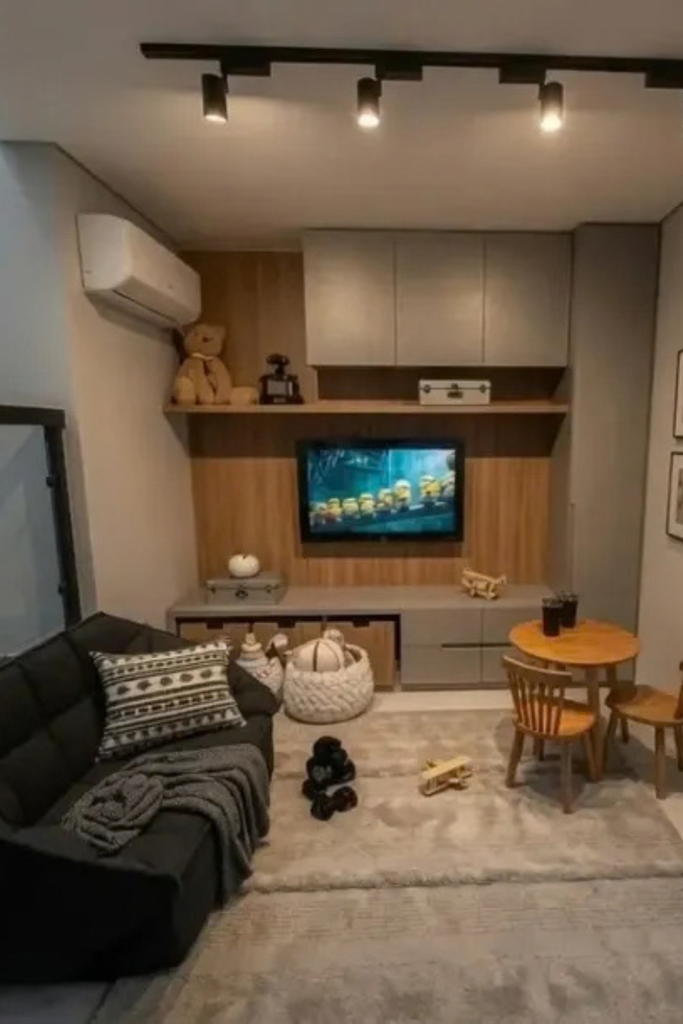
Push the TV and storage onto one end wall, leaving the center free for play, to make a small bonus room work harder.
Adjacent children’s table provides a distinct area for crafts, puzzles, or quiet activities, a tiny sofa is used for family watching.
Track lights brighten the whole room after dark, and adjustable window shades help control glare when the TV is being used.
Built In Media
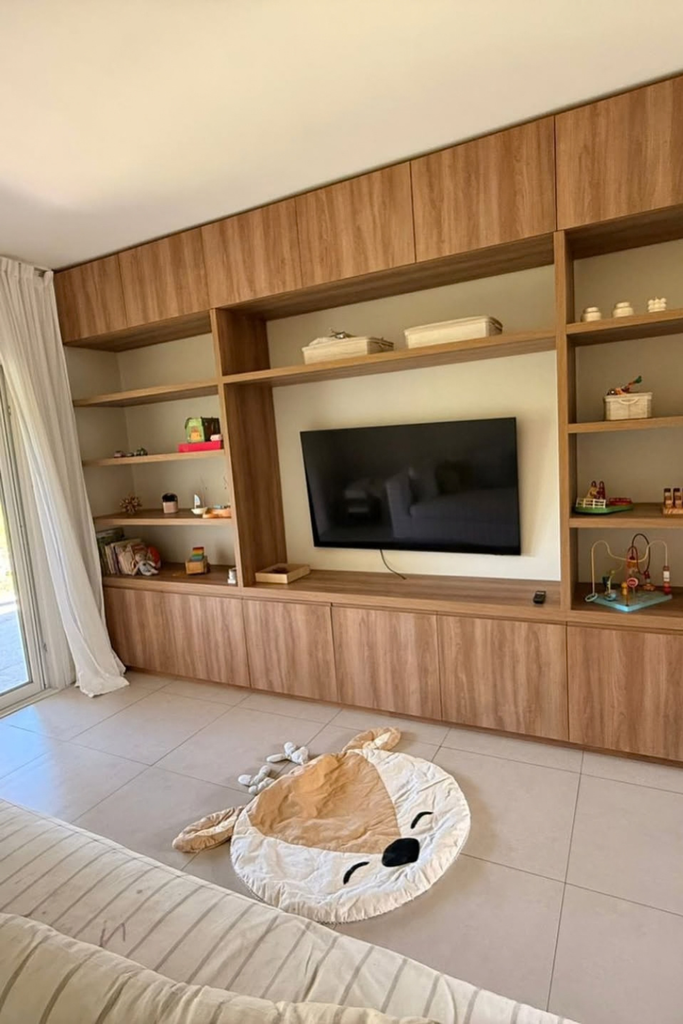
Use one fitted wall for the TV, toy storage, and display pieces when you want the rest of the playroom left open.
Low cabinets keep games within reach, while taller cupboards can hide bulkier toys and supplies that make shared spaces feel cluttered.
Recessed ceiling lights provide even playtime brightness, warm cabinet lighting can soften the media wall once everyone settles in for TV.
Display Storage Wall
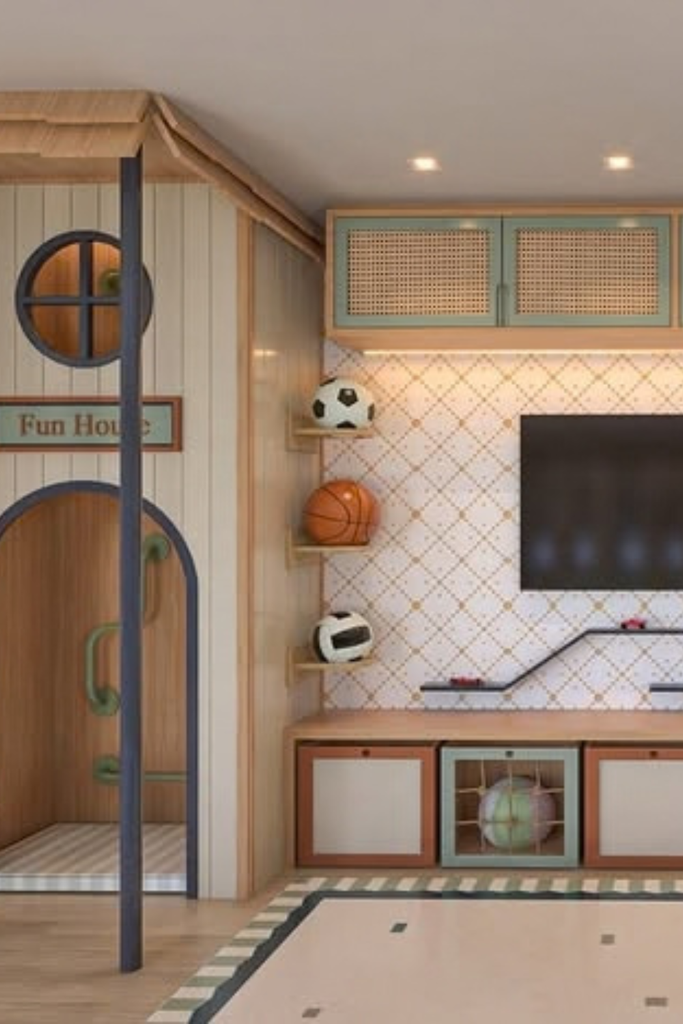
You want your favorite toys to be visible without taking up too much space, combine open shelves with closed lower cabinets.
Set aside the long cabinets for large sets that can vanish before family TV time and keep books and smaller toys at accessible heights.
While soft ceiling lighting can offer even coverage after daylight fades, large windows naturally enhance floor action.
Pegboard Media Wall
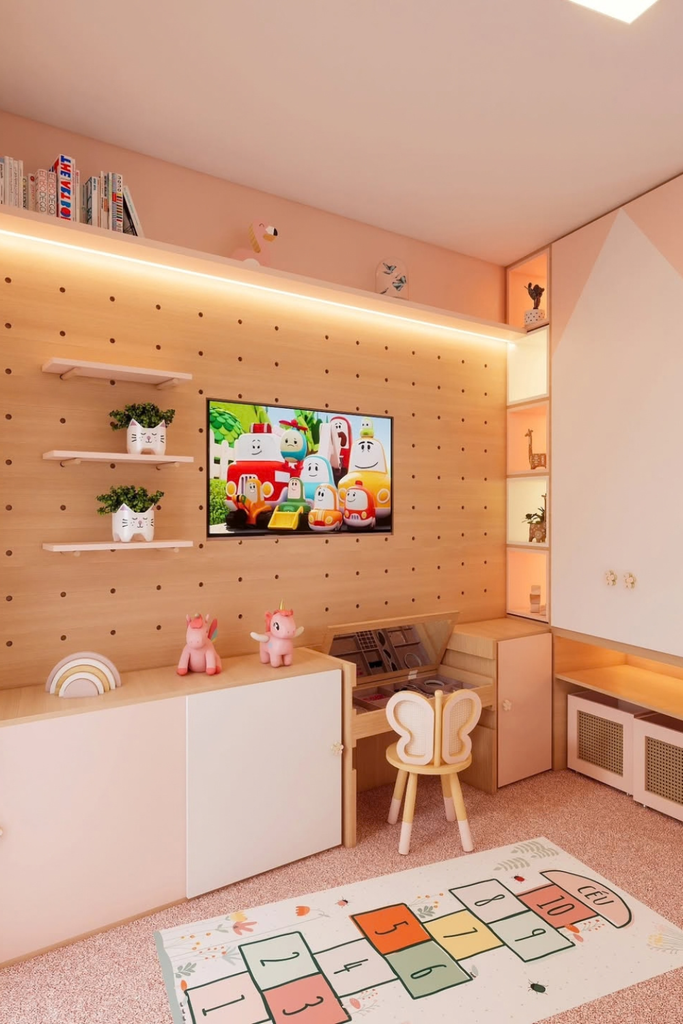
Turn the TV backdrop into flexible storage by using a pegboard wall where shelves can move as your child’s books and interests change.
Keep closed cabinets for messier toys then tuck a small desk beside the screen for drawing, puzzles, or other quiet activities.
Warm LED strips highlight the pegboard and display niches while the ceiling light keeps the floor bright enough for active play.
Small Media Zone
Make a tight room feel useful by keeping the TV, storage and seating against separate walls so the center stays open for play.
After activities are completed, store toys in closed drawers and set up a tiny children’s table by the window for drawing or puzzles.
While roller blinds manage daylight and lessen screen glare during family movie time, track lights illuminate the play area after dark.
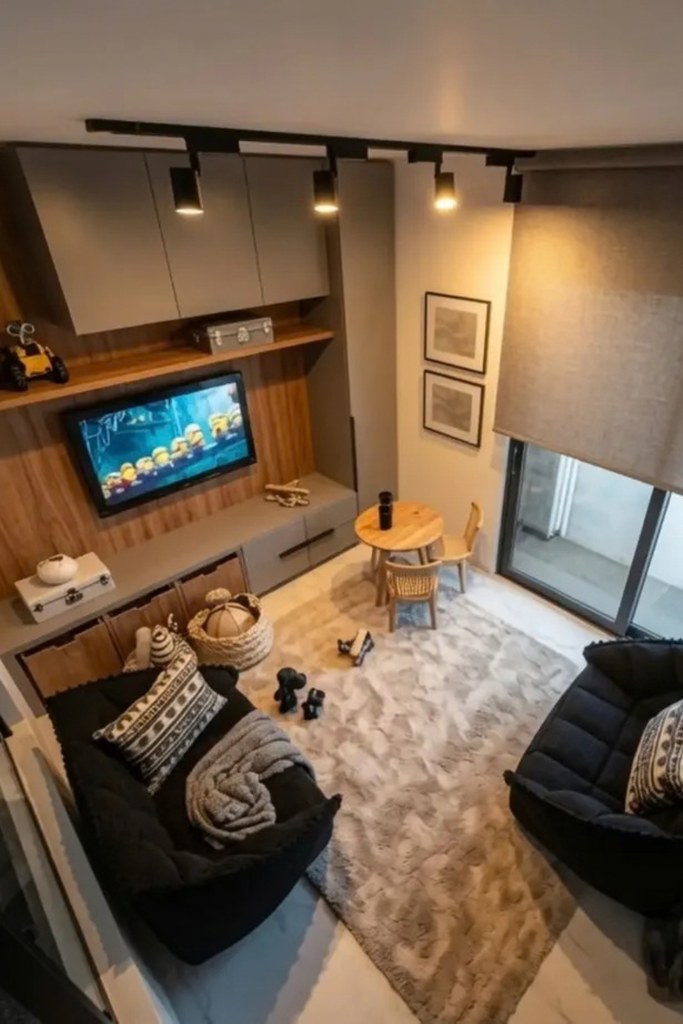
Hidden Play Nook
You want children close by without allowing their toys take over the main TV area, carve a little play nook within built-in cabinetry.
Keep books and decor on open shelves, then use deeper closed cabinets around the nook for toys that need hiding after playtime.
Soft cove lighting, a large ceiling fixture, and warm niche lights create separate layers for active play, reading and relaxed movie nights.
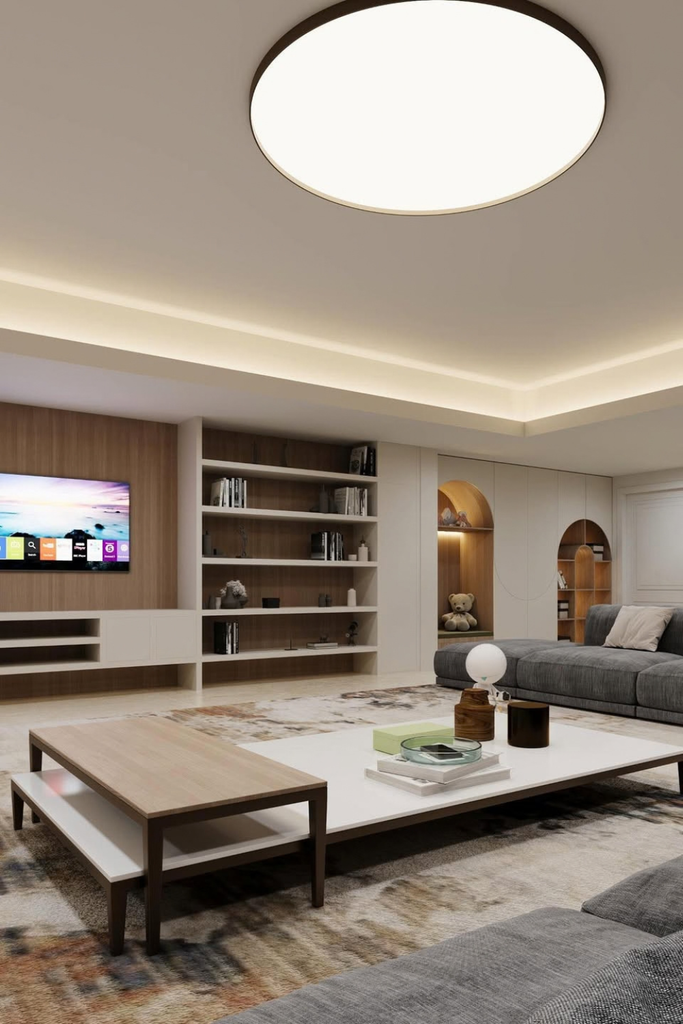
Overhead Toy Storage
Floor space is too precious to be lost to additional toy units, use the wall above the TV for closed cupboards.
One open side shelf makes it simple for children to access books and baskets, while below cabinets store common games and materials.
Keep the media wall visually simple then layer general ceiling light with softer nearby lamps for comfortable play.
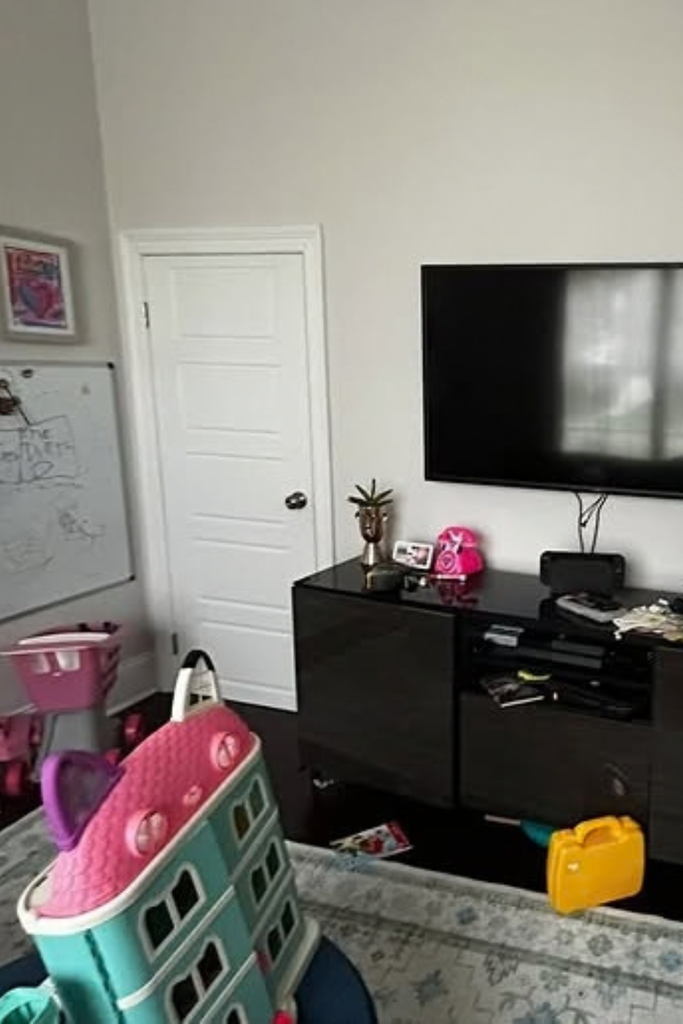
Basket Media Wall
Work baskets into the TV wall when kids need quick access to toys but you still want cleanup to take only minutes.
Tall bookcases can hold books and display toys, while lower cabinets and woven baskets handle loose pieces that usually create visual clutter.
Picture lights above the shelves add focused warmth, while the main ceiling fixture keeps the surrounding floor bright enough for active play.
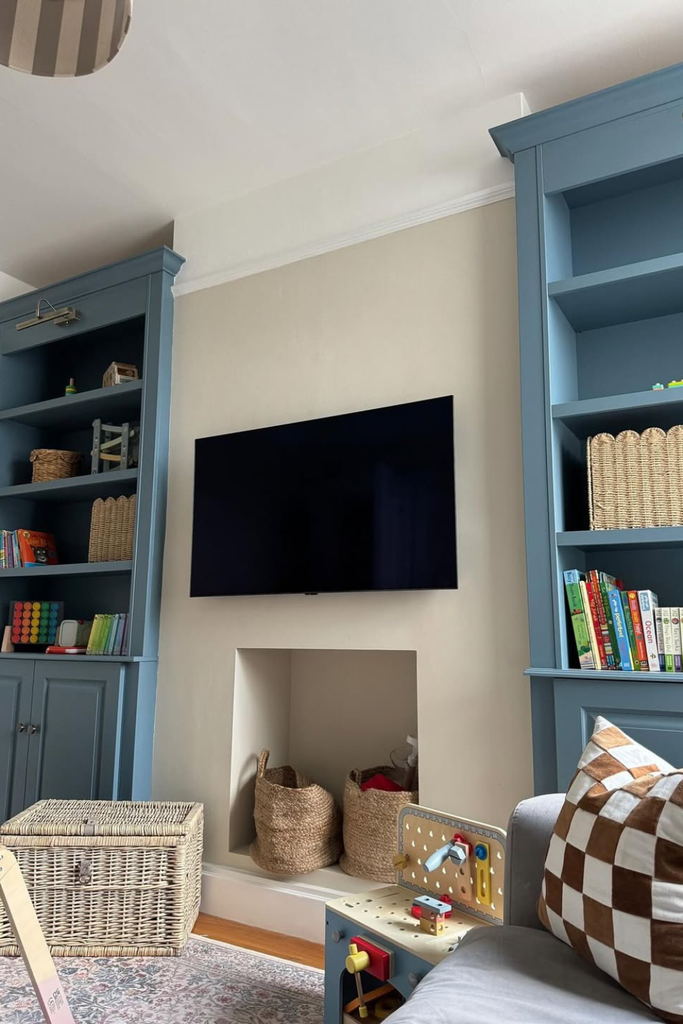
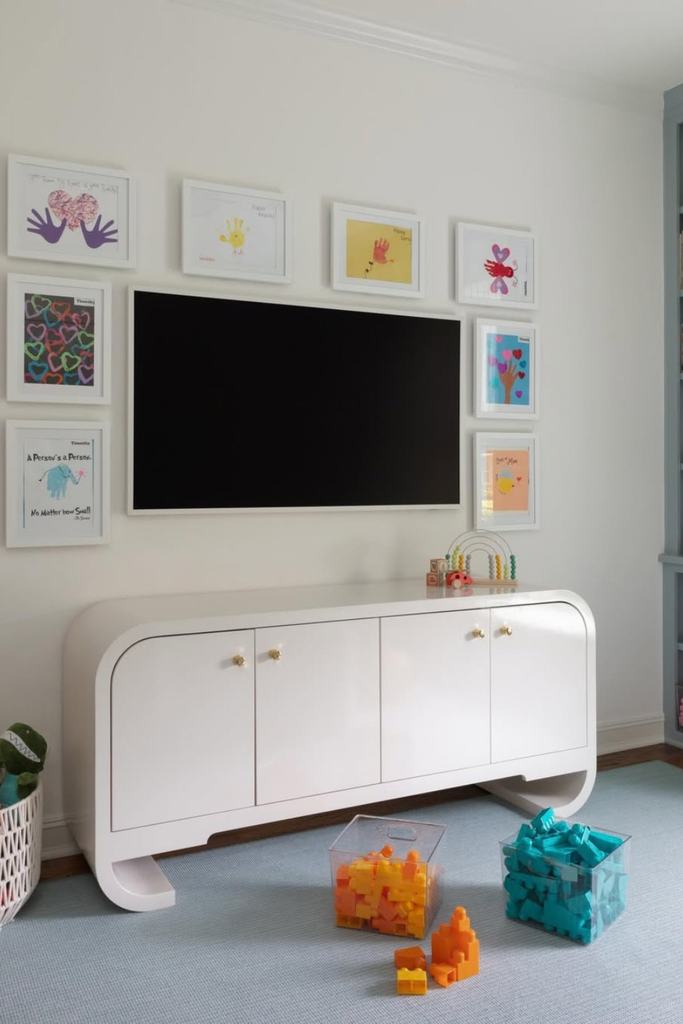
Art Gallery TV
Turn the TV wall into part of the playroom by surrounding the screen with framed kids’ artwork instead of extra themed decorations.
Closed console hides messy toys, while open side shelves keep books and favorite play pieces easy to reach throughout the day.
Natural daylight keeps colors lively for play, while soft ceiling lighting can maintain a comfortable glow once the screen comes on.
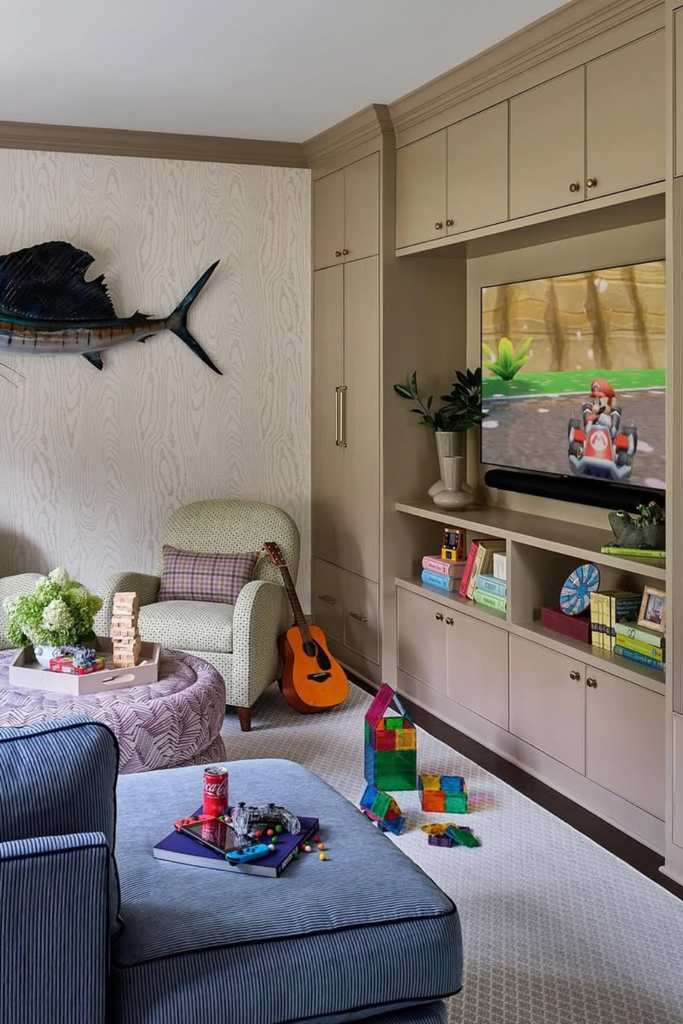
Family Game Lounge
Blend play into an adult-style TV room by choosing games and activities that can come out only when kids want them.
Deep cabinets around the screen can hide toys, consoles, and larger supplies, while the open shelf keeps books and favorite games close.
Keep the floor clear for building and group games then use soft overhead and cabinet lighting to make evening viewing feel relaxed.
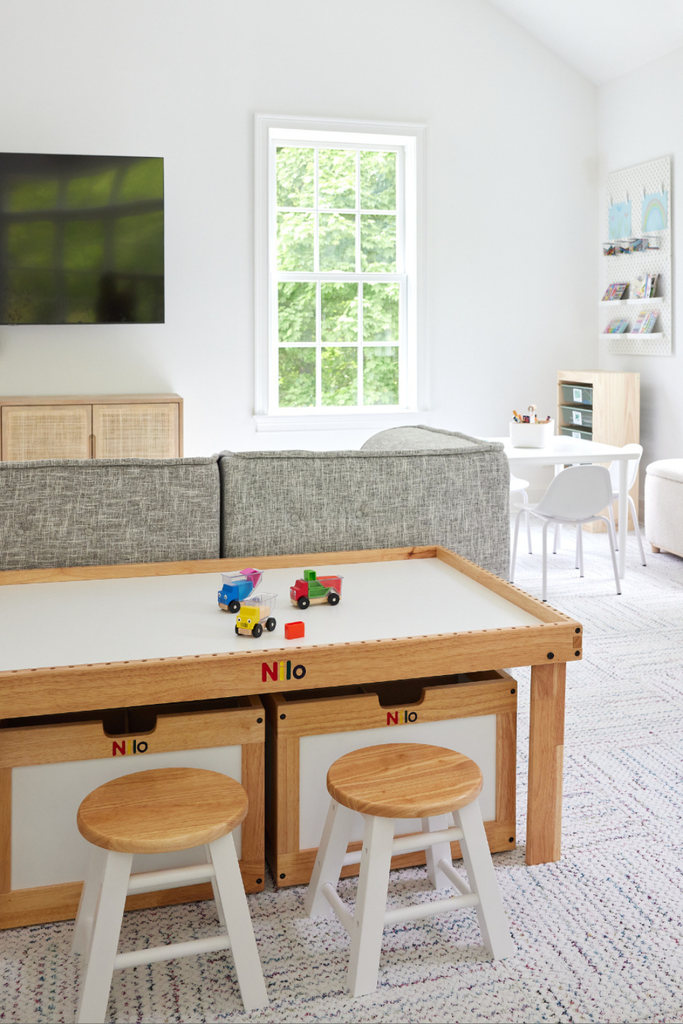
Play First Layout
Pull active play toward the center with a large activity table, giving kids something engaging to do even when the TV is nearby.
Low storage along the wall keeps building toys organized and reachable while open shelving gives favorite figures their own display space.
Natural window light supports daytime activities, while recessed ceiling lights provide even brightness.
Gaming Study Corner
Older children require more than a typical toy-focused playroom, place games and assignments next to the TV.
Use closed media cabinets to store controllers, games, school supplies and daily litter after fitting a small workstation into one corner.
Natural window light makes studying during the day comfortable, track lights manage targeted work, and shelf strips produce a warm display glow.
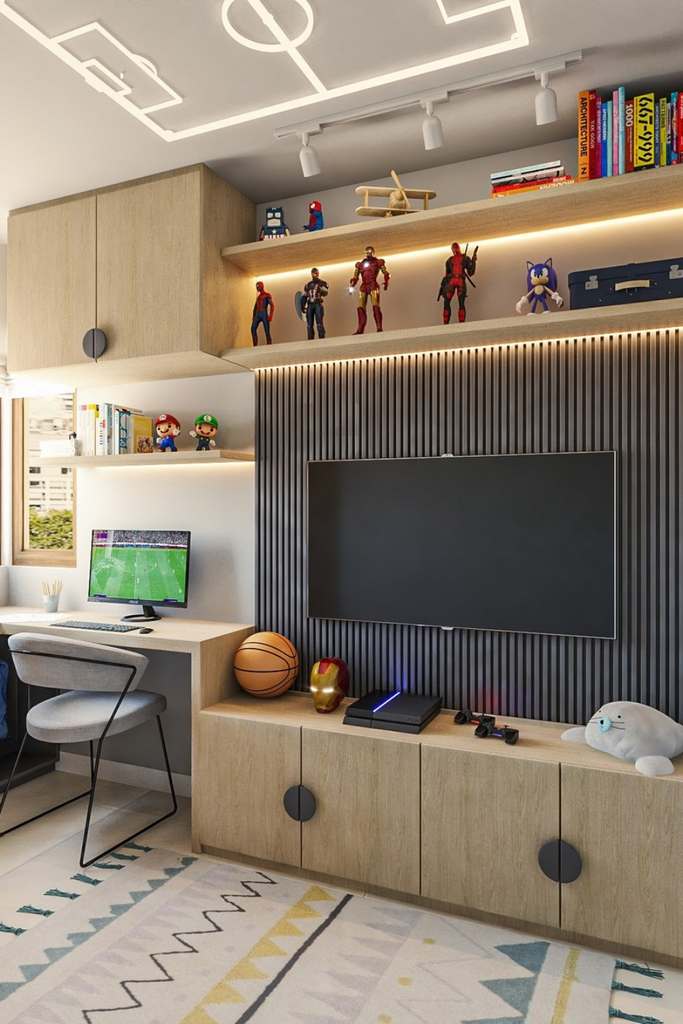
Display Play Wall
Frame the TV with open shelves when you want favorite toys and books to become part of the room instead of clutter.
Store messier play supplies behind the lower cabinet doors, then add a soft floor seat for reading, games or relaxed screen time.
Warm shelf lighting highlights displays, while general ceiling light can brighten the floor for active daytime play.
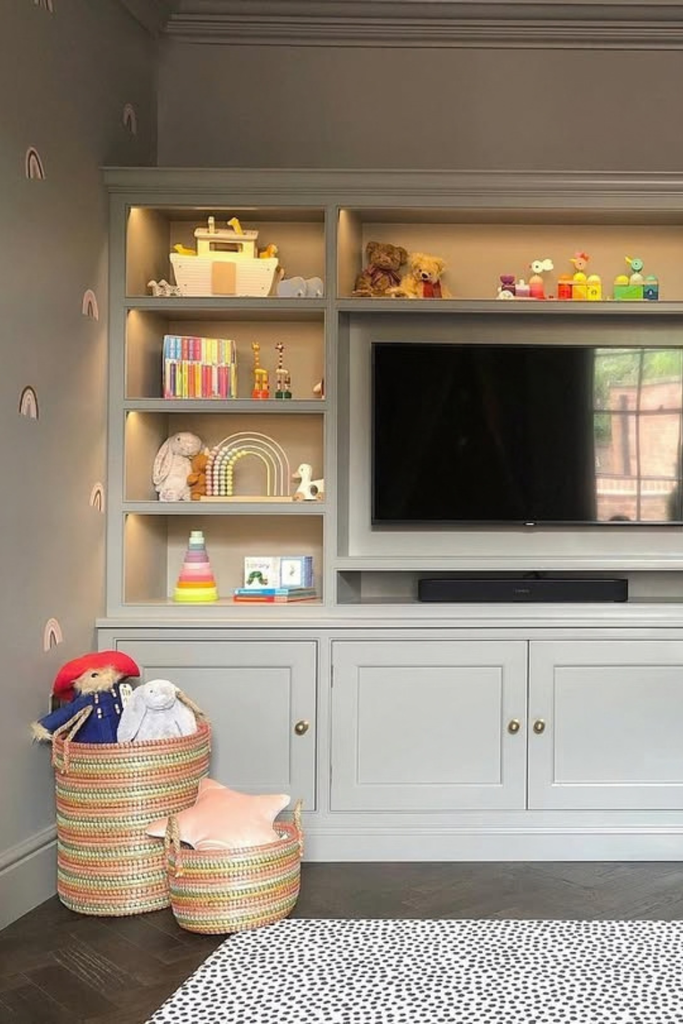
Storage Packed Playroom
Build storage around the TV when toys, books and pretend-play pieces all need to share one busy family room.
Mix baskets, fabric bins and open bookshelves so kids can find favorites quickly while messier collections stay visually contained.
Warm woven pendant and table lamp create cozy layers while the open center rug keeps crafts, tea parties and floor play comfortable.
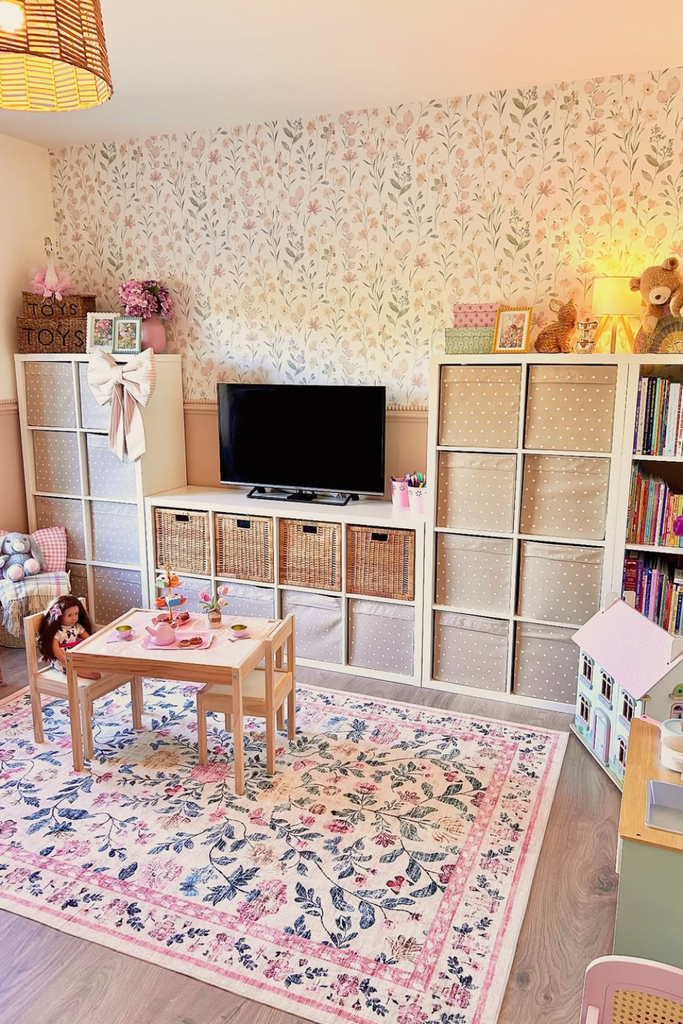
Refined Play Lounge
You want a playroom that seems polished enough for family TV nights, keep the primary furnishings soft and neutral.
Small children’s table creates its own play space next to the seating area, and built-in shelves can accommodate books and some toys.
Layer the statement ceiling fixture with wall sconces and natural window light so play stays bright without making movie time feel harsh.
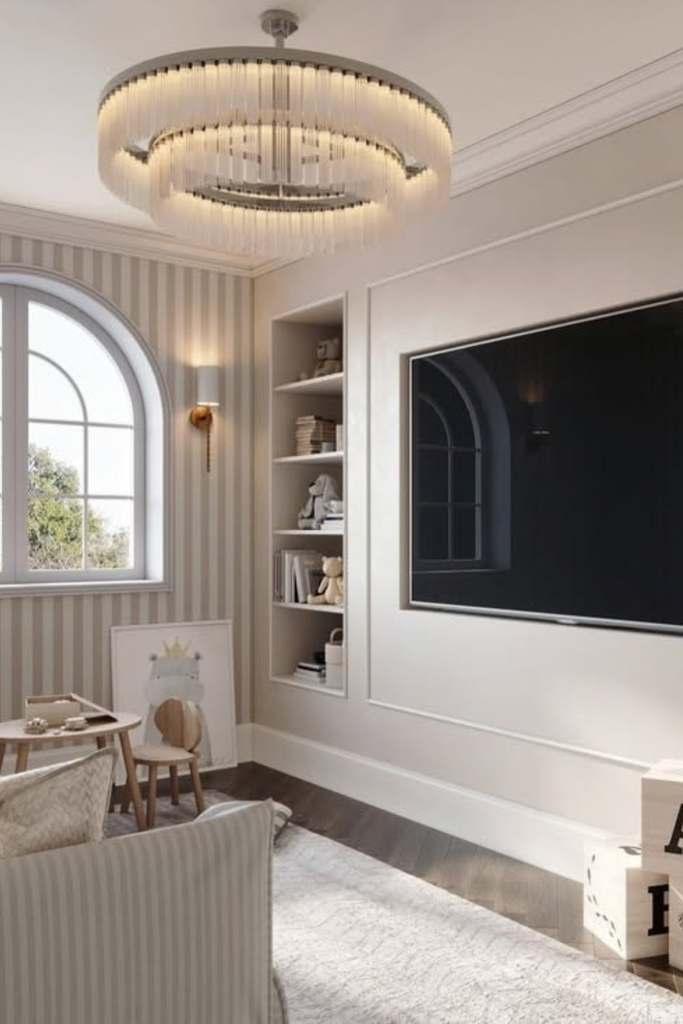
Concealed Toy Wall
You want toys close by, allocate the majority of the TV wall to closed cabinets so that bright playthings don’t take over the space.
Use open niches only for a few books and decor pieces then sort games, crafts, and larger toys behind the lower and tall doors.
Soft ceiling light can handle everyday play while nearby ambient lamps create a calmer layer for evening TV time.
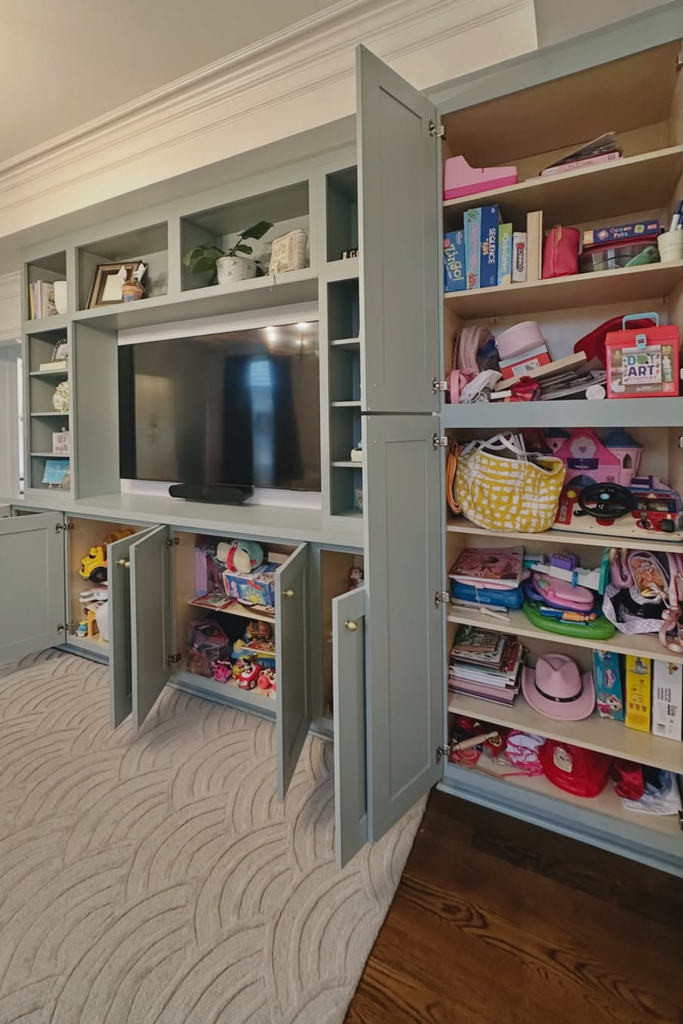
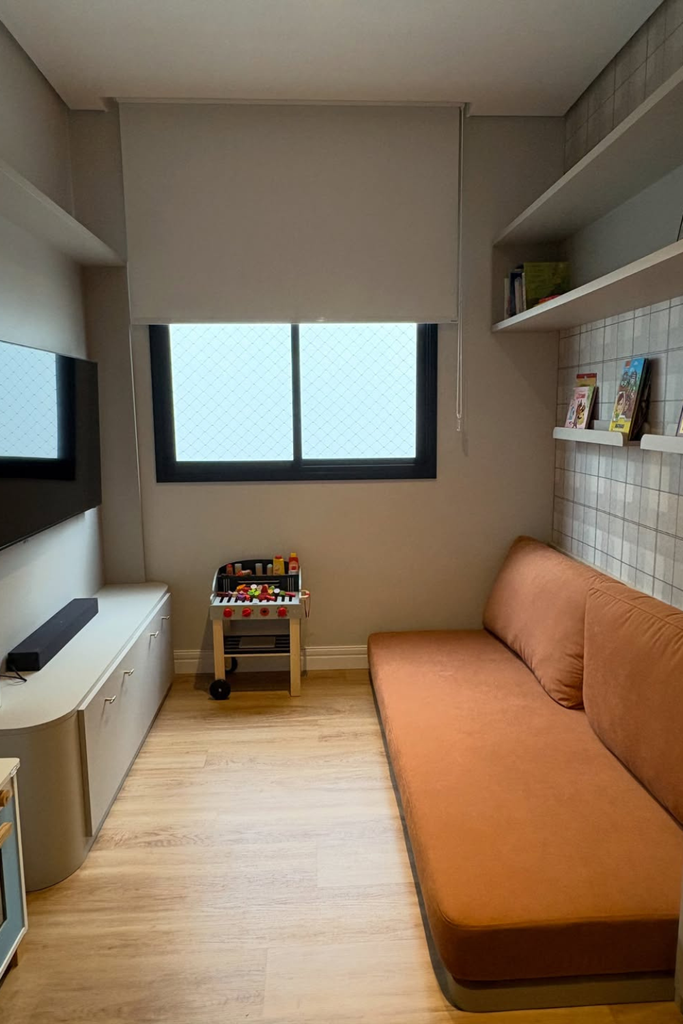
Narrow Play Lounge
Use a wall-hugging sofa when the room is narrow, so kids still get an open strip of floor for pretend play and toys.
Mount the TV opposite and choose a slim media cabinet to avoid squeezing the walkway then use wall shelves for books.
Window light keeps daytime activities bright, while soft ceiling lighting can take over when the shade closes for movie time.
FAQs
How Do You Keep a Playroom and TV Room Combo From Feeling Cluttered?
Give everyday toys easy-to-reach baskets or drawers, then hide larger sets, craft supplies and less-used items behind closed cabinet doors.
Keeping the main floor open makes play easier. Quick cleanup also becomes much more realistic when every toy already has a clear place to return.
What Furniture Works Best in a Shared Playroom and TV Room?
Choose furniture that can handle more than one job. Comfortable sofa works for family movies, while ottomans can provide extra seating and soft play surfaces.
Low storage units are useful for kids because they can reach their own toys, and a large rug helps define the play zone.

Hi, I’m Afaf! I’m a law student who loves writing about everyday life – from home projects and crafts to fashion, beauty, and parenting tips.
I’ve been writing for over a year, sharing ideas that are simple, practical, and easy to try. I write about things I find interesting and useful, whether that’s organizing a space, trying a new DIY, or finding activities to keep kids entertained.
My goal is to share helpful ideas without making things complicated. If it works in real life, I’ll write about it.
When I’m not studying or writing, I’m usually experimenting with new projects or scrolling for inspiration!