
26 Living Room And Playroom Combo Ideas
When toys take over the sofa, coffee table, and floor, your living room can stop feeling comfortable for the whole family.
Without a separate playroom, you need a setup that gives kids room to play while keeping everyday seating and walkways easy to use.
Smart storage, flexible furniture, and clearly planned play zones can help you create one shared room that stays practical, organized, and comfortable.
Let’s jump in!
Can Multi-Functional Furniture Make a Shared Living and Playroom More Flexible?
When one room has to handle relaxing, playing, storing toys, and sometimes entertaining guests, furniture that serves only one purpose.
Choose pieces that can change jobs throughout the day. A storage ottoman can hold toys while doubling as extra seating.
You can also use a low bookcase to store toys and help define the play zone from the adult seating area.
If floor space is tight, nesting tables and fold-away activity tables make it easier to open space when playtime starts.
Focus on pieces your family will actually use every day, because too much multi-purpose furniture can make the room feel just.
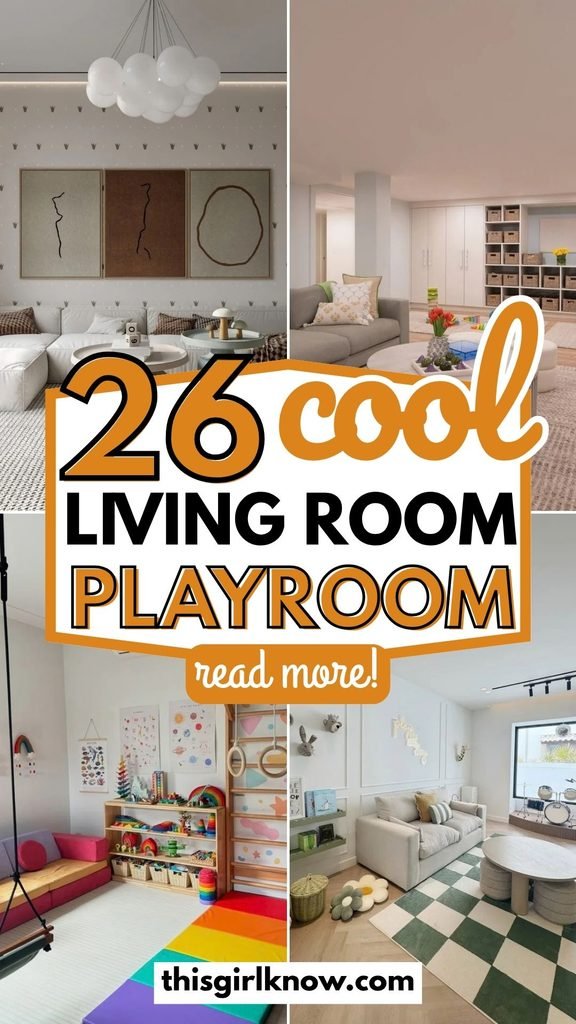
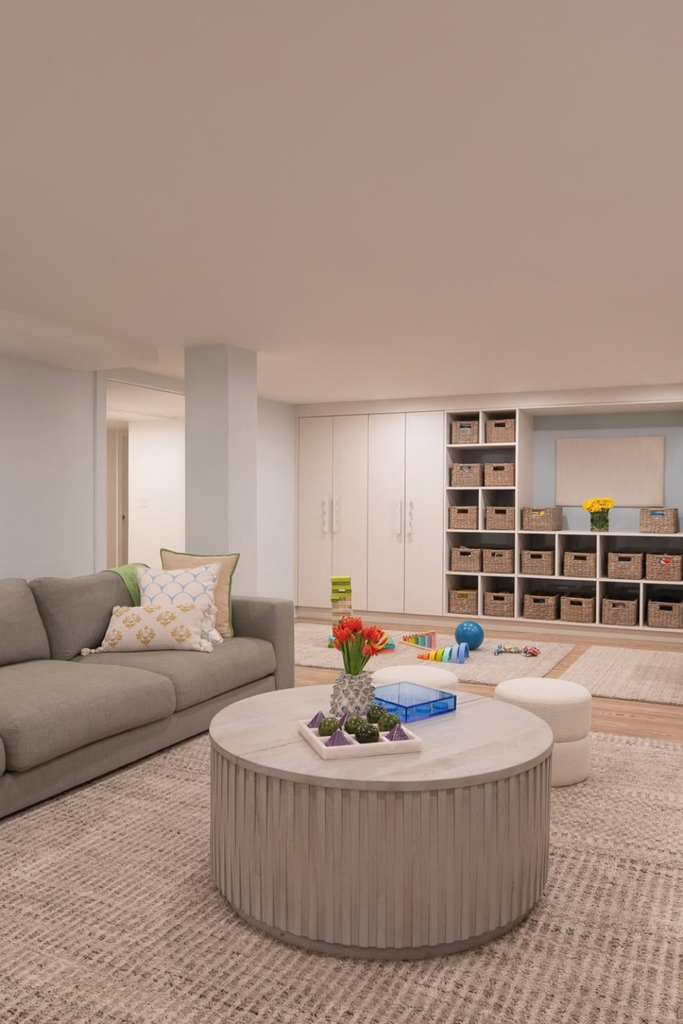
Basket Storage
Give everyday toys their own low baskets when you want the play zone to stay easy for kids to manage independently.
Built-in cubbies work especially well along an unused wall, keeping the main living area open while giving every toy a home.
Soft ceiling lighting keeps both zones comfortable, while the neutral baskets help the storage blend naturally with your living room furniture.
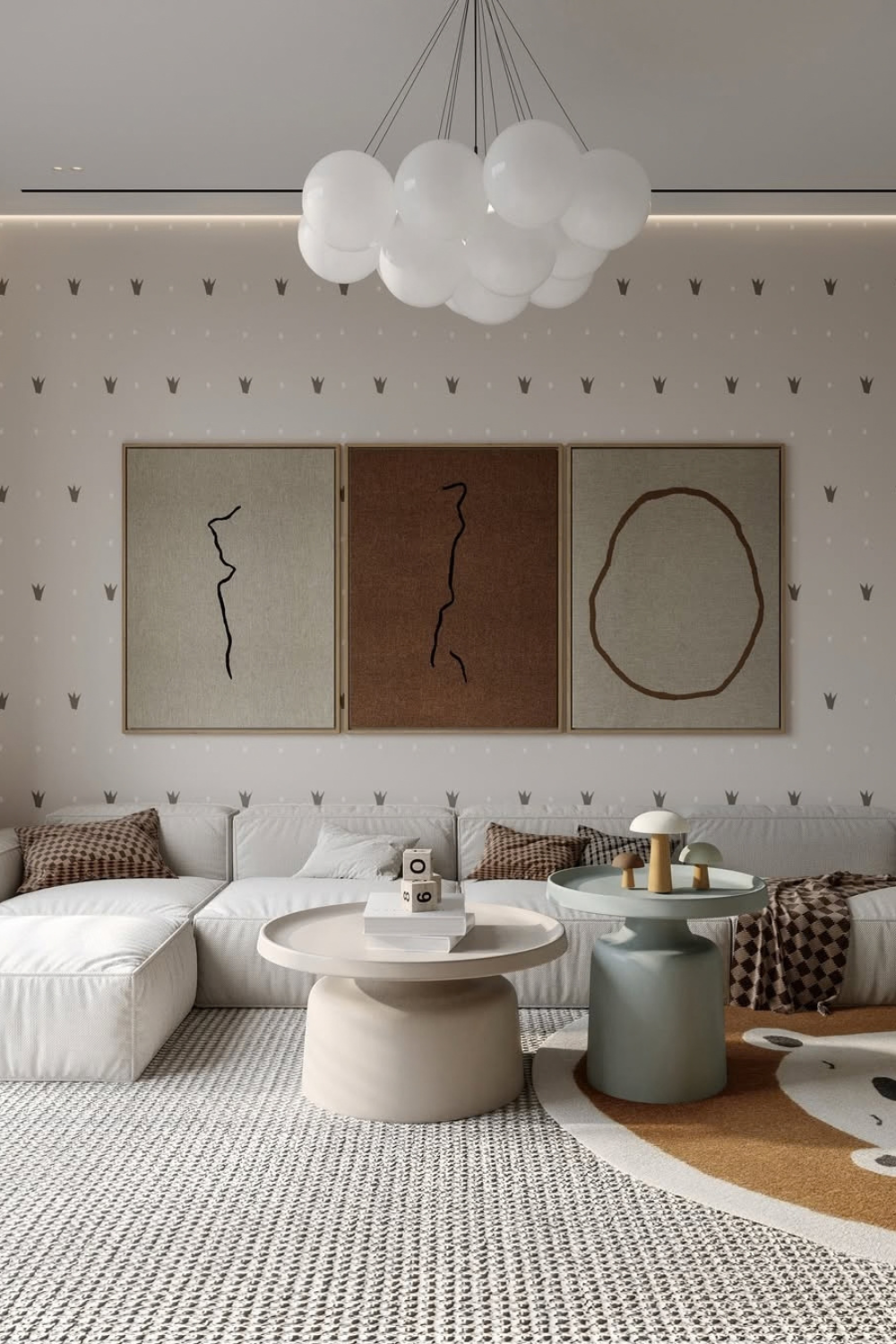
Soft Play Zone
Choose kid-sized chairs and a fun rug that complements the color scheme of your living room to keep the play area visually peaceful.
Put the zone next to the adult sitting so your kids may play close by without toys getting in the way of the main conversation space.
Natural window light handles daytime play, while the sculptural ceiling fixture and small table lamp add softer layered light later.
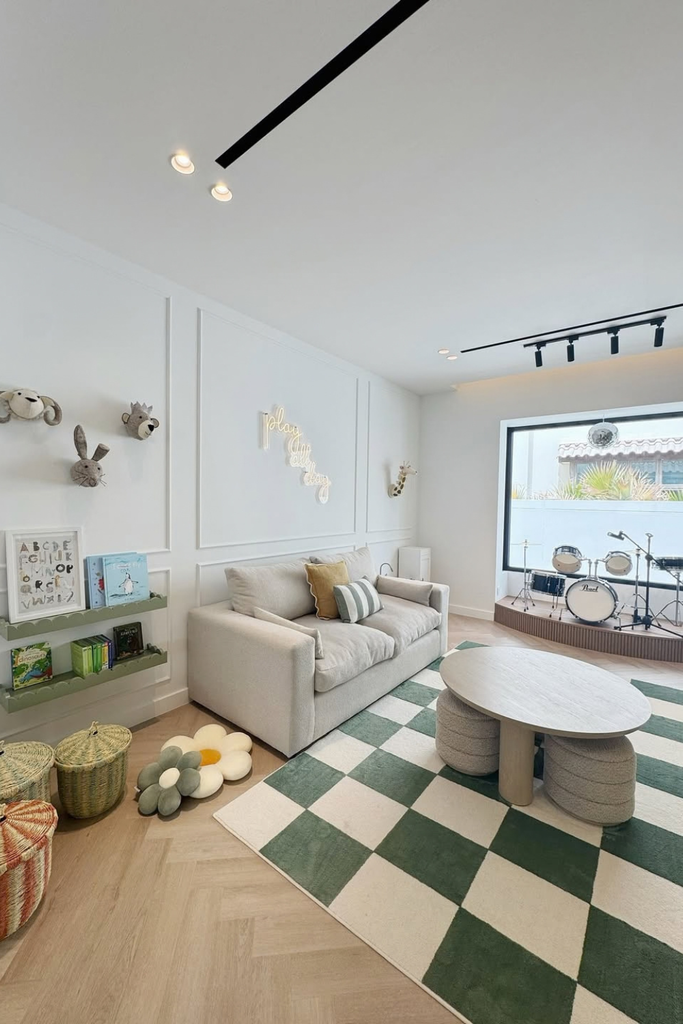
Music Play Corner
Turn one end of the shared room into an activity zone when your child needs space for music, reading and floor play.
To keep the patterned rug free for mobility and the sofa functional for adults, place books and baskets along the sides.
While daylight and the little wall light give softer layers without overcrowding the space, track lights enhance energetic activity.
Window Activity Zone
Use a bright window wall for crafts, puzzles and building activities when you want to keep messier play away from the sofa.
Build low drawers beneath the window seats for quick cleanup then keep favorite toys visible on shelves.
Daylight handles most daytime activities, while a woven pendant gives the table focused light and keeps the shared room feeling warm.
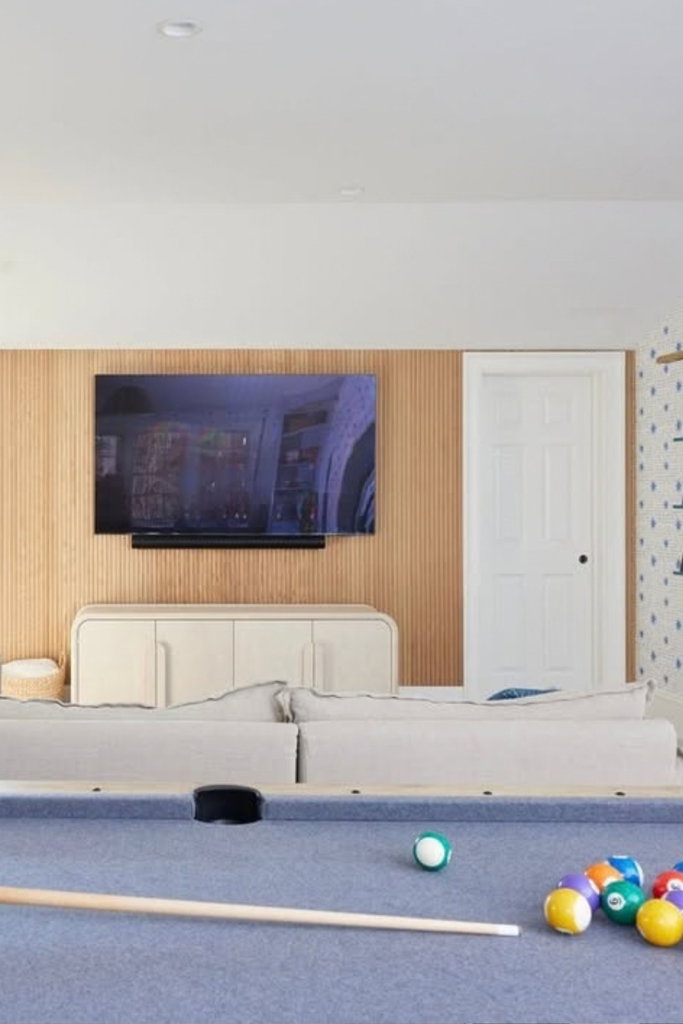
Active Play Wall
Turn one open wall into a movement zone when your child needs climbing and swinging activities without taking over the whole floor.
Pair wall-mounted equipment with low toy shelves and soft mats keeping active play together while leaving a clear path around the room.
Natural daylight works well for daytime play, while simple ceiling lighting can keep the climbing and toy areas evenly visible later.
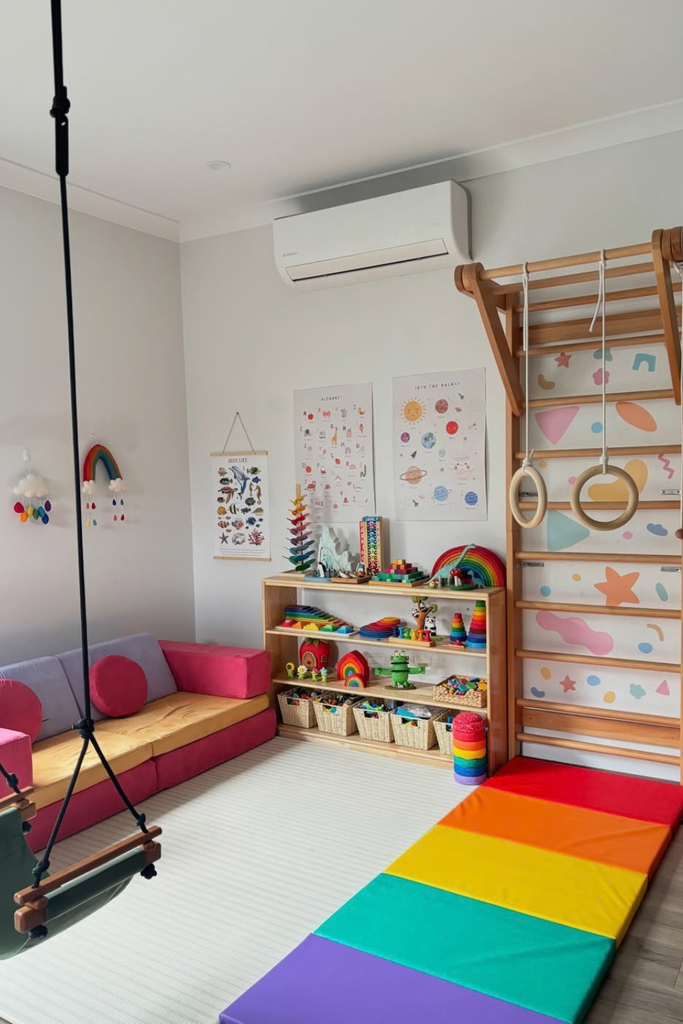
Vertical Toy Storage
Move smaller toys into wall-mounted bins and store larger everyday items in low storage below to free up more floor space.
To allow children to transition between quiet play and relaxation, place this arrangement next to a soft chair space.
Window light keeps daytime play bright, while a central pendant adds evening light without using valuable surfaces.
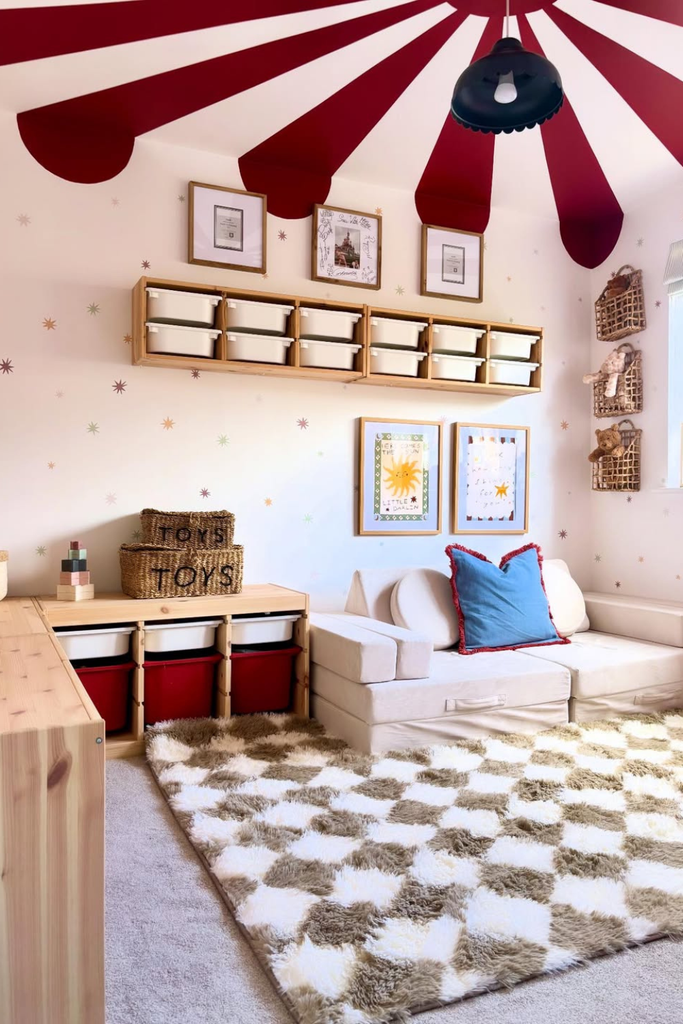
Flexible Play Lounge
If you want the same space for open-floor play and casual family seating all day choose soft mobile furniture.
Toys should be kept in close-by drawers or baskets so children may quickly access their favorites before clearing the rug.
Large windows let in plenty of natural light during the day, and the large pendant casts a warm, concentrated lighting.
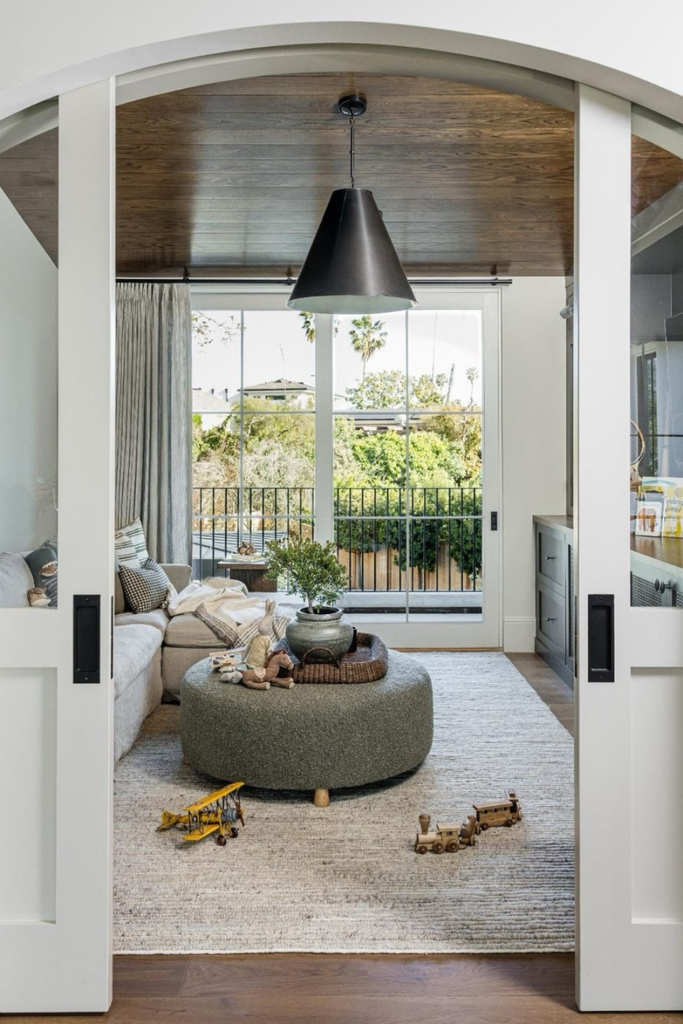
Media Play Wall
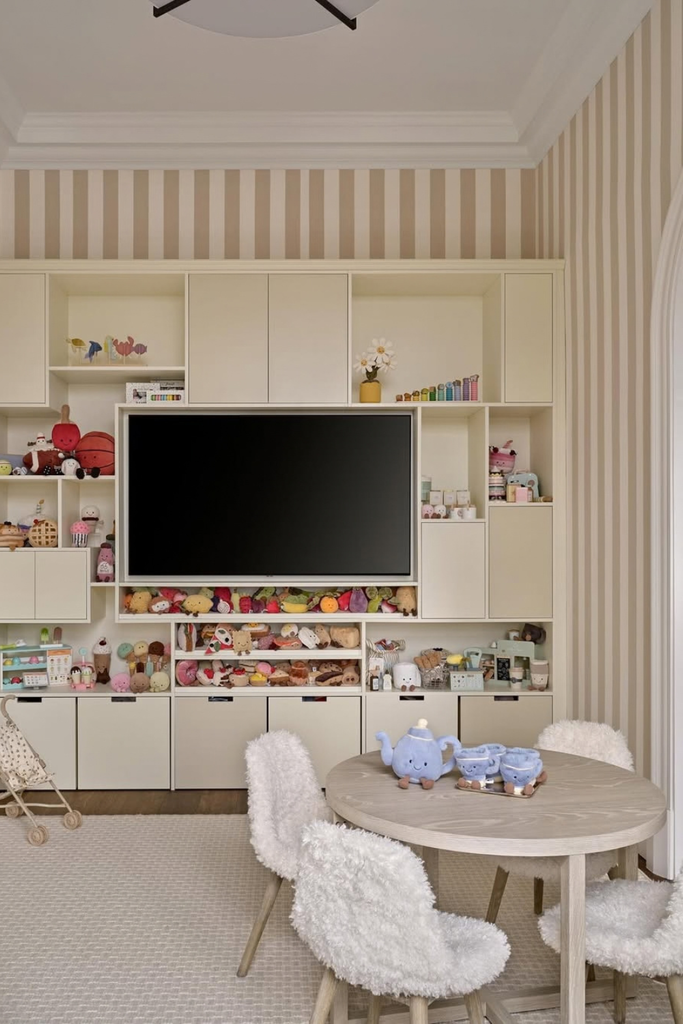
Combine toy storage with your TV wall when you need both entertainment and play functions to fit into one compact area.
Keep favorite toys on open shelves for easy access then use closed lower cabinets for pieces you want hidden after playtime.
Pair soft ceiling light with nearby daylight so kids can use the activity table comfortably without adding bulky floor lamps.
Shared Display Storage
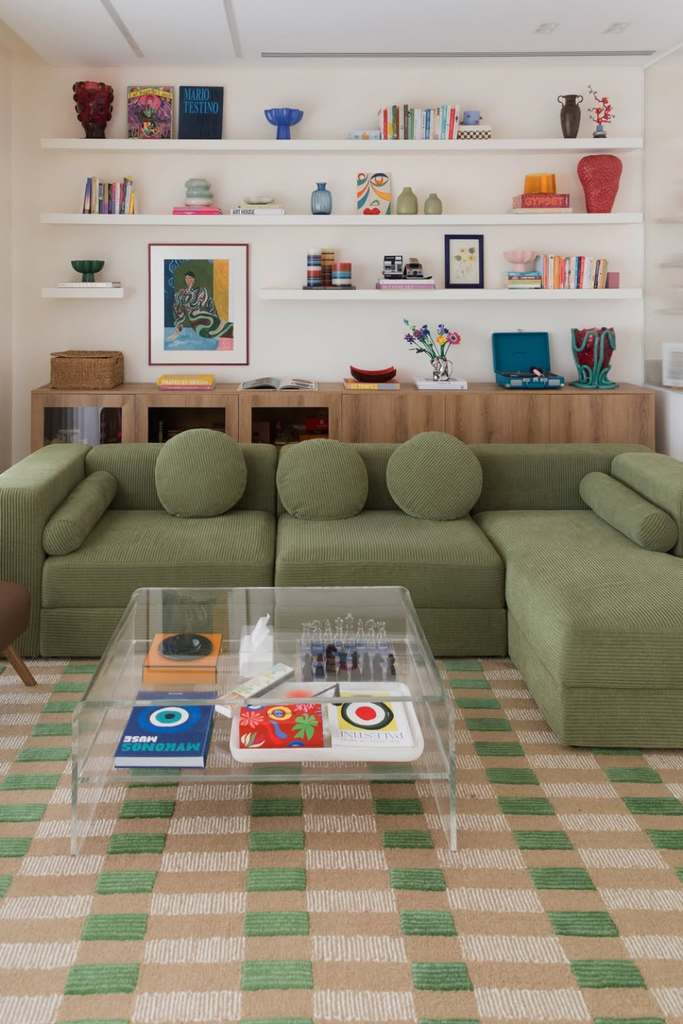
Mix family books and decor with hidden toy storage when you want the playroom function to blend naturally into an adult living space.
Keep everyday toys inside the low cabinets, then use higher floating shelves for items kids do not need during regular play.
Nearby daylight and recessed ceiling lights keep the storage wall bright without adding lamps that would take up useful floor space.
Homework Play Zone
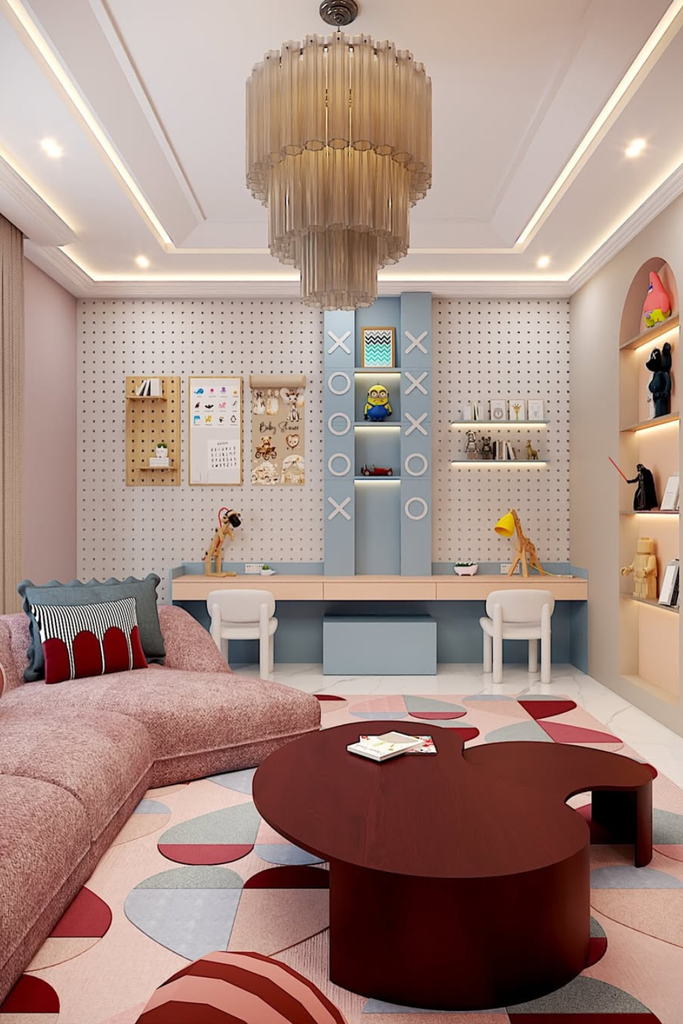
Set aside one wall for drawing, homework, and tabletop play when you need kids to stay busy near the main seating area.
Build a long desk with low chairs and drawers underneath giving each activity a clear spot without adding freestanding furniture.
Daylight supports daytime tasks, while recessed lights, shelf lighting, and the central fixture keep both play and living zones bright later.
Movement Play Zone
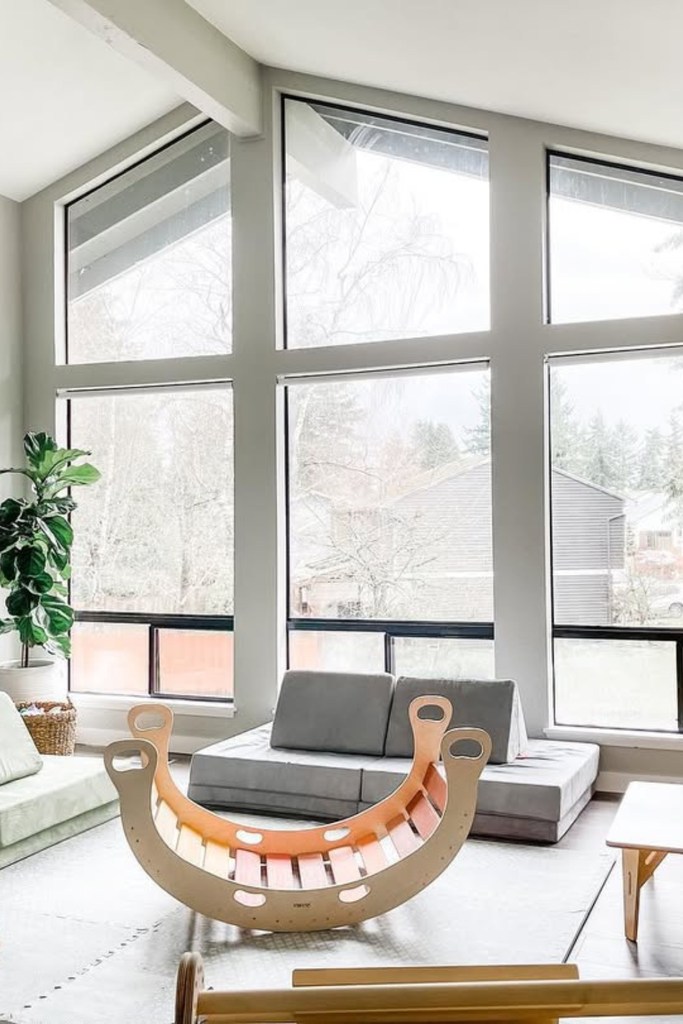
Leave a wide section of floor open when your kids need room for climbing, balancing, rocking and other active indoor play.
Use low modular cushions and wooden movement pieces so you can rearrange the zone quickly when the living room needs more space.
Large windows provide plenty of daytime light, keeping the play area bright without adding floor lamps around active equipment.
Storybook Lounge
Turn a small living-room corner into a cozy play retreat by pairing soft seating with books, toys, and playful wall details.
Keep favorite books on side shelves and leave the rug open so kids can read, build or play close to you.
Hidden shelf lighting creates a warm evening glow, while recessed ceiling lights and nearby daylight keep the corner practical.
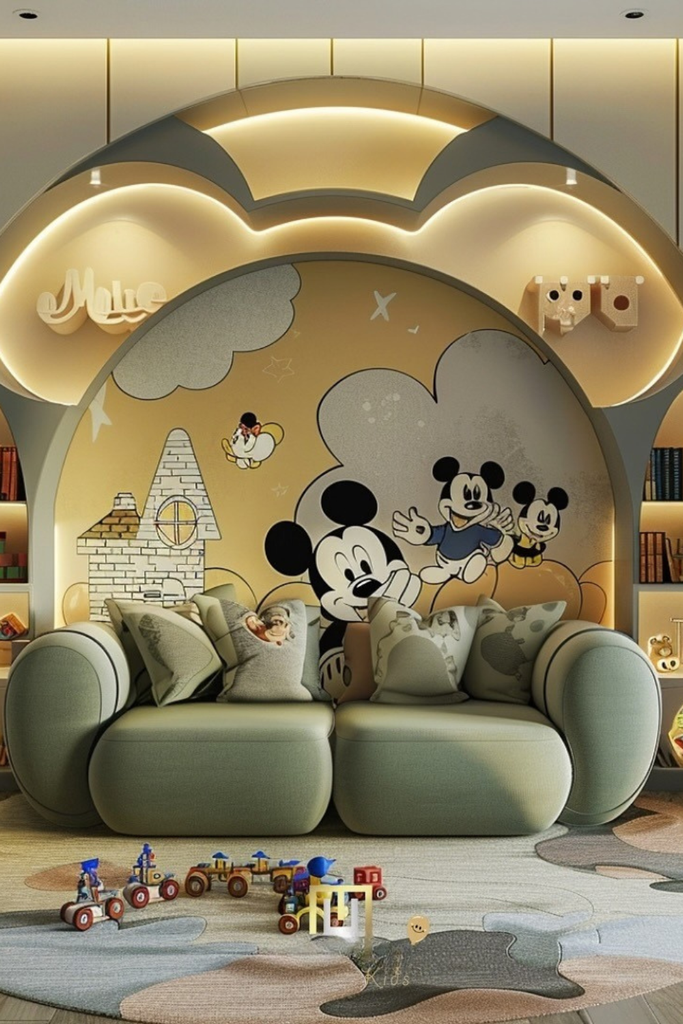
Hidden Toy Cabinets
Keep the living room looking grown up by giving toys and craft supplies closed cabinets instead of leaving everything on display.
Use the nearby table for drawing and games then return supplies to the built ins when you need the room cleared quickly.
Window light brightens daytime activities while the adjustable wall lamp adds focused light without crowding the shared floor.
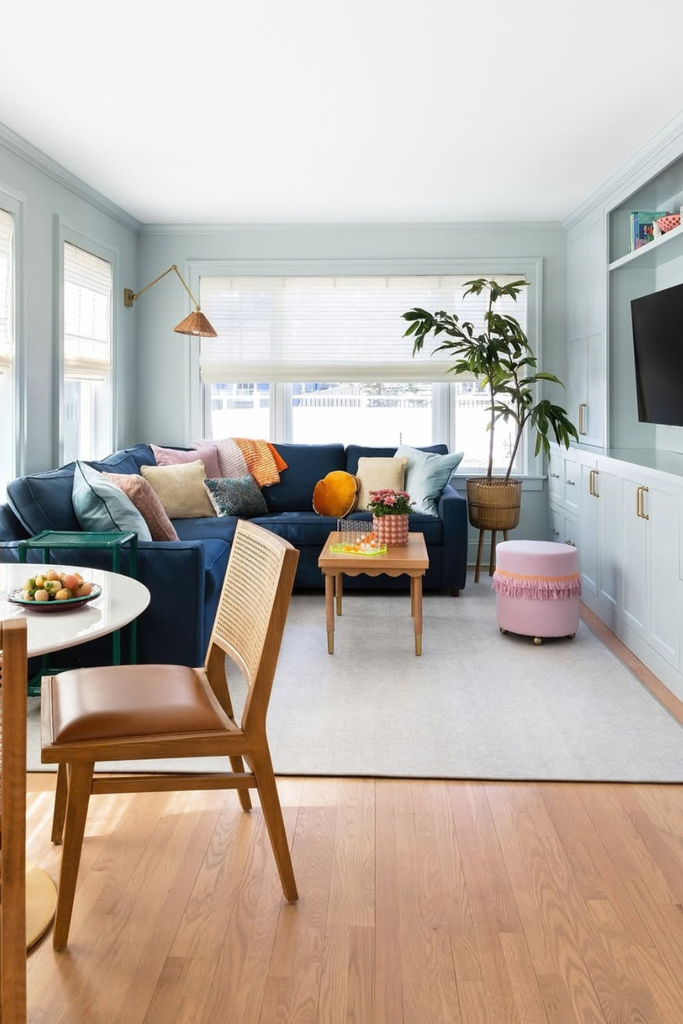
Curtain Play Nook
When you want children close by but still need the living area to feel ordered, create a tiny play hideaway with curtains.
When fun is complete or visitors arrive remove the curtains to reveal comfy sitting or your favorite silent toys.
Large windows brighten floor play naturally while wall sconces and the ceiling fixture layer softer light across the shared room later.
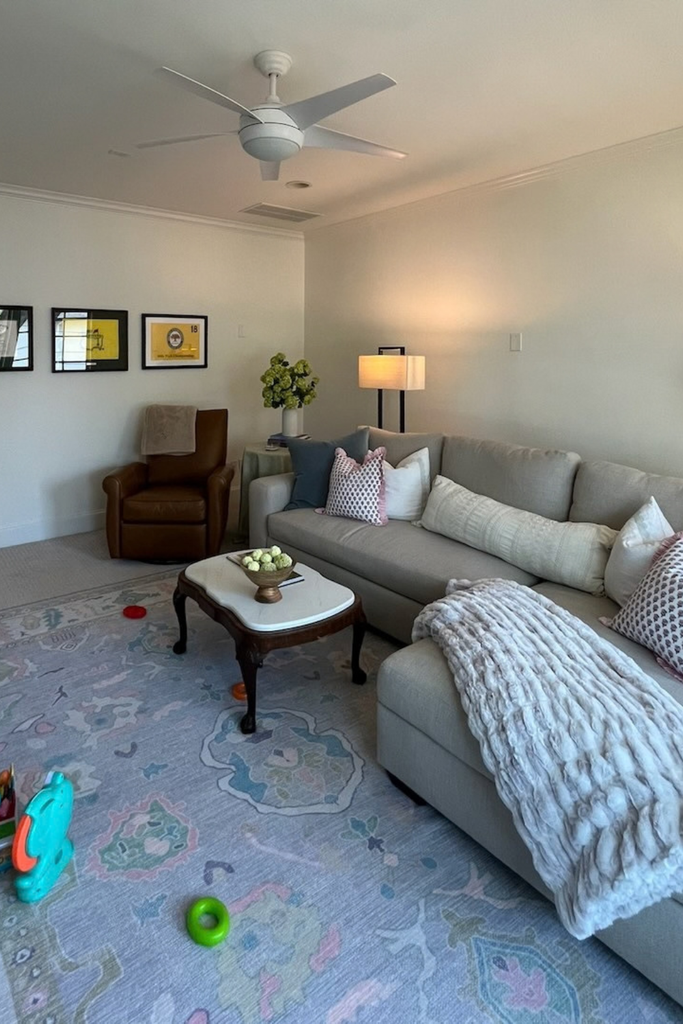
Craft Play Corner
Set a child sized table beside your sofa when you want drawing and simple crafts to happen within easy reach of the living area.
Keep pencils on the table and soft toys in an open basket, making cleanup simple enough for kids to handle after play.
Bright window light supports daytime activities while the nearby living-room lighting can take over once natural light starts fading.
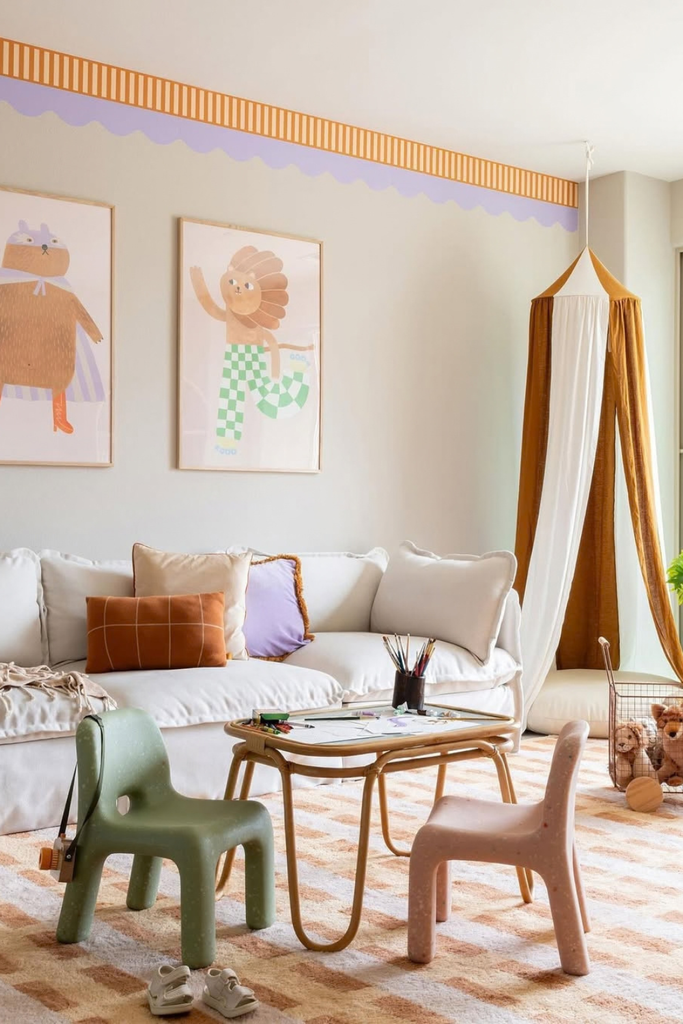
Adventure Play Zone
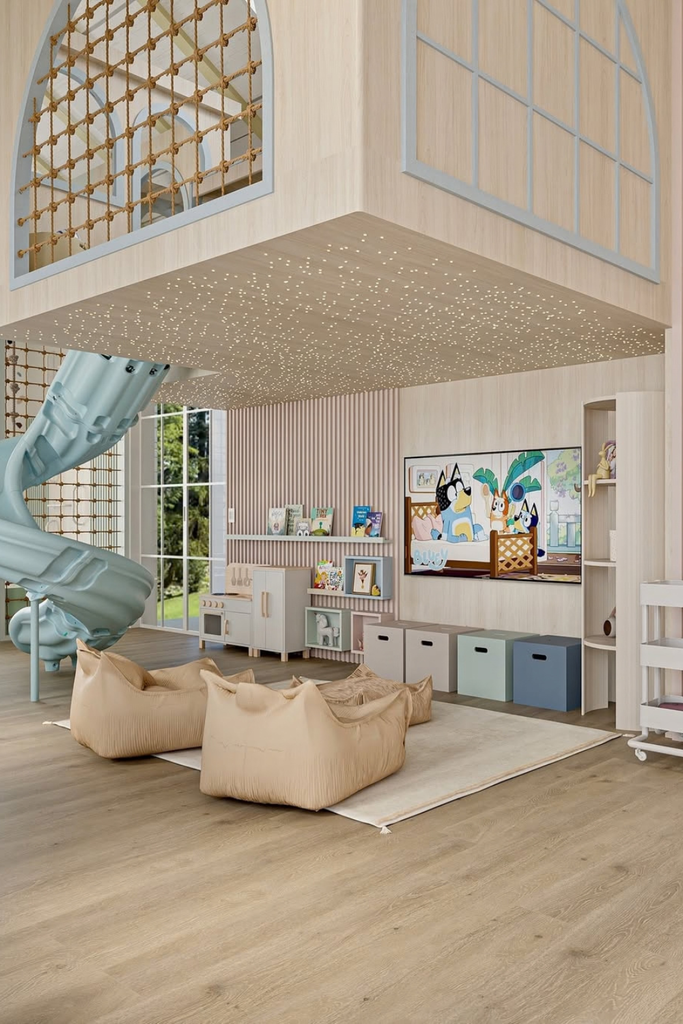
Give active play its own section when you have enough ceiling height for climbing features, a slide and open movement space.
Keep soft floor seating, books and toy bins underneath so quieter activities stay available without adding another separate play corner.
Daylight brightens the open floor, while tiny overhead lights create a softer glow for the lounge area beneath the upper level.
Corner Play Station
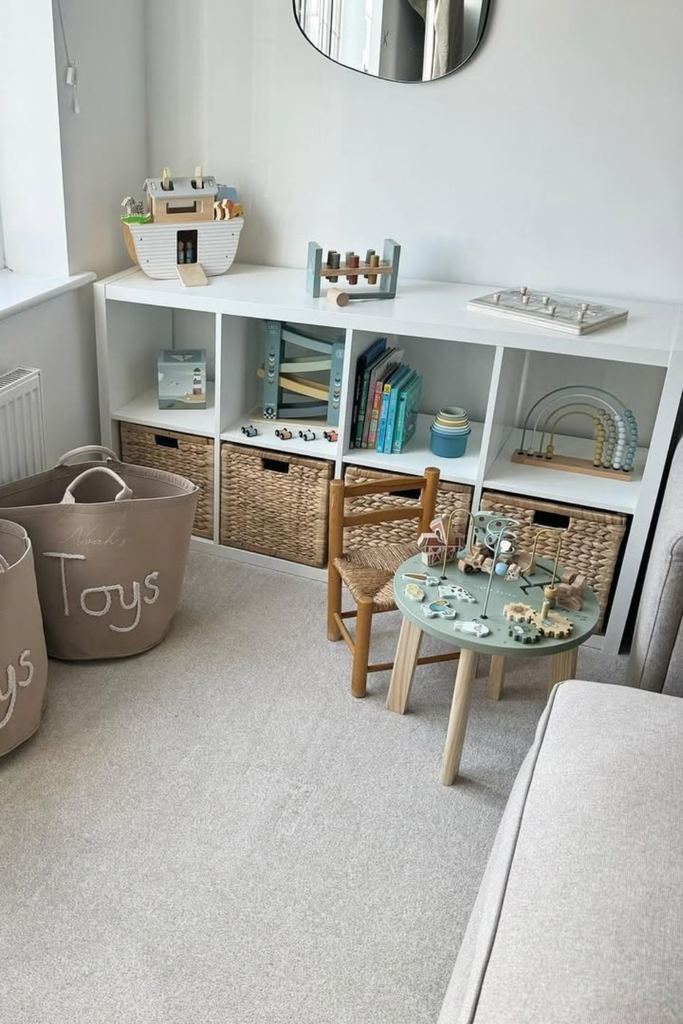
Use an unused living-room corner for tabletop play when you need a dedicated kids’ area without giving up much floor space.
Place low cubbies nearby, everyday toys remain reachable and larger pieces disappear quickly into baskets after playtime.
Window light keeps the small activity table bright during the day while the open layout lets your main room lighting reach the corner later.
Climbing Play Wall
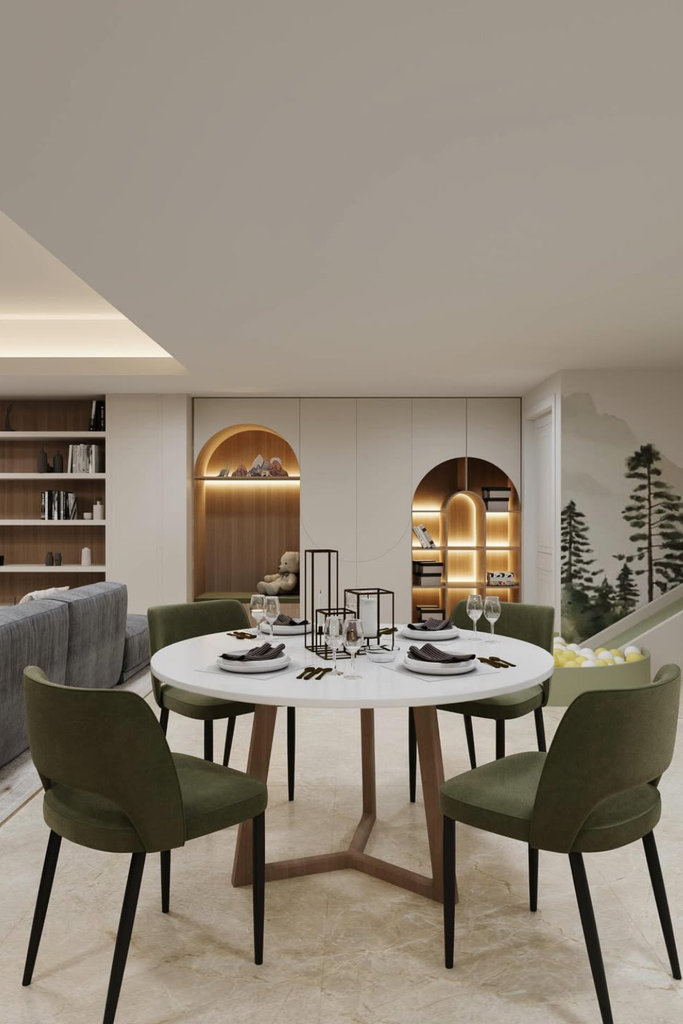
Active play is required in your shared area, use one entire wall for climbing instead of dispersing heavy equipment over the main floor.
Keep the climbing grips, rings, and ladder together and add cubbies nearby to keep smaller items confined.
Open ceiling lighting keeps the play wall visible, while the lighter finishes help the activity zone blend with the adult dining area.
Learning Play Corner
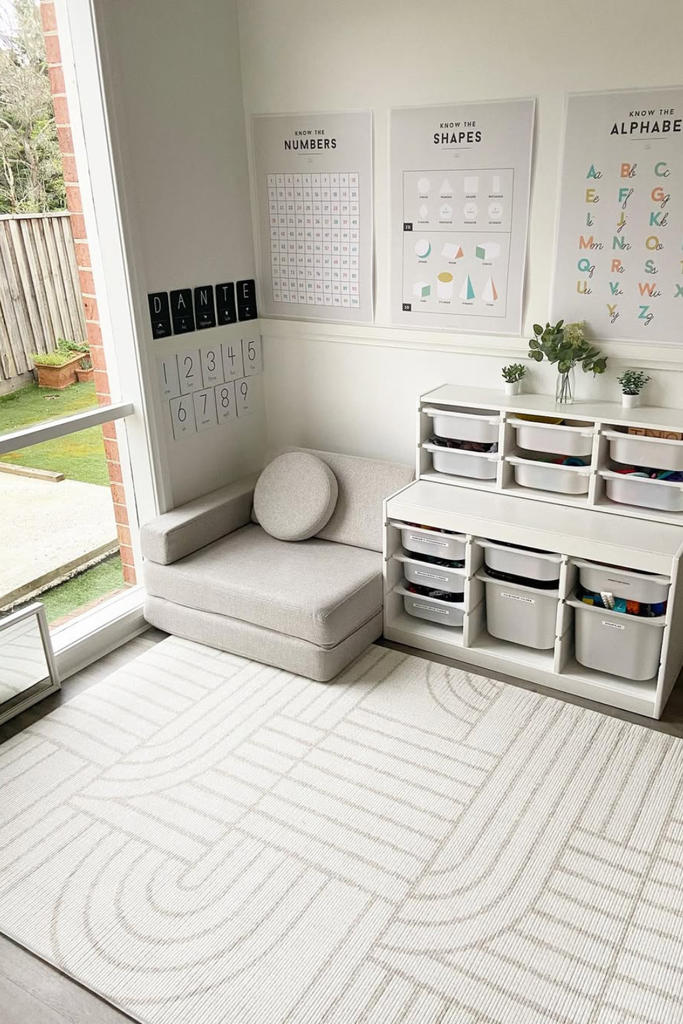
Turn a quiet corner into a learning zone when you want books, puzzles and educational activities separated from noisier floor play.
Add soft modular seats for reading or working next to the shelves after using labeled low bins to allow children to select materials on their own.
While surrounding room lighting can support the corner after daylight declines, natural window light keeps daytime activities clear.
Side Play Nook
Tuck the kids’ zone into an open side nook when you want toys close by without letting them dominate the main seating area.
Use low book racks and cubbies inside the nook then keep a small activity table nearby for crafts, puzzles and quiet play.
Large doors bring in daylight, while recessed ceiling lights and the pendant keep both adult seating and play areas usable later.
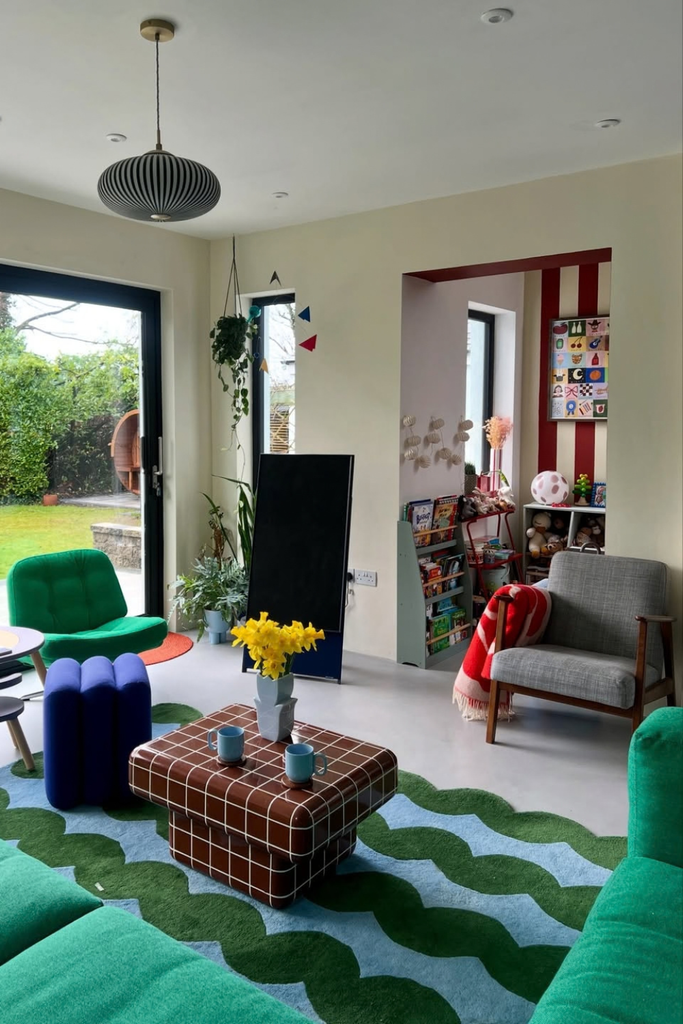
Safari Lounge
Bring playfulness into the adult seating area with animal prints and soft toys instead of adding another bulky kids’ furniture zone.
Use a large padded ottoman for books and quiet play then clear its surface whenever you need a regular living-room table.
Recessed ceiling lights provide even coverage, while concealed wall lighting adds a softer layer that keeps the lounge cozy after playtime.
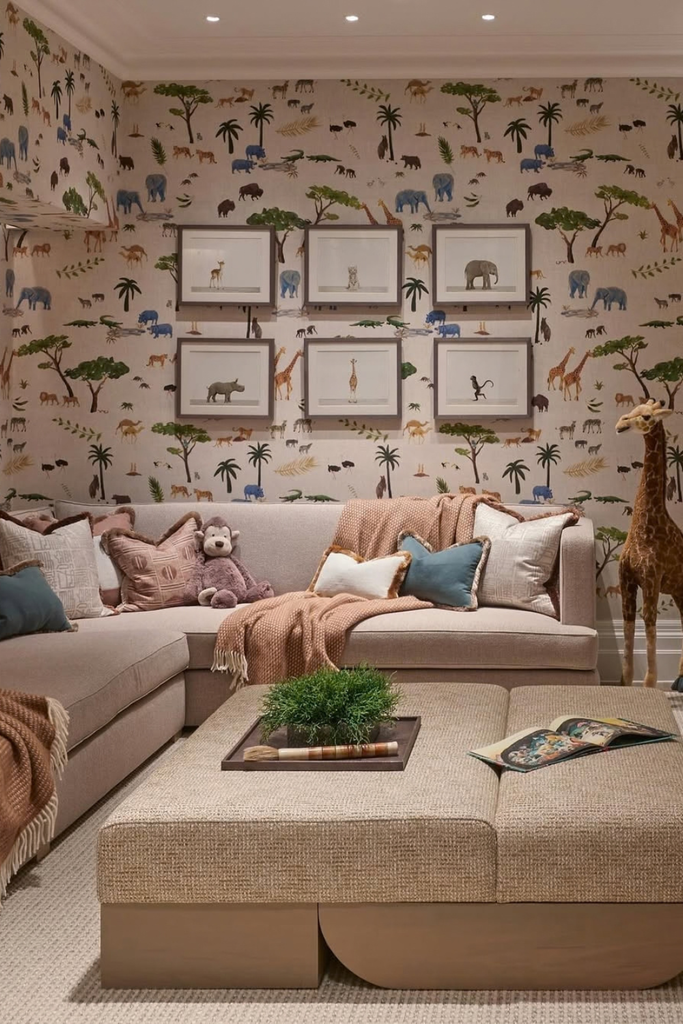
Basket Toy Storage
You want youngsters to play close by without using the entire space as storage, place toys in similar baskets near the sofa.
Select baskets with soft handles that slide next to furniture, making it simple to pick up and quickly store your favorite toys.
Floor lamp provides a softer layer for reading and leisurely family time later natural daylight manages play during the day.
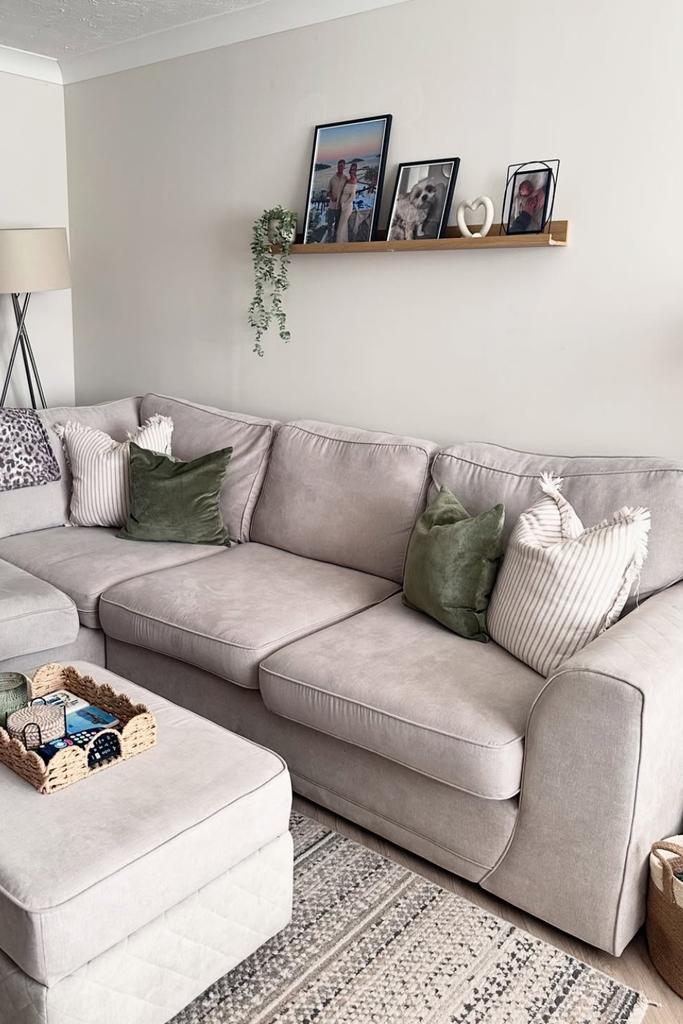
Swing Play Zone
Make an open family room more playful with indoor swings that give kids an active option without filling the floor with bulky toys.
Keep a small craft table and low storage nearby so drawing, building and quieter activities can happen within the same shared zone.
Recessed ceiling lights support evening play, while the surrounding windows bring plenty of natural light into the seating and activity areas.
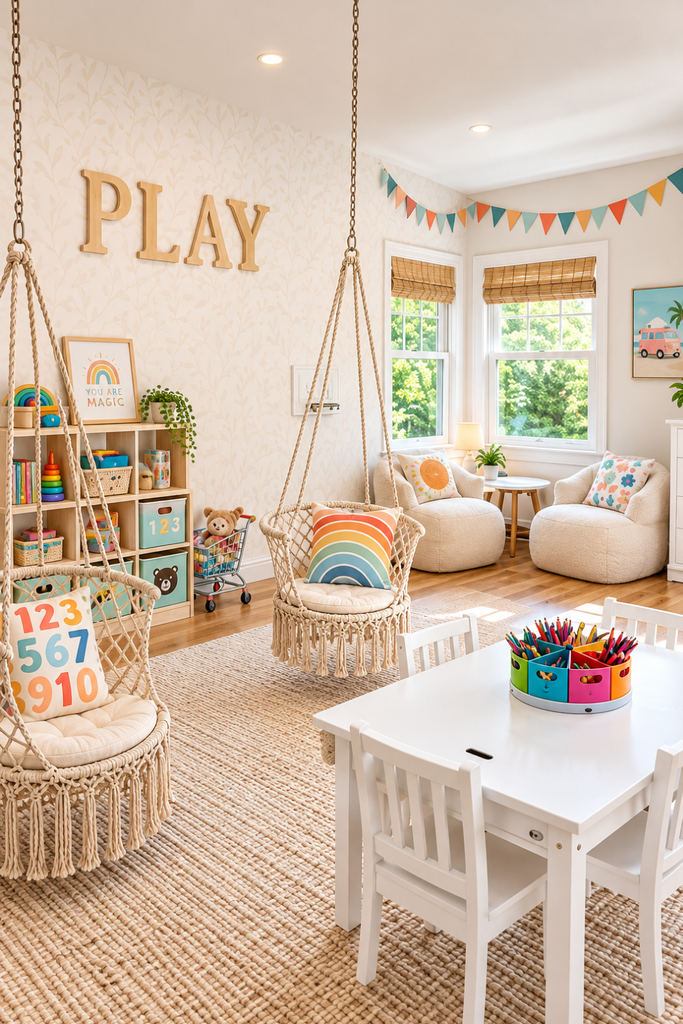
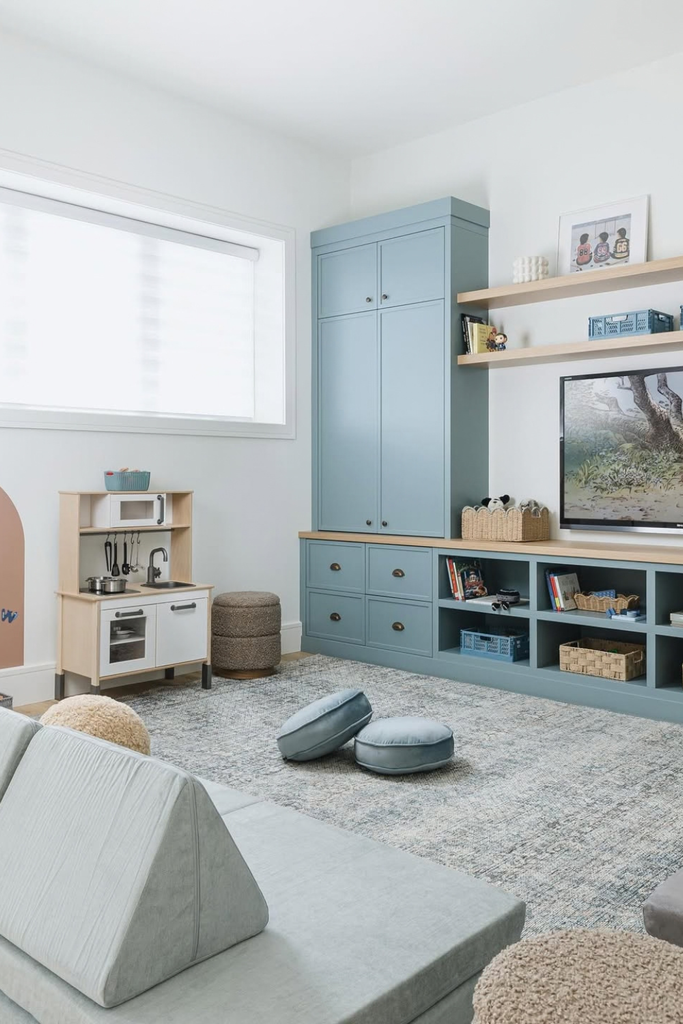
Kitchen Play Corner
Give pretend play a permanent spot beside the living area by placing a compact play kitchen against an unused wall.
Use built-in cubbies and baskets for toys and books keeping everyday pieces reachable while larger cabinets hide extra clutter.
Window light keeps daytime play bright, while the open layout allows the main room lighting to cover the area after dark.
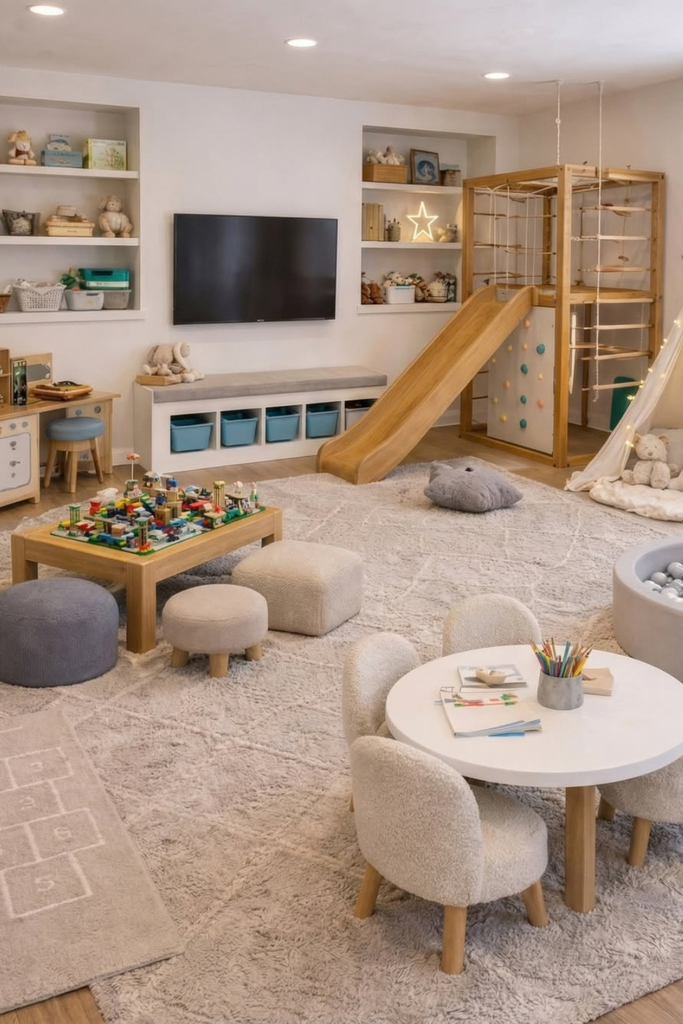
All-in-One Playroom
Divide a larger shared room into activity zones so kids can climb, build, create, and relax without every activity competing for space.
Group climbing equipment along one wall then use small tables, soft seating and low bins to organize quieter play nearby.
Recessed lights brighten the whole room, while soft tent lighting adds a cozy layer for reading and winding down.
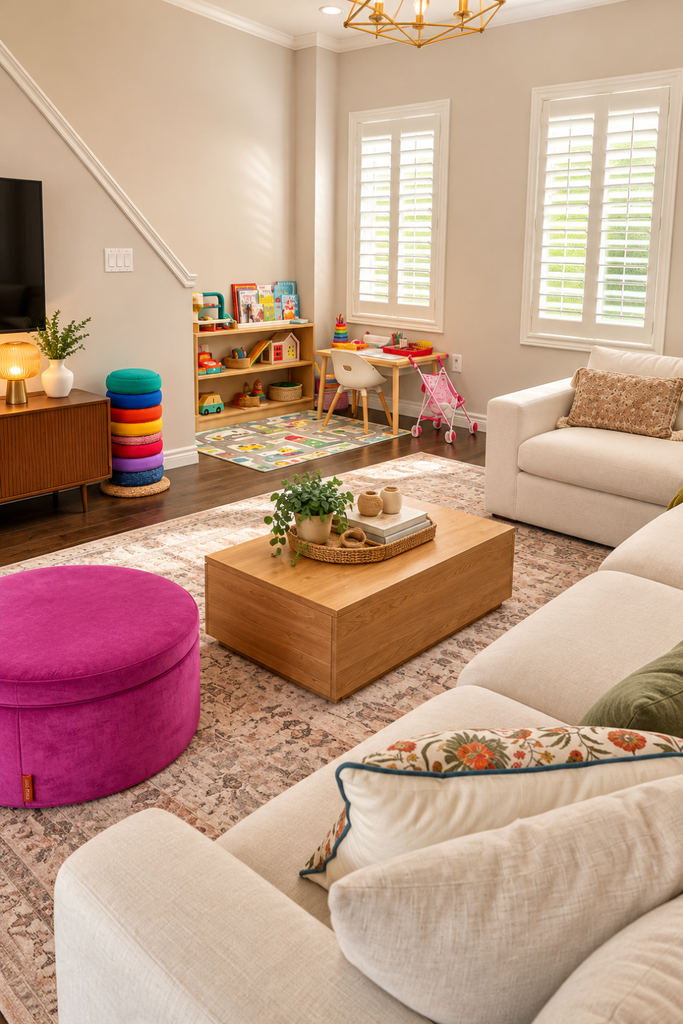
Tucked Play Corner
Claim a small corner behind the main seating for kids when you want play activities nearby without taking over the living room.
Add a low shelf and compact table so books, pretend toys, puzzles and crafts stay together within an easy to manage zone.
Window light brightens daytime play while the main ceiling fixture and nearby lamp keep the shared room comfortable after sunset.
FAQs
How Do You Keep a Living Room Playroom Combo From Looking Cluttered?
Give every type of toy a clear home. Low cabinets, labeled bins, and storage ottomans make daily cleanup much easier.
Keep frequently used toys within kids’ reach, then hide extra sets and messy supplies behind closed doors.
Rotating toys also helps you keep fewer things visible without limiting what kids can play with.
How Can You Separate the Play Area Without Adding a Wall?
Use furniture placement to create a clear boundary while keeping the room open. Position a sofa, rug, low bookshelf or activity table.
Choose colors that connect with your living-room decor so both zones still feel like one finished space.

Hi, I’m Afaf! I’m a law student who loves writing about everyday life – from home projects and crafts to fashion, beauty, and parenting tips.
I’ve been writing for over a year, sharing ideas that are simple, practical, and easy to try. I write about things I find interesting and useful, whether that’s organizing a space, trying a new DIY, or finding activities to keep kids entertained.
My goal is to share helpful ideas without making things complicated. If it works in real life, I’ll write about it.
When I’m not studying or writing, I’m usually experimenting with new projects or scrolling for inspiration!