
22 Ikea Playroom Ideas
You can organize every toy into neat bins, but toddlers rarely treat storage as gently as you planned. Bins get pulled out, drawers get slammed.
That makes choosing IKEA playroom storage about more than getting a tidy look. You need pieces that can handle daily use.
With the right storage system, you can create a playroom that stays practical, organized, and easier to manage as your child plays and grows.
Which IKEA Storage Systems Actually Withstand Heavy Toddler Destruction?
TROFAST is one of the more practical IKEA systems because its removable plastic bins can handle regular toy dumping and quick cleanup.
KALLAX also works well for heavier books, puzzles, baskets, and larger toys, but you need sturdy inserts if your child constantly pulls them out.
Choose low storage with simple parts instead of furniture with several doors, delicate drawers, or complicated hardware.
Keep frequently used toys in easy-to-reach bins so your toddler has less reason to climb. Heavier items should stay in lower compartments.
Supplies requiring supervision can go higher. Most importantly, securely anchor storage that could tip if your child pulls, pushes, or climbs on it.
Hidden Toy Storage
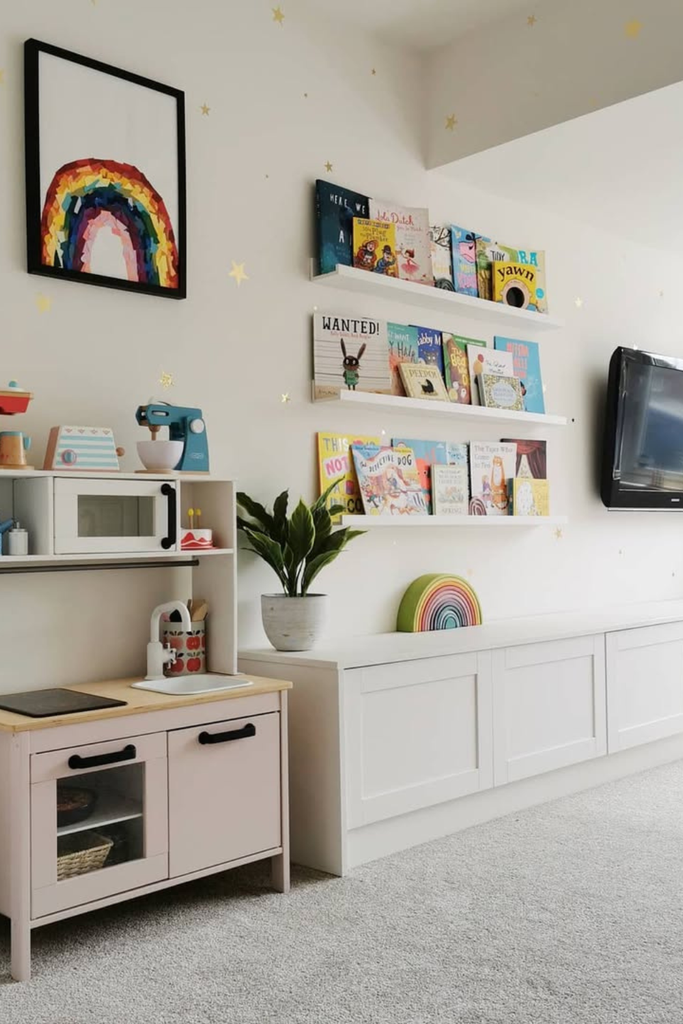
When you want the playroom to stay calm after playtime, run closed IKEA-style cabinets along one wall for bulky toys and games.
Keep the play kitchen beside them so pretend play has its own clear zone, then use slim picture ledges above for front-facing books.
Natural window light keeps daytime play bright while recessed ceiling lights can cover the room evenly after sunset.
Reading Wall
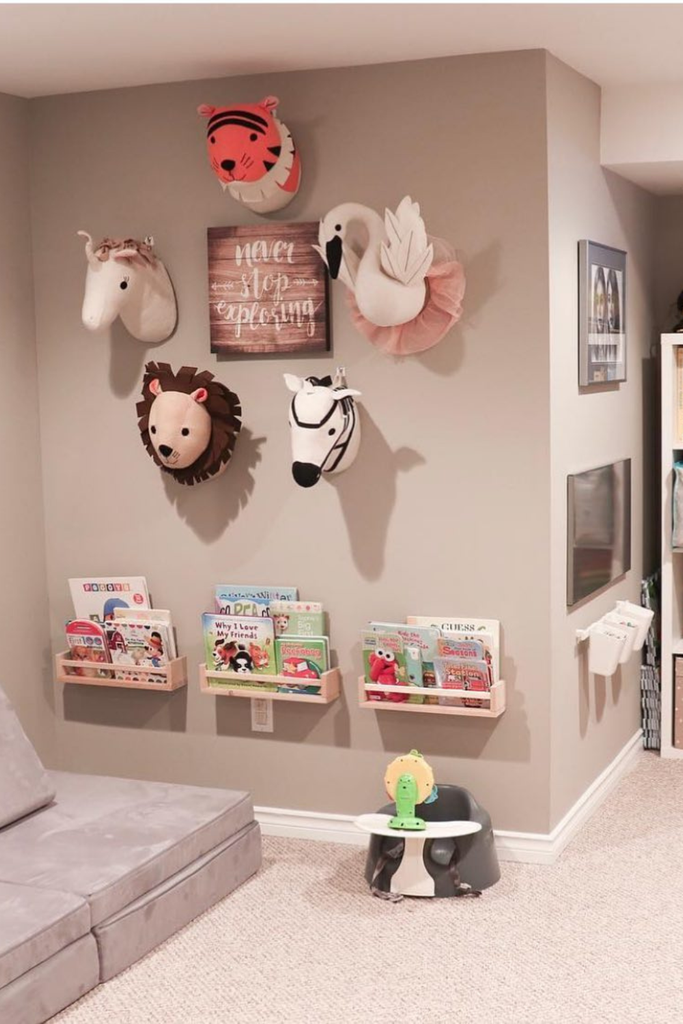
Installing shallow book ledges low enough for children to peruse covers on their own can transform an underutilized playroom wall into a reading area.
For extra books, puzzles, and larger toys, have a KALLAX-style cubby close by. Use baskets to manage lesser clutter.
Soft floor seat makes the corner comfortable, while ceiling lighting and nearby natural light keep books easy to see.
Zoned Play Space
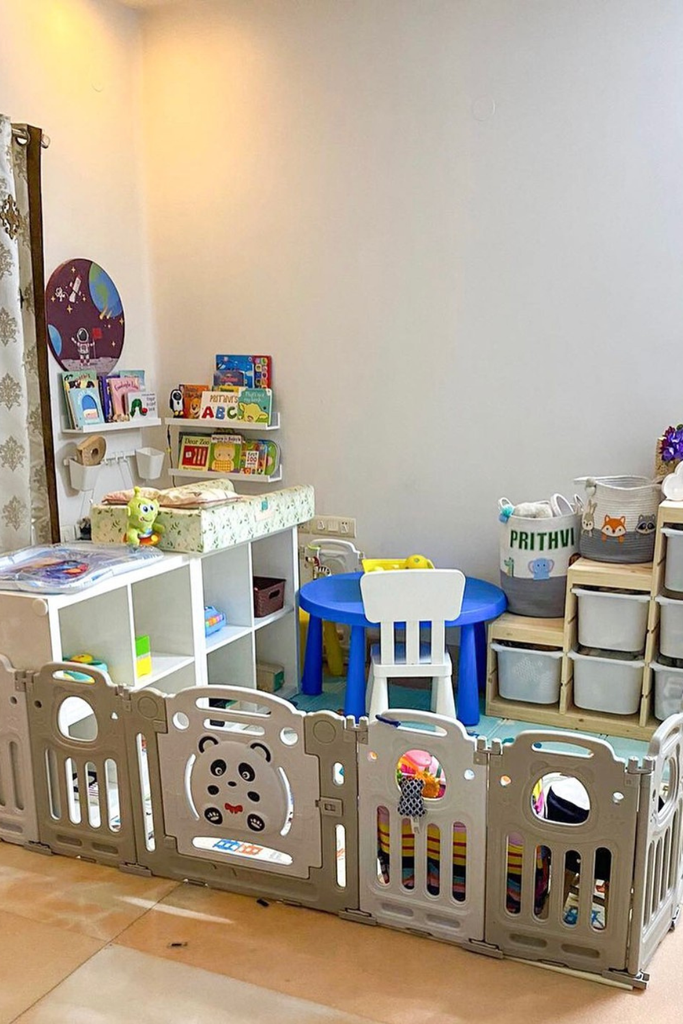
Prevent toys from spreading throughout the entire space, keep the busiest activities for smaller children in a single, designated area.
Combine low cubbies, removable bins, book ledges, and a child-sized table to give reading, storage, and creative play their own spots.
Natural window light works well during playtime while soft overhead lighting fills darker corners.
Activity Station
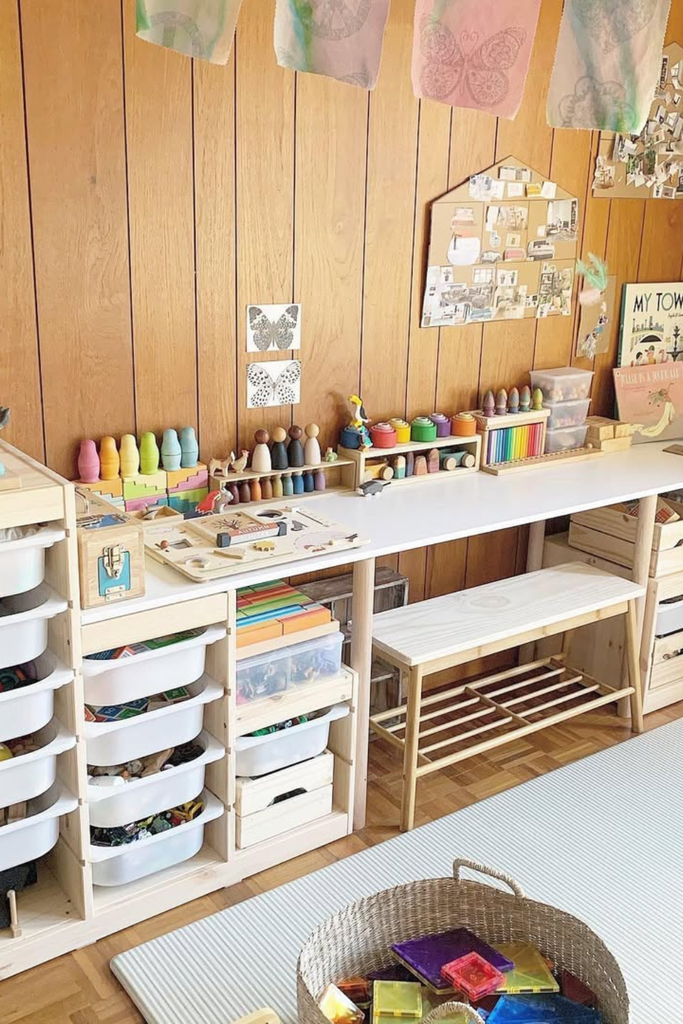
Give crafts and hands-on toys one dedicated wall so kids can switch activities without carrying supplies across the playroom.
Line up TROFAST-style frames with shallow removable bins, then bridge them with a long tabletop for drawing, puzzles and sorting games.
Daylight works best for detailed activities while warm overhead lighting can keep the work surface usable later.
Labeled Toy Wall
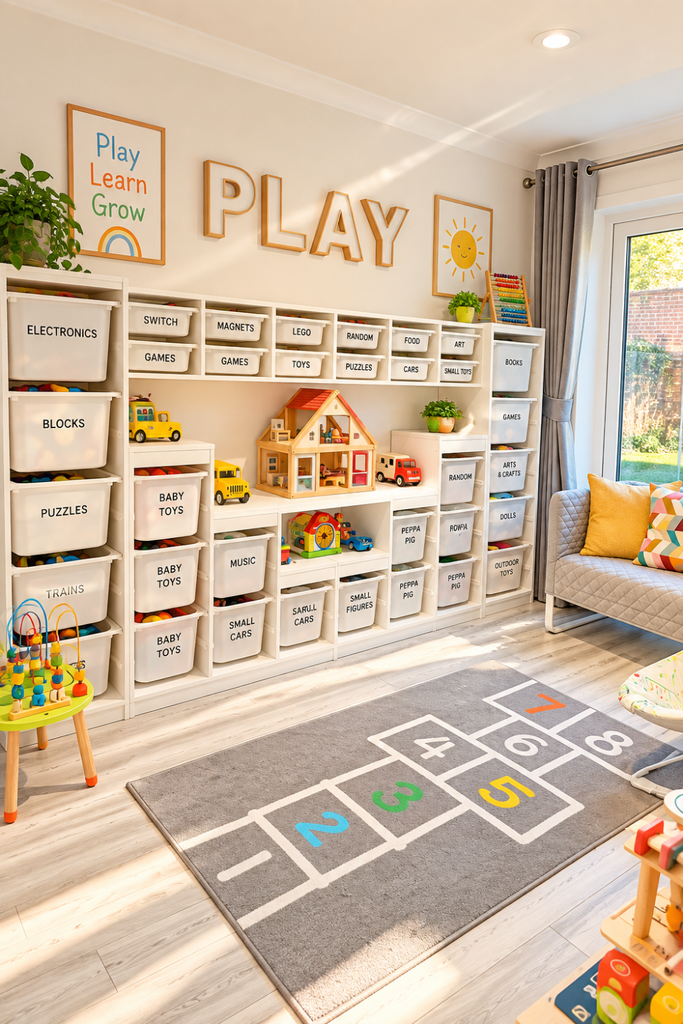
Make cleanup easier by giving every toy category its own labeled bin instead of mixing everything into a few oversized boxes.
Build the storage along one wall with TROFAST units in different heights, keeping everyday toys low and less-used items higher.
Window light brightens the play zone, while even ceiling lighting can cover the storage wall after dark.
Creative Storage Hub
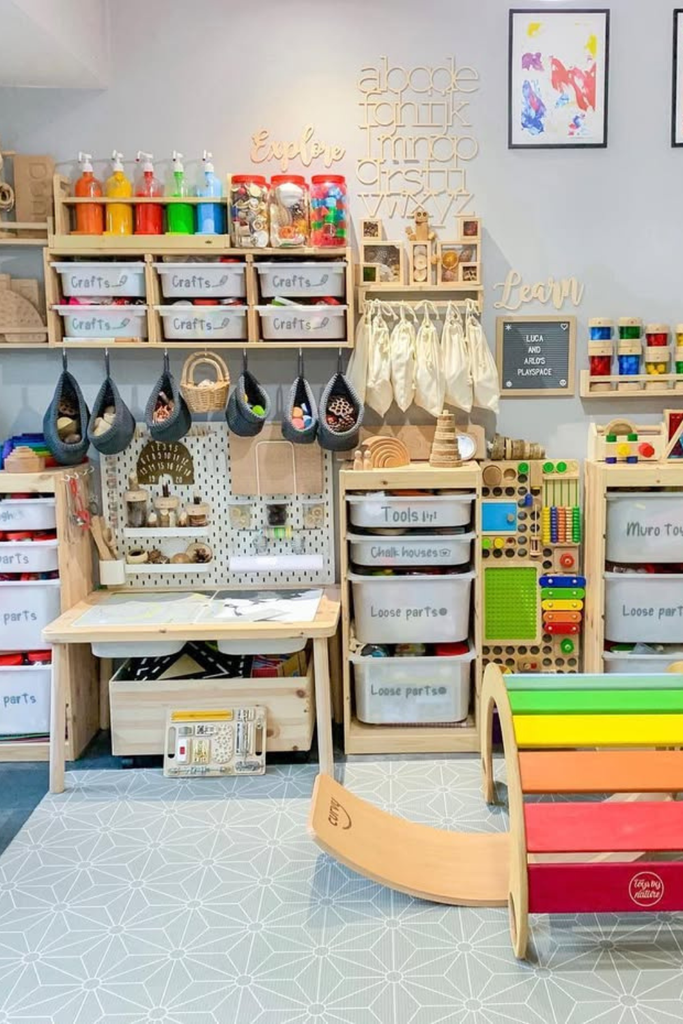
Give kids who rotate between crafts, building and pretend play one wall where every activity has a clear home.
Stack shallow TROFAST bins by category then add pegboards, rails and open shelves for supplies they reach for often.
Window light supports detailed activities while overhead lighting can brighten the storage and work areas evenly.
Front Facing Library
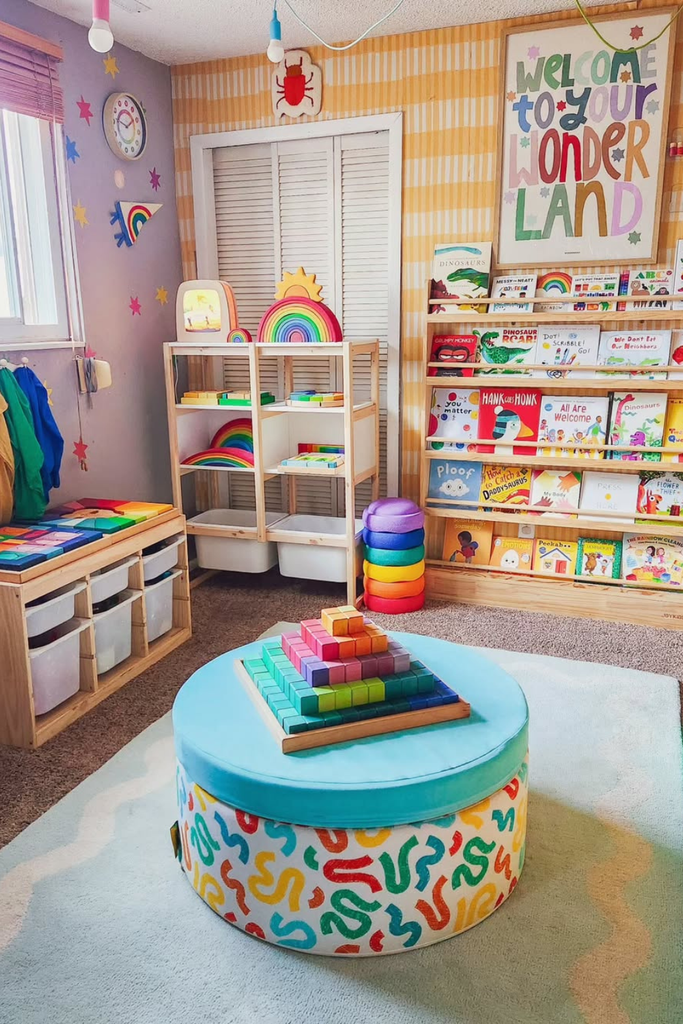
Books typically vanish into baskets; instead, put a front-facing shelf where children can find their favorite covers.
Keep the central floor free for construction and mobility, pair it with low TROFAST bins for for regularly utilized activities.
Playful hanging lamps can give softer light throughout the activity zones, while daylight from a neighboring window encourages reading.
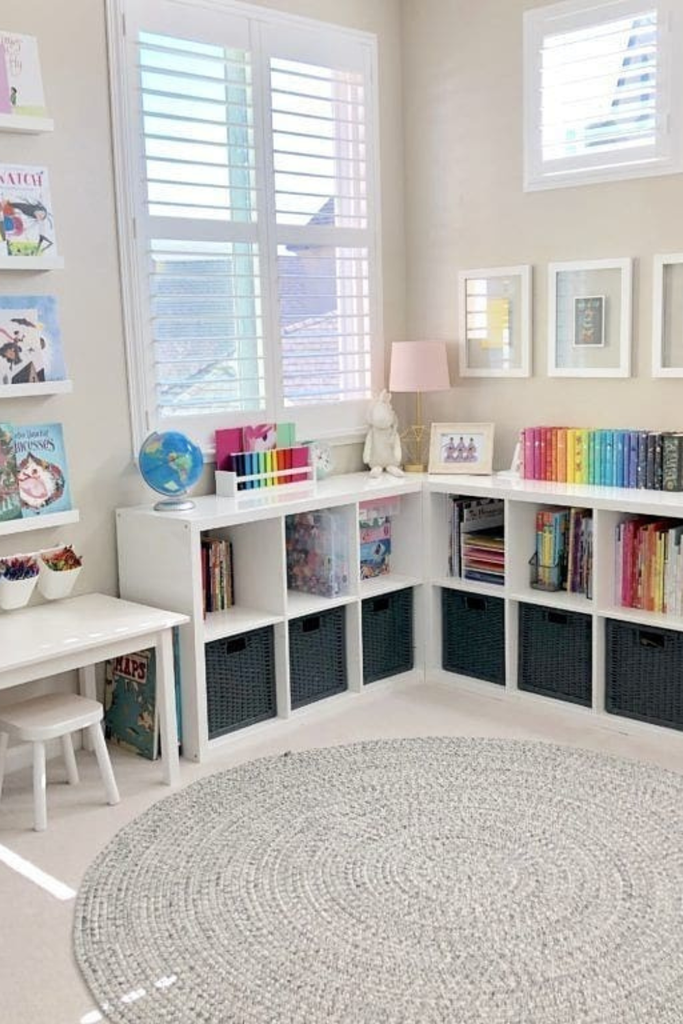
Corner KALLAX Storage
Use an empty corner for two low KALLAX units when you need book storage without sacrificing the middle of the playroom.
Keep books and display items in upper cubes then slide baskets into lower sections for toys you want hidden after playtime.
Add a small activity table nearby. Window light fills the corner naturally, while a table lamp adds softer light for quiet activities.
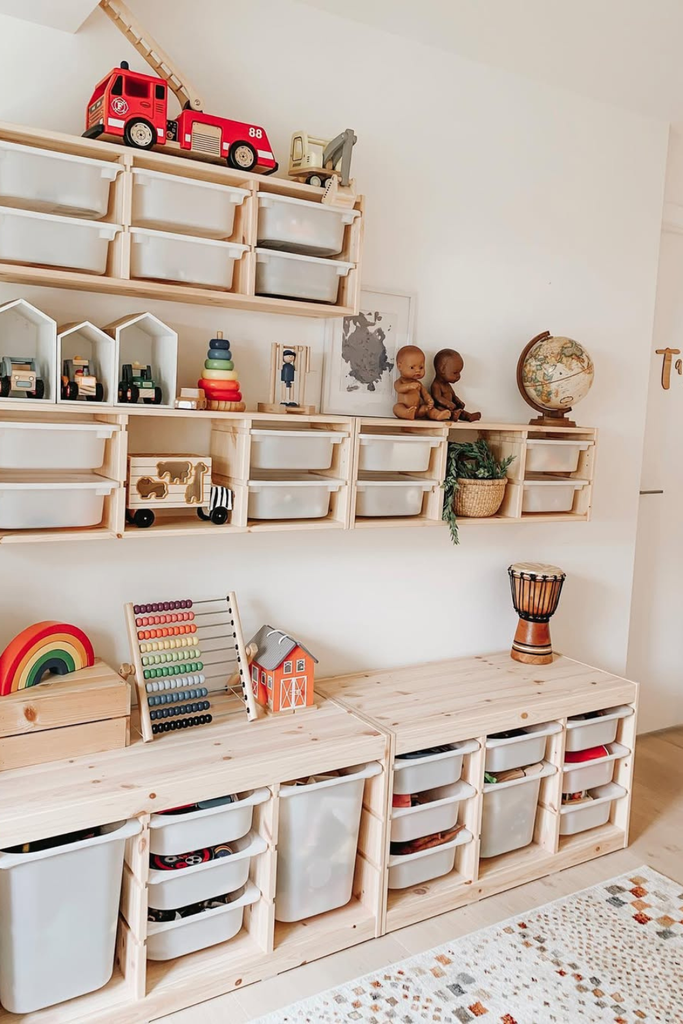
Vertical TROFAST Wall
Carry TROFAST storage upward rather than filling every wall with heavy furniture when floor space is important.
Keep large, frequently used toys in deep lower bins, smaller pieces in shallow drawers, and lighter display items on securely mounted upper units.
Natural daylight keeps the pale wood bright while soft ceiling lighting can cover the full storage wall evenly.
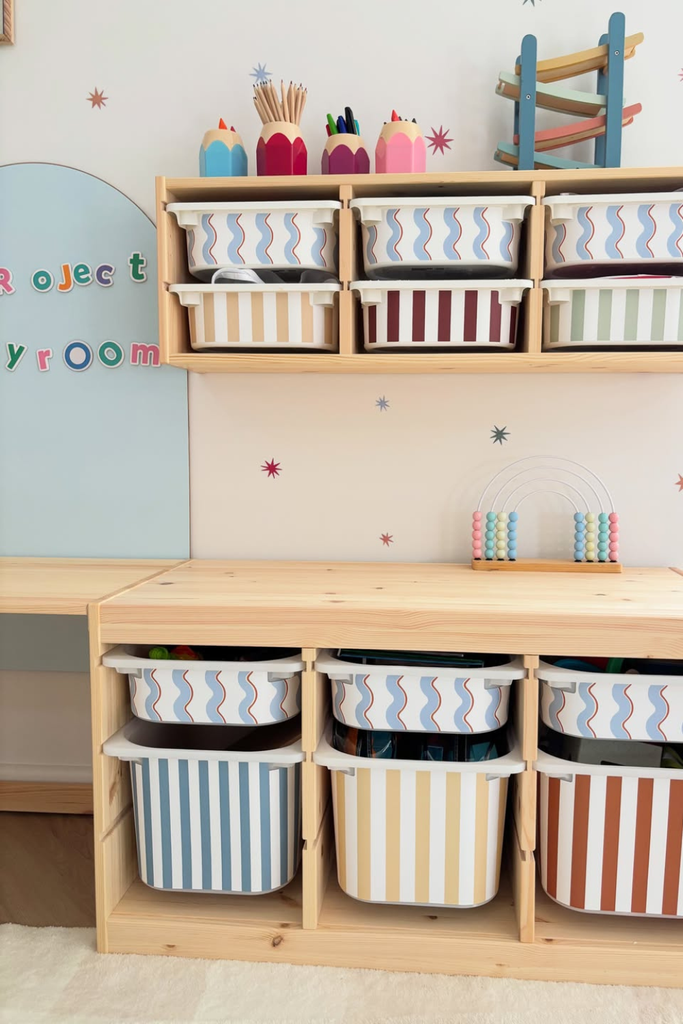
TROFAST Bench Storage
Build storage into the play zone by placing low TROFAST frames along the wall where kids can reach every everyday toy themselves.
Mix shallow and deep bins so small pieces stay separated from bulkier sets then leave one open section for quick-access activities.
Wall-mounted bins can hold lighter craft supplies. Natural light keeps playtime bright while soft overhead lighting fills the storage area evenly.
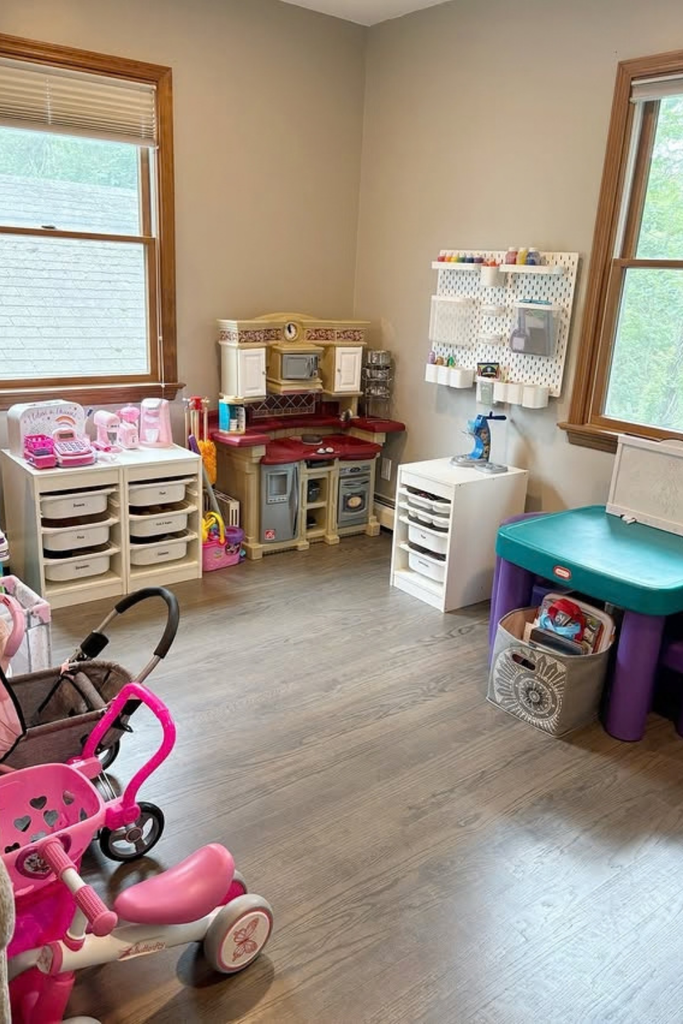
Pretend Play Zone
Help children transition between cooking, shopping, and doll activities, keep pretend-play toys grouped together.
For food sets and minor accessories, place TROFAST-style drawers next to the play kitchen. Use wall organizers above a different station.
Windows provide strong daylight, while overhead lighting can keep both activity corners usable later.
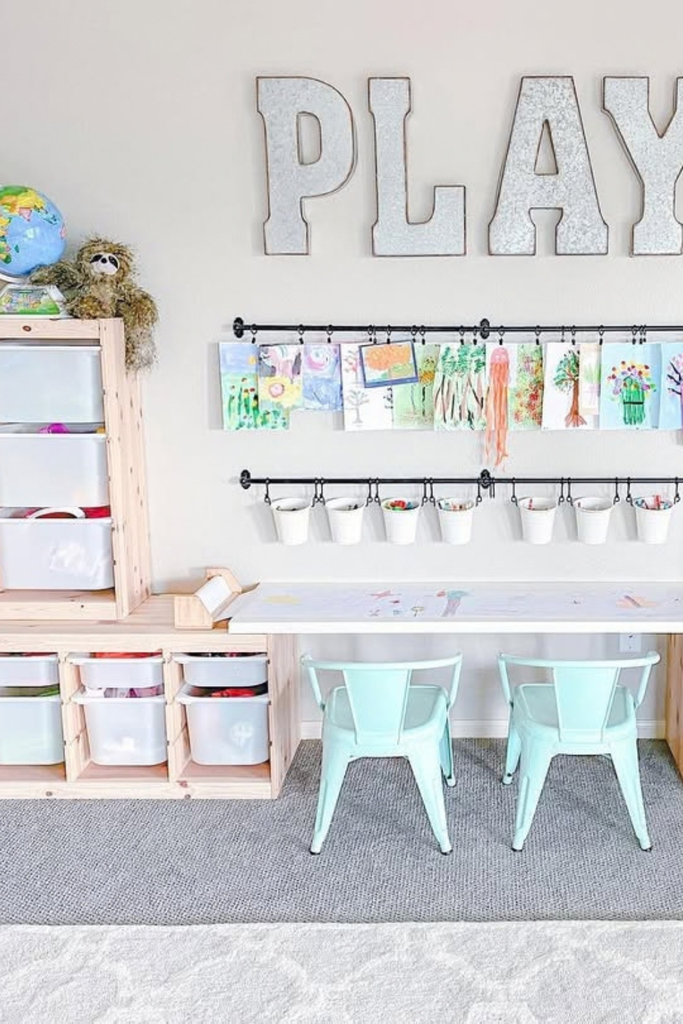
Shared Craft Station
Put a lengthy activity surface between two TROFAST towers for siblings or playdates so that each child has space to draw.
Sort paper, markers, craft kits and small supplies into different bin depths, keeping everyday materials closest to the tabletop.
Daylight works well for crafting while even ceiling lighting helps prevent shadows across the table.
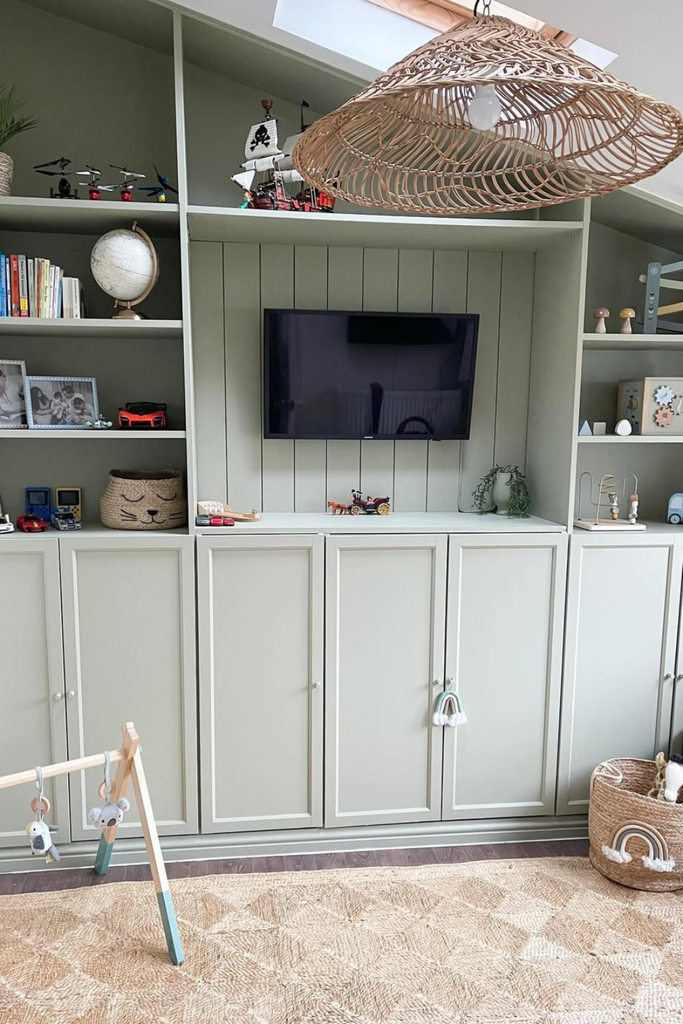
Built-In Storage
You want the playroom to look calmer after cleanup, combine closed lower cabinets with open shelves.
Hide bulky sets and loose pieces behind doors then reserve upper shelves for books, favorite toys and simple displays.
Skylight daylight brightens the area, while a large pendant adds warm, focused light from above.
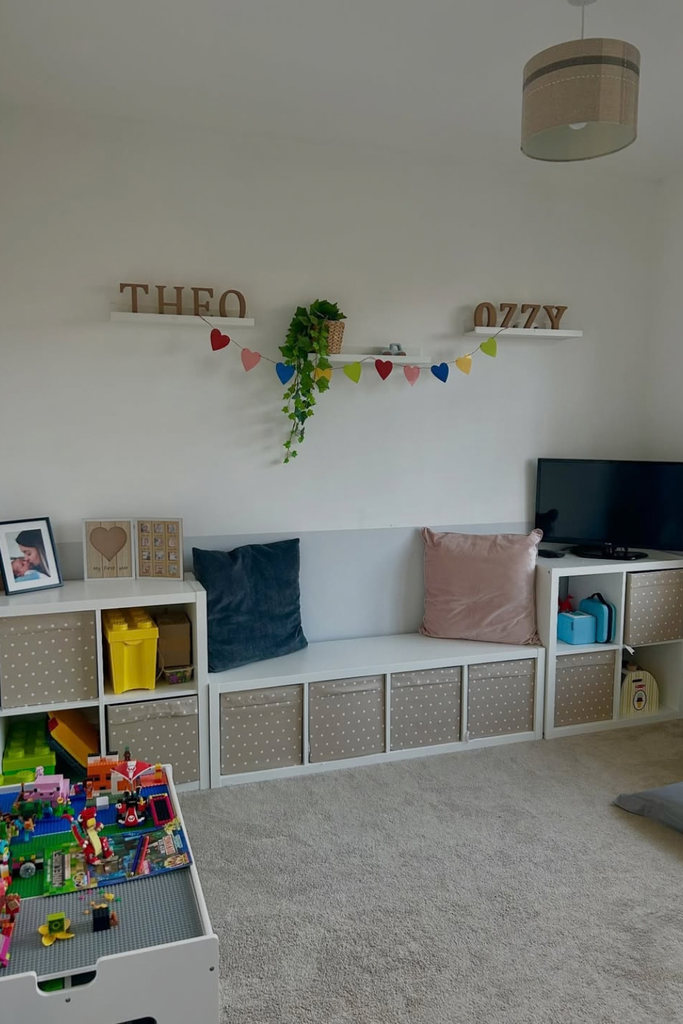
KALLAX Window Bench
Make low KALLAX units work twice by joining them around a cushioned bench for toy storage and a comfortable reading spot.
Slide baskets into most cubes for LEGO, blocks, and loose toys, while leaving a few open for items kids use daily.
Fits well along a quiet playroom wall. Soft daylight works best during the day, while a ceiling pendant provides general evening light.
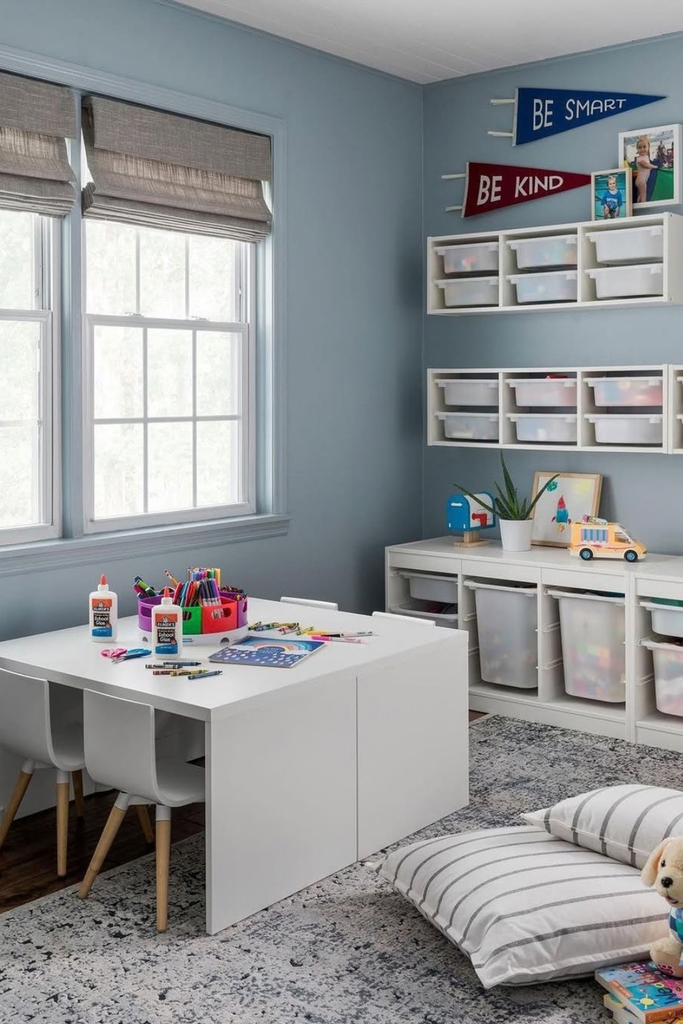
Wall Mounted TROFAST
Free up valuable floor space by mounting shallow TROFAST frames above lower storage instead of adding another bulky cabinet.
Use the upper bins for lightweight craft supplies and less-used toys while deep lower bins handle larger sets kids grab every day.
Keep a central table open for drawing and projects so storage stays separate from the work surface.
Large windows provide daytime light while ceiling lighting can cover the activity area after dark.
Basket Cube Storage
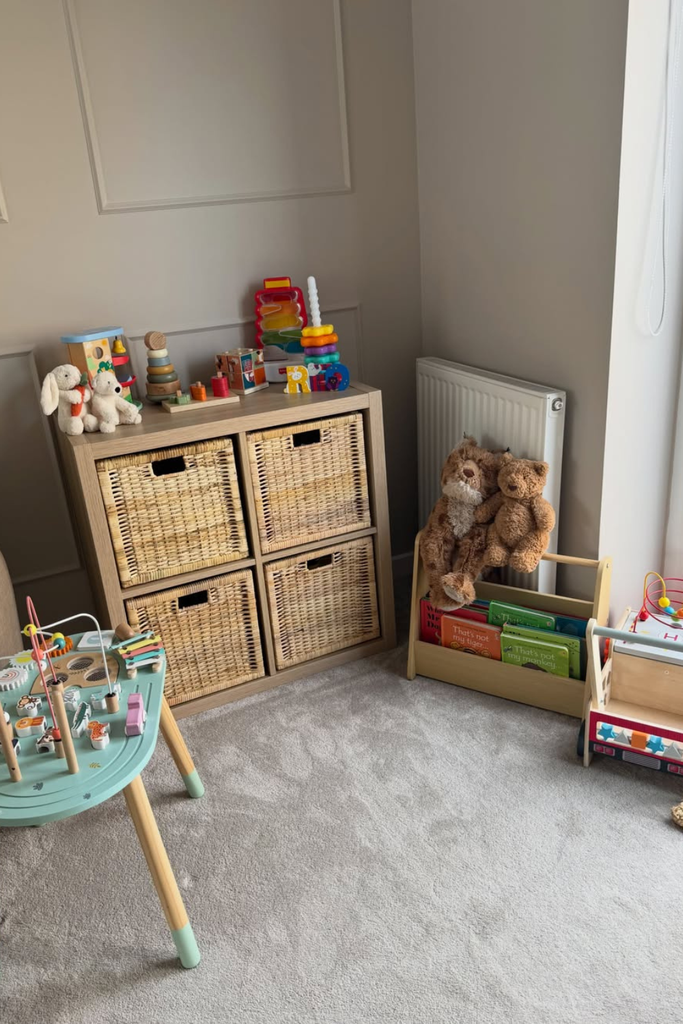
Use a compact KALLAX unit with woven baskets to hide loose toys for a small play corner without making the room feel packed.
Give each basket one category so cleanup stays simple then keep a few favorite toys on top for easy access.
Natural window light brightens daytime play while a nearby floor or ceiling light can soften the corner later.
KALLAX Play Bench
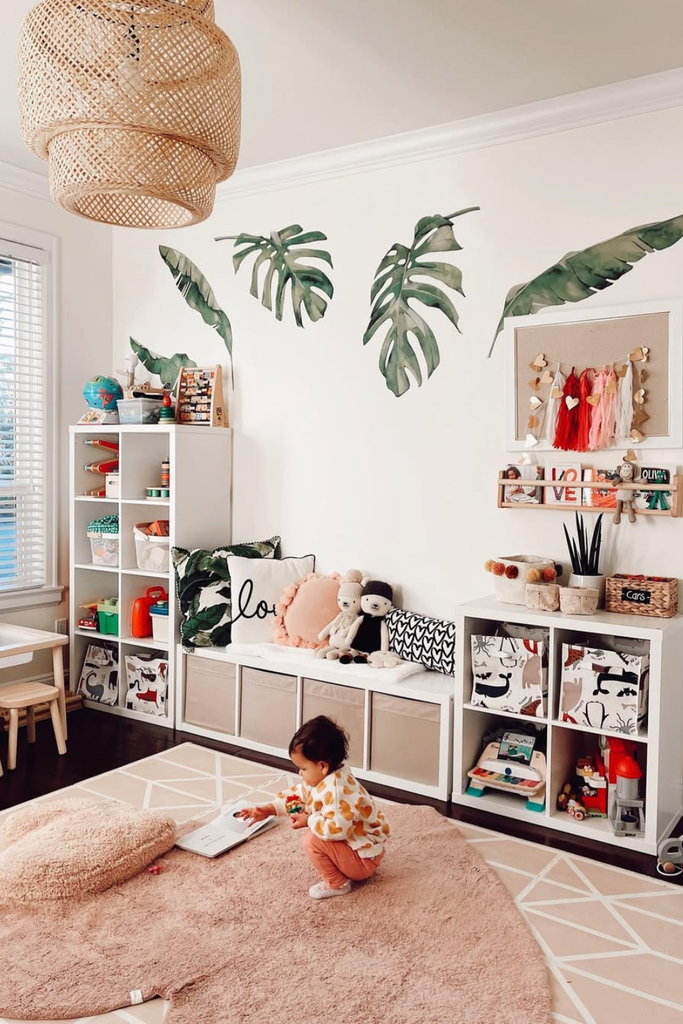
Stretch KALLAX storage across one wall when you want toy organization to double as a comfortable spot for reading and quiet play.
Use baskets in the bench cubes for loose toys then keep open shelving nearby for larger sets kids can grab easily.
Window daylight brightens the whole zone while a woven pendant adds gentle overhead light later.
Stepped TROFAST Storage
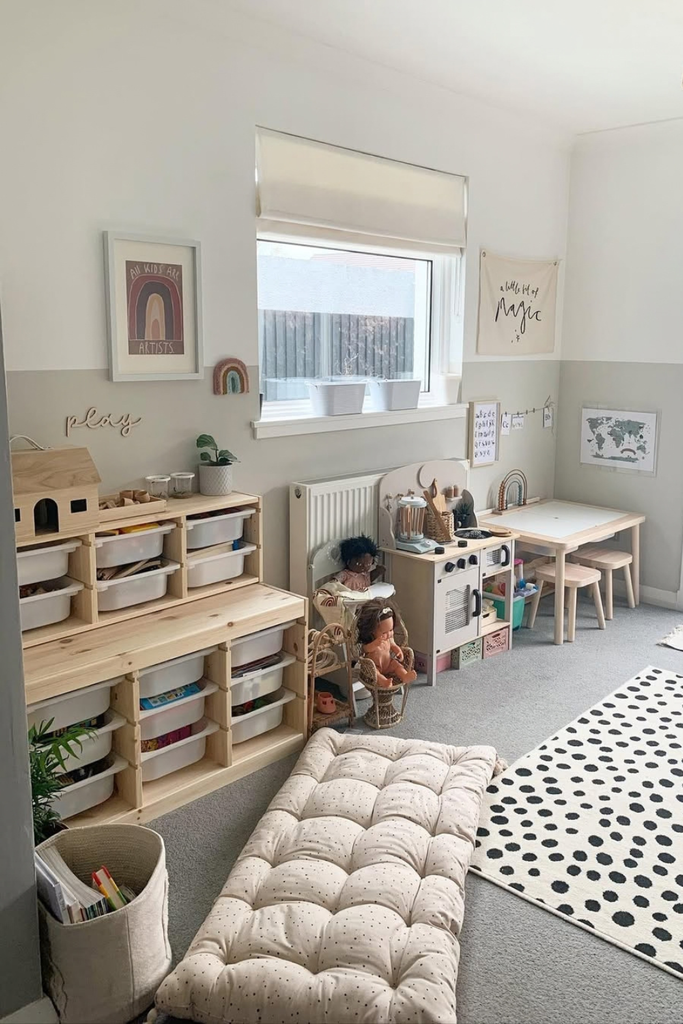
Make a narrow playroom work harder by using stepped TROFAST units along one wall instead of spreading storage around the room.
Deep lower bins can hold bulky toys while shallow upper bins keep smaller sets easy to find and return.
Place pretend-play furniture beside the storage so related toys stay nearby and leave the opposite side open for floor play.
Window daylight handles daytime activities, while a pendant provides general evening light.
TROFAST Desk Wall
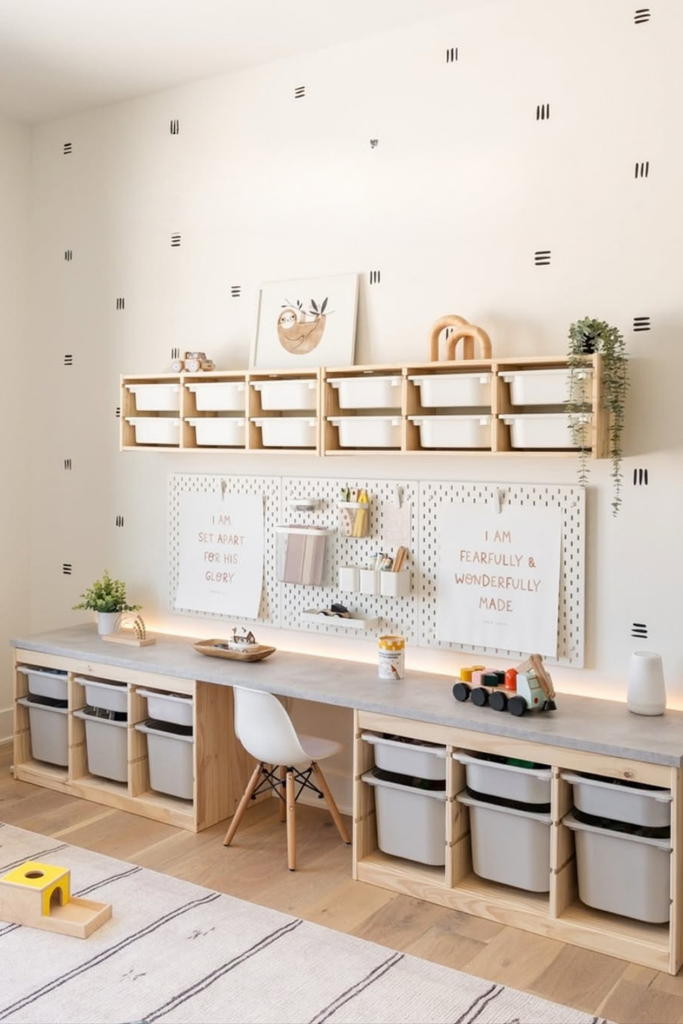
Turn one long wall into a homework and craft station by building a desk between low TROFAST frames and adding shallow bins above.
Keep heavier toys and bulkier supplies below then use upper bins for paper, markers, and lighter materials.
Soft under-shelf lighting brightens detailed projects, while daylight and general ceiling light can handle the rest of the room.
Mixed Cube Storage
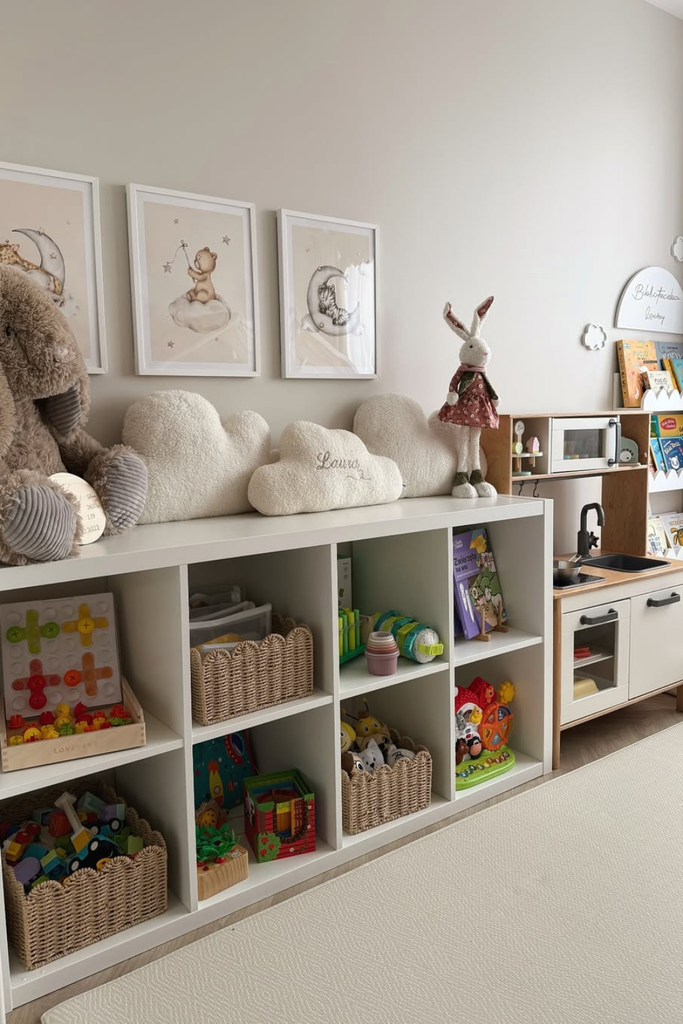
Balance easy access with cleaner storage by leaving some KALLAX cubes open and filling others with woven baskets.
Place loose pieces, plush animals and blocks into baskets while puzzles and commonly used activities remain exposed for easy selection.
While gentle overhead lighting might encourage evening play, natural window light maintains the space’s brightness.
TROFAST Activity Table
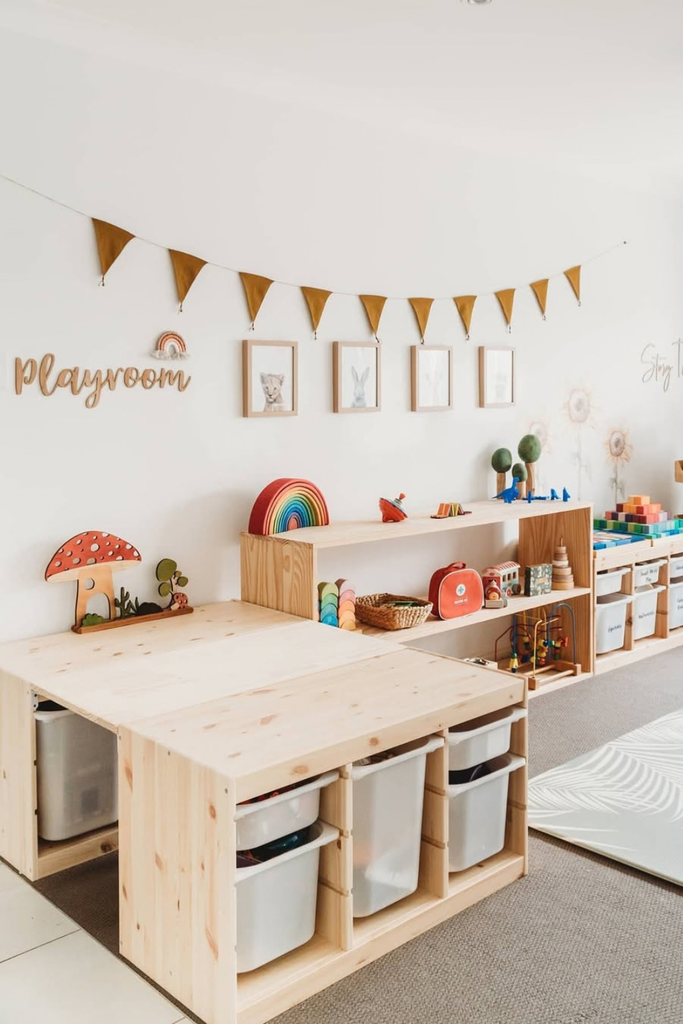
Give building sets and sensory play their own surface by turning low TROFAST frames into a large activity table with storage directly underneath.
Use deep bins for bulky toys and shallow trays for smaller pieces, so kids can grab what they need without leaving the play zone.
Natural daylight handles daytime play, while ceiling lighting can brighten the larger workspace later.
TROFAST Study Station
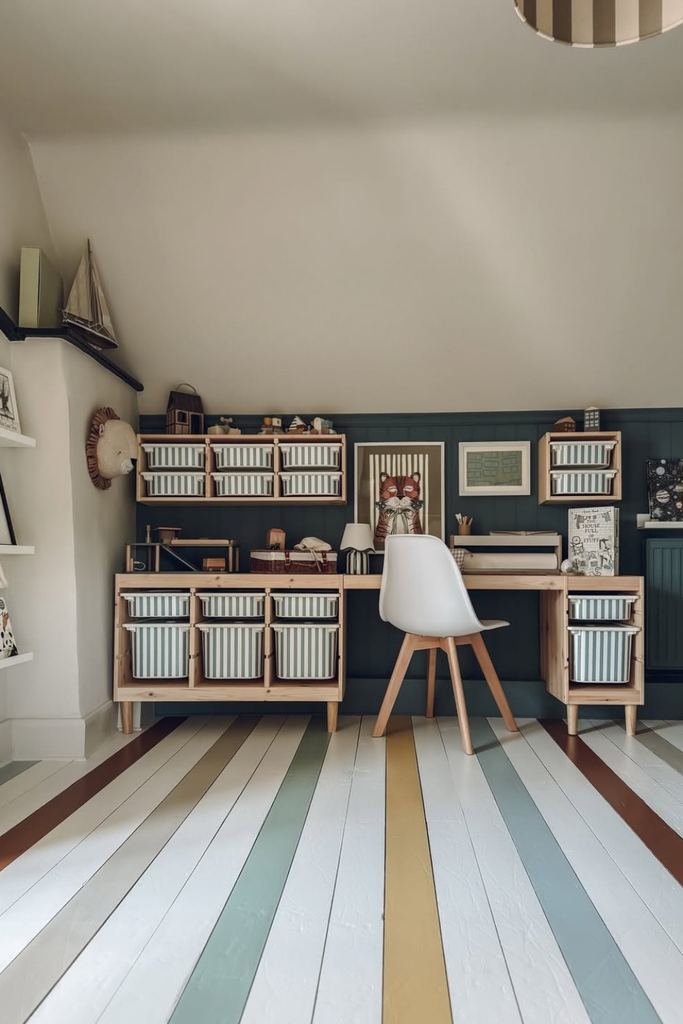
Transform TROFAST storage into a workstation area when children get older. Homework and creative pursuits have a clear area.
Toys and project supplies should be placed in deeper bins below; smaller craft supplies that require rapid sorting should be mounted in shallow units above.
While a desk lamp and ceiling light provide helpful layers after dark, natural lighting can manage duties during the day.
FAQs
Is TROFAST Better Than KALLAX for a Playroom?
TROFAST works well when you have lots of small toys that need separate bins while KALLAX gives you more flexibility.
Removable TROFAST bins can make sorting easier. You can also combine both systems when one storage type cannot handle everything.
How Can You Keep IKEA Playroom Storage From Looking Cluttered?
Give each bin or basket one clear purpose instead of filling every open space with mixed toys.
Keep everyday favorites within reach, move less-used items into closed storage and avoid displaying everything at once.
Matching baskets can make KALLAX units feel calmer while labeled TROFAST bins help toys return to the right place after playtime.

Hi, I’m Afaf! I’m a law student who loves writing about everyday life – from home projects and crafts to fashion, beauty, and parenting tips.
I’ve been writing for over a year, sharing ideas that are simple, practical, and easy to try. I write about things I find interesting and useful, whether that’s organizing a space, trying a new DIY, or finding activities to keep kids entertained.
My goal is to share helpful ideas without making things complicated. If it works in real life, I’ll write about it.
When I’m not studying or writing, I’m usually experimenting with new projects or scrolling for inspiration!