
22 Garage Playroom Ideas
When toys keep taking over your living room, that unused garage can start looking like the perfect place for a playroom.
Cold floors, poor insulation, awkward garage doors, limited lighting, and leftover storage can quickly cause problems.
In this article, you’ll find practical garage playroom ideas that help you create a comfortable, and organized space.
Let’s jump in!
When Should You Choose a Full Garage Conversion?
Choose a full garage conversion when you want the playroom to work like a normal room throughout the year.
If the garage gets too hot, cold, damp, or dark, simply adding rugs and toy storage will not fix those problems.

A full conversion lets you address insulation, flooring, ventilation, heating or cooling, lighting, and the garage door properly.
It also makes more sense when your kids will use the space daily or you want the room to serve another purpose as they grow.
Before making permanent changes, check local building requirements and compare the renovation cost with how often your family will actually use the space.
Monster Truck Zone
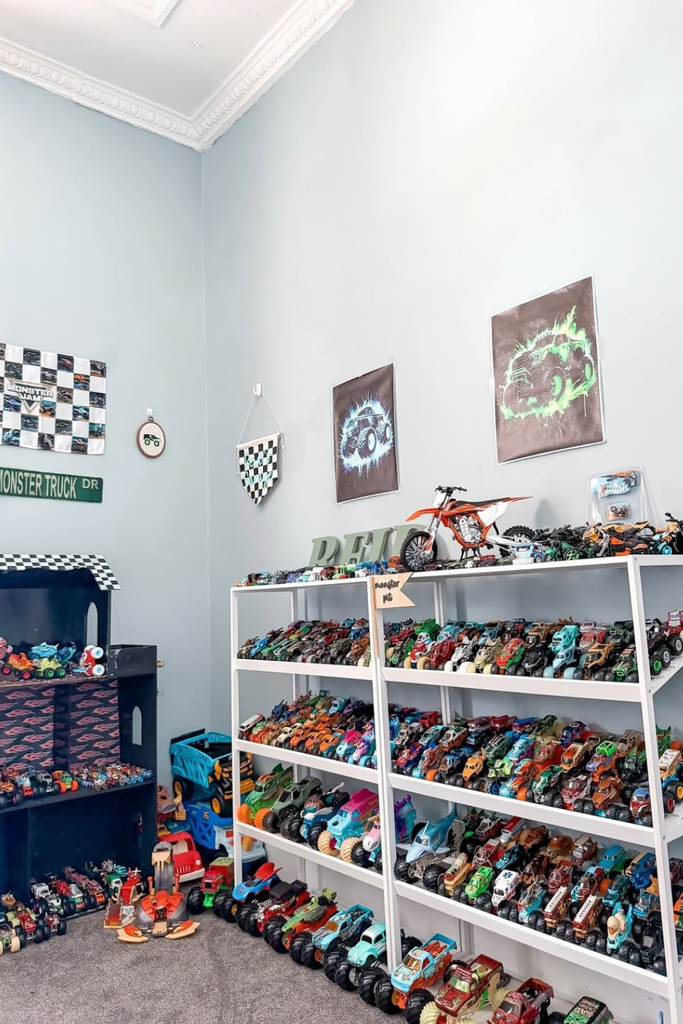
Turn one garage wall into a dedicated collection zone when your child has toys they love displaying and playing with.
To keep trucks visible and accessible, use strong open shelves themed wall art provides the space a unique character.
While a nearby bulb or LED strip might add concentrated light over the shelves, bright ceiling illumination can manage routine play.
Pretend Garage Shop
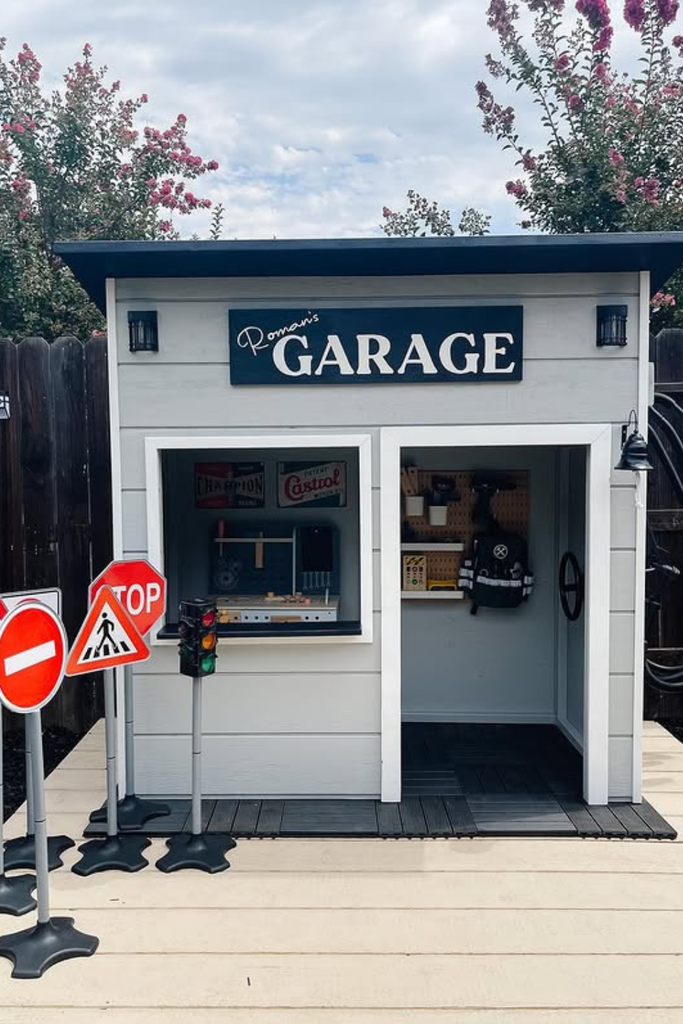
Take the garage theme into pretend play by creating a small workshop where kids can copy everyday fixing and driving activities.
Add a child-sized workbench, tool storage, road signs and a service window so the setup feels interactive without needing much floor space.
An outdoor playhouse works especially well when your main garage playroom is already full.Daylight handles most playtime.
Climbing Corner
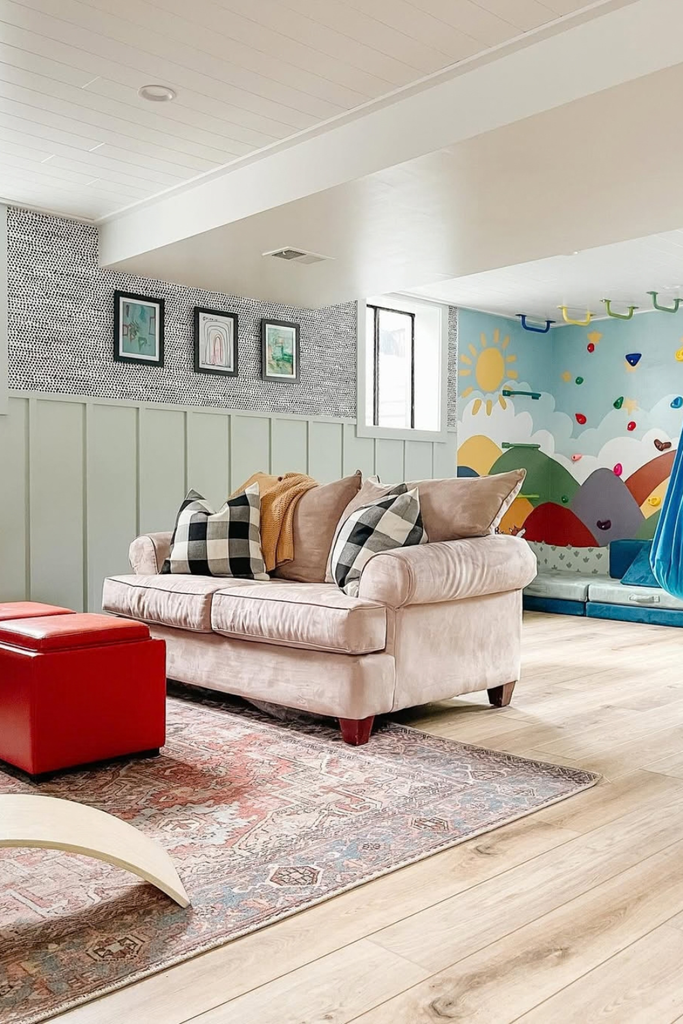
Use a quieter end of the garage for active play so climbing and swinging stay away from storage and walkways.
Build the zone around a securely installed climbing wall, ceiling-mounted sensory swing and thick floor cushions for softer landings.
A playful mural helps separate the area visually without adding bulky furniture. Natural window light works during the day.
Adventure Walls
Make active play the main feature when your converted garage has enough open space for kids to climb safely.
Cover opposite walls with climbing holds then add overhead monkey bars and padded landing mats to create different movement.
Recessed ceiling lights distribute uniform brightness throughout both rising walls, windows let in daylight.
Indoor Ninja Zone
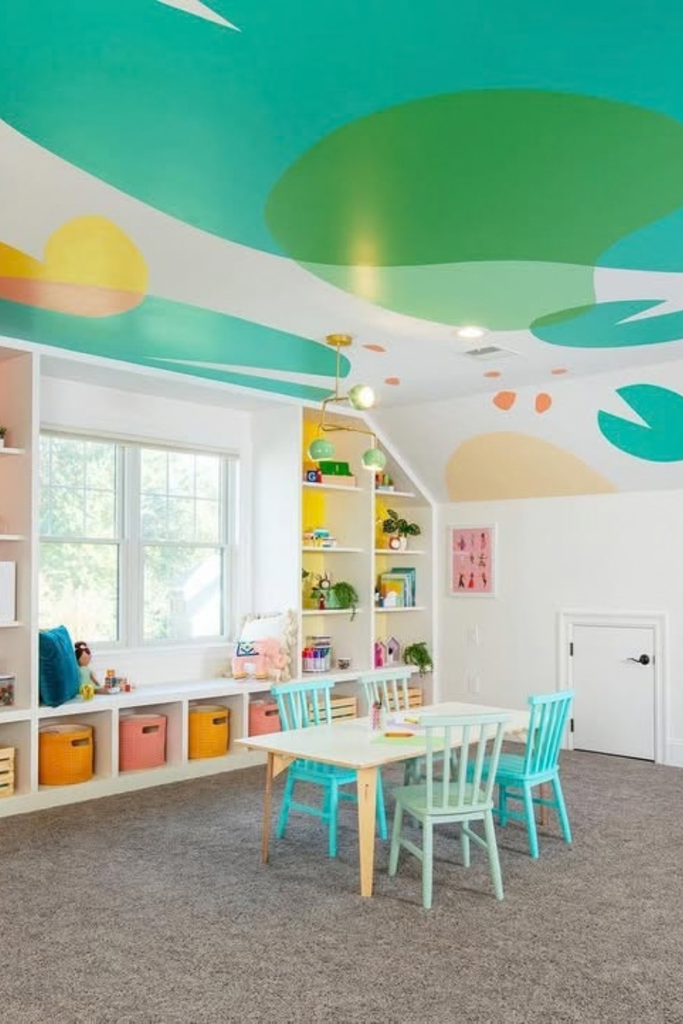
When your children need vigorous play without packing the entire room with equipment use a deeper garage portion for a ninja-style course.
Climbing ropes, a wall ladder and climbing holds into properly supported framing, then cushion the entire landing area with thick mats.
A netted upper level can add another challenge. Recessed ceiling lights provide clear, even lighting without hanging into the activity space.
Wall Storage System
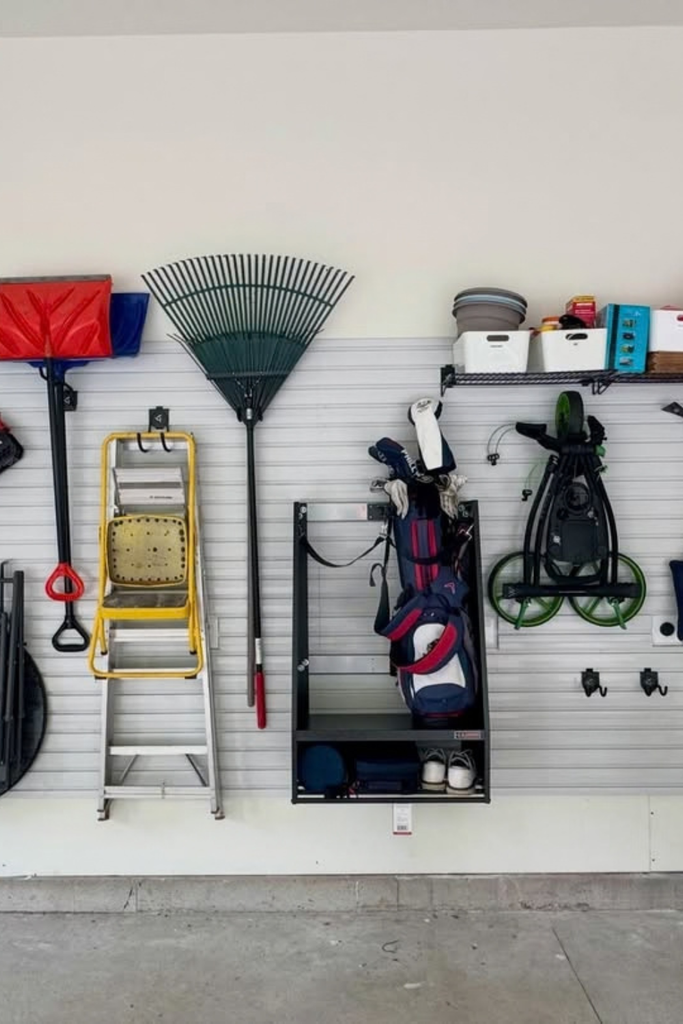
Keep the floor open for play by moving bikes, sports gear, and outdoor toys onto the garage walls.
Adjustable tracks with hooks, baskets, and low fabric bins work especially well when the garage still needs to handle family storage.
Group similar items together so kids can return smaller gear themselves while heavier pieces stay secured above.
Rainbow Media Wall
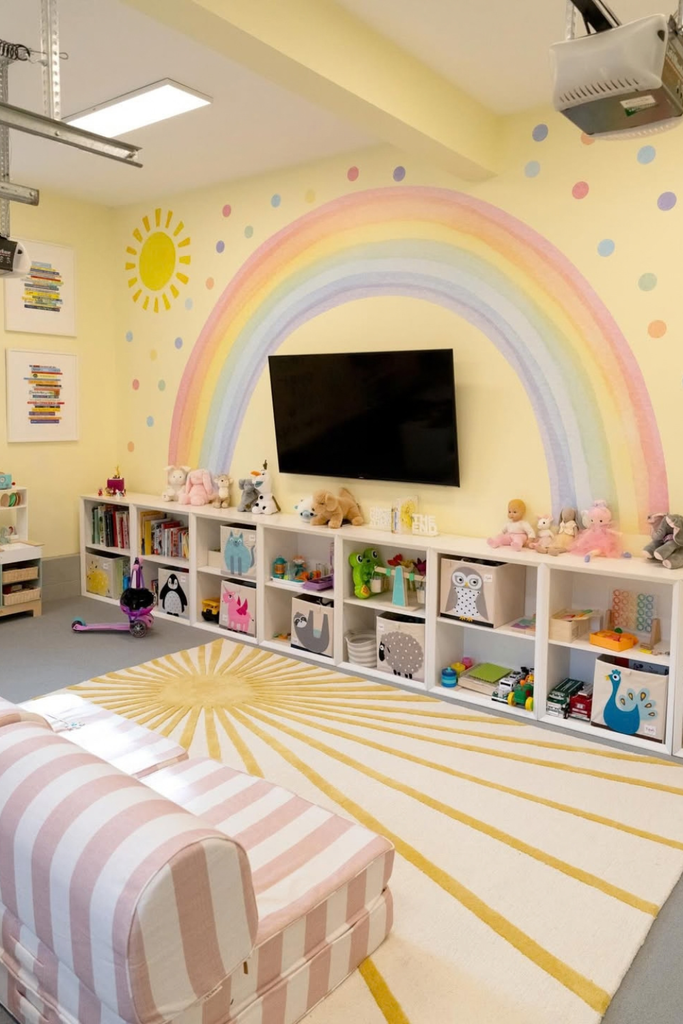
Bring personality into a finished garage playroom by turning the TV wall into part of the kids’ décor instead of leaving it plain.
Paint a large rainbow around the screen, then run low cubbies underneath for books, toys, and activity bins kids can reach themselves.
A soft rug and lounge seating make the open floor comfortable for play and movie time, while broad ceiling lights keep the room evenly bright.
Teen Lounge Zone
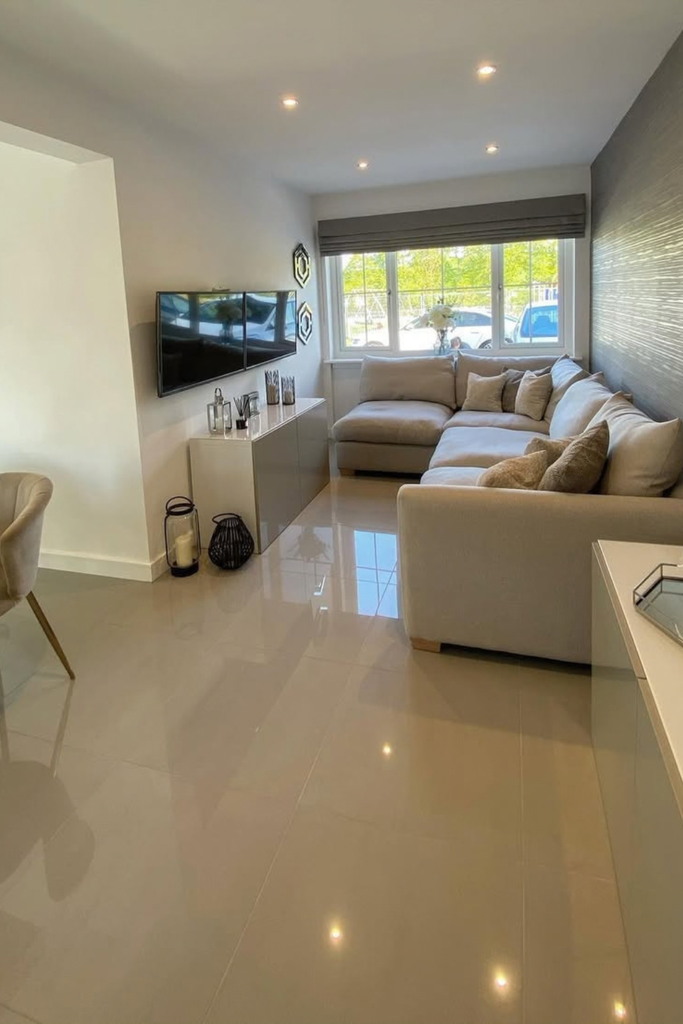
Plan one end of a fully converted garage as a relaxed hangout when older kids need space beyond toys and floor play.
Use a deep sectional for friends, mount the TV opposite and keep a table nearby for homework, games or snacks.
Durable flooring makes everyday cleanup easier while keeping the room polished. Large windows supply daytime light.
Multi Activity Zone
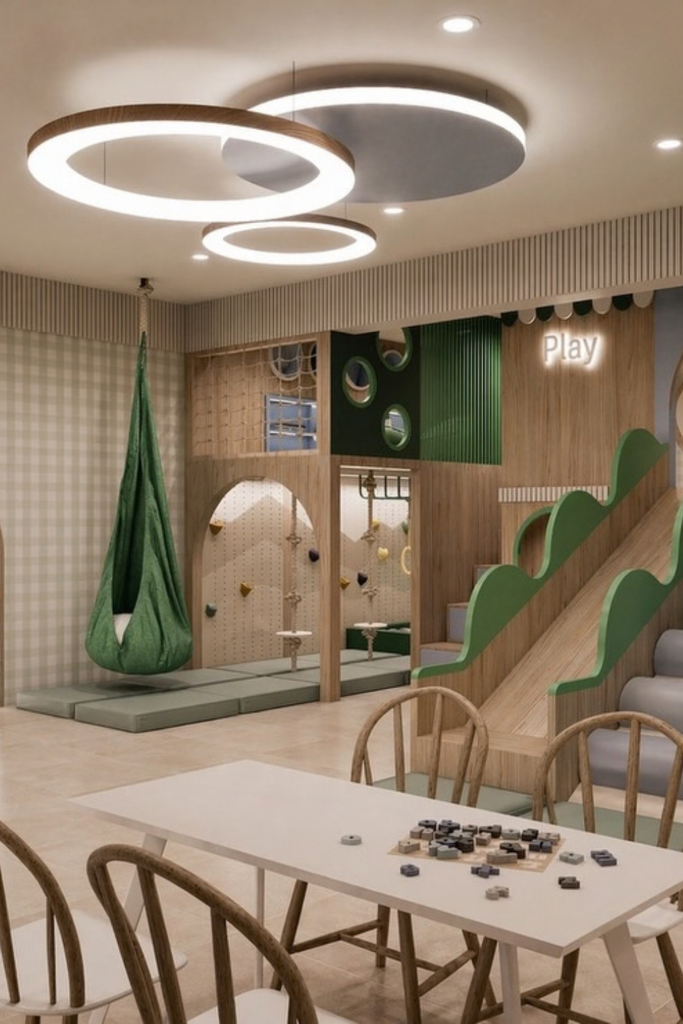
Give a larger converted garage several reasons to stay useful by combining movement, crafts, and quiet play in one open layout.
Keep climbing features and a sensory swing along the padded wall then place a sturdy activity table in the open center for puzzles and projects.
Built-in seating can handle calmer breaks. Recessed lights, large ring fixtures and integrated shelf lighting create layered illumination.
Family Media Zone
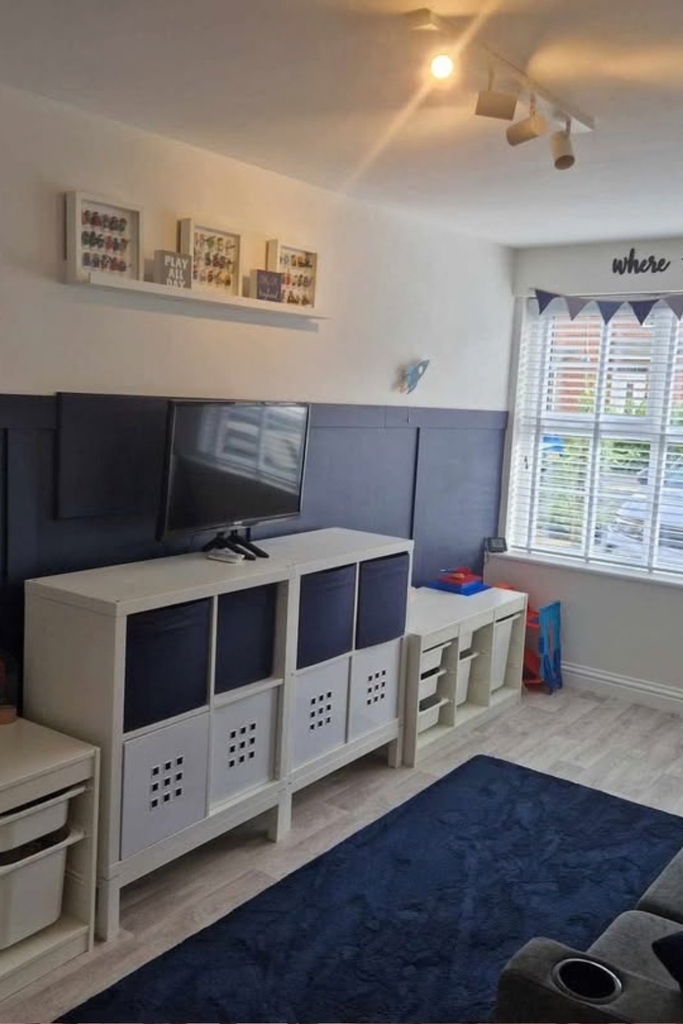
Mix play and downtime when you want the garage to work for kids without becoming a toy only room.
Place low bin storage along one wall so everyday toys stay easy to sort then add a sofa and TV for movies, gaming or quiet breaks.
A large rug softens the main floor while leaving clear walking space. Window light brightens the room naturally.
Playhouse Climbing Zone
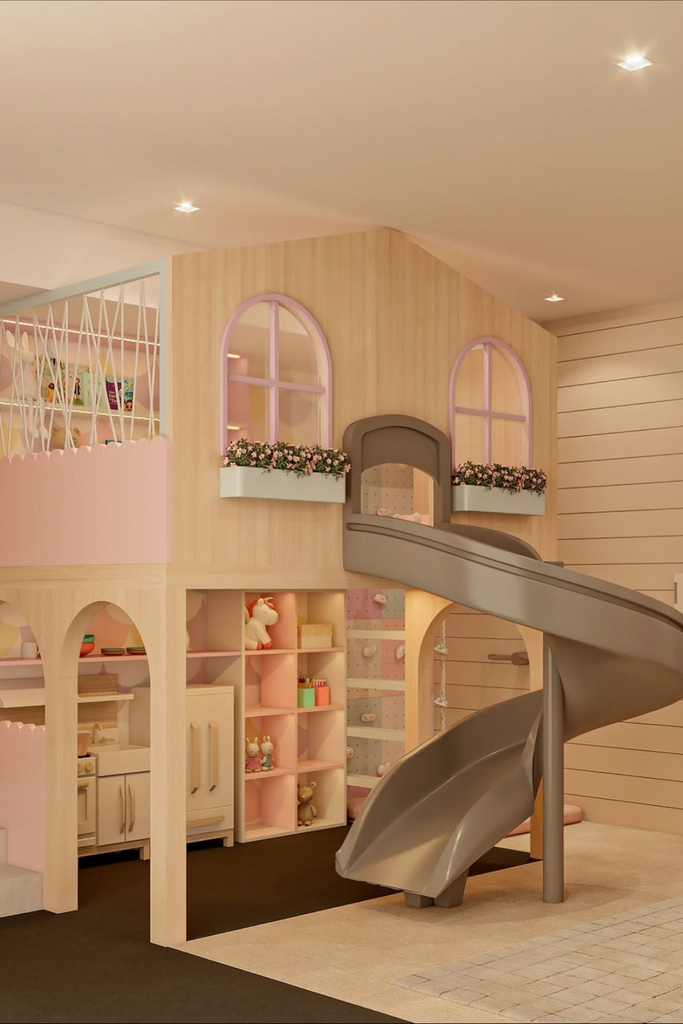
Turn a tall garage corner into a playhouse adventure when you want to use both wall height and floor space.
Build the playhouse with an enclosed upper level, slide, climbing wall, and rope so kids can switch activities without spreading equipment.
Add a thick landing mat beneath the climbing area and soft flooring. Recessed ceiling lights and concealed playhouse.
Simple Play Corner
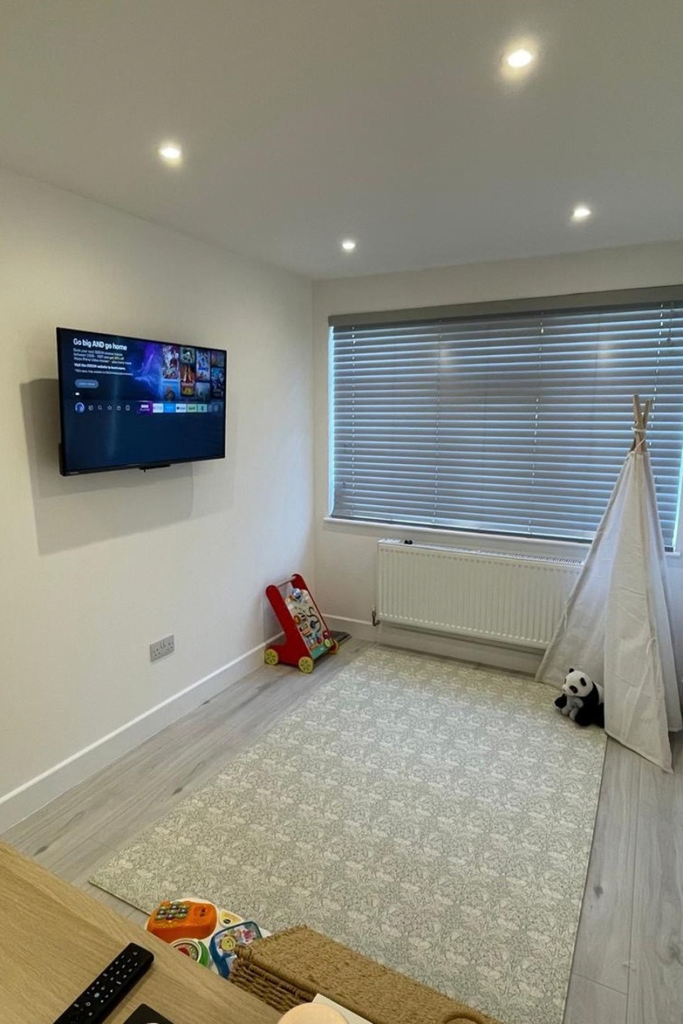
Keep the setup simple when your garage conversion already feels warm, finished and comfortable enough for everyday use.
Add a large soft rug for floor play, a small play tent for quiet time, and a wall-mounted TV without crowding the limited space.
Leaving most of the floor open also makes future changes easier as kids grow. Window light handles daytime play.
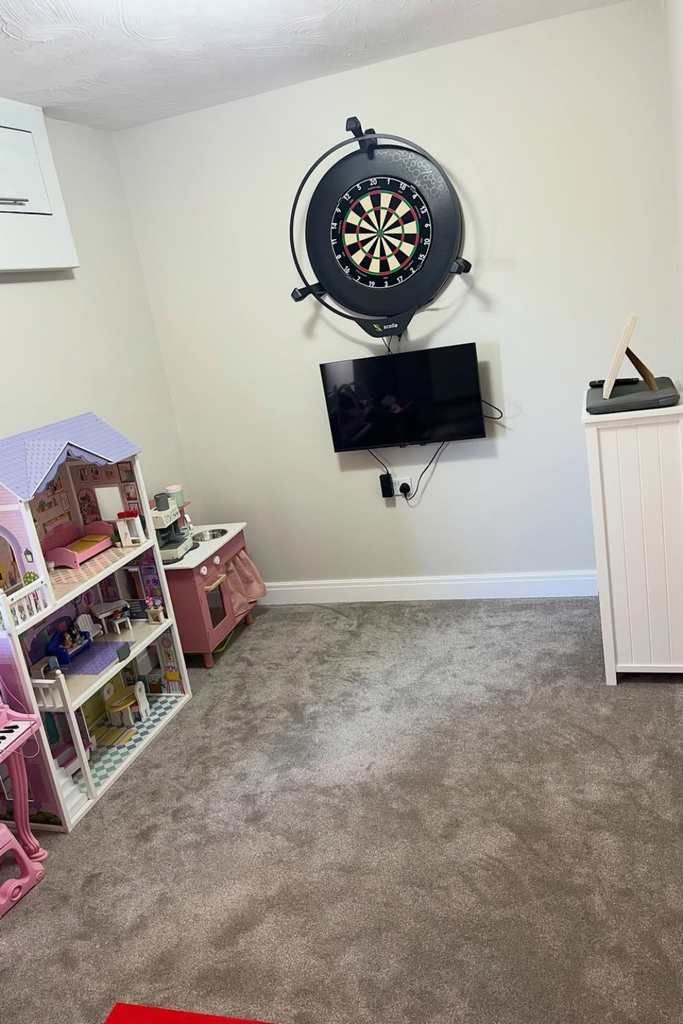
Pretend Play Zone
Line up pretend-play toys along one garage wall when you want kids to move between different activities without cluttering the center.
Combine a dollhouse, play kitchen, music station, and role-play toys, then leave plenty of carpeted floor open for spreading out games.
Positioning everything around the edges also makes cleanup easier. Natural light from a glazed door can brighten daytime play.
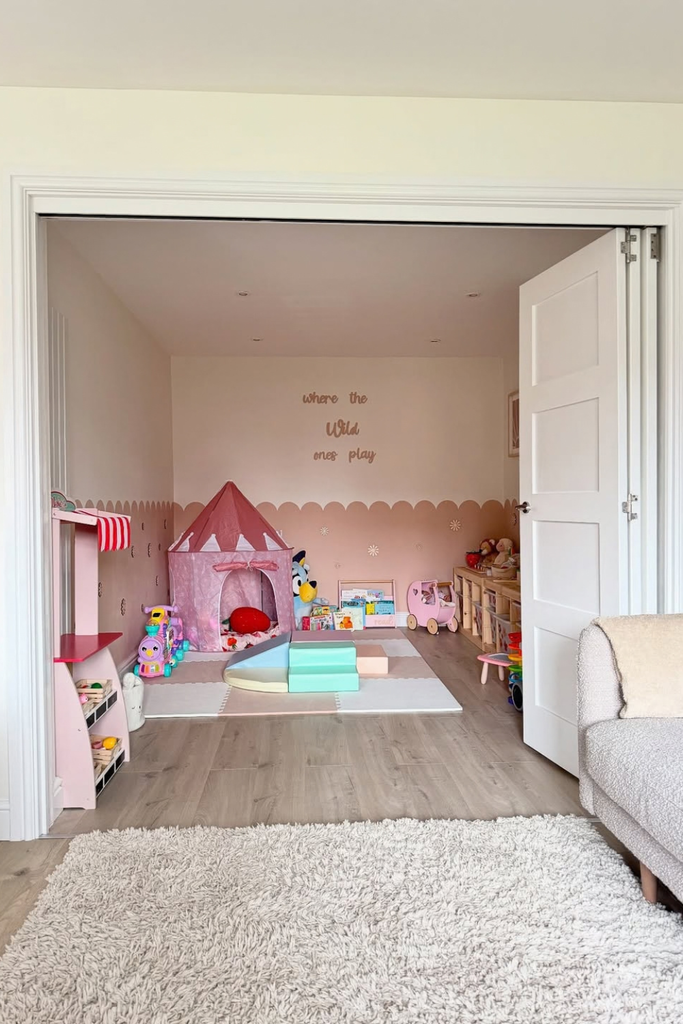
Connected Playroom
Keep the playroom connected to your main living area when you want easier supervision without mixing toys into the family room.
Use wide doors to separate the spaces when needed, then arrange low storage, pretend-play pieces and soft climbing blocks.
Daylight can flow through the wide opening, while recessed ceiling lights keep the deeper garage area bright.
Music Activity Zone
Give older kids a creative outlet by turning a finished garage into a space for music, drawing, and group activities.
Keep instruments in one open section then place an art easel and table farther back so each activity has enough room.
Natural window light supports daytime projects, while adjustable ceiling spotlights and a pendant provide focused evening light.
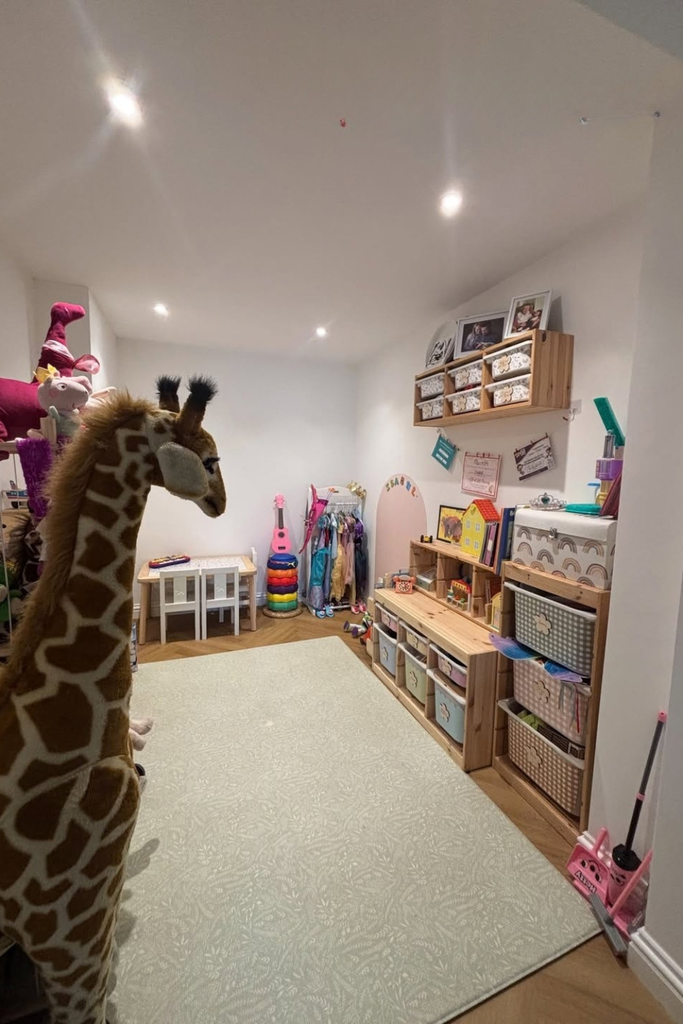
Organized Toy Zone
Use a long garage wall for low toy storage when you want kids to find and put away their own things easily.
Combine open wooden units with labeled fabric bins then keep dress-up clothes and larger toys grouped toward the ends.
A wide rug leaves a comfortable open area for building, pretend play, or crafts. Recessed ceiling lights spread bright.
Indoor Outdoor Play
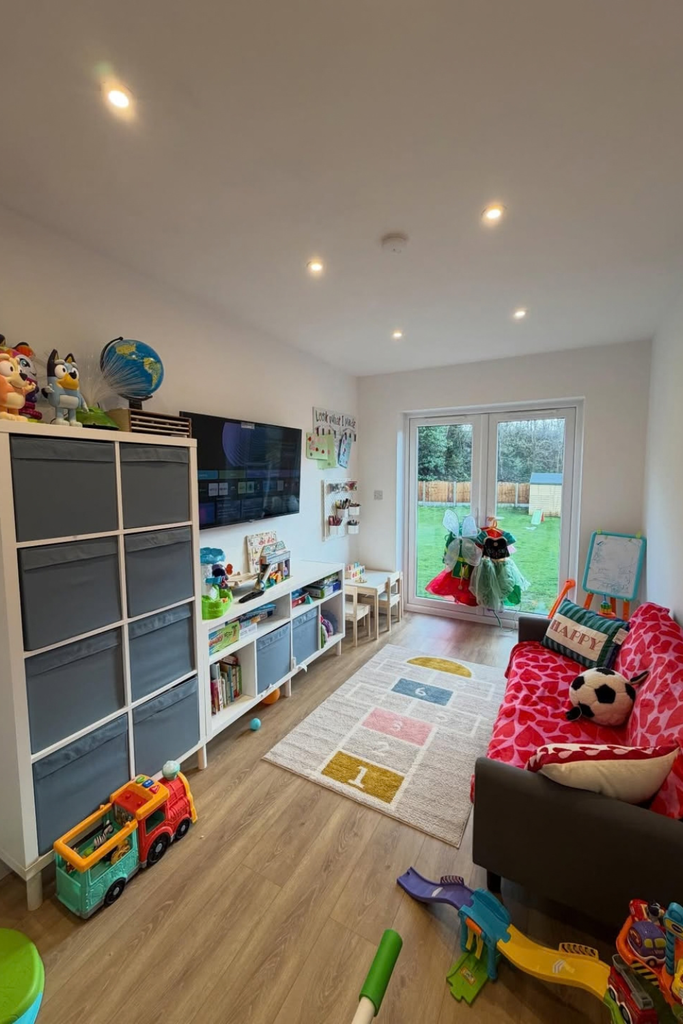
Make backyard access part of the playroom when your converted garage opens directly onto a safe outdoor area.
Keep toy storage and the TV along one wall add a small craft table near the doors, and leave the center clear.
Glass doors let kids move easily between indoor and outdoor activities while bringing in plenty of daylight.
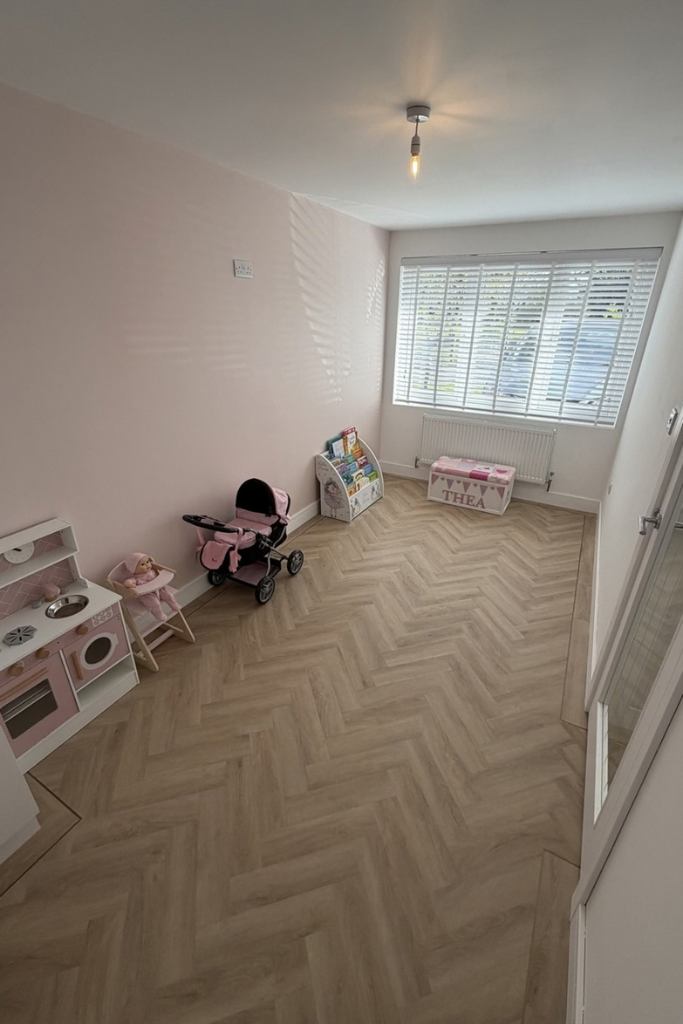
Open Floor Play
Leave most of the garage floor open when your child enjoys spreading out dolls, books and pretend-play toys.
Push smaller play pieces against the walls and use a low book rack so favorite stories stay easy to reach.
Natural light from the glazed door works well during the day, supported by simple ceiling lighting later.
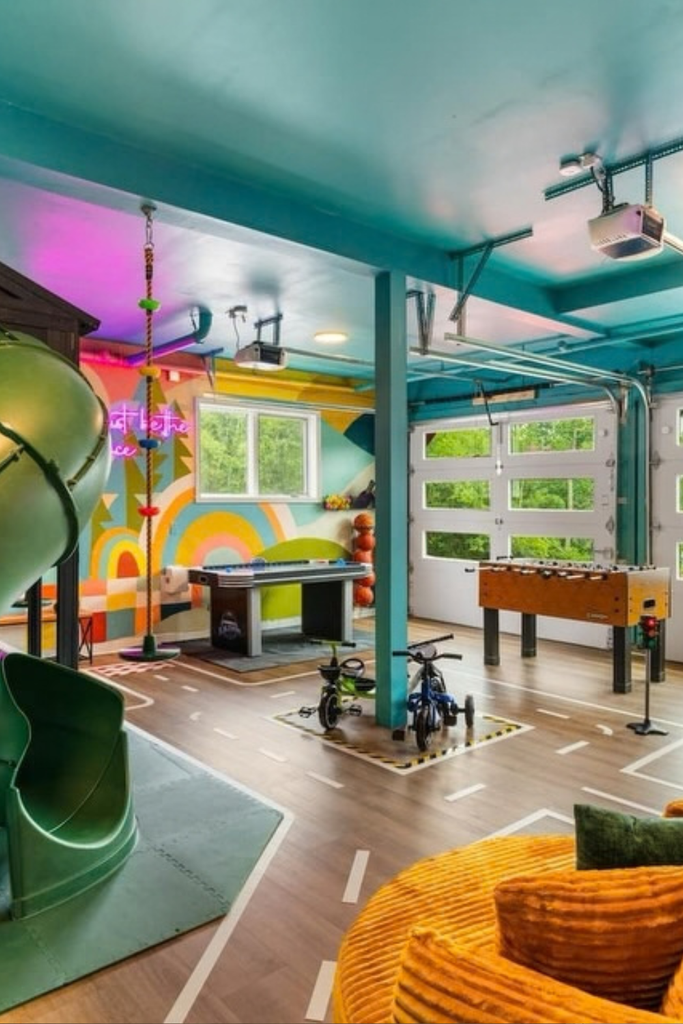
Indoor Playground Garage
Go bigger with the setup when a full garage gives you enough room for both active play and older-kid entertainment.
Anchor one side with a play tower and enclosed slide then spread table games and seating across the remaining floor.
Garage-door windows bring in daylight, while recessed ceiling lights and colorful accent lighting brighten the deeper activity zones.
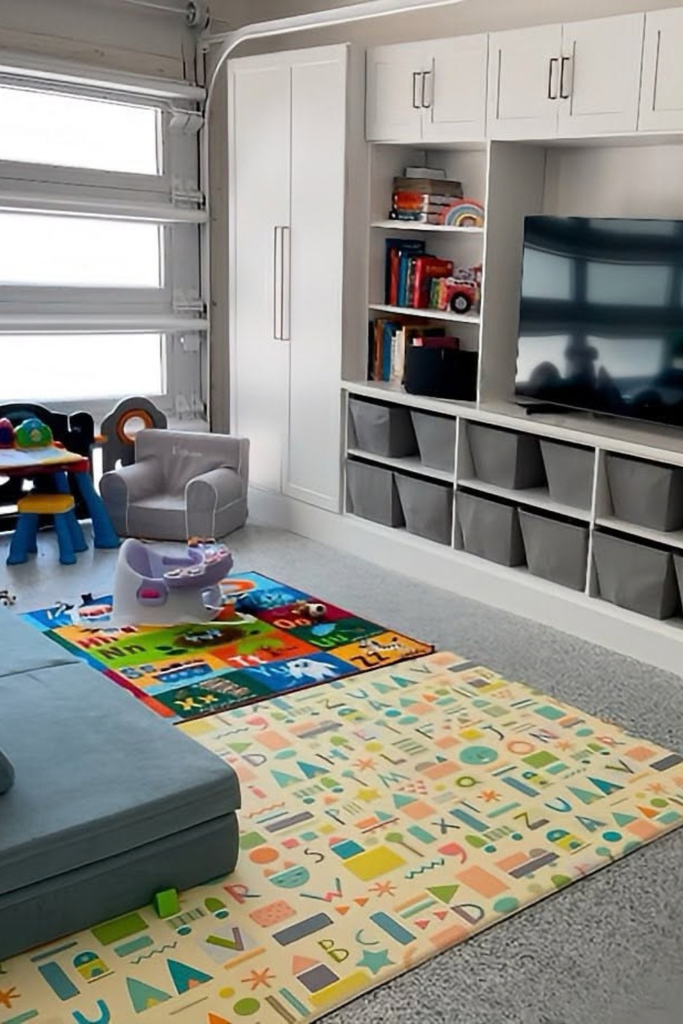
Built-In Storage
Make one garage wall do most of the work by combining closed cabinets, open bookshelves, toy bins, and a TV.
While upper cabinets conceal items you use infrequently, keep common toys in low bins for children to grasp.
The primary floor play area can be defined by soft rugs without obstructing movement. Windows on garage doors let in practical daylight.
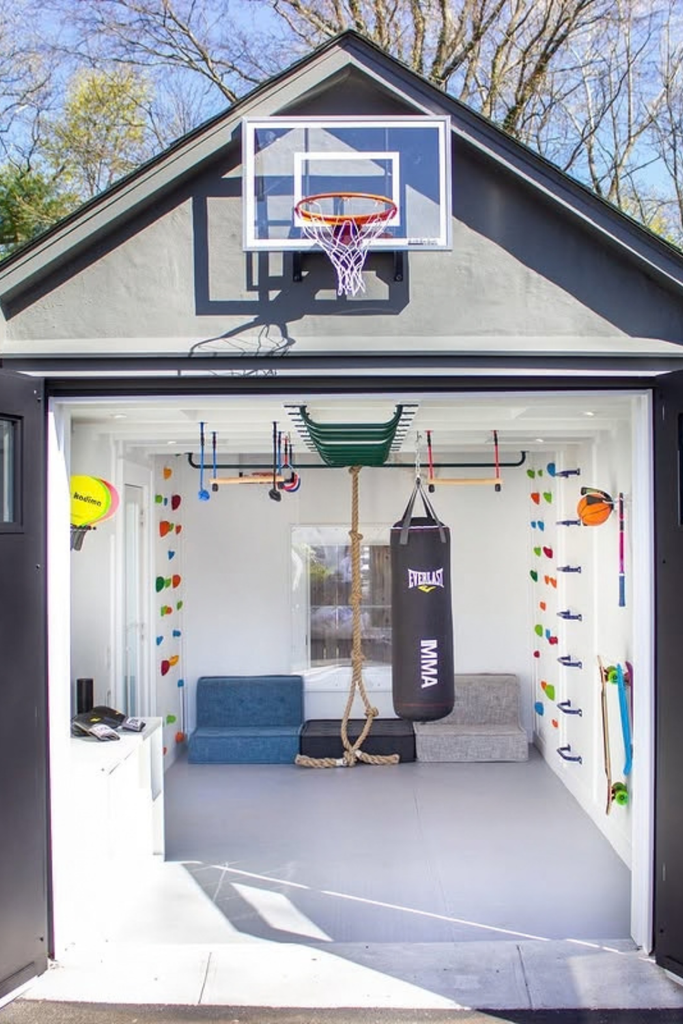
Garage Gym Zone
Turn a smaller garage into an active play gym when your kids need somewhere to climb, swing and burn energy year-round.
Use wall-mounted climbing holds, overhead monkey bars, a rope, and hanging equipment while keeping the middle floor clear.
Thick mats or padded flooring can soften the main landing zones. Open garage doors provide strong daylight.
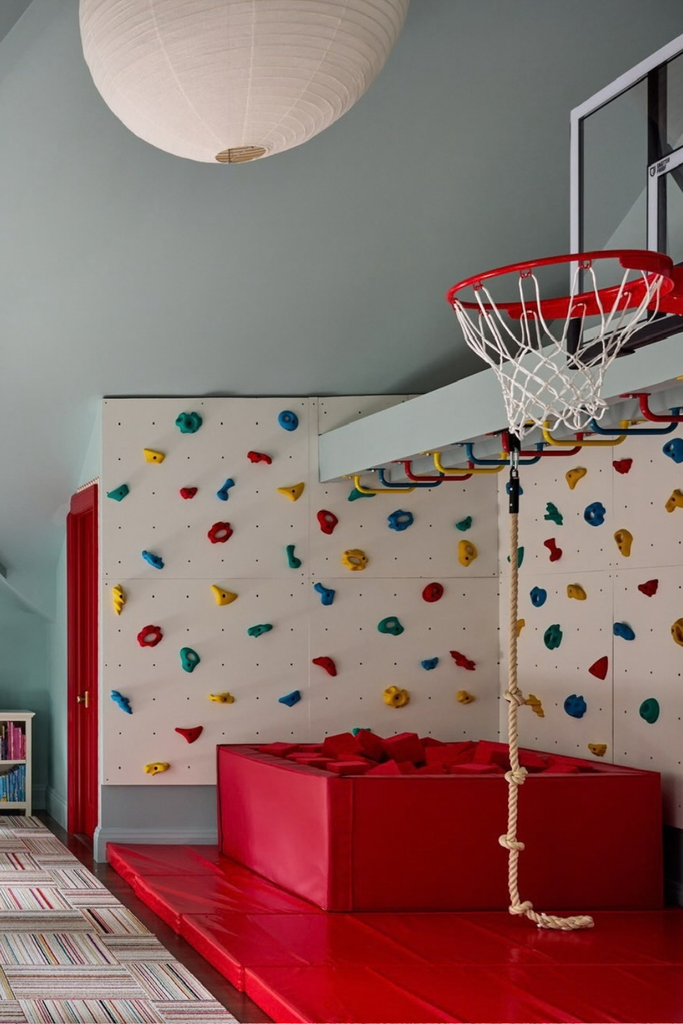
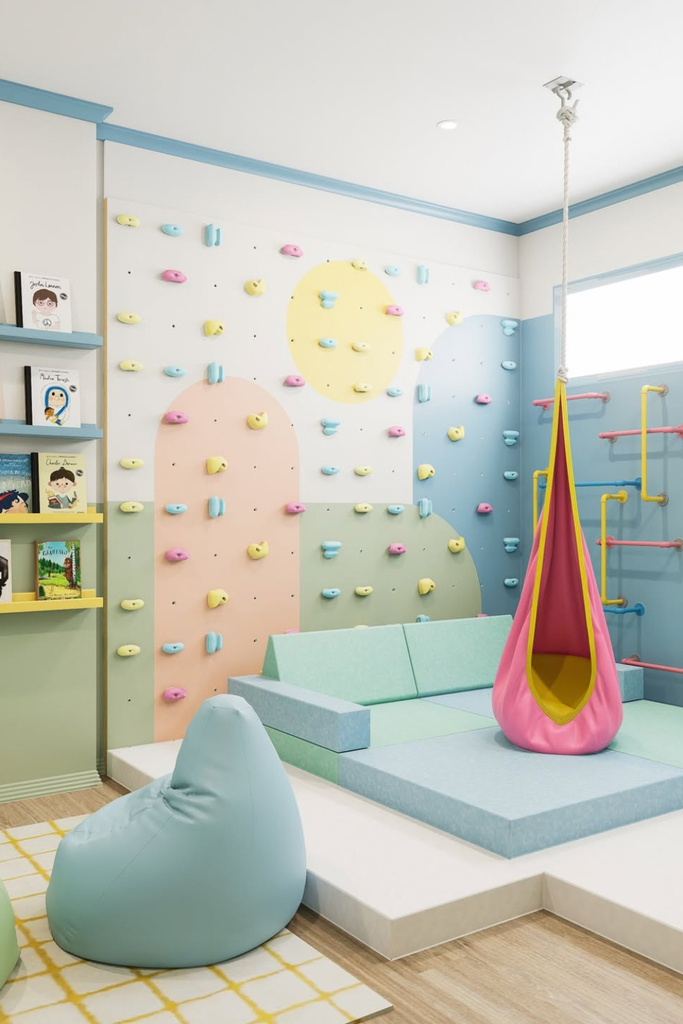
Sensory Climbing Zone
In one padded garage area, combine a sensory swing with a climbing wall to create a balance between vigorous and relaxing play.
After securing wall bars and climbing grips into the appropriate structural supports, cover the landing area with thick matting.
In between activities, front-facing book ledges can facilitate a simple reading break. The area is made brighter by natural window light.
FAQs
Can a Garage Playroom Still Keep Some Storage?
To prevent toys and household goods from competing, store storage along one wall or inside tall, locked cabinets. Less often used goods can be stored overhead.
Low bins keep everyday toys within reach. The goal is to protect a clear play zone instead of letting garage storage slowly take over the room.
What Flooring Works Best for a Garage Playroom?
Based on how well-finished and cozy your garage already seems, choose flooring. Large carpets and foam tiles soften hard concrete, making them ideal for straightforward setups.
Full conversion, carpet tiles, vinyl, or other durable finished flooring can create a warmer everyday surface. Deal with any moisture or cold-floor problems.

Hi, I’m Afaf! I’m a law student who loves writing about everyday life – from home projects and crafts to fashion, beauty, and parenting tips.
I’ve been writing for over a year, sharing ideas that are simple, practical, and easy to try. I write about things I find interesting and useful, whether that’s organizing a space, trying a new DIY, or finding activities to keep kids entertained.
My goal is to share helpful ideas without making things complicated. If it works in real life, I’ll write about it.
When I’m not studying or writing, I’m usually experimenting with new projects or scrolling for inspiration!