
24 Farm Animals Activities for 2026
You put up an activity, your preschooler gets delighted for 3 minutes and then all of a sudden requests for a screen again.
Does this sound familiar. It can feel tougher than it should to keep tiny kids entertained without TV or tablets.
Especially since most “fun activities” either generate a tremendous mess or lose their attention very quickly.
Farm animal activities are distinct. Kids love animals, they love amusing sounds, pretend play and getting hands-on.
In this article, I will show you 24 amazing farm animals activities for kids that bring smiles while helping kids stay creatively engaged.
Let’s jump in!
How Can Farm Animal Activities Keep Preschoolers Busy Without Screens?
It can seem almost hard to keep preschoolers away from screens when they become bored after five minutes or start begging for cartoons again.
Kids naturally like animals, sounds and pretend play so farm animal activities work nicely.
Save this article for later!👇👇👇
They stay fascinated a lot longer if you make learning something they can touch, move, sort or act out.
Kids will pay more attention to a simple animal washing bin, pretend barn set up, or feeding activity than worksheets.
If you want activities to linger longer, try mixing movement, sensory play and simple hands-on chores instead than only sitting activities.
Farm Play
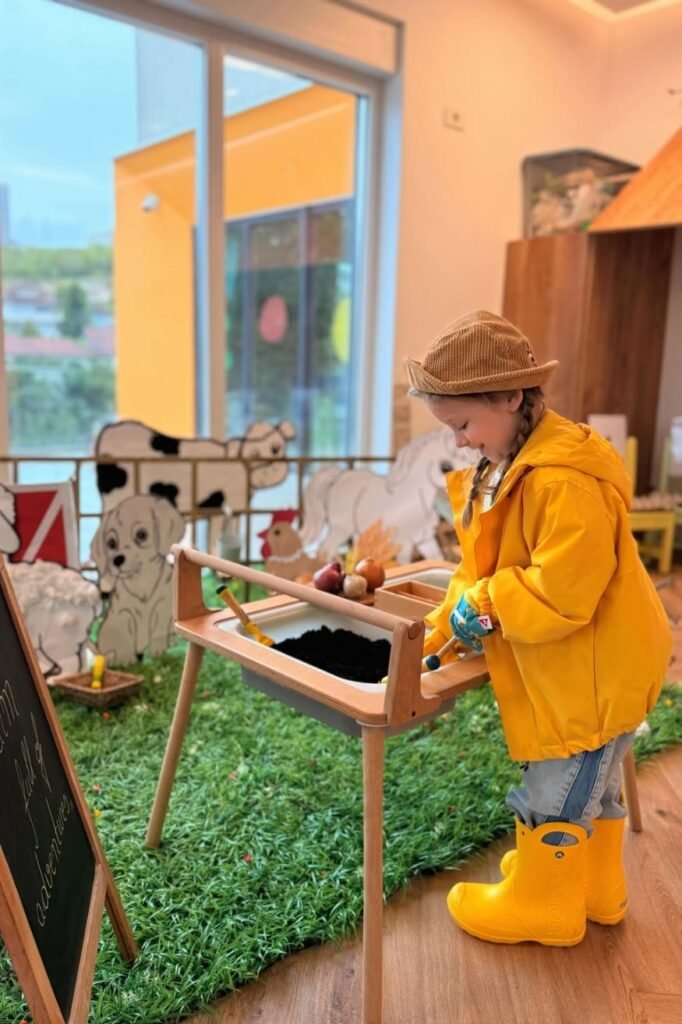
Tiny farmers usually stay busy much longer when pretend play feels real, and this setup does exactly that.
A mini digging station filled with soil, toy tools and cutouts of farm animals makes regular playing a hands-on farm experience without requiring a vast backyard.
Yellow rain boots and helmet instantly make kids feel part of the activity, helping to maintain attention longer during indoor play.
This works best set up similarly for preschool classrooms, rainy afternoons, or agricultural theme week at home.
Fill a sensory table with soil, black beans or kinetic sand so cleanup stays easier while still giving youngsters the impression of “working on the farm.”
Egg Hunt
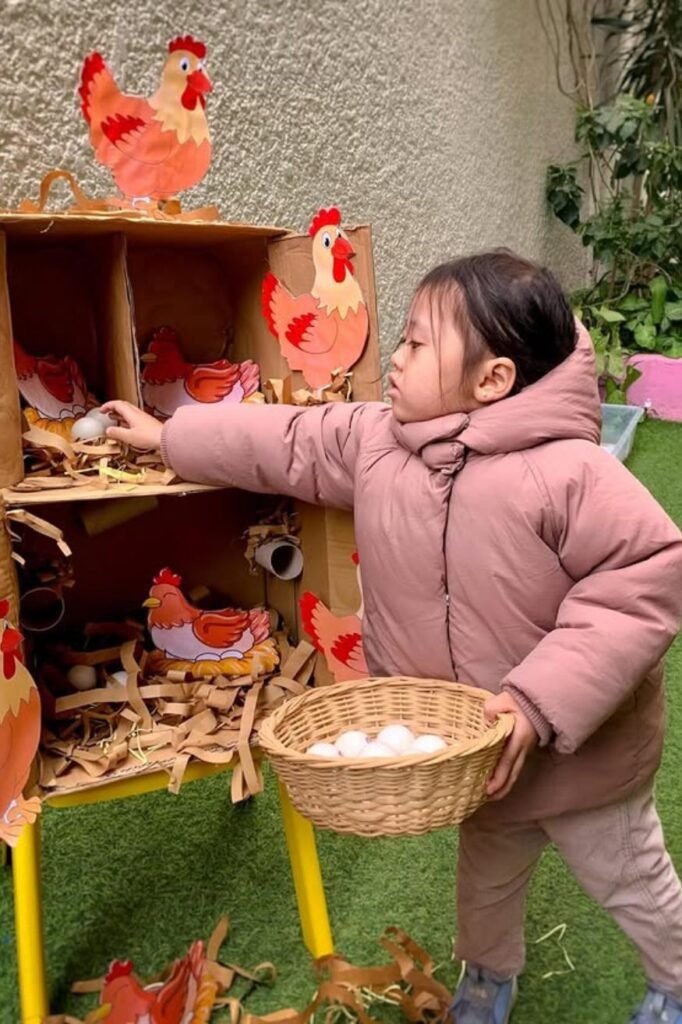
Little hands get surprisingly excited when farm play turns into a “collect the eggs” mission. A cardboard chicken coop with paper hens.
And buried plastic or toy eggs give preschoolers something to search, sort and transport, helping to extend playtime without the need for electronics.
Woven baskets provide realism to the action, and the act of just collecting becomes imaginary agricultural tasks.
This idea works really well in backyards, classrooms and sensory corners. Stack cardboard boxes into little nesting sites.
Fill them with shredded paper for hay and place eggs in different sections to keep the kids inquisitive.
Eggs are perfect for a fast activity that can quickly grow into a longer farm-play session.
Animal Draw
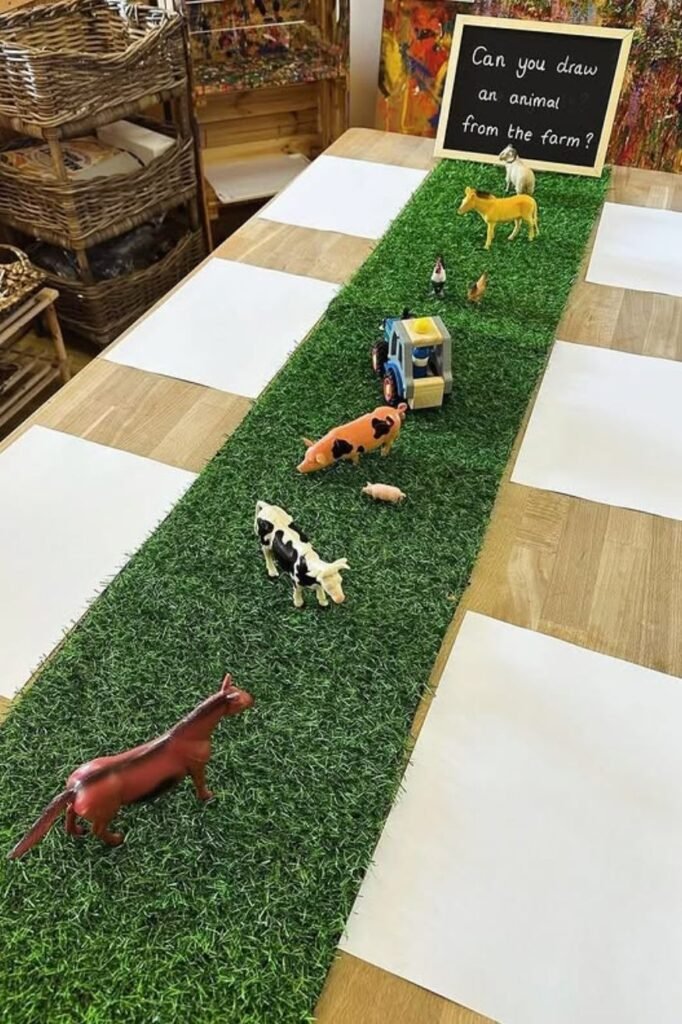
Blank paper suddenly feels more exciting when kids get tiny farm animals as drawing inspiration instead of being told, “go draw something.”
Spread toy cows, pigs, horses, chicks and even a miniature tractor along the middle of the table.
And kids have real things to look at while they sketch, color or just try imitating shapes in their own hilarious way.
It is particularly good for reproducing this configuration in kitchen tables, schools, or homeschool areas.
Create a strip of fake grass or green paper in the middle, add a few toy farm animals and leave drawing sheets around the sides so every child has room.
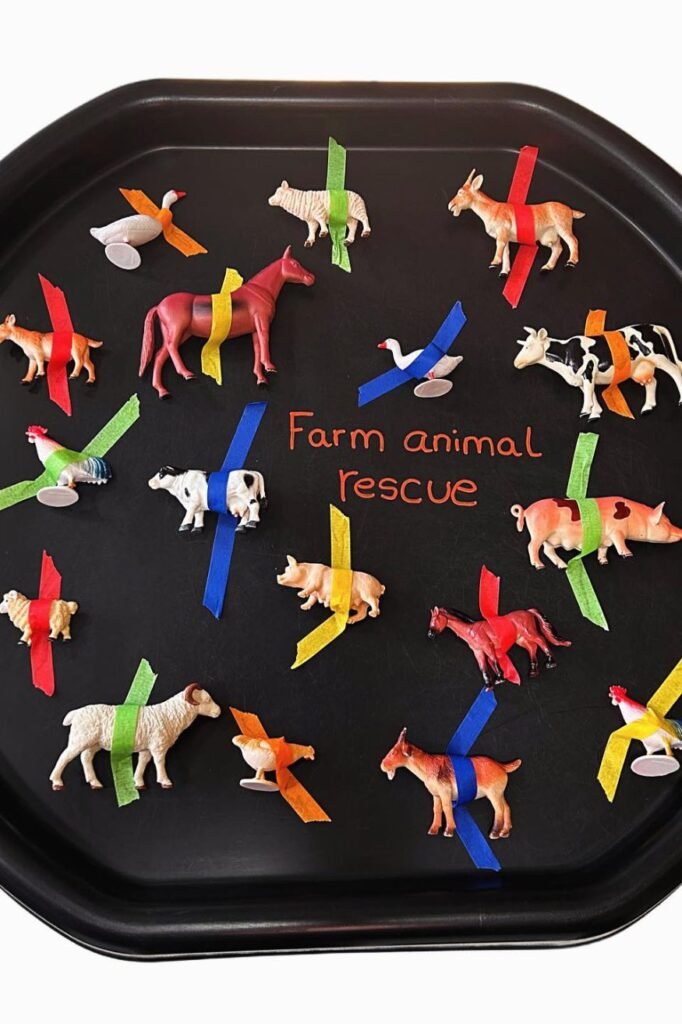
Animal Rescue
Peeling tape suddenly feels way more exciting when kids think they are “saving” farm animals instead of practicing fine motor skills.
Wrapping colorful tape around toy pigs, cows, horses, chickens and lambs turns a simple plate play.
Into a mini rescue operation that captivates children longer than intended. Little fingers are busy tugging, peeling and assisting each animal “escape.”
Quiet afternoons, preschool centers, or waiting-time activities are especially good for recreating anything like this.
Loosely tape toy farm animals using painter’s tape or washi tape and put all on a tray for easy cleanup.
Farm Table
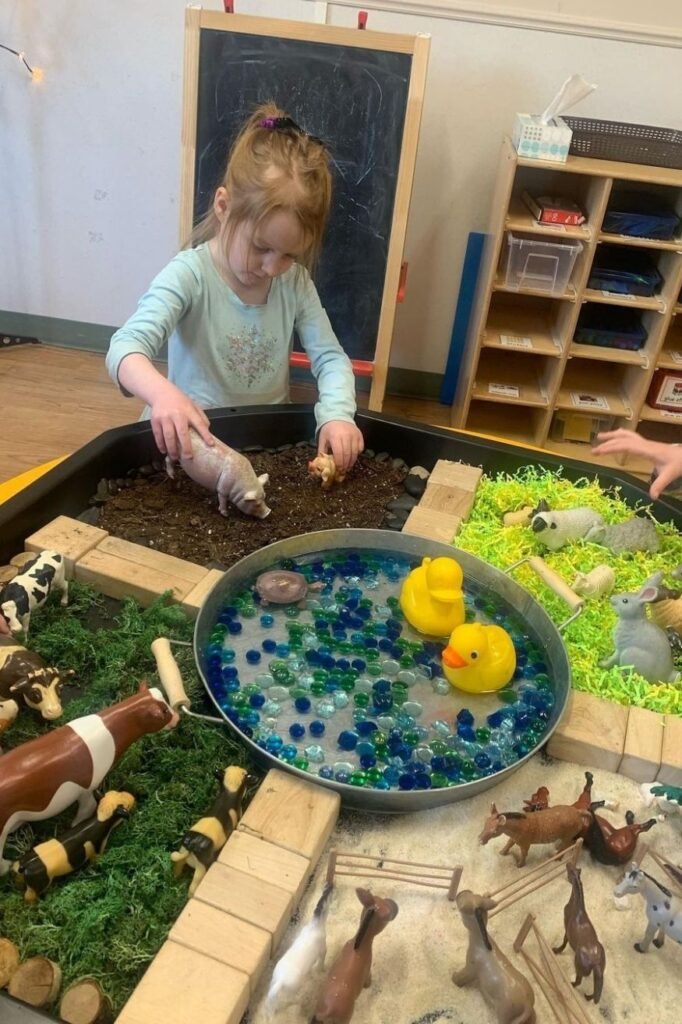
Pretend farms become way more exciting when kids get different little worlds to explore instead of one small activity.
Mud for pigs, grass for cows, water for ducks, hay for sheep and sandy tracks for horses can easily change a sensory table into something.
That will keep preschoolers occupied much longer. Transporting animals from one place to another spontaneously produces narration without having to guide every minute.
Classrooms, homeschool areas, or indoor playrooms are ideal for building something like this.
Divide a tray into little farm areas with grass mats, shredded paper, sand, dirt or water beads so animals each have their own space.
Egg Match
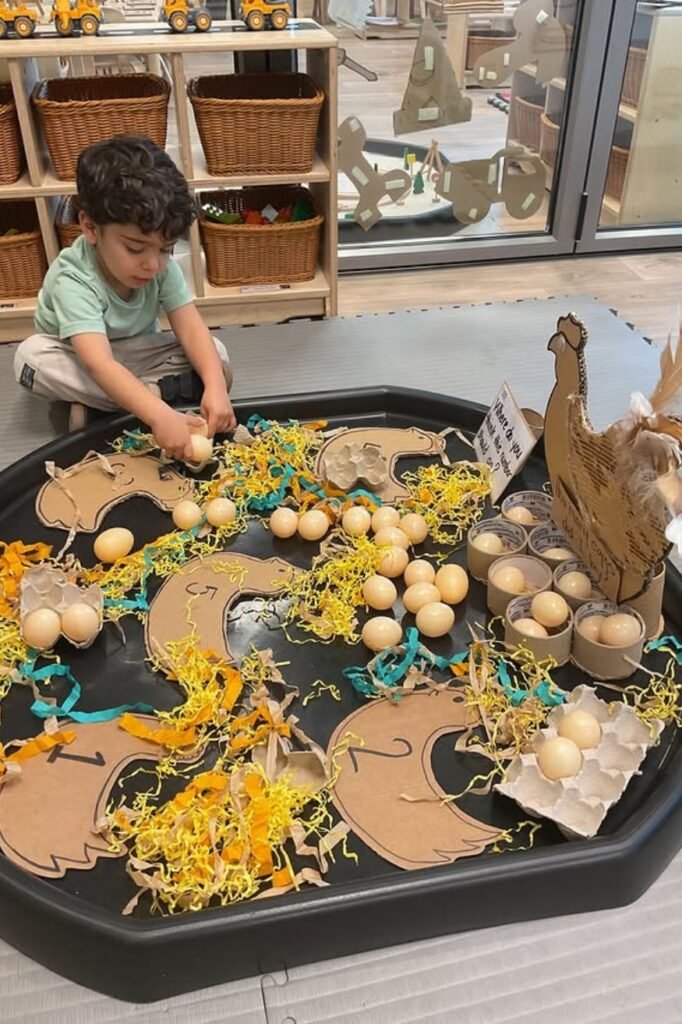
Curiosity kicks in fast when kids get a tiny farm job that feels like a puzzle. Numbered nests paired with little eggs.
Make easy sorting a game that children will want to finish since finding the “right home” for each egg seems like a game, not just practice.
Shredded paper and cardboard hens keep the whole thing seeming lively without the need for expensive ingredients.
Recreating something like this works incredibly well in preschool centers, homeschool mornings, or peaceful afternoons inside.
Cut out egg shapes from cardboard and write numbers on the inside. Let kids put matching eggs into each nest while pretending to help chickens on the farm.
Animal Scoop
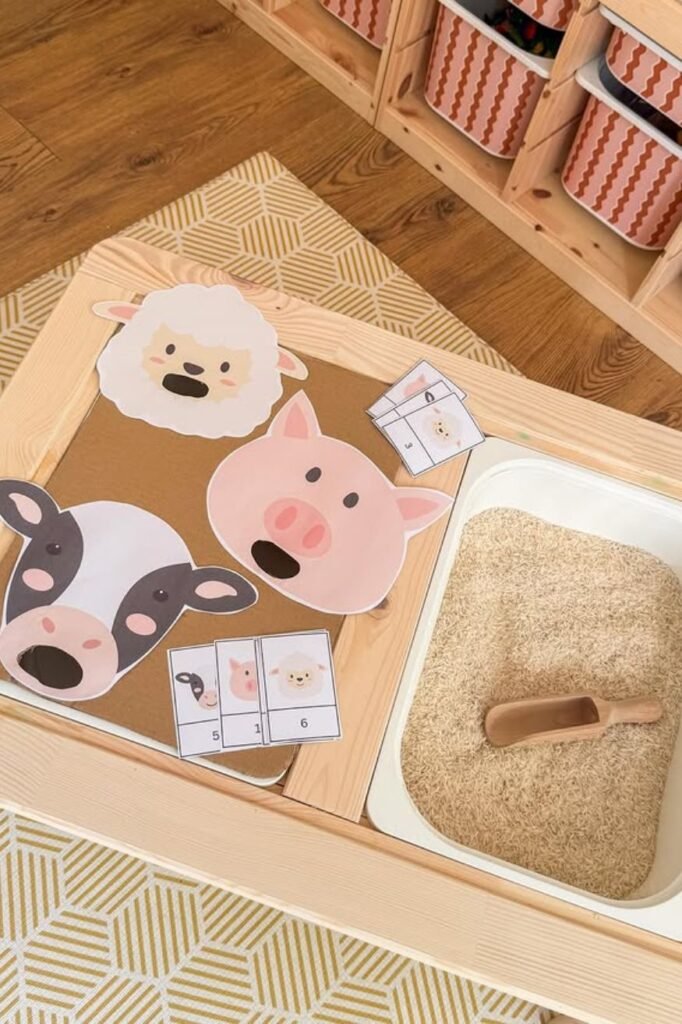
Scooping rice somehow feels way more exciting when farm animals turn it into a little learning game.
Matching cards and big animal faces encourage youngsters to slow down, examine intently, and sort before placing the proper pieces into position.
Rice offers a sensory element which keeps those little hands occupied longer, especially for kids who love to pour and dig.
This type of activity works great for morning table activities, preschool centers, or quiet time play.
Print or sketch simple farm animals faces like cows, pigs and sheep and then put matching picture cards nearby so youngsters can connect each animal.
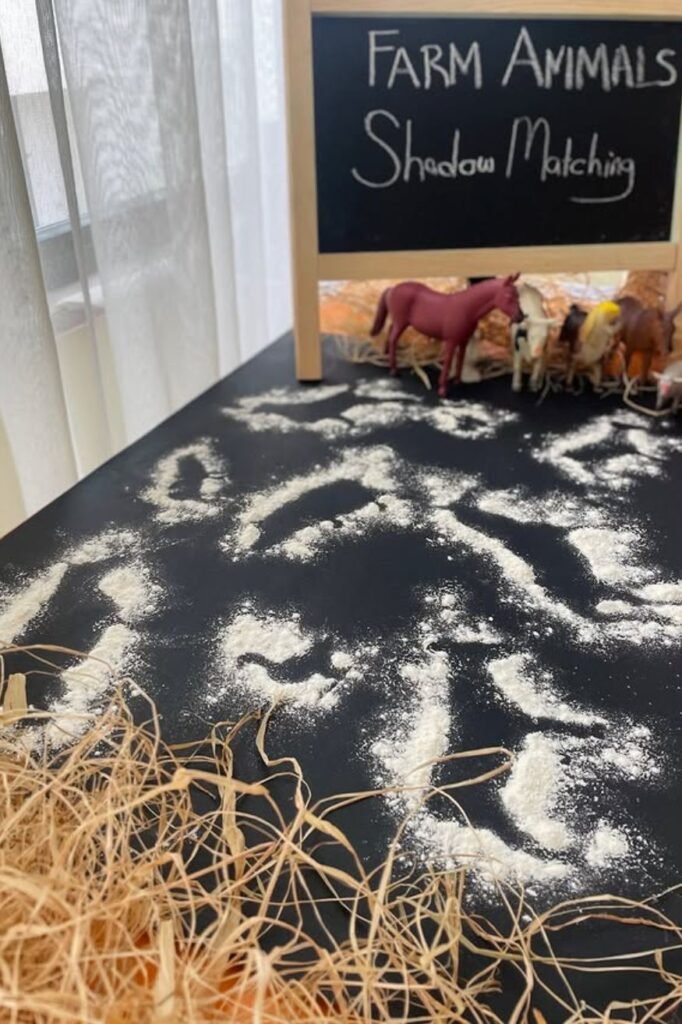
Shadow Match
Little detectives usually jump into this one fast because matching shadows feels more like solving a mystery than learning.
Farm animal figures combined with flour or powder outlines convert simple recognition practice into a hands-on guessing game.
Where kids match shapes, legs, tails and sizes before placing each animal in the correct place.
Preschoolers struggle to guess which shadow is the horse’s, the pig’s or the cow’s. Little details become exciting.
Something like this is especially good for rainy days, agricultural theme week or classroom centers.
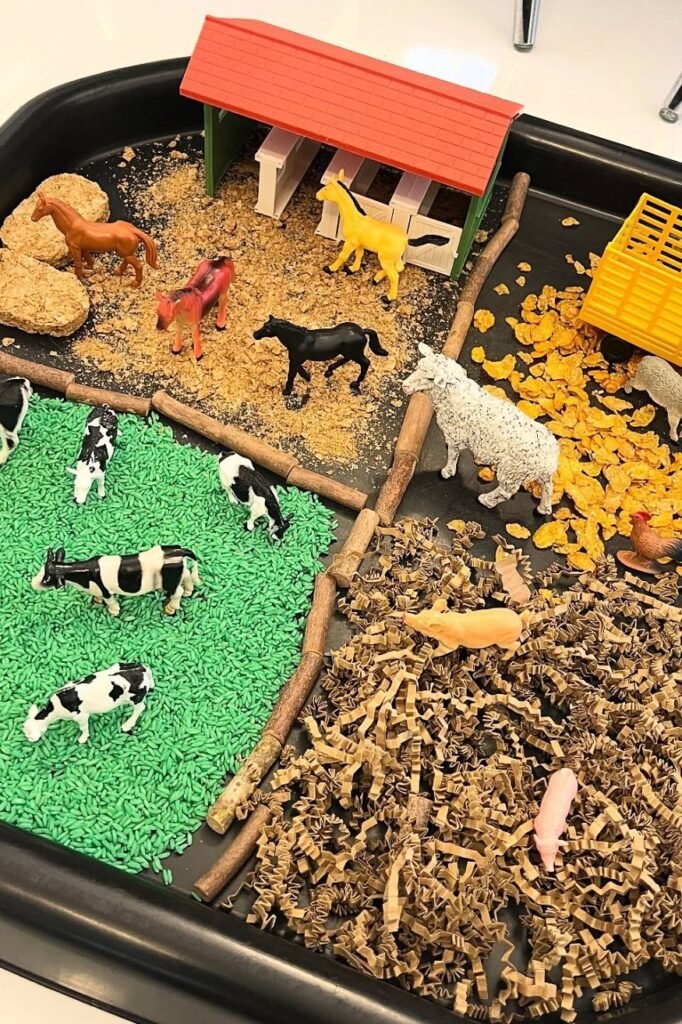
Mini Farm
Busy little minds usually stay focused longer when every farm animal gets its own tiny space to explore.
Green “grass” for cows soft shredded paper for pigs, crunchy cornflakes for chicks and a stable area for horses make simple pretend play much more genuine.
Little fences and sections are a natural for moving animals around, making up stories and even making their own farm employment.
Playrooms, preschool centers or rainy day indoor settings work very well for duplicating something like this.
Create miniature farm zones on a plate using colorful rice, cereal, shredded paper, or oats so textures are different for every zone.
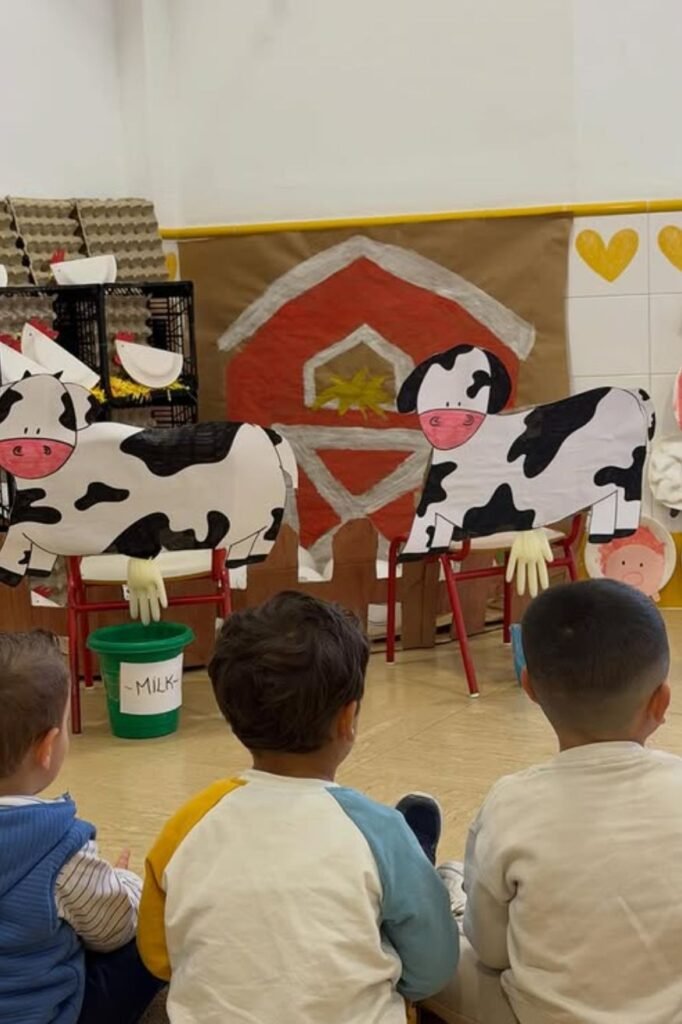
Cow Milking
Giggles usually start fast when preschoolers get to “milk a cow” instead of only hearing about farm animals in books.
Kids can try, touch and remember circle time when it’s cardboard cows with gloves attached as udders.
Sitting together and taking turns makes the whole activity feel like a tiny farm tour while softly educating where milk originates from.
Farm week is especially good for reproducing something like this in classrooms or daycare settings.
Tape huge paper cows to chairs, fill gloves with water or leave them to pretend squeeze, and put small buckets below for kids to practice gently “milking.”
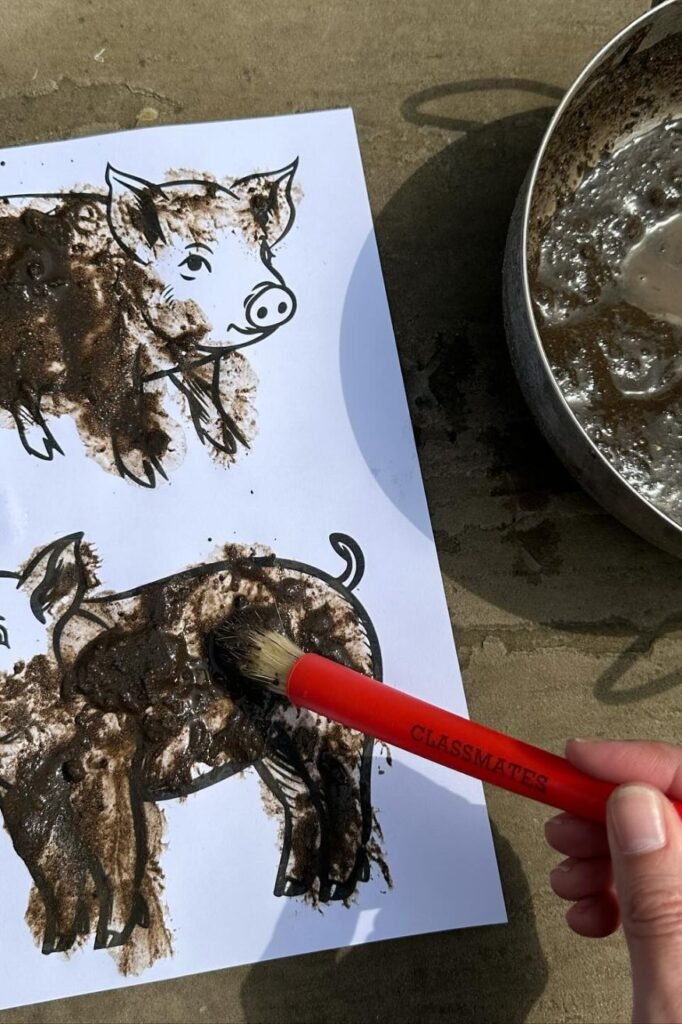
Mud Paint
Messy play somehow feels much more exciting when kids get permission to make pigs muddy on purpose.
Pig prints and handmade mud paint transform a basic coloring project into sensory fun and where brushing dabbing and smearing are suddenly part of the farm story.
A clean pig getting muddy frequently elicits more chuckles and holds kids’ interest longer than regular paint.
Recreating anything like this is especially good for sunny afternoons, outside tables, or farm week crafts.
Mix soil with water to create safe “mud paint”, print simple pig outlines and pass out chunky paintbrushes so young hands can get into every corner.
Farm Market
Pretend farm jobs feel way more real when kids get something to collect, carry, and sort with their own hands.
Corn cobs, imitation eggs, sheep cutouts, and vibrant farm decorations transform one little nook.
Into a mini farm market that provides toddlers with lots of busy work and their own stories to tell.
Small occupations like obtaining food or “feeding” animals usually hold attention considerably longer than sitting pursuits.
Outdoor play places, preschool farm week, or backyard sets are good specifically for recreating anything like this.
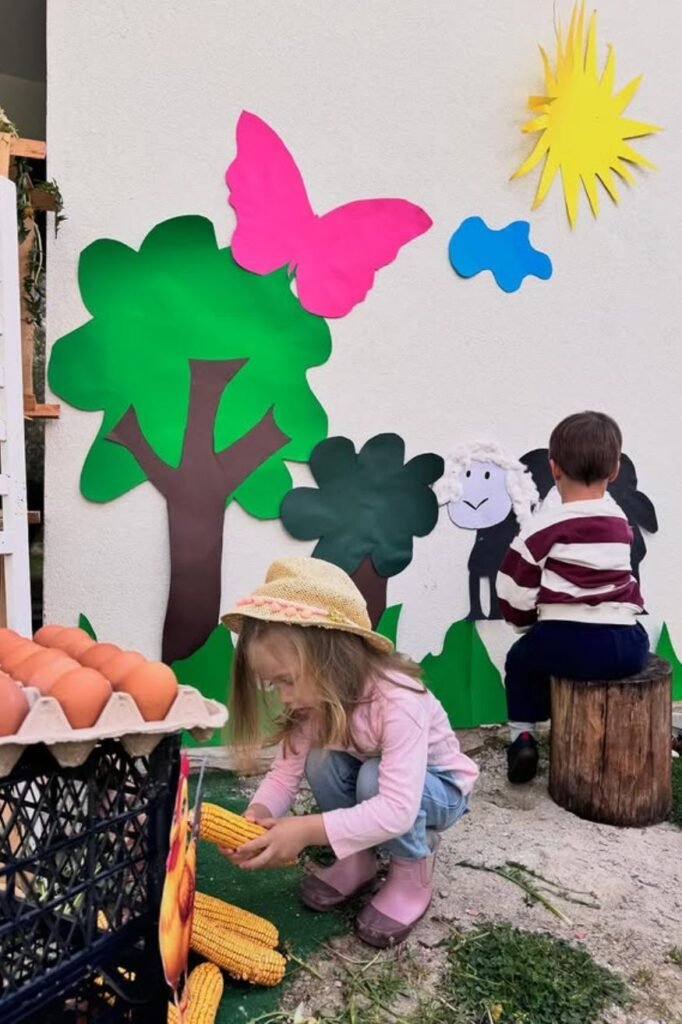
Sheep Wash
Foamy play usually turns into instant excitement when kids get the job of “washing” a muddy sheep together.
Preschoolers will have a wonderful time spreading, patting and cleaning a giant sheep cutout with shaving cream or soap foam and will feel like real farm helpers.
Group activities like this work especially well since youngsters tend to start conversing, sharing tools and helping one other accomplish the job.
Outdoor play areas, childcare centers or a farm theme week is really good for recreating anything like this.
Tape a giant sheep poster on cardboard, add cotton texture or fluffy paper. Provide foam, sponges and safe brushes for the youngsters to “clean” the sheep.
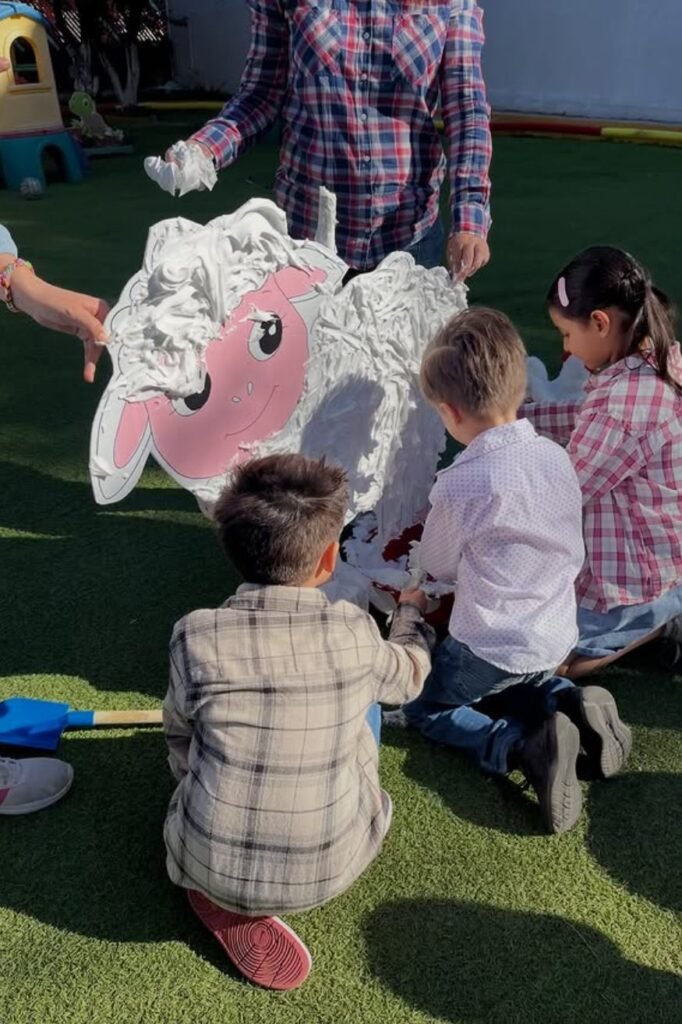
Chick Hatch
Tiny chicks somehow make preschoolers stop and look a little longer, especially when the whole setup feels like a baby animal station.
A cardboard shelf turns into a fascinating “farm nursery” with fluffy chicks, artificial eggs and paper chickens tucked into miniature nests.
Where youngsters can check eggs, count chicks and imagine what goes on inside a coop. Opening tiny doors and peeping into each region.
Farm week, dramatic play corners, or homeschool mornings are especially good for replicating anything like this.
Stack cardboard boxes to create little nesting chambers, add shredded paper for straw and insert toy eggs or fluffy chicks for kids to explore freely.
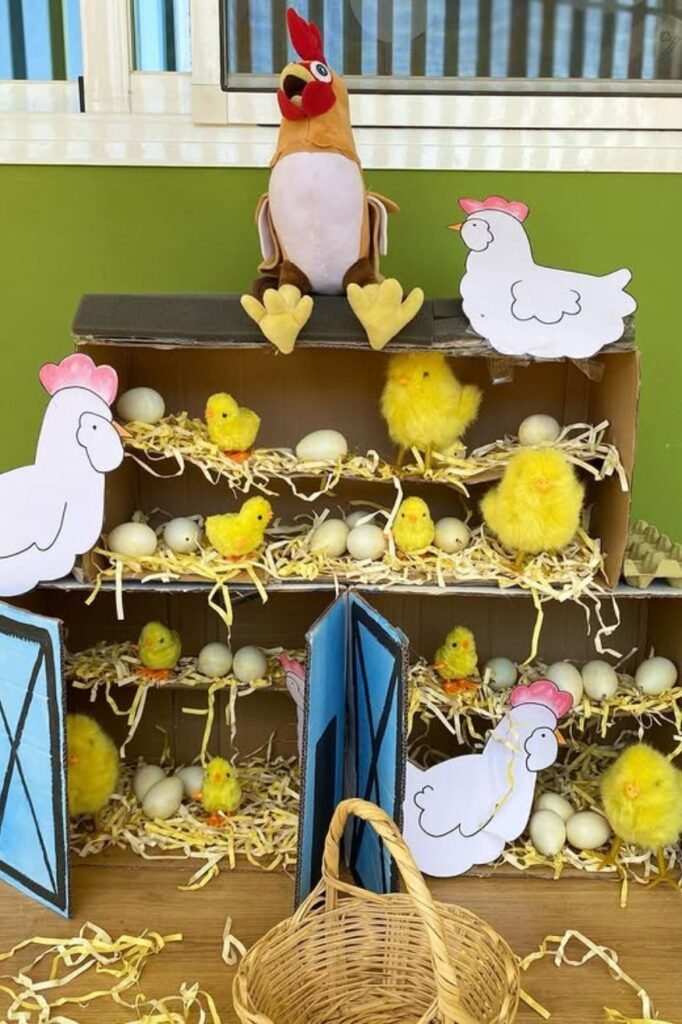
Feed Scoop
Tiny hands usually stay busy longer when farm animals “need help” getting fed. Corn kernels, scoops, and happy animal cups.
Turn simple pouring into a fun feeding game that preschoolers will love to count scoops, match animals and develop fine motor skills.
Without even knowing they are learning. Watching a cow or horse “eat” somehow makes the same thing fascinating rather than tedious.
Sensory tables, homeschool mornings, or quiet play corners are especially good for recreating anything like this.
Fill a tray with dried corn, oats or beans and place paper animal cups with their mouths open so kids can scoop food into each one.
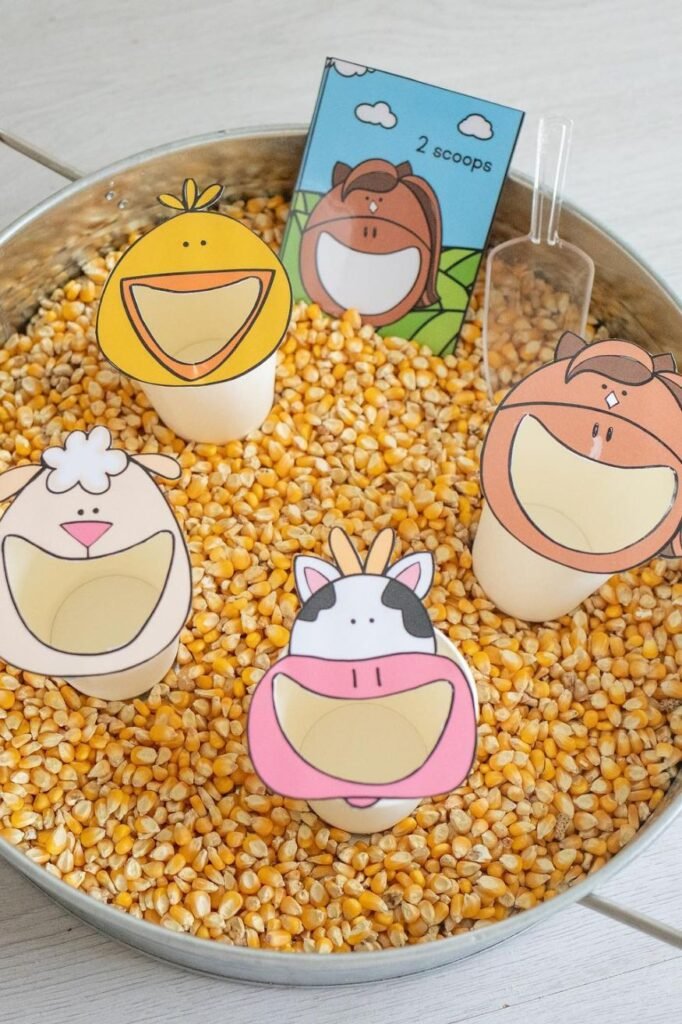
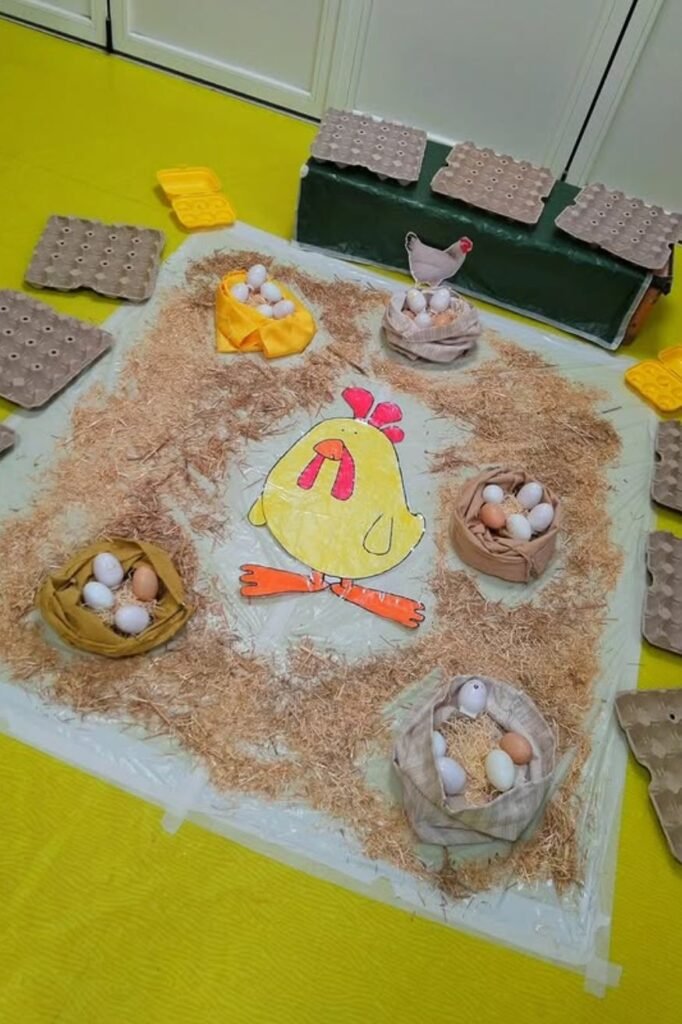
Nest Count
Little farmers usually love helping chickens “watch” their eggs, especially when every nest turns into a counting mission.
Easy number practice is more farm play than learning time with tiny baskets packed with eggs, soft hay and a happy chicken arrangement.
Needless to say, counting, sorting or transferring eggs from one nest to another will keep preschoolers occupied as they walk around.
Farm week, classroom circles, or homeschool mornings are especially good for replicating something like this.
Use shredded paper for hay, egg cartons for nests, and plastic or actual empty eggs so youngsters can count how many go in each basket.
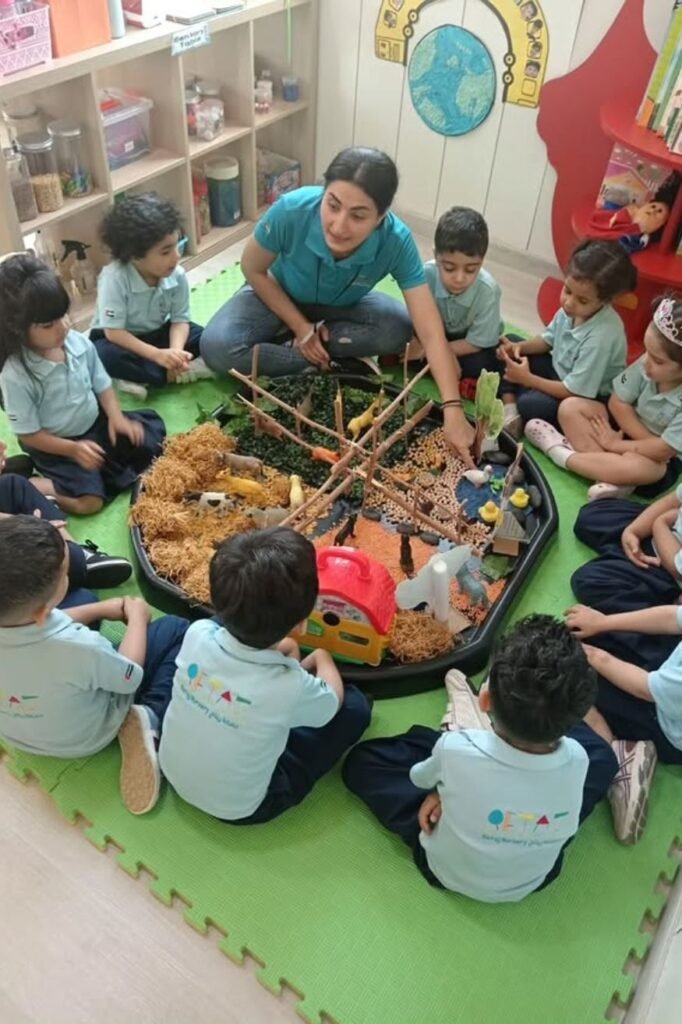
Farm Circle
Storytime feels much more exciting when kids get to sit around a giant farm world instead of only listening from their chairs.
miniature animal enclosures, pretend hay, fences, tractors and miniature farm trails typically draw toddlers into talks.
Since everyone wants to point, move animals or guess what occurs next. When everybody’s sitting around one setup together, group learning feels more like play.
Something like this works great for circle time, preschool schools, or agricultural theme week.
Fill a sensory tray with diverse textures for grass, mud and hay and some toy farm animals and simple paths created from sticks or blocks.
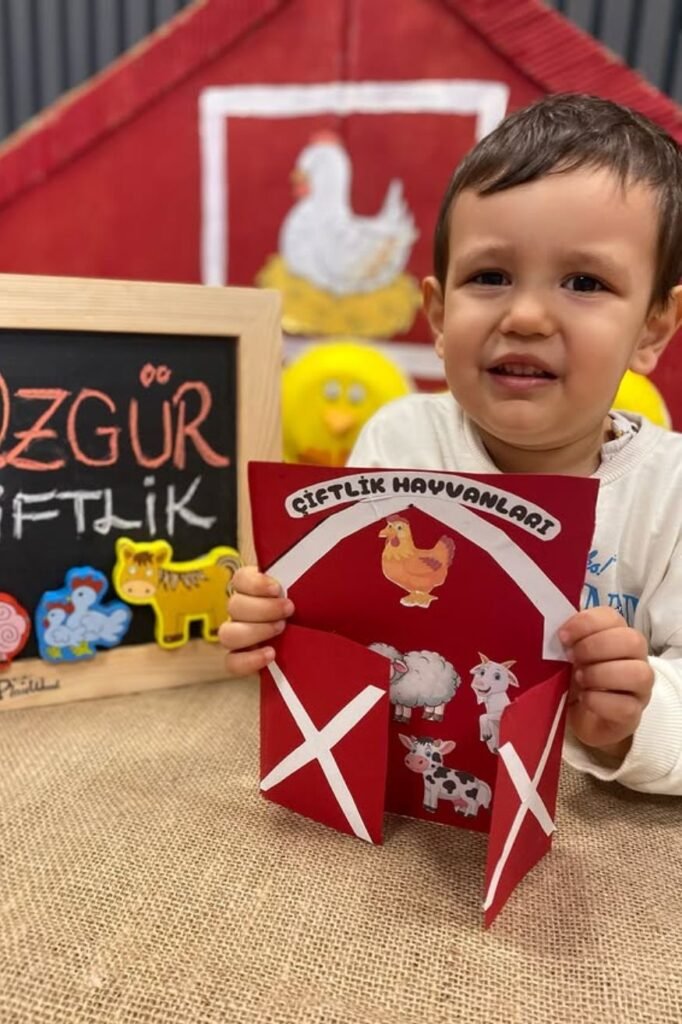
Barn Craft
Proud little smiles usually show up fast when kids get to make their own mini farm scene instead of only naming animals from flashcards.
Once they’ve learned animal names, preschoolers may touch, point to, and proudly show off a simple barn craft of sheep, cows, goats, and chickens.
Homeschool mornings, preschool art corners, or farm theme week work work very well for replicating something like this.
Create a barn shape out of red paper and glue favorite farm animals inside. Decorate with stickers, cotton for sheep, or little drawings around the perimeter.
Open each of the doors and name animal noises for craft time as a fun farm lesson in a calm way that’s not too regimented.
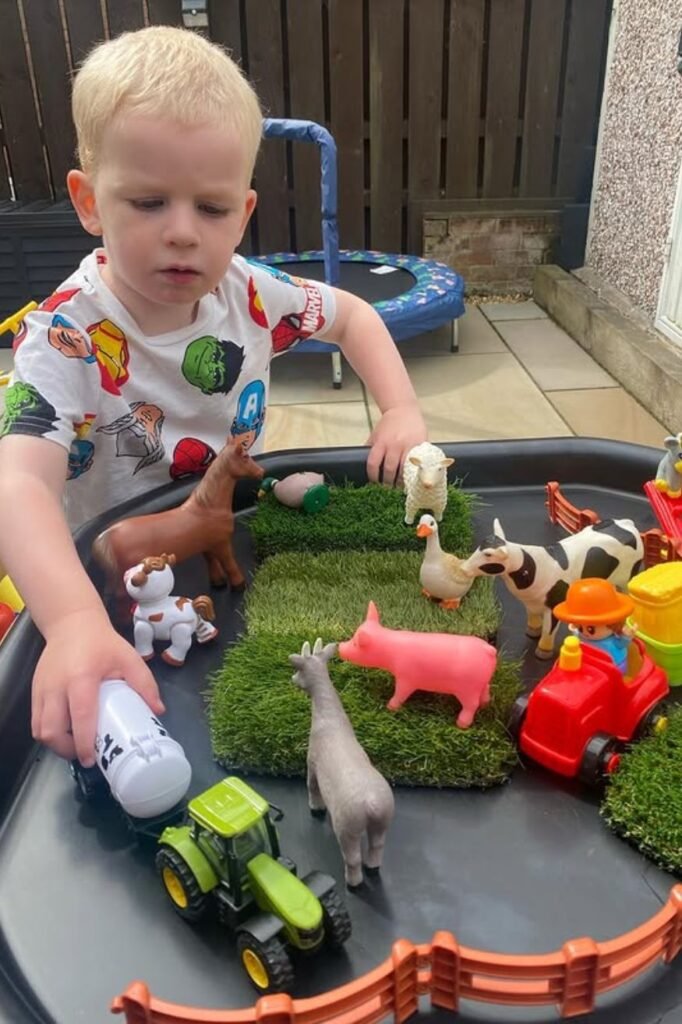
Farm Setup
Pretend play lasts much longer when kids get a whole farm world they can move around instead of one quick activity.
Little tractors, fences, patches of grass, and all sorts of animals readily draw children into driving, feeding, and caring for the farm without much prompting.
Taking pigs to grass, guiding cows close to the fence or driving a farmer about somehow converts basic toy play into a comprehensive drama.
Something like this is great to recreate in backyards, patios or inside on a sensory table.
Add artificial grass squares, plastic farm animals, small tractors and fences so kids can design their own little farm scene.
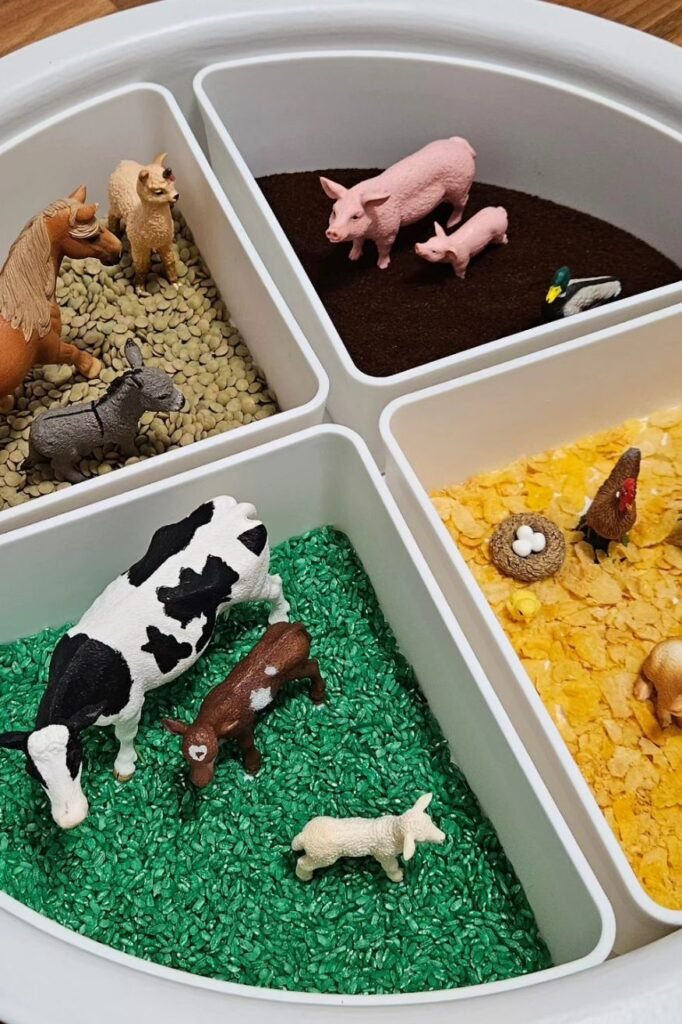
Farm Sort
Different little farm zones can keep preschoolers busy much longer because kids naturally move animals where they “belong” without being told what to do.
Green rice for grazing cows, beans for horses, black dirt for pigs and crunchy cereal for chickens.
Turn basic toy animals into a hands-on sorting activity that develops thinking abilities throughout play.
Kitchen tables, sensory nooks, or preschool farm week work especially well for recreating something similar to this.
Divide a tray into pieces using containers or dividers then add different textures to give each animal area a distinct vibe.
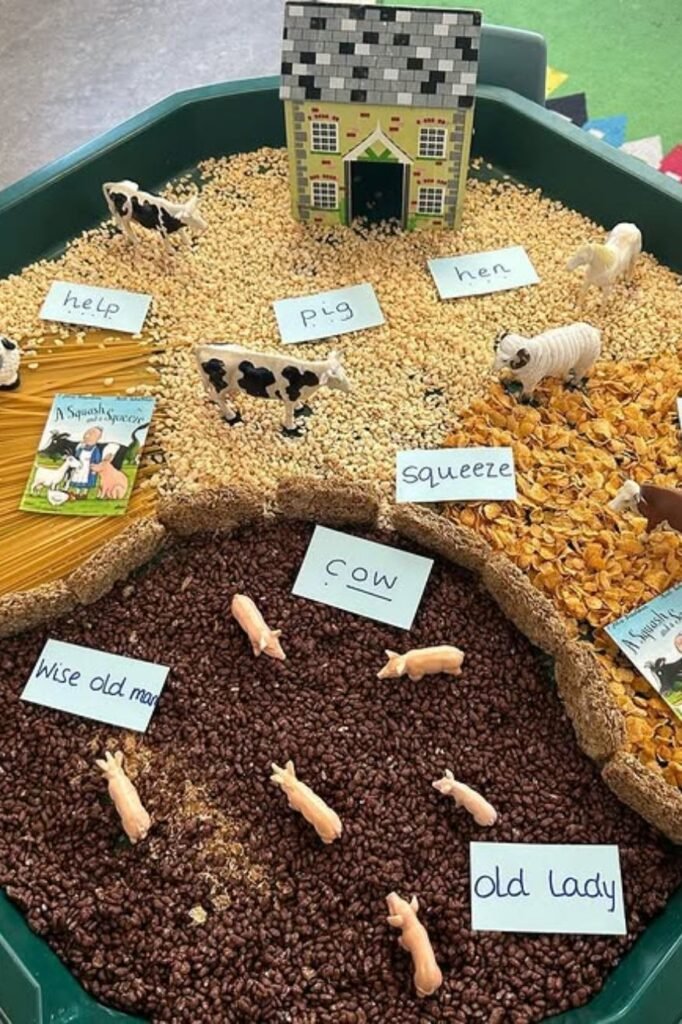
Story Tray
Pretend play gets even better when a farm activity quietly turns into storytime without kids noticing.
Young pigs, cows, sheep, and hens, together with phrases that are identified and textures that can be felt, encourage children to intuitively touch.
Move around, and talk about what is going on at the farm. Cornflakes for chicks, beans for pigs.
And pasta “hay” make each part different immediately, which keeps young hands interested longer.
Reading nooks, preschool classrooms, or homeschool farm week work nicely to recreate something like this.
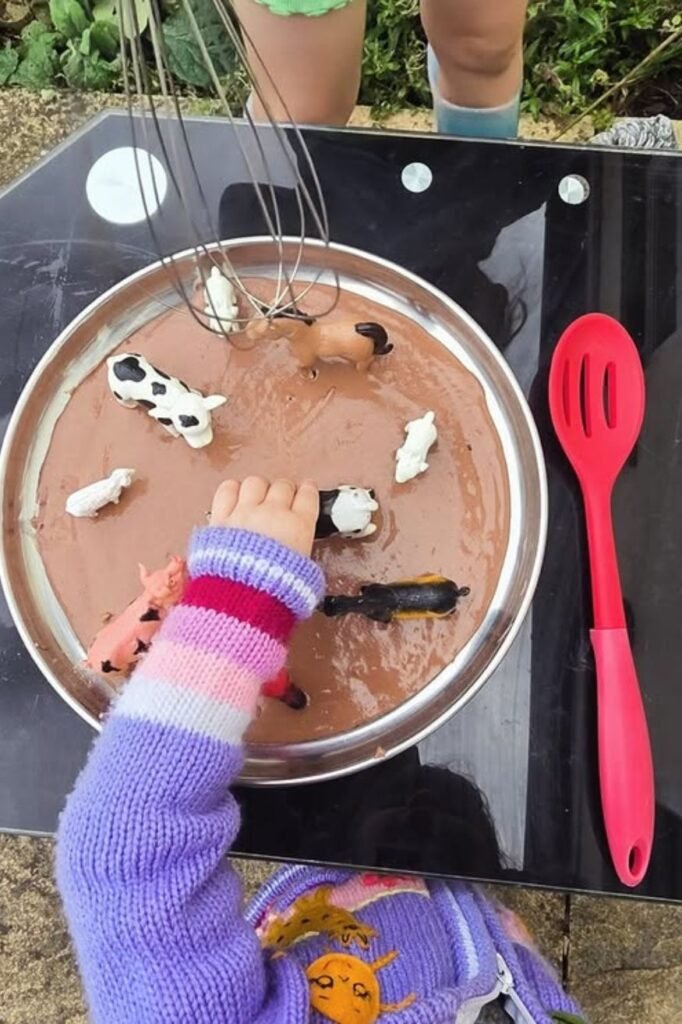
Mud Play
Squishy farm fun usually becomes the favorite activity fast when kids get permission to make animals messy on purpose.
Toy cows pigs horses and lamb and dipped into the muddy water converts basic pretend play into the sensory experience.
With small hands splashing, stirring and rescuing animals from the “mud.” Using mixing utensils like whisks and spoons.
Makes the whole operation somehow even more fascinating as kids automatically start to think they are helping on the farm.
It is especially good to make something like this on backyard tables, muddy play days, or agricultural week outdoors.
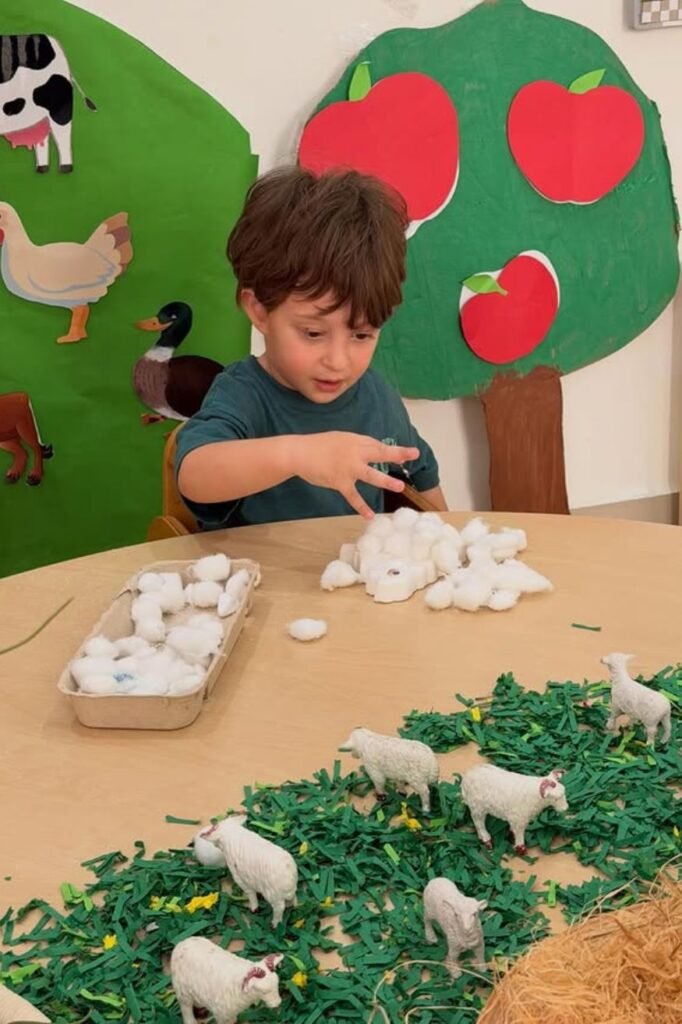
Sheep Feed
Fluffy sheep somehow become much more exciting when kids get the job of “feeding” or caring for them instead of only looking at pictures.
Cotton balls, shredded grass and tiny sheep figures transform an ordinary table into a tranquil farm station where children may sort.
Place and pretend play at their own leisure. Plus, adding soft cotton to the table offers just enough movement to keep small hands busy longer.
Quiet places in the classroom, homeschool mornings, or indoor farm week events are very good for replicating something like this.
Put green paper strips down for grass, put in some toy sheep and have the children use cotton balls for wool, food or pretend bedding.
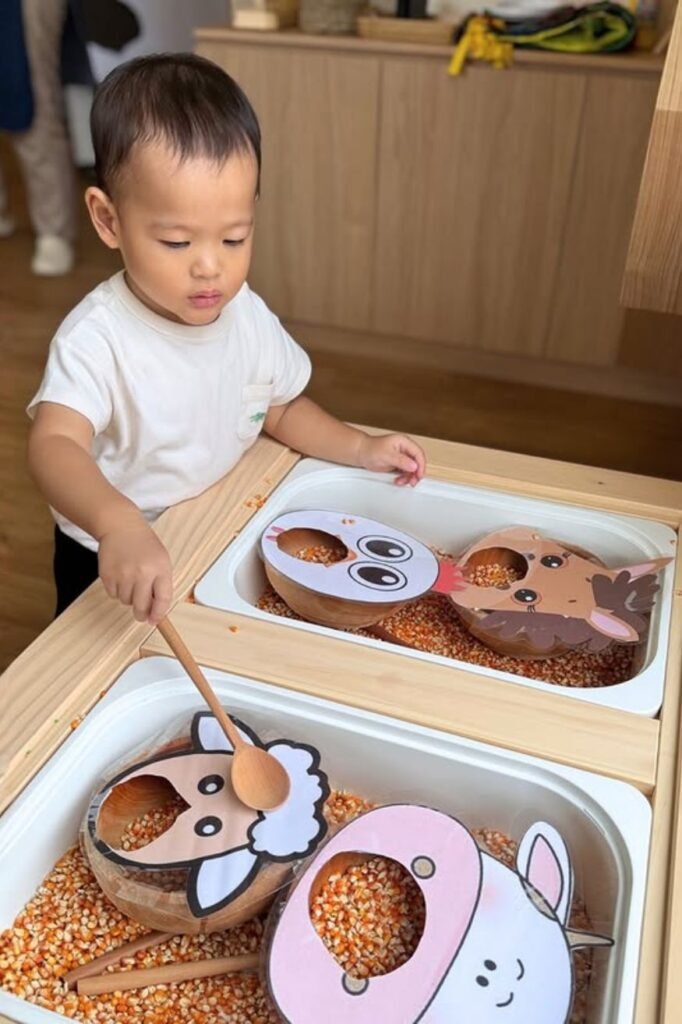
Animal Feed
Scooping food into hungry farm animals can keep little hands busy much longer than regular matching games.
Animal themed bowls such as sheep, pigs, owls or chickens turn simple spoon practice into pretend feeding time.
Where kids instinctively slow down, pour carefully and try to fill every animal’s tummy.
Corn kernels give a sensory element that makes the whole action feel more lively with minimal preparation.
Toddler tables, preschool sensory areas or calm indoor afternoons work exceptionally well to recreate anything like this.
FAQs
What Are The Best Farm Animal Activities For Preschoolers Who Get Bored Quickly?
Hands on activities tend to work best for preschoolers who tend to lose interest fast. Kids frequently stay engaged longer with pretend egg hunts.
Animal feeding games, mud play, sensory bins and farm role play because kids are moving, touching, scooping and imagining instead of just sitting there.
How Do You Make Farm Animal Activities Less Messy At Home?
You can make low-mess farm fun a lot easier by swapping mud and paint for dry sensory fillers such as rice, oats, corn kernels, shredded paper or pom-poms.
Trays, baskets and tiny bins can assist keep everything in one area, while still giving youngsters the farm play sense.

Hi, I’m Afaf! I’m a law student who loves writing about everyday life – from home projects and crafts to fashion, beauty, and parenting tips.
I’ve been writing for over a year, sharing ideas that are simple, practical, and easy to try. I write about things I find interesting and useful, whether that’s organizing a space, trying a new DIY, or finding activities to keep kids entertained.
My goal is to share helpful ideas without making things complicated. If it works in real life, I’ll write about it.
When I’m not studying or writing, I’m usually experimenting with new projects or scrolling for inspiration!