
20 Emotions Activities for Kids
Helping kids name their own feelings can already be tricky, but getting them to understand how someone else feels can be even harder.
Group activities make those emotions easier to see and talk about through games, stories, role-play, and shared situations.
In this article, you’ll find fun Emotions Activities for kids that help them recognize different feelings, and understand other people’s reactions.
Let’s jump in!
Are There Fun Group Activities That Help Kids Understand Other People’s Feelings?
Group activities can make it much easier for kids to understand that everyone does not react to the same situation in the same way.
You can use emotion charades, role-play, story cards, puppet games, or simple “how would you feel?” situations to get kids talking.
Ask each child what emotion they notice and what clues helped them decide, such as a facial expression, body movement, or tone of voice.
When answers differ, use that moment to explain that two people can have different feelings about the same experience.
Regular group practice helps kids listen to other viewpoints, recognize emotional clues, and think about someone else’s feelings before reacting.
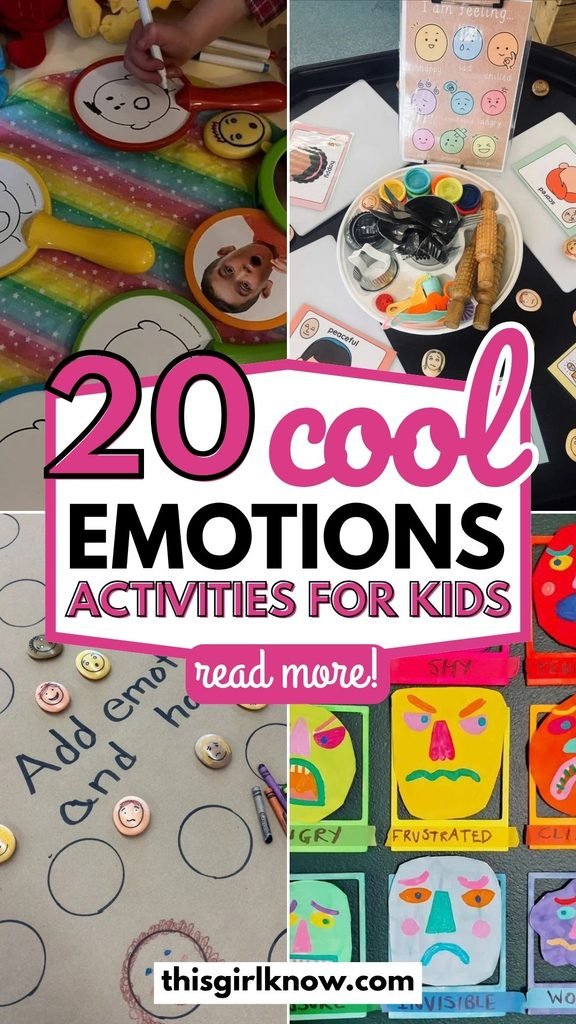
Emotion Mirrors
Turn emotion practice into a playful table activity by letting kids draw different expressions on reusable face mirrors.
Add emotion stones, colorful characters, and a feelings story nearby so kids can compare faces and talk about.
This works especially well for preschool, classroom, or small-group activities where kids can copy expressions in the real mirror.
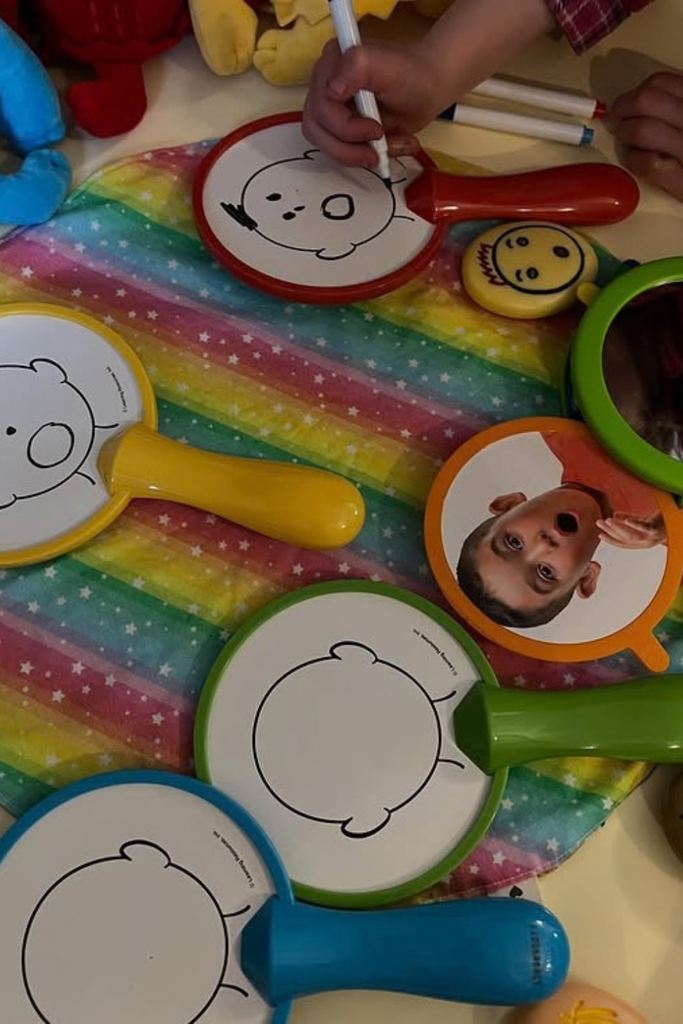
Feelings Match
Make emotion words easier to understand by pairing simple feeling cards with matching face stones kids can move around.
Set this up at a preschool table or classroom station, then let kids match each expression with feelings such as happy, sad, or angry.
Once they finish, ask what facial clues helped them choose. Adding playdough and simple tools lets kids recreate each expression.
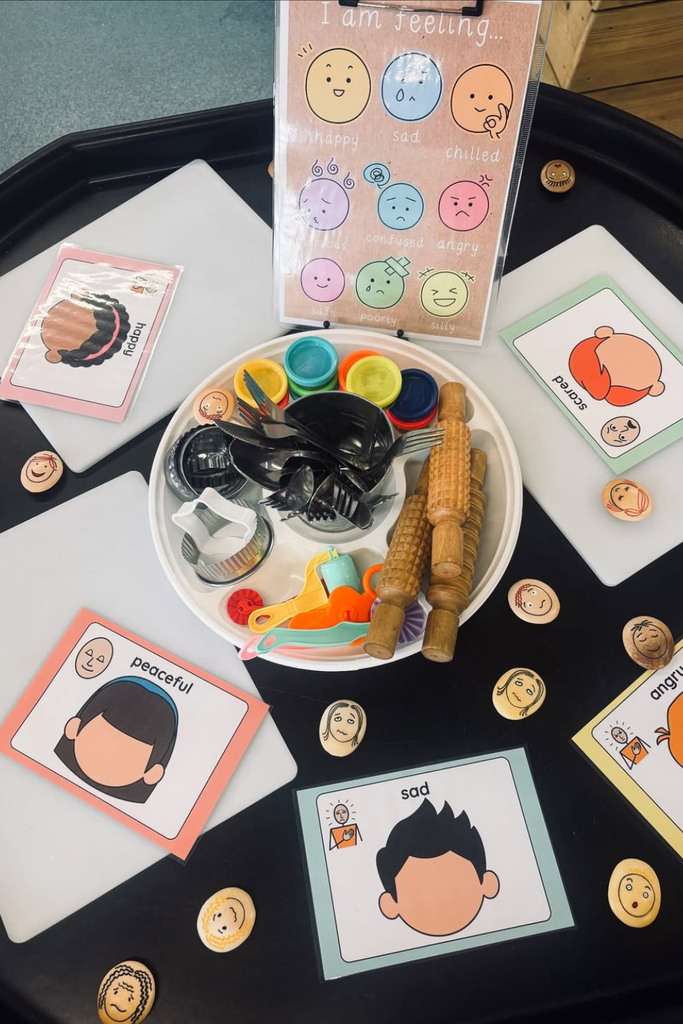
Draw Emotions
Give kids a large sheet filled with blank face circles and let each child choose one to create an emotion.
Keep crayons close at hand so they can alter their person’s mouth, eyes, eyebrows, and hair to suit their mood.
Children can compare completed expressions and explain their decisions in group settings, which makes them very effective.
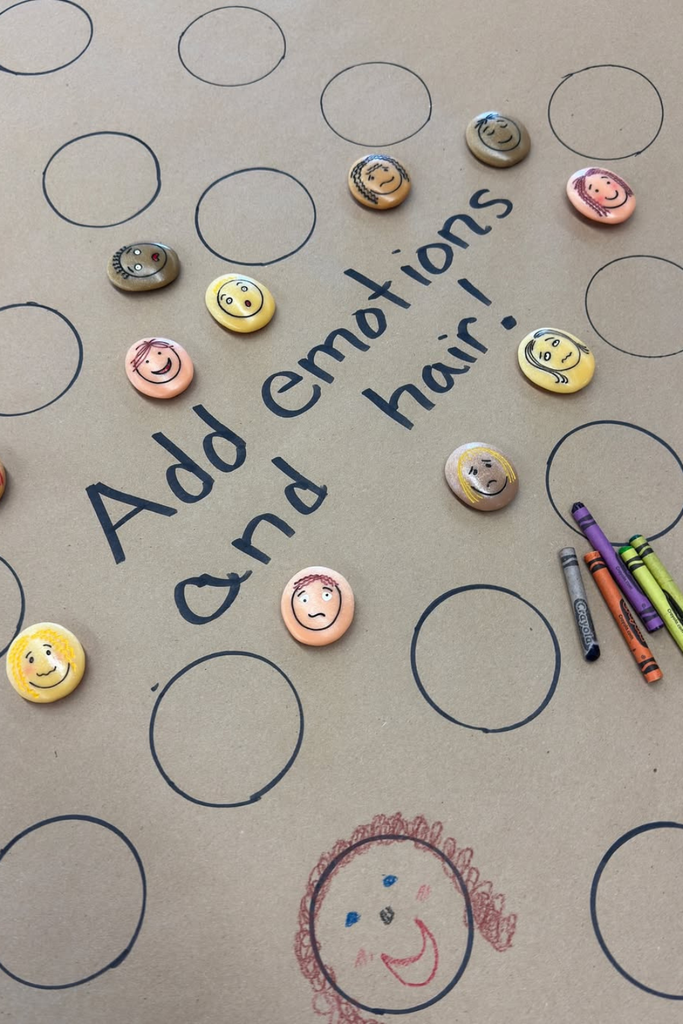
Emotion Masks
Bring bigger feelings into the activity by letting kids paint faces that show sadness, fear, anger, worry, or frustration.
Cut simple mask shapes from cardboard, then encourage kids to change the eyebrows, eyes, and mouths instead of relying.
Once everyone finishes, use the masks for group role-play and ask what might make each character feel that way.
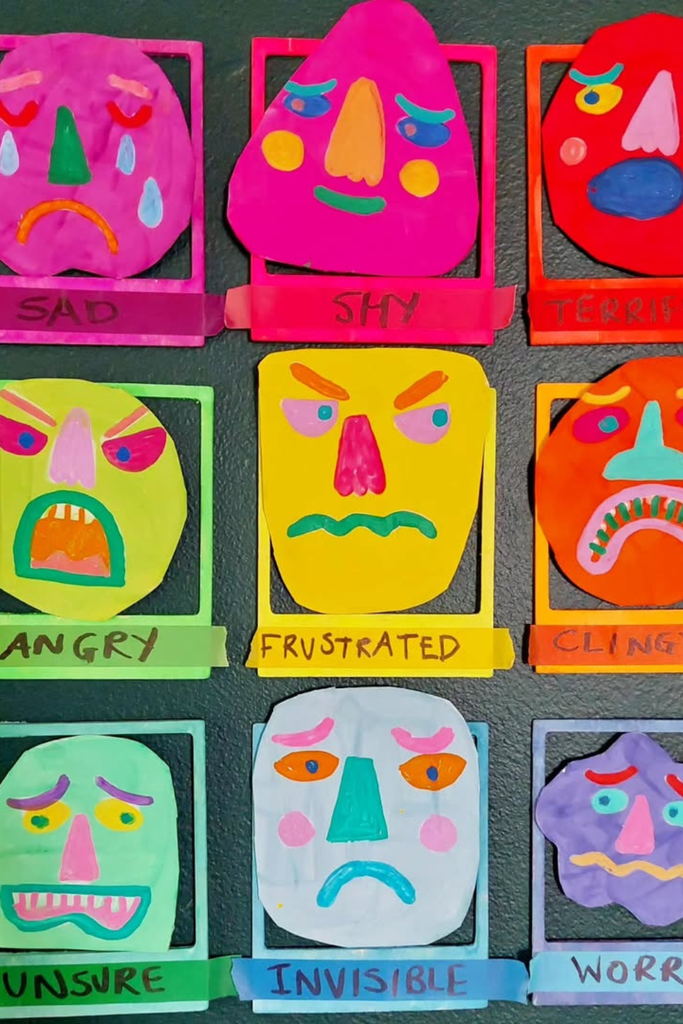
Sensory Feelings
Mix emotion learning with sensory play by giving kids a tray where they can draw different facial expressions with their fingers.
Place a mirror and emotion cards nearby so they can choose a feeling, copy the expression themselves, then recreate it.
Preschool classrooms and quiet activity corners work especially well for this setup because kids can practice connecting emotion.
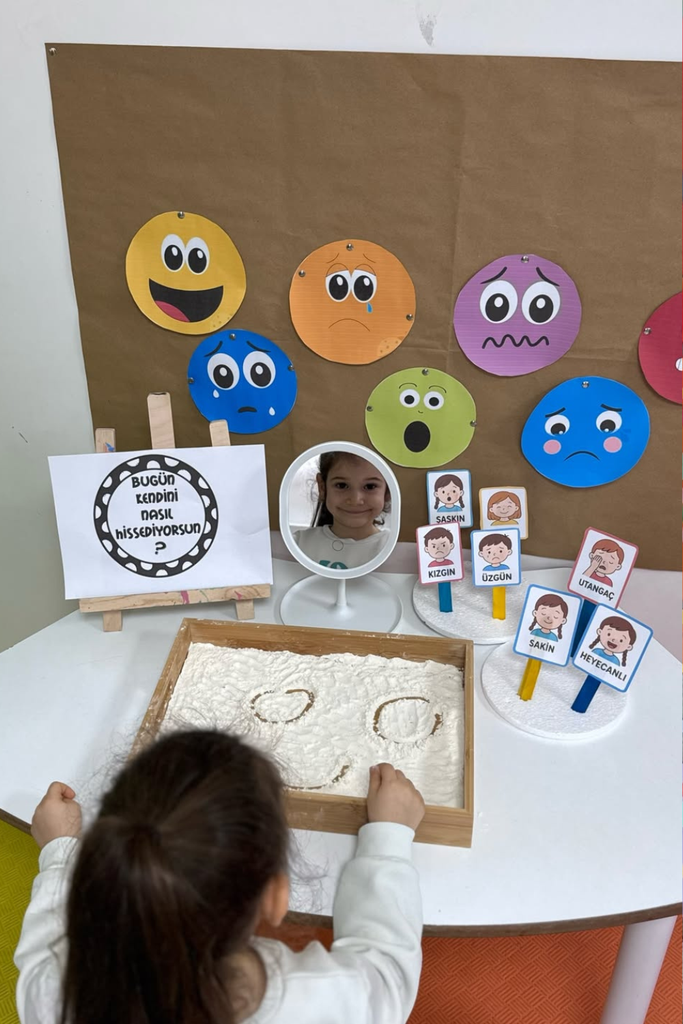
Feelings Puzzle
Turn facial expressions into a matching challenge by cutting simple emotion faces into separate eye and mouth pieces.
Kids can mix the halves, decide which features belong together and then copy the completed expression in a center mirror.
Use this during preschool centers or small-group time to compare happy, sad, angry, worried and surprised faces.
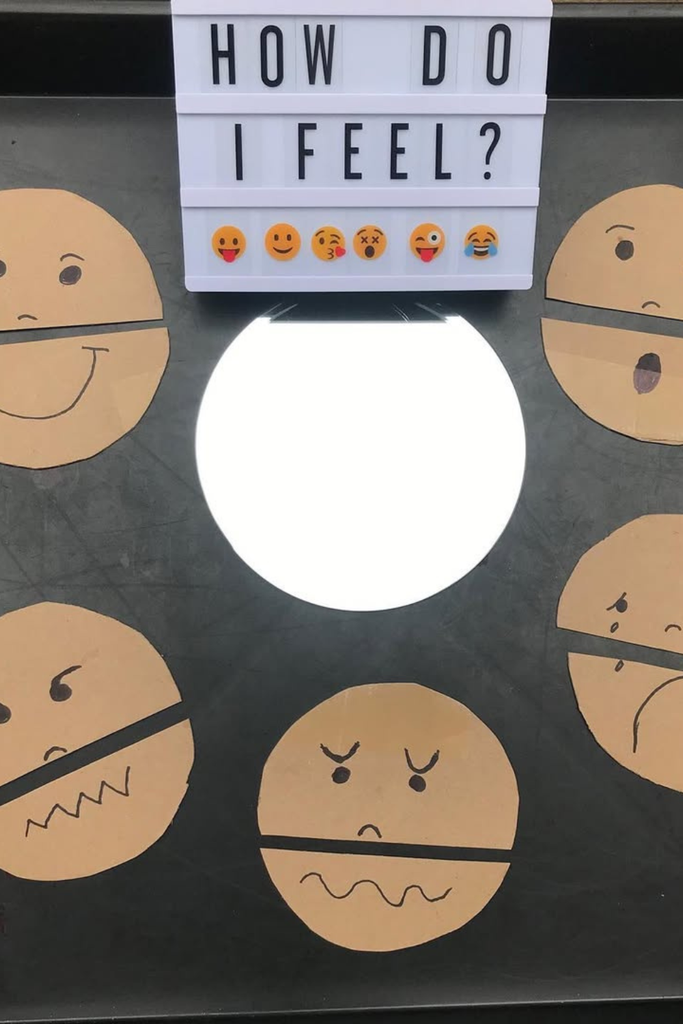
Color Monsters
Connect colors with feelings through a hands-on sorting game inspired by emotion characters kids can easily recognize.
Make simple cardboard monsters in different colors, add matching loose pieces, and let kids feed each character.
Use this during preschool centers, then ask kids to share situations that made them feel happy, sad, angry, calm, or worried.
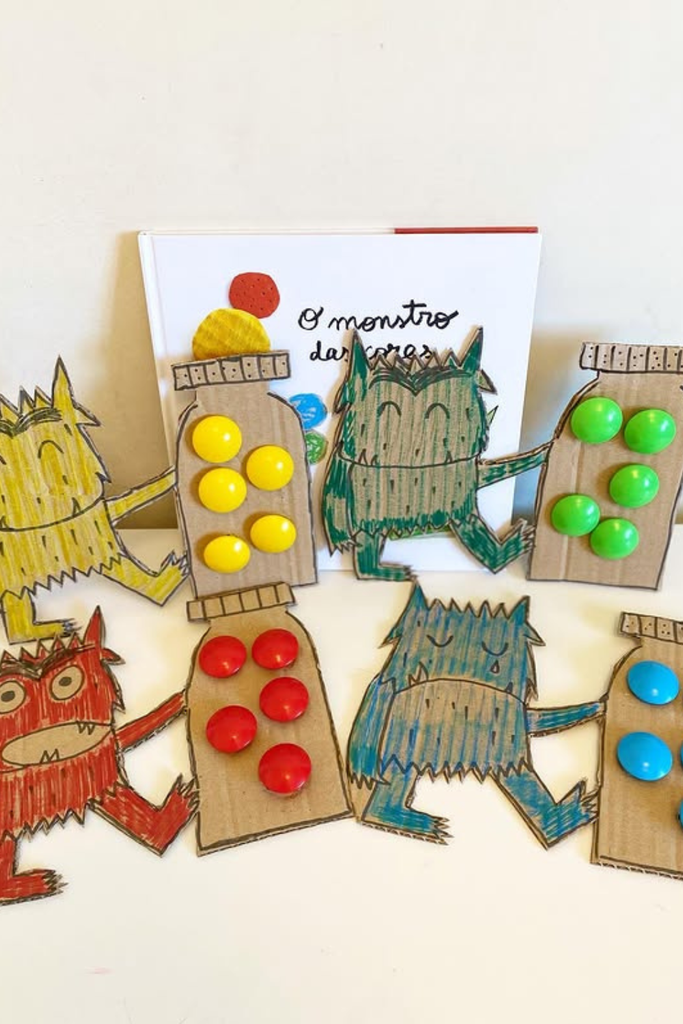
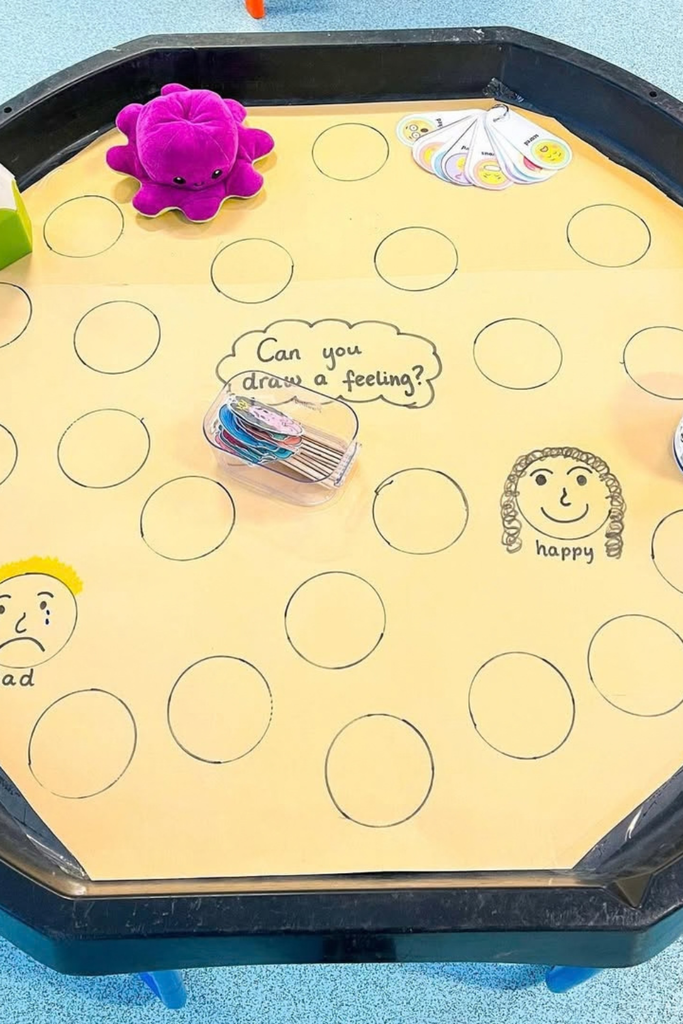
Feeling Circles
Invite several kids to fill one shared activity table. Draw blank circles across a large sheet, provide crayons and emotion prompt cards
Let each child turn a circle into a different feeling. Once the faces are finished, encourage the group to compare expressions.
Explain what might make someone feel that way. Especially well for classroom centers where conversation can grow naturally.
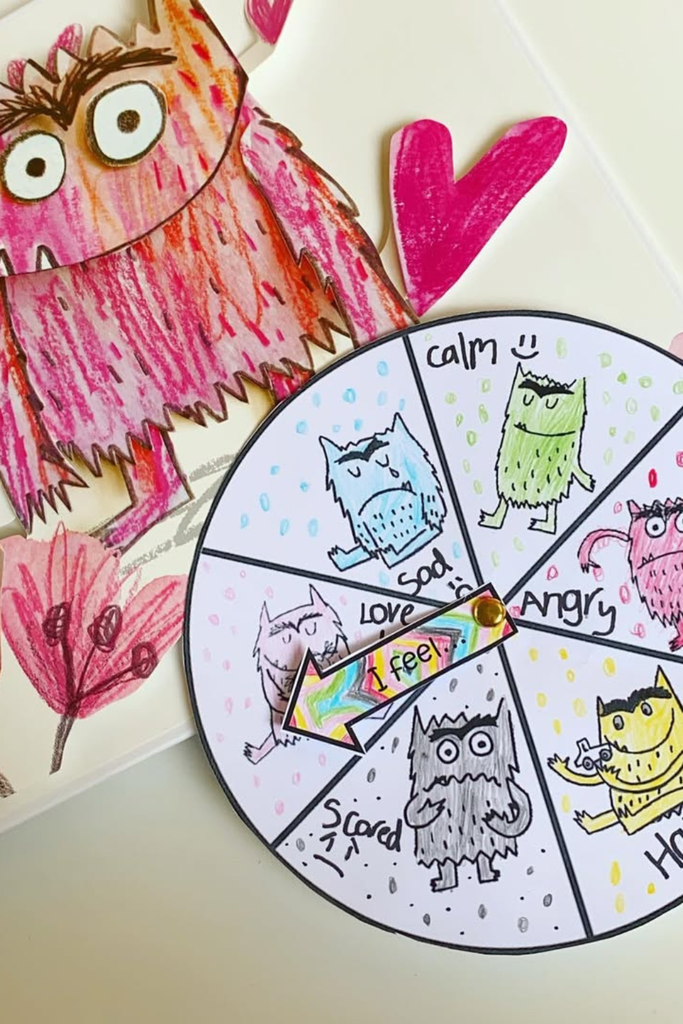
Feelings Spinner
Add a little surprise to emotion practice with a spinner that chooses the feeling for kids. Divide a cardboard circle into sections.
Such as happy, sad, angry, scared, calm, and loved, then add simple faces to each one. After every spin, ask kids to copy the expression.
The expression, share a time they felt it, or explain how they could help a friend experiencing that emotion.
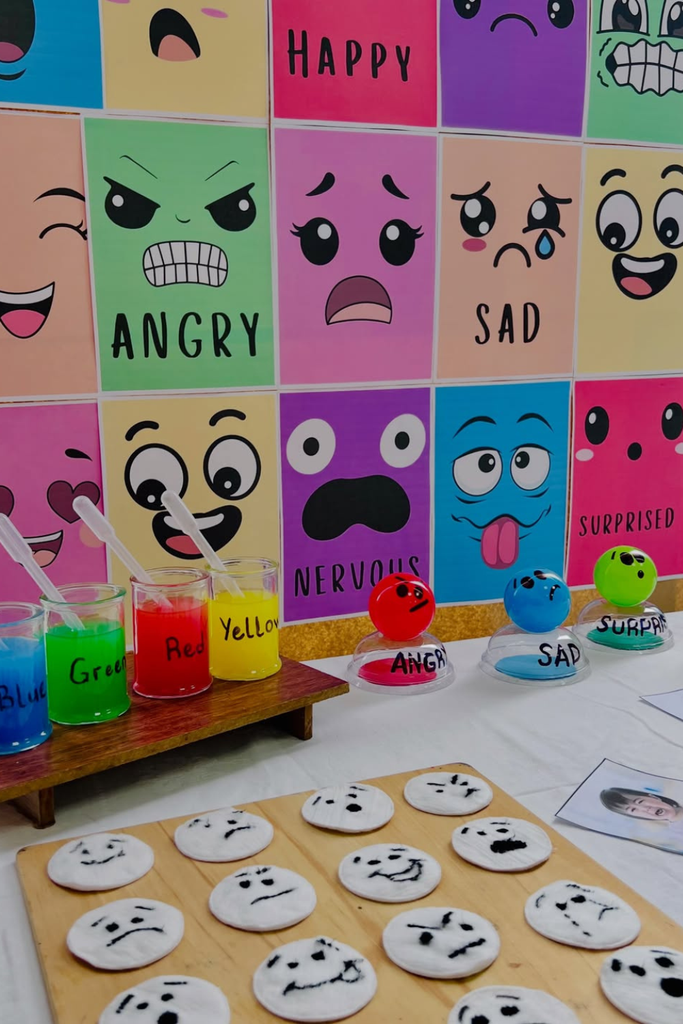
Emotion Lab
Turn feelings into a hands-on discovery station where kids can match expressions, colors, and emotion words together.
Set out colorful cups, face pieces and simple emotion cards, then ask kids to sort with feelings such as angry, sad, nervous or surprised.
Preschool classrooms can use this as a small-group activity where kids explain each choice and discover that facial clues.
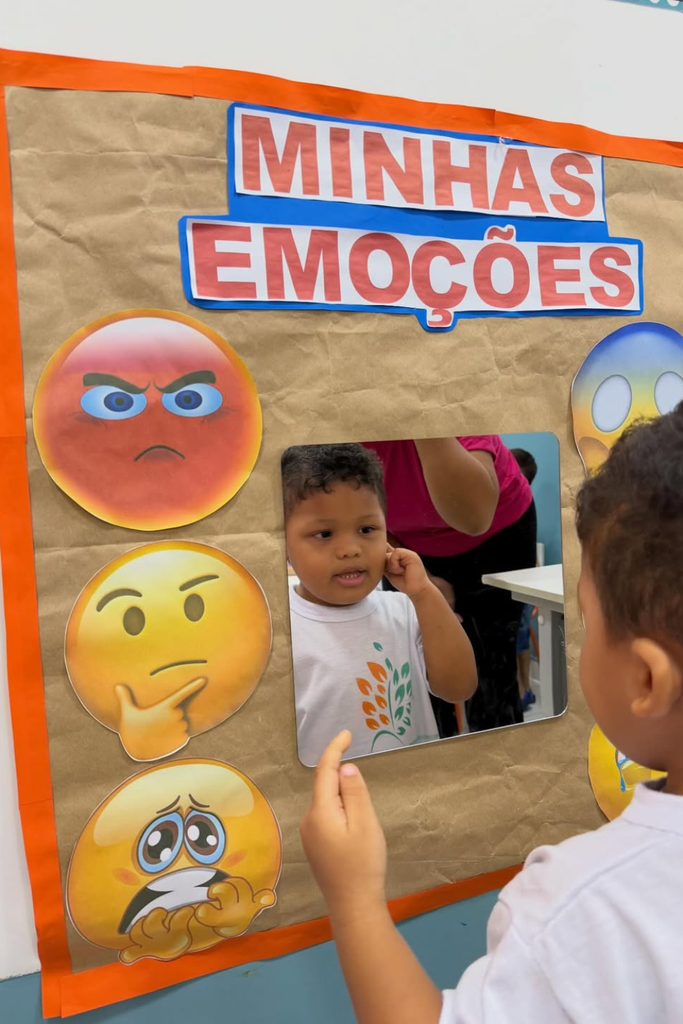
Emotion Mirror
Give kids a chance to study their own expressions by surrounding a child-safe mirror with clear emotion faces.
Then ask kids to choose an emotion and copy its eyebrows, eyes and mouth while watching themselves.
Follow with questions about when they felt that emotion so the activity connects facial clues with real experiences
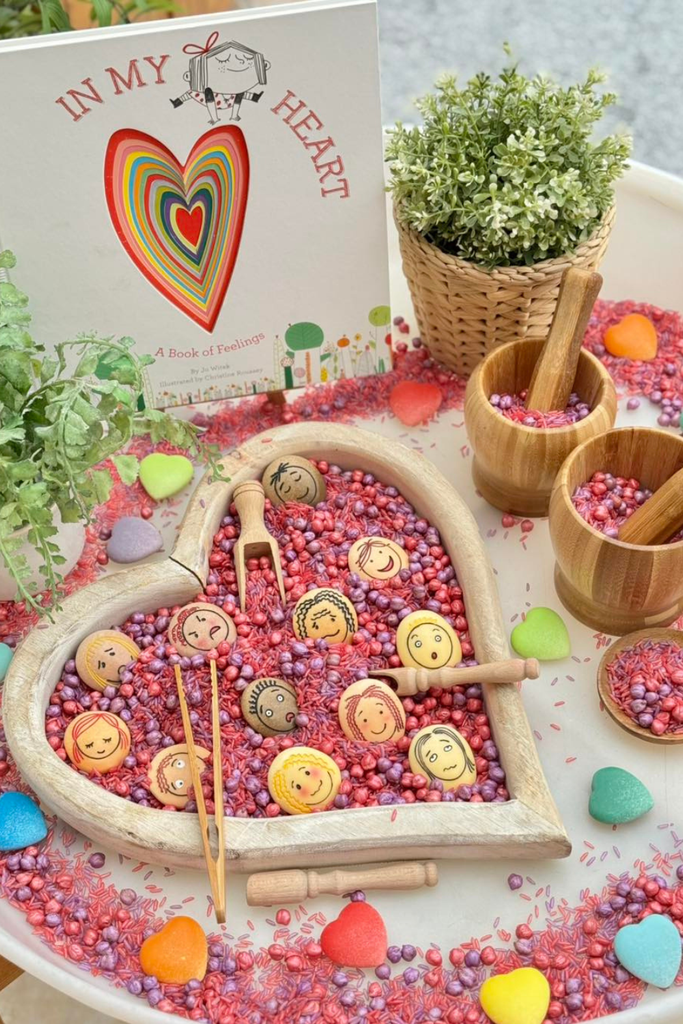
Heart Sensory Play
Slow the activity down with a sensory bin where kids can discover different emotion faces through scooping, pouring, and sorting.
Fill a shallow tray with child-safe sensory materials, hide emotion stones inside and add simple wooden tools for exploring.
Pairing the activity with a feelings book makes it especially useful for preschool quiet time or small-group learning.
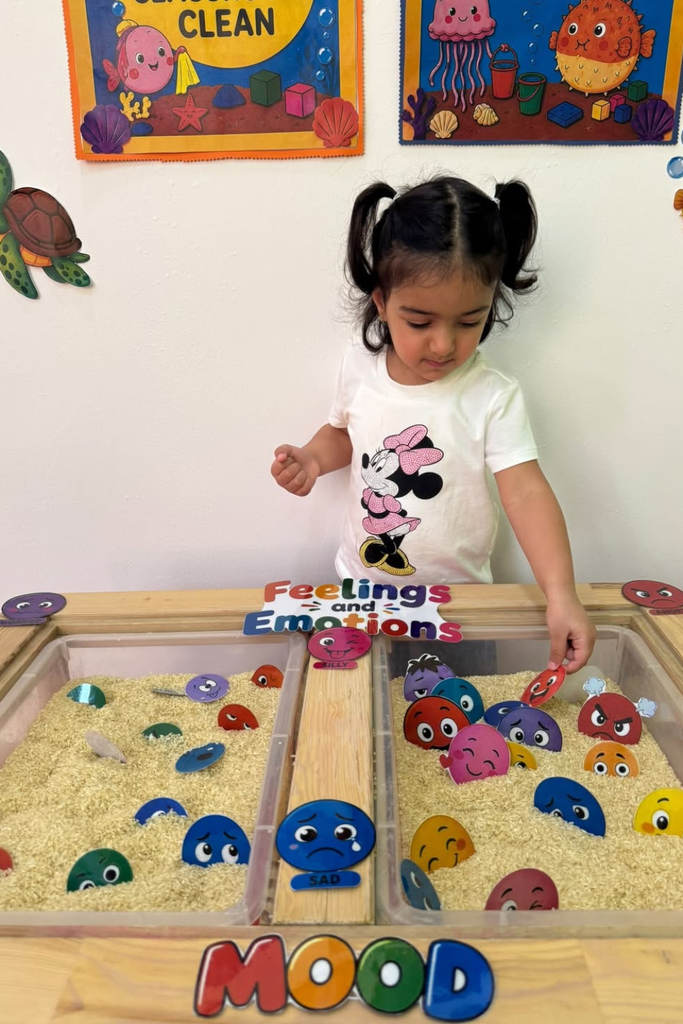
Mood Hunt
Hide colorful emotion faces inside a sensory bin and let kids search for different moods as they dig.
Once a face appears, encourage them to name the feeling, copy its expression, and describe a situation that could cause it.
This works well for preschool centers because several kids can take turns finding faces and comparing answers.
Use child-safe sensory filler and large emotion pieces so the setup stays simple and easy to explore.
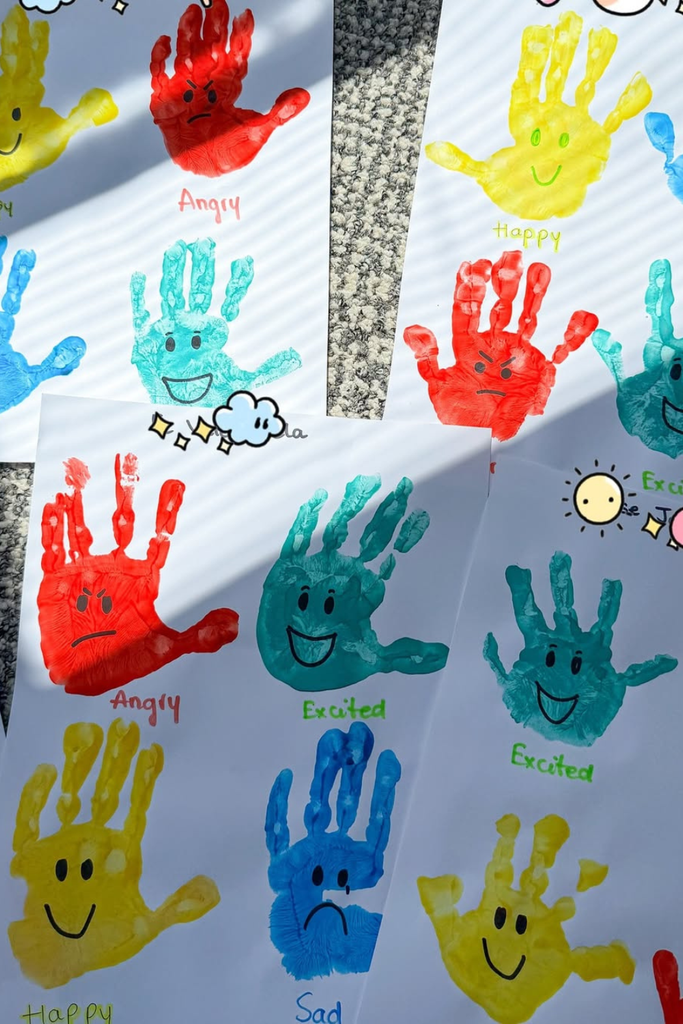
Handprint Feelings
Transform each child’s painted handprint into a distinct emotion to make the emotion exercise feel more intimate.
Use bright washable paints, let kids add simple eyes and mouths once the prints dry, then label each face as happy, sad, angry, or excited.
During a classroom craft session, ask kids what could make someone feel each emotion and compare their answers.
Displaying the finished pages also creates an easy feelings reference for later conversations.
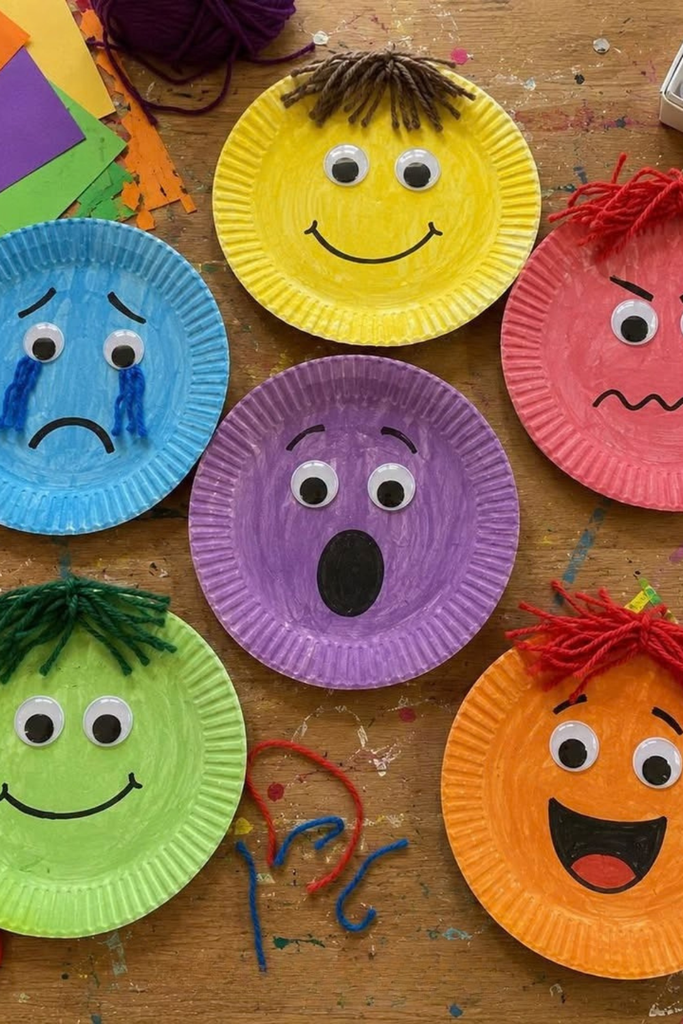
Paper Plate Faces
Give kids room to build emotions from scratch with colorful paper plates, yarn, googly eyes, and markers.
Let each child choose a feeling first, then change the eyebrows, mouth, tears, or other facial details to match it.
This works well for classroom craft time because finished faces can become discussion cards afterward.
Hold up each plate and ask the group what clues reveal the emotion and what might have caused it.
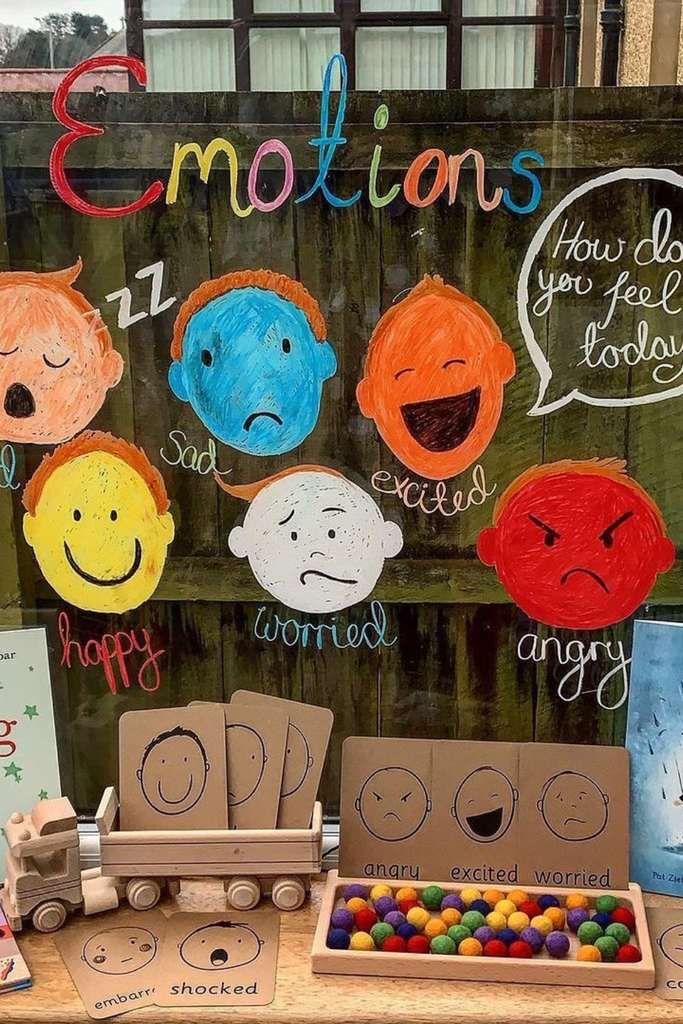
Emotion Window
Use an empty window or glass panel as a reusable feelings board where kids can see several emotions together.
Keep matching cards and books of emotions close at hand after drawing simple faces for fatigue, sadness, excitement, happiness, worry, and rage.
Let children point to the face that best describes their mood and explain why during morning check-ins.
Group discussions can then show how classmates may feel differently even while sharing the same day.
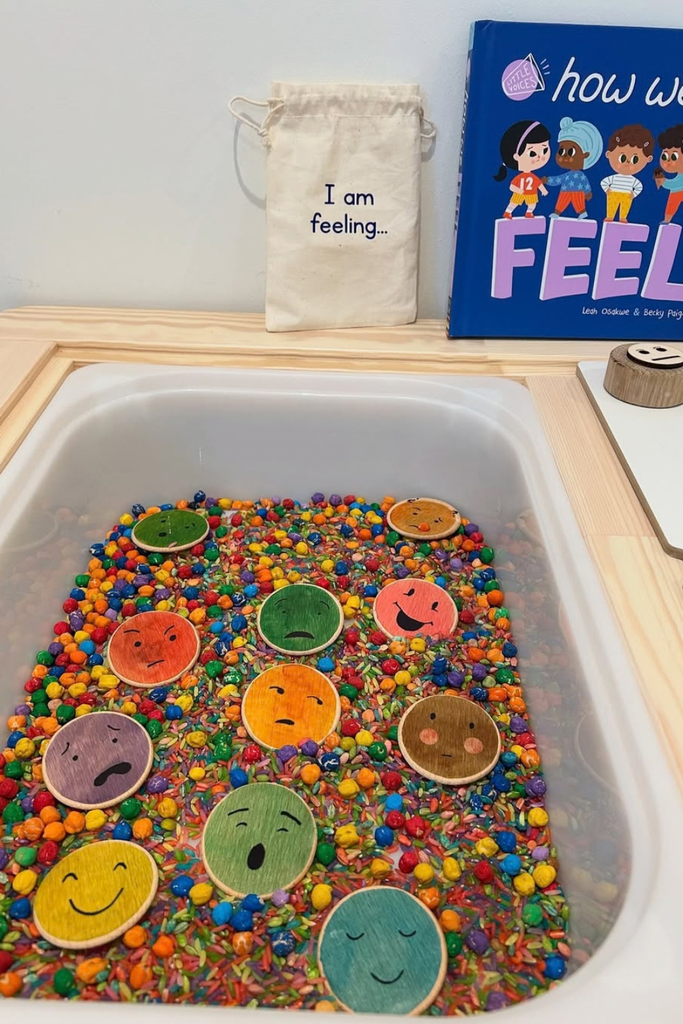
Feelings Discovery
Add emotion faces to a sensory bin so kids can uncover different feelings while they scoop and explore.
Use large wooden face pieces with clear expressions then ask each child to choose one and explain what emotion they notice.
For small-group play, encourage kids to compare their choices and suggest situations that could cause each feeling.
Keeping a feelings book nearby gives you an easy way to extend the conversation when kids need more examples.
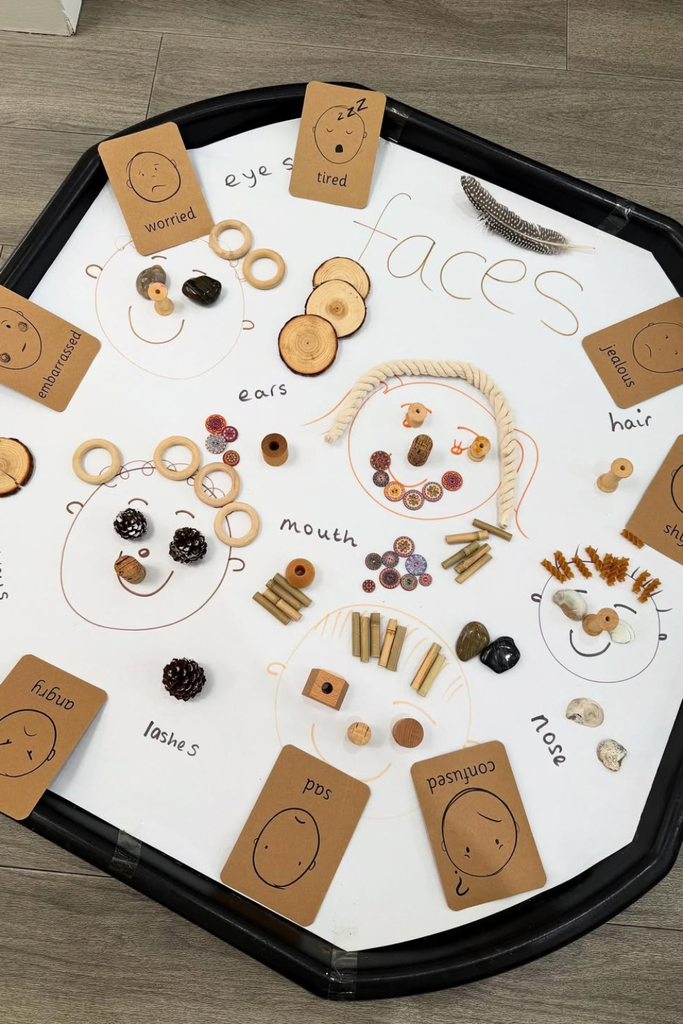
Loose Part Faces
Skip ready-made expressions and let kids build their own faces with wood slices, rings, stones, buttons, twigs, and other loose parts.
Place emotion cards around the table as prompts, then ask kids to change the eyes, eyebrows, or mouth to match feelings.
Small groups work especially well because kids can compare how differently they represented the same emotion and explain their choices.
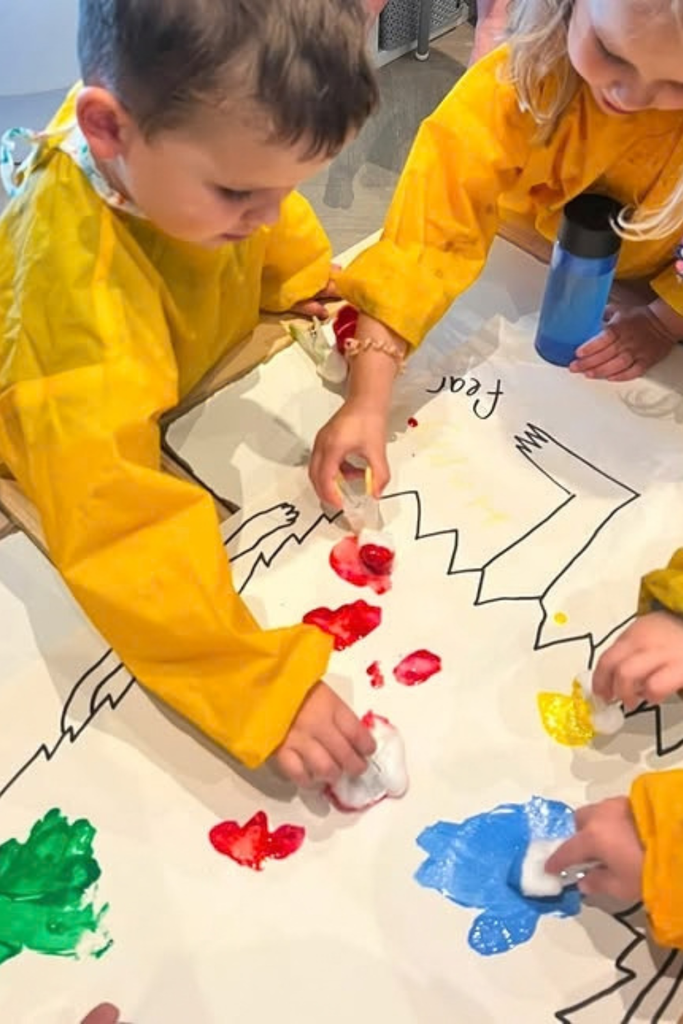
Monster Feelings
Bring a favorite feelings story into craft time by drawing one large character that kids can fill with different emotions.
Set out washable paints linked to feelings such as anger, calm, sadness, happiness, fear, and love, then let kids add colors.
Talking about what each one represents. This works well after story time, especially when you ask kids.
Trace Feelings
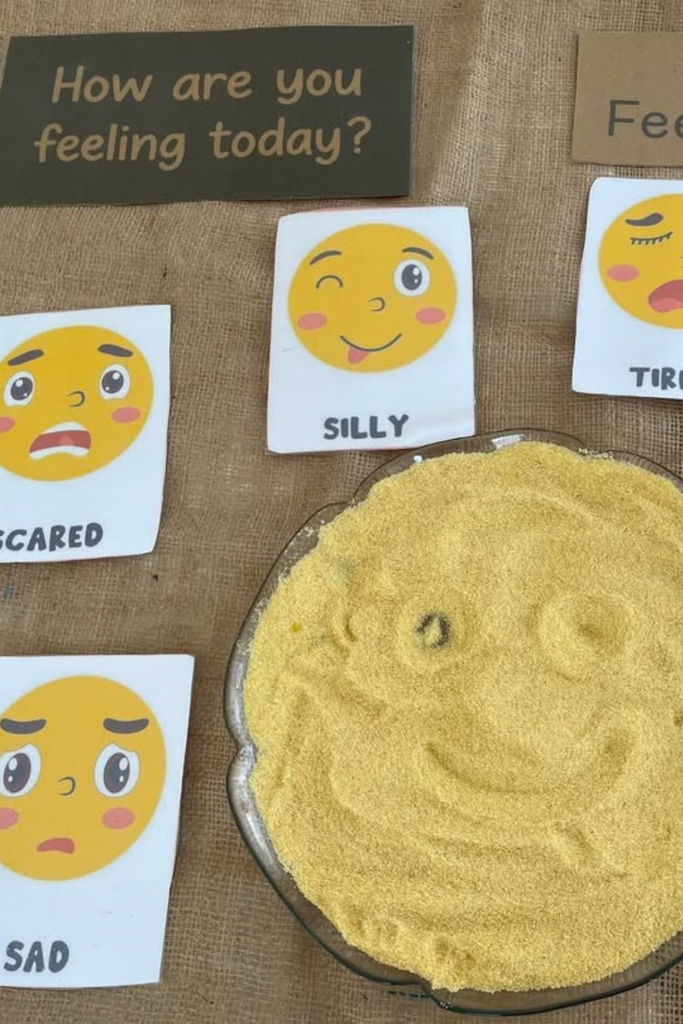
Turn emotion cards into a sensory drawing game by letting kids copy expressions into a shallow tray of fine sensory material.
Place cards for happy, sad, angry, scared, tired and silly around the tray, then let kids choose which face to recreate with their fingers.
During preschool centers, ask them to name the feeling and share what could cause it. Kids can smooth the surface afterward.
FAQs
What Age Can Kids Start Learning About Emotions?
You can start simple emotion activities during the preschool years when kids begin recognizing expressions and words such as happy, sad, scared, and angry.
Keep activities visual and hands-on at first, then introduce feelings such as worried, embarrassed, frustrated, or jealous as their emotional vocabulary grows.
How Can You Help Kids Talk About Difficult Feelings?
Start with characters, emotion cards, puppets, or pretend situations if talking about personal feelings feels uncomfortable.
Giving kids several emotion words to choose from can also make it easier for them to explain what is happening.

Hi, I’m Afaf! I’m a law student who loves writing about everyday life – from home projects and crafts to fashion, beauty, and parenting tips.
I’ve been writing for over a year, sharing ideas that are simple, practical, and easy to try. I write about things I find interesting and useful, whether that’s organizing a space, trying a new DIY, or finding activities to keep kids entertained.
My goal is to share helpful ideas without making things complicated. If it works in real life, I’ll write about it.
When I’m not studying or writing, I’m usually experimenting with new projects or scrolling for inspiration!