
17 Community Helpers Preschool Crafts
Finding a cute preschool craft is easy, but finding one that actually teaches your child something useful can be harder.
Community helper crafts make those lessons easier to understand because your child can connect each job with familiar tools, uniforms, vehicles, and actions.
In this article, you’ll find simple craft inspiration that turns creative time into meaningful lessons about safety, kindness, and helping your community.
Are There Crafts That Teach Children About Safety and Helping Others?
Yes, community helper crafts can teach much more than cutting and gluing when you connect each project to a real job.
While your child makes a firefighter helmet, you can talk about who helps during a fire and why following safety directions matters.
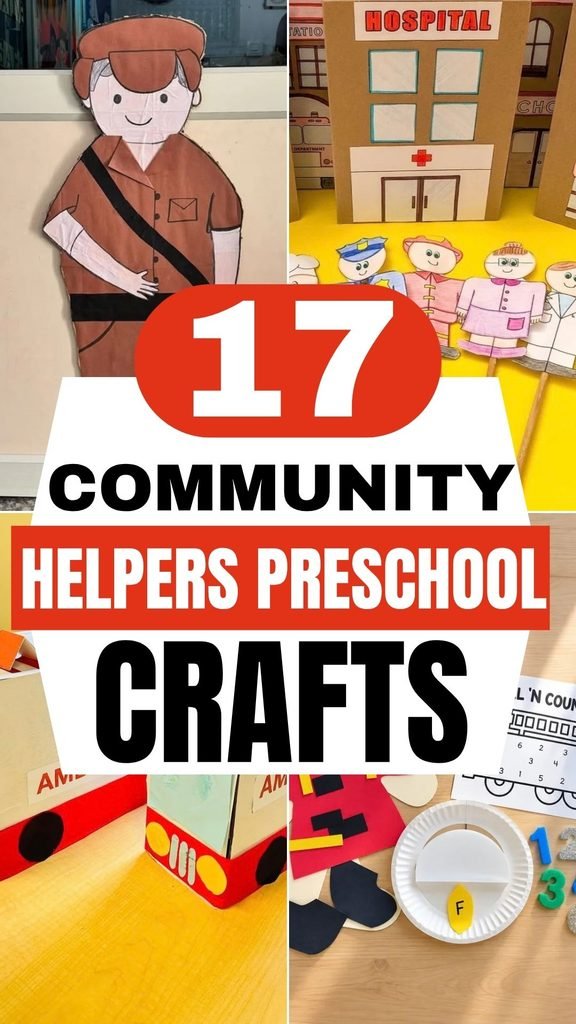
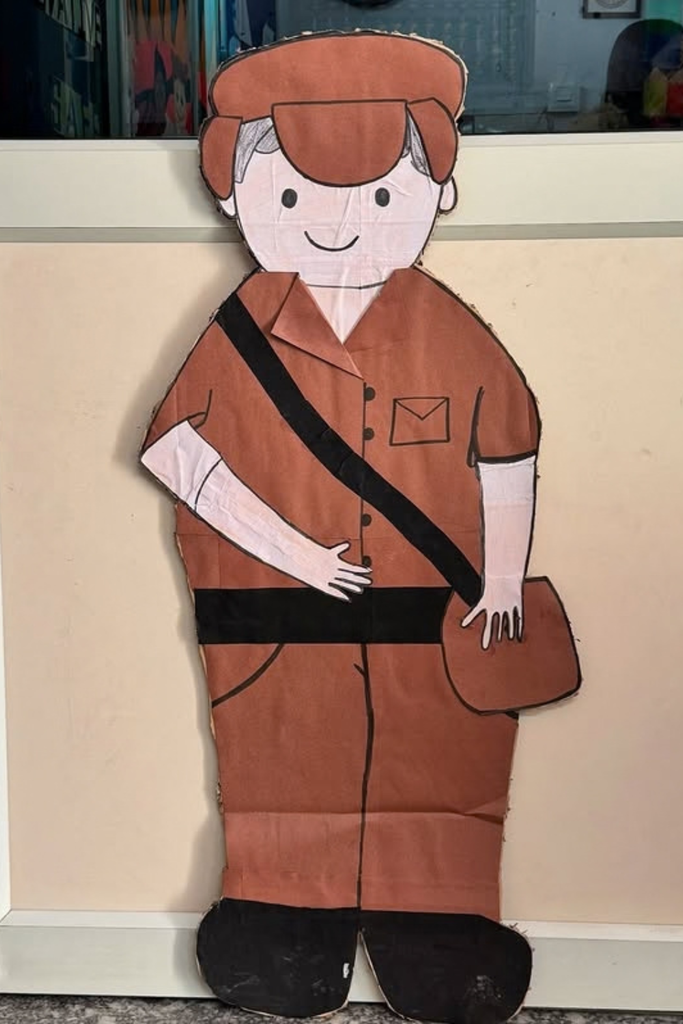
Police, crossing guard, mail carrier, and sanitation worker crafts can also show how different people keep a community safe and running.
Keep the lesson simple by asking what the helper does, what tools they use, and how their work helps others.
This turns craft time into an easy way to build safety awareness, kindness, and respect for people around them.
Firefighter Counting
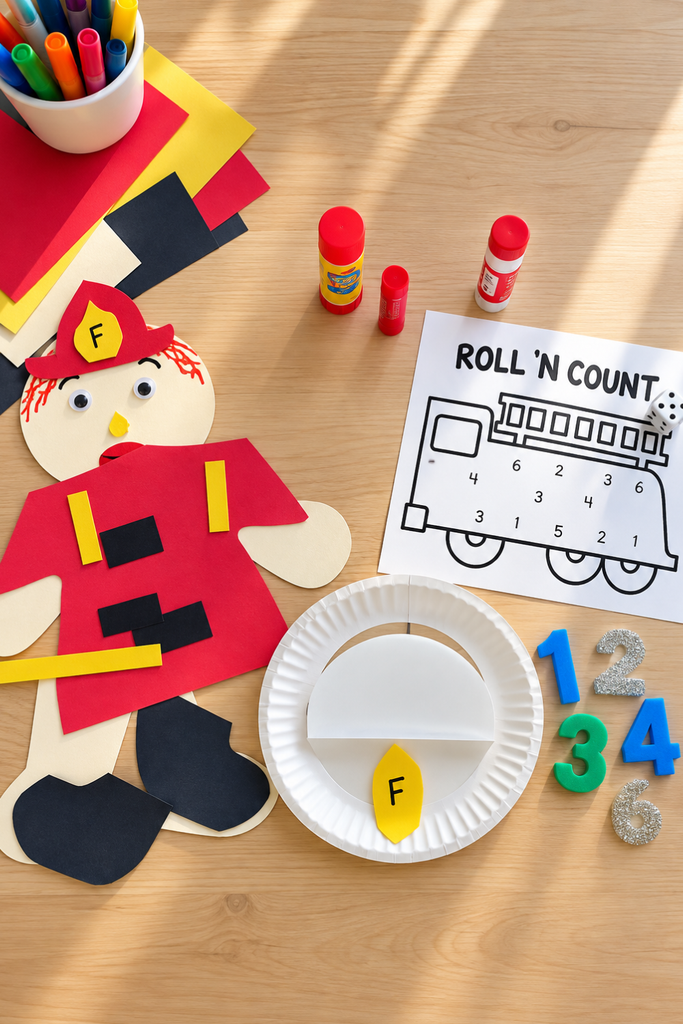
Turn firefighter week into a math lesson by pairing a simple paper firefighter with a fire-truck counting activity.
Let preschoolers glue basic shapes onto the uniform, then roll a die and count or mark the matching truck spaces.
Using both activities together builds number recognition and fine-motor skills while giving you an easy opening to discuss how firefighters help during emergencies.
Cardboard Ambulance
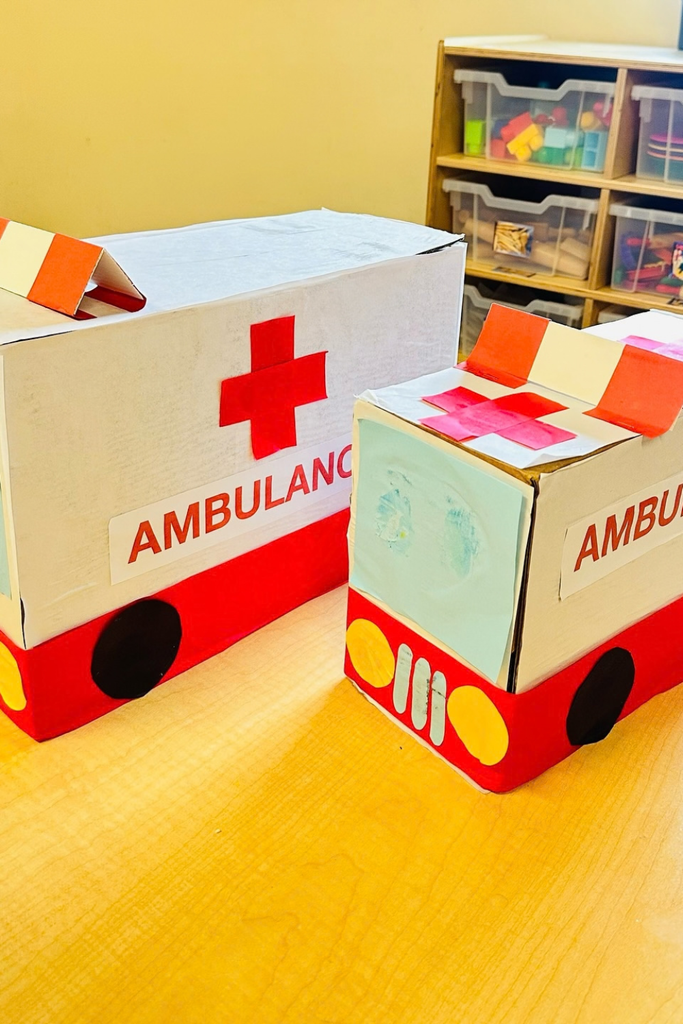
Bring emergency helpers into pretend play by turning an old cardboard box into an ambulance preschoolers can decorate and use afterward.
Cover the box with white paper, then add red crosses, paper wheels, windows, lights, and an ambulance label.
Use the finished vehicle during a doctor or paramedic theme to explain how an ambulance carries sick or injured people to get medical help.
Handy Builder
Give your community-helper unit a hands-on building angle with a colorful worker craft holding simple tools such as a hammer and wrench.
Let preschoolers color the worker, then help them cut and attach larger cardboard pieces for the body, clothing and tools.
Display it near a block or construction center, where you can talk about how builders repair things and why children should leave real tools for adults.
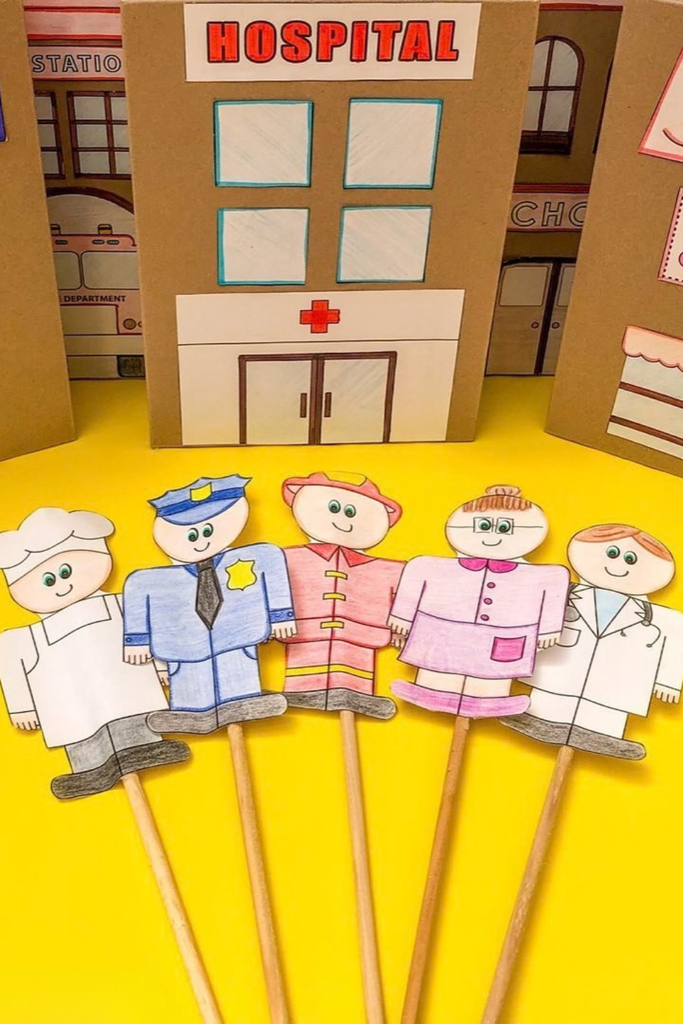
Helper Puppets
Make community roles easier to remember by turning different workers into simple stick puppets children can move during pretend play.
Let preschoolers color and cut out helpers such as a chef, police officer, firefighter, nurse, and doctor before attaching craft sticks.
Pair the puppets with cardboard workplaces so children can match each worker to a job location while talking about how each person helps the community.
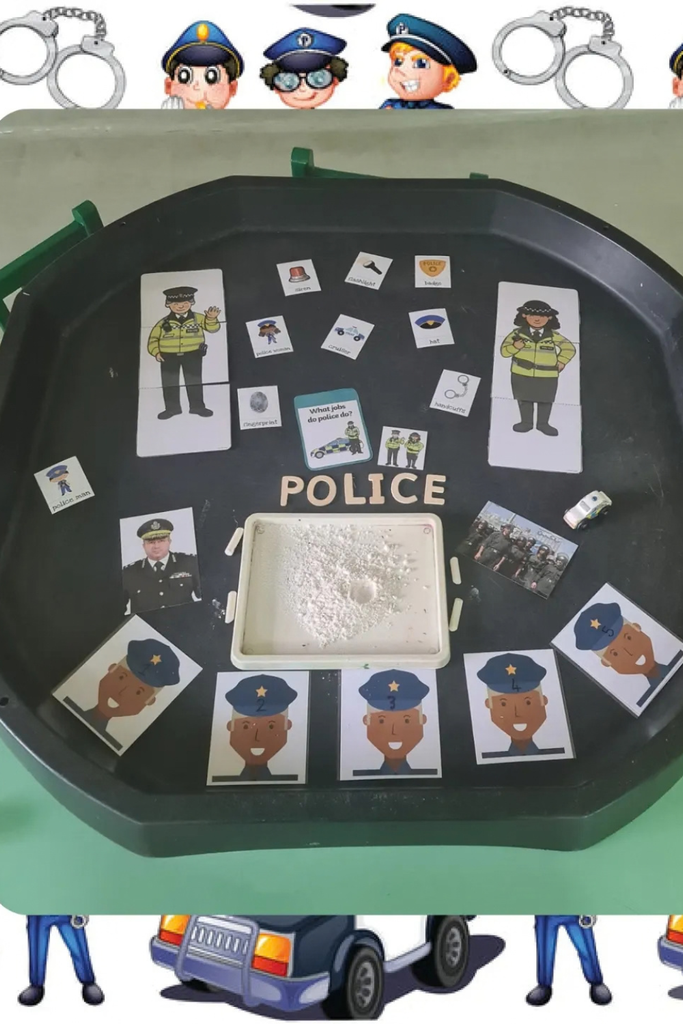
Police Matching
Add a matching challenge to your community-helper lessons by letting preschoolers connect police officers with the tools they use on the job.
Set out picture cards showing badges, handcuffs, radios, hats, vehicles, and uniforms, then let children sort or match each item.
Use the activity to explain how police officers may help in emergencies while reinforcing that children should follow their family or teacher’s safety rules.
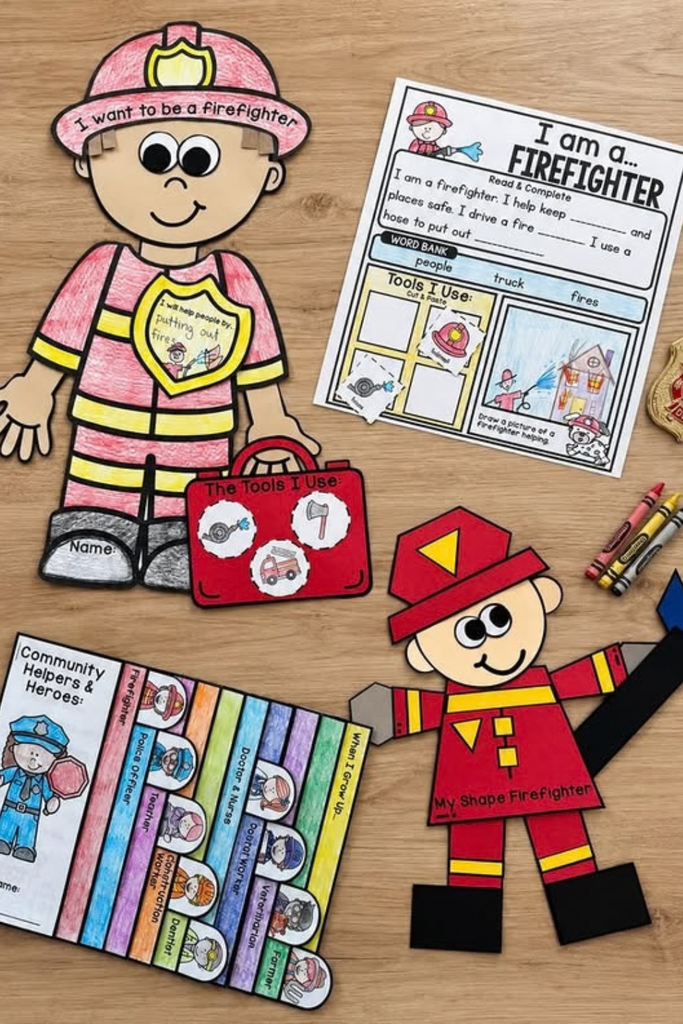
Firefighter Tools
Make a firefighter craft more useful by adding a small tool bag children can fill with items connected to the job.
Let preschoolers color and assemble the firefighter, then match pictures of a hose, axe, fire truck, and other familiar equipment.
Use each tool as a conversation starter about what firefighters do while reminding children that emergency equipment should only be handled by trained adults.
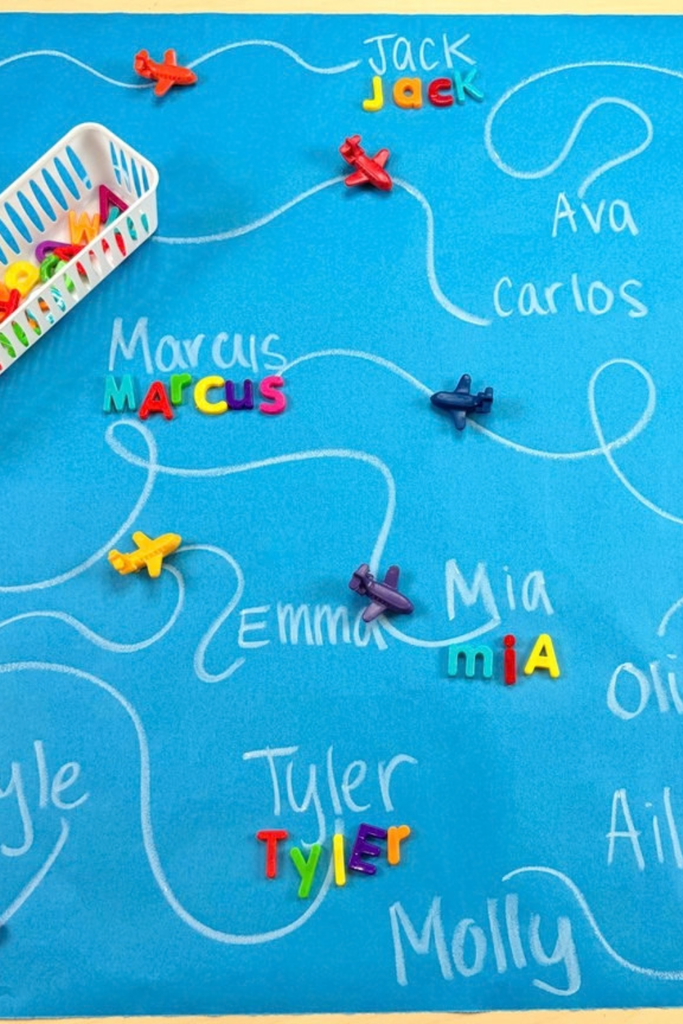
Pilot Path
Allow youngsters to steer tiny toy airplanes down meandering chalk routes between their names to incorporate a pilot theme into literacy time.
Cover a table or board with blue paper, write each child’s name, then add loose letters so they can build or trace it.
As children “fly” between destinations, talk about how pilots transport people safely and why following directions matters when traveling.
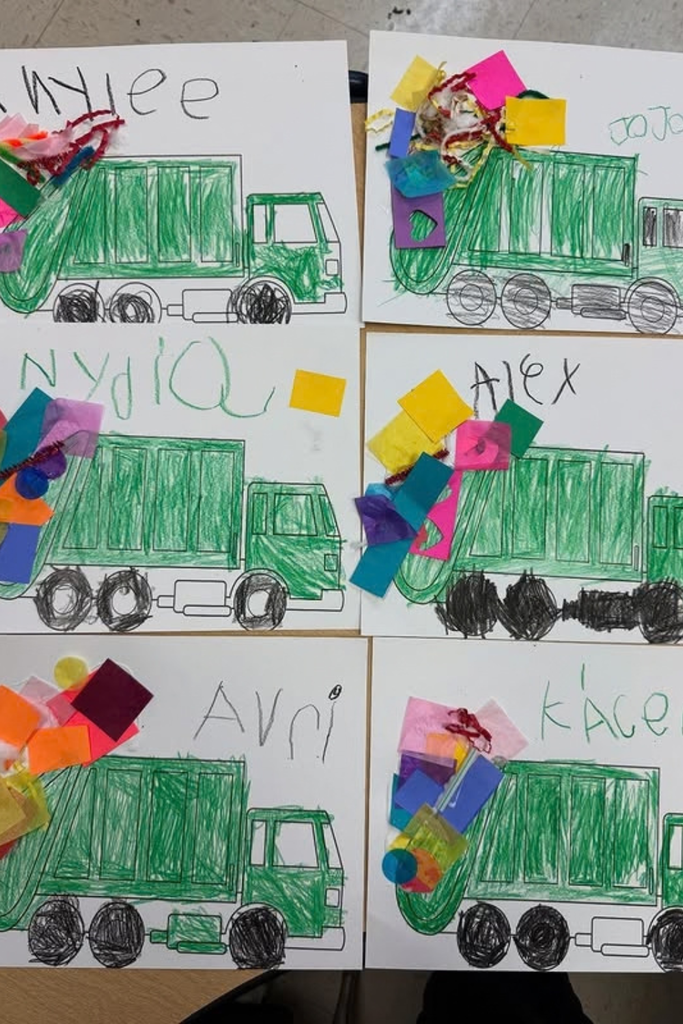
Garbage Truck
Turn scraps into pretend trash by letting preschoolers load a garbage truck with small pieces of tissue, yarn, and leftover craft materials.
Have children color the truck first, then glue different scraps around the back as if workers are collecting them along a route.
Use the exercise in a recycling or sanitation class to explain why rubbish should go in the right bins and how waste collectors keep neighborhoods cleaner.
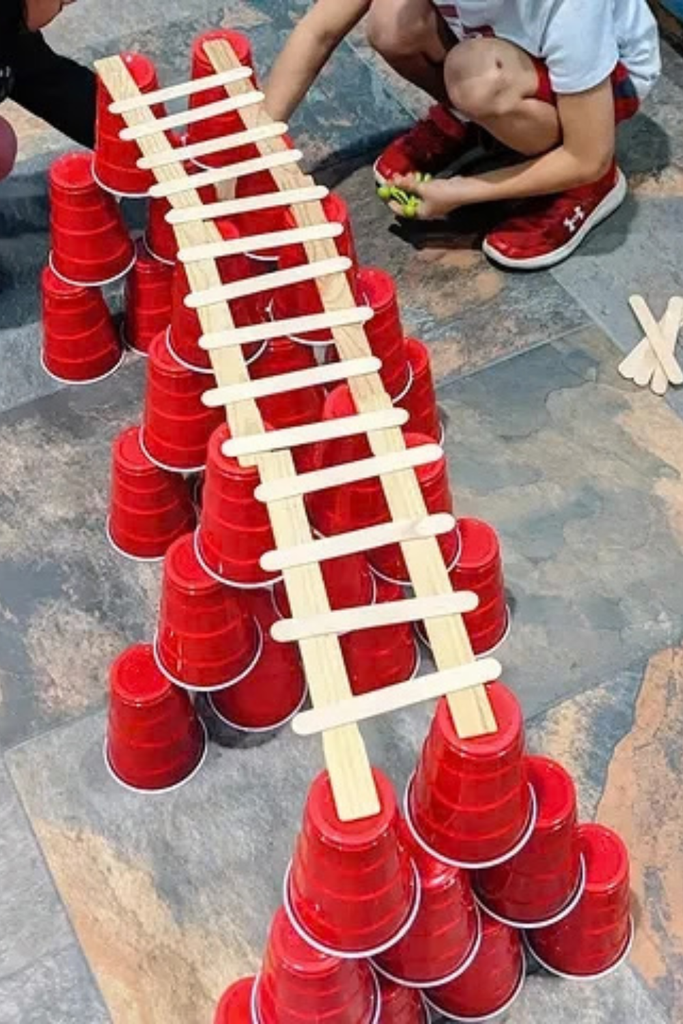
Firefighter Ladder
Encourage preschoolers to construct a lengthy rescue ladder using craft sticks and stacked cups to foster collaboration during Firefighter Week.
Let children arrange the cups as supports then place larger sticks lengthwise and smaller ones across them to form each rung.
Use the building challenge to explain why firefighters use ladders for reaching high places while children practice balancing, problem-solving, and working together.
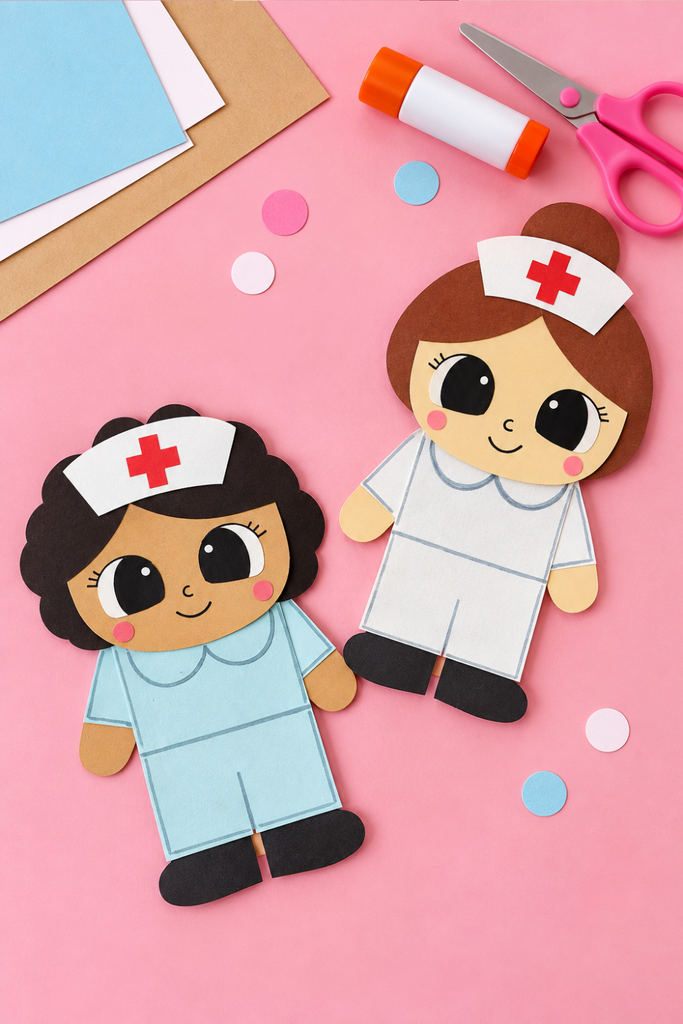
Nurse Puppet
Give your health-helper lesson a playful twist by making a paper bag nurse puppet children can use for pretend checkups afterward.
Let preschoolers color and attach the face, uniform, shoes, hair, and nurse cap onto a paper bag with simple cutout pieces.
Bring the puppet into a pretend clinic to discuss how nurses care for people, check how they feel, and help them get medical attention.
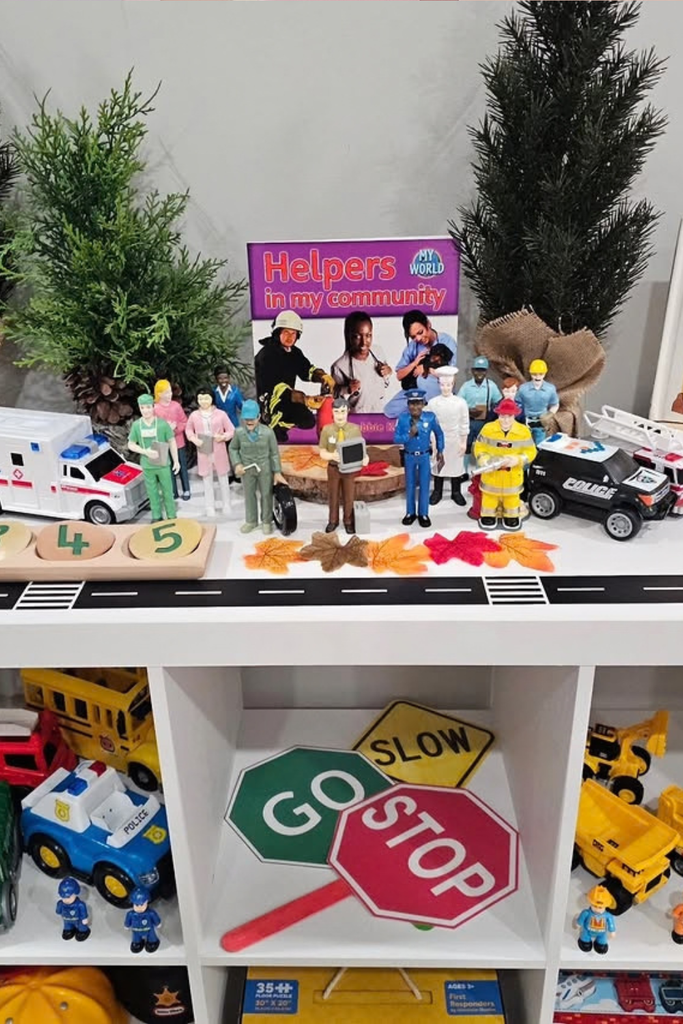
Helper Station
Build one interactive community station where preschoolers can explore several helpers instead of learning each job separately.
Set out worker figures, emergency vehicles, road signs and simple number pieces so children can sort, match and create pretend situations.
Use the setup for free play or small groups, asking which helper or vehicle could assist in different situations while reinforcing basic road and emergency safety.
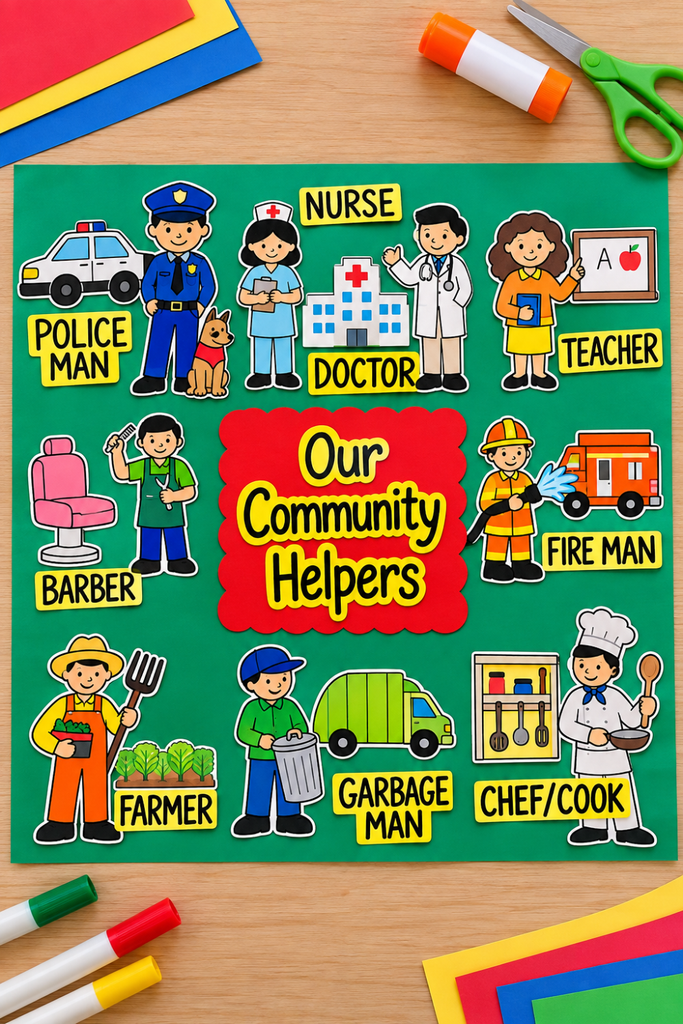
Helpers Board
Turn a classroom display into a learning activity by grouping different community helpers with the places, vehicles, or tools linked to their jobs.
Let preschoolers color and attach workers such as doctors, teachers, firefighters, farmers, chefs, and sanitation workers around one large board.
Use the finished display for daily discussions, asking children to choose a helper and explain what they do and how their work helps other people.
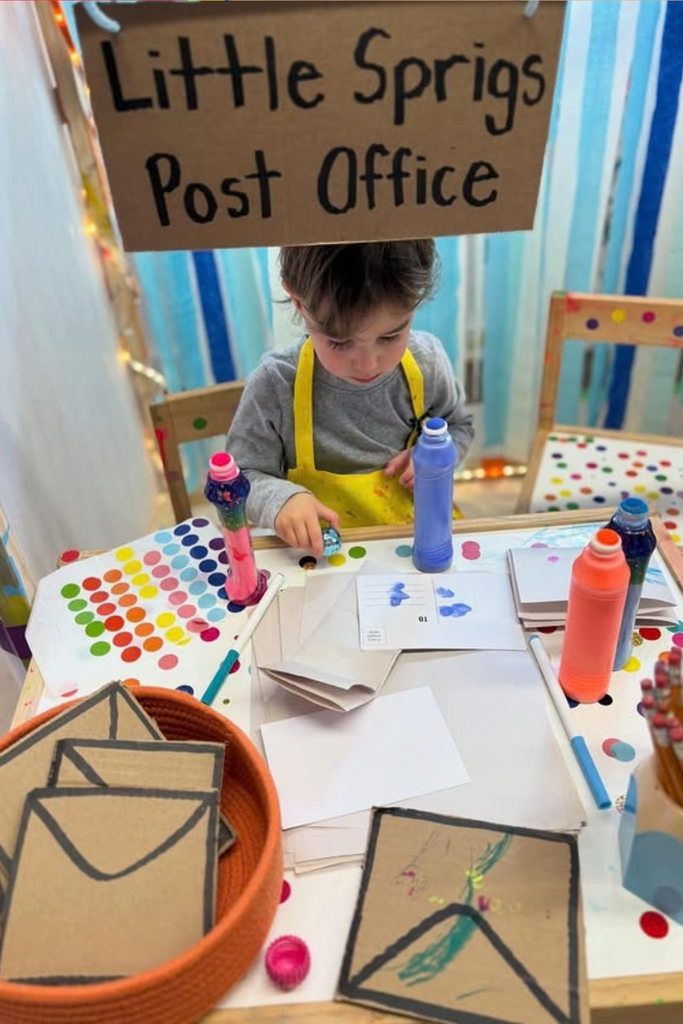
Pretend Post Office
Turn letter writing into community-helper play by setting up a small post office where preschoolers can create, sort and deliver their own mail.
Provide paper, envelopes, stickers, pencils, and simple cardboard mail pieces so children can prepare letters before placing them into a collection basket.
Use the station to explain how postal workers move mail between people while children practice writing, sorting and helping classmates receive their messages.
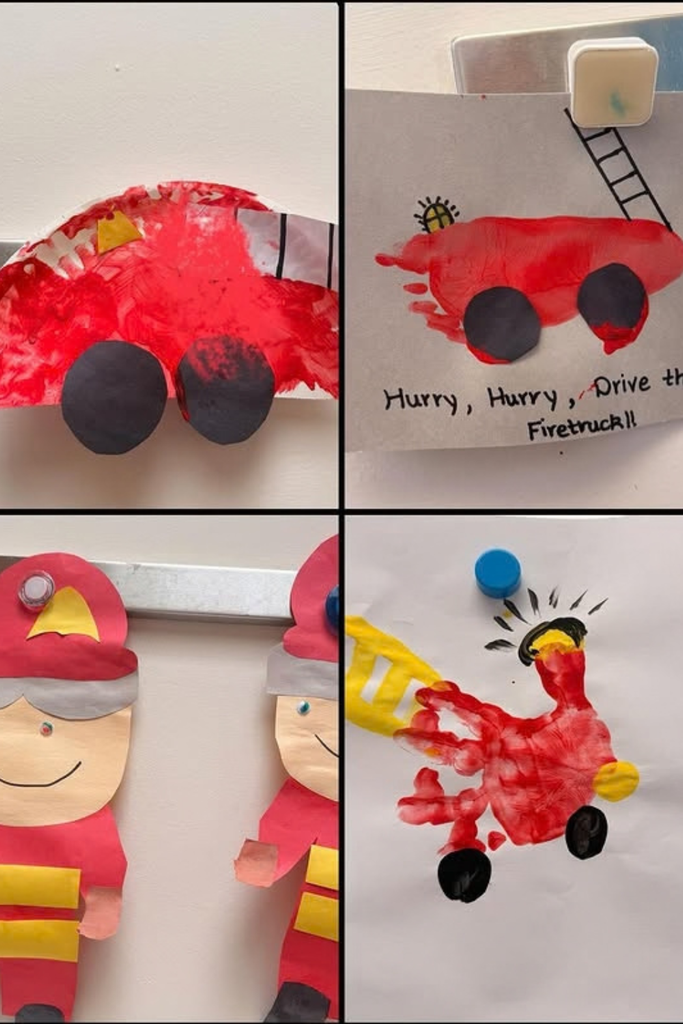
Firefighter Art
Give preschoolers more creative freedom by letting them build a firefighter scene with paint, handprints, paper shapes, and recycled pieces.
Children can paint a fire truck, add wheels and ladders, or turn simple cutouts into firefighters wearing bright safety uniforms.
Use their finished artwork for a classroom display while talking about fire trucks, protective gear, and why children should follow adult directions during a fire emergency.
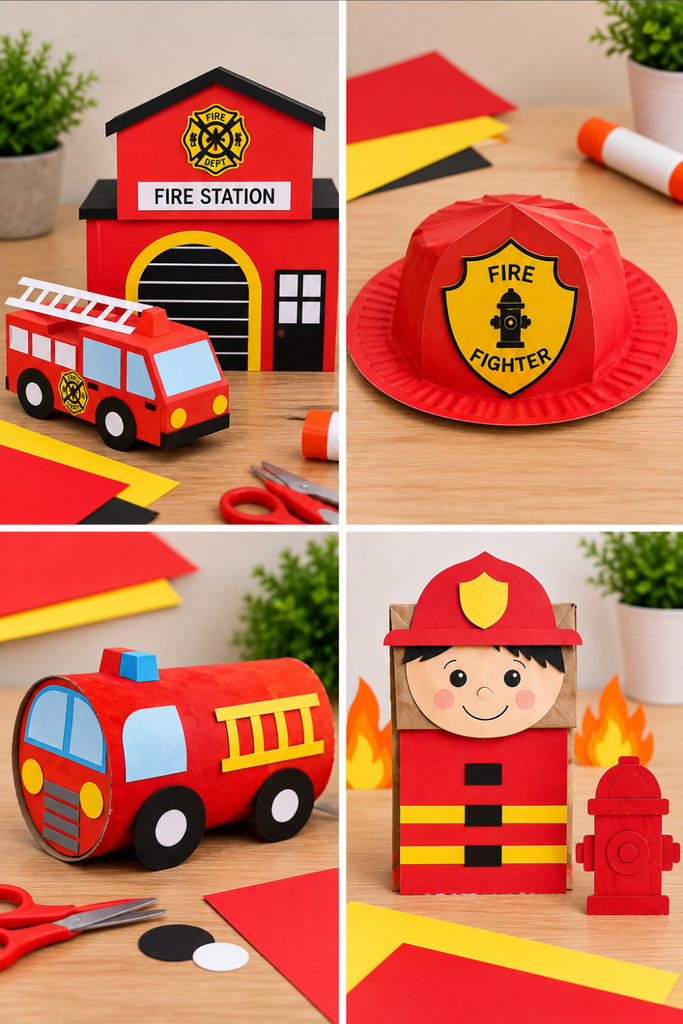
Firefighter Set
Cover several parts of a firefighter’s job with one craft session by making a station, helmet, fire truck, and firefighter puppet.
Use cardboard, paper plates, paper bags, recycled rolls, and colored paper so preschoolers can build each piece with simple cutting and gluing.
Bring the finished crafts into pretend play to discuss protective gear, emergency vehicles, and why firefighters need special equipment to help people safely.
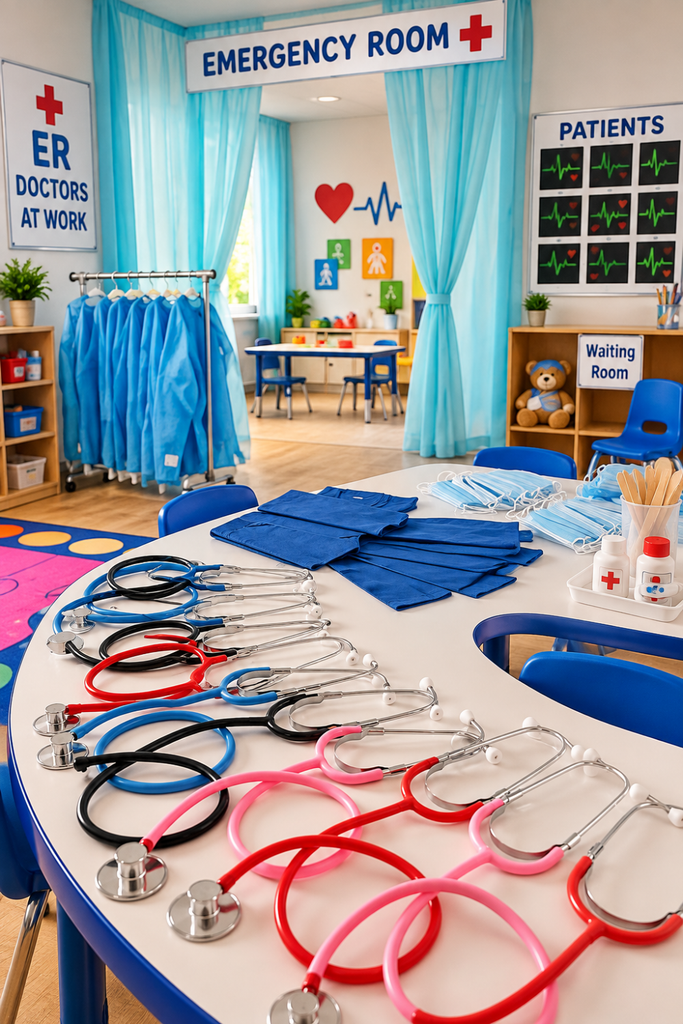
ER Doctor Play
Turn your dramatic-play corner into a small emergency room where preschoolers can practice caring for dolls or stuffed animals.
Set out toy stethoscopes, simple gowns, masks, clipboards and a waiting area so children can take turns playing different medical roles.
Use pretend checkups to explain how emergency doctors help injured or sick people while teaching children to tell a trusted adult when someone needs help.
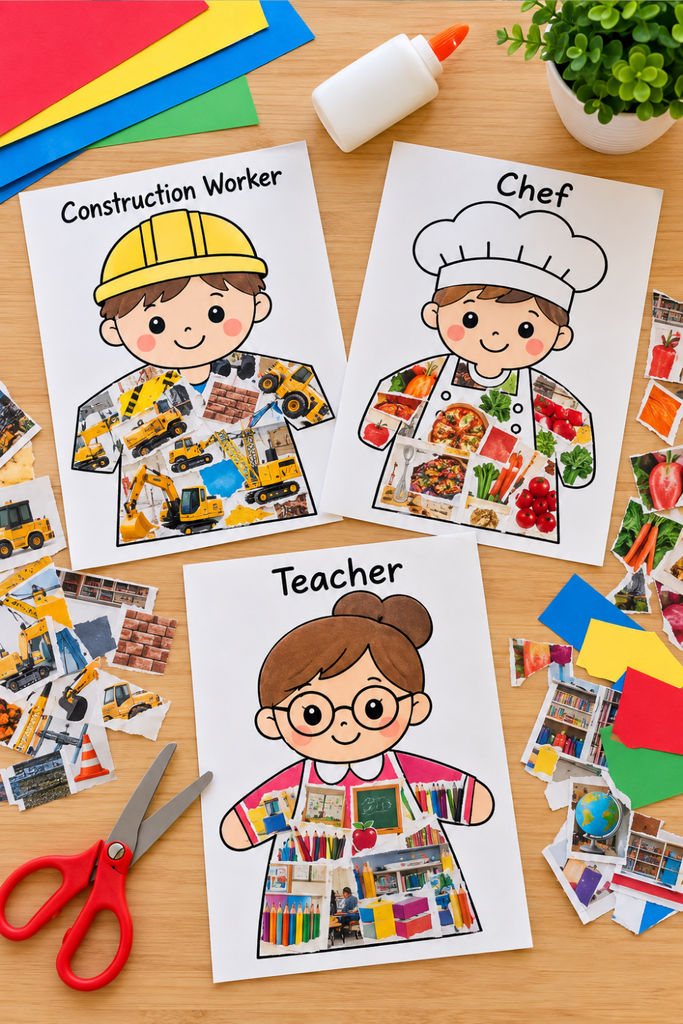
Helper Collage
Put old magazines to good use by letting preschoolers search for pictures connected to different community helpers and glue them onto matching pages.
Give each child a worker such as a chef, teacher, or construction worker, then help them find related tools, places, foods, or equipment.
Sorting before gluing encourages children to think about each job while building vocabulary, scissor control, and a clearer understanding of community roles.
FAQs
What Materials Work Best for Community Helper Crafts With Preschoolers?
Simple supplies usually work best because preschoolers can handle more of the project themselves.
Try construction paper, cardboard, paper plates, paper bags, craft sticks, crayons, washable paint, glue, and child-safe scissors.
Recycled boxes and paper rolls also work well for larger crafts such as ambulances, fire trucks, and community buildings.
How Can I Make Community Helper Crafts More Educational?
Connect every craft to what the worker actually does. While your child creates, talk about the helper’s tools, workplace, vehicle, and responsibilities.
You can also ask when someone might need that helper and how their job helps other people. Pretend play afterward makes those connections easier to remember.
Hi, I’m Afaf! I’m a law student who loves writing about everyday life – from home projects and crafts to fashion, beauty, and parenting tips.
I’ve been writing for over a year, sharing ideas that are simple, practical, and easy to try. I write about things I find interesting and useful, whether that’s organizing a space, trying a new DIY, or finding activities to keep kids entertained.
My goal is to share helpful ideas without making things complicated. If it works in real life, I’ll write about it.
When I’m not studying or writing, I’m usually experimenting with new projects or scrolling for inspiration!