
20 Boys Playroom Ideas
Toys covering the floor, craft supplies mixed with games, and no clear spot for quiet play can make a boys playroom feel messy fast.
You want enough room for building, reading, creating, and moving around without filling every corner with furniture and storage bins.
In this article, you’ll discover 20 Boys Playroom ideas that help you organize toys, create useful play zones, save floor space, and build a room.
Let’s jump in!
Should You Create Separate Zones for Reading, Games, Crafts, and Active Play?
Separate zones can make a boys playroom easier to use, but you do not need to divide the room with walls or bulky furniture.
Start by looking at how your child actually plays. Keep books and soft seating in a quieter corner, place crafts near a table.
Active play needs the clearest area, so keep climbing equipment, soft mats, or movement toys away from shelves and sharp furniture.
In a small playroom one area can handle several activities. A table can work for crafts, while nearby bins keep each activity organized.
Clear zones help your child understand where things belong, make cleanup easier, and stop one activity from taking over the whole room.
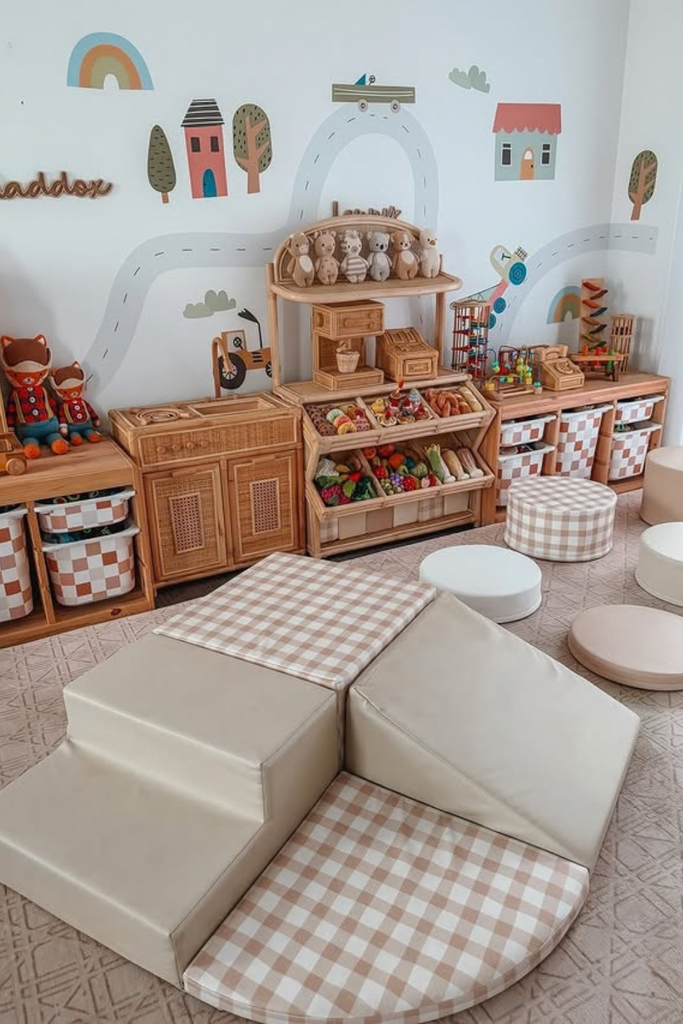
Soft Play Zone
Give energetic play its own safe corner by pairing foam climbing blocks with cushioned floor seating and a large rug.
Low wooden storage works especially well around the edges keeping toys reachable without crowding the movement area.
Add baskets for quick cleanup and use daylight from a nearby window with soft overhead lighting to keep the whole setup.
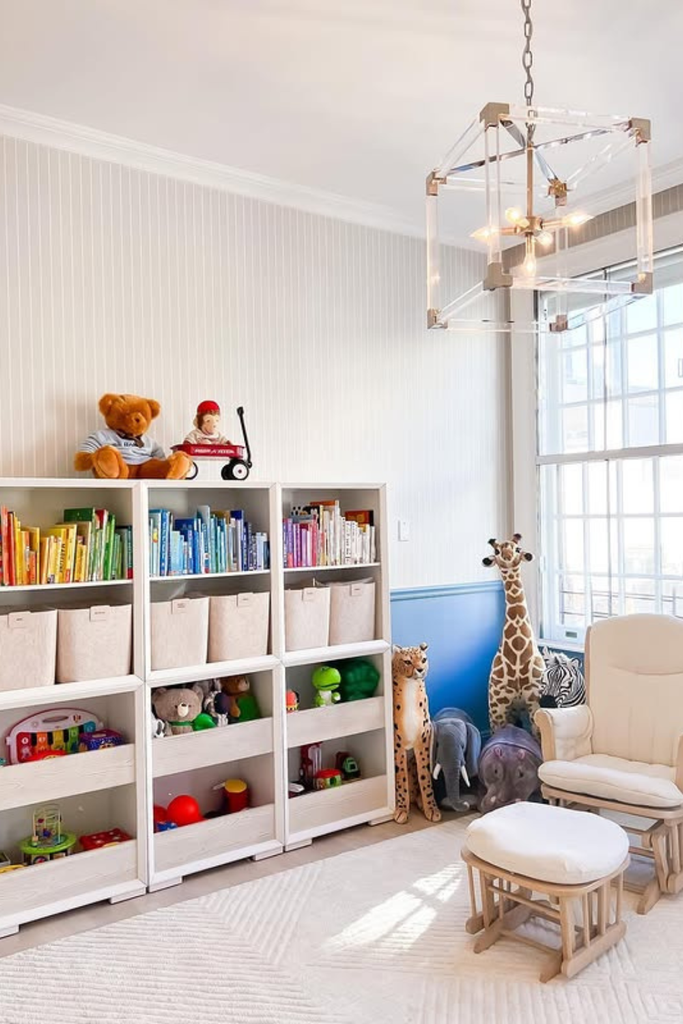
Reading Corner
Turn one quieter side of the playroom into a reading spot by placing a comfortable chair beside low reachable book storage.
Open cubbies can hold books and favorite toys while matching bins hide smaller pieces that quickly create clutter.
Position the chair near a window for daytime reading, then pair that natural light with a bright ceiling fixture so the corner stays useful.
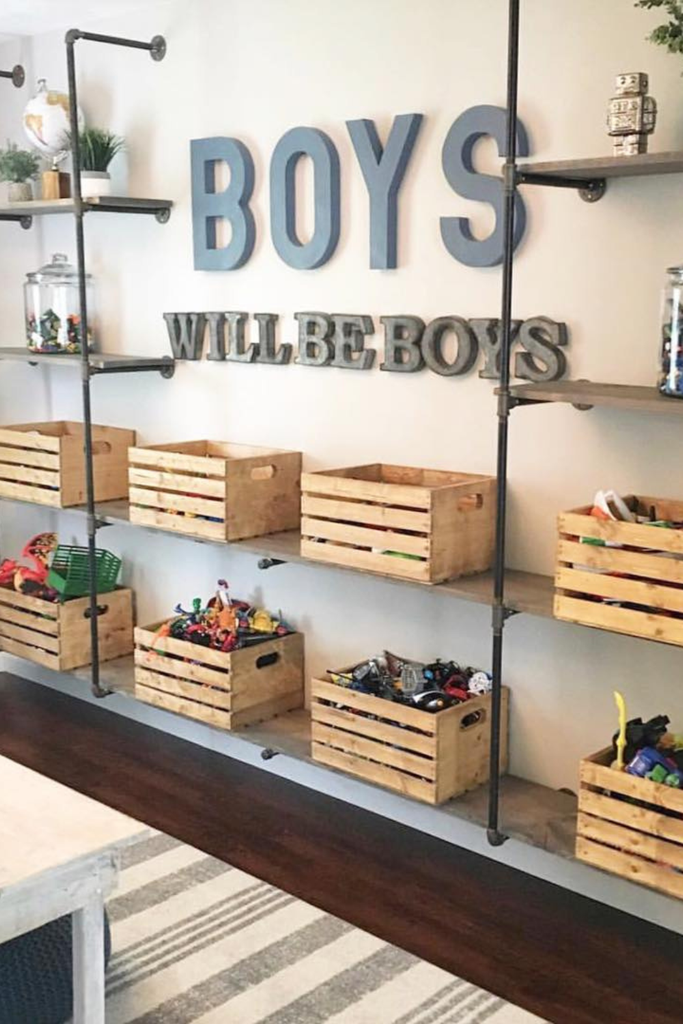
Crate Storage
Make toy sorting easier by giving cars, figures, building pieces and play sets their own open wooden crates.
When you want lots of storage without putting large cabinets all over the play area, long wall shelving is particularly useful.
Everyday crates should be placed on lower shelves so children can reach them on their own, while display items should remain higher.
Indoor Adventure
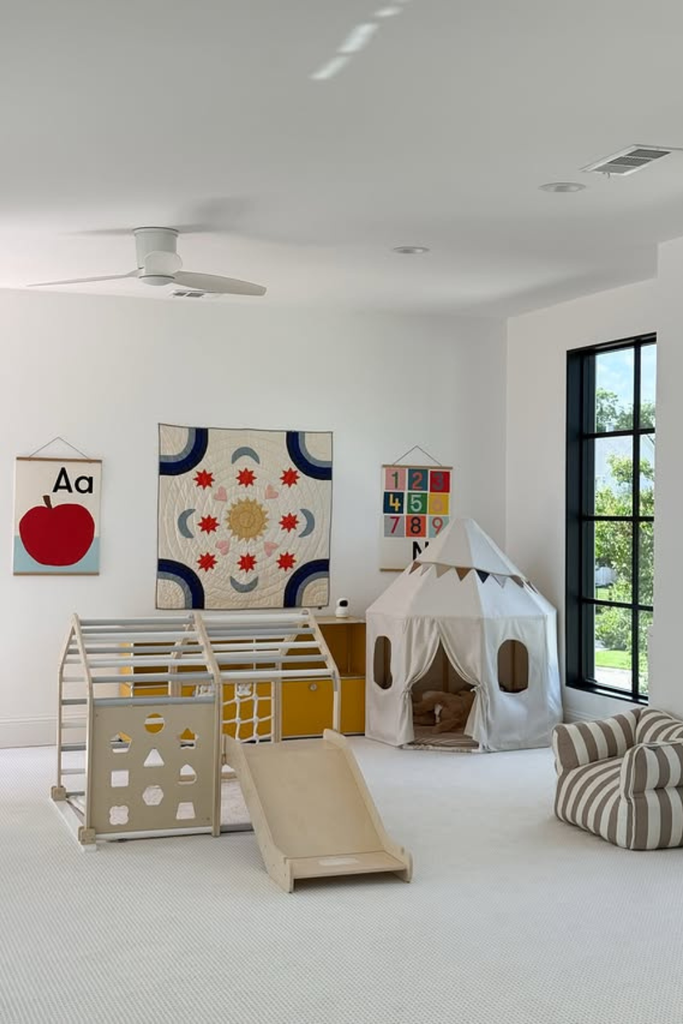
Keep active play contained in one open area by combining a low climbing frame, gentle slide and soft flooring underneath.
A small play tent nearby gives kids somewhere quieter to reset. Leave generous clearance around the equipment.
Use natural window light with recessed ceiling lights for even brightness while a ceiling fan keeps the larger play zone comfortable.
Craft Station
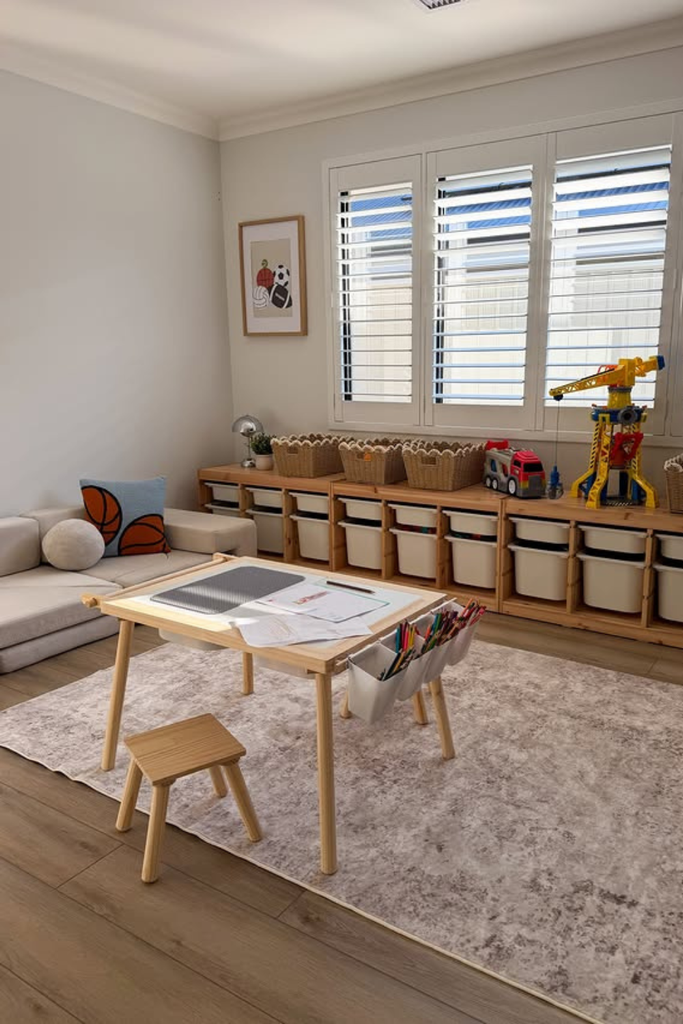
Set up messy creative activities around one child-height table so drawing, coloring and small projects stay away from the main play area.
Keep pencils and everyday supplies within reach, then use the long row of bins behind the table for paper, craft materials, and toys.
Placing the station near wide windows gives kids strong natural light, while overhead lighting can fill in the room on darker afternoons.
Play Table
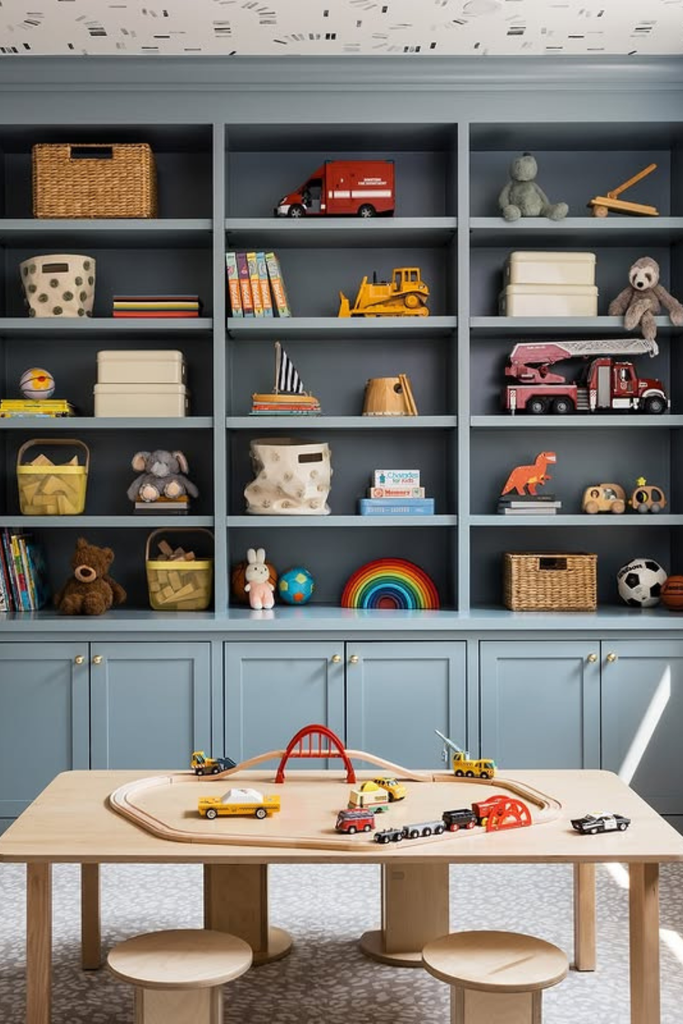
Make building games easier to manage by giving trains, cars, blocks, and LEGO a dedicated table in the center.
Built-in shelving behind it can display favorite toys and books, while closed lower cabinets hide pieces you do not want scattered around.
In order to facilitate children’s mobility, keep stools lightweight and combine overhead illumination with daylight from adjacent windows.
Starry Hideaway
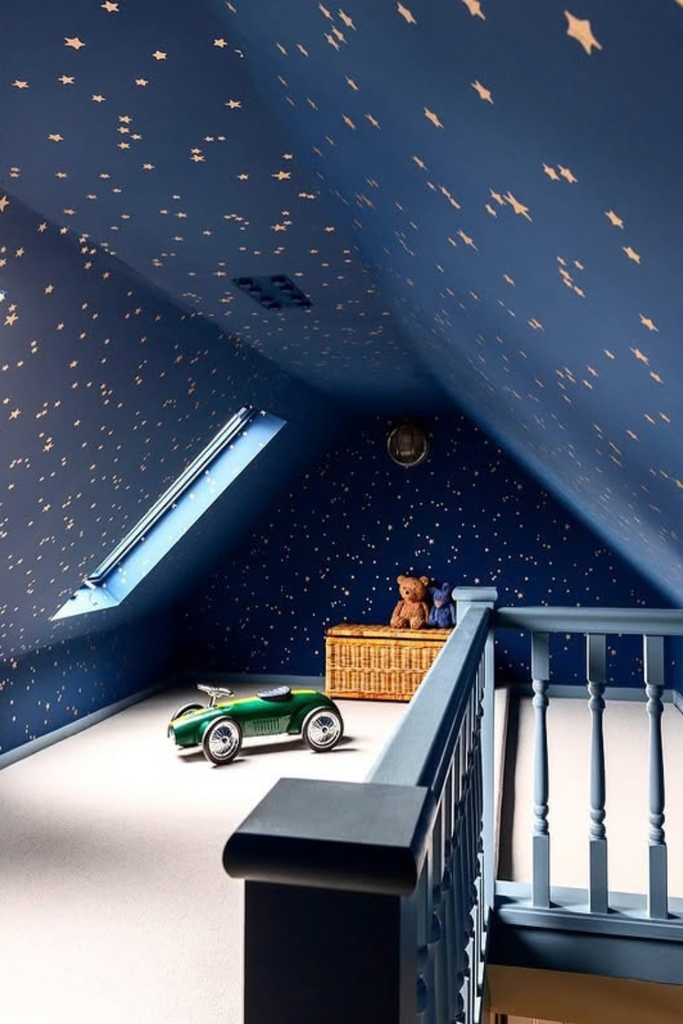
Use an awkward attic or loft as a quiet play zone instead of trying to fill it with tall furniture. Deep blue walls and scattered stars.
Turn sloped ceilings into part of the theme, while soft carpet keeps floor play comfortable then use the long row for bins.
Keep storage low under the shortest walls, leave the center open for toys, and use skylight daylight with a warm ceiling or wall light.
Pretend Kitchen
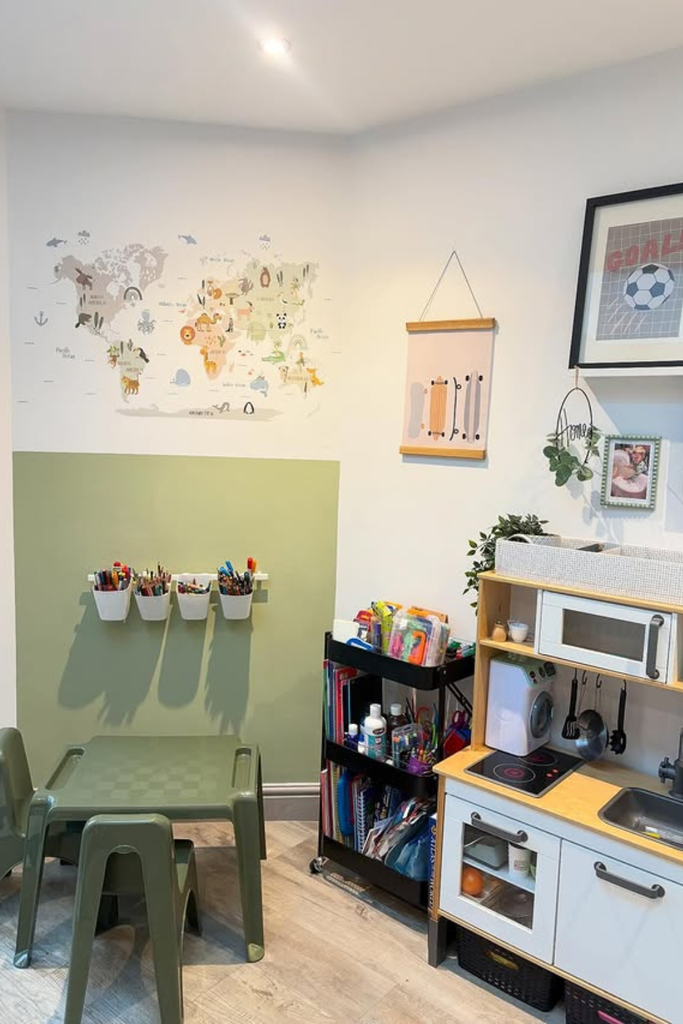
Mix pretend play and crafts in one compact corner by placing a play kitchen beside a small table and wall-mounted supply cups.
A rolling cart can hold books, paints, and extra materials without taking over the floor,making this setup useful in smaller playrooms.
Keep supplies grouped by activity so switching between cooking, then use bright overhead lighting to cover both work areas evenly.
Cozy Lounge
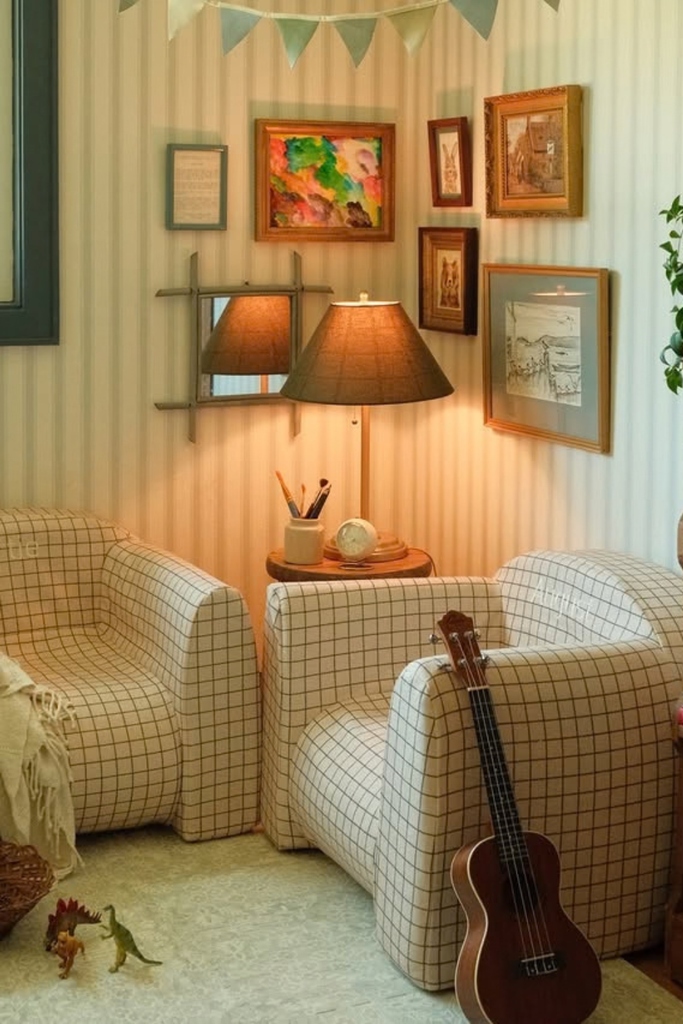
Save one corner for slower play by adding soft armchairs where kids can read, play with small toys or relax between activities.
While baskets can catch misplaced toys without overcrowding the corner an adjacent bookcase keeps stories accessible.
To generate softer lighting, place a warm table lamp next to the chairs after positioning the seating next to a window for natural light.
Bedroom Play Zone
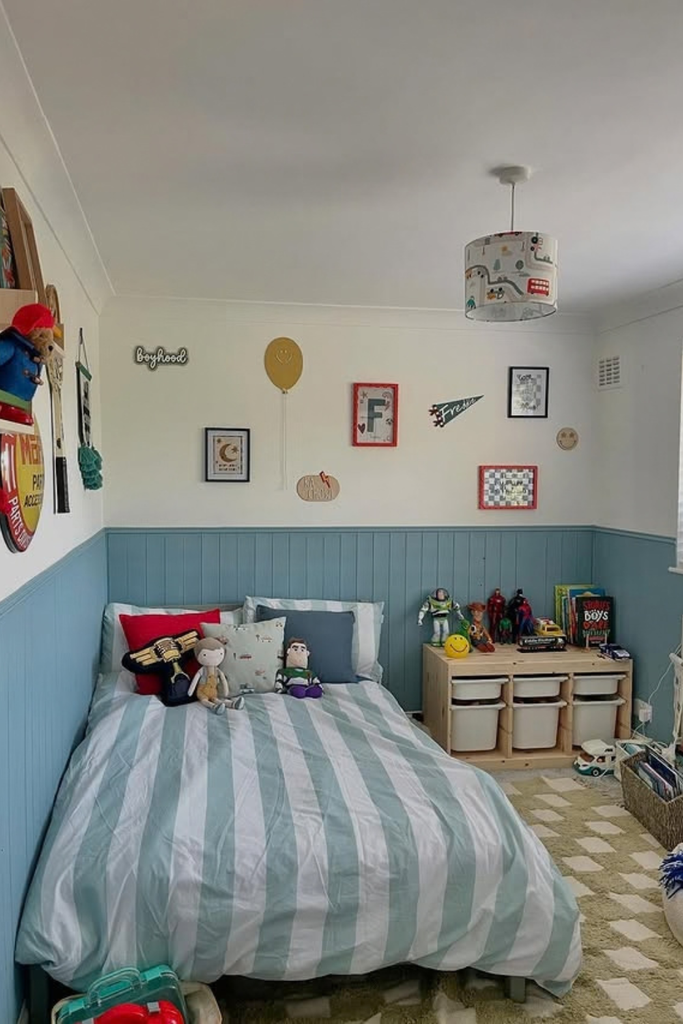
When a separate playroom is not possible, use one end of the bedroom for toys instead of letting storage spread everywhere.
Keep a low bin unit beside the bed for figures, books and everyday favorites then use baskets for larger pieces.
A clear rug area gives kids somewhere to play without blocking the bed, while window light and a central ceiling fixture.
Indoor Slide
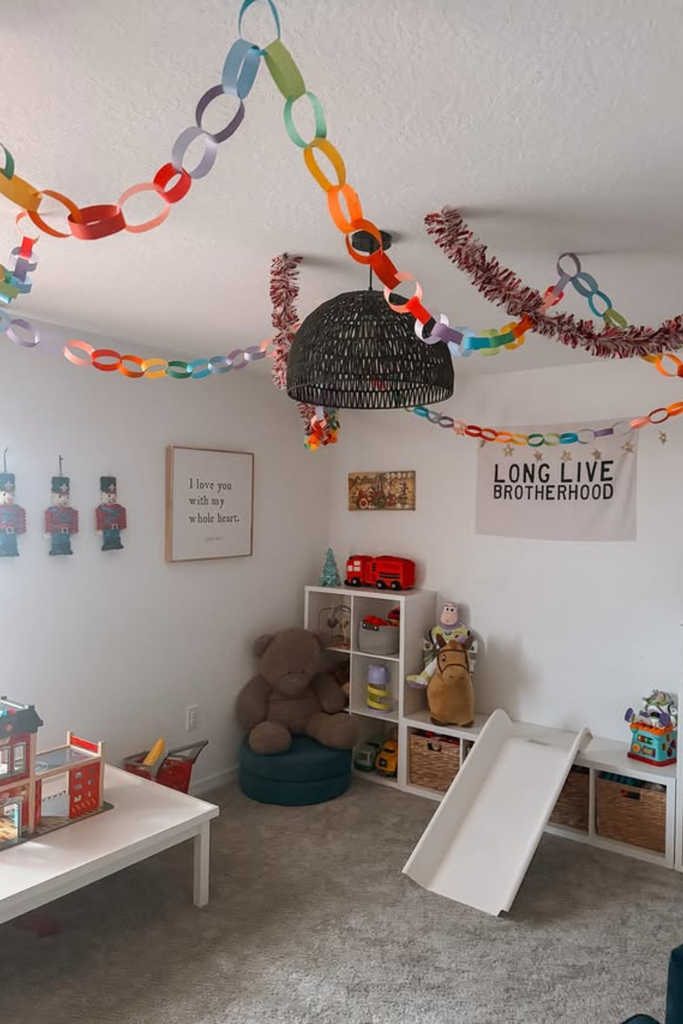
Bring active play into a smaller room with a compact slide positioned between low toy-storage units without extra floor space.
Keeping the equipment centered gives kids a clear movement zone, while cubbies along the wall make cleanup quick.
Soft carpet adds cushioning around the play area, and a large pendant provides general lighting while nearby daylight .
Game Station
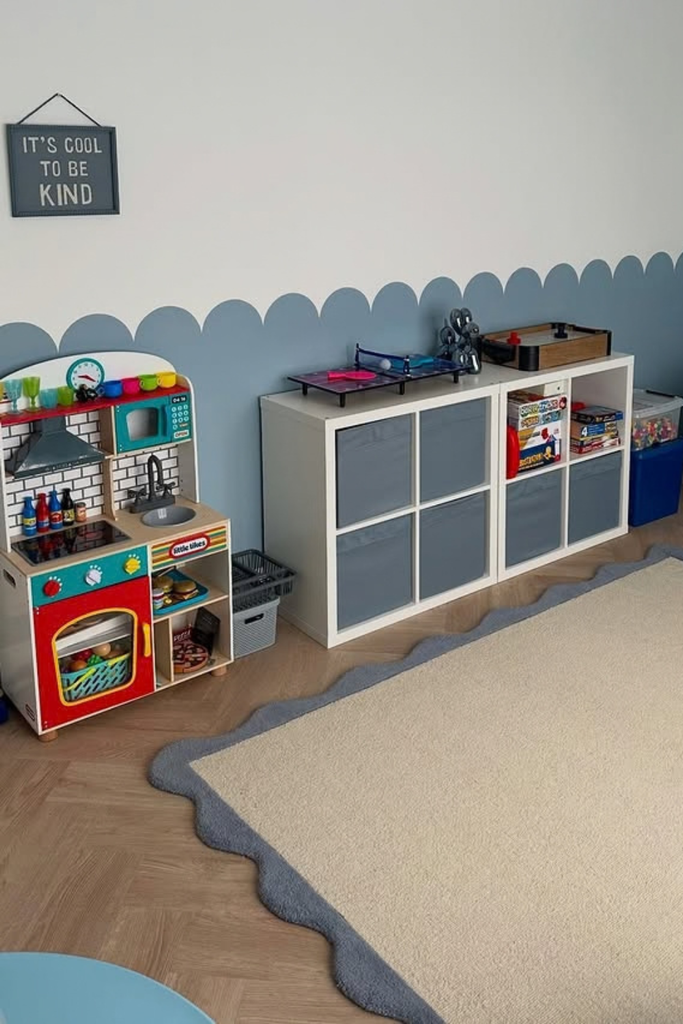
Give tabletop games their own home by using low cubbies, small pieces, and accessories while keeping favorite games ready on top.
Pair the storage with a nearby open rug so kids can move activities onto the floor when they need more room.
Closed fabric bins help control visual clutter, while natural daylight and general ceiling lighting can keep small game pieces.
Climbing Loft
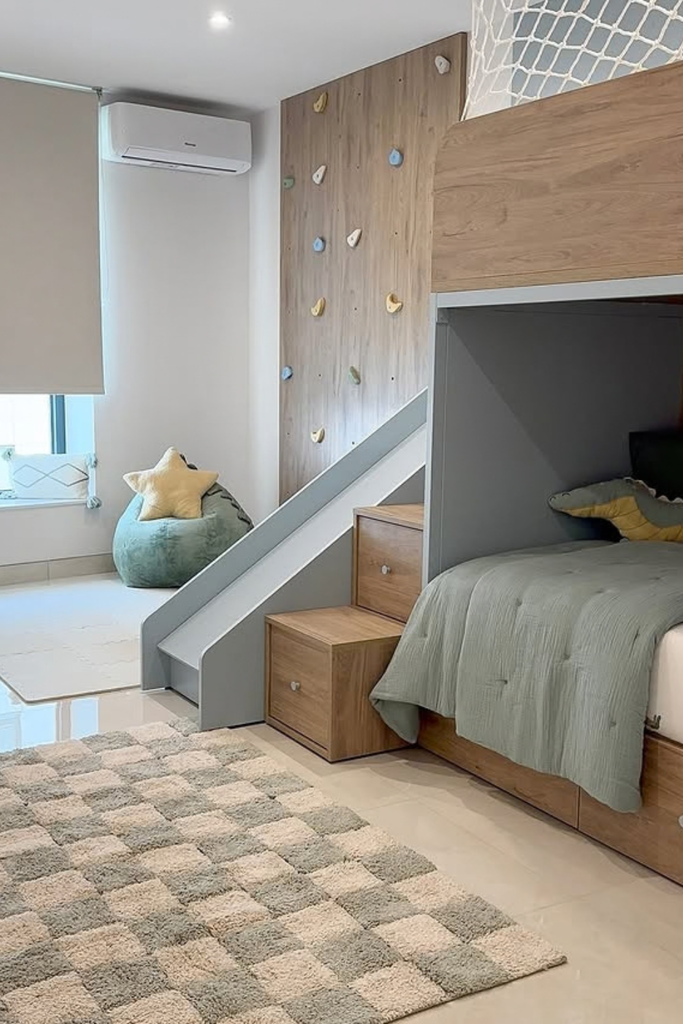
Turn one side of the room into an active-play zone by combining a climbing wall, slide, and raised loft structure.
Keeping the equipment against the wall protects more open floor space for games while a soft rug creates a comfortable landing.
Use built-in drawers beneath the bed, then rely on window daylight and recessed ceiling lights to brighten the climbing area.
Train Play
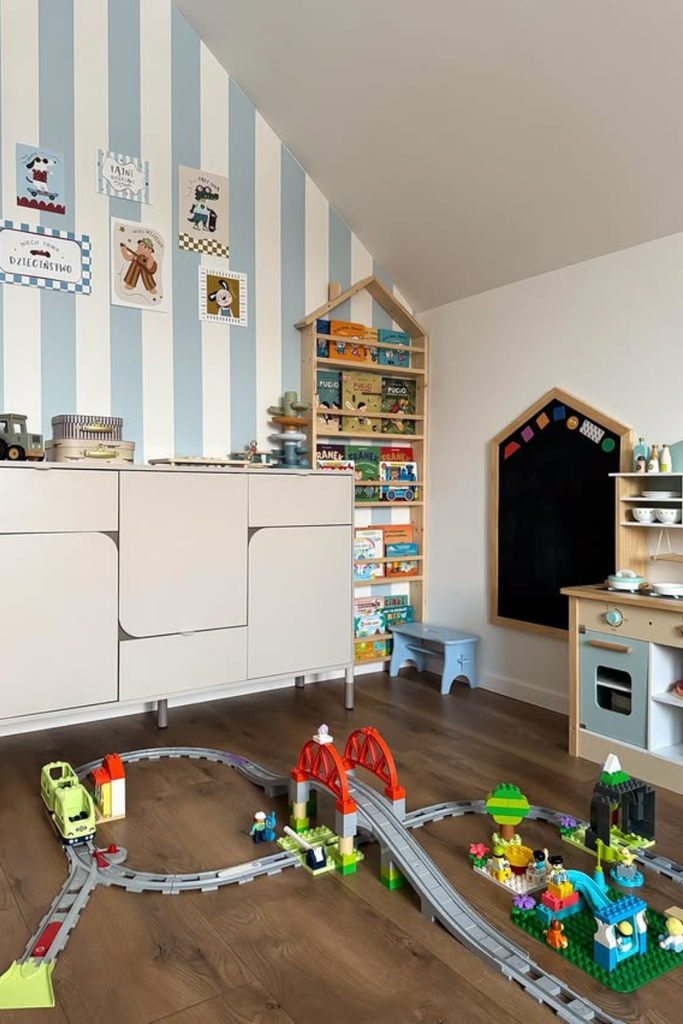
Let train tracks take over the floor without taking over the whole room by keeping their storage along one wall.
Closed cabinets work well for extra tracks, blocks, and larger sets, while a narrow book rack gives favorite stories their own.
Leave the center clear so layouts can change each time kids play then use daylight with simple overhead lighting.
Sorting Wall
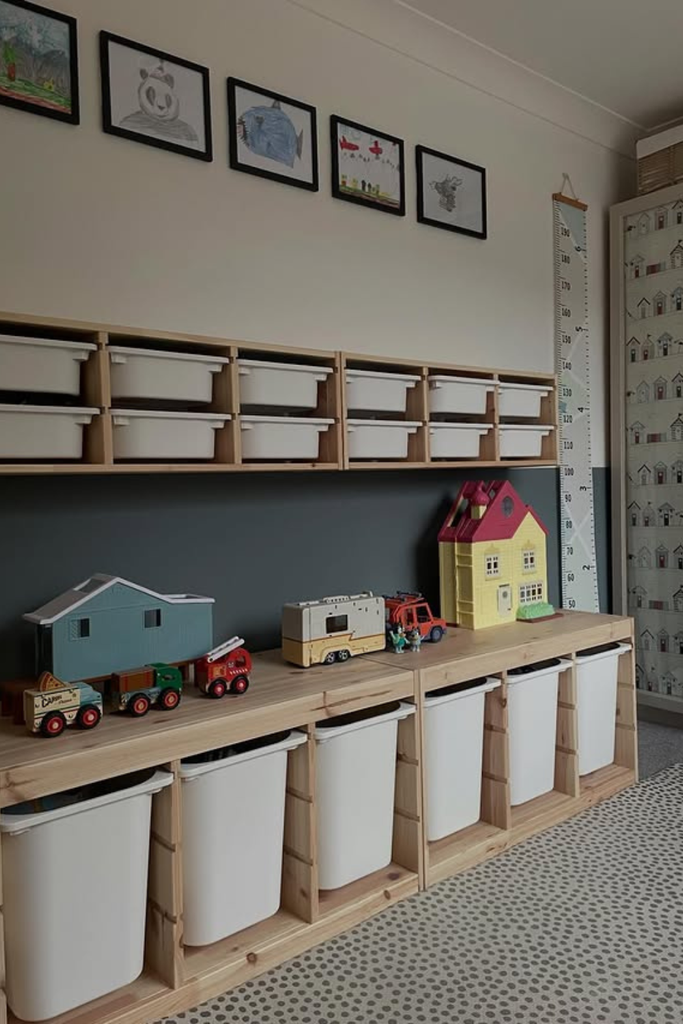
Keep a large toy collection manageable by using shallow bins above for smaller pieces and deep pull out bins below.
A long counter between them gives kids a useful surface for setting up vehicles, houses, or small-world play without adding table.
Run storage along one wall to protect floor space then pair nearby daylight with bright ceiling lighting so both the bins.
Gaming Zone
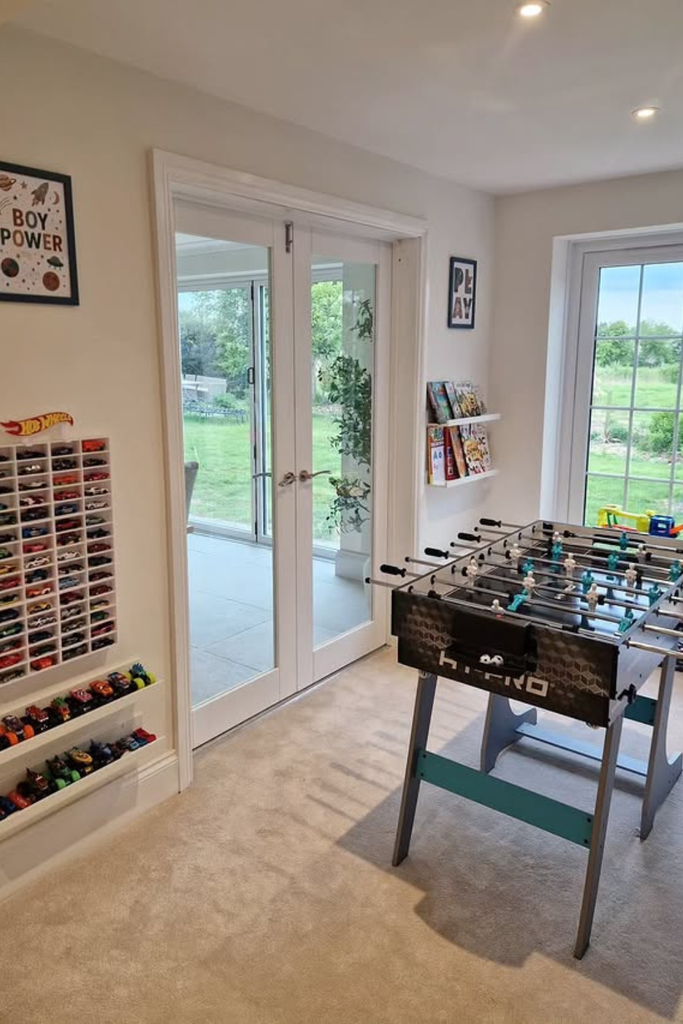
Keep toy storage up against the walls and set up a foosball table in the open center to give competitive games a special place.
For blasters and accessories, a pegboard is particularly helpful since it keeps large items off shelves and makes them accessible.
Leave enough clearance around the table for comfortable play then combine wide-window daylight with recessed ceiling lights.
Media Corner
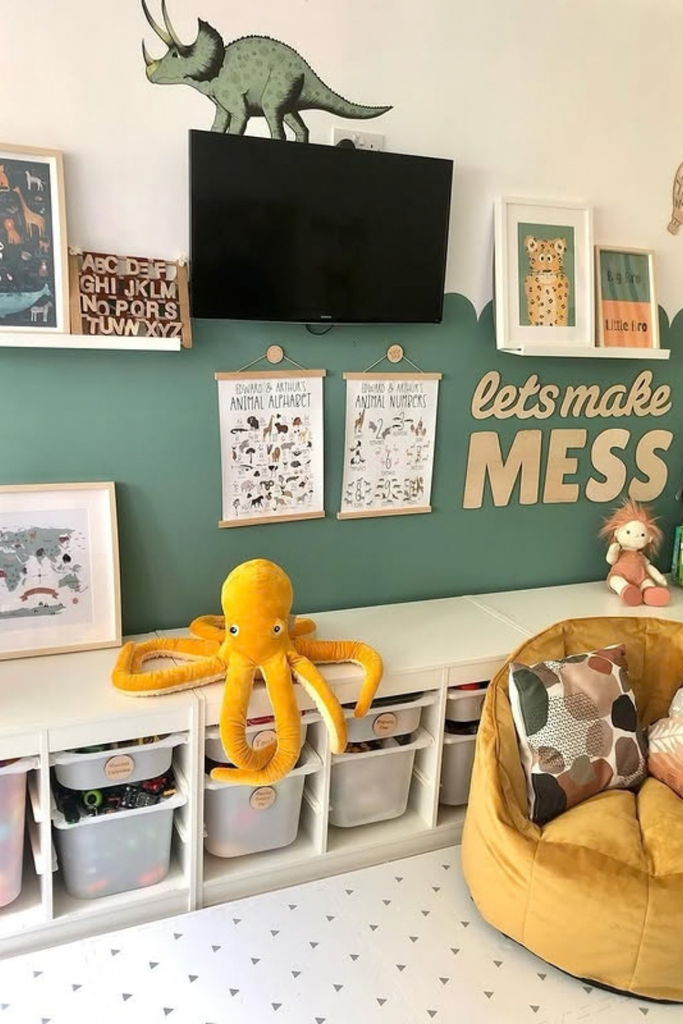
Combine screen time and quiet play in one corner by mounting the TV above low toy storage and adding a soft floor chair nearby.
Clear bins make everyday toys easy to find, while the long cabinet top gives books and favorite pieces somewhere to stay visible.
Keep the seating far enough back then use soft daylight and gentle overhead lighting to avoid harsh glare on the screen.
Shared Play Zone
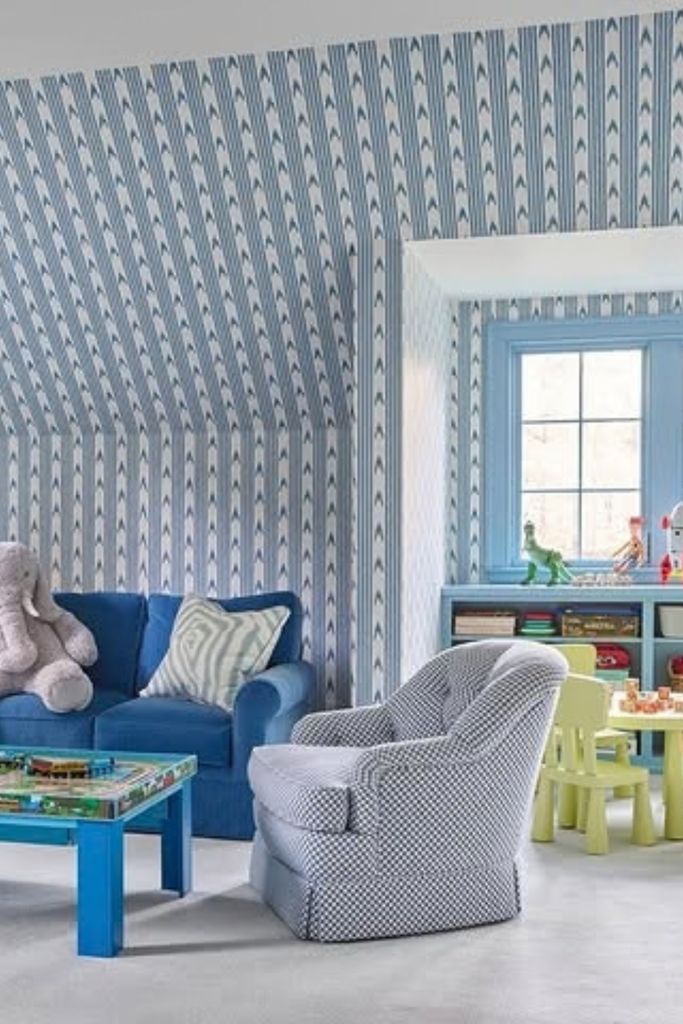
Split one larger playroom into different activities by using furniture instead of walls to create clear zones.
Keep a low table and chairs near toy storage for crafts and building then place softer seating on the other side.
An open center keeps movement easy between both areas, while windows on opposite walls bring in daylight and overhead lighting.
Collection Wall
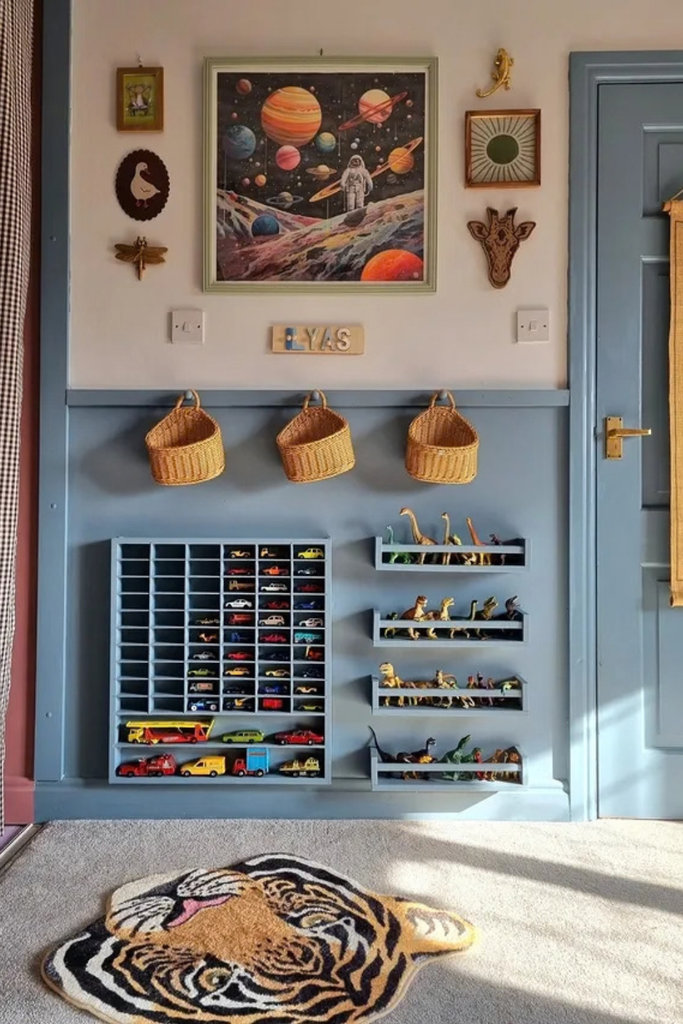
Turn favorite cars and figures into easy-to-use storage by giving each collection its own shallow wall display.
Small compartments keep vehicles separated, while narrow ledges work better for dinosaurs and action figures.
Hang baskets above for loose accessories so cleanup stays simple position the display near natural daylight.
Family Playroom
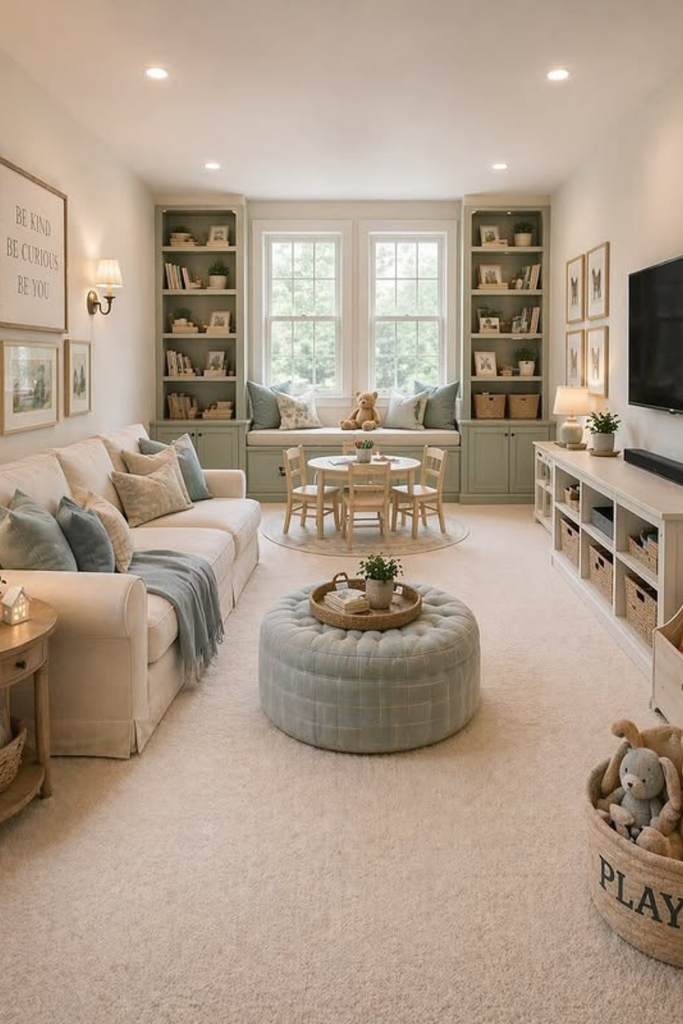
When you want a playroom that will remain functional as your boys. Crafts are handled by a small activity table.
Comfortable areas for reading or unwinding later are created by the window seat. Toys are kept in baskets and built-in shelves.
Around the room edges, leaving the center easy to move through. Layer window daylight with recessed lights, wall sconces.
FAQs
How Can You Keep a Boys Playroom Organized Without Constantly Cleaning It?
Make commonplace toys basic homes that your kids can access on their own. Store less-used toys in closed cabinets or higher storage after using low bins for vehicles, blocks, and figures.
Steer clear of making too many little categories because complex systems make cleanup more difficult. Additionally, leaving some shelves exposed allows toys to be quickly returned after play.
What Should You Put in a Small Boys Playroom?
A low storage unit, open rug, small activity table, and comfortable reading spot can cover plenty of play without crowding the floor.
Use walls for books, toy collections, or activity storage, and choose furniture that can handle more than one purpose as his interests change.

Hi, I’m Afaf! I’m a law student who loves writing about everyday life – from home projects and crafts to fashion, beauty, and parenting tips.
I’ve been writing for over a year, sharing ideas that are simple, practical, and easy to try. I write about things I find interesting and useful, whether that’s organizing a space, trying a new DIY, or finding activities to keep kids entertained.
My goal is to share helpful ideas without making things complicated. If it works in real life, I’ll write about it.
When I’m not studying or writing, I’m usually experimenting with new projects or scrolling for inspiration!