
21 Vintage Playroom Ideas
Creating a vintage playroom gets tricky when the old furniture, wooden toys, books, baskets, and keepsakes start making the room feel cluttered.
You want that warm, nostalgic look, but your child still needs open floor space, reachable toys, easy book storage, and comfortable places to play.
In this article, you’ll discover vintage playroom ideas that help you mix character, practical storage and everyday play without making the room feel too busy.
Where Should You Display Books, Toys, and Keepsakes in a Vintage Playroom?
Keep everyday books and toys where your child can reach them. Low wooden shelves, open cubbies, wicker baskets and small book ledges work well.
They keep favorite items visible while supporting the vintage look. Use closed cabinets or old-style cupboards for puzzles, craft supplies and toys.
Special keepsakes need a different spot. Place old toys framed photos, inherited books and fragile pieces on higher shelves.
This keeps the room from feeling cluttered and leaves enough open storage for the things your child actually uses.
Gingham Storage
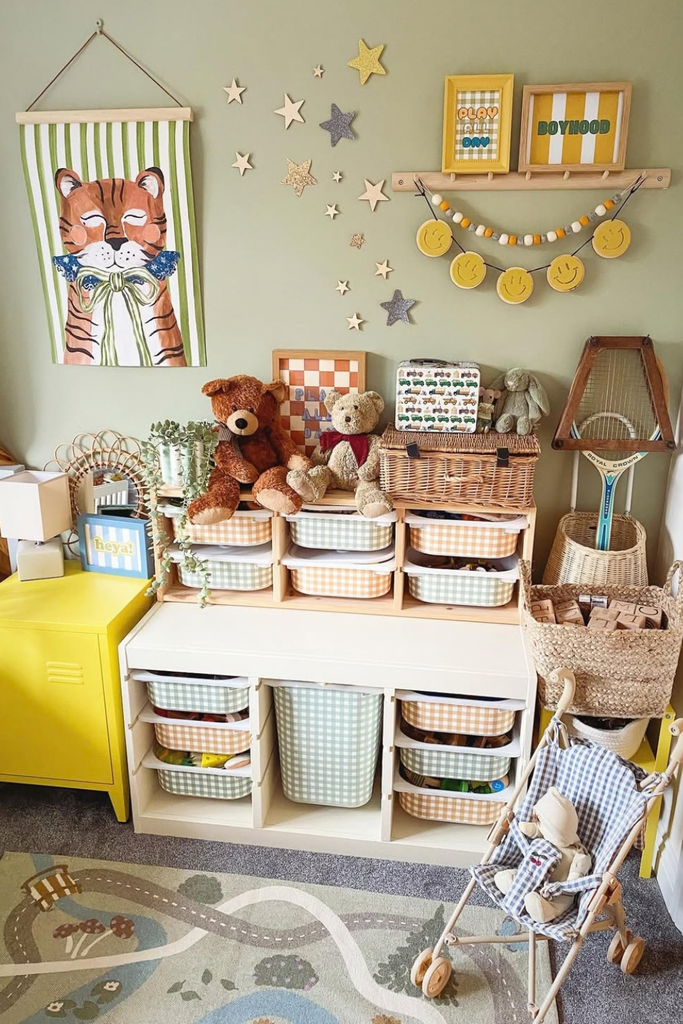
Give everyday toys a softer vintage home by sliding gingham fabric bins into low open cubbies where kids can reach them easily.
Mix muted green, peach and cream checks rather than matching every basket then layer wicker storage and a few old-fashioned toys above.
A playful rug can define the floor area while nearby daylight and a simple ceiling light will keep the packed storage corner feeling usable.
Attic Lounge
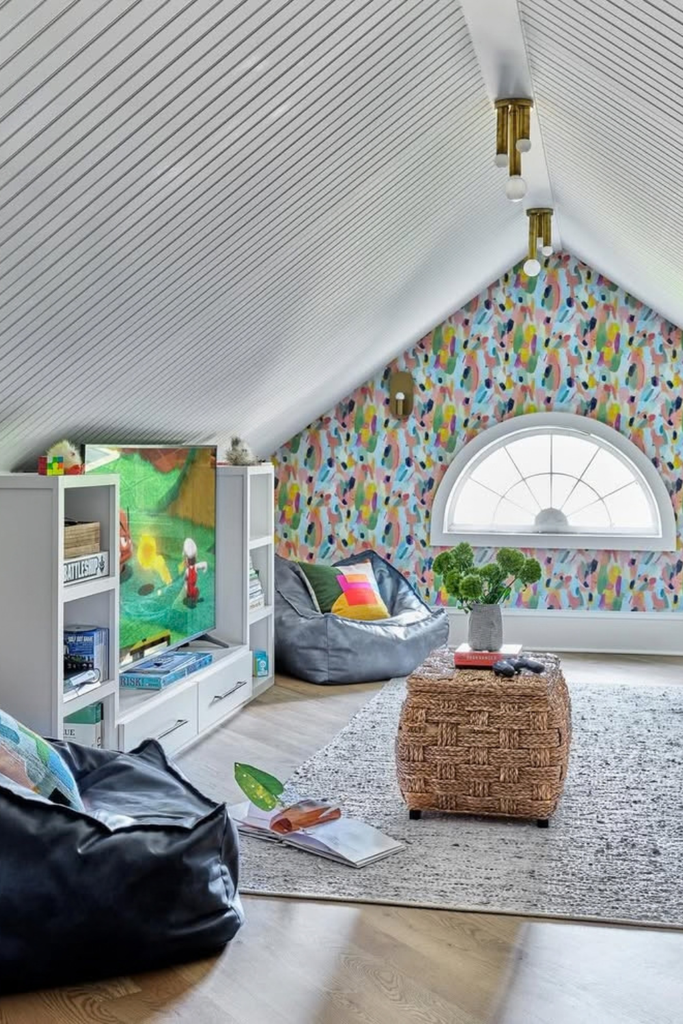
Turn an awkward attic into a relaxed play zone by letting the sloped ceiling frame the room instead of fighting against it.
Bold retro wallpaper gives the low walls personality, while beanbags create flexible spots for reading, gaming, or lounging.
Place media storage against the shortest wall to save standing space, then use ceiling pendants and the large window together.
Toy Display
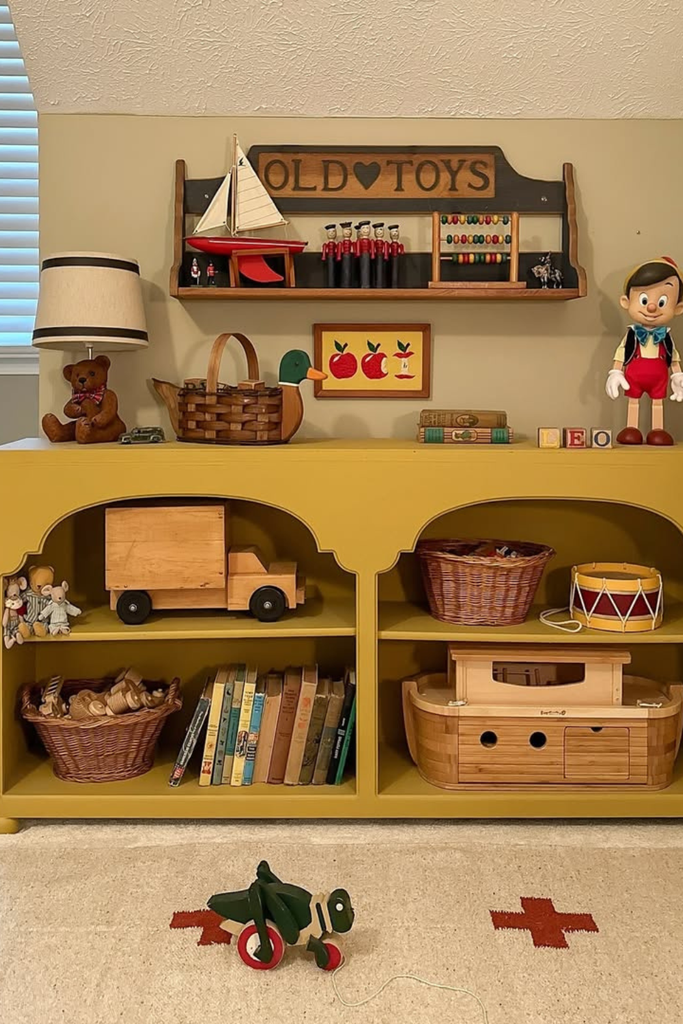
Let favorite old-fashioned toys become part of the decor instead of hiding every piece inside baskets.
Use a low painted cabinet and playable toys, then reserve a wall shelf for wooden figures, boats, and other special finds.
Wicker baskets soften exposed storage and facilitate housekeeping. Place the arrangement near a window.
Building Station
Give larger construction toys a raised area of their own that incomplete projects can remain upright rather than being cleared.
A simple wooden unit with deep pullout bins underneath handles loose pieces without losing the vintage feel.
Position it beside a bright window for detailed building then bring in a floral floor lamp for softer evening light.
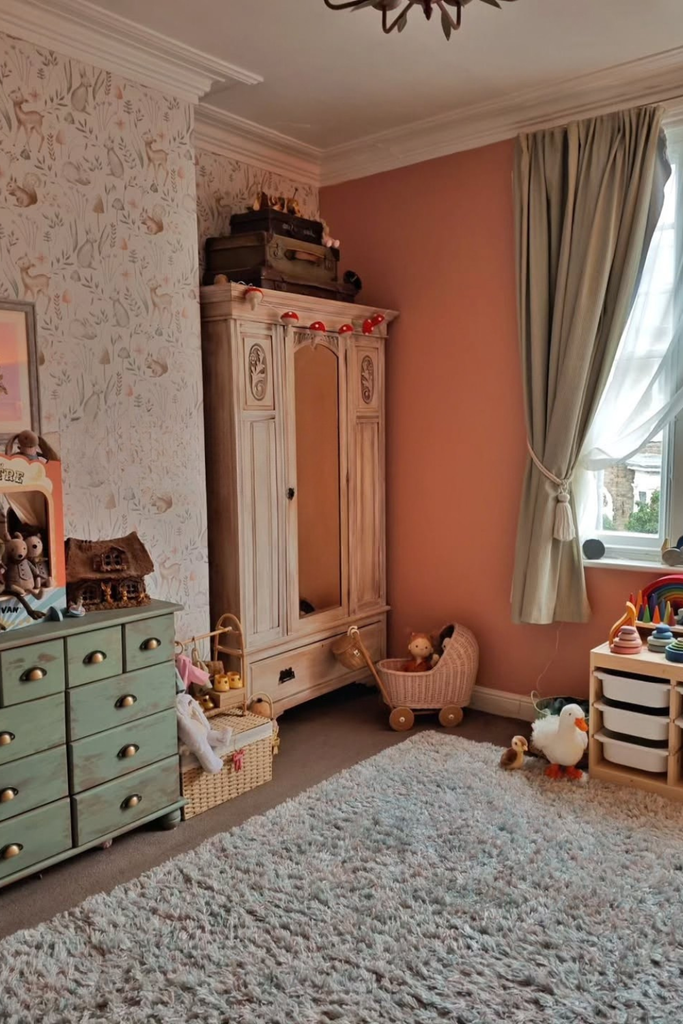
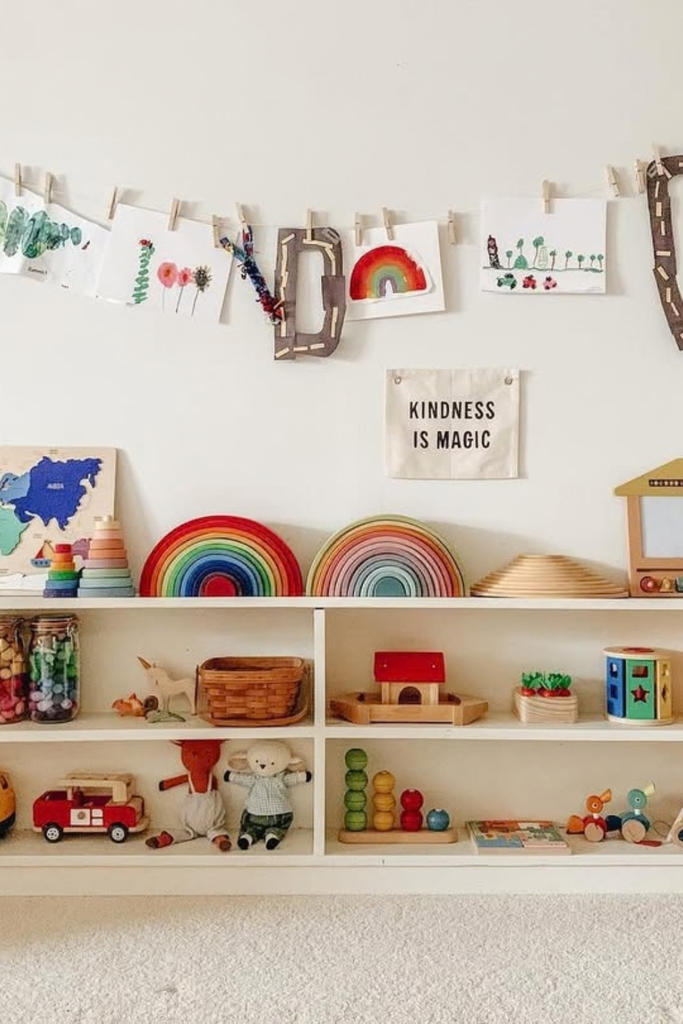
Rainbow Shelves
Turn a long low shelf into a child led display where colorful wooden toys can stay visible without taking over the whole room.
Arrange baskets, vehicles stacking toys and small play sets loosely. The low height makes choosing and returning toys easier.
Clipped artwork above gives kids their own changing gallery. Natural daylight works best here, with a simple ceiling light filling the room.
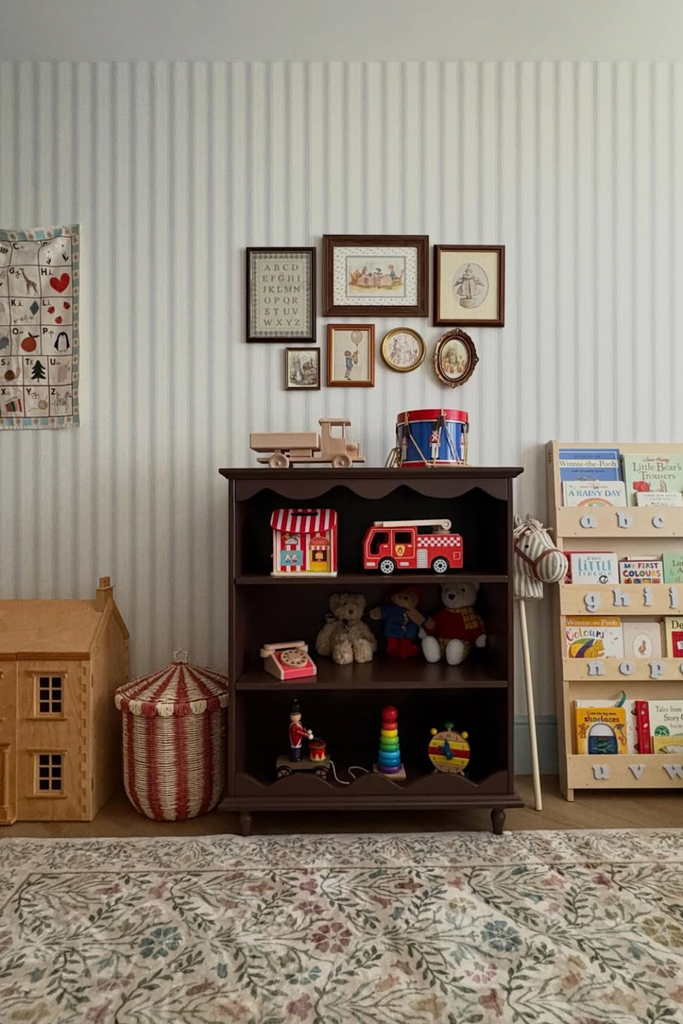
Heirloom Corner
Bring the vintage theme forward by pairing a dark wooden bookcase with toys, such as drums, wooden vehicles, and teddy bears.
Place current favorites on lower shelves, then use the wall above for small framed prints that deserve protection.
A front-facing book rack beside it makes reading choices easier, while daylight and soft ceiling lighting stop the darker furniture.
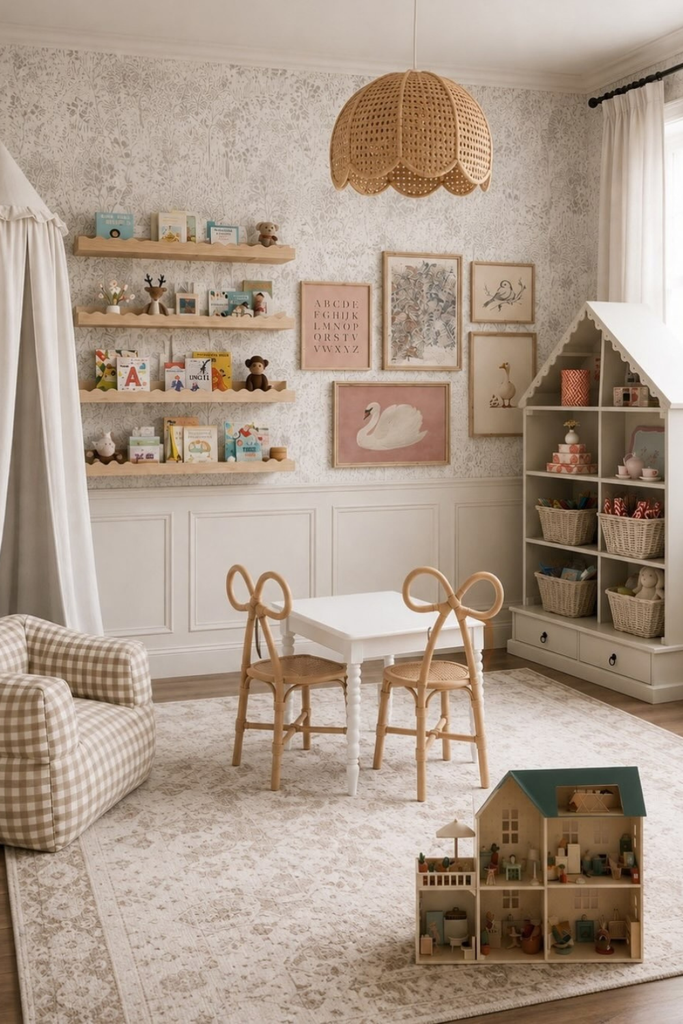
Storybook Playroom
Combine picture ledges, framed storybook art, floral wallpaper, and a few pieces of natural wood to create a warmer vintage setting.
While the house-shaped cabinet holds smaller toys in baskets, youngsters can easily identify their favorites by facing books outward.
A woven pendant spreads light over the activity table, and the large window adds plenty of daylight for crafts and reading.
Market Corner
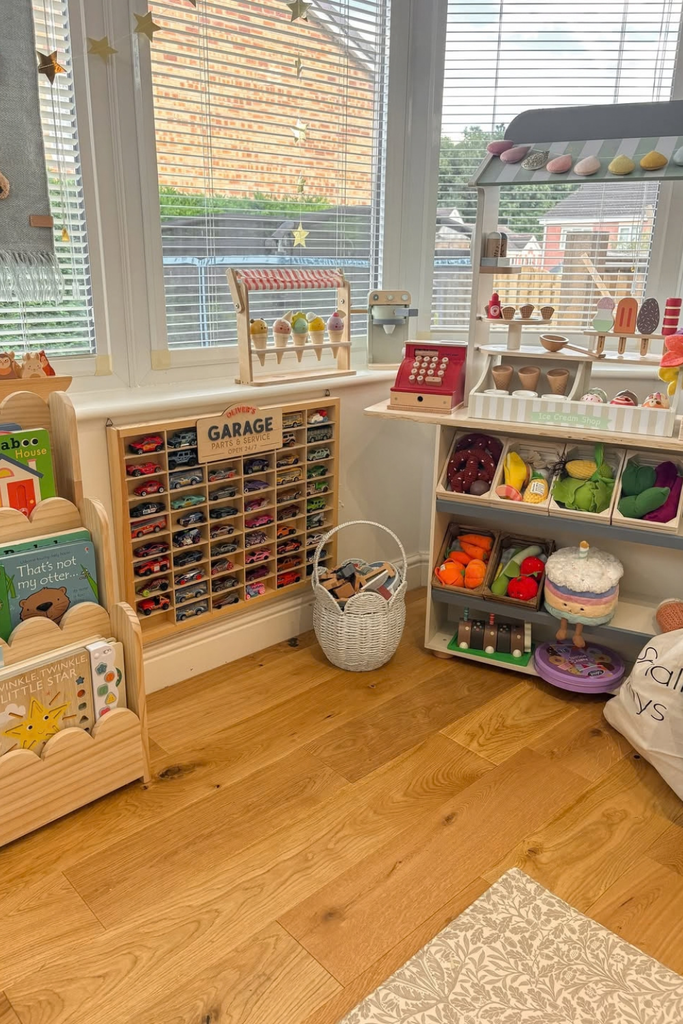
Make a pretend market out of a sunny spot where children may shop, sort food, and operate their own small business.
Use wooden display shelves for play produce, treats and a toy register, then place front-facing books nearby to extend the play.
Small divided storage can organize cars or tiny pieces. Large windows provide daytime light, while a ceiling fixture can cover evening play.
Cottage Kitchen
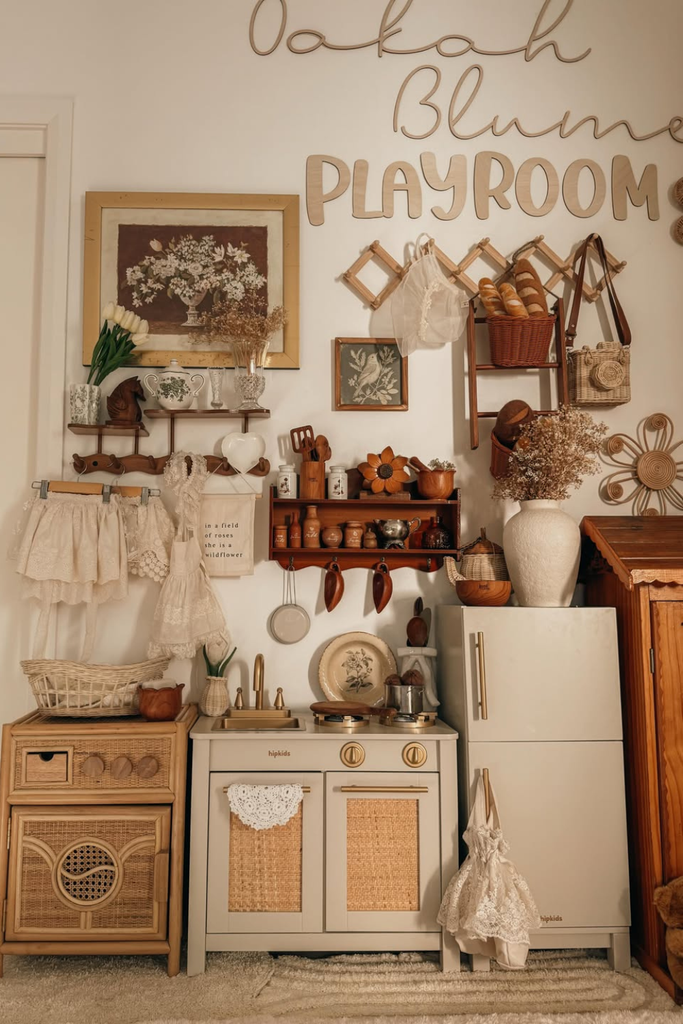
Bring cottage character into pretend play by surrounding a simple toy kitchen with wicker furniture, tiny pottery and dried flowers.
Wall racks make lightweight accessories part of the setup, while lower cabinets give kids room for dishes and pretend food.
Soft neutral walls prevent the collected details from becoming overwhelming, and window light paired with a ceiling fixture.
Moody Playroom
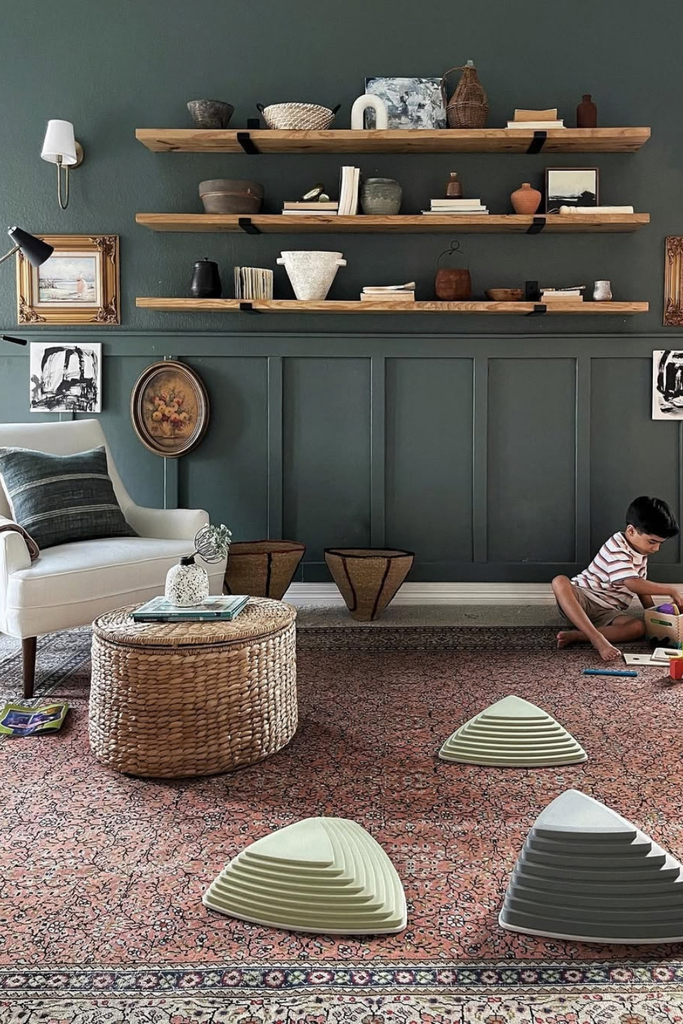
Go darker when you want the playroom to blend naturally with the rest of an older home instead of looking overly childish.
Deep green paneling creates the vintage base, while Persian-style rugs, woven storage, framed art, and thick wooden shelve.
Leave the center open for building and movement, then use matching wall sconces with a nearby reading lamp to brighten the darker walls.
Collector Shelves
The small collections that are often dispersed across a playroom can be arranged on a single long wall.
Deep wooden shelves can display dolls and special toys, while shallow divided drawers below sort craft pieces.
Woven baskets and larger bins handle bulky toys at child height. Natural light from the adjoining space helps during play.
Toy Museum
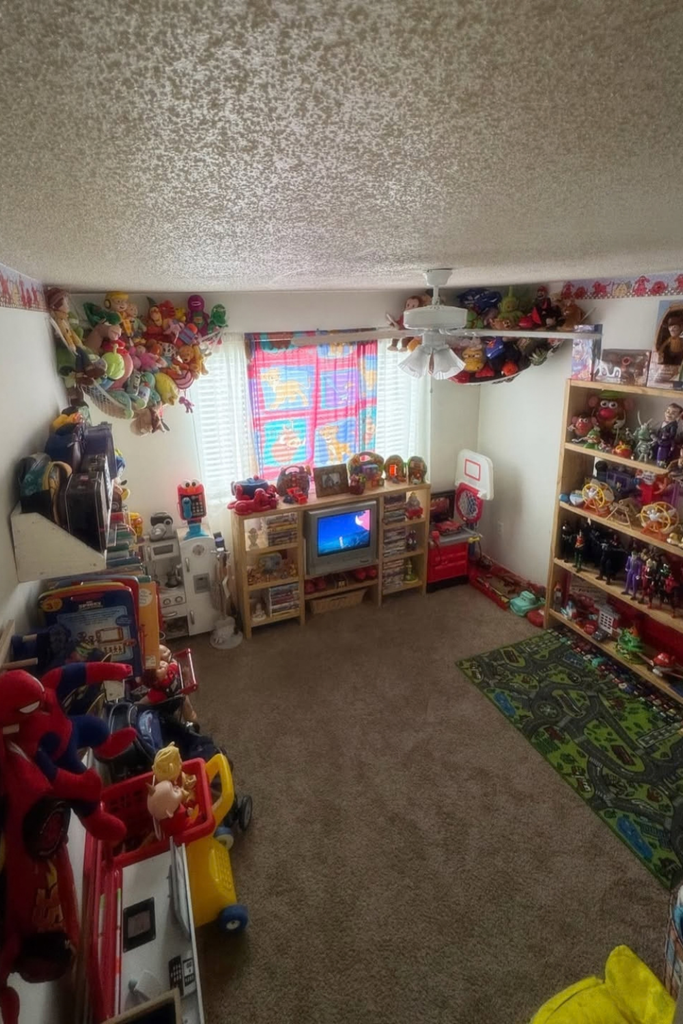
Give a large toy collection some order by treating one wall almost like a playful museum, with open wooden shelves.
Store bigger vehicles and play sets around the room edges. Older favorites can sit higher while current toys remain reachable.
Window daylight brightens the displays, and a central ceiling fan light can spread general light across the whole room.
Story Wall
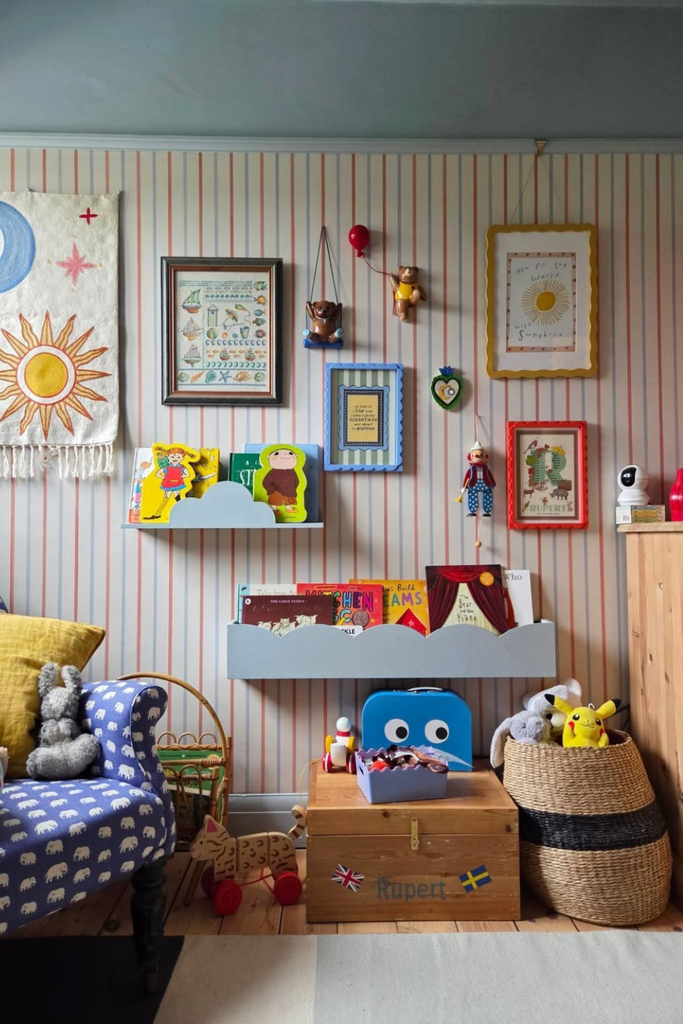
Make a reading corner feel collected over time by mixing front-facing book ledges with framed prints, and hanging toys.
Striped wallpaper ties the different colors together without requiring matching frames. Add a wooden trunk below for toys.
Plus a woven basket for stuffed animals. Soft daylight works well here, while an overhead fixture can support reading.
Parlor Playroom
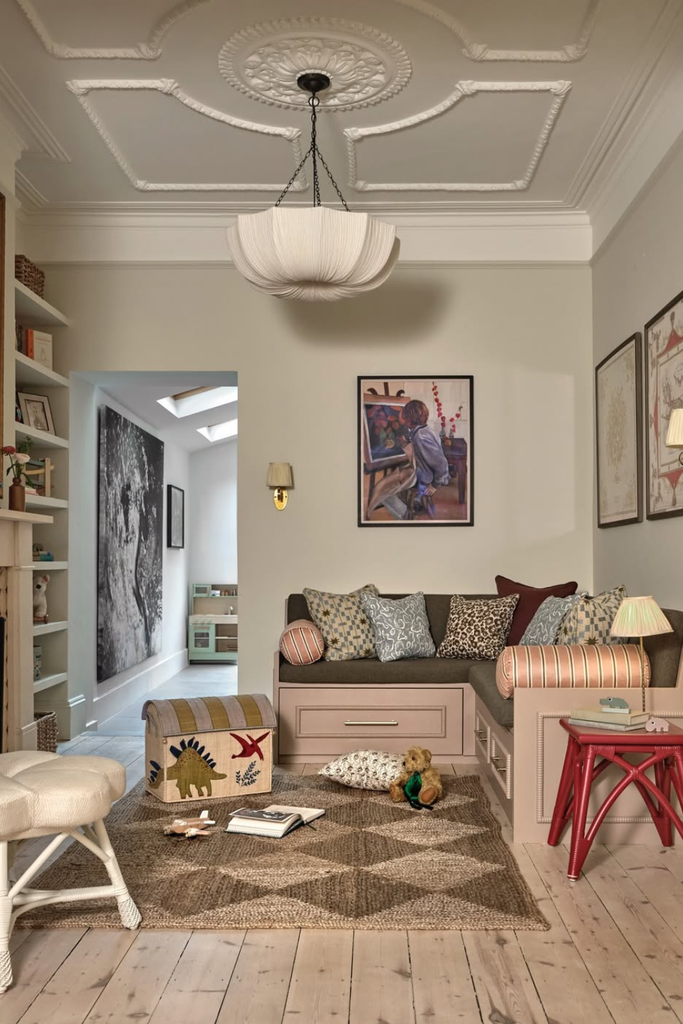
Borrow from an old sitting room when you want a playroom that still feels connected to the grown-up spaces nearby.
Built-in bench seating gives kids a cozy spot for reading. Layer patterned cushions, traditional artwork, and a painted side table.
A central vintage-style pendant handles general lighting, while shaded wall sconces and a table lamp create softer reading light.
Fireside Nook
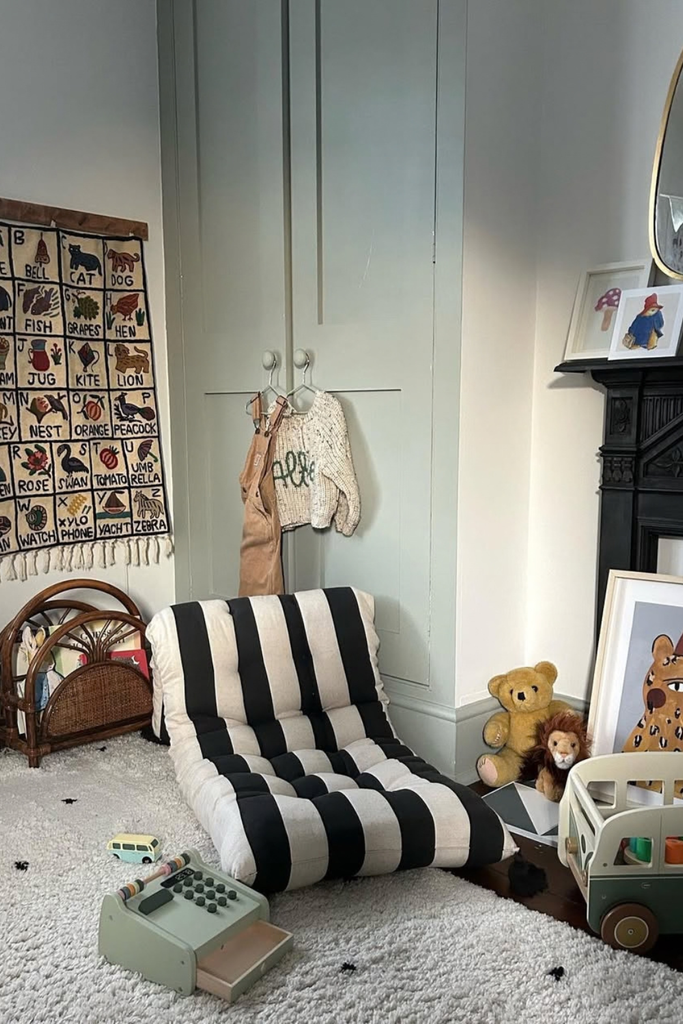
Carve out a quieter play spot beside the fireplace with a low floor chair, soft rug, and just a few favorite toys within reach.
Larger collections can be concealed by built-in cabinets, freeing up the floor for leisurely reading or play.
An old-style alphabet hanging and wicker pieces bring in the vintage character without crowding the corner.
Creative Desk
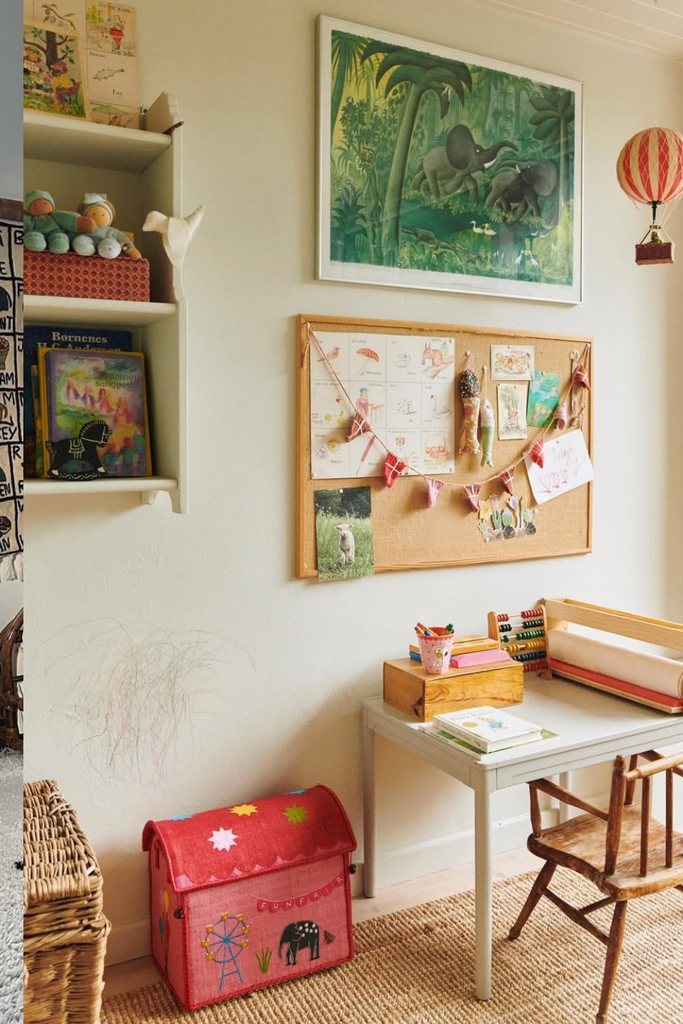
Give drawing and writing their own corner by pairing a simple desk with an old wooden chair, open book shelves, and a corkboard.
The space feels more intimate rather than ostentatious when children’s artwork is placed next to vintage-style prints.
Additional paper and materials can be hidden in wicker trunks. For projects throughout the day, place the workstation next to a window.
Dollhouse Kitchen
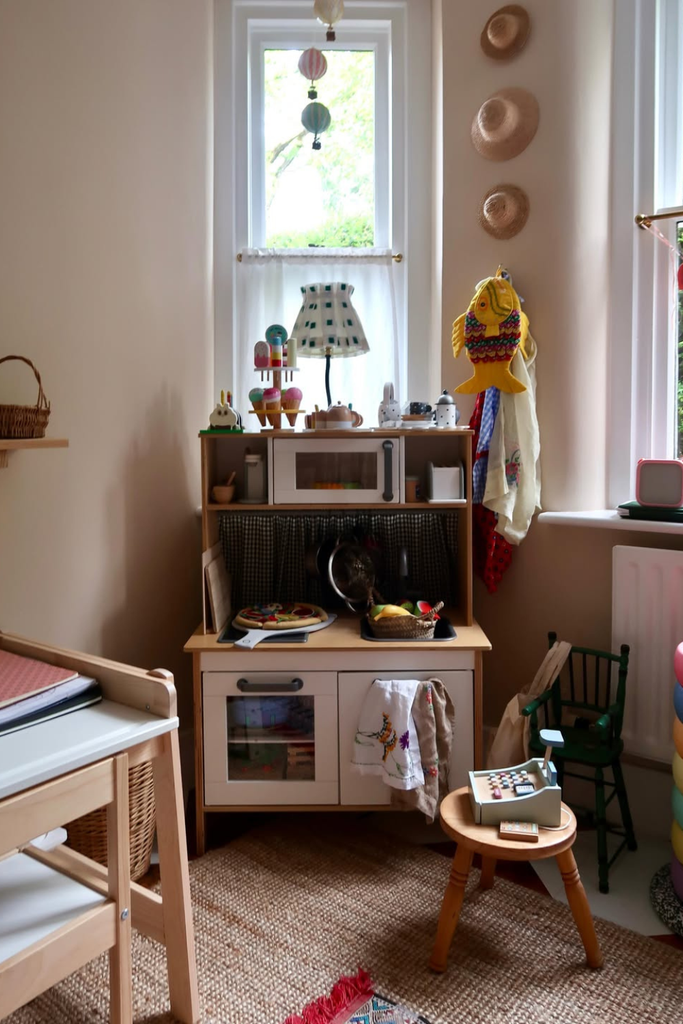
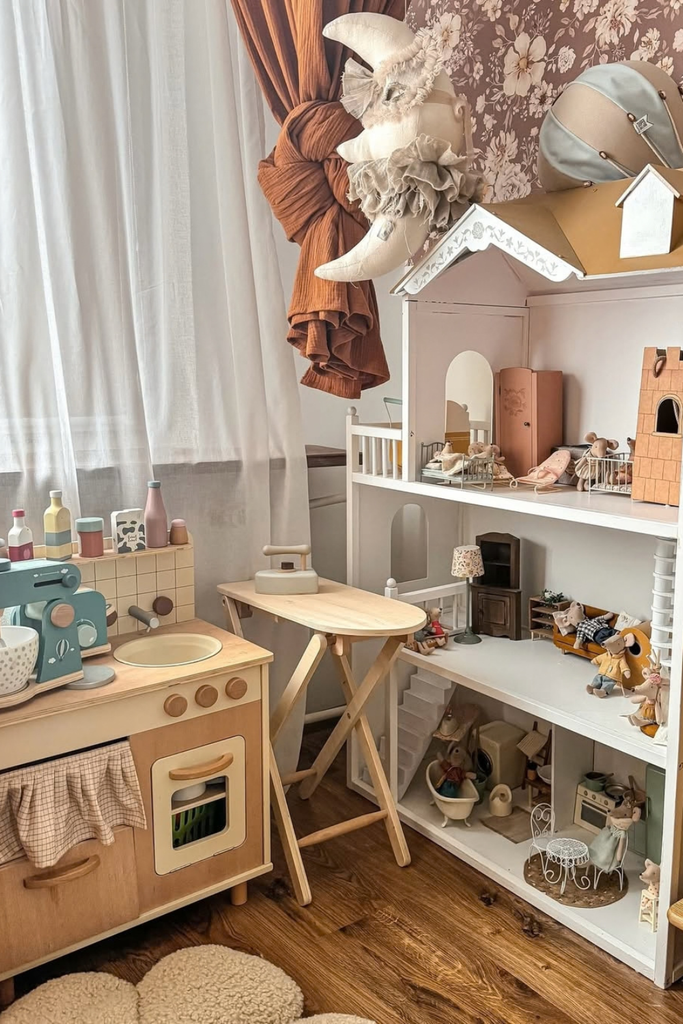
Blend two pretend-play favorites into one corner by placing a wooden kitchen beside an open dollhouse shelf.
Soft floral wallpaper, gathered curtains, and natural wood bring in the older cottage feel without needing many decorations.
Use the shelves for miniature furniture instead of loose bins, then rely on window daylight with a small shaded lamp.
 @katincorners
Book Hideaway
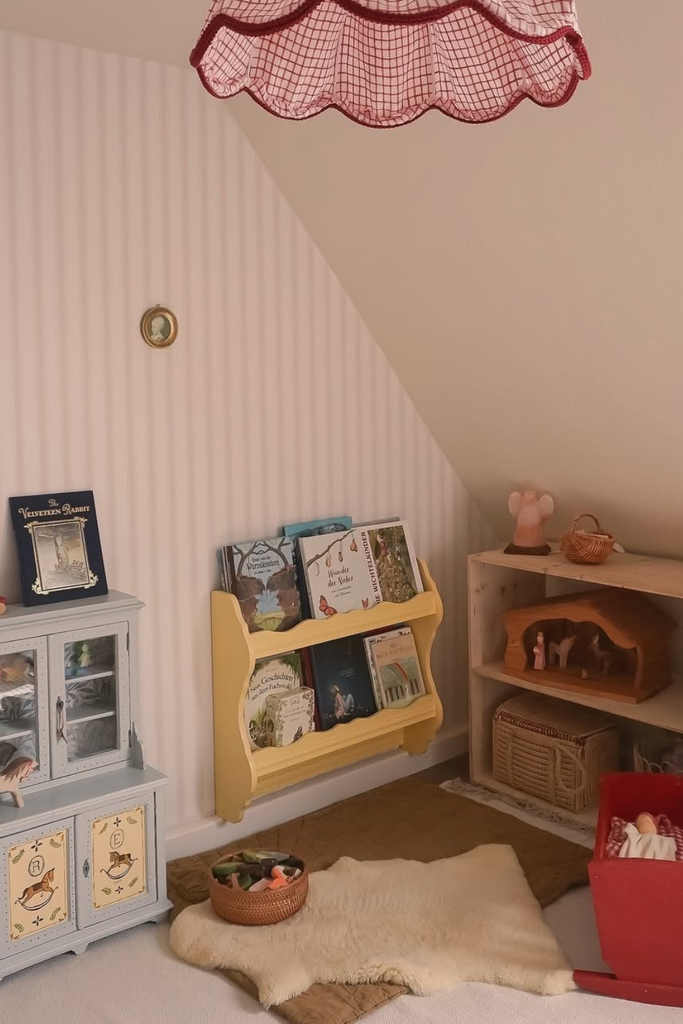
Use a sloped wall to your advantage by turning the lowest part of the room into a cozy reading and quiet-play zone.
Mount a front facing book rack at child height, then add small cabinets and woven baskets for puzzles, figures and special toys.
A soft floor mat makes sitting more comfortable without bulky furniture. Finish with a scalloped ceiling shade that spreads gentle light.
Dollhouse Center
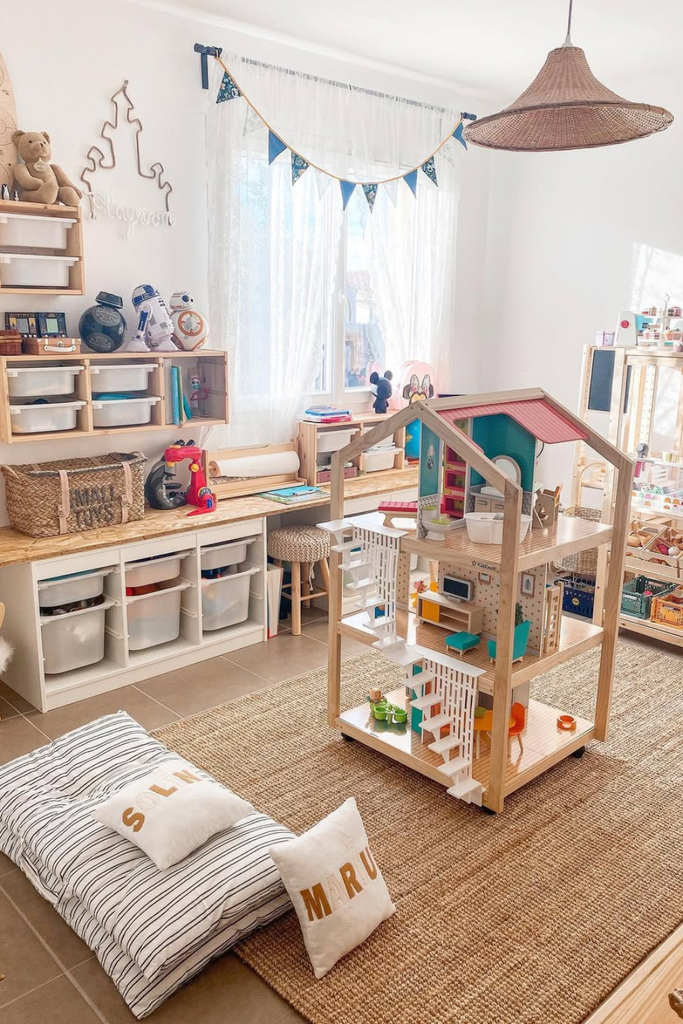
Make a large dollhouse the center of the room when small-world play is one of your child’s favorite activities.
Surround it with low storage units so dolls, furniture, and pretend food stay close without covering the floor.
Window daylight supports detailed play, while the wide woven pendant spreads general light across the whole setup.
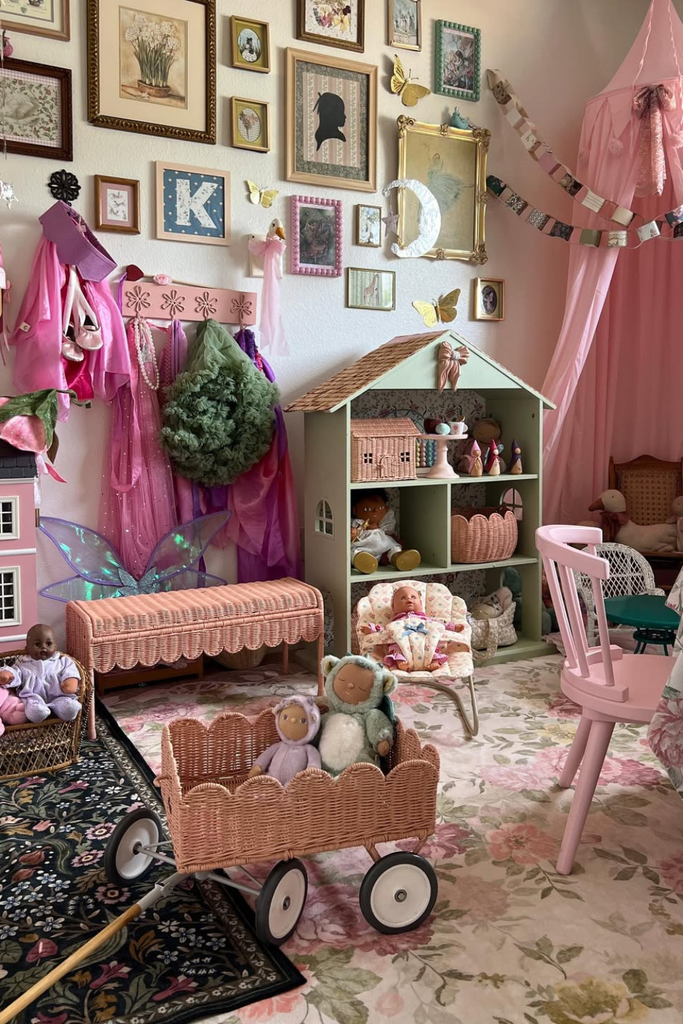
Dress-Up Corner
Lean into dress-up play by giving costumes, dolls, and pretend accessories one colorful corner instead of spreading them.
Wall hooks make favorite outfits easy to grab, while wicker prams, baskets, and a house-shaped shelf carry the vintage storybook feel.
Layer floral rugs and framed artwork then use window daylight with a soft ceiling light to brighten the canopy and play area.
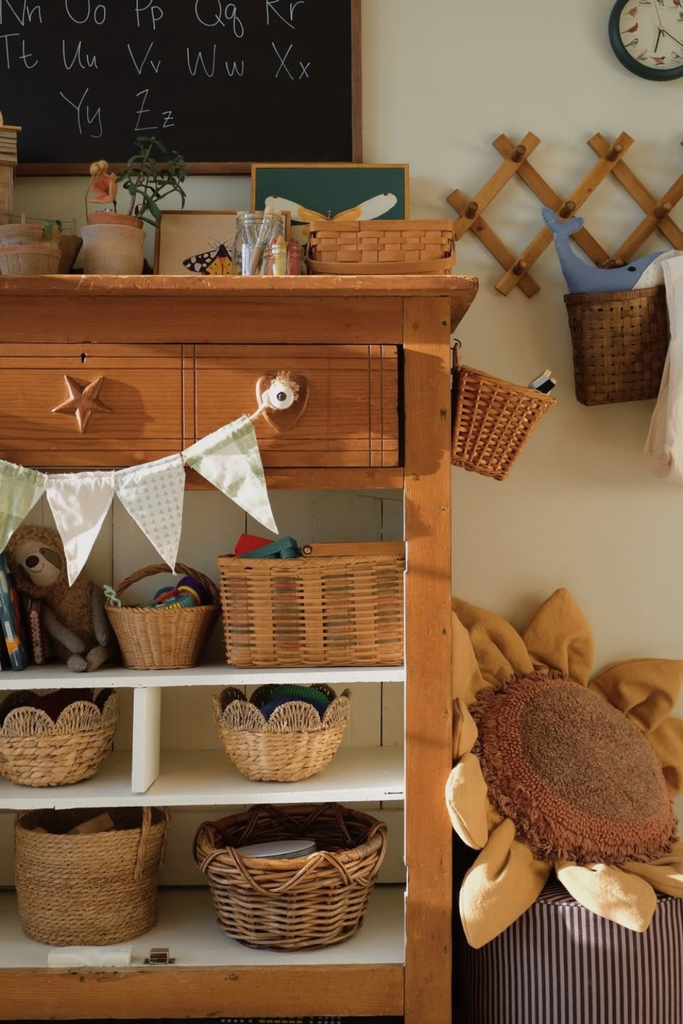
Schoolhouse Storage
Bring an old classroom feel into the playroom with a sturdy wooden worktable, chalkboard, wicker baskets and folding wall hooks.
Sort smaller toys into open baskets below so kids can see what belongs where, while larger supplies stay tucked into lidded wicker boxes.
Hooks give dress up bags and activity totes a clear home. Daylight can handle daytime projects with a simple overhead light.
FAQs
How Can You Make a Vintage Playroom Feel Playful Instead of Too Old-Fashioned?
Mix older-looking furniture and decor with things your child actually enjoys using. Wooden toys, colorful books, playful artwork, patterned rugs.
A comfortable floor area stop antique pieces from making the room feel too serious. You only need a few strong vintage details to set the mood.
Can Modern Toy Storage Work in a Vintage Playroom?
Yes. Choose simple storage in wood, cream, muted green, or another color already used in the room. You can also place modern bins inside an older cabinet.
Wicker baskets and fabric bins help soften plastic toys and practical storage without making everything in the playroom look artificially vintage.

Hi, I’m Afaf! I’m a law student who loves writing about everyday life – from home projects and crafts to fashion, beauty, and parenting tips.
I’ve been writing for over a year, sharing ideas that are simple, practical, and easy to try. I write about things I find interesting and useful, whether that’s organizing a space, trying a new DIY, or finding activities to keep kids entertained.
My goal is to share helpful ideas without making things complicated. If it works in real life, I’ll write about it.
When I’m not studying or writing, I’m usually experimenting with new projects or scrolling for inspiration!