
21 Toddler Playroom Ideas
If your toddler’s toys seem to follow you from room to room, giving play its own little home can change the daily routine.
You don’t need a huge room filled with expensive furniture to make that happen. Even a spare corner can hold books, and favorite toys.
In this article, you’ll find 21 Toddler Playroom ideas that make storage easier, and encourage independent play.
Let’s jump in!
Is a Toddler Playroom Worth Creating in Limited Space?
A toddler playroom is still worth creating when space is tight because you don’t need an entire room to make play feel organized.
Start with one unused corner in the living room, bedroom, or family room and decide what your toddler uses most.
A low shelf, a few baskets, and an open rug can provide enough room for books, blocks, puzzles, and pretend play without crowding the area.
Avoid putting every toy on display because too many choices quickly fill both the shelves and floor. Store some toys elsewhere.
The goal isn’t to fit everything into one area. Create a simple setup your toddler can reach and help tidy after playtime.
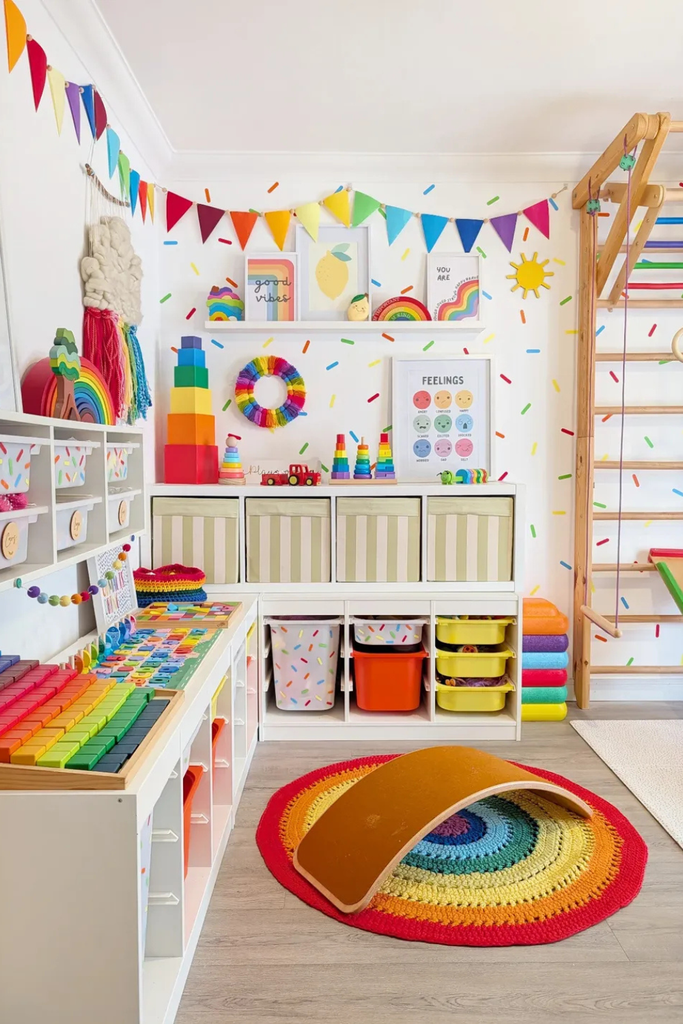
Rainbow Activity Zone
Bright colors can turn one playroom corner into a spot your toddler wants to explore instead of scattering activities around the house.
Arrange low storage along the walls, sort toys into easy reach bins and leave the center open for movement or balance play.
A climbing frame adds active play. Natural daylight works especially well here because the rainbow details provide most of the visual energy.
Safari Play Corner
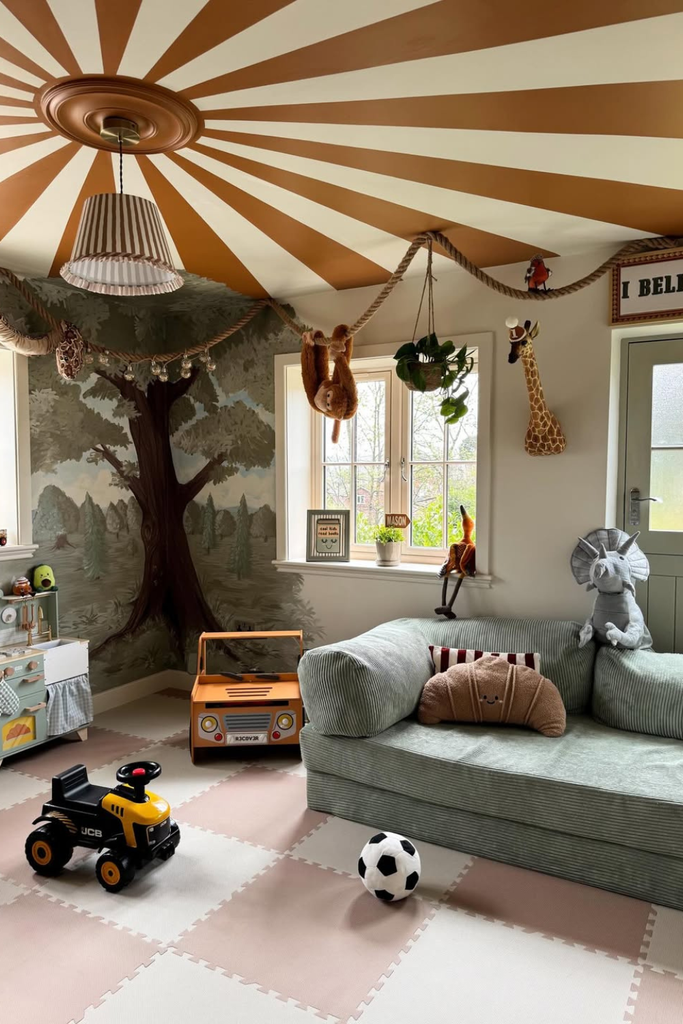
You have adequate space for toddlers to transition between activities without leaving the room, combine peaceful relaxation with pretend play.
Use a soft floor mat for ride-on toys, place a play kitchen against one wall, and add a low cushioned sofa for books or resting.
Woodland wallpaper and animal details build the safari theme while window light and a central pendant provide balanced lighting.
Multi Play Zones
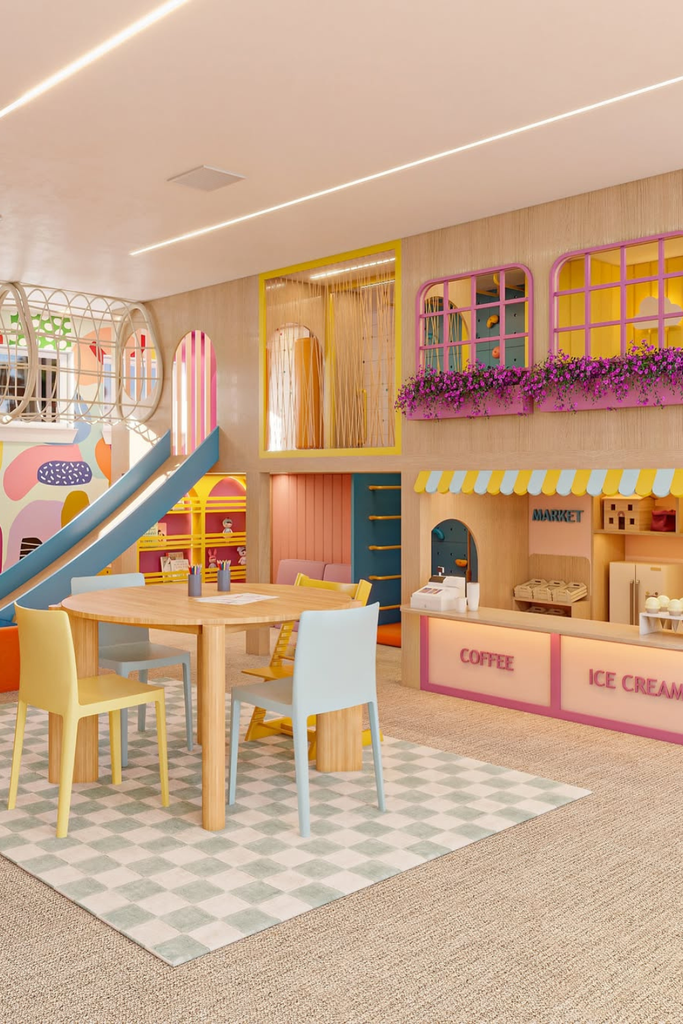
Turn one larger room into several play experiences so your toddler can move between activities without toys spreading into other spaces.
Center a child-sized table for crafts and puzzles then place pretend play and climbing activities around the edges.
Using the walls for built-in play features protects valuable floor space. Soft ceiling lighting can brighten each zone evenly.
Pretend Play Hub
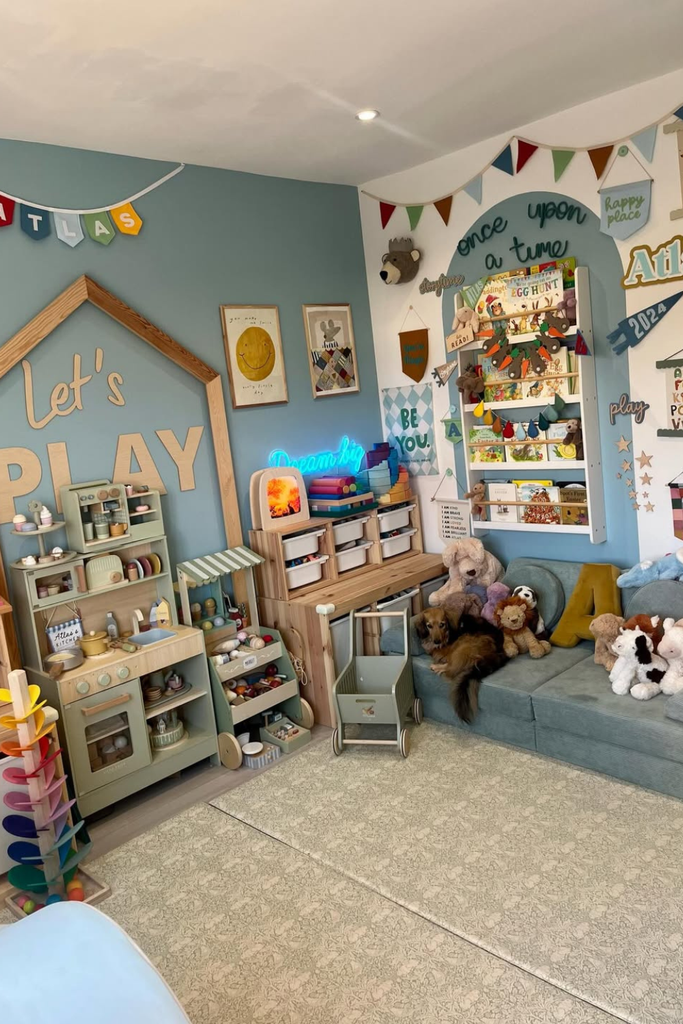
Make pretend play easier to return to by grouping the kitchen, market, and toy food together instead of storing each activity separately.
Low units work especially well along a playroom wall because toddlers can reach what they need without help.
Add a nearby floor sofa and front-facing books to create a calmer break area. Recessed ceiling lighting keeps the busy setup evenly lit.
Train Play Floor
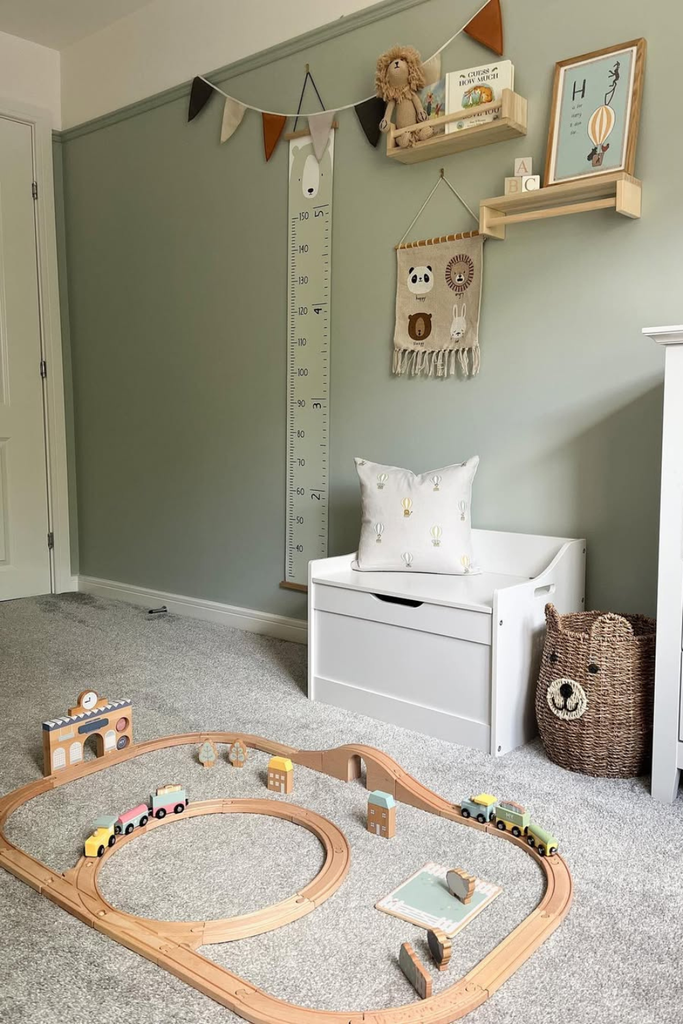
Use open floor space as part of the playroom instead of filling every corner. A wooden train set works especially well on soft carpet.
Toddlers can sit comfortably, rebuild tracks and move pieces around freely. Place a storage bench and basket nearby.
Wall-mounted book ledges save floor space, while natural room light keeps the setup simple and easy to use.
Dinosaur Reading Nook
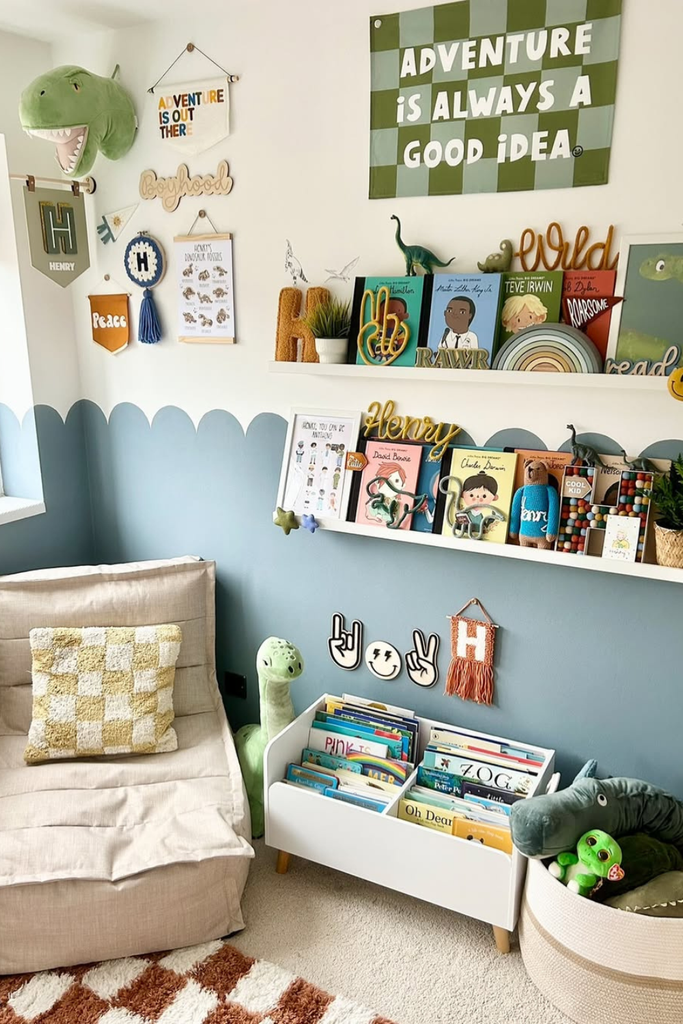
Carve out a reading corner when your toddler needs somewhere calmer between active play sessions.
Face book covers outward on low shelves so favorite stories are easier to spot, then add a soft floor chair and basket.
Dinosaur artwork makes the nook feel playful. Positioning the seat beside a window brings in comfortable daylight.
Indoor Adventure Zone
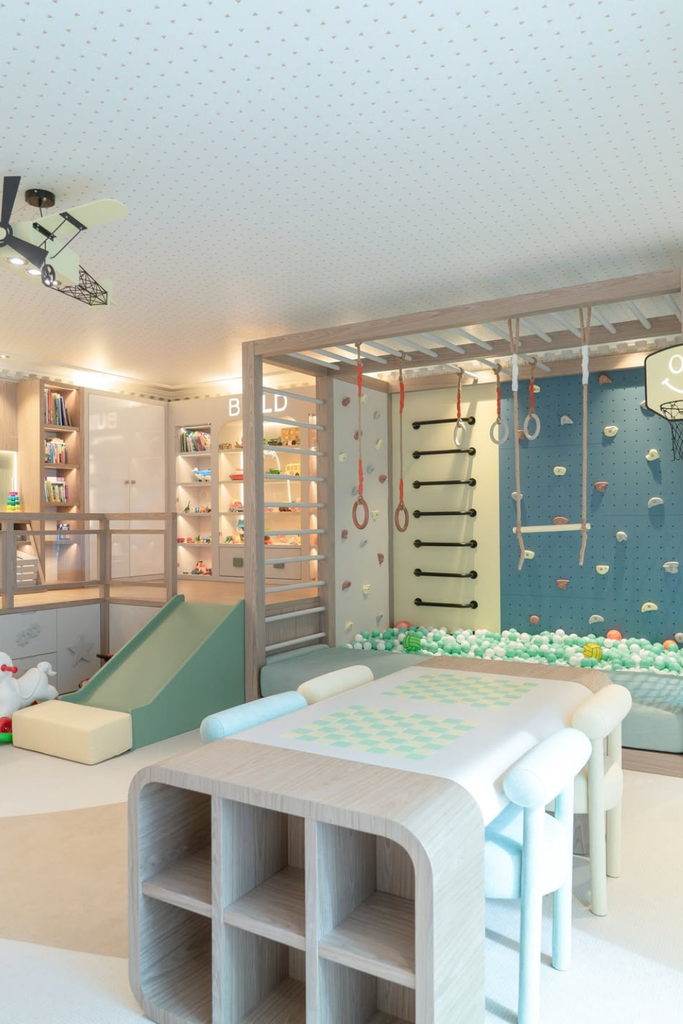
Channel extra toddler energy into one dedicated area by combining climbing, swinging, sliding, and soft landing features.
Place active equipment along the room edges so the middle can still hold a table for puzzles, drawing or quieter activities.
Recessed ceiling lights and shelf lighting spread light across the larger room without putting floor lamps near climbing equipment.
Shared Play Bedroom
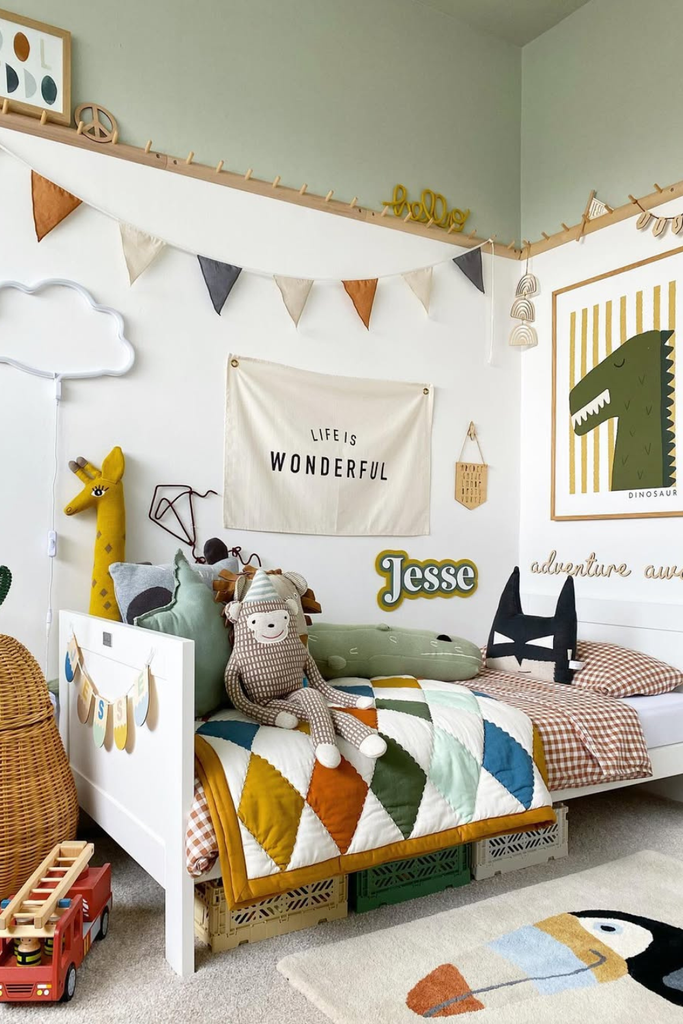
Make a toddler bedroom work harder by using the floor as a simple play area instead of squeezing in extra furniture.
Slide shallow toy crates beneath the bed, place a soft rug beside it for cars and building toys, and use wall decor to add personality.
A wall-mounted light adds a playful glow while leaving bedside and floor surfaces clear for everyday play.
Market Play Station
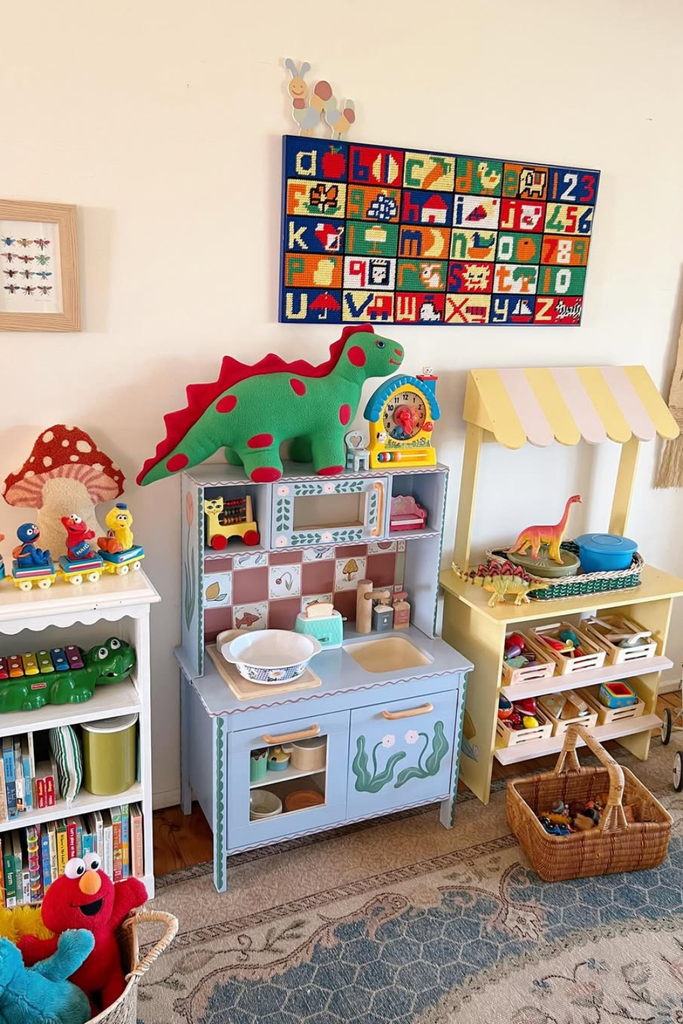
Set up a mini market beside the play kitchen when your toddler enjoys copying everyday shopping and cooking routines.
Use shallow wooden crates to separate pretend food, dishes and utensils so each item has an obvious place after play.
A low counter lets toddlers browse and serve independently, while nearby baskets can hold larger toys.
Corner Toy Storage
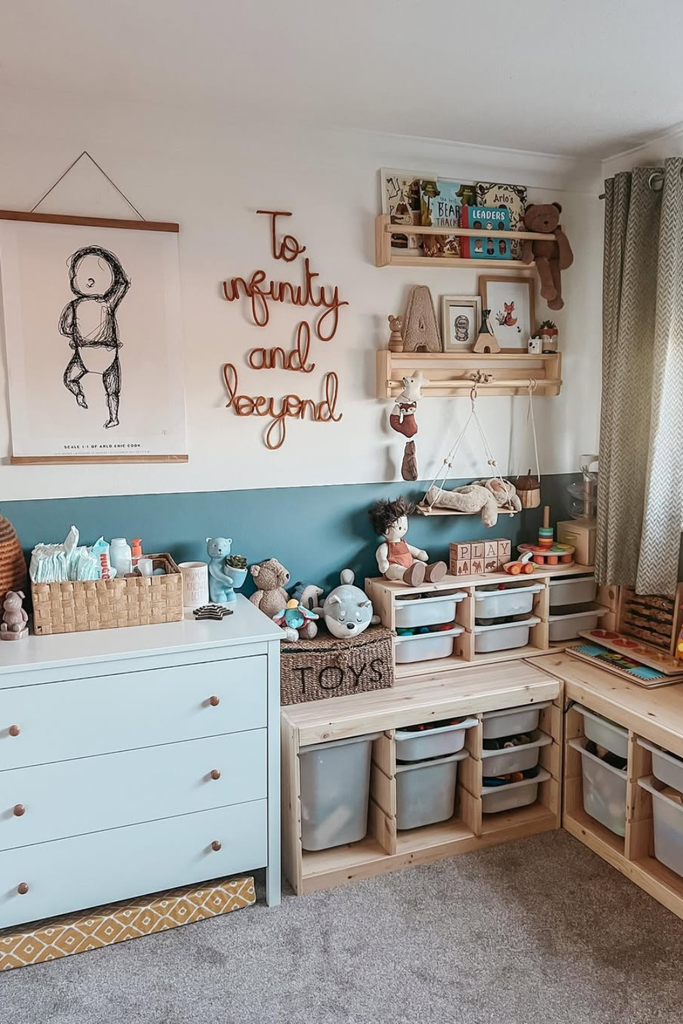
Instead of putting one large cabinet wrap low storage along both walls to make an awkward area useful.
Toys should be arranged in detachable containers so your child may take out one activity and put it back without having to search through the others.
While the lower level remains dedicated to daily play, open shelves above can accommodate books and other items.
Central Play Table
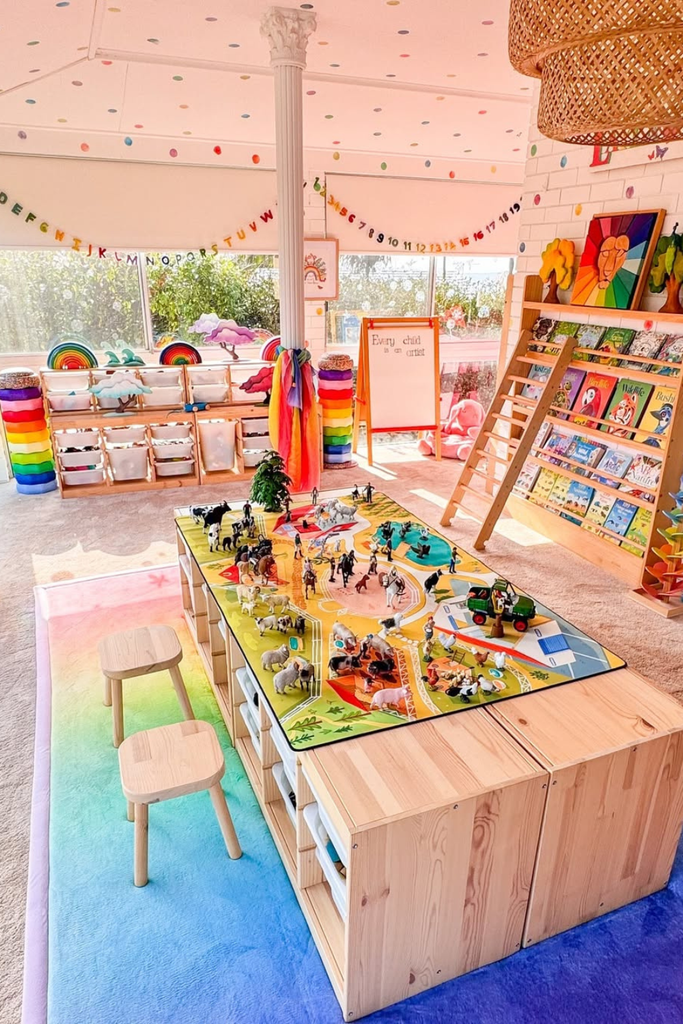
Anchor a busy playroom with one large table where toddlers can build farms, arrange figures finish puzzles or work on crafts.
Choose a table with storage underneath so loose pieces can be sorted away without carrying them across the room.
Large windows provide strong daytime light while a woven pendant adds softer overhead lighting later.
Dinosaur Discovery Table
Small table into a rotating discovery spot when your toddler enjoys hands on themes more than fixed activities.
Set out a few dinosaur figures, matching cards or simple puzzles then swap them once interest fades.
Place pretend-play furniture and book storage around the edges so the table stays easy to approach.
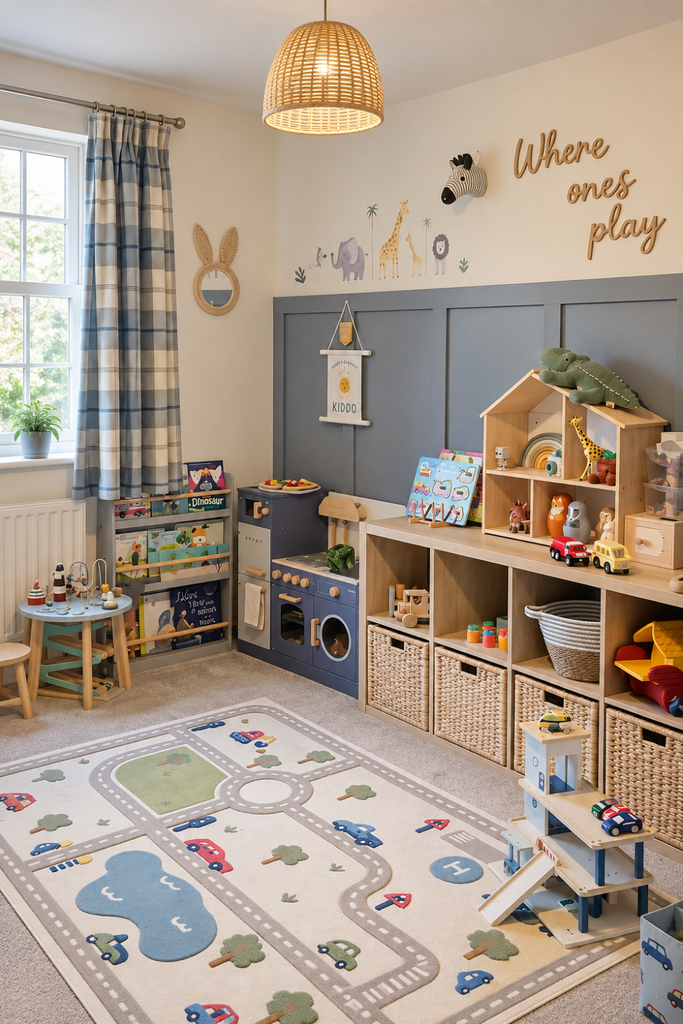
Soft Movement Zone
Burn off toddler energy indoors by combining soft climbing blocks a small ball pit, and wooden movement pieces in one open zone.
Arrange the equipment over a large rug so activities stay visually contained while leaving clear paths around them.
Low wall storage can hold quieter toys for easy transitions after active play. Floor-to-ceiling windows bring plenty of daylight.
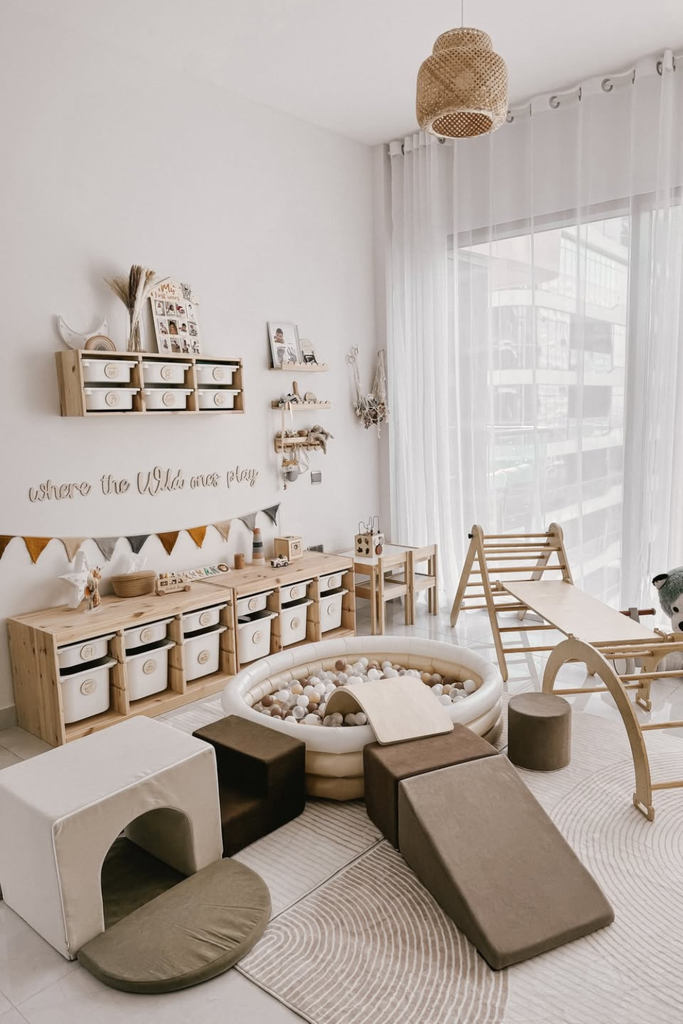
Pastel Play Zones
Separate busy activities without adding dividers by letting each part of the room handle a different kind of play.
Place pretend shopping along one wall, low toy bins opposite it and reserve the middle for a ball pit and soft climbing blocks.
Foam mats make the central zone more comfortable for active toddlers. Recessed ceiling lights spread light evenly.
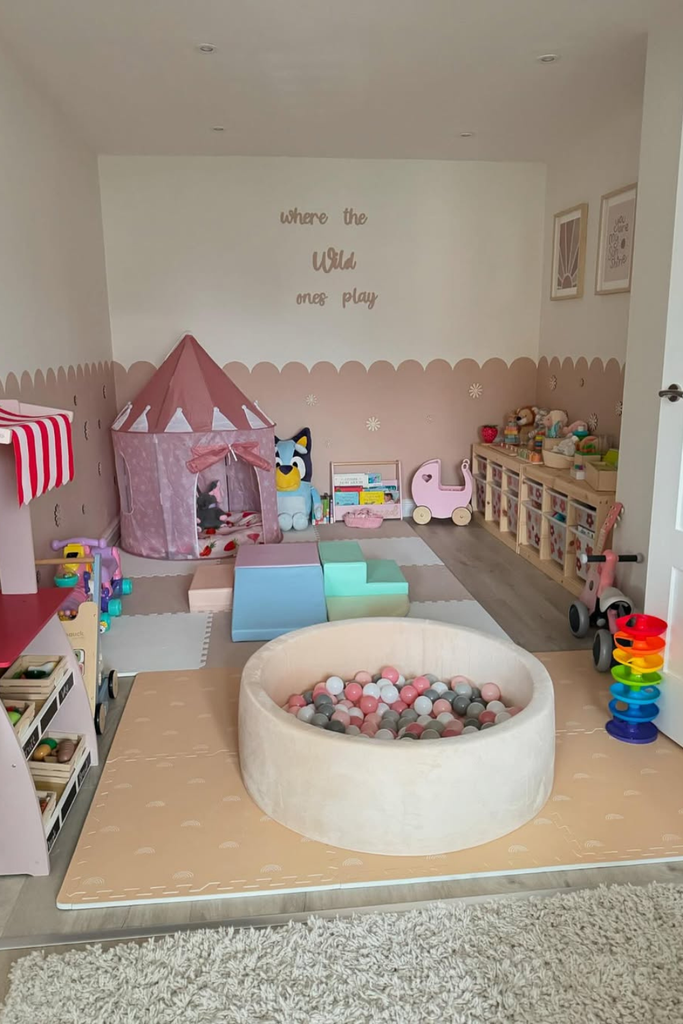
Built-In Library
Use an awkward sloped wall for storage instead of letting it become wasted space in a smaller playroom.
Fit shelves around the doorway for books, baskets and less-used toys, keeping the main floor open for everyday play.
A comfortable chair nearby creates an easy reading spot. Natural light from the adjoining room and an overhead fixture.
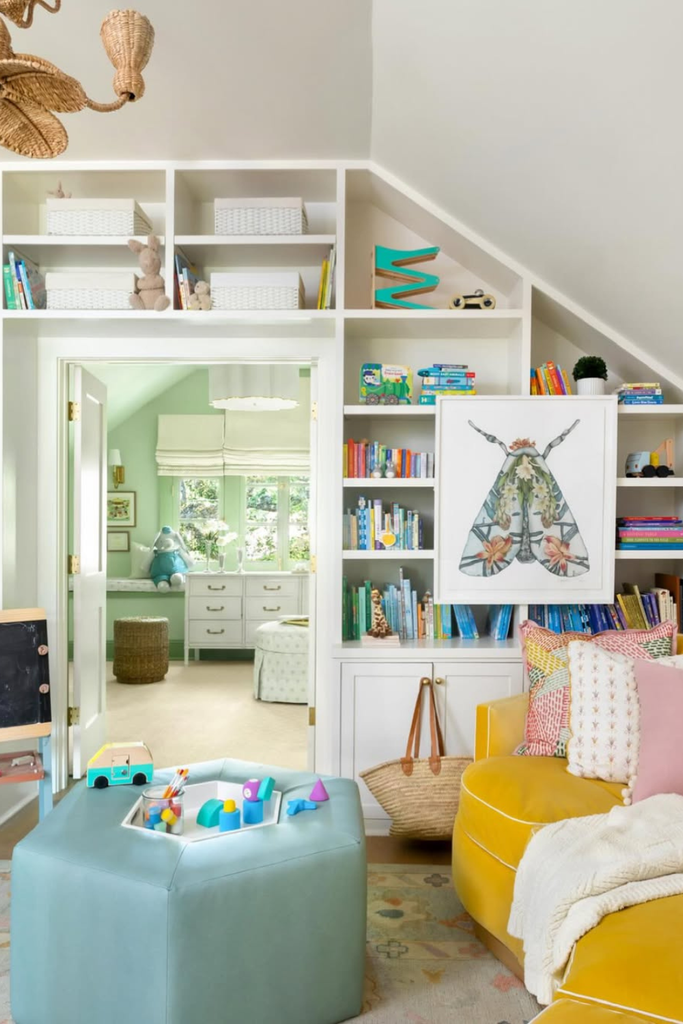
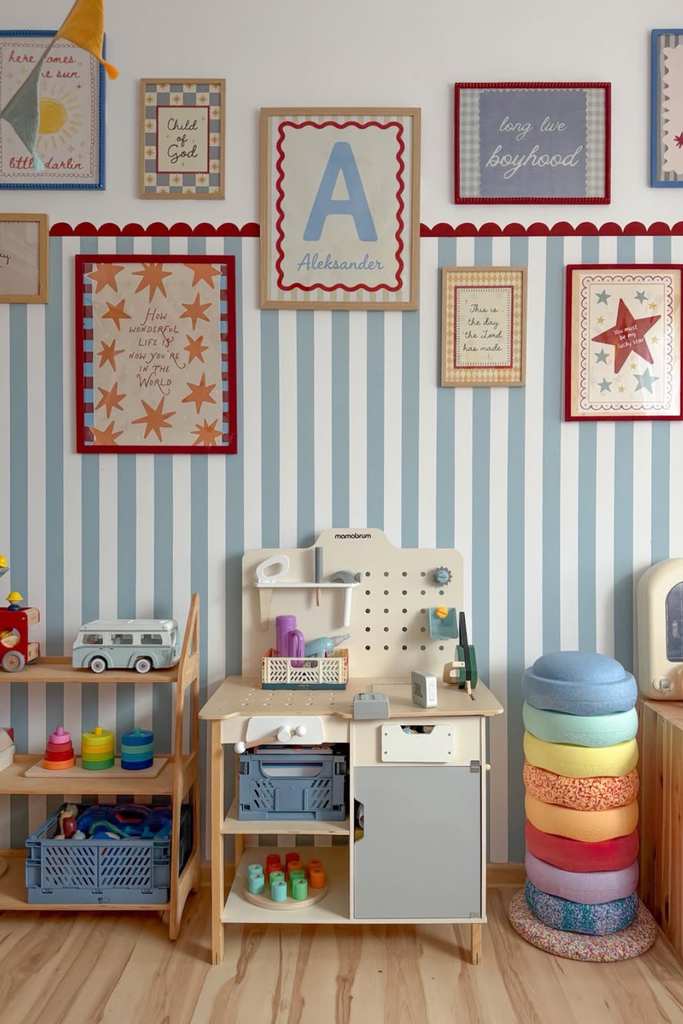
Pretend Kitchen Wall
Keep pretend play contained along one wall when you want to protect the middle of a smaller playroom for movement.
Pair a child-sized kitchen with low shelves for food, dishes and everyday play pieces using open crates so toddlers can find items quickly.
Stack soft cushions nearby for flexible seating or building games. Striped wallpaper and framed prints add personality vertically.
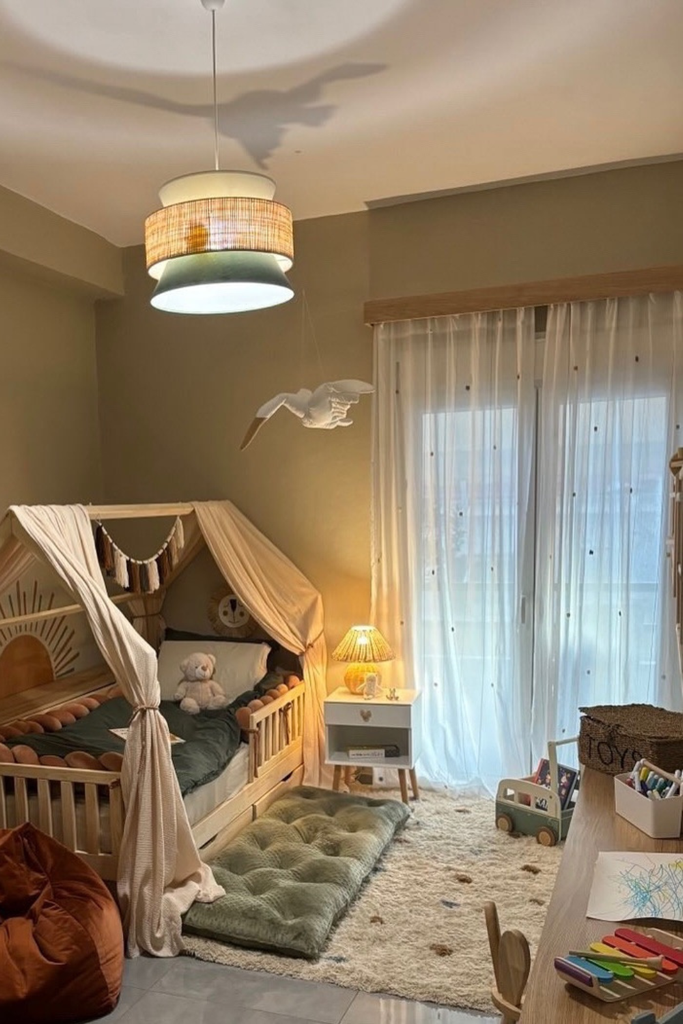
Cozy Play Bedroom
Blend sleep and play in one room when you cannot spare a separate space for a dedicated toddler playroom.
Keep a soft rug and floor cushions beside the bed for books or quiet play, then place a small activity table along the opposite wall.
A warm bedside lamp makes the cozy corner useful in the evening while a central pendant spreads light across the wider room.
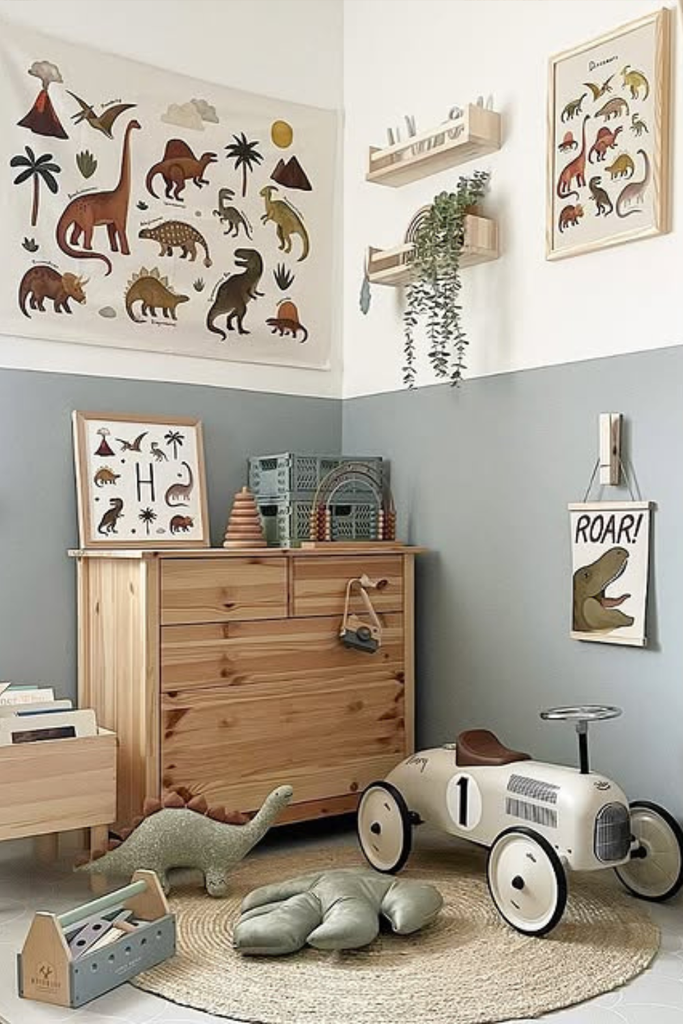
Dinosaur Play Corner
Give a dinosaur-loving toddler one focused corner where active play, books, and favorite toys can stay together.
Use low wooden storage for easy cleanup then add a small book bin and ride on toy without filling the whole floor.
Dinosaur prints bring the theme onto the walls. Natural window light keeps the compact setup feeling bright and open.
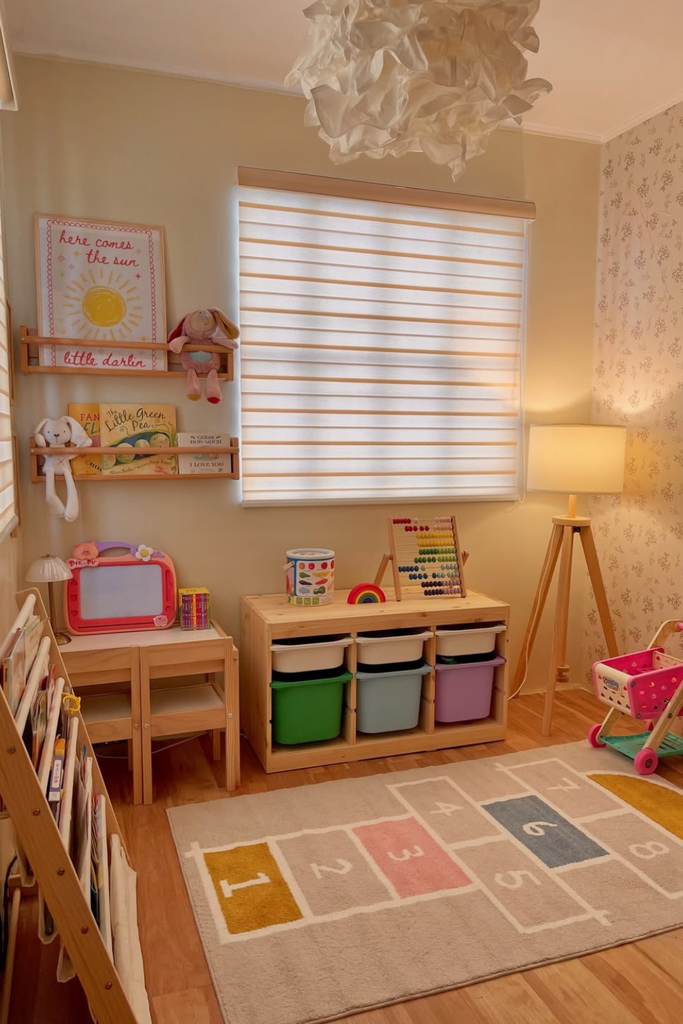
Pretend Play Corner
Turn a spare corner into a pretend-play spot when you cannot dedicate much floor space to larger activity zones.
Keep a compact kitchen against the wall and leave enough room nearby for a shopping cart or small activity toy.
An interactive wall can add another activity without taking up floor space. A tall floor lamp provides warm focused light.
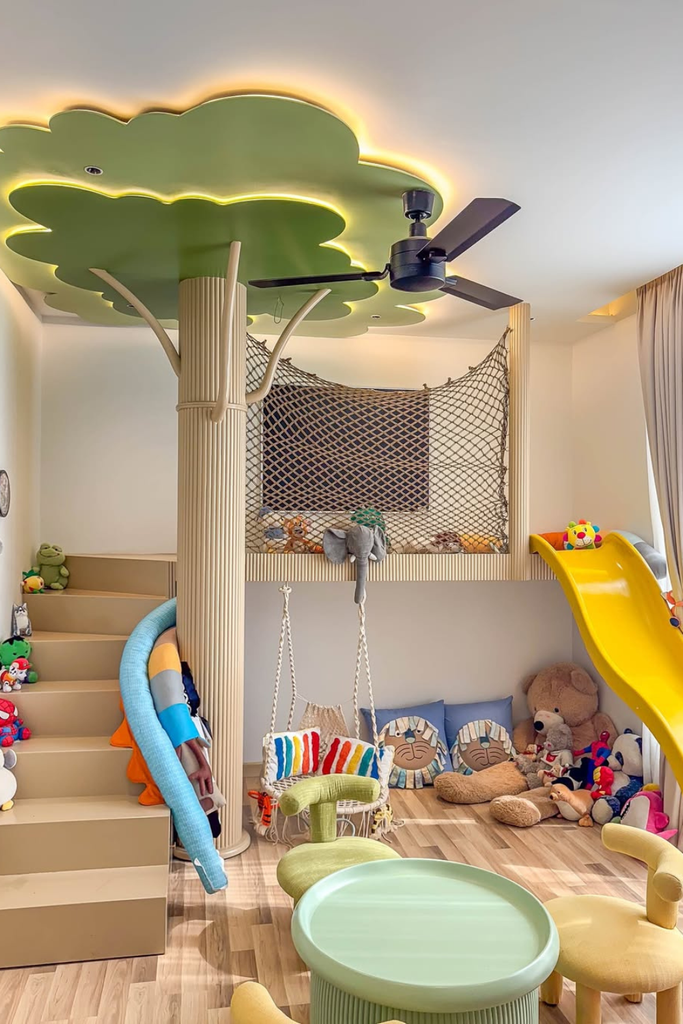
Treehouse Play Zone
Build upward when floor space is limited by combining climbing, sliding, and imaginative play inside one compact treehouse setup.
Keep the lower level open for a toddler table, soft toys or quiet activities while the raised section handles active play.
A staircase along the wall prevents the layout from breaking up the room. Hidden ceiling lighting around the tree canopy adds a warm glow.
Open Floor Play
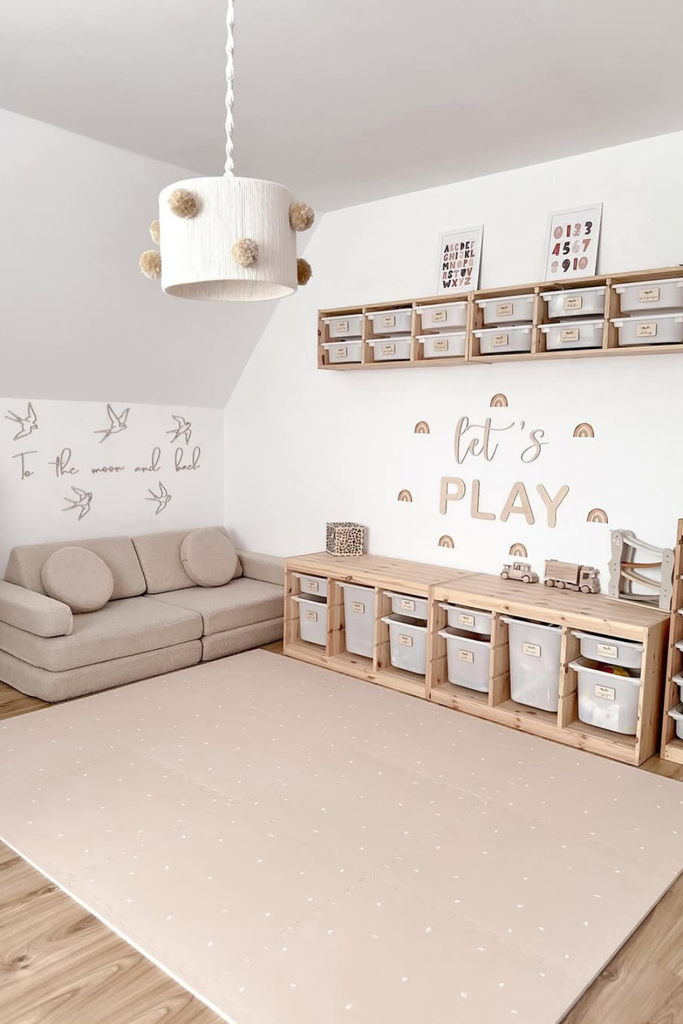
Protect a generous patch of empty floor when your toddler likes spreading out blocks, puzzles, trains or building toys.
Push low bin storage against the walls so activities stay easy to reach. A floor sofa creates a comfortable spot for books or breaks.
Keeping the layout toddler-friendly. Wall-mounted storage handles extra toys, and the pendant light keeps the open play zone evenly lit.
FAQs
What Should You Put in a Toddler Playroom?
Low storage, books, building toys, pretend-play pieces a small activity table, and open floor space cover plenty of everyday play.
You can add climbing or sensory activities when space allows but keeping fewer choices available often makes the room easier to use and tidy.
How Can You Keep a Toddler Playroom Organized?
Keep everyday favorites within reach and store less used toys. Avoid packing every shelf because overflowing storage quickly turns into floor clutter.
Leaving some shelves and floor space open also makes the playroom feel calmer and gives your toddler more room to focus on one activity.
Hi, I’m Afaf! I’m a law student who loves writing about everyday life – from home projects and crafts to fashion, beauty, and parenting tips.
I’ve been writing for over a year, sharing ideas that are simple, practical, and easy to try. I write about things I find interesting and useful, whether that’s organizing a space, trying a new DIY, or finding activities to keep kids entertained.
My goal is to share helpful ideas without making things complicated. If it works in real life, I’ll write about it.
When I’m not studying or writing, I’m usually experimenting with new projects or scrolling for inspiration!