
21 Playroom Wall Decor Ideas
Playroom walls can feel surprisingly hard to decorate. Add too many prints, colors, and shelves, and suddenly the toys.
You also need decor that works around storage, play areas, and changing interests. The good news is you can make those walls fun.
In this article, you’ll discover creative ways to decorate playroom walls.
Let’s jump in!
Is a Chalkboard Wall Useful in Playroom?
Chalkboard wall can do much more than fill an empty part of the playroom. Your child can draw, practice letters and play simple games
Also works for everyday things such as writing reminders, creating a weekly activity board, or leaving space for family messages.
Full black wall feels too heavy, paint only the lower half or create a framed chalkboard section near the play table.
Place chalk in an easy-to-reach container so everything stays together. You may notice chalk dust collecting below the wall
Choose an area with wipeable flooring and avoid placing it directly above soft seating. Good natural light or a nearby wall light.
Scattered Stars
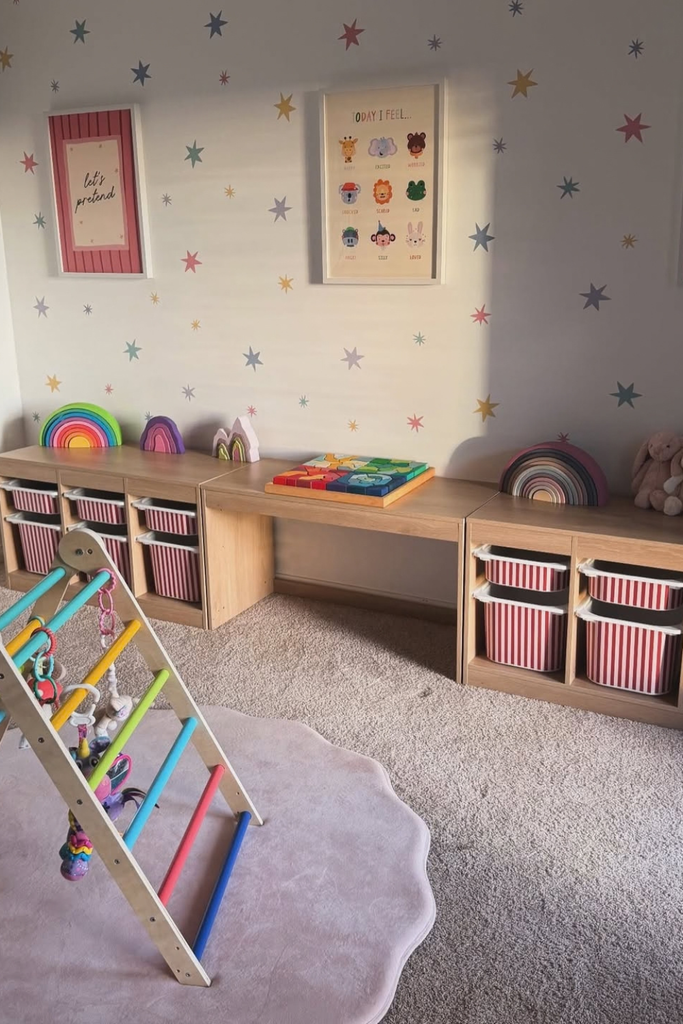
Keep a busy playroom balanced by scattering small colorful stars across a light wall instead of covering it with one heavy pattern.
Mix a few star sizes and repeat colors already used around the room, so the wall connects naturally with toys and storage.
Place simple framed prints between the stars then use natural window light to keep the soft colors clear and cheerful.
Flower Decals
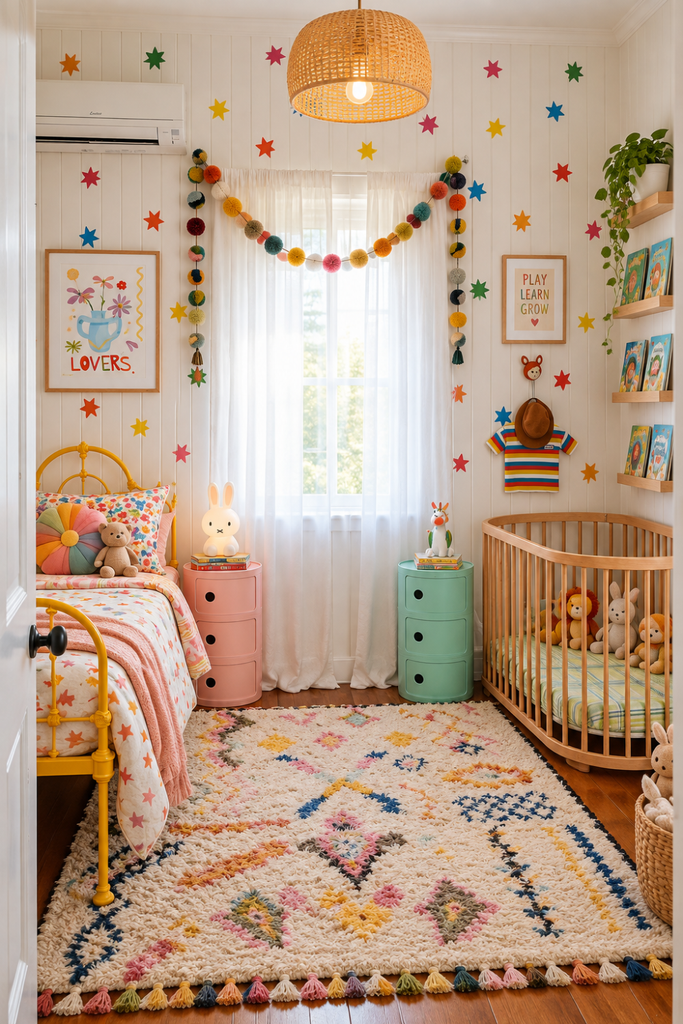
Bring color onto a plain wall with spaced flower decals especially when the furniture already carries several playful shades.
Keep enough blank space between each flower so the pattern feels cheerful without competing with books, toys and storage below.
While gentle daylight maintains the pastel colors cozy and relaxed, add thin picture ledges for your favorite books and tiny décor.
Confetti Wall
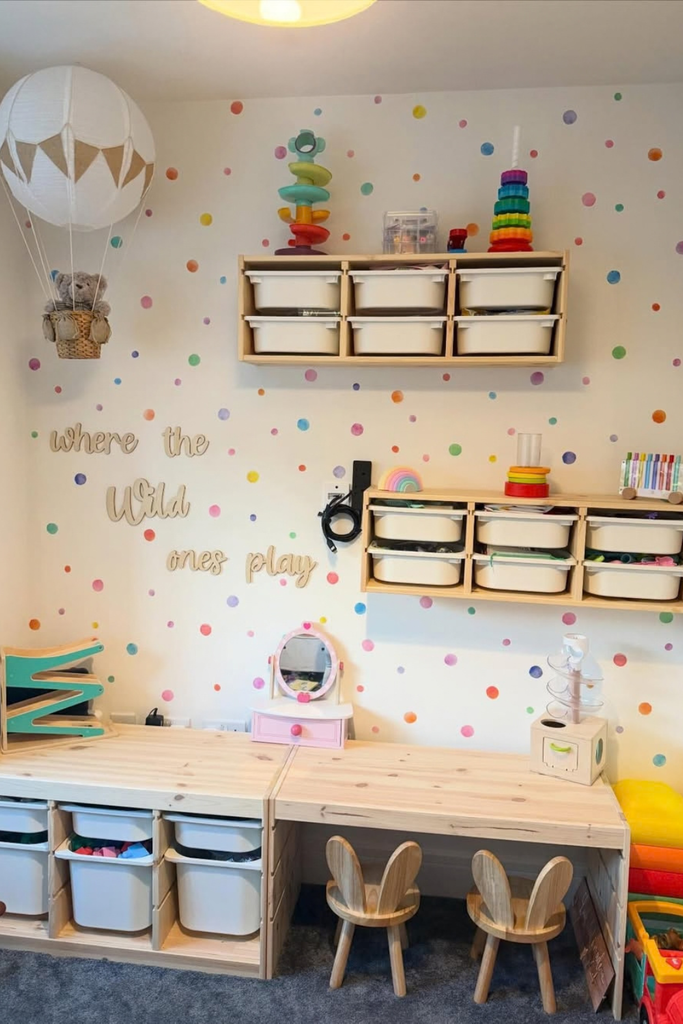
Turn a narrow playroom wall into something playful with small colorful dots that spread around storage instead of stopping behind it.
Mount shallow toy bins higher up to use vertical space, while keeping the lower wall open for tables and everyday activities.
Repeat colors from the toys in the dots then use a warm ceiling light to keep the corner bright after daylight fades.
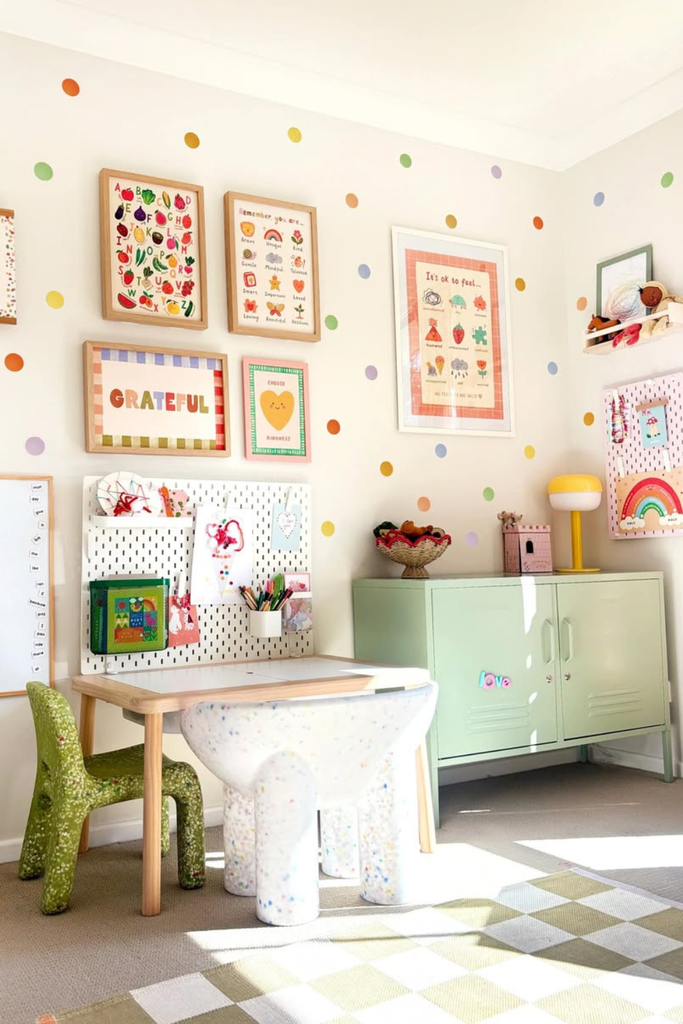
Learning Gallery
Put positive message prints and alphabet emotions above the table to give an activity space more purpose.
To make the gallery feel collected without overcrowding the learning area, mix up the frame sizes while repeating comparable hues.
Add a pegboard below for current drawings and supplies, while nearby window light keeps reading, coloring, and crafts.
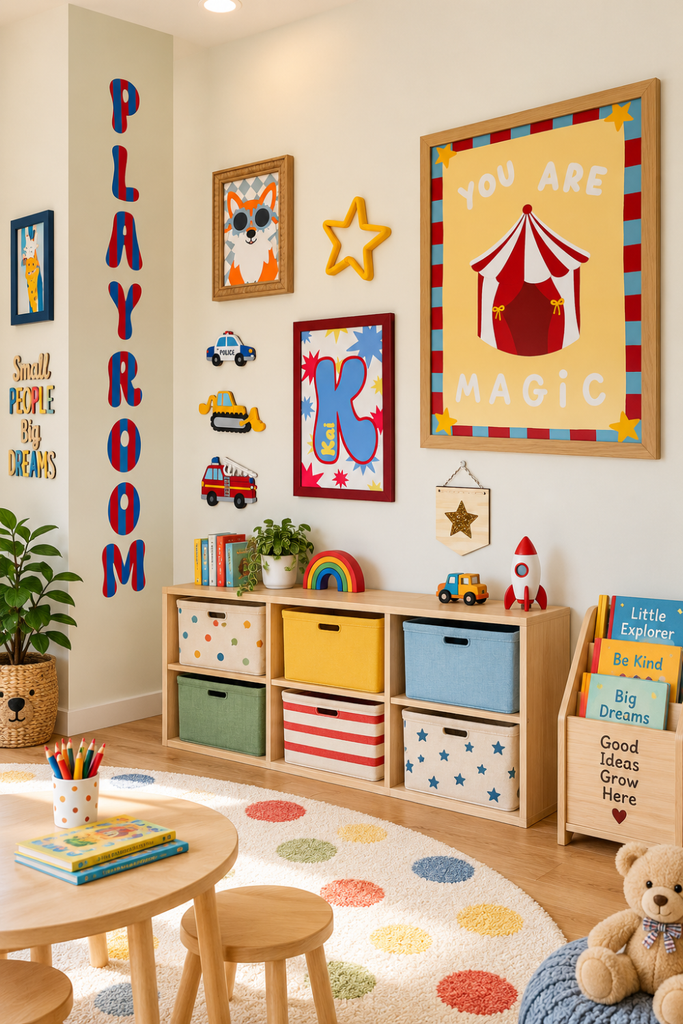
Playroom Gallery
Make one wall feel personal by mixing a large playful print with smaller artwork, name letters and favorite themed pieces.
Choose one or two repeating colors across the frames and decorations so different designs still feel connected.
Leave generous gaps around the larger artwork, then let natural daylight highlight the bold colors without adding extra visual clutter.
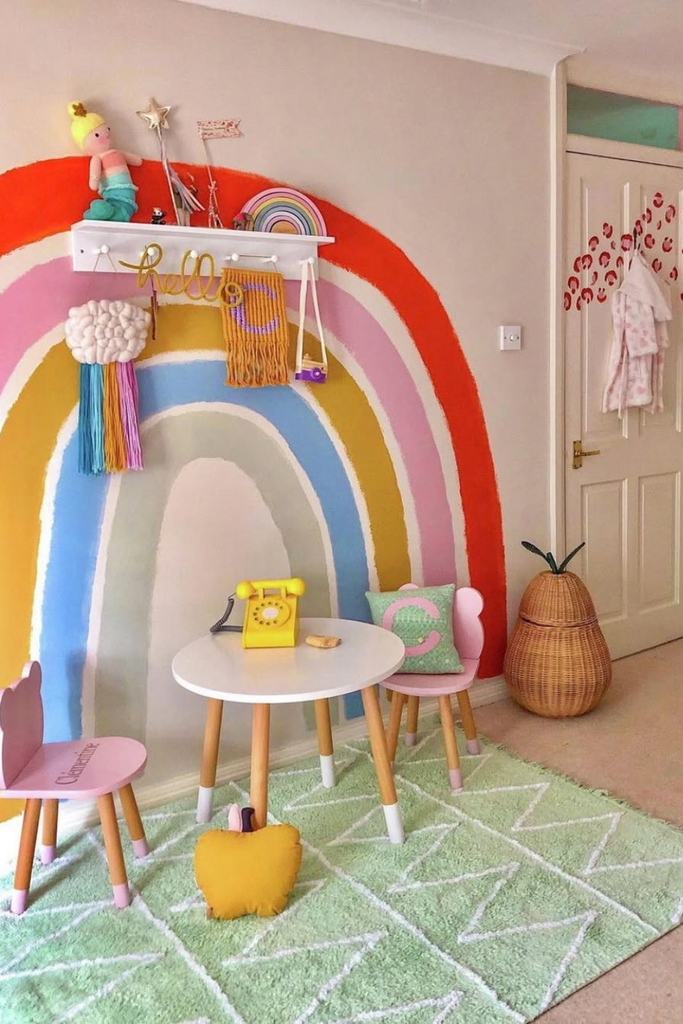
Rainbow Mural
Instead of adding multiple smaller pieces, paint a big rainbow behind a play table to decorate one wall.
In order to maintain the mural easy to view, spread the colors wide enough to frame the action area and keep the surrounding furnishings plain.
Finish with one slim display shelf for lightweight decor, letting natural daylight bring out the softer painted shades.
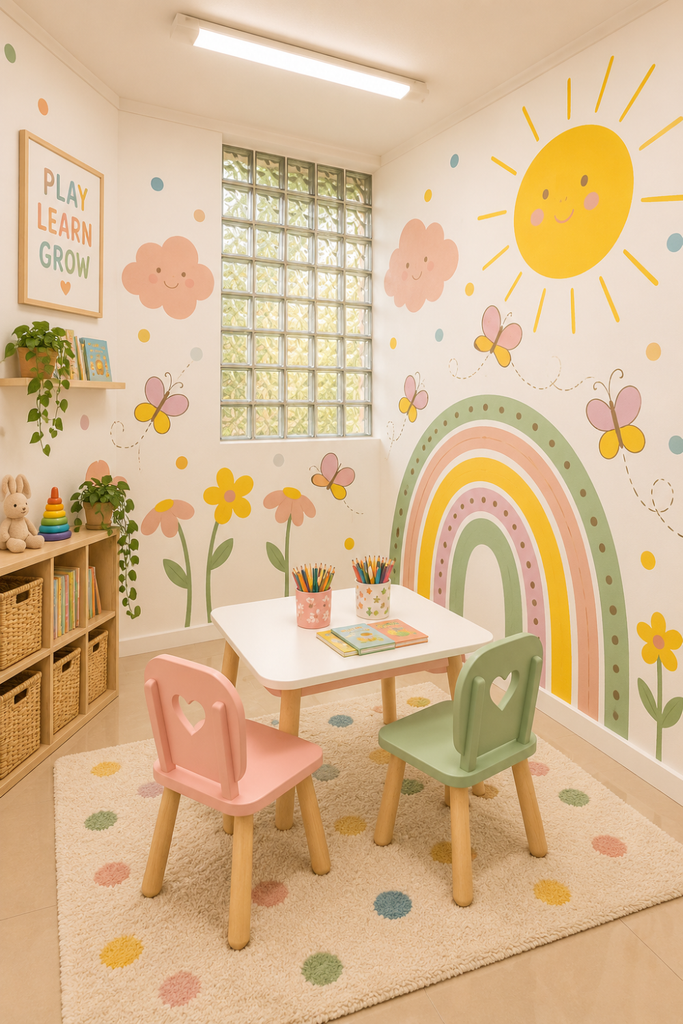
Garden Mural
Turn an activity corner into its own little world by painting flowers, butterflies, a rainbow, and sunshine around the play table.
To make the scene feel cohesive, distribute the illustrations among adjacent walls rather than packing too much color into one tiny area.
To make sketching and crafts pleasant throughout the day, choose softer hues for larger shapes and add strong overhead lighting.
Mixed Gallery
Break up a long playroom wall by combining framed prints, a world map and book ledges instead of repeating one decoration everywhere.
Keep related pieces grouped around each activity zone so reading, learning, and relaxing each have their own clear visual area.
Scatter small flower decals between larger pieces to soften empty gaps, while natural light keeps the warm neutral wall feeling open.
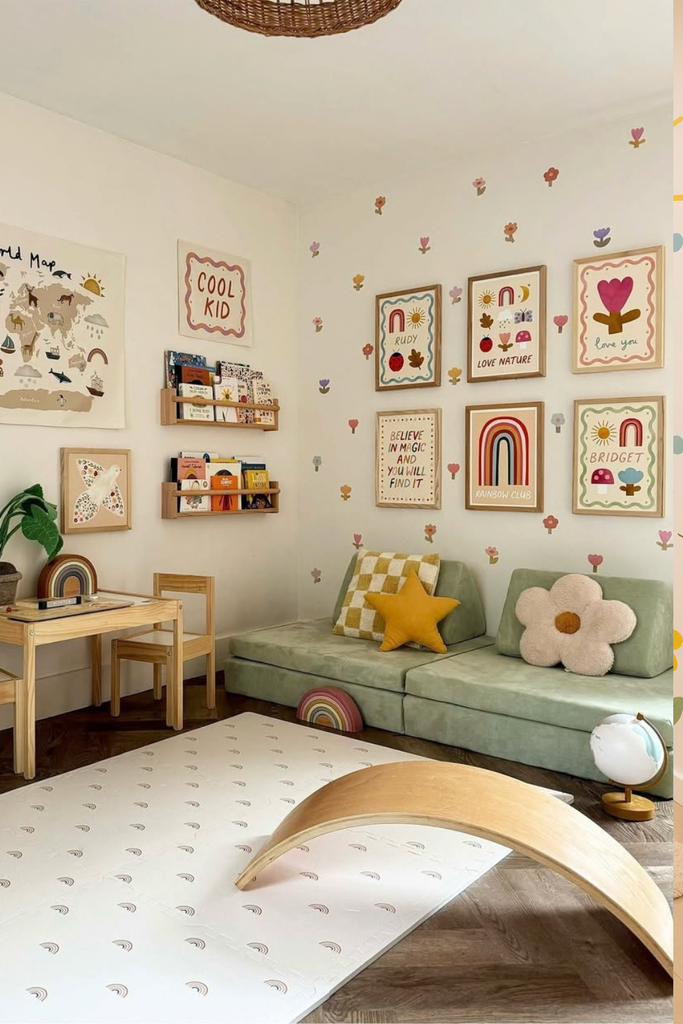
Woodland Wall
Keep a neutral playroom from feeling plain by building a soft woodland scene across the lower half of one main wall.
Pair delicate animal and floral decals with a curved border, giving the design movement without bringing heavy color into the room.
Finish with one textured wall basket for favorite soft toys, while filtered window light keeps the natural materials warm and calming.
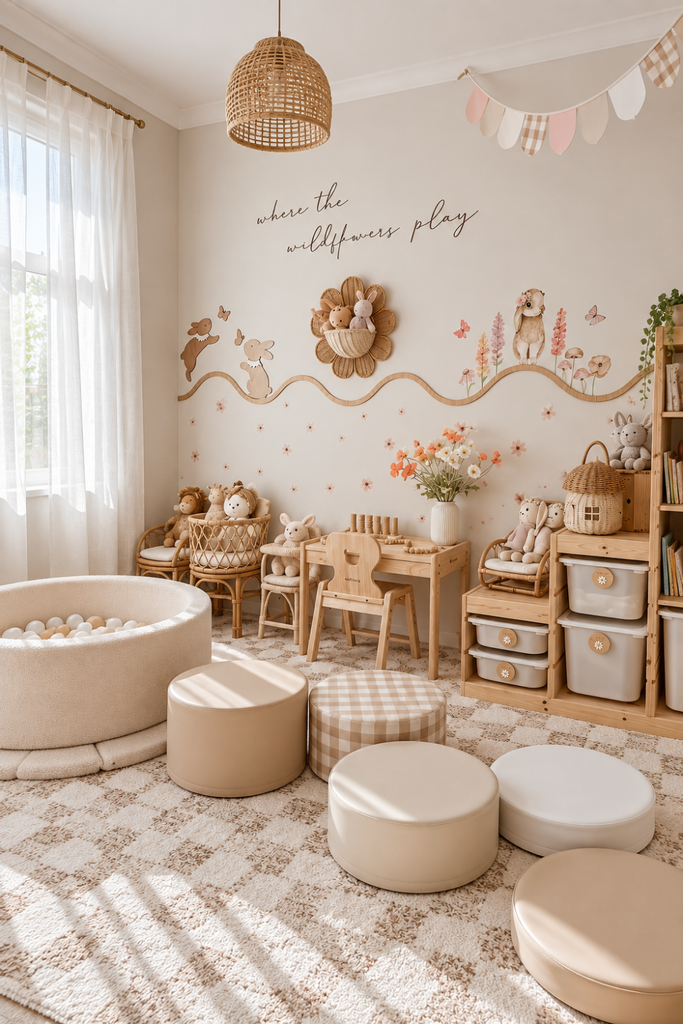
Starburst Wall
Wake up a plain white wall with scattered starbursts when you want color without committing to a large mural or wallpaper.
Vary the sizes and spacing so the pattern feels playful then pull shades from toys and storage already in the room.
Add narrow book ledges between the shapes, while nearby window light keeps the whole wall fresh and bright.
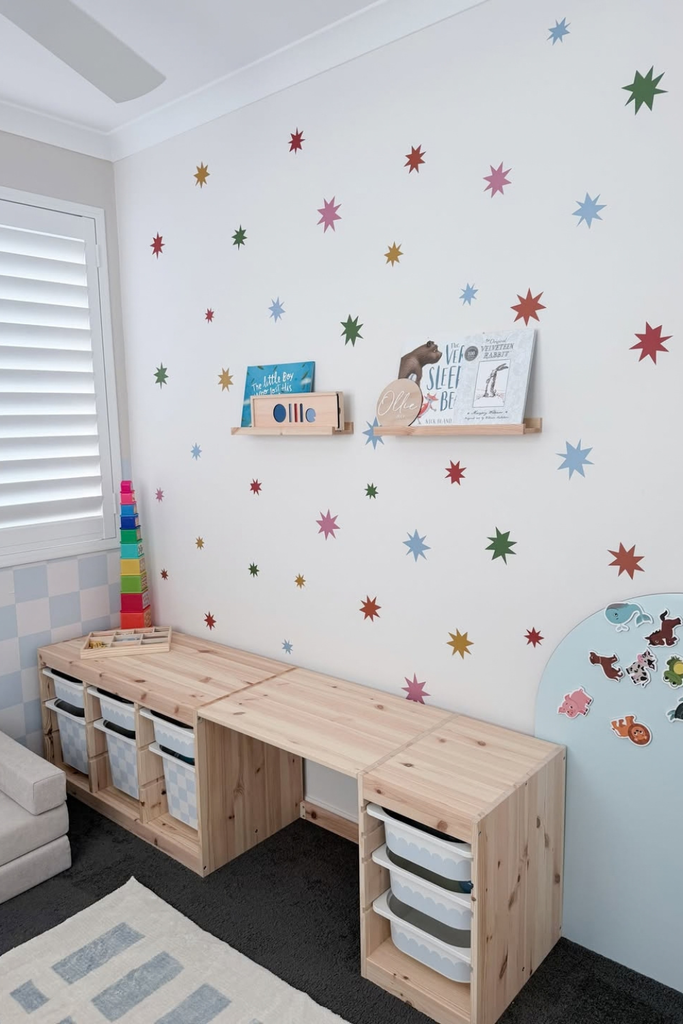
Framed Starbursts
Stretch wall decor through a long playroom by scattering colorful starbursts around a small row of framed prints.
To keep vacant wall parts feeling connected, keep the frames centered over low storage and then let the stars to move outward.
A window light and a ceiling pendant keep the little space bright, while toys and bins below match a few star colors.
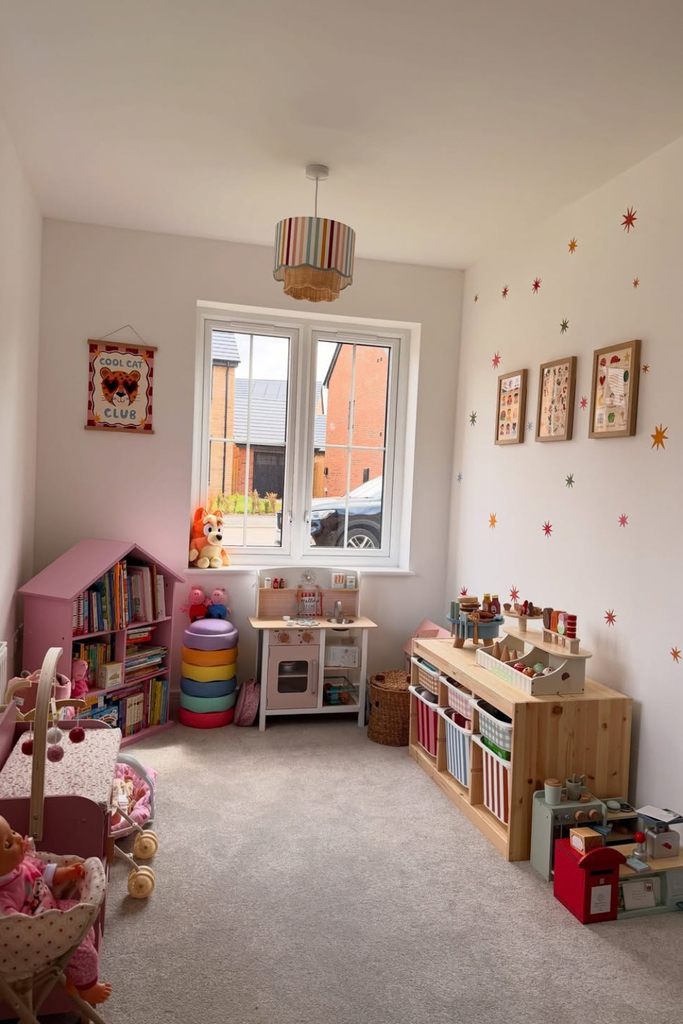
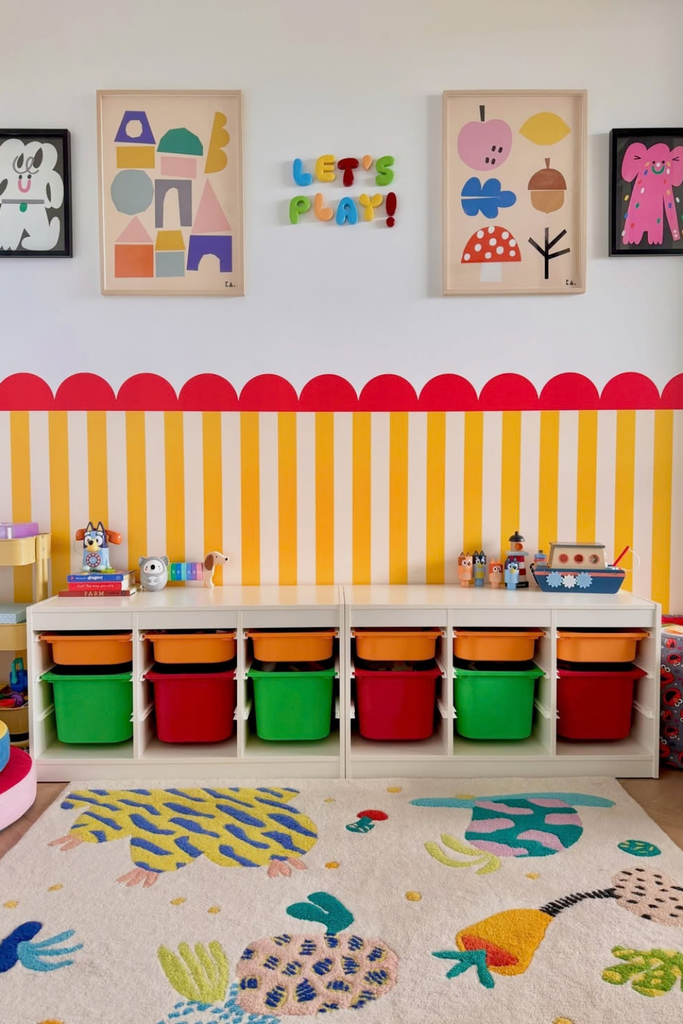
Striped Accent
Give the lower half of a playroom wall more energy with painted stripes while keeping the upper section calm for artwork.
Add a scalloped border where both sections meet, then hang a few bold prints above instead of filling every open space.
To make the entire wall feel cohesive without getting overly crowded, repeat the stripe colors in the toys and storage containers below.
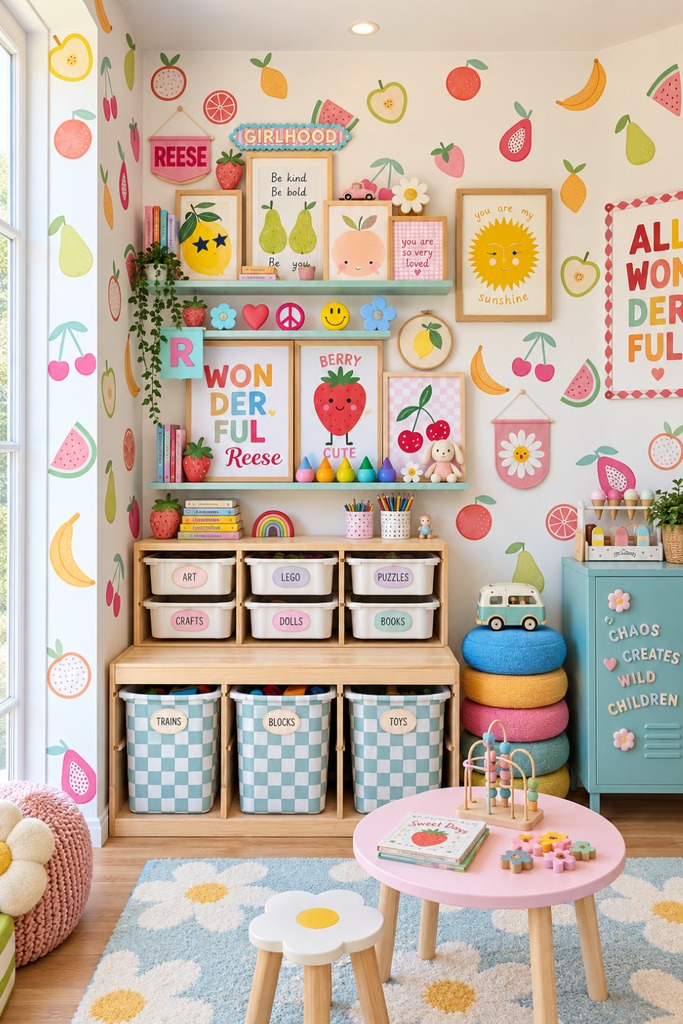
Fruity Gallery
Turn a storage wall into a cheerful focal point by layering fruit decals around shelves filled with colorful prints and small keepsakes.
Use picture ledges when you enjoy changing artwork often, since you can swap pieces without making new holes each time.
Keep the background light and repeat only a few fruit colors letting nearby window light prevent the busy arrangement from feeling heavy.
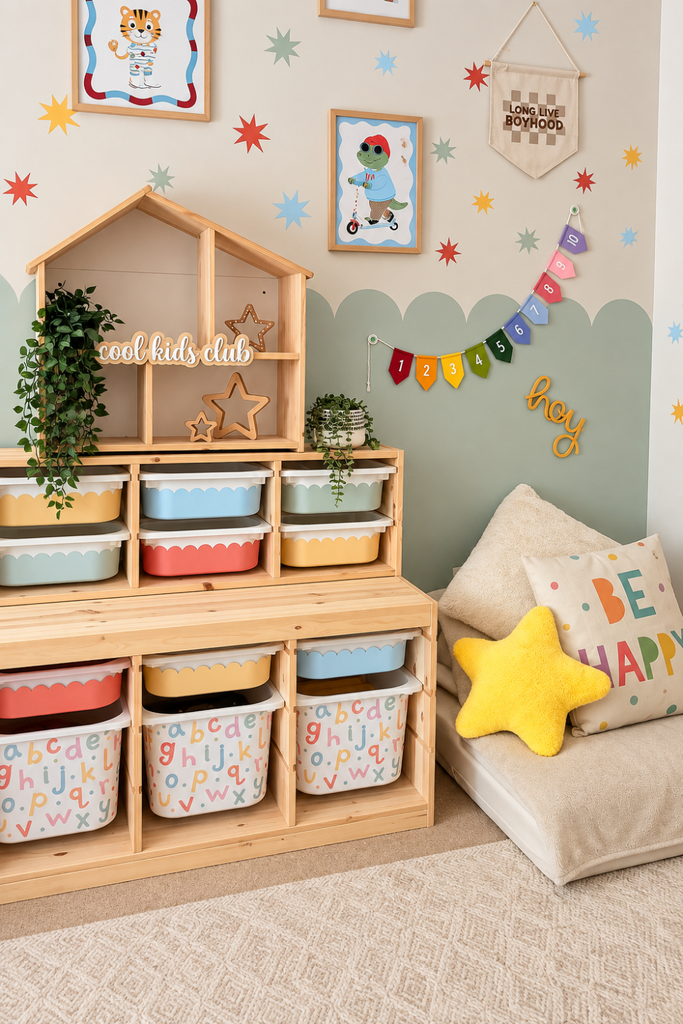
Scalloped Corner
Paint a soft, scalloped area behind the floor cushion and adjacent toy storage to give a reading nook a unique look.
To keep the upper wall lively without appearing crowded, place framed artwork and tiny starbursts above the paint line.
Add a simple number garland within easy view then use soft natural light to keep this quieter play zone comfortable.
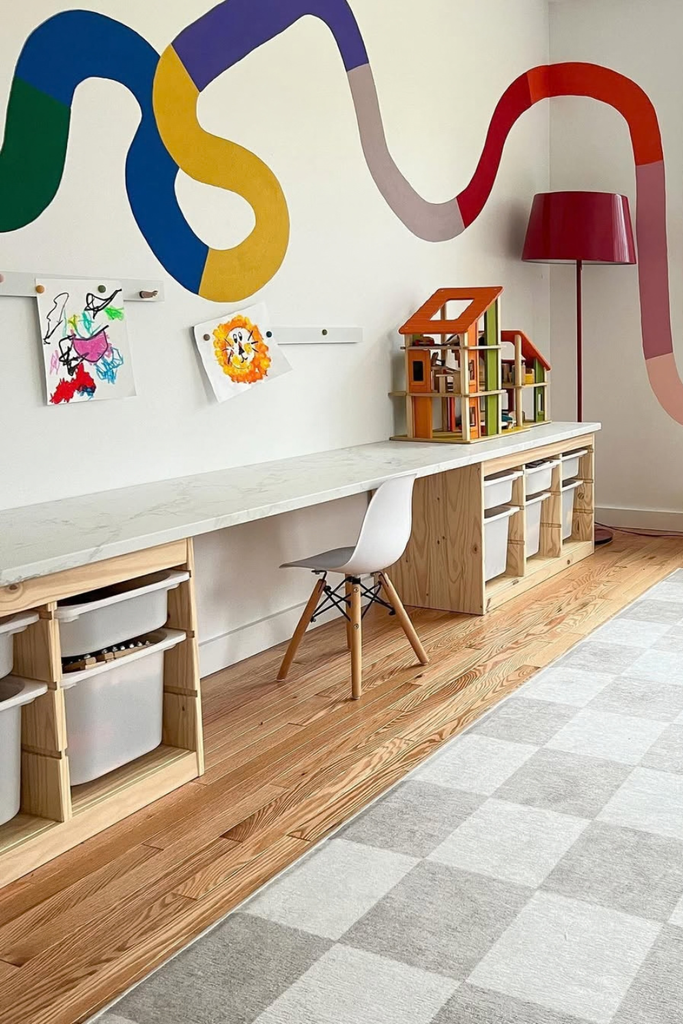
Ribbon Mural
Fill a wide wall without adding bulky decor by painting one oversized ribbon that twists across the open space.
Break the ribbon into bold color sections, then keep furniture and storage neutral so the painted movement gets enough attention.
Mount simple display rails underneath for rotating kids’ artwork turning the same wall into both a statement and creative showcase.
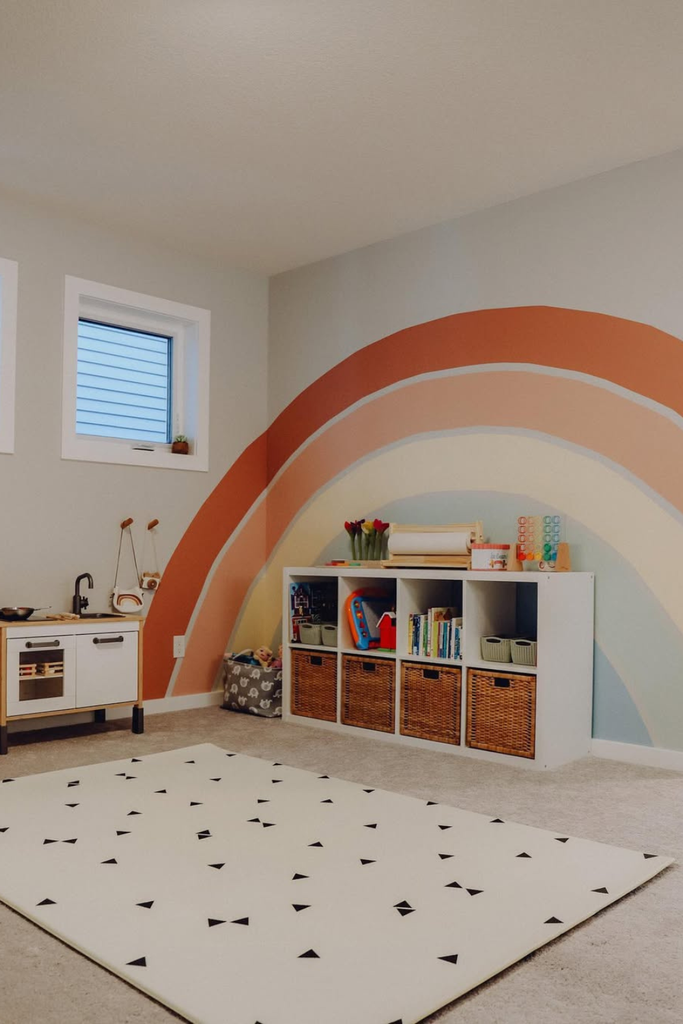
Corner Rainbow
Use an oversized rainbow to turn an awkward corner into the main feature instead of trying to fill it with several decorations.
Carry each painted arch across both walls which helps the corner feel wider and gives low storage a clear backdrop.
Choose muted rainbow shades if toys already add plenty of color, then rely on nearby window light to soften the painted tones.
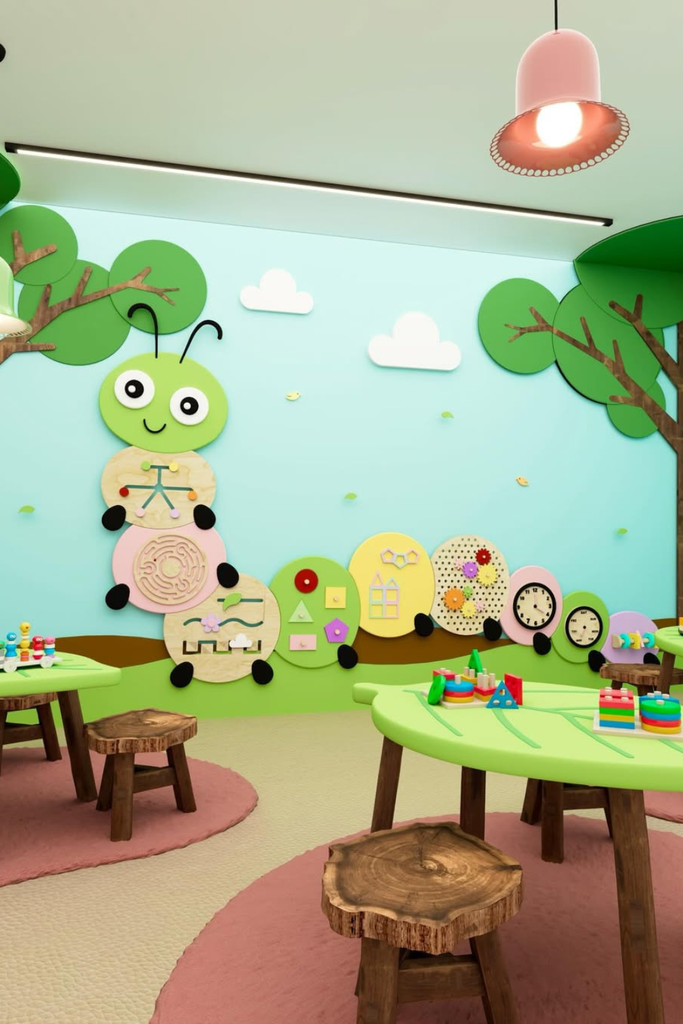
Sensory Wall
Turn wall decor into hands on play by mounting sensory boards with mazes, gears, shapes and simple learning activities.
Build the pieces around one playful theme, then leave enough space between activities so several kids can explore without crowding.
Use bright overhead lighting across the wall especially over smaller puzzles, so children can easily see and handle each feature.
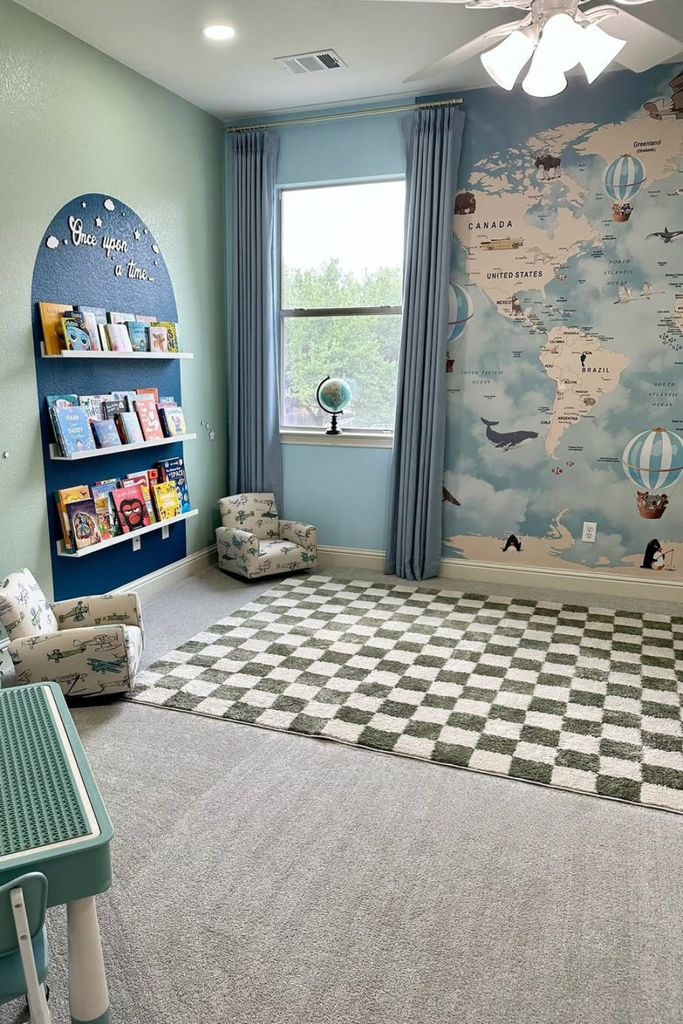
World Map
Turn a full wall into a learning feature with an oversized world map that kids can explore during everyday play.
Choose a map with animals, landmarks and transport details, so younger children have more than country names to discover.
Keep nearby furniture simple and low then use even ceiling light and natural daylight to make smaller map details easier to see.
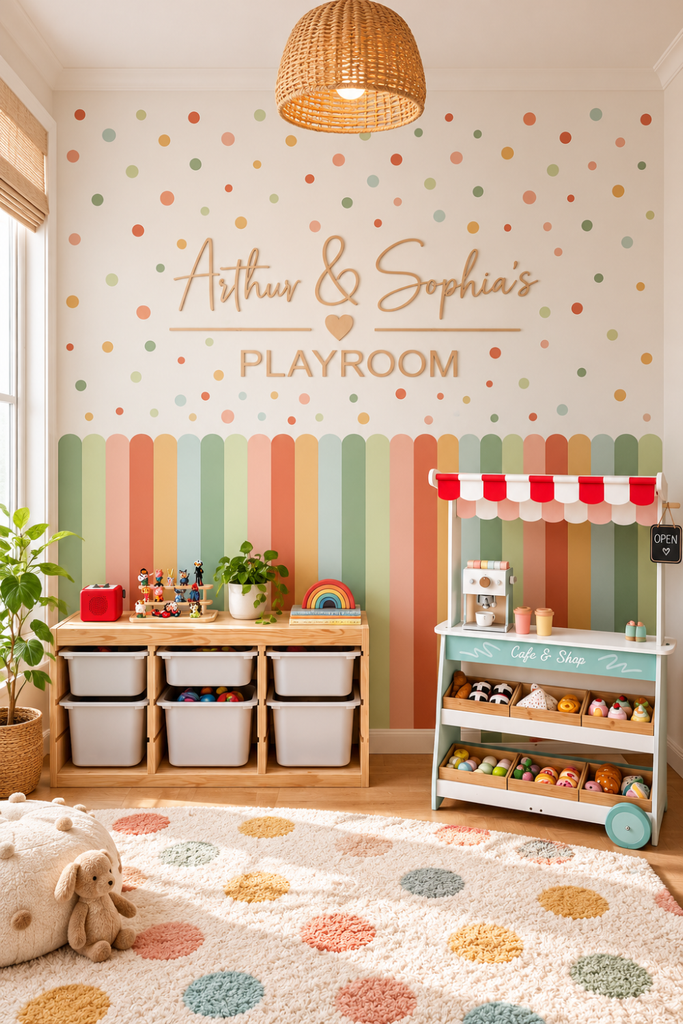
Scalloped Stripes
Split a tall wall into two playful layers by painting soft vertical stripes below and scattered dots across the open section above.
Round the stripe tops into scallops, then add a personalized name sign where the plain background gives it enough breathing room.
Pull muted colors from nearby toys and furniture, keeping the wall cheerful without making an already busy play area feel crowded.
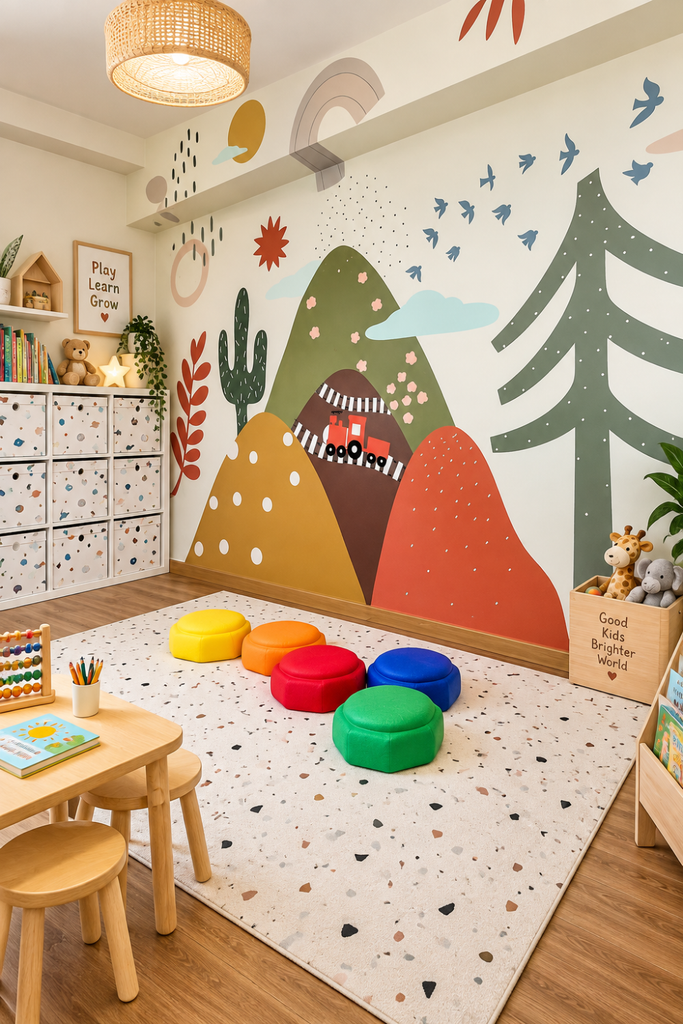
Adventure Mural
Build imaginative play into the wall with a large landscape mural filled with hills, trees, tracks, and playful nature details.
Paint the scene low enough to connect with floor play, so trains, cars, and figures can naturally continue the adventure.
Keep surrounding storage simple and use strong window light to brighten the muted colors without needing extra wall decorations.
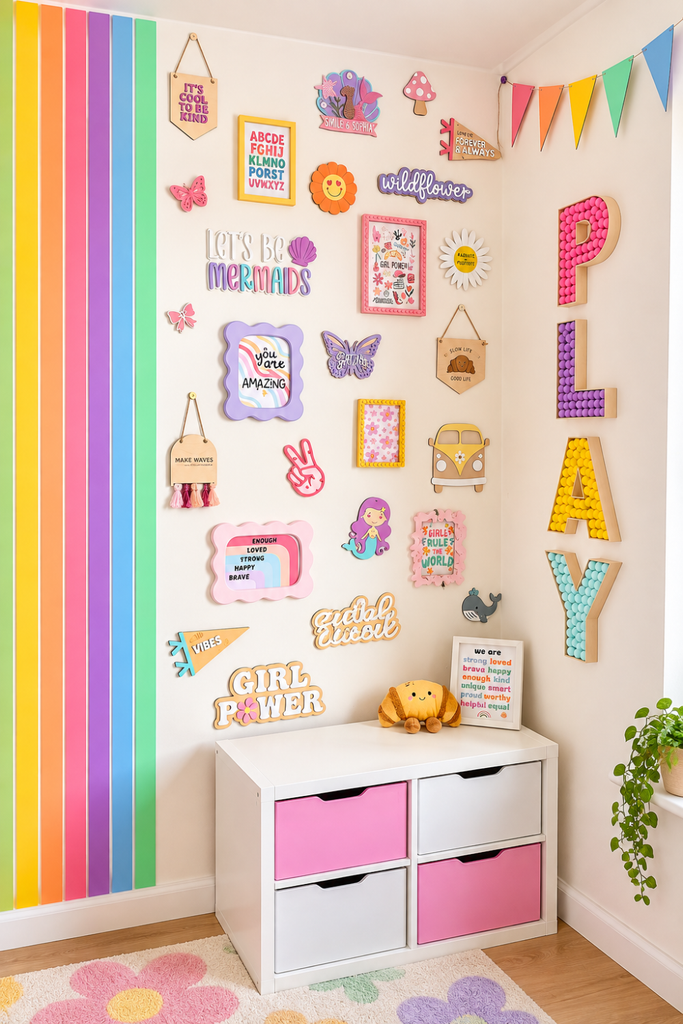
Eclectic Gallery
Make a blank corner feel personal by mixing mini prints, playful signs, mirrors and dimensional letters.
Spread decorations loosely across the wall and vary their sizes, so kids can keep discovering small details.
Anchor the collection with rainbow stripes and colorful bunting, then keep surrounding a simple furniture.
FAQs
How Can You Decorate Playroom Walls Without Making the Room Feel Too Busy?
Start with one main feature, such as a mural, gallery wall, or colorful decals, then leave some open wall space around it.
Repeating two or three colors from your rugs, storage, or furniture also helps different decorations feel connected.
If toys already bring plenty of color, keep larger wall elements softer and use brighter shades only for smaller details.
What Playroom Wall Decor Can Grow With Your Child?
Picture ledges, artwork rails, pegboards, framed prints, removable decals, and display shelves make changes much easier.
You can swap preschool artwork and playful characters for books, crafts, photos or older-kid interests later without completely redesigning the playroom.
Hi, I’m Afaf! I’m a law student who loves writing about everyday life – from home projects and crafts to fashion, beauty, and parenting tips.
I’ve been writing for over a year, sharing ideas that are simple, practical, and easy to try. I write about things I find interesting and useful, whether that’s organizing a space, trying a new DIY, or finding activities to keep kids entertained.
My goal is to share helpful ideas without making things complicated. If it works in real life, I’ll write about it.
When I’m not studying or writing, I’m usually experimenting with new projects or scrolling for inspiration!