
24 Playroom Storage Ideas
You can spend an hour organizing the playroom. Overflowing bins, missing puzzle pieces, bulky stuffed animals, and shelves kids cannot reach make cleanup harder.
Good storage should help your child find toys, and play freely . With the right mix of low shelves, baskets, drawers, hidden cabinets, and smart wall storage.
In this article, you’ll discover 24 Playroom Storage ideas that help you organize different toys, and use awkward spaces wisely.
Let’s jump in!
Should Everyday Toys Stay Within Reach?
Your child plays with the same blocks, cars, dolls, or books every day, store them low enough to grab without asking for help.
Open shelves, shallow bins and labeled baskets work well because kids can see what belongs where and return it after playing.
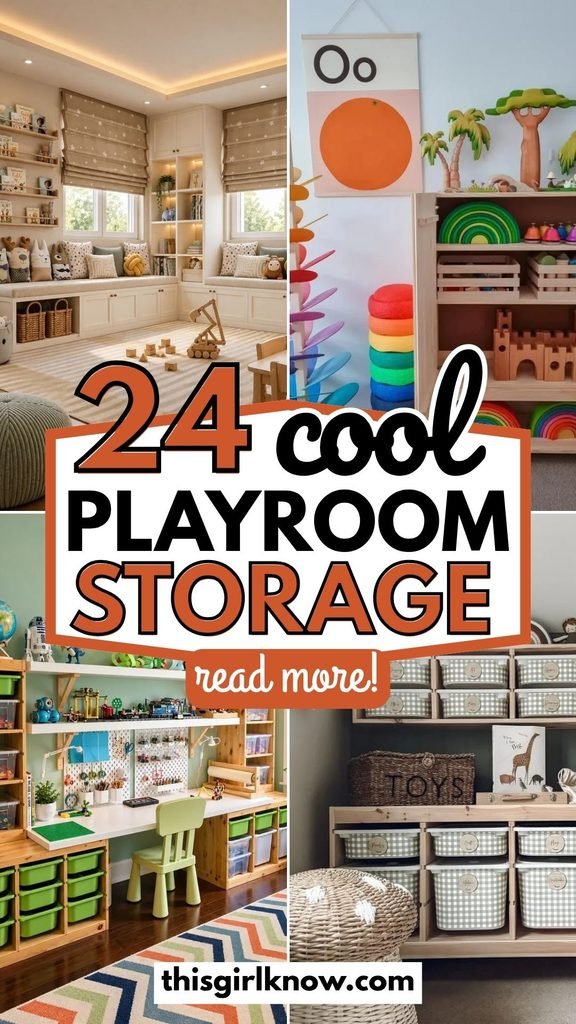
Less-used puzzles extra craft supplies, seasonal toys and large sets can move into closed cabinets, closets, or higher storage.
Stops every toy from competing for space and makes the room feel easier to manage. You can also rotate hidden toys every few weeks.
When fewer choices sit in front of your child finding a favorite toy becomes easier while hidden storage handles the overflow.
Activity Storage
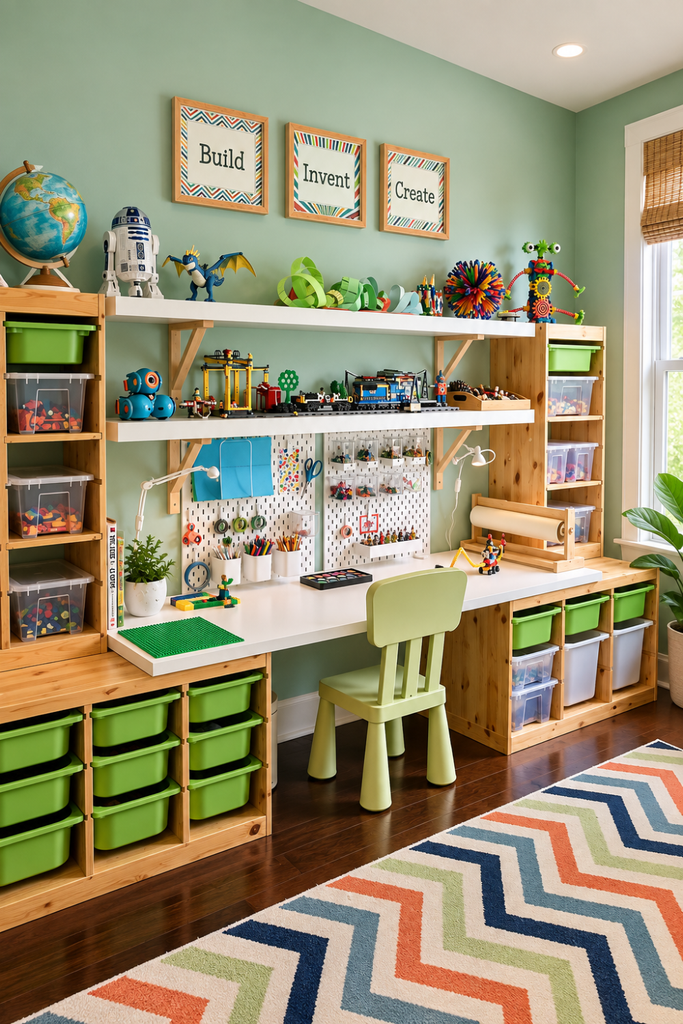
Keep art materials and building toys near the activity table so children can get what they need without having to go across the room.
For blocks and small pieces, use shallow sliding bins for tools that require quicker access, use a pegboard above the desk.
Open display shelves can hold finished creations, keeping them separate from supplies waiting to be used.
Labeled Toy Bins
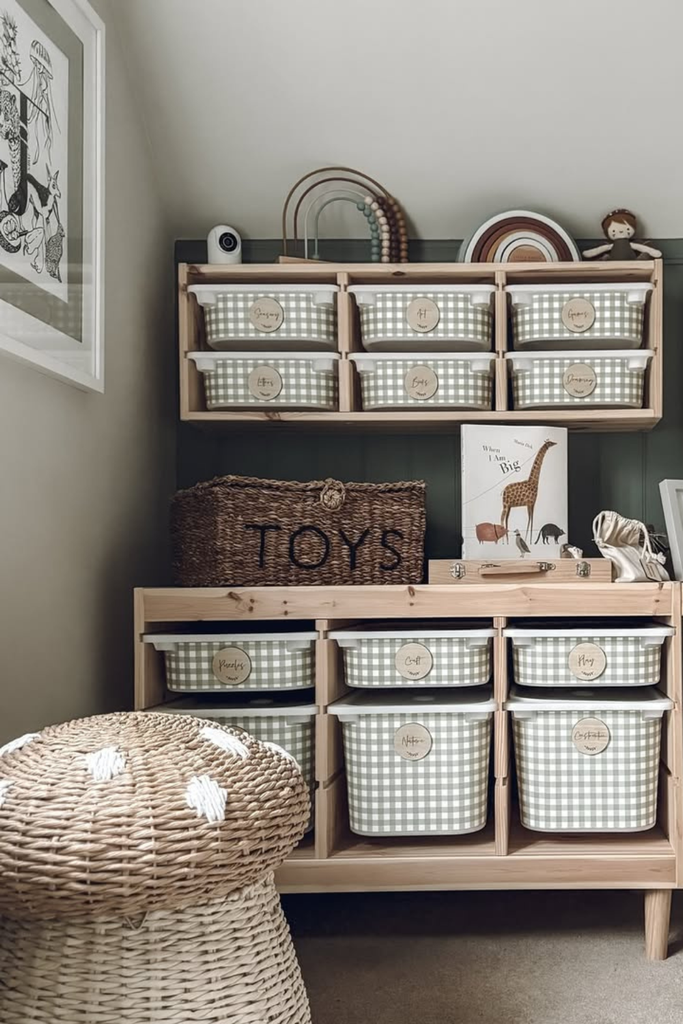
Instead of allowing everything to pile into one large basket, use labeled bins to give mixed toy collections clear homes.
Less-used supplies can be stored in the upper wall unit, while everyday items should be kept in the bottom compartments where children can access them.
This design is especially useful when your playground is shared because similar containers also lessen visual clutter.
Window Seat Storage
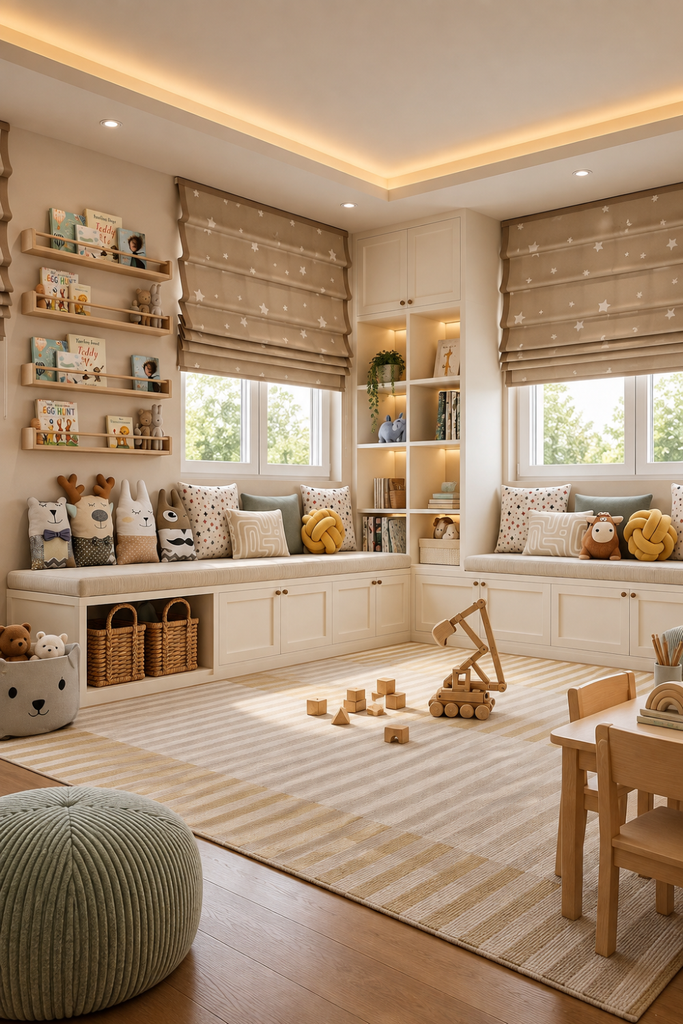
You want toys close by without leaving brightly colored containers all over the place, turn window sitting into secret storage.
Use the cabinets underneath for bulky or less used toys then keep books on slim wall ledges where covers stay easy to spot.
The cushioned tops provide a cozy reading area without taking up more floor space, and open baskets may store everyday favorites.
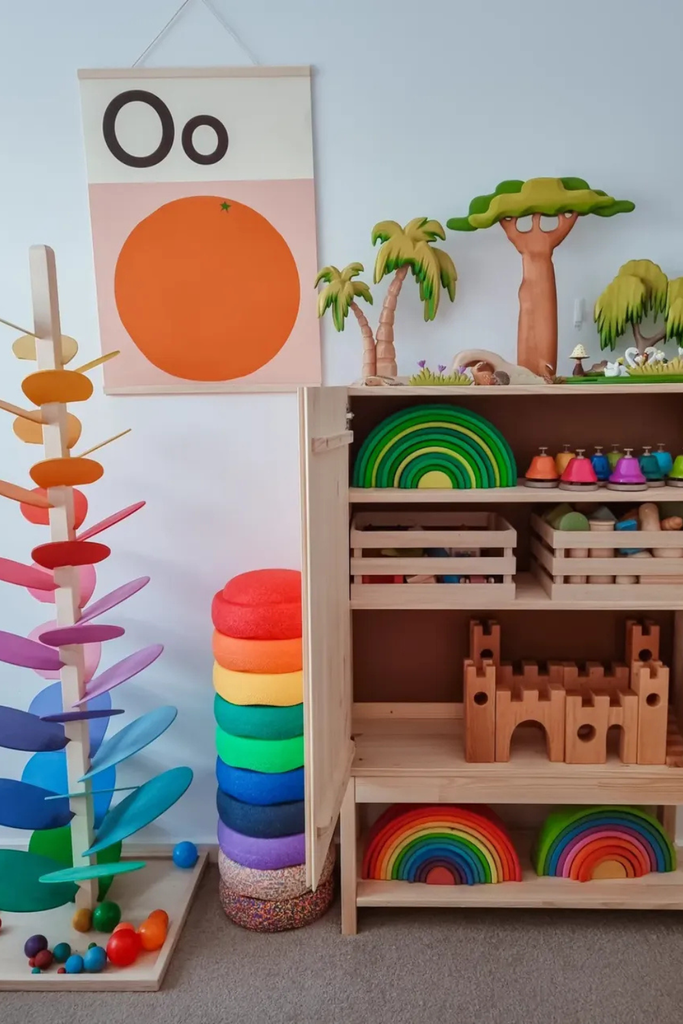
Display Cabinet
Your child has well-organized toys but still needs a simple place to clean up, combine exhibition space with hidden storage.
Store your favorite activity pieces and building kits on open shelves. To keep them grouped together, slip any loose bits into shallow wooden crates.
Cabinet doors can close over the whole collection later which helps a colorful playroom feel calmer without removing toys from reach.
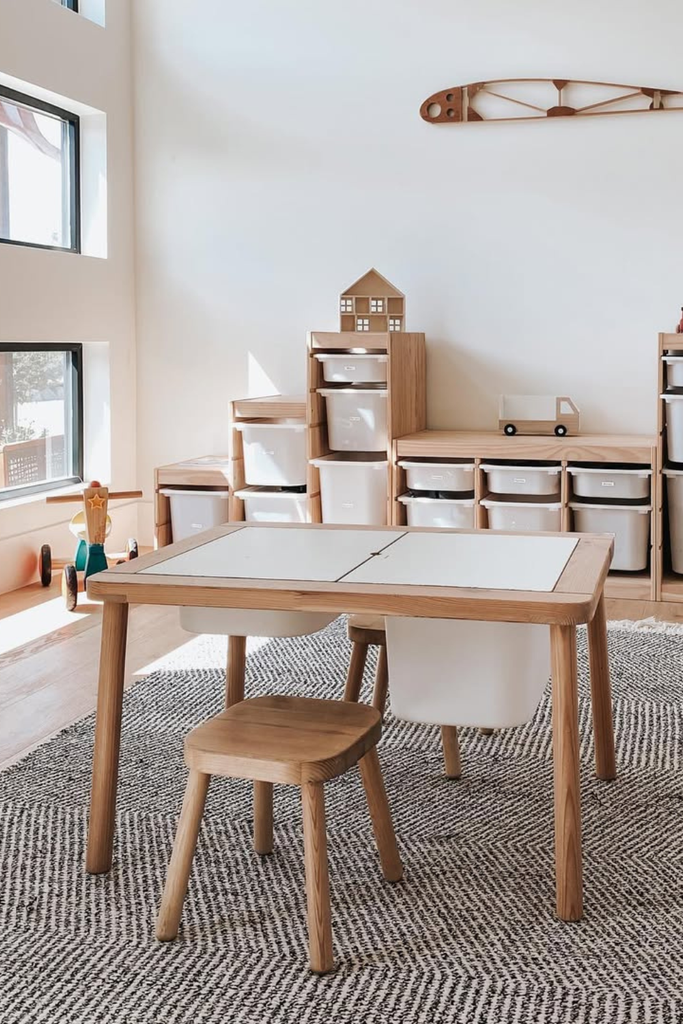
Graduated Bin Storage
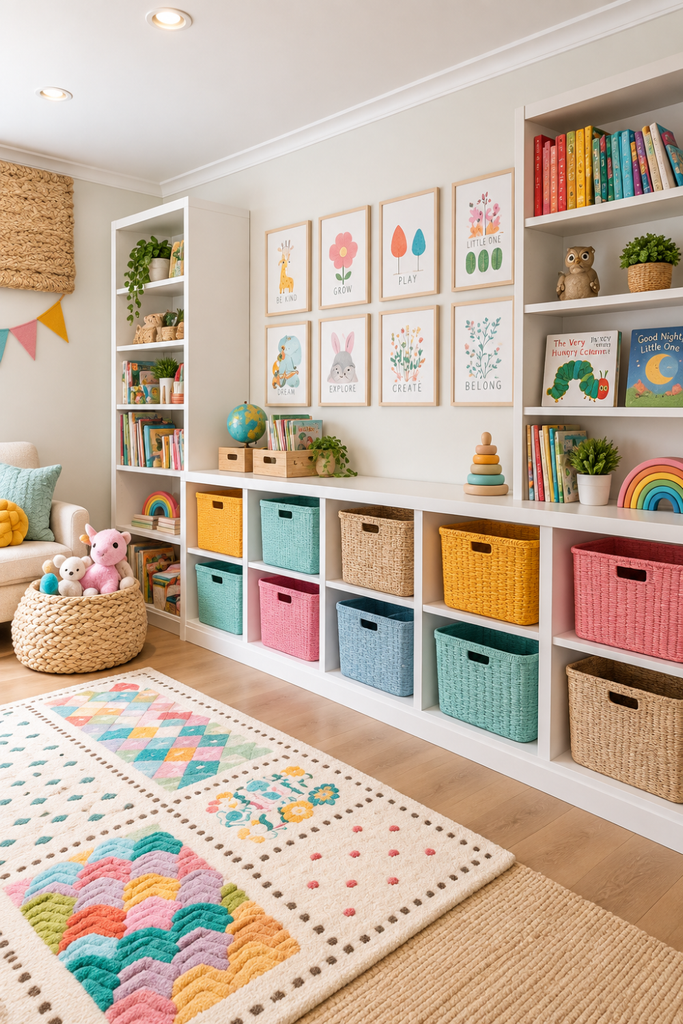
Instead of cramming every category into the same boxes organize storage around the toys you actually own.
Place them along one wall at kid friendly heights using shallow tubs for tiny parts and deeper containers for large sets.
Keeping the storage around the room’s edge leaves the center open for building, crafting and spreading toys out.
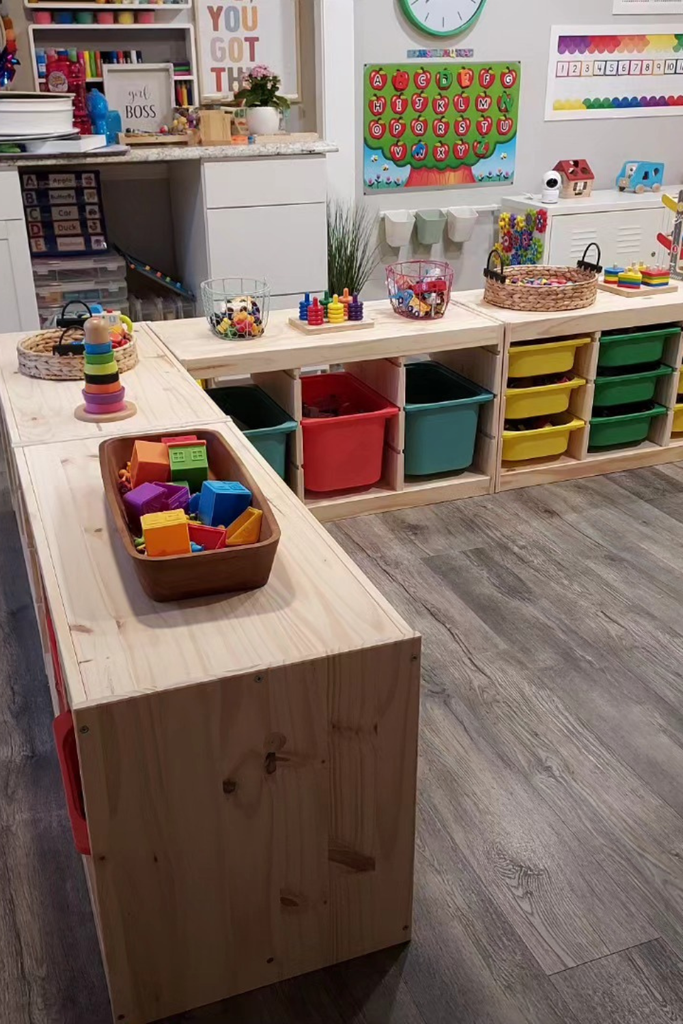
Storage Divider
You don’t want to build a whole wall to your playroom, use low cube storage as a divider.
While open areas can store larger objects that children frequently grab, the bottom compartments should be filled with colorful bins for stray toys.
The wide top also becomes an extra surface for baskets and tabletop activities, helping one storage unit organize both the toys.
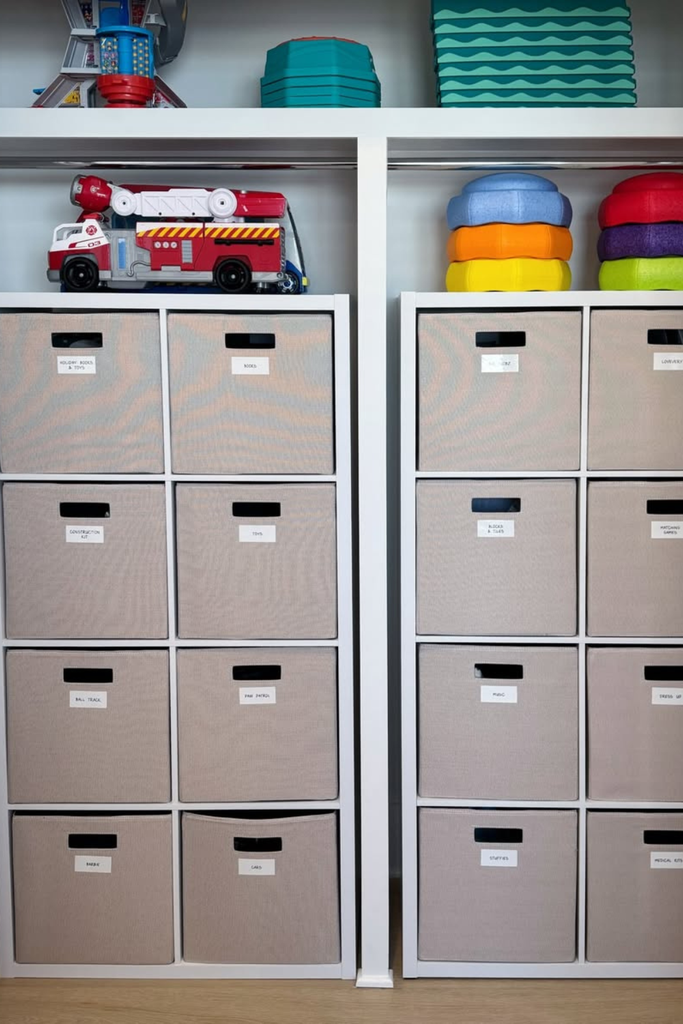
Closet Cube Storage
Turn a spare closet into a toy station when you want the playroom itself to stay visually calm to give each fabric cube.
one clear category, such as cars, blocks, costumes, or games, so cleanup never becomes a guessing job.
Store bulky toys on the open shelf above while less used items can go higher where they stay out of the everyday play zone.
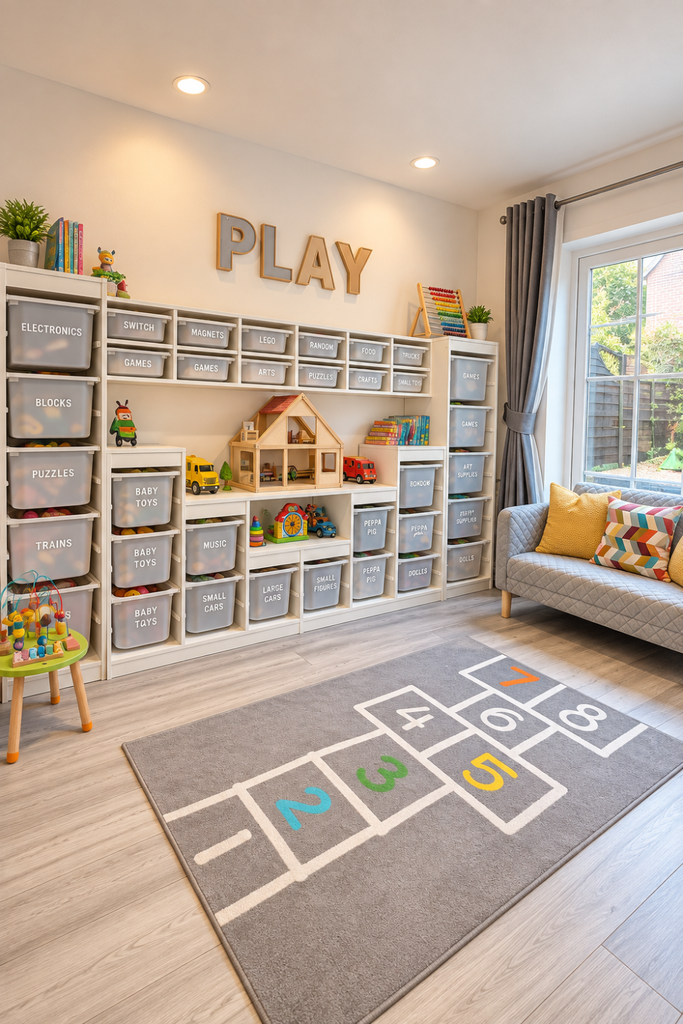
Category Wall
Sort a large toy collection by type when mixed bins keep turning cleanup into another sorting job.
Give blocks, puzzles, cars, games and smaller figures their own labeled containers then place the most used categories.
Tiny bins across the top are better for tiny pieces while deeper lower tubs can accommodate larger items without overflowing.
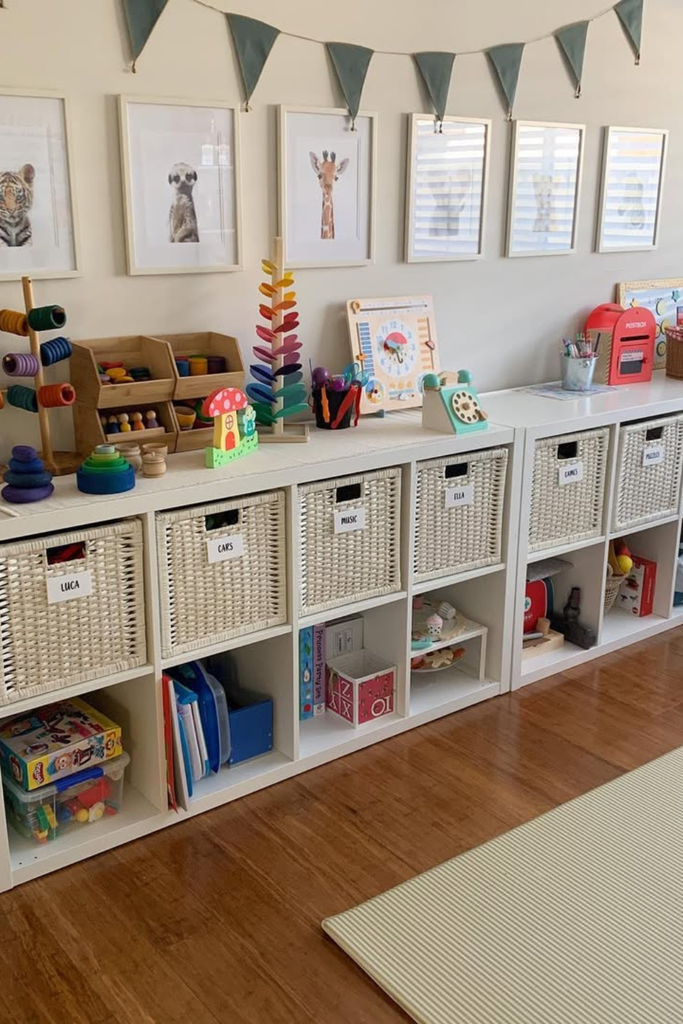
Basket Cubes
You want to tidy up quickly without concealing every toy behind cabinet doors, pair open cubbies with labeled baskets.
Keep loose categories such as cars music toys and play sets inside the baskets then reserve lower open cubes for books.
The long, low layout keeps everything reachable while leaving the top free for activities and rotating favorites.
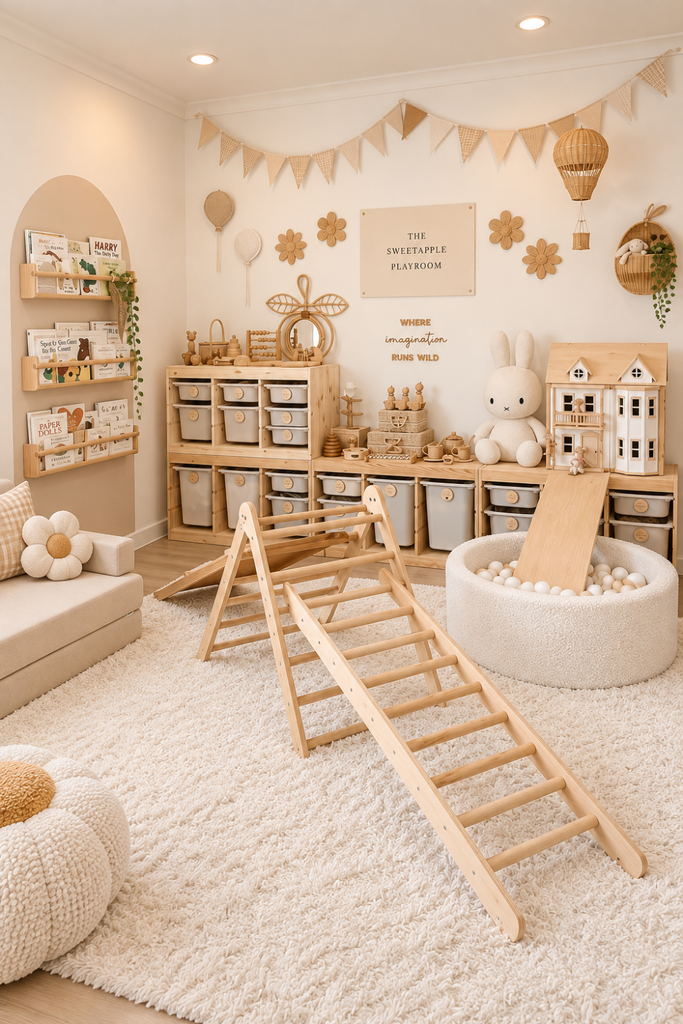
Stacked Bin Storage
Stretch storage upward when one long wall needs to hold a growing mix of small and bulky toys.
Place smaller categories in shallow tubs higher up, and use deeper bottom bins for larger sets and soft toys.
While lidded wicker containers can store special sets you want to keep safe in between play sessions, labeled fronts make cleanup easy.
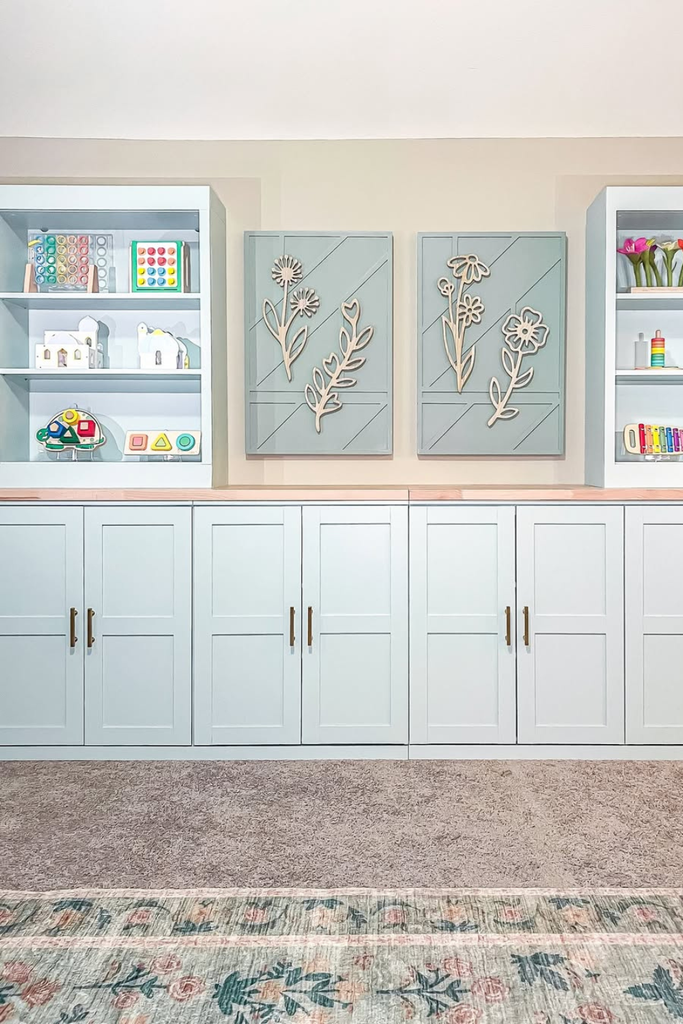
Built-In Cabinets
Hide the toys that create the most visual clutter inside full-width cabinets, then reserve open shelves for a small rotation.
Group puzzles, games, craft supplies and larger sets behind separate doors without digging through one crowded cupboard.
This built-in approach works especially well when you want the playroom to feel tidy even immediately after cleanup.
Display Shelving
Balance easy access with hidden storage by keeping a small selection of favorite toys and books on the open shelves.
Move loose pieces, larger collections and toys that only come out occasionally into the cabinets below so the room never feels overloaded.
Spacing displayed items apart also makes choices easier to see while the closed lower section handles everything.
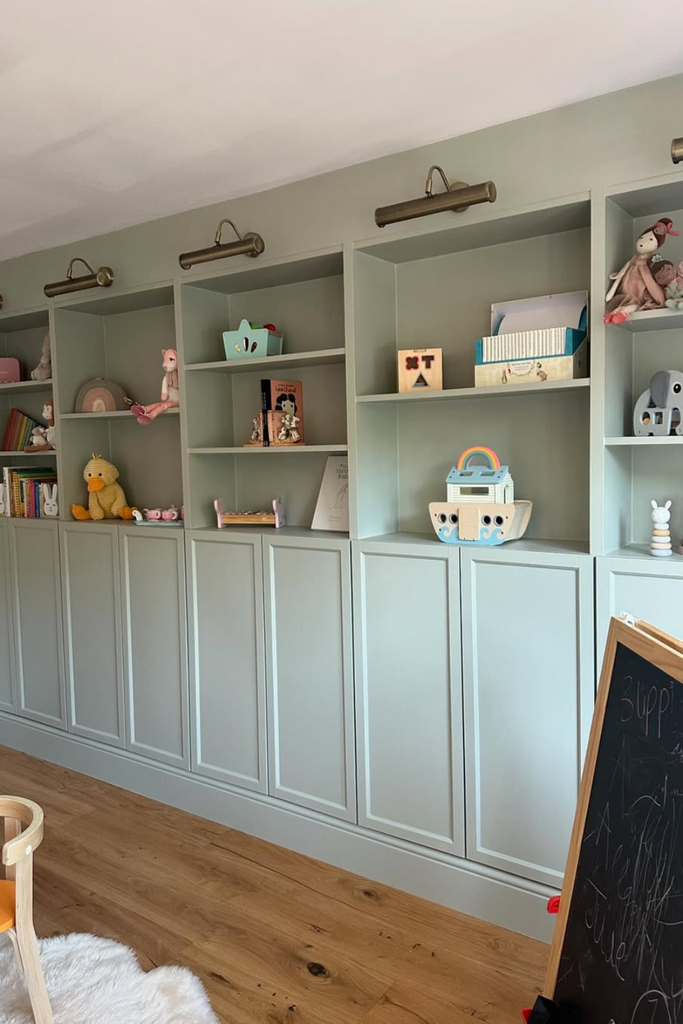
Low Bin Wall
Allow children to pull out a container without disturbing the entire room, arrange the busiest toy categories along a single low wall.
For puzzles and little parts, use shallow tubs; for larger sets or vehicles that require more room, use deeper bins.
The continuous wooden top gives you room to rotate favorite toys, while the center stays completely open for active play.
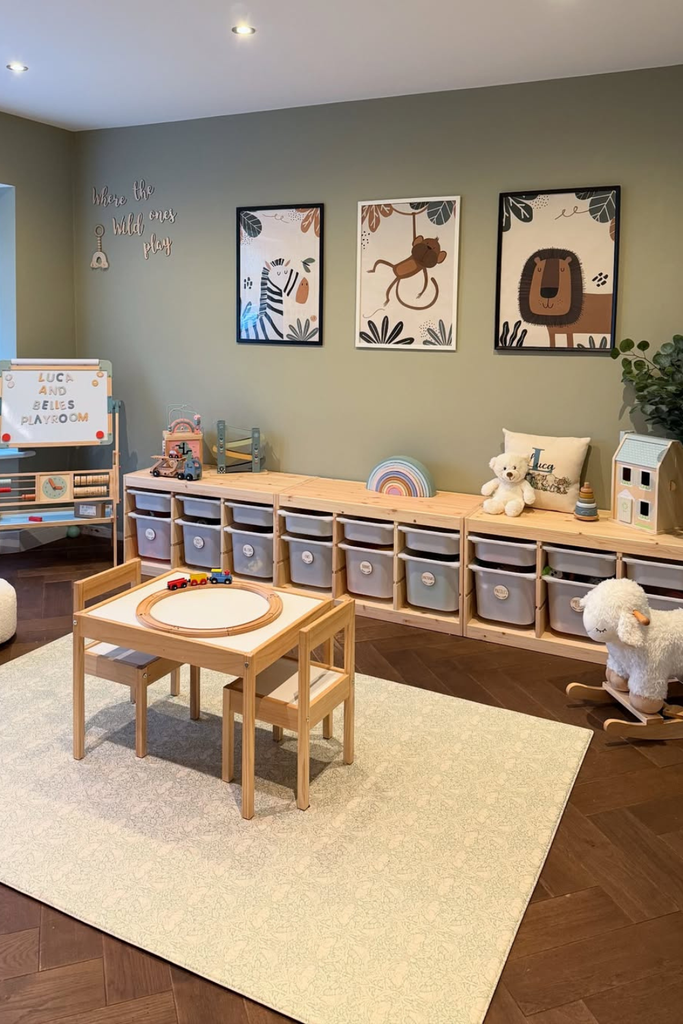
Mixed Cube Storage
Mix baskets, drawers, cupboards and open cubbies when one storage wall needs to handle toys of very different sizes.
Keep everyday craft supplies and favorite figures in open sections, then tuck messy collections into baskets.
Lower compartments work well for heavier toy bins while higher spaces can hold supplies that kids use less often.
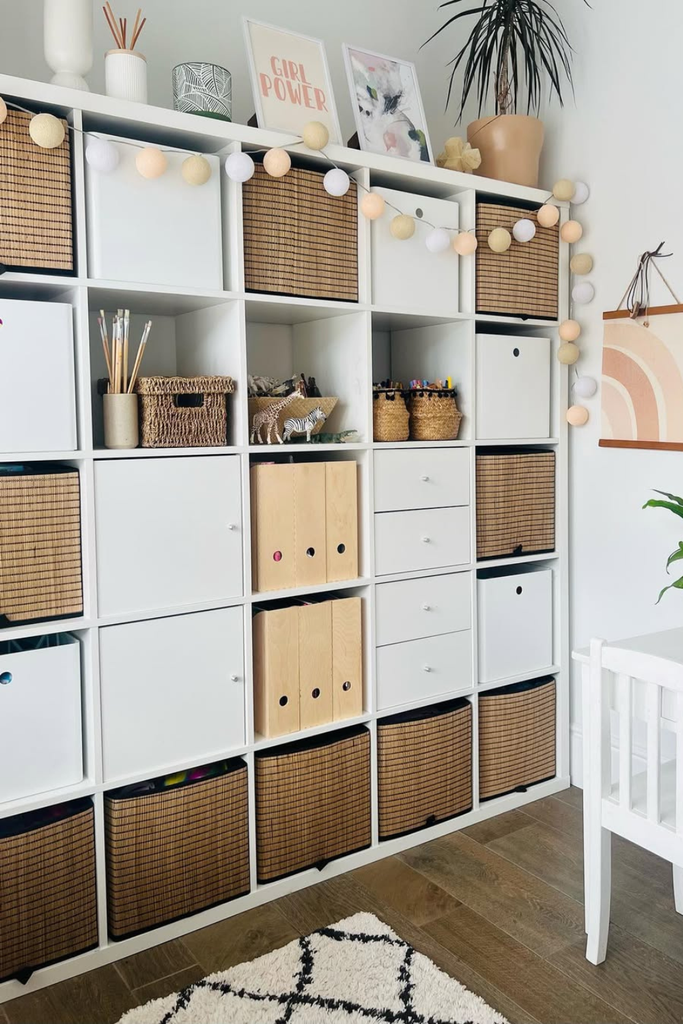
Cabinet Basket Combo
Combine closed cabinets with open floor baskets when some toys need hiding while others should stay ready for quick play.
Store messy collections and less-used sets behind the doors then use the baskets underneath for soft toys dress-up pieces
Kids can grab their favorite everyday items. To make the storage unit serve as a convenient surface and larger toys on top.
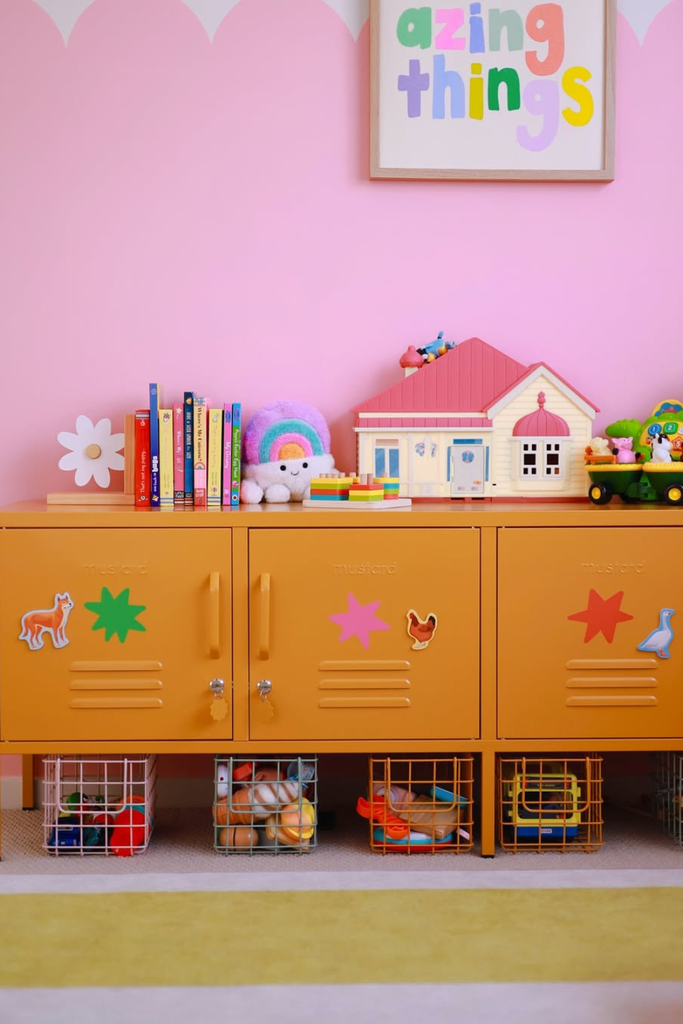
Clear Activity Bins
Separate small play sets into clear containers when tiny pieces keep getting mixed together or lost between activities.
Label each box by theme so you can pull out one complete set without searching through several shelves first.
Stack occasional activities higher up, while frequently used bins stay lower. Let you check what is inside before opening anything.
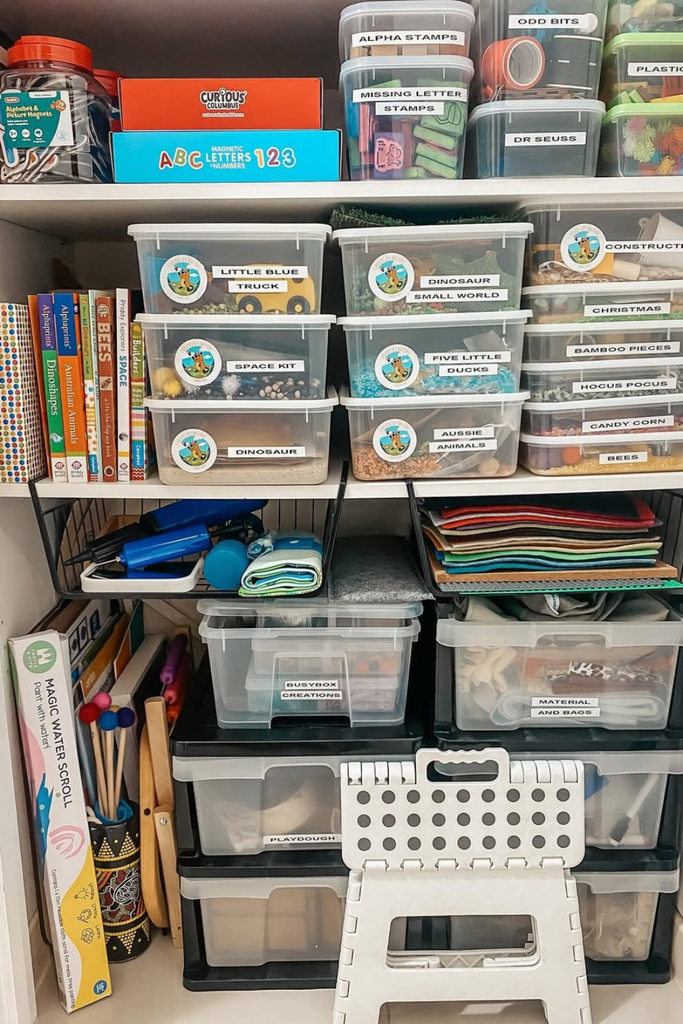
Front-Facing Books
Younger children chose stories by identifying covers rather than reading narrow spines, keep favorite books facing forward.
Provide a low-tiered rack next to the reading nook so kids can peruse and return books on their own.
Rotate extra titles from hidden storage every few weeks which keeps the display manageable while giving old favorites.
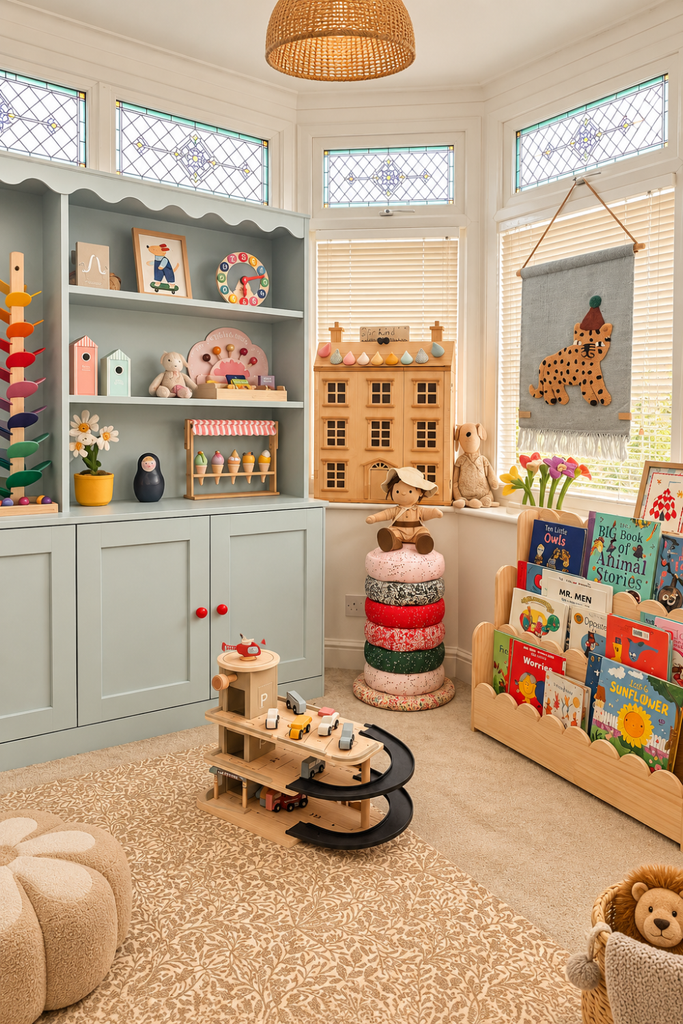
Window Bench Storage
Make the space beneath a window work harder by combining a cushioned bench with baskets for toys that need quick cleanup.
Keep soft toys and everyday play pieces in the pull-out baskets then use nearby drawers for smaller collections you want separated.
Open shelves above can display favorite sets while the bench gives kids a comfortable spot to sit without adding another piece of furniture.
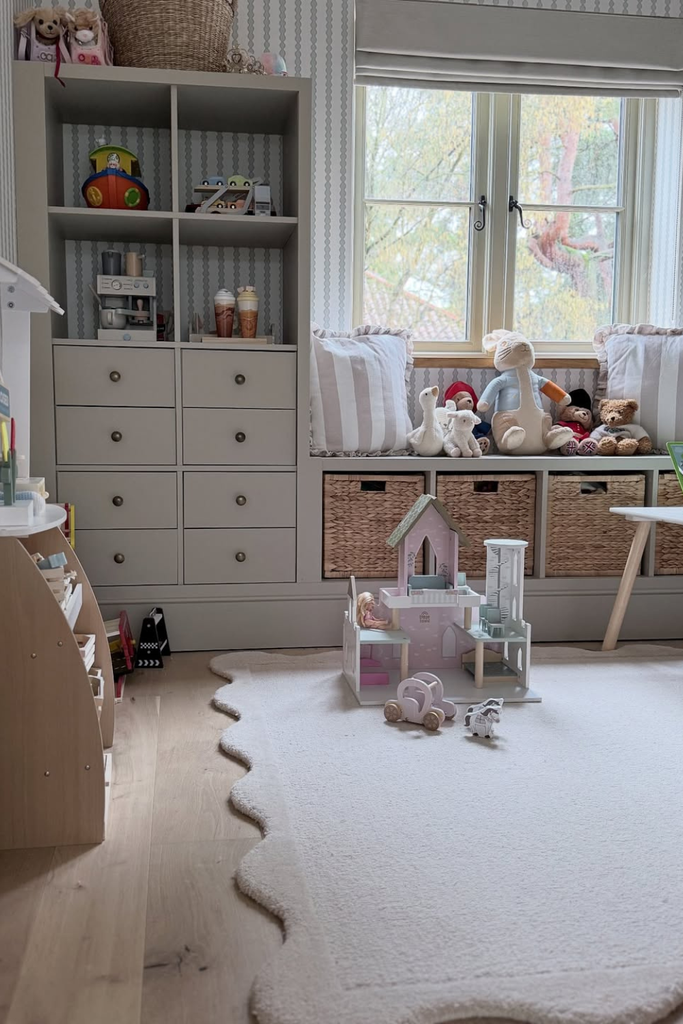
Tiered Toy Bins
Use different bin depths when one storage unit needs to handle everything from tiny pieces to bulky everyday toys.
Keep small parts in the shallow upper trays where they cannot disappear underneath larger items then use deep lower bins.
Woven baskets on top can hold overflow or less-used toys, giving you another storage layer without filling the floor.
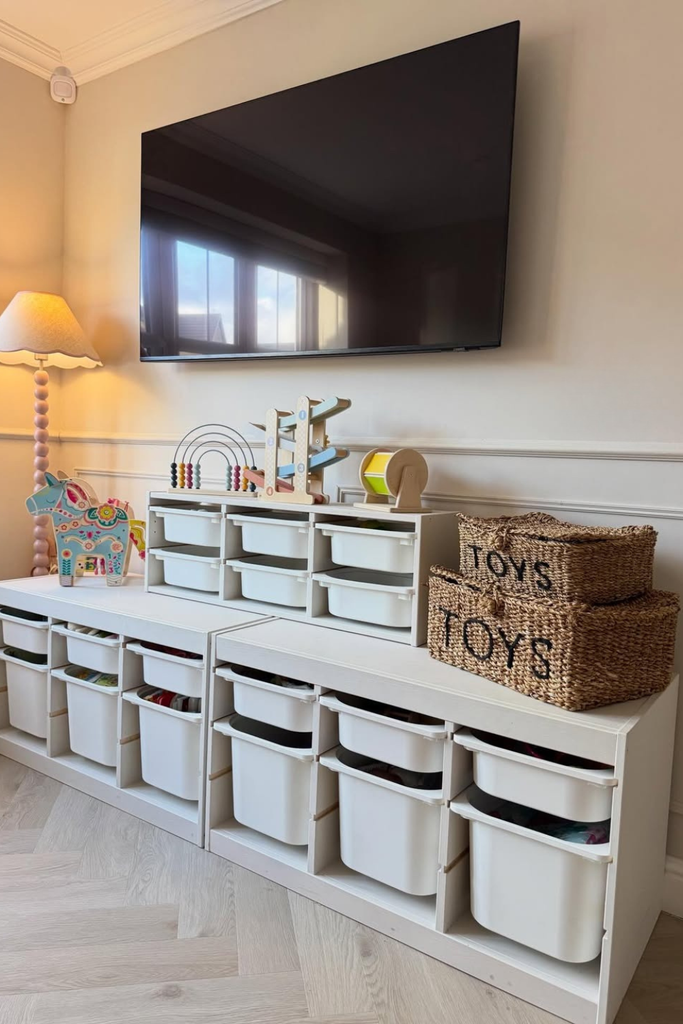
Media Cabinet Storage
Use the long cabinet beneath a wall-mounted TV to hide toy clutter without adding another bulky storage unit.
Divide the inside with adjustable shelves then group small craft supplies and activity pieces in clear bins.
Reserve wider compartments for oversized toys while zip pouches keep puzzles, games and flat sets together.
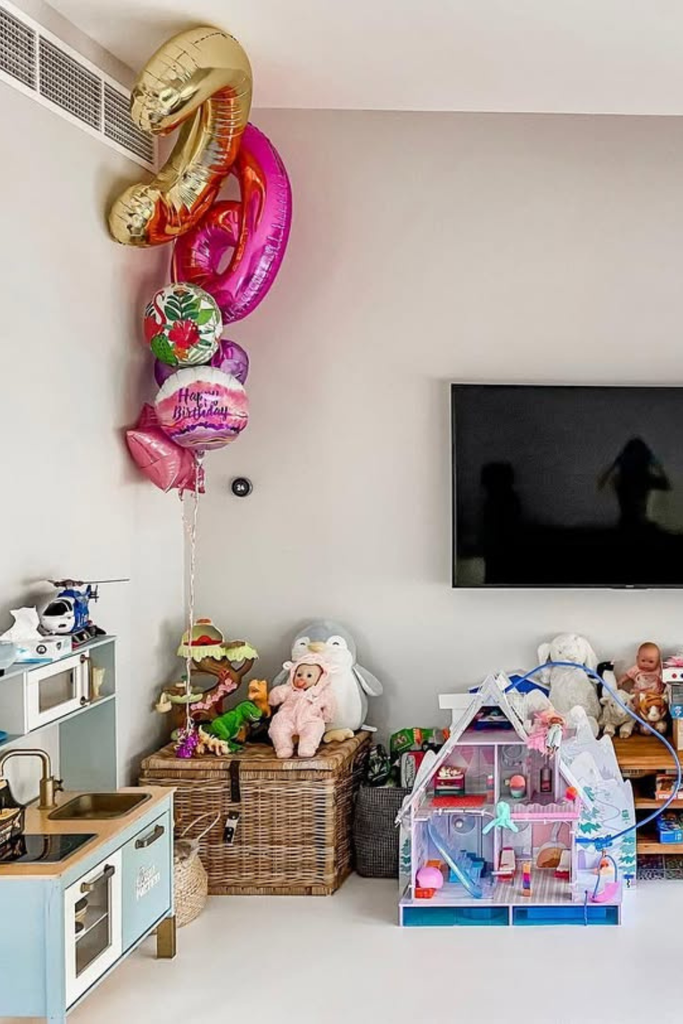
Basket Tower Storage
Frame a play area with tall cube units when you need plenty of storage without spreading furniture across every wall.
Hide loose toys inside woven baskets and drawers, then keep favorite activity sets visible in the lower open cubbies.
Keep daily options close at hand set aside the highest compartments for rotation toys or supplies that you oversee.
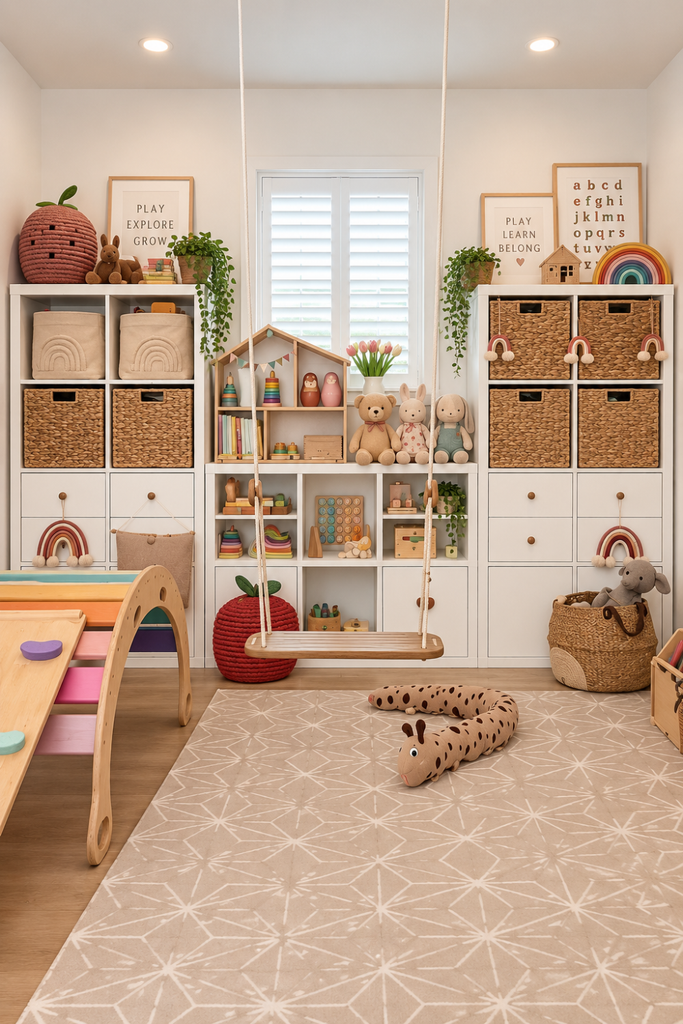
Media Wall Storage
You want to organize your toys and entertainment on one wall without feeling overwhelmed, build storage around the TV.
Move less-used collections into the locked cabinets downstairs, and store common figures and play sets in open bottom baskets.
Upper shelves are better at keeping the floor open while yet giving everything a distinct location for rotation toys and display pieces.
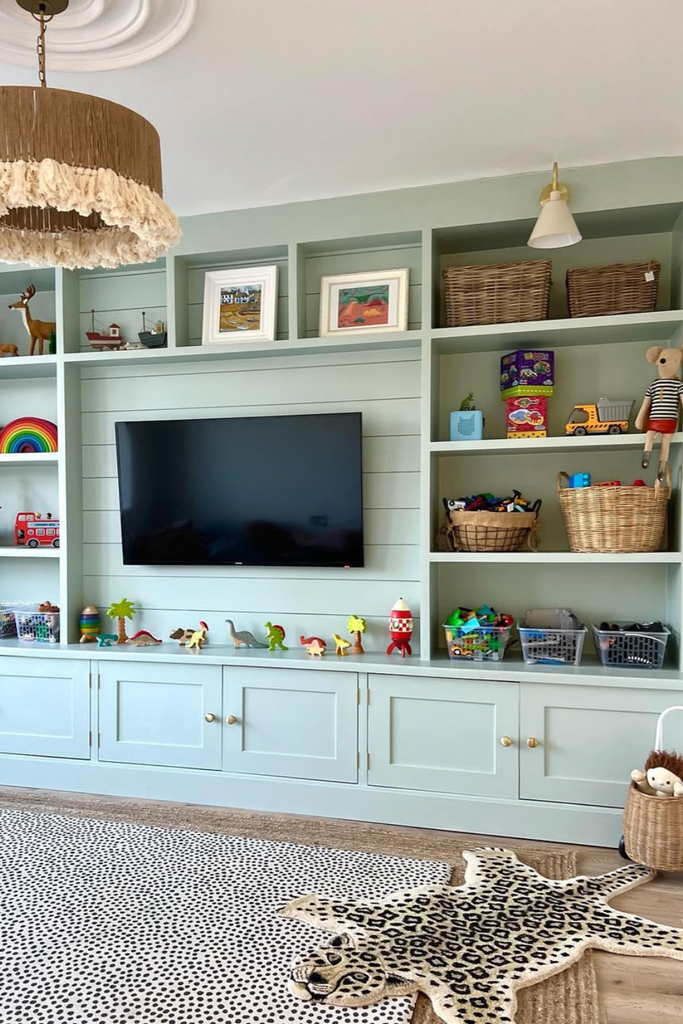
Basket Drawer Mix
Combine baskets and drawers when your playroom needs quick-access storage without leaving every toy visible.
Keep everyday blocks, cars and play pieces in the open baskets then use drawers for smaller sets that quickly create clutter.
Taller side storage can hold less-used toys higher up, while the long surface gives you an easy spot for books and rotating favorites.
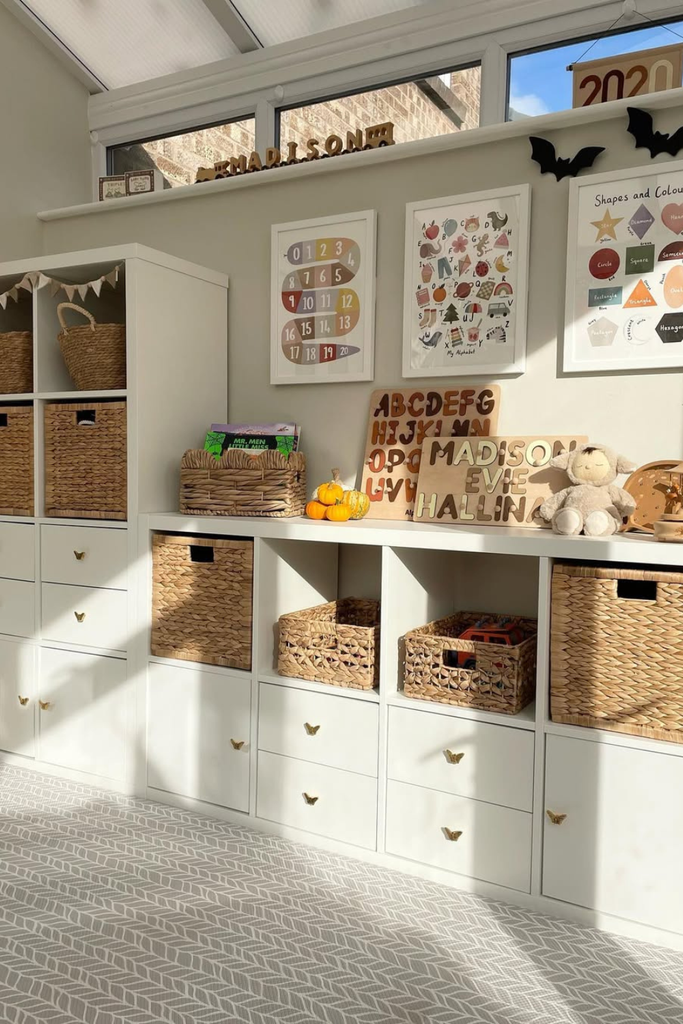
Hidden Cabinet Wall
Keep the playroom looking calm by hiding bulky sets and toy overflow behind a long run of closed cabinets.
To give youngsters easy choices without having to view everything at once, use the open shelves for a brief rotation of their favorite items.
The cupboards underneath manage collections, and the large countertop can accommodate one or two active play pieces.
FAQs
How Do You Keep Playroom Storage Organized as Toy Collections Keep Growing?
Avoid filling every shelf completely from the start. Leave a little extra space inside baskets, drawers and cubbies so new toys have somewhere to go.
When one category starts overflowing, remove broken pieces or rotate less-used toys into hidden storage instead of adding another basket.
What Should You Store Higher Up in a Playroom?
Use higher shelves for toys your child rarely uses, seasonal activities, extra craft supplies and sets that need adult help.
Everyday favorites should stay lower where kids can reach and return them independently.Keeping less used items above the main play zone.

Hi, I’m Afaf! I’m a law student who loves writing about everyday life – from home projects and crafts to fashion, beauty, and parenting tips.
I’ve been writing for over a year, sharing ideas that are simple, practical, and easy to try. I write about things I find interesting and useful, whether that’s organizing a space, trying a new DIY, or finding activities to keep kids entertained.
My goal is to share helpful ideas without making things complicated. If it works in real life, I’ll write about it.
When I’m not studying or writing, I’m usually experimenting with new projects or scrolling for inspiration!