
26 Montessori Playroom Ideas
When toys cover every corner but your child still struggles to settle into play, adding more usually won’t solve the problem.
Too many choices, hard-to-reach storage, and activities mixed together can make the playroom harder to use and even harder to clean.
In this article, you’ll find practical ways to organize the space, choose useful activities, and create a playroom that works for everyday life.
Let’s jump in!
Are DIY Montessori Activities Worth Adding to the Playroom?
Start with simple tasks using things you already have, such as transferring objects between bowls, matching colors.
Choose activities that match your child’s current skills because something too difficult can quickly cause frustration.
Place each activity on its own tray or in a small basket so your child can see what belongs together and return everything afterward.
You also don’t need ten DIY activities available at once. Add one or two alongside familiar toys then change them when interest drops.
A simple activity that your child can manage independently often gets more use than an elaborate project requiring constant adult help.
Cozy Reading Corner
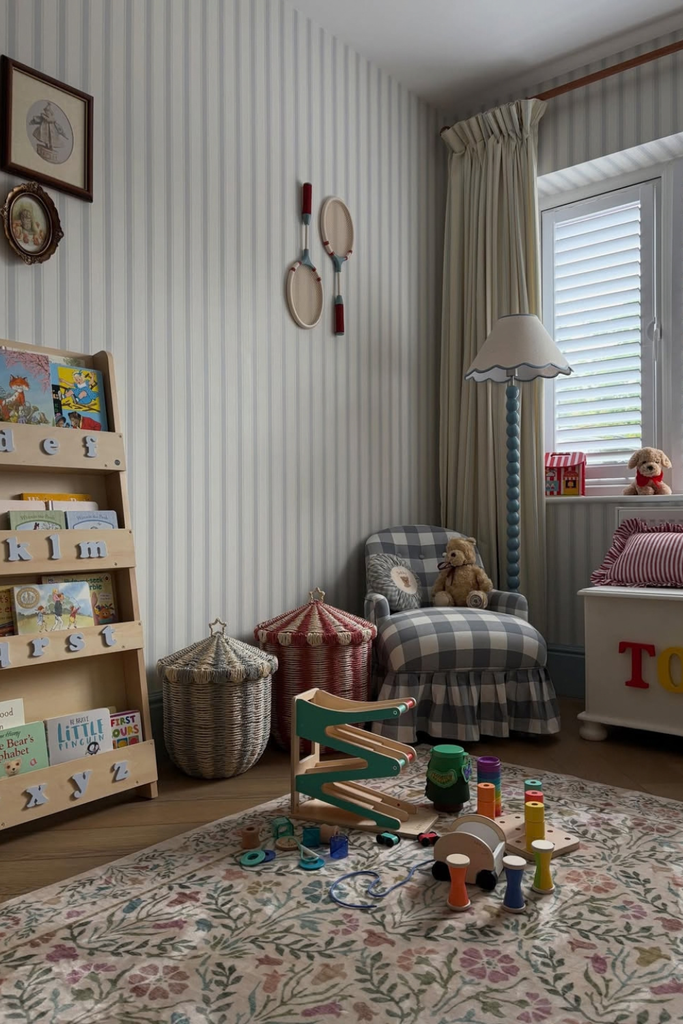
Give one playroom corner a quieter purpose by pairing front-facing books with a comfortable child-sized chair.
Keep favorite books within easy reach, then leave nearby floor space open for hands-on toys and independent play.
Natural window light works well during the day while a shaded floor lamp adds softer light for reading later.
Floor Play Zone
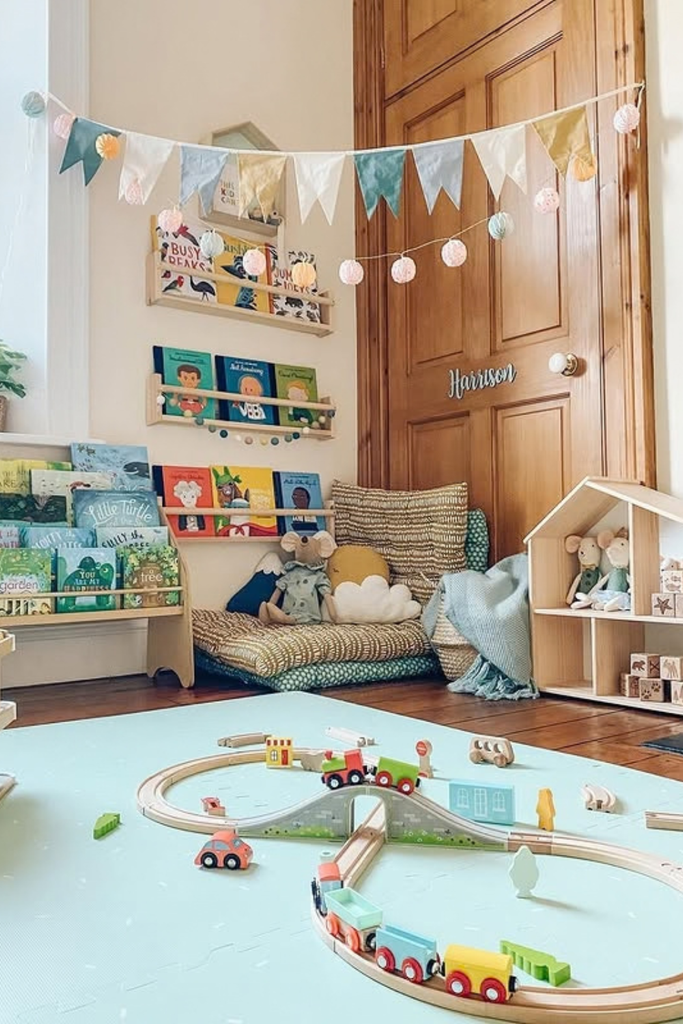
Turn a clear stretch of floor into an inviting activity zone where your child can build tracks, arrange blocks and spread out comfortably.
Keep books facing forward nearby and use floor cushions to create a separate reading spot without adding bulky furniture.
Window light keeps the corner bright, while the open layout leaves plenty of room for independent movement and play.
Activity Stations
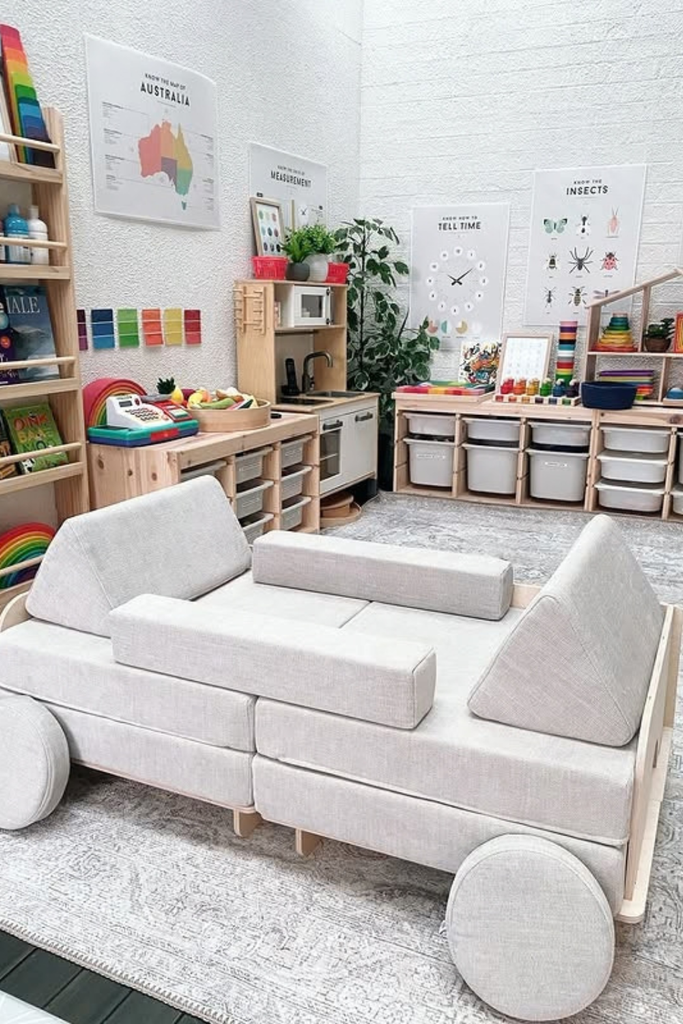
Break a larger playroom into simple stations so your child can quickly understand where different kinds of play belong.
Use low bins for sorting materials, front-facing shelves for books, and a child-height kitchen for pretend play.
Keep frequently used materials visible, while natural light and bright overhead lighting make every station easy to use.
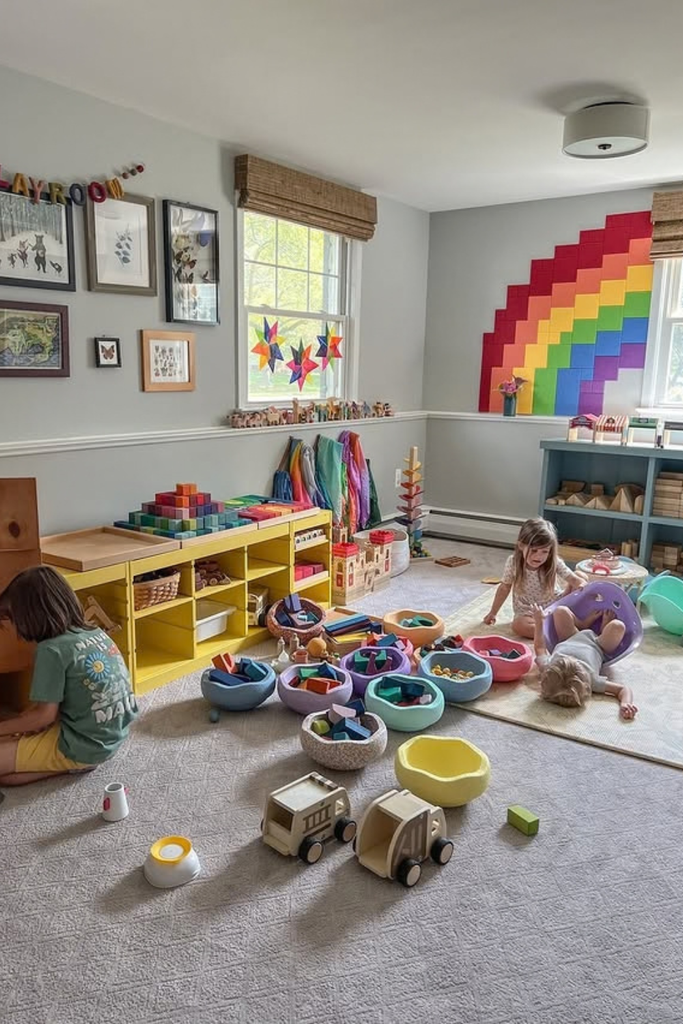
Color Coded Storage
Make a busy shared playroom easier to manage by giving blocks, loose parts, and building toys their own low storage spots.
Shallow baskets let kids carry materials onto the rug, while open cubbies make returning them much easier after play.
Keep plenty of floor space between storage units so several children can work. Daylight from opposite windows brightens the room.
Sensory Play Corner
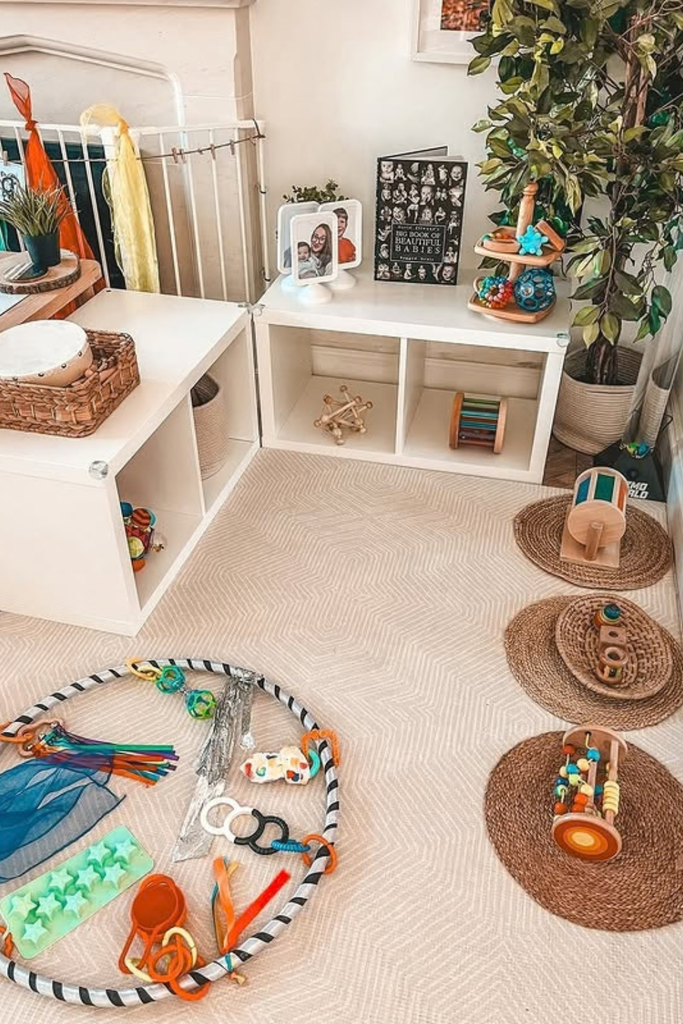
You want smaller kids to explore without a packed shelf vying for their attention, set aside a calmer area for sensory exploration.
Present only a few textured, grasping, or movement toys on separate floor mats, then keep extra materials on the low shelves nearby.
Large mirror can make movement and object exploration more engaging. Soft daylight from the window keeps the area bright.
Learning Shelf
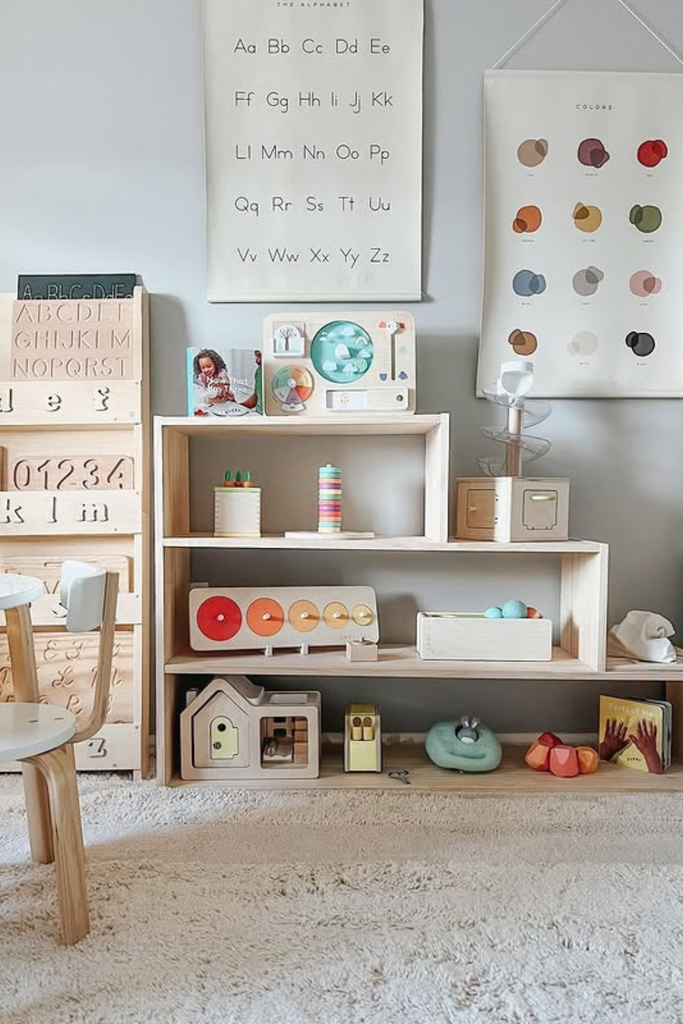
You want educational items to be visible without cramming multiple activities into one cubby, use a tiered low shelf.
Allow your child to make their own decisions by giving them puzzles, sorting pieces, stacking toys, and basic fine-motor exercises.
Mild visual training, hang color and letter charts above the shelf. Set up a small table nearby for activities.
Pretend Play Hub
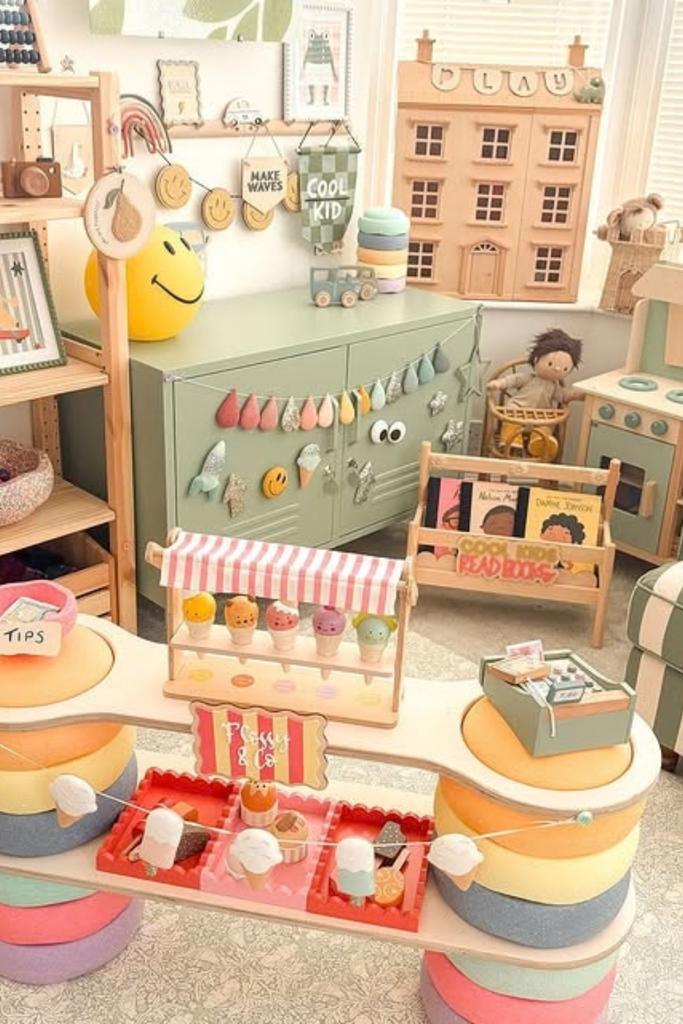
Your youngster likes to mimic daily activities, combine accessible storage with useful pretend play.
Keep the play kitchen, shop stand, dolls, and books grouped within one area so different activities can naturally connect during play.
Window light keeps the busy setup cheerful, while keeping the center open gives your child room to move between each station.
Activity Table
Add a child-sized table when your playroom needs a clear spot for puzzles, drawing, sorting, and other hands-on activities.
Keep a few materials on nearby low shelves so your child can choose something and carry it to the table independently.
Leave enough room around the chairs for comfortable movement, especially when siblings or friends often play together.
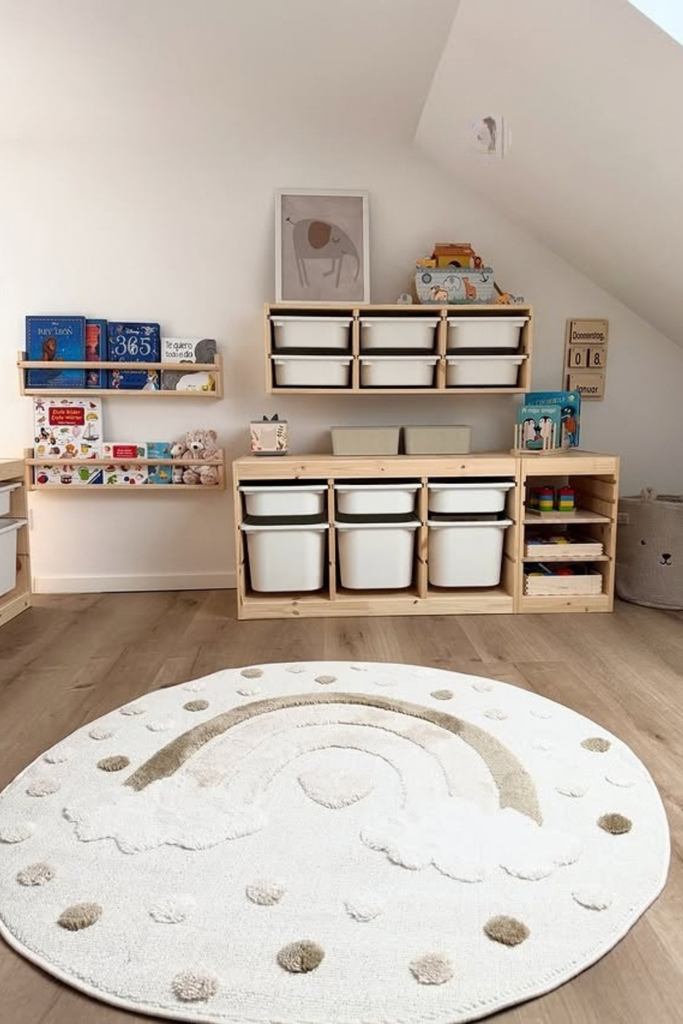
Practical Play Zones
Give each type of play its own small zone so your child can move between activities without everything becoming mixed together.
Pair a child-sized kitchen with pretend food, keep books beside a quiet canopy corner, and use low tables for puzzles or sensory work.
Natural window light handles daytime play while recessed ceiling lights spread even light across the different activity areas.
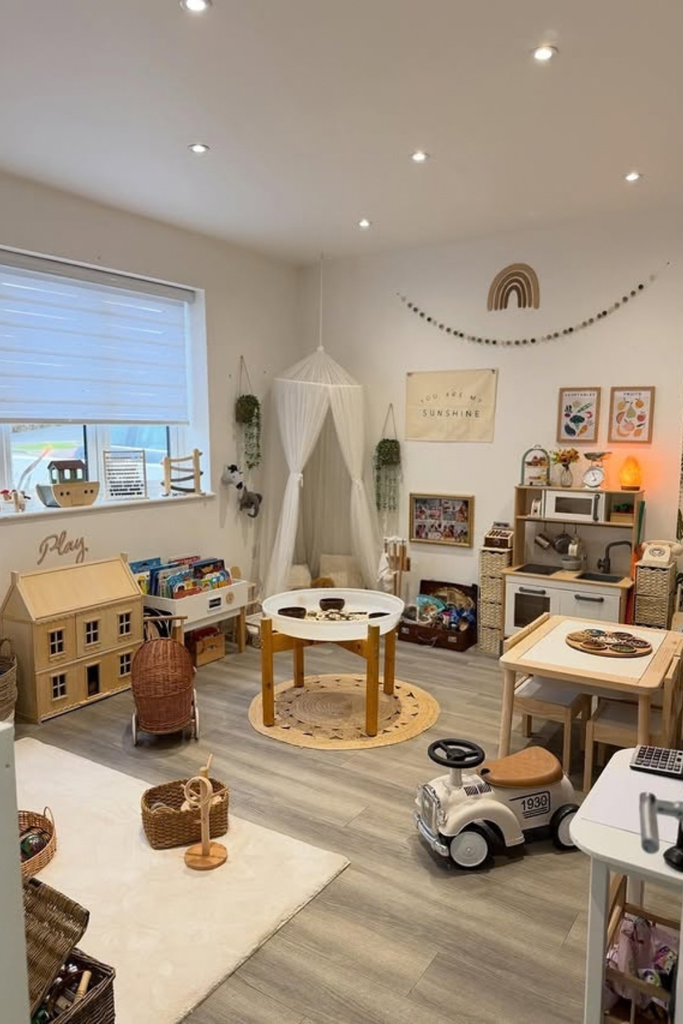
Creative Work Table
Your child wants a stable surface for painting, puzzles, or hands-on activities, place a shared table in the middle of the playroom.
To enable supplies to be moved from storage to the workspace without adult assistance, place low shelves surrounding it.
Large windows provide strong daytime light while recessed fixtures and woven pendants layer softer light across the work area.
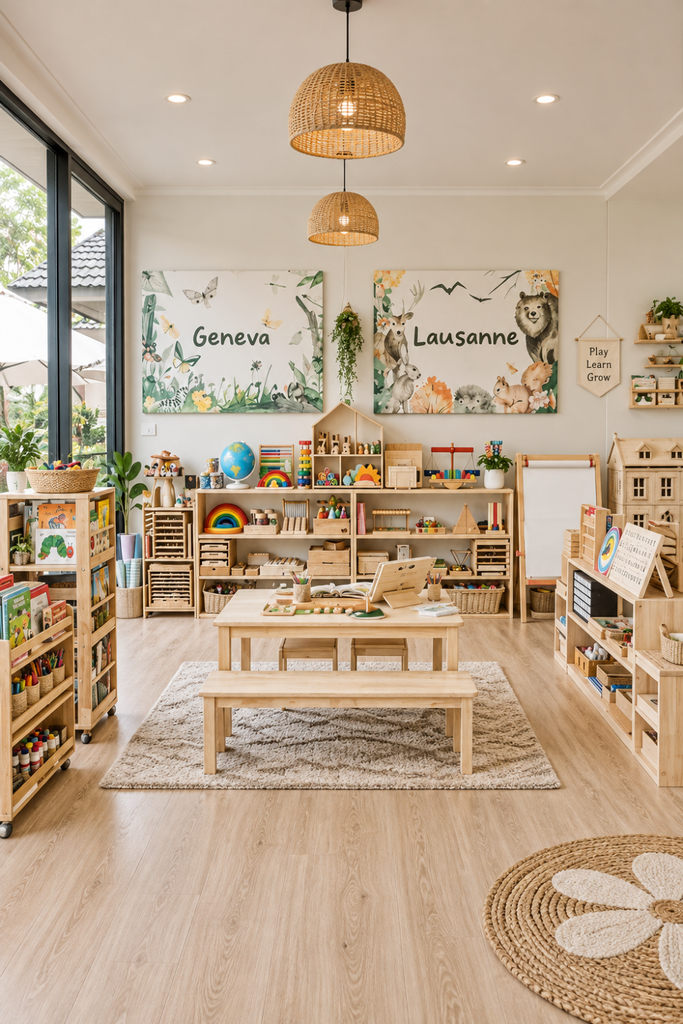
Movement Corner
Save one open corner for climbing when your child has more energy than table activities can handle.
Place a low ramp and climbing arch over a padded mat, then keep books and quieter materials on nearby shelves.
Leaving generous space around the equipment gives your child room to climb and come down safely.
Window light brightens the area naturally, while a floor lamp can support quieter evening play.
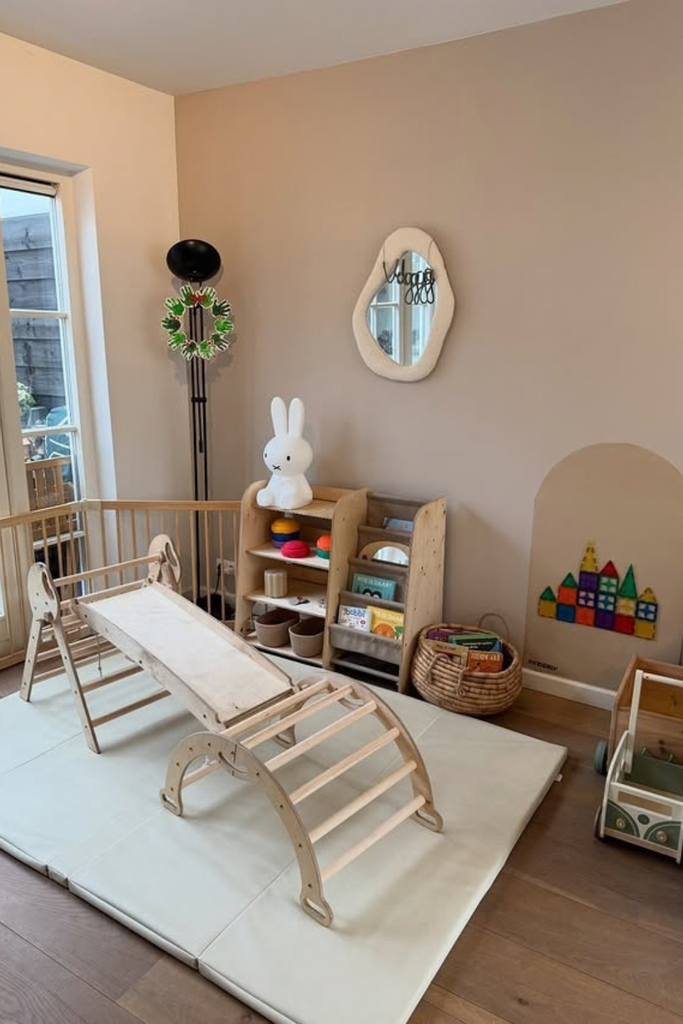
Front Facing Library
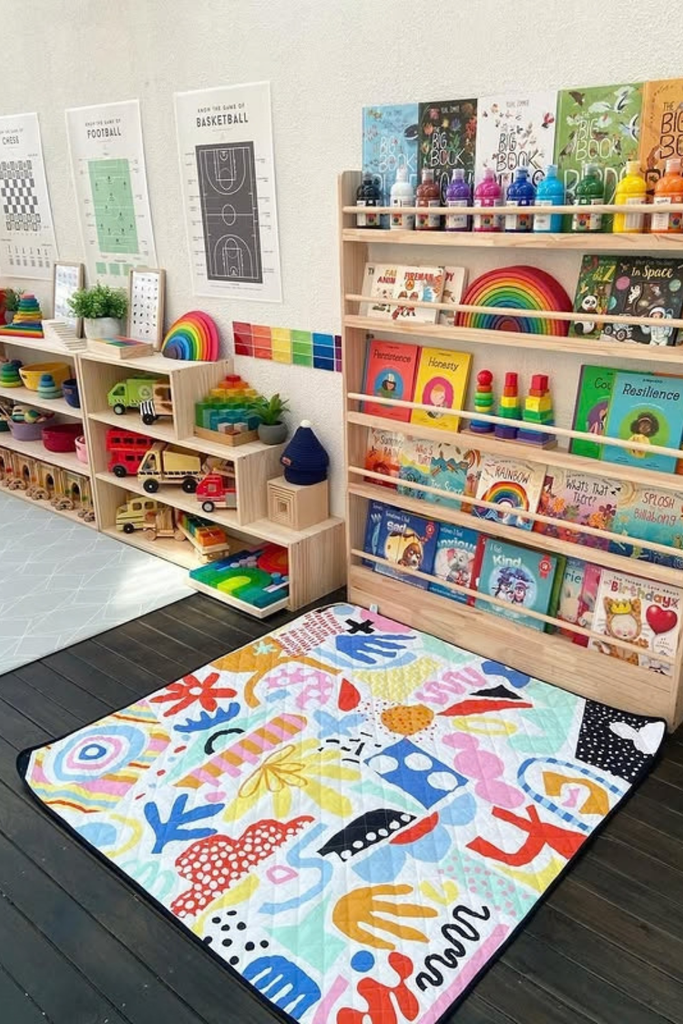
Put book covers in front of one wall to create an easy-to-use library. Make sure your toddler can reach the lower rows.
Mix nearby cubbies with a limited selection of puzzles, stacking toys, and building materials. Soft floor mat creates a comfortable spot to sit.
Bright colors keep the learning area playful without sacrificing the clear Montessori-style organization.
Geography Discovery Shelf
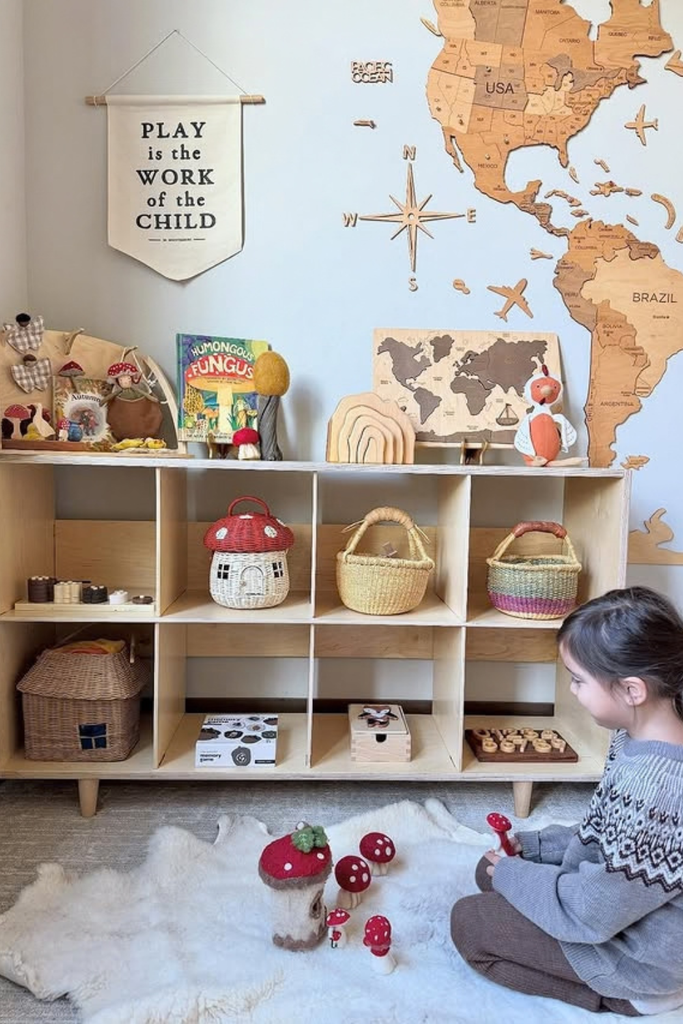
Bring geography into everyday play by pairing a low activity shelf with maps, nature books and simple world-themed materials.
Keep puzzles and small discovery baskets in separate cubbies so your child can choose one without pulling everything out.
Large wall map adds another learning layer. Place a soft rug directly in front so activities can move naturally from the shelf to the floor.
Window Play Corner
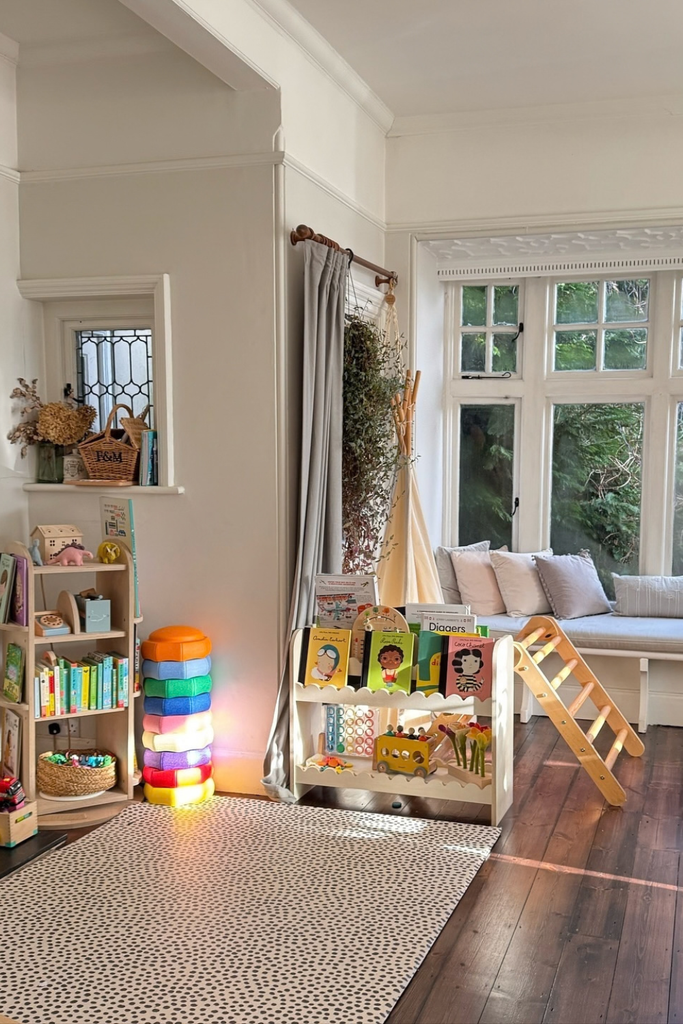
Use an unused window corner when you need a Montessori play area without giving up the whole living room.
Keep books and favorite activities on low shelves then leave the rug mostly open for building and floor work.
Strong window light makes daytime play comfortable while a low accent lamp adds gentle warmth when the room gets darker.
Hidden Toy Storage
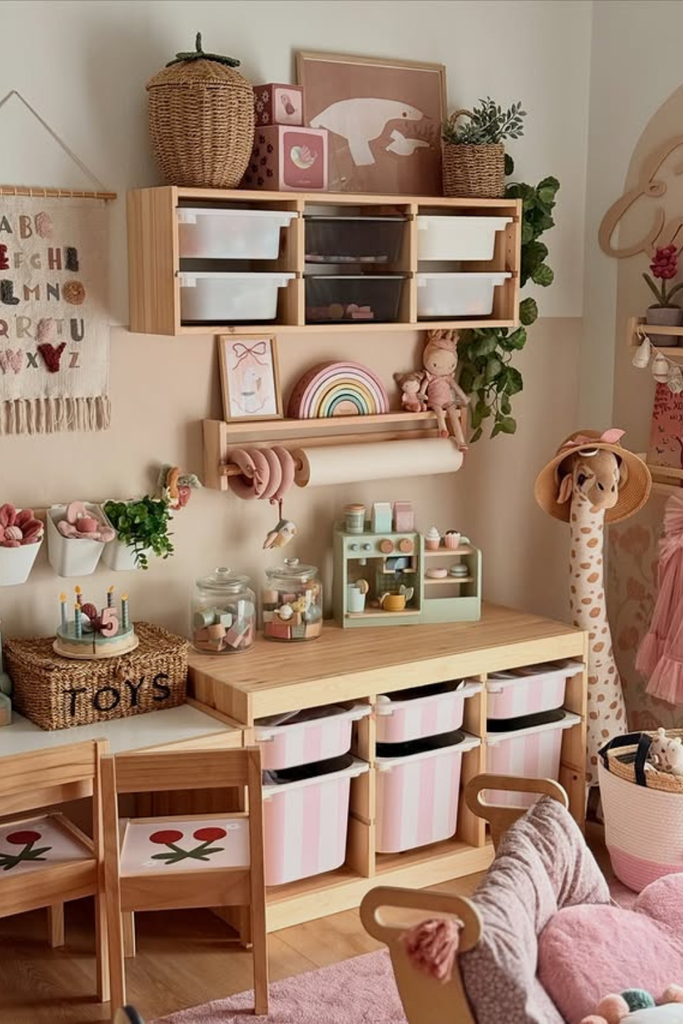
Keep excess toys in pull-out bins and only leave a smaller variety available for solo play to reduce visual clutter.
For products your youngster may access on their own, use the bottom drawers set off top storage for rotation items under your supervision.
A low work surface beside the bins gives small activities a clear home while nearby chairs support table play.
Open Activity Space
Keep the middle of the playroom mostly open while your child switches between quieter table activities, construction and activity.
Push low storage against the wall so books, baskets and favorite materials stay reachable without cutting into floor space.
Add one compact climbing piece and a small work table instead of filling every corner.
Window light brightens daytime play while recessed ceiling lights provide even coverage after sunset.
Accessible Craft Station
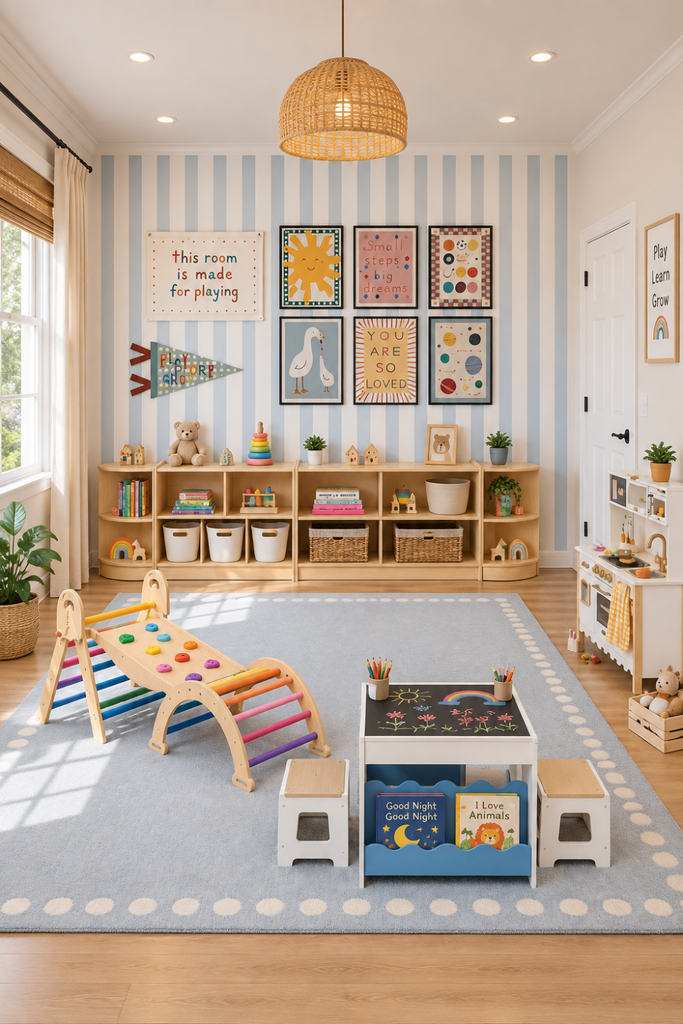
Turn a wall into a hands-on workshop by adding bins for paper, art supplies, puzzles and sensory items to a child-height counter.
Keep everyday supplies in the lower drawers so your child can start and clean up activities independently, while less-used items can stay higher.
Leave part of the counter clear. Small baskets and matching bins help each activity return to one predictable place.
Nature Play Shelf
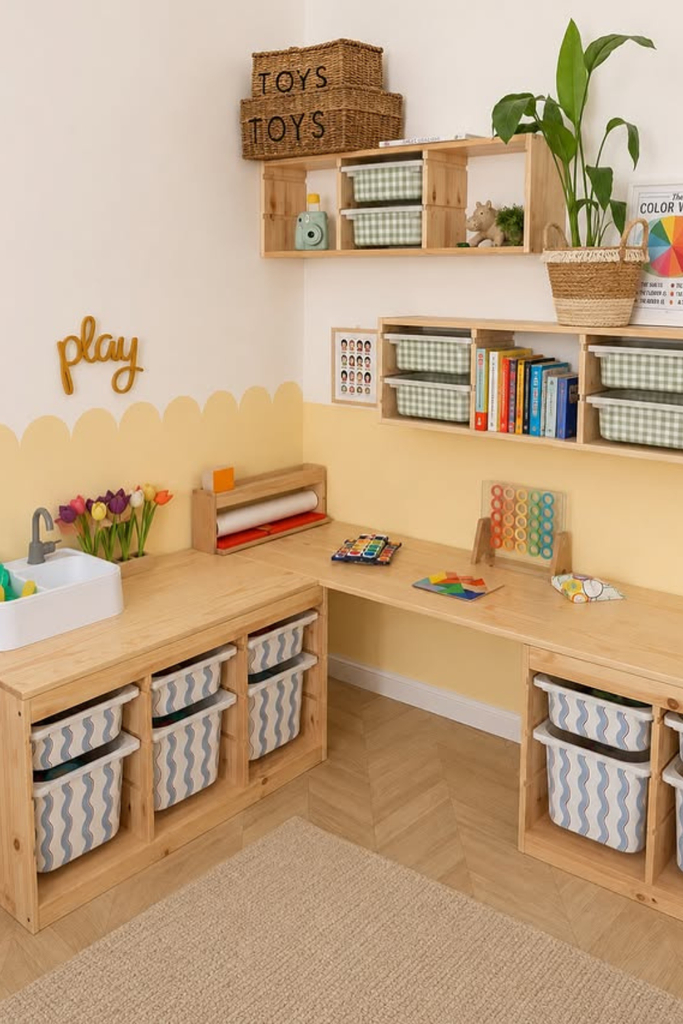
Bring nature-based play into a quiet corner by displaying woodland figures, small-world pieces, and books on an easy-to-reach low shelf.
Keep each group of materials separated so your child can build one scene without emptying every container.
Natural window light suits the earthy setup, while the large rug gives small-world pieces plenty of room to spread out.
Indoor Movement Zone
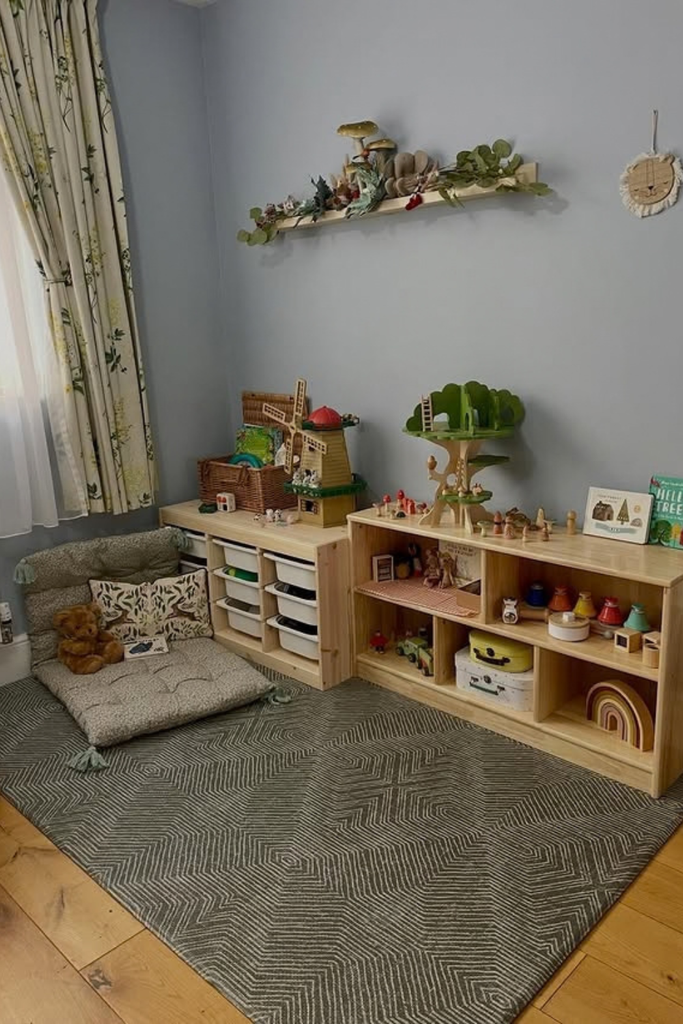
Give active play its own padded zone when your child needs climbing, balancing, and movement throughout the day.
Combine a low climbing arch, ramp, soft steps and ball pit, but leave clear space between pieces for safer movement.
Keep quieter books and activities on a nearby low shelf so your child can switch gears independently.
Window light brightens daytime play while a flush ceiling fixture provides even light across the whole zone.
Active Play Corner
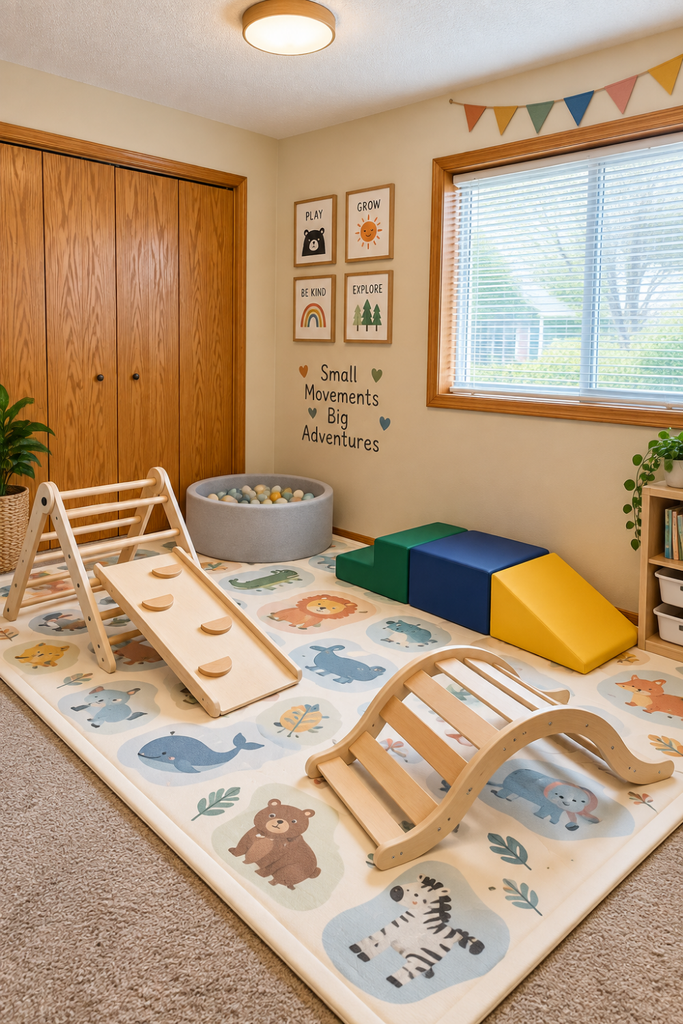
Combine climbing and sensory play in one corner when your child needs several ways to move without taking over the whole room.
Keep the ramp, climbing arch, swing, and ball pit around a soft rug, leaving enough open space for moving between them.
Window light keeps the zone bright during the day without adding unnecessary lamps around movement equipment.
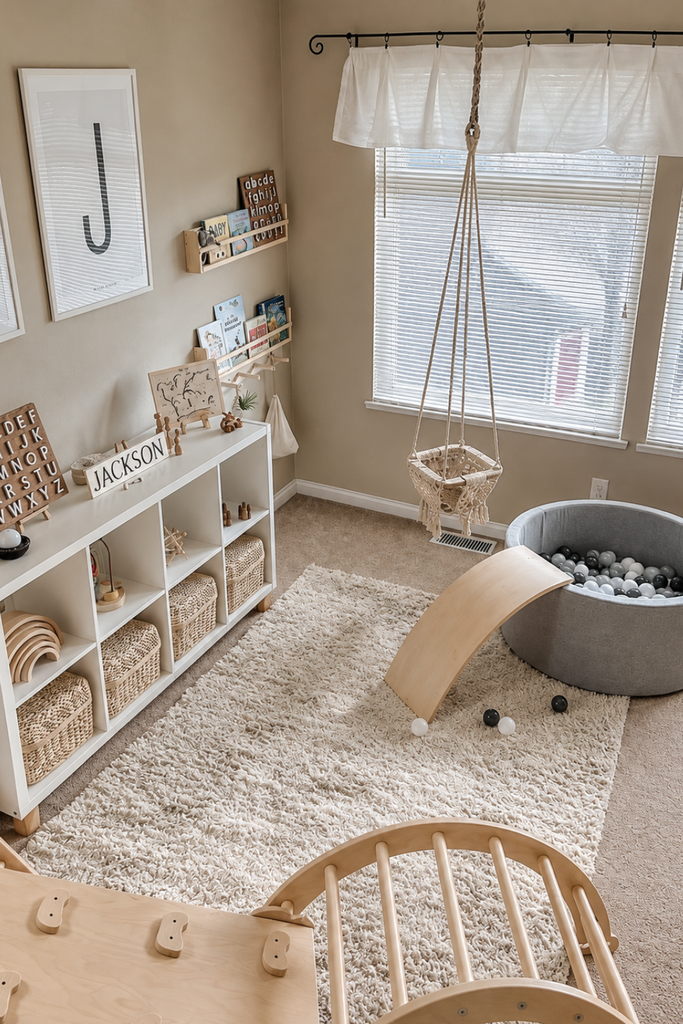
Rocking Play Zone
You want to include balance and body control into active play without packing the space with bulky equipment, add a cushioned rocker.
Keep the middle open and place it close to a modest climbing ramp so your child may securely transition between activities.
Nearby book racks and toy baskets give quieter play a separate home instead of mixing everything together.
Daylight from the windows keeps the room bright while maintaining a calm, comfortable atmosphere.
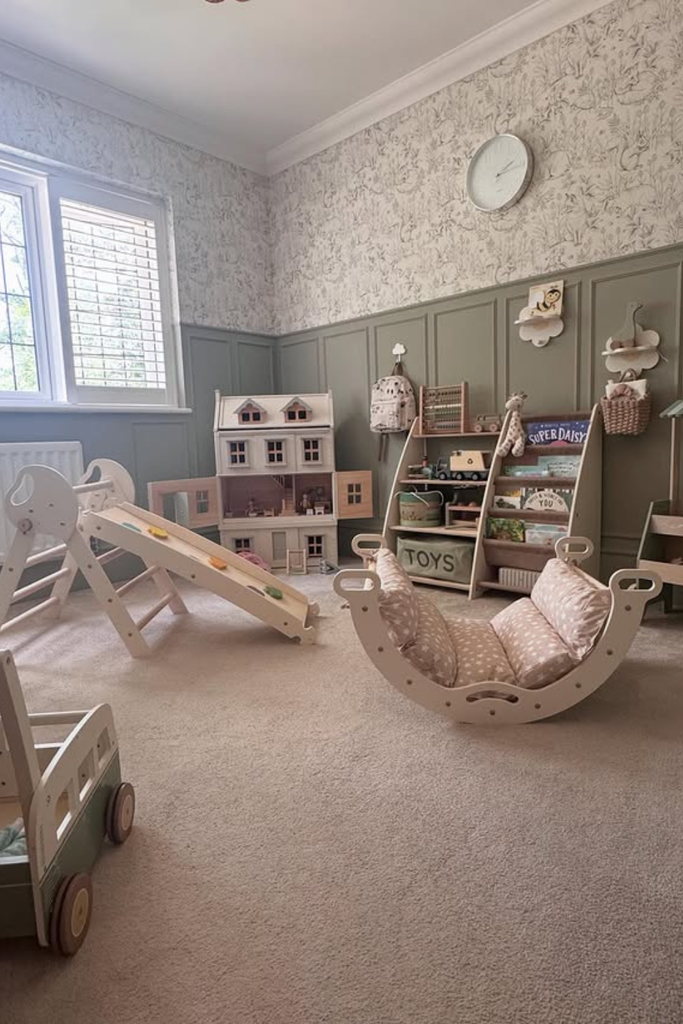
Pretend Shop Station
Your youngster likes serving meals, counting things, and imitating regular purchasing activities, turn low storage into a pretend store.
Play materials and accessories should be kept in the lower bins to facilitate setup and cleanup.
For easier access, arrange the shop pieces on top. Include a comfortable floor area close by for reading or peaceful pauses in between tasks.
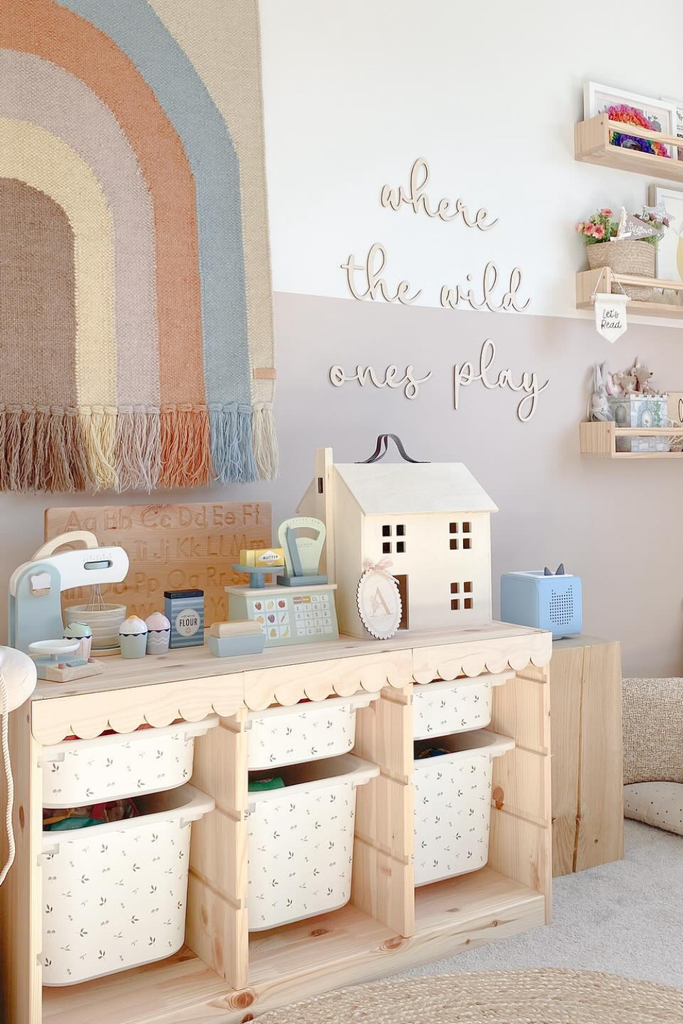
Calm Reading Zone
Balance active play with a quiet reading area by placing front-facing books beside a soft floor sofa and open rug.
Keep only a few baskets of hands-on materials nearby. A wall-mounted activity panel adds fine-motor practice.
Sheer curtains soften strong daylight, creating comfortable light for books while keeping the room bright and open.
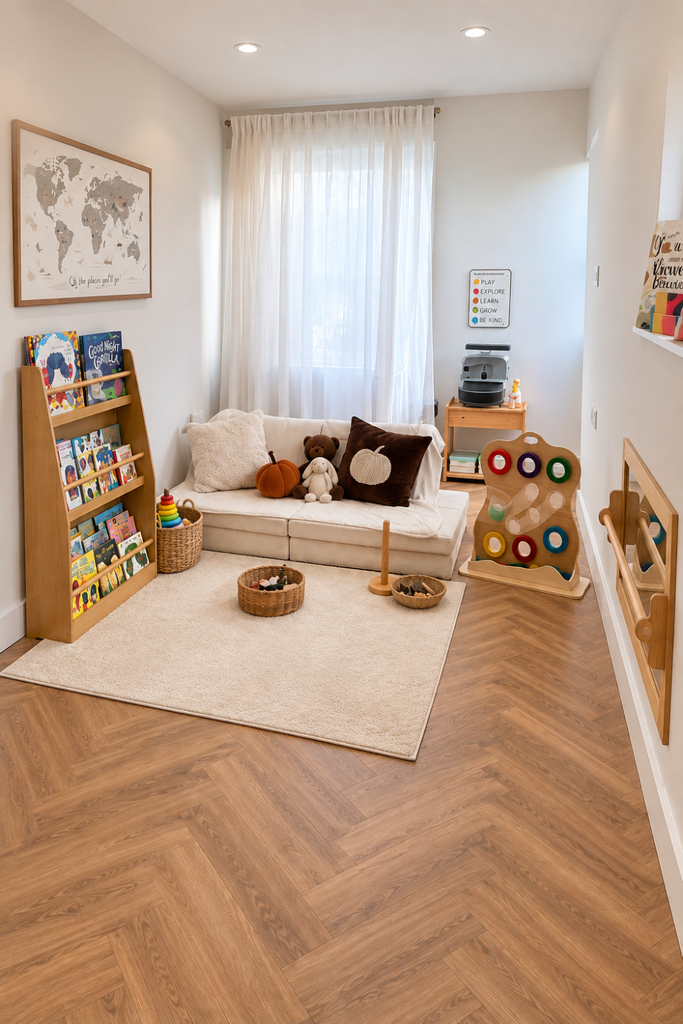
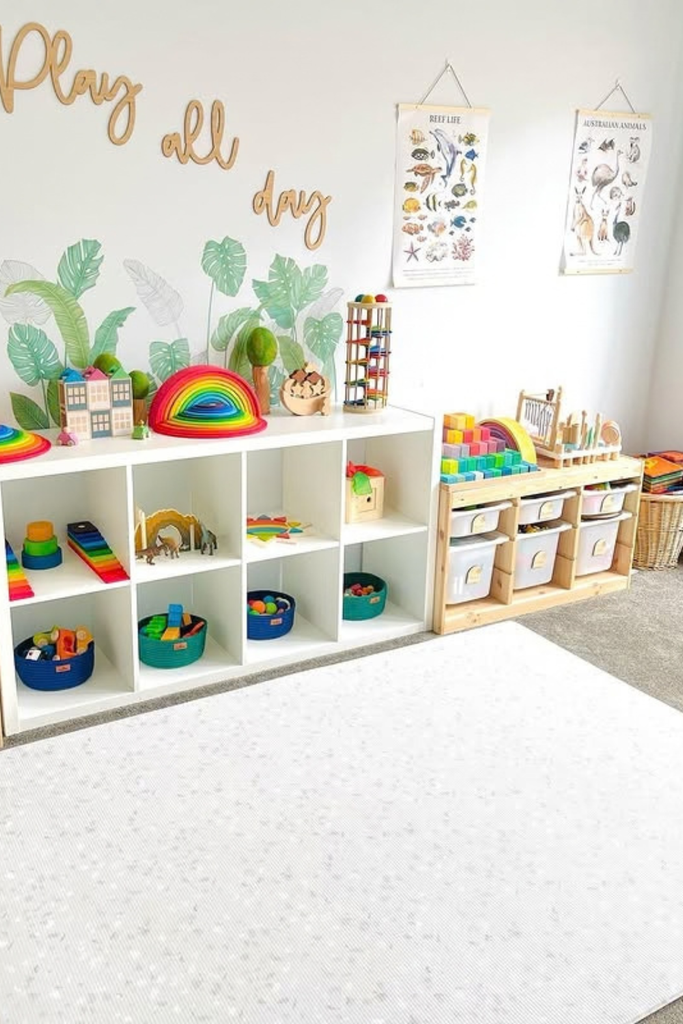
Rainbow Sorting Shelf
Use open cubbies for colorful sorting and building materials when you want your child to see each activity.
Give blocks, stacking pieces, and small loose parts separate shelf spaces then use shallow baskets for anything that can scatter easily.
Keep the large rug clear. Natural window light makes the bright materials easy to see while keeping the setup simple.
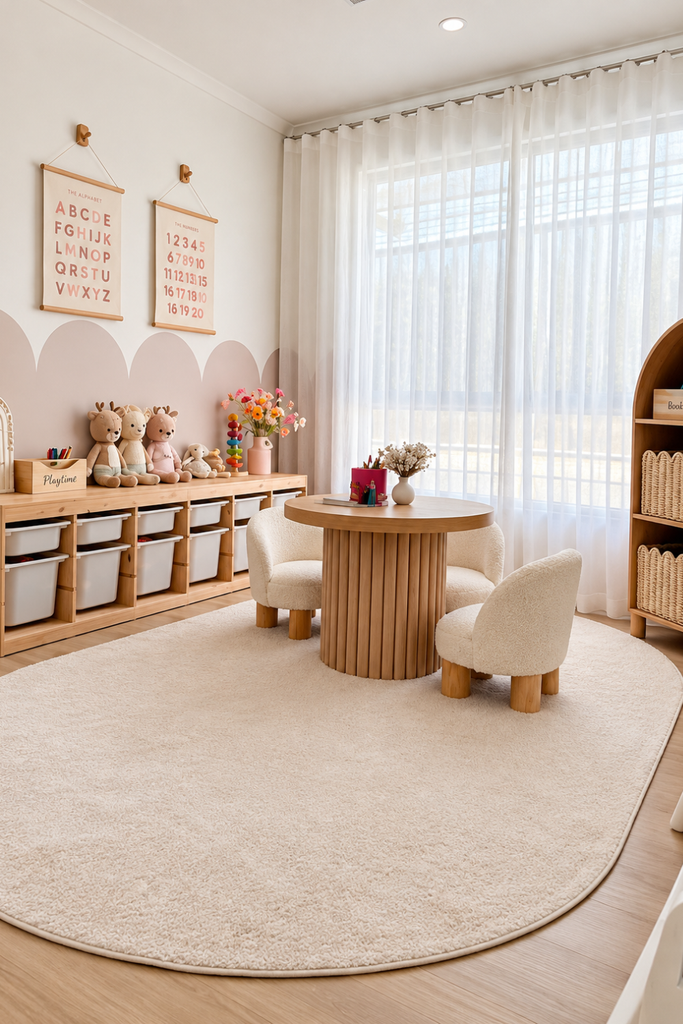
Shared Work Table
Place a round child-sized table in the center when several kids need room for drawing, puzzles, sorting or simple DIY activities together.
Store supplies in low pull-out bins along the wall so children can collect what they need and return it afterward.
Sheer curtains soften strong window light, while recessed ceiling lights keep the table evenly lit later in the day.
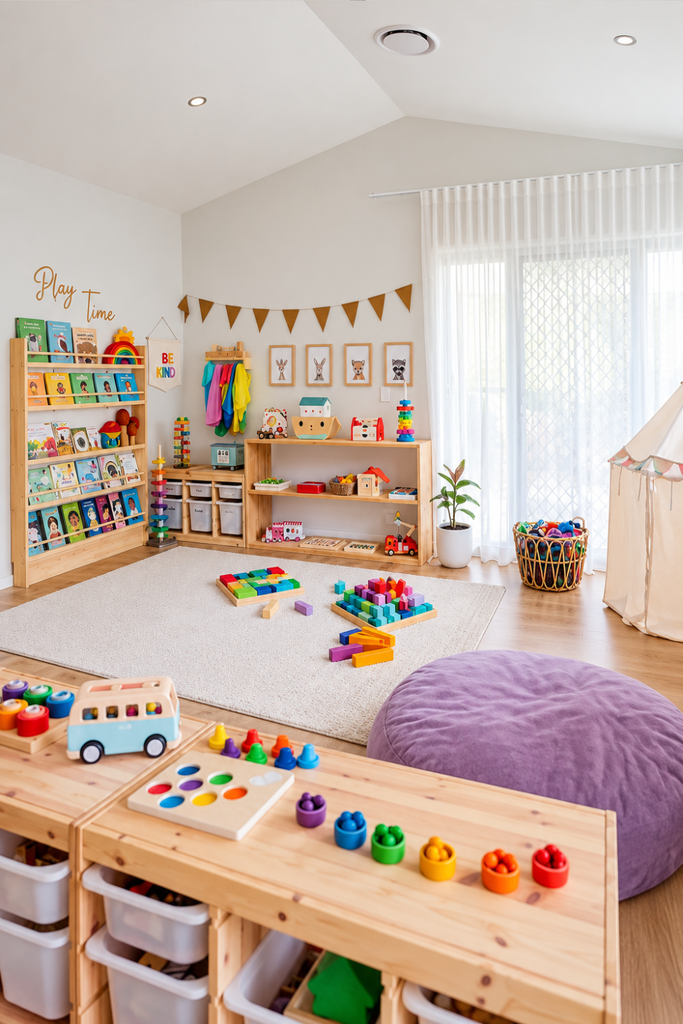
Choice Based Play
Instead of piling everything into deep toy boxes, spread out several activities on low shelves to provide your youngster clear alternatives.
Keep books facing forward, building blocks on the open rug, and activities sorted on a work area so that every choice is visible.
Lower bins can hold backup materials. Sheer curtains soften the daylight, while recessed ceiling lights keep every activity area evenly lit.
FAQs
How Many Toys Should a Montessori Playroom Have?
You don’t need to fill every shelf. Start with a small mix of puzzles, books, practical activities and open-ended toys your child currently enjoys.
If items sit untouched or the room becomes messy quickly, rotate some out and bring them back later.
Can a Small Room Work as a Montessori Playroom?
Yes. Focus on what your child can reach. Use low shelves a small activity table, baskets, and open floor space.
Even one organized corner can support independent play when everything has a clear purpose and place.

Hi, I’m Afaf! I’m a law student who loves writing about everyday life – from home projects and crafts to fashion, beauty, and parenting tips.
I’ve been writing for over a year, sharing ideas that are simple, practical, and easy to try. I write about things I find interesting and useful, whether that’s organizing a space, trying a new DIY, or finding activities to keep kids entertained.
My goal is to share helpful ideas without making things complicated. If it works in real life, I’ll write about it.
When I’m not studying or writing, I’m usually experimenting with new projects or scrolling for inspiration!