
19 Kids Room Activity Wall Ideas
An empty wall in your kid’s room can hold plenty of play value, but choosing the wrong activities can quickly waste that space.
Mount everything too high, add pieces that are too difficult or pack in too many options and your child may barely use them.
In this article, you’ll find age-appropriate activity wall ideas for babies, toddlers, preschoolers and older kids.
Let’s jump in!
What Should You Include on a Kids’ Activity Wall?
Instead of stocking the wall with activities that just seem entertaining, start with your child’s age. Simplify things and give them safe features to explore.
Toddlers require hands-on tools that allow them to pull, turn, and move objects on their own, such as sliders, gears, zippers, knobs, and huge shape activities.
You can offer felt stories, magnetic letters, number games, drawing surfaces, and basic puzzles once your child is preschool age.
LEGO walls, pegboards, art stations, STEM activities, and planning boards that allow students to construct are typically more popular with older children.
When your child develops, it’s much easier to swap activities than to rebuild the entire wall so choose a flexible base whenever possible.
Paper Roll Wall
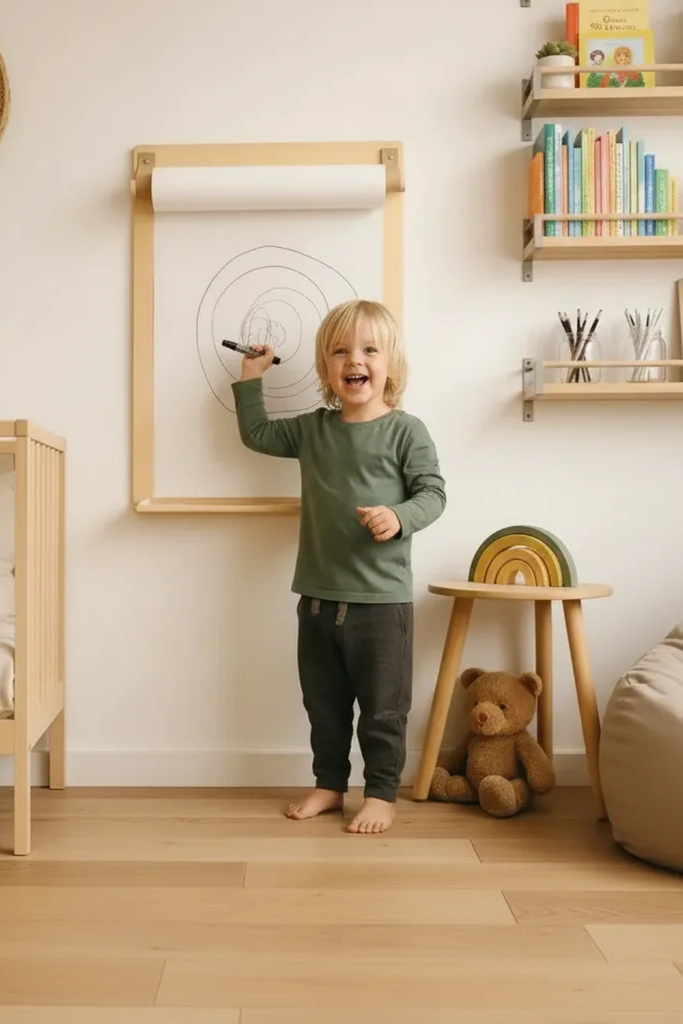
Place a paper roll at a height your child can easily reach on an empty wall next to the play area to create a sketching station.
When preschoolers pull down fresh paper instead of bringing a bulky painting easel into the room, they have plenty of room for drawing, tracing and early writing.
Include washable markers and crayons on nearby wall shelves to keep art supplies stocked and available whenever inspiration strikes.
Busy Board Wall
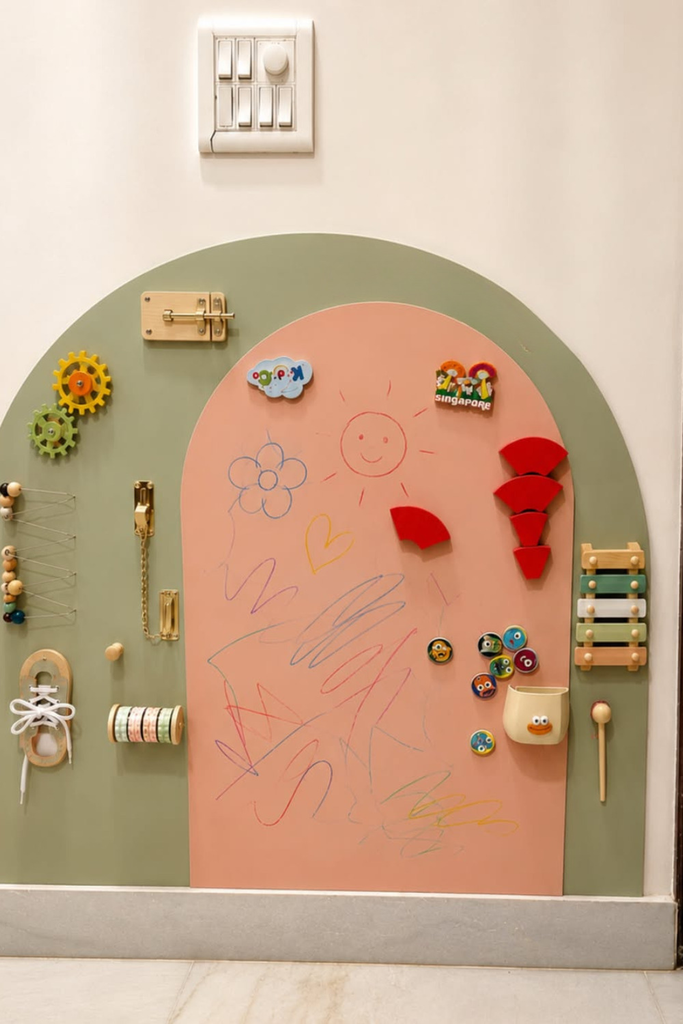
Mix several hands-on tasks on one low activity board when you want a toddler to explore different movements.
Gears, laces, locks, sliders, magnets, and movable pieces encourage little hands to twist, pull, fasten and experiment independently.
Allow your child to concentrate on a single job rather than stare at a crowded wall, leave enough space between each element.
Climbing Corner
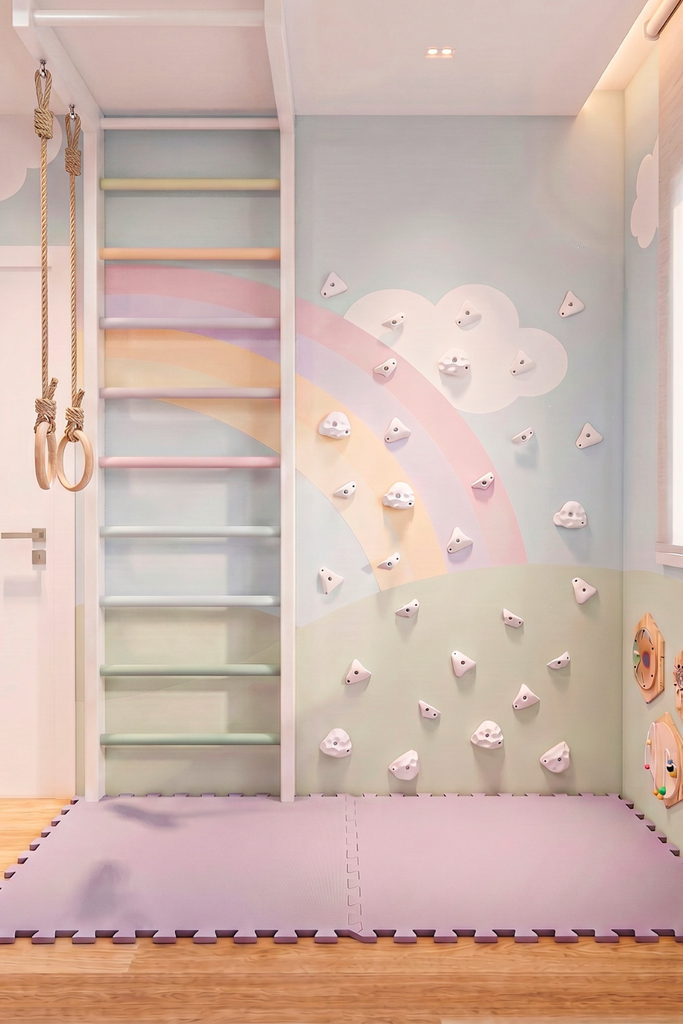
Use a quiet bedroom corner for active play by combining climbing holds, a wall ladder, and gym rings.
Vertical design allows most of the space to be used for daily mobility, and older children can climb, reach and learn coordination.
Make sure that every climbing component is firmly fastened and provide a clear landing area with appropriate protective flooring.
Adventure Wall
Complete climbing wall with colored holds, overhead grips, ropes and side bars will challenge active older children.
Your child won’t have to repeat the same climb every time if the features are spread out over multiple wall sections.
Before using the landing area, remove any hard furniture, cover it with the appropriate impact-absorbing mats.
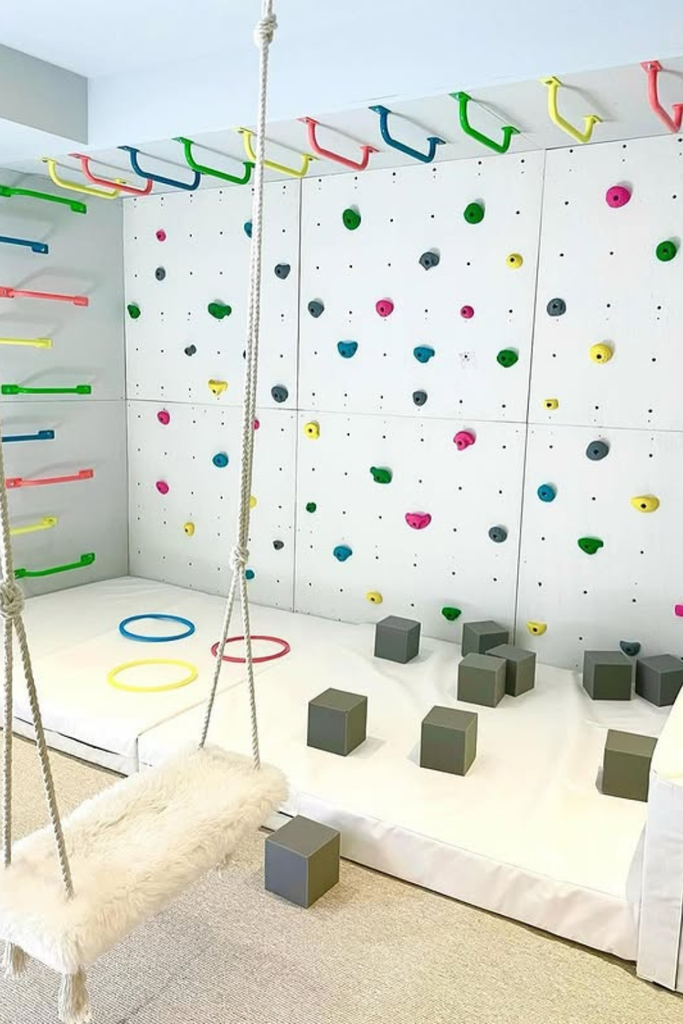
Compact Climbing Wall
Instead of constructing a larger indoor play structure, use one narrow wall for climbing to conserve floor space in an older child’s room.
You may design harder reaches higher up and simpler routes at the bottom using adjustable grips.
Keep surrounding furniture away, cover the entire fall zone with the appropriate impact-absorbing matting, and routinely inspect the firmly secured grips.
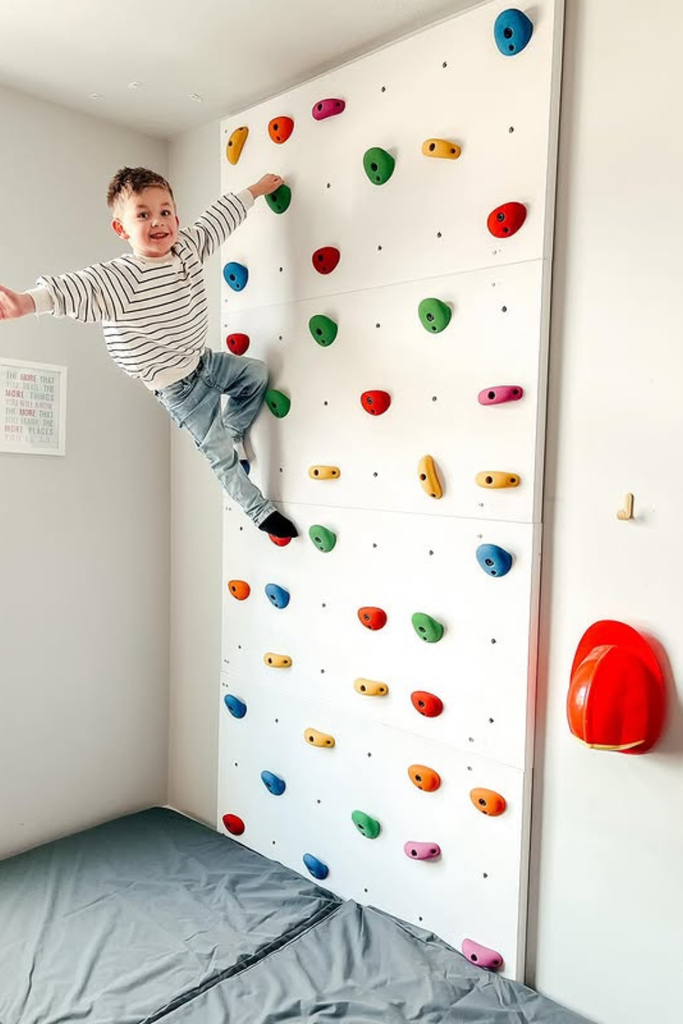
Movement Zone
Climbing wall and gym ladder can be placed along one side of a larger children’s room to balance vigorous play with more sedate pastimes.
Your youngster can use the center for crafts, puzzles, or reading while the wall is used for stretching, climbing, and hanging.
Use proper impact-absorbing flooring beneath the climbing area and leave clear space around ladders and rings.
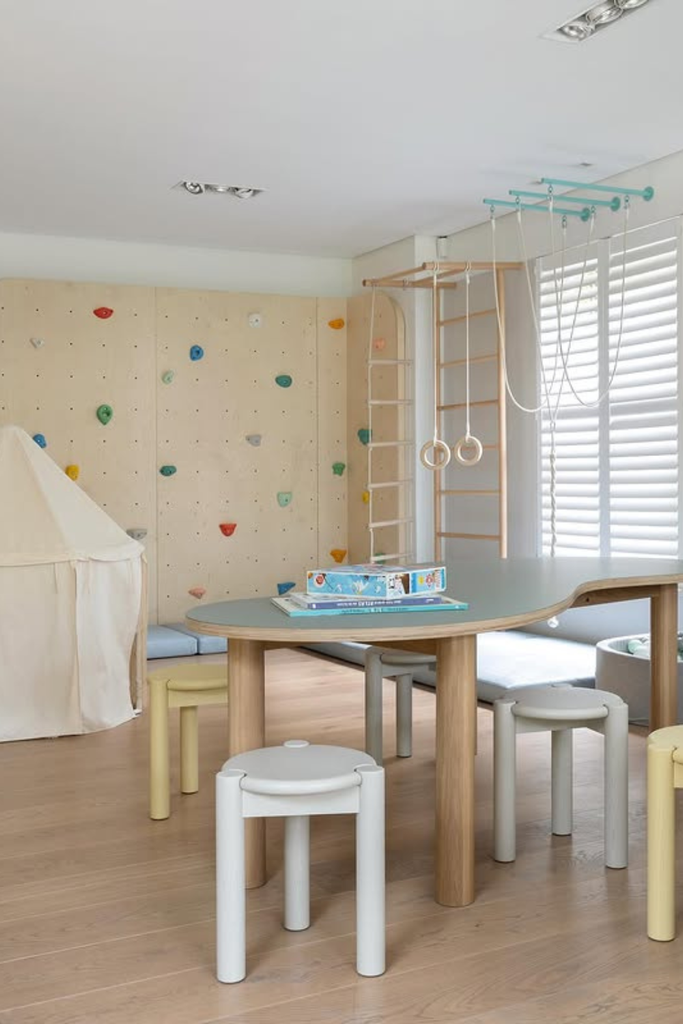
Climb Play Wall
Combine climbing holds with overhead grips, a rope and hanging fabric for diverse movement to make a large playground wall more difficult.
The setup is more engaging when children may alternate between climbing, hanging, balancing, and reaching.
Before permitting active play, place thick impact-absorbing mats underneath each fall region and firmly anchor each part.
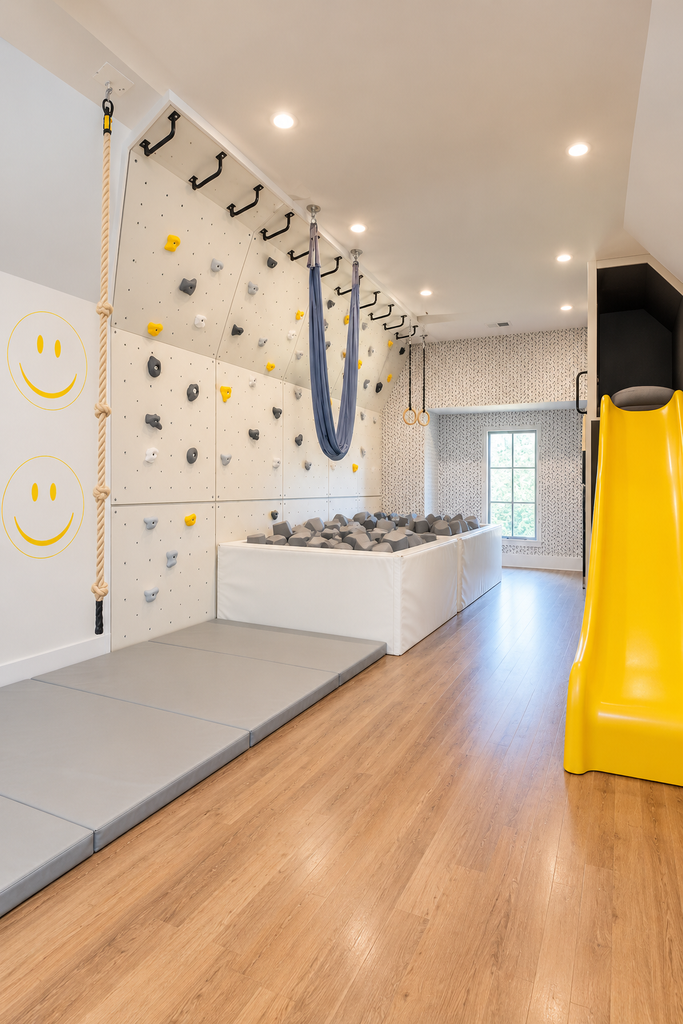
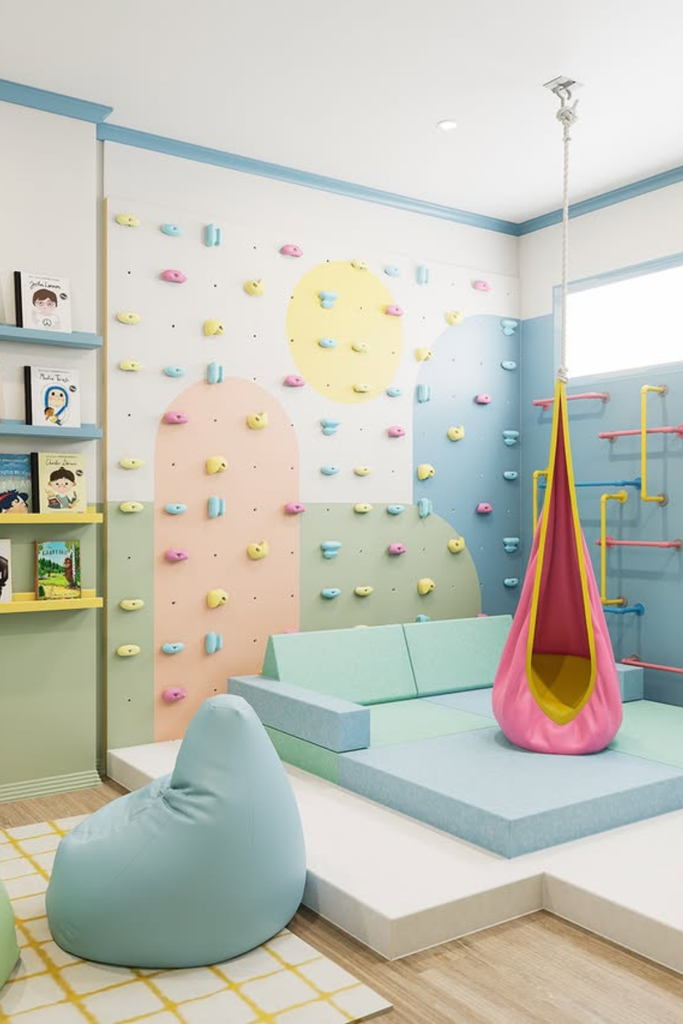
Colorful Climbing Wall
Spread climbing grips across a wide wall rather than concentrating them in a single, limited path to add additional energy.
You can modify the difficulty with different hold positions, and the side bars provide an additional means of moving throughout the area.
Keep the adjacent reading area safely outside the fall area and place the appropriate impact-absorbing mats beneath the entire climbing zone.
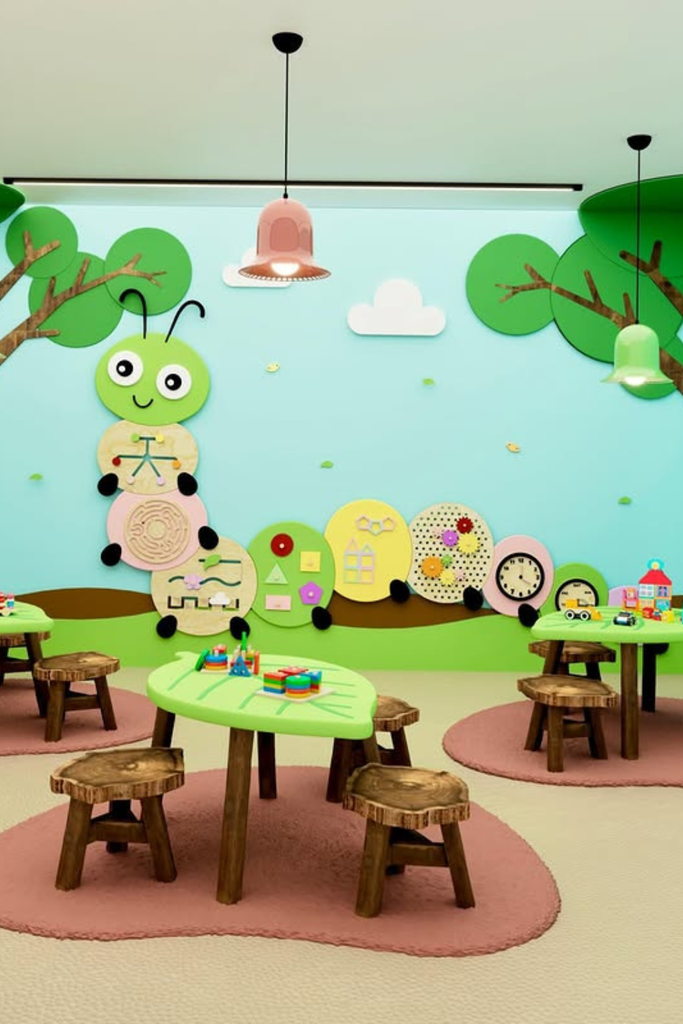
Caterpillar Activity Wall
Create an entertaining caterpillar pattern out of puzzles, mazes, shapes, gears and clocks to transform learning into engaging play.
Putting each exercise in its own part facilitates your child’s transition between early learning, matching, fine-motor practice, and problem-solving.
Set up the activities at a child’s height and leave adjacent tables for play or toy construction.
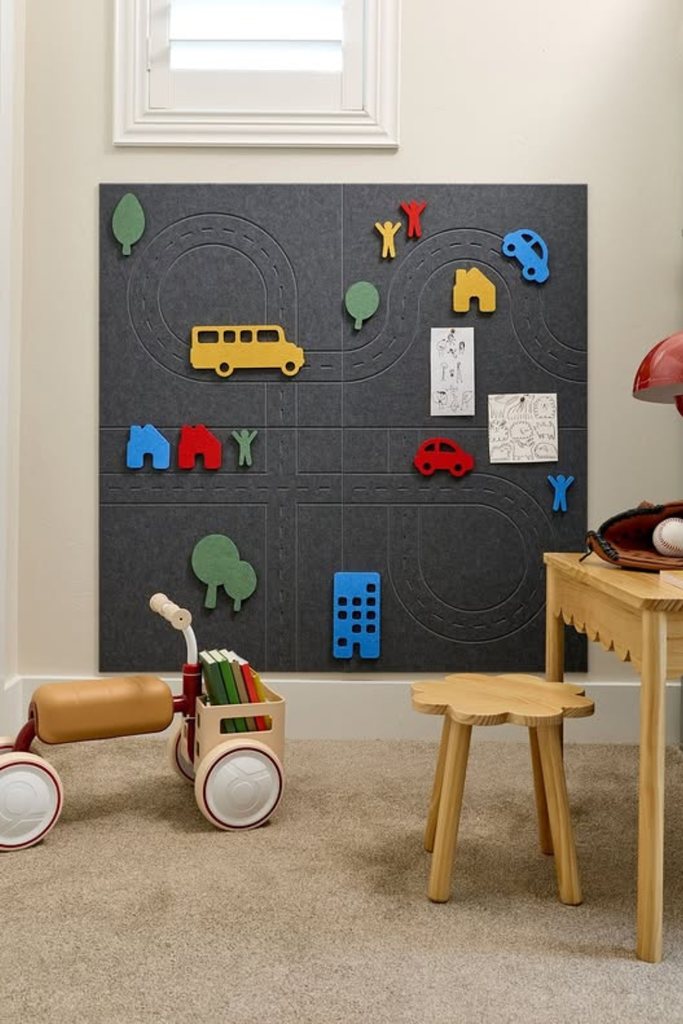
Felt Road Wall
Turn pretend play vertical with a felt road wall where preschoolers can move cars, buildings, trees and figures.
Curved roads encourage your child, while removable pieces make the scene easy to change whenever interest starts fading.
Mount the felt panels within comfortable reach and store extra pieces in a small nearby basket.
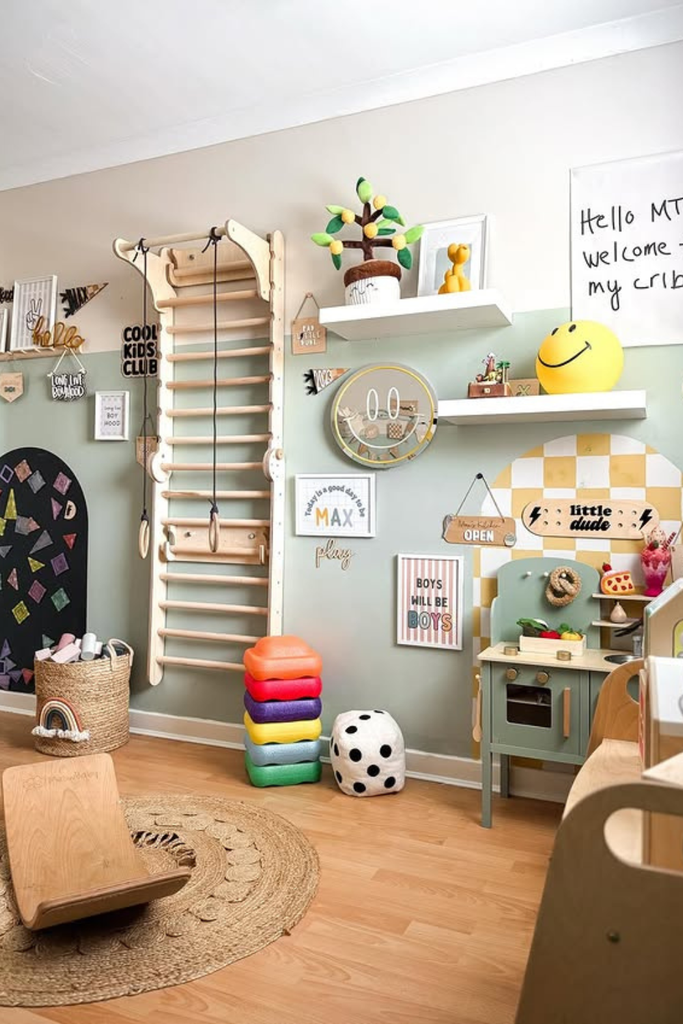
Mixed Activity Wall
You have adequate wall space to accommodate many activities, combine movement and pretend play.
Neighboring magnetic board, shelving and play kitchen offer more tranquil options, a wall ladder and rings can manage active play.
To keep toys, climbing gear and artistic endeavors feeling ordered, slightly divide each area.
Fine Motor Wall
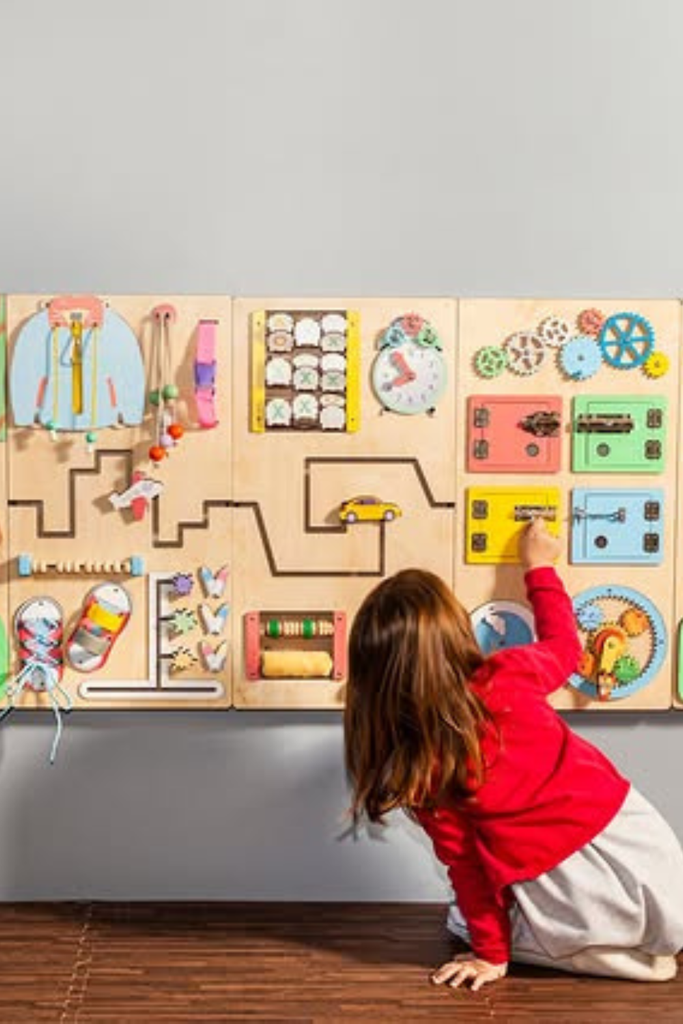
Pack several skill-building activities into one reachable panel when you want preschoolers to practice different hand movements in the same spot.
Gears, tracks, beads, laces, switches and sliders encourage your child to turn, pull, push, match and follow paths while exploring independently.
Mount the panel low enough for comfortable use, and choose securely attached pieces that cannot easily loosen during repeated play.
Indoor Adventure Gym
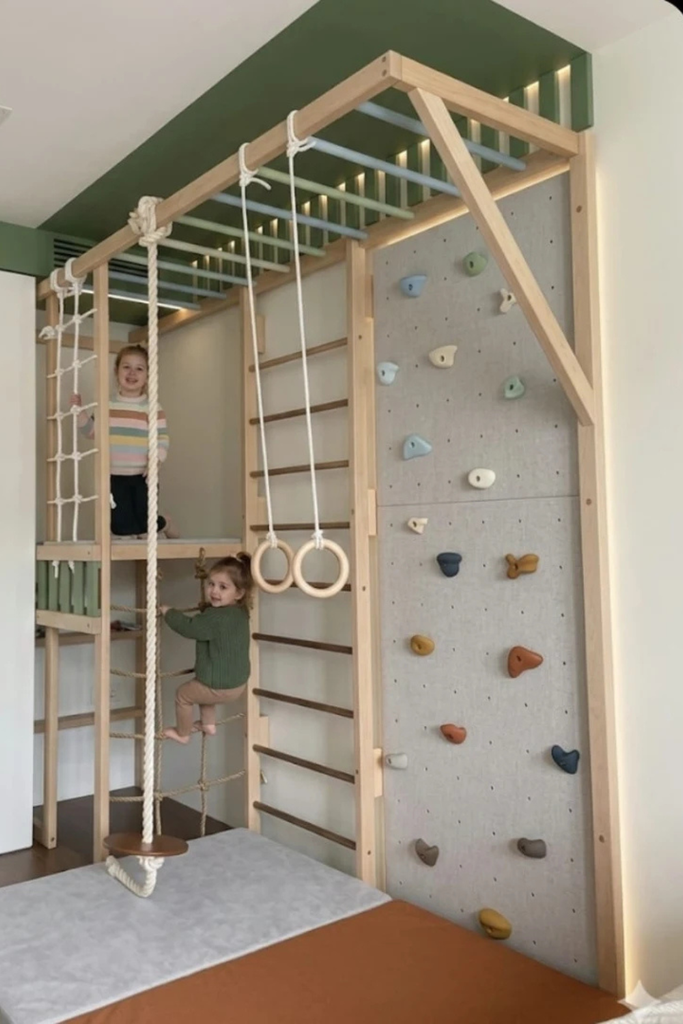
Larger children want more than a simple climbing route to maintain interest use a single vertical wall for several mobility challenges.
Your youngster can alternate between climbing, hanging, tugging, and balancing using climbing holds, monkey bars, ropes, rings, and ladders.
For active use, add the appropriate impact-absorbing mats underneath and securely anchor the entire construction.
Magnetic Building Wall
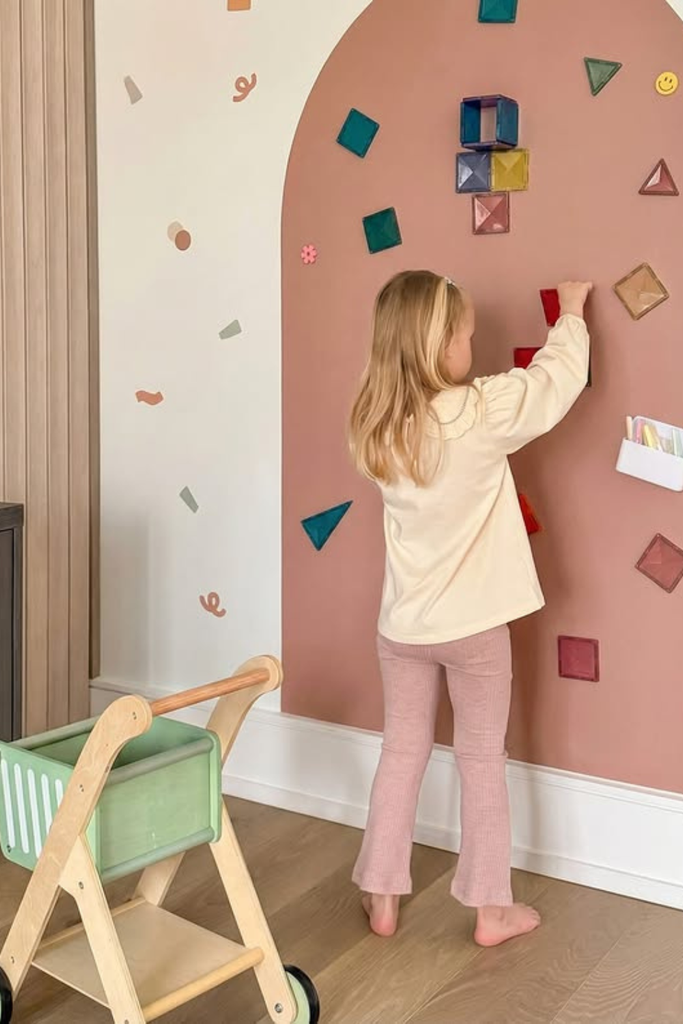
Let preschoolers build upward instead of across the floor by turning a low magnetic wall into a reusable construction space.
Magnetic tiles can move, connect, and form new patterns each time helping your child explore shapes and simple structures.
Make cleaning easier, mount the surface in a convenient location and attach a tiny wall container for extra pieces.
Magnetic Playhouses
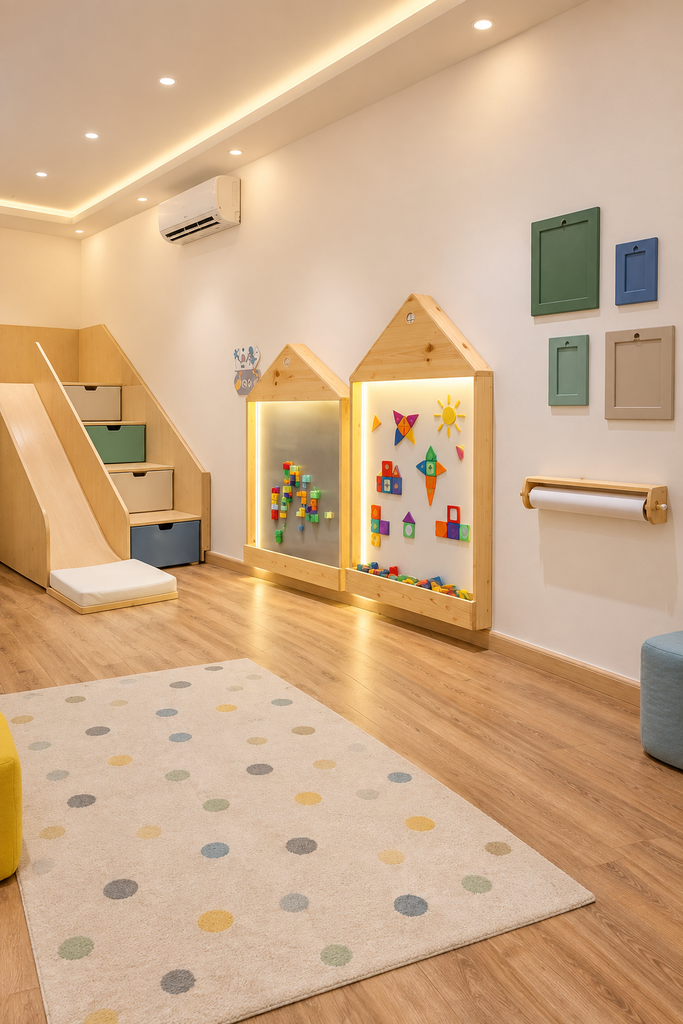
Create a play wall that looks welcoming without overpowering the space with vibrant colors frame magnetic activity panels like tiny cottages.
Young children can construct houses, patterns, and basic drawings out of magnetic tiles before disassembling them.
In order to prevent loose bits from spreading across the floor, add a shallow tray along the bottom.
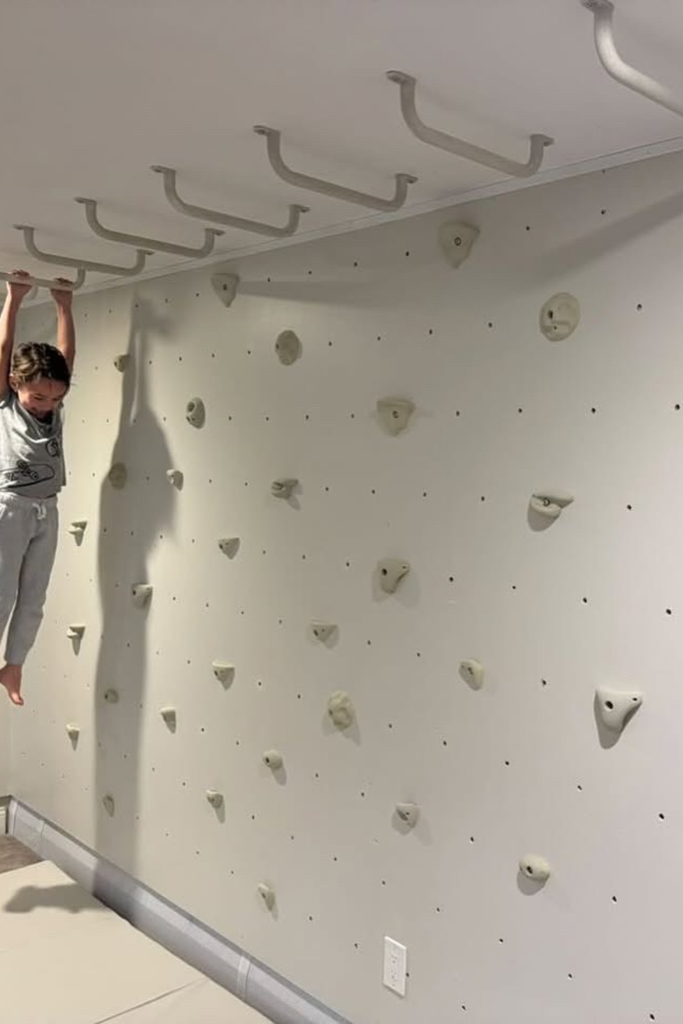
Overhead Climbing Wall
Push the challenge further for confident older kids by extending climbing grips overhead so movement continues beyond the regular wall holds.
Combining side bars, climbing holds and ceiling grips lets your child practice reaching, hanging and moving across different routes.
Every overhead component should be well secured. Entire fall zone should be covered with appropriate impact-absorbing matting.
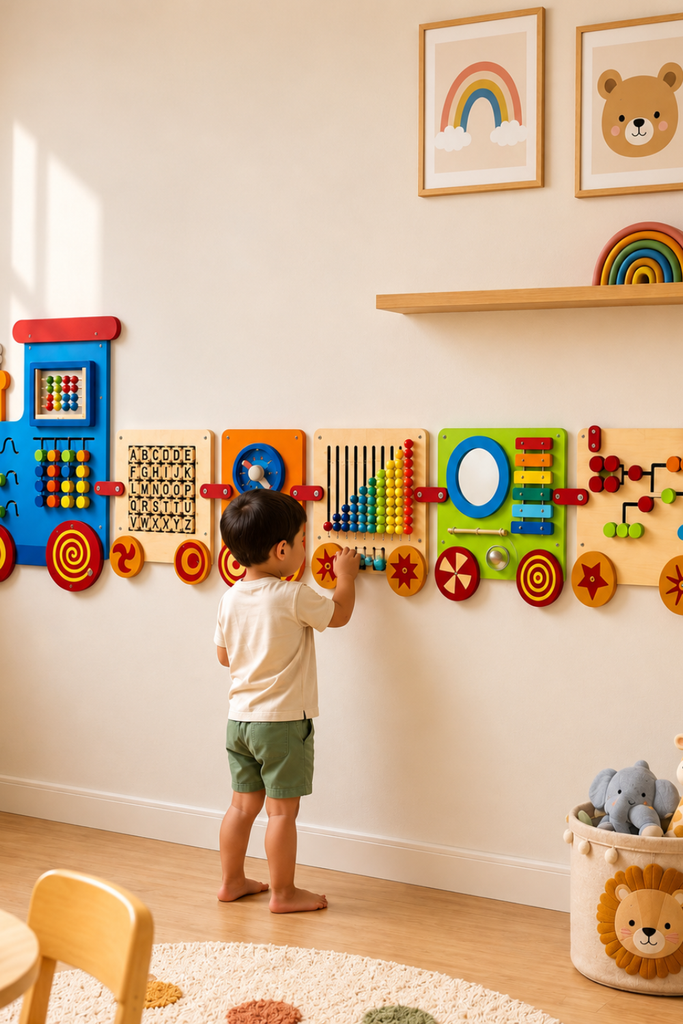
Learning Train Wall
Make early learning feel more playful by combining letters, counting beads, color sorting, sliders and simple puzzles.
Instead of depending on a single, repetitive activity, preschoolers can switch between tasks at their own pace.
Allow your youngster to effortlessly navigate the entire train, mount each section at a comfortable standing height.
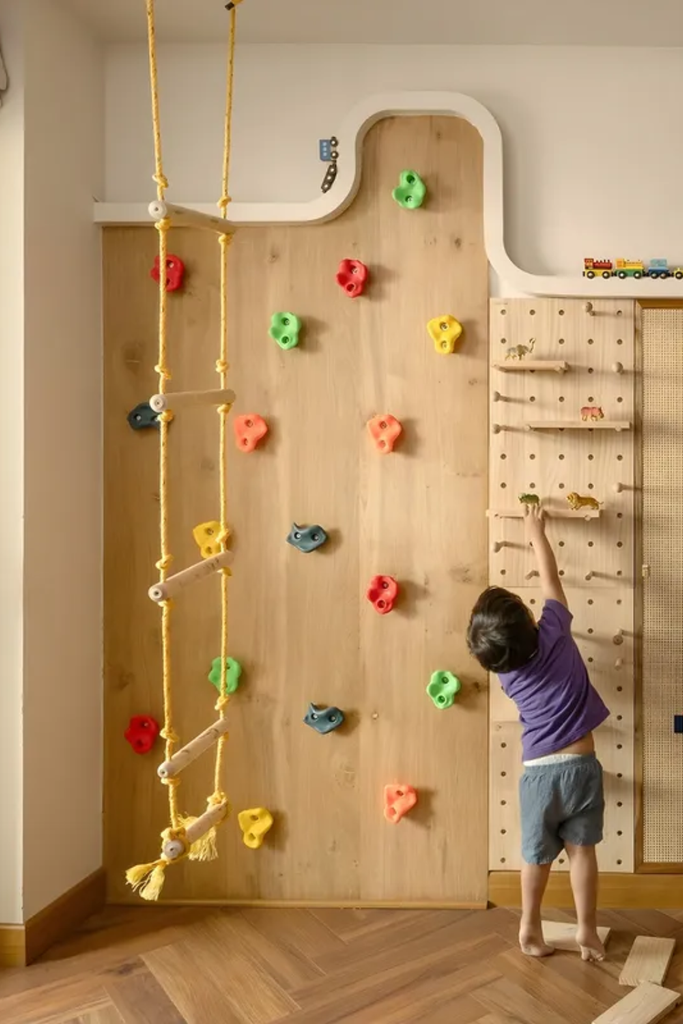
Climb Build Wall
You want a wall to capture your child’s interest in multiple ways, combine vigorous movement with more subdued building activities.
Pegboard area allows children to assemble miniature figures, trains, or building parts at their own pace, climbing grips and a rope ladder.
Separate the climbing fall zone from loose play pieces, and use proper impact-absorbing flooring wherever climbing can lead to a fall.
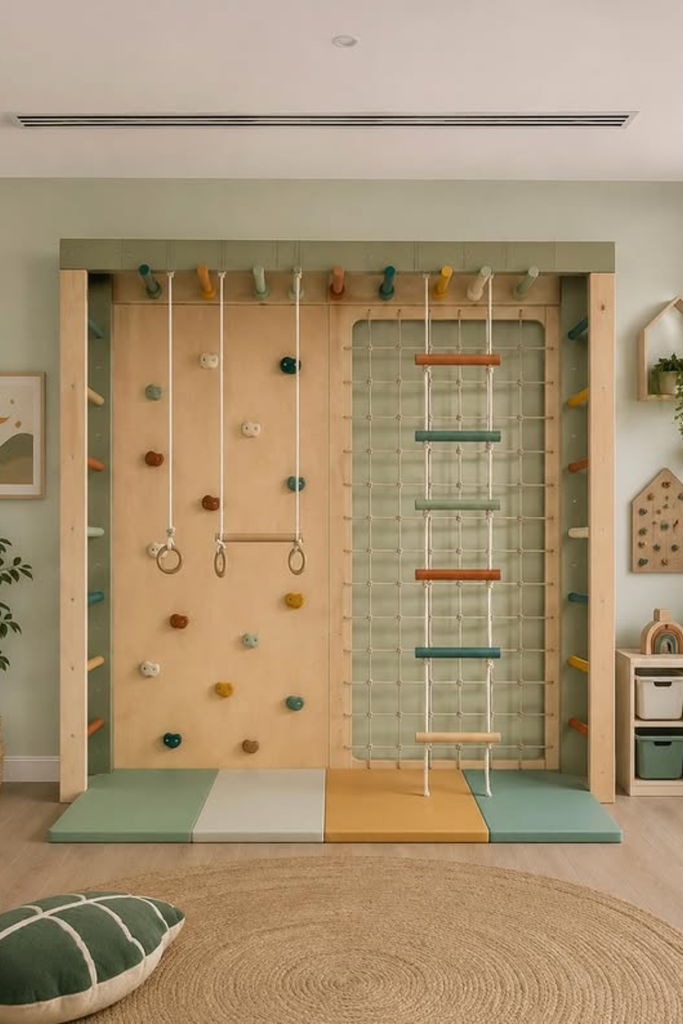
Climbing Circuit
Create more than one route on the same activity wall by combining climbing holds, hanging rings, a rope net, and suspended ladder steps.
Setup remains difficult as older children’s strength and coordination increase since they can switch between climbing, reaching, hanging and balancing.
Before using any overhead or wall-mounted equipment, use the appropriate impact-absorbing mats throughout the whole fall zone.
FAQs
Can Activity Walls Grow With Kids?
Yes. Start with flexible features such as magnetic panels, pegboards, drawing surfaces, or adjustable activity boards.
You can swap simple toddler activities for building, art, learning or planning features as your child gets older without rebuilding the entire wall.
How High Should Activities Go?
Place frequently used activities where your child can comfortably reach them. Younger kids need features closer to the floor.
While older kids can use more vertical space. Always consider the activity itself especially when mounting climbing equipment or anything with movable parts.