
22 Colorful Playroom Ideas
Adding color to a playroom sounds easy until bright toys, busy walls, rugs, and storage all start competing for attention.
You want the room to feel fun for kids, but you still need enough open space for playing and a setup that does not look messy every day.
In this article, you’ll explore 22 Colorful Playroom ideas that balance playful design with practical spaces kids can actually enjoy.
Let’s jump in!
Where Should You Add Bold Colors?
Start with a wall, built-in shelves, storage cabinets, or even the ceiling instead of adding extra colorful furniture around the room.
If the toys already bring plenty of color, use one strong shade behind a reading nook or art station and repeat it through smaller details.
Rugs can also add color while marking activity zones. Try to leave the center of the room open, especially in a smaller playroom.
When the edges carry most of the color and storage kids have more room to build, move, and spread out their toys.
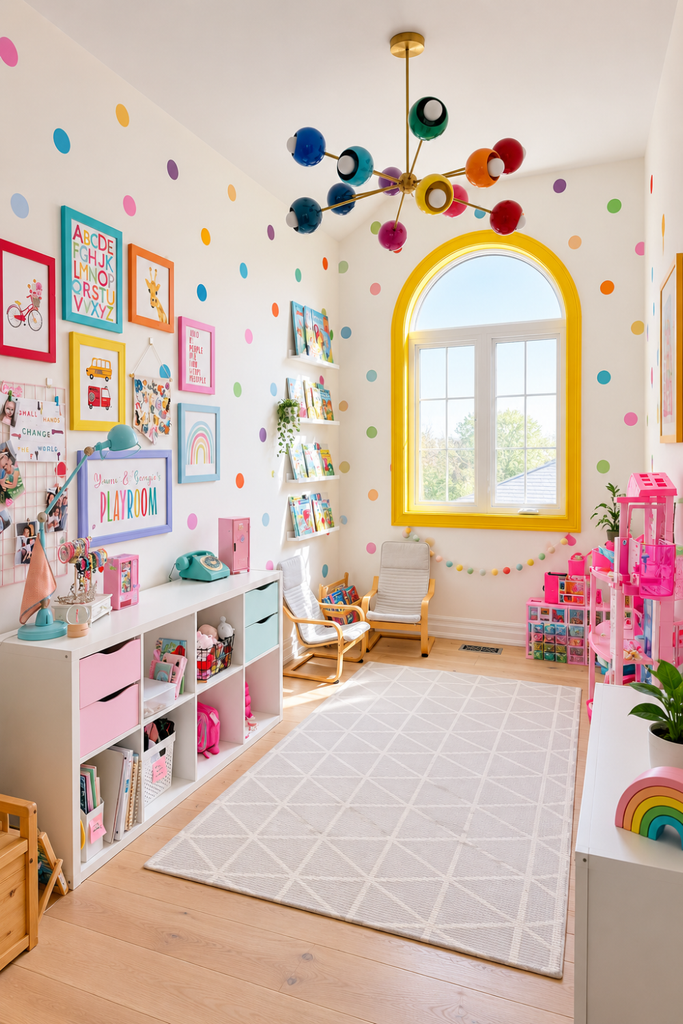
Colorful Dots
Keep the main walls white then scatter small colorful dots across them to bring energy without making the room feel crowded.
Repeat a few of those shades around picture frames, storage drawers, and toys so the colors connect naturally.
Leaving the center mostly open gives kids plenty of play space, while the bright window trim creates one stronger focal point.
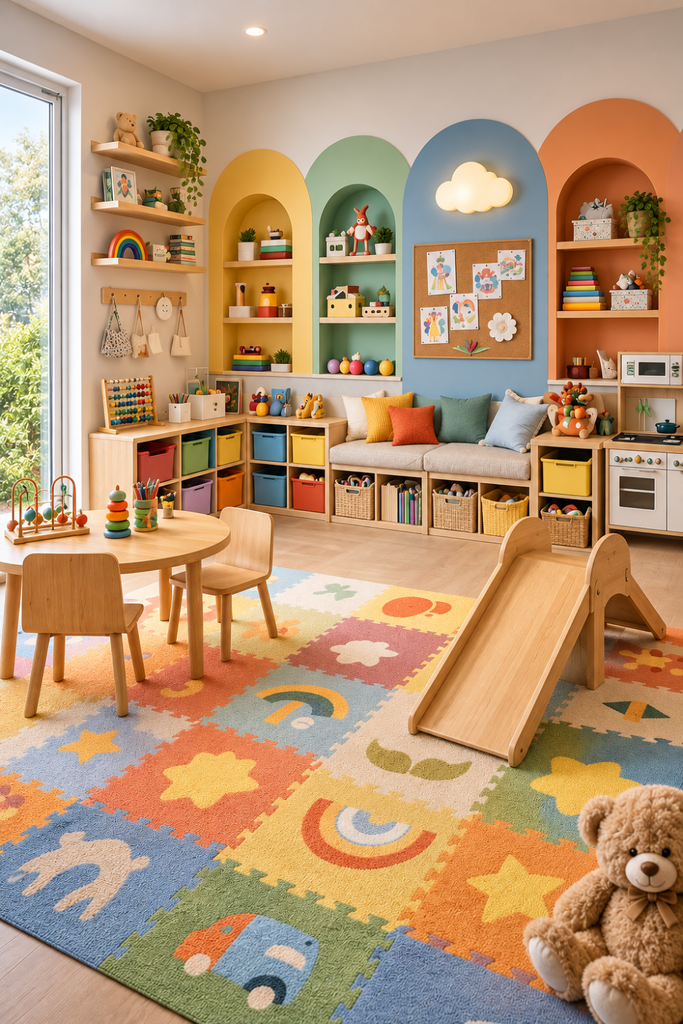
Rainbow Zones
Paint arching niches in various hues and use them for crafts, toys, and books to make one wall the color anchor.
Incorporate those hues into pillows and storage bins to create a sense of unity throughout each activity area.
Keep natural wood furniture around the open floor, then use a playful rug to define where building, drawing, and active play happen.
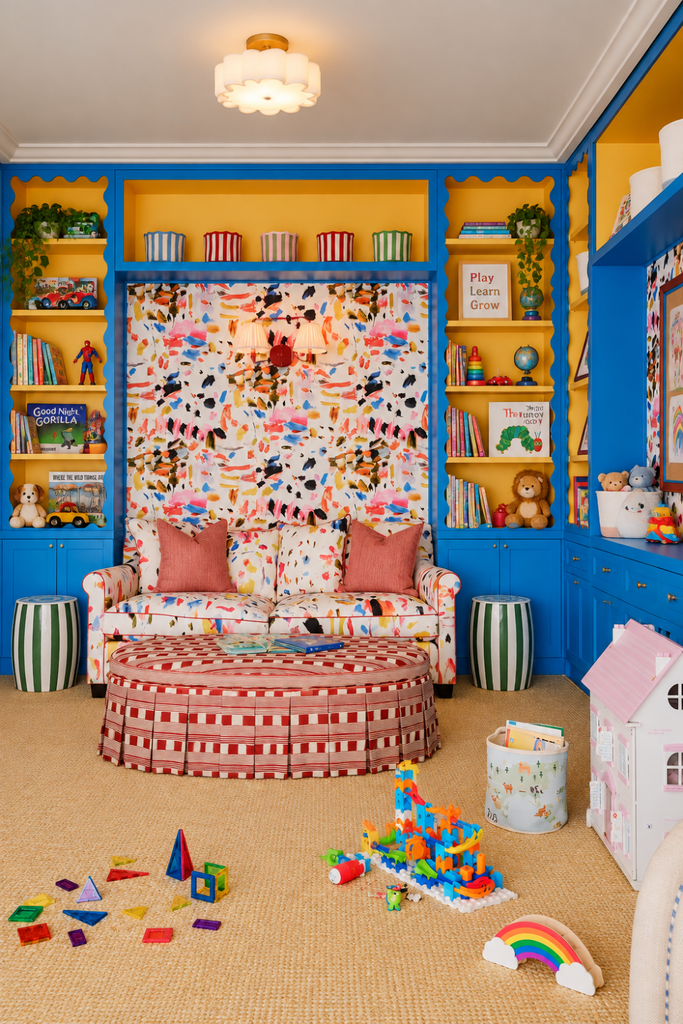
Bold Built-Ins
Push your strongest colors onto built in shelves, using deep blue framing with warm yellow backs to make books and toys stand out.
Balance those solid blocks with a patterned seating nook, where several smaller colors can mix without spreading across every wall.
Keeping most furniture against the edges protects the open carpeted center, giving kids plenty of room for building and floor play.
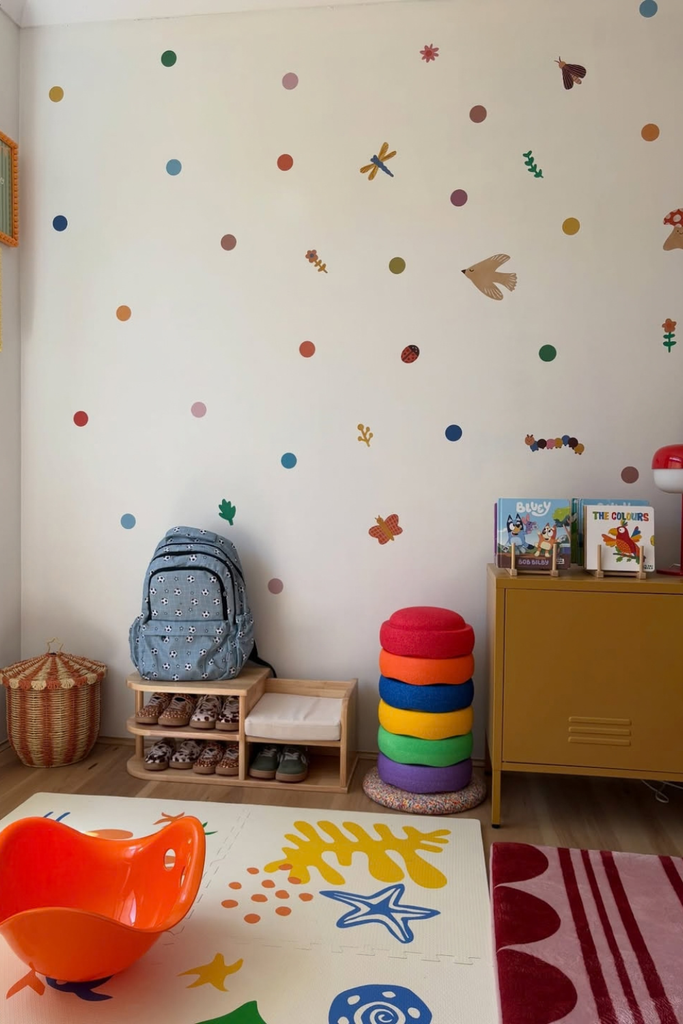
Playful Storage
A large portion of the color is carried by storage, which combines a cozy cabinet with bright bins that make sorting common toys simple.
Little wall decals give the space plenty of visual breathing room by adding a whimsical layer without completely covering the wall.
Place a compact table on a bold rug for crafts and games, while keeping larger storage pieces pushed against the wall.
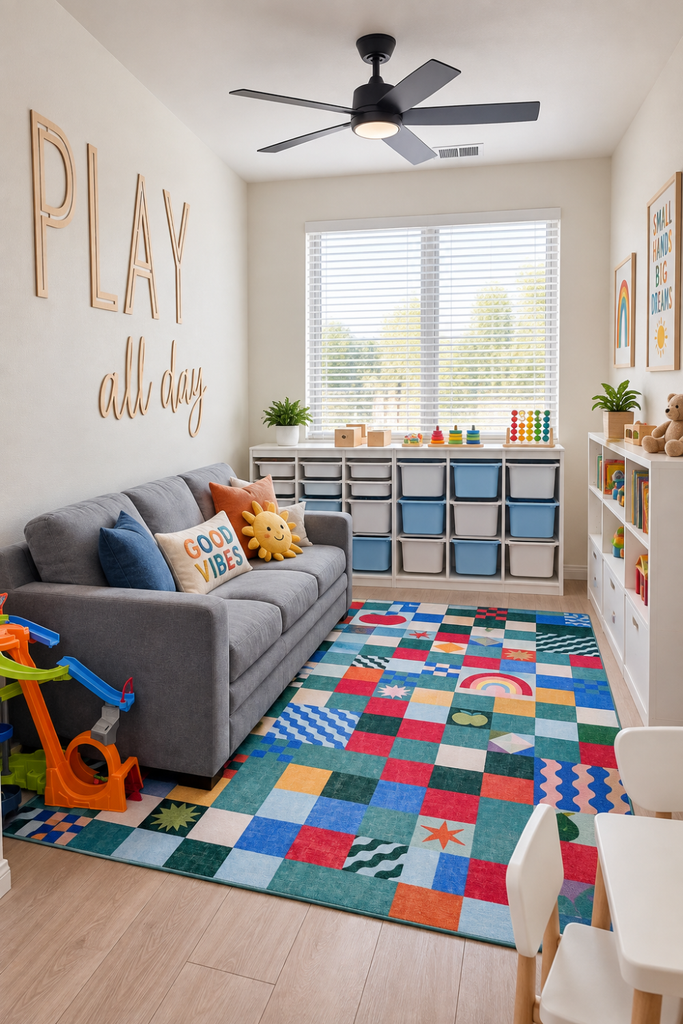
Statement Rug
Maintain neutral walls and larger furniture while bringing the majority of the color down to the floor with a striking patterned rug.
To make the useful pieces blend nicely with the lighter play area, select storage bins in one or two rug colors.
Method is particularly effective in compact spaces since it gives children a vibrant surface for floor play.
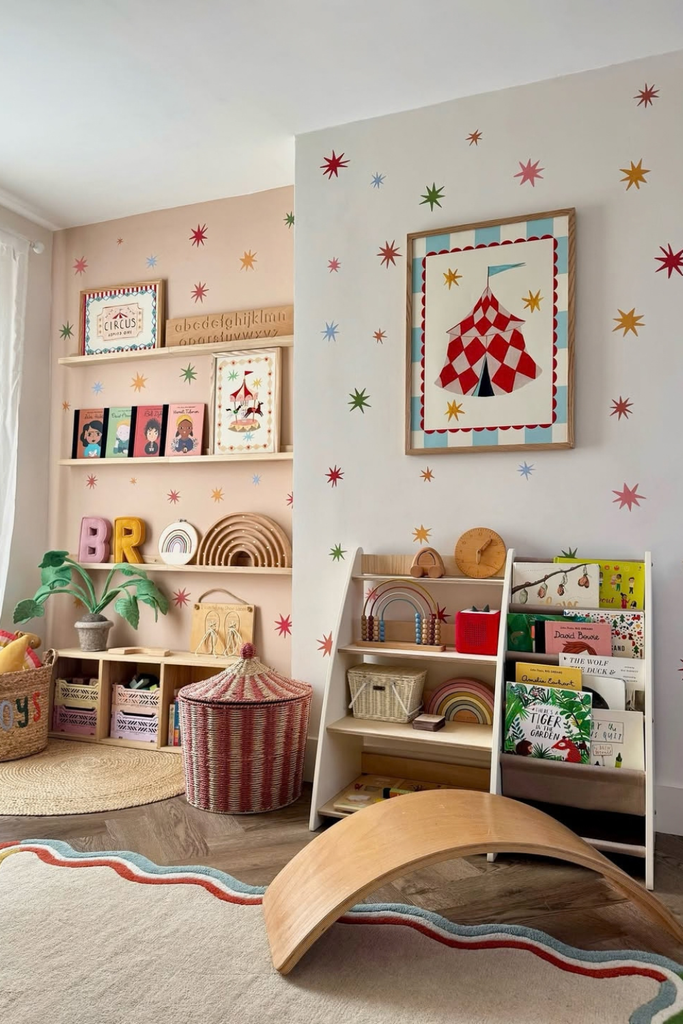
Starry Walls
You want lots of color without committing to a single major painted feature, scatter little star decals over light walls.
Combine gentler greens and blues yellows, then repeat those hues in artwork, books and baskets.
Low shelves keep everything reachable, while leaving the middle open gives kids a comfortable spot for reading, balancing, and floor play.
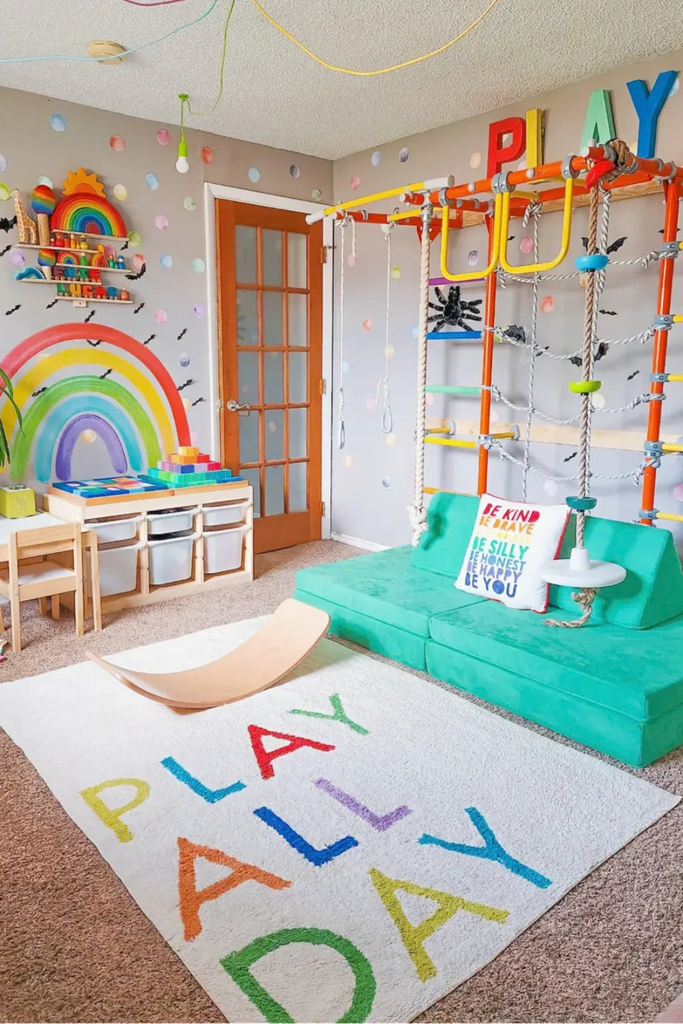
Active Rainbow
Make an active-play wall the brightest part of the room by combining colorful climbing bars with a simple rainbow mural nearby.
To keep blocks and art supplies accessible without interfering with movement, store them low and tucked along a different wall.
While maintaining a clean landing and play area a light mat with dispersed rainbow writing offers vibrancy underfoot.
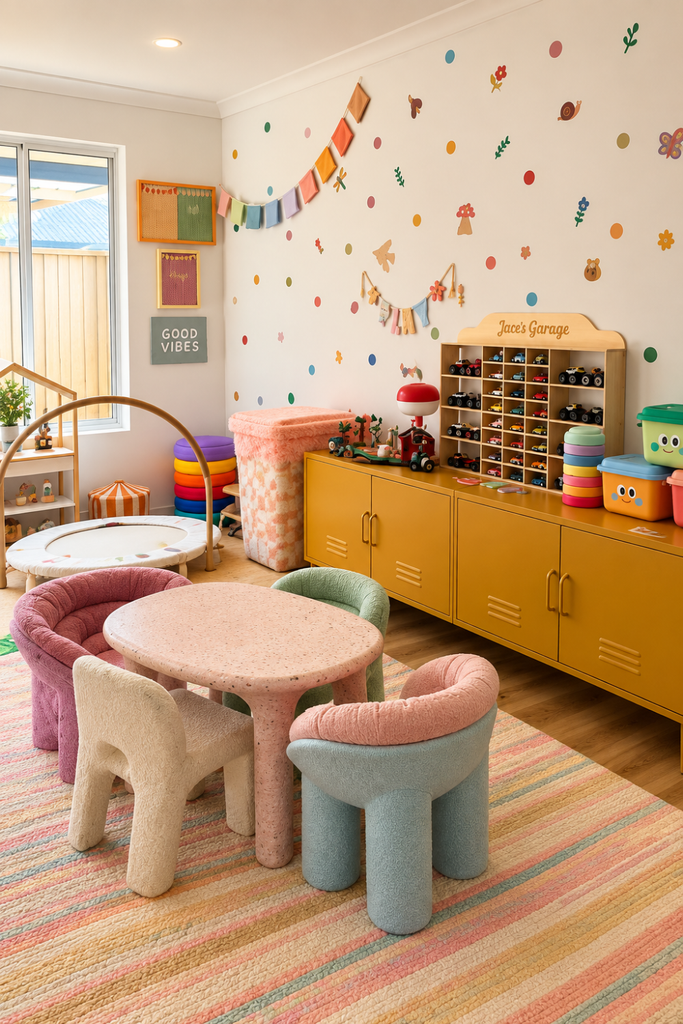
Colorful Corner
Store toys, use a single long cabinet. Then, use tiny wall decals to add color without overcrowding the floor.
Put a kid-sized table and a variety of pastel chairs close by to create a simple area for crafts, puzzles, and more sedate pursuits.
Softly striped rug connects the different colors, while the open side of the room stays available for bigger toys and active play.
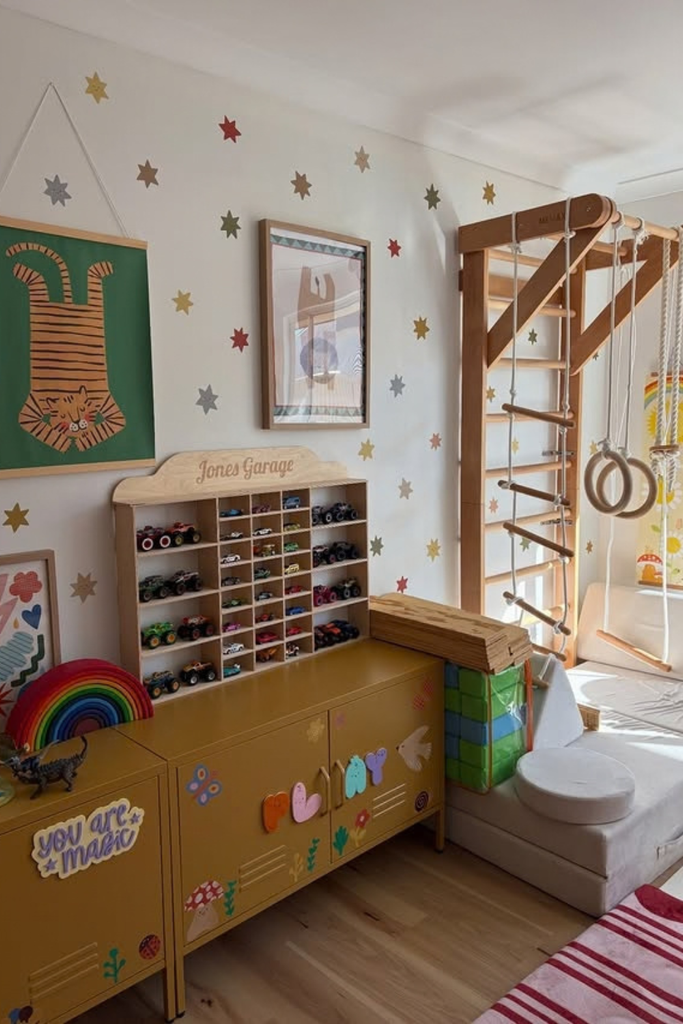
Decorated Cabinets
Give plain storage more personality by adding playful decals across the cabinet doors instead of bringing in extra decorative furniture.
Make the brighter pieces feel connected, place tiny stars around the framed artwork while keeping the wall light.
While locked compartments conceal bulkier things and make maintenance much simpler, use the cabinet top for spinning displays and your favorite toys.
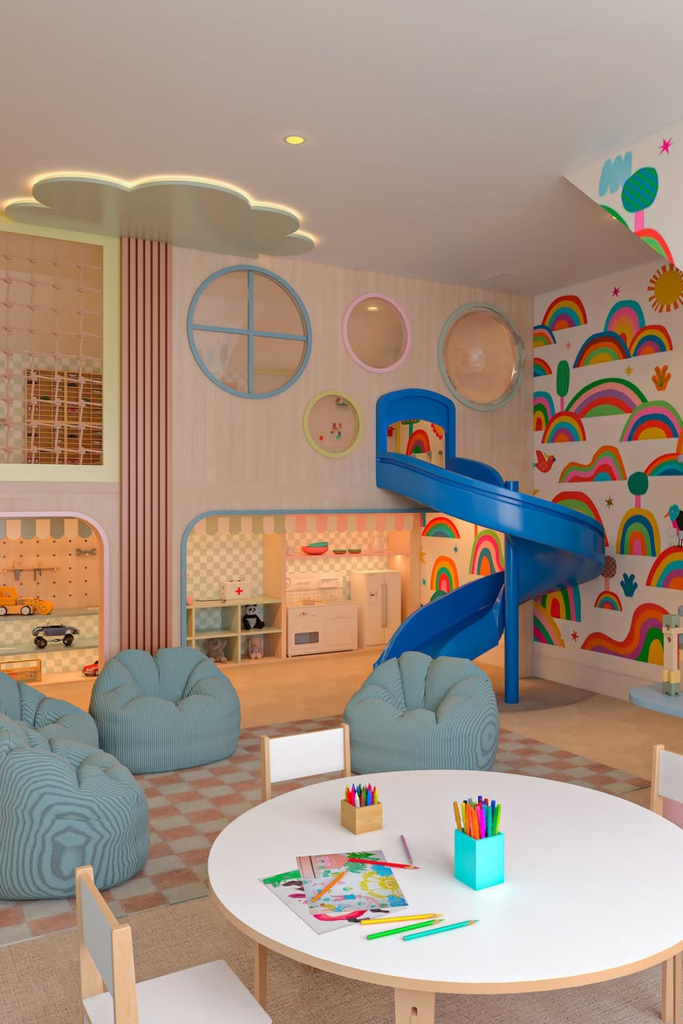
Rainbow Feature
Save the busiest pattern for one wall, using repeated rainbows to create a strong backdrop without spreading bold color.
Pair it with one solid statement piece, such as a blue slide so active play becomes part of the room’s design.
Keep craft tables and soft seating in quieter shades, letting kids move between drawing, climbing and pretend play.
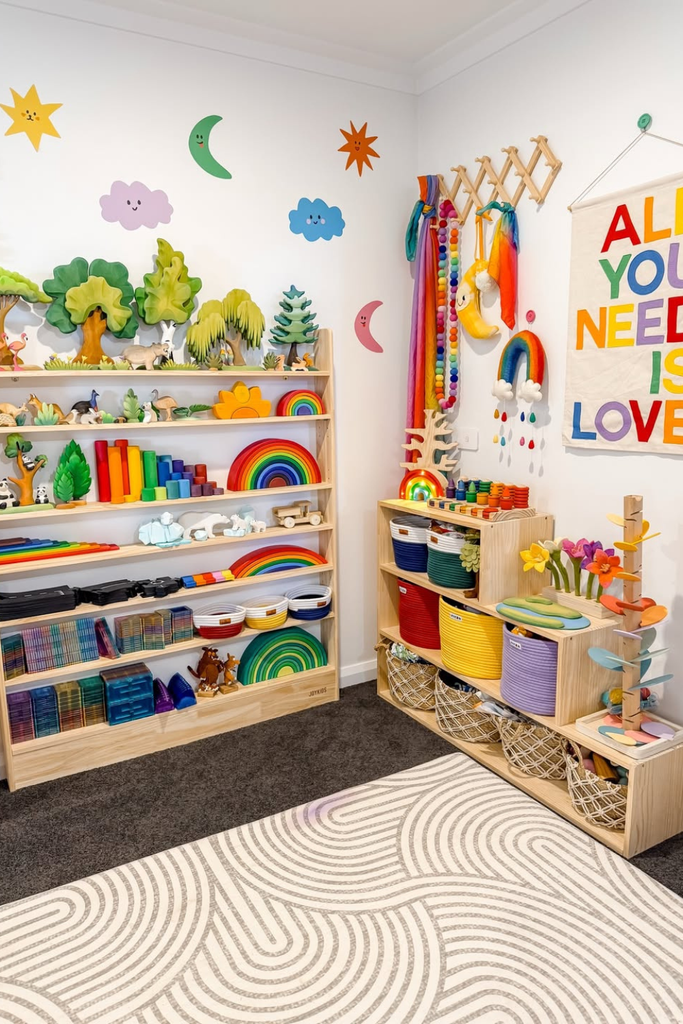
Rainbow Shelving
Turn open shelves into part of the color scheme by arranging rainbow toys, blocks and supplies in simple grouped sections.
Choose natural wood storage so all those bright pieces have a quieter background and remain easy for kids to reach.
While the walls and shelves convey the energy keep the floor palette calmer with a neutral carpeting that allows kids to play freely.
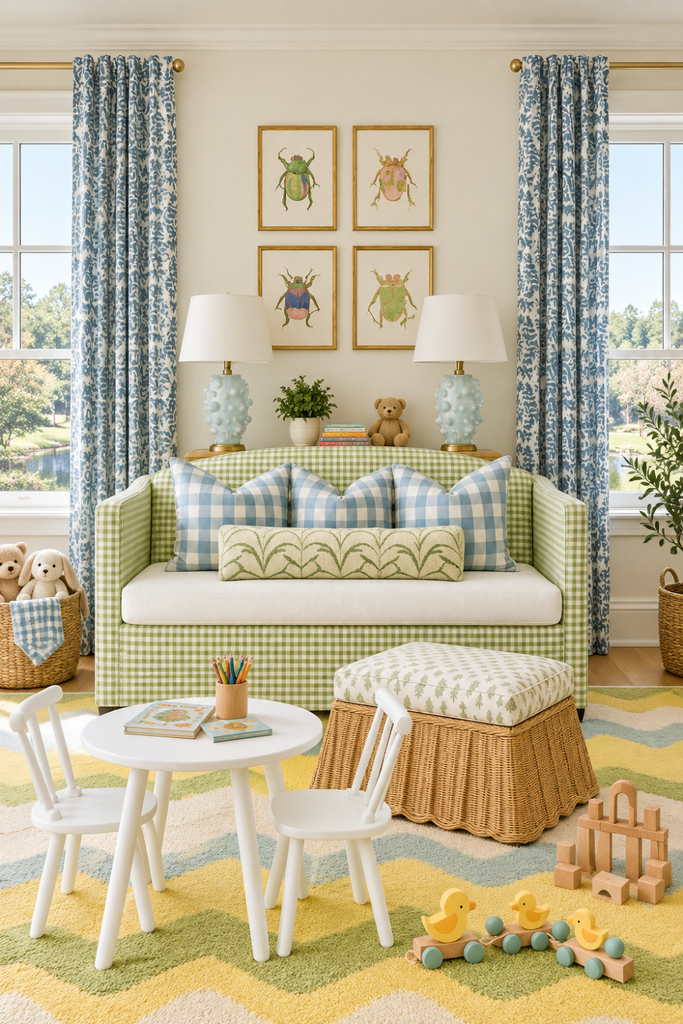
Soft Pastels
Choose softer greens, blues and yellows when you want a colorful playroom that still feels calm during quieter activities.
Bring pattern through curtains, cushions and a wavy rug instead of covering the walls making future color changes much easier.
Keep the small play table lightweight and movable, so kids can craft nearby or clear the floor when they need more room.
Candy Accents
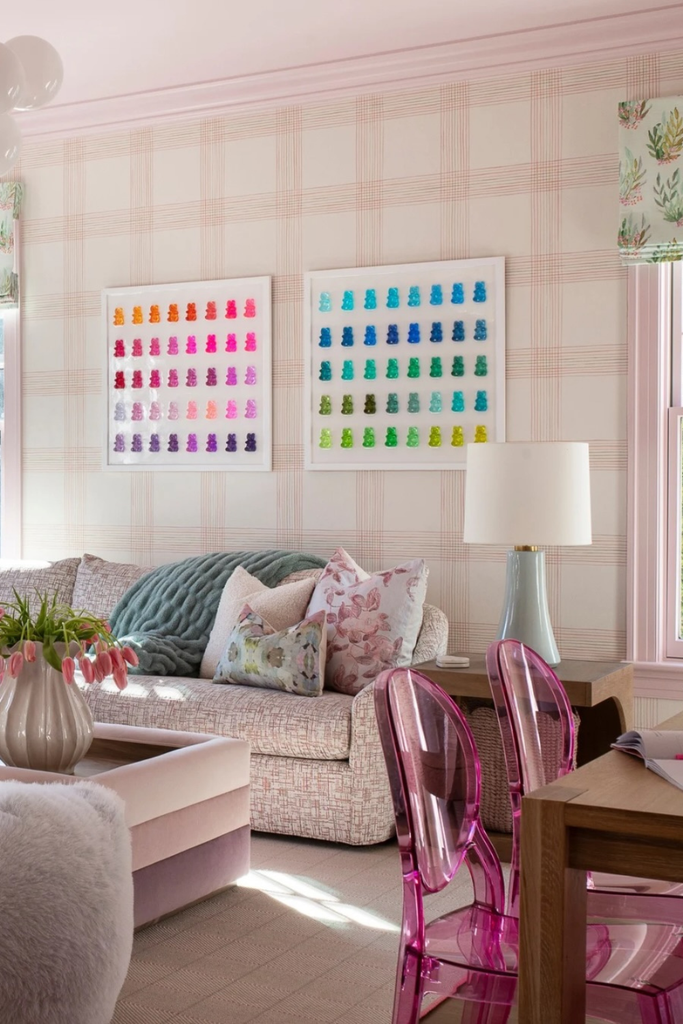
You want a brighter hue without overcrowding the space with bright furniture choose a single whimsical element, like transparent pink chairs.
Pale patterned walls make the entire color scheme gentle and cohesive, while framed artwork and tiny fabrics echo same sugary pastels.
Lighter features are counterbalanced by natural wood tables and neutral seats, offering cozy spaces for reading, painting, and unwinding.
Ceiling Color
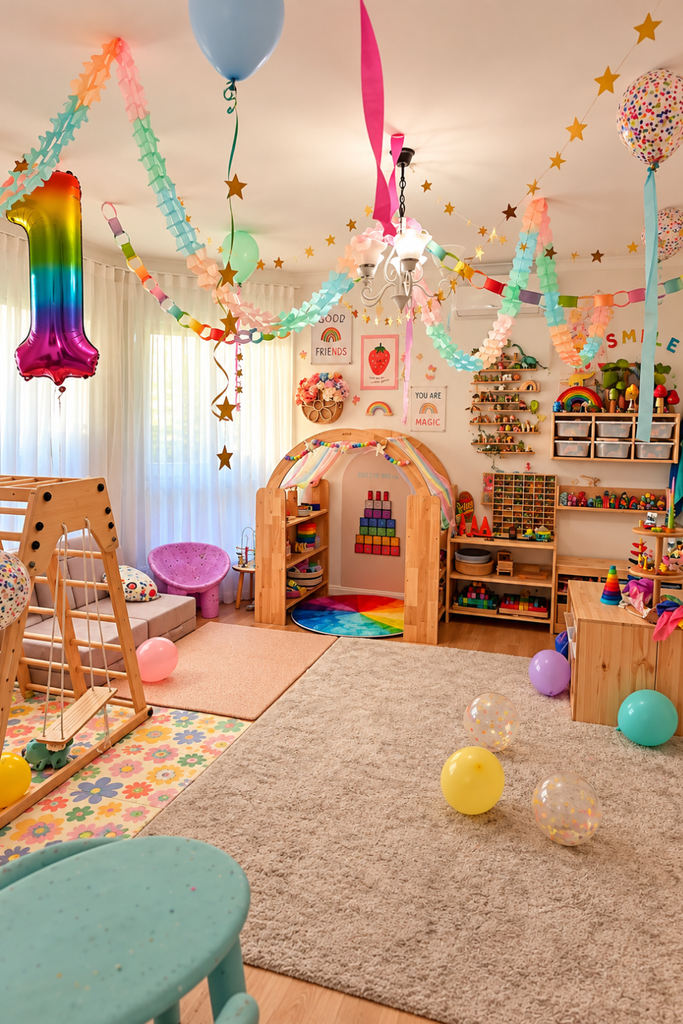
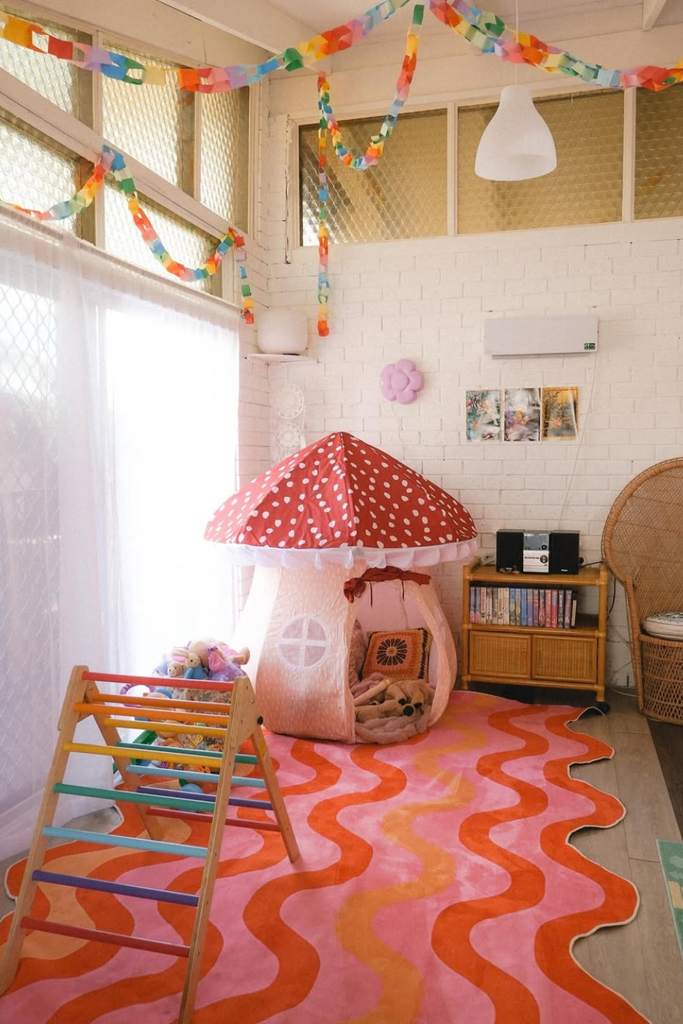
Add some vibrant color overhead with paper garlands, hanging stars, and streamers if the walls already have a lot of toys and storage.
Make the ceiling feel connected, choose simple ornaments in hues that are repeated throughout the space.
Keeping bulky furniture around the edges leaves a generous carpeted center where kids can build, move, and spread out comfortably.
Colorful Books
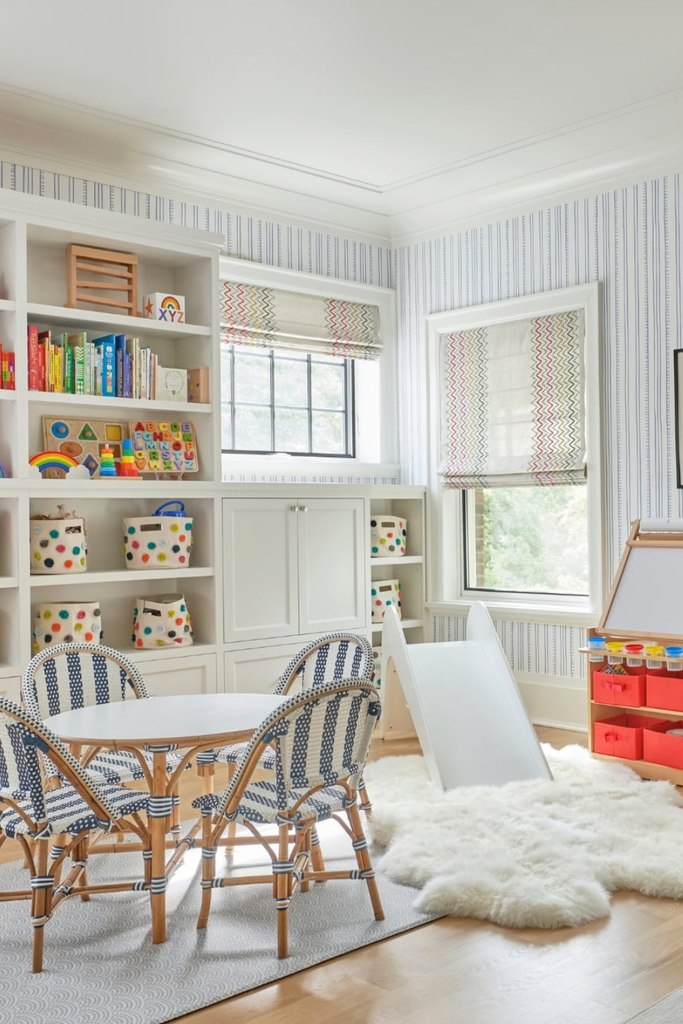
Use book spines as part of the palette by arranging them by color across built-in shelves instead of adding more wall décor.
To keep toys accessible without overcrowding the space, pair colorful books and dotted baskets with generally white storage.
Larger furniture should be kept in natural wood and milder blues to allow daylight to accentuate the vibrant features.
Playful Gallery
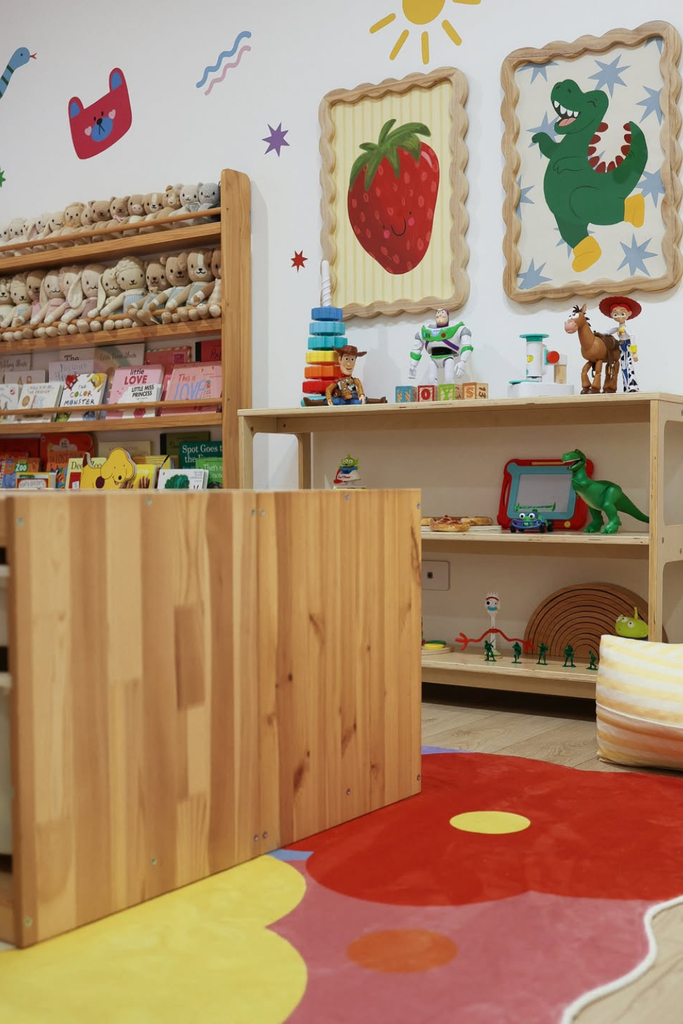
Keep colorful accents away from the primary play area and add personality above storage with bright wall decals and large artwork.
Select natural wood tables and shelving underneath to create a more serene backdrop for colorful toys, books, and characters.
Finish with one bold rug under the activity area so kids get a defined spot for building, reading and creative play.
Colorful Climbing
Turn active play into the colorful feature by pairing a climbing frame with bright foam blocks and small painted wall details.
Keep the main structure white and natural wood, so ropes, holds and movement equipment do not make the room feel heavy.
Place the setup against one wall to contain climbing activities, leaving the remaining floor open for building, games and quieter play.
Circus Corner
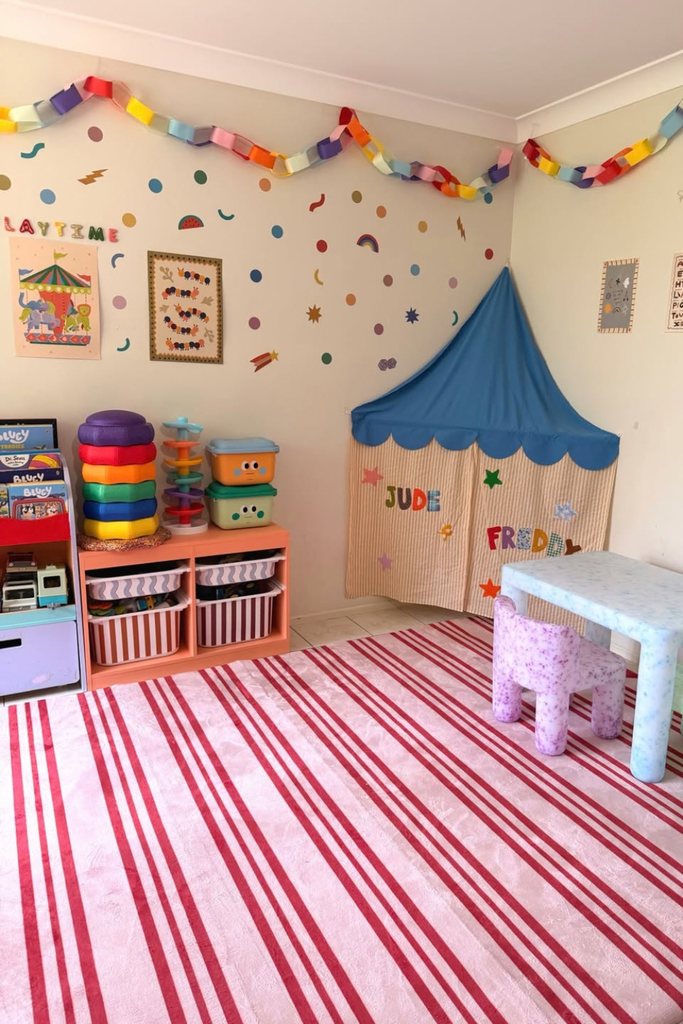
Build one imaginative corner around a fabric play tent, giving kids a clear spot for pretend play without adding bulky furniture.
Pull its colors across nearby storage, wall decals, and a paper garland so the playful theme feels naturally connected.
The little craft table may be moved anytime children require more floor space, and a striped rug can carry the strongest pattern.
Striped Walls
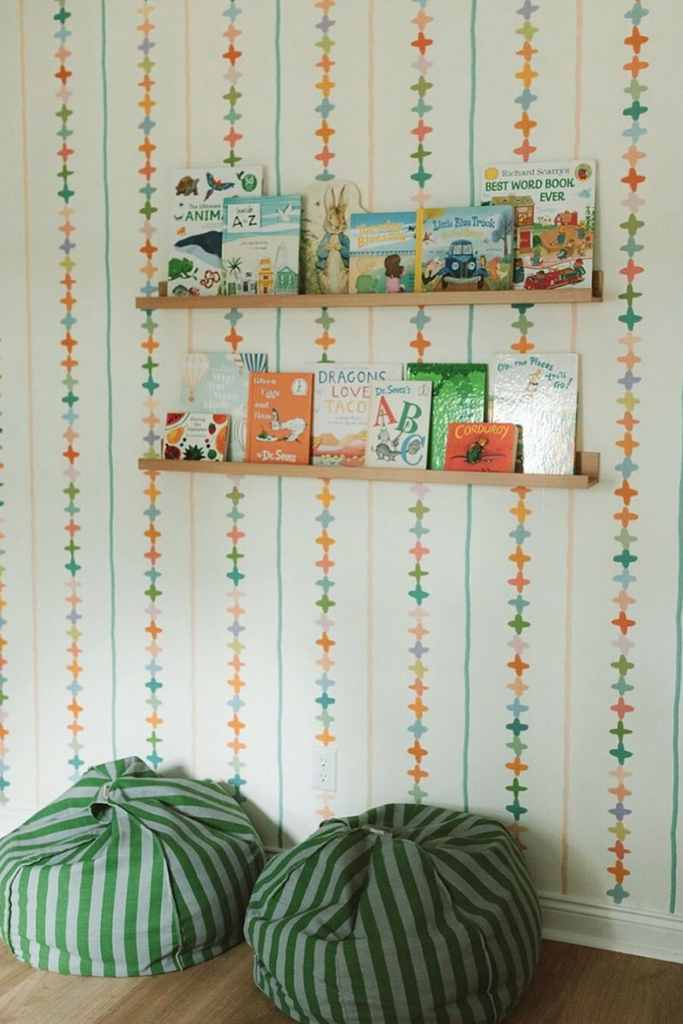
Paint wide vertical stripes in two warm shades when you want the walls themselves to supply most of the playful color.
Balance the stronger backdrop with natural wood shelving, keeping books and toys organized instead of adding more bright furniture.
Repeat pink, yellow and orange through smaller play pieces, while floor level storage keeps the main area practical for everyday activities.
Cozy Color
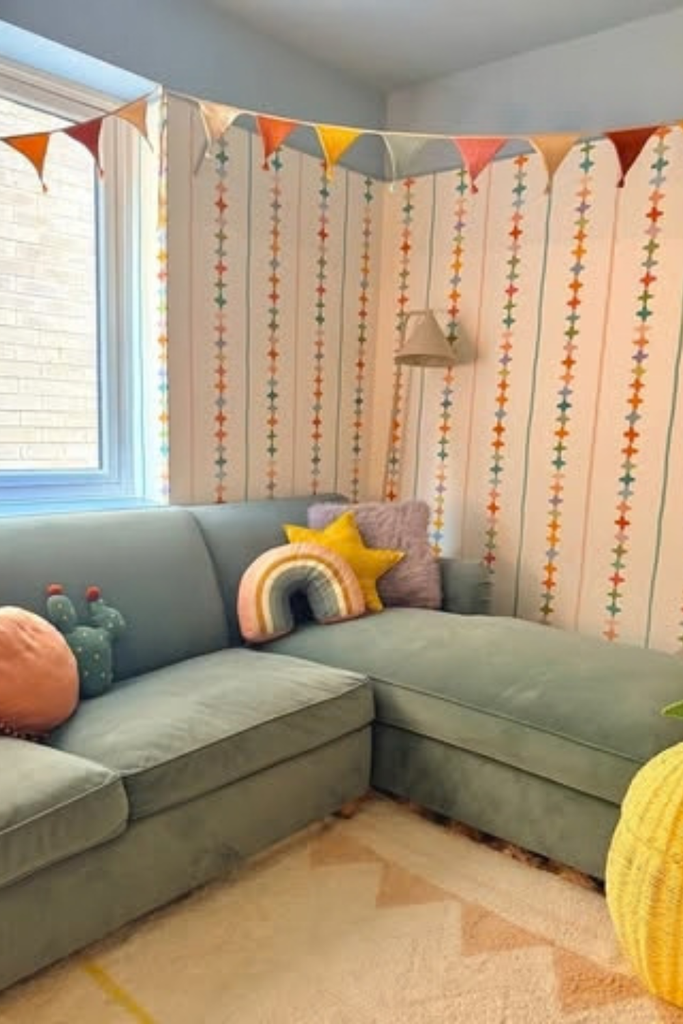
Soften a colorful playroom by pairing a muted green sectional with smaller pops of yellow, peach, and rainbow accents.
Bring extra color onto the walls through a repeating pattern and bunting instead of adding more furniture around the floor.
To create a cozy reading area and free up the remaining space for active play, tuck sitting firmly into the corner.
Warm Contrast
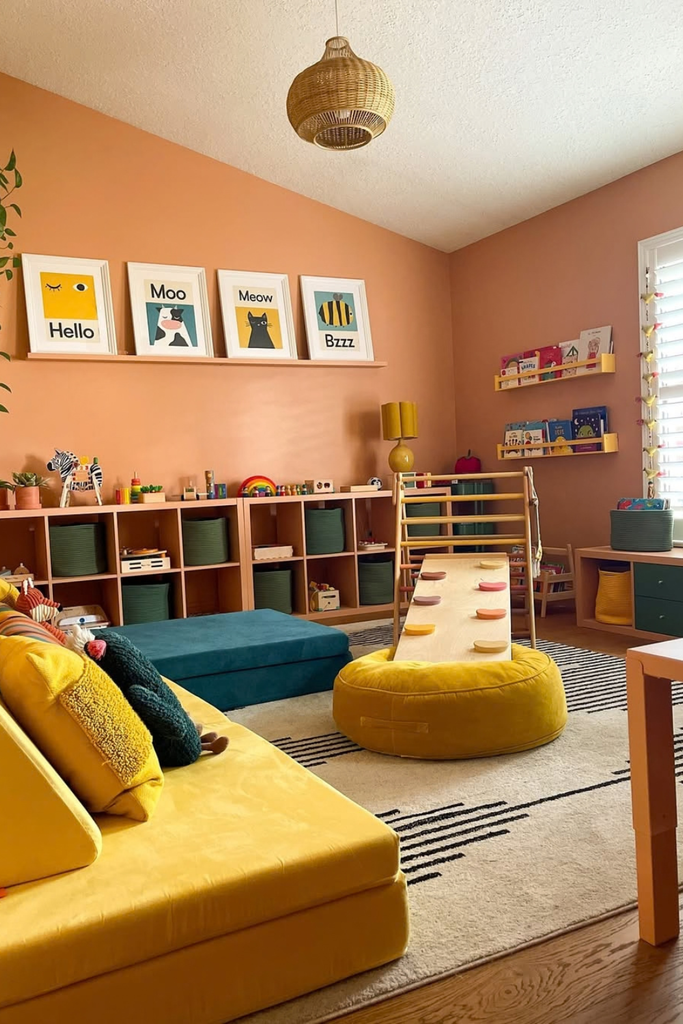
Make the space feel vibrant, base your color scheme on two striking hues, such as mustard seating and deep green storage.
Use warm terracotta walls as the background, then use pillows, containers, and smaller playthings to echo the colors yellow and green.
Maintain a neutral rug underneath, modest storage around the perimeter and ample space in the middle for floor activities and climbing toys.
Sunshine Corner
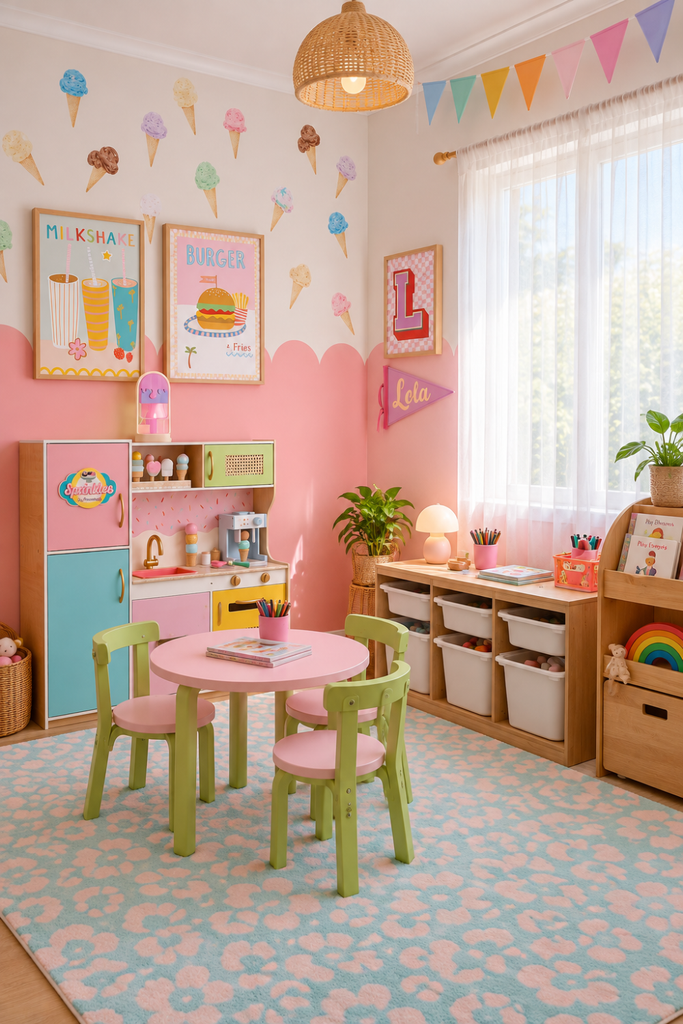
When you want a strong color without painting every surface in the playroom, use mustard yellow walls to anchor one corner.
Give children cozy options for reading, relaxing and energetic play with layered pink floor cushions and a vibrant rocker close by.
Keep book storage in natural wood and use daylight through sheer curtains to soften the stronger colors throughout the day.
FAQs
How Can You Add Lots of Color Without Making a Playroom Feel Too Busy?
Start with a simple base, then repeat three or four main colors through rugs, storage bins, artwork and smaller toys.
Keeping large furniture or ome wall space neutral gives your eyes somewhere to rest. You still get a playful room.
Which Colorful Playroom Pieces Are Easiest to Change as Kids Grow?
Rugs, cushions, wall decals, artwork, baskets, curtains, and small furniture are easier to update than permanent built-ins or fully painted walls.
Use those pieces for brighter colors while keeping expensive furniture more flexible. As your child’s interests change, you can swap a few details.

Hi, I’m Afaf! I’m a law student who loves writing about everyday life – from home projects and crafts to fashion, beauty, and parenting tips.
I’ve been writing for over a year, sharing ideas that are simple, practical, and easy to try. I write about things I find interesting and useful, whether that’s organizing a space, trying a new DIY, or finding activities to keep kids entertained.
My goal is to share helpful ideas without making things complicated. If it works in real life, I’ll write about it.
When I’m not studying or writing, I’m usually experimenting with new projects or scrolling for inspiration!