
23 Basement Playroom Ideas
Basement may give your kids plenty of room to play, but dark corners, cold floors, scattered toys, and awkward layouts.
If you simply move toys downstairs without a plan, clutter quickly takes over and kids may barely use the room.
In this article, you’ll find 23 basement playroom ideas will help you create a space that works for play, crafts, reading, and everyday messes.
Let’s jump in!
Which Storage Solutions Make Toys and Craft Supplies Easy for Kids to Reach?
Kids need help every time they want a toy or coloring book, the storage is probably sitting too high or hiding too much.
Use low cubbies, open shelves, baskets, and labeled bins for the things they reach for every day. Put heavier toys near the floor.
Group similar items together, so blocks, puzzles, books, and art supplies each have a clear home for craft supplies and small rolling cart.
You can move it beside the activity table and roll it away afterward. Closed cabinets can handle extra supplies and toys.
Avoid filling every shelf because kids can find and put away their things more easily when each spot has a simple purpose.
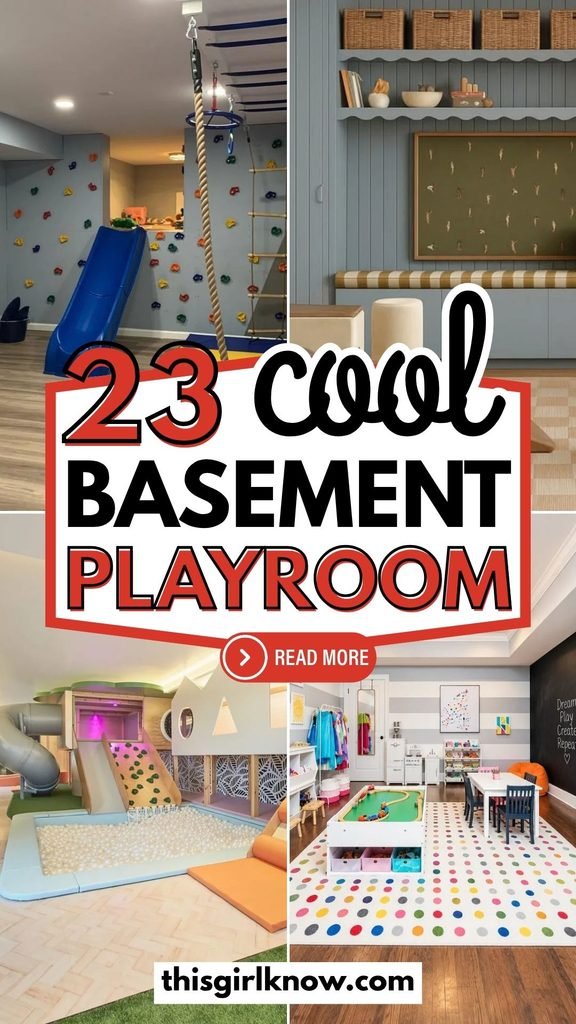
Indoor Adventure Zone
Turn an open basement section into an active-play zone where kids can climb, swing, slide, and burn off energy indoors.
Mount climbing and hanging equipment securely, then place thick padded mats beneath the busiest areas for softer landings.
Recessed ceiling lights keep the whole setup bright without hanging fixtures getting in the way of movement.
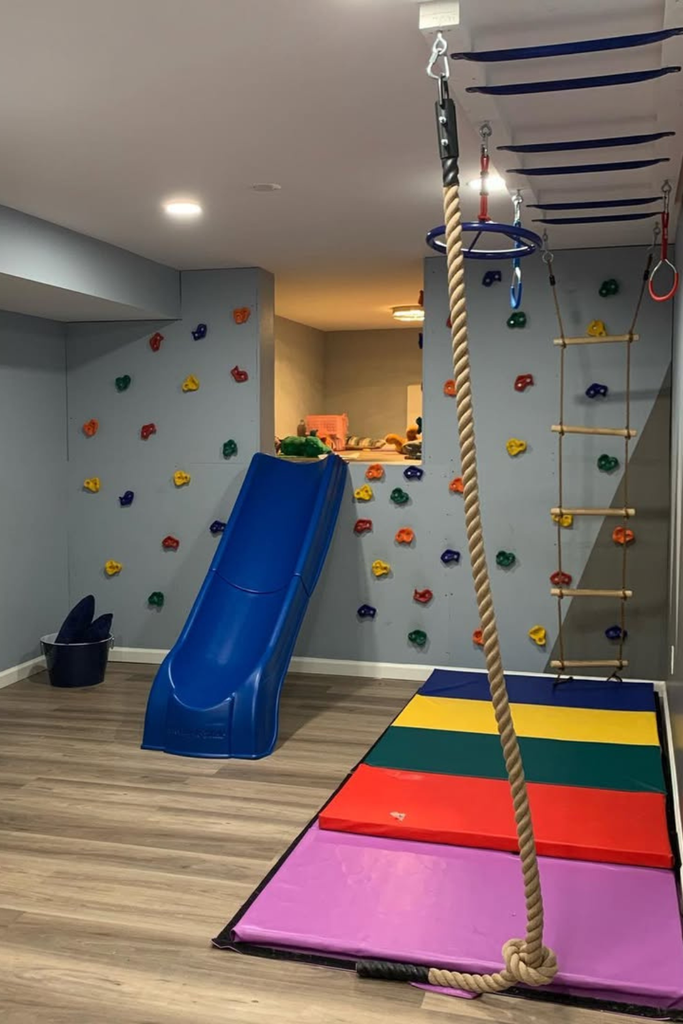
Built-In Playroom
Make one basement wall work harder by combining closed cabinets, open shelves and a cushioned bench.
Keep baskets overhead while books and everyday favorites stay within easier reach. Add a small activity table nearby.
Use soft wall lighting to brighten crafts and drawing without making the basement feel harsh.
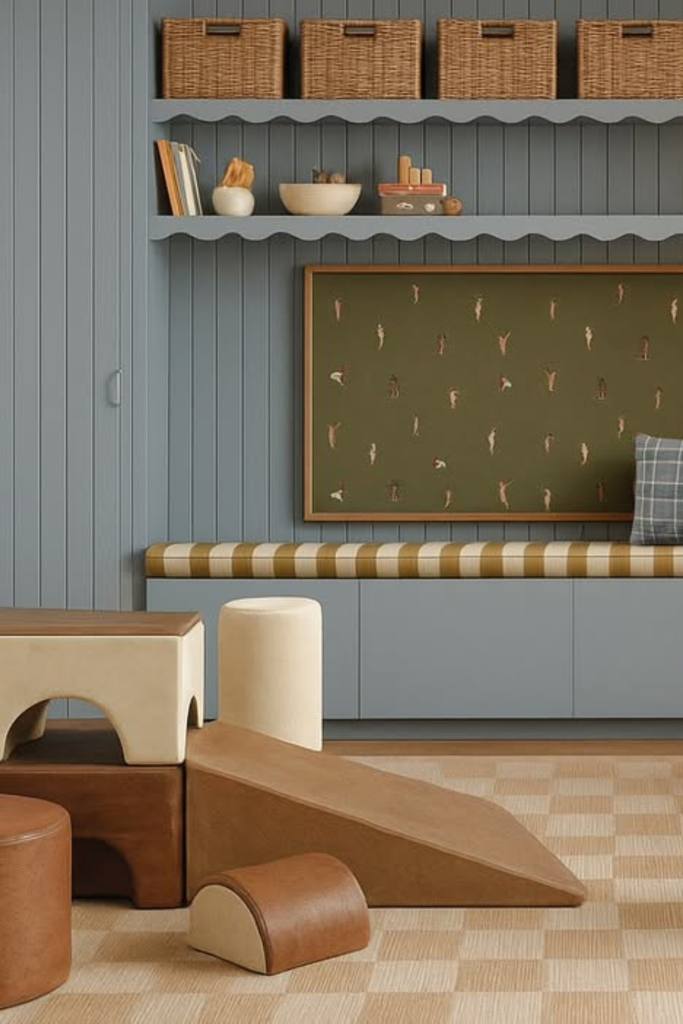
Indoor Playhouse
Give a larger basement its own mini adventure area by combining a playhouse, climbing ramp, slide, and soft ball pit.
Keep padded surfaces around climbing points while open floor sections prevent the setup from becoming cramped.
Recessed ceiling lights and hidden perimeter lighting brighten the basement evenly with colorful accent lighting.
Activity Zones
Large basement should be divided into distinct spaces for crafts, pretend play, dress-up, and construction items.
Keep tables and larger toys closer to the center after using low containers around the walls. Each zone is connected by a huge rug.
Protecting the play area, and recessed lights paired with a central ceiling fixture keep every corner bright.
Compact Climbing Zone
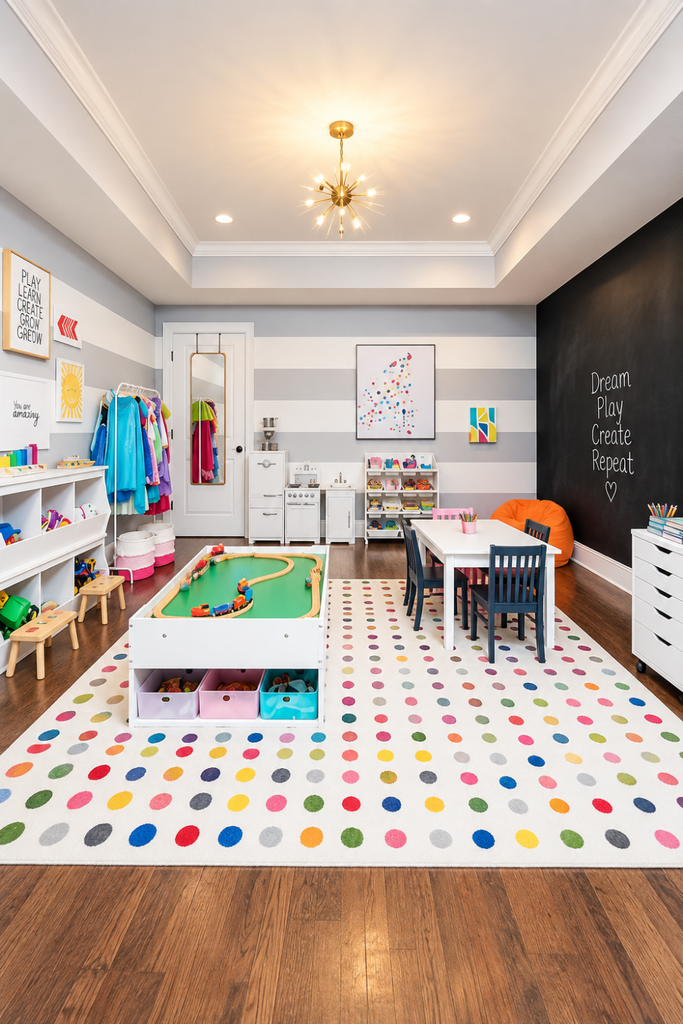
Use a narrow basement corner for active play by choosing one climbing frame that combines rings, ropes, ladders, and a slide.
Keep a large rug underneath to soften the hard floor and give the equipment its own clear zone. Light walls help bounce.
Available daylight deeper into the basement, while keeping bulky furniture away leaves enough room for kids to move comfortably.
Play Gym Corner
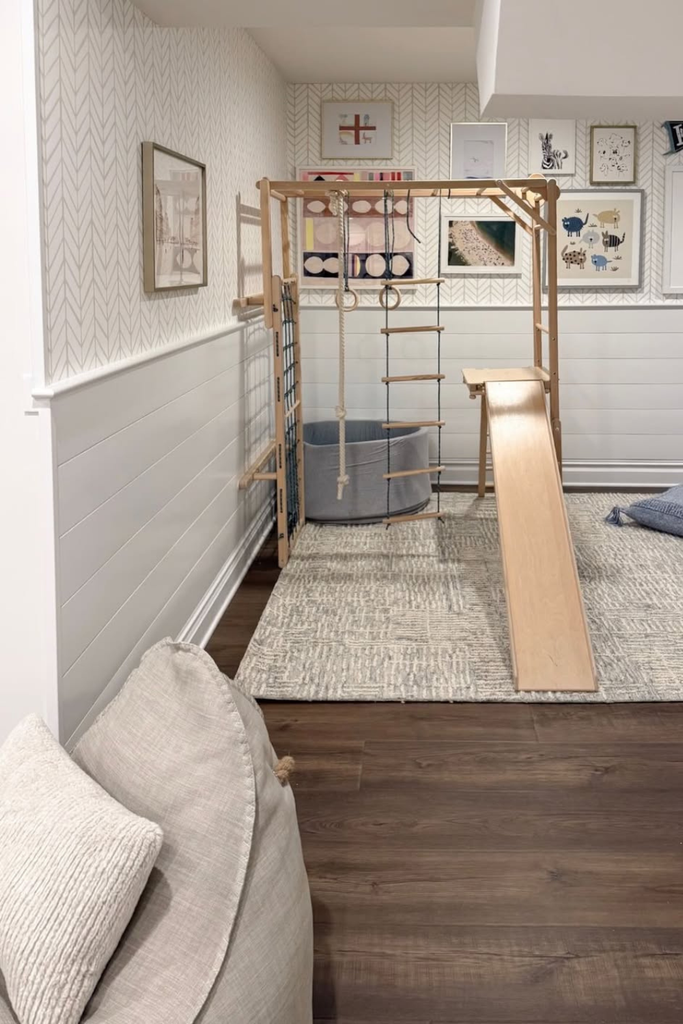
Mix active and quiet play in one basement by keeping climbing ropes and swings along the wall while leaving the center.
Soft turf and floor cushions make the lower play area more comfortable, while a child-size table gives drawing and building activities.
Recessed ceiling lights handle overall brightness, and wall spotlights plus low accent lighting help warm up darker corners.
Play Tower
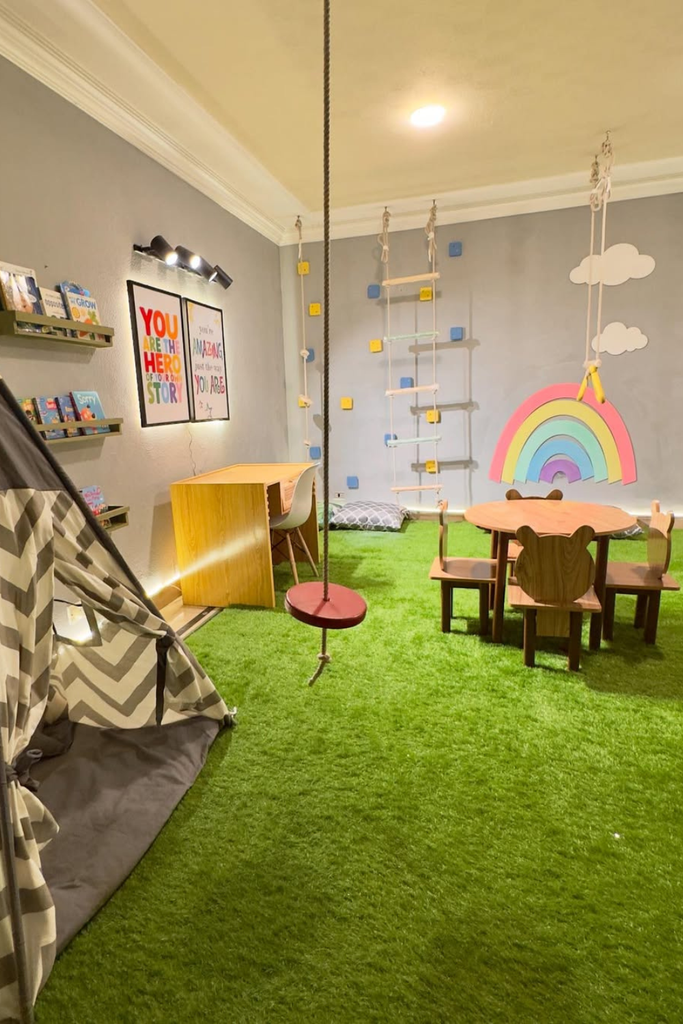
Build upward when you want to keep more basement floor open for movement using a raised play tower with a slide.
Add climbing grips, rings, and low padded seating around the structure without spreading equipment everywhere.
Soft carpet makes the surrounding floor more comfortable, while evenly spaced recessed lights brighten the entire play zone.
Playhouse Slide
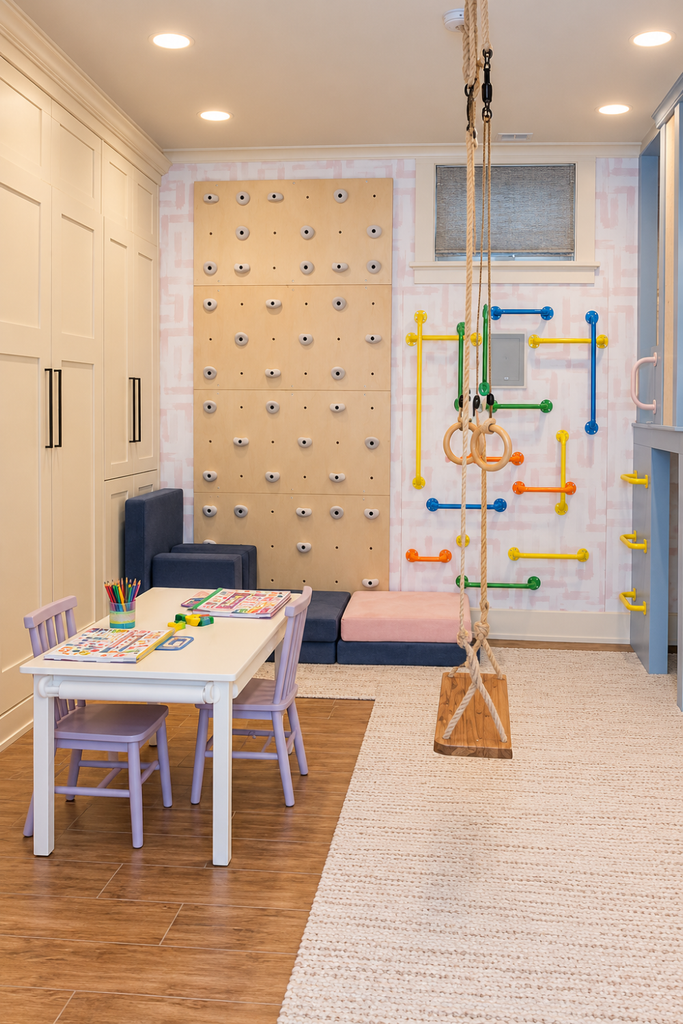
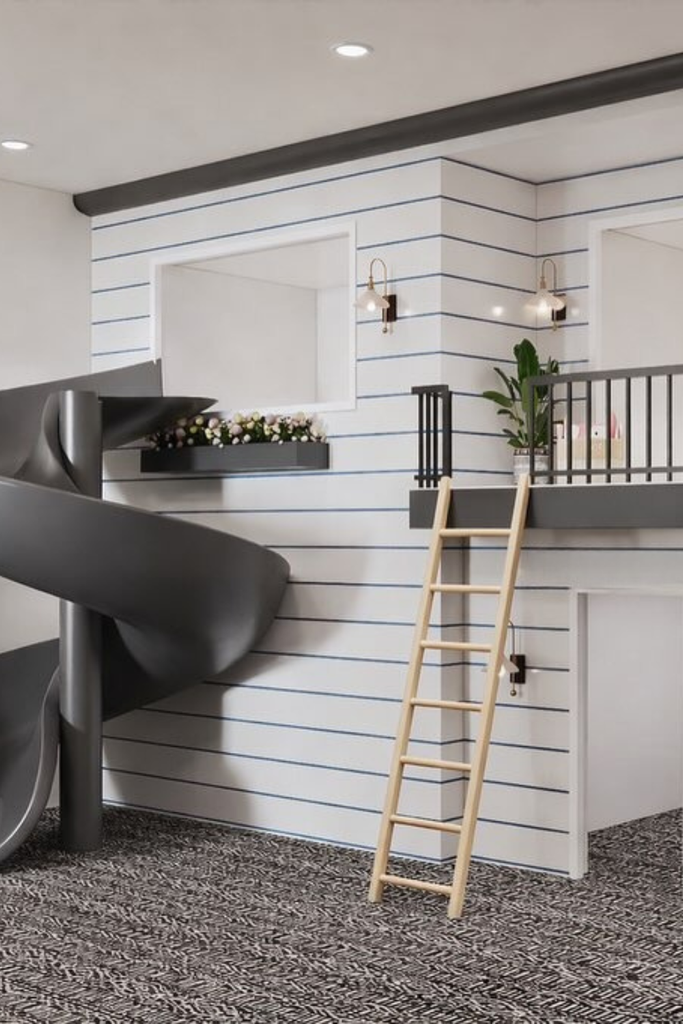
Turn one basement wall into a pretend-play destination with an upper deck, ladder, and spiral slide.
Use the enclosed lower level for imaginative games while the raised platform adds another place to explore.
Soft carpet helps cushion active play and recessed ceiling lights paired with small wall sconces keep both levels comfortably lit.
Window Storage
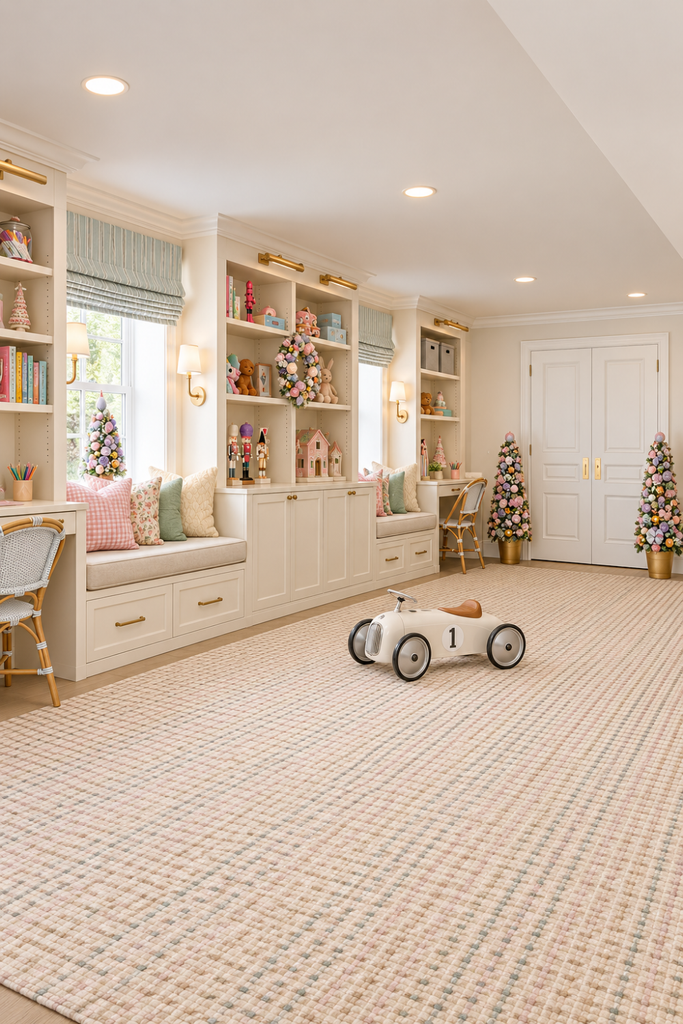
Use basement windows as part of the layout by building low storage around them instead of covering valuable natural light.
Add cushioned window seats then keep everyday toys on open shelves and extra supplies inside lower cabinets and drawers.
Small wall sconces brighten each nook after daylight fades while the open center stays clear for larger toys and active play.
Cozy Play Lounge
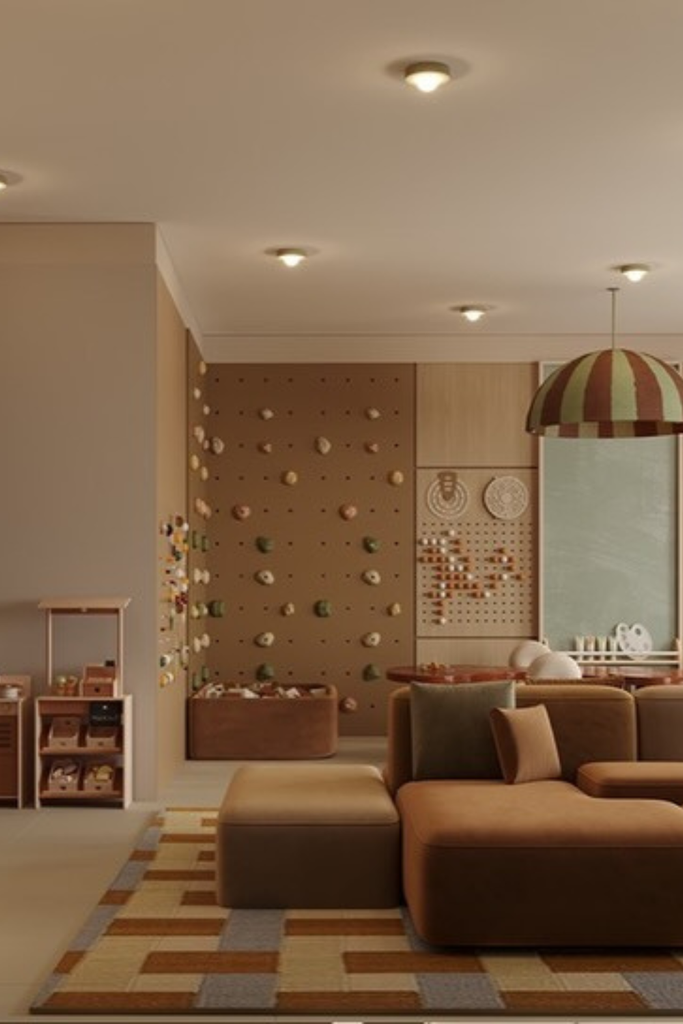
Soft seating should be positioned next to climbing and pretend play areas to balance vigorous play with a cozy family space.
To keep the center accessible place play kitchens and smaller toys toward the walls. Then divide reclining areas with a rug.
Multiple flush ceiling lights spread light across the basement, while a hanging fixture can give the seating area a warmer focal point.
Climbing Wall Gym
Make a basement wall earn its space by combining climbing holds, hanging rings, ladders and a swing in one active zone.
Spread each activity out so kids have clear room to climb and move without equipment crossing into another path.
Soft carpet helps cushion the floor, while recessed ceiling lights keep the whole gym bright without low fixtures getting in the way.
Sensory Play Zone
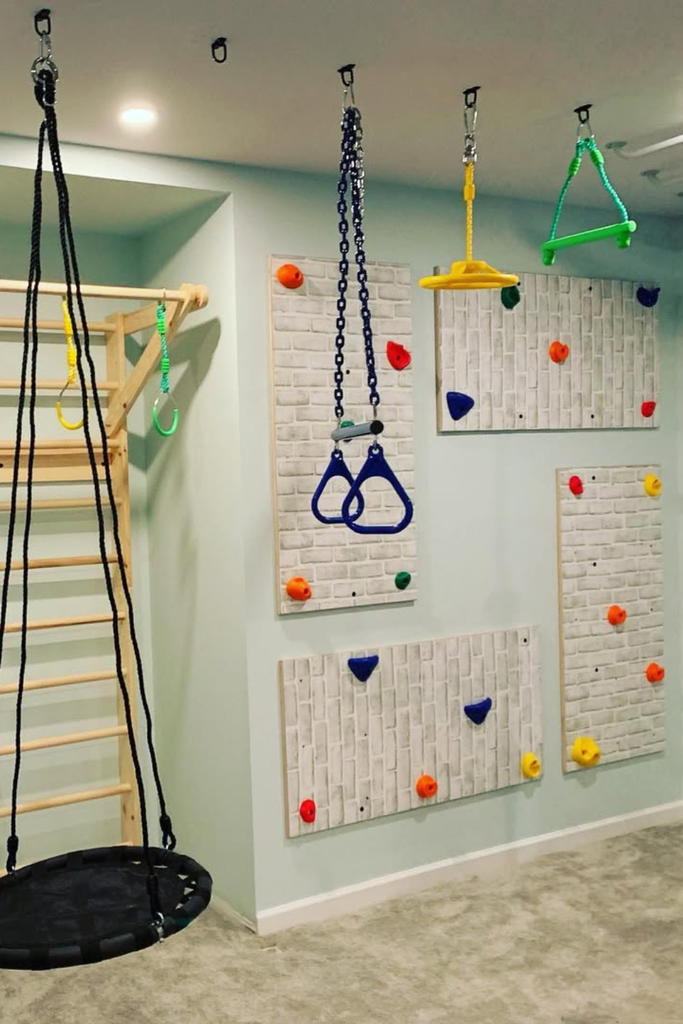
Create a calmer activity corner by pairing a sensory swing with floor cushions, soft seating, and a simple climbing wall.
Keep the equipment toward one end of the basement so the remaining floor stays open for other games and movement.
Natural light from a nearby window helps brighten the zone, while pale walls and a colorful mural keep the lower-ceiling space.
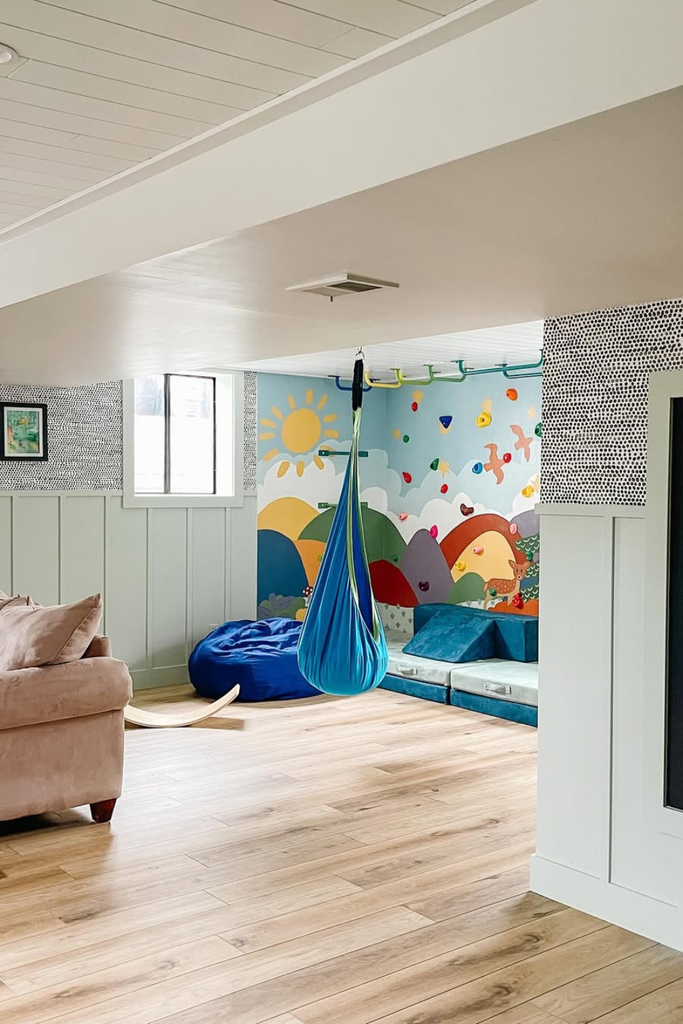
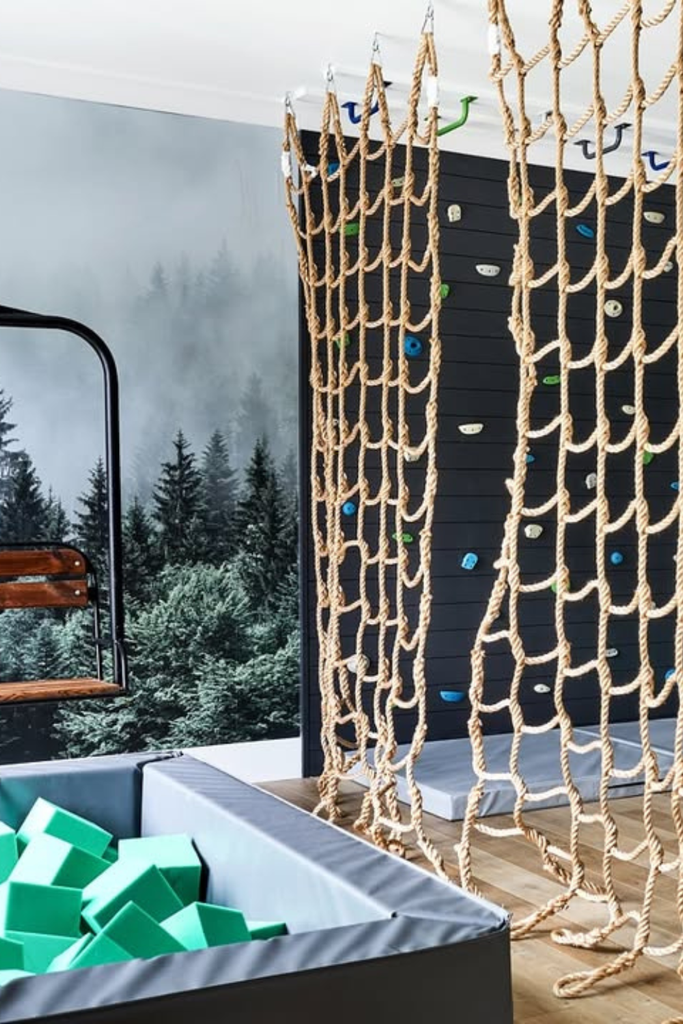
Adventure Course
Turn a long basement wall into a full movement course by combining climbing holds, rope nets, overhead bars and a swing.
Keep the center floor accessible so children can travel between activities after placing thick landing mats beneath climbing places.
Another active station can be made with a foam pit, and the darker climbing wall is easily visible thanks to recessed ceiling lights.
Colorful Storage Wall
One basement wall can be lined with low cubbies that children can reach without assistance to give toys a clear home.
Mix baskets with open sections keep little items contained and make it simple to locate and return beloved objects.
Place a child-size activity table nearby then use a large soft rug and comfortable seating to turn the same zone.
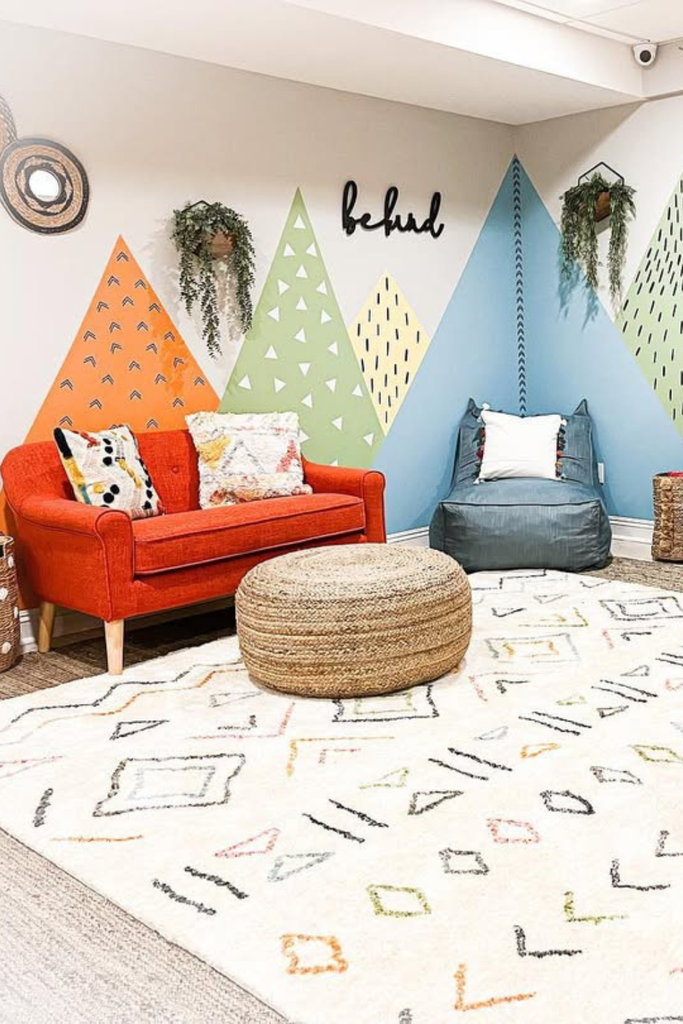
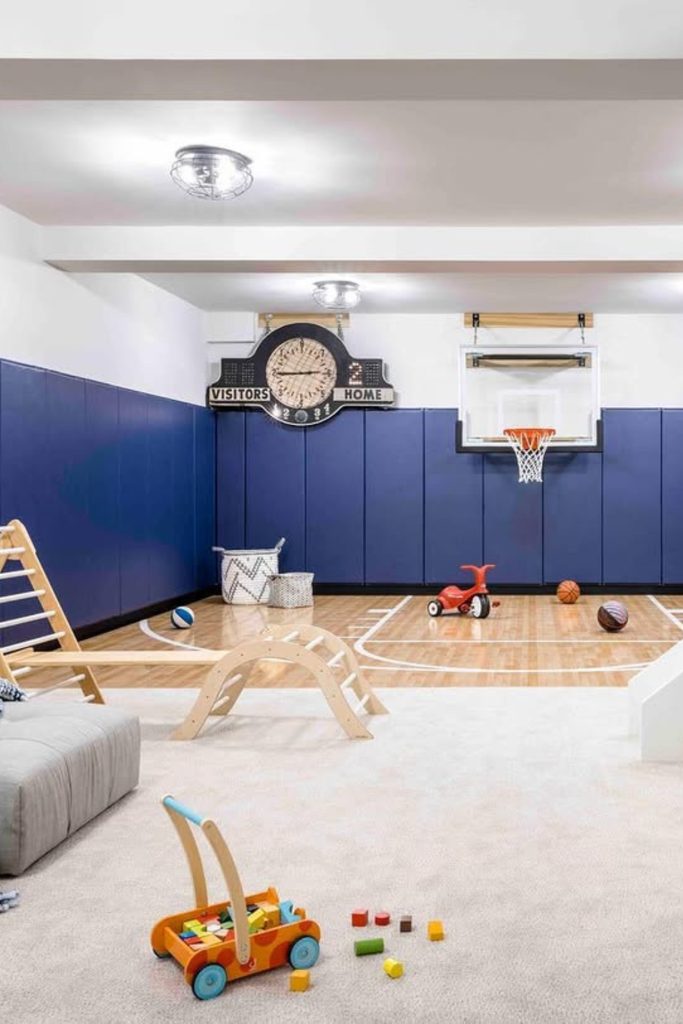
Sports Play Zone
Dedicate the far end of a long basement to basketball and active games while keeping softer play closer to the seating area.
Add padded wall panels around the court to protect busy edges, then leave enough open floor for riding toys and movement.
Flush ceiling lights spread bright even light across the court, while recessed ceiling lights keep the darker climbing wall clearly visible.
Open Storage Zone
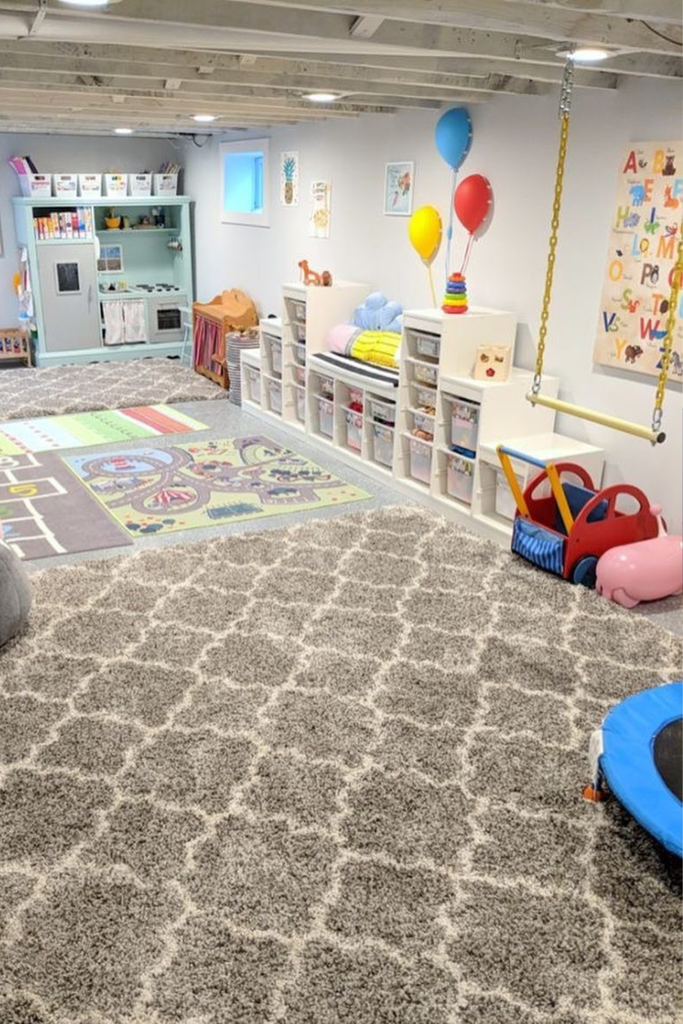
Keep an unfinished basement playroom manageable by using low open bins where kids can see, grab and return their own toys.
Group supplies by activity, then place pretend-play pieces while leaving the middle open for cars, floor games and movement.
Large rugs soften the hard basement floor, and evenly spaced ceiling lights help brighten the exposed-ceiling space.
Creative Craft Corner
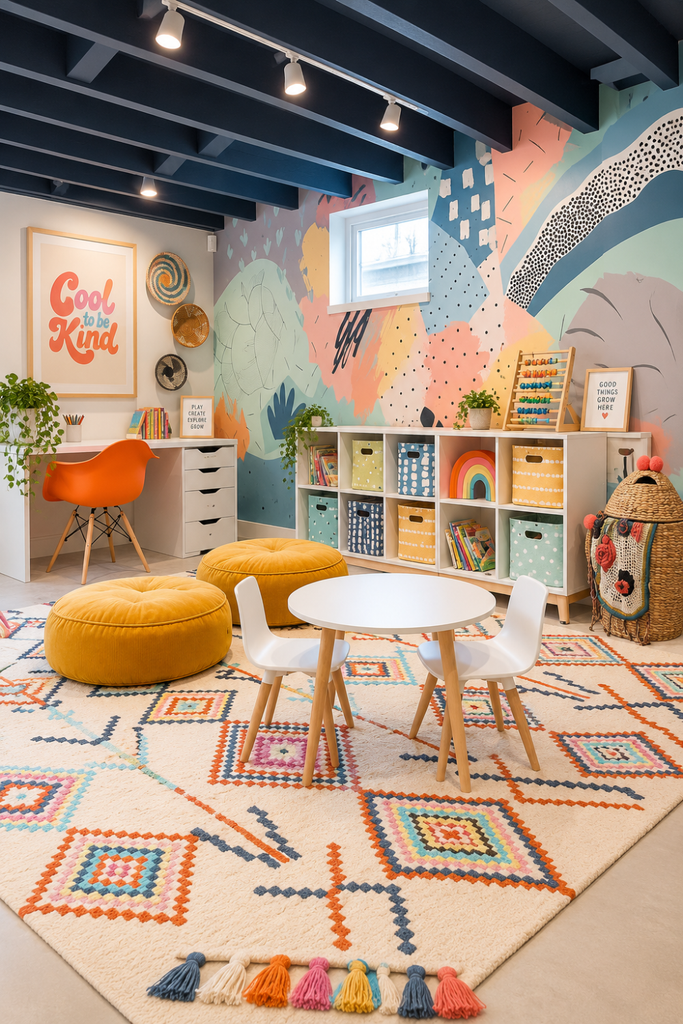
Set up the brightest basement corner with low cubbies that keep paper, books, and supplies within reach.
Use baskets inside the shelves to stop smaller materials from becoming messy, then add a soft rug and floor cushions.
A bold wall mural brings color into an exposed-ceiling basement without filling valuable floor space.
Climbing Circuit
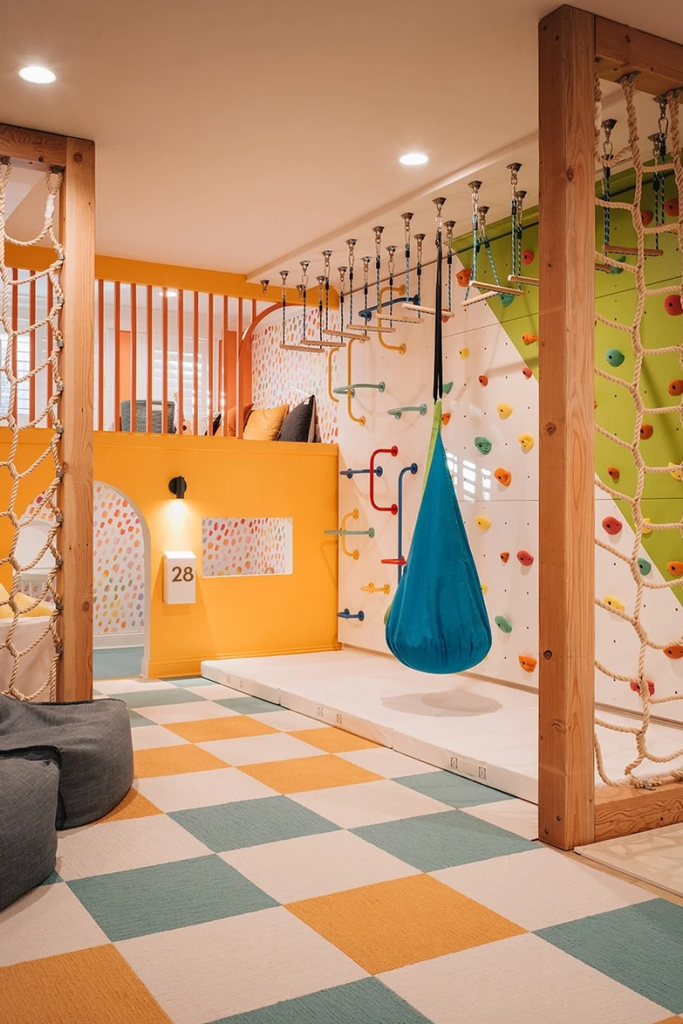
Use one side of the basement for a connected climbing circuit with rope nets, wall holds, hanging bars, and a sensory swing.
Keep thick landing mats beneath higher activities then leave a softer open section nearby for resting between turns.
Recessed ceiling lights brighten the full route, while a small wall light makes the tucked-away playhouse area feel warmer.
Toddler Storage Zone
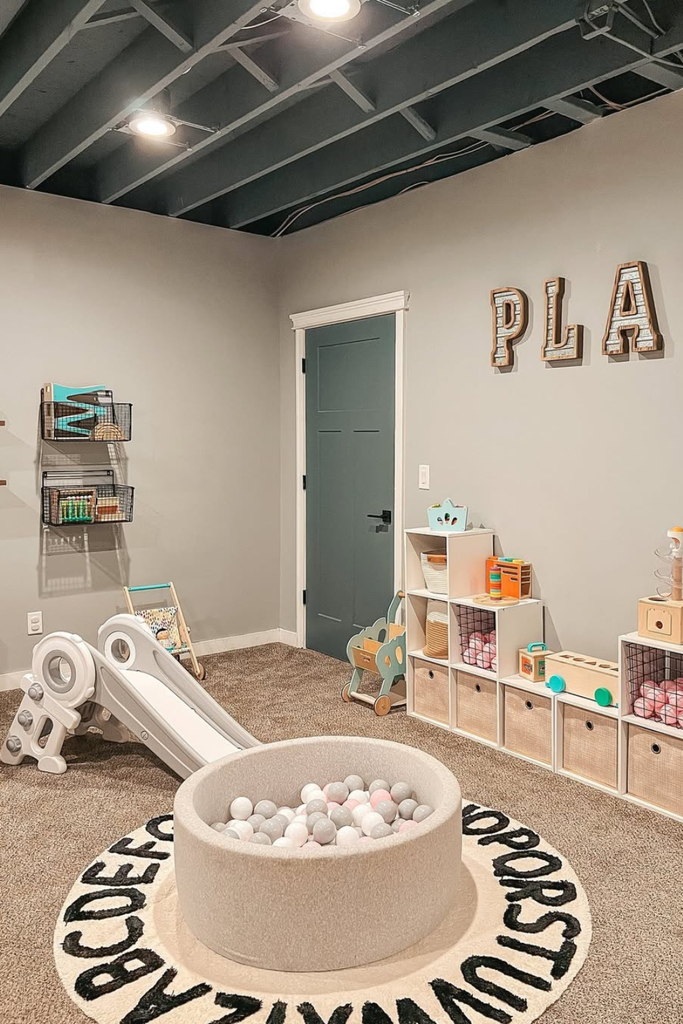
Make toddler toys manageable, arrange low cube shelves along one basement wall with bins for smaller pieces.
To keep favorite items visible soft activities like a ball pit and mini slide should be positioned near a few cubbies that are left open.
Carpet makes floor play more comfortable, while ceiling-mounted lights brighten the unfinished basement.
Climb And Create
Split one basement corner between active play and quieter table activities so kids can switch without taking over another room.
Build climbing holds and overhead bars along the walls then keep low cubbies nearby for books, toys, and craft supplies.
Soft carpet and a large rug cushion the floor, while recessed lights provide clear overhead lighting without interfering the climbing route.
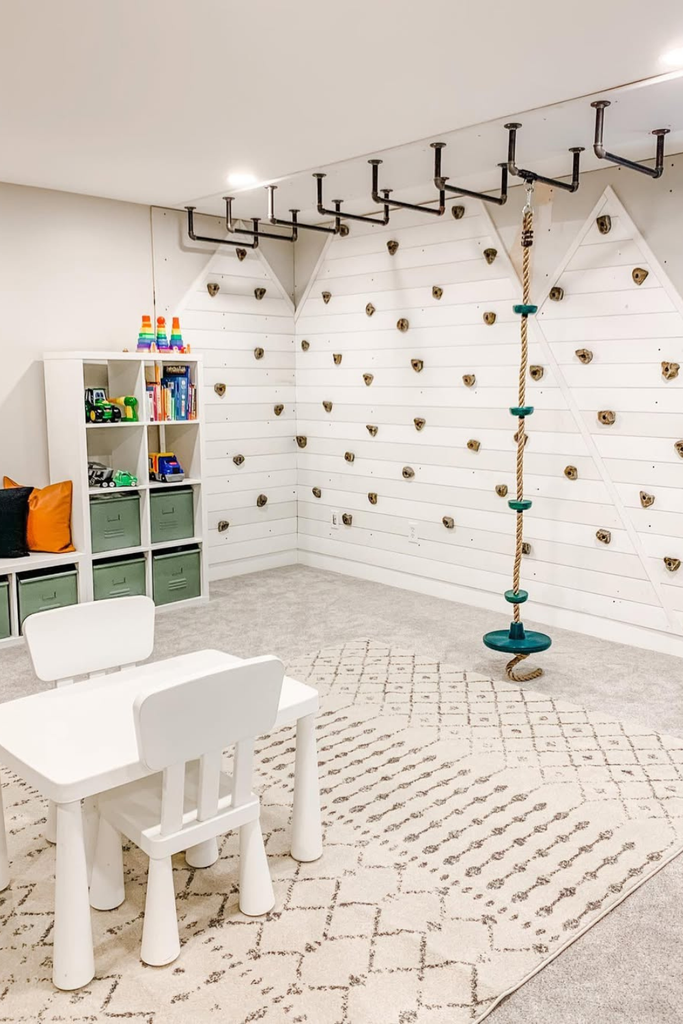
Backyard Playhouse
Bring an outdoor-play feeling downstairs by combining a small house, raised platform, slide, and mountain climbing wall.
Keep padded mats beneath the climbing section and use soft turf around the slide for a more comfortable landing area.
Natural light works especially well beside the playhouse, while a small wall light can brighten the pretend-play space.
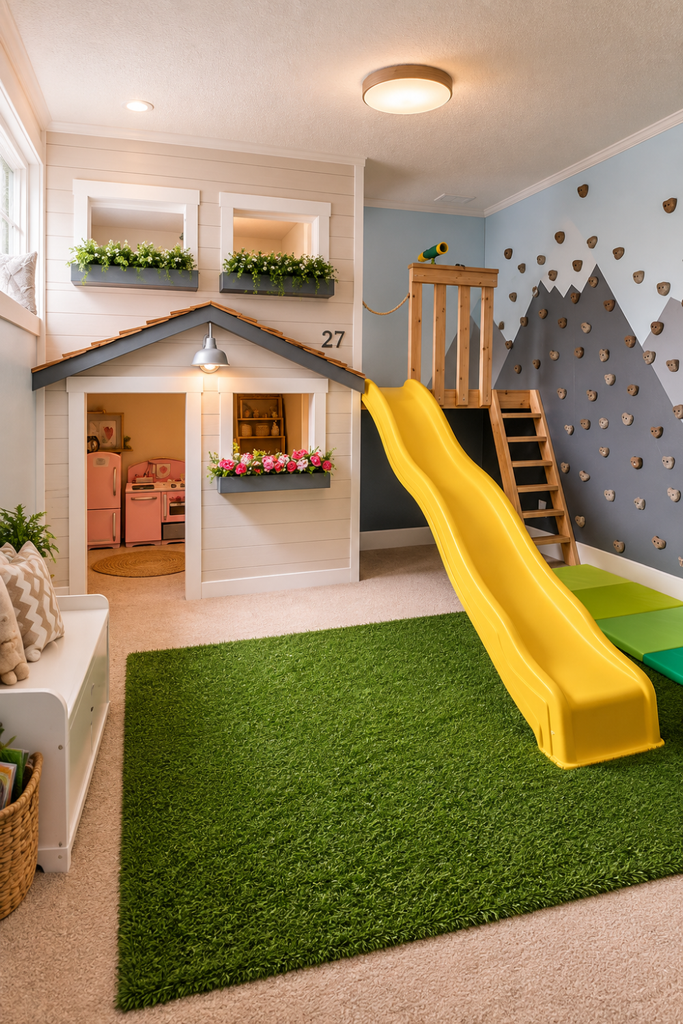
Mountain Adventure Wall
Turn a plain basement wall into an active playground by combining climbing holds, overhead bars, rope netting.
Keep soft blocks nearby so kids can rest, build, or create their own obstacle course between climbing turns.
A mountain mural makes the equipment part of the room design, while recessed ceiling lights provide bright coverage.
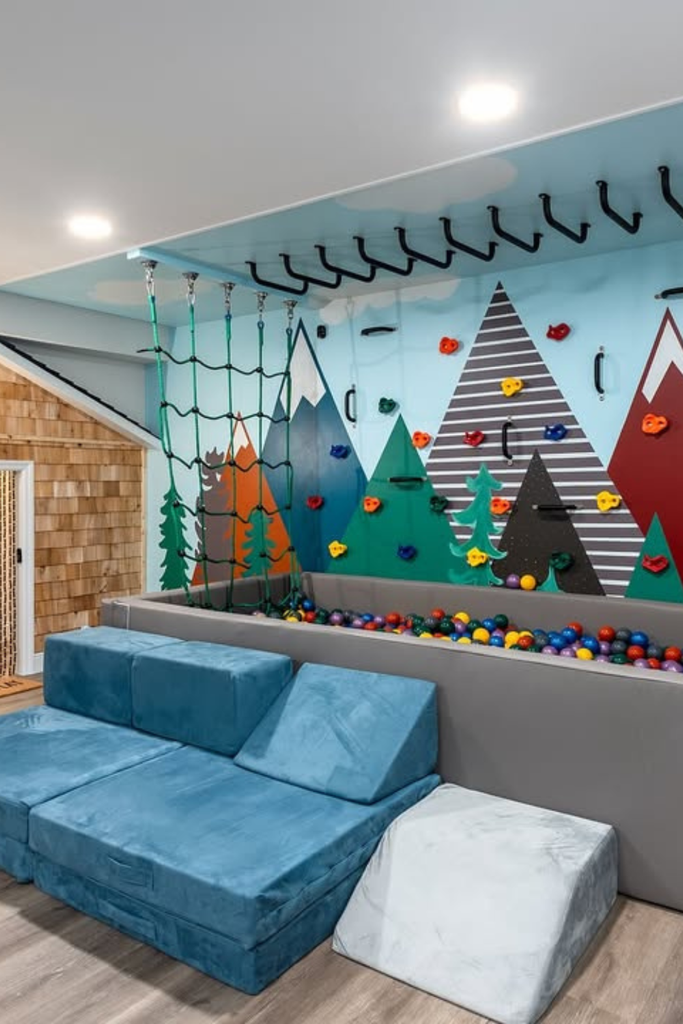
Foam Pit Zone
Give energetic kids a softer place to climb and jump with a slide, climbing wall, rope, and overhead bars.
Keep the active equipment grouped together so the opposite side can handle crafts, books, or quiet play.
Remaining safely above the climbing route recessed ceiling lights distribute brightness over both zones.
FAQs
How Can You Make a Basement Playroom Feel Brighter?
Start with light wall colors and keep basement windows clear so every bit of natural light can reach the room.
Add recessed or flush ceiling lights across darker areas, then use task lighting near craft tables or reading corners.
Bright rugs, playful wall art and lighter furniture can also stop the basement from feeling heavy or closed in.
How Can a Basement Playroom Grow With Your Kids?
Choose flexible pieces instead of designing every corner around one age. Low storage can hold toddler toys now.
Keep some floor space open and use movable tables, rugs, and seating to create zones you can easily change.
As kids grow, climbing or pretend-play areas can become homework, gaming, hobby, or hangout spaces.

Hi, I’m Afaf! I’m a law student who loves writing about everyday life – from home projects and crafts to fashion, beauty, and parenting tips.
I’ve been writing for over a year, sharing ideas that are simple, practical, and easy to try. I write about things I find interesting and useful, whether that’s organizing a space, trying a new DIY, or finding activities to keep kids entertained.
My goal is to share helpful ideas without making things complicated. If it works in real life, I’ll write about it.
When I’m not studying or writing, I’m usually experimenting with new projects or scrolling for inspiration!