
26 Office Playroom Combo Ideas
When toys, coloring books, and craft supplies start taking over the floor, an office playroom can quickly feel too crowded for both work and play.
Adding more storage furniture may only make the problem worse because every cabinet or bin takes away space your child could use.
You can keep everyday toys easy to reach, messy craft supplies organized, and your work area clear without filling every open spot on the floor.
Where Should Toys and Craft Supplies Go?
When floor space is limited, keep storage around the edges of the room instead of placing extra bins and cabinets where kids play.
Use low wall shelves for everyday toys and books. Move less-used toys, extra supplies, and refill materials onto higher shelves or inside closed cabinets.
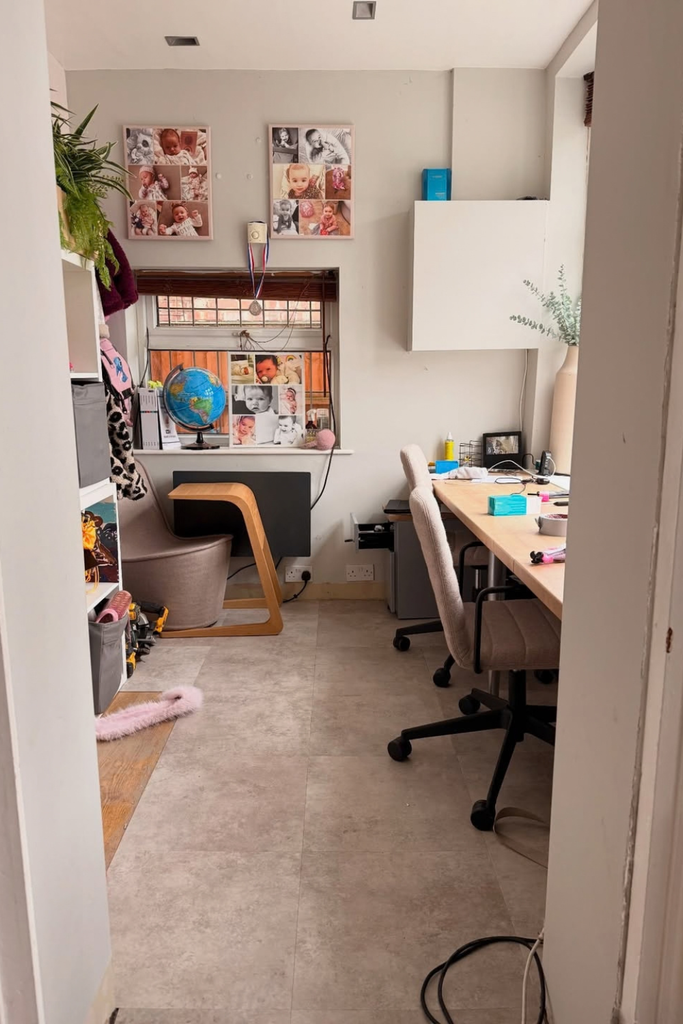
Craft supplies can quickly become messy, so keep crayons, paper, and other frequently used items together in labeled drawers.
Use the space under a desk, bench, or table for bins rather than leaving it empty. If you still have too much to store, rotate toys.
This keeps the center of your office playroom open for play while preventing toys and craft supplies from spreading into your workspace.
Wall Storage Office
Keep bulky storage against one wall so your desk stays functional while the remaining floor can become a flexible kids’ play zone.
Use lower baskets for everyday toys then reserve upper cubbies and closed cabinets for craft supplies you want to control.
Natural window light brightens both zones while a small desk lamp gives you focused light when you work later.
Activity Corner
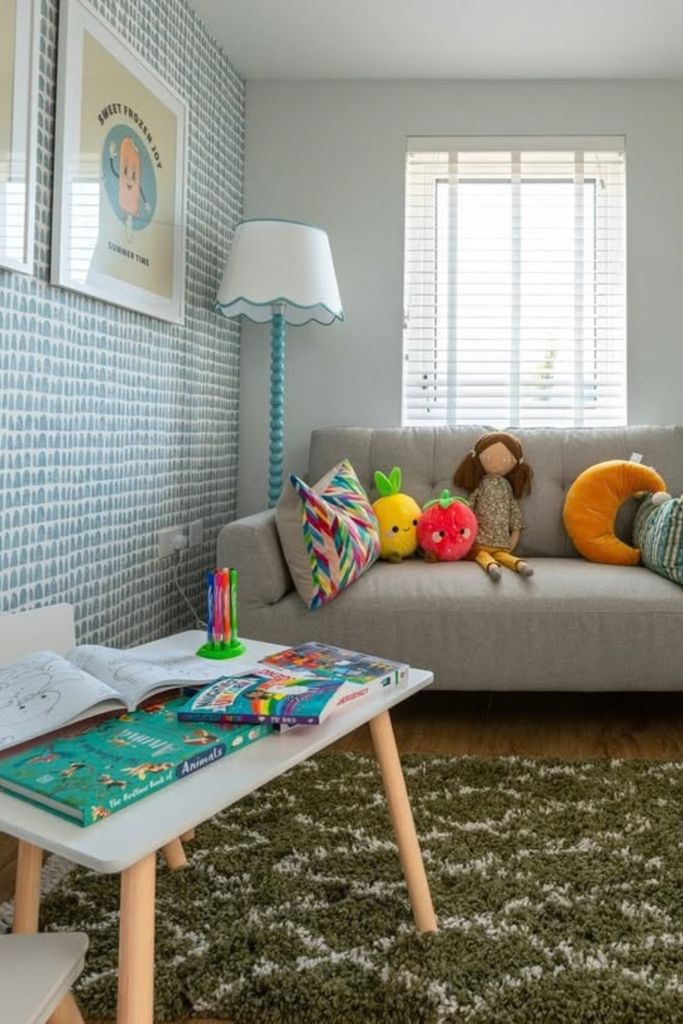
Create a low-activity area on one half of the room where children can play and color without scattering materials all over the place.
Use a table that is kid-height and keep a small rolling cart close by so that favorite toys can be quickly moved and stored.
Window light keeps daytime activities bright, while the tall floor lamp adds softer light for reading and quieter play.
Media Storage Wall
Instead than packing the floor with individual storage bins, give toys a permanent home beneath the TV to keep the space open.
For your favorite toys, use open cubbies; for minor items you want to hide after playtime, use dark baskets.
Later screen time can be supported by surrounding ambient lighting and natural room light, so keep the center open with a big rug for play.
Window Play Zone
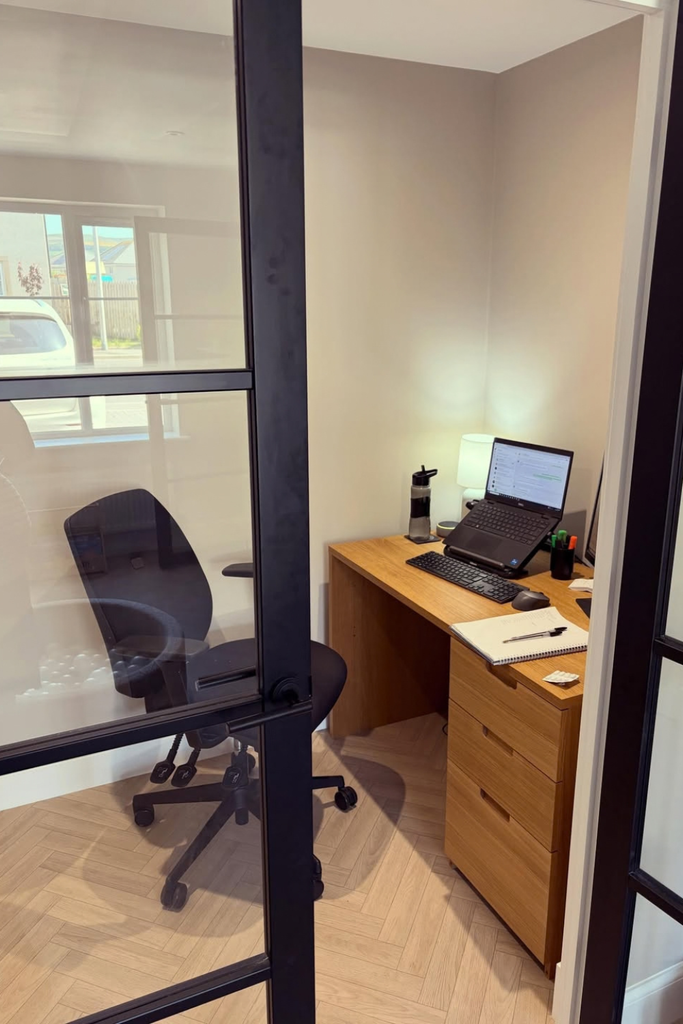
You want to leave the bigger space free for your office setting, use a bright window area for active play.
Kids can reach toys themselves by lining the wall with low storage, and when playtime is over, drawers conceal smaller items.
Wide windows provide plenty of natural light during the day, while a recessed ceiling light can keep the zone usable after sunset.
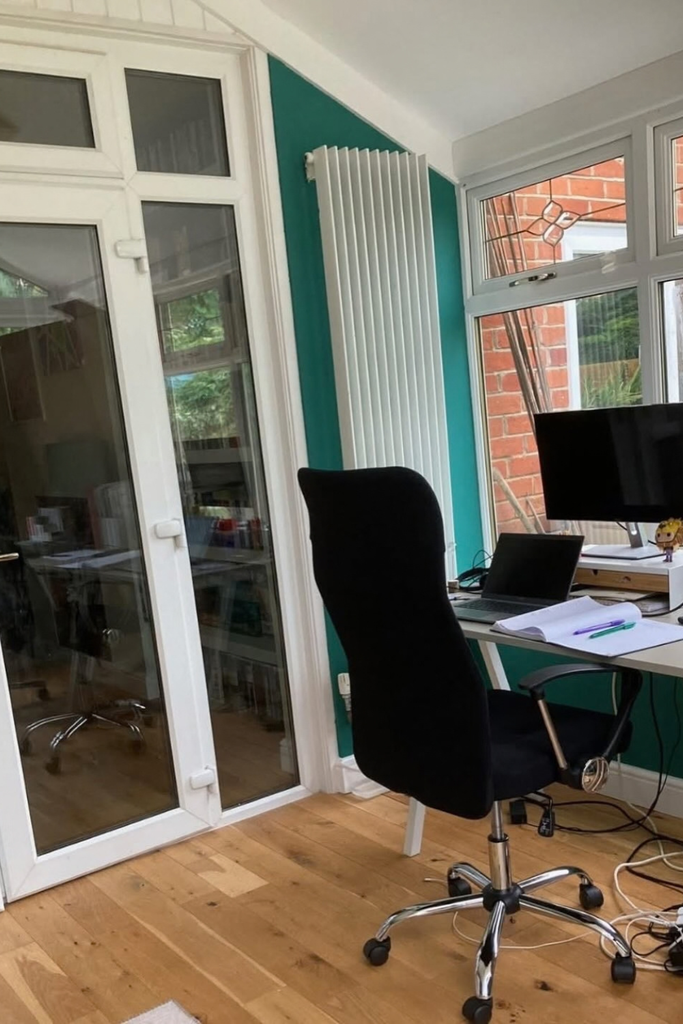
Split Activity Zones
Give each side a clear job when you need your workspace and kids’ activities to function together without competing for room.
Place your desk across from a kid height table next to wall activities so you may work while still being able to play.
While concealed ceiling strips, shelf lighting and a desk lamp provide distinct layers for evening use, daylight sustains both spaces.
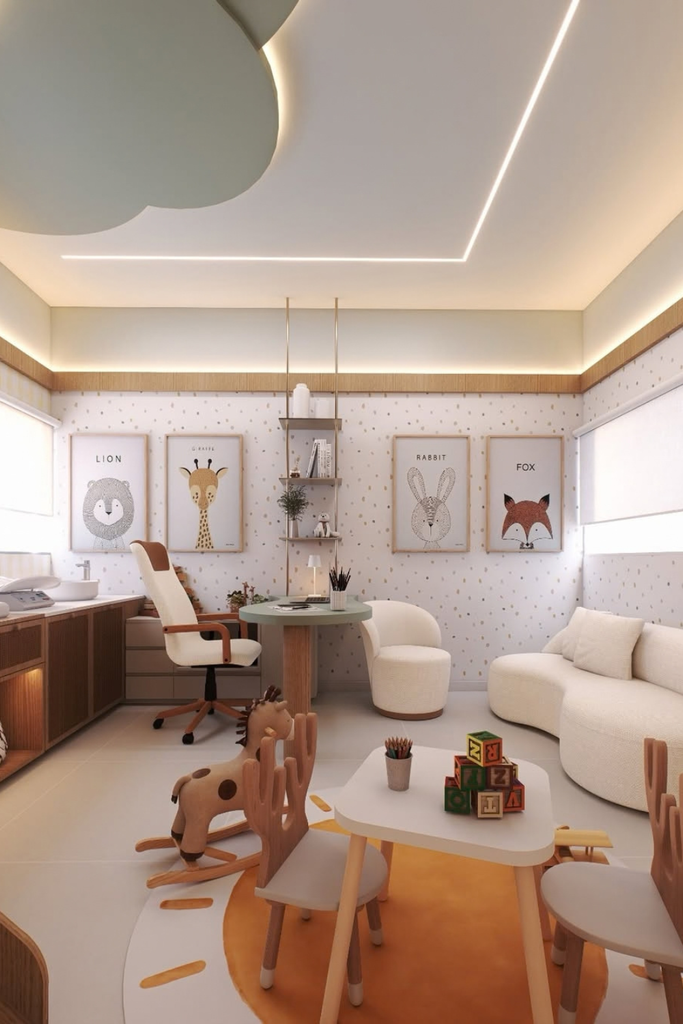
Side Activity Table
Keep the kids’ table along one wall when you need a simple play station without interrupting movement through a narrow office.
Add small baskets for puzzles, building toys and craft tools then leave the center open so activities can spread out when needed.
Bright overhead lighting covers the whole room, while recessed spotlights add another useful layer around the work and play areas.
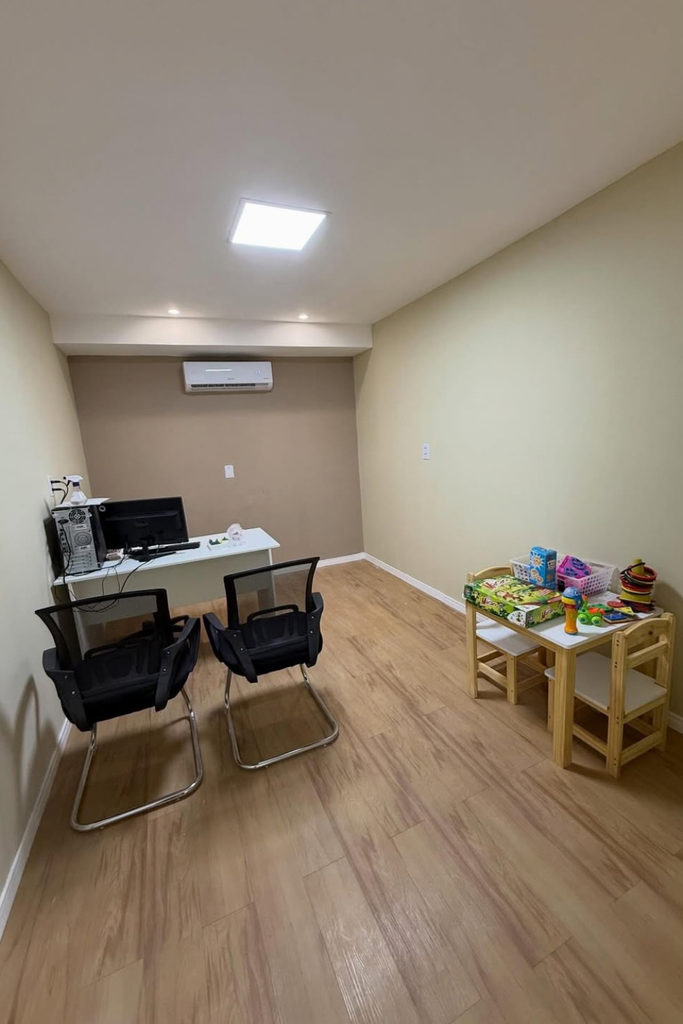
Color Zoned Play
Use a painted feature wall to mark the kids’ zone when you want separation without adding bulky dividers between work and play.
Your workstation remains distinctly close by, set up a craft table and low toy shelf against this side so that supplies are easily available.
During the day, natural window light facilitates work, and after dark, a tiny desk lamp and ceiling track lights offer focused layers.
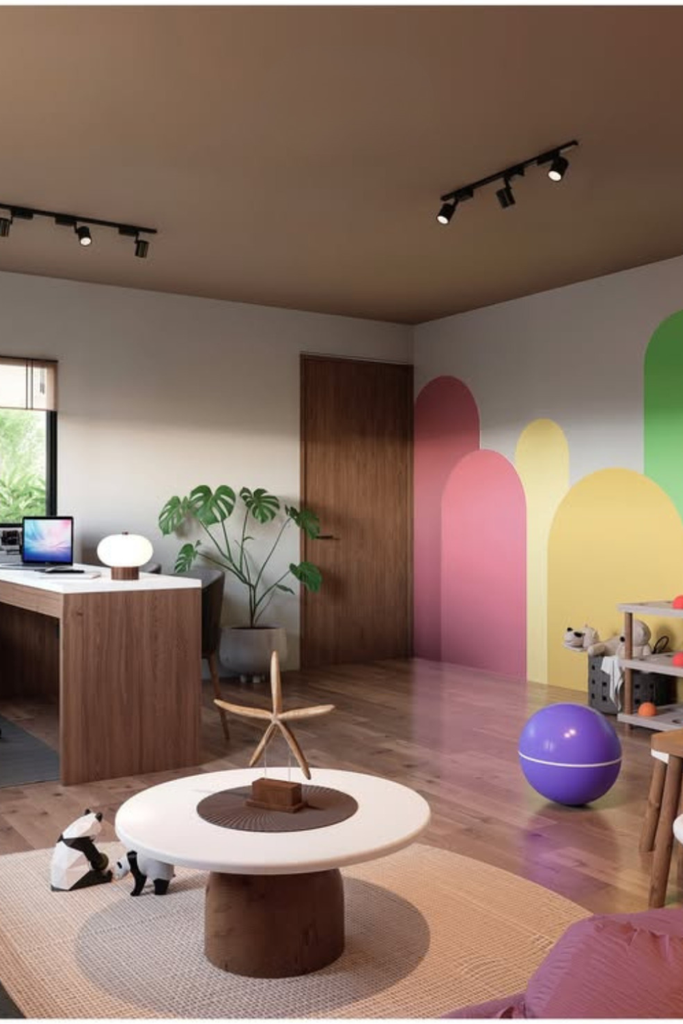
Book Display Wall
Turn an empty wall recess into front-facing book storage so kids can choose stories without adding another bulky bookcase to the floor.
Keep favorite books within easy reach then use nearby drawers for puzzles, craft supplies and toys that create visual clutter.
Soft window light makes the floor comfortable for daytime reading, while a hanging pendant adds warm light when the room gets darker.
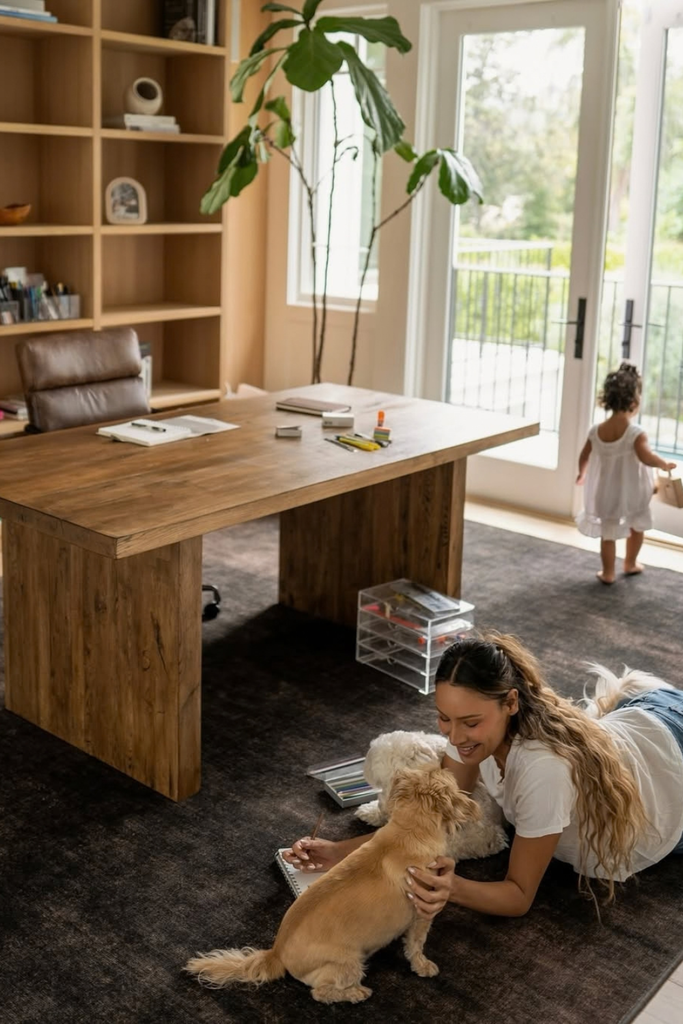
Dual Purpose Nursery
Make a narrow room work harder by keeping your desk along one wall and using the opposite side for baby care and storage.
Choose deep drawers to hide diapers, toys, and extra supplies so everyday clutter never starts spreading around your workstation.
Window light keeps both areas bright during the day while the central pendant provides soft overhead lighting when natural light fades.
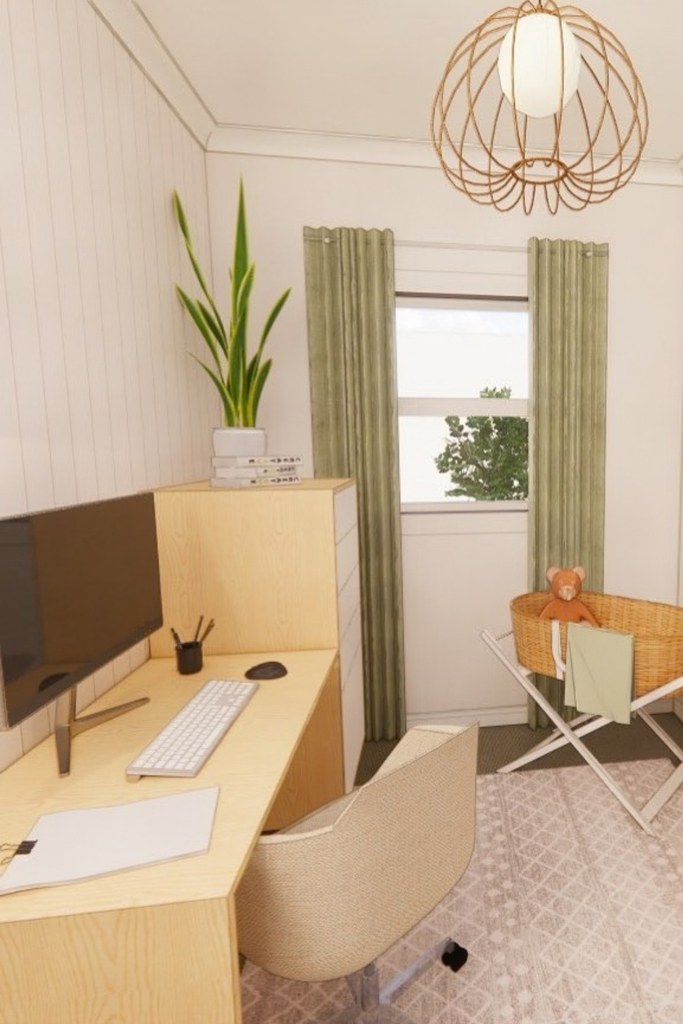
Craft Storage Wall
Move craft supplies upward when you want plenty of storage without letting baskets and containers consume valuable play space.
Combine tall cabinets with labeled baskets then mount a pegboard above the desk for scissors, notes and frequently used creative supplies
Movable desk lamp gives focused task lighting for crafts and work while general room lighting keeps the surrounding storage easy to use.
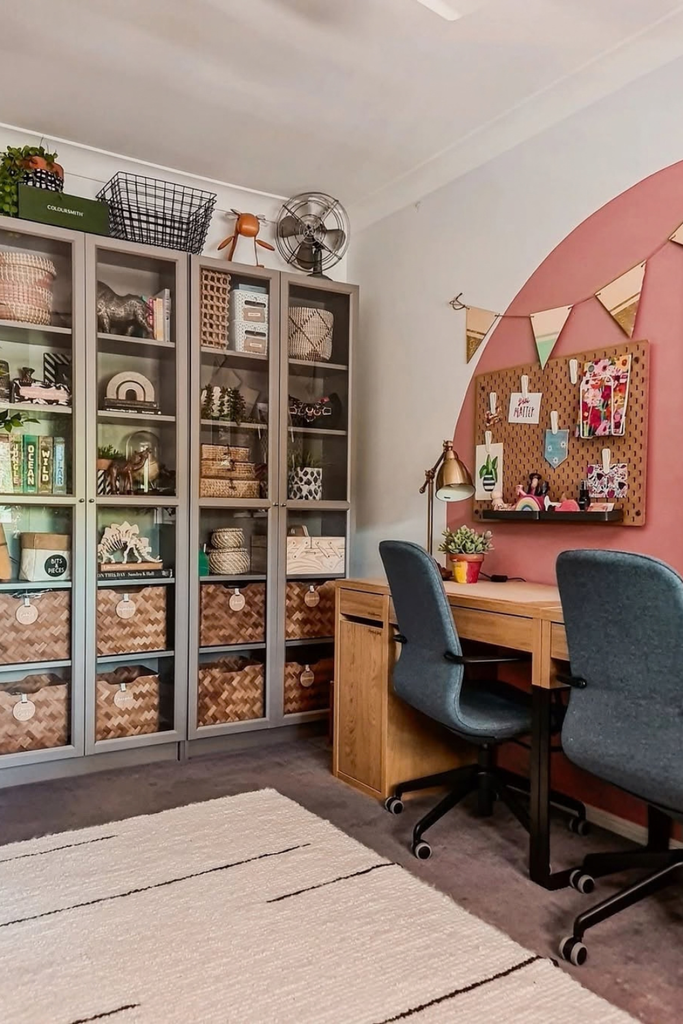
Vertical Craft Station
Build storage upward beside your desk when craft materials keep stealing the floor space kids need for bigger activities.
Use clear drawers for sorted supplies, open bins for daily projects, and closed cabinets for materials you want kept out of reach.
Window light brightens the whole station, while an adjustable desk lamp gives focused light for detailed crafts and computer work.
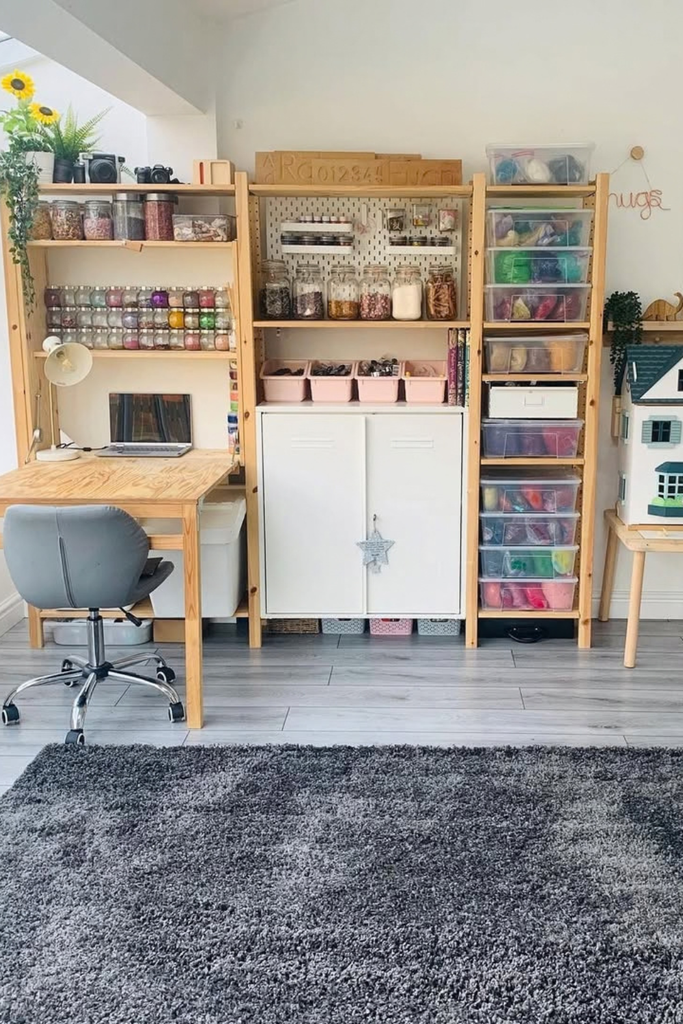
Desk Storage Divider
Use low shelving behind your desk to create a clear boundary while giving kids plenty of reachable storage for books and favorite toys.
Fill lower cubbies with labeled bins and larger toys then keep books and quieter activities along the window-side shelves for easy access.
Wide windows bring in strong natural light while a desk lamp can add focused lighting for work without brightening the whole play zone.
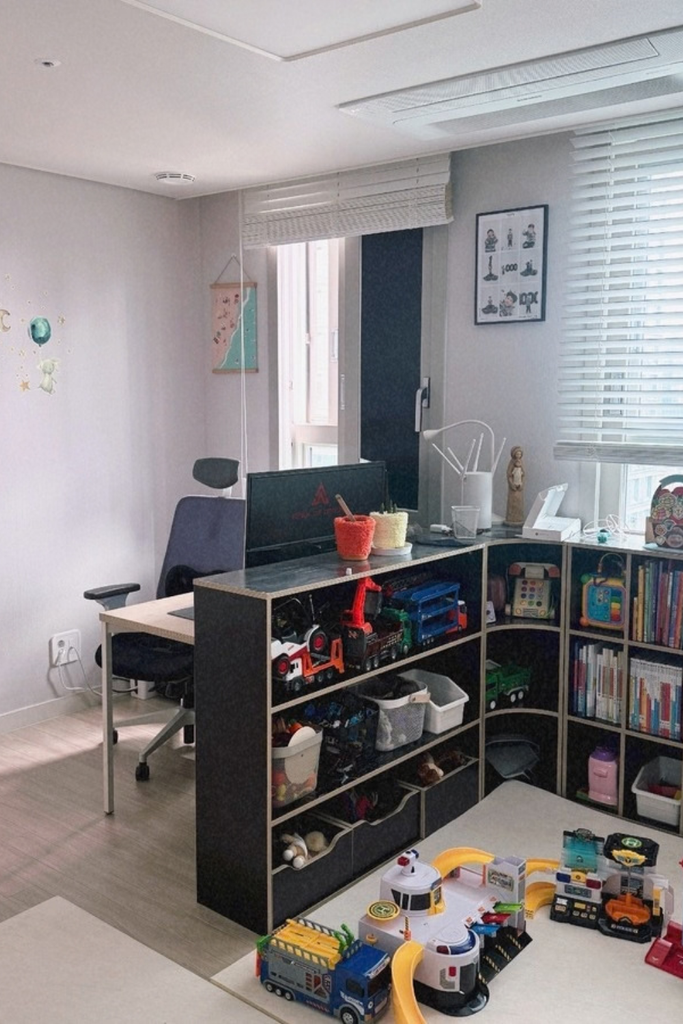
Shared Workstation
You want your workspace and children’s drawing stations to be together without the need for additional tables, stretch one desk over the wall.
Give each seat its own drawers so pencils, paper, chargers, and craft supplies stay organized instead of collecting across the desktop.
Large windows provide strong natural light while recessed ceiling lights and the statement pendant keep the shared workspace bright after sunset.
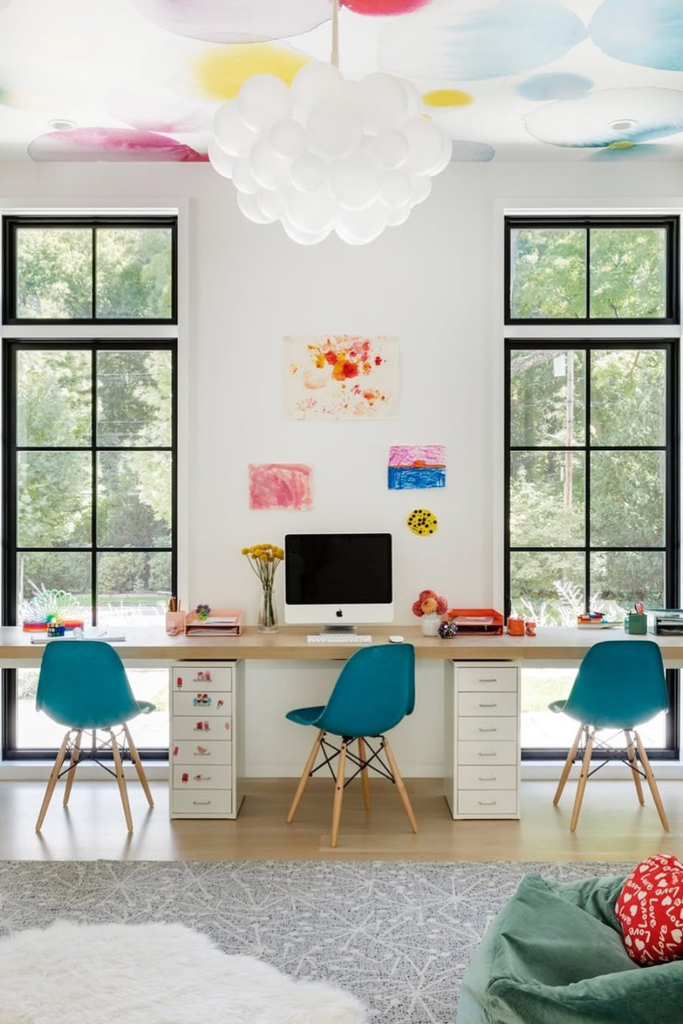
House Storage Nook
You want children close by, carve aside a little play area next to your desk so their toys don’t get in the way of your work.
Make advantage of a house-shaped cubby with labeled bins for small toys, books, and blocks, keeping everything low.
Task lamp can be employed on the open desk side for concentrated evening work while filtered window light naturally enhances the play area.
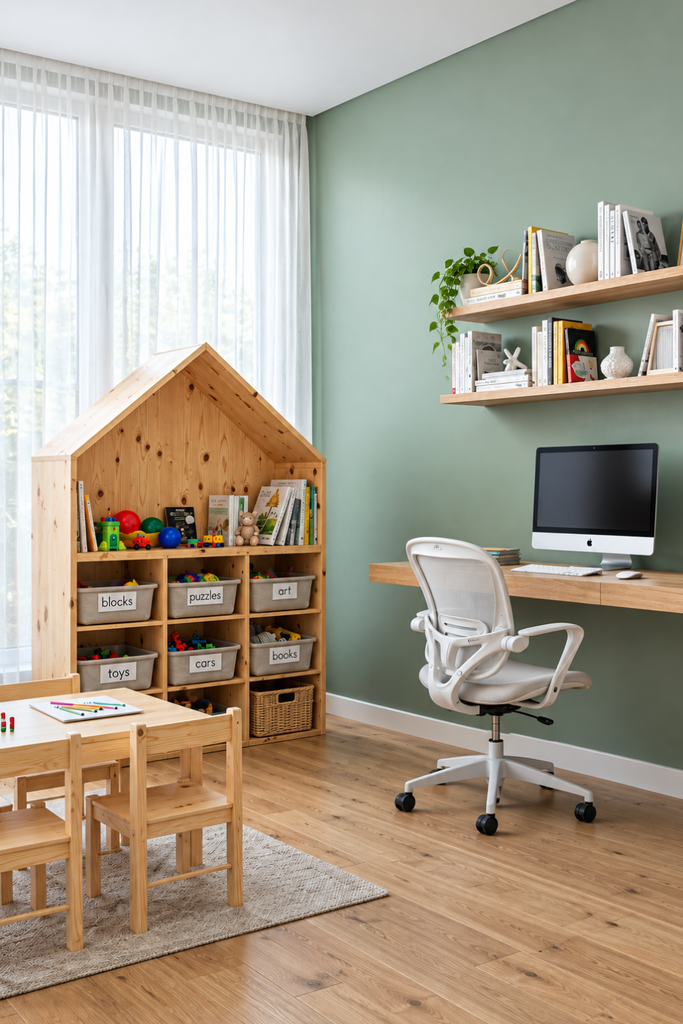
Gaming Work Zone
Mix work and gaming in one compact zone when older kids need entertainment nearby without filling the room with extra furniture.
Run one long desk around the walls, then use upper shelves for collectibles and closed lower cabinets for controllers, games and office supplies.
Daylight enters from the window and skylight while recessed spots and shelf lighting add focused layers for evening gaming and work.
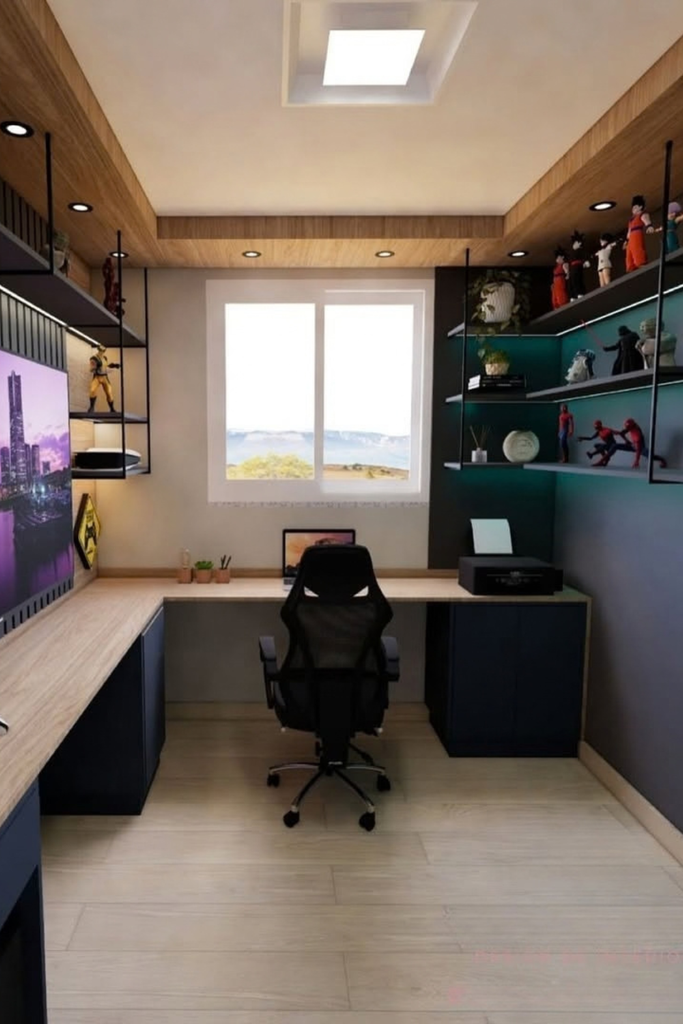
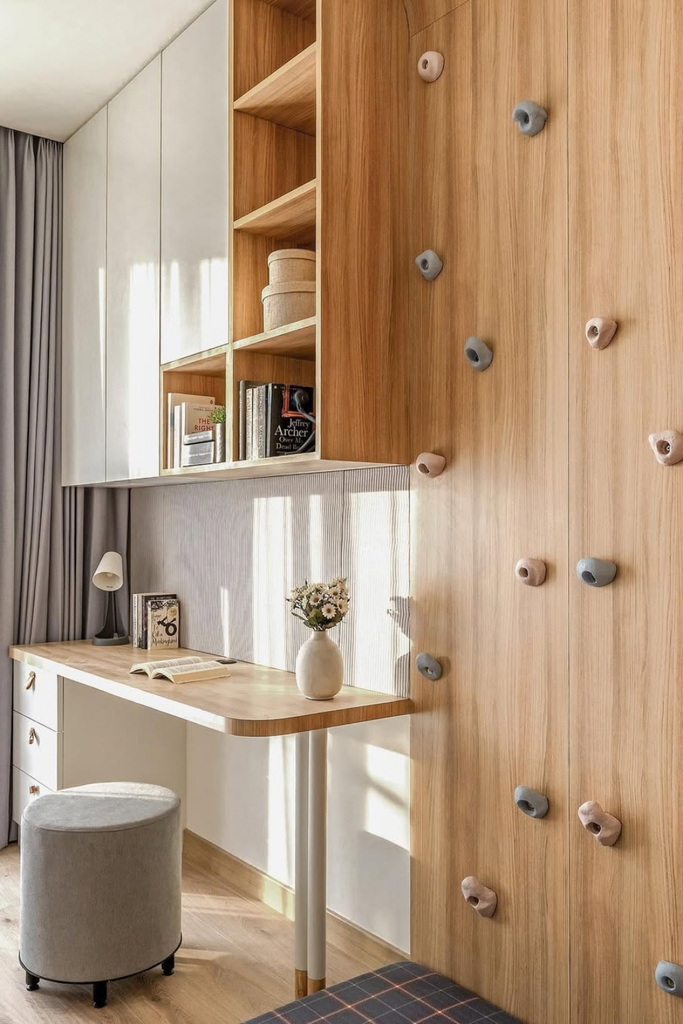
Climbing Office Wall
Turn one vertical section into a climbing feature when you want active play without sacrificing the floor around your workstation.
Keep the desk beside it then use built-in upper cabinets and open shelves to store books, toys, and less-used supplies overhead.
Strong window light fills the area during daytime while a compact desk lamp adds focused light for reading or evening work.
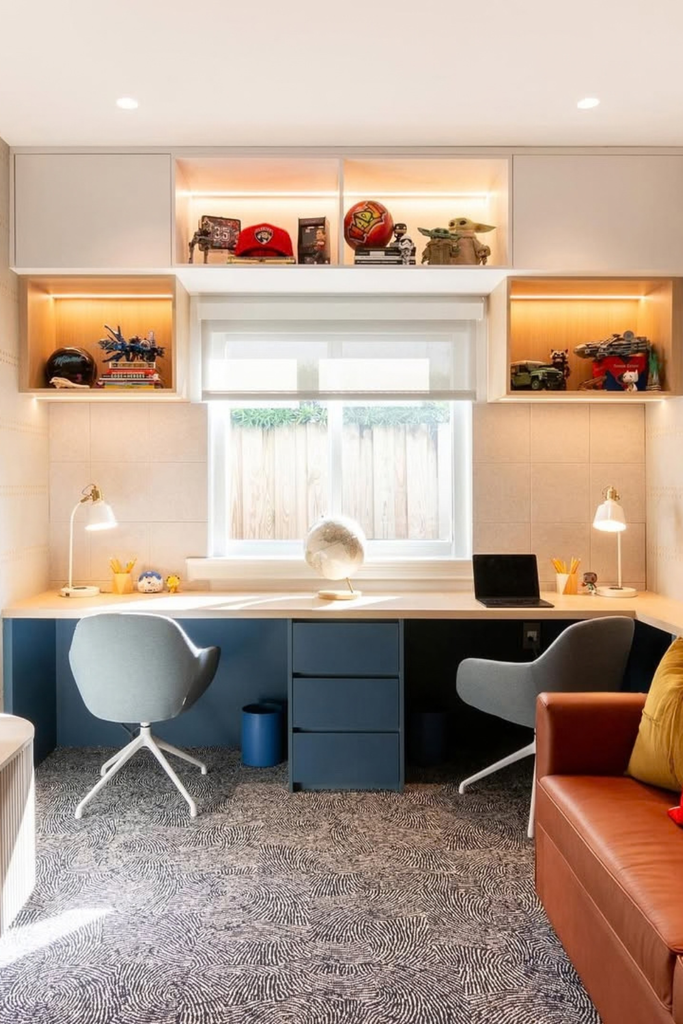
Homework Office Hub
Plan one long workstation for both you and older kids when homework needs to happen close to your own work area.
Give each seat dedicated drawers then move collectibles and less-used items into overhead cabinets so the desktop stays clear.
Window light handles daytime work, while matching desk lamps, recessed lights and warm shelf lighting create useful layers.
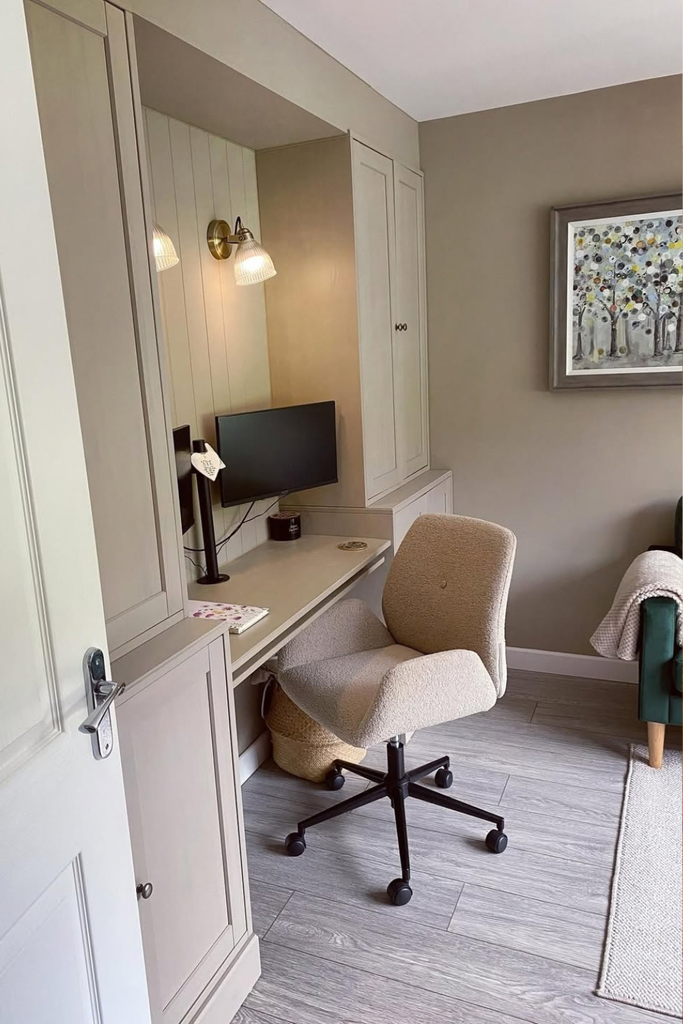
Hidden Office Storage
Keep the shared space peaceful for play, choose full-height cabinets to stow away office items around your desk.
Put electronics and files behind top doors, and use lower cabinets for toys or craft supplies that need to be cleaned up quickly.
A wall sconce gives focused desk light without using surface space, while general room lighting can handle the wider play area.
Bench Storage Zone
Make a window bench do more than provide seating by using the space underneath for toys that usually end up across the floor.
Matching bins should be slid into open cubbies so children can retrieve what they need and return everything without the need.
Adjustable ceiling spotlights give even light when the room gets darker, window light enriches reading and table activities.
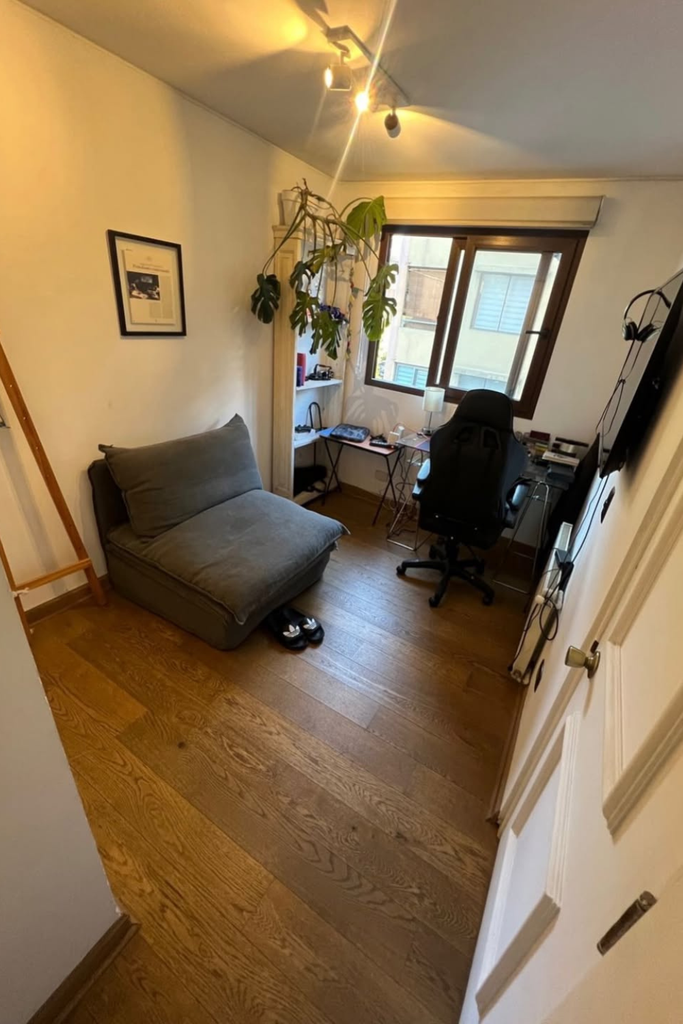
Open Floor Zones
Push the desk, toy storage, and activity table toward the walls when kids need plenty of uninterrupted floor space for bigger play.
Use low cubbies for books and toys, then define active play with a soft rug instead of adding another bulky piece of furniture.
Tall windows flood both zones with daylight while the central pendant provides general lighting once natural light starts fading.
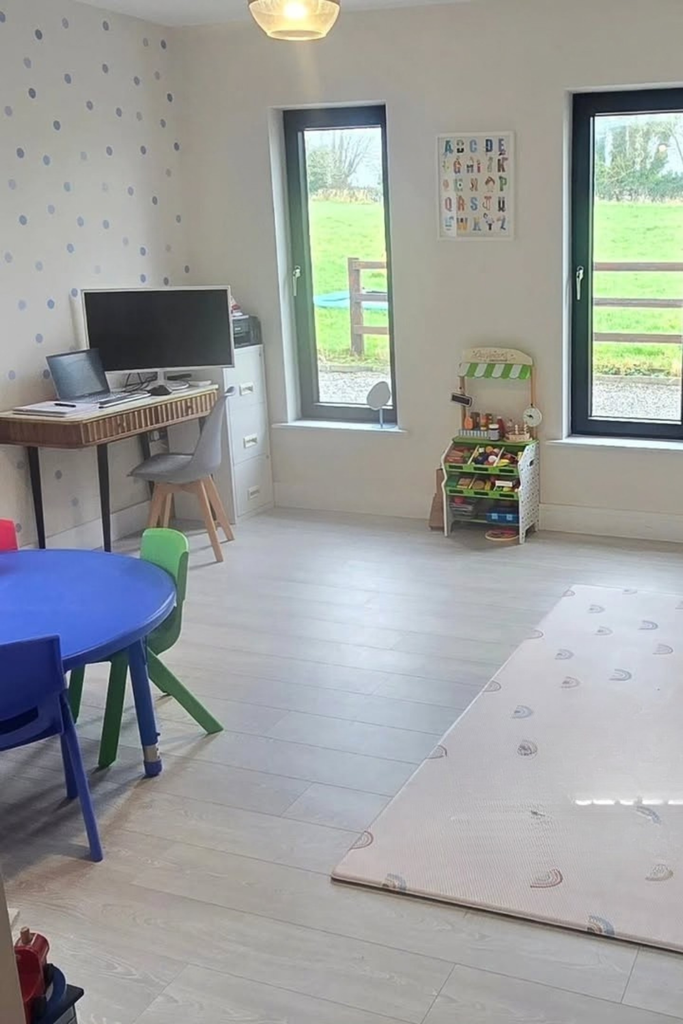
Hidden Toy Bench
Hide bulky toys inside a storage bench when you want the play area to feel open without lining every wall with cubbies.
Choose a wide, easy-access compartment for stuffed toys and larger pieces then keep smaller everyday items sorted in nearby baskets.
Natural window light fills the floor during playtime, while soft general lighting can keep the corner comfortable later in the day.
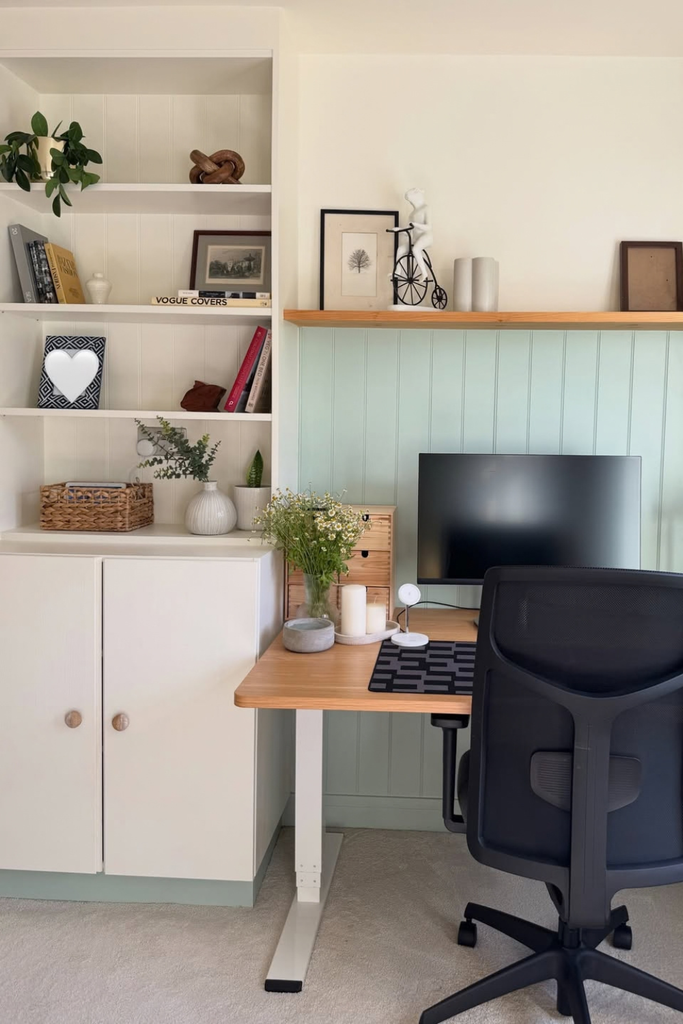
Built In Office
Tuck your workstation into built-in cabinetry when you want the office side to use one wall instead of taking over the room.
Use tall closed cupboards for paperwork and craft supplies, while lower drawers can hold kids’ materials that need quick access.
A small desk lamp provides concentrated light for evening work and the roof skylight and large windows let in brightness.
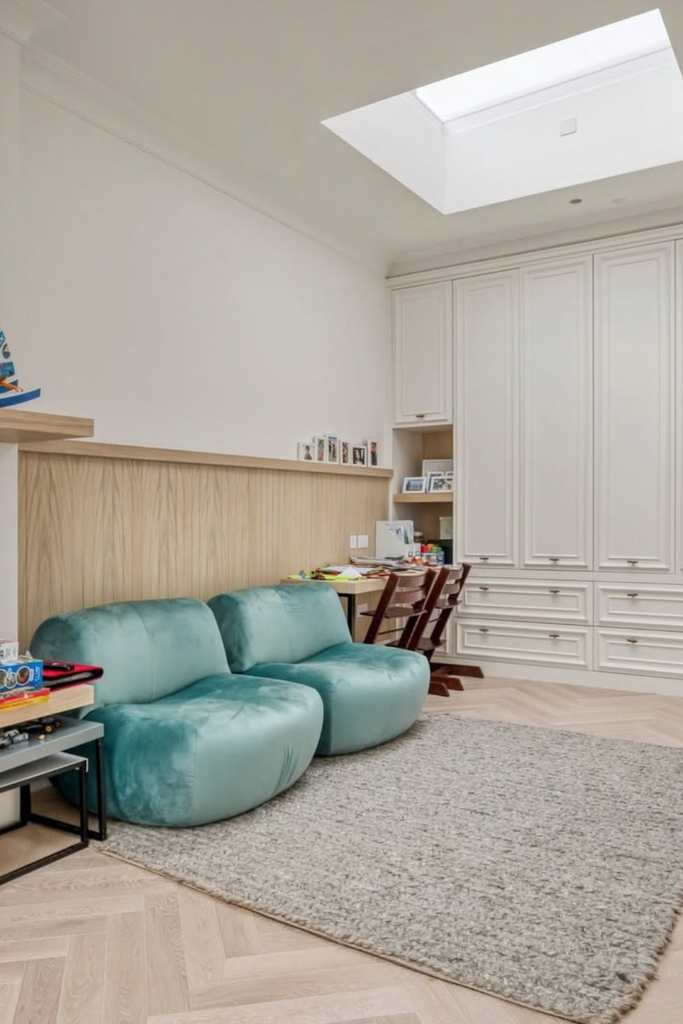
Side By Side
Keep both areas functional without vying for the same surface, place your workstation and the kids’ activity table on opposing sides.
Mount toy bins and closed cabinets above the children’s table leaving the floor open for rocking toys and independent play.
Tall windows bring in generous daylight, while the large pendant adds soft overhead light across both work and play areas.
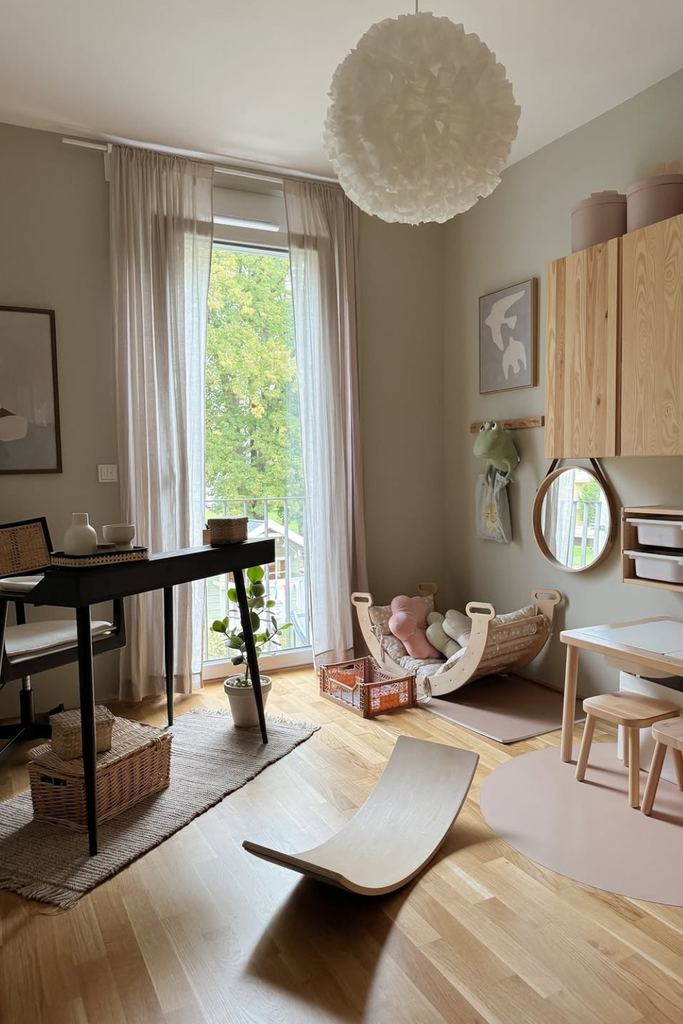
Display Storage Desk
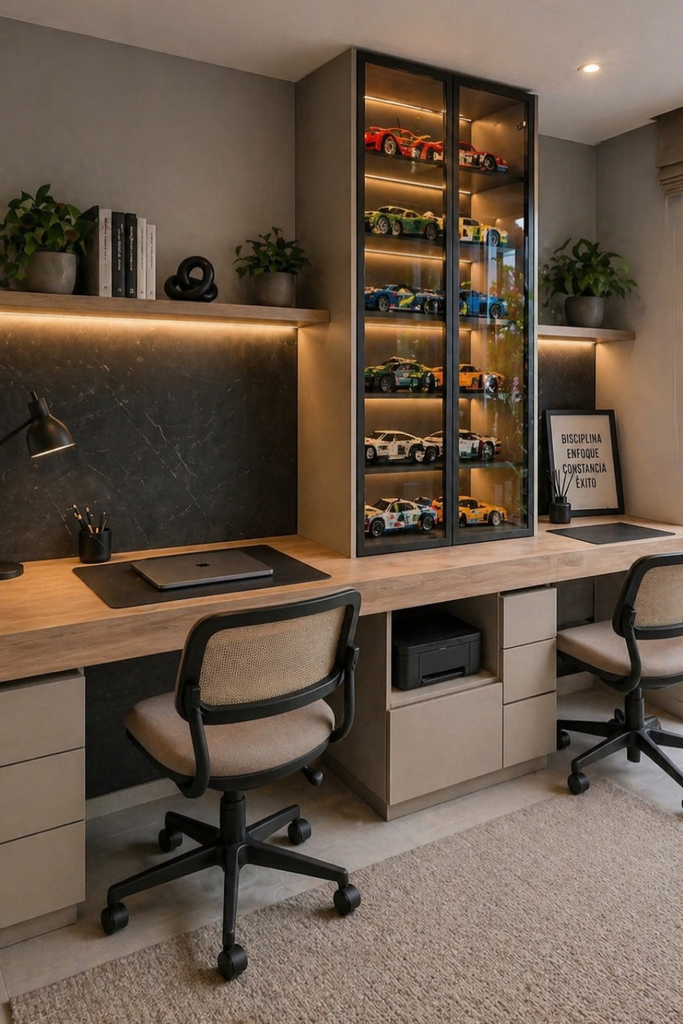
Turn the wall above a shared desk into display storage when older kids have collections you want kept off work surfaces.
Use glass cabinets for favorite models then add drawers below for office supplies, games and smaller items that create clutter quickly.
Window light supports daytime tasks, while shelf strips, under-shelf lighting, a desk lamp, and recessed lights create useful evening layers.
Compact Office Corner
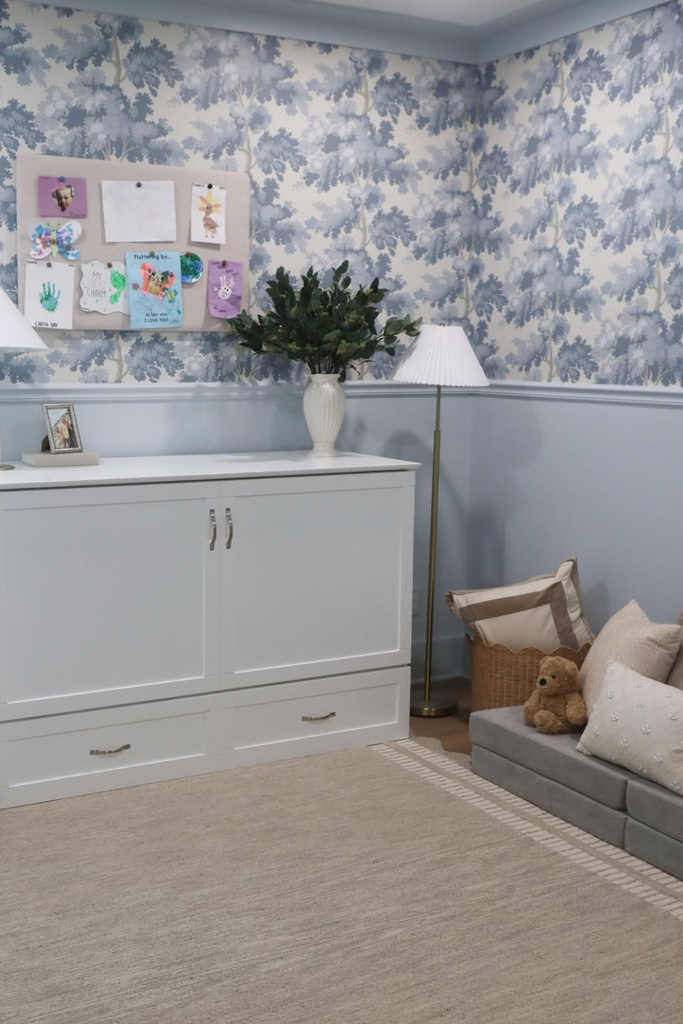
When the same place needs more attention and room for children’s activities nearby keep your workspace visually peaceful.
Select a modest workstation with small bins and documents, and steer clear of additional floor cabinets that could clog the play area.
Lighter walls and finishes make the office nook feel airy rather than stuffy and soft room lighting facilitates daily work.
Built In Workspace
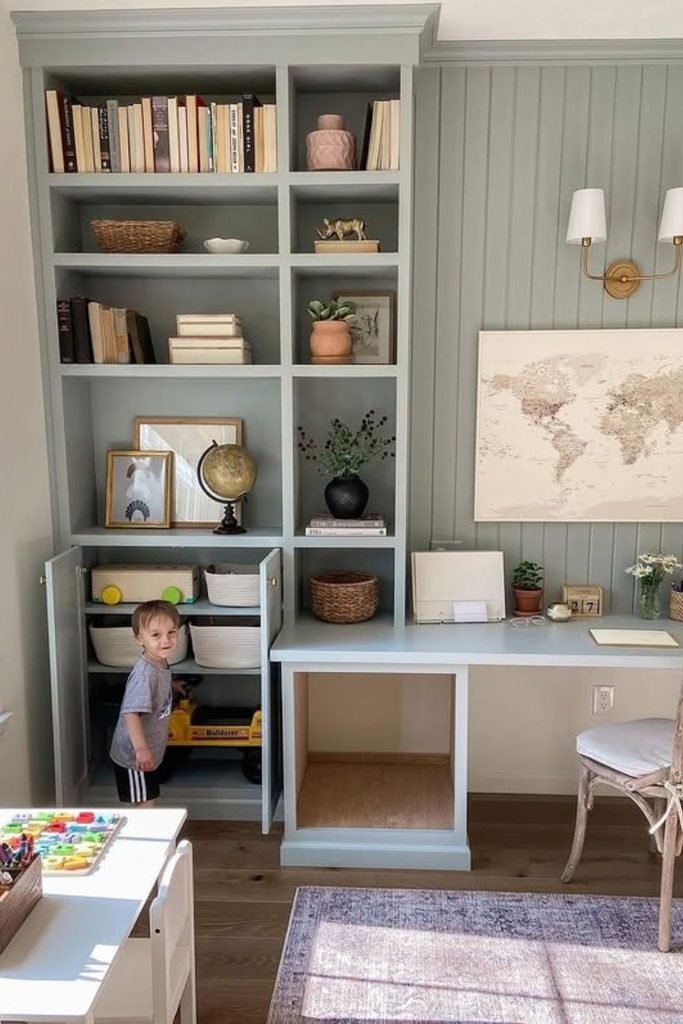
Frame your desk with built-in shelving when you need plenty of storage without placing extra cabinets across the shared floor space.
Keep office items on upper shelves, then use closed lower cupboards for craft supplies and toys you want hidden between activities.
Natural light keeps the open floor bright, while the wall sconce and ceiling fixture add useful lighting for evening work and play.
FAQs
How Can You Keep an Office Playroom From Feeling Cluttered?
Give work supplies and kids’ items separate storage instead of letting both collect on the same surfaces. Use closed cabinets for visual clutter.
Wall shelves for books or supplies.Keeping the center of the room open also makes the space feel calmer and gives kids more room to play.
Can an Office Playroom Work in a Small Room?
Start by moving storage upward and placing larger furniture around the room’s edges. A compact desk, wall-mounted shelves, under-desk drawers.
Toy bins can handle most essentials without using too much floor space. Creating clear work and play zones also helps both areas function.

Hi, I’m Afaf! I’m a law student who loves writing about everyday life – from home projects and crafts to fashion, beauty, and parenting tips.
I’ve been writing for over a year, sharing ideas that are simple, practical, and easy to try. I write about things I find interesting and useful, whether that’s organizing a space, trying a new DIY, or finding activities to keep kids entertained.
My goal is to share helpful ideas without making things complicated. If it works in real life, I’ll write about it.
When I’m not studying or writing, I’m usually experimenting with new projects or scrolling for inspiration!