
15 Playroom Art Ideas to Try
Blank playroom walls can make the room feel unfinished, but filling every open spot with colorful prints can quickly make it look too busy.
The challenge gets harder when toys, books, storage bins, and your kids’ artwork already bring plenty of color into the space.
With the right size, placement, colors, and display style, you can make those walls feel playful and organized while still leaving room for your child’s creativity.
Let’s jump in!
How Can You Display Kids’ Artwork?
When every drawing goes straight onto the wall, different paper sizes, colors, and uneven spacing can quickly make the playroom feel cluttered.
Start by choosing one specific wall or section where your child’s artwork will live instead of spreading it around the whole room.
You can use matching frames, picture ledges, clips, or a simple display rail to give different pieces one clear structure.
Leave some empty wall space around the display so each picture has room to stand out. If your child creates new artwork often, rotate pieces.
Keeping the display contained and easy to update lets you celebrate your child’s creativity without letting the artwork take over the room.
Doodle Walls
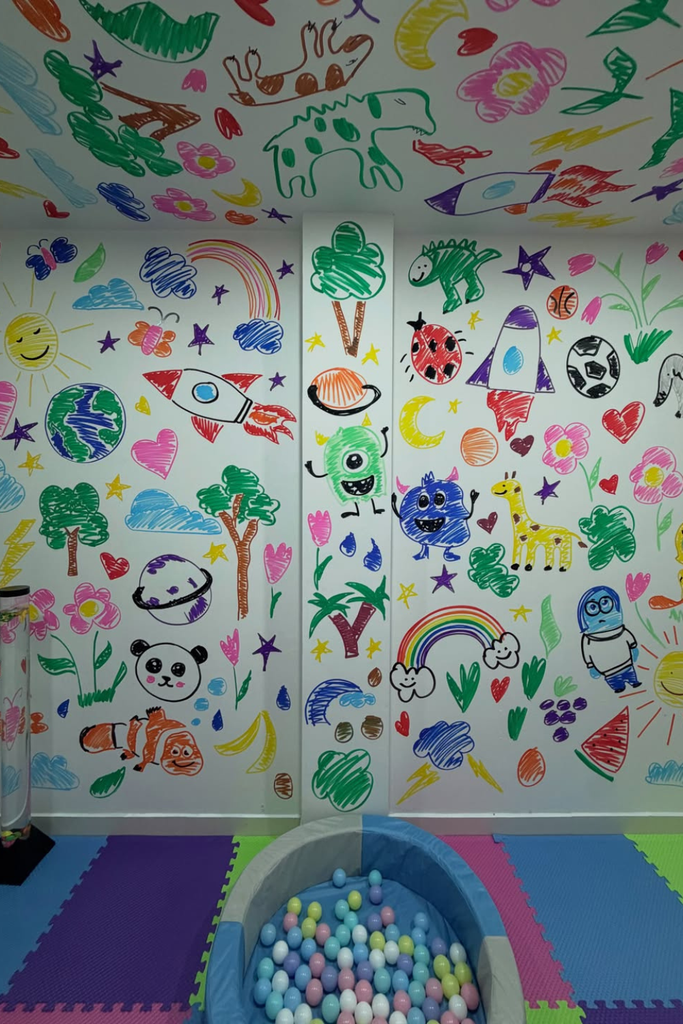
Turn open walls and even the ceiling into one continuous art surface when you want the playroom itself to encourage creativity.
Use washable markers or painted doodles for flowers, stars, animals, and simple shapes, keeping plenty of white space between drawings.
Works well in narrow playrooms. Bright ceiling lights spread even light across the colorful artwork and active play area.
Learning Gallery
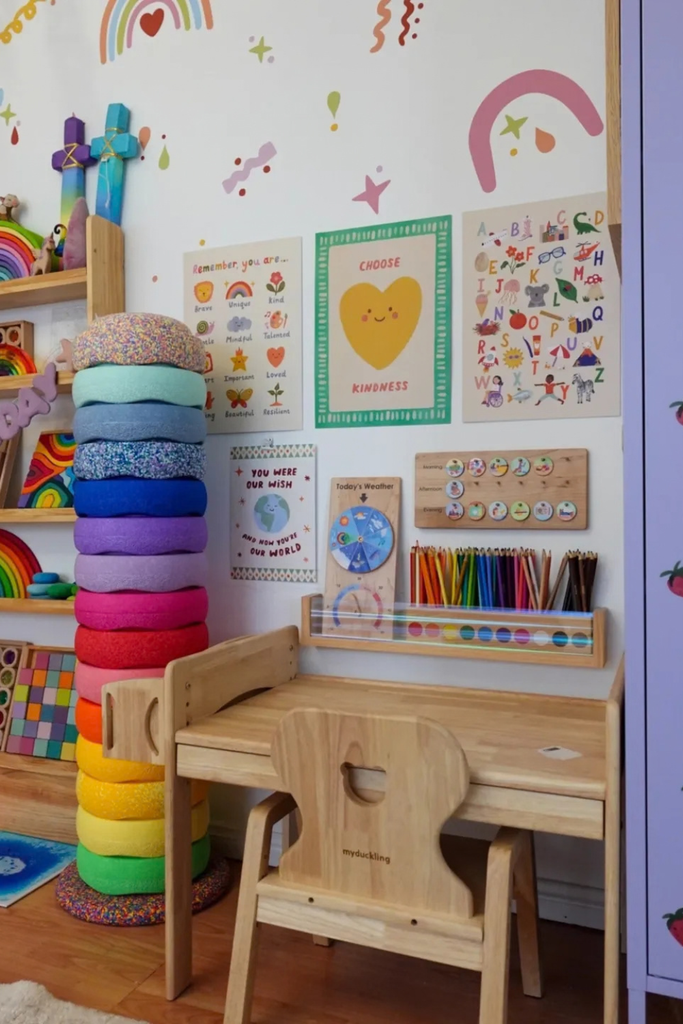
Hanging happy educational prints just above a little activity table, where children can see them, will give it more meaning.
Combine basic graphics, weather charts, kindness messages and alphabet art while maintaining edge alignment.
Natural daylight works well here, with soft overhead lighting keeping the table usable later in the day.
Mixed Art Wall
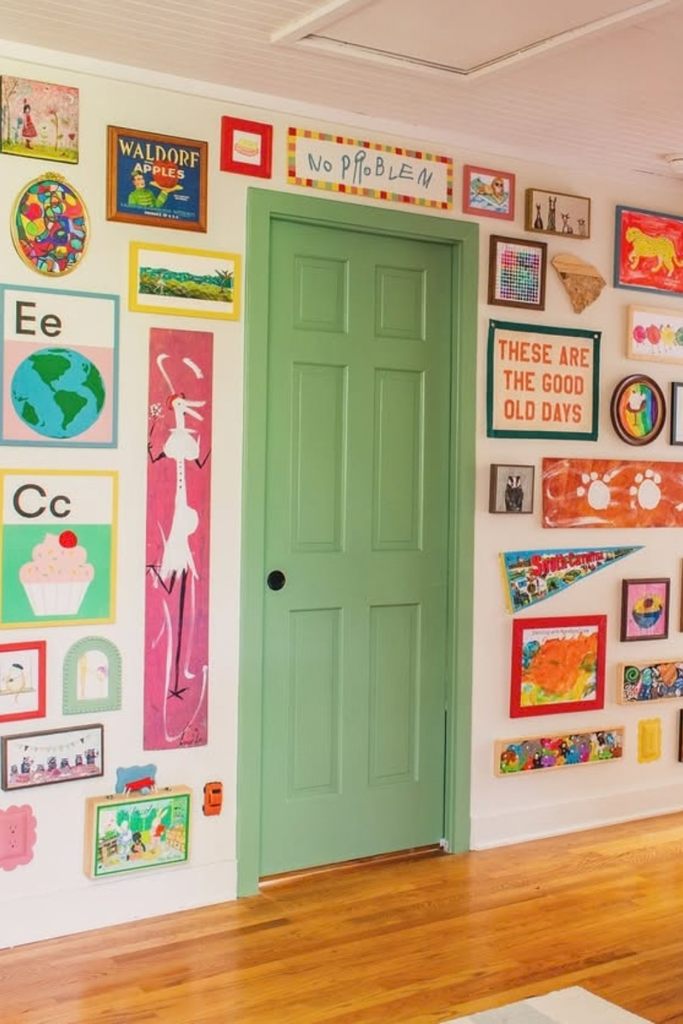
Use an awkward wall around a doorway as gallery space instead of leaving it empty or forcing one oversized piece into the area.
Combine kids’ drawings, alphabet prints, family photos, and playful signs in different sizes, while leaving small gaps between each piece.
Natural daylight keeps the gallery bright, while warm ceiling lighting makes the colors easy to enjoy after sunset.
Creative Corner
Make the wall behind the art table a part of the creative zone to make it feel cozier. Frame a few completed sketches.
To move color upward without packing the workspace, scatter basic star decals higher across the wall.
Keep art supplies on nearby shelves. Bright overhead lighting provides clear task light while natural daylight keeps the colors lively.
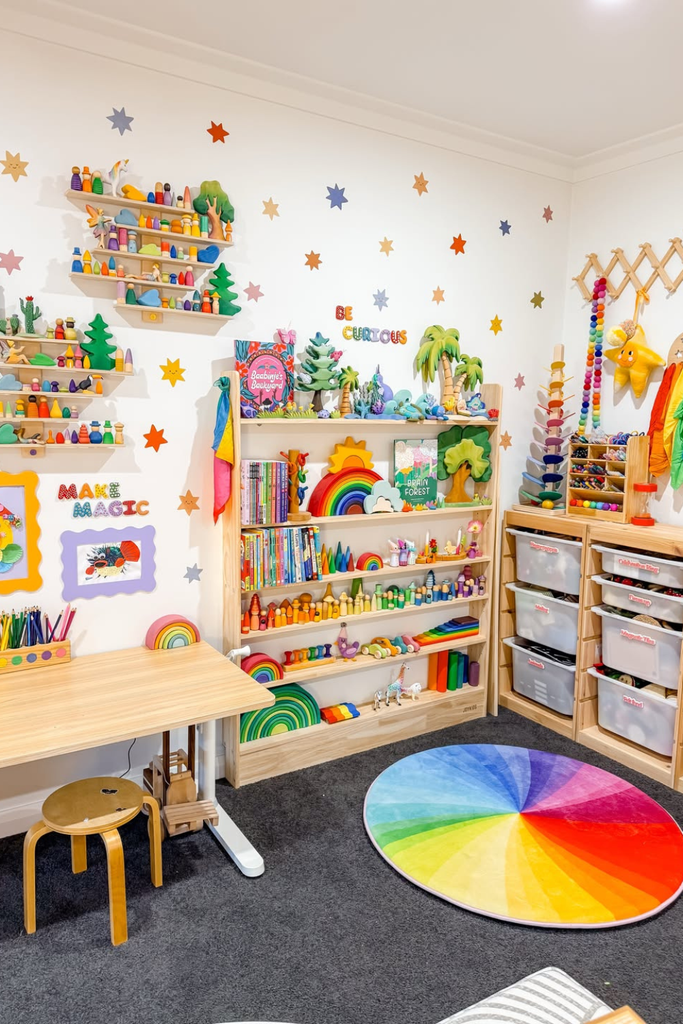
Storybook Gallery
Use framed storybook images blended with tiny illustrated characters that appear to walk across the wall to bring a pretend-play area to life.
To keep the arrangement feeling cohesive, select various frame sizes while repeating a same trim color.
This is particularly effective in close proximity to a creative play area or play kitchen where the photos might enhance narrative.
Natural daylight keeps the softer colors visible while warm overhead lighting adds gentle evening brightness.
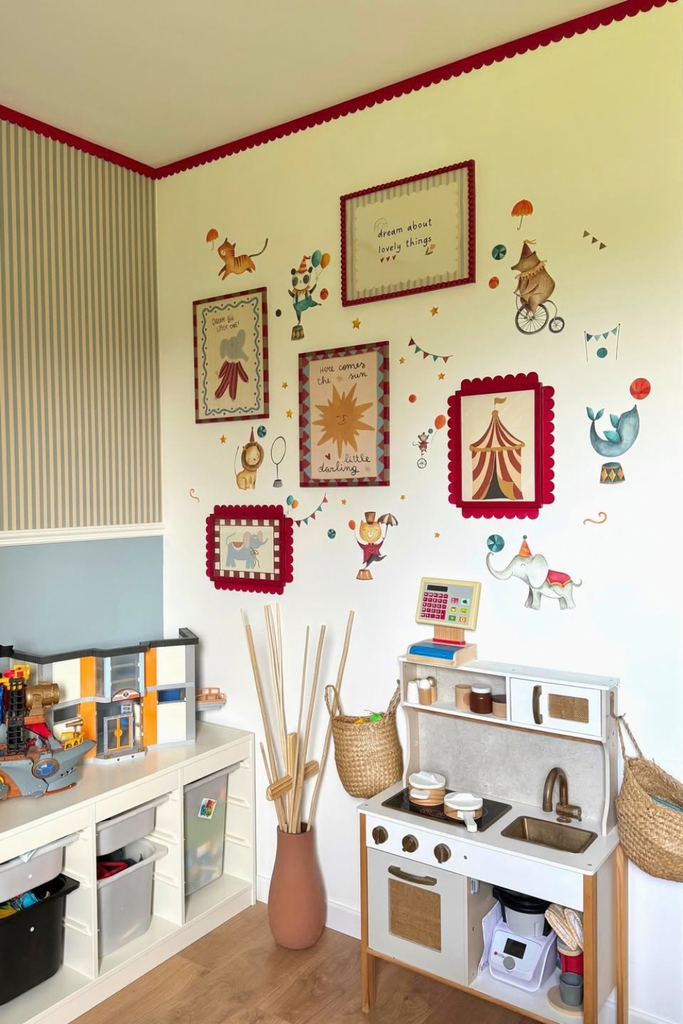
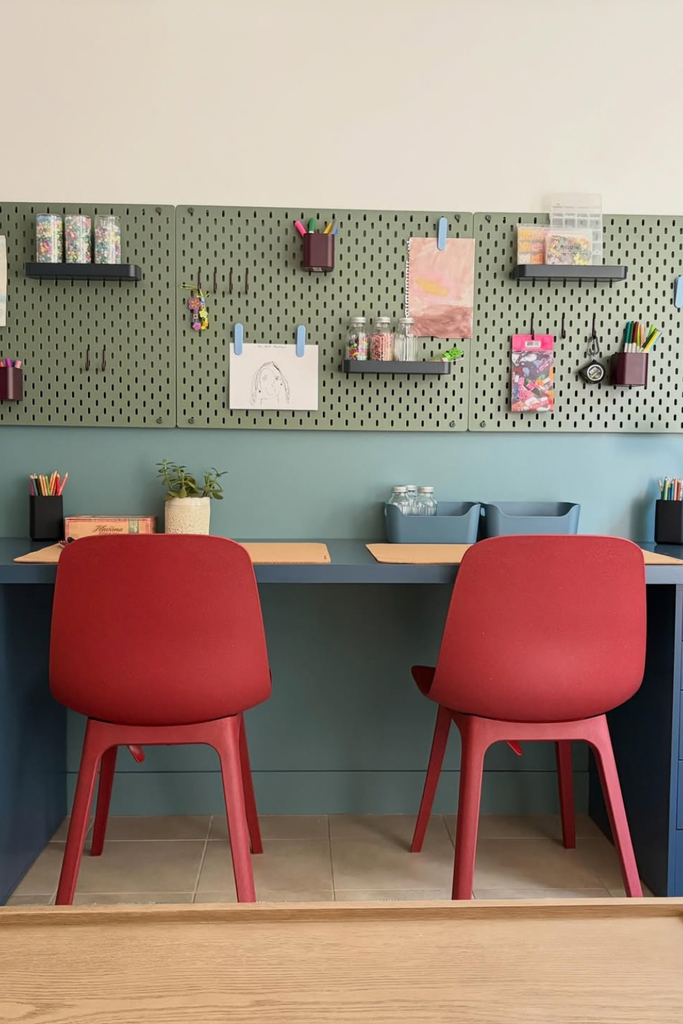
Pegboard Gallery
Long pegboard above the activity station can help keep artwork changes under control by providing a single location for crafts and drawings.
Use clips, shallow shelves, and small holders so you can swap new creations in without adding more holes to the wall.
Works well in shared playrooms. Adjustable desk lamps provide focused task light, while ceiling fixtures brighten the wider play area.
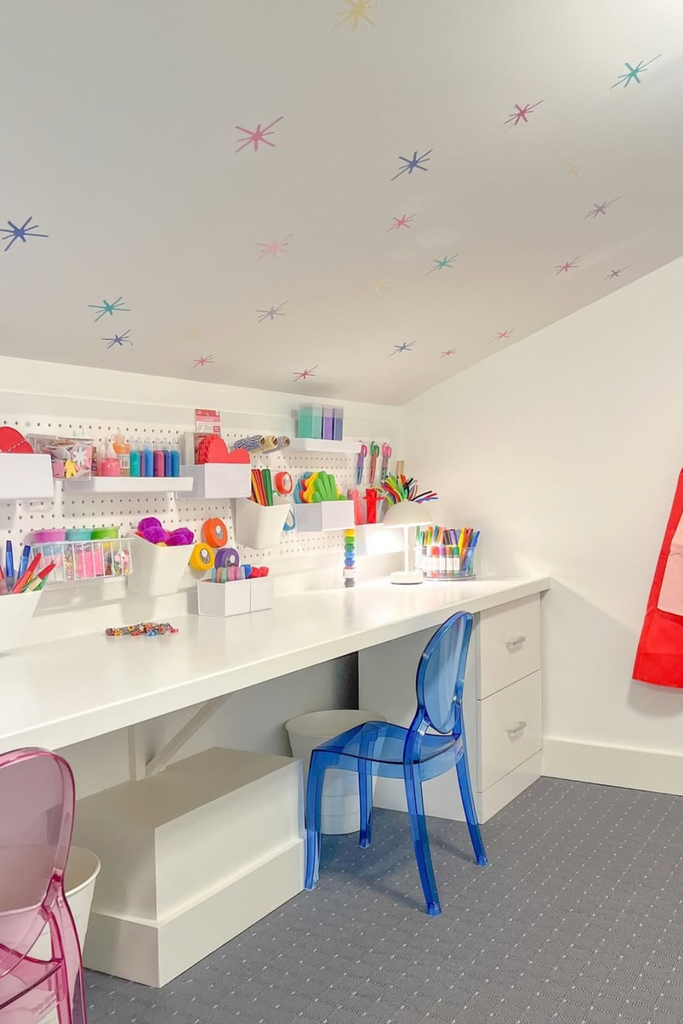
Ceiling Doodles
Add tiny hand-drawn shapes to the ceiling above a designated craft station to extend the art beyond the walls.
To make the ceiling feel entertaining without becoming obtrusive while children are working below, keep the designs simple and far apart.
Bright task lamps cover the work surface, while ceiling lighting keeps the wider creative zone evenly lit.
Art Station
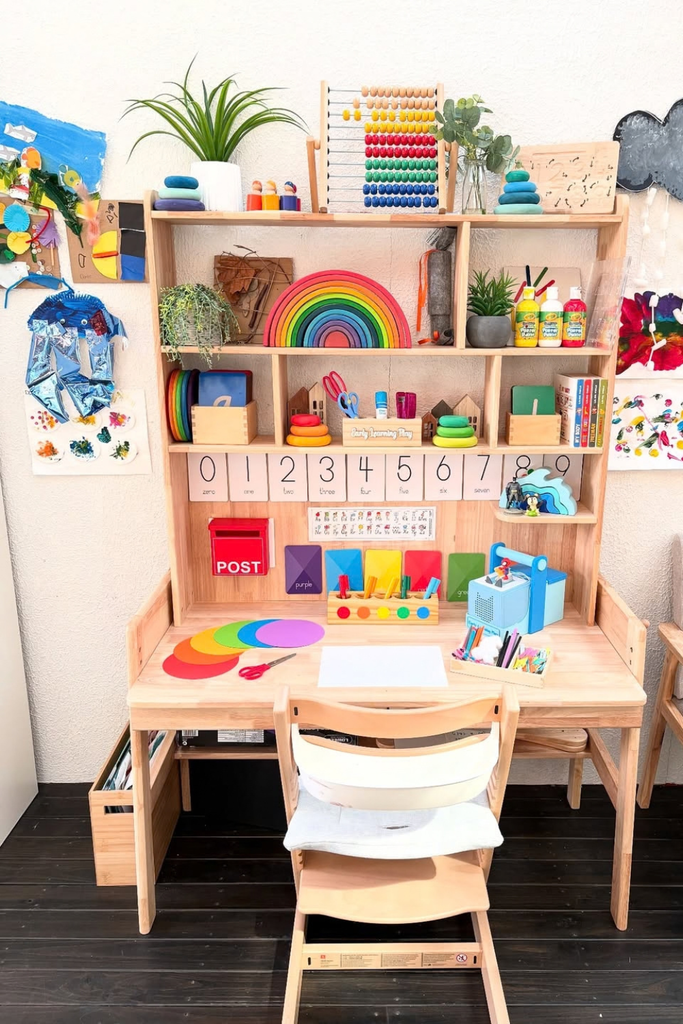
Let finished creations become part of the craft area by displaying them around the workstation.
Place a handful of your favorite paintings next to the shelves and switch them out as new work are completed.
When colorful materials are already on the desk, this works well because the artwork feels related to the task.
Nearby task lighting keeps crafting clear while general ceiling light brightens the full display.
Framed Creations
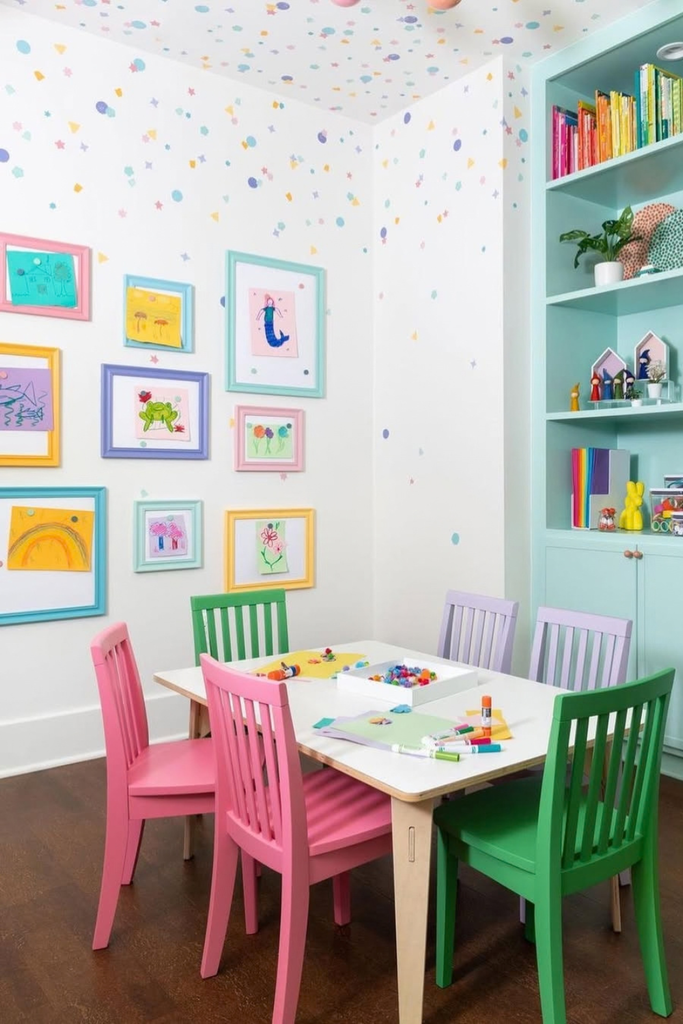
Give kids’ drawings a more finished place in the playroom by framing a small selection beside their activity table.
Mix frame sizes and cheerful colors, but leave enough white wall between them so individual pieces never blend into one busy block.
Natural daylight brings out the artwork, while built-in shelf lighting adds a softer layer around the nearby storage.
Personalized Prints
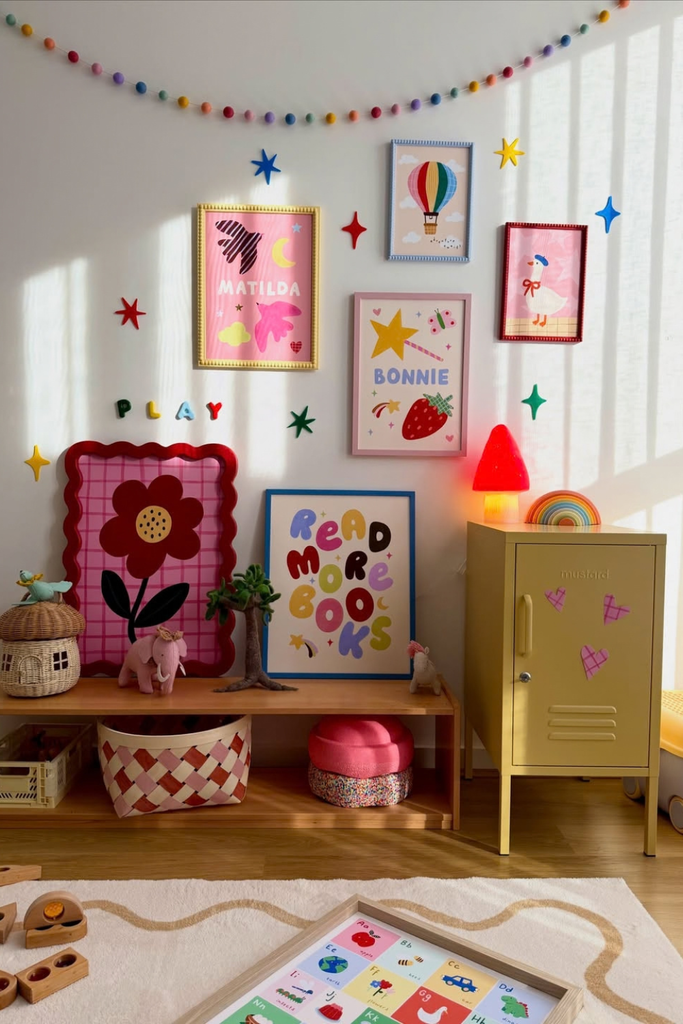
Combine character artwork, playful reading, and personalized name printing to make the gallery feel more relatable to your children.
To keep the arrangement feeling deliberate, keep the frames varying in size while repeating vivid colors throughout.
Strong natural daylight highlights the prints during the day, while a small table lamp adds a warm evening layer.
Storybook Mural
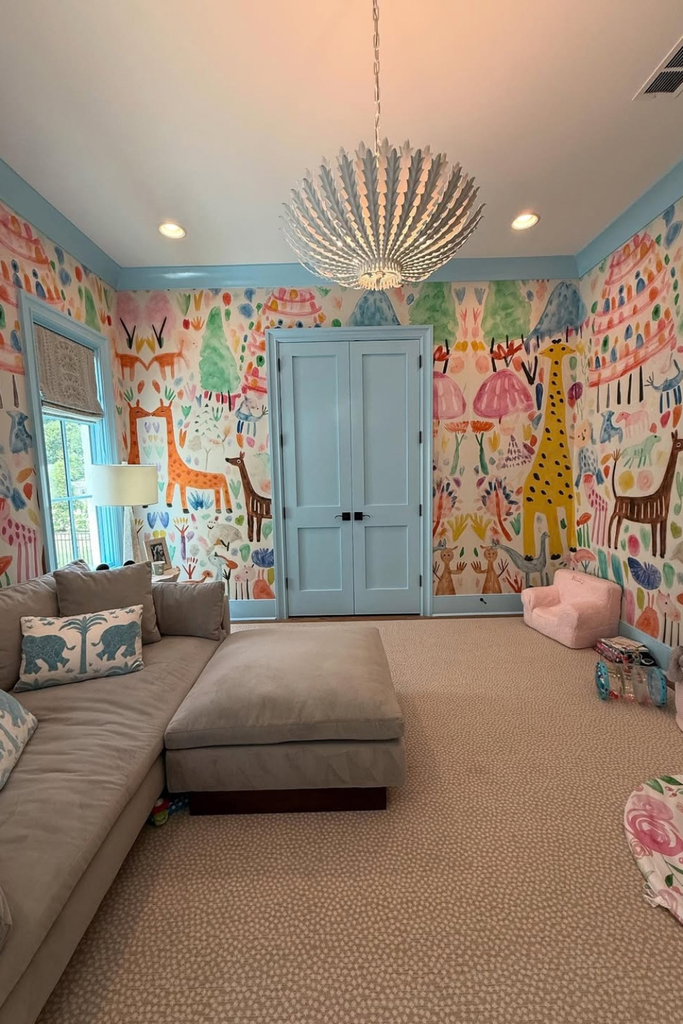
Cover one main wall with oversized storybook-style artwork when you want the playroom to feel imaginative.
Choose friendly animals, trees, and simple shapes in colors already used around the room so the mural feels connected.
Recessed lights wash the artwork evenly while the decorative ceiling fixture adds softer ambient light.
Art Showcase
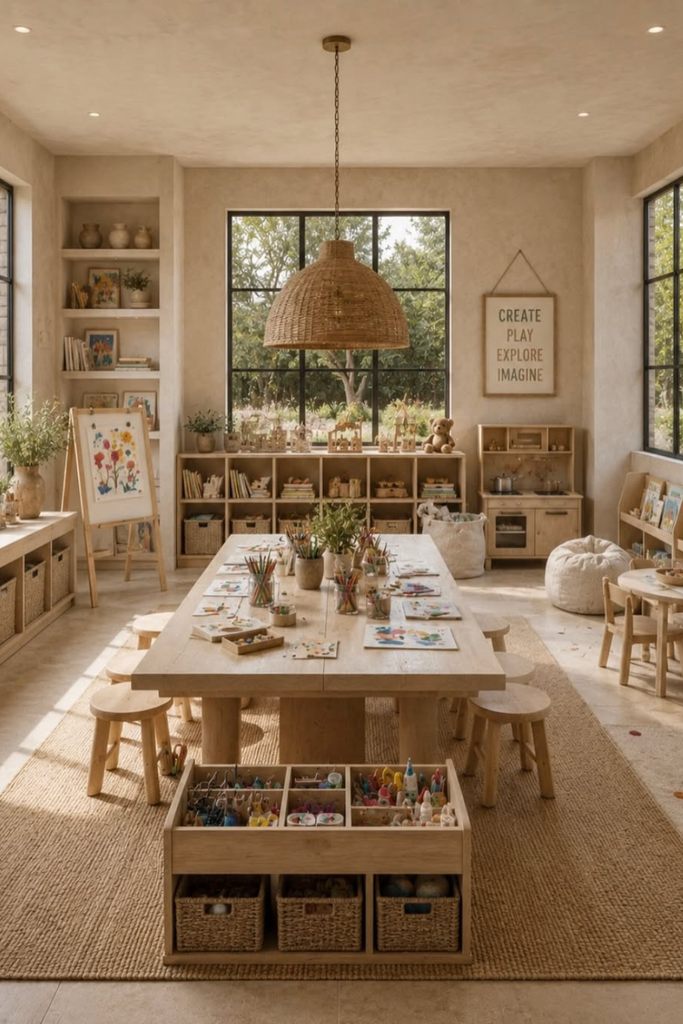
Instead than covering every wall with frames, set up an easel close to the main craft table to give completed works their own space.
Ensure that fresh artwork always has a place to go, rotate one popular piece on the easel and store minor pieces on surrounding shelves.
Wide windows provide strong natural light while recessed ceiling lights and a pendant add layered evening lighting.
Hanging Prints
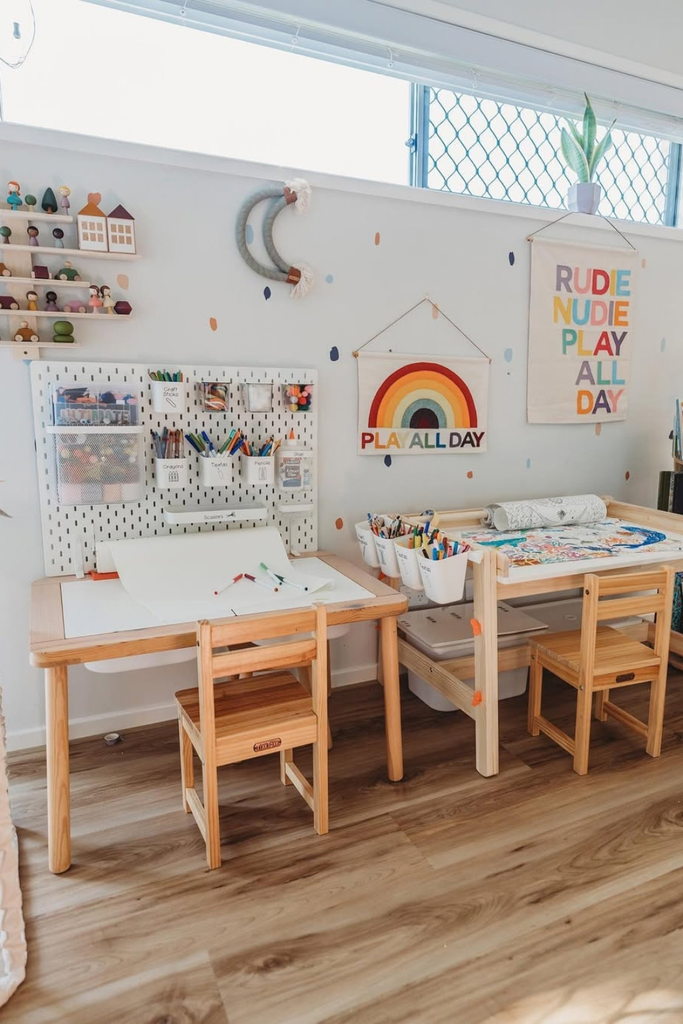
Keep artwork simple around a busy activity table by hanging a few lightweight fabric or poster-style prints.
Choose playful words and rainbow graphics that repeat colors already used in the craft supplies, then leave generous space between each piece.
Works well above shared art tables. High windows provide daylight, while nearby ceiling lighting can brighten evening projects.
Kids Art Gallery
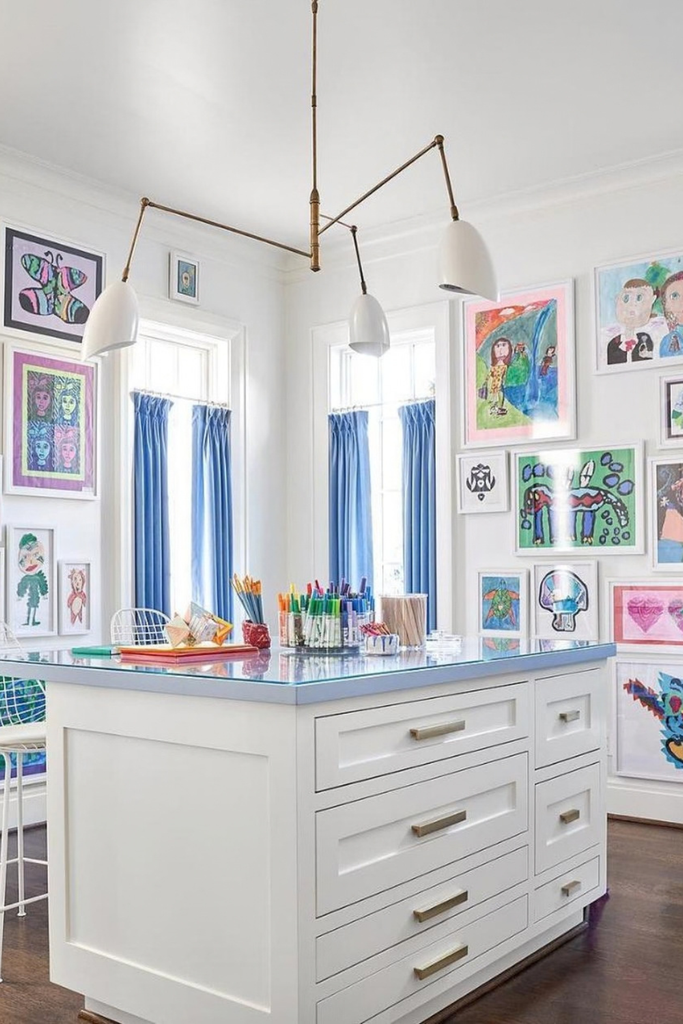
Turn a large playroom wall into a proper gallery by framing your kids’ favorite drawings instead of taping every new creation.
Mix different artwork sizes, but repeat simple white frames to keep the colorful pieces visually connected.
Natural daylight brings out the drawings, while a wide pendant and ceiling lighting keep the creative area bright after dark.
Storybook Grid
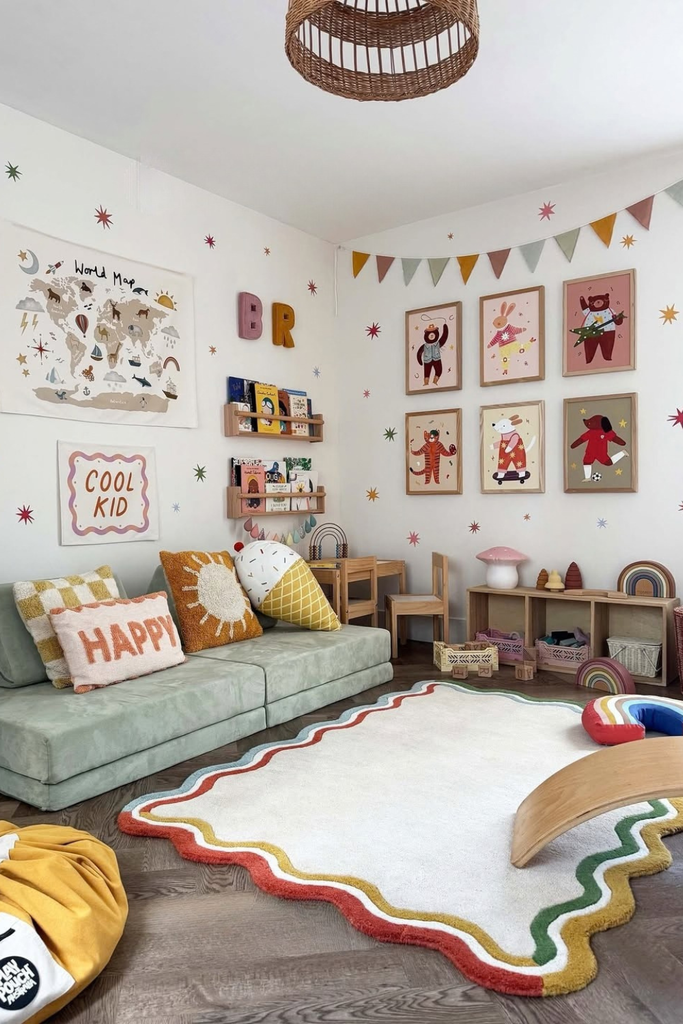
Create a calmer gallery by arranging matching storybook prints in a neat grid instead of scattering artwork across the entire wall.
Keep the frames identical and spacing even, then use small colorful decals around the arrangement for a playful finish.
Works well above low toy storage. Soft window light brightens the prints naturally while nearby wall lighting can add extra evening light.
FAQs
How Much Art Should You Put on a Playroom Wall?
You do not need to fill every empty section to make the playroom feel finished. Start with one main display area and leave some open wall around it.
If toys, books, rugs, and furniture already bring plenty of color, fewer art pieces can keep the room from feeling crowded.
What Is the Easiest Way to Change Playroom Art as Kids Grow?
Use picture ledges, clips, pegboards, lightweight hanging prints, or easy-open frames when you expect the artwork to change often.
Keeping the main display system simple also makes it easier to update the playroom as your child develops new interests.

Hi, I’m Afaf! I’m a law student who loves writing about everyday life – from home projects and crafts to fashion, beauty, and parenting tips.
I’ve been writing for over a year, sharing ideas that are simple, practical, and easy to try. I write about things I find interesting and useful, whether that’s organizing a space, trying a new DIY, or finding activities to keep kids entertained.
My goal is to share helpful ideas without making things complicated. If it works in real life, I’ll write about it.
When I’m not studying or writing, I’m usually experimenting with new projects or scrolling for inspiration!