
21 Blue Nursery Ideas for 2026
You are shown nursery options and everything starts to look the same blue walls, soft bedding, cloud decals but you’re still not convinced.
Blue too cold. Too dull. Or is it really the safest decision you can make for your baby’s first room?
Most parents don’t pick blue because it’s in style. They choose it because they want a location that seems quiet when nights are long.
Feeds are messy and sleep is erratic. A room that does not pressurize it, but quietly supports it.
In this article, I’ll show you 21 blue nursery ideas that bring a calming and timeless look to your baby’s space.
Let’s jump in!
Why do parents choose blue for calming nursery spaces?
Parents don’t normally start off with blue because they “like the color.” They end up there.
Because the other options seem too bright, too busy or too overwhelming for a newborn area.
Save this article for later!👇👇👇

On low-sleep evenings, a nursery has to be calming, easy on tired eyes, and basic enough to not create mental pressure.
Blue satisfies that urge naturally. It softens the room without flattening it and maintains the space visually stable throughout the day.
This is why it’s a choice many parents make a subtle solution to a real problem, producing a room that helps baby and parents feel more relaxed.
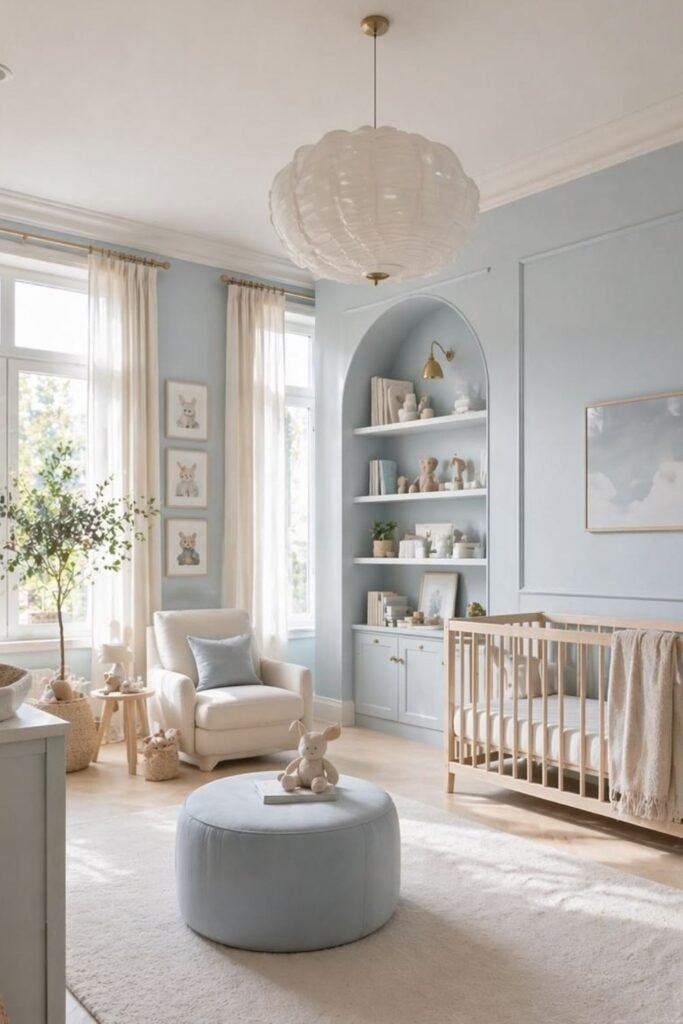
Sky Haven
Soft blue tones instantly change how a nursery feels when natural light starts moving through the room. Calm energy builds with out effort.
Where the walls remain still and furniture leans against warm wood instead of stark contrast.
This room in this layout works best for parents who seek a tranquil corner that promotes lengthy feeding nights and sluggish morning routines.
A soft accent wall maintains the visual focus stable by the crib, and an arched shelving unit adds storage without interrupting the gentleness of the design.
A calm feeding nook can be created using neutral seating such as a cushioned armchair, especially if it is located near window light for simple daytime routines.
Coastal Calm
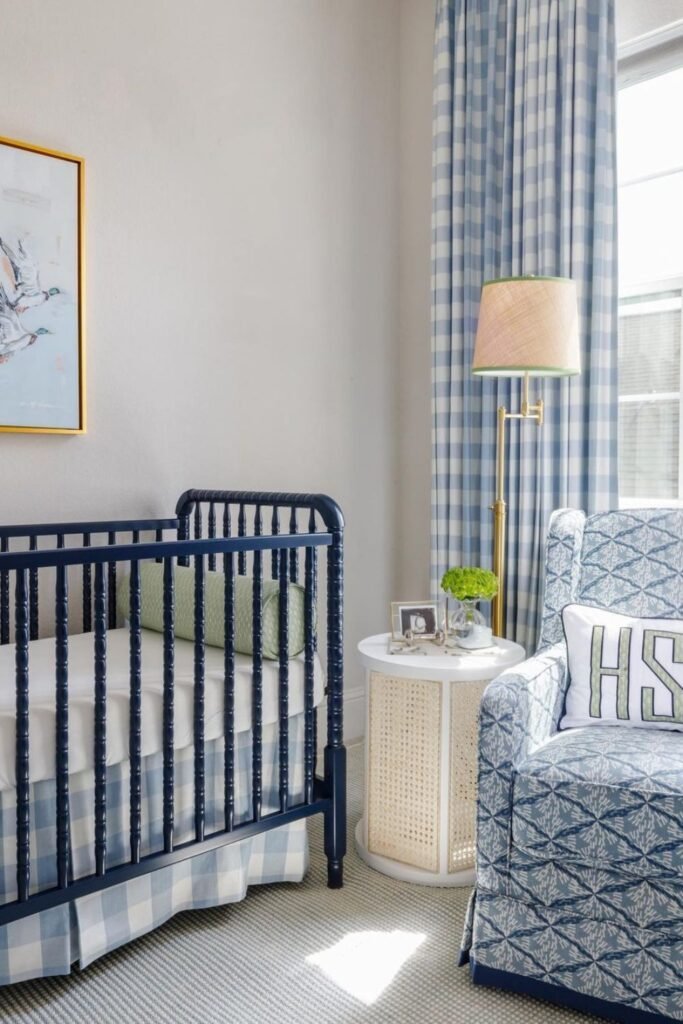
Blue tones feel completely different when they are layered with natural light and strong texture contrast.
The deep navy crib and gentle patterned bedding create a grounded sleep room that feels solid without looking visibly weighty.
The equilibrium works particularly well in settings where one side has natural sunlight and the other has gentle darkness.
A crib set against a patterned curtain wall anchors the sleeping zone, while light décor in the rest of the space avoids visual clutter.
A practical feeding spot is created with a simple side chair under the window, with warm lighting to soften the room’s chilly blue tones.
Gentle Nest
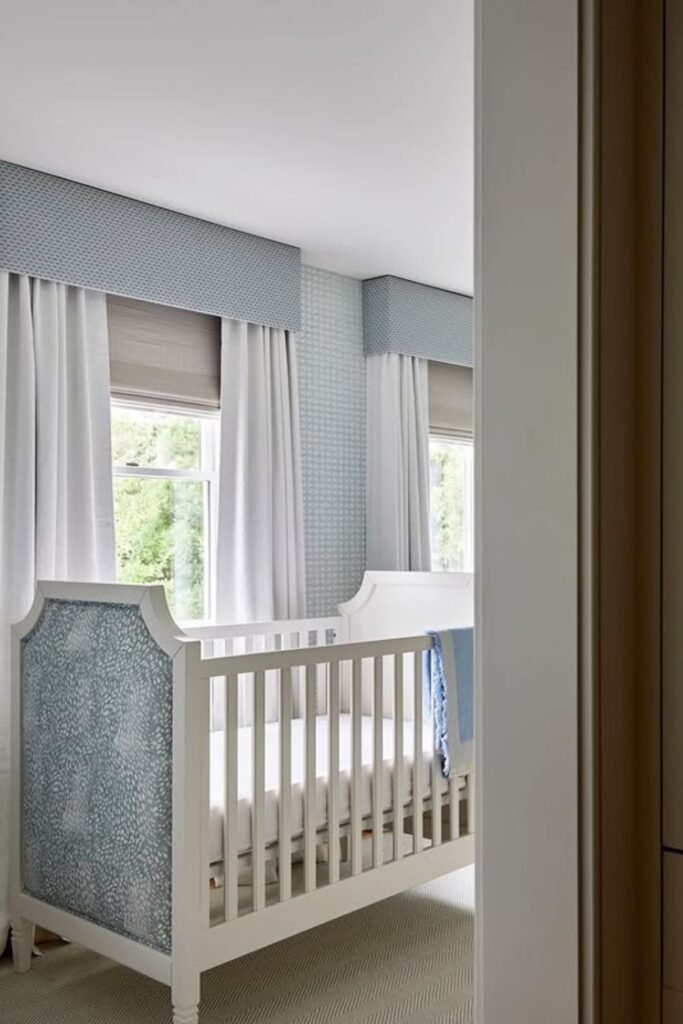
Sleep spaces feel more settled when blue is used as a soft layer instead of a bold statement. In rooms like this, the crib becomes the visual anchor.
As the other tones around are silent, breathing life into the place and making it feel light.
It works particularly well in smaller nurseries where heavy contrast might make the room seem smaller than it really is.
The crib’s proximity to natural light keeps the space softly glowing in the morning.
And the patterned blue wallpaper adds depth without making the walls appear cluttered.
Soft Balance
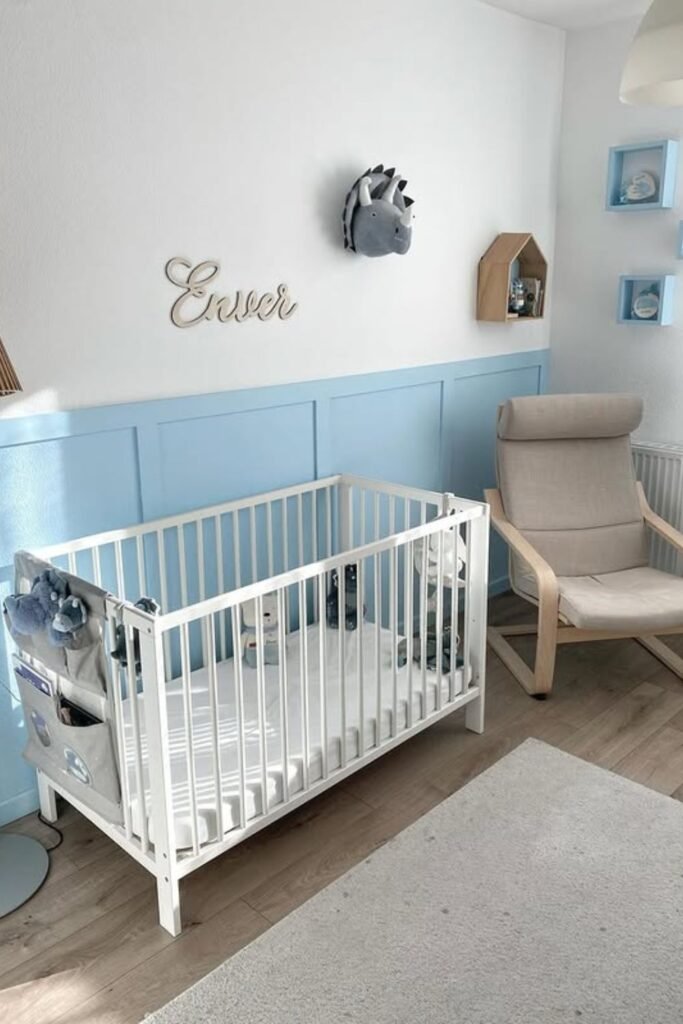
Blue works best in nurseries when it doesn’t take over the whole room but stays grounded in one structured layer.
Here the blue paneling of the half-wall immediately alters the visual weight, keeping the upper area light so that the room still feels open and airy.
The crib is against a clean white background so the focus is on sleep, not distraction.
Meanwhile, soft wooden flooring and neutral fabrics temper the blue from feeling too chilly.
In one corner, a warm feeding chair by the natural light becomes a calm ritual location for long nights and early mornings.
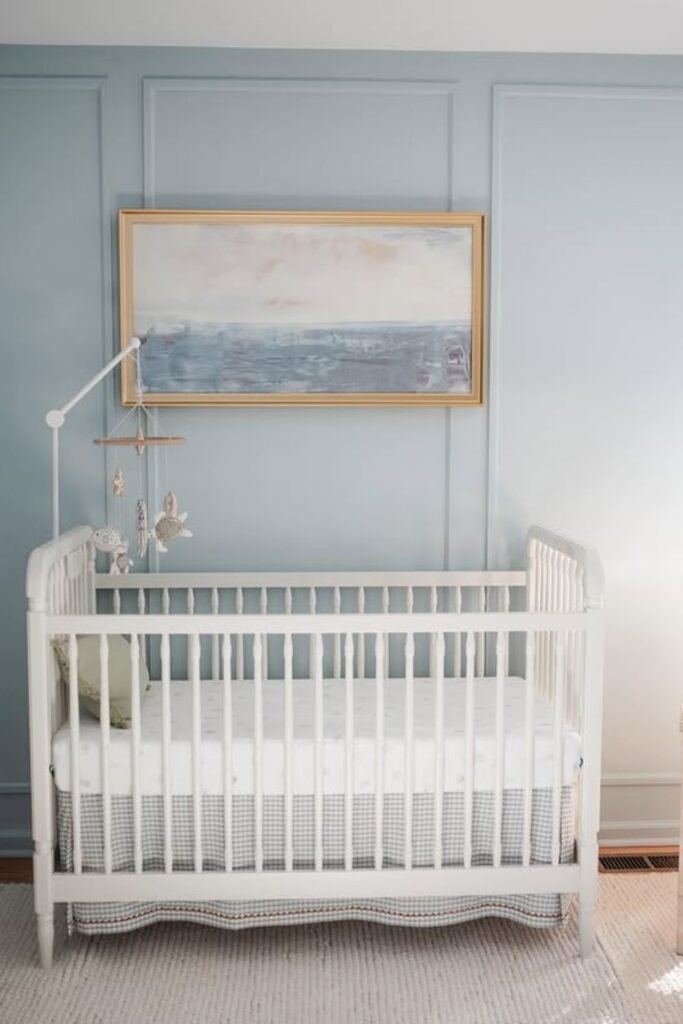
Cloud Layer
Blue becomes most powerful in nurseries when it feels like part of the wall instead of a separate design choice.
The gentle sky blue background in this space provide a tranquil layer that pulls everything together and keeps the visual pressure low.
The crib is basic and white to give the eye a place to rest, which is exactly what makes the space feel tranquil and not busy.
Hang artwork at eye level above the crib for a gentle focal point that doesn’t intrude on the sleep zone.
The blue tone is slowly shifted through the day by natural light from the side, preventing the space from feeling stagnant.
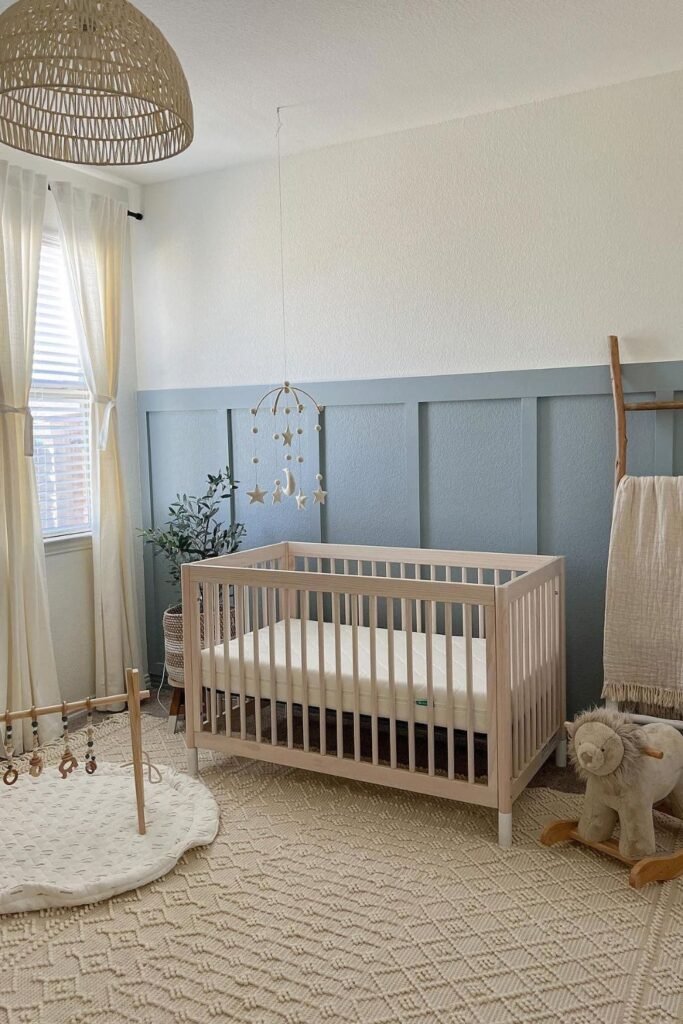
Earth Calm
Natural textures take over the room the moment soft blue paneling meets warm wood and woven materials.
No dependence on flashy décor, the comfort creates itself via layers that seem soothing on the eyes and easy to live with every day.
The crib is in an open, clean location, establishing a tranquil sleep zone that doesn’t compete with surrounding factors.
The light from the drapes softens the blue walls, making the color feel more grounded and less ornamental.
A mobile over the cot provides soothing motion, adding life to the room without disruption.
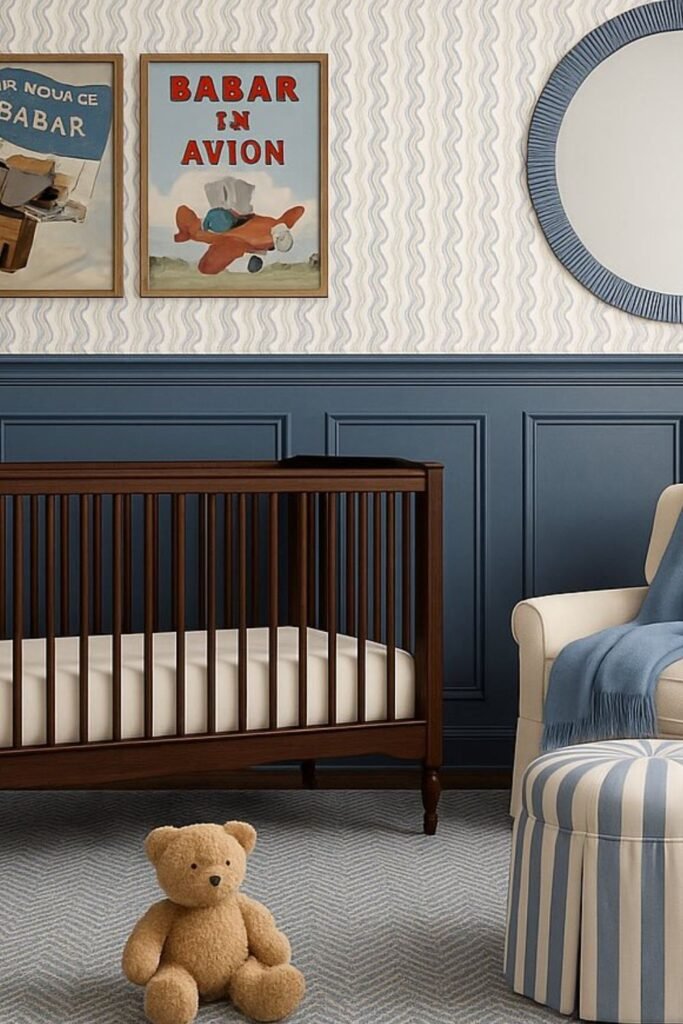
Classic Depth
Blue transforms a nursery instantly when it moves from soft pastel styling into deeper, structured tones like this layered wall design.
The dark wainscoting against the patterned upper wall gives the room visual depth without heavy decorating, so the room still feels balanced.
The crib placed against the bright blue base grounds the entire sleeping zone, making it feel solid and secure.
Warm wood furniture, soft textiles and a neutral seating nook around the elements assist to relieve the intensity of the darker tones.
The easiest way to replicate this design is to view blue as a structural component, not as decoration.
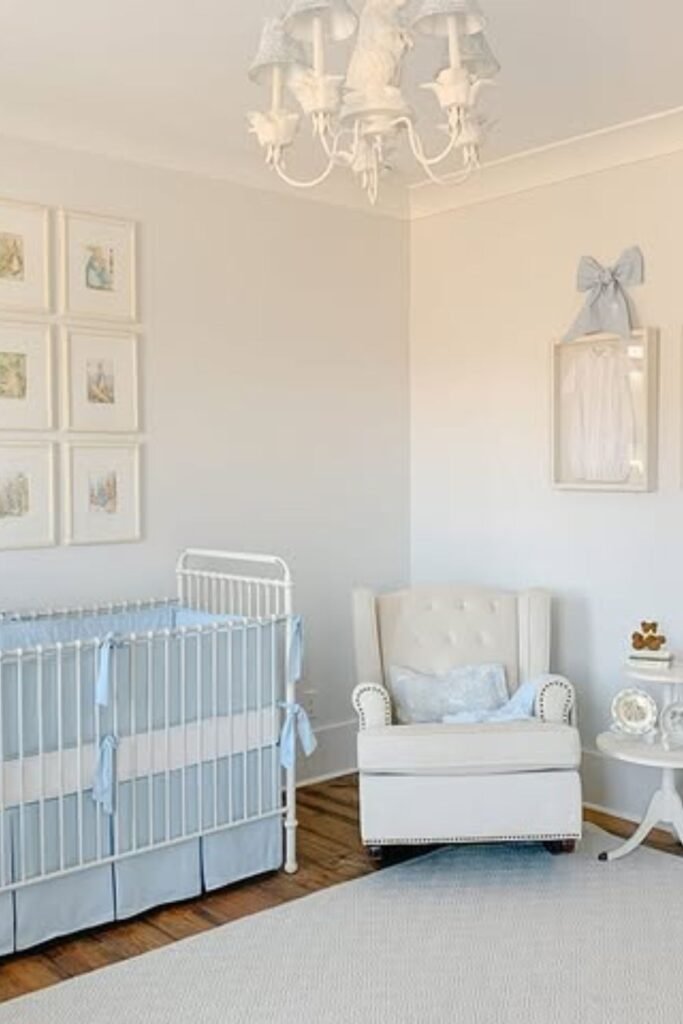
Ocean Mist
Blue feels lighter and more breathable when it shifts into soft sea-inspired tones like this muted aqua wall paired with clean white furniture.
It all tends toward natural serenity rather than decorative overkill, and that is exactly what makes it feel so appropriate for long nursery routines.
The crib against a softly colored wall defines the sleep zone without visually weighing it down.
The natural light flowing through the window gives the room a fresh open sense from early morning to early evening with the blue green undertone.
This means reduced focus allows for a more pleasant sleep and little wall decor.
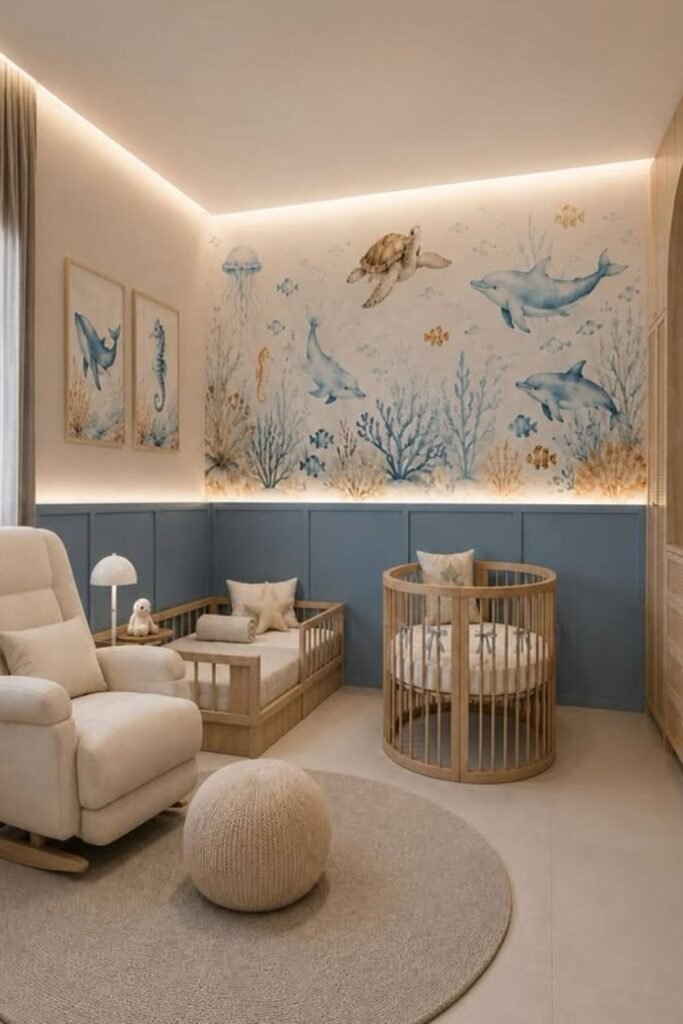
Sea Dream
Underwater murals shift nursery energy into something calm, slow, and naturally storytelling-driven.
Which is especially nice if the sleeping and play areas are in the same room. Subtle sea life graphics throughout the wall.
Add depth without the need for further décor, so the space already feels complete the minute you walk in.
Lower blue paneling grounds the crib area and visually anchors the sleeping zone.
While the higher painting. Provides imagination without drawing too much attention.
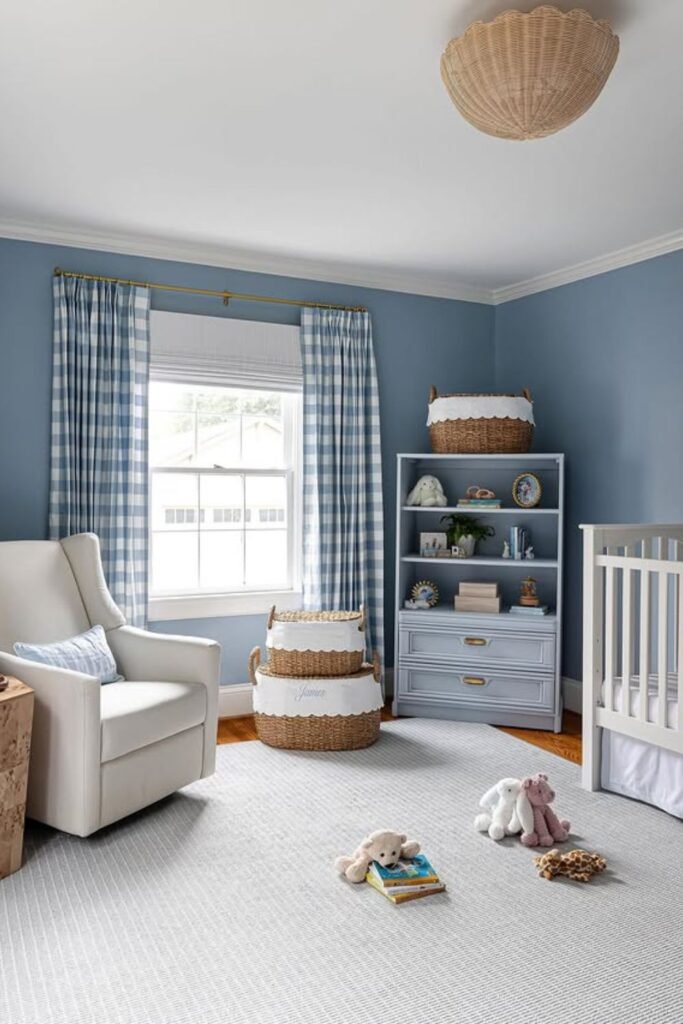
Window Ease
Natural daylight reshapes blue walls in a way that makes the whole room feel softer and more breathable.
Deep blue tones here don’t feel weighty since huge windows offset the color with frequent light movement throughout the day.
The crib is positioned against a strong wall to retain structure in the sleeping area, and the open floor space in the middle.
A reading space near the armchair naturally becomes a peaceful routine zone, especially if combined with gentle lighting for evening use.
Mixing checkered curtains painted shelving and woven storage ties the area together with out looking cluttered.
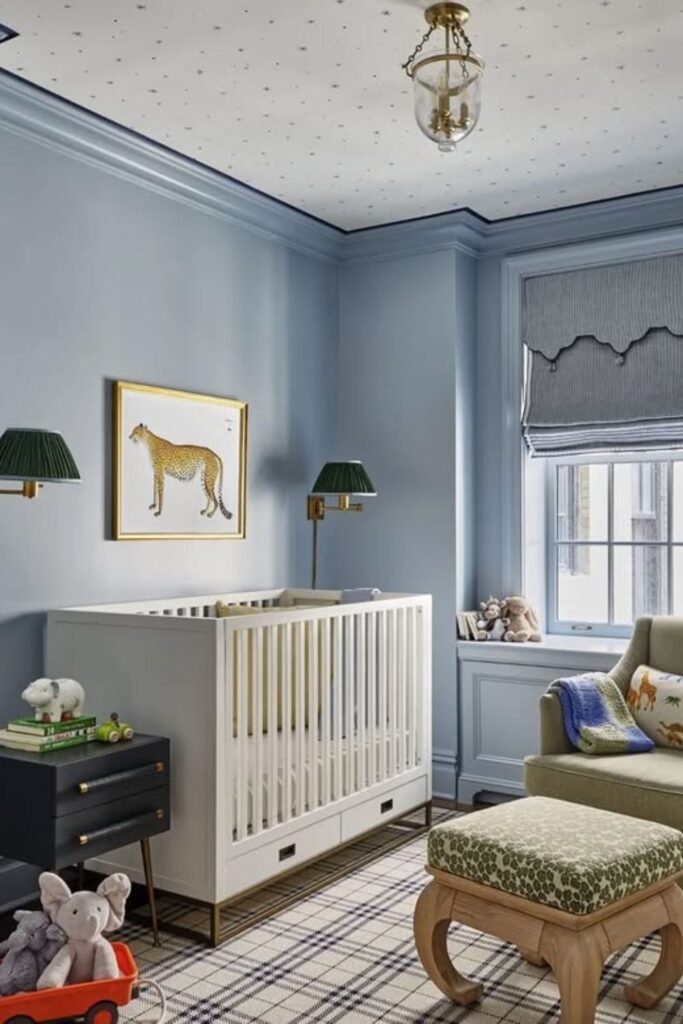
Regal Calm
Blue walls feel more structured and mature in this setup especially if paired with deeper contrast element.
That add quiet sophistication instead of playful clutter. There’s a good mix of nursery softness and a more tailored.
Almost heritage-inspired look, so the space feels like it’s for long-term growth, not just the newborn stage.
Placing the crib in the center of the blue backdrop gives a strong visual anchor, and symmetry from matching wall lights helps the area feel organized.
The patterned rug anchors the furniture arrangement, keeping it from looking flat, and adding a touch of movement underfoot while yet feeling serene.
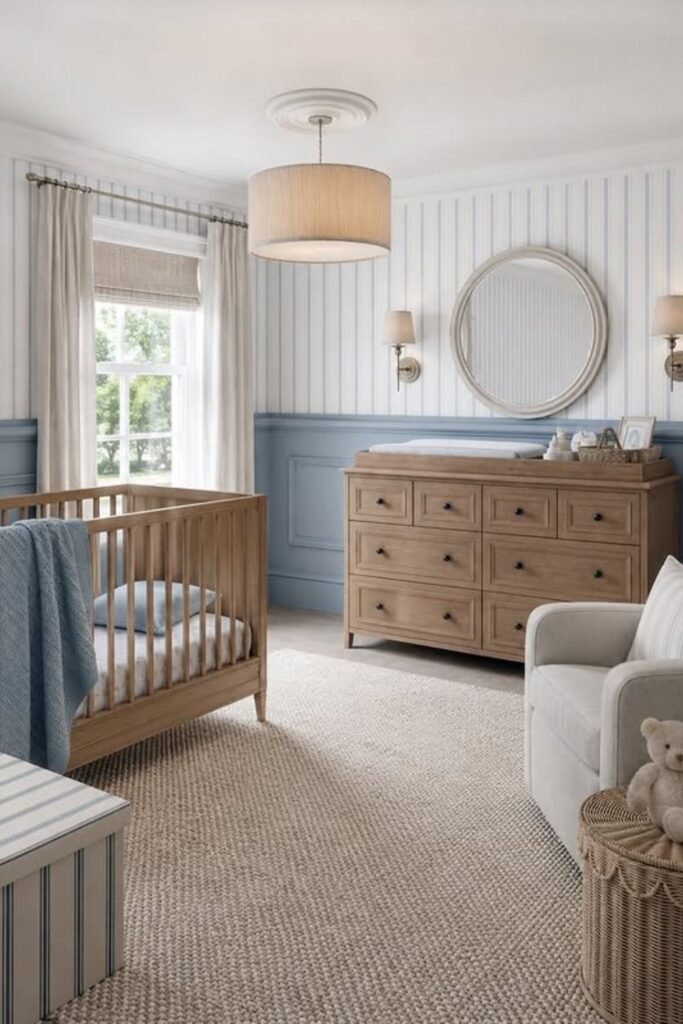
Vintage Balance
Blue shifts into a more traditional nursery language here where vertical striped wallpaper and warm wood furniture bring structure without losing softness.
It’s collected, not styled, which is what makes it comfortable for the long term, not just in the moment.
The crib is positioned near the striped wall to define a sleep zone and the wooden dresser across from it balances weight across the room.
The rigid lines are interrupted by a spherical mirror above the dresser, making the area seem softer, especially when natural light flows through the curtains.
The most successful way to recreate this type of nursery is with blue used as a supporting player, not the star.
Rustic Comfort
Blue becomes softer and more grounded when it sits behind warm textures and vintage-inspired furniture like woven seatingand patterned textiles.
The space lacks significant color contrast but layers of comfort, which makes it feel lived-in and emotionally comfortable, rather than produced.
The crib is located just a little off-center, creating a relaxing atmosphere, while a comfortable reading chair.
Offers a natural nook for bonding, feeding and quiet times. Warm lighting prevents the blue tones from seeming.
Too cool in the evenings and linear patterns in the soft carpets help guide movement across the room without disrupting the tranquil flow.
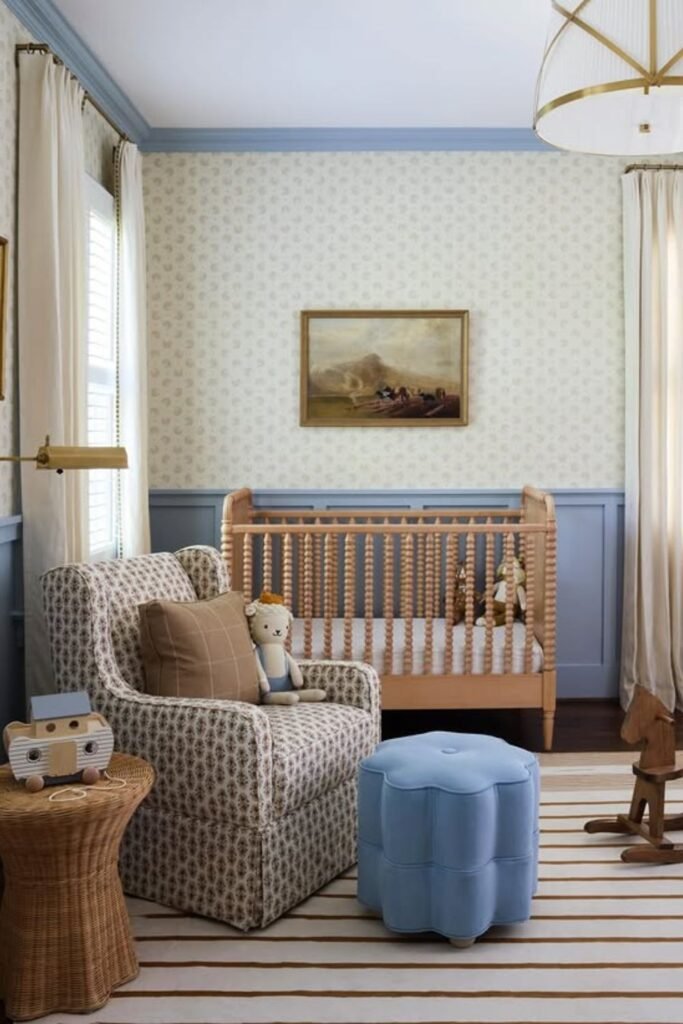
August Calm
Names on the wall shift a nursery from being just a room into something personal, and in this setup the soft blue backdrop makes that feeling settled.
There’s no need for excessive décor in this area, allowing the eye to naturally rest on clean lines, soft bedding and delicate contrast between white furniture.
The crib is pushed against the paneled wall, which provides a visual containment to the sleeping area.
And leaves open floor space in front for easy movement throughout the day. The feeding chair is close enough to keep linked to the crib area.
For this sort of nursery, begin with a subdued blue base and choose light-colored furnishings so that nothing clashes with the walls.
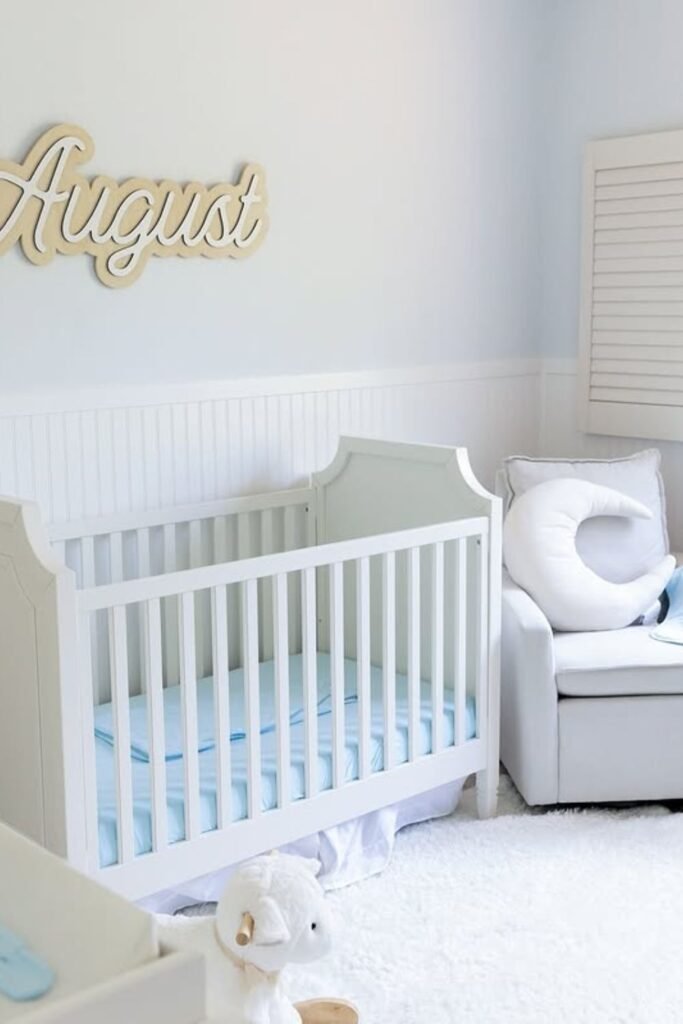
Wave Calm
Blue turns more expressive here when it’s shaped into structured wall panels instead of plain paint, giving the nursery a sense of direction.
The gentle, sea-inspired tone and crisp white furnishings help to keep the whole area in harmony.
Particularly in places where natural light already does much of the design work.
The crib, placed squarely against the paneled wall, serves as a powerful visual anchor.
While the feeding chair nearby establishes a functional routine zone for quiet moments.
Open floorplan allows for simple mobility and spaciousness of the area for everyday care.
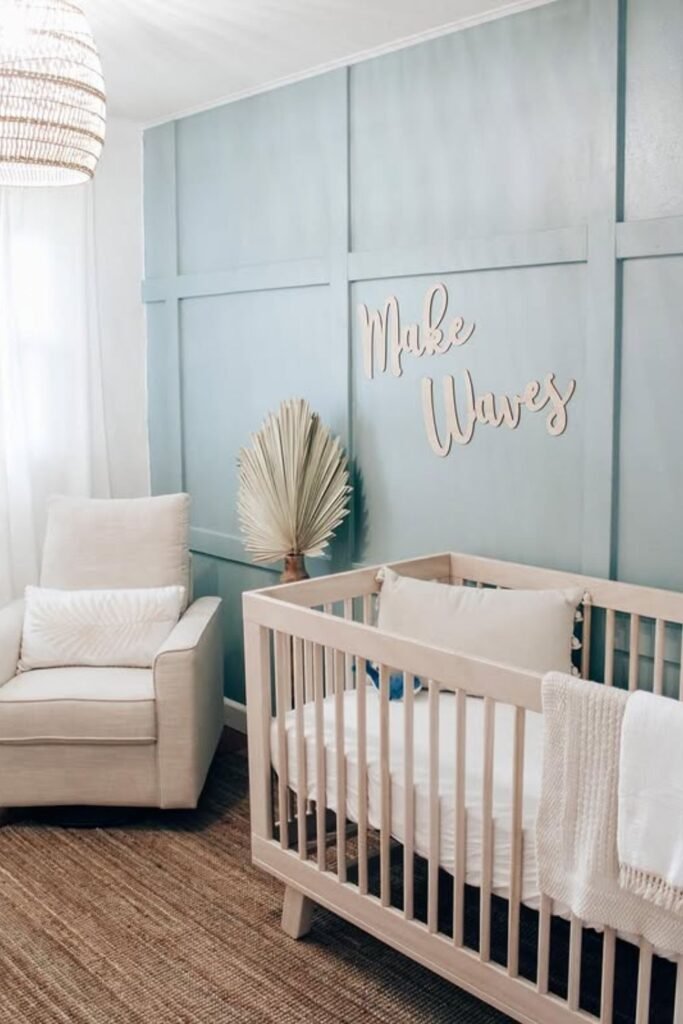
Sky Story
Blue becomes more meaningful in nurseries when it carries a soft narrative through wall art and natural light instead of just sitting as flat background color.
The serene blue wall in this room is like a canvas that visually anchors the cot and surrounding pieces without becoming overbearing.
Directly underneath framed artwork, the crib creates a delicate focal line that naturally pulls the eye up.
While still maintaining the sleep zone peaceful and safe. Light curtains during the day filter the daylight and soften the blue tone.
To replicate this look, select a gentle sky blue base and let the furniture stay white or barely patterned so the wall shines as the hero piece.
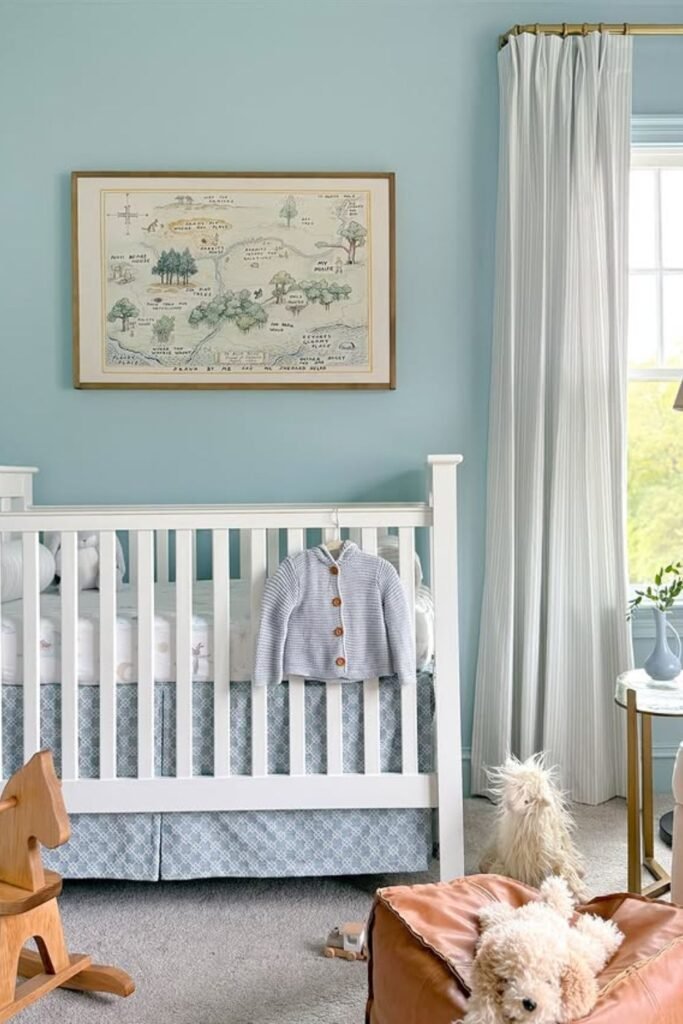
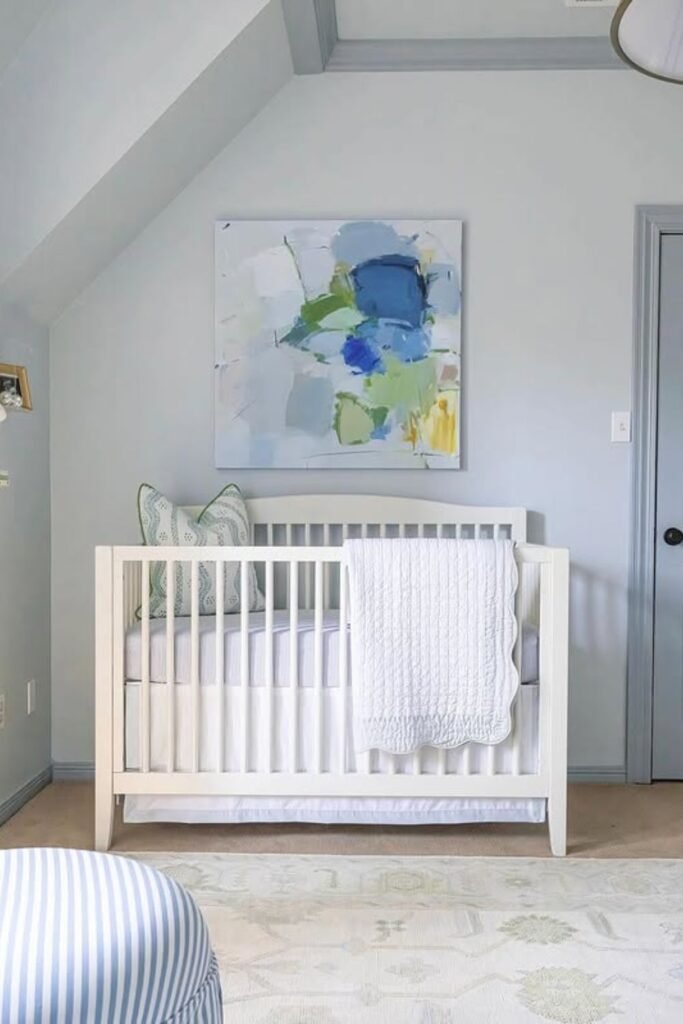
Abstract Calm
Blue works beautifully in nurseries even when it’s not the strongest visual element in the room.
The subtle grey-blue wall hue here acts as a peaceful backdrop that allows artwork.
Crib design and textures to shine naturally without vying for attention. It looks more like a still canvas than a furnished place.
Positioning the crib in the middle balances the visual weight in the sleep zone, particularly if you mix it with soft neutral bedding.
That doesn’t have too much contrast. The enormous abstract piece above adds character without adding noise.
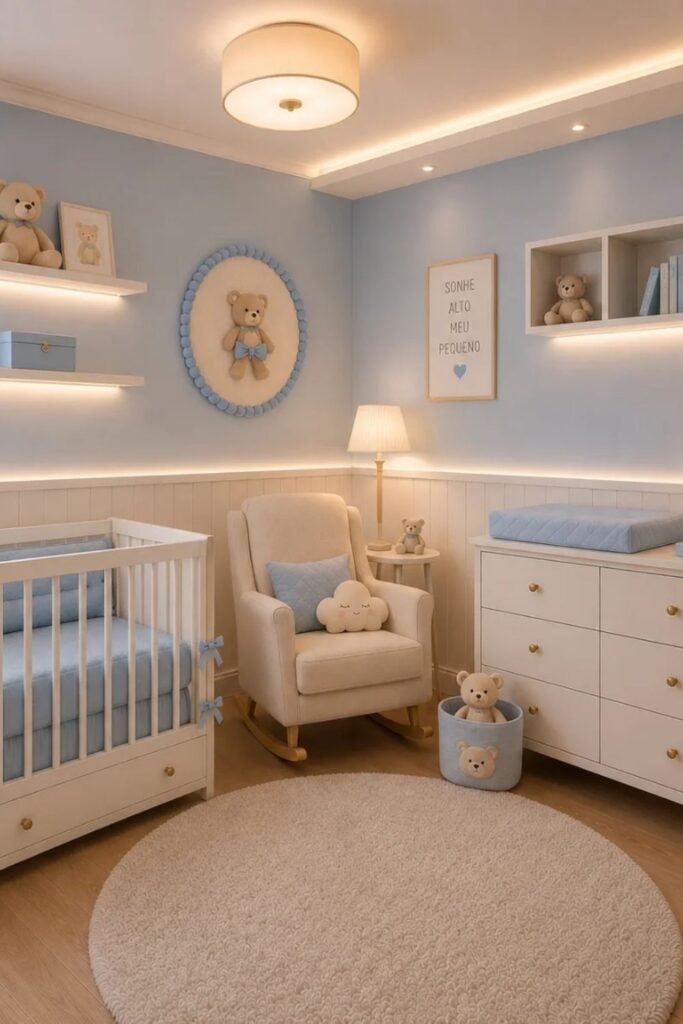
Cloud Glow
Blue becomes most comforting in a nursery when it’s softened with warm lighting and paired with creamy neutrals like in this setup.
The wall color is understated, so the room feels quiet and steady, and gentle lighting along shelves and ceilings gives warmth.
That prevents the blue from ever appearing frigid. The corner position creates a designated sleep area while keeping the crib integrated in the room.
The comfortable rocking chair in the middle is a natural place for everyday routines, notably feeding and quiet bonding periods.
Built-in storage keeps toys and essentials visible but orderly, so that nothing disturbs the visual quiet.
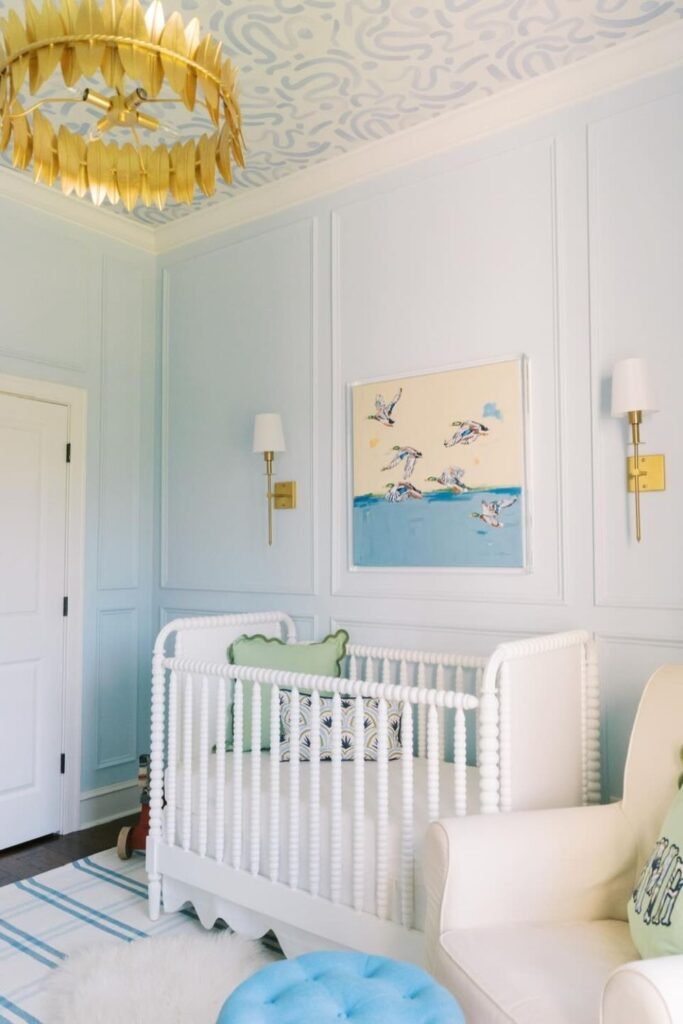
Golden Air
Blue feels completely different when paired with soft white paneling and a touch of gold creating a nursery that leans into elegance without losing its calm.
The walls keep light and airy so the blue impact is subtle rather than overpowering and the room seems open and elegant at the same time
The positioning of the crib allows for a visually open middle, so that the surrounding elements.
Such as framed paintings and wall lighting contribute flair without overwhelming the sleep area.
The gold highlights in the ceiling light add warmth to the cooler blue palette, balancing the emotional temperature of the room and making it feel more inviting.
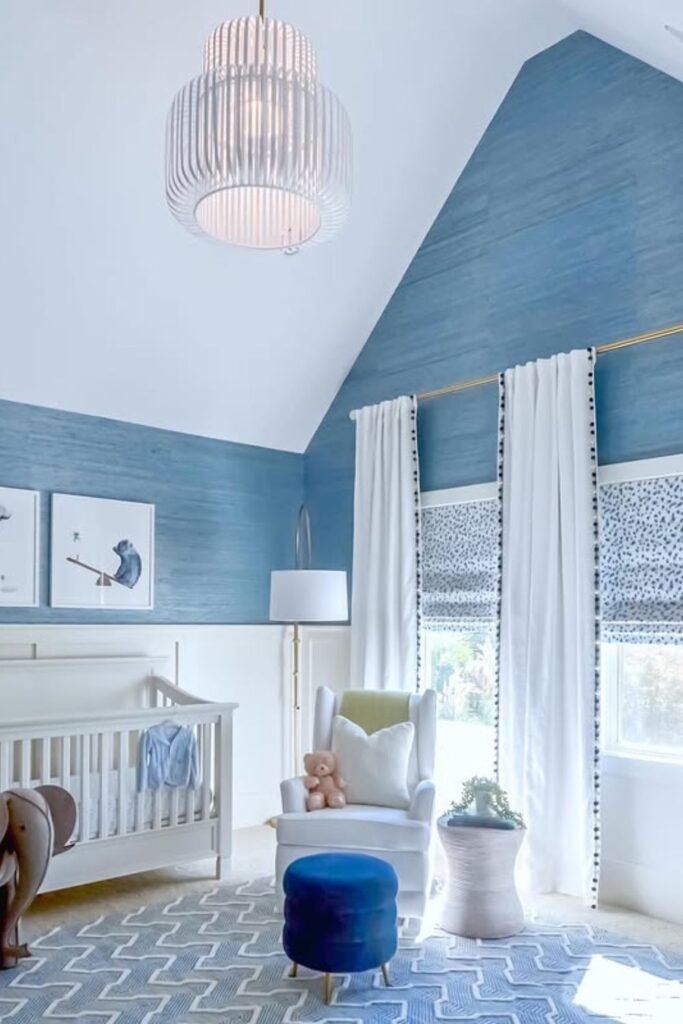
Sky Angle
Blue feels more dynamic here because it moves upward across the angled ceiling instead of sitting flat on the walls.
This gives a feeling of height and openness that works nicely in nurseries with strong architectural lines.
The bolder blue part naturally frames the crib area, and the lighter walls below maintain the sleeping space soft and visually balanced.
By positioning the crib against the white foundation wall we reduce visual weight making the sleep room appear safer and less congested.
A tiny ottoman and nearby seating make a pleasant feeding and resting space especially handy in the extended day time routines where comfort design formality.
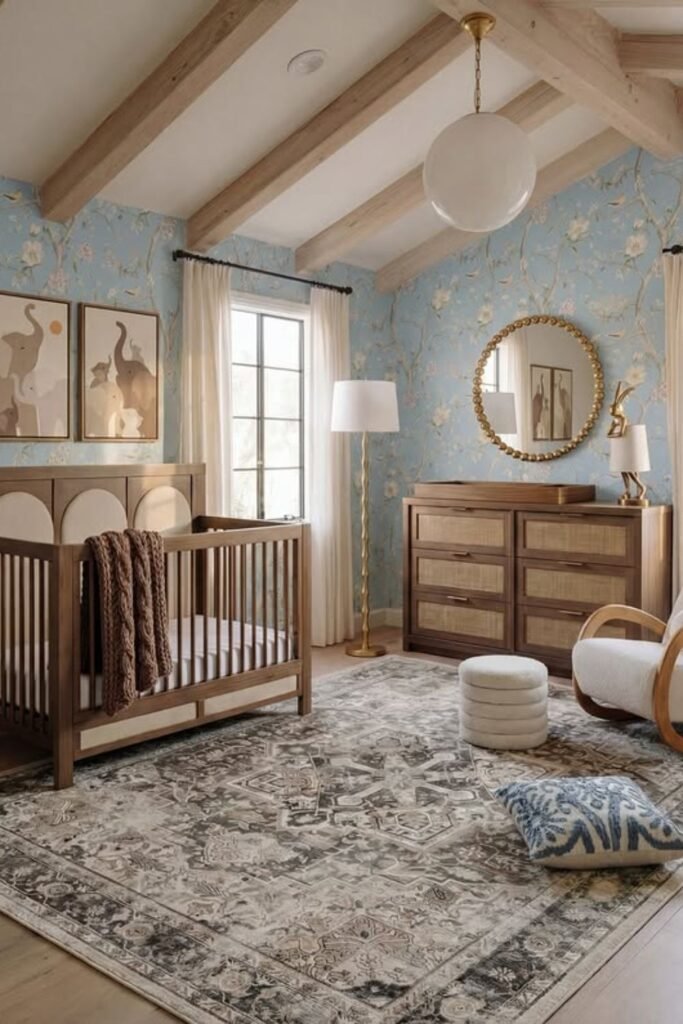
Floral Depth
Blue becomes most expressive when its carries pattern and texture instead of staying flat.
This nursery shows how floral detailing can completely change personality. The soothing blue wallpaper already.
Creates a quiet backdrop but the layered floral print adds movement which makes walls feel alive without being overtly loud.
With the crib against this patterned wall, the sleep zone becomes a soft focal point, and the warm wooden furniture balances the cooler tones.
The round mirror, framed art and soft lighting create a smooth rhythm across the wall, not a strong visual block.
FAQs
Is blue really a good choice for a nursery room?
Yes, blue is a good choice of color since it produces an environment that is inherently relaxing and low stimulation.
Which can assist both newborns and parents feel more comfortable. Combined with warm lighting and neutral furnishings.
How do I make a blue nursery feel warm instead of cold?
The key is balance. Blue walls, natural wood, beige linens, and gentle lighting add texture and dimension to the area.
Don’t just lean on cool tones add some warmth through texture and light to make the nursery inviting and cozy.

Hi, I’m Afaf! I’m a law student who loves writing about everyday life – from home projects and crafts to fashion, beauty, and parenting tips.
I’ve been writing for over a year, sharing ideas that are simple, practical, and easy to try. I write about things I find interesting and useful, whether that’s organizing a space, trying a new DIY, or finding activities to keep kids entertained.
My goal is to share helpful ideas without making things complicated. If it works in real life, I’ll write about it.
When I’m not studying or writing, I’m usually experimenting with new projects or scrolling for inspiration!