
22 Jungle Theme Nursery Ideas for 2026
You want a jungle nursery, and the second you start mixing safari animals with lush jungle decor, the room goes from Pinterest cute.
To “way too much happening” in a heartbeat. One giraffe is fine, then a lion comes, then elephants, then vines everywhere.
And soon nothing feels balanced any more. That’s exactly where most people get stuck and overthink every little element.
The truth is, the theme is not the issue. It’s the way the pieces are all jumbled together.
Once you learn a basic balance strategy, you may combine safari animals with jungle features without making the area feel cluttered or disorganized.
In this article, I’ll show you 22 jungle Theme nursery ideas that add vibrant colors and fun animal-inspired details to your nursery.
Let’s jump in!
How Do I Mix Safari Animals With Jungle Theme Without It Looking Messy?
Tossing safari animals in with a jungle motif without a plan might make a room feel crammed instead of cute.
The secret is to make the jungle your background and safari animals your little accents and not the main event everywhere.
Save this article for later!👇👇👇
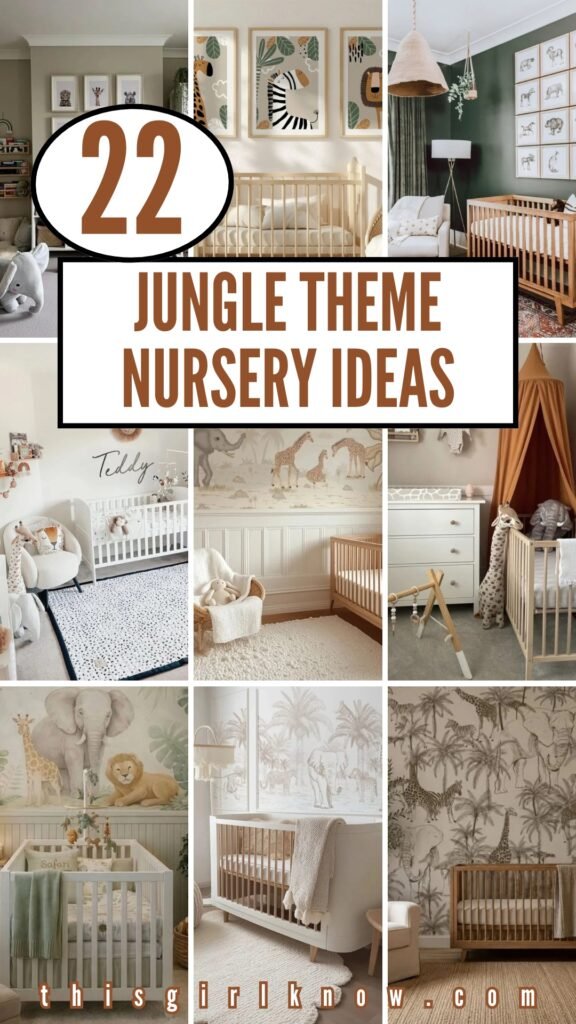
Good starting point is a quiet base like white, beige or soft green walls, then add jungle elements like leaves or vines to only one feature wall.
Then slowly put in safari creatures, perhaps 2 or 3 species, repeat them instead of adding everything you like.
Keeping to the same colors and leaving some space unfilled helps the room have a balanced, soft and clean look, as opposed to a cluttered one.
Safari Calm
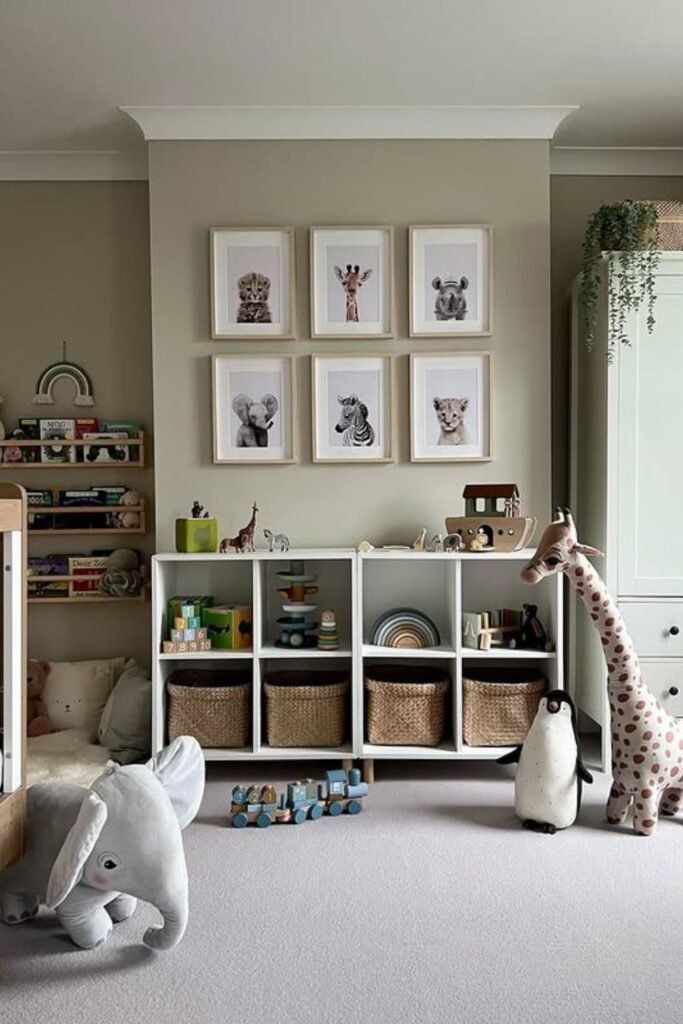
Mixing safari animals into a nursery works best when everything sits on a soft neutral base instead of competing for attention.
The shelf setup is ideal here, with tiny toy groupings with breathing room instead of cramming every compartment.
Too many sizes or colors of animals clustered together can quickly overwhelm the eye and the area loses its tranquil vibe.
Position is more important than quantity. Larger elements such as giraffe and elephant are kept on the floor corners for balance.
While smaller animal prints on the wall draw the motif up into the room without crowding the play zone.
The cubby storage gently handles visual clutter too, stashing smaller items in baskets while making them accessible.
Wall Harmony
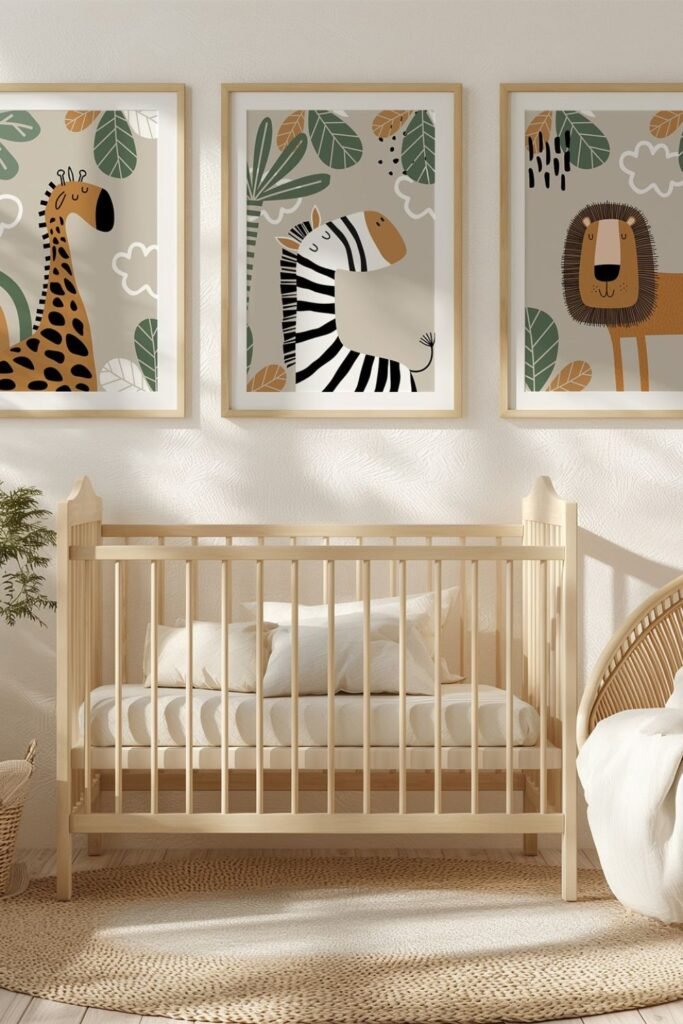
Three framed animals above the crib quietly set the tone for the entire nursery before anything else in the room even matters.
The trick here is not the choice of animal but the spacing and visual rhythm between each frame.
The repeating of a similar frame type and equal gaps makes the wall feel immediately deliberate rather than random.
The crib is located exactly beneath the middle frame, an organic focal point enabling the space to feel organized without any extra effort.
The safari animals work because they are flat and still on the wall, while the remainder of the room leaves space to breathe underneath.
Green Safari
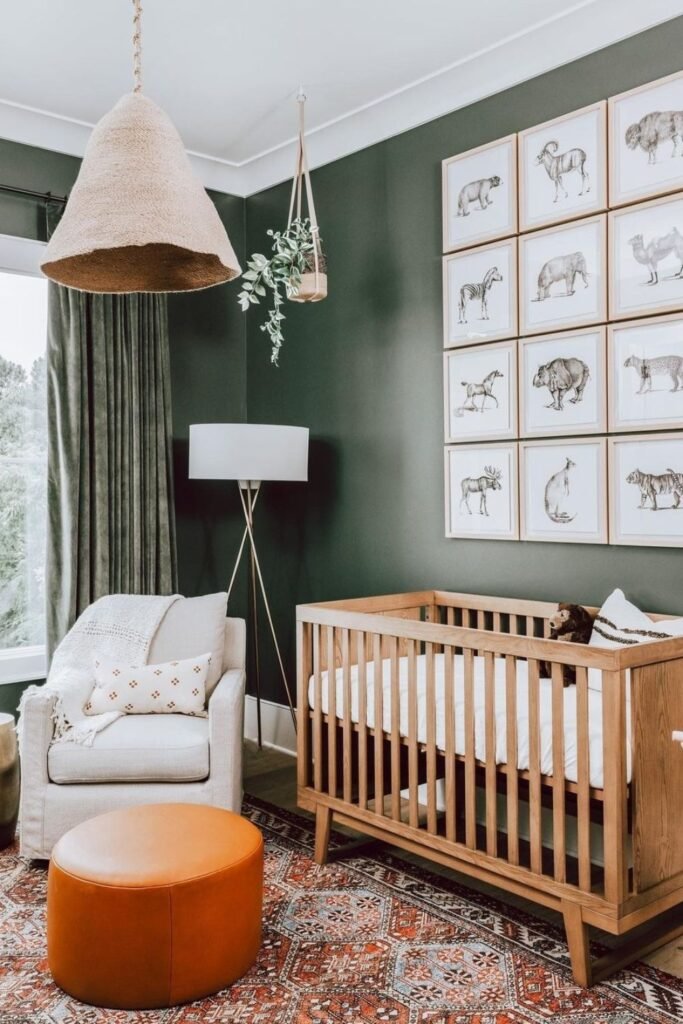
Deep green walls instantly anchor the nursery and give safari animal artwork a stronger visual presence instead of making it feel like random decor pieces.
The big move is to use an organized grid of animal frames so the wall feels planned, not random. .
When each frame is the same size and spacing, the jungle theme is regulated and tranquil rather than visually noisy.
If you want this balance maintain the furniture tones natural like wood, beige and soft neutrals so the wall becomes the primary character.
A patterned rug beneath the crib area helps ground the space and avoids the green wall feeling too oppressive.
Mural Flow
A full-wall jungle mural like this works best when you treat it as the “story layer” of the nursery not just decoration.
I think the biggest error people do is placing too many other things in front of it and it kills the tranquil impression and turns the wall into visual overload.
Here the mural has got everything already, animals, trees and movement, so the rest of the space should be purposely minimalistic.
If you’re duplicating this, keep the furnishings low and natural so it doesn’t compete with the artwork.
To support the wall rather than battle it, a simple crib, neutral, soft chair and textured light rug are enough.
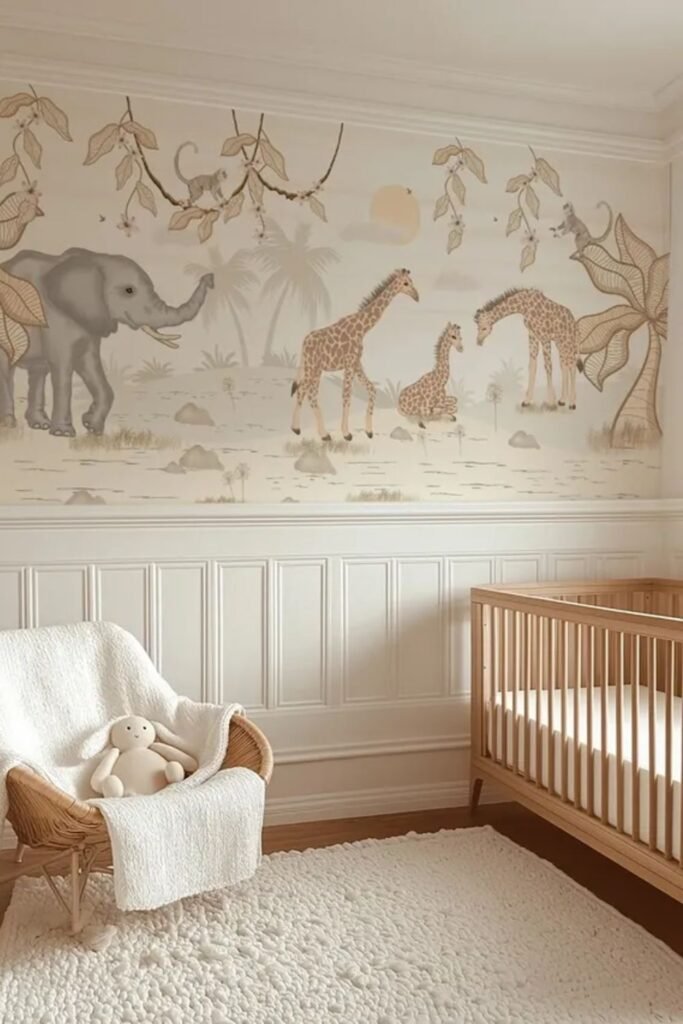
Soft Safari
A calm jungle nursery doesn’t always need loud colors or heavy animal styling to feel complete.
The concept is definitely safari inspired, but it works. It is gentle, balanced and visually light.
The giraffe and elephant figures are positioned so they feel playful but not obtrusive and the room still maintains its sleep-friendly ambiance.
To get this look, begin with a neutral foundation, such as white walls, light-toned furnishings, and soft, textured flooring.
Set that foundation, and then add a couple of safari characters that are crucial, rather than cluttering every space with animals.
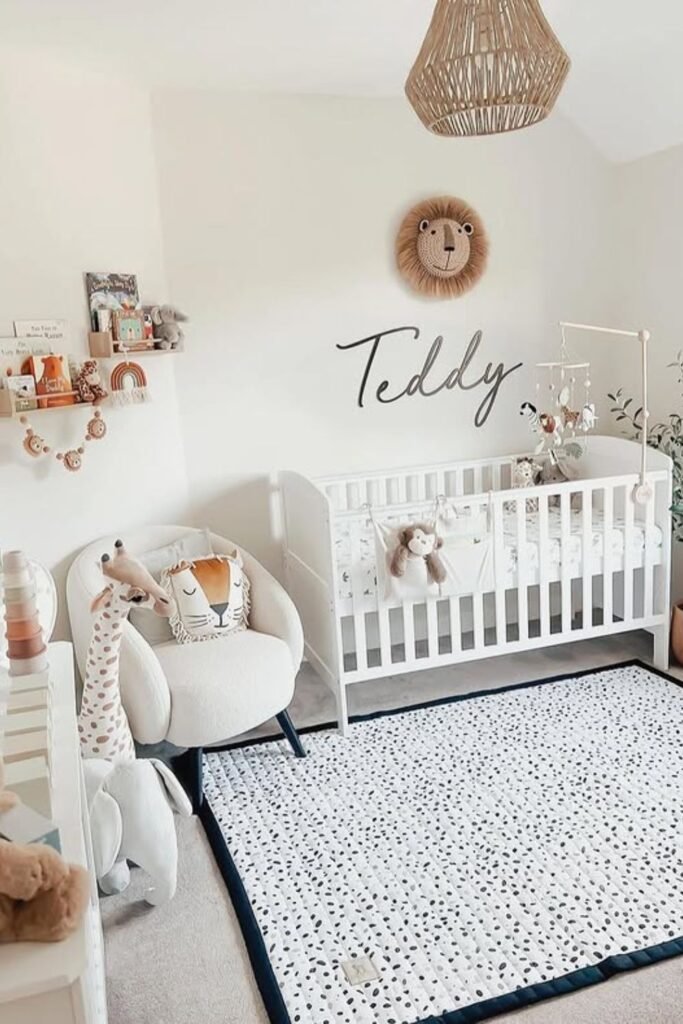
Canopy Corner
A single bold element like the hanging canopy instantly becomes the emotional anchor of the entire nursery pulling attention toward the crib.
The warm rust tone works since it doesn’t compete with the neutral foundation but breaks it up, making the room seem homey and grounded.
The actual balance is keeping everything quiet around it. The light furnishings, soft grey ground and simple shelf styling.
Even the safari toys are laid up with care, using only a few characters so each one really jumps out rather than becoming lost in chaos.
To duplicate this sort of scenario, think of levels of importance. Let a powerful visual element lead the area, and then keep everything else supportive and basic.
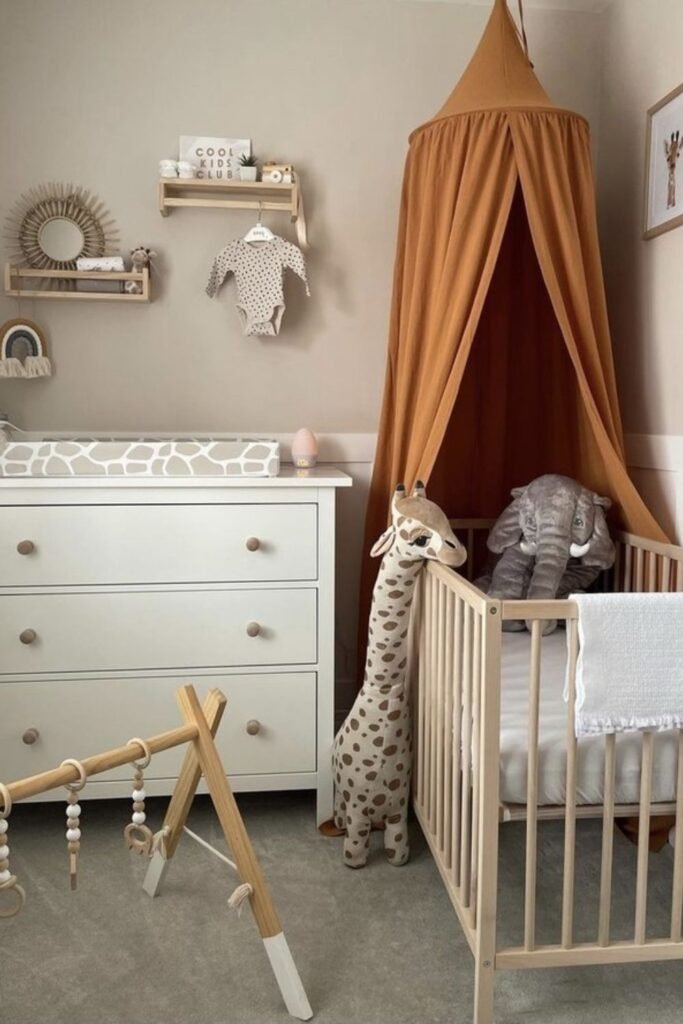
Wild Mural
A full-wall jungle mural like this works best when you let it dominate the room instead of trying to decorate around it too much.
The reason this layout is so balanced is that the wall already tells the whole tale, trees, animals and depth so everything else is visually silent and supporting.
To achieve this look, start by treating the mural as the nursery’s “main character.” Next, keep the furniture simple and warm-toned.
So it doesn’t compete for attention. Natural wood textures of the cot and dresser help level the area, yet still compliment the earthy jungle theme.
The biggest error people make is to place too many unnecessary safari elements on top of a mural.
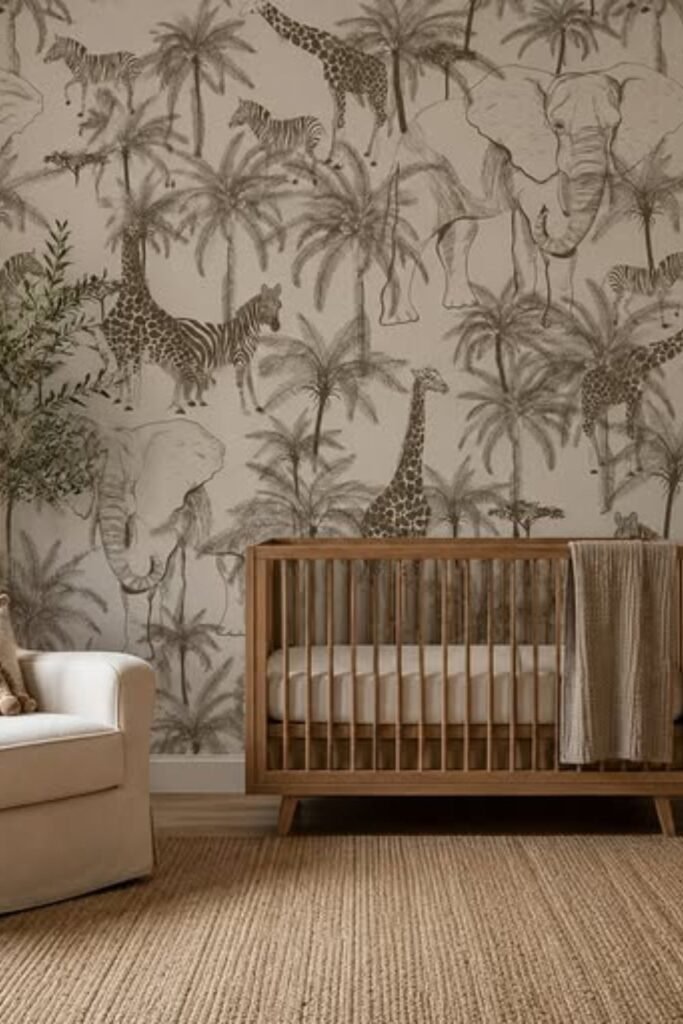
Soft Mural
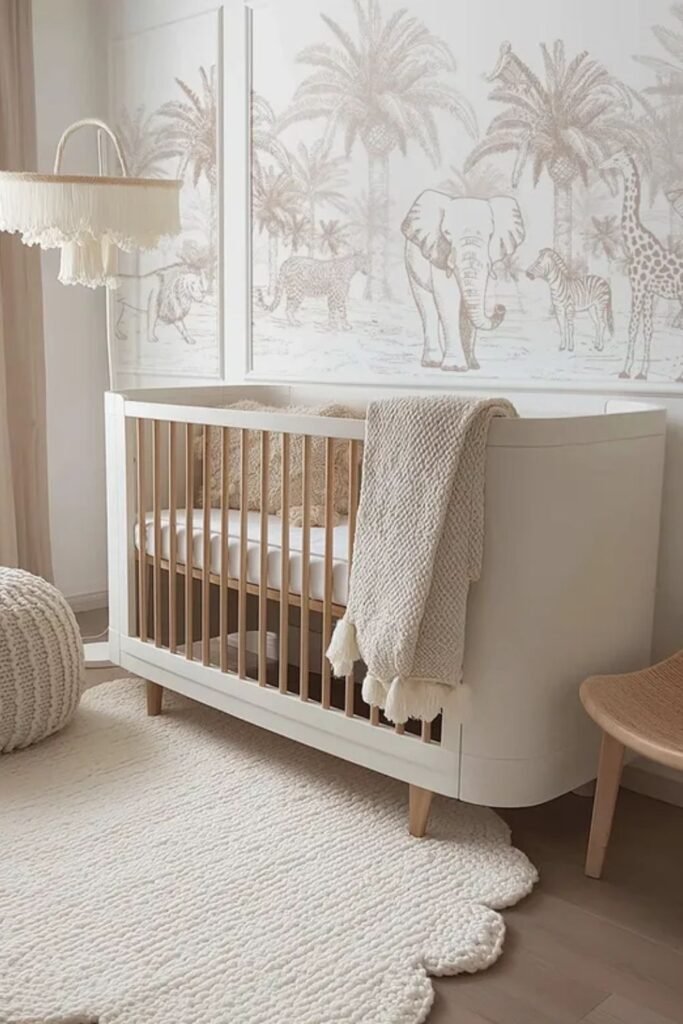
A full-wall safari mural like this works because it removes the need for extra decoration and lets the wall itself carry the entire theme.
Instead of having many animal pieces scattered over the room, everything remains visually grounded in one peaceful, continuous tableau.
To recreate this balance start with a very soft color palette for everything below the wall line.
The off-white furnishings, light wood tones and textured carpets help keep the focus on the mural instead of conflicting with it.
The positioning of the crib in front of the artwork helps reinforces the visual focus, so the space feels well-formed without feeling too organized.
Safari Story
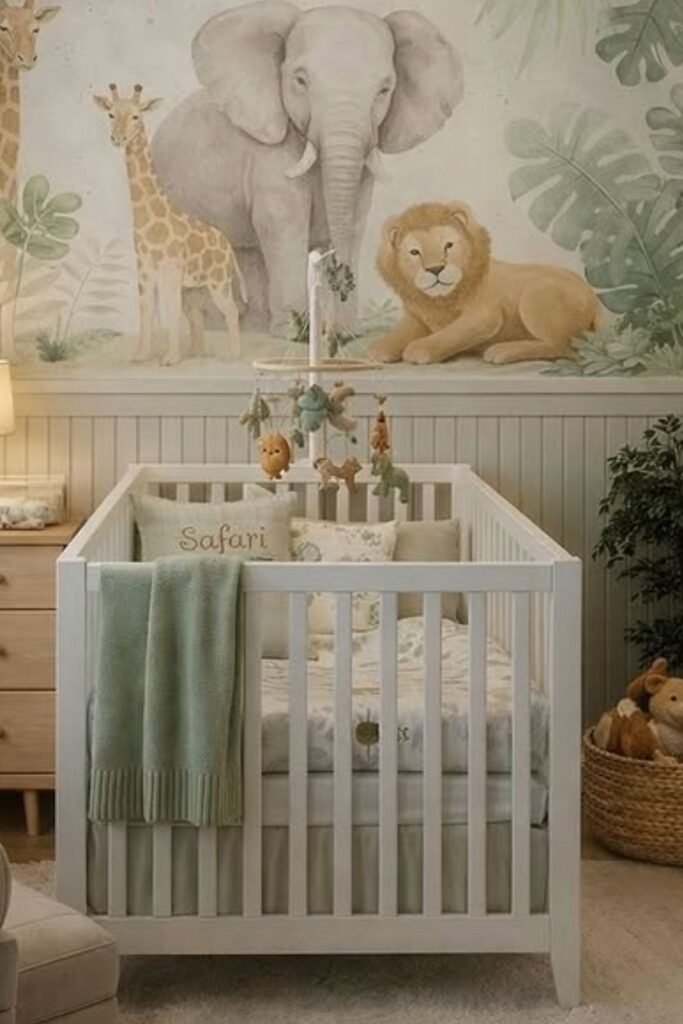
A jungle nursery feels truly complete when the wall does not just decorate the room but actually tells a soft visual story for the baby.
The mural is the primary emotional focus and everything else is gently supporting it here not competing.
It’s that equilibrium that keeps the room from feeling chaotic with a bunch of different creatures in it.
To replicate this, start by letting the mural set the tone first. Soft greens, warm neutrals and delicate animal images should dictate every other choice in the area.
Once you have that tale going, keep furnishings simple and low contrast so it doesn’t break up the story of the wall.
Jungle Layers
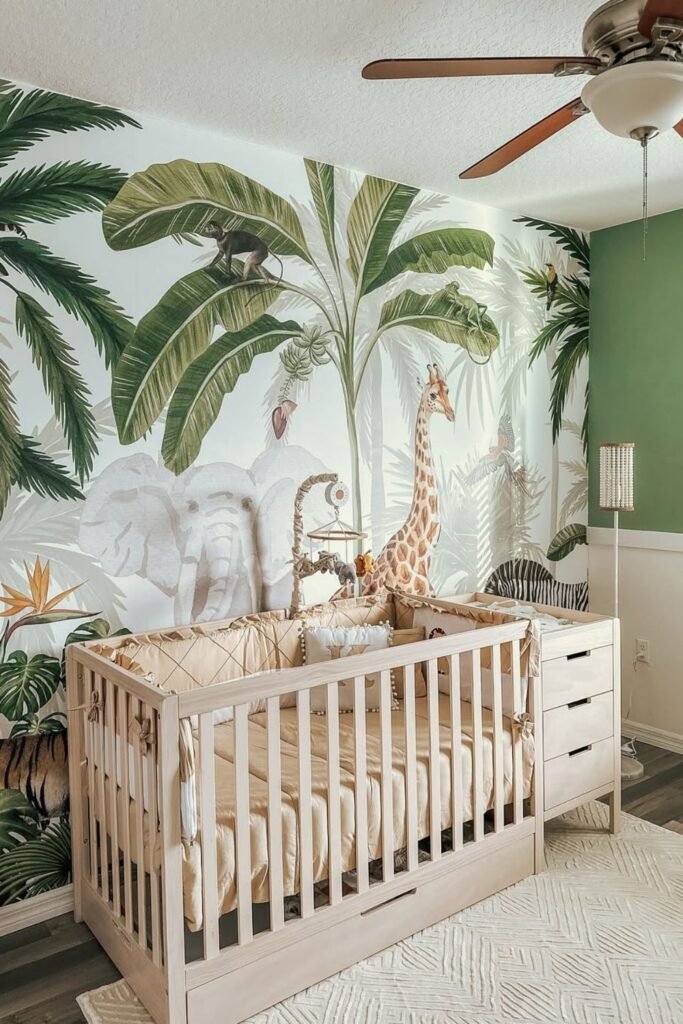
A jungle nursery looks most balanced when you build it in layers instead of filling the room with multiple bold elements at once.
The wall painting in this setup already gives a strong tropical basis with its big plants and animals.
So everything in front of that is purposely light and organized. It’s the contrast that makes the area feel tidy even with a detailed background.
If you want to duplicate this, you first want to let the wall do all the heavy lifting: Once that’s done, choose natural wood furniture and soft neutral bedding.
So the eye is never distracted by competing features and constantly comes back to the mural.
Bold Contrast
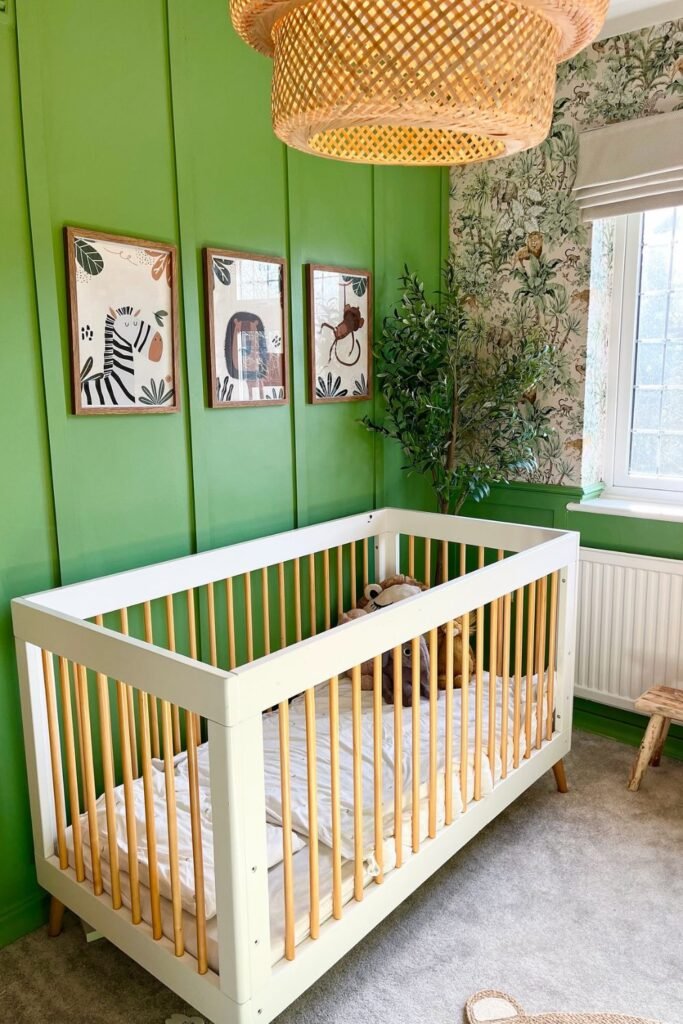
A jungle nursery instantly feels more modern when you introduce strong contrast instead of blending everything into the same soft tone.
Here, the bold green wall is the anchor point and the rest is purposely clean so that the room doesn’t turn visually heavy.
It’s that juxtaposition of bright color and sparse furniture that keeps the area feeling fresh rather than overwhelming.
To replicate this balance, select one powerful feature wall and have it carry the jungle identity.
Once that’s established, choose plain whites or light wood for the crib and major furnishings so they don’t compete with the wall.
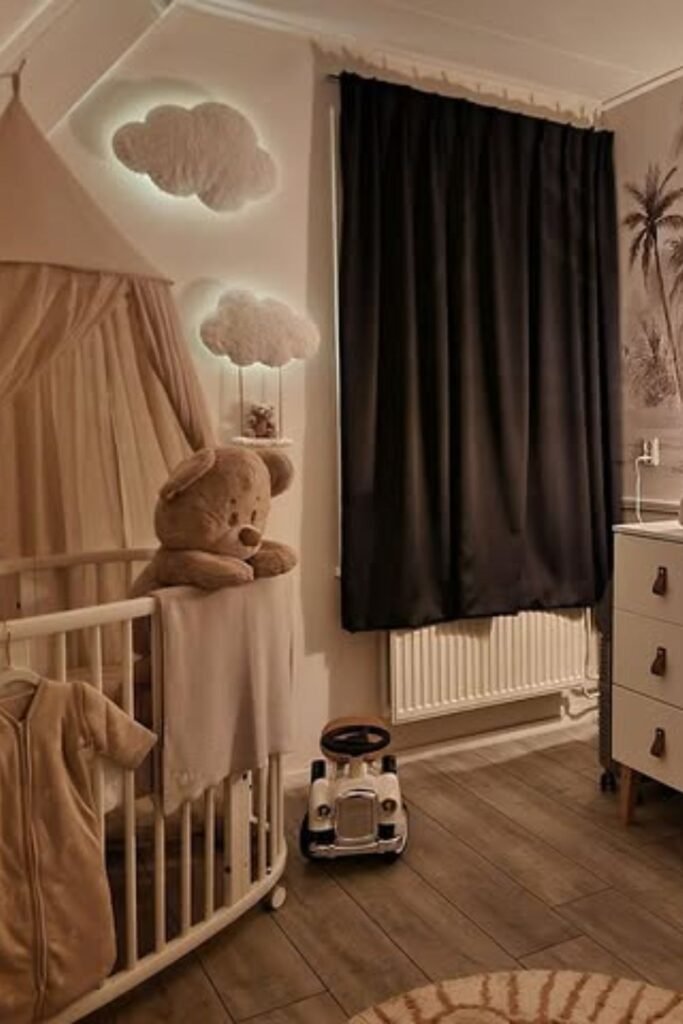
Cozy Depth
A jungle nursery becomes far more powerful when you build depth through lighting, texture and shadow instead of relying only on decorative items.
The warm painting already forms a strong storytelling wall in this configuration, but the darker curtains.
And gentle lighting add contrast to make the space feel more intimate and grounded instead than flat.
If you want to copy this effect, let one wall tell the whole jungle story and balance it out with deeper tones in more controlled places.
The crib position places the main focus in line with the mural and the surrounding furniture is kept basic and utilitarian.
Soft Balance
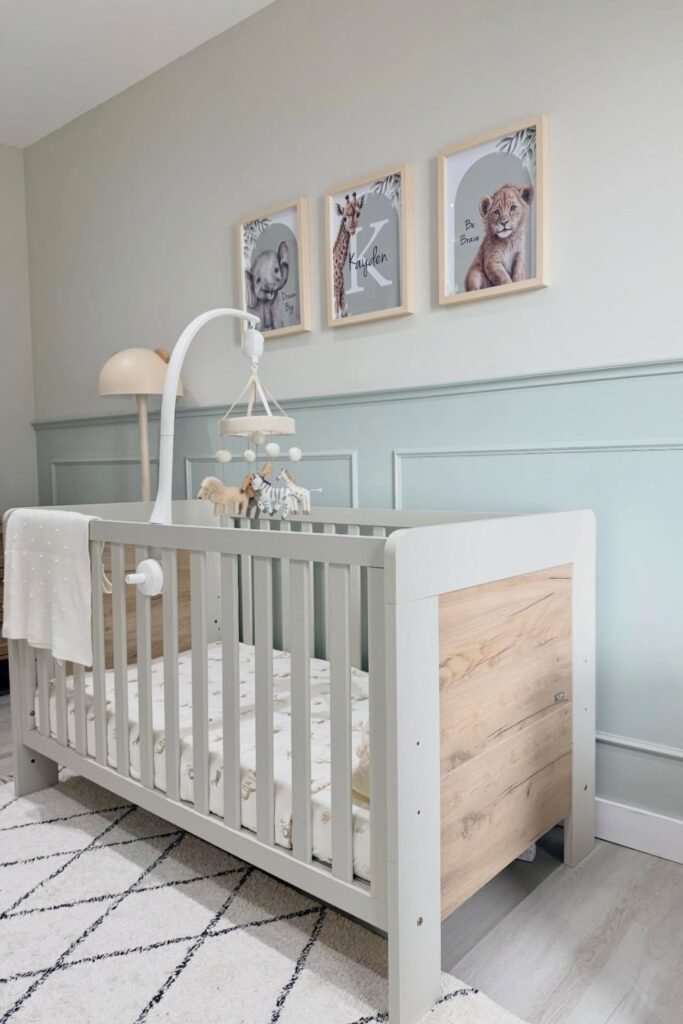
A calm jungle nursery doesn’t always need bold jungle patterns everywhere to feel complete. In this setup.
The strength is in the restraint the gentle blue wall paneling, the neutral furnishings.
And the limited safari accents are all working together instead of fighting for attention. That balance keeps the room feeling fresh. Not visually overloaded.
To replicate this approach, begin with a soft basis and then integrate jungle themes only in limited accents.
The crib area is still visually clean which makes the space feel open and breezy instead of cluttered with too many themed pieces.
Cool Contrast
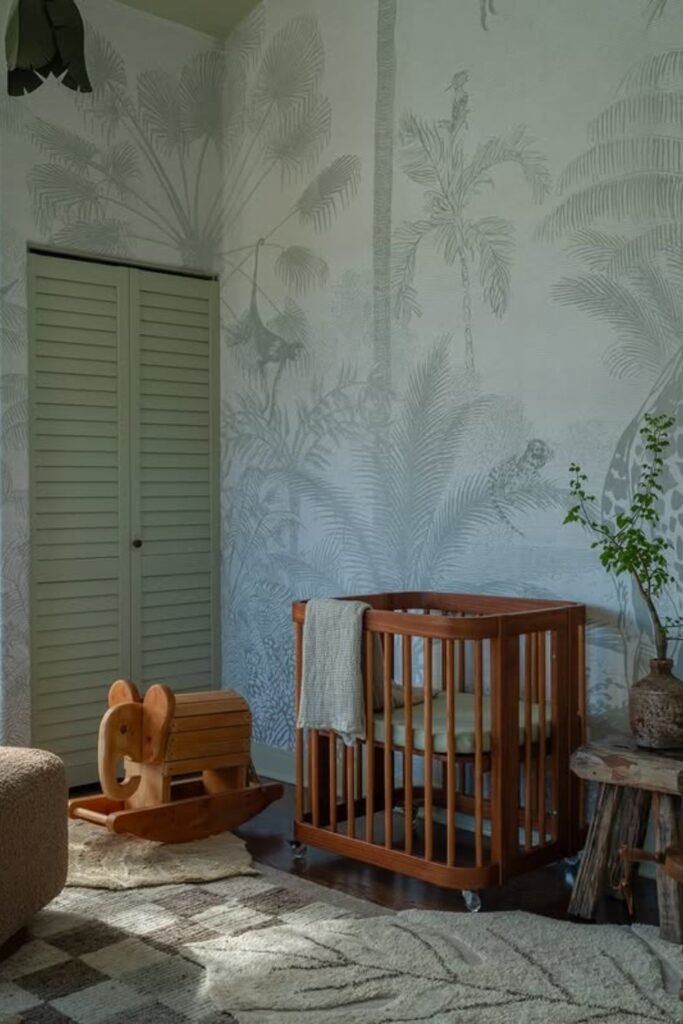
A jungle nursery becomes visually interesting when you balance detailed wall art with simple grounded furniture instead of letting both compete for attention.
This arrangement already has a mural style that is a soft jungle tale, therefore the crib with surrounding decor is purposely modest to avoid an overload of visuals.
To duplicate this, begin with the wall texture or mural setting the mood for the whole thing.
Once you’ve done so, keep furniture in warm natural wood tones so it integrates into the scene rather than standing out too much.
The smaller design objects like as toys or side tables are also kept modest in visual weight so the wall story remains the focus.
Window Calm
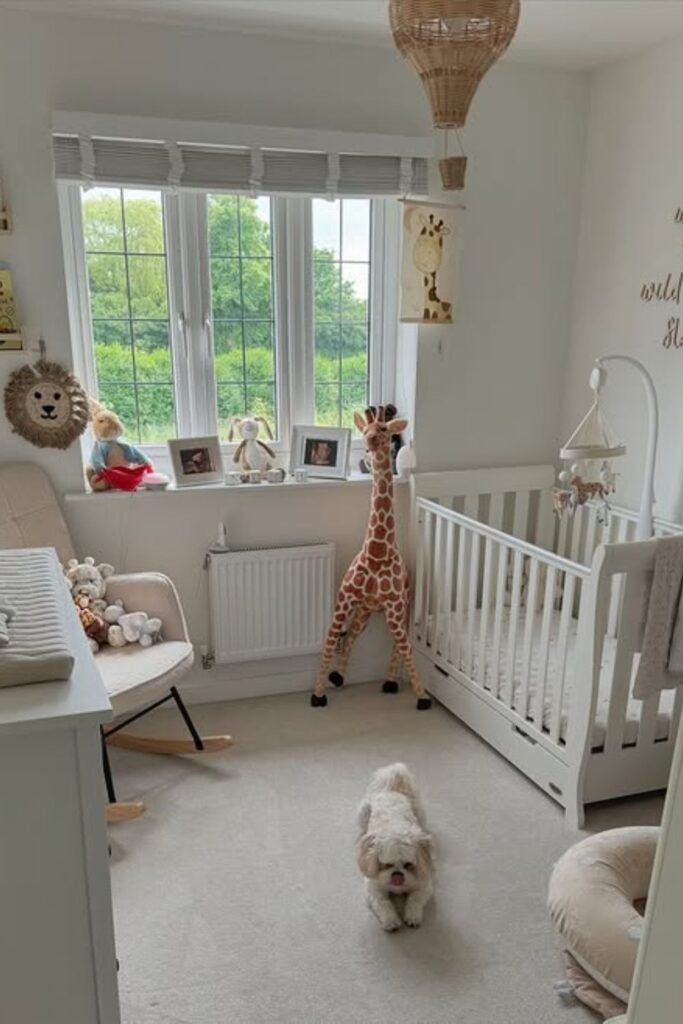
Natural light changes everything in a jungle nursery, and this room shows how calm the space.
Becomes when daylight is allowed to lead the design instead of heavy decor.
The window becomes the primary soft focus point and everything surrounding it is kept light so the room never feels visually crowded.
To get this feeling, think of the window area as a breathing zone. Keep the shelf style simple with a few books or soft toys that won’t battle for attention.
And don’t pile too many decorations around it. One towering safari piece like the giraffe here works best if it’s placed just off-center.
Adding character without destroying the balance. Openness is the key to making this setup work. The room doesn’t occupy space.
Gentle Jungle
Calm jungle murals paired with soft seating instantly turn a nursery into a reading-and-bonding zone instead of just a sleep-only setup.
Here the balance is merging fun animal stories on the wall with extremely soft neutral furnishings in front of it.
Shift the crib slightly off the mural’s most active area, and create a peaceful parent’s nook with a single recliner.
Just one textured pouf is all you need to make the floor soft without adding clutter.
If you want to go for this appearance, consider about zones a wall for story, the middle for function, the corners for comfort.
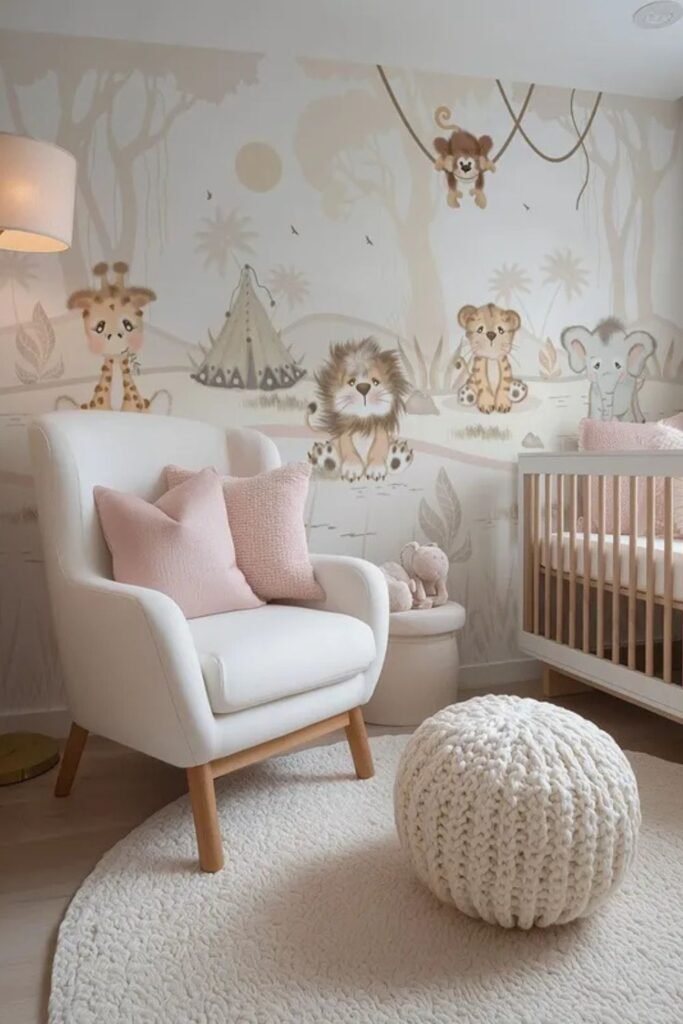
Muted Safari
Soft tones take over when jungle art is kept light instead of visually loud, and that’s exactly what makes this nursery feel so calming at first glance.
The mural features soft animal images in warm beige and blush tones, which maintains the whole concept gentle.
If you want to duplicate this, start with a muted wall design and then purposely keep everything else quiet.
A simple wooden crib and neutral recliner work because they don’t compete with the art, they support it.
The floor pouf offers texture without visual disturbance, helping to keep the balance in open space.
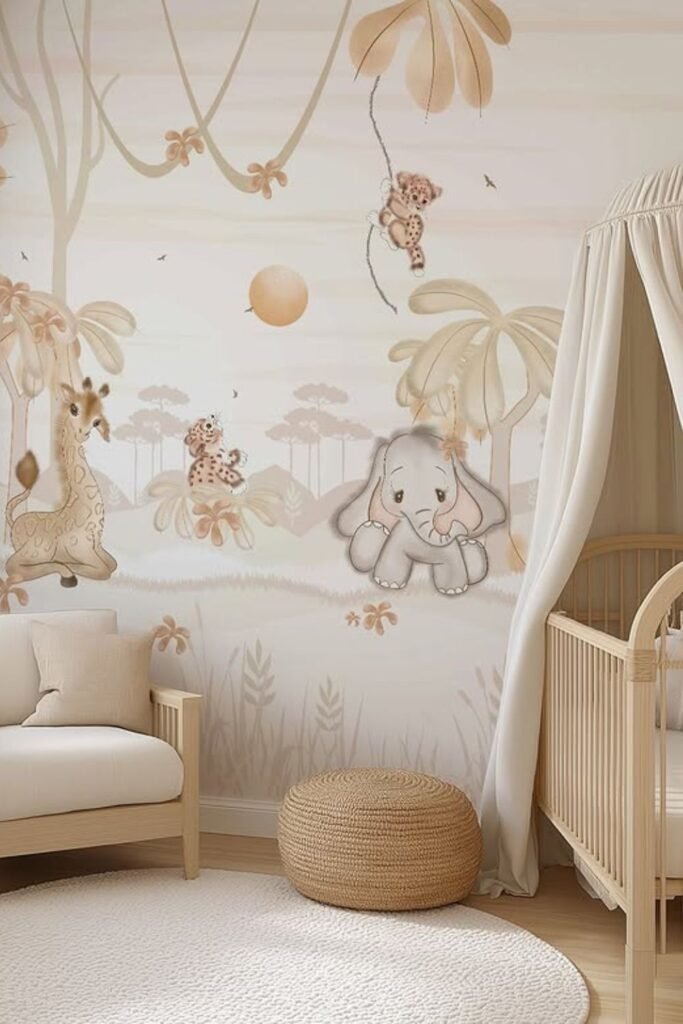
Safari Play
A jungle nursery becomes more engaging when you mix storytelling elements with playful, real-world props.
Instead of relying only on wall art or furniture styling. The mural already sets the mood for a full safari in this design.
But the giraffe figure and toys on the floor help to bring that story into the actual area and make it more interactive for a child.
If you want to do this again, first let the wall develop the whole forest scene before anything else.
Then all you need to do is add a few big character pieces, like a giraffe or lion, to bring the story into the space.
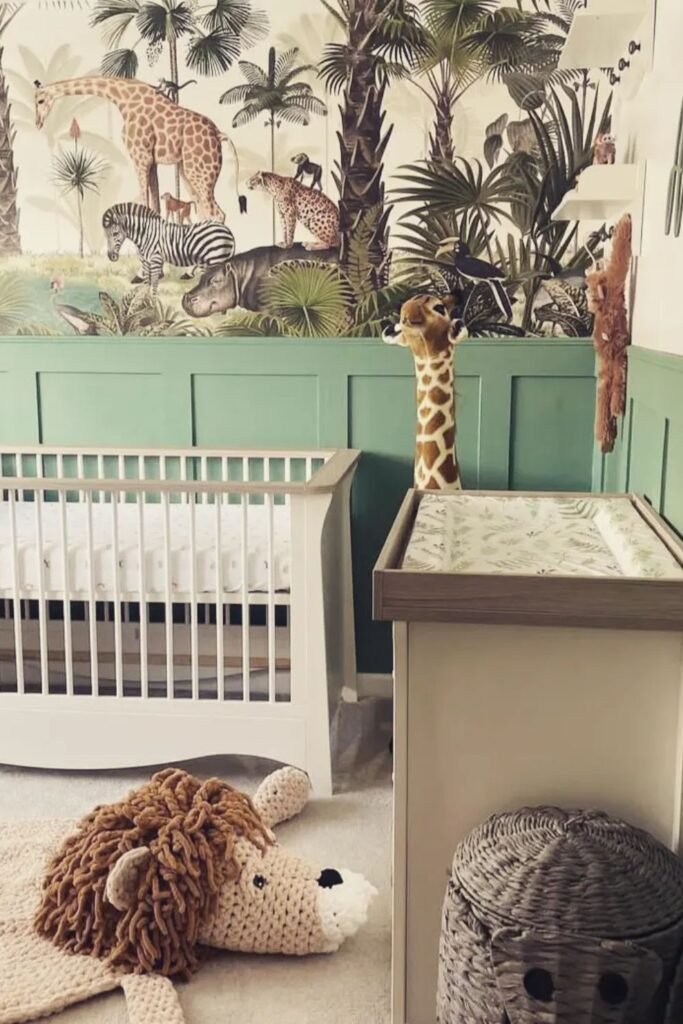
Green Layers
A jungle nursery feels more refined when green is not just a color choice but a structured design layer that connect every corner of the room.
Here muted green panel walls provide a powerful visual frame but natural wood furniture.
This effect is best achieved by starting with a foundation of wall paneling or an even green tone, and designing everything else around it.
The centrally placed crib keeps the room grounded and framed animal prints inject just enough of the safari identity to not disturb the tranquil flow.
What makes something work is repetition, controlled. The space is all in the same green tone, yet each texture wood, cloth and greenery brings variation without confusion.
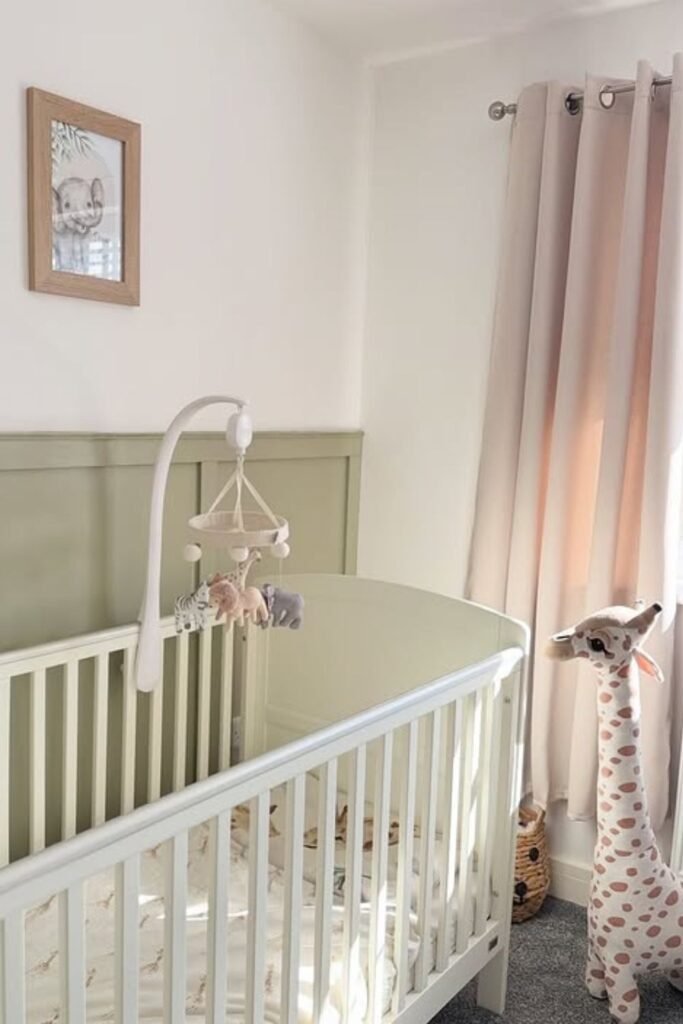
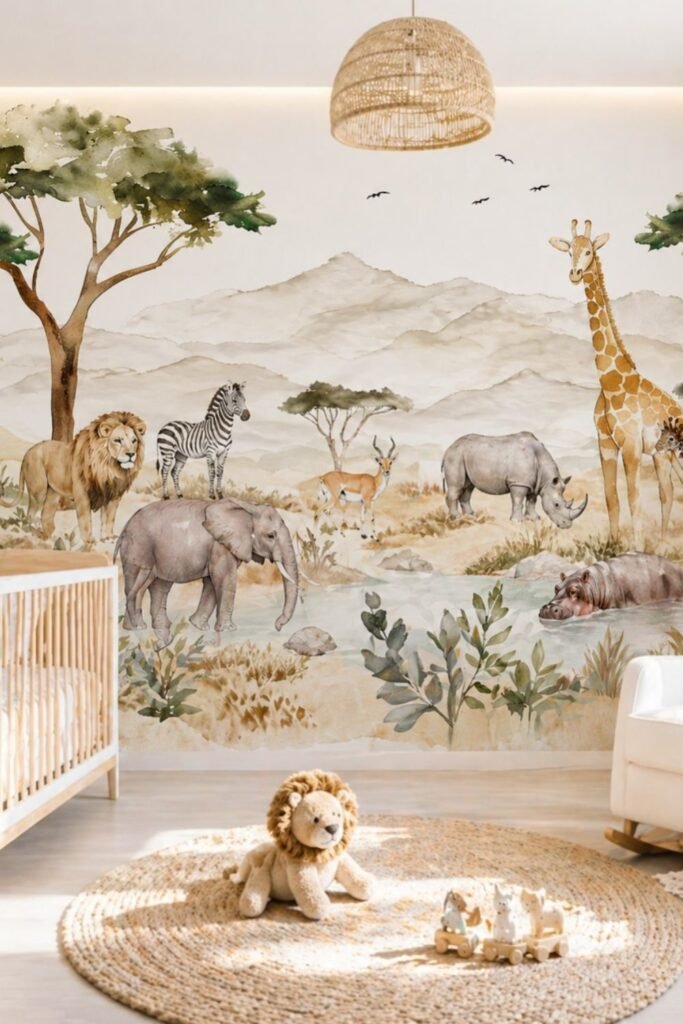
Safari Horizon
A jungle nursery becomes truly immersive when the wall transforms into a full horizon-style story instead of just a decorated surface.
So in this set-up, the mural runs the length of the room, and draws the eye into depth, organically making the space feel bigger.
And more dramatic, not flat or fragmented. To recreate this look, choose a mural with layered scenery (trees, animals, distant features).
So that the wall already has movement and depth. Once you have established that base, keep all furniture soft, neutral and low contrast.
So it doesn’t disturb the visual flow. The artwork is the star of the whole show. The crib, couch and carpeting all remain secondary.
Calm Corners
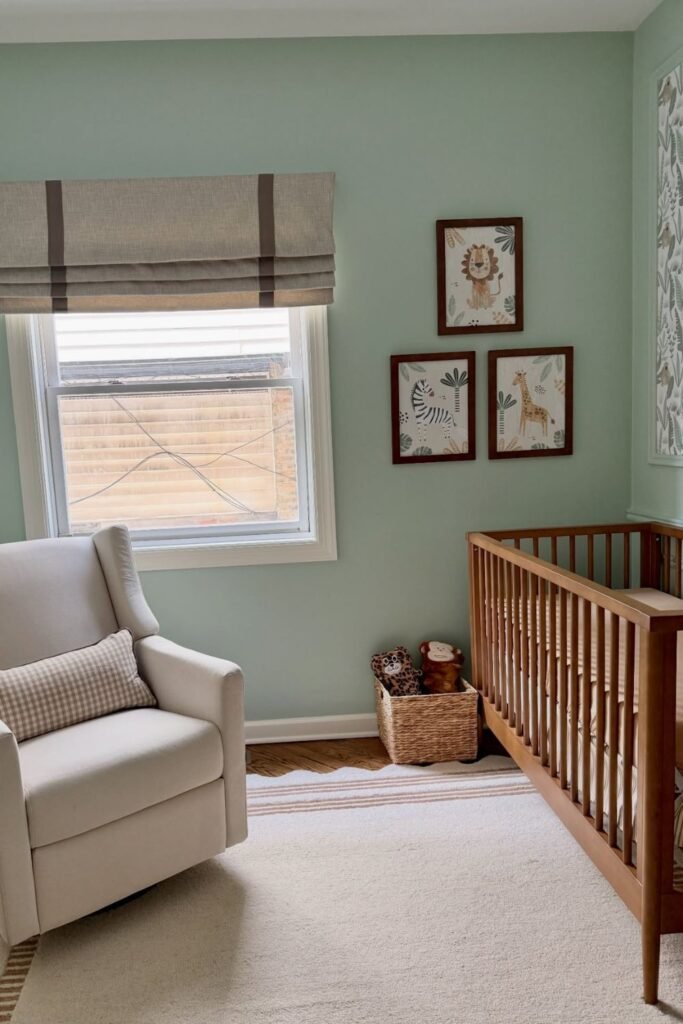
A jungle nursery doesn’t always need dramatic murals or bold storytelling walls to feel complete.
Here the soft, green wall provides a tranquil background and the whole area takes its character from subtle.
Regulated touches rather than from a visual effect that is heavy. That’s what makes it so good to look at.
If you want to copy this, first of all make one consistent wall colour that is soft and muted, and then develop little zones instead of filling every wall.
A reading chair by the window creates a peaceful place to connect, and framed safari prints provide just enough personality to the room.
Nature Frame
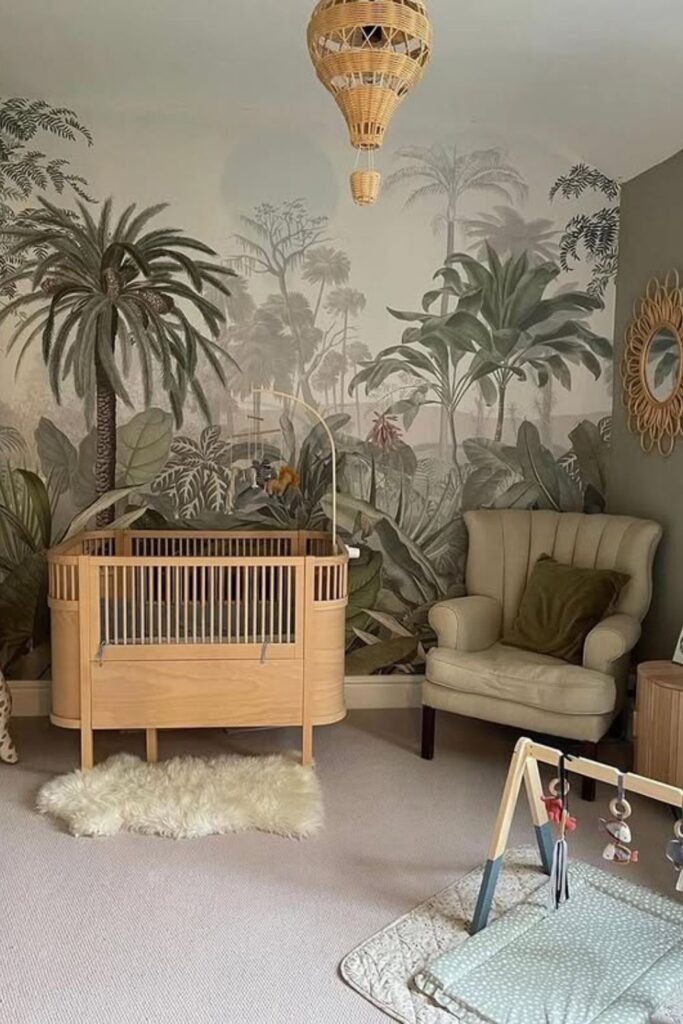
A jungle nursery feels most powerful when the wall doesn’t just decorate the space but fully surrounds it like a natural environment.
Here the mural covers the area in thick vegetation and soothing nature colours, immediately removing the need for over-styling elsewhere.
The crib and seats are basic so the wall may be immersive and not competing with other pieces.
The way to do this is to use the mural as a full backdrop rather than a feature wall.
Once the visual basis is established, select furniture featuring smooth curves and subdued tones that will seamlessly merge into the setting.
FAQs
How do I stop a jungle nursery from looking too crowded?
Choose one bold focal point, such as a feature wall or mural, and keep the rest soft and understated.
As soon as you start adding several bold animals, patterns and colors in different places, the room quickly becomes unbalanced.
Don’t mix things up, pick 2-3 kinds of animals and use them again. The nursery is tranquil rather than visually overcrowded with space to breathe for each aspect.
What is the easiest way to make a jungle nursery look modern instead of childish?
Go for understated earthy tones like beige, sage green and soft browns, instead than bright greens and cartoon-style colours.
Instead, pick simple layouts and clean furniture shapes instead of a major theme throughout. Let texture and spacing do the work, rather than over-decorate.
The jungle motif feels elegant, ageless and more like a created environment rather than a cartoon-inspired setting.

Hi, I’m Afaf! I’m a law student who loves writing about everyday life – from home projects and crafts to fashion, beauty, and parenting tips.
I’ve been writing for over a year, sharing ideas that are simple, practical, and easy to try. I write about things I find interesting and useful, whether that’s organizing a space, trying a new DIY, or finding activities to keep kids entertained.
My goal is to share helpful ideas without making things complicated. If it works in real life, I’ll write about it.
When I’m not studying or writing, I’m usually experimenting with new projects or scrolling for inspiration!