Choosing blue for a kids room sounds straightforward until you start looking at ideas. One room is too dark, another is too babyish.
And soon you’re wondering if blue will make the whole space feel cold or uninteresting.
And then the major question: how can you make it interesting without making the room a theme your child outgrows in a year.
A blue kids room may be lively, comfortable and full of personality if you do it right. You’ll find clever ways to use blue.
Without going overboard here. Plus lots of ideas that are enjoyable, practical and easy to make work in real life.
In this article, I will show you 24 amazing Blue Kids Room Ideas designed to make everyday bedrooms feel extra magical.
Let’s jump in!
How Do You Make a Blue Kids Room Look Fun Without Overdoing It?
Making a blue kids room feel fun starts with knowing when to stop. If you add blue walls, blue bedding, blue furniture.
And a strong theme all at once, the room can start feeling too busy or even cold. Pick one main blue shade first.
Save this article for later!👇👇👇
Then build around it with softer colors, warm textures, and playful details your child actually enjoys.
You can add fun through wall art, pillows, rugs, or one themed corner instead of decorating every inch.
If you want the room to grow with your child, keep bigger pieces simple and let smaller decor bring in the personality.
Navy Nook
Watching a shared kids room come together feels much easier when one bold color does most of the work.
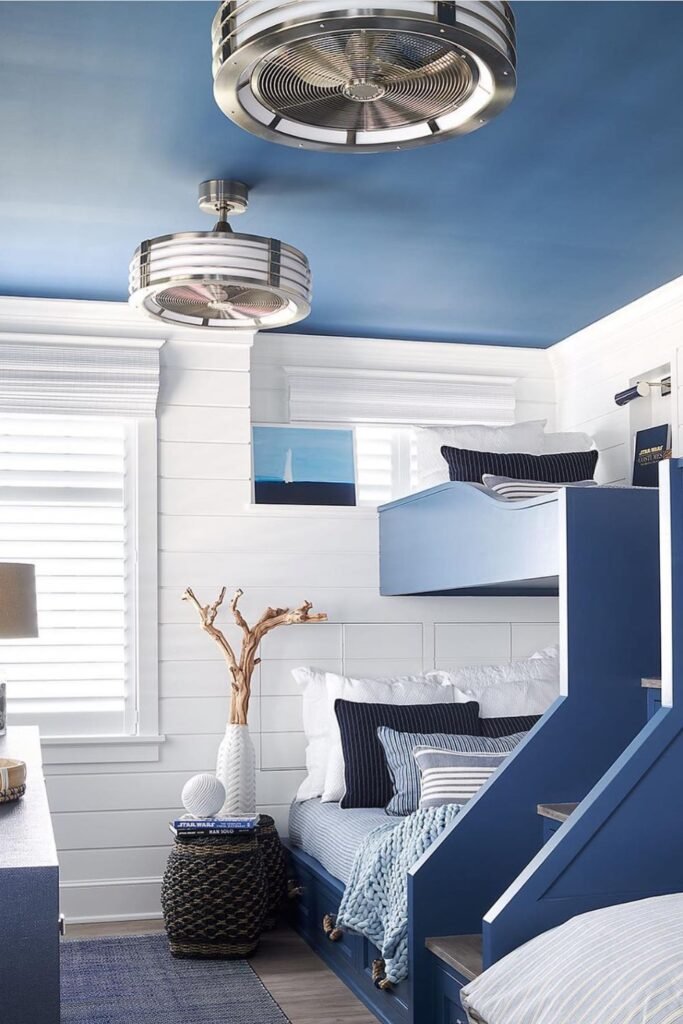
Deep navy on the bunk frame and ceiling injects personality here without overpowering the room because the walls, bedding and trim stay pristine white.
This is a great set up if you are decorating for siblings or if you are working with a smaller bedroom but still want it to appear attractive.
Using larger pieces of furniture in one bright shade of blue keeps the space looking coordinated.
And striped pillows and soft blankets discreetly create texture rather than visual chaos. Ceiling color is great if plain white rooms feel boring.
Star Ceiling
Stepping into a room like this instantly feels different because the ceiling becomes the main character instead of filling every wall with busy decor.
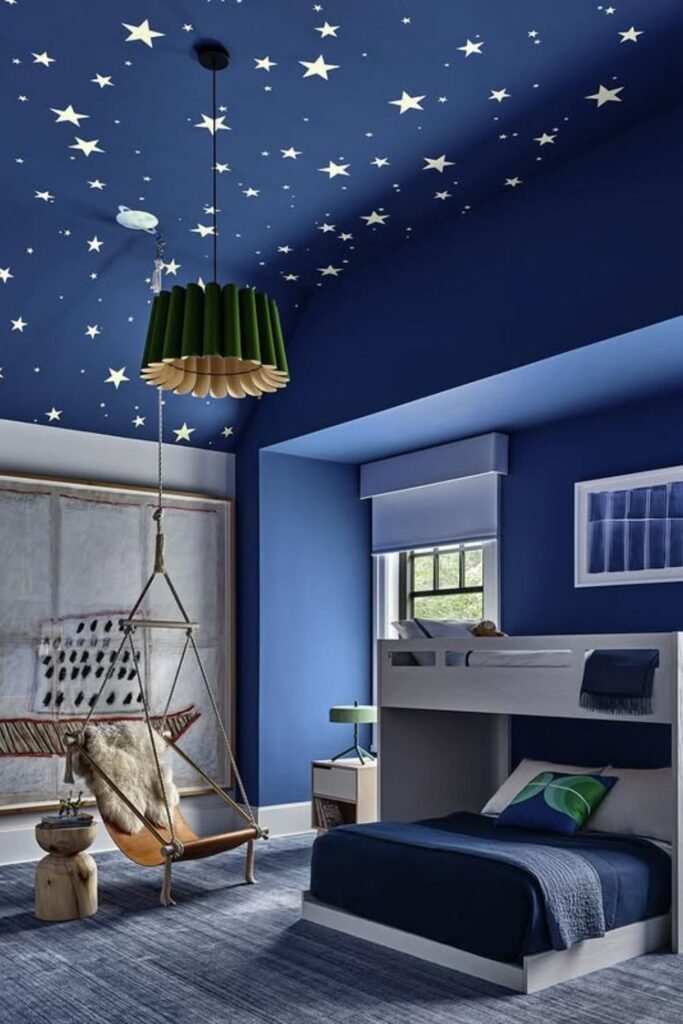
The deep blue works great here because the stars break up the deeper color, so the room doesn’t feel too heavy.
If your youngster likes space, bedtime stories, or a room that feels a little bit mystical but comforting without going overboard on the theme, try this suggestion.
Smart idea with the white bunk bed to balance out the dark walls and keep the room breathing.
One method worth following is confining the theme to the ceiling, while keeping furnishings plain, so the space still grows with your child later.
Forest Calm
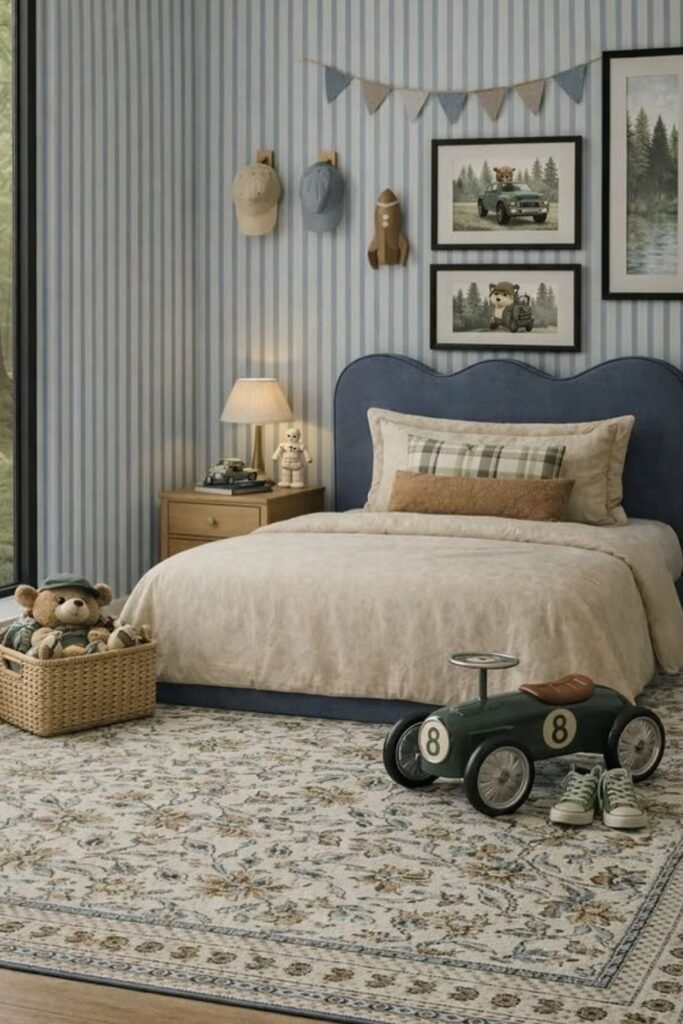
Soft blue works especially well when you want a kids room to feel peaceful instead of loud and overly playful.
Vertical striped wallpaper provides appeal without the need for loud colors or cartoon themes everywhere creating a timeless space for growing kids.
If you’re looking for a peaceful bedroom that’s nevertheless enjoyable in a subtle sense, go with muted blues, soft greens, and warm beige.
A few framed woodland art, plush animals, or one or two fun things like a toy car can provide character without taking over the room.
This style benefits from bigger windows since the natural light helps to soften the blue tones and keep the space feeling cozy.
Coastal Calm
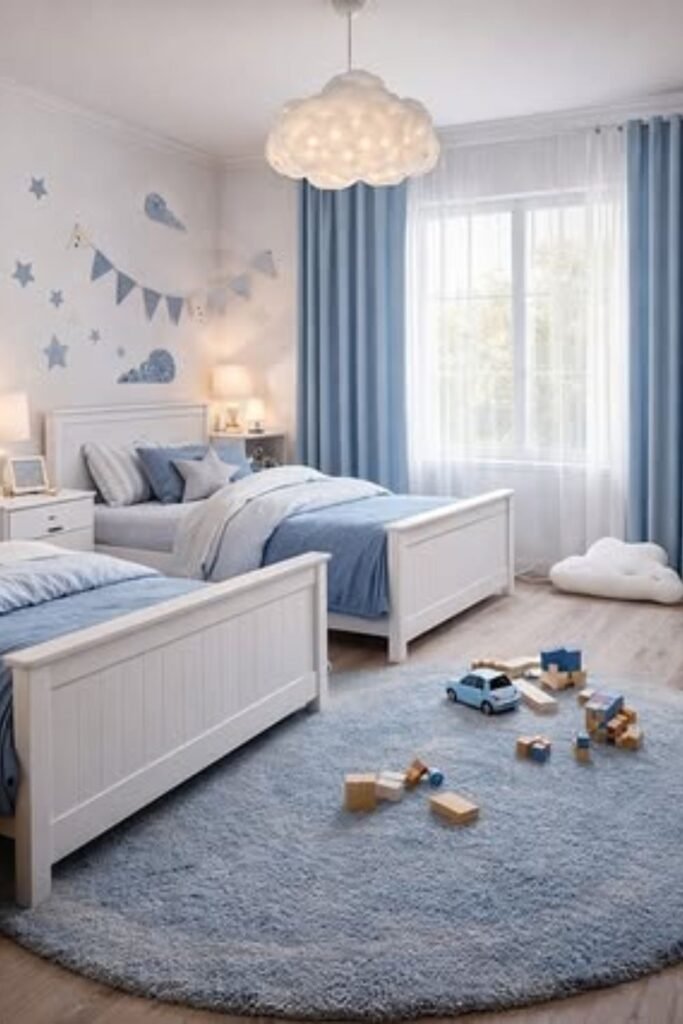
Sharing a room feels much easier to style when you stick to one simple theme and let the colors do the talking.
The soft blue walls and crisp white bedding keep the area fresh while deeper blue accents provide character without making the room appear cluttered.
Want something whimsical but timeless for growing kids? Opt for a coastal-inspired setting like this one.
Striped pillows and woven baskets add character without turning the whole area into an all-out beach theme, framed ocean art.
And the majority of the bedding being neutral makes the blue pops in a calmer manner, also.
Brother Blend
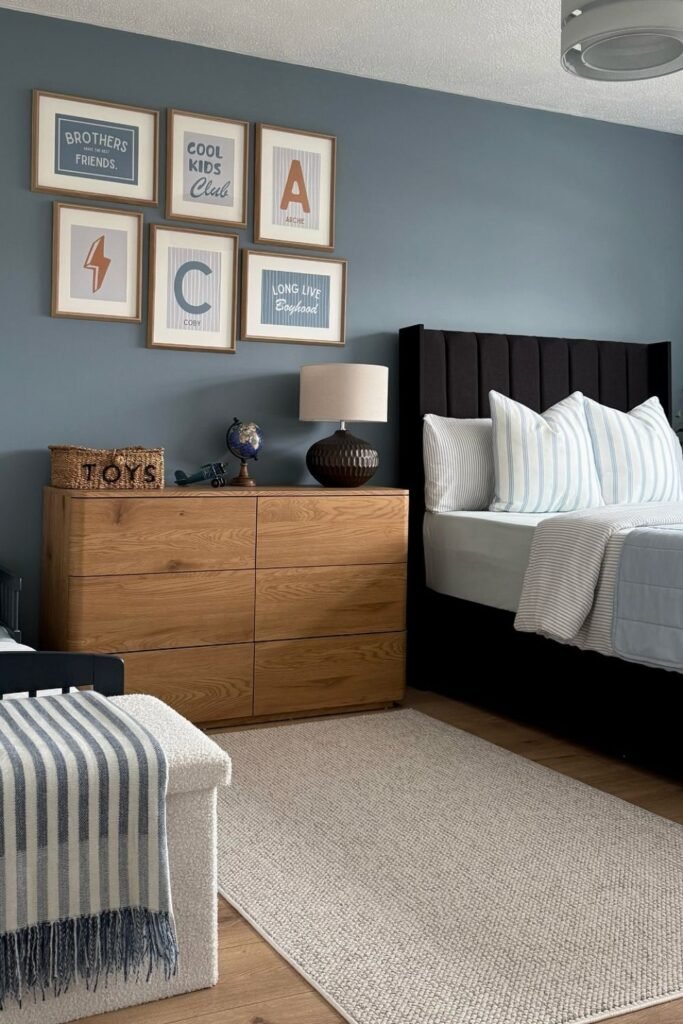
Sharing a room with younger siblings can feel tricky, but mixing grown-up style with kid-friendly details makes everything feel balanced.
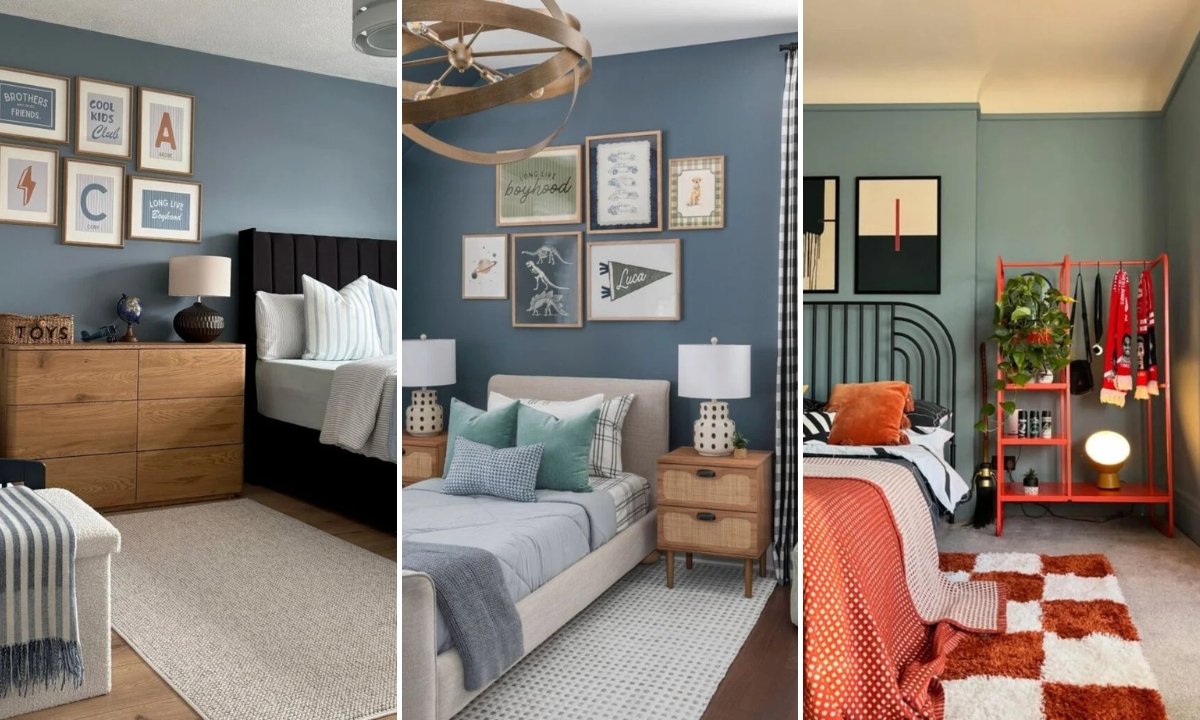
Dusty blue walls add just enough color without screaming “kids room,” which is great if you want a space that kids can grow into.
This is great for family bedrooms or shared sibling rooms as the bigger furniture always remains ageless and the smaller items give the personality.
To make the area feel unique without visual clutter, try using framed name prints, fun signs or favorite activities on the wall.
The warm wood furniture tones down the cooler blue, and the basic bedding doesn’t make the space overly cluttered.
Play Corner
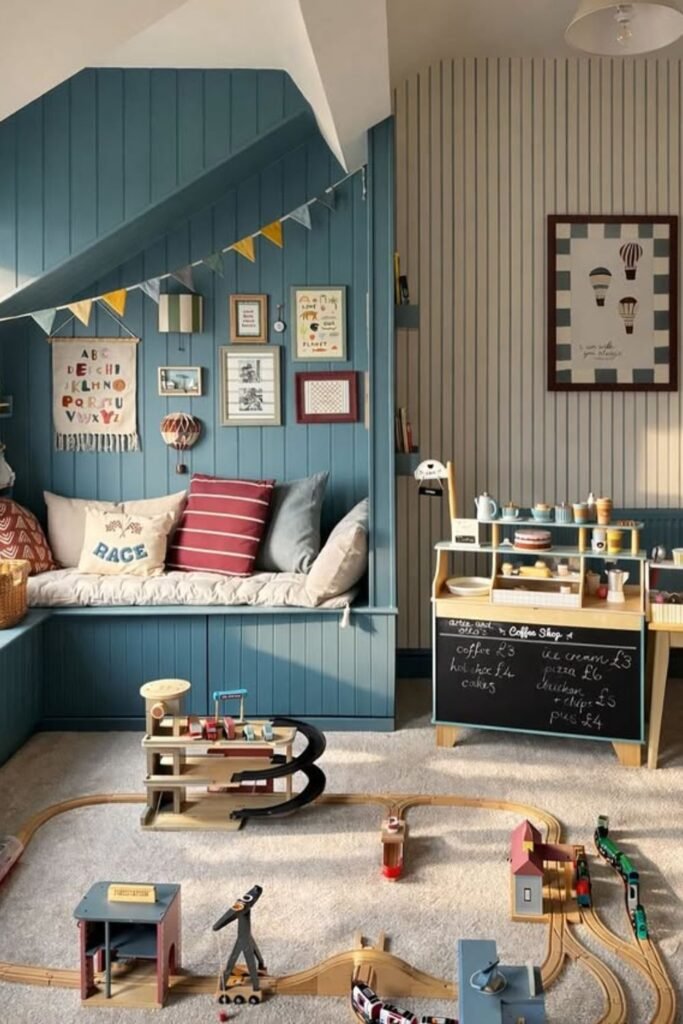
Turning an awkward corner or sloped wall into a cozy hangout spot can completely change how a kids room feels.
built-in seating is working nicely here because it creates a reading nook, a peaceful play area.
And a comfortable landing point without taking up additional floor space. The deep blue paneling provides character.
But the space doesn’t feel overbearing and yet has a fun feel to it. Thanks to the striped wall and the lighter furnishings to help balance everything out.
The toy kitchen and train tracks naturally create a tiny activity zone, so this set up would be great for kids who adore pretend play.
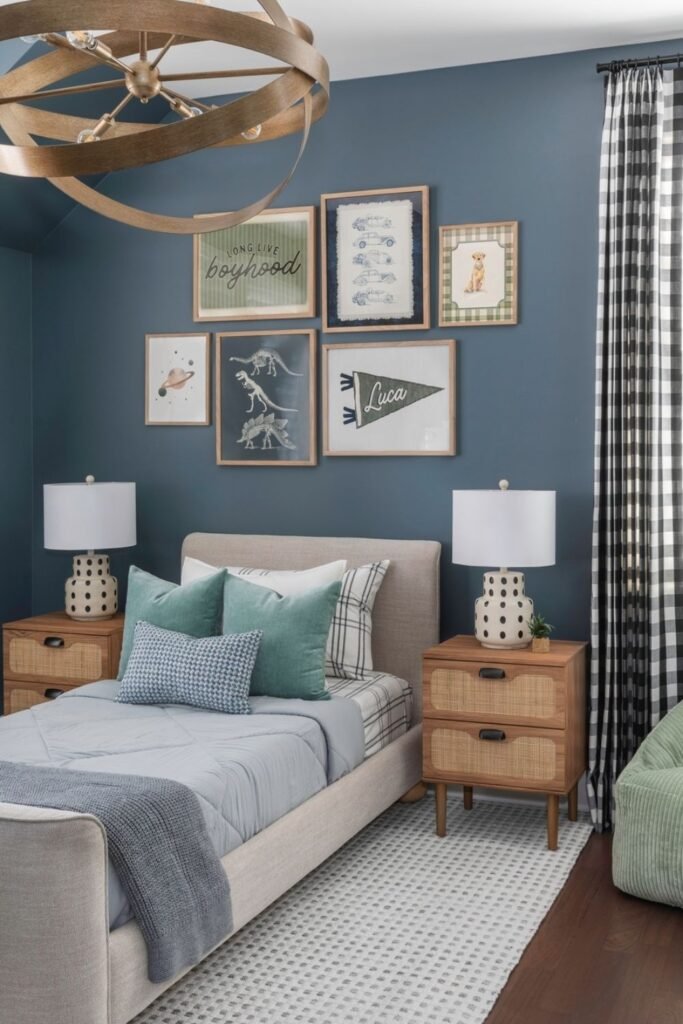
Gallery Wall
Filling one wall with personal touches can make a blue kids room feel fun without adding extra clutter everywhere else.
Deep blue paint is extremely effective here as the framed art pops straight away and adds personality to the room without the need for every surface to be bright.
If you want the space to feel more personal as your child grows, try merging hobbies, favorite animals, names or amusing prints.
Using coordinating wood tones for frames makes everything feel pulled together even when the artwork is different.
Soft bedding and woven furniture details also count as darker blue walls can appear heavy without warmer textures to offset them.
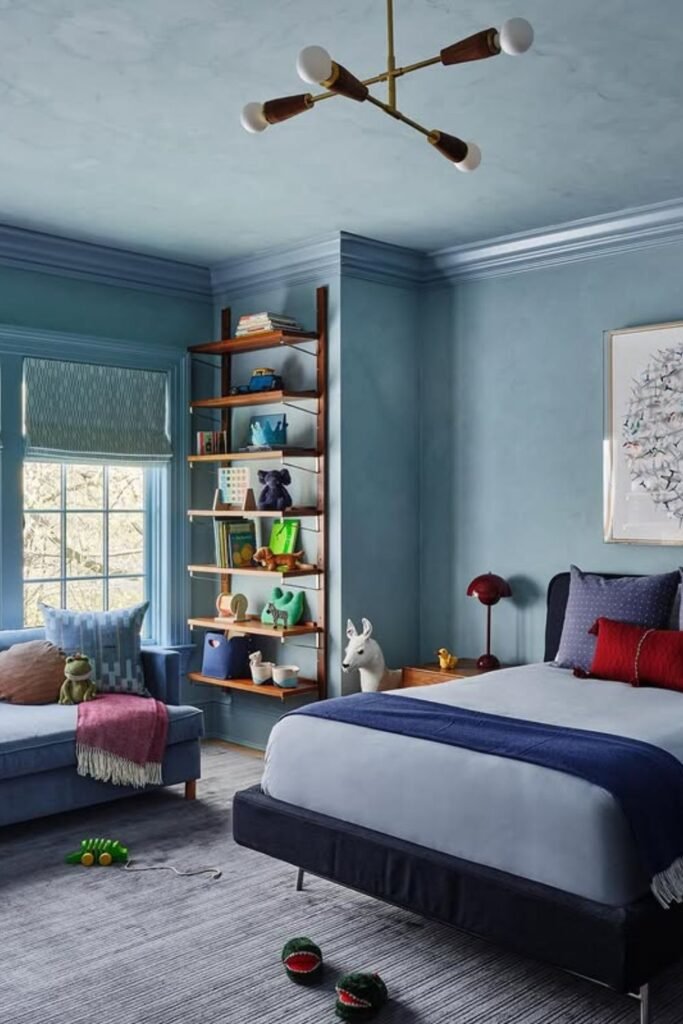
Reading Spot
Giving kids a place to relax inside their bedroom can make the whole space feel more useful without adding extra furniture everywhere.
Soft blue walls here give a serene sensation, while the comfy seat along the window quietly becomes a reading area.
Hangout place or even a cool-down location after busy days. You can layer several hues of blue and it works extremely well.
If you want color without making a room feel bland or too themed. Open shelves also receive a shout out.
Since kids can really access books, toys and favorite stuff instead of everything being tucked away.
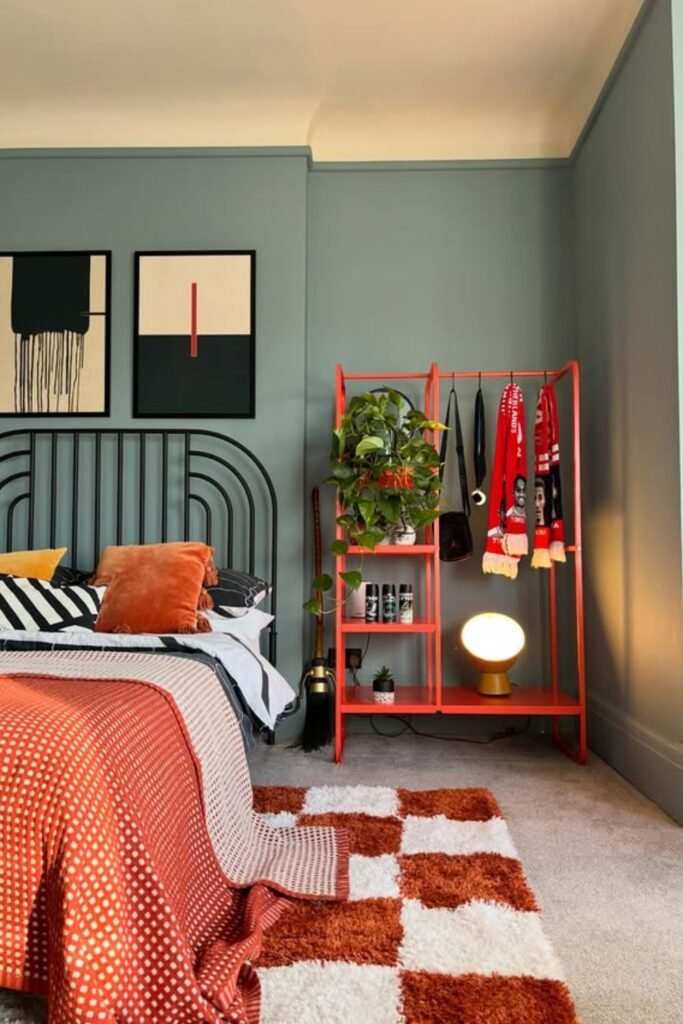
Bold Contrast
Breaking away from all-blue decor can make a kids room feel much more fun without losing the calm feeling blue brings.
Here, soft dusty-blue walls give a peaceful backdrop, while burnt orange and black elements add excitement in a cool, rather than childlike, way.
This layout would be especially appealing to the older kids or tweens because it seems individualized and sophisticated without looking too grown up.
If your youngster loves sports gear, favorite jackets or collecting fun accessories they truly want to display, open clothing racks can also work surprisingly well.
Graphic wall art keeps the space modern, while textured rugs and layered bedding keep cleaner lines from feeling frigid.
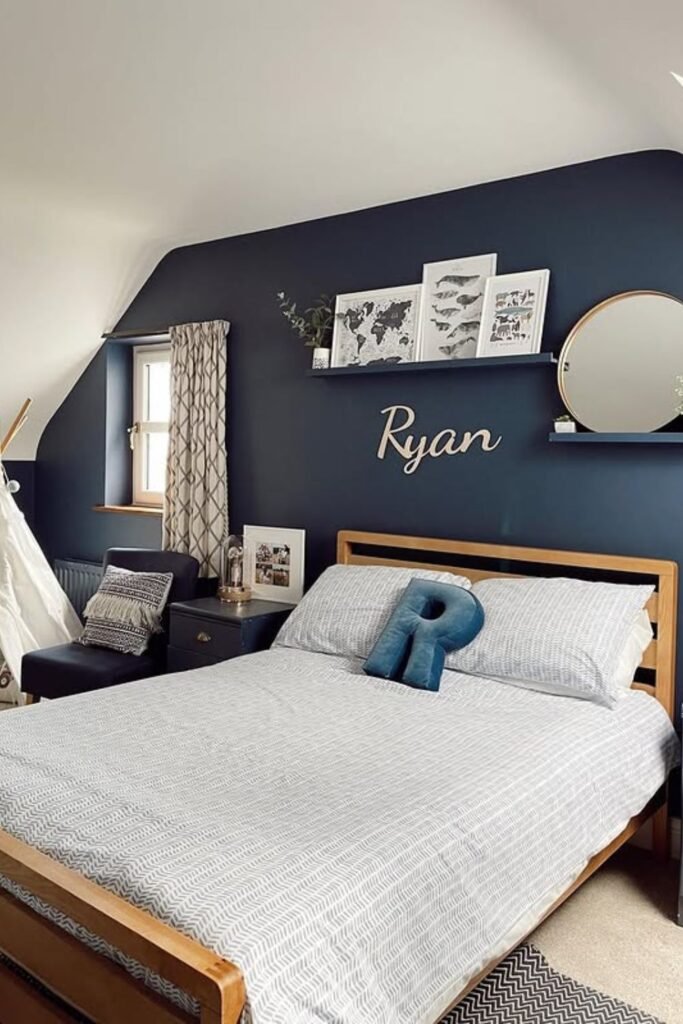
Navy Escape
Walking into a room with sloped ceilings can feel awkward to decorate, but leaning into the shape instead of fighting it makes a huge difference.
Here, the angled wall is a feature, thanks to deep navy paint, and the area seems snug rather than awkwardly proportioned.
Personal shelves work particularly well in set-ups like this since youngsters can show off their favorite books.
Framed memories or hobbies without needing bulky furniture. Add a playful spot, such as a teepee or soft chair.
And credit goes to the natural wood furniture that softens up the darker blues and keeps the space feeling comfortable.
Loft Corner
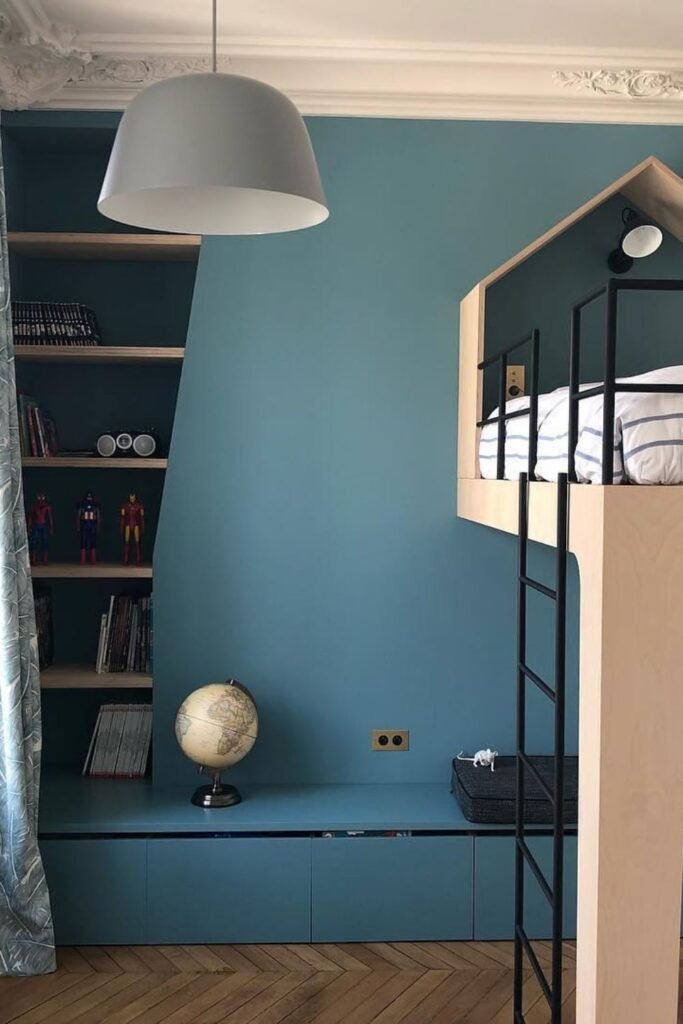
Making a small kids room feel bigger sometimes comes down to using height in smarter ways. Raised beds like this free up valuable floor space.
Can simply add more zones for reading, storage or play without cluttering every area with furniture.
Calm, muted blue walls; natural wood keeps the cooler tints from getting too serious. Kids rooms acquire junk fast.
So built-in shelving and concealed storage underneath demand attention too. This works particularly well in apartments or narrow.
Bedrooms if you want to save on floor area by having one statement piece versus numerous bulkier pieces.
Teen Touch
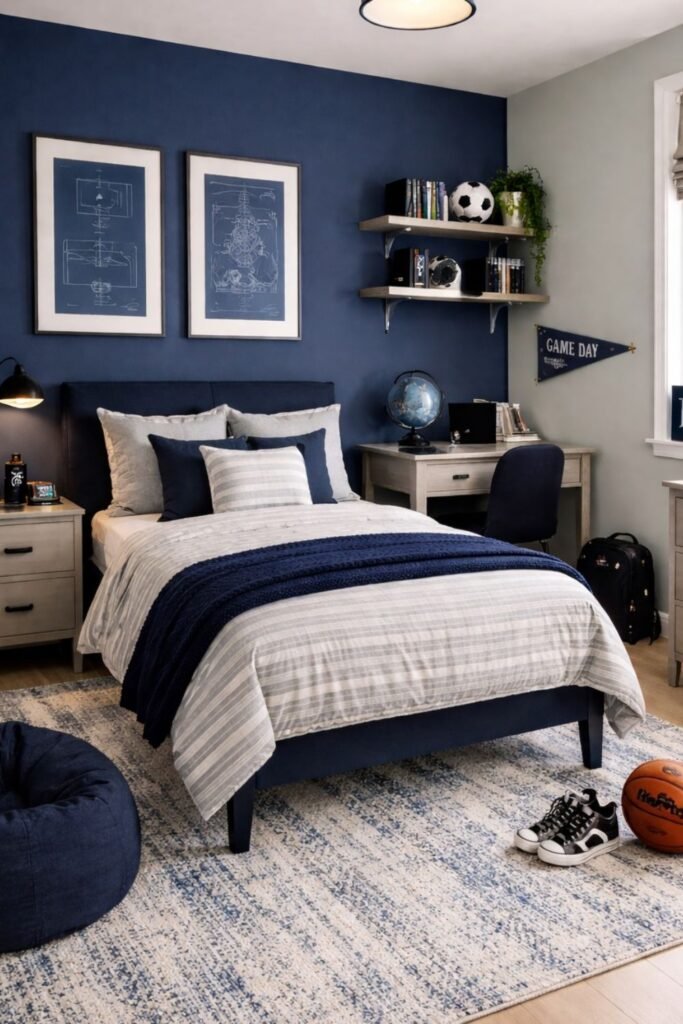
Growing kids usually want a room that feels more mature without losing personality, and navy blue handles that balance really well.
One dark accent wall makes the area feel cooler and lighter furniture keeps it from feeling heavy.
Sports-loving youngsters or tweens would love a setting like this, as passions subtly show up through shelves, framed items.
And little decor instead than taking over the whole room. Creating a study corner near the bed also works well if studying.
Gaming and resting all happen in the same room. Soft gray bedding breaks up all of the blue and makes it easier to swap out later if interests change.
Twin Haven
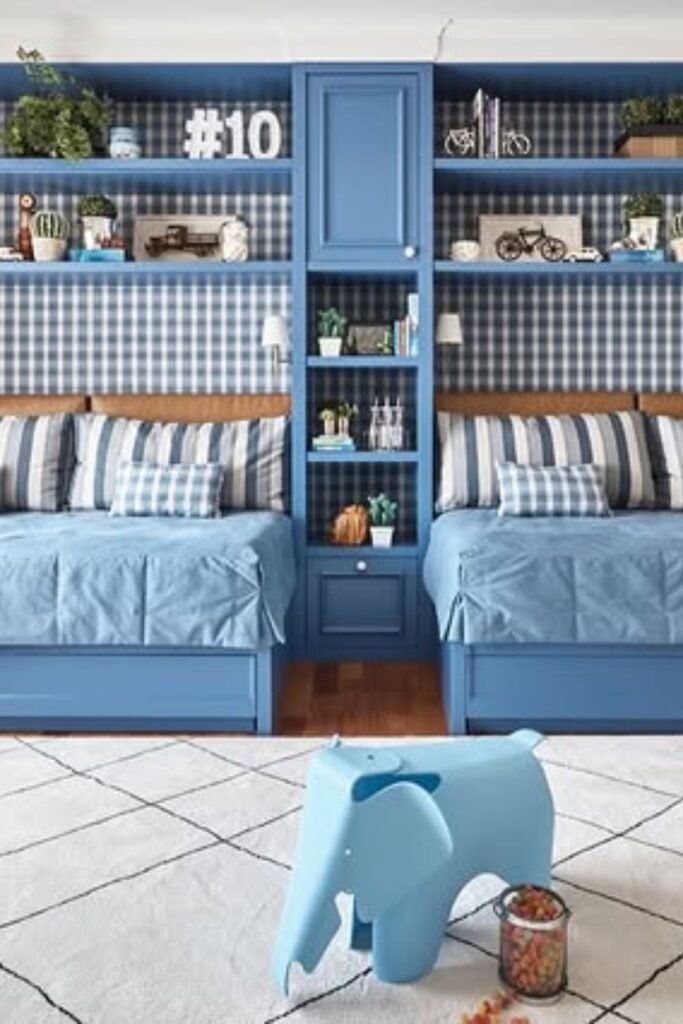
Sharing a bedroom feels far less chaotic when everything has its own place, and built-in beds like this quietly solve that problem.
Matching blue frames, shelving and storage immediately tie the room together without any extra decor on every wall.
This type of set-up works best for sibling rooms since every child gets his or her own sleeping place, and the room remains balanced.
The pattern of the gingham wallpaper behind the beds is a more subtle method to introduce pattern.
So the room reads as whimsical without being overbearing. If kids want to exhibit books, trophies, small toys or favorite treasures.
Moody Blue
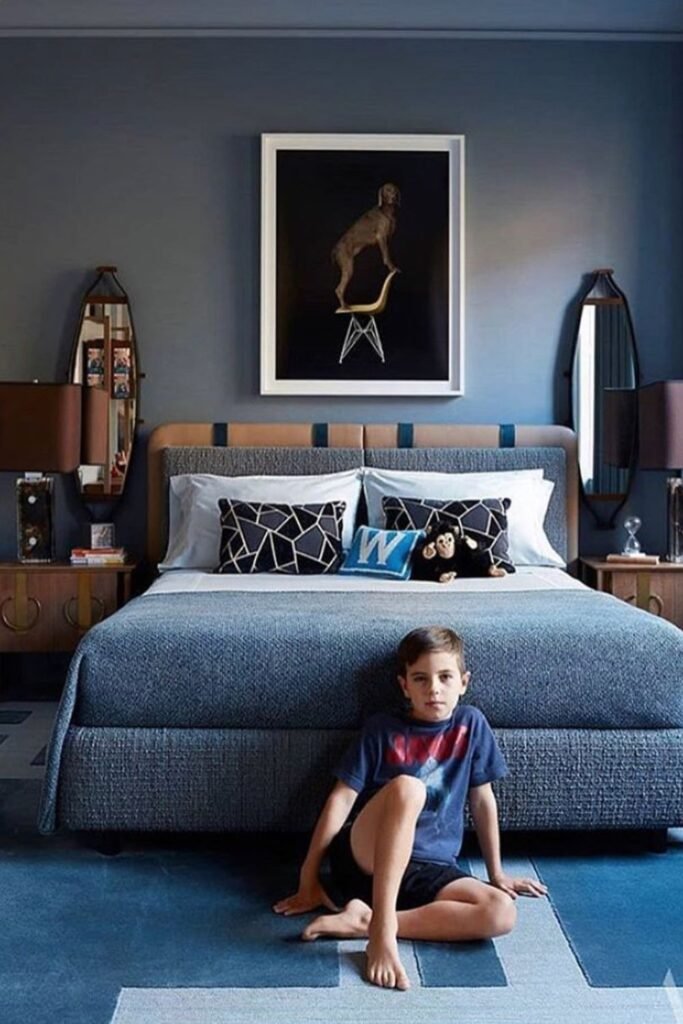
Leaning into darker blue shades can make a kids room feel cozy and cool at the same time, especially for older children.
who like something less fun and more grown-up. Rich blue walls work nicely here, because lighter bedding.
And warm wood furnishings prevent the space from becoming too dark. This design is especially good for larger bedrooms or tween spaces.
Where the deeper hues seem soothing rather than overpowering. A framed piece of artwork over the bed adds personality.
Without crowding the walls, and matching bedside lamps help everything feel balanced. Mixing contrasting blues in pillows.
It’s best to keep toys or playful accents modest and unobtrusive in an arrangement like this so the space still feels age appropriate as kids grow.
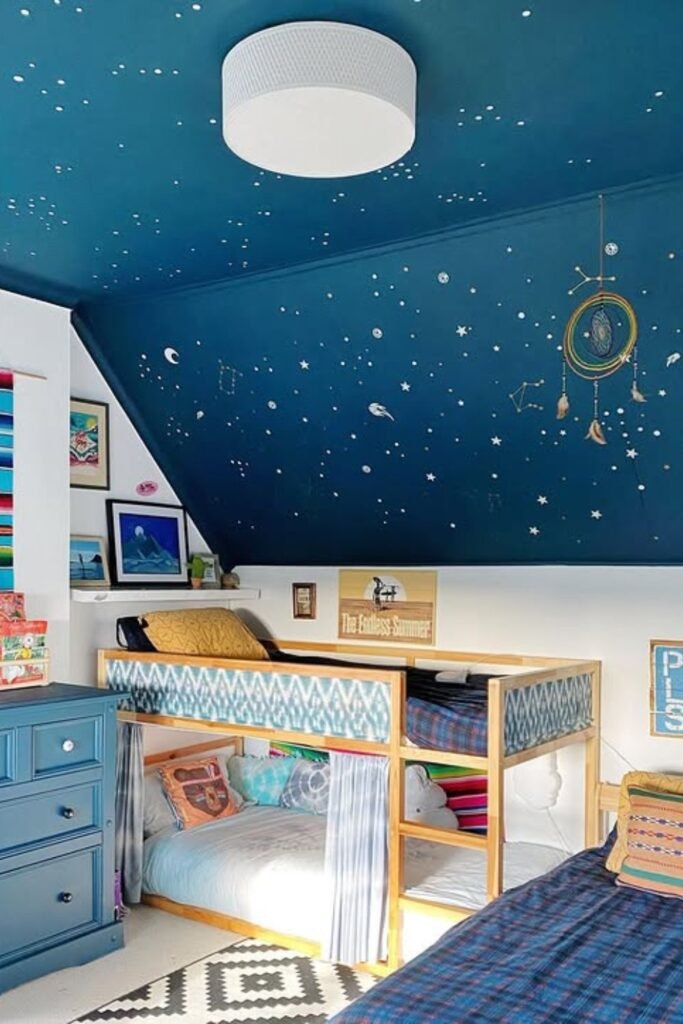
Cosmic Loft
Turning a sloped ceiling into part of the design can make a kids room feel unforgettable without filling every corner with themed decor.
The deep blue ceiling is peppered with tiny stars for a wonderful night-sky impression, while the brighter walls keep the area from seeming too dark.
The area feels lively in a quieter way, so kids who adore spaciousness, bedtime stories, or comfortable hideaways will enjoy an arrangement like this.
Loft beds are also particularly helpful in shared rooms or smaller areas since the sleeping area above naturally provides space below.
The blue is offset by bright textiles, framed paintings and whimsical pillows to keep the space from feeling too serious.
Twin Balance
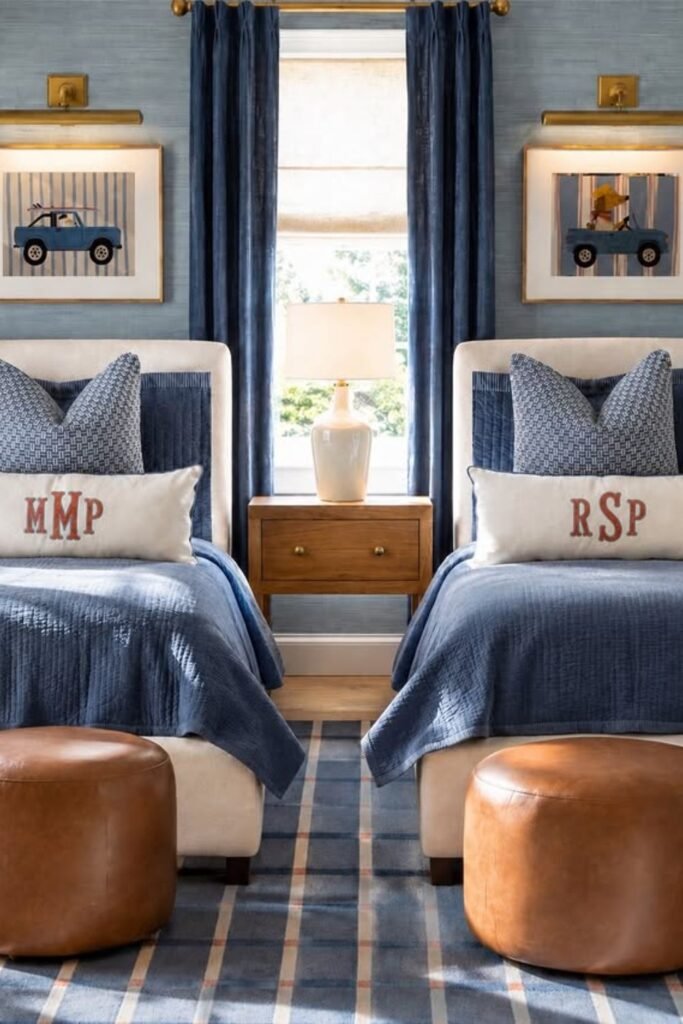
Sharing a room feels much calmer when both sides look connected without feeling exactly the same.
Here symmetry is achieved right away with matching twin beds, and the deep blue bedding provides color that nevertheless feels tidy and classic.
Personalized pillows are wonderful, especially if you have siblings that share a room, because each child still has an area that seems like their own.
Warm brass lamps and wood nightstands help soften all the cooler blue tones so the room feels snug and not frigid.
It’s also worth noting the framed artwork over each bed, because little matching accents make shared spaces feel more planned.
Color Pop
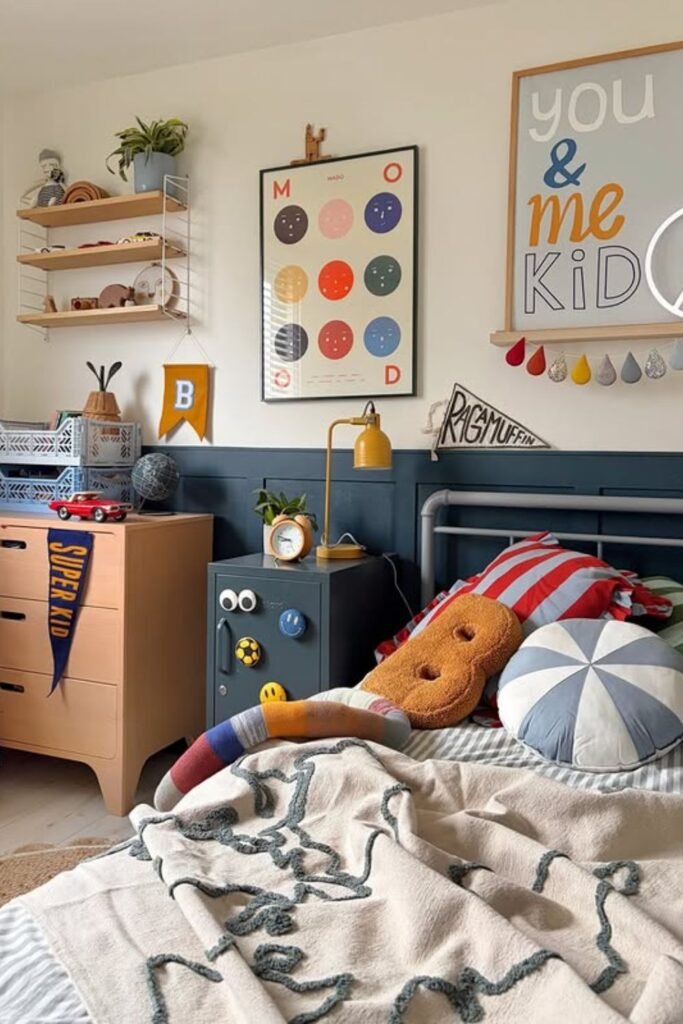
Mixing blue with playful colors can make a kids room feel fun with out turning it into visual chaos.
Deep blue paneling anchors the area while bursts of mustard, red, green and soft neutrals discreetly infuse energy.
Through pillows, art and tiny decor elements. Open shelves naturally make room for treasured books, toys and keepsakes.
So kids who love collecting little treasures or exhibiting personality might adore an arrangement like this.
Walls that are half painted are also worthy of attention; they give color without making smaller bedrooms feel weighty.
Built Smart
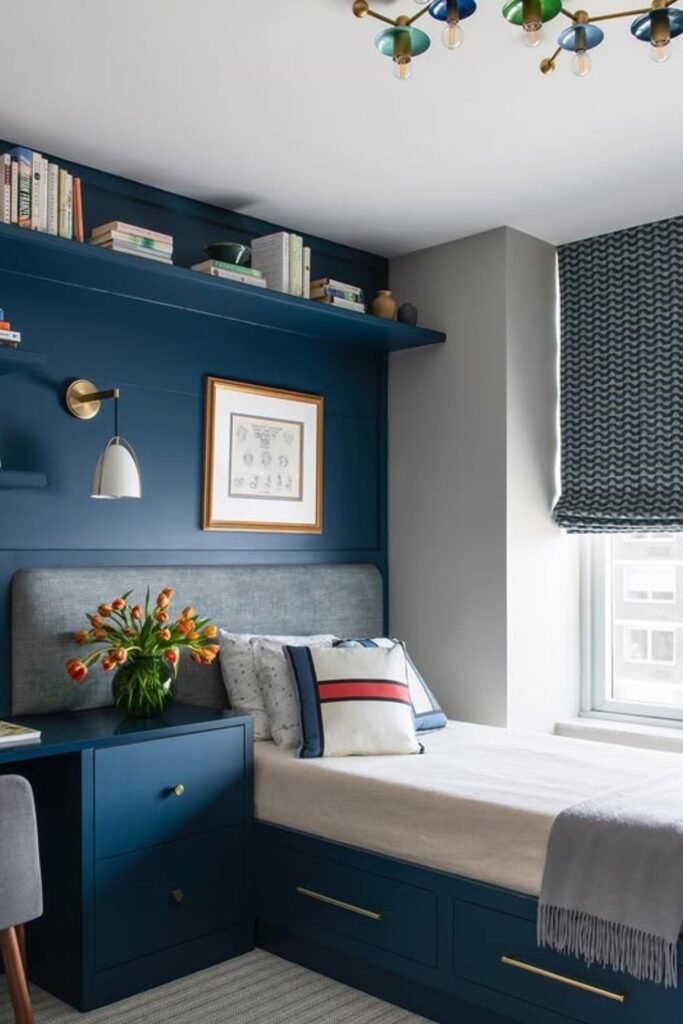
Saving space becomes much easier when furniture works harder instead of filling the room with extra pieces.
The built in blue storage around the bed keeps things feeling orderly here, while yet making the room look elegant instead than too practical.
This type of plan is great for smaller bedrooms or older kids’ rooms as the desk, bookshelf and bed all fit together without taking up all the room.
Deep navy is a great option when paired with lighter bedding and delicate gray accents so the space doesn’t feel heavy.
Open shelving is also a help, as books, trophies or preferred dcor may be displayed without the bulk of storage containers elsewhere.
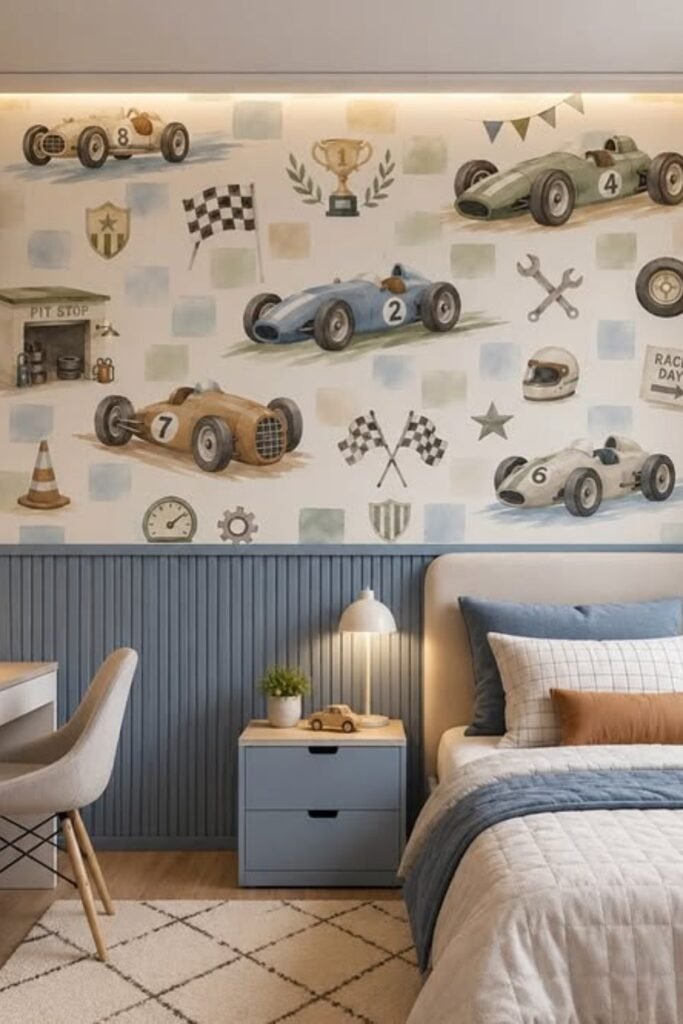
Racing Wall
Turning one wall into the fun part of the room can make blue kids spaces feel playful without filling every corner with a theme.
The race car wallpaper works well here since it instantly adds excitement, but the soothing blue paneling.
Below maintains the room calm and balanced. This design would be a hit for kids who adore automobiles.
Racing toys or action-themed bedrooms, but wouldn’t look too babyish as they grow older.
A clever decision to keep bedding basic as the wall adds enough flair to the space. The warmer light surrounding the shelves.
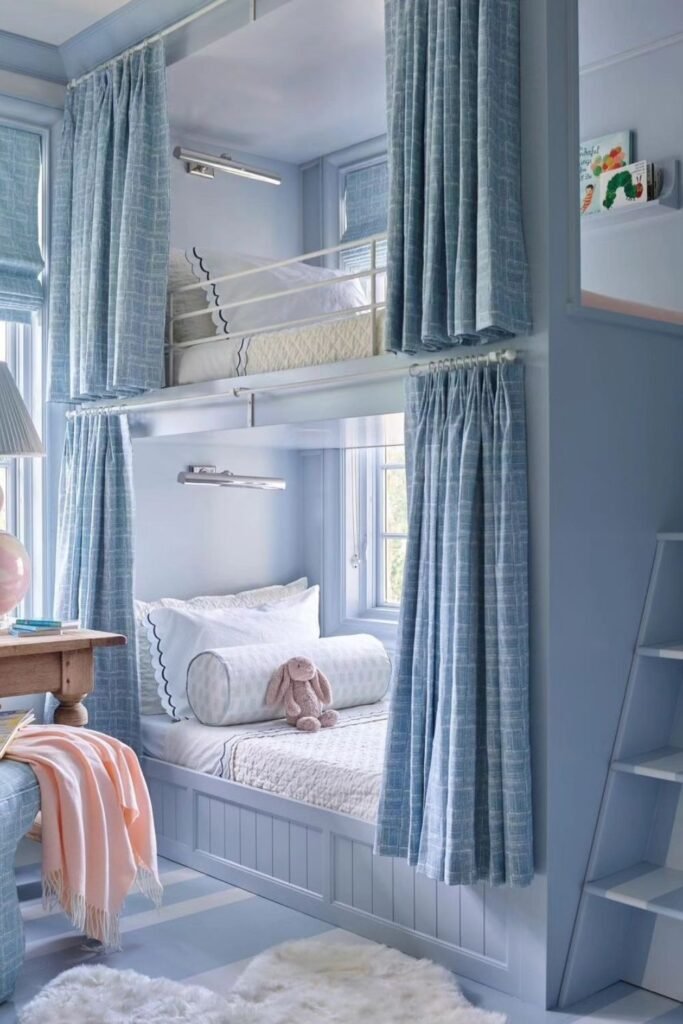
Curtain Cove
Creating cozy sleeping spaces inside a shared room can feel much easier when each bed gets a little privacy.
Soft blue drapes around the bunk beds help to make the room appear quieter and more personal, especially for siblings who like to have their own quiet spot.
The lighter colors of blue work nicely in here as the space still keeps open and not claustrophobic which is a big thing for smaller bedrooms.
Built-in bunks free up floor space and provide kids a fun hideaway vibe without the need for other themed decor.
Blankets and lamps with soft pink accents discreetly warm up all the blue, so the space doesn’t look too frigid.
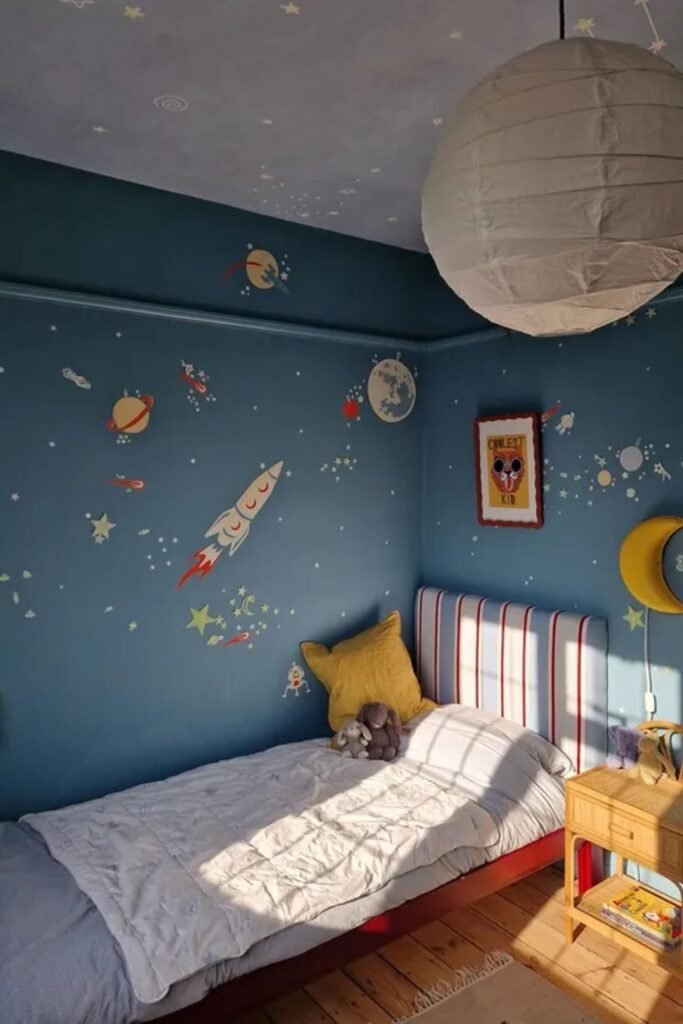
Space Dreams
Walking into a room like this instantly feel playful because the theme stays focused instead of the covering every surface with loud colors.
Soft blue walls are the perfect backdrop for stars, rockets and planets without overdoing it or making the room appear too cluttered.
It would be a fun setting for children who like bedtime stories, scientific books or anything space-related because it seems like fun but in a more subtle way.
Wall decals are especially good for this as you may change the motif later on without having to repaint the whole space.
Warm yellow touches through cushions, moon lights or little decor discreetly breaks up all the blue and prevents the space from seeming cold.
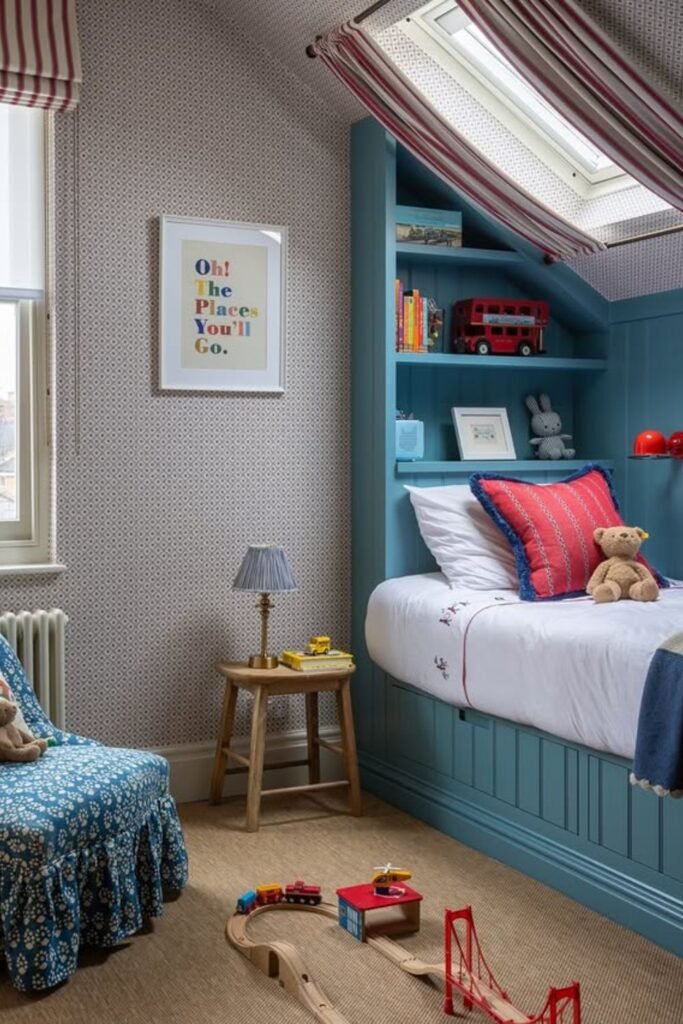
Attic Charm
Making awkward attic corners feel useful gets much easier when furniture follows the shape of the room instead of fighting against it.
In one, built-in blue beds set under sloped ceilings add storage and shelving in a subtle way, while giving the space a comfortable vibe.
This kind of design is especially great for smaller bedrooms or attic spaces, because every square inch starts to feel purposeful.
The soft wallpaper keeps the space from being too simple, while the vibrant red pillows and whimsical accessories.
Add excitement without straying too far down the blue path. Books, toys and favorite keepsakes are easy to grab.
Without adding more furniture to overwhelm the room, so open shelves next to the bed is definitely worth considering.
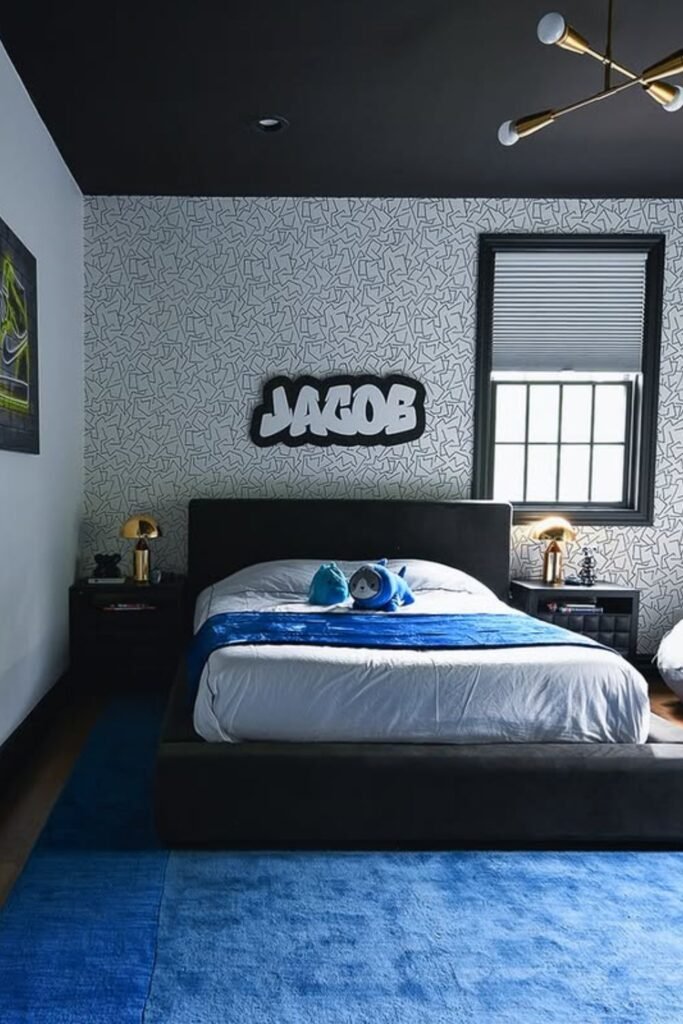
Urban Edge
Growing kids often want a room that feels cool instead of overly playful, and darker blue details help create that shift without losing personality.
We love the black furniture with vivid blue accents. It makes the area feel sporty and futuristic, but basic enough to evolve with age.
A arrangement like this would be great for tweens or older kids, with hobbies and style expressed in wall art.
Rugs and bedding, rather than having every space filled with a clear theme. Patterned wallpaper also works cleverly here.
Giving movement to the room without fighting the bold ceiling and furniture. Personal name signs above the bed make the room feel bespoke with little effort.
Moon Magic
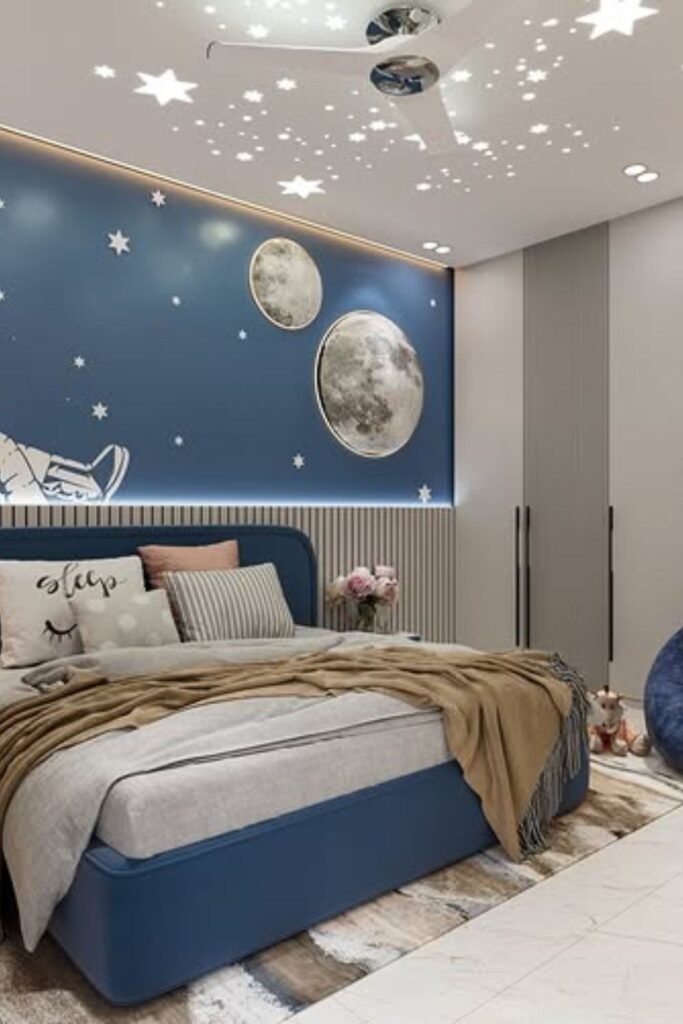
Turning one wall into a feature can make a blue kids room feel exciting without making the whole space too themed.
Neutral bedding, soft lighting and minimalist furniture keep things tranquil in this room, which is why space-inspired murals work so well.
Think of kids who love stars, astronauts or bedtime stories about space, who won’t feel too babyish later; this setting would be a hit.
Ceiling star lights deserve some extra attention because they quietly make bedtime feel special and warm rather than overstimulating.
The remainder of the space is kept simple which is a wise option since the blue feature wall offers enough personality.
FAQs
How Do You Keep a Blue Kids Room From Feeling Too Dark?
Mixing in lighter colors through beds, rugs, curtains or furniture is easier to balance deeper blue shades.
White walls, warm wood, gentle lighting and neutral materials can keep the area from feeling weighty with navy or deep blue.
If the bedroom feels small or doesn’t get a lot of sunlight, limiting darker blue to one wall, a piece of furniture or the ceiling helps, too.
What Colors Go Best With Blue in a Kids Room?
Soft neutrals work best if you want blue to feel tranquil and timeless. The room is pleasant with white, beige, gray and natural wood tones.
But mustard, green, blush pink or warm red accents might feel more fun. If you want the area to look exciting.
Without being busy, sticking to one or two more colors usually works better than mixing up a lot of shades.