
21 Under The Sea Crafts Ideas For Kids 2026
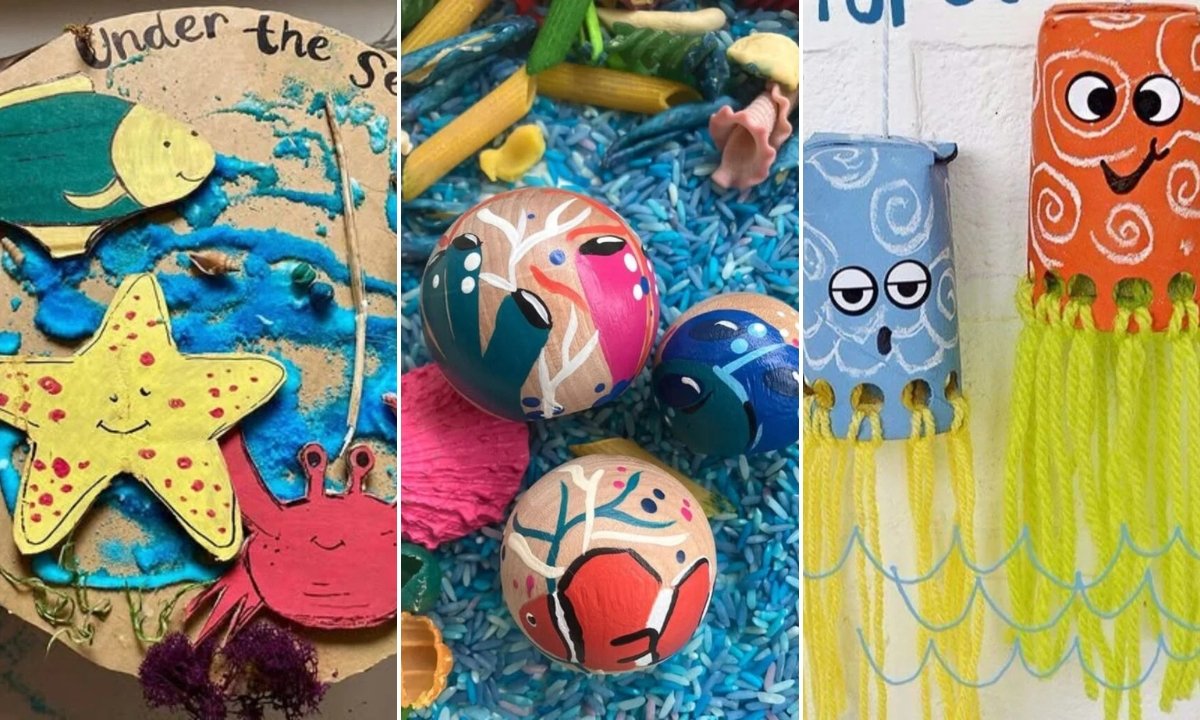
You’re probably familiar with the scenario you’re hunting for ocean-themed craft projects and the same issue crops up repeatedly.
The projects seem appealing, sure but they either require obscure supplies, demand an unreasonable amount of setup time, or, worse, disintegrate before your eyes.
Most parents and educators are after the same thing: straightforward ocean crafts that actually deliver results using readily available materials.
This article introduces 21 Under the sea craft ideas for kids that are perfect for home activities in 2026.
Let’s jump in!
What Under the Sea Crafts Can Kids Make Using Simple Everyday Materials?
No need for a trip to the craft store or a mountain of expensive supplies to create ocean-themed crafts.
If you’ve got paper plates, some old cardboard, toilet paper rolls, glue, and a few basic colors, you’re good to go.
Under-the-sea crafts are particularly well-suited to everyday materials because kids are more interested in the process than the final product.
Keeping the materials simple helps kids stay engaged makes clean-up a breeze, and allows you to actually enjoy the activity instead of battling a mess.
Save this article for later!👇👇👇

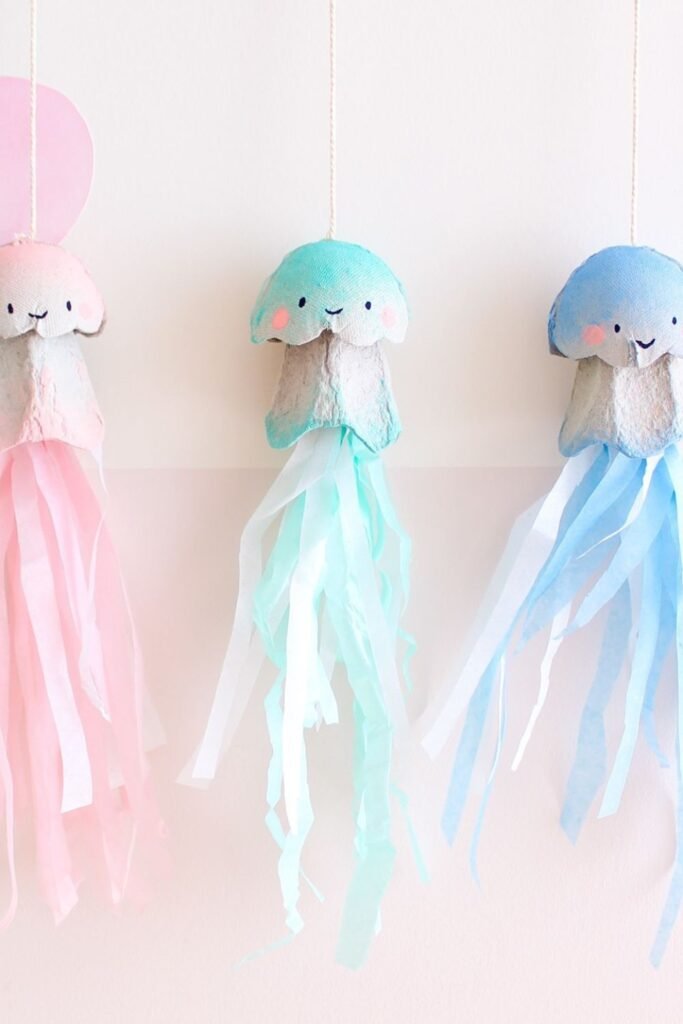
Hanging Jellyfish
Hang one near a window or doorway and kids instantly feel like the ocean moved inside. Paper cups or egg cartons work best for the body.
Tissue paper or ribbon strips can be used to create the tentacles. Soft pastel hues lend a tranquil, gentle feel yet vibrant colors are perfect for a festive atmosphere.
Fishing line or yarn transforms it into a suspended decoration, a captivating sight for children.
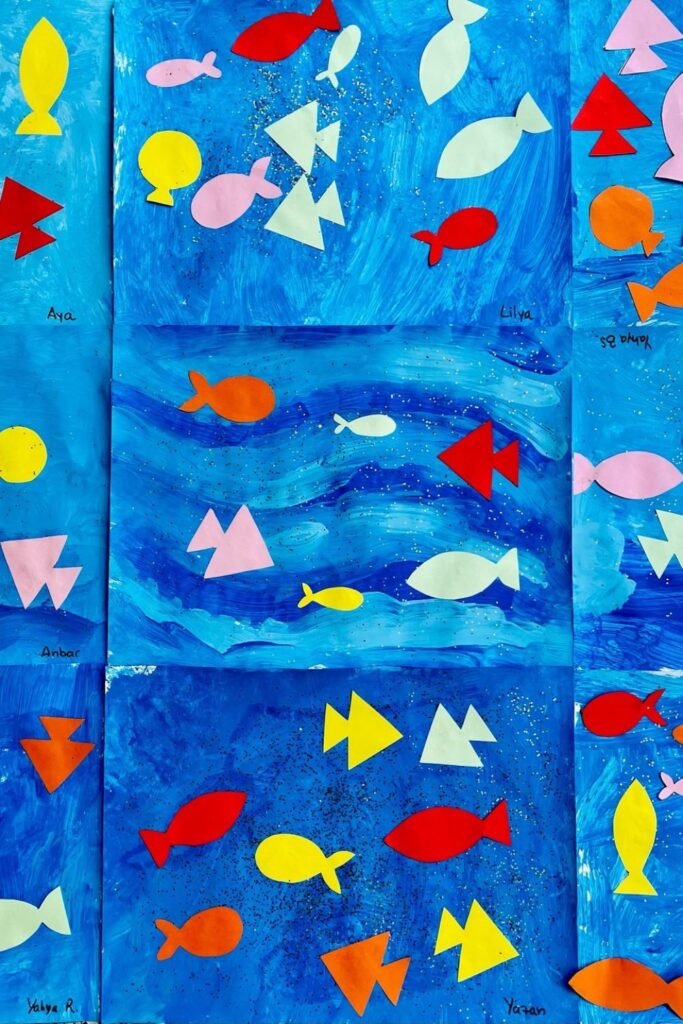
Ocean Collage
Bright paper scraps turn into a full ocean scene without any drawing skills. Blue paint or crayons handle the background first.
Then, the children cut out basic fish shapes and arrange them how they choose. Teachers appreciate this approach; each child’s work is unique.
Old scrap paper is ideal for this, and younger students can concentrate on the glue, while older ones can play with spacing and movement.
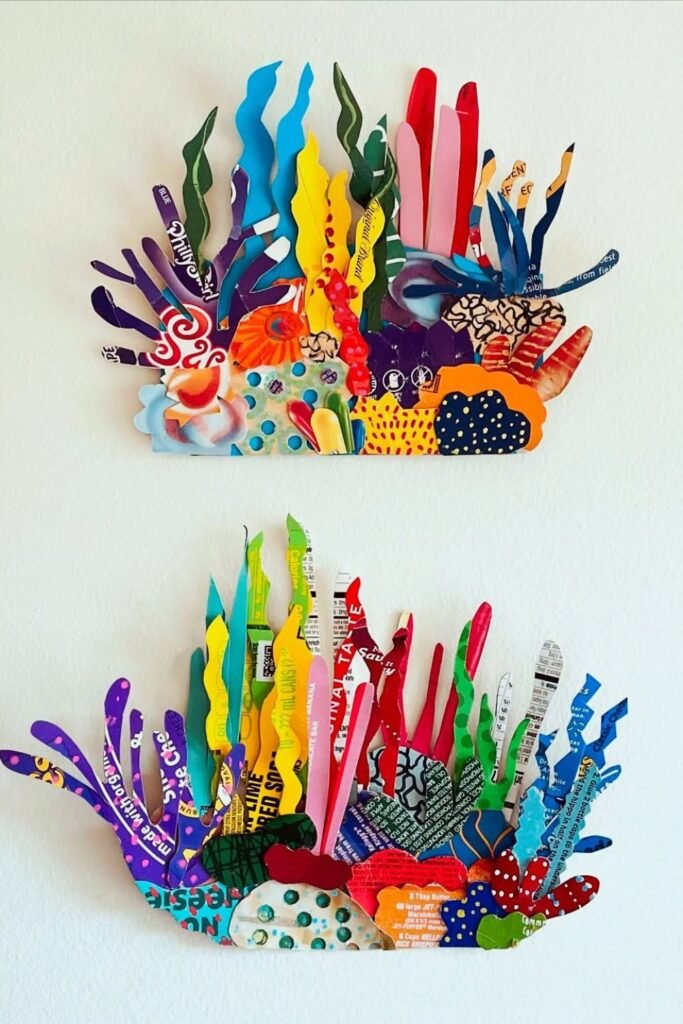
Coral Reef
Empty snack boxes and food packaging suddenly earn a second life here. Bold colors and printed textures already exist.
Kids may skip the tedious coloring and jump straight into creating wavy coral designs.
This approach works well for wall displays, ocean-themed weeks, or even recycled-art projects.
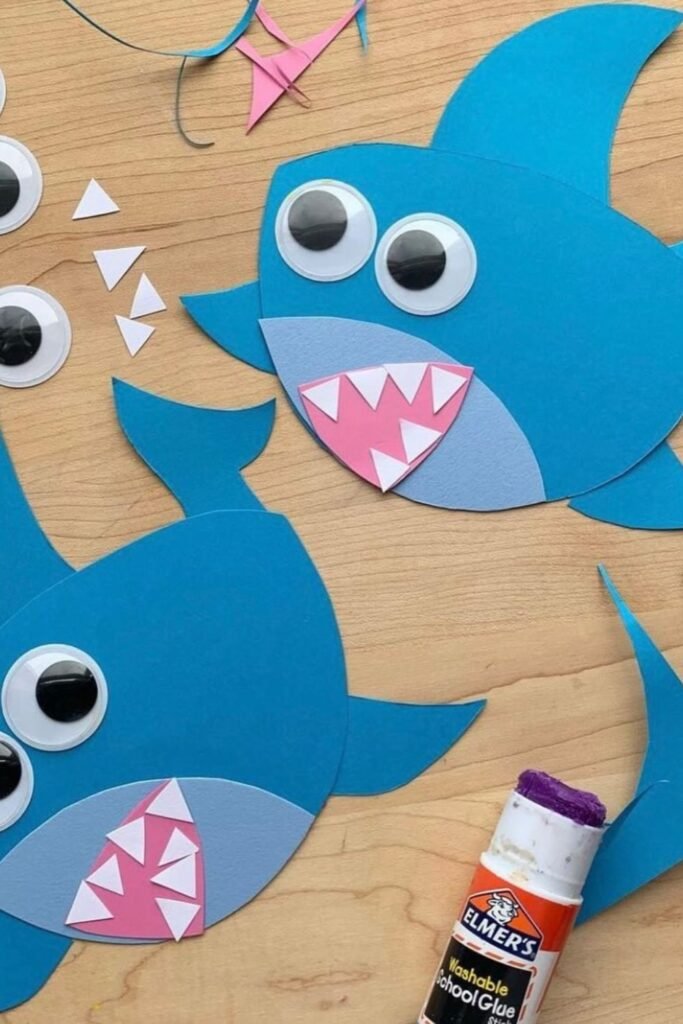
Paper Shark
Big teeth and wide eyes instantly pull kids in, especially those who love a little drama in their crafts.
Blue construction paper is the star of the show, so don’t worry about your sketching abilities. Start by cutting out the shark’s body.
Then let the kids tackle the triangular teeth it’s like a little puzzle. This is perfect for ocean-themed weeks or as a follow-up activity after a storytime session featuring sharks.
Weaving Turtle
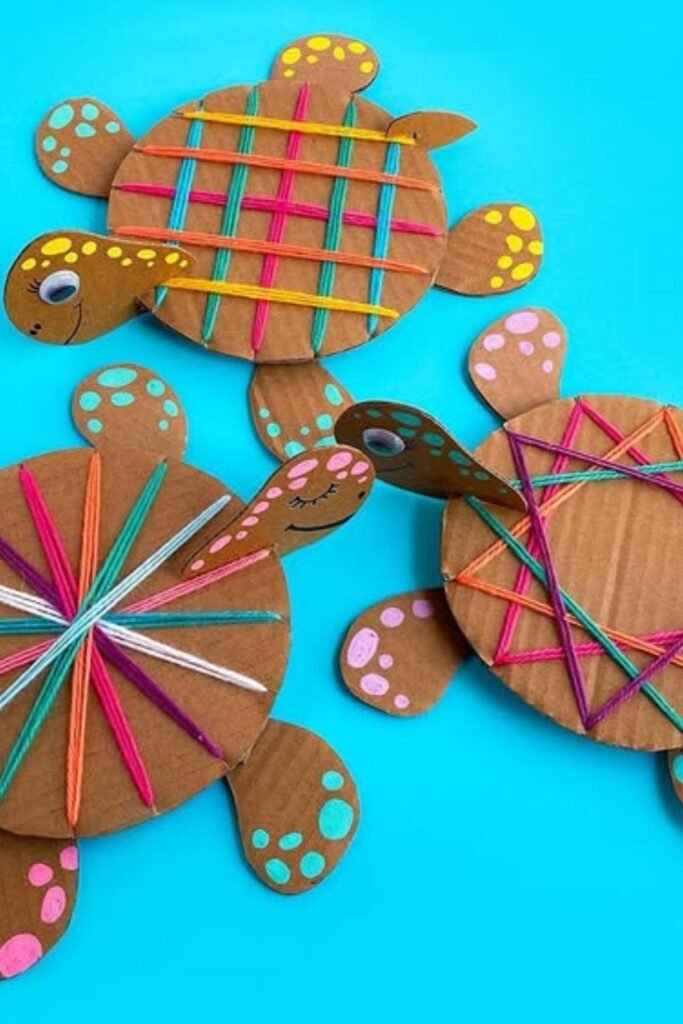
Cardboard circles turn into a quiet, focused activity kids stick with longer than expected. Poke holes around the shell.
Let the yarn meander, no need to fret about any specific design. As the hands work, fine motor skills get a subtle workout.
This is especially good for classroom centers and those quiet afternoons. Once the weaving is done, a splash of paint on the flippers gives them some character.
Cup Octopus
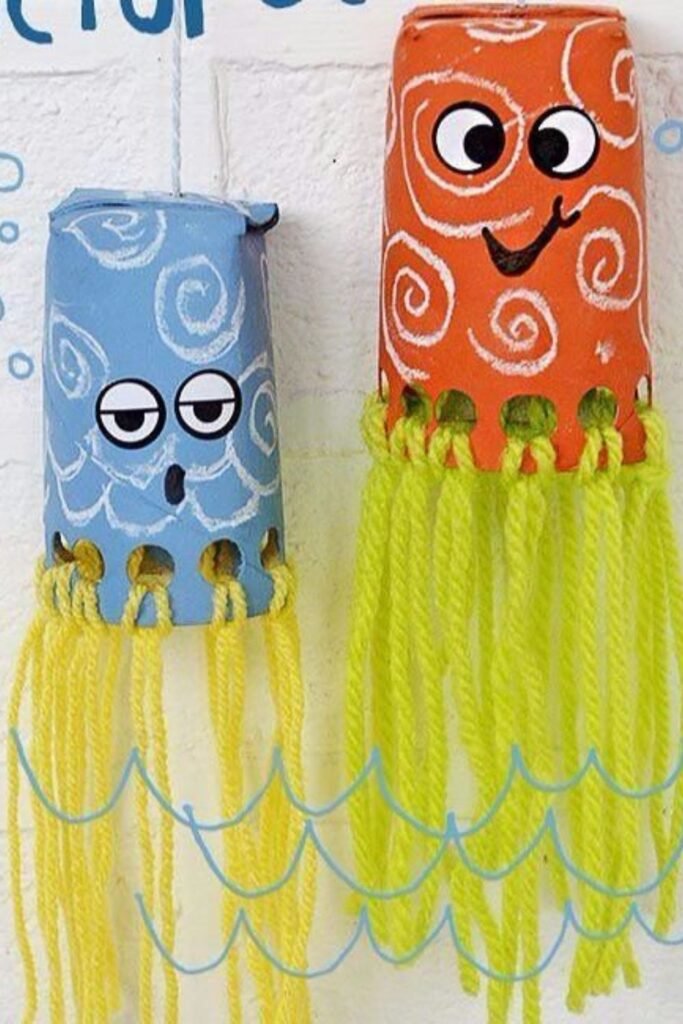
Plastic cups stop being trash the moment yarn tentacles come into play. Flip the cup upside down, poke holes near the rim.
Pull the yarn through, and you have got instant motion. The faces you create can be amusing or goofy, depending on your mood.
This is perfect for recycling lessons, quick craft stations or those days when paint seems like a chore but the kids still crave something enjoyable.
Ocean Tray
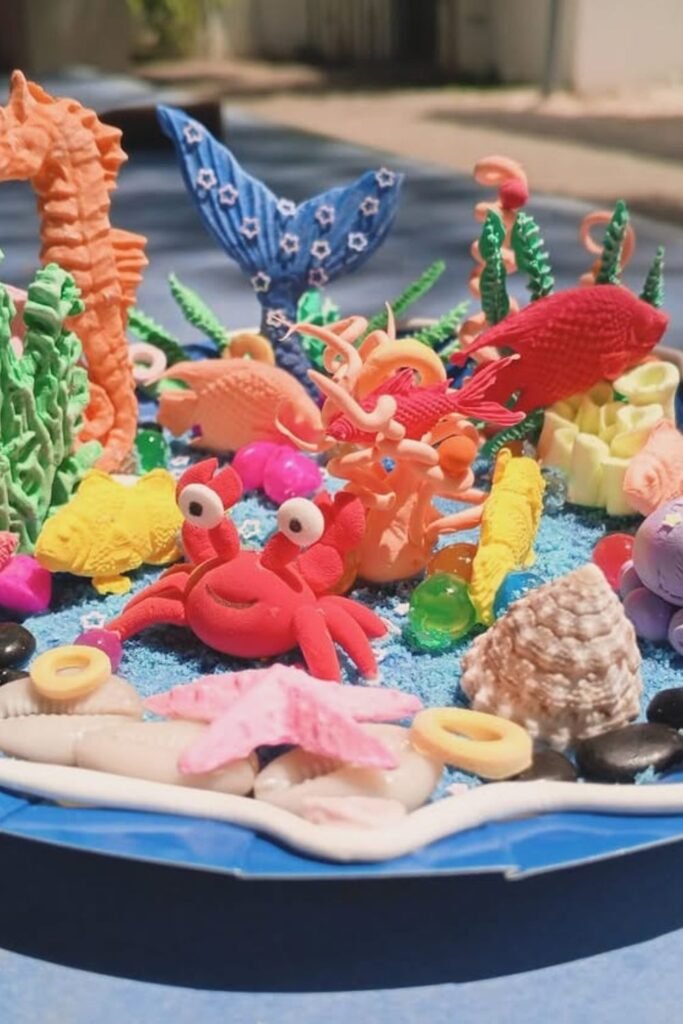
Sensory play takes over once sand, shells, and small sea figures share the same space.
Shallow boxes or repurposed baking trays are ideal for keeping things organized. Begin with a layer of colored sand.
And then let the children create their own underwater scenes, adding elements as they go.
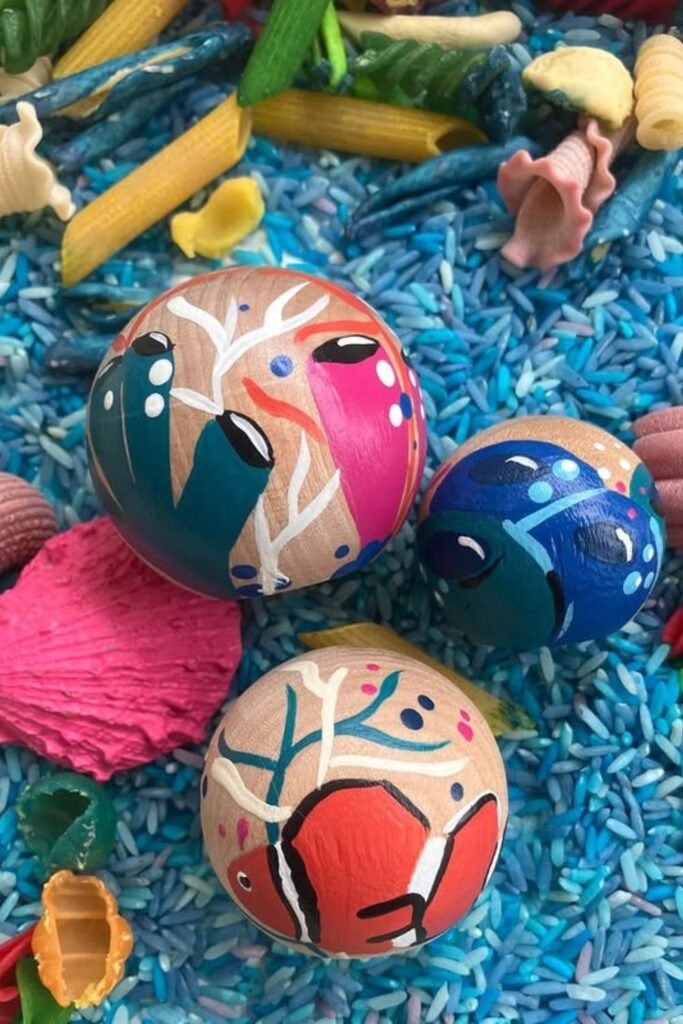
Painted Rocks
Smooth stones turn into tiny ocean characters once paint hits the surface. Beach days or backyard playtimes work well for collecting the base pieces first.
Acrylic paint provides the most vibrant results though washable paint is perfectly fine for little ones.
Keep the designs uncomplicated dots, lines, and strong shapes will minimize any potential for frustration.
Paper Mermaids
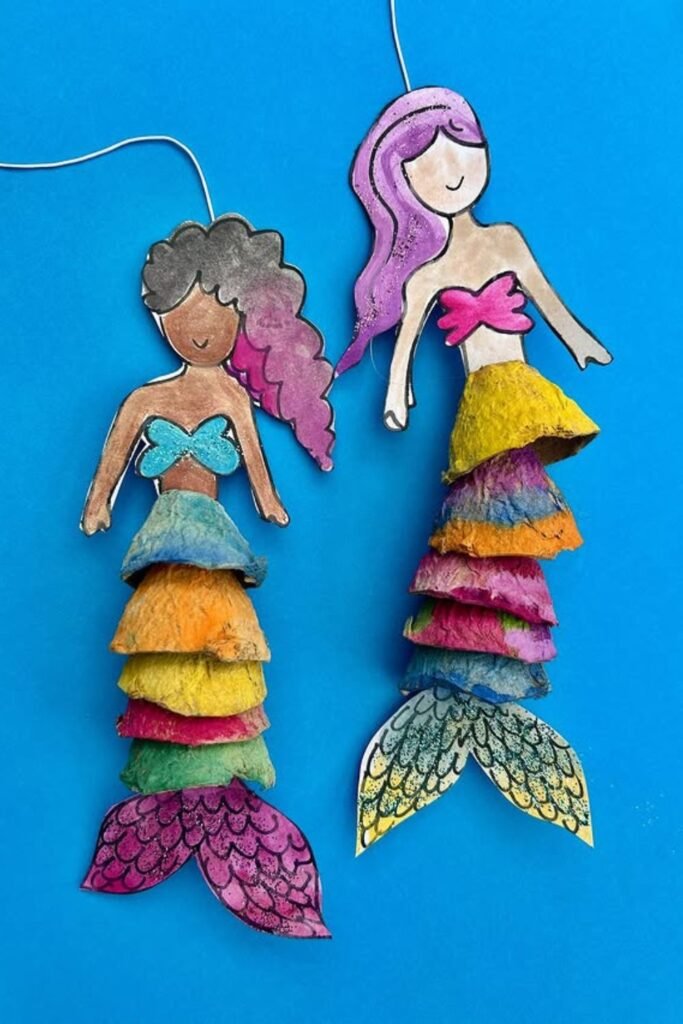
Dress-up meets crafting once layered paper turns into a flowing tail. Coffee filters, tissue paper, or cupcake liners stack easily and add instant texture.
Coloring each layer before putting it together keeps kids interested right from the start.
The hanging strings transform the finished product into a decorative element for their space.
Ocean Plate
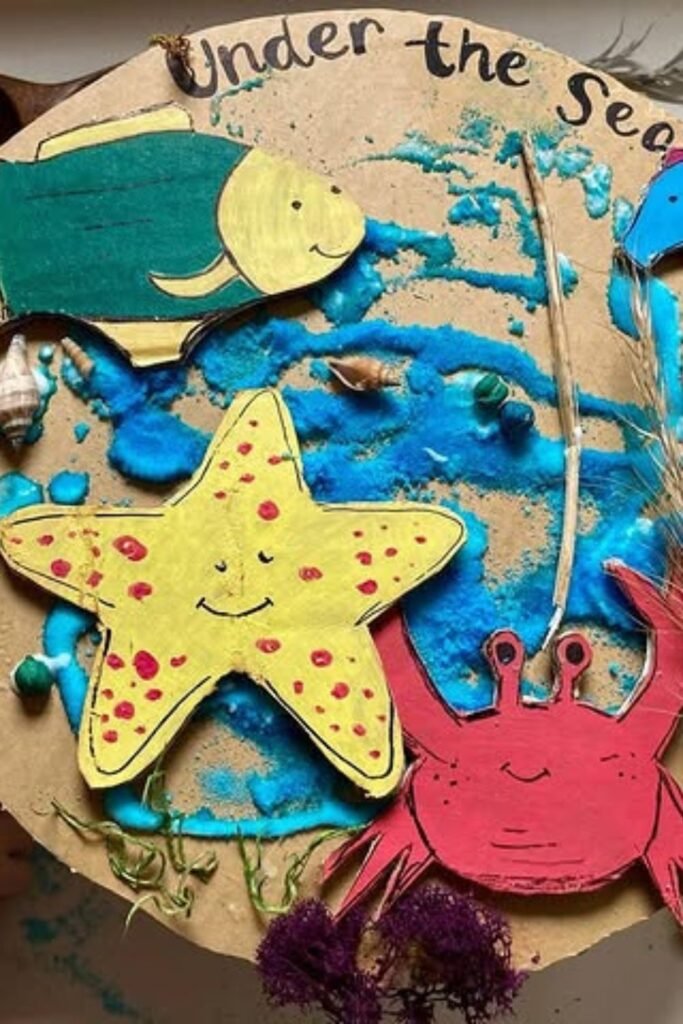
Messy hands usually mean kids are fully into it, and this project proves it. Paper plates hold sand, glue, and sea animals without taking over the table.
Begin by applying glue in parts. Next, sprinkle colored sand over the glue, and then press the cut-out creatures onto the sand.
This activity is ideal for groups of all ages everyone can work at their own speed and still end up with a finished product.
Reef Bowl
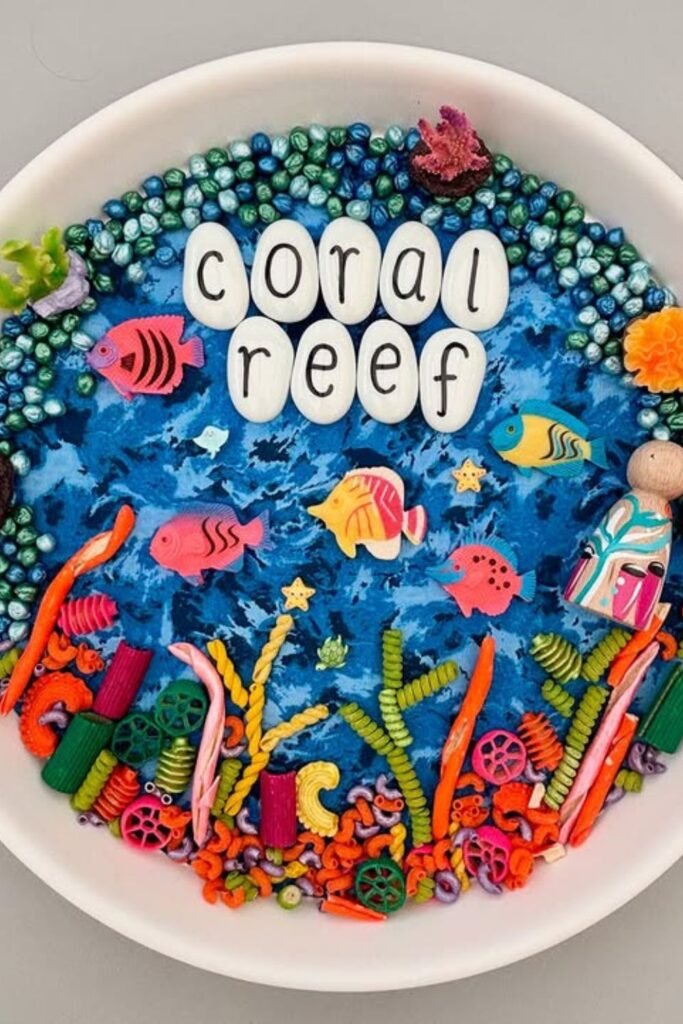
Textures steal the spotlight once pasta, beads, and small bits start filling the space. A shallow bowl keeps everything contained while still letting kids build freely.
Dry spaghetti, in its various forms, is ideal for representing coral and plants, particularly if you color it beforehand.
It’s a fantastic resource for sensory play or even science activities, because children instinctively begin to sort, identify, and reorganize the pieces as they explore.
Mermaid Centerpiece
Tables instantly feel special once this stands in the middle. Cardstock layers folded into flower shapes create the base.
A paper tail, robust and upright, emerges from the core. This design shines in settings like party tables, reading nooks or craft stations.
Start by constructing the base to ensure stability, and then carefully insert the tail at the end, preventing any bending throughout the decorating process.

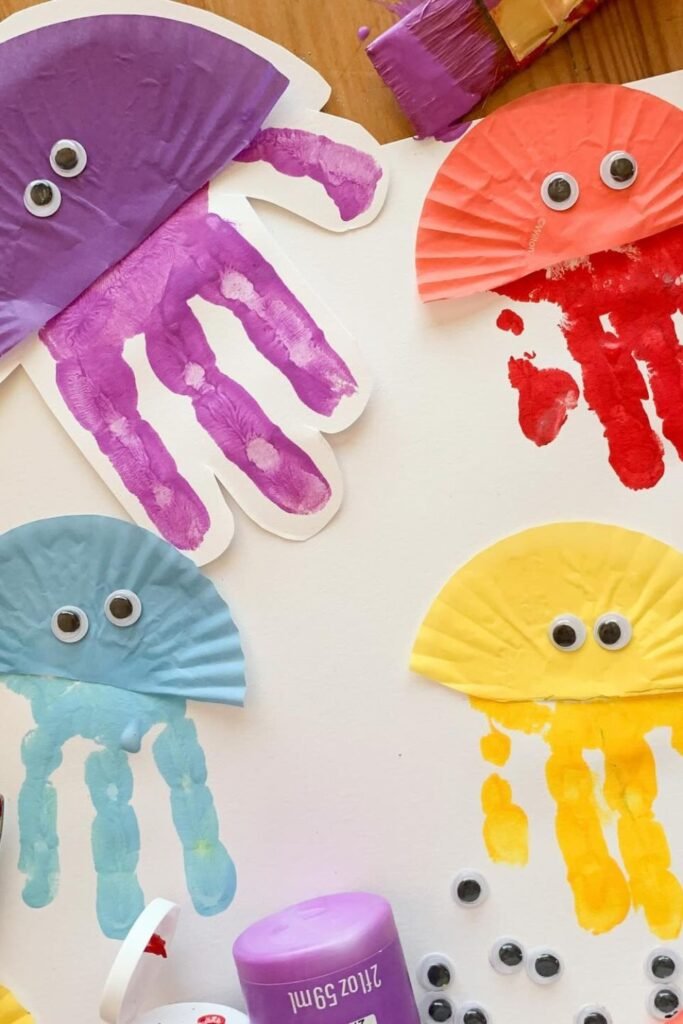
Handprint Jellyfish
Painted hands suddenly become tentacles and kids love seeing their own prints turn into sea creatures.
Cupcake liners serve as the jellyfish bell streamlining the preparation.
Apply the paint generously to ensure distinct prints then press down firmly and pull directly upwards.
These are particularly useful in preschool settings and for remembrance crafts and especially when names and dates are included before the paint sets.
Sea Layers
Depth makes this one stand out without adding difficulty. Flat paper shapes stacked on top of each other create a full underwater scene fast.
Begin with the plants and coral then layer the turtles and fish on top, ensuring nothing is obscured.
This method is ideal for wall painting or collaborative projects. Each child can contribute creature watching the scene evolve.

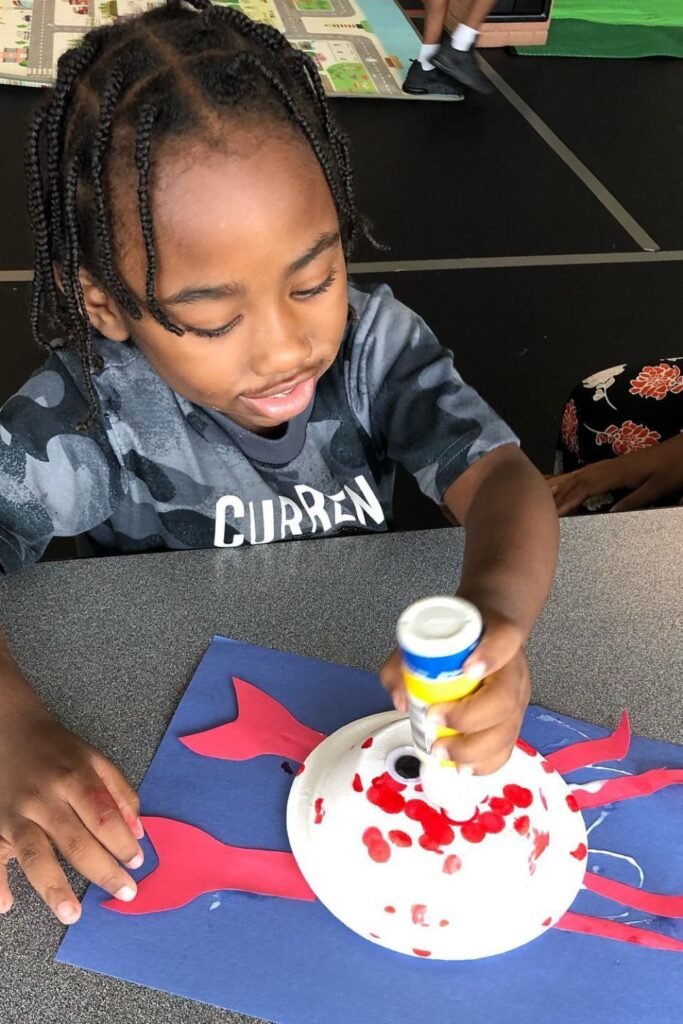
Dot Octopus
Finger dots turn into texture without asking kids to stay neat. Flip a paper plate for the body glue paper legs underneath.
Then, let paint bottles or fingertips create spots on top. Toddler groups and early preschool settings are the best fit for this, as precision isn’t a concern.
Once the paint dries, the eyes are added and the kids immediately identify their octopus, no further explanation needed.
Strip Jellyfish
Long paper strips instantly create movement, even before kids start decorating. Fold one oval for the head, then cut and curl strips for tentacles using scissors or fingers.
Markers bring faces and dots to life without a hitch. Craft tables, those spontaneous art sessions.
Even a short ocean-themed project get a boost, since everything wraps up quickly and retains a lighthearted vibe when displayed or stuck up.

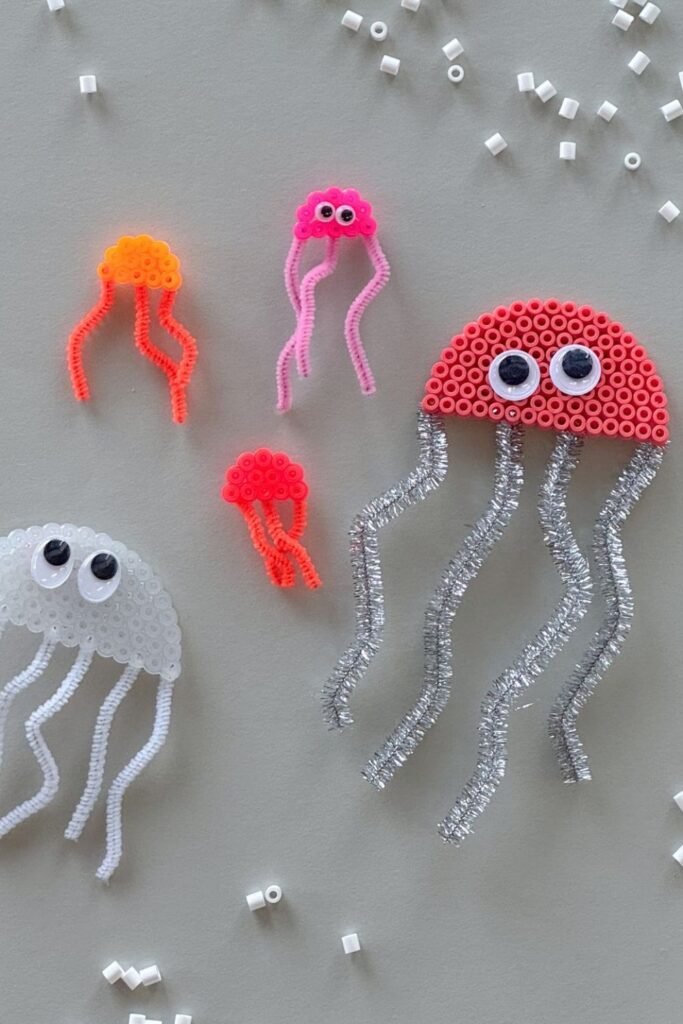
Bead Jellyfish
Tiny beads turn into something kids want to keep fiddling with. Fuse beads or pony beads handle the body.
Pipe cleaners, with their wiggly, restless tentacles, are a hit. Older children often want to choose their colors in advance.
While the smaller ones are content to replicate existing designs. These activities are especially well-suited for rainy days and fine-motor skill stations.
Tube Shark
Long cardboard tubes suddenly make sense once a shark shape wraps around them. Toilet paper rolls taped together give enough length.
Folded paper becomes the fins and tail. The paint splatters, rather than requiring a flawless finish, give the sharks personality.
This project is excellent for outdoors, allowing kids to paint without restraint. Once dry the completed shark can and then be raced around the imaginary ocean.

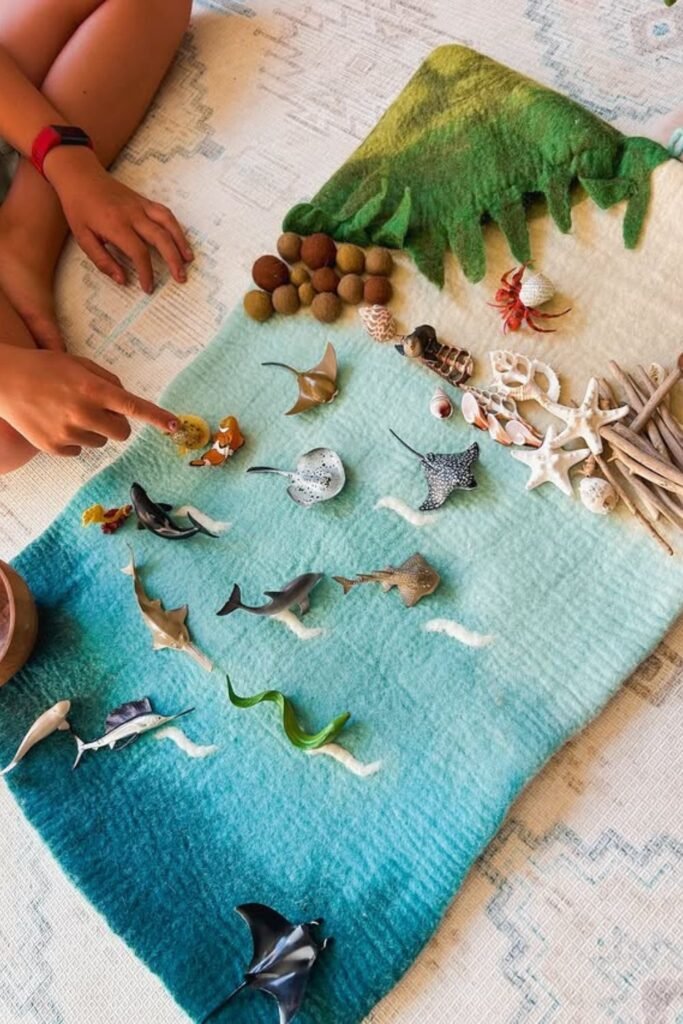
Felt Seascape
Soft textures slow kids down in the best way. A felt mat sets the scene, then shells, stones and small sea figures move freely without glue or mess.
Living rooms and those peaceful nooks are ideal for this. Begin with a basic coastline outline and then let the children move the creatures about repeatedly.
This transforms play into a continuou stream of ocean narratives, all without the need to start from scratch.
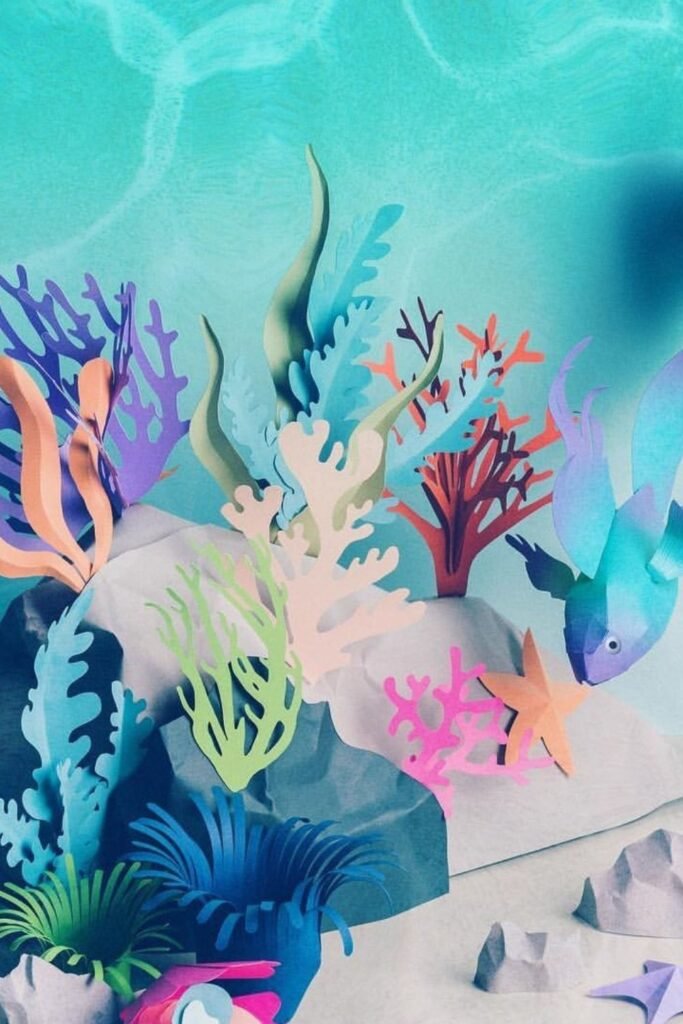
Paper Seascape
Layers give the whole scene life without needing tiny details. Cut coral, plants, and rocks from different paper shades.
Then, stack the parts so they lean forward, rather than lying flat. Cardstock is the ideal material for maintaining the shapes upright position.
This approach is particularly well suited for art rooms and display shelves especially when children construct their projects in phase continually including new components.
Starfish Plate
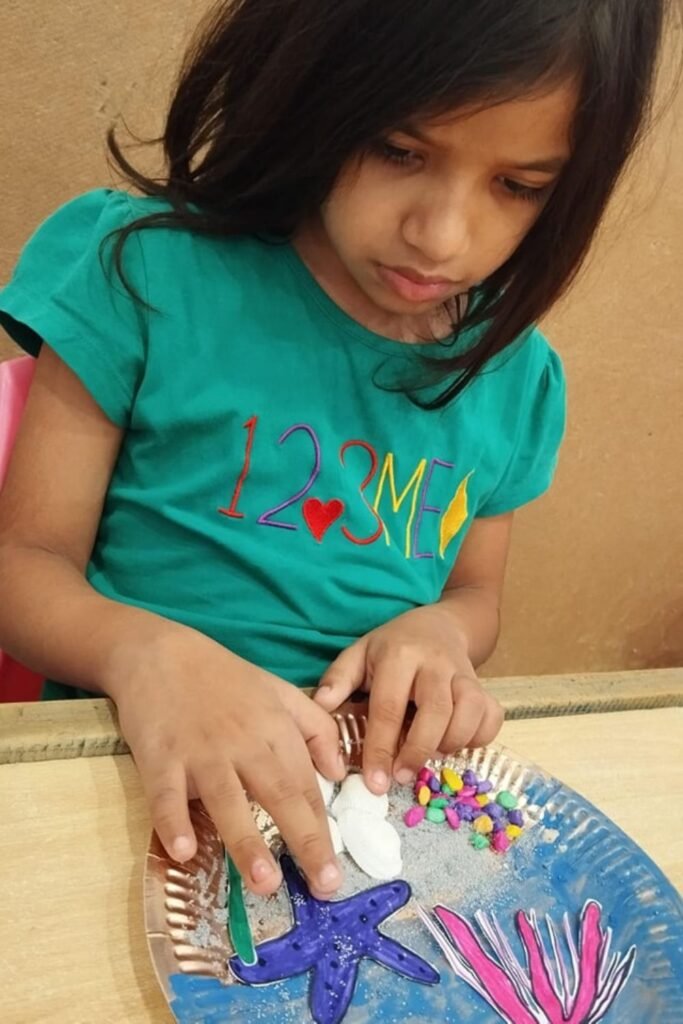
Small hands stay busy here without feeling rushed. Sand, shells, and simple sea shapes fill a paper plate scene.
That feels calm instead of chaotic. Glue first, then the kids get to decide where everything goes.
Tabletop activities and calm crafts sessions are ideal particularly when the kids are more interested in arranging things than in cutting or painting.
FAQs
What age group are under-the-sea crafts best for?
Under the sea crafts are a hit with all ages thanks to their adaptable nature. Little ones can happily glue, paint or explore textures.
By using the same basic idea but varying the complexity, you can keep siblings or a classroom of kids interested simultaneously.
How can I keep ocean crafts from getting too messy at home?
Begin with crafts that rely on paper, glue or dry materials, steering clear of paint. Gather everything on a single tray or paper plate, and get the parts ready beforehand.
When children understand the layout of the materials, they’re less likely to become distracted by the mess and more likely to concentrate on their creations.
Hi, I’m Afaf! I’m a law student who loves writing about everyday life – from home projects and crafts to fashion, beauty, and parenting tips.
I’ve been writing for over a year, sharing ideas that are simple, practical, and easy to try. I write about things I find interesting and useful, whether that’s organizing a space, trying a new DIY, or finding activities to keep kids entertained.
My goal is to share helpful ideas without making things complicated. If it works in real life, I’ll write about it.
When I’m not studying or writing, I’m usually experimenting with new projects or scrolling for inspiration!